Jovoy Paris Private Label: Mad Max’s Smoked Vetiver Leather

Mad Max 2.

Mad Max 2.

Mad Max in black leather, burning up the roads. A bomb blast that left bubbling, tarry, rubbery asphalt. The burning, black tire bonfires used as smoke signals in Black Hawk Down. Vetiver on steroids, then nuked with napalm. Peppermints and candy canes at Christmas. Peaty single-malt Scotch, and aged cognac. The quiet, firm, confident masculinity of Gary Cooper or Rhett Butler which hides a sensitive heart. And, beatnik patchouli from the 1960s “Summer of Love.”

Private Label. Source: Bloom Perfumery.

Private Label. Source: Bloom Perfumery.

Those incongruous, contradictory thoughts are what come to mind when I wear Jovoy Paris‘ fragrance, Private Label. Most hardcore perfumistas have heard of Jovoy, a Paris boutique that is a mecca for buying the most high-end, exclusive, or rare fragrances. What many people don’t know is that Jovoy was once a perfume house going back to the Roaring Twenties, and “known for selling perfumes for the ‘gentlemen’s nieces’, a polite way Parisian dandies described buying gifts for their mistresses[.]” The house declined in the bleak years of the Depression, and ended completely during WWII, but it was resurrected in 2006 by Francois Hénin who launched a new range of fragrances.

In 2012, Private Label joined their ranks. It is an eau de parfum created by Cécile Zarokian, and Aedes says that it was “commissioned for a Jovoy client looking for a strong, oriental fragrance that is masculine, woody and ‘oud-free’.” Private Label is actually Francois Hénin’s personal favorite, his “ideal oriental scent.” He says, “This is the archetypal parfum de silage: it leaves a distinct trail while remaining consistent over time.” Luckyscent lists its notes as follows:

Papyrus, vetiver, leather, patchouli, sandalwood, Cistus labdanum

Source: thegiftedpony.com

Source: thegiftedpony.com

Each and every time I smell Private Label from afar, my immediate first impression is peppermints. To be precise: twisted, deranged, napalm-smoked, nuclear, apocalyptic, smoked peppermints in the middle of the snowiest pine forest somewhere in Siberia. It’s an impression that I can’t shake off, and it’s one I generally like.

The problem, however, is when I smell Private Label up close, as the result is distinctly less enchanting. In a nutshell, Private Label has a consistent structural backbone of burnt rubber and bubbling tar from a hot, melting asphalt road. The note is there in Private Label’s development from start to finish, varying only in its prominence, order of appearance, or forcefulness. It is always mentholated and camphorous, with a subtext of eucalyptus and peppermints, but also of sharp smoke and burnt rubber. Whenever I think that it has been tamed by patchouli, whenever I think that Private Label has been softened with labdanum amber and a big splash of aged cognac, I’ll smell another part of my arm, and that rubbery, Mad Max, medicinal, burnt napalm smell will suddenly pop back up.

Birch Tar pitch via Wikicommons.

Birch Tar pitch via Wikicommons.

Private Label lists “leather” in its notes and, yes, the fragrance is often summarized as a vetiver-leather fragrance. To me, however, that description doesn’t tell the whole story. On my skin, Private Label isn’t a leather fragrance so much as it is birch tar one. There is a huge difference to my mind. Huge. Birch tar is a resinous extract that has been traditionally used to coat and treat rawhide and, as such, the camphorous, pine-y, phenolic, sometimes sulphurous ingredient is often used in perfumery to replicate the aroma of a certain type of black “leather.”

Cade oil from a juniper tree. Source: purearomaoils.com

Cade oil from a juniper tree. Source: purearomaoils.com

The Perfume Shrine states that “[r]endering a leather note in perfumery is a challenge for the perfumer[,]” and that what is “actually used” to create that olfactory impression are vegetal or synthetic ingredients which can include birch tar, juniper cade and quinoline. To my nose, Jovoy Private Label reflects multiple facets of each of these notes which really dominate the fragrance’s overall bouquet for much of its evolution. I could tell you that Private Label smells of “leather” and smoke, but those general terms have the potential to give you a very misleading impression of this utterly uncompromising, aggressively intense, very hardcore scent.

So, let’s take a look at The Perfume Shrine’s explanation of what the key notes actually smell like:

Birch: Betula Alba, the tree known as birch [….] Traditionally used in tanneries in Russia, Finland and Northern Europe in general, its bark produces birch tar and resin, an intensely wintergreen and tar-like odour, which has been used in Cuir de Russie type of scents in the distant past. 

Juniper and cade oil:
Juniper trees produce dark viscuous oil (cade) upon getting burned which possesses a smoky aroma that reminds one of campfires in the forests. Also used in Cuir de Russie type of scents in the past along with birch. […]

The major revolution in the production of leathery notes in perfumery came in the 1880s with the apparition of quinolines, a family of aromachemicals with a pungent leather and smoke odour that was used in the production of the modern Cuir de Russie scents appearing at the beginning of the 20th century such as Chanel’s (1924) as well as in Caron’s Tabac Blond (1919), Lanvin’s Scandal (1933) and, most importantly, Piguet’s Bandit (1944). […][¶]

isobutyl quinoline … possesses a fiercely potent odour profile described as earthy, rooty, and nutty, echoing certain facets of oakmoss and vetiver and blending very well with both. Isobutyl quinoline also has ambery, woody, tobacco-like undertones: a really rich aromachemical!

Scene from Mad Max 2 via cinemasights.com

Scene from Mad Max 2 via cinemasights.com

I suspect all three things are used in Jovoy’s Private Label when it summarily mentions mere “leather.” The perfume is a vetiver scent in many ways, but it is vetiver transformed into one living in Mad Max’s world, a scent that the Road Warrior would wear with its uncompromising smoke, tar, asphalt, and rubber facets. If any of you love the toughness of Robert Piguet‘s vintage Bandit and the birch tar smoke of Andy Tauer‘s Lonestar Memories, but want both taken up a notch and infused with smoked vetiver, then Jovoy’s Private Label is for you.

Photo: Narinder Nanu via washingtonpost.com

Photo: Narinder Nanu via washingtonpost.com

Private Label opens on my skin with a forceful blast of mentholated tar, medicinal astringent, chewy patchouli, smoky vetiver, and piney juniper-cade smoke. The patchouli has hints of aged cognac underlying it, but its more dominant nuance is an earthy, almost medicinal, slightly mentholated note that evokes a black, 1960s “head shop,” hippie scent. Private Label most definitely has leather seeping all throughout, infusing all the other notes, but as explained above, this is really birch tar and cade “leather.” It smells like campfire bonfires, smoked rubber, diesel fuel, and a tarmac set aflame until the asphalt is hot, almost bubbling, and smoking. I rarely think that notes have a heated temperature, but the “leather” in Private Label starts off feeling as though the piney, sulphurous resin has been set on fire.

Tar pit bubbles. Source: Los Angeles' La Brea tar and asphalt pits. tarpits.org

Tar pit bubbles. Source: Los Angeles’ La Brea tar and asphalt pits. tarpits.org

One reviewer for the fragrance had a very different impression of both the note and Private Label’s opening blast. For Freddie of Smelly Thoughts, the leather made him think of a rubber dildo. No, he said that, really!

Private Label opens with a harsh, nail-varnish leather. A raw, earthy, smoky vetiver comes in quickly and together – the combination is pretty foul. It smells black and rubbery (yes, dildo was the first word that came into my head then too), with squeaky vinyl (stop!!!), and underneath, a resinous amber (lots of labdanum), a bit of incense and other bitter greens that just make it worse and worse.

I can see why he’d think that way, but I don’t hate it the way he does, and a large reason why may be due to the peppermints. On my skin, the patchouli’s underlying sweetness interacts with the mentholated, chilled accord to create a definite, very strong impression of hard-boiled, peppermint sweets. Christmas candy canes, perhaps, except these have been burnt and are emitting a sweet-bitter smokiness that is infused with eucalyptus. It’s an interesting aroma, and makes Private Label quite an arresting fragrance. From afar.

Photo: Larry Workman. Source: ssl.panoramio.com

Photo: Larry Workman. Source: ssl.panoramio.com

Ten minutes in, Private Label starts the slow (very, very slow) process towards softness and mellowness. The labdanum starts to move in the base, the aged cognac and sweet peppermint elements increase, and Private Label loses some of that bubbling asphalt feel. It’s a fractional change, though, as the perfume’s primary scent is that of the darkest, smokiest vetiver mixed with the very tarriest, smokiest, eucalyptus, cade rubber. It is simultaneously bone-dry, and sticky with chewy patchouli earthiness and the minty sweetness.

As time passes, the amber and vetiver elements becomes more dominant, and the birch-cade tar recedes, but it takes a lot of time and the rubber element never fully vanishes. What is interesting to me is the contrast between the mentholated, sweet peppermint, candy canes in the top layer, and the aged cognac in the bottom. In some ways, there is almost a peaty, single malt Scotch vibe to Private Label.

Source: high-definition-wallpapers.info

Source: high-definition-wallpapers.info

Around the second hour, when the juniper tar has receded to glower menacingly and threateningly from the sidelines, the other notes create a lovely winter bouquet from afar. I think of pine forests in the snow, candy canes on Christmas trees, aged cognac in a snifter beside a leather armchair by a warm, amber fire, and a chimney that is lightly smoking. It’s a visual that shatters whenever that resinous, burning,tar pops back up, skipping around different parts of my arm to show up at different times, and always taking me back to Mad Max in an apocalyptic world where the men are clothed in black, rubbery leather and the sole plant left on earth is a vetiver bush turned mutant through a napalm bomb.

Peat, in bricks, and used in a fire. Source: freeirishphotos.com

Peat, in bricks, and used in a fire. Source: freeirishphotos.com

The core essence of Private Label doesn’t change for hours on end. All that happens is a fluctuation in the prominence of certain notes, and a dropping of the fragrance’s sillage. After 60-minutes, Private Label hovers about 3 inches above my skin; by the end of the fourth hour, it is a skin scent, though it remains extremely potent when sniffed up close. The prominence of the smoke elements varies, with the birch tar seeming softer and more manageable for a brief period around the second hour. Then, suddenly, at the start of the third hour, Private Label somehow seems even smokier! Though the mentholated notes are much less, the vetiver has overtaken the birch tar as the dominant element, and my word, is it dark! I’ve never encountered vetiver that is quite so smoked. This is not smooth vetiver like in Chanel’s Sycomore, but some sort of mutant hybrid created in a peaty bonfire.

Source: colourbox.com

Source: colourbox.com

The vetiver continues to dominate the rest of Private Label’s development. By the end of the fourth hour, the perfume is a peppermint-eucalyptus vetiver over a soft amber infused with patchouli, cognac, leather, menthol, and the tiniest hint of sandalwood. It is soft in sillage, but still sharp and hard in actual scent. By the start of the seventh hour, Private Label is a peppermint vetiver over amber. The burnt rubber element continues to pop up here and there, hiding behind the other notes on some parts of my arm, while smelling of full-on acrid smoke and melting asphalt on a few tiny patches. In Private Label’s very final moments, the fragrance is merely a blur of woody sweetness with lingering traces of sharpness, rubber and smoke. All in all, it consistently lasted over 12 hours on my skin, with soft sillage but sharp notes.

I’m very torn on Private Label. The whole thing is a medley that, at times, fascinates and intrigues. At other times, however, it bewilders with a bit of cacophony, and those occasions tend to trump the more positive ones. From afar, it can be really pretty, but do you want a fragrance that you sometimes don’t dare to smell close up lest you singe your nostrils? I’m also not sure how versatile the perfume is, because it feels like a definite mood scent. Would anyone want to wear Private Label outside the snowy months of winter? Still, the seasonal issue doesn’t seem to matter so much as the gender one.

I generally believe that all fragrances are unisex in nature, but I think Private Label definitely skews more masculine. I suspect a number of women would recoil sharply at the fragrance, finding it medicinal, “chemical” (to quote one disgusted woman who smelled it on my arm), pungently aggressive, and unpleasantly rubbery. Hell, even some men do, judging by the reaction of Freddie from Smelly Thoughts. And he’s a chap with very avant-garde, extreme tastes!

However, I think that there is a narrow group of people who may very much enjoy Private Label: men and women who adore vetiver, but who also love birch tar, smoky fragrances, mentholated eucalyptus blends, and black leather notes. For me, it’s as though Andy Tauer’s Lonestar Memories and Naomi Goodsir‘s Bois d’Ascece had a swingers’ orgy with bucketfuls of tarry cade, a very hippie Woodstock patchouli, Santa Claus’ peppermint-eucalyptus muscle rub, Olivier Durbano‘s Black Tourmaline, and Serge LutensFille en Aiguilles. Nine months later, the baby that resulted was Private Label.

Gary Cooper. Source: allocine.fr

Gary Cooper. Source: allocine.fr

If that sounds like an odd fragrance that is far too harsh, I should add that I also see softness lurking in Private Blend’s heart. On the right man and the right skin, Private Blend would be a smoking hot fragrance, oozing sex appeal. It is a scent that exudes tough, confident masculinity but with glimpses of an underlying softness and sensitivity. The smoky rubber side might seem appropriate for Christian Bale’s Dark Knight, but I can’t help but also see Gary Cooper or Clark Gable’s Rhett Butler wearing Private Label. Peppermints, tough leather, smoky woods, aged cognac, and amber seem like an incredibly sexy combination. If I close my eyes, I can actually conjure up the man who would wear this, and envision sniffing the scent wafting from his neck. It would be damn hot.

Gary Cooper, "A Man's Man" via thewildmagazine.com

Gary Cooper, “A Man’s Man” via thewildmagazine.com

On Fragrantica, guys seem to love Private Label, calling it a fragrance that is unapologetically masculine, or perfect for a true vetiver lover. Take one commentator, “Alfarom,” who writes:

Probably my favorite among this line…at least so far.

A no-compromise, extremely woody-earthy, peatchouli-vetiver concoction enriched by warm leathery undertones (castoreum?) and dry sandalwood facets. What’s not to like? Absolutely assertive and straight forward. It has an overall “familiar” vibe which I can’t currently put my finger on but the general feel of the composition, is of something “pushed to the limits”.

If you like unapologetic, masculine, dark-&-dry fragrances, you have to try this.

Outstanding projection and extremely good lasting power.

Others echo his words and general impression:

  • probably one of the most true to life vetiver fragrances out there. the leather creates something dark and smoky that is balanced by a good dose of sandalwood.
  • One Of The Best Fragrances Money Can Buy, Fullstop
  • As if a sandalwood/Champaca/patchouli incense stick has been liquefied. Resinous, smokey and altogether as perfectly done as any fragrance can get. There is a hint of sweetness that makes me reminisce of another fragrance, but I can’t put my finger on which one it is. Guaic wood isn’t mentioned but it seems to make an appearance.
  • A very sexy, dry and smoky vetiver. This is a fragrance for true vetiver lovers. Very well balanced and a truly finished product. Excellent sillage and longevity. This one is a 10 out of 10 for me.

I think Private Label is too potentially difficult a scent to buy blindly (not that I ever recommend that in general!), and it’s certainly not for me, but I do think it would be a great fragrance for a very narrow group of people. If you love deeply smoky juniper cade, mentholated birch tar, rubbered black leather, chewy patchouli, and peaty, smoked vetiver, you should give Private Label a sniff. When I say that it would be “smokin’ hot,” I mean it in all senses of the phrase, good and bad….

Disclosure: I obtained my sample from Jovoy itself, but it was while I was in the store, browsing as a customer. My sample was not given to me for the purposes of a review. I do not do paid reviews, and my opinions are my own. 

DETAILS:
Cost & Availability: Private Label is an eau de parfum that comes in a 100 ml/3.4 oz bottle that costs $180, €120, or  £100. It is available directly from Jovoy Paris which also offers a smaller 1.7 oz/50 ml bottle for €80. In the U.S.: it is available at
MinNYLuckyscentAedes, and Aaron’s Apothecary. Outside the U.S.: In the UK, Private Label is available in both sizes from Bloom Perfumery, with the smaller 1.7 oz bottle retailing for £70. Samples are also available for purchase. The larger 100 ml size is also sold at Roullier White for £100, with a sample similarly available for purchase. Other retailers include Harvey Nichols and Liberty London. In France, the perfume is obviously available from Jovoy, but you can also buy Jovoy fragrances from Soleil d’Or. In the Netherlands, all the Jovoy line of perfumes are sold at ParfumMaria. In Italy, you can find them at Vittoria Profumi and Sacro Cuoro Profumi for €120. In Croatia, the line is sold at Flores in Zagreb, but their website is currently undergoing construction. In Russia, Jovoy is sold at iPerfume. For Germany and the rest of Europe, the entire Jovoy line is available at First in Fragrance in Germany (which also ships worldwide and sells samples), but the price is €5 higher at €125 a bottle. Same story with Germany’s Meinduft, though the latter does offer the smaller bottles at €85. Samples: I obtained my sample while at Jovoy itself, but a number of the retailers listed above also offer vials of the fragrance for purchase.

Phaedon Tabac Rouge, Rouge Avignon & Pure Azure

Pierre Guillaume. Source: Fragrantica

Pierre Guillaume. Source: Fragrantica

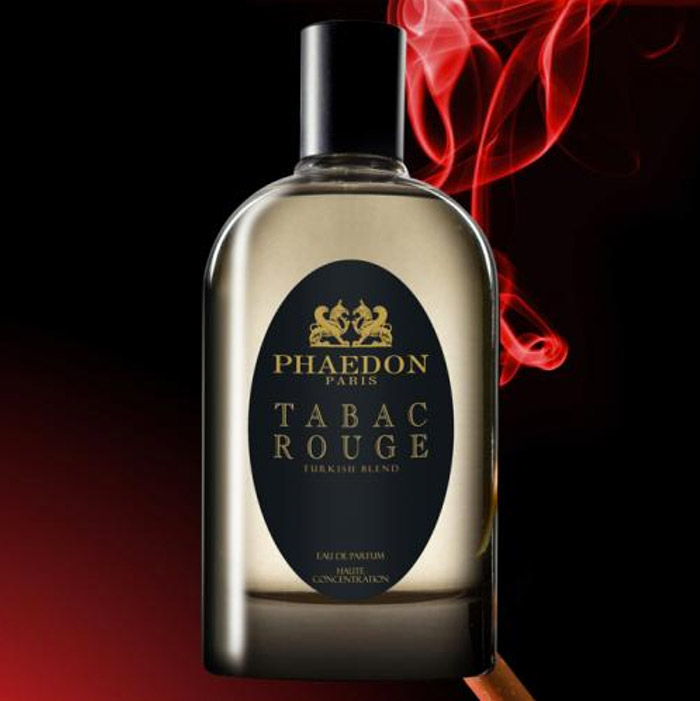
While in Paris, I had the chance to sniff fragrances from Phaedon, the Paris niche perfume house founded in 2011 by Pierre Guillaume (who also owns Parfumerie Generale and is behind Huitieme Art). The line previously had seven eau de toilettes, but, this summer, Mr. Guillaume launched seven more fragrances that are all “High Concentration Eaux de Parfums.” The new creations were all made by Pierre Guillaume in collaboration with various perfumers.

I obtained samples of three of the fragrances, thanks to the kindness of the Paris niche boutique, Sens Unique, a fantastic store which I will rave about in another post one day. The perfumes in question are: Tabac Rouge (Turkish Blend), Rouge Avignon, and Pure Azure. For reasons that will soon become clear, I’ve decided not to follow my usual course of doing a lengthy, comprehensive review for each fragrance individually. Instead, I’ll merely provide a brief synopsis and my impressions for all three perfumes in a single post.

TABAC ROUGE:

Tabac Rouge. Source: Fragrantica

Tabac Rouge. Source: Fragrantica

Phaedon describes Tabac Rouge (Turkish Blend) as follows:

Turkish Blend is a quintessentially Art Deco composition. Turkish tobacco absolute and incense make up the core accord, spare, dry and perfectly balanced. As in Tamara de Lempicka’s paintings, the “color” palette is pared-down and vibrant: ginger, cinnamon and a lick of honey. In the base notes, musks, bolstered by warm, powdery Siam benzoin, blend the scent with your skin. Androgynous, stylized and luxurious.

Fragrantica‘s list of notes, oddly enough, excludes the main ingredients in the scent which are Turkish tobacco absolute and incense. Adding those in, Tabac Rouge’s ingredients would include:

Turkish tobacco absolute, incense, ginger, cinnamon, honey, musk, powdery notes and benzoin.

Source: Basenotes

Source: Basenotes

Tabac Rouge is, in a nutshell, a simpler, slightly less forceful, lighter version of Tom Ford‘s Tobacco Vanille. The major differences to me are that the Phaedon version is fractionally less sweet than its cousin, lacks a fruited base, has weaker sillage, less density, and doesn’t quite take on the Yankee Candle Plum Pudding undertone of Tobacco Vanille.

Like Tobacco Vanille, Tabac Rouge starts with a strong blast of honeyed tobacco that is infused with incense and vanilla, and dusted with spices in a potent blend that eventually turns softer, airier, more powdered, and more vanillic in nature. The differences that exist are largely minute, and one of degree. As noted above, Tabac Rouge lacks a plum pudding undertone, but it also feels much more honeyed to me. In fact, the honey was much more pronounced on my skin than the vanilla which seemed less significant than in Tobacco Vanille. A much bigger difference is that Tabac Rouge feels much softer and lighter than the Tom Ford fragrance. It doesn’t have the latter’s dense, thick chewiness, but it does have its longevity.

In essence, it’s very sweet, it’s pretty, and it’s a much better deal than the Tom Ford fragrance at $160 for 100 ml, instead of $210 for a mere 50 ml. Nonetheless, it’s obviously treading water that’s been explored before, which is why I agree, to some extent, with Mark Behnke of CaFleureBon whose entire summation of Tabac Rouge amounted merely to this:

Tabac Rouge, travels a well-worn path of combining tobacco and incense. It is fine but it didn’t ever rise to a level of something I would be reaching for when I am in the mood for tobacco and incense. If you like these notes and want a lighter simpler take on them Tabac Rouge could fill the bill.

I like Tabac Rouge more than he did, but I too would get my incense and tobacco fix elsewhere.

ROUGE AVIGNON:

Rouge Avignon. Source: Fragrantica

Rouge Avignon. Source: Fragrantica

Phaedon describes Rouge Avignon as follows:

A Gothic composition, as opulent and dark as the shadow of the Papal Palace looming over nations and centuries… The carmine red of the papal stole is conjured with a fleshy, spicy rose facetted by ylang-ylang and raspberry. In the heart notes, waxed woods, cocoa bean, black truffle and earthy smoky vetiver lure us into the private apartments of the Supreme Pontiff. Gilt moldings and religious ornaments glint in the firelight while gray tendrils of smoke rise from a censer burning sandalwood chips mixed with musk and amber.

The succinct list of notes is:

raspberry, ylang-ylang, rose, cacao pod, hinoki wood, tuber [black truffle], vetiver, sandalwood, musk and amber.

Rouge Avignon opens on my skin with a bouquet of honeyed sweetness and delicate florals that soon turn into a fleshy, fruited, purple rose. A strong heaping of sharp, almost clean musk ensues, and deep down in the depths, there is a very noticeable dose of cocoa powder. The latter is soon overwhelmed by the syrupy, jammy rose, and doesn’t really appear again until a few hours later. I honestly don’t smell raspberry as the fruit, per se, in its own right but, instead, an amorphous, almost berry-like fruitiness.

Source: nature.desktopnexus.com -

Source: nature.desktopnexus.com –

Something about the overall combination and my skin chemistry has produced instead an accord very similar to a patchouli rose. It’s a profusion of abstract dark berries and syrupy sweetness, much like the purple patchouli I loathe so much. In fact, I’m reminded of Frederic Malle‘s Portrait of a Lady, only Rouge Avignon has a greater degree of musk that feels a little synthetic, along with extremely muted, minor hints of something dark in the base. I’m not the greatest fan of fruited, syrupy, patchouli-like roses, and I don’t like Portrait of a Lady, so I confess that I’m equally underwhelmed here.

I was surprised to see that Mark Behnke of CaFleureBon also struggled with the forceful combination. On him, the fruited element definitely seemed like raspberry in its own right, as opposed to some amorphously red-purple fruit syrup, but he still wasn’t fond of the overall effect:

I really enjoyed the foodie heart of Rouge Avignon but I must confess the strength of the rose and raspberry in the top notes took some getting used to. I think I will revisit this in the chill of the fall.

By the standards of CaFleureBon with their positive, laudatory take on everything, that simple confession speaks volumes. As for the issue of seasons, it’s almost December here, and I’d like Mr. Behnke to know that Rouge Avignon is still a painfully sweet, berried rose from start to finish.

There are only a few minor changes in the fragrance’s primary backbone and theme. After a few hours, a subtle touch of sweetened powder emerges, as does a slightly earthy, murky, brown funk with a faint undertone of cocoa. On my skin, it’s never the “foodie heart” that Mr. Behnke talks about, at least not in any dominant or substantial way. Still, there is some minor darkness deep down in the base, and that turns Rouge Avignon from a scent that begins as Portrait of a Lady into something closer to Tom Ford‘s Noir de Noir. Rouge Avignon is lighter, airier, thinner, and more synthetic in feel than both those fragrances, and it also lacks Noir de Noir’s powdered violet nuance, but the similarities struck me repeatedly nonetheless.

At the end of the day, I simply don’t find the sum-total of Rouge Avignon to be all that interesting. Actually, I grew to hate it quite intensely. The rose is painfully, almost torturously sweet for my tastes, and the perfume feels wholly unoriginal. The list of notes is fantastic, but the reality on my skin is primarily of a very fruited rose with sharp, very synthetic musk, and only a modicum of a dark, earthy heart. However, if you’re looking for something in the general vein or family of Portrait of a Lady, but much lighter and airier, then you should consider Rouge Avignon. It is a much better bargain at $160 (or €120) for a large 100 ml bottle, than Portrait of a Lady which costs $340 for that same sized bottle. The same goes for Noir de Noir which Tom Ford sells for $210 for 50 ml. Rouge Avignon has moderate sillage, turns into a skin scent after four hours, but has good longevity.

PURE AZURE:

Pure Azure. Source: CaFleureBon

Pure Azure. Source: CaFleureBon

The description and advert for Pure Azure are meant to transport you to Mykonos in summer:

This giddy balancing act of a scent carries us high above the cliffs of the Aegean Sea, where azure skies contrast with the blinding whiteness of fishermen’s villages… The fragrance of fig trees and orange blossom, the warmth of vanilla and spices, the sensuousness of jasmine rise from the shores of the Mediterranean. In the base notes, the mouth-watering warmth of tonka bean is brought out by a delicately salty note. A “Mediterranean Oriental” hovering between the radiant and the animal….

The succinct list of notes is:

fig, orange blossom, vanilla, spicy notes, jasmine, tonka bean and salt.

Orange Blossom. Photo: GardenPictures via Zuoda.net

Orange Blossom. Photo: GardenPictures via Zuoda.net

Pure Azure opens with an explosion of whiteness that is both clean and verging on the florid. There is orange blossom, tinged with hints of a more bitter, woody, spicy neroli, and then a big burst of saltiness that is truly wonderful. It’s a visual landscape of white with orange blossoms that are languid, sweet, indolic, utterly lush, and, yet, also fresh. There is spiciness and a definite sense of greenness underlying those orange blossoms, but it is the initial sprinkling of saltiness that really captured my interest.

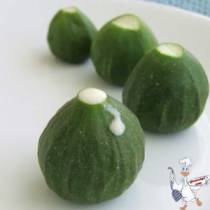
Unripe Figs via Giverecipe.com. (For recipe on Unripe Fig Jam, click on photo. Link embedded within.)

Unripe Figs via Giverecipe.com. (For recipe on Unripe Fig Jam, click on photo. Link embedded within.)

Unfortunately, it soon fades, but it is replaced by an interesting fig note. Like the orange blossoms, the fruit is simultaneously sweet, fresh, and green. There is none of the leathery darkness that figs can sometimes take on. Instead, there is an almost milky quality that evokes a slightly unripe fruit in late Spring, before the summer heat has turned it fleshy, dark, and gooey. Deep down in Pure Azure’s base, there are touches of vanilla, but it’s never custardy, heavy, or rich.

Pure Azure has a beautiful medley of notes, but what is initially so great about it is the paradoxical mix of freshness and lushness. The orange blossoms have hints of lush, heavy, indolic ripeness, but not quite. It’s as though the sweet flowers are almost green, with a dewy, light feel that truly feels fresh.

The scent is crisp (though not like a cologne), feels very summery, and most definitely meets Phaedon’s goal of recreating the Mediterranean coast. (I actually saw Capri more than an Aegean island, but let’s not quibble about lovely places where fresh flowers bloom in the warm, salty air.) The best way I can describe Pure Azure’s feel in my mind is to refer to a crisp white shirt worn against a man’s tanned skin (à la Kilian Hennessey), instead of the more common or traditional visual associated with indolic white flowers, namely, languid courtesans reclining with ripe, white flesh and heaving bosoms.

On the negative side, however, Pure Azure’s opening has an undertone of soapiness, as well as an increasingly strong blast of white, clean musk that, unfortunately, feels very synthetic. Both elements help underscore the fresh crispness of Pure Azure’s opening, but I would have been happier without the splitting headache that the musk gave me for a few hours. Despite that, I generally liked Pure Azure’s opening stage because of the green touch to the flowers and fruit.

Agave. Source: Self.com

Agave. Source: Self.com

The freshness doesn’t last long. About 75 minutes in, Pure Azure turns into a simple, honeyed floral, as the jasmine emerges and the white musk recedes to lurk underneath. The jasmine soon becomes fully integrated into the orange blossoms, and both are completely drenched in sweetness. The honey is not heavy syrup, however, but more like agave nectar which is both sweeter and lighter. Despite the lack of density, it’s very potent, transforming even that clean, laundry, white musk into something warmer.

Pure Azure soon turns rather abstract, feeling like a soft cloud of blowsy, ripe, white florals, with heavy honey, a dollop of musk, and the faintest smidgen of salt. It’s like a floral cousin to Mona di Orio‘s Eau Absolute, only lighter, airier, and without citric elements. In its final moments on my skin, Pure Azure is a nebulous smear of honeyed sweetness with just a vague hint of something floral behind it. I like honey, which my skin tends to amplify, but I have to admit, I was taken aback by how quickly and by how much it dominated Pure Azure. I know it’s probably my skin’s fault, but it was all too much for me by the end. Too linear, too simple, too boring.

Source: picsfab.com

Source: picsfab.com

At this point, I have to bring up Mark Behnke’s review again, because Pure Azure is where we part ways a little. He loved it, finding it his favorite of the new Phaedon line. I’m less enamoured. His review reads as follows:

My favorite of the new collection was a surprise to me as with a name like Pure Azure I was expecting a variation on an aquatic theme. Instead I was treated to a fantastic summer floral which appealed to me on many levels. Fig and orange blossom open Pure Azure on a bright accord. Vanilla and jasmine turn things sweeter and deeper. Tonka and a bit of a marine accord cut the sweet without making it go away. For almost the entire time I wore Pure Azure I was in the midst of a grove of fig trees, orange trees and jasmine swirling in and out of each other. I ended up wearing this on a day the thermometer hit 100 and it was perfect for that kind of heat. It wasn’t cloying or too much it was just right.

Pure Azure was significantly less interesting on my skin than on his, but I can see why he liked it so much. I smelled pretty much all of them at Sens Unique, and Pure Azure captured my interest the most at first sniff. Nonetheless, my feelings are highly qualified because I struggle with the potency of the clean, fresh synthetics, as well as with the way Pure Azure veers so sharply to the other extreme of warm, almost indolic sweetness. I also wish Pure Azure had a more complex evolution than mere honeyed florals in its later stage.

ALL IN ALL:

My problem with the new Phaedon line isn’t that many of them seem derivative, but, rather, with their extreme sweetness. Pierre Guillaume is a chap known for having a very gourmand touch with his Parfumerie Generale fragrances, and the Phaedon line doesn’t seem to be an exception. It’s simply too, too much for my personal tastes.

I also struggled with the synthetic feel to some of his fragrances. During one test for Rouge Avignon, I became completely exhausted by the deluge of syrup and roses, and tried to scrub it off. “Tried” should be the operative word here. It took me over an hour to get most of it off my skin, using everything from rubbing alcohol (3 times), nail varnish remover (2 times), soap, dishwashing liquid (2 times), and Tide laundry detergent (2 times). Even after all that, I still could smell lingering traces of that damn fruited rose on parts of my arm later that evening. Only something with definite synthetics in the base will be that impervious to cleaning agents. (As a side note, a few of the fragrances I sniffed at the store had ISO E Super, an aromachemical that Pierre Guillaume loves to use in his Parfumerie Generale line.)

The synthetics may also help explain why the line has such good longevity on my perfume-consuming skin. The Phaedon fragrances consistently lasted over 11 hours, with some tests almost approaching 13 hours, depending on quantity. The sillage was potent at first, and the fragrances very forceful, but they are all uniformly airy in feel, lack density, and turn into something that is generally quite soft. On average, it took between 4 and 4.5 hours for them to become skin scents, though they were usually easy to detect up close.

Judging by what I’ve sniffed as a whole and tested in specific, I think the Phaedon line is generally pleasant, and good value for those who want a more affordable, lighter, softer cousin to some existing fragrances on the market. They’re not my personal cup of tea, but I can see the appeal.

DETAILS:
Cost & Availability: Tabac Rouge, Rouge Avignon and Pure Azure are all eau de parfums that comes in a 3.3 oz/100 ml size and which costs $160, €120, or £95. In the U.S.: you can purchase Tabac Rouge, Rouge Avignon and Pure Azure from Luckyscent, though the first two are currently sold out and can be back-ordered for December delivery. Pure Azure is in stock. Samples of all the fragrances are generally available for purchase. Elsewhere, the Phaedon line is at NY’s Osswald Parfumerie, which also offers a US-only sample program for telephone orders. 10 samples for $10 with free domestic shipping. Outside the U.S.: You can buy all three perfumes directly from Phaedon, which also offers samples of all 14 of its fragrances (7 EDP, and 7 EDT) in a Discovery Set which costs €40 for 14 x 1.5 spray vials. The set is sold out at the time of this review. I should add that Phaedon doesn’t provide any information as to the countries they ship to, and if they limit things just to the EU. In the UK, you can buy Phaedon from London’s Bloom Parfumery which sells each Eau de Parfum for £95, along with samples. In Paris, Tabac Rouge, Phaedon and all Pierre Guillaume’s other brands are carried at Sens Unique in the Marais district. They don’t have an e-Store, but they have teamed up with DesFragrances for online orders. In Switzerland, I found Phaedon at Osswald Zurich; in Russia, I found the line at Lenoma and Lesse Parfum; in Poland at Galilu; and in Italy at Profumeria Gini. For the full list of retailers carrying the Phaedon line, you can turn to the company’s Stockist page. Samples: many of the sites linked above offer samples for purchase. I obtained mine from Sens Unique in Paris. For American readers, Surrender to Chance does not carry any of the new Phaedon Eau de Parfums at this time, so your best bet is Luckyscent.

Serge Lutens Fourreau Noir: Dark, Delectable Magic

Only he could do it. Only Serge Lutens could make a fragrance that a lavender-phobe would not only love, but buy. And not just buy a regular bottle of it, but buy a bloody expensive, exclusive bell jar! Only a true master could make a fragrance that is essentially everything that I dislike in a fragrance, and bring me to my knees.

Photo: my own.

Photo: my own.

It’s as though Uncle Serge decided to make me eat my hat by checking off every box that would normally make me wince — lavender, gourmand, sweet, sheer, discreet, and even sometimes vanishing, no less — intentionally combine them all into a single scent, and make the final result be something utterly beyond my ability to resist. It’s actually amusing at this point — and I say that as one who needs to take frequent breaks in typing to sniff the air around me with the glazed eyes of an addict. Only Le Grand Serge and Christopher Sheldrake could manage that. 

Photo: my own.

Photo: my own.

Fourreau Noir is an Oriental eau de parfum that was created by Christopher Sheldrake, and released in 2009. As noted above, it is one of the famous bell jar “Paris Exclusives,” which means that it not sold world-wide, but is generally exclusive to Serge Lutens’ Paris headquarters. That said, it can actually be purchased outside of France, either from Barney’s New York or directly from Serge Lutens’ international and U.S. websites, though it’s always at a big mark-up if you are buying outside of France. 

Uncle Serge describes the scent and the meaning of its name as follows:

A fourreau in French means a sheath for a dagger as well as a form-fitting dress… ready to embrace the voluptuous contours of a widow’s body.

Maybe you’ve heard of the brown bean used to extract vanillin? Its name is the tonka bean. It grows in abundance on a tree in the Amazonian rain forest. Sweet and fluid, its fragrance lingers, living its mark.

Photo: my own.

Photo: my own.

As always, Serge Lutens keeps the perfume’s notes secret. Fragrantica says they are:

Lavender, tonka, musk, almonds, smokey accords

Based on what I smell, however, I think the list would be longer. My guess is:

Lavender, Incense, Patchouli, Almonds, Tonka Bean, Vanilla, Cedarwood, and Musk. There may be some ambery element as well.

Photo: my own.

Photo: my own.

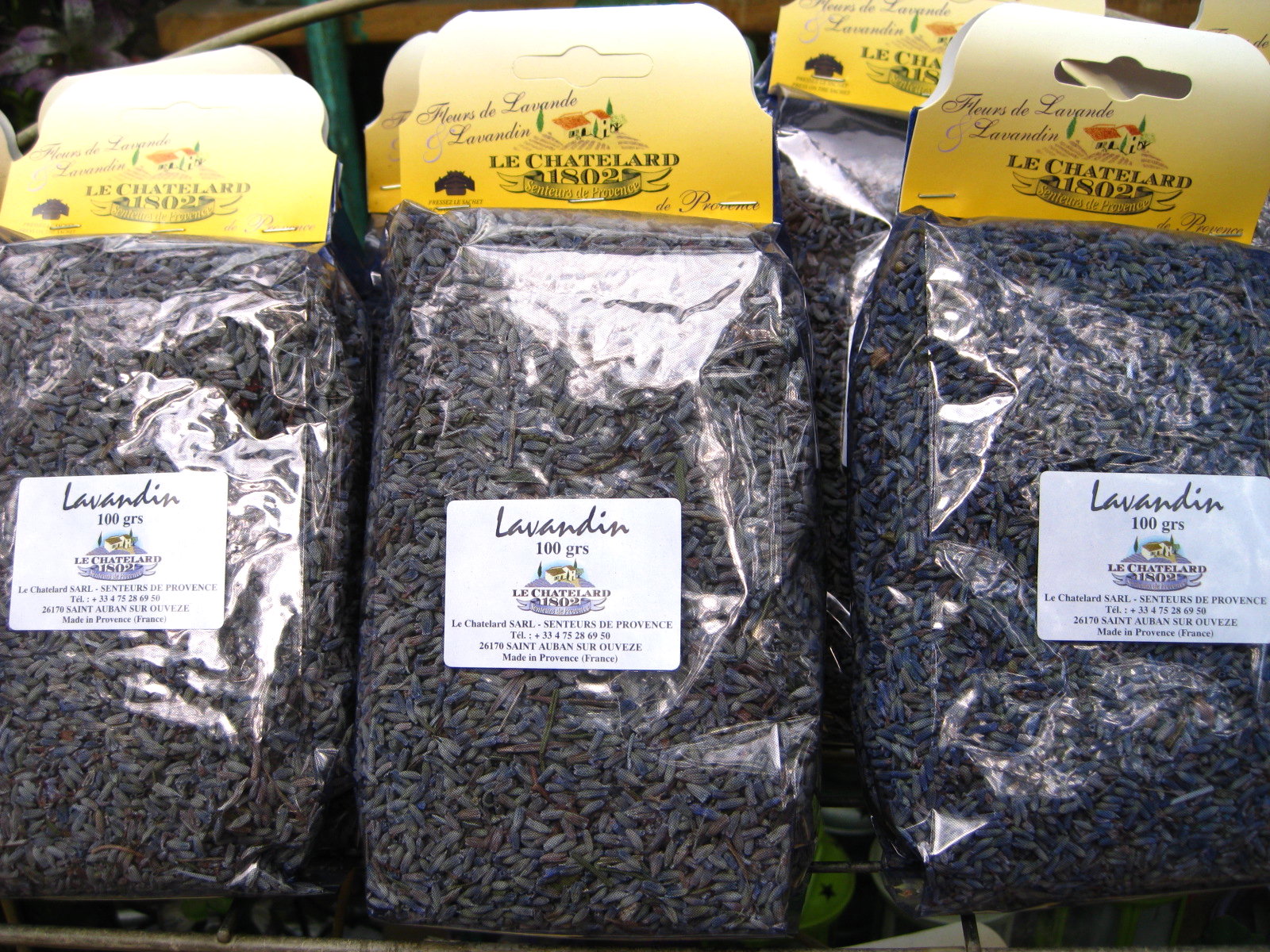
Fourreau Noir opens on my skin with lavender. Have I mentioned lately just how much I loathe lavender? It is a note that I struggle with deeply, due to childhood experiences living in Cannes, in the South of France, where dried herbal sachets of the blasted stuff were ubiquitous. Their sharp, pungent, aggressively herbal aroma was everywhere, and it didn’t help matters that the driveway to our house had lavender growing as if it were on steroids. I had a sensitive nose even back then, and the aromatic deluge left a mark, making me avoid lavender as an adult whenever and wherever possible. As you might have gathered by now, this is the first of what will be several examples of Serge Lutens making me eat my hat because, yes, Fourreau Noir opens with lavender. And lots of it. En plus, it’s pungent, herbal, and dried — everything that would normally send a bone-deep shiver through my body.

Source: background-pictures.feedio.net

Source: background-pictures.feedio.net

Those magicians, Messieurs Lutens and Sheldrake, quickly coat and cloak the lavender with the black sheath talked about in Fourreau Noir’s description. Like loving tentacles, incense wraps itself around those blasted purple stalks, lovingly turning them dark and smoky. Within moments, my hated, floral, herbal nemesis is also infused with sweetness from a lightly spiced, chewy, slightly earthy patchouli. It, too, is a bit smoked, and the dark sheath is even further supplemented by what smells to me like dry, also smoky cedar wood.

Source: amyglaze.com

Source: amyglaze.com

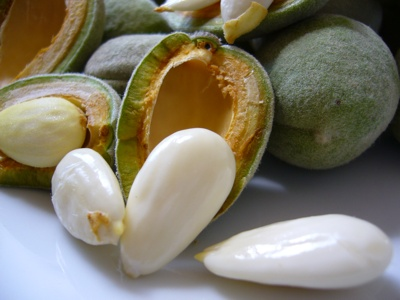
There is something a little synthetic about all the sharpness, something biting that almost burns my nose, but it is soon countered by a wave of warm sweetness. Like a pale, white counterpart to the the black incense tendrils, creamy vanilla and tonka bean seep through. They curl their way around the sharp notes, fractionally dulling their razor’s edge. The sweetness is gauzy but strong, light but potent, and always feels like the very frothiest mousse. Subtle hints of a bitter fresh almond soon follow, along with an intangible woodiness that differs a little from the smoky, dry cedar. 

Five minutes in, the patchouli starts to slowly become more prominent, feeling wonderfully red-brown with its spicy, sweet, earthy facets. It’s potent, but never dense, chewy, or opaque in feel. It is true patchouli, even down to the very fleeting, momentary and faint hint of something medicinal in its character. It is a touch which underscores the more herbal aspects of the lavender. Yet, despite that, the flower is never completely like the aggressively pungent, aggressively herbal, dried, acrid note that is the stuff of my nightmares. Thanks to the impact of the other notes, especially the patchouli and incense, the lavender has been transformed into something different. It is now simultaneously incense-y, a little floral, and a little darkly leathered, herbal, and sweet.  

Source: layoutsparks.com

Source: layoutsparks.com

Fourreau Noir encompasses you like a cloud that is at once almost translucent and as tough as steel. I’ve worn differing amounts, but most recently tried 3 decent-sized sprays, and Fourreau Noir’s opening spread its tentacles about 4-5 inches around me. It is potent and intense, yet oddly feels as insubstantial and thin as the smoke it contains. It’s like being covered in a swirl of incense and lavender, tendrils that weave about you as thin as an invisible thread, but with enormous tenacity. I’m amazed by how sheer it is, and by the mental images of translucency. Take that as Exhibit No. Two of Serge Lutens making me eat my hat, as perfumes with a gauzy, almost invisible sheerness are far from my personal cup of tea.

Source: footage.shutterstock.com

Source: footage.shutterstock.com

What’s even more baffling about the odd case of Fourreau Noir is that it actually feels as though it disappears from my skin from time to time. On past occasions, there were times when fragrance felt as though it had evaporated after about 90 minutes, and it wasn’t always easy to detect. Yet, it still lingered all around me, an undeniable cloud of incense, patchouli, and lavender. It would follow me like a lap-dog, leaving a small trail in the air. At other times, however, I couldn’t detect any projection at all, but Fourreau Noir was clearly pulsating and evident on my skin. Occasionally, it seemed to slip away like a ghost, only to reappear, almost stronger than it had been before, just as I was about to apply more. Fourreau Noir is a perplexing creature with a mind of its own, flitting about, encapsulating you, weaving some mysterious spell around you that makes you ignore all your usual issues or concerns as you smell that entrancing mixture of sharp contrasts. Dry, smoky, sweet, earthy, herbal, and woody — it’s all there, all around you, potent and dark, and yet, as insubstantial as a ghost. How can I love it so?!  

Exhibit Three of Le Grand Serge making me tolerate what I normally dislike is the synthetic feel underlying Fourreau Noir’s opening hour. It is most definitely there, and I can’t stand fragrances whose unnatural sharpness almost burns my nose if I smell my arm up close. It’s not only that a few of the notes like the lavender or the incense feel like a razor at times, but something genuinely synthetic in the base. I can’t pinpoint what it may be, though I suspect it’s the musk, combined with notes that are inherently a bit sharp in nature. And, yet, I don’t mind it. Even though it lingers high in my nose and burns a little, Fourreau Noir is simply too beautiful a combination for me to really care. Yes, Uncle Serge, I will have another piece of that humble pie.

Source: dreamstime.com

Source: dreamstime.com

The fragrance continues to subtly shift. Twenty minute in, the patchouli becomes increasingly prominent, while the almond and vanilla foam in the base start their slow rise to the surface. As the supporting actors begin to arrive on stage, they counterbalance the lavender’s herbal, almost leathery undertone, the fierceness of the incense, and the dryness of the cedar. The vanilla tames the beastly lavender and smoke, while the almond’s bitter facets add a fascinating contrast to the earthiness of the lightly spiced patchouli.

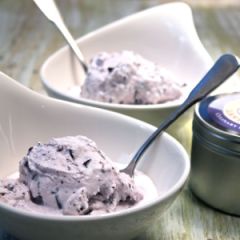
Source: A Spicy Perspective. (For recipe for lavender chocolate ice cream, click on photo. Website link embedded within.)

Source: A Spicy Perspective. (For recipe for lavender chocolate ice cream, click on photo. Website link embedded within.)

At the end of the first hour, Fourreau Noir turns much sweeter, and borders almost on the gourmand. The lavender is now creamy, rich, and feels like lavender ice cream infused with almond extract. Yet, the perfume isn’t really a true dessert-y fragrance, thanks to the constant presence of the dry notes that swirl all around like a dark cloud. From the temple-like, black incense trails, to the dry smoky cedar, and even the earthy spiciness of the patchouli, there are too many checks and balances to the creamy lavender-vanilla-almond sherbert. What the sweeter notes really do is to soften that early razor sharpness, though the synthetic undertone to Fourreau Noir still remains at the base.

The perfume continues to soften. About 2.5 hours in, it lingers extremely close to the skin, and the patchouli has become as prominent as the incense, while the lavender has started to recede. There is something almost ambered to Fourreau Noir’s base, though the golden sweetness and warmth may simply be the indirect impact of the tonka bean on the patchouli. Whatever the cause, Fourreau Noir is now primarily a bouquet of patchouli amber with smoky incense, atop a vanilla base that is infused with almond and lavender, and lightly flecked with musk and abstract, dry woodiness.

Source: backgrounds.mysitemyway.com

Source: backgrounds.mysitemyway.com

There is also the merest, subtlest suggestion of something that smells like gingerbread, and it becomes increasingly strong. By the end of the 4th hour, it’s quite noticeable and I suspect that the creamy woods, the vanilla, and patchouli’s spicy, earth sweetness have all melded together to create a sweet-spiced gingerbread accord. It’s too dry, however, to be like actual dessert or cloying; the sweetness is perfectly balanced. In fact, the unexpected gingerbread element eventually turns drier and woody, taking on an almost sandalwood-like aroma. The overall effect strongly calls to mind Chanel‘s gorgeous Bois des Iles with its very close replication of Mysore sandalwood in its base and drydown.

Fourreau Noir turns increasingly abstract, and its final drydown is a simple, utterly lovely mix of sweetness, woodiness, and creamy smoothness. It’s a patchouli amber gingerbread with the lightest hint of spices, incense, and creamy, wispy, gauzy vanillic sweetness. All in all, Fourreau Noir’s duration averages out to about 10.5 hours on my perfume-consuming skin with three sprays being the median quantity applied. A smaller amount yields about 9.5 hours, while 4 big sprays results in about 11.75 hours. At all times, however, the fragrance feels sheer, almost translucent, and gauzy in weight. The sillage generally drops after about 75-minutes with a small amount, 90-minutes with a medium amount, and 2.5 hours with more. Fourreau Noir only becomes a true skin scent on me around the end of the fourth hour, though there are the issues mentioned earlier about the fragrance sometimes acting like a ghost in terms of projection, as well as strength on the skin.

I was surprised to read some of the reactions to Fourreau Noir as it has alternatively been described as a very clean scent, a masculine one, a deliciously gourmand one, a perfume similar to Chergui, and even, on one rare occasion, an animalic, almost dirty fragrance. All those opinions are noticeable on Fragrantica and in blog reviews. The Non Blonde referred to the latter in her very positive assessment of Fourreau Noir where she compared it to a cozy, cuddly, fuzzy, long sweater with a slightly clean vibe: 

Sometimes my taste in perfume makes me question my sanity. Many reviews and impressions of Fourreau Noir, a 2009 non-export Serge Lutens release, mention/lament/ celebrate two accords- black smoke and a dirty animalic heart. For some of the people who tried Fourreau Noir (the loaded name translates as black sheath) these aspects made it difficult to wear. Me? My skin diffuses smoke and domesticates large beasts. I find Fourreau Noir not just soft and cuddly but also as comfortable and embracing as an old hoodie fresh from the laundry.

I mentioned laundry for a reason. The lavender note is strong in the opening and quite persistent after. […] Fourreau Noir is fuzzy and warm as though it just left the dryer. The lavender over a sweet gourmand base supports this idea, though it’s not exactly Downy Lavender-Vanilla fabric softener. Don’t worry.

Fourreau Noir is musky, but to me it’s a fairly clean musk with a hint of fruitiness. The tactile equivalent is of a soft silk-merino knit, kind of like the long wrap sweater with caressing kimono sleeves I’m wearing now as I’m typing this review. This coziness is helped greatly by the sweet gourmand dry-down. Tonka bean, almond cookies covered in very light powdered sugar and lots and lots of immortelle. I love immortelle on its mapley goodness, and in this case the maple smells like it was aged and smoked in old wood barrels. This is the kind of stuff I expect and enjoy from our favorite uncle.

Obviously, my experience is a bit different from hers, and I don’t find that musk to be either clean or dirty, but I definitely agree that our mutually adored, favorite uncle created a beautiful scent whose drydown is of sweet, smoked, woody goodness.

At the end of the day, I find Fourreau Noir to be a delectably dark fragrance that is quite addictive in its coziness. It really shouldn’t have wrapped its tendrils around me in quite the way that it did. It is a fragrance centered, in large part, on a note that I despise, but it was genius to mix lavender with such unexpected elements as dark smoke, almonds and patchouli. It obviously helps that I’m a sucker for patchouli, but still, everyone who knows me is shocked that Fourreau Noir is the fragrance that I chose as my first bell jar. I am too, actually.

Source: wall.alphacoders.com

Source: wall.alphacoders.com

I had initially gone to the Palais Royal with plans to get a very different scent, perhaps the beautiful De Profundis with its delicate floral heart and gorgeous purple liquid. (I actually ended up with De Profundis as my second bell jar perfume!) While there, testing all the different perfumes, the gardenia-tobacco ode to Billie Holiday, Une Voix Noire, beckoned to me even more insistently than when I had tried it. My beloved Cuir Mauresque (the perfume that Serge Lutens himself wears) trumped both of them, but it’s ridiculous to buy it in a rare, expensive bell jar form when the perfume is also available for much cheaper overseas in a regular 1.7 oz spray bottle.

I was actually testing the Bois series of fragrances, and marveling over Bois et Fruits, when I happened to put Fourreau Noir on my wrist. It caught my attention almost immediately, but there was far too much going on, and I needed to assess each fragrance’s longevity. There were no samples to be had, so I clutched little scented strips wrapped tightly in plastic and went home to ponder the issue. Two days later, when I returned, I was still undecided. It was down between Bois et Fruits and Fourreau Noir, with Une Voix Noir perhaps in third place.

In the end, something about Fourreau Noir seemed more special to me, more unique, mysterious, and entrancing. I loved the mix of sweetness with the sharp, dry incense, and the way that dark smoke weaved its gauzy, tenacious tendrils around me like a witch’s spell. Fourreau Noir has never really seemed like a pure lavender fragrance to me; if it had, I would have run a mile in the opposite direction shrieking for help. It also seemed to be beyond easy categorization; neither “gourmand” nor “dark incense” really describe its core essence. In some ways, it’s everything and nothing, just like its peculiar, occasionally ghostly sillage that can also be a tenacious, sheer, potent cloud. It is a fragrance that seems at once very simple, but also very nuanced and layered.

Perhaps the best explanation for Fourreau Noir’s hold over me is the dark elusiveness at its heart, an elusiveness that is so very Serge Lutens. How else can one explain a lavender phobe falling for such a fragrance? I tried the much-vaunted, endlessly worshiped, lavender gourmand fragrance, Kiki, from Vero Profumo, and was bored to tears. I found it simple, uninteresting, lacking in nuance, and banal. Perhaps I simply needed dark magic? Or perhaps only a master like Serge Lutens can create a perfume that encompasses everything one dislikes, but make it so delectable that you can’t help but fall into its addictive embrace. Yes, the answer has to be Serge Lutens. Now, if you’ll excuse me, I have to put on some lavender, and eat some humble pie.

DETAILS:
Cost & Availability: Fourreau Noir is an eau de parfum that is part of the Serge Lutens “Paris Exclusives” line, which means it is available only in the larger 2.5 oz/75 ml Bell Jar size. It retails for $300 or €140 (I think) for a 75 ml/2.5 oz bottle. You can buy Fourreau Noir directly from the U.S. Serge Lutens website or from the International one. For some reason, the International Site seems to be temporarily out of the fragrance at the time of this review (which is why I can’t get the definitive Euro price), but you can recheck the listing later. There is also the rare option of purchasing Fourreau Noir in 2 refillable black sprays, each of which is 30 ml, for a total of 60 ml. The price is $190 on the U.S. Lutens website, and €120 on the International one.
In the U.S.: you can also find Fourreau Noir sold exclusively at Barney’s New York store. The website has a notice stating: “This product is only available for purchase at the Madison Avenue Store located at 660 Madison Avenue. The phone number for the Serge Lutens Boutique is (212) 833-2425.”
Personal Shopper Options: One way of getting Fourreau Noir at a cheaper price is Shop France Inc run by Suzan, a very reputable, extremely professional, personal shopper who has been used by a number of perfumistas. She will go to France, and buy you perfumes (and other luxury items like Hermès scarves, etc.) that are otherwise hard to find at a reasonable price. Shop France Inc. normally charges a 10% commission on top of the item’s price with 50% being required as a down payment. However, and this is significant, in the case of Lutens Bell Jars, the price is $225 instead. The amount reflects customs taxes that she pays each time, as well as a tiny, extra markup. It’s still cheaper than the $300 (not including tax) for the bell jar via Barney’s or the US Serge Lutens website.  Another caveat, however, is that Suzan is limited to only 10 bell jars per trip, via an arrangement with the Lutens house. There is a wait-list for the bell jars, but she goes every 6-8 weeks, so it’s not a ridiculously huge wait, I don’t think. If you have specific questions about the purchase of Lutens bell jars, or anything else, you can contact her at shopfranceinc@yahoo.com. As a side note, I have no affiliation with her, and receive nothing as a result of mentioning her.
Samples: You can order samples of Fourreau Noir from Surrender to Chance starting at $3.99 for a 1/2 ml vial. The fragrance is also available as part of a Five Piece Non-Export Sampler Set, where you can choose 5 Lutens Paris Exclusives for a starting price of $18.99 for a 1/2 ml vial. 

Roja Dove Fetish (Woman)

Succumb To Your Desires.

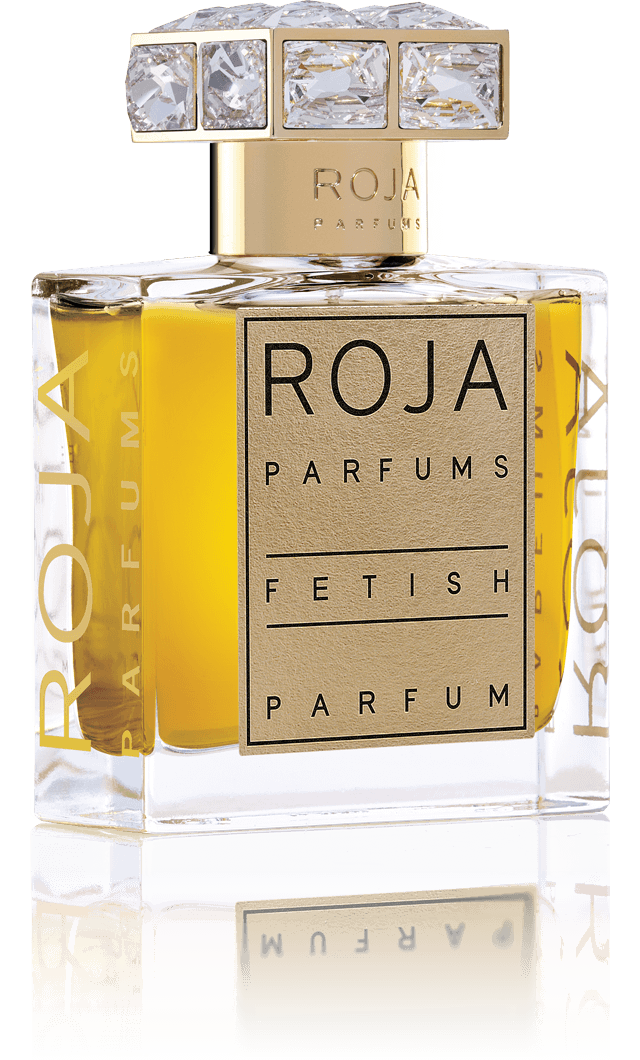
Fetish for women in pure parfum extrait.

Fetish for women in pure parfum extrait.

That is what Roja Dove tells you when he talks about Fetish, his line of chypre-leather fragrances. Yesterday, we explored the men’s version of Fetish Extrait, and, while it didn’t awaken any desires in me, I certainly concede that it is a leather scent. However, I’m wholly unconvinced on that matter when it comes to Fetish for Women (also in pure parfum Extrait form). There was nothing remotely leathered about this white floral chypre on my skin.

On his Roja Parfums website, after he’s ordered you to succumb to your desires, Roja Dove offers the following description for Fetish:

WARM, DRY, FRESH, SWEET, & LEATHERY

“Nothing is darker than leather in all its guises. Beware once you have entered there is no escape, as I have created a perfume that once under its spell there is no return”. Roja Dove

INGREDIENTS

TOP: Bergamot

HEART: Jasmine, Rose, Tuberose, Ylang Ylang

BASE: Castoreum, Cedarwood, Cinnamon, Clove, Galbanum, Musk, Oakmoss, Patchouli, Vetiver

Galbanum

Galbanum

Fetish for Women Extrait (hereinafter just “Fetish“) opens on my skin with galbanum sweetened by jasmine. It’s a combination of great crispness, freshness, and greenness, but without the usual pungent froideur, distance, and iciness that I typically find with galbanum. The ingredient’s sharp edge and unapproachability render it something that I often struggle with, but here, it’s very different. The jasmine adds a fragrant sweetness and warmth, while the galbanum keeps the usually indolic, sometimes heavy flower quite crisp, clean, and green. There is the faintest trickle of jasmine’s sweet syrupy nature lurking underneath, but it’s always kept in check and balance. 

Photo: my own.

Photo: my own.

On the heels of the two main notes is the oakmoss. It feels simultaneously pungent and mineralized, but also a wee bit plush, fresh, and lightly sweetened. In Fetish’s middle layer, hints of dry, woody vetiver and slightly sweet, green patchouli round out the tableau of variegated greens. The one exception to the colour spectrum are the flickers of aldehydic soapiness that dart about. In Fetish’s depths, there are elements of tuberose and extremely dry cedar. Even deeper below, the castoreum briefly stirs. Here, it thankfully lacks the animalic raunchiness or sweaty perianal parts prevalent in Fetish Pour Homme; instead, it merely feels like something velvety brown and soft in the base. A mere drop of animalism, if you will, instead of whole bucketfuls.

For the most part, however, Fetish for Women is primarily a triptych of jasmine, galbanum, and oakmoss on my skin. The degree of each note fluctuates in prominence and strength, but the perfume’s core essence never changes. Not once.

Source: dilei.it

Source: dilei.it

What happens instead is that Fetish goes through a small shrieking period. The galbanum becomes more forceful and incredibly sharp; so, too, does the oakmoss. Something about the two notes in tandem, along with that aldehydic soapiness, consistently creates an almost synthetic sharpness that I find abrasive. I tested Fetish three times, and there is always a brief 20-25 minute period when the jasmine retreats. The loss of its sweetness permits the galbanum’s inherently icy, sharp edge to come out, along with the more fusty, pungent aspects of the oakmoss. I don’t know to what extent the latter may be partially synthetic in nature, but the effect of the overall combination repeatedly causes a tightening sensation in my nose. It’s almost like something verging on sinus pains, but not quite.

"Evernia Prunastri" lichen moss. Source: via supermoss.com

“Evernia Prunastri” lichen moss. Source: via supermoss.com

I want to take a moment to briefly talk about that oakmoss which I suspect is mousse de chene. It is actually a specific type of oakmoss (Evernia prunastri) that is an oakmoss absolute according to The Aroma Connection blog, and, in some people’s eyes, seems to be considered the “true” oakmoss. It’s a grey lichen which grows on trees and has an intensely dank, pungent, fusty aroma that can also be salty and smell like tree bark. Still, “real” oakmoss of any type is largely banned out of perfume existence, and substitutes are often used, either by themselves or as complements to smaller portions of the real thing.

There is a very interesting, detailed, and somewhat technical discussion of the different types of oakmoss on The Aroma Connection, including the various synthetic versions or additives thereto:

we are left with a few synthetic oakmoss chemicals, such as Evernyl (methyl 2-4-dihydroxy-3-6-dimethylbenzoate) and formerly, the less popularly-utilised Orcinyl-3 (3-methoxy-5-methylphenol), which the hype from synthetic aroma chemical producers would try to persuade you ‘represent the essential character compound of oakmoss’.

… It should also be mentioned that a range of commercial oakmoss products exists, some offering a warm, leathery-mossy character, whilst others offer have woody, mossy – almost marine-like aspects.

Here, the oakmoss never has a leather aspect on my skin, but it does have an incredibly sharp character that occasionally smells a little salty and like the bark of a tree. There is a subtle smokiness, but it is mild and overwhelmed by the more pungent, almost acrid characteristics. More importantly for our purposes here, the oakmoss has an undertone that, to me, smells synthetic to me. I don’t react with the equivalent of a sinus headache or pinching otherwise, and it happened to me with both men and women’s versions of Fetish.

On all three occasions with Fetish Woman, the shrieking phase was brief, and never lasted beyond 20-25 minutes, ending about 50 minutes into the perfume’s evolution. Part of the reason why is because the jasmine returns in greater strength to counterbalance the green notes, tame them, and turn them into something less forceful. A Fragrantica commentator described Fetish Pour Homme as being very “shouty,” and I think Fetish for Women has a brief period of the same thing, despite being a considerably softer, tamer fragrance. Actually, “shouty” isn’t so accurate in this case, and a more apt description would be “unbalanced.” Regardless, it’s not a very long period, and Fetish soon calms down.

In fact, it turns a little too mellow and goes too much the opposite extreme. On each occasion where I tested Fetish, a little after one hour, the perfume dropped in sillage, hovered just an inch over the skin, and became a virtual blur of white florals with green notes and oakmoss. By the 90-minute mark, it’s a skin scent.

At times, the oakmoss turns so gentle and muted, it felt like the description that one reader emailed me about with regard to another very oakmossy, green fragrance: “green tea and honey.” To my surprise, the oakmoss in Fetish’s base might truly be described that way from afar. Something about the green accords has the soft, fragrant gentleness of green tea, albeit a very concentrated one that has been infused by a very delicate touch of sweet, white floral syrup. Unfortunately, the somewhat synthetic elements remains, lurking far below, and whenever I take whiffs that are too forceful of my arm, the sharp tightening in my nose returns instantly.

Source: bioloskiblog.wordpress.com

Source: bioloskiblog.wordpress.com

There really isn’t much more to be said about Fetish’s development on my skin. It remains as a blur of white florals atop a chypre base. For a brief period, the jasmine and oakmoss are vaguely distinguishable in their own right, but the notes are generally a haze, overlapping each other, and rarely having any definitive, firm shape. In its final moments, Fetish is merely a nebulous floral smear with something vaguely green about it. All in all, it lasted just over 7.5 hours with 2 large sprays, and a little under 9 hours with double that amount.

I liked Fetish for the most part, but what manifested itself on my skin was also a big disappointment. If I hadn’t been told that this was a “leather” fragrance, I never once would have guessed it. For me, Fetish is exactly and precisely the “floral chypre” that Fragrantica classifies it as on their site. My skin always amplifies base notes, and that includes leather, yet none showed up in any of my 3 tests of the perfume. I was also a little taken aback by the lack of complexity, nuance, and body of the largely simplistic scent that appeared on my skin. Fetish was a perfectly nice — even occasionally lovely — white floral perfume, but nothing more. I’d still enjoy wearing it, however, were it not for the synthetic feel in the base and the fact that it consistently became a skin scent on me between the 60-90 minute range (depending on quantity). For $425 or €395, I expect more. A lot more.

On Fragrantica, the only review for Fetish Woman in extrait version comes from Dubaiscents, a reader and a friend who loves the fragrance. She describes it as “both elegant and feminine but, also tough and a little dirty. One of my all time favorite leather scents!” It sounds infinitely more interesting on her skin than on mine, and I envy her her complex experience. If I had experienced some grit, some toughness, something other than linear two-dimensionality, then perhaps I wouldn’t have been so bored. As it is, I’ve struggled to write this review from sheer lack of inspiration, enthusiasm, and interest. In fact, Fetish bores me so much that I will end this here and now.

DETAILS:
Cost & Availability: The Fetish for Women Pure Parfum is available in a 50 ml/1.7 oz size which costs $435, €395 or £345. In the U.S.: Fetish is available at New York’s Osswald. Outside the U.S.: In the UK, you can buy Fetish directly from Roja Dove at his Haute Parfumerie on the 5th Floor of Harrods London. Roja Dove also has an e-store at Roja Parfums for his personal line of fragrances, and he sells Fetish Extrait for £345. In France, Jovoy Paris seems to be the exclusive distributor for Roja Dove fragrances, and sells Fetish in both the Extrait and Eau de Parfum versions. (The Homme EDP costs €265.) In the UAE, the Paris Gallery carries the whole Roja Parfums line and sells the women’s Fetish Extrait for AED 2,050. Samples: I obtained my sample from Jovoy in Paris. If you’re in the U.S., you can test Fetish Homme in the Extrait version by ordering samples by phone from OsswaldNY. They offer a deal of 10 samples for $10 (shipping included) for domestic customers. Their phone number is: (212) 625-3111. As for Surrender to Chance, it only carries Fetish in the men’s EDP version, but doesn’t offer any version of the women’s fragrance. So, your best bet is really ordering a sample from OsswaldNY.