Nasomatto Duro

"Fire Storm" by Marina Petro. Source: marinapetro.blogspot.com

“Fire Storm” by Marina Petro. Source: marinapetro.blogspot.com

Honeyed leather, spices and patchouli, dusted with cocoa, then infused with dark woods, tobacco, and a touch of smoke on a resinous amber base flecked by vanilla. That is one side to Nasomatto‘s Duro. The other might be the aroma-chemical bomb that is woven through every fiber of this perfume. Duro is one of those scents where I really wish I couldn’t detect a drop of aromachemicals a mile away, because I think I might like it otherwise. Unfortunately, Duro has such an enormous quantity of occasionally sharp, abrasive synthetics that it would probably drown a hound dog. And I’m not the only one who struggled with this issue.

Duro via Luckyscent

Duro via Luckyscent

Duro is an extrait de parfum created by the Dutch niche house, Nasomatto, a brand which is best known for their cult masculine favorite, Black Afgano. It’s not easy to find details on Duro, when it was launched, or what precisely is in it. On its website, the company provides no notes, and simply says that Duro is intended to “enhance all the manifestations of male power.” I find that to be an asinine, obnoxious, and immature comment on a variety of levels. Plus, someone better not tell the legion of women who wear patchouli or spiced wood fragrances that they are somehow swinging a male organ, because that is the olfactory essence of Duro and that is also one of the implications of the company’s chest-thumping statement.

Source: imgfave.com. Artist or creator unknown.

Source: imgfave.com. Artist or creator unknown.

Since there are no official notes for Duro, most sites simply list “leather, woods and spice,” as Luckyscent does. However, First in Fragrance always seems to have a company’s press release copy for a fragrance, and it provides the following description and olfactory notes for Duro:

Duro – The essence of male attraction
This composition concentrates the erotic essence of mythical masculinity and sexual attraction in itself.
Duro – A fragrance that directly and unequivocally shows the way with its overwhelming fragrance of sensuality.

Top Note: Agarwood (Oud)
Heart Note: Woods, Spices
Base Note: Leather, Resins

Leather tannery in Bangladesh. Source: ecouterre.com

Leather tannery in Bangladesh. Source: ecouterre.com

Duro opens on my skin with a blast of animalic, slightly urinous leather slathered in honey. It is followed by spices and several, different, sharp aromachemicals. There is a chemical oud that smells a touch antiseptic, then something vaguely ambered (Ambermax? Ambroxan?) which has a rubbing alcohol twang. Putting aside the large quantities of those two extremely sharp notes, the rest of Duro’s opening bouquet is lovely. The animalic note isn’t fecal nor reminiscent of a barnyard. It’s musky and a wee bit urinous, though in an extremely subtle way. As a whole, the honeyed leather feels a little raw, uncured, and butch, but in the pretty way of LM ParfumsHard Leather.

Spice Market MoroccoThe spices are interesting. I tested Duro twice and, the second time, there was merely a generalized “spice” accord. However, during my first test, the bouquet felt quite multi-faceted, even if the spices were so fused together that they weren’t always easy to pull apart. As best as I could tell, there seemed to be the lightest touch of saffron, cloves, and black pepper, followed by a much more significant tonality of red chili pepper. The latter felt like another aromachemical in the sharpness of its fiery bite, but it was an nice counterbalance to the honeyed leather. I think I detected ginger as well — candied, dusty, and freshly pungent — but it was very muted.

During that first test, Duro began manifesting a dusty sweetness and an increasing touch of creamy woods less than 15 minutes into the perfume’s development. The woods felt almost as if some Mysore substitute had been used, supplemented by the spices. The note had a distinct gingerbread undertone that some sandalwood fragrances can have, even through artificial means. One example would be Chanel‘s Bois des Iles which is Chanel’s successful homage to Mysore, despite never actually containing any of the rare wood. Here, Duro briefly reflected the same sweet, spicy, gingerbread characteristics, but it was very short-lived and generally overpowered by that very synthetic oud aromachemical.

Source: 123rf.com

Source: 123rf.com

The second time I tested Duro, I didn’t experience either the wide range of individual, clearly distinct spices nor the quasi-sandalwood impression. Instead, the main note apart from the honeyed leather and the fake oud was patchouli. Lovely, true, original patchouli with all its spicy, red-gold-brown, slightly smoky, sweet facets. It was a touch earthy, but never dusty. It also occasionally showed a glimmer of the note’s green, camphorous side, though that sharpness may again have been the various aromachemicals wafting all around.

I’ll be honest, at times, it was extremely hard for me to detect the subtle nuances of Duro because they felt hidden behind an advancing phalanx of aromachemicals that acted as a wall or barricade at the very top of Duro’s pyramids. The first time was really difficult indeed, and I almost scrubbed Duro, especially as it gave me a profound headache whenever I smelled the perfume up close. I was relieved that Duro was better the second time around when worn on a different arm, but it’s only a question of degree. That said, I fully concede that my nose is much more sensitive to aromachemicals than the average person, and some of you may have no problems at all. (Then again, judging by the comments on Fragrantica, perhaps you might….)

Duro continues to shift as time passes. First, there is the arrival of a tobacco note. It’s dry, sweet, a little bit smoky, and, once in a while, has a tinge of an ashtray-like note on my skin. After 20 minutes, there is also the first whiff of labdanum. It feels a little synthetic and reminds me of the note in Black Afgano because it has the same cherry cola or root beer nuance. It is accompanied by a slightly plummy undertone as well, almost as if the patchouli were manifesting its purple, jammy, dark molasses facet.

Mark Rothko, #20 or "Black,brown on maroon." Source: artsearch.nga.gov.au

Mark Rothko, #20 or “Black,brown on maroon.” Source: artsearch.nga.gov.au

The more significant change always occurs about 40 minutes into Duro’s development, when the leather loses its honeyed touch and sinks fully into the base. There, it remains as a constant undercurrent to the scent, waxing and waning in terms of its prominence. In one of my tests, Duro at this stage had shifted to a very oud-y, aromachemical woody fragrance with dark, fruited patchouli, a touch of chili pepper pimento, hints of gingerbread spices, and a rootbeer-like sweetness over a thin leather base. In the other, Duro was a brown (not fruited) patchouli scent with earthiness, sweetened tobacco, spices, abstract woodiness, aromachemical oud, amber, and spices on a leathered foundation.

Duro is a very concentrated fragrance in its overall bouquet, much as you’d expect from a pure parfum extrait. It is, however, much airier and softer than the notes would have you realise. There is a lightness to the scent, and the sillage is only moderate at first, before dropping to hover just an inch, at best, above my skin at the end of the 1st hour. It remains there for another hour, before turning into a skin scent. Yet, Duro’s overall bouquet remains largely unchanged as a whole.

In fact, Duro is an extremely linear scent, though I always say that there is nothing wrong with linearity if you love the notes in question. The individual elements fluctuate in terms of their prominence or order, but Duro itself doesn’t change for a few hours. For the most part, it merely turns more resinous, ambered, and golden in feel.

"Novemthree" by Olaf Marshall. Source: vitaignescorpuslignum.blogspot.com

“Novemthree” by Olaf Marshall. Source: vitaignescorpuslignum.blogspot.com

The biggest change occurs at the start of the 4th hour when new notes arrive on scene. There is, without any doubt in my mind, vetiver in Duro and I noticed it on both occasions when I wore the scent. There is also cedar. None of this is particularly surprising, as both elements are common companions to patchouli in European fragrances. Here, the vetiver is somewhat smoky and dark. In one test, Duro turned primarily into a vetiver-patchouli fragrance at the start of the 6th hour, lying atop a very arid aromachemical, ambered base that was resinous and a little plummy. The perfume felt simultaneously woody, sharp, smoky, and slightly leathered.

Source: Colourbox.com

Source: Colourbox.com

It was a very different story the second time around when I tried Duro on my other arm. In that case, the patchouli remained as the dominant note from the end of the 2nd hour onwards, not the smoky vetiver. Duro was a blend of earthy patchouli with abstract spices and a hint of tobacco, lightly flecked by vetiver and cedar atop a warmly resinous amber base with a leather undercurrent. The scent was sweet, spicy, warm, a touch smoky, and very golden in feel. It became even better around the middle of the 3rd hour when the patchouli started wafting a cocoa powder heart. Vanilla started to stir in the base, adding to the prettiness. By the start of the 5th hour, Duro was patchouli, cocoa, amber, vanilla and aromachemicals, lightly flecked by vetiver and with a hint of cedar, atop a resinous, slightly leathered base.

Source: wallpapers.free-review.net

Source: wallpapers.free-review.net

In both versions, the long, final drydown phase of Duro was largely the same: woody sweetness dominated by patchouli and abstract ambered warmth. There were differences in terms of how distinct or clear the individual notes might be, but as a whole Duro simply turned into some variation of a patchouli woody scent with different forms of sweetness (amber resins, vanilla, or both). The woods became increasingly amorphous, the leather largely faded away on my skin, and the spices melted into the patchouli which, in turn, became more fuzzy, warm, sweet, and vanillic. It was pretty, and lasted for ages. As a whole, Duro lasted just short of 8.75 hours in one test, and just over 9.75 in the other. The sillage was always soft after 90 minutes, and it generally turned into a skin scent after about 2.5 hours with 3 very large smears (or the equivalent of 2 small sprays from a bottle).

Source: androidcentral.com

Source: androidcentral.com

On Fragrantica, reviews for Duro are mixed, with some people calling it a woody, resinous “masterpiece,” while others find it nice but far from unique, and a handful note Duro’s very chemical nature. A good number of people seem to have encountered the same sillage and softness issues that I did, as they had difficulty detecting Duro after a few hours. Here are a selection of the negative or conflicted reviews for the scent, many of which echo a common theme:

  • megachemical blast of wood…lasts nothing… the hole in your wallet will last longer!
  • Very synthetic smell. Didn’t project at all. Longevity was maybe 6 hours. I really can’t stand that sharp, medicinal, chemical oud scent you get from fake agarwood. I wore it a few times but it was no better than Montale [….]
  • Smells like vix rub … woody musky like a incense burning on wood in a hindu temple not something i would wear … drydown is a little better but all i can smell is that wood note
  • Duro, like the name suggests, is extremely hard on the nose. At least for the first hour or two it smells like a medicinal syrup with heavy woods. However, the dry down is fairly pleasant.
  • Oo no, I really don’t like this one, very strong and heavy woods of the bitter type. Also detect strange medicinal notes [….] Definitely prefer B Afgano.
  • I bought this bottle Dec 2012, at first i felt it was too medicinal, the oud and spice really strong, almost felt like i was in the operating room, but after several months i began to love the scent,,you have to get used to it, its a strong masculine spicey, leathery, oudy bomb!!
  • This is unique, bold, very strong, but sadly utterly unenjoyable to my nose. I smell some of the same dark (opaque!) resin notes in Duro as I do in Slumberhouse’s Norne… But with an additional cherry cough syrup accord layered on top.
  • A solid woody spicy and completely masculine fragrance which is very simple but well-made at the same time. [¶] The opening is a heavy and dark combination of smoky woods, some spices and a little bit of sweetness completely in the background. [¶] The smoky woody/leathery smell remind me of the smell of oud and there are noticeable amount of spices and some sweetness beside it. [¶] In the mid you have exactly the same smell which only gets smokier and woodier. [¶] Smell very masculine and bitter smoky woody, but smell very familiar too! nothing new or unique about it.
Source: alexlesterspersonalblog.blogspot.com

Source: alexlesterspersonalblog.blogspot.com

Others, however, adore what they think is the super-sized masculinity and testosterone of the scent:

  • A fantastic masculine perfume. Women scare of it I think! […][¶] Shortly a perfume not for human maybe, gorillas deserve it. You either hate it or love it and there’s nothing in between. This is one of the manliest fragrances I’ve ever smelt. Seems is made out of pure testosterone. [¶] For men who drink beer at morning and work with axe.
  • This is the most explosively masculine perfume I’ve ever smelled!! You couldn’t stop this from projecting if you held it at gunpoint and threatened it’s bottle. [¶][…] This perfume says: “WOOD, SPICE, LEATHER…B@TCH!!!! I’M A MAN!!!”
  • DURO!!!! [¶] The HARD ON of male perfumery! […][¶] If you like wood up the wazzoo this is the fragrance for you! [¶] Loud woodiness of dank strong Oud and a harder denser wood combined with it. [¶] Then there’s the spice it’s hard but not in a cooking spice type of way or even a hot chili kind of way, it’s dry woody spice…almost like the natural spicey scent that would come from a piece of exotic wood. [¶] This fragrance for me is absolutely everything I look for in a masculine powerhouse. The spice perfectly tones down the unpleasant quality oud can have. You know? that bit when it takes a nosedive after the initial almost sweet strange amber quality. [¶] Anyway…the price of this juice is high, extortionately high some might say but I still felt Duro was a worthy purchase because of how bold and strong this juice is. [¶] Longevity and projection are massive as you’d expect from extrait de parfum. [¶] It’s not especially unique smelling this one but what can I say? It has a certain appeal & I was charmed by it.

As you can tell from that last comment, Nasomatto fan boys love the brand’s macho reputation, though even they have to admit that Duro is not particularly unique.

Montale Aoud Musk via mychicstore.com

Montale Aoud Musk via mychicstore.com

What is more interesting to me is the fact that a lot of commentators find Duro to be comparable to Montale‘s Aoud Musk. Nay, actually “identical to” the latter, in several people’s opinions. I haven’t tried Montale’s Aoud Musk, but if it’s true, then that would certainly be a much cheaper purchase. Duro costs $185 for a mere 30 ml, while Luckyscent sells Montale’s Aoud Musk for $120 for a 50 ml bottle and for $170 in the 100 ml size. In addition, you can find Aoud Musk on numerous discount retailers for much less, making the price differential all the greater.

The other thing that I found noteworthy is a comment about Nasomatto’s dilution of its scents. I’m pretty sure the version of Black Afgano that I tried was altered to be much sweeter and less smokier than the fragrance of legend, but it seems that it isn’t the only one in the line to be so changed. A Fragrantica commentator called “Aphexacid” wrote in August 2013:

First, let me say that the rumor of Nasomatto watering down their perfumes is unfortunately TRUE. [¶] I purchased Duro and Pardon together, and they were both completely a shadow of their former selves. [¶] I got maybe 1 hour of moderate projection out of each, then it became skin scents. 6-8 hours later, gone.

What does Duro smell like? Its basically a weaker, less interesting version of Montales EPIC masterpiece “AOUD MUSK”.

Duro is lacking backbone.

If Duro has been diluted, that may explain why the scent I tested did not seem wildly masculine but, rather, felt like something that women could appreciate as well, if they had a taste for resinous, woody, patchouli, oud fragrances. I truly don’t think Duro is that much of a chest-thumping fragrance, though a number of men on Fragrantica would clearly disagree.

What a number of people would not disagree with is my view that Duro is as aromachemical as hell. Judging by all those references to synthetic, medicinal, antiseptic, “vix,” cough syrup, or “operating room” aromas, quite a few people picked up on it. In short, it’s not merely a question of me being abnormally sensitive. There’s nothing wrong with the judicious, light use of aromachemicals in a fragrance, but to have such a vast quantity in a tiny bottle that costs $185 when the fragrance supposedly is “identical to” a Montale? That’s a problem.

I really wanted to like Duro, especially as its notes should be right up my “patch head” alley, but it’s a complete pass for me. However, if you enjoy very resinous, woody fragrances centered on oud, patchouli, spices and amber, with a light streak of leather, then you may want to give Duro a sniff for yourself.

DETAILS:
Cost & Availability: Duro is a concentrated parfum extrait (or pure parfum), and is generally sold only in a 30 ml/1 oz bottle. However, a mini 4 ml version is available directly from Nasomatto, who sells the 30 ml bottle for €118 and the 4 ml mini for €42. Nasomatto ships world-wide. In the U.S.: Duro retails for $185 for 30 ml. It is available at Barney’sBergdorf GoodmanLuckyscent, Neiman Marcus, and BeautyBarOutside the U.S.: In Canada, you can find Duro at The Perfume Shoppe which sells the 30 ml bottle for $165. I think that is in US pricing. In the UK, Duro costs £108, and is available at Liberty London, Roullier WhiteBloom Parfumery, and The Conran Shop. In France, you can find Duro at Premiere Avenue or Jovoy for €118. In Spain, you can find Duro at Parfumerias Regia, in Italy at Sacra Cuore, in Russia at what seems to be Nasomatto’s own Russian site, along with Orental.ru. In Germany, Duro is sold at First in Fragrance. In the Netherlands, you can obviously find it at Nasomatto’s own shop in Amsterdam. In Australia, you can find Duro at Libertine which sells the 30 ml bottle for AUD$220. In Hong Kong, Konzepp carries the fragrance. In South Africa, the Nasomatto line is available at Rio Perfumes. In the UAE, the line is sold on Souq.comSamples: I obtained my sample from Luckyscent, but you can also find Duro on Surrender to Chance where prices start at $4.99 for a 1/4 ml vial. Samples are also available for purchase at many of the sites linked up above.

Perris Monte Carlo Bois d’Oud

Honeyed oud, plummy fruits, the smoky smell of burnt leaves and singed wood interwoven with delicate florals, vanilla, and white creaminess, all combined in a mix that resembles some other well-known fragrances on the market before turning into its own creature — that’s the essence of Bois d’Oud, a fragrance from Perris Monte Carlo.

Source: Fragrantica.

Source: Fragrantica.

Perris Monte Carlo is a relatively new house that emerged in 2012. I’ve been curious about it for a while as it is based in my old home, so I obtained two samples of the line. The majority of the fragrances, including Bois d’Oud, were launched in 2012 in Europe, before later being released in the U.S. in 2013. I can’t find a company website to see how Perris would describe Bois d’Oud, only a lot of PR babble about how the company’s signature involves luxury, gold, and prestigiousness. It all sounds terribly nouveau riche and obnoxious, so let’s get directly to the perfume’s notes.

According to First in Fragrance, Bois d’Oud’s ingredients are:

Top Note: Bergamot
Heart Note: Peach, Plum, Jasmine, Iris, Rose, Orange Blossom
Base Note: Cedarwood, Agarwood (Oud), Patchouly, Vanilla, Ambergris, Labdanum (Rockrose), Musk

Honey and plums. Photo: Alice Carrier at Bread and Honey blogspot. (Website link embedded within photo.)

Honey and plums. Photo: Alice Carrier at Bread and Honey blogspot. (Website link embedded within photo.)

Bois d’Oud opens on my skin with the richness of honey-drenched oud, followed by plums, a patchouli rose, smokiness, and a toffee’d, dirty, labdanum amber. There are subtle strains of orange blossom, and, indeed, a light flicker of orange itself. The overall effect is of a multi-faceted, dark sweetness that is dominated by plummy fruit, oud, and honey.

Bois d’Oud’s opening immediately and instantly calls to mind Arabian Oud‘s Kalemat. The Perris fragrance is slightly different with more plums, a stronger oud presence, and the inclusion of orange blossoms in lieu of blueberries. It is also thinner, sheerer, and less opaque in feel than Kalemat’s opening. For a brief moment, Bois d’Oud also reminds me of an oud version of Serge LutensFille en Aiguilles, though there are even more differences with this one. Bois d’Oud is less plummy than that one, lacks the heavy frankincense element, has honey instead of brown sugar sap, includes a very noticeable strain of jammy rose, and its smokiness seems to stem from different sources. Throughout Bois d’Oud’s development, I kept feeling like I was smelling something akin to guaiac wood, with its aroma of burning leaves in a fall bonfire, as well as its occasional facet of stale dustiness. That’s all very different than Fille en Aiguilles. Ultimately, perhaps the combination of honeyed sweetness, slightly dirty ambered labdanum, oud and darkly plummy fruits is closer to a third fragrance that came to mind during Bois d’Oud’s development: Nasomatto‘s Black Afgano. Bois d’Oud opens like a mix of Kalemat and Black Afgano, before eventually moving closer to the latter.

Source: picsfab.com

Source: picsfab.com

10 minutes into its development, the notes in Bois d’Oud realign themselves. The plum takes a small step back, while the peach, orange blossom, and jammy patchouli rose step more to the foreground. The orange blossom adds a subtle (very subtle) soapy undertone to the fragrance, though it’s fleeting. The peach adds a different sort of fruitness, but it is the patchouli which is most prominent. It’s a purple fruitchouli that is thoroughly intertwined with the rose, but it doesn’t feel like dark molasses so much as syrup. Very sweet syrup that underscores the strong impression of honey. The oud, fruit and floral accords are quite drenched with both elements, creating the impression of stickiness, though the perfume is very airy in weight.

Source: ghulmil.com

Source: ghulmil.com

The whole bouquet is nestled in a cocoon of abstract woods and a subtle tinge of smokiness. As noted above, I keep feeling as though there should be guaiac wood listed in the notes, because something in Bois d’Oud replicates its particular form of singed dryness. It goes beyond the smell of mere cedar, though both woods can have a dusty, stale undertone like the one that appears later on in Bois d’Oud. In truth, I really don’t smell cedar in the way that I’m used to, and all the wood notes beyond the oud feel really indistinct in an individual manner. As for the oud, it is not medicinal, fecal, raw, or butch. It is merely honeyed, and a little bit musky.

Photo: TheCozyApron.com. (For a recipe for grilled cinnamon plums with honey and marscapone vanilla, click on the photo. Website link is embedded within.)

Photo: TheCozyApron.com. (For a recipe for grilled cinnamon plums with honey and mascarpone vanilla, click on the photo. Website link is embedded within.)

Bois d’Oud continues to shift. About 20 minutes in, the vanilla emerges in the base, along with what I can only describe as a white creaminess. It’s doesn’t feel like it comes wholly from the vanilla, though that does seep over into it. I can only describe it as something that is almost like white, honeyed beeswax, but not quite. It doesn’t smell waxy or even particularly honeyed, so perhaps it’s not an offshoot of labdanum (which can often take on those nuances), either. Whatever the source, it goes beyond a mere textural thing and is one of my favorite parts of Bois d’Oud, especially when it has that lightly vanillic flavour to it. Interestingly, as the vanilla creaminess grows stronger, the honey note that burst out of the gates grows weaker and thinner.

At the same time, the first glimmer of a dry, woody aromachemical appears. It emphasizes my early impression that the oud note is synthetic, not real. As Andy Tauer once noted in his blog, most purported “oud” fragrances on the market today use hardly any of the increasingly expensive, real ingredient, relying instead on chemical substitutes put into a cypriol base. It smells like that here with Bois d’Oud. At first, it is quite a subtle chemical twinge, thanks to the growing creaminess and soft vanilla that help to cushion the note. Later, though, it becomes a slightly different matter.

"Coffee and cream" Art Print by Shalisa Photography/ Sharon Lisa Clarke on FineartAmerica.com

“Coffee and cream” Art Print by Shalisa Photography/ Sharon Lisa Clarke on FineartAmerica.com

As a whole, Bois d’Oud at the end of 30 minutes is a well-blended bouquet of oud, patchouli rose, slightly vanillic creaminess, plum, and labdanum amber with flickers of orange blossoms, smokiness, and an abstract woodiness. Bois d’Oud still feels syrupy, but now it is from the purple fruitchouli more than from the honey. The peach lingers in the sidelines, but it is quite muted. It’s the same story with the cedar, and that subtle smokiness.

Bois d’Oud doesn’t change substantially for the next few hours. It drops in sillage at the start of the 2nd hour, hovering just 2 inches above the skin at best, and its weight feels as though it were cut by 60%. I keep having images of translucent cream tulle, splattered by plummy, purple fruitchouli and roses, then sprayed with a synthetic oud. Something in the base is taking on a faintly medicinal vibe, though it’s not the “pink rubber band-aid” smell that oud can sometimes have. Whatever it is, I’m not a fan. Equally disappointing is how that lovely vanilla and white, cream beeswax note is being increasingly overshadowed by a woody, stale dustiness that probably stems from the cedar.

Bois d’Oud turns into a skin scent about 2.5 hours in, though it easy to detect up close, thanks to the plummy, syrupy patchouli in particular. The honey, peach and orange blossoms have vanished, though the jammy rose lingers. The vanilla seems very muffled, while the aromachemical aspect is not. The focus of the scent is increasingly on oud and dry woods, infused with that creamy note and the subtle touch of abstract, stale dustiness. Bois d’Oud feels now like a Montale fragrance. You can take that how you will.

I’m obviously not enthused about this stage, but I have to say that Bois d’Oud recovers very well, changes again, and has an extremely nice drydown. Near the end of the 4th hour, Bois d’Oud takes on more ambered and earthy nuances. There is suddenly a lot of gritty, dark, golden amber lurking about the edges, creeping closer to the main stage. At the same time, there are undertones of something that smells like dry tobacco. Much more noticeable is a definite animalic muskiness that wafts about as well, adding a dirty earthiness and the tiniest, subtle touch of skankiness.

Source: samsunggalaxy.co

Source: samsunggalaxy.co

For the most part, Bois d’Oud is now a soft blend of creamy woods, oud, dirty labdanum amber, dryness, earthiness, and a tinge of animalic muskiness. The bouquet is still infused with roses and a syrupy sweetness, but both are much lighter touches that have been diffused or countered by the new elements. Unfortunately, Bois d’Oud has become very gauzy and thin, and you have to sniff really hard to detect its nuances.

The earthiness and skanky musk slowly fade away, and their place is taken by other elements. There is the faintest trace of soft, sweetened powder that briefly pops up in the base for about 40 minutes. Up to top, there is a subtle stale smokiness that flitters about. It’s not quite the smell of campfire ashes, nor the smell of burning leaves, but subtle parts of both, amidst the stronger smell of singed wood. It’s that guaiac wood impression that I talked about earlier As a whole, Bois d’Oud feels much drier at the end of the 5th hour and the start of the 6th, much more purely focused on its wood notes, though that quiet creaminess still remains.

Source: top.besthdwallpapers.info

Source: top.besthdwallpapers.info

Bois d’Oud’s notes slowly shift in terms of their prominence and order. For a few hours, the perfume consists of sweet oud, creaminess, amber, and dry woods, upon a base consisting of an aromachemical tinge and plumminess, all lightly flecked by that whisper of singed woods and dustiness. Slowly, though, the creaminess fades away and the amber takes over.

By the end of the 9th hour, Bois d’Oud is a gauzy blur of amber, followed by abstract woodiness and a lingering touch of sweetness. It’s very nice, and has almost a caramel undertone to it, thanks to the labdanum. At times, the syrupy jamminess of the patchouli rears its head, but generally the fragrance is centered on ambered woods in a mix of dryness with sweetness. That is how the perfume remains until its very end, almost 11.5 hours from the start.

Source: pugetsoundbites.wordpress.com

Source: pugetsoundbites.wordpress.com

On Fragrantica, people seem to really like Bois d’Oud. I was interested to see that the notes the people found most dominant were, in order: oud (22 votes), plum (18), vanilla (16), and patchouli (14). Several people picked up on the creaminess, which they found to be vanillic in nature. Others talk about the plums, sweetness, and, in one case, the peach. One woman compared Bois d’Oud to a Montale fragrance, a brand she says she loves, and wrote, in part:

the scent is quite a stunner. It is very similar to Velvet Aoud from Montale, only richer, sweeter and woodier. There is a plastic kind of aura which reminds me of Iris Ganache from Guerlain.

I cannot smell the bergamote they describe for the top notes. It’s had a syrupy feel, without being too sugary. The sweetness must come from the plum and the peach. I do not smell any flowers of any kind. There is a strong woody, forest-like smell, which isn’t fresh at all… Aoud is the most dominant note, along with dried fruits. Like dried plums and apricots, which have a lot of sweetness and a little saltiness in them. Lots of them! The roses and jasmine, if there, are totally hidden to my nose. Maybe the smallest amount of neroli and iris…. Cedar is listed, but cedar for me is always a “fresh” kind of wood, a little green…. I don’t smell that either… The woods in here are deep and dark. There is also a lot of ambregris which has a vanillary tone, but no distinctive vanilla. I cannot smell much musk or patchouli. No freshness here.

Overall, I would call this a fruity woody, if such a category existed…
Case and point: dried fruits + aoud + dark woods + ambregris. Great silage and longevity, fairly linear, becomes a tad fresher in the base, surprisingly. [Emphasis with bolding added by me.]

Source: spicewallpaper.blogspot.com

Source: spicewallpaper.blogspot.com

Other impressions of Bois d’Oud are:

  • one of the best Ouds on the market surpasses all Montale creations IMO, this could be a vintage M7 flanker, enough said!
  • The beginning, to me was all about the oud, not very sweet – quite earthy and musk-laden. It reminded me very much of M Micallef’s Oud Gourmet – and I didn’t find it at all fruity. About 5 hours later now, the vanilla has really come out and it feels more creamy. I’m really loving this dry down, but am sorry to not have experienced the plum notes and creaminess earlier on.
  • very special frag in a perfume world lately dominated by oud in all his forms ,this a sirupy quite sweet oud maybe one of the most feminine around ,it reminds me a lot of the first original not reformulated poison by dior ..anyway a definitely worth buying frag  7/10   [Emphasis to names with bolding added by me.]
Source: souq.com

Source: souq.com

On Basenotes, the very first review at the top of the page almost made snort with its amusing conclusion:

Perris is based in Monaco, the juice made in Italy, and the thrift store bling of the bottles is aimed straight at the Middle Eastern market.

Yes, I think the bottle’s bling definitely approaches the tacky level, and is not representative of Monaco. (I promise you, Monaco is not a vulgar place, at least it wasn’t when I lived there. This newcomer, Perris, seems to be quite a different kettle of fish, though.) The rest of the review from “Gimme Green” is interesting, and seems to reflect my perception of a stale dustiness underlying Bois d’Oud:

Dry, dark, dusty wood with touches of sweetish suede and hints of dry fruit. Faded rose petals crumble about it. Lived in and somewhat musty.
Has a shut in feel, so claustrophobics beware.
The oud is of a recognizable sort (something similar is in Dueto’s City Love) and I imagine this is one synthetic we’ll come across more and more.
It’s modest, un-fresh and a satisfying wear, if not exactly breaking new ground. An oud one can don and not be distracted by. Plumps out and opens up surprisingly in the deep drydown.

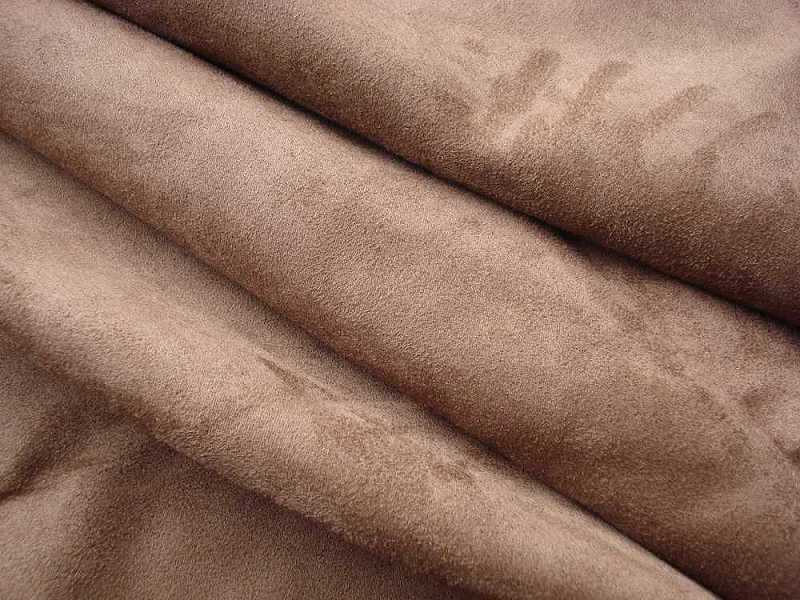
Suede. Source: seasonalcolor.yuku.com

Suede. Source: seasonalcolor.yuku.com

One commentator, “Darvant,” also detected a suede tonality, along with an incense-y rubberiness and a strong floral element that included the jasmine. He writes, in part:

So luxurious, stormy, spicy/fruity and intoxicating in its first explosion but in a while so silky, slightly powdery, delicately rubbery (almost as a golden musky/resinous suede). […] a tornado of diverse elements by soon interacting each other in an armonic olfactory orchestra as luxurious hesperides, mellow plummy/orangy fruits, sambac jasmine, exotic sweet spices and powdery iris (the latter in its heady and mastering role). By soon the spicy/fruity drama is encompassed and comforted by a soothing accord of mossy galbanum, smooth balsams, animalic resins and probably rubbery/incensey suede. The influencing iris provides hints of floral powder perfectly integrated with musks, star anise and suede. A touch of olibanum or just powdery iris, woodsy resins and velvety suede? Probably it’s the note of agarwood (as linked with iris and star anise) which provides a sort of suede/rubber (vaguely boots polish type of) boise vibe around. The sambac jasmine affords an incredibly glamour “icy” spark in the air, as well as combined with musky amber, anise, talky iris and may be aldehydes. Actually in conclusion a velvety rubbery suede type of vibe emerges from the storm with all its exotic silkiness. A dark patchouli provides structure and stableness for all the general oriental mélange.

PS. In the dry down the vanilla emerges and tames a bit the agarwood spicy “gassiness”. The agarwood resin smells slightly synthetic and some people can demur it but i add that this element does not understate the extreme sophistication of the olfactory performance and can’t veil in any way the beauty of its glamour modernity.

In sharp contrast to all those layers, a third Basenotes poster wrote that he or she detected nothing more than “dry woods… [b]ut it’s such a nice smell, that it’s more than enough. Not groundbreaking though.”

I agree with that last statement. Bois d’Oud is not a revolutionary or unusual scent, as all the perfume comparisons from me and various forum commentators should make clear, but it’s not identical like the others either. It is not as dark, dry or smoky as Black Afgano; it seems smoother, plummier, more gourmand at times, and sheerer. Despite the initial resemblance to Kalemat or to an oud version of Fille en Aiguilles, Bois d’Oud later turns into something quite different from either one. I haven’t tried Montale’s Velvet Aoud to know how it might compare, or the Micallef scent mentioned on Fragrantica, but I can say that I think Bois d’Oud differs from vintage M7. There are a few token similarities in terms of how oud is mixed with plummy, resinous, labdanum notes, but as a whole, the two fragrances are very different, in my opinion.

Perhaps the ultimate reason why Bois d’Oud stands slightly apart from similar takes on the plummy-oud genre is the inclusion of the vanilla, creaminess and dustiness. Half-gourmand, half-not. Is that enough for perfume lovers who own similar scents in the same style? I don’t know. It’s going to be an individual decision.

All in all, if you like very plummy oud fragrances with sweetness, amber and vanilla, you may want to give Bois d’Oud a sniff. It is firmly unisex, in my opinion, and has good longevity with decent sillage. The perfume is not hugely expensive per ounce at $150 or €125 for 100 ml of eau de parfum, especially as you can find it priced for less than retail. Will it blow your socks off? I highly doubt it, but Bois d’Oud has some very enjoyable parts, along with a useful, versatile easiness about it.

DETAILS:
Cost & Availability: Bois d’Oud is an eau de parfum that is available only in a 100 ml size. It costs €125 and £125. In the U.S., I think it costs $150, but I can’t find a ton of retailers to confirm that. The company has no website that I could find, either. In the U.S.: the Perris Monte Carlo line appears to be sold at Henri Bendel in New York, but their website only shows the Imperial Oud Black bottle. That seems to be a different fragrance entirely, but, oddly, subtext on the page also mentions Bois d’Oud. I have no explanation for that. Like Bendel, Neiman Marcus only carries the Imperial Oud and the new Rose de Taif. Elsewhere, I’ve noticed Amazon sellers offering Bois d’Oud. One sells a 10 ml decant for $35, while another has a 100 ml tester bottle for $100. Outside the U.S.: in the U.K., you can find Bois d’Oud at 10 Corso Como for £125, along with the rest of the Perris line. The perfume is also available at First in Fragrance for €125. I noticed Bois d’Oud on sale for €105 at the Parfum Center in the Netherlands, while it’s at regular price at Celeste. In Spain, you can buy it from Novento Grados, in Italy at Etos Profumeria, in Greece at Rosina Perfumery, and in Munich at Bruckner. In the Middle East, I found Bois d’Oud at Souq.com for AED 596. Kuwait’s Universal Fragrances has most of the line discounted for $99. Samples: Surrender to Chance doesn’t have Bois d’Oud in an individual form, but it has a Perris Monte Carlo Sample Set of 5 fragrances from the line in 2 ml atomizers for $38.99. You can order Bois d’Oud in an individual vial from The Perfumed Court where prices start at $4.96 for a 1 ml vial.

LM Parfums Black Oud

The darkness of incense and an extremely refined oud, speckled with red-brown, earthy, and fiery spices. A deep woodiness that is soon married with a purple liqueured richness, before its sweetness eventually turns drier. Bold richness that moves into an intimate, gauzy whisper. Those are some of the different aspects of Black Oud from LM Parfums.

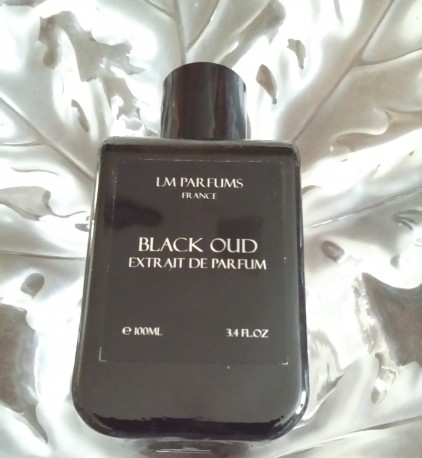
Photo: my own.

Photo: my own.

Black Oud is a pure parfum extrait that was released in 2012. LM Parfums describes the perfume and its notes as follows:

«Blend into the middle of a black and white tainted forest, be in the most obscure darkness, to deliver the fragrance of Oud.» This is my wish to take you into the depth of Indonesia.

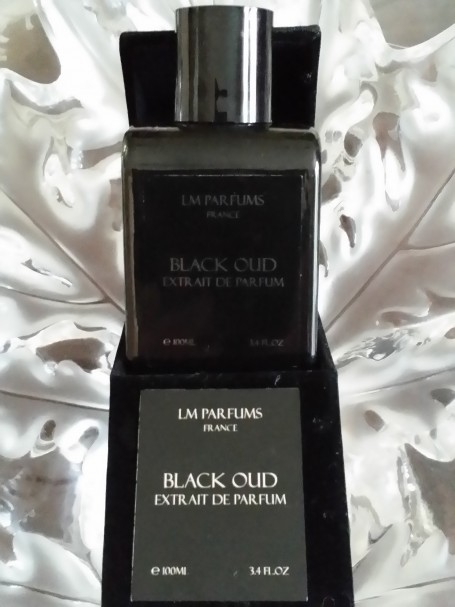
Photo: my own.

Photo: my own.

The subtlety of the Oud fragrances, mixed to cistus gum, wrapped with nutmeg, caraway, and incense, this generous fragrance brings in its wake cedar, amber and sandalwood, embellished with a touch of musk.

Top Notes: Nutmeg, Cumin, Incense.
Heart Notes: Oud Wood, Labdamum.
Base Notes: sandalwood, Cedar, Civet, Castoreum, Vanilla, Amber.

Source: wallpaperup.com

Source: wallpaperup.com

Black Oud opens on my skin with a darkness quite worthy of its name. I’m surprised by that, since so many perfumes labelled “Noir” or “Black” don’t actually convey that sense or impression to me. Black Oud does — at least in its opening minutes. There is a burst of beautifully refined, high-quality agarwood that is thoroughly infused with a spicy, peppered sweetness. There is dusty, vaguely earthy cumin, but also the fiery bite of what feels like red, pimento chilis. A rich, very darkly resinous stickiness follows moments later, along with what feels distinctly like a jammy patchouli note. It completely throws me off, as nothing in the notes indicates patchouli, but that is what I smell. It’s a deeply purpled, velvety, liqueured richness with a vaguely fruited aspect. 

I love Black Oud’s opening. The spices are the key, adding a great depth to the smooth, refined oud. They are dusty, dusky, and dry, but never sweaty. I don’t smell the nutmeg at all on my skin, but the cumin is really lovely. For all its spiced dryness, it also smells oddly fresh in a way, and something about it evokes rye bread more than anything curried, sweaty or stale. The whole bouquet is wrapped up with a thick ribbon of billowing, black frankincense, but it is blended so seamlessly into the notes that it’s more of an overall feel of darkness than a sharp, easily delineated note.

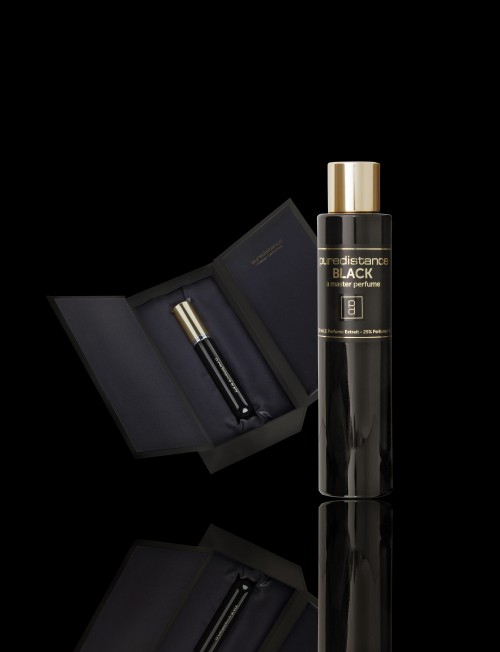
Black in bottle, non-travel form.

Black in bottle, non-travel form.

I’ve worn Black Oud a number of times, and on each occasion in the opening minutes, my initial impression is always the same thing: a much better, more refined, drier Puredistance Black. (Puredistance insists on typing it as BLACK, but I refuse.) Black Oud was released in 2012; Puredistance’s Black in summer of 2013. They are both Extrait perfumes with spices, incense, oud, and a liqueured patchouli sweetness, though Puredistance refuses to release its exact notes for the fragrance and Black has a definite floral component. I was the only blogger out of the first lot who initially reviewed Black to say that I didn’t like it, and I received a bit of flack for it. Well, I stand by my opinion, as I still don’t like Black.

Source: quotes-pictures.feedio.net

Source: quotes-pictures.feedio.net

In the opening moments, Black Oud blows the Puredistance scent out of the water. It’s much smoother, more refined, and deeper. Unlike the Puredistance scent, the overall effect of one actually feels black in mood, perhaps because Black Oud is much smokier, drier, less unctuously sweet, and more spiced. The jammy, purple, fruit-chouli aroma is much more subtle in Black Oud’s opening phase, while the incense is much more profound. In addition, the oud note feels more luxuriously smooth and expensive. However, as we will soon see, the early differences soon fade, and I’m afraid Black Oud becomes a lot closer to Puredistance Black in nature. Several of the things in Puredistance Black that I struggled with manifest themselves here, to the point where I wonder if Antoine Lie made LM Parfums’ Black Oud a year before he made the significantly more expensive (and over-priced) Puredistance Black.

Mysore sandalwood cross-section. Source: vk.com

Mysore sandalwood cross-section. Source: vk.com

It takes very little time for Black Oud to start to evolve. Exactly 5 minutes into Black Oud’s development, the sandalwood peaks up its head. It’s muted at first, but it’s a lovely, subtle touch of spicy, creamy, smoky red-gold woodiness that feels like real Mysore wood. Laurent Mazzone has shown his willingness with the spectacular Hard Leather to spend any amount of money on the genuine Mysore wood, no matter how costly the rare ingredient may be, and I think he must have insisted on the real thing for Black Oud as well.

A few minutes later, other changes occur. The cumin starts to slowly melt into the other notes, creating a more abstract sense of “spiciness” instead of a distinct, individual cumin note. The sandalwood grows stronger, while the labdanum suddenly starts to stir. It’s got a deliciously toffee’d, vaguely dirty, almost chocolate-y undertone. Yet, Black Oud is never skanky, raunchy, urinous or dirty in any way on my skin. I never detect the civet, castoreum, or nutmeg, though there is a subtle muskiness and earthiness that creeps in towards the end of the perfume’s development.

As a whole, Black Oud in the opening half-hour is a very smooth, delicately spiced, liqueured, black-purple oud scent that is infused heavily with smoky incense and that inexplicable jammy element, then lightly flecked with Mysore sandalwood and labdanum amber. While LM Parfums’ Hard Leather is a lusty, “skanky” take on leather, incense, oud, and sandalwood, Black Oud is the sweeter, non-animalic, more purely oud and incense sibling. Every single one of its elements feels rich, seamless, and luxuriously refined, but the whole thing is also very gauzy in feel. Surprisingly so for an Extrait concentration.

"Purple Velvet Gold Flakes" by *Will3style at Deviantart.com. http://will3style.deviantart.com/art/Purple-Velvet-Gold-Flakes-258099755

“Purple Velvet Gold Flakes” by *Will3style at Deviantart.com. http://will3style.deviantart.com/art/Purple-Velvet-Gold-Flakes-258099755

Black Oud slowly turns sweeter, as the liqueured, fruited, patchouli-like jamminess grows stronger. Unfortunately for me, there is the first twinge of something aroma-chemical that stirs in the base. I’m not a fan of it, though it’s thankfully subtle and muted at this point. What is much prettier, however, is the cumin which adds a dry, almost herbal, green-brown spiciness to the base.

At the start of the 2nd hour, the aroma-chemical in the base turns into one of the main notes. It smells like some sort of very arid, “amber” substitute, but also very woody, harsh and, to my nose, jangly with its sharp edges. I don’t like it one bit, though I realise that I have a sensitivity to aromachemicals, and that the vast majority of people can’t detect them. At least the dryness of the note (whatever it is) helps to cut through some of Black Oud’s increasing sweetness, though the jammy liqueur is still very prominent. The incense retreats to the sidelines, along with the spiciness, while the sandalwood slowly starts to fade away.

Art by: LordmOth on Deviant Art. (Click on photo for website link embedded within.)

Art by: LordmOth on Deviant Art. (Click on photo for website link embedded within.)

Black Oud also turns thinner and sheerer, with sillage that now projects only about an inch above the skin. By the 1.75 hour mark, the perfume is a gauzy thin blur of refined oud, the excessively dry aromachemical, incense smokiness, and the jammy fruitchouli note. There is a subtle nuance of something vaguely herbal and earthy in the base, but the overall impression is of a non-floral, woodier, drier version of Puredistance Black.

Black Oud remains largely unchanged for the next few hours. Thankfully, the harsh aromachemical note disappears by the end of the 3rd hour, and my mood improves. By the middle of the 4th hour, Black Oud is a skin scent that slowly turns drier and woodier. It’s a sheer, very pretty blend of vaguely oud-y woodiness and sweetness with tiny, subtle flickers of smokiness, earthiness, and something vaguely herbal lurking at the edges. Around the 7th hour, a touch of beeswax appears, undoubtedly from the labdanum, and a growing element of muskiness.

Source: hotguyscollection.com

Source: hotguyscollection.com

In its final hours, Black Oud also takes on sexy muskiness that has a tobacco-like undertone and a velvety earthiness that almost feels mushroom-y at times. I suspect it stems from the castoreum. As a whole, though, Black Oud’s drydown is generally just abstract woodiness with a touch of sweetness and dryness blended within. Something about it is quite seductive. Call me crazy, but this is what I imagine Tom Ford to smell like. Sweet, dry, woody muskiness with a touch of the scent of a man’s warm skin, all wrapped in a very refined, understated bouquet. Yes, I know Tom Ford is the least “under-stated” person around, but he is what I think of when I smell Black Oud’s drydown: open-shirted, bare-chested and revealing skin that carries the discreet musky sweetness of Black Oud.

As noted earlier, Black Oud is an extrait or pure parfum. It doesn’t feel like it on my skin, I’m afraid. On a few occasions when I’ve worn it, I was surprised by how quickly it faded. Two decent-sized sprays gave me between 9 and 9.75 hours in duration, but the perfume consistently became a skin scent at the start of the 3rd hour. I frequently thought that it had vanished by the end of the 5th hour, but, no, Black Oud definitely lingered, and was noticeable when I put my nose directly on my skin and smelled very hard. With 3 big sprays, Black Oud lasted a good 12 hours on my skin, but, again, it was extremely discreet.

A number of LM Parfums start strongly and then become much more intimate, as that seems to be part of the brand’s overall aesthetic. The gorgeous Sensual Orchid is one example, where the opulent, bold, narcotic sensuality slowly turns into something more romantically discreet, as though it were olfactory lingerie. I am starting to have the impression that Laurent Mazzone might feel that a subtler suggestion is better for his bolder, richer aromas, the new Hard Leather excepted. So, when seen in that light, perhaps Black Oud’s softness and subtlety makes sense, but I was still taken aback. It really didn’t feel like an Extrait on my skin, and its wispiness was another thing that made me think of the intentionally “whispering” Puredistance Black.

While I have extremely wonky, perfume-consuming skin, I’m apparently not alone on the issue of Black Oud’s subtlety and limited projection. On Fragrantica, two other people felt the same way, though their overall assessment for the fragrance was very positive. For example:

If Valentino ever produced an OUD based fragrance it would smell something like this.

Romantic and Deep are the key words here. A rich mix of delicate spices and oud emphasizing the intricate balance between eastern and western perfumery. Smooth pristine and dressed up.

It isn’t loud by any means. In fact I think it is a sleeper that will wake up at unexpected moments. It is however very durable.

Leave it on for a while before you try to decipher it….it’s one of those. […][¶]

EDIT :
Been wearing this for a full day now. I hate to say it but this has nothing to do with an Extrait as far as projection goes. […] EDIT : TWO Days later. I share the same feelings still. Nice *subtle* romantic oud scent that lasts a good amount of time as a skin scent with just minimal projection. [¶] DEFINITELY not one of the stronger Extraits/Parfums that I have sampled but what can you expect for $225 100ml Extrait.

Others agree on the romantic, refined nature of Black Oud, including a woman commentator who offers up the first review below:

  • This perfume is a dream come true : when I wear it,I have the feeling that I smell a mysterious lover’s smell (a latin one, of course !)on my skin all day long! Very erotic ! Wonderful ! You’ll feel very sexy while wearing it (for men or women.)
  • very amazing perfume and it’s like Black Afgano but with more Oud and more sillage .. [¶] I love this perfume[.] [Emphasis to name added by me.]

On Basenotes, there are 3 reviews for Black Oud, 2 of which are positive and one is a mere “neutral.” Their views, in part or in full, are as follows:

  • Simple comfort to wear animalic oud scent.
  • It starts quite alcoholic and spiced , with a soft frankincense. Then it develops to a sweet-rosey oud .Finally it dries down towards a kind of animalic sandalwood . [¶] This reminds me of L’Air du Desert Marocain with a touch of oud .This is not dark nor black . [¶] Longevity is regular , taking into account that this is an extract of parfum . [¶] Over-priced for what it is , 200 eur . [Emphasis to name added by me.]
  • Wonderfully smooth and powerful scent [….][¶] I love it, it isn’t too powerful, very “smooth” as someone else mentioned, and it is really just what I was looking for, a sensual date scent. […]
Source: HDwallpapers.

Source: HDwallpapers.

One perfume blogger who isn’t a fan of agarwood wrote that Black Oud was the first scent with the note that she liked. The site, Esperanza Van Der Zon, wrote, in part:

Black Oud became the first oud perfume I really liked. It is a very well blended oud extrait with rich wood and incense elements. The oud is not dominating the perfume but part of the whole composition like a primus inter pares, equal amongst the other notes. It is hard to detect individual notes as they are very well blended. But I do detect rich frankincense lingering at the beginning, followed by warm dark woods to continue to labdanum and golden oud. The extrait changes its scent showing some different aspects at first but does not change very much during the day on my skin. What remains is a warm wooden resinous drydown, modern, strong, very present and with a little edge. Compared to a texture it would be soft black wool, still a bit tingling when you touch it. […][¶]

Although the Black Oud is an extrait (pure perfume), its sillage is enormous, one spitz is enough for a whole day. Some called Black Oud a sillage monster. I would say this extrait is for true sillage lovers or people who do not like to reapply during the day. You can still scent Black Oud after 24 hours so have some caution when applying !

Her sillage and longevity experiences are obviously quite different from what I or some of the Fragrantica people experienced, so skin chemistry is clearly key. What I found interesting about her review is how taken she was by Black Oud. Even though she found the perfume a “bit too masculine” by her standards, she said she would still buy a full bottle if it were cheaper:

There are cold days I really enjoy wearing Black Oud. It is a pity it only comes in 100 ml bottles for about 200 euro. If it was sold in smaller bottles I would have bought a full bottle some time ago.

That’s quite an endorsement from someone who says bluntly that she does “not like oud very much.”

Speaking of prices, Black Oud costs $225 or €195 for the 100 ml bottle. It may not be cheap, but it is substantially less expensive than Puredistance Black which costs almost $600 for a similar 100 ml size. (Both are Extrait fragrances, so their prices can definitely be compared on an equal basis.)

Source: 8tracks.com

Source: 8tracks.com

Black Oud is a much better value than the Black, and a better fragrance as a whole, in my opinion, because it feels much more refined. The oud smells more luxurious and smoother, and the perfume lacks the annoying rose-fruitchouli singularity of Puredistance Black. The latter ended up making me think of pinks and purples, fluffy clouds, and Turkish delight. It was not “Black,” let alone very smoky or woody on my skin. In fact, it smelled significantly aromachemical in nature, and was much more generic in profile, two reasons why I think Puredistance Black is badly over-hyped and over-priced for what it is.

Black Oud, on the other hand, seems darker, smokier, woodier, and drier. The opening 30 minutes are really fantastic, and the drydown is both pretty and quite sexy. The middle stage, alas, didn’t thrill me at all; I don’t like whatever amber aromachemical was used in the base, and the liqueured sweetness of Black Oud was a bit difficult for me as a whole. I’m also not enthused by the discreet, intimate sillage. However, at the end of the day, all of those things are a matter of personal tastes and skin chemistry. Black Oud isn’t very me, but I can respect it (minus that aromachemical bit) and I can completely see why people find it to be a beautifully blended oud fragrance. Puredistance Black, on the other hand, just leaves me scratching my head. At best.

In short, if you’re looking for a refined, approachable oud scent with sweetness, incense, and dryness, you may want to give Black Oud a sniff.

Disclosure: Perfume provided courtesy of LM Parfums. That did not impact this review. I do not do paid reviews, my opinions are my own, and my first obligation is honesty to my readers. 

DETAILS:
Cost & Availability: Black Oud is pure parfum extrait that is available only in a 100 ml/3.4 oz bottle which costs $225 or €195. In the U.S.: Laurent Mazzone’s fragrances are sold exclusively at Osswald NYC. If, at some point in the future, you don’t see Black Oud listed at that link, it’s because Osswald takes down a perfume’s page when they’re temporarily out-of-stock, then puts it back up later. Outside the U.S.: you can buy Black Oud directly from LM Parfums. In addition, they offer large decant samples of all LM Parfums extraits which are priced at €19 for 5 ml size. LM Parfums also owns Premiere Avenue which sells both Black Oud and the 5 ml decant. It ships worldwide. In the UK, the LM Parfums line is exclusive to Harvey Nichols. In Paris, LM Parfums are sold at Jovoy. In the Netherlands, you can find Black Oud at ParfuMaria. The LM Parfums line is also available at Silks Cosmetics. In Germany, First in Fragrance carries the full line, and sells samples as well. You can also find LM Parfums at Essenza Nobile, Italy’s Vittoria Profumi, or Alla Violetta. In the Middle East, I found most of the LM Parfums line at the UAE’s Souq perfume site. For all other countries, you can find a vendor near you from Switzerland to Belgium, Lithuania, Russia, Romania, Croatia, Azerbaijan, and more, by using the LM Parfums Partner listing. Laurent Mazzone or LM Parfums fragrances are widely available throughout Europe, and many of those sites sell samples as well. Samples: A number of the sites listed above sell samples. In the U.S., none of the decanting sites carry LM Parfums, but you can call Osswald NYC at (212) 625-3111 to order samples. They have a special phone deal for U.S. customers where 10 samples of any 10 fragrances in 1 ml vials is $10 with free shipping. However, they are currently out of vials until mid-March.

Amouage Sandal Attar

Some of the most luxurious creations in the perfume world are rich Middle Eastern attars, and few people do it as well as the royal perfume house, Amouage. I recently had the chance to try Sandal, an lesser-known Amouage attar, thanks to the kindness of a reader of the blog, “Dubaiscents,” who generously sent me a sample. Sandal is a soliflore centered around one ingredient, and one ingredient alone: sandalwood. 

Sandal attar, via Fragrantica.

Sandal attar, via Fragrantica.

Sandal‘s press description is provided by one EU retailer, Profumeria Pepos, and reads:

Unique and therefore absolute. Only one player dominates the heart of this attar, Sandalwood. Mystic wood celebrating the oriental cults. Aphrodisiac wood smelling the nights of love. Lonely lover’s skin is often sought to sublimate the Asian touch with its dry and velvety touce. Here, a maximum concentration of itself, was left alone to be admired in its absolute beauty.

Mysore sandalwood cross-section. Source: http://vk.com/wall172858112_51

Mysore sandalwood cross-section. Source: http://vk.com/wall172858112_51

Sandal is supposedly nothing but pure Indian sandalwood. It is one of my favorite notes, and I grew up in an age where all the fragrances I wore had copious amounts of the glorious Mysore wood. Rich, red, spicy, often a little smoky, creamy, and with a touch of sweetness, it was beautiful. Unfortunately, nowadays, true Mysore sandalwood is so rare and so astronomically priced in even the smallest quantities that it might as well be extinct for the purposes of perfumery. As regular readers of the blog know well, I’m a huge sandalwood snob, and I find the Australian kind to be significantly different. I can count the modern fragrances that include genuine Mysore sandalwood on one hand, as the smell is truly distinctive for me.

Australian "santalum spicatum," via alibaba.com .

Australian “Santalum Spicatum,” via alibaba.com .

To my nose, Amouage’s Sandal attar smells like Australian sandalwood, and nothing like the Mysore variety that I grew up wearing in fragrances and oils. Sandal opens on my skin as green creaminess that smells exactly like buttermilk with the slightest, faintest tinge of sourness. The wood smells young and green, and doesn’t evoke the visuals of true Mysore sandalwood with its red-gold hues, rich spiciness, light smokiness, and sweetness. I recently received some oil from an Australian sandalwood plantation, and Amouage’s Sandal is almost identical to that on my skin. The only difference is that the Sandal lacks the occasionally medicinal touches, and is infinitely creamier. It’s beautifully soft and smooth, but it still smells green to me.

As a single-note oil, Sandal doesn’t change much on my skin. After a few hours, a lovely, extremely delicate, and light floral element creeps into the creamy woody smoothness. It has an almost a lemony undertone to it and, on occasion, smells a little like lemongrass. At no time is any of it spicy or smoked in feel. The attar wears very close to the skin, hovering perhaps an inch above at best in initial projection in the opening hour. It becomes a skin scent after about 5.5 hours, then fades away entirely at the start of the 9th hour.

Australian sandalwood or "Santalum Spicatum." Source: rarewoodsandveneers.com

Australian sandalwood or “Santalum Spicatum.” Source: rarewoodsandveneers.com

I couldn’t find any blog reviews for Sandal, but there are brief assessments in some very old Basenotes threads. In one discussion dating back to 2010, a commentator found the sandalwood in the attar to be genuine Mysore sandalwood and described the smell like “coconut water.” He thought it was exactly like the old Mysore scents he used to wear in the 1970s. However, in an earlier thread from 2009, the two olfactory descriptions of the Sandal attar were different.

  • I’ve sniffed Al Andalous and Sandalwood and both seemed to be very similar to other typical Middle Eastern attars of the same respective genres, with a fair dose of clearly synthetic ingredients.  […] The Sandalwood attar was not unpleasant but not anywhere near the pure sandalwood oil.
  • The Sandal is very medicinal, like a cough crop. That sounds strange but it’s gorgeous.

Amouage’s attars are not immune from reformulation or weakening, so I don’t know if the 2013 version that I tested has changed from the 2010 version of the Basenotes commentator who detected “genuine” Mysore sandalwood. All I can say is that, to my nose, Sandal has creamy buttermilk greenness, not the red Mysore spiciness, sweetness and smoke.

Sandal is pretty in its creaminess and, if one were not a sandalwood snob, would probably be very enjoyable to wear. For me, personally, however, I could not justify spending the amount of money asked by Amouage for such a green, buttermilk version of my favorite note, especially given the sillage. I tested the attar a few times and, on one occasion, asked a family member who loves Mysore sandalwood what they thought. It was only an hour after application, but they could barely detect the scent on my skin. I said, “it’s sandalwood,” to which they replied, “doesn’t smell like it to me.”

Sandal is cheaper than Amouage’s better known attars like Tribute and Homage, but they’re still not giving away. You can find the smallest size (12 ml) starting at $250 or €168, which is better than Tribute’s opening price of $370. It’s still quite a hefty outlay for a mere 12 ml of a soliflore with weak sillage. For me, personally, the glorious, fantastic Tribute blows it out of the water, but Tribute is a much more complicated beast and definitely not a soliflore. I also prefer the interesting, nuanced Al Mas and Asrar attars, but, again, it probably isn’t fair to judge a single-note fragrance by the standards of scents with more layers.

At the end of the day, price is always a subjective matter, as is probably the aromatic impression of Mysore wood in general. So if you’re looking for a creamy and pretty take on sandalwood, then you may want to consider Sandal. It’s not the easiest thing to find, but it’s not impossible either. 

DETAILS:
Cost & Availability: Sandal is a concentrated perfume oil, and comes in two sizes: 12 ml and 30 ml. Amouage has stopped carrying its attars outside the Middle East. Sandal is not sold in the U.S. nor available directly from the Amouage website, but you can find it on a few online retailers. Before I get to that, however, your best bet in finding the attar is in perfume groups. One is “Facebook Fragrance Friends” on Facebook, in which decants or samples of all the Amouage attars are currently being offered by the kind reader who provided me with Sandal. She paid the lower Oman and Dubai price for the bottles, so you may save a little over buying them at the higher Western price. Outside of Facebook, both sizes of Sandal are available at Zahras, a US online site specializing in Middle Eastern fragrances. You will have to scroll down that PDF link to page 19 to find the listing. The prices are $250 and $469 respectively for the 12 and 30 ml bottles. In the EU, I found Sandal at Profumeria Pepos which sells 12 ml of Sandal for €168. Same thing with Al Sacro Cuore, another Italian site. I could not find Sandal on the Dubai perfume site, ASF-Dubaishop, which normally carries a few of the Amouage attars at a good price, but not this one. Kuwait’s Universal Perfumes also doesn’t carry Sandal, but Italy’s Alla Violetta has numerous Amouage attars listed, including the Sandal at €168. However, none of them seem to be in stock, as they all carry the comment, “notify me when available” and you can’t put anything into a shopping cart. In terms of other vendors, Sandal is sold by Russia’s ry7. I don’t think the Amouage boutique in London carries the attars any more, as they’ve been limited to the Middle East by now, but you can always check. Samples: I haven’t found samples of the Sandal to be available on any of the decanting sites.