Perfume Review – Arquiste L’Etrog

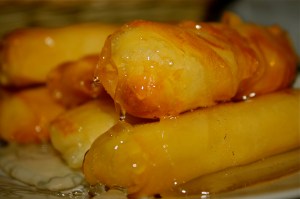
L'Etrog presentation on the Arquiste website.

L’Etrog presentation on the Arquiste website.

October 1175. Calabria, Italy. South of Naples, northeast of Sicily. “During the First Crusade, Southern Italy fell to the Normans, which encouraged Calabrian Jews to engage in the agricultural trades. By the 12th century, the communities were thriving. Since then, the harvest of the Diamante Citron or Etrog has remained a regional tradition.” Etrog is even described in the Bible in connection to the Garden of Eden. “The fragrance is said to be the ‘Fragrance of Heaven’, and the Etrog itself is associated with righteousness, goodness and desirability.”

Carlos Huber.

Carlos Huber.

October 1175 in Calabria, history and the etrog fruit are the specific inspirations for L’Etrog by the American niche perfume house, Arquiste. Founded by the architect turned perfumer (and now, designer), Carlos Huber, Arquiste always attempts to bottle a specific moment in history. It’s something that I greatly admire, as history has always been one of my greatest passions in life. And, here, the mission is not only to capture the festival of L’Etrog in Norman-conquered Calabria, but also the very feel of life in the Mediterranean itself.

Arquiste elaborates further on the exact mental picture that the perfume is meant to evoke:

In Medieval Calabria, a family gathers to celebrate a good harvest. Within a cabin built of Palm leaves and other woody branches, an aromatic bounty is presented. The citrusy scent of the Etrog citron, a regional specialty, brightens the air while embracing Myrtle and lush Date Fruit envelope the sweet warmth of the Mediterranean night.

L'EtrogReleased in late 2011, L’Etrog is described as a “citrus chypre” and was created by Rodrigo Flores-Roux and Yann VasnierOn its website, Arquiste says:

The brisk character of Myrtle marries with leafy nuances, emulating the freshly opened fronds of palm trees. An unexpected mouthwatering accent follows, with Smyrna Date fruit and elegant Cedar wood from Lebanon.

Cedar, however, is not explicitly included in L’Etrog’s official notes on the Arquiste website which merely list:

Calabrese Cedrat [Citron], Myrtle, Date Fruit and Vetiver

Elsewhere, however, department store retailers like Barneys and blogs like CaFleureBon quote the press release description which states the perfume is: “a citrus chypre with citron, palm leaves, willow branches, myrtle and dates.” So, let’s just assume that “willow branches” and “palm leaves” are in there, along with cedar, too.

Diamante Citron or Etrog.

Diamante Citron or Etrog.

As for the fruit in question, internet research tells me that cedrat is a type of very large, fruity lemon with a thick rind and little acidity. It has many different names: cedrat seems to be one linguistic version of the term citron (which is the main French name) and seems to be the same as etrog which Wikipedia tells me is the Hebrew version. Whatever the linguistics, the fruit looks a bit like its close cousin, the pomelo, but doesn’t smell (or taste) like a grapefruit.

I’m a little OCD, so forgive my brief digression into history for a moment. First, Arquiste’s comment on the Normans would seem to imply that they were responsible for agriculture successes in the region, when I think that history would argue it was the Saracens or Moors. Starting in the late 9th Century, they invaded the area in southern Italy that includes Calabria and that later became part of the larger Kingdom of Sicily. It was the Moors who seriously impacted both the agriculture and the cuisine (not to mention the architecture); who brought over things like dates, oranges and lemons; and whose advancements in agricultural techniques led to the thriving cultivation of those citrus crops — techniques that, I would argue, were the sole reason for the bounty of the etrog on that day in October 1175 during the Jewish festival of Sukkot. It was not the bloody Normans! They were merely the subsequent conquerors. So, while Robert Guiscard admittedly encouraged the Calabrian Jews, it was the Moors who got the whole ball rolling to start with in what has been termed the Arab Agricultural Revolution. (Sorry for the tangent, but that esoteric point has been bothering me for hours and hours.)(And hours!)

Second, and returning to the perfume now, I don’t understand how L’Etrog is supposed to be even a neo-chypre, let alone an actual one. There is no oakmoss; there isn’t even the patchouli that is sometimes considered as an alternative foundational base. Is vetiver alone now enough? Not in my opinion.
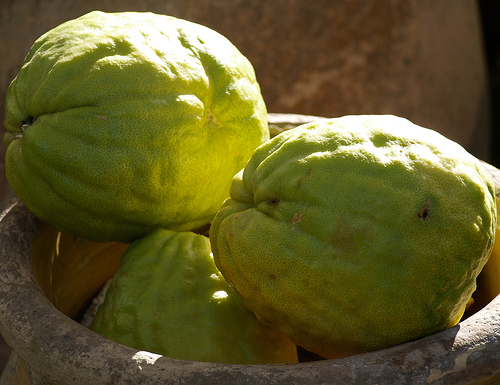
Citron.

Citron.

I tested L’Etrog twice, using different quantities and resulting in a very different openings. The first time, my hand slipped and quite a large amount gushed out of the vial onto my arm. It was a vision of bright, sunny, yellow with sweet lemon that wasn’t zesty so much as slightly fruity and rich. There were also elements of light vetiver and myrtle. According to Fragrantica, myrtle oil is said to have a scent similar to eucalyptus but here, during the first test, there is a minty undertone instead. It creates a slightly chilled, very energizing effect that is lovely. At the same time, however, something about the overall combination leads to a definite impression of Theraflu or LemSip cold powder. As the seconds passed, the minty touches grow stronger, creating more of a fizzy, sparkling aspect than just mere fruity citron.

After 15 minutes, the perfume changes slightly. The fruity aspect of the citron grows stronger, but it doesn’t seem at all like dates, per se. In fact, there is nothing reminiscent of sweetly dark, dried fruits at all. At the same time, the vetiver also becomes more prominent, adding a quiet earthiness to the scent. What is more interesting, however, is the interplay between the vetiver and the myrtle.

Eucalyptus leavesOn one part of my arm, the peppermint note has transformed into eucalyptus, nullifying much of the sweet lemon but accentuating the vetiver. L’Etrog shows itself here as a spicy, mentholated eucalyptus with vetiver that is simultaneously earthy, rooty and touched by nuances of green citrus. On another part, however, it remains as peppermint, enabling the sweet, fruited lemon to show itself. Here, L’Etrog is a fruity lemon scent with a more generalized, abstract woody undertone. In both cases, however, the perfume is incredibly light, airy, and sheer. It’s much more akin to a cologne in feel and becomes a skin scent in as little as 20 minutes on my skin.

At the ninety minute mark during this first test, L’Etrog is a sheer lemon vetiver scent with the merest hint of woody, peppery elements and a bare drop of sweetness. Something in the undertone feels a little like ISO E Super, but it’s extremely light. The perfume remains this way for a number of hours until, around fifth hour, it turns into a thin veil of musky vetiver with a hint of lemony fruit. By the ninth hour, the last traces of L’Etrog are soapy musk with vetiver. Soon thereafter, it faded away entirely.

Joy Dishwashing liquidMy second test of L’Etrog involved a far lesser quantity and, as a result, led to a very different opening. This time, the perfume opened with spicy lemon (not a sweetly fruited one) intertwined completely with very woody vetiver. There was also quite a noticeable amount of soap from the start, and the myrtle showed no minty aspects at all. Instead, it was all eucalyptus. The whole lemon, vetiver, soap mix strongly called to mind lemon liquid dishwashing liquid. It wasn’t unpleasant, but the Joy similarities couldn’t be ignored.

Another big difference was the presence of ISO E Super. I don’t know why it was so much more evident at a lesser quantity of L’Etrog, as opposed to the greater dosage, but I’m absolutely convinced it’s there. L’Etrog had a slightly velvety wood undertone with that telltale, giveaway sign of peppery, rubbing alcohol. The ISO E Super is not enormously prominent, and it does fade away after an hour, but given the headaches that even small amounts can cause people who are sensitive to the note, I wanted to warn you.

By the second hour, during the second test, L’Etrog was primarily a vetiver scent with lemon nuances, a woody undertone, and the merest whisper of light musk. And it remained that way until the final drydown when it turned, again, more of a soapy, light musk. The perfume was so close to the skin, it was incredibly hard to smell at times. Clearly, this is a perfume that — like a cologne — will require a significant quantity if you want to detect its nuances. And, even then, you’re going to have to put your nose directly on your skin after the first hour. All in all, the perfume lasted a little under 7 hours with the lesser amount.

L’Etrog wasn’t my cup of tea. True, my personal style and tastes are very different, but I also found it disappointing as a whole. Ignoring completely the sillage issue, L’Etrog was a tame, boring, linear creation that really just played off lemon and vetiver. Perhaps if I’d smelled actual dates, I would have been more excited. But I doubt it. Lemon and vetiver are the primary strands of this perfume, with everything else being merely a tangential, occasional touch — from eucalyptus, to soap, to amorphous woody notes, to ISO E Super, to musk. They can’t take away from the main, most evident thrust of the perfume. Even the lemon itself wasn’t unique, the way the descriptions of Calabrese cedrat or etrog had led me to expect. In short, L’Etrog simply isn’t that interesting — not at $165 for a 55 ml/1.8 oz bottle. It actually verges on the banal and mundane. I far preferred Arquiste’s fabulous, wonderfully nuanced, sophisticated, rich Anima Dulcis.

On Fragrantica, the comments vary. There are those who find it “super wearable” but admit that they don’t have “the most trained of nose palates,” and then there are established commentators like the hardcore perfumista, “Sherapop,” who found L’Etrog to be a pleasant, somewhat quirky perfume that is “nice… but not compelling.” She reached that conclusion despite smelling not only the dates, but some candied sweetness and some caramel. (So, perhaps I didn’t miss out on anything after all?) Interestingly, she seems to have first smelled the perfume blind as part of Chandler Burr’s Untitled Series and thought that it was Histoires de Parfums 1873 (“Colette“). In a side by side test, before the reveal, she detected small differences, but not much. The similarity is something to keep in mind if you have tested or own Colette.

But Sherapop wasn’t the only one who gave a shrug of “meh” to L’Etrog. Another commentator, “Alfarom,” succinctly summed up the perfume as follows:

A citron hologram introduces a honestly crafted woody-citrus fragrance that’s refined, nice smelling and very wearable. The woody notes (incredibly not overdone) and some sweetness, provide some sustain to an otherwise extremely fleeting composition that while resulting definitely pleasant, it still doesn’t have the ability to stand out in todays overpopulated niche market…

Nice yet somewhat forgettable.

That said, for those who want a simple, light, sheer, summery, lemon vetiver cologne that is utterly inoffensive, you may want to try L’Etrog. It would be appropriate for even the most conservative office environment. No perfume Nazi would be bothered, simply because they wouldn’t be able to detect it; unless they had sensitivities to ISO E Super, in which case, you may be screwed….

  

DETAILS:
Cost & Availability: L’Etrog costs US $165, CAD $200, £125.00 or €149. It comes only as an eau de parfum and is available only in a 55 ml/ 1.85 oz size. In the US, it is available on the Arquiste website, Barneys, and Aedes. In Canada, the Arquiste line is available at Holt Renfrew Bloor in Toronto (though I could not locate it on the overall Holt Renfrew website), or at Etiket in Montreal for CAD $200. Each store is the exclusive dealer for the Arquiste line in their city. In the UK, it is available for £125.00 at Liberty London which also ships throughout Europe. In France, you can find it at Jovoy Paris where it retails for €149. Elsewhere, you can use Arquiste’s “Stockists” page to find a retailer near you. Samples are available at Surrender to Chance where the price starts at $4.99 for a 1/2 ml vial. The site also sells all 7 perfumes from the Arquiste line in a sample pack for $33.99.

Perfume Review: Guerlain Rose Nacrée du Désert (Les Déserts d’Orient Collection)

The treasures of the Middle East, opulent orientals, and Guerlain’s incomparable style — it’s hardly surprising that I was over the moon to try Guerlain‘s exclusive Les Deserts d’Orient collection. Featuring a trio of perfumes created by Thierry Wasser (Guerlain’s in-house perfumer and creative director), the line was released in mid-2012 exclusively for the Middle Eastern market before subsequently making its way to a few select Guerlain stores and retailers in Europe and America.

Guerlain Les Desert d'Oriente collection

I was even more excited when I read Fragrantica‘s description of the perfumes:

Straddling the line between contemporaneous sensibilities and antique exotic traditions, the newest collection Les Déserts d’Orient by Guerlain has the patina of aged woods and bronze artifacts hiding in some cave in the desert, yet its Frenchiness is undeniably there too.

Rose Nacrée du Desert.

Rose Nacrée du Desert.

Clearly, this was a trio that I had to try. I’ve barely concealed my enormous disappointment over many of Guerlain’s modern perfumes with their endless sweetness, their occasional thinness, and their lack of great nuance. In my opinion, if one were to compare the vintage versions of the legendary Guerlain classics with their sultry richness, incomparable sophistication, endless nuances and stunning layers to much of the current crop, the difference would be as wide as a chasm. But I was convinced that Les Deserts d’Orients collection would change that feeling.

I started with Rose Nacré du Desert (Pearly Rose of the Desert) and was thrilled at the opening. There was hope! Then, alas, began the now-usual descent into enormous sweetness, with heaping mounds of sugar that verged on the gourmand. Rosé Nacré du Desert turned out to be the bastard child of an Oriental and a Gourmand which makes it far from my cup of tea — though it is a pleasant perfume and a very tame, neutered oriental which will be perfect for gourmands who fear any sort of spice.

"Rose de Rescht," a type of Persian damask rose which originated from Rascht, Iran. Source: Flowerpedia.blogspot.com

“Rose de Rescht,” a type of Persian damask rose which originated from Rascht, Iran. Source: Flowerpedia.blogspot.com

Almost all descriptions of the perfume’s notes begin with some variation on the words “a lush, dewy Persian rose.” According to a review of Rose Nacrée by Clayton of What Men Should Smell Like, Thierry Wasser “personally sourced a Damask rose from Iran and it is seen here for the first time in a Guerlain perfume.” Elsewhere, Thierry Wasser is quoted as saying that the rose was “savage” and dark. But there is more to Rose Nacrée than just the Persian flower. The most complete set of notes that I could find came from Surrender to Chance, which also includes:

smoke, amber, saffron, cardamom, agarwood/oud, benzoin, patchouli and myrrh.

Spirit of a Dying Rose by Vincent Knaus via RealityDefined.com

Spirit of a Dying Rose by Vincent Knaus via RealityDefined.com

The opening for Rose Nacrée was lovely. It was a dirty, darkened, black rose, tinged with smoke. There was also oud which, initially, had a medicinal touch before softening, within seconds, to something smoother and milder. Cardamom covered the petals, along with saffron. At first, the saffron was not sweet, dessert-like and yellow-orange the way it often is; instead, it was fiery and chili-pepper red in hue, adding a wonderfully spicy touch. There was a wonderfully nutty, almost toffee-like richness to the notes in those opening minutes. After a brief while, the rose becomes a little sweeter, a little more honeyed and much less black. It’s still gorgeously dirty, but sugar, vermilion and beefy red start to infuse the petals. It reminds me of the dark talons of Chinese empresses that you would see in the movies.

Black Magic Rose Wallpaper__yvt2As the minutes pass, more and more red infuses that black, smoked rose which now starts to gleam like a blood ruby in the light, reflecting different facets of sweetness, spice, woody oud, amber and smoke. Rose Nacrée du Desert is a bit like reverse animation where the dying, wizened, blackened rose trails wisps of smoke before starting to spring back to life, straightening up, plumping up, turning more and more red by the minute. As it starts to re-awaken and bloom, it first oozes drops of darkened black-red, then treacly, thickly sweetened red, before finally, golden amber. Its dark thorns reflect brown wood, cardamom, and almost a suggestion of leather; the smoke dissipates; and all that remains is a candied, pearly, iced rose on a base of golden brown.

It sounds lovely and, for those who love gourmand perfumes, it most certainly will be a huge hit. But this “pearly” rose gets its sheen through icing and endless globs of sugar. Rose Nacrée’s sweetness intensifies in as little as twenty minutes, taking on a very gourmand feel. The saffron completely changes from spicy to something reminiscent of desserts.

Usbu Al-Zainab via TheCookingDoctor.co.uk (recipe & link within. Click on the photo.)

Usbu Al-Zainab via TheCookingDoctor.co.uk (recipe & link within. Click on the photo.)

In conjunction with the cardamom and the slightly nutty amber, the result evokes Middle Eastern sweets drenched in thick honey or syrup and filled with nuts. The whole thing sits upon a rich, burnished leather base, tinged with smoke and a soft oud, but none of those can really alter the fundamentally sweet nature of this heavily sugared rose. For my personal preferences, I far preferred it when it was a dirty, blackened rose with lovely smoke.

An hour in the Rose Nacrée’s development, the patchouli starts to make itself noticeable. It’s neither the black, slightly dirty, smoky patchouli of the ’70s nor the very purple patchouli common to many mainstream fragrances today. Instead, it almost feels mossy, as if a symbolic touch of green much like a rose’s stem. Taking the analogy further, the slow start of the myrrh resin, along with the cardamom and quiet hint of wood, would constitute the thorns. At the 90 minute mark, the perfume is fundamentally a very (very) sweet rose and saffron scent over a dusky wood foundation with almost a hint of light musk.

There was a candied note to the perfume that I could not place and which I struggled to identify from the start. It wasn’t exactly nutty toffee, it definitely wasn’t caramel, but it was something dessert-like. Then, I read Bois de Jasmin‘s review for Rose Nacrée du Desert where she said that the mossy drydown of the perfume was “reminiscent more of Caron Nuit de Noël with its dark undercurrent” than of the classic Guerlainade found in things like Shalimar or L’Heure Bleue.

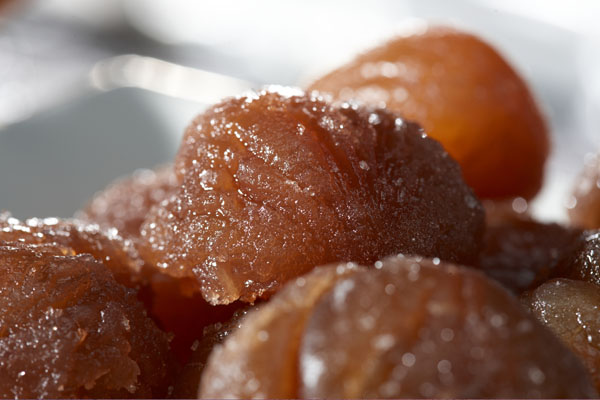
Marrons Glacés.

Marrons Glacés.

That reference to the famous Nuit de Noel was genius and brilliant. It instantly clarified that note in Rose Nacrée which I could not immediately place: it was marron glacé or candied, iced chestnuts. As Wikipedia will tell you, marron glacé is a chestnut candied in sugar syrup and then glazed. As a child living in France, it was (and always will be) a huge guilty pleasure of mine. (And, frankly, blog references to marron glacé are the sole reason why I blindly purchased a bottle of Nuit de Noel, only to find that the non-vintage version was a sad cry from that I had expected.) In Rose Nacrée, the base has a definite note of marron glacé, but it is far stronger than in Nuit de Noel and verges almost on a candied, nutty, chestnut syrup.

As time passes, the perfume’s inflections wax and wane, with certain notes gaining in individual strength for a few moments before again receding. Clearly, this is a beautifully blended perfume. As the dry-down phase begins, sometimes the oud shines forth, sometimes it is the amber, or the plush, velvety patchouli — but all the notes lie in the shadow of that candied, syrupy rose with iced chestnuts. In Rose Nacrée’s final hours, it turns into a chestnut-y amber with benzoin, a wisp of oud, and a faint trace of powder.

The perfume is pretty, but I found it underwhelming. It is, ultimately, a very simple perfume at heart: highly sweetened rose with oud and saffron. I’ll spare you my increasingly cantankerous views of Guerlain’s headlong descent into overly sweet, sugary perfumes and just tell you that, in my opinion, there are far better perfumes that use the rose, oud, saffron, cardamom and amber combination. At the top of that list would be the spectacular, infinitely more complicated, and complex Trayee by Neela Vermeire Créations. It is not only a “spicy oriental” in the true sense of that term, but it uses those same notes to much greater effect to create an utterly ravishing, sophisticated, highly nuanced perfume. (It probably helps that Trayee has about 11 more notes as well.)

Even if we set aside the more complex Trayee, there are an endless number of perfumes with some combination of Rose Nacrée’s notes. Whether it’s Montale‘s Aoud Safran (which also has rose), By Kilian‘s Rose Oud, L’Artisan‘s Safran Troublant, Dior‘s Oud Isphahan, or Amouage‘s Epic For Women (to which Rose Nacrée has sometimes been compared) — the point is, this ground has been hoed before. While I think Guerlain’s interpretation is richer, heavier and more nuanced than both Kilian’s lighter, more anemic, interpretation or the Montale, Rose Nacrée is still neither a particularly original perfume nor, in my opinion, a brilliant one.

I will be the first to admit that my dislike for gourmand fragrances and my love for true, spicy Orientals are influencing my assessment. But I am not alone in how I see the perfume. Fragrantica itself in its early assessment of the trio called Rose Nacrée “[a]rguably the less ‘original’ in the trio” before writing

[t]he sweetness is pervading, even more than the previous Deserts d’Orient examples, with nuances of loukhoum rosewater and copra powder enrobing the yummy delicacy. The mouth-watering gourmand quality is very Guerlain; rose and sugar are eager bedfellows with passionate results.

Commentators on Fragrantica range from some enthusiasts, to those who give a nonchalant, “been there, smelled that” shrug. Some examples of the latter:

  • another very similar Rose-oud-saffron, like some other niche ones; seems like they just copy-paste the same composition!
  • this is not bad at all, quite elegant and not too strong Rose Oud, reminds me a bit also By Kilian’s one on the same theme… nothing too original I’d say, pleasant, well balanced, the patchouly note is quite present, the rose is soft, but there, the safron is very mild, barely there… not sure it’s worth the price tag
  • this is a sweet and sticky candy rose. to my nose it does not at all smell arab. i cannot sense oud in this creation. to me its the rose and the patchouly making a sweetish scent for the day. definitely more for women. i have to say i am somewhat disappointed as i expected a full bukhoor kind of incency perfume more like the oud ispahan.
  • Rose Nacree du Desert is the sweetest floral oriental I’ve come across. It’s not Hypnotic Poison type of sugary sweetness – no fruit or vanilla, it’s a warm musky, incense sweet. […] The longer I wear the perfume the sweeter it becomes, is there such a thing as too sweet? I seriously can’t imagine this as a unisex fragrance. [My Note: that person ended up loving it.]

How you feel about Rose Nacrée will all depend on how you feel about syrup. I strongly recommend it for those who want an incredibly neutered oriental, who adore gourmand fragrances, and/or those who love their flowers enormously sweetened. By those standards, Rose Nacrée will be a wonderfully rich, safe, tame, non-spicy, luxurious choice. It is also ideal for those who fear the power and potency of (true) Orientals since the perfume turns into a skin scent at the 90 minute mark. For the remainder of its development, it is a very soft, unobtrusive fragrance without enormous projection. It has decent longevity, too, lasting about just under 7 hours on my perfume-consuming skin.

I should add that Rose Nacrée du Desert is not cheap at $275, and that it is also not the easiest thing to get your hands on. It is actually not listed on Guerlain’s own website – which is rare even for their niche, prestige lines. It is, however, available via select stores which you would have to call in order to buy the perfume. (The details are below.)

If you love very sweet, dark roses and desserts, give Rose Nacrée a try. 

DETAILS:
Cost & Availability: Rose Nacrée du Désert is an eau de parfum that comes only in a 75 ml / 2.5 oz bottle and costs $275. In the U.S., it is available at Guerlain’s Las Vegas boutique at The Palazzo (702-732-7008) with free shipping and no tax. It is also available at Bergdorf Goodman in New York; you can call (212) 872-2734 and ask for Alina. However, she informs me that there is shipping costs an additional $12.75, so you’d have a better deal ordering from Las Vegas if you test out the perfume and want to buy a full bottle. In Europe, Rose Nacrée is available at: Guerlain’s flagship headquarters in Paris; at Haute Parfumerie Place Vendôme in Belgium (which ships internationally); and at London’s Harrods and Selfridges boutiques. However, it is not listed on their websites. I’ve read that the European price is €190, but I don’t know if it remains at that price. The perfume is also available in the Middle East since the whole collection was originally created for that market, and your starting point would be the Paris Gallery perfume retailer. Outside of those regions, I would check with any Guerlain boutique in your country on the rare off-chance that they may carry it. As for samples, Surrender to Chance sells it for $4.59 for a 1/2 ml vial. You can also do what I did and opt for the whole Desert d’Orient trio in a sample set that begins at $12.99.

Perfume Review: Amouage Opus VI (The Library Collection)

Source: LearnLearn.net

Source: LearnLearn.net

The royal perfume house of Amouage would be perfect for a fairy tale or Greek myth. It would be the story of King Midas, and all he touched would be perfume gold. It would have Ali Baba and a cave filled with treasures of scent and spice, incense and frankincense — not stolen by thieves but given freely by the Sultan with the order to create the most luxurious scent in all the land. Actually, that last bit happened in real life — with the Sultan of Oman.

As the renowned perfume critic, Luca Turin, said in a 2007 German magazine article:

The story of Amouage is remarkable. Twenty five years ago an Omani prince decided that his country, renowned since Egyptian times for the quality of its frankincense, home to the unique Green Mountain rose and on whose beaches half the world’s ambergris lands at random, needed a perfume firm that would take on the world’s greatest.

Nakhal Fort, Oman. Source: AzzahaTours.com

Nakhal Fort, Oman. Source: AzzahaTours.com

So, in 1983, His Majesty Sultan Qaboos bin Said, the ruler of the Sultanate of Oman, ordered His Highness Sayyid Hamad bin Hamoud al bu Said to do just that. And the fame of the perfumes have spread ever since, helped by the fact that one of them (Gold) was once the most expensive perfume in the world.

In 2010, Amouage launched a new line entitled The Library Collection which was meant to be a “poetic homage to the art of living.” They were

inspired by the recollections and fragments that collectively represent a tome of memories. The name of the collection is drawn from the notion of the hidden treasures in a library; a notion that kindles our desire to discover, to learn.

Amouage Opus VIIn 2012, Amouage added Opus VI to its line and it was, surprisingly, the first amber perfume released by the royal house. Amouage describes Opus VI as “an amber, leather and woody fragrance inspired by the destruction and reinvention of knowledge and memories. Symbolising the end of a love affair, eternity is represented as broken memories in the design of the box.”

The notes, as compiled from both Amouage‘s website and Fragrantica, are as follows:

top: Sichuan pepper, Frankincense, St. Thomas Bay (bay rum)
heart: Periploca [silk vine], Cypriol [papyrus grass oil], Patchouli
base: Ambranum, Z11, Cistus [Labdanum or rock rose], sandalwood, Citrus

Periploca. Photo: Chris Moore via Basenotes.

Periploca. Photo: Chris Moore via Basenotes.

Since a lot of these ingredients are extremely uncommon, I’m going to take time to go through a few of them. According to Fragrantica, Periploca is “a plant that grows in the Balkans with an odor profile between almond and incense.” Elsewhere, however, the scent has been compared to jasmine; on Basenotes, some remark that the aroma is unpleasant and akin to rotting vegetables. In short, there is no consensus. As for the other unusual notes, cypriol is a kind of papyrus grass, and ambranum is a synthetic compound that replicate the smell of amber, while Z11 is a synthetic that smells like dry wood.

The Amouage press release quoted by Fragrantica explains not only the deliberate reason why the synthetics were used in lieu of the more traditional elements, but also elaborates further on the whole issue of heartache and memories:

Opus VI, presented as a romantic fragrance creating its own vivid memories, is a woody amber oriental, inspired by the traditional medicine for broken hearts, amber. But whereas traditional amber is created through balsamic raw materials, creative director Christopher Chong approaches this most traditional concept through a modern lens, fusing synthetic molecules with a decidedly modern olfactory profile, such as Ambranum and Z11. This supposedly helps create a discordant effect which is not unlike the emotional frame of when someone tries to forget the memories of a heartache! According to Chong: ‘Personal memories are a fragmented journey into our lives. A source of profound knowledge, a sort of secret diary in the minds of each of us.’

Hm. I haven’t the foggiest idea what heartache smells like but, whatever it is, I don’t think it smells like this! Opus VI is a very labdanum-heavy amber scent with lots of incense, patchouli and some spiciness that, to me, evokes nothing more than an old Bedouin sheikh who uses very heavy attars and perfumed oil in his beard in the traditional Muslim manner. No heartbreak, no profound knowledge, no secret diary. To me, Opus VI is a very traditional Middle Eastern scent that I think is tolerable at times, but hugely over-priced for what it is. 

"Arab policeman" by DennisSylvesterHurd via UnearthingAsia.com

“Arab policeman” by DennisSylvesterHurd via UnearthingAsia.com

Opus VI explodes on my skin with super-charged labdanum. You can read my Glossary (linked up above) for full details on what labdanum is but, in a nutshell, it’s a very leathery, heavy, balsam-like amber resin. Here, its usual masculine, dirty underpinnings are heightened to an extreme degree. For once, I am transported back thousands of years to ancient times when shepherds would scrape the resin off the chests and beards of goats who had clambered on or around the rock rose. There is almost a sweaty, goat-like feel to the labdanum and, even for one like myself who usually adores the note, it’s a little too animalic in those opening minutes. 

A goat whose chest and beard are covered with labdanum. Source: labdanum-creta.blogspot. com

A goat whose chest and beard are covered with labdanum. Source: labdanum-creta.blogspot. com

Though the labdanum dominates, there are other notes in that initial start. There is quite a bit of boozy rum — not boozy amber, but something more akin to actual rum. Underneath that, there is chili pepper, frankincense smoke, unctuously dirty, black patchouli, and almost a dry paper element. The second time I tried Opus VI, I could also detect notes that felt like bay leaf, cloves and cardamom. As the minutes pass, the labdanum starts to become a tiny bit less dirty and animalic, leaving more of a general feel of extremely thick amber with boozy rum. There is an undertone to the labdanum, perhaps from the strong patchouli, that sometimes seems almost like leathery toffee or slightly burnt butterscotch; it creates a visual colour image of burnt umber or blackened terracotta. Skirting around the edges of all this leathery labdanum, there is a citrus note that flickers like a candle in a wind.

Five minutes in, the smoke and spices increase. The frankincense becomes stronger, evoking the scent of a burning bonfire in the fall. The patchouli note is much more noticeable, too, but it is the chili pepper that impresses me the most. It definitely feels like Sichuan pepper and serves to add some spicy heat to the dominant accord of thick, balsamic resins.

Those resins soften considerably as time passes. The labdanum’s shriekingly dirty side becomes a little less extreme, leaving an overall impression of honeyed amber, patchouli, incense and spice in the richest way possible. Yet, surprisingly, the perfume’s strength in the first 30 minutes is not matched by its sillage; Opus VI’s projection drops rapidly to something much less aggressive and much softer. In fact, the perfume as whole starts to feel quite soft. I realise that seems like a contradiction given those heavy notes and their strength, but Opus VI turns into something that isn’t opaque and thick in weight.

Something about the spiciness of Opus VI in the first 30 minutes evokes the dry-down of vintage Opium. The Sichuan pepper, in conjunction with the other notes, creates something like the cloves, spices, heavy labdanum, sandalwood and citrus feel of (real, vintage) Opium’s final hours. Opus VI is nowhere as gorgeous, complex, sophisticated, layered or nuanced as Opium — my all-time favorite perfume — but there is definitely some nod to the great, benchmark Oriental here. It is quite a surprise, and a pleasant one at that. Perhaps the greatest surprise, however, is that none of the notes feel synthetic. Amouage may have used Ambranum to replicate amber and Z11 for the aroma of dry wood, but Opus VI smells as if only real (and very expensive) ingredients have been used. There is nothing chemical, artificial or abrasive about Opus VI, though the dirty nature of the labdanum may be a little excessive in the first twenty minutes.

At the one hour mark, the spices recede, the labdanum turns more musky, and there is the vague hint of some jasmine. I’ll assume it is from the Periploca since I’ve never actually smelled the plant and, prior to reviewing Opus VI, had never even heard of it, either. Whatever the reason, there is a quiet floral aspect to Opus VI but it is fleeting. Soon, all that really remains of the scent is labdanum intertwined with strong frankincense smoke, black patchouli, musk, and a vague, abstract sense of spices — all over a dry wood undertone. The odd thing is that musky element. There is a definite animalic, skanky side to the resin now that evokes both civet and, to a small degree, the pure musk of Parfum d’Empire‘s Musc Tonkin. I can’t say that I particularly like it. Even odder for me to wrap my head around is just how paradoxically sheer and light the perfume is, while certain notes feel so unctously thick. They aren’t actually thick at all, but something about that labdanum….

After a few hours, the main threads of leathery, musky labdanum with dirty, black patchouli, and incense remain the same, but, now, a very strong accord of dry woods starts to appear. It’s not any one particular type of wood; rather, it’s just an abstract and extremely arid vague “woods” note. The dryness is huge, undoubtedly due to the Z11, and it creates a surprisingly odd contrast. Honestly, I’m not crazy about the dissonance and overall polarity.

Opus VI has astounding longevity, so its drydown phase finally starts about 8 hours later. It is simple: just amorphous amber, honey, beeswax and benzoin which creates a vague sense of nutty, caramel, amber. I tested Opus VI twice, each time using a lesser amount. The first time, I put on the equivalent of 2 good sprays and the perfume lasted almost 15 hours! On me! It was mind-boggling. The second time, I dabbed on what would essentially amount to one smallish to moderate spray and it lasted 12 hours, with the perfume lingering for much of that time right on the skin. Almost no projection at all.

What was interesting to me was that the lesser amount significantly changed what small nuances were detectable in the scent. Using only about one spray, Opus VI became a labdanum and patchouli fragrance with beeswax, and only the vaguest of other elements to it. It also became a skin scent in about thirty-five minutes on me. As a whole, this is not a perfume with massive sillage. On my first test, with 2 sprays, it became a skin scent within about 2 hours but even before, it didn’t projected out beyond a few inches. Opus VI is strong with a greater amount, but it’s also surprisingly sheer.

I liked the perfume less and less with every test. I actually put it on a third time just to be sure but, to be honest, I’d really had enough of it by that time and only lasted an hour before I washed it off. It wasn’t just the sometimes cloying, dirty, skanky aspects of the labdanum in those opening phases; I was also mentally bored by the scent’s linearity and something about its progression really turned me off. Yet, the reviews from other perfume bloggers are uniformly positive, even a little gushing. Whether it’s The Non-Blonde, Olfactoria’s Travels, The Candy Perfume Boy, or the always laudatory, always effusive, never (ever) critical CaFleureBon, the reviews are overwhelmingly adoring.

Well, apparently, I’m much harder to please when it comes orientals. I am a hardcore Orientalist down to my very fingertips, and if there is one thing I know extremely well is opulent, super-rich, powerful Orientals. There is, in fact, nothing I love more. But, to Opus VI, I give a nonchalant shrug. It’s fine, I suppose. Parts of it are actually quite nice on the very first go-round, namely the part where it smells like a less nuanced, less sophisticated, less interesting, less spicy and less potent version of my beloved Opium. Sure, Opus VI is quite rich as compared to something like a L’Artisan scent or Kilian’s boring Amber Oud (that actually has almost no oud in it at all). But that doesn’t mean Opus VI is a particularly interesting, complex Oriental except on the relative scale of things.

I started out being generally underwhelmed and unimpressed but, with successive applications, my slightly disdainful indifference turned into something much more negative. I love labdanum, have tested quite a bit of labdanum fragrances (especially recently), and I adore heavy, opaque, potent, resinously rich Orientals. At best, Opus VI is a simple but boring labdanum-dominant fragrance that is typically Middle Eastern like a million attars (or ittars) from the region. I’ve spent time in the Middle East and this is a pretty traditional, generic scent — so much so that I kept imagining some Arab man perfuming his beard or mustache with the oil of it. At worst, Opus VI is a monochromatic, linear, occasionally unpleasant fragrance that tired me out enormously, and which actually made me question just how much I loved labdanum as a whole.

And that’s even before we get to the price. $325 for this? Never in a million years. I think it’s massively over-priced for what it is. Frankly, I don’t understand the hype at all. I could perhaps understand paying Amouage prices for something like Jubilation 25 or maybe even Jubilation XXV — but never for Opus VI. I suppose I should add that a portion of the perfume’s high price probably stems from the packaging: all Amouage fragrances come in a bottle of expensive French crystal with some gold plating and, occasionally, sterling silver as well. Here, Opus VI

is adorned with a gold label simply declaring Opus and the number of the fragrance in roman numerals. The metal cap is gold-plated with the very regal and distinctive Amouage shield resting on the top protected under a transparent coat. The box is reminiscent of a tome (a volume of scholarly book). To complement the bottle’s contemporary classic look, the box is covered in champagne coloured fabric to give it an illustrious appearance.

Fine. Still not worth $325 though, in my opinion. In fact, I wouldn’t wear Opus VI if it were given to me for free.

DETAILS:
U.S. availability & Stores: Opus VI comes only in a 3.4 oz/100 ml eau de parfum that retails for $325. It is currently on sale at Beauty Encounter for $300 with free shipping in the US and international shipping for roughly an additional $25. Opus VI can also be purchased online at MinNY, ZGO, or Parfums Raffy. Parfums Raffy is the authorized retailer for Amouage, and provides free domestic shipping along with samples. Parfums Raffy also sells a Sampler Set of six Library Opus scents (minus the brand new, just released Opus VII) for a really good price of $30. Each perfume vial is 2 ml. Luckyscent usually carries Amouage but Opus VI is back-ordered until October 2013.
Outside the US: In Canada, The Perfume Shoppe offers a 5 ml travel size (about 65 sprays) of Opus VI for $50 with free worldwide shipping. I don’t see full bottles of Opus VI on the site but you may want to check for yourself. In the UK, Opus VI is available at Les Senteurs for £240.00. There is also an Amouage boutique in London. In Germany, it is available at First in Fragrance where it costs €275.00 with free shipping within the EU and shipping elsewhere for a fee. Of course, the perfume is also available on Amouage’s own website. The website also has a “Store Finder” for about 20 countries which should, hopefully, help you find Opus VI somewhere close to you.
Samples: Samples of Opus VI are available at Surrender to Chance (the decant site I always use) where the smallest vial costs $3.99. The site also sells a Sampler Set for 6 of the Library line which starts at $19.99 for 1/2 ml vials. The Parfums Raffy deal is a much better one given the size of those vials.

Perfume Reviews: Lubin Galaad, Akkad & Korrigan

Ancient history, the mysteries of the Middle East, Galahad atop his fiery steed in the Holy Lands, the Balm of the Sacred Mountain, luminous amber with sacred herbs, and mythical creatures who concoct elixirs in celebration of Dionysius — those are the inspirations behind a trio of fragrances from the French niche perfume house of Lubin. Created by Delphine Thierry and Thomas Fontaine, Galaad, Akkad and Korrigan are three Oriental fragrances released in 2012 for a perfume house whose history is far more fascinating that the perfumes themselves.

Lubin coat of arms logo

Lubin was founded in 1798 by Pierre François Lubin, soon after the French Revolution. He had apprenticed under the perfumer who served Marie-Antoinette but this was a new political climate. Lubin soon won favour with Napoleon’s Imperial court and his scents were beloved by both Empress Josephine and Napoleon’s influential sister, Pauline. The royal courts of Europe soon followed suit, from the King of England to the Tsar of Russia. Once Napoleon fell, the seemingly wily, pragmatic Lubin managed to curry favour with the new royal dynasty by dedicating his fragrances to the Bourbon queen, Marie-Amélie. A very ambitious man, Lubin seemed to need more worlds to conquer and, in 1830, became the first perfume-maker to conquer the New World with perfumes that reached the banks of the Mississippi. I have no idea if that last part of biographical past was embellished a little bit but, frankly, I didn’t care one whit. For a history geek like myself, it was all utterly fascinating.

Unfortunately, I far preferred the history to the new perfumes. Everything about the background stories for the fragrances has been done with finesse, poetry and beauty, but the perfumes themselves left me feeling cold. And I’m genuinely saddened by that. If you ever have time to spare, I urge you to check the Lubin website for their gorgeous graphics and story for each scent. They’re really incredibly well-done.

GALAAD:

Galaad from the Lubin website via MrNyStyleandTravel.com.

Galaad from the Lubin website via MrNyStyleandTravel.com.

Galaad is classified on Fragrantica as an “oriental woody,” and is centered on leather and myrrh. The story behind Galaad involves the “Balm of the Sacred Mountain,” the Arthurian knight, and the most precious of the Holy Land’s ingredients:

Out of Egypt come caravans to fetch myrrh in my land of Galaad. My name is the same as that of the land that witnessed my birth, for I am Galaad, the knight of the Holy Mountain. It is rich with honey from our hives, tall cedars that shade it and resins brought to Pharaoh. With frankincense, cypress and dried grass from Atlantis, we refine the precious balm used by the lords of the East to perfume themselves.

Lubin GalaadThe press release shared by Luckyscent adds to the beauty of the story and describes its notes as follows:

A heart of myrrh is topped with spices that bring out refreshing head notes (cardamom), and sustained by aromatic base notes (rosemary, cypress). The base is cool leather with wood and tobacco (blond tobacco, Atlas cedar, agar oud).

Delphine Thierry, who created Galaad, invites us to a tranquil morning ride in the mountains of the Middle East, when the scents of myrrh bushes blend with cypress resins and the woody fragrance of cedars. The leather of saddle and gloves gently warm up in the first rays of sun, while the little Arab horse snorts amidst the morning dew that has settled on Judean balsam trees and on the vines climbing along the mountain slopes of Galaad.

Notes: Cardamom, cypress, rosemary, myrrh, honey, copahu balm, Agar oud, Atlas cedar, cipriol, blond Burley tobacco.

Beautiful! If only the perfume smelled that way….

Instead, on my skin, Galaad was the rankest of sweaty leather. It opened with cardamom and honeyed myrrh with a very animalic, dirty, nutty, sweaty leather feel. Copahu balm is said to be a very sweet, balsamic resin and, here, it shares some characteristics with labdanum. Only much, much skankier. The leathery undertones to the perfume compete with some very sweetened wood notes that have an oddly herbaceous element to them. At the same time, there is a hint of dry tobacco that almost evokes the pages of a very ancient manuscript. I ascribe that to the cipriol which is another name for papyrus grass.

Source: Equisearch.com

Source: Equisearch.com

There is something odd about the smell that I really struggle to describe and cannot quite pinpoint. There is something not quite… right… about it all. The mix of honey and dirty ambered resin calls to mind a very sweaty saddle covered by sweetness; there are salty aspects; papery notes; dry, peppered woods; and something a bit rank. It’s not even the eventual smell of sweaty crotch that appeared after about an hour. It’s something that I can’t quite describe. And I didn’t like it very much at all. I tried Galaad twice to be sure and, the second time, it was even more rank on me with a skanky, fecund undertone that evoked unwashed private parts. It wasn’t huge and it was subtle, but it was most definitely there.

Lucas of Chemist in the Bottle was also not a fan of Galaad. He found “something sweaty” in it, along with a note of burnt plastic. He also detected oud in the perfume; I did not. But maybe I was just overwhelmed by the overall unpleasantness of the skanky, raunchy leather.

Thankfully, the sillage and duration of Galaad are not enormous. The perfume is quite thin, oddly enough, and didn’t have great projection on my skin after the first 20 minutes. It hovered a few inches above the skin for about an hour, became close around the 3 hour mark, and then died altogether after about 5.5 hours. I was quite relieved.

KORRIGAN:

Source: Miriadna.com desktop wallpapers.

Source: Miriadna.com desktop wallpapers.

Another absolutely beautiful story. This time for Korrigan, classified as an “oriental vanilla” and set in the verdantly lush, green isles of the United Kingdom. As the Lubin website explains:

A Korrigan is a small mythical creature that haunts the moors of Brittany, Ireland, Scotland and Wales, whisking us away to the folklore and legends of Celtic civilisation. [… They] know recipes for elixirs offered as libation at Beltane and Samhain, festivals to celebrate the change of seasons.

An occasion of course to evoke the strong beverages of the somewhat bleak moors. Whisky is one of them, in the form of a smooth, fragrant cream liqueur, accentuate by a counterpoint of oudh accord, which brings to mind dark caves where secrets lie hidden.

“Korrigan” is therefore a fragrance to accompany Dionysian rites. […] In the Armorican countryside the Korrigans frolic at night. They come to harvest juniper berries and wild beechnuts. Then, in dark caves, they distil barley into spellbinding spirits, spicing them with saffron, musking them with ambrette, scenting them with lavender. During the solstice festivals, they all drink their elixirs out of leather pouches, causing bodies and souls to capsize.

Lubin KorriganThe specific goal of perfumer Thomas Fontaine was to create, in the words of the Lubin website, “Caramel Wood Liqueur.” Luckyscent provides the following notes for the perfume:

Juniper berry, saffron, cognac, Lavender, ambrette, whiskey, Cedar, oudh, leather, vetiver, musk. 

“Caramel Wood” pretty much nails the description of this disconcerting, cloying and quite perplexing fragrance. Korrigan opens on my skin as caramel-infused wood with a herbaceous undertone. It is like Drambuie’s herbal, whisky liqueur with a definite cloying sweetness that verges on the synthetic. I don’t detect saffron, vetiver, or anything close to the evergreen aspects of juniper. Just caramel woods.

drambuieSomething about it is truly bewildering and, again, I cannot find the words to describe exactly why. I’ve smelled numerous fragrances with a boozy undertone, woody undertones, gourmand vibes and more, but something about Korrigan’s combination of gourmand caramel with whisky, white woods, pepper, and herbalized, honeyed leather leaves me at a loss. The odd combinations and Korrigan’s cloying sweetness also leave me feeling distinctly queasy.

The wood notes are also a bit odd. I don’t smell oudh or agarwood the way some did on Luckyscent, so much as white, soft woods that are peppered and yet, incredibly sweetened at the same time. It’s a different kind of sweetness than that cloying caramel, however, but I cannot explain it. All of this is going on simultaneously with very honeyed leather that seemed soaked in Irish whisky and a very strange herbal element. I don’t think the latter is my old nemesis, lavender, though it may be how lavender transforms itself here in combination with the other notes and that caramel.

After hours of something caramel-like that I cannot properly describe, the perfume turns into a simple amber fragrance along with hints of musk, vanilla and soft leather. The perfume lasted just over 7.5 hours with generally soft to low sillage throughout.

I’m sorry I can’t explain its development better to you, but some discordant aspect of this perfume leaves me absolutely stumped. There are reviews on Fragrantica which may help you more, ranging from those who love its woody caramel creaminess and bought a full bottle, to those who found it extremely “weird,” a highly acquired taste, or a “sticky, sour wood and a sweat note… [A] disaster.” You can also turn to Lucas from Chemist in the Bottle who liked Korrigan the most out of the trio, finding it to be “like a milky vanilla toffee” with an “alcoholic vibe of warming cognac and whiskey” combined with subtle lavender and other notes. His experience sounds infinitely more appealing than the queasy mess that it was on me.

AKKAD:

Akkad website photo from MrNYStyleandTravel com

Akkad photo from the Lubin website via MrNYStyleandTravel.com

Luminous amber. That was the goal for Akkad. According to the press release quoted by Beautyhabit:

Lubin AkkadDelphine Thierry, who composed this creation, imagined an amber note that is both spicy and luminous. The opposite therefore of the dark, mystical ambers that bring to mind the smoke of frankincense in ancient temples.

Akkad amber opens with an aromatic citrus head note of mandarin and bergamot, enhanced by Clary sage. Clary sage, also known as “the sacred herb”, is renowned for its euphoric, harmonizing properties.

The heart unfolds in the rich, balmy, spicy notes of frankincense and styrax, evocative of the ancient east, cooled by elemi, a fresh, soothing herb, and intensified by cardamom.

The base with its two ambers of plant and animal origin centers on the woody richness of patchouli, sweetened with a sensual vanilla.

Notes:
Top: Mandarin and Bergamot from Italy, essence of Clary Sage.
Middle: Essence of Cardamom, Elemi, Frankincense, Styrax.
Base: Amber and Cistus-Labdanum, Vanilla and Patchouli.

Akkad was my favorite of the three fragrances and the reason for that was simple: it smelled like a very close, sheer relative of the wonderful Mitzah from Dior‘s Privée Couturier line. I loved Mitzah and its robust labdanum heart, intermixed with incense and other notes. Akkad is not as rich or complex at Mitzah, and it lacks the latter’s quiet undertone of roses and spices, but it is a definite kissing cousin.

Akkad opens on my skin with sugared orange that is slightly burnt, along with patchouli and leathery, nutty labdanum over a sheer hint of powder. Cardamom and frankincense soon follow to join the amber party. But, in less than a minute, Akkad turns into a predominantly labdanum, frankincense, and patchouli fragrance. There is the merest feel of abstract spices (cinnamon and ginger) with just the slightest suggestion of burnt orange, but it’s infinitesimal. There is a definitely dirty, hippie, ’70s feel to the smoky, leathered, animalic labdanum and patchouli combination, and it is the fundamental core of the perfume. Those who don’t like labdanum with its dirty, masculine, nutty — and, here, slightly animalic — undertones may want to stay away from Akkad. There really isn’t much more to say about the perfume. It’s labdanum, light smoke and patchouli for hours. At the very end, it turns into a very light amber with a sort of caramel, butterscotch undertone and with a hint of vanilla.

Despite the seemingly heavy notes, Akkad is surprisingly lightweight in texture and feel. It’s even lighter than Mitzah and the sillage is quite moderate. Akkad remains just a few inches above the skin for hours, before becoming finally becoming a skin scent around the sixth hour. Akkad had good longevity on my perfume-consuming skin, lasting just a little over 8.5 hours. I prefer Mitzah with its greater nuances, but Akkad may be a good substitute for those who want something even airier and simpler.

SUMMARY:

I had great hopes for Lubin’s trio of orientals but, alas, ultimately, none of them really blew me over. Akkad was the best of the lot, in my opinion, but given how much I hated the sweaty-crotch feel of Galaad’s leather and the cloying, peculiarly baffling mélange of Korrigan’s caramel, I realise it seems as though I’m damning it with faint praise. Akkad truly was nice, I swear. The problem is that Akkad (like its siblings) costs $180 for a 3.4 oz/100 ml bottle, when the Dior Mitzah that I prefer costs $155 for a 4.25 oz/125 ml bottle. (If you love labdanum, frankincense and patchouli, you really must try Mitzah!) Still, if you have the chance, you may want give the perfumes a sniff if you stumble across them. Who knows, you may find Korrigan’s gourmand take on woods and leather to be interesting. But Galaad… no, I really wouldn’t recommend it.

DETAILS:
You can find all three fragrances on the Lubin website. Each costs $180 for a 100 ml/3.4 oz eau de parfum bottle. The website also offers a list of retailers from Hong Kong to the United Arab Emirates. In the US, you can find the trio on Luckyscent, Aedes, and on BeautyHabit. MinNY also carries them and is currently discounting each fragrance by a $1.80, selling them for $178.20 instead of $180. I find that microscopic discount to be extremely peculiar. In Europe, Essenza Nobile carries all three fragrances with two of them being €145 and Korrigan being €139. The site also sells samples. In the UK, Harrods normally carries Lubin fragrances but the website does not list this trio. If you’d like to try samples of any or all the fragrances, Surrender to Chance offers all three in a sampler set of 1 ml vials for $14.99. That’s what I chose to do since, individually, each 1 ml would be $5.49.