Perfume Review – Frapin Speakeasy: Pancakes in Havana

By now, regular readers of the blog should know that history motivates me as much as perfume. (Actually, probably more.) So, it should come as no surprise that I read about Frapin and had to try one of their fragrances. Frapin is relatively new to the perfume scene, having started just five years ago in 2008, but the line has been making luxury cognac for centuries. In fact, the family behind it goes back almost 800 years! To quote a Vanity Fair article,

The Frapin’s rich family heritage is the stuff of a whimsical, old-world romance novel—and, according to creative director David Frossard, the key inspiration for all seven fragrances in the line.One of the oldest and most established families in France, the Frapins have been distilling cognac from their original Fontpinot Castle, situated on 300 hectares in the Grand Champagne region of France, since 1270 and through 20 generations; they expanded into fragrance in 2008. And if a castle isn’t enough of a fairy tale for you, Louis XIV himself granted official nobility to the Frapin family in 1697.

Frapin Castle. Source: Frapin website.

Frapin Castle. Source: Frapin website.

Frapin, as a perfume house, is perhaps best known for its 1270 fragrance and then, for the limited-edition, Bertrand Duchaufour-created 1697. Both are loved for being very boozy, rich scents, in keeping with Frapin’s goal of replicating the feel and smell of their cognac.

I opted, instead, to try Speakeasy, a perfume whose name appealed to my interest in the Prohibition era of the 1920s when alcohol was constitutionally banned in America, leading to the rise of the Mafia, gangsters, and illegal bootlegging. (My appreciation for the HBO television series, “Boardwalk Empire,” added to it.) For those outside of America, the term “speakeasy” refers to the illegal drinking dens that were operating in secret and where alcohol flowed like water, as the mobsters raked in the cash. It was the era of Al Capone, Meyer Lansky, Lucky Luciano, and the St. Valentine’s Day Massacre.

Source: CaFleureBon

Source: CaFleureBon

Speakeasy is a boozy, woody Oriental fragrance that was released in 2012 and that was created by Marc‐Antoine Cortcchiato, the founder of Parfum d’Empire — yet, another reason why I opted for this perfume over its more famous siblings. And, I have to say, I’m disappointed. For one thing, Speakeasy most certainly does not evoke the 1920s and Prohibition, but, rather, a slightly seedy bar in 1950s Cuba or Miami filled with mojitos, pancakes, and cigars. One commentator on Fragrantica found it brought to mind the 1970s with its vinyl orange plastic, formica green and ruddy browns — and it does that, too. My main problem with Speakeasy, however, is that it’s a hodge-podge that isn’t really enormously interesting. It’s fine, it’s average, it’s neither here, nor there — and it doesn’t inspire much of anything to me. Perhaps it should have been more like Hemingway in his early Cuban days….

Havana. Source: Standard.co.uk.

Havana. Source: Standard.co.uk.

Luckyscent has a wonderful description of the fragrance which, alas, really didn’t bear out in reality for me:

Speak easy: those were the words whispered to clients in illegal bars during the Prohibiton…

Frapin’s new fragrance conjures the film noir allure of an age when danger lurked under the glamour; a tropical bar where Hemingway could have bumped into the characters of To Have and Have Not. Misted glasses, club chairs, smuggled Cuban cigars savored by gentlemen bootleggers under wood ceiling fast churning the damp air…

According to Luckyscent, Speakeasy’s long list of notes includes:

Rum extract, Indian davana, Sweet italian orange and Fizzy lime from Brazil, Cold russian mint and Egyptian geranium, Oriental leather accord, Ciste absolute, Labdanum absolute, Styrax essence, Turkish tobacco accord, Tobacco absolute, Liatrix absolute, Everlasting [Immortelle] flower absolute, Tonka bean absolute and White musks.

Mojito with cigarSpeakeasy opens on my skin with a brief, split-second element of a traditional cologne. There is fresh, zesty lemon, lemon peel, and orange which feels a lot like freshly-squeezed juice. The scent is thin, light and slightly cool in nature. Within seconds, however, the fragrance turns warmer, thicker, smooth and sweet with rum and honey notes. The boozy accord is supplemented by hints of fuzzy, green geranium and mint. The citruses recede slightly to the background where they add a subtle depth to the fragrance but are never hugely dominant. That role is taken, instead, by the rum which is strong and rich, though actually much lighter in feel than I had expected. It feels a little like Captain Morgan’s Rum and bloody close to a Mojito cocktail, but not exactly. Perhaps it’s because the note is infused with dry tobacco leaves and immortelle.
Immortelle, or Helichrysum in Corsica. Source: Wikicommons.

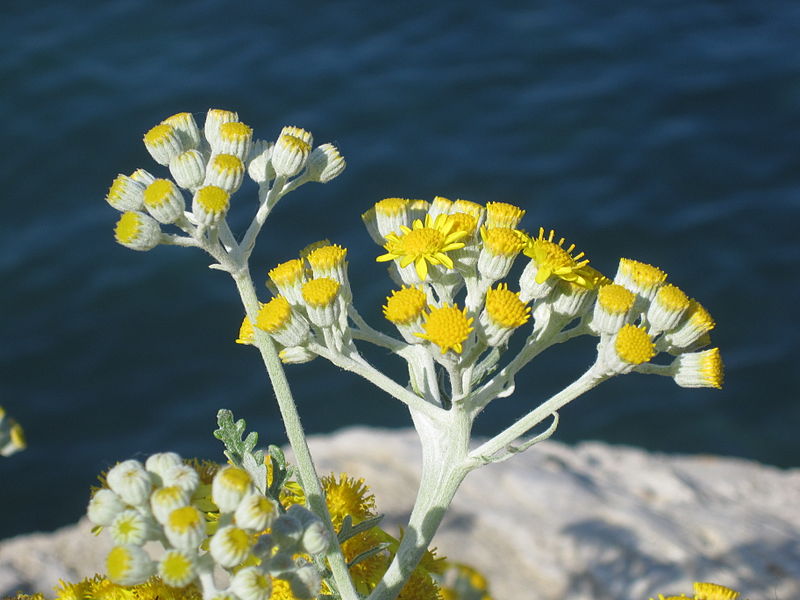
Immortelle, or Helichrysum in Corsica. Source: Wikicommons.

Ah, the immortelle — the reason why Speakeasy may be a hard sell for many. You see, the immortelle is quite dominant in the development of the perfume, and it’s a note which polarizes people greatly. For those unfamiliar with immortelle, it’s is a yellow flower most frequently found in the Southern Mediterranean, and its dry, floral scent usually turns quickly into the aroma of maple syrup. Here, both aspects of  the flower are noticeable. Initially, it is a dry, light, slightly aromatic flowers which join with the tobacco leaves to counter Speakeasy’s boozy sweetness. Later, however, the maple syrup comes out. But I’m getting ahead of myself.

Source: iVillage.com

Source: iVillage.com

Thirty minutes in, Speakeasy is a swirl of rum-infused citruses, dry tobacco leaves, amber, and vaguely amorphous floral notes dominated by the immortelle. It feels a lot less like a Mojito, though the mint still flickers lightly in the background. The orange note lurks there too: it is much less fresh and light; it feels like the caramelized pulp of the fruit. But neither the mint nor the orange can counter the boozy, ambered rum that is the core essence of Speakeasy. At the start of the second hour, Speakeasy decreases in volume and becomes much softer, while also becoming much more brown and orange in hue. There is sticky, rum citrus with sugar cane, melted and caramelized, but also with a subtle hint of saltiness. Florals float in the background, simultaneously fruited and a bit dry. The whole thing sits atop a base of rummy amber with tobacco and hints of immortelle.

From the initial impressions of a Mojito, we’ve now suddenly gone to a 1950s bar in Havana or Miami. It’s filled with heavy-set men in open tropical shirts, sporting heavy gold chains over a visible expanse of black, furry, springy chest-hair. In their thick fingers, they hold fresh Cuban cigars — dry and unsmoked — which they wave in the air at the bartender to order another round of Rum-and-Coke. I can’t get the image out of my head. It doesn’t help that, 3 hours in, Speakeasy takes a turn into root-beer territory backed with rum, more dry tobacco, and a growing hint of maple syrup. The latter initially feels a lot more nutty in nature than the syrup you’d pour over pancakes, but it’s still not really my cup of tea. I like the floral aspects of Immortelle, not the maple syrup, and unfortunately, the former note starts to fade as the latter grows in dominance. Now, my heavy, furry, cigar-wielding, Havana men in tropical shirts also have a side of pancakes to go with their Cuba Libre drinks.

Source: Instructables.com

Source: Instructables.com

By the start of the seventh hour, Speakeasy is maple syrup amber and… maple syrup. Yes, there is still the tobacco — and it still feels like an unlit cigar or dry sheets of tobacco leaves, rather than anything evoking an ashtray — but it’s quite minimal. The immortelle has taken over the show. For the next five hours, Speakeasy is ever softening shades of maple syrup. And that’s it. Truly. I can’t detect a single other element to the scent.

All in all, Speakeasy lasted over under 12.5 hours on my perfume-consuming skin which is quite remarkable. I should note, however, that I did two tests for Speakeasy and the first time, when I applied much less, the longevity and sillage were significantly less pronounced. With the equivalent of one good spray, Speakeasy lasted approximately 9.75 hours and had good sillage. With just a little over 2 sprays (really about 2 and 1/2), the longevity was a few hours more. On both occasions, the sillage was very good for the first hour — even powerful when I applied a greater quantity — and projected three to four inches off my skin. Later, Speakeasy softened, though it was easily detected if I brought my arm anywhere near my nose. It became a skin scent around the eighth hour during my second test.

Despite the rich notes and the excellent projection, Speakeasy surprised me in being quite lightweight in feel. The texture isn’t opaque, heavy, resinous or thick. And, for all the rum involved, it doesn’t feel like a boozy scent. It’s not like HermèsAmbre Narguilé, Guerlain‘s Spiritueuse Double Vanille, Tom Ford‘s Tobacco Vanille, Teo Cabanel‘s Alahine — all scents with a boozy, rummy nature, though they are all perfumes with a huge amount of spice in them, too. Most of those have a large tobacco element as well but, still, they aren’t the same as Speakeasy. Perhaps it’s because Speakeasy has the mojito, maple syrup and pure rum accords, as opposed to the spiced, stewed prunes, raisins and apples of the others. Or, perhaps, it’s because it’s so texturally light.

Whatever the reason, I truly couldn’t summon up much enthusiasm. I have tried and tried to pinpoint why — apart from my issues with smelling like maple syrup — and I think it’s because Speakeasy feels a bit like a hodge-podge. It’s neither a truly boozy, spiced, smoky, amber oriental, nor a light summery, Mojito scent. Tobacco and rum generally work perfectly well together, but the immortelle adds a discordant jangle, as does the mint. The wonderful perfume blogger, The Non-Blonde, summed it up as “chaotic” — and I think she’s absolutely right, even though her experience differed from my own. In her review, she wrote:

Unlike the term “Speakeasy” and its hush-hush connotations, Frapin’s fragrance is a heavy hitter right from the start. It’s noisy and chaotic as the perfume throws almost everything it has at you: herbs and fruit, smoke and syrup– they party like it’s 1929.

Things get smoother rather quickly. The mojito is replaced by a darker and warmer drink. The syrupy sweetness sets the tone for a comfortable old leather, incense, and a rich tobacco. If you dislike immortelle and its burnt maple aroma, there’s no amount of Frapin booze that will help Speakeasy go down better for you. Personally I love it, so the sweeter the better in this case. Tobacco truly dominates the way Speakeasy smells on my skin: light and dark, sweet and smoky. I love it, but must admit that it can be too literal. I never smoked and would rather not smell like I’ve become a smoker in middle-age. It’s actually a little disturbing that the remnants of Speakeasy on my clothes remind me of a smoky bar.

On my skin, there really wasn’t that much tobacco, and it never felt like an ashtray; I honestly never felt as though I’d spent all night in a smoky bar. To me, the note felt much more like that of sheaves of tobacco leaves drying in the hot Virginia sun, or like that of an unsmoked cigar. I also never detected incense or leather, though Speakeasy definitely evokes some sort of old bar with leather and wood. (God, leather and incense may have made it so much better!) Despite these minor differences, though, I share her views on the jangling, chaotic feel to the scent. Don’t get me wrong — Speakeasy is not a bad scent by any means, but it leaves me feeling completely indifferent.

I haven’t tried Frapin’s limited-edition 1697, but I’ve read a comment on Fragrantica to the effect that Speakeasy was like a little “summer sister” to the Duchaufour creation. I have to wonder a little about that as there is no immortelle in 1697’s notes, and that element is such a huge part of Speakeasy’s middle to late stages. Still, those looking for a more boozy, amber scent may want to give “1697” a sniff, while those seeking a lighter, summery fragrance with a more tropical feel may want to opt for Speakeasy. But those who shudder at the mere thought of immortelle — and there are many of you out there — should probably stay away at all costs.

DETAILS:
Cost & Availability: Speakeasy is an eau de parfum that is available only in a 3.4 oz/100 ml and which costs $145. In the U.S., it is available at Luckyscent, Beautyhabit, and MinNewYork (which sells it for $5 more at $150). In Canada, Speakeasy is available at The Perfume Shoppe for CAD $145. In the UK, I’ve read that Frapin fragrances are carried on the specialty floor of Harvey Nichols (Le Floret?), but I don’t know for sure. In France, it is available at Nose for €105 and I think there is free shipping at that price within the EU. For the rest of Europe, there is First in Fragrance which sells Speakeasy for €96. As for samples, I obtained mine from Surrender to Chance which sells vials starting at $4.50 for 1 ml.

Perfume Review – Lonestar Memories by Tauer Perfumes: Mad Max Meets Sticky Orange

Mad Max the Road Warrior. On an arid desert road, he takes out a flame thrower to burn rubber, asphalt and cars, then relaxes in victory on some very expensive, myrrh-infused, leather car seats before eating some orange sticky toffee pudding and napping in a vanillic-amber haze. That was the essence of my experience with Lonestar Memories from Tauer Perfumes, a fragrance that is actually intended to be an ode to the Wild West and cowboys. For me, it was Mad Max, and then the Queen’s tea. And, surprising as this may sound, it actually works a little.

Scene from Mad Max 2 via cinemasights.com

Scene from Mad Max 2 via cinemasights.com

Lonestar Memories (sometimes written as “03 Lonestar Memories”) is a unisex fragrance by Andy Tauer, a molecular biologist with a PhD who left the world of science in 2005 to become a perfumer. Lonestar Memories was his second creation and released in 2006. It received a 4-star rating from the renowned perfume critic, Luca Turin, who described it as a “wonderfully warm… smoky carnation” in Perfumes: The A-Z Guide.

andy-tauer-03-lonestar-memoriesOn Fragrantica, Lonestar Memories is classified as a “woody chypre” and described as a call to the American West, leather and old jeans. The Tauer website adds more detail:

An ode on birchtar: True and unique, rich and lasting
The scent of a lonesome rider, wearing old jeans and leather jacket, after a long day on the horse in the dry woods, preparing his coffee on the open, smoky fire.

Lonestar Memories’ notes include:

Geranium, Carrot seed, Clary sage, Birchtar, Cistus [or labdanum], Jasmine, Cedar wood, Myrrh, Tonka, Vetiver, Sandalwood.

Silver birch tree. Source: my own photograph.

Silver birch tree. Source: my own photograph.

Birch is a big part of Lonestar Memories, as are the geranium and clary sage. According to Fragrantica, the odor of birch is that of “cooked” wood, and is “a phenolic, tarry smelling ingredient mostly used in the production of leather scents, some chypres and some masculine fragrances.” Clary sage also has a leather undertone, but it is a herbaceous plant that often smells like lavender.

Lonestar Memories opens on my skin with burning rubber, burning orange plastic and the smell of soldering. I’d read repeated references to the odor of electronic soldering — the taking of a high-intensity flame to meld together either pipes, wiring or electronic components — in comments on Luckyscent, but I hadn’t quite believed them. I certainly do now. The comparison truly does apply:

  • Solderingthis one smells like my electronics class – lots of burning plastic and soldering irons
  • the smoky smell is reminiscent of an electronics class (specifically solder smoke)
  • Lonestar Memories absolutely reminds me of the air-exhaust of a laundromat- which I love, so I might buy a bottle.

The source of the smell is the combination of that tarry, smoky birch tar with pungent geranium. The two notes go hand-in-hand for much of Lonestar Memories’ opening hours, though in the opening minutes, the birch tar rules all. It’s not mentholated or camphorous, the way it is in Santa Maria Novella‘s similar Ambra, but, rather, just like black rubber that has been singed along with soldered electronics and plastic-coated wires. My skin cycles through notes rather quickly, so, on me, it only lasted 15 minutes but it seems to have lasted considerably longer on some other people. The overall effect is to make Lonestar Memories not a call to the Wild West or Brokeback Mountain cowboys by a campfire, but, rather, to Mad Max in some futuristic, post-apocalyptic world of asphalt, metal, leather and black rubber.

Mad Max 2.

Mad Max 2.

Accompanying the tarry note is strong, slightly bitter geranium, followed soon thereafter by cedar wood and some syrupy, sweet note that feels like myrrh mixed with tonka, tar and smoke. The sweetness grows with every moment, as syrupy myrrh spreads its resinous, ambery touch. At times, there is almost a vanillic touch to the syrup.

Clary Sage. Source: TreeFrogFarm.com

Clary Sage. Source: TreeFrogFarm.com

Lurking to the side is clary sage, feeling very herbaceous and very much like lavender. The combination of notes creates an odd dichotomy: pungent, floral geranium and herbal lavender, countered by syrupy amber and singed black rubber. Thanks to the growing sweetness from the syrup, the tarry birch accord soon softens and the black rubber begins to transform into the scent of expensive, leather car seats.

The effect of that syrupy myrrh resin on the bitter, pungent geranium creates the key characteristic of Lonestar Memories: an orange accord. At the start, it is slightly bitter and extremely similar to neroli. When combined with the lavender note from the clary sage and the now smoky aspect of the birch tar, the overall scent strongly parallels that of Santa Maria Novella‘s Ambra. There are differences, however, especially with that key orange accord. In Lonestar Memories, the note is sweetened and more akin to actual orange, with just the faintest touch of a bitter edge from the geranium. In Ambra, the note actually does stems from neroli (or bigarade); it is primarily bitter, not to mention quite woody as if petitgrain were used. Lonestar Memories is significantly richer, denser, heavier and thicker in feel and notes than the more airy Ambra which is an eau de cologne. Ambra is also much dryer, much less sweet, and has a mentholated aspect to the birch tar which Lonestar Memories lacks.

Source: Simplyrecipes.com

Source: Simplyrecipes.com

By the end of the first hour, Lonestar Memories is a rich, complex orange amber. It is triggers visions of orange — sticky, sweet, herbaceous, but also bitter, and backed by leather. It feels a lot like an English sticky toffee pudding sauce, thanks to the sweet, vanilla-infused, balsam-like resins which soften the edges of the aromatics and woody notes. Even better, the tarry feel from the birch has largely dissipated, replaced by a smoky woodiness. The changes lead me to think that Lonestar Memories is much more wearable and versatile than I had initially thought.

Unfortunately, that’s when the headache kicked in. I rarely get headaches from fragrances, not even from the ISO E Super which I despise. The few times it does happen, however, the culprit is always a synthetic. And something in Lonestar Memories’s amber base triggers an enormous, insistent throbbing in my temples that eventually leads up to a burning sensation in the bridge of my nose. I have to wonder if there is something like Ambroxan or a similar amber synthetic that is to blame. Whatever the reason, Lonestar Memories gave me a headache on both occasions when I tried it. And I am not alone. On Luckyscent, someone had a similar experience, writing: “the amber drydown is almost metallic, and that gave me a headache.” On Fragrantica, a commentator got a headache but from a very different triggering aroma: “smoky yes but I have a very strong boxed laundry detergent smell that is giving me a bad headache….two advils to heaven.”

Despite the headache, I enjoyed the finish and drydown of Lonestar Memories. The orange note fades a little in prominence to include some vaguely abstract floral element with smoke, vanilla, and caramel-y amber. In the last hours, Lonestar Memories turned into a custardy vanilla with benzoin over the lightest tinge of orange. The sillage of Lonestar Memories was quite strong in the first hour, then it softened and became relatively moderate. It turned into a skin scent about 4.5 hours into the perfume’s development. The longevity was good, too, lasting approximately 9 hours on my perfume-consuming skin. On others, I suspect Lonestar Memories would last for a significantly longer stretch of time as it can be quite a potent fragrance, depending on how much you apply. I would recommend using a light hand if you’re going to be wearing this to a conservative office environment.

There are very split reactions to Lonestar Memories, though the majority on both Luckyscent and Fragrantica seem to adore the fragrance. I think it will all depend on how you react to that difficult opening and, perhaps, how you feel about smoky barbeques. Some of the varied, quite polarized descriptions on Fragrantica may help you decide:

  • The initial burst of barbecue spice and heavy wood smoke quickly mellows into a fantastic earthy accord that is smoothed by myrrh and sweetened with jasmine.
  • Lonestar Memories smells like an Oilman wearing an amber fragrance at a barbecue (well, sort of). This is quite a challenging composition. It opens with a blast of spicy-smoky leather that smells halfaway between tear gas, tar, burnt rubber and, yes, barbecue. Myrrh and amber make their appearance right away adding a consistent dose of sweetness while the smoky feel remarks its presence throughout.
  • Tar, carrot seed, clary sage and wood with flowers place Lonestar Memories somewhere beyond leather. Knize Ten and Etat Libre’s Rien are mild in comparison. LM has a much more burnt quality than these two. ‘Tar’ and ‘burnt’ do to an extent add up to notes of snubbed cigarette and charcoal but the scent ultimately LM brings to mind is burnt wood. Not the smoke of burning wood, but old campfire. LM is nowhere near a daily fragrance for me. I honestly can’t even say that all moments of LM are pleasant. But it’s worth the experience of the top notes to get to the basenotes which lose the feel of charred things and petrochemicals. The base centers on a handsome severity that only a unsmiling, unsweetened floral can give.
  • Does not remind me of American West. Has a medical/hospital opening that I just cant get past. Bad stuff, stay away!
  • Hot afternoon sun in Texas, dust and dirt, melting blacktop tar, burning tires, smoke, and motorcycle exhaust. Sorry – but I think this is a Tauer fail for someone to actually wear.
  • Lonestar is a difficult perfume to understand. It is brash and in your face, but it also tells a story of the Wild West and Cowboys. Although the notes do not mention leather, there is a strong accord of smokey barbeque meat, and you can almost touch the embers on the fire. Like any wood fire, it can become choking at times but it also mesmerizes the wearer.  [¶] If this perfume were a person, it would swagger and wear ripped jeans.
  • If I would have met a man who wears THAT perfume I ve done everything to be his girl!! I smell all the fine things from the beginning: adventure, finest saddle horse leather,smoke, wood, incense, some wild jasmine.. and that man is taking me in his arms only to throw me on his mustang and then he d jump on that horse too and off we go … through the deserty dusty plains, the pine woods not far away along the the route and I get a feeling, that all my wishes will come true..we arrive at a camp fire and my man is sweating a little so his smell becomes sweeter and more cedar-like and I m melting in his arms again, my nose buried in his neck..and the mustang is giving a soft blow through his nostrils and I m in my smokey leathery horse heaven..Oh that perfume!

My experience was different from many of those described. On me, that difficult, tarry, smoked rubber, leathery opening didn’t last for very long, and the perfume was primarily a sticky orange amber. True, there was occasional bitterness from the geranium, along with smoke from the birch, subtle undertones of leather, and occasional dryness from the cedar wood, but none of those notes changed the primary essence of the fragrance.

As a side note, despite the many references to the masculine nature of the fragrance, there are a number of women who really enjoy Lonestar Memories. Yes, it skews a little more masculine than some unisex fragrances, especially with that tarry, burnt rubber opening, but the essence of the fragrance feels very unisex for me. I suppose it all depends on how the smoke, leather and rubber elements from the birch manifest themselves on your skin. It’s definitely an interesting scent to try, but also not one to buy blindly without a test. If Lonestar Memories doesn’t work out, but the underlying elements intrigues you, there is always Santa Maria Novella‘s woodier, dryer, airier, and more herbaceous, lavender-y, neroli Ambra to try.

Have you tried Lonestar Memories? If so, did the opening transport you to a cowboy’s barbeque on the range, or to Mad Max’s Thunderdome?

DETAILS:
Cost & Availability in General: Lonestar Memories is an eau de toilette. In the U.S., you can buy a 1.7 oz/50 ml bottle for $125 from Luckyscent or MinNewYork, as well as directly from Tauer Perfumes where it is cheaper at $102. (See further details below in the Tauer section.) Luckyscent also sell a sample vial for $3. Samples are available from Surrender to Chance as well, starting at $3.99 for a 1/2 ml vial. In Europe, First in Fragrance sells the perfume for €95.00 for a 1.7 oz/50 ml, or for €190.00 for a 3.4/100 ml bottle from. It too carries samples. In the UK, Les Senteurs sells Lonestar Memories for £87.00, along with samples. The Tauer website’s store locator also provides locations in over 10 countries — ranging from France and the Netherlands to Russia, Singapore, the UK, Poland, Romania, Spain and more — where its products are available. You can find that list of stores here.

Cost & Availability from the Tauer Website: The Tauer Perfumes website lists the cost of the 50 ml/1.7 oz bottle as: Fr. 96.00 / USD 102.70 / EUR 77.80. Tauer Perfumes also sells a sample 1.5 ml/ 0.05 oz glass vial of Lonestar Memories for: Fr. 6.00 / USD 6.50 / EUR 5.00. Though they used to ship to most places in the world, you need to know that they can’t ship to a number of places in Europe right now. The website explains that they can only ship to customers in Switzerland, France, Germany and Austria and cannot ship “Great Britain, UK, Russia, Belgium and the Czech Republic.” As a side note, the Tauer website also sells a sample Discovery Set of 5 different Tauer perfumes (for free shipping to most places in the world) which you can choose at will for: Fr. 31.00 / USD 33.50 / EUR 25.70. The website provides the following information:

Free selection: It is your choice to pick a set of 5 DISCOVERY SIZE perfume samples in glass spray vials. 1.5 ml each (0.75 ml of 0.75 ml of UNE ROSE CHYPRÉE or UNE ROSE VERMEILLE or CARILLON POUR UN ANGE) are at your disposal. Pick any scents from the Tauer perfumes range. The amounts of 1.5 (0.75 ml) are minimal amounts. Usually , we will ship around 2 ml (1ml). The DISCOVERY size vials are spray vials and will allow you to enjoy our fragrances for several days.
Packaging: The DISCOVERY SET comes in a glide-cover metal box for optimal protection.
Shipment: This product ships for free within 24 hours after we received your order world wide. Exceptions: Italy, United Kingdom, Russia, Belgium, Czech Republic.

Perfume Review – Santa Maria Novella: History & Ambra Eau de Cologne

As some of you know by now, one of my greatest passions in life is history. And perhaps few perfume houses have a greater history than Officina Profumo-Farmaceutica di Santa Maria Novella (or “Santa Maria Novella” for short). It is not very well-known, alas, so this review will be as much about the Santa Maria Novella’s impressive past as it will be about one of their colognes.

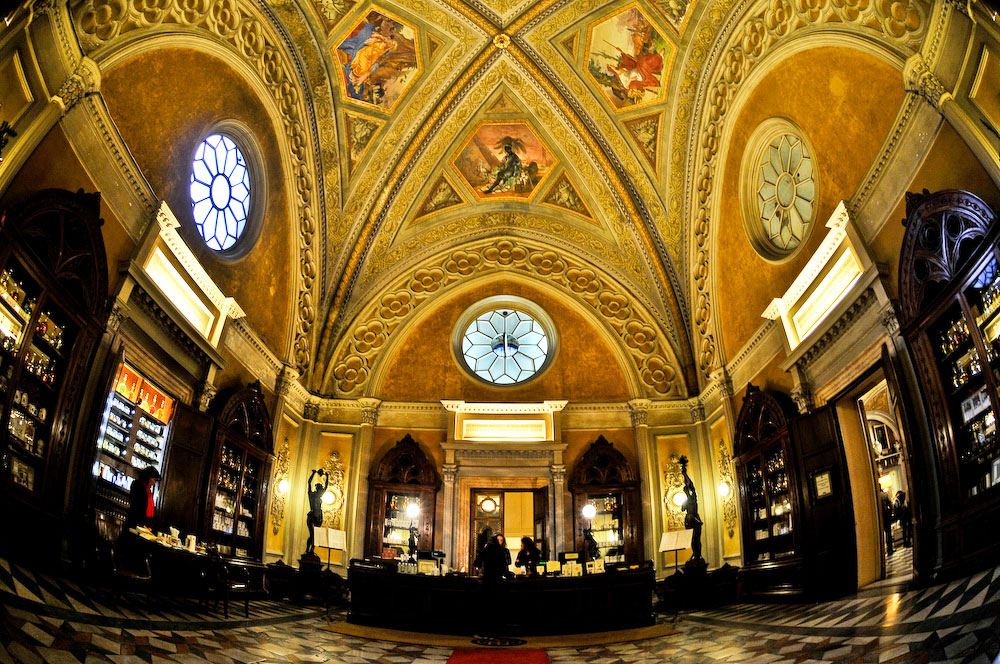
Santa Maria Novella. Pharmacy salesroom today. Source: MuseumsinFlorence.com

Santa Maria Novella. Pharmacy salesroom today. Source: MuseumsinFlorence.com

Frescoes on the wall of Santa Maria Novella Pharmacia. Source: Milay Mail newspaper at MMail.com.

Frescoes on the wall of Santa Maria Novella Pharmacia. Source: Milay Mail newspaper at MMail.com.

Santa Maria Novella is one of the oldest pharmacies in the world and, according to many accounts, the real, true source for the birth of cologne. A fully functioning pharmacy in Florence, it was founded in 1221 by Dominican friars. As the fame of their potions grew, the pharmacy was opened to the public in the 1400s and the Grand Duke of Tuscany conferred his patronage upon them, along with a gift of the Medici coat of arms.

In 1533, Santa Maria Novella’s fame exploded when they were commissioned to create a signature fragrance for the young, fourteen-year old Catherine de Medici upon her marriage to Henry II of France. As one magazine article explains:

Catherine de Medici, niece of Lorenzo the Magnificent (of Medici). Painting: Unknown artist in the Uffizi Gallery via Wikicommons.

Catherine de Medici, niece of Lorenzo the Magnificent (of Medici), in middle age. Artist: Unknown. Painting in the Uffizi Gallery, via Wikicommons.

Known as ‘Acqua della Regina’ or ‘Water of the Queen’, the resulting citrus-based cologne water of Calabrian bergamot could be interpreted as being the world’s first celebrity fragrance. It served to popularise the concept of perfume to the French royal court… The royal essence soon became a sweet smell of success wafting across the most fashionable courts – including England’s under Elizabeth I. The Officina’s original scent sensation helped lay the foundations for both the French and English perfume industry. In the West, the trend for scent was then maintained by other Italian perfume lovers, including Cosimo de’ Medici, Isabella and Alfonso d’Este, to Lucrezia Borgia.

The impact of “Water of the Queen” did not stop there. When a young perfumer, Giovanni Paolo Feminis, moved to Cologne, Germany in 1725, he took the scent with him and re-produced it to great acclaim. It was named Eau de Cologne in honour of the city, thus heralding the birth of the perfume concentration known today. The original Acqua della Regina scent is still made today by Santa Maria Novella and really deserves the true credit for creating “eau de cologne.”

The pharmacy is still in operation and still creating their perfumes based on formulae that are hundreds of years old, including their world-famous potpourri. The original workspaces and sales rooms are now part of a museum (which you can see in stunning photos here), and the perfumes are sold world-wide.

There is history in every fiber of Santa Maria Novella. An admiring article in the New York Times (written in 1986) talks about how little has changed at Santa Maria Novella since the 1400s:

In the pharmacy, one of several in Florence that dispense herbal potions, light filters through stained-glass windows onto the rows of essences: lime-colored heliotrope, myrtle like liquid sunshine and the nut-colored Marescialla. This last was named after the Marquise d’Aumont, wife of a French marshall, one of the last women ever to be burned at the stake as a witch. She used the essence to perfume her gloves.

Since the 1400’s, the Pharmacy of Santa Maria Novella has been making all kinds of perfumes, potions, powders and pomades, and nothing much seems to have changed in the intervening centuries except for the installation of a modern cash register; ”It’s hideous, isn’t it?” says Fiametta Stefani-Bernardini, one of the family of two sisters and a brother who run the pharmacy. ”But we have to have it, by law.”

Source: Italymag.co.uk

Source: Italymag.co.uk

The original monastery infirmary and pharmacy used to be in the rooms adjoining today’s shop, and you can ask to visit them, preferably when there are not too many customers in the pharmacy.

Santa Maria Novella bottlesHere in the Sala Verde, or Green Room, and in the blue-and-gilt pharmacy, the clock stopped 400 years ago and the glass retorts, pestles, scales and measures once used by the monks are still in their cabinets, as well as bottles designed by Leonardo da Vinci. The pharmacy opens onto what used to be the cloister, now the parade ground of the local carabinieri detachment.

Some of the products are as old as the pharmacy itself, such as the Aceto dei Sette Ladri, or Seven Thieves’ Vinegar, named for a band of seven looters who would strip the bodies of the dead during the plague and who protected themselves from infection by rubbing this so-called vinegar over themselves. Today the aceto is sold as smelling salts, for which there seems to be a thriving market.

Between the scent of a Maréchal’s aristocrat wife who was one of the last women burned at the stake (in Paris in 1617), and the Seven Thieves’ Vineger intended to protect against the Black Death, my jaw dropped. May I emphasize once more that all these products are still available and made in the exact same formulation?

Equally impressive to me is the fact that supposedly “none of its products are tested on animals.” In fact, not only are the products “never tested on animals” but Santa Maria Novella even has a large Cat and Dog Grooming line. Lastly, whether it’s soaps, candles, bath products, lotions, or cologne, each batch is still made by hand and primarily from natural products. As one article points out, the “vast majority of the medicinal herbs used in its products are grown locally on the hills around Florence” and the products consist mainly of natural oils or essence.

Ambra.

Ambra.

With all this history (I really should have gotten my PhD in the subject, instead of being shipped off to law school), I naturally had to try one of the fragrances. I opted for Ambra which was first made in 1828 and which is categorized as an Oriental. Fragrantica describes it as follows:

a slightly dry composition of amber and with birch wood accents. Top notes: bergamot, lemon, bitter orange [bigarade] and neroli. Heart: jasmine, lavender and rosemary. Base: amber, birch, sandalwood and benzoin.

Birch is really the key to Ambra, a most unexpected, unusual, and, frankly, perplexing fragrance which was absolutely nothing like what I expected. Usually, I can get at least a vague sense of a perfume by looking at its notes. Not here. Ambra is primarily a herbal, woody birch fragrance, and only tangentially anything ambery or oriental. And it’s largely due to the birch note which runs through the life of Ambra’s development. According to Fragrantica, the odor of birch

comes from the literally “cooked” wood, as in birch tar, a phenolic, tarry smelling ingredient mostly used in the production of leather scents, some chypres and some masculine fragrances.

Silver birch tree. My own photo. Fjällnäs, Sweden.

Silver birch tree. My own photo. Fjällnäs, Sweden.

On my skin, Ambra’s opening is birch, more birch, a little more birch, and then some neroli. Bitter orange with bitter birch. It’s a fascinating combination, and a little bit odd, because the tree note smells simultaneously woody, smoky, minty, and a little bit mentholated like eucalyptus. At times, it almost feels a little bit like shoe polish cream. At other times, there are fleeting hints of something like diesel gasoline.

Minutes later, the strong pungent combination of bitter orange bigarade with that unusual woody element is joined by bergamot, lemon and lavender. The latter is a very strong and herbaceous, feeling a little like a lavender absolute or oil. Now, I’m not a fan of lavender but, here, the birch injects it with smoke and a tarry element, transforming it to something quite different. In fact, the twist on neroli and lavender brought by that powerful birch tree accord is quite inventive. Christopher Sheldrake has mentholated, camphorous eucalyptus as his signature for Serge Lutens fragrances, infusing it in everything from tuberose to patchouli, but you have to remember that Ambra’s formula is almost 200-years old and far preceded Mr. Sheldrake!

The smoky, woody, tarry, mentholated lavender-bigarade (neroli) combination is… disconcerting to me. I’m honestly not completely sure what to make of it. Something about it fascinates me and keeps drawing me in, despite my general loathing of lavender. It’s that incredibly smoky, woody feel which transforms the pestilential purple plant, my nemesis, into something oddly mesmerizing.

Just when I think I’ve decided that the cologne is almost verging on the soothing, it suddenly morphs into something else. Ninety minutes into Ambra’s development, sandalwood shows up! It happened both times that I tested the perfume, almost on the dot. The sandalwood is light and subtle, but it’s there. More importantly, the pungent, smoky, mentholated birch drops in volume by a significant degree, as if someone has flipped a switch. The perfume is now primarily neroli orange, infused with lavender, on a base of light sandalwood, smoke, and mentholated birch. I never smelled any jasmine or rosemary. There is the start of a light musky, almost powdery, note, but it is extremely faint. Ambra remains that way for another 90 minutes, slowly becoming lighter and more faded, turning mostly into a quiet, sheer amber. It dies completely just after the start of the 5th hour.

As noted above, Ambra is an eau de cologne, but it was surprisingly rugged for such a minimal concentration. I ascribe it all to the birch and the very potent orange neroli. Yet, despite that, Ambra has low projection. It hovers only a few inches above the skin for the first hour, before becoming a skin scent around the second hour. It is always incredibly light and airy in feel, but it was much stronger than I had expected.

There are few reviews in the blogosphere for Ambra. One admirer is The Perfume Critic who described Ambra as “[a] surprisingly long-lasting amber eau de cologne with noticable birch notes.” He wrote:

Pros: I love the addition of the birch note which adds an almost leathery tone to the composition; beautiful packaging and bottle.

Cons: Make sure you also purchase the spray adapter for your bottle so that you don’t have to use it as a splash! This adapter does not come with the bottle. [… ¶]

Reminds me of: Andy Tauer’s Lonestar Memories; Kolnisch Juchten. [¶]

… Although SMN considers Ambra an eau de cologne, I felt that there might actually be a stronger concentration of perfume oils – perhaps it’s really an Eau de Parfum? Maybe it was because I sprayed myself 6 times, or maybe it was because of the heat in the room where I was sitting, but this morning I found myself wondering what that amazing smell was…only to realize that it was me!

Wearing Ambra, I felt as if I should be stepping down from a stallion, riding crop in hand, having just returned from the hunt. I’m on my way to the library where my fellow hunters are milling around smoking their sweet pipe tobacco while sipping Scotch in crystal goblets: Ambra definitely has a vintage, old world feel about it. What most sets it apart from other amber aromas is the lack of the sweet vanilla note so often added to amber scents. Additionally, the birch tar note lends the feeling that both leather and smoke notes are part of the composition. […]

You know, I can completely see his scenario of the horseman returning from the hunt, before retreating to a smoky room to sip scotch. Ambra really does have an outdoorsy character, along with an old world feel. Now, it didn’t last quite so long on my perfume-consuming skin as it did on his, but then I didn’t use anywhere close to 6 sprays! I suspect that Ambra might easily have lasted longer had I used a greater quantity.

I think those who love neroli, lavender, and woodsy notes should try Ambra. Don’t expect a true amber fragrance, because you’ll be disappointed; the birch and aromatics are too dominant in the perfume’s development. On the other hand, if you’re looking for an unusual neroli or lavender — something that is quite soothing and relaxing at times, but with a twist — and a very airy, lightweight perfume that is ideal for hot temperatures, you may be very pleased. Ultimately, Ambra wasn’t for me because I struggle too much with lavender (which makes Santa Maria Novella’s Imperial Lavender completely out of the question), but I definitely would like to try their Patchouli, Opoponax (frankincense), and Orange Blossom colognes.

Even if Ambra doesn’t sound like your kind of thing, I would urge you to at least check out Santa Maria Novella’s enormous range of cruelty-free products, from personal care items to bath and body products, candles, children’s shampoos, room accessories, potpourri, and, even, olive oil! Because, seriously, how cool is it to have products once made by Dominican friars almost 800 years ago and associated with everything from Catherine de Medici to marauding thieves who fought off the Black Plague?!


DETAILS
Cost & Availability: Ambra is an Eau de Cologne that comes in a 100 ml/ 3.3 oz splash bottle and which costs $125. In the U.S., it is available directly from Santa Maria Novella’s US website which offers free shipping for orders over $150. Remember, you may need to buy an atomizer spray to go with the bottle. Santa Maria Novella also has numerous other sections worth checking out. All items are cruelty-free and have not been tested on animals. The Pet Section includes everything from Lemongrass Anti-Mosquito repellant in lotion form to No Rinse Cleansing Foams, and more. Santa Maria Novella also has stores in 5 U.S. cities from L.A., to New York, Chevy Chase, Dallas and Bal Harbour, Fl, and you can find those addresses on the website. Also, Lafco, on Hudson St. in NYC, supposedly carries the entire line. I checked the LAFCO website, and I don’t see any Santa Maria Novella’s products on it, but I think they may carry them in-store. In terms of other retailers: Aedes seems to carry a good selection of some Santa Maria Novella products, from candles to soaps, along with Ambra for $125.  Luckyscent carries a very small selection of the company’s colognes, soaps, bath gels and shaving creams, but Ambra EDC is not part of them.
Outside, the U.S., you can turn to the Italian Santa Maria Novella website but I’m having a little trouble navigating it and somehow the photo of the perfume doesn’t look like the one I’m used to. There is also no pricing that I can find. The Farmacia  has a number of European off-shoots: stores in London and in Paris. I can’t find an address for the Paris store, but the official distributor for the company’s products is Amin Kader Paris which has two stores in the city. Again, I can’t find Euro pricing information for the fragrance. On a side note, on a Fodor’s site, I read that Santa Maria Novella has shops in the following cities: Roma, Venice, Lucca, Forte dei Marmi, Bologna, Castiglione della Pescaia, London, Paris, and Livorno.
As for samples, I obtained mine from Surrender to Chance which carries Ambra starting at $3.99 for a 1 ml vial.

Perfume Review: Parfum d’Empire Aziyadé

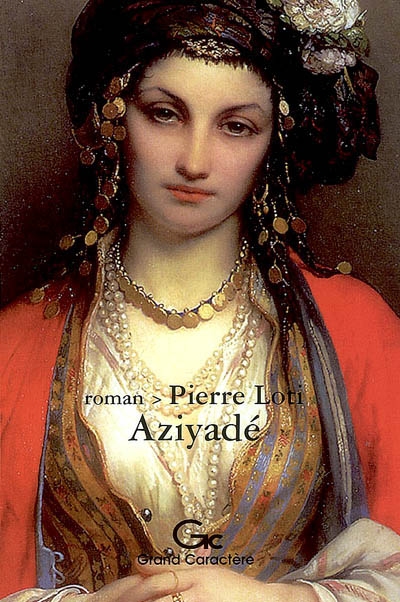
Aziyade bookConstantinople, 1876. An illicit love affair between a French officer and an 18-year old harem girl. The heat of the city matching the heat of their passions. Forbidden, dangerous, exotic and sexual.

Aziyadé by Pierre Loti was a very influential novel in its time and, in 2008, became the inspiration for the tenth perfume by Marc-Antoine Corticchiato, the founder and nose behind Parfum d’Empire. Aziyadé, the eau de parfum, explicitly attempts to replicate that moment in time, back in 1876. As the Parfum d’Empire website explains:

An elixir blending the aphrodisiacs of many cultures throughout history, Aziyadé draws us into a sensuous feast where the pleasures of love are intimately entwined with those of the palate. More than a fragrance, Aziyadé is a flavour. The flavour of the yielding flesh of Aziyadé, the heroine of Pierre Loti’s eponymous novel, the story of a harem in the twilight of the Ottoman Empire. [¶]

Aziyadé , a quintessence of carnal pleasures. A fruity, spice laden oriental, Aziyadé opens with a splash of pomegranate juice before yielding candied date, prune and orange notes. Its cornucopia of aphrodisiac spices draws us into a sensuous feast where tears of incense melt into musk, cistus and carob.

Aziyadé: an outrageously carnal perfume. 

The full story is laden with history, sensuality, flashbacks to the Greeks, Romans and even Queen Hatshepsut, displaying “her naked body, rubbed in incense, to honour the god Amun-Ra.” Honestly, with my tastes and life-long obsession with history, how could I not be tempted? Was it not guaranteed that I would love Aziyadé?

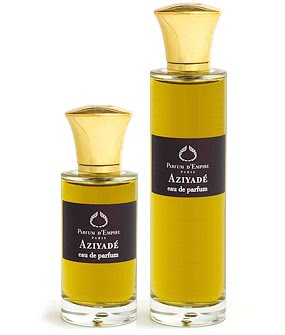
aziyade perfumeAnd, yet, I don’t. Aziyadé a lovely perfume, but it didn’t bowl me over or wow me. And I definitely don’t think it’s for everyone — not by any means. Only those who love cumin; very naughty, animalic skank; and dark, musky, sometimes leathery, labdanum should try Aziyadé.

Luckyscent offers Aziyadé’s list of notes which include:

pomegranate, crystallized date, almond, orange and prune, cardamom, cinnamon, ginger, Egyptian cumin, carob, frankincense, vanilla, Madagascar vanilla absolute, patchouli, musk, cistus [or labdanum].

Source: ifood.tv

Source: ifood.tv

Aziyadé opens on my skin with zesty citrus, cumin, musk, and animalic, leathery labdanum over honey, dates, ginger, prunes and seemingly every single spice known to a Moroccan spice vendor. It’s truly an explosion of scents, all bursting out on the scene within the very first second like a stampede of elephants. In less than a minute, however, the initial blast of very animalic, dark, almost masculine and very dirty labdanum settles a little, softening under a wave of rich, heavy honey. The cornucopia of spices separate, becoming more distinct, and cumin takes the lead. Dried fruits and juicy plum also become more noticeable. And, to my surprise, there really is a subtle note of pomegranates. The perfume is extremely boozy, beautifully complex, layered and rich, but it is also surprisingly airy in feel.

Moroccan Tagine of Lamb, Prunes & Apricots. Source: DimaSharif.com. (Click photo to be taken to website where you can find the recipe.)

Moroccan Tagine of Lamb, Prunes & Apricots. Source: DimaSharif.com. (Click photo to be taken to website where you can find the recipe.)

As the minutes pass, the perfume starts to change. The labdanum loses a touch of its heavily leathered, dirty facade, turning slowly nuttier and sweeter, thanks to the growing infusion of honey. The cumin also becomes a little less top-heavy, swirling into the eddy of spiced notes and blending in a little better. On my skin, it’s very much like the cumin in a curry — fragrant, aromatic and a little dusky — rather than the cumin associated with body odor. The plum and dried fruit tonalities rise to the surface, followed soon thereafter by two polar opposites: smoky frankincense and rich vanilla extract. The smoke serves to add some dryness, undercutting the sweetness of the strong honey notes, while the vanilla adds a subtle, custardy depth to the foundation. The whole thing becomes a swirl of: juicy orange and citrus; dark, stewed, dried fruits dominated by prunes; molten honey; strong cumin-heavy spices; swirls of smoky frankincense; nutty, almost masculine, labdanum amber; and a touch of sweet vanilla.

Shop in a Moroccan bazaar. Source: Moroccansouk.org.

Shop in a Moroccan bazaar. Source: Moroccansouk.org.

A strong vein of animalic musk runs underneath it all. It’s not akin to dirty, unwashed panties on my skin, but it definitely smells a little raunchy, a little naughty. The combination of the leathery labdanum, the musk, and the cumin create a very sexual undertone to the scent, though I have to say I was never transported to the Sultan’s harem. Instead, I was constantly reminded of a Moroccan souk or market. Neither the sweetly zesty citrus notes nor the smoke have the smallest chance of competing with those spices, dried fruits, dirty notes, and honey that are the essence of Aziyadé.

That core essence remains fundamentally unchanged with the passage of time. Only the honey note shifts, taking the lead and becoming the starring note as the cumin fades away. On its heels is that perpetual stewed fruit accord, infused by dirty labdanum and musk, all over a subtle trace of orange citrus. By the fourth hour, the honey becomes even richer and deeper, before eventually taking on a slightly powdered feel. By the eighth hour, the drydown has begun and Aziyadé is a sweet blend of frankincense, vanilla and amber with the sheerest touch of powder. It remains that way for several more hours until it finally fades away.

Frankly, I was astounded by the longevity of this incredibly sheer, lightweight, low sillage perfume on my voracious skin. Aziyadé essentially lasted 12 hours, but I could still detect minute spots of it here or there on my arm well over the 14th hour! It would be jaw-dropping with a stronger, heavier perfume, but for something so sheer? On my skin? Astounding. However, not everyone fared quite so well, and there seems to be a split in opinion about the perfume’s duration. On Fragrantica and elsewhere, some people report that Aziyadé died on their skin after a few hours, while others found it to last an enormous period of time.

There are a few perfumes which Aziyadé called to mind, though they are not very similar at the end of the day. The extremely boozy nature of the perfume’s opening hour strongly reminds me of the start of Hermès’ Ambre Narguilé, only with cumin and animalic notes as a strong vein instead of fruited pipe/hookah tobacco. The late stages of Aziyadé with the slightly powdery, very airy, honey note infused with dry smoke and light musk made me think of the late stage of Serge Lutens’ Chergui which has a very similar honey combination. Chergui, however, is never animalic or skanky, and has tobacco in lieu of leathery labdanum or spices.

Actually, the Serge Lutens fragrance to which Aziyadé is most frequently compared is his Arabie. I have not yet tried it, so I can’t comment, but perhaps this comparative assessment from Now Smell This (“NST”) would be helpful:

Aziyadé is another specimen of the stewed fruits + curry spices genre, although the stewed fruits are mostly in the top notes, and they’re given some lift and tartness here by the pomegranate. Once the top notes fade, for a time it’s nearly a straight-up spice fest. The dry down is woody and only slightly vanillic (it’s more dry than sweet), with mild incense and amber.

It could be a pared down Arabie, but it’s pared down in a very different way than El Attarine. Aziyadé is closer to spicy-foody than El Attarine, and the woods aren’t as velvety-smooth. It’s lighter and drier than Arabie, and possibly more wearable: that all depends on how you feel about cumin. I’m hard pressed to say which fragrance has more cumin — one day it seemed to be Arabie, the next, Aziyadé. I will say that because Aziyadé is a less foody-rich scent than Arabie, the cumin seems to stand out more, and it deepens considerably as it dries down.

The reaction to Aziyadé on Now Smell This, in a review quoted within, and in general assessments throughout the internet are all extremely polarized. NST didn’t like it, and not only because Aziyadé’s drydown turned primarily into “cumin-infused pencil shavings” on Robin’s skin. She likes pencil shavings; she does not like cumin. At all.

There is no doubt in my mind that how you feel about Aziyadé will depend not only on your feelings about cumin but, also, about skanky, animalic perfumes. Those who don’t like the former will consider Aziyadé to smell just like “an old woman’s sweaty armpits,” to quote one disgusted commentator on MakeupAlley, or “yucktastic” and “nauseating” to quote another. By the same token, those who hate animalic notes will find the perfume to have the hint of “dirty panties” and to be the embodiment of “vulgarity,” as one person wrote on Fragrantica.

Yet, those who can tolerate both notes love the perfume and find it exotic, mysterious, or, quite simply, evocative of Christmas. Christmas actually comes up quite a bit in the context of Aziyadé, with a few such references on Fragrantica, like the one below from “sky76sky” who writes:

Aziyade took me straight back to Christmas…not my festive week but one amped & ramped up to theatrical standards -red & gold, velvet, jewels, spangle, spices, candied fruits, brown sugar, … eat up eat up!…..mulled wine, burning logs, pot pourri, fancy linens, oranges studded with cloves, port, plums in brandy [… ¶]

If she were a woman she would be large & sexy, with red lipstick, an artsy scarf, slightly drunk, bejewelled & festooned in glamour from head to toe, the life & soul of the party, dahhhrling,

And the same Christmas feel is mentioned on MakeupAlley, too:

Boozy loveliness, come from a long line of lineage that is Dior’s Dolce Vita and Serge Lutens’s Cedre. Love the combo of cinnamon, spices, dried fruits and dates. Plumier than plums. It gives me flashbacks of biting onto a plum that is ripen to the point that is just before decay, and the juices flowing down the corners of my mouth. A wearable mulled wine &/or apple pie. I would love to wear this to a Christmas Fair!

I enjoyed Aziyadé quite a bit, but I didn’t love it — and my reasons have nothing to do with cumin or animalic notes. In fact, I don’t mind cumin, so long as it doesn’t turn sour or sweaty; and it did not do so here, on my skin. Plus, I thought its honey was truly lovely; gorgeous, in fact, and beautifully balanced with the rich spices and that nutty, leathery, labdanum amber. Also, the price is fantastic for a high-quality, well-blended, niche perfume: $75 for a 1.7 oz/50 ml bottle. No, the reason why I wasn’t enamoured is due primarily to the perfume’s texture and weight.

"The Pashas Concubine" by Ferencz Eisenhut.

“The Pashas Concubine” by Ferencz Eisenhut.

For me, the airy, sheer feel of the perfume simply wasn’t a good match for those potent notes. If you’re going to have such strong, intense, spicy accords, then you should commit fully and go all the way with a perfume whose texture is opaque, molten, baroque, hedonistic, and decadently rich. If you want carnality, then the perfume shouldn’t be so damn airy and translucent. It should be more like the fabulous Absolue Pour Le Soir by Maison Francis Kurkdjian, a perfume that fully and completely evoked a Sultan’s harem for me, even though it is much less skanky and dirty. That is an animalic, spicy Oriental which conveys sensuous carnality and forbidden passions — not Aziyadé which merely took me to a spice seller’s stand in Morocco’s ancient souks.

I have to wonder if the sheerness of Aziyadé was some sort of compromise intended not to completely terrify those who may struggle with cumin or animalic skank. Perhaps Parfum d’Empire thought the notes would be too much if the perfume were heavy as well. But those who would love and wear a perfume like Aziyadé are those who like potent, opaque, deeply resinous perfumes to begin with. Everyone else will run away from the cumin and the “dirty” notes, regardless of whether the perfume were sheer or heavy. For myself, I far prefer the magnificent Absolue Pour Le Soir, though I would certainly wear Aziyadé on occasion if a bottle fell into my lap.

If you loved honey perfumes with richly spiced, stewed fruits and, more importantly, if you can handle both cumin and slightly dirty, leathery, animalic skank, you should definitely check out Aziyadé. But, if you can’t, then you should stay very, very far away.

DETAILS:
Aziyadé is an eau de parfum and is available on Parfum d’Empire’s website where it costs €92 for a large 3.4 oz/100 ml bottle. You can also find it at Luckyscent which sells the smaller bottle in a 1.7 oz/50 ml size for $75, in addition to a sample for $3. MinNewYork sells that same 50 ml bottle for $100. Canada’s The Perfume Shoppe sells the large 3.4 oz bottle for $120 which is a great price, especially if it’s in Canadian dollars. (The Perfume Shoppe website always confuses me a little.) In Europe, First in Fragrance sells the large 3.4 oz bottle for €115, along with samples, while Premiere Avenue sells it for €92. In Australia, Libertine sells Aziyadé for AUD$150 for the 50 ml/1.7 oz size. For all other countries, you can find Aziyadé at a retailer near you using the Store Locator on Parfum d’Empire’s website. To test Aziyadé for yourself, Surrender to Chance sells samples starting at $3.49 for a 1 ml vial. Parfum d’Empire also offers two different sample sets directly from its own website. The first Mini Sample Set is for 3 fragrances of your choice in 2 ml vials for €6 or €10 (depending on your location) with free shipping, while the Full Sample Set of all 13 Parfum d’Empire fragrances also is for 2 ml vials with free shipping and costs €14 or €22 (for the EU or the rest of the world).