Perfume Review – Lonestar Memories by Tauer Perfumes: Mad Max Meets Sticky Orange

Mad Max the Road Warrior. On an arid desert road, he takes out a flame thrower to burn rubber, asphalt and cars, then relaxes in victory on some very expensive, myrrh-infused, leather car seats before eating some orange sticky toffee pudding and napping in a vanillic-amber haze. That was the essence of my experience with Lonestar Memories from Tauer Perfumes, a fragrance that is actually intended to be an ode to the Wild West and cowboys. For me, it was Mad Max, and then the Queen’s tea. And, surprising as this may sound, it actually works a little.

Scene from Mad Max 2 via cinemasights.com

Scene from Mad Max 2 via cinemasights.com

Lonestar Memories (sometimes written as “03 Lonestar Memories”) is a unisex fragrance by Andy Tauer, a molecular biologist with a PhD who left the world of science in 2005 to become a perfumer. Lonestar Memories was his second creation and released in 2006. It received a 4-star rating from the renowned perfume critic, Luca Turin, who described it as a “wonderfully warm… smoky carnation” in Perfumes: The A-Z Guide.

andy-tauer-03-lonestar-memoriesOn Fragrantica, Lonestar Memories is classified as a “woody chypre” and described as a call to the American West, leather and old jeans. The Tauer website adds more detail:

An ode on birchtar: True and unique, rich and lasting
The scent of a lonesome rider, wearing old jeans and leather jacket, after a long day on the horse in the dry woods, preparing his coffee on the open, smoky fire.

Lonestar Memories’ notes include:

Geranium, Carrot seed, Clary sage, Birchtar, Cistus [or labdanum], Jasmine, Cedar wood, Myrrh, Tonka, Vetiver, Sandalwood.

Silver birch tree. Source: my own photograph.

Silver birch tree. Source: my own photograph.

Birch is a big part of Lonestar Memories, as are the geranium and clary sage. According to Fragrantica, the odor of birch is that of “cooked” wood, and is “a phenolic, tarry smelling ingredient mostly used in the production of leather scents, some chypres and some masculine fragrances.” Clary sage also has a leather undertone, but it is a herbaceous plant that often smells like lavender.

Lonestar Memories opens on my skin with burning rubber, burning orange plastic and the smell of soldering. I’d read repeated references to the odor of electronic soldering — the taking of a high-intensity flame to meld together either pipes, wiring or electronic components — in comments on Luckyscent, but I hadn’t quite believed them. I certainly do now. The comparison truly does apply:

  • Solderingthis one smells like my electronics class – lots of burning plastic and soldering irons
  • the smoky smell is reminiscent of an electronics class (specifically solder smoke)
  • Lonestar Memories absolutely reminds me of the air-exhaust of a laundromat- which I love, so I might buy a bottle.

The source of the smell is the combination of that tarry, smoky birch tar with pungent geranium. The two notes go hand-in-hand for much of Lonestar Memories’ opening hours, though in the opening minutes, the birch tar rules all. It’s not mentholated or camphorous, the way it is in Santa Maria Novella‘s similar Ambra, but, rather, just like black rubber that has been singed along with soldered electronics and plastic-coated wires. My skin cycles through notes rather quickly, so, on me, it only lasted 15 minutes but it seems to have lasted considerably longer on some other people. The overall effect is to make Lonestar Memories not a call to the Wild West or Brokeback Mountain cowboys by a campfire, but, rather, to Mad Max in some futuristic, post-apocalyptic world of asphalt, metal, leather and black rubber.

Mad Max 2.

Mad Max 2.

Accompanying the tarry note is strong, slightly bitter geranium, followed soon thereafter by cedar wood and some syrupy, sweet note that feels like myrrh mixed with tonka, tar and smoke. The sweetness grows with every moment, as syrupy myrrh spreads its resinous, ambery touch. At times, there is almost a vanillic touch to the syrup.

Clary Sage. Source: TreeFrogFarm.com

Clary Sage. Source: TreeFrogFarm.com

Lurking to the side is clary sage, feeling very herbaceous and very much like lavender. The combination of notes creates an odd dichotomy: pungent, floral geranium and herbal lavender, countered by syrupy amber and singed black rubber. Thanks to the growing sweetness from the syrup, the tarry birch accord soon softens and the black rubber begins to transform into the scent of expensive, leather car seats.

The effect of that syrupy myrrh resin on the bitter, pungent geranium creates the key characteristic of Lonestar Memories: an orange accord. At the start, it is slightly bitter and extremely similar to neroli. When combined with the lavender note from the clary sage and the now smoky aspect of the birch tar, the overall scent strongly parallels that of Santa Maria Novella‘s Ambra. There are differences, however, especially with that key orange accord. In Lonestar Memories, the note is sweetened and more akin to actual orange, with just the faintest touch of a bitter edge from the geranium. In Ambra, the note actually does stems from neroli (or bigarade); it is primarily bitter, not to mention quite woody as if petitgrain were used. Lonestar Memories is significantly richer, denser, heavier and thicker in feel and notes than the more airy Ambra which is an eau de cologne. Ambra is also much dryer, much less sweet, and has a mentholated aspect to the birch tar which Lonestar Memories lacks.

Source: Simplyrecipes.com

Source: Simplyrecipes.com

By the end of the first hour, Lonestar Memories is a rich, complex orange amber. It is triggers visions of orange — sticky, sweet, herbaceous, but also bitter, and backed by leather. It feels a lot like an English sticky toffee pudding sauce, thanks to the sweet, vanilla-infused, balsam-like resins which soften the edges of the aromatics and woody notes. Even better, the tarry feel from the birch has largely dissipated, replaced by a smoky woodiness. The changes lead me to think that Lonestar Memories is much more wearable and versatile than I had initially thought.

Unfortunately, that’s when the headache kicked in. I rarely get headaches from fragrances, not even from the ISO E Super which I despise. The few times it does happen, however, the culprit is always a synthetic. And something in Lonestar Memories’s amber base triggers an enormous, insistent throbbing in my temples that eventually leads up to a burning sensation in the bridge of my nose. I have to wonder if there is something like Ambroxan or a similar amber synthetic that is to blame. Whatever the reason, Lonestar Memories gave me a headache on both occasions when I tried it. And I am not alone. On Luckyscent, someone had a similar experience, writing: “the amber drydown is almost metallic, and that gave me a headache.” On Fragrantica, a commentator got a headache but from a very different triggering aroma: “smoky yes but I have a very strong boxed laundry detergent smell that is giving me a bad headache….two advils to heaven.”

Despite the headache, I enjoyed the finish and drydown of Lonestar Memories. The orange note fades a little in prominence to include some vaguely abstract floral element with smoke, vanilla, and caramel-y amber. In the last hours, Lonestar Memories turned into a custardy vanilla with benzoin over the lightest tinge of orange. The sillage of Lonestar Memories was quite strong in the first hour, then it softened and became relatively moderate. It turned into a skin scent about 4.5 hours into the perfume’s development. The longevity was good, too, lasting approximately 9 hours on my perfume-consuming skin. On others, I suspect Lonestar Memories would last for a significantly longer stretch of time as it can be quite a potent fragrance, depending on how much you apply. I would recommend using a light hand if you’re going to be wearing this to a conservative office environment.

There are very split reactions to Lonestar Memories, though the majority on both Luckyscent and Fragrantica seem to adore the fragrance. I think it will all depend on how you react to that difficult opening and, perhaps, how you feel about smoky barbeques. Some of the varied, quite polarized descriptions on Fragrantica may help you decide:

  • The initial burst of barbecue spice and heavy wood smoke quickly mellows into a fantastic earthy accord that is smoothed by myrrh and sweetened with jasmine.
  • Lonestar Memories smells like an Oilman wearing an amber fragrance at a barbecue (well, sort of). This is quite a challenging composition. It opens with a blast of spicy-smoky leather that smells halfaway between tear gas, tar, burnt rubber and, yes, barbecue. Myrrh and amber make their appearance right away adding a consistent dose of sweetness while the smoky feel remarks its presence throughout.
  • Tar, carrot seed, clary sage and wood with flowers place Lonestar Memories somewhere beyond leather. Knize Ten and Etat Libre’s Rien are mild in comparison. LM has a much more burnt quality than these two. ‘Tar’ and ‘burnt’ do to an extent add up to notes of snubbed cigarette and charcoal but the scent ultimately LM brings to mind is burnt wood. Not the smoke of burning wood, but old campfire. LM is nowhere near a daily fragrance for me. I honestly can’t even say that all moments of LM are pleasant. But it’s worth the experience of the top notes to get to the basenotes which lose the feel of charred things and petrochemicals. The base centers on a handsome severity that only a unsmiling, unsweetened floral can give.
  • Does not remind me of American West. Has a medical/hospital opening that I just cant get past. Bad stuff, stay away!
  • Hot afternoon sun in Texas, dust and dirt, melting blacktop tar, burning tires, smoke, and motorcycle exhaust. Sorry – but I think this is a Tauer fail for someone to actually wear.
  • Lonestar is a difficult perfume to understand. It is brash and in your face, but it also tells a story of the Wild West and Cowboys. Although the notes do not mention leather, there is a strong accord of smokey barbeque meat, and you can almost touch the embers on the fire. Like any wood fire, it can become choking at times but it also mesmerizes the wearer.  [¶] If this perfume were a person, it would swagger and wear ripped jeans.
  • If I would have met a man who wears THAT perfume I ve done everything to be his girl!! I smell all the fine things from the beginning: adventure, finest saddle horse leather,smoke, wood, incense, some wild jasmine.. and that man is taking me in his arms only to throw me on his mustang and then he d jump on that horse too and off we go … through the deserty dusty plains, the pine woods not far away along the the route and I get a feeling, that all my wishes will come true..we arrive at a camp fire and my man is sweating a little so his smell becomes sweeter and more cedar-like and I m melting in his arms again, my nose buried in his neck..and the mustang is giving a soft blow through his nostrils and I m in my smokey leathery horse heaven..Oh that perfume!

My experience was different from many of those described. On me, that difficult, tarry, smoked rubber, leathery opening didn’t last for very long, and the perfume was primarily a sticky orange amber. True, there was occasional bitterness from the geranium, along with smoke from the birch, subtle undertones of leather, and occasional dryness from the cedar wood, but none of those notes changed the primary essence of the fragrance.

As a side note, despite the many references to the masculine nature of the fragrance, there are a number of women who really enjoy Lonestar Memories. Yes, it skews a little more masculine than some unisex fragrances, especially with that tarry, burnt rubber opening, but the essence of the fragrance feels very unisex for me. I suppose it all depends on how the smoke, leather and rubber elements from the birch manifest themselves on your skin. It’s definitely an interesting scent to try, but also not one to buy blindly without a test. If Lonestar Memories doesn’t work out, but the underlying elements intrigues you, there is always Santa Maria Novella‘s woodier, dryer, airier, and more herbaceous, lavender-y, neroli Ambra to try.

Have you tried Lonestar Memories? If so, did the opening transport you to a cowboy’s barbeque on the range, or to Mad Max’s Thunderdome?

DETAILS:
Cost & Availability in General: Lonestar Memories is an eau de toilette. In the U.S., you can buy a 1.7 oz/50 ml bottle for $125 from Luckyscent or MinNewYork, as well as directly from Tauer Perfumes where it is cheaper at $102. (See further details below in the Tauer section.) Luckyscent also sell a sample vial for $3. Samples are available from Surrender to Chance as well, starting at $3.99 for a 1/2 ml vial. In Europe, First in Fragrance sells the perfume for €95.00 for a 1.7 oz/50 ml, or for €190.00 for a 3.4/100 ml bottle from. It too carries samples. In the UK, Les Senteurs sells Lonestar Memories for £87.00, along with samples. The Tauer website’s store locator also provides locations in over 10 countries — ranging from France and the Netherlands to Russia, Singapore, the UK, Poland, Romania, Spain and more — where its products are available. You can find that list of stores here.

Cost & Availability from the Tauer Website: The Tauer Perfumes website lists the cost of the 50 ml/1.7 oz bottle as: Fr. 96.00 / USD 102.70 / EUR 77.80. Tauer Perfumes also sells a sample 1.5 ml/ 0.05 oz glass vial of Lonestar Memories for: Fr. 6.00 / USD 6.50 / EUR 5.00. Though they used to ship to most places in the world, you need to know that they can’t ship to a number of places in Europe right now. The website explains that they can only ship to customers in Switzerland, France, Germany and Austria and cannot ship “Great Britain, UK, Russia, Belgium and the Czech Republic.” As a side note, the Tauer website also sells a sample Discovery Set of 5 different Tauer perfumes (for free shipping to most places in the world) which you can choose at will for: Fr. 31.00 / USD 33.50 / EUR 25.70. The website provides the following information:

Free selection: It is your choice to pick a set of 5 DISCOVERY SIZE perfume samples in glass spray vials. 1.5 ml each (0.75 ml of 0.75 ml of UNE ROSE CHYPRÉE or UNE ROSE VERMEILLE or CARILLON POUR UN ANGE) are at your disposal. Pick any scents from the Tauer perfumes range. The amounts of 1.5 (0.75 ml) are minimal amounts. Usually , we will ship around 2 ml (1ml). The DISCOVERY size vials are spray vials and will allow you to enjoy our fragrances for several days.
Packaging: The DISCOVERY SET comes in a glide-cover metal box for optimal protection.
Shipment: This product ships for free within 24 hours after we received your order world wide. Exceptions: Italy, United Kingdom, Russia, Belgium, Czech Republic.

Perfume Review: Vero Profumo Onda Eau de Parfum

Source: 3dwallpapers.co.in.

Source: 3dwallpapers.co.in.

Large grey-blue waves hit the black, moss-covered rocks, spraying cooling salted water over the heated, sweaty bodies of the intertwined lovers. There was a note of the tropics in the air, as if a Filipino fruit-seller’s roadside stall had exploded nearby, the passionfruit symbolically matching the passion in the air. Heavy, opulent flowers laden with honey were there, too, so rich that they almost border on the over-ripe and match the goo of the fruit. The lovers kissed, their bodies cushioned on the plush velvet of mossy patchouli, and one bit the other’s shoulder with a moan.

Source: foto.libero.it

Source: foto.libero.it

The salt of the stormy seas is the very first impression that hits you when you put on Onda Eau de Parfum from Vero Profumo, followed not long thereafter by the image of sweet, heated skin. As the heavy, rich, intimate notes swirled on my skin, I decided almost immediately that I would — nay, must — one day buy this perfume. It is rare for me to think that mere minutes into testing a perfume and without waiting for its full development, but Onda’s complicated, extremely unusual, completely unique nature ravished me. It’s really hard not to think about sex and the human skin while you’re wearing it, but that seems to have been the goal of Vero Profumo. “I love everything that reminds of the smell of skin,” says its founder, Vero Kern, on the very first page of the company’s website. It shows, believe me, it shows….

Vero Profumo (sometimes written with odd punctuation as “.vero.profumo.“) is a Swiss niche perfume line that was established in 2007. Vero Kern‘s first three fragrances were Onda, Kiko, and Rubj, and they were released that same year. According to Fragrantica, all three pure parfums or extrait de parfum fragrances were intentionally made in the grand, classic French tradition of Mitsouko, Shalimar and Chanel No. 5 . As Ms. Kern explains on her website:

Vera Kern of Vero Profumo.

Vera Kern of Vero Profumo.

I go my own way hundred percent and do not follow any trends. I’m looking for originality, opulence and eroticism in scents. They have to surprise and to touch me. I’m not interested in ‘clean’ scents; I need characterful scents both in my creations but also as wearer.

How incredibly refreshing to have a perfumer bluntly state that she is not interested in creating “clean” scents! And to focus on erotic opulence? Bravo!

In 2010, three years after the launch of her parfum trio, Ms. Kern introduced the same fragrances in eau de parfum. However, the fragrances were not simply a milder form of the originals but, rather, slightly altered versions. Fragrantica provides Vero Kern’s explanation of the key differences:

The new perfumes are not the diluted version of the extracts. An eau de parfum needs a structure highlighting more the top notes as opposed to the base notes, but with the aim of keeping the original style of the extract intact”.

Onda Eau de Parfum.

Onda Eau de Parfum.

In order to render the scents lighter and easier to wear, the compositions have been simplified; yet that “je ne sais quoi” unmistakably characterizing the extracts is still clearly there. “I replaced the animalic notes with the unique scent of the passionfruit – says Vero Kern – I personally love it very much and think that it lends a sensual and erotic lightness to the composition”. Like an invisible thread, the intriguing scent of passionfruit links the three perfumes: it is at the core of everchanging, unexpected olfactory sensations with multifaceted evolutions.

[With Onda in specific,] Vero added passionfruit in the top, and slightly changed the base notes (cedar instead of sandalwood).

Luckyscent provides the following notes for the perfume which is categorized on Fragrantica as a “woody spicy”:

Bergamot, citron, mandarin, ginger, coriander, basil, passion fruit, iris, ylang-ylang, honey, vetiver Bourbon, patchouli, musk, cedar wood.

Onda Eau de Parfum opens on my skin with the salty tang of the sea. It’s cold like the Atlantic, but it also feels like a green salt marsh. At the same time, there is a surprising hint of the tropics in the air. The combination creates an incredibly unusual, mysterious, unique scent — and very sexy one at that, too.

Salt marshes via Flickriver.com.

Salt marshes via Flickriver.com.

Soon, woodsy notes arrive, but none of it feels like usual trees or vetiver, per se. It’s something that occurs to me again and again as I try to pinpoint the notes of the perfume. It’s as though Ms. Kern has twisted the way in which certain notes are usually manifested so that they seem completely different. All you’re really left with are impressions and feelings, moods and images; there are very few individually distinct, sharply delineated, really traditional notes of vetiver or trees. You smell woodsy notes, but something about them is different. Or, perhaps, the way they combine with the other notes has transformed them. This isn’t the vetiver in something like Terre d’Hermes, Guerlain‘s Vetiver or Chanel‘s Sycomore; it’s not the cedar wood in a Montale or Ormonde Jayne fragrance. Nothing is ever quite like what it’s supposed to be and, yet, it somehow conveys the feel of woodsy notes as well as any other perfume.

Passion fruit. Source: fo-od.co.uk.

Passion fruit. Source: fo-od.co.uk.

Perhaps it is the originality of the combination that makes the individual elements feel so transformed. For all the salt of the Atlantic ocean, you have the greenness of a very heated, green marsh; the gooey ripeness of passionfruit; the feel of oakmoss (even though there is absolutely none in the perfume); skin notes; an abstract feel of flowers that seem almost elusive in those opening minutes — and a quiet veil of sweetness over the whole lot.

Source: Twitter.

Source: Twitter.

Though the perfume feels like some sort of chypre with a citrus start, the citron, mandarin and bergamot never feel distinct. Though you have the velvety plushness of a very green, mossy patchouli, that too feels almost amorphous and abstract. The same applies to the slightly tangy citrus and fruit notes that waft elusively in the air. The perfume is so magnificently blended that it all swirls together in a harmonious whole. Onda never even throws off prisms of notes; it is just a sum total of experience, mood and feel that is really extremely hard to describe.

It is, quite simply, a phantasmagoria. The dictionary defines the term as:

noun

1. a shifting series of phantasms, illusions, or deceptive appearances, as in a dream or created by the imagination.

2. a changing scene made up of many elements.

3. an optical illusion … in which figures increase or diminish in size, pass into each other, dissolve, etc.

Minutes in, the image of heated skin starts to join the swirl of images. It’s not animalic and, yet, it is. The scent is not like rancid sweat, but perhaps, like fresh, clean, slightly sweet, salty, heated skin with the sheerest, merest touch of a leathery undertone. It’s not raunchy or grossly intimate; there is no sense of unwashed panties or sweaty crotches; and there is no lurid musk. With the tinge of honeyed sweetness, it is, quite honestly, like the smell of sex. Not the sweat-infused, raunchy smell in the air afterwards but, rather, like the scent of your lover’s skin during the early, tender intimacies, when you bite his shoulder and smell the scent of his neck. The combination of the salty, honeyed woods and the sea, with tart, juicy, gooey, ripe citrus, and subtle animalic notes that almost verge on the leather …. well, it’s mesmerizing, tantalizing and simply stunning.

Source: www.stihi.ru

Source: www.stihi.ru

For much of the Onda’s early development, the perfume never wildly deviates from its core essence. At times, the citrus, fruit, and musk notes fluctuate in prominence; at other times, the perfume itself seems to undulate in projection and strength. After the first hour, it seems to get softer, turning much less woody and salty citrusy. But then, surprisingly, it seemed to get stronger, more concentrated and more intense when the honey notes started to take over. And that begins to occur ninety minutes in, when Onda turns more animalic and more floral. There is the feel of richly honeyed flowers with mossy patchouli, vetiver, those animalic musky skin notes, and the merest touch of light powder underneath it all.

Source: etshoneysupliers.

Source: etshoneysupliers.

Three hours in, Onda is all honeycomb, beeswax and rich honey atop lush, velvety flowers with animalic accords and the hint of earthy vetiver. As the honey grows stronger, there is the sense of something leathery swirling around. It’s almost a little like honeyed rawhide leather at times — sharp, dark brown, and deep. Something about the combination feels almost biting; I could feel the honey high up in my nose, almost burning the bridge of my nose. It’s subtle, but it’s there and lasts for a few hours. I applied just a little over an 1/8th of a vial since this is, after all, eau de parfum, but it’s as if Onda’s notes have doubled in strength and intensity. The honey has become akin to the most concentrated form, dripping dark and molten over the heady, indolent, languid flowers with that leathery bite underneath. It feels lush, opulent, oriental, highly charged, almost sexual, and incredibly rich.

Onda remains that way for hours and hours. It’s heavy honey with slightly skanky undertones and darkly rich leather. The notes sit atop the lightest suggestion of vetiver and vanillic powder. And, to my astonishment, despite the hours, the notes barely seem to fade an inch in potency until the very end! All in all, Onda lasted about 12.5 hours on my perfume-consuming skin. In its final hours, it was simple honeyed musk.

Onda is a very powerful, strong, incredibly rich, opaque and heavy perfume but it doesn’t feel thick, if that makes sense. I would never call this lightweight in feel, but it is much airier and lighter than the notes would have you imagine. Yet, it is incredibly potent. Onda EDP would make some of the strongest Tom Ford Private Blend perfumes seem positively mild in comparison. Especially when you consider that I put on only a little over 1/8th of a vial — not much at all! The projection is potent too, initially radiating out perhaps a foot in the first 30 minutes, before becoming softer and staying in a tiny cloud around you. But, it’s pretty damn intense within that cloud. I was walking The Hairy German when I came across a neighbor and stopped for a chat. Though we stood only a few feet apart, she couldn’t smell the perfume. But when I asked for her opinion, and brought my arm a few inches from her nose, her head jerked back at the strength of the notes.

She didn’t like Onda — and I don’t imagine most people will. While her tastes veer towards the “light and citrus,” I think Onda may be far outside a lot of people’s tastes. The people who will swoon at Onda will only be those who can handle the animalic, leathery undertones. Those who adore sheer, airy, fresh florals, who despise naughty notes, and/or who shudder at the thought of potent, extra-rich perfumes should stay very, very far away. This will be far too unusual, difficult, rich, fetid, or sexual for their tastes. It may even seem a little crass to them, like a public display of affection that becomes a little bit heated.

Luckyscent and Now Smell This have two very different takes on the perfume which I think show both sides to the scent. Now Smell This wrote:

It’s rare to smell a fragrance that seems completely new, like nothing else on the market. It’s even more rare to find something that smells not only new, but at the same time ancient, as if unearthed from an Egyptian sarcophagus. Astonishingly, Vero Profumo Onda manages this last trick. There’s nothing of the focus group about it. If someone told me Onda was Mata Hari’s secret weapon, I’d believe it. If she told me Onda was Comme des Garçons’ latest fragrance, “Bilge Water Supreme,” I’d believe that, too. It’s a marvel. […][¶]

Onda in Eau de Parfum is, if anything, more difficult than Onda extrait. It has less powder than the extrait and less animalic depth, but it is more herbal-bright and more “rotted” smelling. […]  I prefer Onda in extrait. I find it richer and deeper, and, in some delicious way, scarier. Both forms of Onda last all day on skin. If you are fascinated by Onda, you’ll rejoice in its persistence. Otherwise, you’ll find it a scrubber extraordinaire. Either way, I don’t think you’ll leave Onda unmoved.

Luckyscent‘s take on it is a little less terrifying:

[I]f a fragrance ever needed taming, it is Vero’s wild, dusky, brooding Onda, as close to an alchemical potion as a modern perfume is ever likely to get. In the eau de parfum, the ginger, vetiver, honey and patchouli still simmer with earthy sensuality, but the composition gains an airiness, a sense of space that make the notes an easier fit for daytime wear. The overtly animalic notes have been replaced by the equally animalic, but brighter passion fruit. Don’t be fooled: the leather-clad femme fatale hasn’t come over from the dark side of the forest. But she’s just cracked a smile.

It’s funny how the perfumistas I know in groups seem to rave about Onda in Pure Parfum/Extrait form, while the reviews on Fragrantica for the Eau de Parfum would be enough to put you off trying it forever. They are, generally, quite negative:

  • Announcing the autumn of fertility, this is (IMHO) a smell to wear as you rot on the vine.
  • The eau de parfum Onda continue woody-spicy notes of honey, the sweet-spicy, earthy, while the iris, ylang-ylang and sensual feature a cleaner, yet more erotic results perfume.
  • The smells that comes to mind are cool wet earth, leather, tobacco, warm wood, smoke. It’s pungent, animalic, meaty, rich. All of that is the opening of Onda,it’s unbelievable, you’ll either love it or hate it, for me it is misterious and unique.
  • I’ve found a more suitable name for this fragance:
    SALT-MARSH
  • Saying that Onda EDP is a challenging composition would be like considering Marcel Proust and easy read. Onda is far beyond being just challenging, is weird, destabilizing and unusual but at the same time “cultured”. It is built around a solid structure that shows many characteristic of classic perfumery and adds a bizarre, sort of futuristic, accord of passion fruit and vetiver that together with floral pattenrs and ginger gives birth to a strange blend that sits somewhere between a disinfectant, a mass destruction weapon and pure luxury. Overall Onda smells salty/sweet with fresh nuances, flowery with acidic/unripe fruits and definitely sulfurous (urine?). While all of this may sound disencouraging, I still believe that Onda deserves our respect as one of the most intriguing, complex and original compositions around. Onda, more than like a proper fragrance, sounds like a declaration of intent that says “I’m here, and I’m here to stay!”.
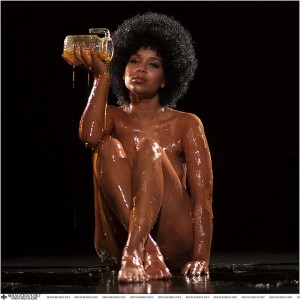
"Lisa Raye. Dripping honey on her body." Portrait by Brad Miller / Retna Ltd. 2002. via Flickr

“Lisa Raye. Dripping honey on her body.” Portrait by Brad Miller / Retna Ltd. 2002. via Flickr (Link to Flickr page embedded within.)

My experience was very different from that of a lot of those reviewers, and I had to laugh at the comment about the “mass destruction weapon.” That said, I can absolutely see how someone with a taste for more traditional, less unusual perfumes may reach that conclusion. The “skanky,” almost leathery notes are definitely a problem for a lot of people. But so, too, is the honey note. Though I never smelled anything sulfurous, the honey did burn my nose at times and I suspect it may turn very rancid on some people’s skin.

Freddie of Smelly Thoughts who has perhaps the most cutting-edge, avant-garde taste in perfumes of anyone I know wrote a bit about that particular issue:

The honey becomes undoubtably urinous, and considering I can douse myself in Miel De Bois with ease, yet can detect the sulphorous notes in this, should let you know how potent it comes off. However, it is blended with the spice, citrus, and over-ripe fruit notes so well, it becomes merely another appealing, complicated piece to this Onda puzzle.

Yet, despite the funky honey note, he adored the perfume as a whole:

Onda EDP opens absolutely wonderful, with a pronounced vetiver note upfront – I love the vetiver already, it is that dank, dirty salty vetiver which is the only type I seem to really enjoy. There’s a real spice overlaying this, a harsh twang of sharp ginger, and some pungent citrus and bergamot. […]

There’s some bizarre fruit accords in this, and an unusual one listed is passion fruit… I love passion fruit but it’s not really what I’m smelling. To me it’s more the feel of an over-ripe banana, in the similar way that Christopher Brosius used this over-ripe quality in In The Summer Kitchen. An almost dustbin like vegetal effect that is bizarrely compelling. […]

First impressions? I love this. At first, and for the first ten minutes, I thought “Hmmm…. interesting I guess”, but then attempting to work this thing out, it gets complicated. I feel like I’ve solved it now, 20 minutes later, and I love the outcome. Already I can see this becoming a full bottle purchase, it’s completely unique – a blend of animalic honey, candied ginger and citrus, salty vetiver (which becomes nothing more than a wonderful base rather than a lead) and softened fruit. Outstanding.

Though his experience was different from mine, I share his final, overall conclusion. For me, with my tastes and given how it manifested itself on my skin, Onda EDP was outstanding. I loved every minute of it. However, I definitely would not recommend it for the general masses or for the faint of heart. In fact, unless you passionately adore heavy, opulent, skanky orientals or leather-chypres, I wouldn’t even bother testing it. But if you’re someone who loves perfumes like Maison Francis Kurkdjian‘s Absolue Pour Le SoirRochasFemme, or Amouage‘s Jubiliation 25, then you should absolutely give Onda a try. For that very select group of people, Onda may well be love at first sniff.

DETAILS:
Cost & Availability: The Onda being reviewed here is only the Eau de Parfum version and it is available at Luckyscent for $200 for a 50 ml/1.7 oz bottle. (The Vero Profumo website does not seem to sell the perfumes.) Outside of the US, the Vero Profumo Facebook page offers a whole list of European retailers from Kiev, Russia, to Oslo, Norway, and Italy. It also adds: “Since 2010 distributed worldwide by Campomarzio70 in Rome Italy, in selective boutiques and perfumeries such as ROJA DOVE, Harrods Urban Retreat London, JOVOY Paris, Parfums Rares and many more.  Campomarzio70, marketing@campomarzio70.it will inform you where you find the nearest retailer in your country.” I checked the website for Campomarzio70 and it doesn’t seem to sell the perfumes online, since I could find no “online cart” (so to speak), no pricing options or no way to purchase the perfumes, but you can try to check for yourself. In the UK, you can find all Vero Profumo perfumes at Harrod’s Roja Dove Haute Parfumerie, but there is no online website through which you can purchase perfumes. (It is not the same site as the Harrod’s website.) At Jovoy Paris, Onda retails for €145. In the Netherlands, you can find it at Leanne Tio Haute Parfumerie. Germany’s First In Fragrance carries not only the complete Vero Profumo line but also offers sample sets. They ship throughout the world. As for samples, I obtained mine from Surrender to Chance as part of Vero Profumo Three-Perfume Sample Set (Onda, Rubj, and Kiki); the set is only for the EDP concentration and prices begin $13.99 for a 1/2 ml vial of each. Surrender to Chance offers single vials of Onda Eau de Parfum by itself, however, for $5.99 for a 1/2 ml vial. It also sells Onda Pure Parfum for $9.99 for a 1/4 ml vial, $19.98 for a 1/2 ml vial, and up.

Perfume Review – Arquiste L’Etrog

L'Etrog presentation on the Arquiste website.

L’Etrog presentation on the Arquiste website.

October 1175. Calabria, Italy. South of Naples, northeast of Sicily. “During the First Crusade, Southern Italy fell to the Normans, which encouraged Calabrian Jews to engage in the agricultural trades. By the 12th century, the communities were thriving. Since then, the harvest of the Diamante Citron or Etrog has remained a regional tradition.” Etrog is even described in the Bible in connection to the Garden of Eden. “The fragrance is said to be the ‘Fragrance of Heaven’, and the Etrog itself is associated with righteousness, goodness and desirability.”

Carlos Huber.

Carlos Huber.

October 1175 in Calabria, history and the etrog fruit are the specific inspirations for L’Etrog by the American niche perfume house, Arquiste. Founded by the architect turned perfumer (and now, designer), Carlos Huber, Arquiste always attempts to bottle a specific moment in history. It’s something that I greatly admire, as history has always been one of my greatest passions in life. And, here, the mission is not only to capture the festival of L’Etrog in Norman-conquered Calabria, but also the very feel of life in the Mediterranean itself.

Arquiste elaborates further on the exact mental picture that the perfume is meant to evoke:

In Medieval Calabria, a family gathers to celebrate a good harvest. Within a cabin built of Palm leaves and other woody branches, an aromatic bounty is presented. The citrusy scent of the Etrog citron, a regional specialty, brightens the air while embracing Myrtle and lush Date Fruit envelope the sweet warmth of the Mediterranean night.

L'EtrogReleased in late 2011, L’Etrog is described as a “citrus chypre” and was created by Rodrigo Flores-Roux and Yann VasnierOn its website, Arquiste says:

The brisk character of Myrtle marries with leafy nuances, emulating the freshly opened fronds of palm trees. An unexpected mouthwatering accent follows, with Smyrna Date fruit and elegant Cedar wood from Lebanon.

Cedar, however, is not explicitly included in L’Etrog’s official notes on the Arquiste website which merely list:

Calabrese Cedrat [Citron], Myrtle, Date Fruit and Vetiver

Elsewhere, however, department store retailers like Barneys and blogs like CaFleureBon quote the press release description which states the perfume is: “a citrus chypre with citron, palm leaves, willow branches, myrtle and dates.” So, let’s just assume that “willow branches” and “palm leaves” are in there, along with cedar, too.

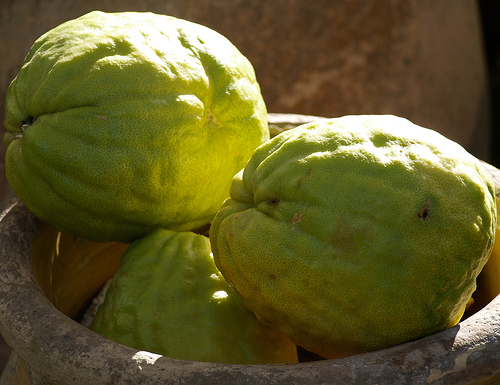
Diamante Citron or Etrog.

Diamante Citron or Etrog.

As for the fruit in question, internet research tells me that cedrat is a type of very large, fruity lemon with a thick rind and little acidity. It has many different names: cedrat seems to be one linguistic version of the term citron (which is the main French name) and seems to be the same as etrog which Wikipedia tells me is the Hebrew version. Whatever the linguistics, the fruit looks a bit like its close cousin, the pomelo, but doesn’t smell (or taste) like a grapefruit.

I’m a little OCD, so forgive my brief digression into history for a moment. First, Arquiste’s comment on the Normans would seem to imply that they were responsible for agriculture successes in the region, when I think that history would argue it was the Saracens or Moors. Starting in the late 9th Century, they invaded the area in southern Italy that includes Calabria and that later became part of the larger Kingdom of Sicily. It was the Moors who seriously impacted both the agriculture and the cuisine (not to mention the architecture); who brought over things like dates, oranges and lemons; and whose advancements in agricultural techniques led to the thriving cultivation of those citrus crops — techniques that, I would argue, were the sole reason for the bounty of the etrog on that day in October 1175 during the Jewish festival of Sukkot. It was not the bloody Normans! They were merely the subsequent conquerors. So, while Robert Guiscard admittedly encouraged the Calabrian Jews, it was the Moors who got the whole ball rolling to start with in what has been termed the Arab Agricultural Revolution. (Sorry for the tangent, but that esoteric point has been bothering me for hours and hours.)(And hours!)

Second, and returning to the perfume now, I don’t understand how L’Etrog is supposed to be even a neo-chypre, let alone an actual one. There is no oakmoss; there isn’t even the patchouli that is sometimes considered as an alternative foundational base. Is vetiver alone now enough? Not in my opinion.

Citron.

Citron.

I tested L’Etrog twice, using different quantities and resulting in a very different openings. The first time, my hand slipped and quite a large amount gushed out of the vial onto my arm. It was a vision of bright, sunny, yellow with sweet lemon that wasn’t zesty so much as slightly fruity and rich. There were also elements of light vetiver and myrtle. According to Fragrantica, myrtle oil is said to have a scent similar to eucalyptus but here, during the first test, there is a minty undertone instead. It creates a slightly chilled, very energizing effect that is lovely. At the same time, however, something about the overall combination leads to a definite impression of Theraflu or LemSip cold powder. As the seconds passed, the minty touches grow stronger, creating more of a fizzy, sparkling aspect than just mere fruity citron.

After 15 minutes, the perfume changes slightly. The fruity aspect of the citron grows stronger, but it doesn’t seem at all like dates, per se. In fact, there is nothing reminiscent of sweetly dark, dried fruits at all. At the same time, the vetiver also becomes more prominent, adding a quiet earthiness to the scent. What is more interesting, however, is the interplay between the vetiver and the myrtle.

Eucalyptus leavesOn one part of my arm, the peppermint note has transformed into eucalyptus, nullifying much of the sweet lemon but accentuating the vetiver. L’Etrog shows itself here as a spicy, mentholated eucalyptus with vetiver that is simultaneously earthy, rooty and touched by nuances of green citrus. On another part, however, it remains as peppermint, enabling the sweet, fruited lemon to show itself. Here, L’Etrog is a fruity lemon scent with a more generalized, abstract woody undertone. In both cases, however, the perfume is incredibly light, airy, and sheer. It’s much more akin to a cologne in feel and becomes a skin scent in as little as 20 minutes on my skin.

At the ninety minute mark during this first test, L’Etrog is a sheer lemon vetiver scent with the merest hint of woody, peppery elements and a bare drop of sweetness. Something in the undertone feels a little like ISO E Super, but it’s extremely light. The perfume remains this way for a number of hours until, around fifth hour, it turns into a thin veil of musky vetiver with a hint of lemony fruit. By the ninth hour, the last traces of L’Etrog are soapy musk with vetiver. Soon thereafter, it faded away entirely.

Joy Dishwashing liquidMy second test of L’Etrog involved a far lesser quantity and, as a result, led to a very different opening. This time, the perfume opened with spicy lemon (not a sweetly fruited one) intertwined completely with very woody vetiver. There was also quite a noticeable amount of soap from the start, and the myrtle showed no minty aspects at all. Instead, it was all eucalyptus. The whole lemon, vetiver, soap mix strongly called to mind lemon liquid dishwashing liquid. It wasn’t unpleasant, but the Joy similarities couldn’t be ignored.

Another big difference was the presence of ISO E Super. I don’t know why it was so much more evident at a lesser quantity of L’Etrog, as opposed to the greater dosage, but I’m absolutely convinced it’s there. L’Etrog had a slightly velvety wood undertone with that telltale, giveaway sign of peppery, rubbing alcohol. The ISO E Super is not enormously prominent, and it does fade away after an hour, but given the headaches that even small amounts can cause people who are sensitive to the note, I wanted to warn you.

By the second hour, during the second test, L’Etrog was primarily a vetiver scent with lemon nuances, a woody undertone, and the merest whisper of light musk. And it remained that way until the final drydown when it turned, again, more of a soapy, light musk. The perfume was so close to the skin, it was incredibly hard to smell at times. Clearly, this is a perfume that — like a cologne — will require a significant quantity if you want to detect its nuances. And, even then, you’re going to have to put your nose directly on your skin after the first hour. All in all, the perfume lasted a little under 7 hours with the lesser amount.

L’Etrog wasn’t my cup of tea. True, my personal style and tastes are very different, but I also found it disappointing as a whole. Ignoring completely the sillage issue, L’Etrog was a tame, boring, linear creation that really just played off lemon and vetiver. Perhaps if I’d smelled actual dates, I would have been more excited. But I doubt it. Lemon and vetiver are the primary strands of this perfume, with everything else being merely a tangential, occasional touch — from eucalyptus, to soap, to amorphous woody notes, to ISO E Super, to musk. They can’t take away from the main, most evident thrust of the perfume. Even the lemon itself wasn’t unique, the way the descriptions of Calabrese cedrat or etrog had led me to expect. In short, L’Etrog simply isn’t that interesting — not at $165 for a 55 ml/1.8 oz bottle. It actually verges on the banal and mundane. I far preferred Arquiste’s fabulous, wonderfully nuanced, sophisticated, rich Anima Dulcis.

On Fragrantica, the comments vary. There are those who find it “super wearable” but admit that they don’t have “the most trained of nose palates,” and then there are established commentators like the hardcore perfumista, “Sherapop,” who found L’Etrog to be a pleasant, somewhat quirky perfume that is “nice… but not compelling.” She reached that conclusion despite smelling not only the dates, but some candied sweetness and some caramel. (So, perhaps I didn’t miss out on anything after all?) Interestingly, she seems to have first smelled the perfume blind as part of Chandler Burr’s Untitled Series and thought that it was Histoires de Parfums 1873 (“Colette“). In a side by side test, before the reveal, she detected small differences, but not much. The similarity is something to keep in mind if you have tested or own Colette.

But Sherapop wasn’t the only one who gave a shrug of “meh” to L’Etrog. Another commentator, “Alfarom,” succinctly summed up the perfume as follows:

A citron hologram introduces a honestly crafted woody-citrus fragrance that’s refined, nice smelling and very wearable. The woody notes (incredibly not overdone) and some sweetness, provide some sustain to an otherwise extremely fleeting composition that while resulting definitely pleasant, it still doesn’t have the ability to stand out in todays overpopulated niche market…

Nice yet somewhat forgettable.

That said, for those who want a simple, light, sheer, summery, lemon vetiver cologne that is utterly inoffensive, you may want to try L’Etrog. It would be appropriate for even the most conservative office environment. No perfume Nazi would be bothered, simply because they wouldn’t be able to detect it; unless they had sensitivities to ISO E Super, in which case, you may be screwed….


DETAILS:
Cost & Availability: L’Etrog costs US $165, CAD $200, £125.00 or €149. It comes only as an eau de parfum and is available only in a 55 ml/ 1.85 oz size. In the US, it is available on the Arquiste website, Barneys, and Aedes. In Canada, the Arquiste line is available at Holt Renfrew Bloor in Toronto (though I could not locate it on the overall Holt Renfrew website), or at Etiket in Montreal for CAD $200. Each store is the exclusive dealer for the Arquiste line in their city. In the UK, it is available for £125.00 at Liberty London which also ships throughout Europe. In France, you can find it at Jovoy Paris where it retails for €149. Elsewhere, you can use Arquiste’s “Stockists” page to find a retailer near you. Samples are available at Surrender to Chance where the price starts at $4.99 for a 1/2 ml vial. The site also sells all 7 perfumes from the Arquiste line in a sample pack for $33.99.

Perfume Review – Tom Ford Private Blend Arabian Wood: The Mossy Forest

Names can be misleading — and that is definitely the case with Tom Ford‘s Private Blend Arabian Wood. Though rumour has it that the perfume was originally a bespoke, unique creation for a sheikh, Arabian Wood is neither Arabian nor particularly woody. (It’s not very masculine, either.) Instead, it is a woody, floral chypre fragrance that takes you to a very verdant, mossy, flower-strewn forest floor in the middle of a secluded glen. 

Photo: Nora Blansett.

Photo: Nora Blansett.

Whatever the truth to the rumour of Tom Ford creating a custom-blended perfume for a well-known, wealthy sheikh, Arabian Wood was released in 2008 as a fragrance exclusive to the Kuwait market, before being made available world-wide in 2009. Neiman Marcus provides Tom Ford’s press release description for the scent:

[T]his woody chypre was inspired by the extraordinary confluence of the Middle East’s past and present aromatic wonders.

Tom Ford Arabian WoodCapturing the mystique of Arabia, a rare combination of precious woods, opulent green notes, rich florals, and exotic spices provides a footprint or modernity outlined in ethnic tradition. 

This exotic experience opens with top notes of aromatic lavender with the bold floralcy of Bulgarian rose, freesia, orange blossom, and green galbanum, brightened with sparkling bergamot. These effervescent notes are enhanced with hand-picked rose de mai. 

The heart pulses with the warmth and sensuality of lavish florals, including ylang ylang, rose absolute, jasmine, gardenia, and luscious honey and orris.

The base notes blend patchouli with cedarwood, oak moss, sandalwood, and honey, while tonka bean and radiant amber leave a distinct trail of opulence.

I always get extremely excited when I see a long list of notes, as it portends a fragrance with enormous depth, and Arabian Wood puts many fragrances to shame with a mind-boggling 28 notes. (Yes, I counted.) The most complete list comes from Nordstrom and reads as follows:

bergamot, freesia, lavender, orange blossom, Bulgarian rose, May rose, galbanum, gardenia, geranium, iris, jasmine, lily of the valley, rose, ylang-ylang, clove, honey, apricot, cedarwood, patchouli, sandalwood, vetiver, moss, oakmoss, amber, tonka bean, vanilla, honeycomb, raspberry.

Arabian Wood opens on my skin as the most classic of aromatic fougères. For those of you who are unfamiliar with the term, a fougère is a category of fragrance — often colognes, but not always — that have a citrus component atop a strongly herbal base that usually consists of lavender, coumarin, oakmoss, or some combination thereof. Here, Arabian Wood begins with a very traditional cologne opening of citrus with strong oakmoss that reminds me of Givenchy‘s Monsieur de Givenchy.

Dried oakmoss or tree moss.

Dried oakmoss or tree moss.

The scent is simultaneously light and aromatic, but with simply massive amounts of oakmoss. The first time I applied Arabian Wood, I went with a lesser dosage (about 2 big smears from the dab bottle), since moderation is often the wiser path with Tom Ford’s Private Blend line. But I was frustrated with the perfume’s projection so, the second time, I decided to apply almost three times as much. Quantity definitely impacts the nature of the moss with a lower amount creating something far more velvety, plush, fresh and brightly green in image. At the higher application level, the moss was much more akin to that in traditional chypres or fougère fragrances: dusty, dry, grey, mineralized, and with a sharply bitter component. Also fluctuating was the prominence of the galbanum. At a lower level, the galbanum in Arabian Wood isn’t sharply, bracingly dark but, rather, softer and with a gentler, earthier tone that rather evoked the damp, loamy floor of a forest. 

Fresh moss and lichen. Source: Lars Dahlin at Flick.

Fresh moss and lichen. Source: Lars Dahlin at Flick.

On both occasions, however, there were other notes lurking under the strong green facade. As the minutes passed and that initial burst of cologne-like citrus faded, there were noticeable accords of: herbal lavender; peppery cedarwood; earthy, dark, rooty vetiver; and what definitely felt like dry hay (coumarin). I don’t particularly like lavender but, here, it is modest and very well-blended into the very aromatic, herbal, sum total. When you throw in the very muted, almost ghostly hints of red-brown cloves, fuzzy geranium, and the slow start of a mossy patchouli, the final vision is really hard to escape: Arabian Woods transports you to the forest.

It’s a small, secluded part of an incredibly green Irish valley, a small nook where tall, red-brown trees cast shadows over the forest floor filled with touches of purple from almost hidden lavender bushes, darkened green-black galbanum, wet black soil, and a vast carpet of moss that varies from the brightest Emerald Isles green to the more pungently, lichen-like grey. There is simply nothing about the desert or Arabia in the picture that the perfume weaves — now or later. 

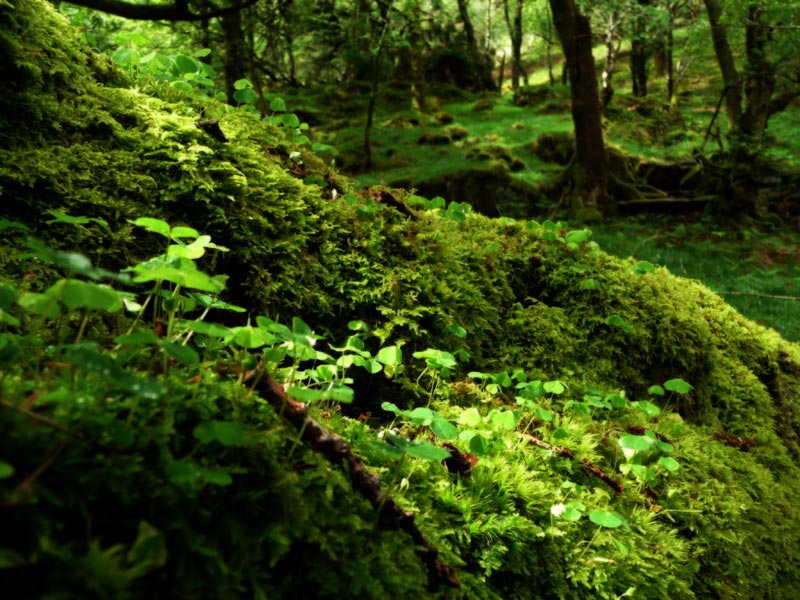
Photo: Jimpix.co.uk

Mossy forest in North Wales. Photo: Jimpix.co.uk free e-cards.

The initial burst of aromatic fougère and bitterness makes Arabian Wood a fragrance that, at first glance, seems very masculine. But, like the name, that too is misleading. With every passing minute, the citrus element wanes, while the green notes from the oakmoss, galbanum and geranium soften. The patchouli becomes more prevalent, but this is no 1970s, dirty, hippie, black patchouli. It’s softly mossy, almost green, and infinitely velvety. It’s beautifully blended in, just adding the perfect touch of sweetness to the notes. Arabian Wood is a true chypre under every possible definition of the term. I don’t know quite how Tom Ford managed it given the IFRA/EU restrictions on oakmoss, but this doesn’t smell like an ersatz, quasi or fake chypre at all!

Flowers in the Forest posterWithin less than the twenty minutes, the flowers arrive on the scene, pushing their way up through that earthy, rooty soil and slowly taking over the moss. The florals march in two by two, the rose and jasmine, unfurling in slow bloom. Trailing in their footsteps is orange blossom and ylang-ylang, then honey, and, finally, a touch of powder taking up the rear. It feels like a procession of notes determined to eradicate any vestige of sharpness, bitterness or strong masculinity from that opening. Almost like light coming in through the trees to brighten the darkness and the overwhelming blanket of green. The softening of the perfume extends also to its sillage. Arabian Wood drops sharply in projection after the first hour, hovering a bare inch (if that) above the skin. It is possibly the gentlest chypre I have experienced in a while.

By the start of the second hour, the perfume is truly pretty. The sandalwood has joined the party on the forest floor. It’s beautifully creamy, and its richness feels very much like the real thing, not a synthetic version. Together with that velvety patchouli, it’s a strong backbone for much of the perfume’s remaining development. The whole thing is a perfectly balanced, nuanced, layering of notes where jasmine and orange blossom vie with the rose, all over a rich woody base of moss, patchouli, sandalwood and honey, with powder and faint touches of peppery cedar. There is great sweetness in the scent that grows stronger with every hour, as more of the honey comes out. I also continue to smell something in the background that calls to mind coumarin’s dry hay notes but it is subtle. What I absolutely do not smell is any trace of lily-of-the-valley, gardenia, apricot, or raspberry to my nose; not on either of the two occasions that I tested the perfume.

By the start of the third hour, Arabian Wood is a sweetly honeyed, patchouli, sandalwood skin scent with very abstract floral notes. There is the feel of rose, jasmine and ylang-ylang, but it’s all blended into one very harmonious whole where the individual components are not particularly distinctive. What is individually noticeable, however, is the the increasing powdery undertone to the perfume. It doesn’t smell like a clear, definite, iris accord, nor like Guerlain’s sort of powder. Rather, the floral notes just feel as though they’re being filtered through a light dusting of powder, almost a bit like sweet pollen. It has to be the orris but, if so, it’s orris and iris done very well. Perhaps the honey is the reason since that is now a much stronger component of the perfume.

Arabian Wood remains that way for another 6 hours when the tonka bean arrives, followed by muted vanilla and some musk. The perfume is now very much soft oakmoss-infused patchouli, sandalwod, honey, tonka bean, powder, lightly sweetened musk, and dry, amorphous woody notes. It’s almost like a Guerlainade feel in some ways, but not quite. Perhaps because it seems more modernized in some ways, as well as more woody. Whatever the reason, Arabian Wood remains that way until it finally recedes away. With the lesser dosage, the longevity clocked in at around 6.5 hours; using three times as much made the perfume last about 8.5 hours. But throughout, the sillage after the first thirty minutes was low.

Arabian Wood is a lovely perfume by itself, but I keep hearing how extraordinary it is when layered with some other Tom Ford Private Blend fragrances. Specifically, Private Blend Oud Wood, Bois Marocain, and Italian Cypress. I haven’t tried the combinations myself, but I can see how Arabian Wood’s slightly feminine, floral, chypre qualities would go beautifully with more spicy or dryly wooded fragrances. Whatever Arabian Wood’s sandalwood and muted cedarwood elements, it’s really not a woody fragrance, per se. It’s most definitely a floral chypre, after that very intensely masculine beginning where it was all aromatic fougère. Nonetheless, I don’t want that to put off male readers. This is a unisex fragrance, and Arabian Wood is definitely worn by men. In fact, I obtained my sample as a very generous gift from a male reader, Ross, who loves to layer it with Tom Ford’s Oud Wood.

All in all, I very much liked Arabian Wood, but I wasn’t swept away. It doesn’t feel distinctive enough in some ways. It has the advantage of being an exceedingly gentle, smooth, richly-nuanced chypre that isn’t frightening in bitterness or pungency, but I think those who have a vast knowledge of vintage chypres may not be brought to their knees. And, for me personally, the extremely low sillage was very frustrating. I wanted more of the plush, soft, patchouli-sweetened mossiness, but at times, I had to forcibly inhale at my arm to detect the notes. Even applying three times the amount that I usually use for Tom Ford’s Private Blend didn’t solve the problem. I have problems with longevity, not sillage, and the Private Blend line is usually extremely powerful, so I have to admit to some surprise.

On Fragrantica, the votes are completely split on the issue of sillage. There are 6 votes for “soft,” 7 for “moderate,” 5 for “heavy,” and 4 for “enormous.” Clearly, it all depends on the person’s skin. The comments are also split, with some finding the perfume very soapy, others saying it has absolutely nothing arabian or woody about it, a few arguing  the fougère -vs- chypre issue, and a good chunk saying it is a very feminine fragrance. One person even compared it to vintage Cabochard Extrait, which brings me to another point.

The perfume blog, EauMG, had a very interesting list of similar perfumes or “dupes,” if you will:

… [as] this perfume settles, I get something that reminds me of the new formulation of Lancome’s Magie Noire, Piguet Bandit and Maja. [¶] […] Give Arabian Wood a try if you like perfumes like Balmain Ivoire, Jacomo Silences, Maja, Guerlain Vega, Van Cleef & Arpels First, and/or Piguet Bandit. [Emphasis added.]

I’ve tried most of those fragrances (though it’s been an exceedingly long time ago for some), but on my skin, Arabian Wood wasn’t as soapy as First and definitely didn’t have the ferocious, biting greenness (or galbanum) of Bandit. I can’t remember vintage Ivoire well enough now to compare the two, but I can see some definite similarities with Jacomo‘s Silences. Either way, the comparisons prove my point that Arabian Wood may not wow any vintage collector of chypres, though it is a great choice for anyone who can’t get their hands on those classics in their true (unreformulated) form.

I think Arabian Wood is a fragrance that would be incredibly sexy on a man, and quite alluring on a woman. There is a sophistication and elegance to the smoothness of the scent, a degree of luxurious depth and richness, and a subtle hint of mystery. It may be like a lot of vintage chypres — but there aren’t any vintage chypres that sold in stores today and exceedingly few regular, commercial ones! As such, Arabian Wood is a scent that will stand out. And, it’s definitely one worth looking into.


DETAILS:
Cost & Availability: Private Blend Arabian Wood is an eau de parfum, and is available on the Tom Ford website where it retails for: $205 for a 50 ml/1.7 oz bottle, $280 for a 100 ml/3.4 oz bottle or $495 for a 200 ml/8.45 oz bottle. In the US, you can also find it at fine department stores such as Nordstrom, Neiman MarcusSaks Fifth AvenueBergdorf Goodman, and others. In Canada, I believe Tom Ford is carried at Holt Renfrew, but I don’t see Arabian Wood listed as one of their 2 Tom Ford fragrances on the online website. In the UK, you can find it at Harrods or Selfridges. Both stores sell the small 1.7 oz/50 ml size for £135.00 or £300.00 for the super-large 250 ml bottle. The smaller size is also carried at House of Fraser. Tom Ford Beauty doesn’t seem to be carried by retailers in France, but it is in many European nations from Denmark and Belgium to the Russian Federation. You can use the store locator on the website to find a retailer near you. In Australia, I saw Arabian Wood on the MyShopping.com.au site where it retails for AUD$249.95. The Tom Ford line is supposedly carried at David Jones stores, but Arabian Wood is not one of the handful of Tom Ford fragrances carried on the David Jones website. Elsewhere, Tom Ford fragrances are carried in numerous different countries; hopefully, you can find one near you using the store locator on the Tom Ford website.
Samples: Surrender to Chance doesn’t have Arabian Wood at this moment, but you can try to find it at any of the department stores listed above to give it a test sniff. However, samples are available from The Perfumed Court (which I always think is more expensive than Surrender to Chance) and their prices start at $4.99 for a 1/2 ml vial.
.