Guerlain Chypre Fatal (Les Elixirs Charnels)

A pretty, very sweet, fruity, unoriginal, and very over-priced little trifle in a lovely shade of purple. That’s Chypre Fatal from Guerlain, an eau de parfum that is part of the Les Elixirs Charnels (The Carnal Elixirs) prestige collection. The line was created by perfumer Christine Nagel in cooperation with Sylvaine Delacourte, and was released in 2008.
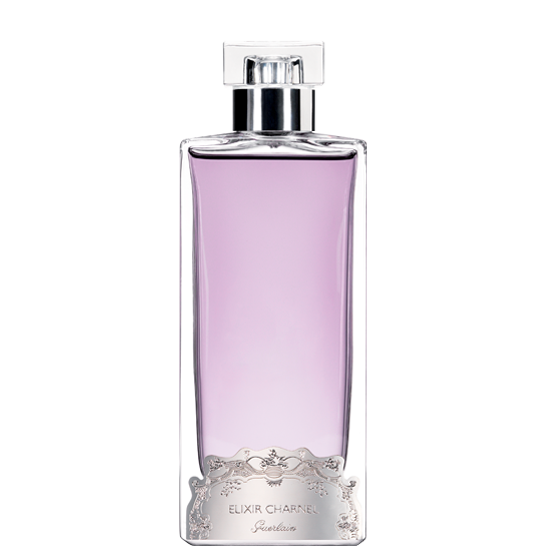
Guerlain Chypre FatalOn its website, Guerlain describes the perfume as an “aphrodisiac for a femme fatal,” and adds:

Both chic and sexy, Chypre Fatal brings to mind a rebellious woman with extreme elegance, an icon with devastating seduction. It’s a fruity chypre with an intense aura. An imperial rose with hints of woody patchouli is heightened by vanilla and white peach, which sensually soften the accord.
The fragrance dresses up in a bottle with pure lines, adorned with a metallic silver label inspired by the intimate ambience of the boudoir.

The notes are simple:

White peach, spicy rose, patchouli, and vanilla.

Source: TheCleverCarrot.com

Source: TheCleverCarrot.com

Chypre Fatal opens on my skin with delicately sweet, dainty, white peach nectar, followed by a spicy red rose, purple patchouli, and a light, sweet musk. It feels as though the watery delicacy of the pale peach quickly turns to the same shade as Chypre Fatal’s liquid once the patchouli hits it.

This is the modern type of patchouli (or fruit-chouli), with its syrupy, sweet characteristics of jammy, grape-y, fruited molasses, not the black kind of patchouli from the hippie days of the ’70s. It’s potent, and quickly overwhelms the lovely peach note. Within minutes, Chypre Fatal turns into the sweetest of summer roses infused with fruit. As regular readers of the blog know, I’m not a fan of purple patchouli, and I really regret how it squashes my favorite part of the perfume like a bulldozer. 

Source: Shutterstock.com

Source: Shutterstock.com

For all Chypre Fatal’s concentrated grape-y blast, the fragrance feels oddly translucent, almost like an Impressionist watercolour painting. It’s initially very strong in smell, but gauzy, wispy, and incredibly sheer in weight. I had applied about 3 big smears of Chypre Fatal, but it feels almost as though the fragrance were evaporating off my skin. So, I applied 3 more — and even with that astronomical quantity, Chypre Fatal still seems to lose body and depth. The peach, in particular, seems to disappear, no matter much I applied, though it occasionally pops up like a ghost later in the opening phase. What’s left in the first hour is primarily a very sweet ruby rose, gleaming with the purple hues of a grape fruit-chouli and just lightly flecked by a subtle, sweet musk. Thirty minutes later, the smallest rumblings of vanilla stir in the base, adding a soft warmth.

Source: stockhdwallpapers.com

Source: stockhdwallpapers.com

At the end of the first hour, Chypre Fatal is a soft, gauzy blur of rose with just whispers of a spicy edge, the vaguest hint of peach swirled in, and a lot of very syrupy sweetness. The soft musk and a thin layer of vanilla finish it off in the base. It remains that way for a few hours, though it turns into a complete skin scent around the 2.5 hour mark. In case you hadn’t noticed, I really am not keen on the purple patchouli, so it’s quite a relief when its extremely sweet fruitiness starts to slowly recede around the middle of the third hour. Finally, and at last, Chypre Fatal seems a bit better balanced and modulated.

The end of the fruit-chouli’s bullying dominance also lets some of the other elements come out to play. First are the green touches in the perfume’s base. Regardless of its actual name, “Chypre” Fatal isn’t actually a chypre fragrance by technical standards as it contains no oakmoss in it. Nonetheless, there are lurking glimmers of something softly plush and green in the base which begin to occasionally pop up at this stage.

Source: popularscreensavers.com

Source: popularscreensavers.com

The peach also has the chance to come out of the shadows. While it waxes and wanes in prominence, it really is much more noticeable now as compared to the opening phase, and adds a pretty touch to the scent. By the end of the fourth hour, Chypre Fatal is a sweet, peachy-rose scent with a lovely sliver of warm vanilla in the base. An hour later, the perfume is mostly just peach with the tonka Guerlainade note that is the house’s signature. Here, it’s not powdery the way it can often be, but simply a warm, slightly fluffy, very sheer vanilla.

In its final moments, Chypre Fatal is a nebulous, abstract blur of fruited sweetness with just a sliver of vanilla. All in all, the fragrance lasted 10 hours on me with a walloping 6 big smears, but a mere 6.75 hours with a more normal, regular dosage of 2 large smears. In other words, the longevity was not particular great unless you applied a lot, and the sillage was consistently weak after the first forty minutes.

Chypre Fatal is a pretty little thing, but it also seems like a very well-done version of mainstream, department store fragrances. It’s neither complicated nor nuanced, and certainly not very original. It’s like a higher end version of any number of fruity, jammy rose scents with patchouli. Parts of it even remind me of Chanel‘s more recent (and much cheaper) variation of this twist: Coco Noir. The only difference is the translucence of the Guerlain scent, that subtle whisper of peach that isn’t hugely common to a lot of perfumes today, and the fact that Coco Noir is a much more complex scent. If the peach part of Chypre Fatal dominates on your skin, then you may even find it to be extremely similar to Gucci‘s Gucci Rush, a fragrance with a very dominant peach-patchouli-floral accord.
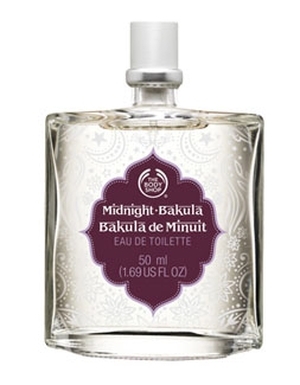
Midnight Bakula via Fragrantica.

Midnight Bakula via Fragrantica.

In Chypre Fatal’s Fragrantica entry, seven people think the perfume is a lot like The Body Shop‘s Midnight Bakula. I know nothing about the fragrance, and I doubt it could have the same high-quality ingredients or a lack of synthetics. Still, it’s certainly something worth noting! Midnight Bakula’s Fragrantica listing shows that it, too, is a “chypre floral” whose notes are patchouli, rose and nectarine (in that order). I don’t know if the fragrance is discontinued as one Fragrantica commentator states, but I found it on Amazon for $23 (plus $5.49 shipping) for a 50 ml/1.7 oz bottle. It is currently available for an even cheaper price on eBay for $15.99! Now, I repeat, I don’t know the scent, and I doubt it would smell quite as high-end as the Guerlain. That is not my point, however.

My point is the Guerlain’s Chypre Fatal seems extremely over-priced, to put it mildly, for what it is. This very simple, uncomplicated, overly sweet, 4-note perfume dominated by very inexpensive purple patchouli costs $260. Even apart from the issue of a supposed Body Shop dupe, Chypre Fatal is simply not interesting or different enough for $260! Presumably, one spends money on Guerlain’s higher-end, prestige lines to get something different from the masses of department store fragrances out there with their generic, somewhat predictable profile. The fact that many of those actually have more notes, and more complexity, than Chypre Fatal isn’t exactly a plus.

It’s not just my opinion, either. Commentators on various perfume sites feel largely the same way. A number offer other perfume comparisons, ranging from commercial fragrances to mid-range niche ones. Since I try to avoid that revoltingly sweet, cloying, purple, grape-y fruit-chouli wherever and whenever possible, I’m not familiar with all of them, but those that I have tried are substantially more nuanced or richer than Chypre Fatal.

Let’s start with Basenotes, where the Chypre Fatal entry has four reviews with two being neutral, one positive, and one negative. We’ll split the difference and go with the “neutral” assessments which read as follows:

  • I think that maybe was a mistake when they created this fragrance. I imagine that someone heard Chypre Banal instead of Chypre Fatal, and then they produced it. Chypre Fatal is your standard modern chypre fragrance, and it does achieve every single point that other more affordable chypres does, like shiseido zen and guccy by gucci. It starts fruity, then it`s dominated by a sweet, almost camphorated, patchouli, supported by a luminous musky base similar to the one found in narciso rodriguez. […] If it`s a more exclusive fruity chypre that you want, i suggest you trying Mon Parfum by M. Micallef, that for now you can find for a better price at ebay and it`s more lovely and less facelless than Chypre Fatal.
  • I”m a fan of Guerlain’s exclusives, but I do have high standards for them and am more harsh in my reviews. This is a good perfume, in the $100-$140 range, but at the price point sold I have to wonder what they were thinking. [¶] This is a basic patchouli/rose chypre, which I’m comparing to Sublime Balkiss, Lady Vengeance and Kurkdjian‘s Lumiere pour femme. This is most expensive of the four, and in my opinion, hte least interesting. What I”m wanting is some ‘OOH!!!’, like Kurkdjian’s spicy rose, Balkiss’ blueberry note or Lady Vengeance’ edge. [¶] But peach and vanilla are just too safe. I”m wondering who the intended audience is for this line, because I don’t think it’s those who want something unique and trend-setting. [Emphasis to names with bold font added by me for ease of reading.]

On Makeupalley, the 5 entries are somewhat more positive, but also include two comments like Chypre Fatal is a lot like department store fragrances. For example: “As the fragrance settles down to its basenotes, it acquires a non-descript “perfumey” smell that is just kind of average, department-storeish, etc… Ho hum.”
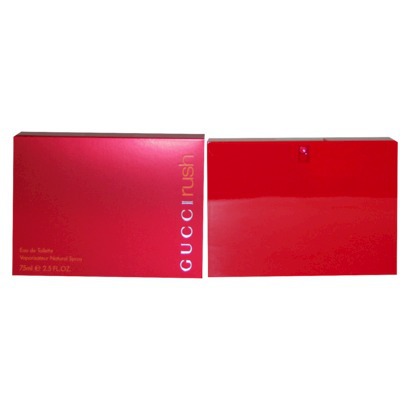
Gucci Rush. Photo via Target.com

Gucci Rush. Photo via Target.com

Fragrantica commentators are largely torn, with even the fans finding the price hard to swallow or preferring other department store perfumes. Some examples, with the comparative names highlighted by me:

  • Opens with a delectable, floralized, sweet peach but quickly dries down on my skin to a semi-sour fruity rose patchouli. I’d take Gucci Rush over this any day if I want peach and patchouli. There’s nothing new or interesting or different to help this stand out in a crowd of fruitchoulis. Not worth the price in my opinion.
  •  I got a sample and was looking for some proper chypre. All i got was something between Shalimar parfum Initial and Euphoria, jimmy Choo and so on. Sweet, chemical, cloying. It`s not chypre and definitely not fatal 😀 Can`t believe it`s Guerlain!
  • This goes on like cough syrup, that’s what i detect, the red cough syrup LOL. However , once it dries, it reminds me of a more sophisticated Gucci Rush which I do love .
  • Nice Guerlain scent but still does not reach that grade of a really special perfume. This one is sickly sweet and headache inducing, though pleasant at first. Not worth the price.
  • Chypre Fail. It reminds me of Tom Ford‘s White Patchouli, so I suppose that’s how they arrive at calling it a chypre. However it isn’t a real patchouli, perhaps there is some attenuated aromachemical that mimics a facet of patchouli. [¶] The drydown – seriously Guerlain? Yves Rocher has many better perfumes than this. […][¶] It is an insult to the consumer to put such a cheap juice in an overpriced “exclusive” bottle. It fails as a sales tactic since the only plausible consumer of a pricey exclusive is a perfumista, who will most likely detect the fraud.

I think some of those commentators may be harsher than I am. I do think that Chypre Fatal improves once that tidal wave of ghastly, cloying, purple patchouli lets some of the other notes come out, but it’s all highly relative. And it certainly doesn’t change the perfume’s largely unoriginal, simplistic profile. As one of the Basenotes’ commentators said, “Chypre Banal,” not Chypre Fatal. And that’s a problem at this price. For $60, I’d recommend it, but for $260? There are far better perfumes out there. 

DETAILS:
Cost & Availability: Chypre Fatal is an eau de parfum that costs $260 or €180 for 2.5 fl. oz/75 ml. It is available at Guerlain boutiques, and is listed on its US website, but Guerlain doesn’t seem to sell the fragrance via an e-shop of sorts. (There is no shopping cart, for example, in which to put the fragrance for purchase.)In the U.S.: Chypre Fatal is available on the NordstromSaks Fifth AvenueNeiman Marcus, and Bergdorf Goodman websites. (With the exception of Bergdorf Goodman which definitely carries the more exclusive line of Guerlain fragrances in-store, I don’t know if it is available within the other shops themselves.) Outside the U.S.: In Europe, you can order Chypre Fatal from Guerlain’s European website where the fragrance retails for €180. In the U.K, you can find Chypre Fatal at Harrods and, apparently, London’s Selfridges, but neither store offers the fragrance online. In France, the fragrance is obviously available at Guerlain stores, as well as at select Paris Sephora shops. For all other countries, you can use Guerlain’s Store Locator on its website. Samples: If you’d like to give Chypre Fatal a test sniff, you can get a sample from Surrender to Chance where prices start at $4.99 for half of a 1/2 ml vial.

Oriza L. Legrand: Chypre Mousse, Horizon & Reve d’Ossian

Oriza logo. Sourc: the Oriza L. Legrand website.

Oriza logo. Source: the Oriza L. Legrand website.

An ancient perfume house whose fragrances have been brought back to life like Sleeping Beauty awakened with a kiss. Oriza L. Legrand (hereinafter just “Oriza”) is not a well-known house, but its perfumes have a unique character that is redolent of the past and the classic French tradition. Yesterday, I provided an overview of the brand, its history and how its fragrances have been tweaked from the 1900s to suit today’s tastes. Today, I’d like to briefly review three Oriza perfumes: Chypre Mousse, Horizon, and Reve d’Ossian. The remaining four, primarily floral fragrances — Relique d’Amour, Jardins d’Armide, Oeillet Louis XV, and Deja Le Printemps — are the focus of another post.

CHYPRE MOUSSE:

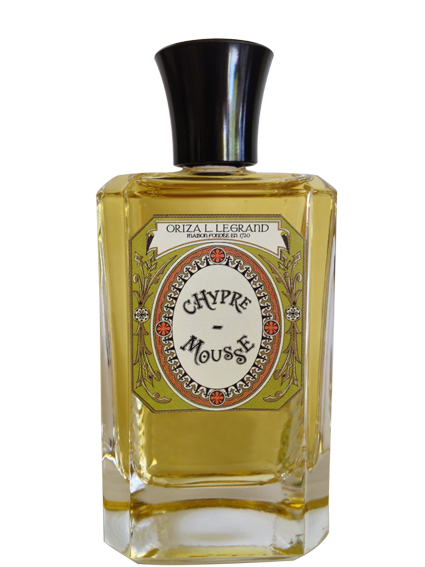
Chypre Mousse. Source: Oriza L. Legrand.

Chypre Mousse. Source: Oriza L. Legrand.

Oriza describes Chypre Mousse (at the link imbedded above in the title) as the essence of nature in autumnal woods:

After the first rainfall in September nature exude scents of humus, peat and wetland. [¶] This is the time for a promenade in the woods to enjoy the freshness after the heat of summer. [¶] Autumn encourages us to contemplate, to observate nature that gently prepares us for the coming winter and its frostbite.

The mossy paths, precious jewels of the undergrowth, are brightened by the last rays of sun. [¶] Cyprus-Moss evokes in us our surrounding nature which soon will be covered by the first fall of snow. [¶] Smell of damp undergrowth of scorched leaves and the scent of moss before picking mushrooms and chestnuts.

Chypre-Mousse, a Fragrance of the House Oriza L. Legrand launched in 1914 for the dandies of this world!

Top Notes[:] tonic & balsamic: Wild mint, clary sage, wild fennel & green shoots.
Heart notes[:] aromatic & flowing properties: Oakmoss, Galbanum, Angelica, fern, wild clover, Mastic & Violet leaves.
Backgrounds[:] Notes mossy & leathery: Vetiver, Pine Needles, Oak Moss, Mushroom fresh Humus, Roasted Chestnut Leather, labdanum & Balms.

Source: it.forwallpaper.com

Source: it.forwallpaper.com

As outlined in my earlier post on Oriza, I went to the boutique with the goal of sniffing and possibly buying a very different perfume, Horizon. I’m generally not one who buys a perfume without testing, especially given my crazy skin and how voracious it is. So, I sprayed both fragrances on my skin and on the sweater that I was wearing, walked out of the store to think about it, and headed on my way to Serge Lutens to buy my precious bell-jar. I went four blocks, sniffing myself throughout, then stopped dead in my tracks, and headed back. I had to have Chypre Mousse, then and there, without further testing. Suffice it to say, that is extremely unusual for me.

Source: photocase.com

Source: photocase.com

I’m not sure how to best describe Chypre Mousse. It’s not the typical oakmoss fragrance; it has neither the dark grey, mineralized, dusty fustiness of some oakmoss fragrances, nor the bright green, softly plush, fresh mossy feel of others. To me, it smells like the damp forest floor, wet leaves, dewy violets, earthy mushrooms, drenched forests, and a symphony of green, brown, grey, and purple. Again and again, I go back to Oriza’s description of “green shoots,” because there is something of youthful life that is pushing through the wet floor of a verdant forest.

Source: Cottage Environmentalist blog at fifthlake.wordpress.com

Source: Cottage Environmentalist blog at fifthlake.wordpress.com

Chypre Mousse opens with a pungent but sweet oakmoss that feels as though it’s sprouted right off the bark of a tree deluged by rain. There is a dark leather underlying it, covered in resinous, piney tree sap, swirled with darkened mosses, and speckled with reddish mushrooms. The strip of leather lies atop a mound of leaves whose autumnal oranges and browns have turned darker with dampness and water. All around are bunches of fresh violets, pushing out through the soil, past the green shoots, and in the wet space left untouched by the gnarled, woody roots of surrounding pine trees. The dewy, sweet purple flowers form a bright spot of colour in the dark, green forest.

Source: 123rf.com

Source: 123rf.com

The leather, wood, mushrooms, wet leaves, violets, grass, and moss are backed by traces of other notes. The sweetest black earth, the freshest of green herbs, the stoniest of grey boulders, the darkest of tree sap, and just the subtlest hint of smoky incense. The forest has come alive in a symphony that is leafy, earthy, green, woody version of Serge Lutens‘ delicate floral masterpiece, De Profundis. There is the same sort of haunting delicacy, of dewy wetness, of youthful life. The two perfumes are fundamentally different in notes, but they share a very similar feel. And, oddly, there is something of a chrysanthemum undertone in Chypre Mousse. Perhaps it’s the slightly piquant, peppered, floral greenness created by the other accords together that creates that strange impression. Whatever the cause, Chypre Mousse has the same haunting, evocative impact on me.

The most interesting aspect of Chypre Mousse may be the more unexpected notes. I have no idea what the “hummus” reference in Oriza’s list means, but the mushroom-y touch is fascinating. So is the combination of that leather note which has somehow been transformed by the other elements into something familiar, and yet not. This is leather that has been left out in the rain to have Nature and the forest absorb it, transforming it into something that is more a part of their world.

Source: modavesen.com

Source: modavesen.com

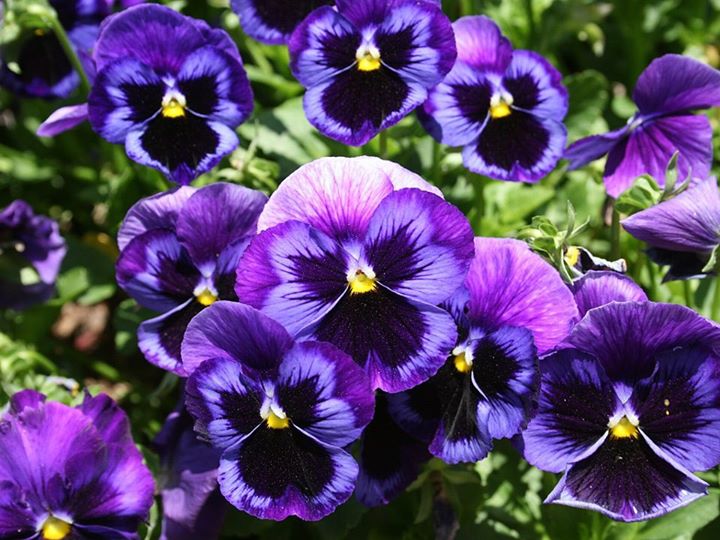
Yet, what I consistently found myself thinking about were the violets or pansies, whose tender refrain wraps its ribbons around you. The funny thing is, I never knew Chypre Mousse included them in my four or five early wearings, and I thought I was quite mad for detecting their delicate, purple hues in a scent intended to be a mossy, mushroom, earthy, forest one. In fact, long before I actually looked at Oriza’s list of notes, I sprayed Chypre Mousse on four people, and asked if they could detect violets. They merely scrunched up their eyes, responding with some form of dubious: “I guess.”

For them, Chypre Mousse was something indescribable, inexplicable, odd, but utterly mesmerizing. A swirl of unusual notes in a well-blended, seamless, elegant bouquet that they couldn’t place or categorize. One Paris fashionista who tested it took a single sniff of her arm, and immediately said, “I’ve never smelled anything like it. Where can I buy it?!” She couldn’t describe it, and neither could two others. A fourth tester was an experienced perfumista, and just looked at me with bewilderment. “What is this??!” Her initial response was uncertainty, but every passing minute changed that. She loved how she couldn’t put her finger on the scent or what lay underneath it. Even more so, she was astounded by the trails of aroma that followed in the air around her. As someone whose skin squashes both projection and longevity, she couldn’t get over it.

Source: wallpaperup.com

Source: wallpaperup.com

That brings me to Chypre Mousse’s sillage and longevity. It’s outstanding, even on my crazy, perfume-consuming skin. Two small sprays will create a large cloud all around me for the first hour, followed later by projection that extends about six inches. Later, when the sillage drops around the end of the third hour, Chypre Mousse continues to send out ribbons of scent in the air around you. And it lasts for ages. On average, I get around 10 hours with two small sprays, and well over 12 hours with more.

There are no entries for Chypre Mousse on Fragrantica thus far, but Ida Meister wrote a piece entitled Fragrant Snippets on a few of the Oriza scents. Like me, she was knocked off her feet by Chypre Mousse, and ordered a bottle right away. Her summation for the scent reads as follows:

It is Confession Time. I didn’t want to wait for another week: I ordered this edp PRONTO. 😉
Chypre-Mousse sings to me. All that lurks in the forest, humid and expectant after the first September rains. The exquisite aromas of the undergrowth; peat, mushrooms, humus. Moss and more moss; sheer delight for me, who craves that velvety green aromatic cushion beneath the nose, the feet, my fingers! A carpet of russet leaves underfoot, the seductive aroma of grilled chestnuts around the corner. Oriza may have had dandies in mind for Chypre-Mousse, but it is my ongoing intoxicating love affair with all things Green. I will wear my velvet cloak of chypre gratefully.

Chypre Mousse sings to me as well. I think it is an absolute masterpiece. To me, it doesn’t smell old-fashioned or dated for one simple reason: I’ve never smelled anything quite like it. From any age.

HORIZON:

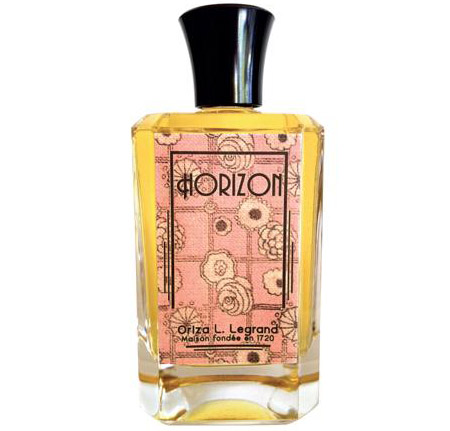
Horizon. Source: Oriza L. Legrand.

Horizon. Source: Oriza L. Legrand.

Horizon was originally released in 1925, and Oriza describes the fragrance as the embodiment of its decade:

After World War I, the Roaring Twenties reflect the desire of the exotic and the need also through fashion and decoration. [¶] The East and particularly Asia, provide new HORIZONS. [¶] The frenzy for exotic travel and encourages artists to transcend the culture of the East in their creations: new silk, fine embroidery, pearl beads, woody scents, heady and sweet …

In the euphoria of the Roaring Twenties, the female body is revealed, it abolished the corset, the flappers open the eyes and smoking languidly.

Slumming it in the salons of Paris!

The materials, colors, shapes symbolize a new freedom and portend, at the dawn of the Roaring Twenties, the hope of a new HORIZON. [¶][…] [An] Oriental fragrance for boys and tomboys, fragrance of Precious Woods and Ambergris agreements Tabac Blond and Soft Leather.

Top Notes: Bitter orange, Tangerine Confit & Dried Rose.
Heart Notes: Cognac Amber, Aromatic Tobacco Leaves, Cocoa, Roasted Almonds, Old Oak & Patchouli.
Base Notes: Benzoin, Amber Gray [ambergris], Peat, Tabac Blond, Vanilla, Honey & Soft Leather.

Source: dailymail.co.uk

Source: dailymail.co.uk

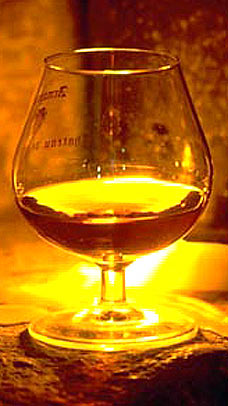
Horizon called its siren cry to me the minute I read that long list of notes. Bitter orange and cognac? Patchouli and leather? Ambergris and tobacco? I was almost certain I would buy it, though things ended up differently when I smelled Chypre Mousse. But it was a very close thing. Horizon bloomed on my thin sweater with an explosion of Armagnac that was rich, nutty, and boozy beyond belief. I felt as though I’d actually had a bottle of aged brandy poured on me. Tendrils of smoke, patchouli, amber, and tobacco stirred underneath, but the main bouquet was a forceful explosion of booze in a kaleidoscope of reds, browns, amber, and gold.

It’s a different matter on skin. Very different, in fact, and significantly softer. I have to say that I’m glad I didn’t end up purchasing Horizon in the end for the simple reason that my skin seems to eat it up like a wolf who hasn’t seen food in weeks. I also can’t decide if Horizon is less complex on actual skin, or simply so much milder that all its layers aren’t as easy to detect. Whatever the case, Horizon is, for the most part, primarily just a boozy, cognac patchouli on me. You can definitely detect the other notes if you sniff closely and pay close attention, but, from afar, it is primarily a very soft patchouli cloud. I much prefer the deeper, more potent, robust version on fabric, alas.

Source: wallpaperswa.com

Source: wallpaperswa.com

On skin, smelled up close, Horizon opens with leather, patchouli, and cognac, followed by faint hints of bitter dark chocolate that grow stronger with the passing minutes. There are whiffs of caramelized, candied orange and something smoky. This is a true patchouli scent, in all its brown, red, amber glory, smelling spicy, leathered, ambered, and chewy, all at once. Lurking at the edges, there is subtlest hint of something nutty. It never smells almond-y to me, but more like toasted hazelnuts. The whole thing sits atop a base of ambergris that has the element’s special, unique characteristics: a very salty sweetness that is also slightly musky, marshy, sweaty, and rich.

Source: 123rf.com

Source: 123rf.com

There is a definite chewiness and earthiness to Horizon’s opening that soon changes into something lighter on my skin. For the first 25 minutes, the perfume is a dark, dense, orange-brown-black mass in visuals, but it turns creamier, smoother, gentler. There are slow stirrings of a very custardy vanilla in the base. At the 45-minute mark, Horizon seems softer and thinner in weight, with sharply reduced sillage, and a movement away from that very dark, leathery, chewy patchouli and leather opening. The orange bits have receded, the boozy cognac has started to evaporate, dark chocolate has turned into milk chocolate, and the patchouli feels infused with cream.

Source: popularscreensavers.com

Source: popularscreensavers.com

I’m consistently saddened by how quickly the fragrance becomes airy and light. It sits soft and low, with a scent trail that really only lingers for about 40 minutes before it drops to hover an inch or two above the skin. And then it drops even more. At the end of the second hour and the start of the third, Horizon sits right on the skin as a blur of creamy patchouli amber with the tiniest hints of milk chocolate, vanilla, and cognac. By the 6.5 hour mark, Horizon fades away as a blur of patchouli sweetness. It has to be me and my wonky chemistry, for Horizon feels quite potent and forceful in the first ten minutes. And a mere spray on my shirt continues to pulsate in full force days later.

Those with normal skin seem to have fared much better. Take, for example, Ida Meister whose Fragrantica piece on Horizon talks about the perfume’s longevity, along with how beautiful and modern it felt:

1925. Really???

Horizon smells utterly contemporary—it brings to mind Bois 1920’s Real Patchouly and Chantecaille’s Kalimantan. Truly well-aged patchouli is a joy, even for many who are phobic about it, having been previously traumatized by the cheap 1960-1970’s “head shop” astringent nostril-singeing variety.  😉  Horizon is as suave as it gets: ambery, boozy, honeyed and oaken. It feels utterly without gender. Horizon is a resinous silk duvet which enfolds you tenderly and possesses remarkable longevity. You can be a throwback to the Summer of Love or a CEO in an Ermenegildo Zegna couture suit; either way, it fits. It is heavenly in its own right, and a perfect illustration of classicism: if the design is excellent, it will remain so in the future. [It DID.]

On Parfumo, the lone review for Horizon is extremely positive, and talks about 12-14 hours of duration. The chap also mentions that his immediate reaction to testing the scent was “this smells like vintage Yohji Homme.” I may be remembering things incorrectly, but I believe I read somewhere that Yohji Homme was one of Luca Turin‘s favorite fragrances, and something whose loss or changes he’s mourned. Going back to the Profumo review, the commentator describes Horizon’s development, in part, as follows:

Horizon opens with a quick dash of almond before a slight powdery cocoa note emerges, mingling with a subtle dark dulled rose. As the fragrance enters the early heart the cocoa turns less powdery, blooming to full milk chocolate, as it mixes with the primary heart accord of boozy cognac and benzoin-laced semi-sweet amber. Natural woods and a touch of underlying anise join the remnants of the dull rose in support. As the fragrance enters the late dry-down, the cognac and dull rose dissipate while the relatively sweet amber remains dominant, now joined by traces of sanitized patchouli and suede-like leather. Projection is average and longevity is excellent to outstanding at 12-14 hours on skin.

You have no idea how utterly envious I am of such longevity. I loved the opening minutes of Horizon on me and, even more, the complete cognac-fest that exploded on my clothing. On the basis of smell alone, Horizon’s initial bouquet is extremely close to the ideal patchouli that I’ve been looking for since my old favorite from the 1980s, even if the subsequent development became very different. Alas, Horizon doesn’t ultimately work for me, but I’m sure that you will have better luck. It’s a lovely fragrance.

RÊVE D’OSSIAN:

Reve d'Ossian label. Source: Oriza L. Legrand.

Reve d’Ossian label. Source: Oriza L. Legrand.

The romantic, 19th-century poetic style of Ossianism with its poems of fairies, dark forests and mysterious wood are the heart of the inspiration for Reve d’Ossian. Oriza’s detailed explanation on the fragrance and its backstory reads, in part:

Reve d'Ossian bottle. Source: Oriza L. Legrand website.

Reve d’Ossian bottle. Source: Oriza L. Legrand website.

The [Ossian-style] poems achieved international success (Napoléon Bonaparte was a great fan) and many writers, painters and artists were influenced by the works, including Ingres, Schubert and Oriza L. Legrand Perfumes. […]

“Rêve d’Ossian” is a perfect perfume for those who claim a difference and the rich heritage of the History. Dark and precious essences, wooden notes filled with the mystery of the forest with fairies and pixies…

Top Notes: Frankincense and Pine woods.
Heart Notes: Cinnamon, Benzoin, Tonka Bean and Opopanax [sweet myrrh].
Base Notes: Tolu Balm, Sandalwood, Leather, Labdanum, Amber and Musks.

Source: www.sciencedaily.com

Source: www.sciencedaily.com

Reve d’Ossian opens on my skin with sharp black pepper, myrrh’s white incense, warmly sweet cinnamon, aromatic pine needles, and dust. It’s like an old monastery’s library in the middle of some German forest. For me, the dominance of the dust and incense makes the opening share some thematic similarities to Bertrand Duchaufour‘s Dzonghka for L’Artisan Parfumeur and, to a lesser extent, Heeley‘s Cardinal. I’m not generally a huge fan of High Church fragrances with olibanum or myrrh, and even less so for things with great dustiness, so I’m rather pleased when the latter quickly disappears. Less than five minutes into Reve d’Ossian’s development, it vanishes, a small soapiness takes its place, and the whole thing turns more ambered.

FrankincenseQuickly, Reve d’Ossian turns into a warmer, woodier fragrance with flitting bits of green pine needles that feel as though you’ve crushed them on your walk through the forest and on your way to church. There is a dark resinous feel underlying the white incense smoke, a pungently aromatic overtone reminiscent of a wintery forest, and the feel of crisp, sweet, piney sap. Less than 60 minutes in, Reve d’Ossian turns soft, a hazy blur of the two types of myrrh incense — olibanum and opoponax — with a touch of amber and only a hint of the great, green, woody outdoors.

Source: de.123rf.com

Source: de.123rf.com

At the 2.5 hour mark, the focus of the perfume shifts away from the incense. Reve d’Ossian is now largely an amber scent infused with nutty, warm, soft sweetness of myrrh and a hint of olibanum’s soapy whiteness. It lies right on the skin with extremely weak sillage. The fragrance turns into more of a blur, and, at the start of the 6th hour, all traces of amber and sweet myrrh opoponax fade away. In fairness to Oriza, a greater application (around 4 sprays from the atomizer) yielded far better results, just close to 7.5 hours. The sillage, however, remained moderate to soft.

Reve d’Ossian is one of the few Oriza fragrances to have a Fragrantica entry. With regard to longevity and projection, the majority of the votes put it at “moderate,” though a few also vote for “weak” in each category. The few reviews thus far are all positive in nature with the most detailed, descriptive one stating:

It’s quite close to a balsamic Baghari by Piguet.
A surprising opening, aerial and metallic (aldehydes and terpineols?) notes of pine, old wood and foam on wet stone but it’s warming gently, blowing a strange impulse to this myrrh fragrance. The smell of warm lightly ambered paper, dry almost dusty leather binder. An impression of moor in the autumn.
It is so at odds with our modern conception of the perfume he could be the last release of Comme Des Garçons: Odeur 1900, without changing anything.
Truly a beautiful work of resurrection of the house, all these completely forgotten fragrances are high quality, both modern in their treatment and completely faithful to the spirit of time: a real success.

I haven’t tried Piguet‘s Baghari or the Comme de Garcons‘ scent to be able to compare, but I do agree with much of his description, especially the parts about a dusty leather binder and the dominant role of the myrrh. I also agree that it has a high-quality smell. That said, I think Reve d’Ossian has some problems with it: it has a linear aspect, it’s not enormously complex, and it has sillage issues.

Nonetheless, I liked it, even though it’s not the sort of scent I normally go for, and I thought it was done with a lot of graceful elegance. There was something very appealing about Reve d’Ossian, very softly comforting in its amber heart. I actually don’t think it smells very dated at all, and it’s hard to believe that it was originally created in 1905, more than 107 years ago. When you think of how many scents from the early 1900s were floral orientals or chypres like Mitsouko, while today niche fragrance counters abound with a plethora of “churchy” incense, amber scents, it seems clear that Oriza L. Legrand was far ahead of its time.

Next time, we’ll visit the remaining four creations of Oriza L. Legrand which are largely floral fragrances that are centered around carnation, lily, and assorted spring bouquets.

PRACTICAL DETAILS:
WebsiteOriza L. Legrand. There is an actual e-Store that sells the perfumes and offers perfume samples. All 7 fragrances in the range are offered in 2 ml spray vials for €9. Shipping is listed as €9 extra, but a friend said he was charged only €7. The perfumes themselves are all eau de parfum in concentration, at around 18% perfume oil, and cost €120 for 100 ml/3.4 oz. Other vendors in Europe: For a few other French vendors, like Marie-Antoinette in Paris’ Marais quarter, as well as one store in Sweden and one in the Netherlands, you can check Oriza Points of Sale page. The Netherlands retailer is Parfumaria.

Oriza L. Legrand: The History, The Store & The Perfumes

When perfumistas with vast, expensive fragrance collections and tastes similar to yours urge you repeatedly to do something because “you’ll love it,” a person tends to listen. Again and again, before my Paris trip, I was told that I had to go to Oriza L. Legrand, not because I am a history fanatic, but because of the sophistication, complexity, depth and elegant luxuriousness of their perfumes.

Chypre Mousse. Source: Oriza L. Legrand.

Chypre Mousse. Source: Oriza L. Legrand.

I’m glad I listened, because I was utterly entranced. The history is fantastic, the boutique utterly adorable and filled with quirky personality, and the perfumes are lovely. In one case, so absolutely incredible that it stopped me in my tracks while on my way to buy my precious bell-jar from Serge Lutens. Those of you who know me (and my feelings about Serge Lutens) will realise that it takes a hell of a lot to make me turn around in my set journey to my perfume mecca — let alone to get distracted enough from Serge Lutens to buy another perfume, then and there, and after a mere 15 minutes!

But that is precisely what happened with Oriza L. Legrand‘s Chypre Mousse, a fragrance that I will review (along with some others from the line) in another post. The funny thing is that I had actually gone to Oriza with plans to investigate a completely different perfume, a patchouli-cognac-amber fragrance called Horizon whose lengthy list of notes had called to me like a siren song. It’s a beautiful patchouli-amber, but, in the end, it could not compare to the utterly haunting, unique loveliness that is Chypre Mousse. To me, Chypre Mousse is the damp, mossy, forest, leafy version of Serge Lutens‘ delicate floral triumph, De Profundis. My fellow blogging friend, Undina, once described De Profundis as a “homage to life,” and I think that beautiful phrase is also the ideal way to describe Chypre Mousse. I mean it quite seriously when I say that I think the perfume is a masterpiece.

Oriza logo. Source: the Oriza L. Legrand website.

Oriza logo. Source: the Oriza L. Legrand website.

I was impressed enough by Oriza L. Legrand (hereinafter just “Oriza“) that I decided to begin my coverage with a little overview of the brand. So this post will address Oriza’s history, its return to the perfume scene, and, at the very end, some of the fragrances that stood out for me. It will also focus on how the perfumes may have changed from their very original formulation. I was lucky to stumble across a superb interview with one of Oriza’s new owners in which he explains how he’s dealt with perfume formulas that go back to 1899 and the early 1900s, the tweaks he’s made in order to offer a slightly modernized version, some very famous fans of the new fragrances, and more.

In addition, I have to include some photos from my own time in the boutique. I loved the time-capsule feel of the store with its vintage posters or adverts from the early 1900s, its quirky collection of bow-ties made from vintage silk, and its brightly coloured window displays. As usual for this trip, my tiny camera wasn’t very cooperative. Nonetheless, I hope it gives you a little sense of what the Oriza boutique is like, especially if you are planning a visit to Paris. At the very end will be a discussion of some of my favorite Oriza perfumes thus far, along with their notes, and an explanation of how you can try the line for yourself.

THE HISTORY:

1720, King Louis XV, and famous beauties. Far before Guerlain, Grossmith, Creed or the like, there was Oriza L. Legrand. The brand originated with Fargeon the Elder who set up his first shop in the Louvre Palace’s central court, and who made a fragrance for the young king. It probably helped Oriza even more that Fargeon’s potions and creams were rumoured to be the secret of Ninon de Lenclosa great courtesan known for her beauty and eternal youth.

Composite of old Oriza photos and adverts, created by forevergreen.eu .  http://forevergreen.eu/a-fleur-de-peau/reliques-parfumees/

Composite of old Oriza photos and adverts, created by forevergreen.eu .
http://forevergreen.eu/a-fleur-de-peau/reliques-parfumees/

In a 2012 interview with the French blog, Flair Flair, one of Oriza’s current owners, Franck Belaiche, explains both the company’s name and what happened next:

As for the name of the house, it derives from Oryza Sativa, the latin name for rice, which was part of the cosmetics’ ingredients.

Then in 1811, Louis Legrand took over the house as he understood all the potential prestige it had. With its fragrant creations, he pushed it to its full extent. It is him who introduced the perfumes in the house although Fargeon, in his time, had created a fragrance for Louis XV, the young king.

He created the most refined, the most exquisite, the most complex things. Legrand was a true fragrance artist, like the perfumers one encounters in [Patrick Suskind’s book] Le Parfum. […][¶]

[Eventually] Oriza was one of the rare houses that provided the Courts of Russia, England, Italy and France. In France, it lasted until Napoleon 3. The house was also one of the firsts to turn its fragrances into lines of products. It has become the most natural thing now, but it wasn’t back at that time. For Déjà le Printemps, you had a perfume, a powder, make-up, soaps… You see, when I saw the industrial, powerful and innovative aspects of the house, I fell in love right away. I wanted to give it a second birth and give it its prestige back.

At the start of the 1900s, Oriza continued to enjoy success. It participated in the World Fairs, which were very big things back then and one of the rare occasions when the very best artisans, merchants, and luxury lines could present all their wares in one place. In essence, it was a sort of prestigious Olympics.In 1889, Oriza took home the Gold Medal for its perfumes but, in 1900, it received the very top honours with the Grand Prize. I’ve found a photo of the perfume which may have won and which may have been named after Prince Albert, Queen Victoria’s consort.

One of the ancient Oriza baccarat bottles, as many used to be. This one seems to be for "Violets Prince Albert" and the winner of the First Place prize at the 1900 World Fair winner. Source: lylouannephotos.blogspot.com with the original on Flickr.

One of the ancient Oriza bottles, in baccarat crystal as many used to be. The name of this one translates to “Violets Prince Albert” and it seems to be the Grand Prize winner at the 1900 World Fair. Source: lylouannephotos.blogspot.com with the photo originally from Flickr.

Then, alas, things came to a crashing halt in the 1930s, and obviously WWII didn’t help matters. The house completely died.

THE RETURN OF ORIZA L. LEGRAND:

Franck Belaiche. Source: Flair Flair.

Franck Belaiche. Source: Flair Flair.

Decades later, a perfume lover stumbled across the Oriza name while doing research in a library. It was Franck Belaiche. As he told Flair Flair in the interview linked above, his background was in the movie and television industry, but he loved perfumes. So, he bought the brand with the goal of putting it back on its feet:

I’d spotted Oriza Legrand while doing some research and reading in libraries. Soon, I was fascinated by its story and how it was a precursor of so many things. The house seemed to me like it was one of the creating actors of today’s perfumery.  […]

What did you think when you bought it? What did you want to do with it?
I wanted to make it modern while keeping its essence and soul intact. I first had to select, among the 80 fragrances that had been created, which ones were likely to be adapted, reworked from their original formulas, and still be appealing. A good number of them are not easy to wear, especially since Raynaud and the steam extraction technique gave birth to many florals. But there were also a few synthetic molecules which allowed the creation of what we would call today “orientals”. I’ve had to work with the labs to see what we could do based on the formulas and also on the juices, since I have managed to get hold of some old, full bottles. I wanted to get close to the old perfumes while making them modern, without betraying them.

So from the beginning you wanted to make these formulas contemporary? It was never about saying “This is exactly what perfume smelled like back then”?
No, and let’s face it, that would have been impossible. First because of the raw materials that we can no longer use, and also because it would have mean making sent-bon (French for smell good). Besides, although these fragrances were high quality, they correspond to a time that is not necessarily ours. With Déjà le Printemps, just like the three others, we are very close to the original, but there is this little something that makes it modern. Careful though, reworking a fragrance does not mean making it attractive to a majority. Right now, I am working on the next two perfumes, which will come out at the end of January.

The whole 2012 interview is fascinating, excellent, and really informative. I urge any of you who may be interested in the technical aspects of how ancient fragrances are brought back to life, to read it in full. It addresses everything from the work process with the laboratory in Grasse and its chemists and perfumers, to the way that perfumes have changed since the time of Louis XV, and the company’s future plans. You can also learn more about Oriza, its current ownership, and the reconstruction of its scents from the lovely Caro of Te de Violetas who interviewed Mr. Belaiche back in September of this year.

One part I found interesting in the Flair Flair interview was Mr. Belaiche’s explanation for why all the new “re-edits” of the original Oriza line pertained to its 1900-era fragrances, instead of the 1720s one. As he explains, it would not have been easy to do a tweaked version of something like Violette du Tsar, a perfume created for the Tsar of Russia. Moreover, “not a lot of people would have enjoyed it, and then starting with old perfumes didn’t seem to me like a relevant way of bringing the house back to life.” (But aren’t you dying to know what that may have smelled like?!) Clearly, Mr. Belaiche is not trying to recreate fragrances merely for the sake of nostalgia and historical curiosity. Instead, he wants to do the house proper justice by making Oriza a viable, current, commercially successful brand with a long-term future. In other words, he’s not trying to create a museum, but a living and breathing house that has a chance of success beyond just the initial curiosity factor.

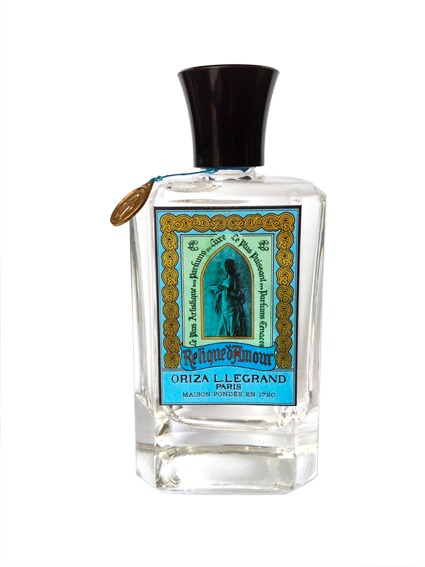
The Relique d'Amour.  Source: Oriza L. Legrand website.

The Relique d’Amour. Source: Oriza L. Legrand website.

I met Mr. Belaiche when I went to the Oriza boutique, along with his business partner and fellow Oriza owner, Hugo Lambert. They were both charming and very kind, though Mr. Belaiche seemed to blink a little at the extent of my enthusiastic outbursts over the fragrances and their quality. I don’t think he’s used to someone babbling a thousand words of English a minute, mixed in with French, while sniffing everything, taking photos from every angle, suddenly stopping in their tracks to announce “Aha! Armagnac! This has aged cognac in it!” in response to one fragrance, and being the sort of whirlwind that is rather uncommon to the very restrained French. I hope he took it as the compliment that it is — there are many niche perfume houses these days, I’m extremely hard to please, and I rarely find a brand to have impressively sophisticated, high-quality, original, creative or luxurious offerings almost across the entire line.

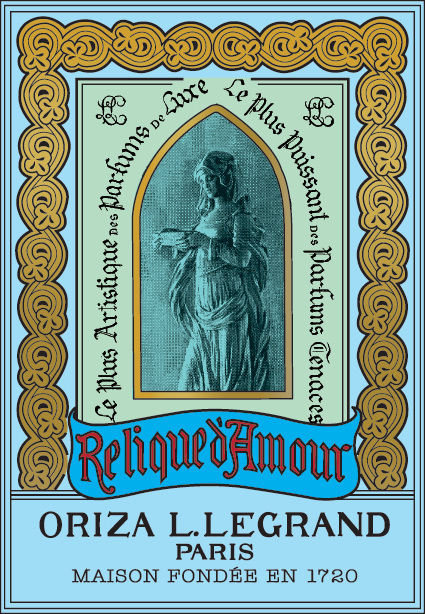
Relique d'Amour poster. Source: Oriza L. Legrand website.

Relique d’Amour poster and perfume label. Source: Oriza L. Legrand website.

I’d like to thank Mr. Belaiche for letting me take photos of the boutique, and I can only apologise to him for my camera taking such poor photos. While I’m at it, I’d also like to thank Mr. Lambert for providing me with a small decant of the beautiful patchouli scent, Horizon, to go with my purchase, even though he had to dig up a long vial from the back. As a side note, I wish I had managed to take photos of all the vintage Oriza posters and adverts framed under glass in the store. They were fascinating, and I’m so glad the new owners have kept the brand’s aesthetic, both in terms of the feel of their boutique and their perfume’s packaging. I’m a complete sucker for Art Deco, so I love Oriza’s brightly coloured labels with the old-style, vintage fonts.

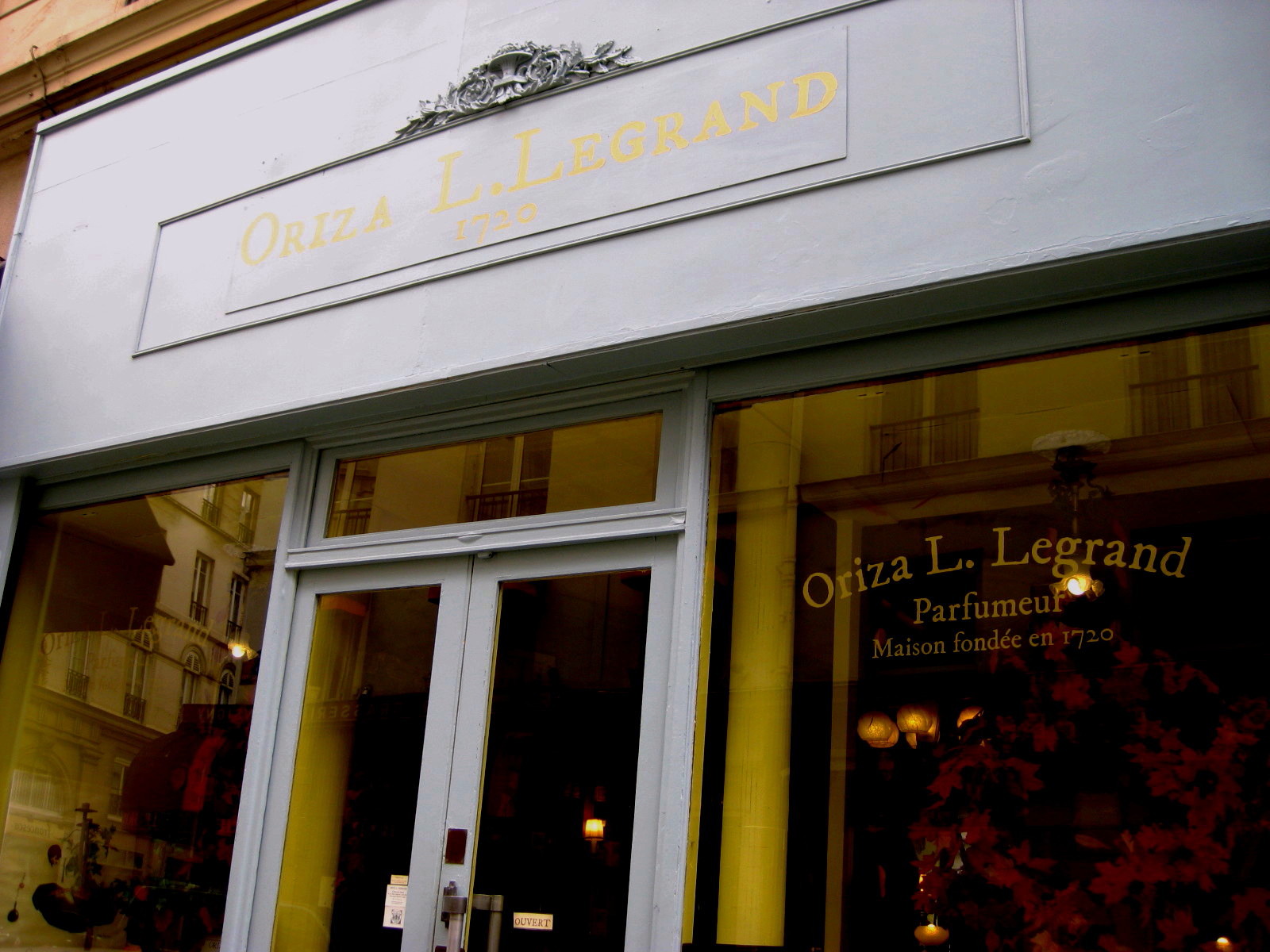
Without further ado, here are a few photos of the Oriza store on rue Saint-Augustin:

The exterior of the colourful store.

The exterior of the colourful store.

Oriza 4-B

One Oriza store window, featuring Chypre Mousse and some of its collection of vintage bowties.

One Oriza store window, featuring Chypre Mousse and some of its collection of vintage bowties.

Some of the soaps from the Oriza line.

Some of the soaps from the Oriza line, along with boxed perfumes wrapped in wonderfully old-fashioned, patterned paper.

Oriza 5 B

Part of the Oriza collection of bowties made out of vintage silk fabric.

Part of the Oriza collection of bowties made out of vintage silk fabric.

One of the bowties up close.

One of the bowties up close.

Some of the original 1900s posters and adverts for Oriza fragrances, now framed and under glass.

Some of the original 1900s posters and adverts for Oriza fragrances, now framed and under glass.

THE PERFUMES TODAY:

I think Oriza is going to go places simply because the majority of its perfumes really don’t smell like anything else that I’ve encountered. (Chypre Mousse…. oh, Chypre Mousse!!!) They have the classique feel of fragrances created in decades gone by, much like the very old Guerlains legends. It is a feel that — somehow, I don’t know how — seems miraculously untouched by the impact of IFRA. Like Sleeping Beauties put to sleep in 1900 and awakened today, the Oriza fragrances have body, layers of notes, a very rich, concentrated feel, and the elegant signature of something that is both very French and very “perfume.”

That said, I don’t think the perfumes are generally something that a novice perfumista with commercial tastes would relate to very well. These are not scents that someone used to Estée Lauder‘s Beautiful or Viktor & Rolf‘s Flowerbomb would understand. I think that perfumistas whose tastes skew towards uncomplicated, light, clean, and wispy scents would also struggle a little. None of the Oriza fragrances that I’ve tried thus far would qualify as “wispy” or simple — thank God. They’re nothing like the By Kilian‘s with their largely straightforward, basic nature, or sometimes gourmand fruitiness. They’re too purely French to be like an Amouage or a Neela Vermeire, though they sometimes share both those house’s opulent sophistication. They’re full-bodied and with a vintage feel in terms of both their potent richness, their complexity, and their sophistication. If you like the early Guerlains, the complicated originality of some Serge Lutens creations, or the sophisticated weight of Roja Dove’s fragrances, then Oriza L. Legrand will be for you.

Oriza's list of perfumes with their original date of production.

Oriza’s list of perfumes with their original date of production.

Thus far, Oriza has seven “returned” fragrances. The list of the eau de parfums with their original date of creation:

  • Relique D’Amour (1900)
  • Rêve d’Ossian (1900) -(Fragrantica gives a different debut date for Reve d’Ossian which it lists as a 1905 creation, but I’m going by what was listed in Oriza’s own shop window in Paris.)
  • Oeillet Louis XV (1909)
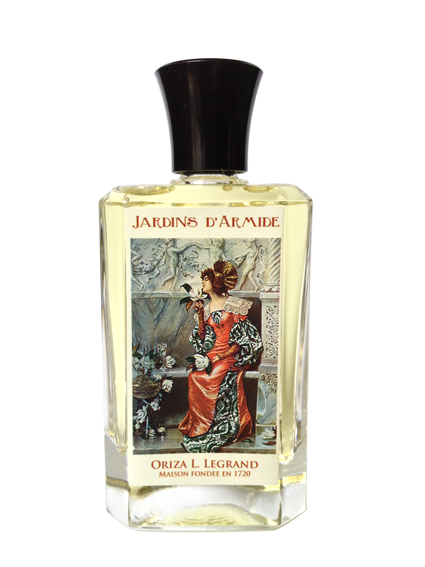
  • Jardins d’Armide (1909)
  • Chypre Mousse (1914) (Fragrantica incorrectly states that this one is from 1920.)
  • Déjà Le Printemps (1920)
  • Horizon (1925).
Jardins d'Armide. Source: Oriza L. Legrand website.

Jardins d’Armide. Source: Oriza L. Legrand website.

Though I haven’t finished testing the whole line yet, the ones I have loved the most thus far have been three. Chypre Mousse wins, hands down and by a landslide, as one of the most fascinating, haunting, evocative chypres I’ve smelled in ages. It is then followed with Horizon and Reve d’Ossian in a neck-and-neck position. The florals that I’ve briefly and cursorily tested thus far have sometimes smelled dated to me, though generally not in a bad way. Only one of those triggered a strongly negative reaction: Jardins d’Armide, which felt too painfully difficult and old-fashioned with its heavy powder and its soapy feel. However, my perception has to be put in the context of one who dislikes powdery scents, and who loathes anything soapy, even expensive floral soap!

So, what are the notes in some of my favorites? Oriza provides the following details for my top 3:

CHYPRE MOUSSE:

    • Top Notes tonic & balsamic: Wild mint, clary sage, wild fennel & green shoots.
    • Heart notes aromatic & flowing properties: Oakmoss, Galbanum, Angelica, fern, wild clover, Mastic & Violet leaves.
    • Backgrounds Notes mossy  & leathery: Vetiver, Pine Needles, Oak Moss, Mushroom fresh Humus, Roasted Chestnut Leather, labdanum & Balms.
Reve d'Ossian label. Source: Oriza L. Legrand.

Reve d’Ossian label. Source: Oriza L. Legrand.

REVE D’OSSIAN:

    • Top Notes: Frankincense and Pine woods.
    • Heart Notes: Cinnamon, Benzoin, Tonka Bean and Opopanax [sweet myrrh].
    • Base Notes: Tolu Balm, Sandalwood, Leather, Labdanum, Amber and Musks.
Horizon. Source: Oriza L. Legrand.

Horizon. Source: Oriza L. Legrand.

HORIZON:

    • Top Notes: Bitter orange, Tangerine Confit & Dried Rose.
    • Heart Notes: Cognac Amber, Aromatic Tobacco Leaves, Cocoa, Roasted Almonds, Old Oak & Patchouli.
    • Base Notes: Benzoin, Amber Gray [ambergris], Peat, Tabac Blond, Vanilla, Honey & Soft Leather.
Chypre Mousse. Source: Oriza L. Legrand.

Chypre Mousse. Source: Oriza L. Legrand.

One thing that I need to emphasize about many of these note lists is that I don’t think they accurately convey the real nature of the fragrances. One reason is that the perfumes are superbly blended and a bit linear, so that you often get an overall effect, rather than a detailed, distinctive sense of each of their parts. For another, something about many of these fragrances is… well, for lack of a better term, other-worldly. I’ll be honest and say that one reason why I’ve put off reviewing Chypre Mousse is that I’m not sure I could even BEGIN to describe it properly and in-depth. I’m not one who is usually at a loss for descriptors or olfactory adjectives, but Chypre Mousse may be beyond my abilities. The smell is simply like nothing I’ve encountered.

Given how many of the perfumes really are a “sum total” effect due to their seamless, fluid, often linear structure, I fear I’m merely going to have to give descriptive snippets of each. At times, my account may amount to instinctive abstractions, as in the case of Relique d’Amour:

RELIQUE D’AMOUR:

    • Top notes: Fresh Herbs, Pine.
    • Middle notes: Powdery Notes, White Lily, Pepper, Oak, Incense, Myrrh, Elemi.
    • Base notes: Musk, Moss, Waxed Wood, Woody Notes, Pepper.

Oriza describes it as “the smell of an old chapel of Cistercian abbey.” I think that gives a misleading impression of the perfume, as do the notes themselves. It is far from a dusty, cold, dark, foresty, woody, High Church olibanum/myrrh scent. To me, it’s a very complex, unusual, quite twisted take on a lily scent that actually feels like a Serge Lutens, only very old in nature. Relique d’Amour is different, original, and stands out a mile away — and it won’t be easy to summarize it in the upcoming review. [UPDATE 11/6 — You can find my reviews of the full Oriza line at the following links: Chypre Mousse, Horizon and Reve d’Ossian in one post; and the 4 remaining, largely floral fragrances in this second post.]

All in all, I think Oriza L. Legrand is a line that is definitely worth exploring. Though there are no U.S. retailers (yet), it’s easy to order directly from the company. In addition to the full bottles of the perfumes, they offer a sample set of the complete line. It’s quite inexpensive at €9 for 7 fragrances that come in 2 ml vials, thereby giving you quite a few test wearings. I think it’s well worth the minimal cost, and I believe Oriza ships the samples world-wide. If you’d like to sniff very elegant, very French, perfumed Sleeping Beauties, brought back to life after more than a century and in a largely unchanged form, give Oriza a try.  

PRACTICAL DETAILS:
WebsiteOriza L. Legrand. There is an actual e-Store that offers perfume samples. All 7 fragrances in the range are offered in 2 ml spray vials for €9. Shipping is listed as €9 extra, but a friend said he was charged only €7. The perfumes themselves are all eau de parfum in concentration, and cost €120 for 100 ml/3.4 oz. Store address: 18 rue Saint-Augustin, 75002 Paris, France. Hours: Monday – Friday: 10:00 am to 7:30 pm; Saturday: 1:00 pm to 7:30 pm. Metro: Opéra ou 4 Septembre. Phone: 01 71 93 02 34. Other vendors in Europe: For a few other French vendors, as well as one store in Sweden and one in the Netherlands, you can check Oriza Points of Sale page. The Netherlands retailer is Parfumaria.

Paris Perfumers: Laurent Mazzone & LM Parfums

Fate, planning, and a little bit of serendipity gave me the chance to meet with three, very different, Paris perfumers during my trip. Actually, to be completely precise, one is primarily based in Grenoble, and one is an actual nose/creator, while the other two are more technically considered as perfume creators with their own houses. Semantics aside, I had a marvelous time with each one, and thought I’d share a little bit of the experience, each of which was very different but utterly memorable. Today, the focus will be Laurent Mazzone and some of the LM Parfums that I tried, including some gorgeous upcoming, new releases slated for November 2013 and early 2014.

LAURENT MAZZONE & LM PARFUMS:

Hotel Costes. Source: hotel-costes.semuz.com

Hotel Costes. Source: hotel-costes.semuz.com

The Hotel Costes on the Rue St. Honoré in Paris is perhaps the pinnacle of stylish, ne plus ultra, sophisticated cool. Velvet, opulence and excess are the bywords for the decor inside, but one of the main attractions is the indoor courtyard. And what a scene it is! Imagine a large, covered, indoor courtyard surrounded on high by Roman statues and greenery. At its pristine, white tables covered with crystal glasses, an array of pencil-thin, black-clad, social x-rays — draped in ennui as much as in Hermès — pose stylishly on thin, black chairs. Their fragile bones seem likely to be crushed by the great effort of lifting their cigarettes. And they’ve clearly followed the mantra and example of Anna Wintour, Vogue’s “Nuclear Winter” editor-in-chief, when it comes to haughtiness. Their male counterparts are all tanned, in dark suits with crisp white shirts that are opened a few buttons, and fixated on their cellphones as they sip a glass of chilled white wine with one well-shod limb elegantly crossed over the other. All around are a phalanx of haughty waiters, many of whom seem to be aspiring models, who look down their noses at your from their great height and seem almost offended that you’ve bothered them with a request. (Or perhaps they’ve simply got issues with people who ask for ice, or for directions to the loo? At the very least, they’ve got issues with a variety of things, and need a serious attitude adjustment.)

Hotel Costes courtyard. Source: lefigaro.fr. photo : DR.

Hotel Costes courtyard. Source: lefigaro.fr. photo : DR.

Outside the Hotel Costes. Photo: my own.

Outside the Hotel Costes. Photo: my own.

As I walked up to the hotel from the aristocratic, luxurious Place Vendome just around the corner, a large chauffeur-driven Rolls-Royce was idling, and a bodyguard talking into his microphone. The chauffeur stood in the middle of the road with the famous Chopard jewellers behind him. Hovering like a gaggle of geese, outside and in, were extremely tall, elegantly clad women whose clothing, looks, and attitude marked them as somehow being involved in Paris Fashion Week which was ending the next day (October 2nd).

It was into this overly hip, excessively cool, “in” scene that I arrived — sleep-deprived, with my voice half-gone from the early part of my trip, and feeling rather bedraggled, if truth be told. I was scheduled to meet Laurent Mazzone and Fabienne, the international business agent for LM Parfums, whose incredibly warm, sweet, and friendly emails had resulted in this meeting. We had begun communicating just a few days before my departure and after my enthusiastic, extremely positive review for LM Parfums‘ gorgeous Sensual Orchid.

As luck would have it, Laurent Mazzone was going to be in Paris for the fashion shows. He had greatly enjoyed the thoroughness of my review (happily, my verboseness seems to a positive thing for some people!), and invited me for drinks. When I warned Fabienne that my French was rusty and that I hadn’t spoken it consistently in almost 20 years, she offered to come along as well. (It was just as well because, despite her opinion that I wasn’t at all rusty, I most definitely am! Plus, in the fog of my exhaustion, I often blanked out on words or phrases. Merci, Fabienne, for saving my linguistic hide.)

Laurent Mazzone.

Laurent Mazzone.

I found Laurent and Fabienne easily, sitting at a couple of tables in the corner along with Laurent’s partner, and was greeted with kisses and even a hug. Laurent Mazzone is a very dapper, youngish man in his early ’30s (I think), with a cherubic face, a naughty gleam in his mischievous, warm, brown eyes, and a big grin. He has an enormously exuberant personality, which I loved, and endless passion. Yet, he is also extremely serious when it comes to the subject of perfumery, and has a true commitment to the idea of making luxurious, sensuous perfumes in the grand tradition, but with a modern feel. There was enormous sensitivity in those brown eyes when listening to my comments about some of his line, sometimes followed by a huge, infectious smile from ear to ear when he saw that I understood and appreciated their nature.

Source: uae.souq.com

Patchouli Boheme. Source: uae.souq.com

He had brought a chic, black, and black-ribboned, LM Parfums bag of what I thought would be perfume samples. They turned out to be actual, full, 100 ml bottles of 3 of his fragrances: Ambre Muscadin, Patchouli Boheme, and the new, limited-edition, Chemise Blanche. Yet, despite my patchouli and amber obsession, I never tested any of those perfumes that day and, instead, ended up trying his forthcoming, new perfume, Hard Leather.

Hard Leather will be released in November, and I can’t wait because I absolutely loved it! In fact, I think I may have yelped or cried out rather loudly upon sniffing it because, suddenly, some tables of black-clad, haughty Parisians were turning around with raised eyebrows. I didn’t care, and I think I may have hugged Mr. Mazzone at one point over Hard Leather because it was (and is) absolutely fantastic. Mr. Mazzone describes it as an “animalic leather” that, to my opinion at least, isn’t particularly animalic or aggressive after the opening 10 minutes, but, instead, much more beautifully well-rounded and warm. It might be “animalic” by French standards, but I don’t think it is generally or as a whole, and especially not by Middle Eastern or Amouage standards.

Hard Leather has its musky side to be sure, but it’s primarily woody, sweet, rich, spicy, ambered, and incredibly sensual. From the first sniff, I could instantly tell that there was oud from Laos in it, with its own very unique, aged character, but what I liked about this version of it is that it didn’t smell fecal like so many fragrances that use that particular Laotian wood. Even better, there is none of that revolting Gorgonzola or cheese undertone that very aged Laotian oud can sometimes have. Soon after the agarwood announces itself, there is a burst of pungent civet which quickly calms down (in less than ten minutes), and melts into the rich, well-blended, richly burnished whole.

In essence, Hard Leather smells like your boyfriend’s leather jacket, lightly mixed with his musky scent, along with deep, almost honeyed, slightly smoky oud, and a vague tinge of floral sweetness, atop a base of ambered warmth. At times, it seemed to share some kinship with Serge Lutens Cuir Mauresque, which is one of my absolute favorite Lutens fragrances, but there are clear differences in smell. Even apart from the oud, Hard Leather has a little more edge at first, and is significantly more woody. It also seems to have a different (and much smaller) floral vein running through it. I can’t remember the rest of the notes that Laurent later told me about, but, if memory serves me correctly, there is iris absolute in Hard Leather as well. [UPDATE 10/17/13 – I have the official press release for Hard Leather with its sleek graphics and the full list of notes in the perfume.]

I also can’t recall the name of the perfumer with whom Laurent worked, but I laughed at his description of the process whereby he kept telling the nose to put in “more. More, more, more!” Not only is such a comment completely in keeping with Mr. Mazzone’s character, intensity and passion, but the perfume really has deep richness. I was so crazy about Hard Leather that Mr. Mazzone sent his friend up to their rooms to get his own small decant to give me as a gift, which resulted in a further exuberant outburst that undoubtedly horrified the Hotel Costes’ snobs, but too bad. This is such a fantastic perfume! I will do a review closer to the perfume’s launch date, but I’m telling guys, in particular, and women who like masculine, woody or leather scents: you need to check this one out.

Source: Silkcosmetics.nl

Some, but not all, of the LM Parfums line. Source: Silkcosmetics.nl

What I love about LM Parfums is that they are luxurious, sensuous, full-bodied, and rich. Hard Leather, unlike most of the perfumes from the line, is an extrait de parfum (only three of the current LM Parfums have that concentration), and clocks in at 20% perfume oil. All the perfumes, however, have an opulence that really harkens back to the golden age of perfumery. They’re not fuddy-duddy, old or dated in smell, but Laurent is clearly driven by his love for the classic perfume greats. These fragrances all feel like actual, serious perfumes — they proclaim their richness and luxurious nature without hesitation, announce their presence, and feel no shame over the fact that they are both perfume and French in nature.

Yet, the thing I found with Sensual Orchid and Hard Leather is that their richness contrasts with a surprising airiness in feel. These are not opaque, thick perfumes by any means! Based on what I’ve tested thus far from the line, even the sillage drops after about 2-3 hours to hover somewhat discretely just an inch or so above the skin. The perfumes are potent when smelled up close and linger, but they aren’t battleships of heaviness with nuclear projection that trails you for hours. (In all honestly, I wish they were like that, but I realise that my personal tastes are not the modern style, and that ’80s-style powerhouses are rarely made today.) Still, LM Parfums are all very French in feel or spirit. Mr. Mazzone mentioned a number of the perfume legends, like Guerlain’s Mitsouko, for example, and how he wants his perfumes to reflect the same sort of sophisticated complexity with layers of nuance.

His philosophy certainly shows in Hard Leather, but also in another upcoming fragrance called Army of Lovers. It is a chypre and, honestly, this is a true chypre! None of that neo-chypre or wanna-be, pretend, quasi-chypre business. (Le Labo’s Ylang 49, I’m looking straight at you with your revolting purple patchouli!) No, this is an actual, genuine chypre with an amount of oakmoss absolute that you have to smell to believe. It’s beautiful, very elegant, and reeks of class. It was created by Mr. Mazzone with a Robertet nose (I think) whose name I have now forgotten, and the perfume name references a Swedish group that Mr. Mazzone loves. I have to wonder if there will be any trademark issues in using the same name, but the perfume won’t be released until 2014, so I’m sure he has time to work out any problems that may arise.

I wish I could recall the notes in Army of Lovers, but all I remember now is how impressed I was with its elegance. At one point, I had Hard Leather on one shoulder or bicep, and Army of Lovers on the other — and I may have uttered a rather strangled, guttural moan. I certainly did something very loudly that seemed to have (further) shocked the constipated denizens of the Hotel Costes, and I saw a very disapproving gleam in our server’s eyes when he stopped by next. At this point, I most definitely did not care. Laurent Mazzone was spraying me with glee, and then himself, and we were standing up to sniff each other publicly without the slightest bit of thought to those around. I might have entered a slight fugue state at one point as the potent chypre of Army of Lovers, and the spicy, oriental, animalic leather-oud warmth of Hard Leather billowed out around me. I may have this incorrectly, but if I recall, I think Laurent Mazzone stated that Ambre Muscadin and Patchouli Boheme are two of the main corner stones or representational fragrances from his line. I suspect that either Hard Leather, Army of Lovers, or both will be soon joining them.

In telling you all this, I’m being completely honest. Just as I am when I say that there were some things I smelled that day that were not my cup of tea at all. Very well-made, and beautifully blended, yes, but most definitely not my personal style. Mr. Mazzone sprayed me with something and — blame my usual bluntness or, perhaps, massive sleep-deprivation — I instinctively recoiled, my whole body jerked back, and I grimaced. It was some floral fragrance with purple, fruity patchouli and a synthetic element. So much purple, sweetness, and fruitiness! I had blocked out the name entirely due to my sheer horror, but, in looking over the list of names in the LM line now, I suspect it was O de Soupirs.** If I recall correctly, Mr. Mazzone described its feeling or inspiration as something a woman would wear before going to a rendezvous with her lover. Before I could stop myself, I blurted out something along the lines of “Absolutely not! This is for a 14-year old girl!” (Oh God, now that I’m remembering more of the day, I think I even tried to rub it off my arm with a napkin!)  ** [UPDATE: it turns out the fragrance I didn’t like was a new, upcoming, not-yet-released perfume called Lost Paradise. It will be launched in 2014. — Further Update 1/29/14: the name has been changed to Ultimate Seduction. ]

I usually try to be more tactful and polite, so I’m quite chagrined at my rudeness, but I really couldn’t help the outburst or my instinctive, gut-level reaction. There was a pause in the conversation, and Mr. Mazzone blinked, but he was extremely gracious about it, though there was a hurt look in his sensitive eyes. I tried to explain that I was always very honest in my opinions, and that my candour should let him know that I was quite sincere in my raves for the other two perfumes. He actually seemed to like that a lot, but he’s also incredibly polite, so perhaps I’m just hoping that he put it all into context.

Even before this incident, Mr. Mazzone had quickly caught onto my personal tastes, which strongly mirror his own, so it wasn’t a surprise when he immediately noted that I would very much dislike another perfume that he had included in the very generous “samples.” It was the new, recently released but limited-edition Chemise Blanche which — unlike its siblings — is not done in a black, velvet box imprinted with the LM Parfums logo. It’s also not in one of the black bottles that Mr. Mazzone has intentionally made almost just barely opaque, but not quite. He was concerned that perfume owners would not be able to see how much was left in their bottle if it was a solid black, so he specifically had the glass done in a way which would show how much liquid was left if the bottle was held up to the light. I loved the thoughtfulness and attention to detail involved in that, especially as the issue of remaining quantity is a problem that I always have with my old, jet-black bottle of Fracas.

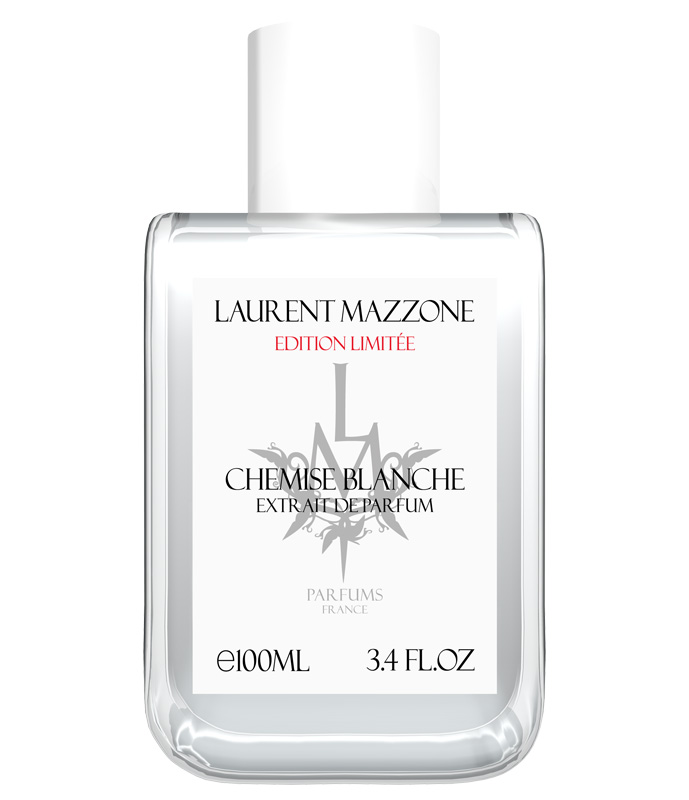
Chemise BlancheInstead, Chemise Blanche is in a clear, glass bottle and in a white velvet box. The reason Mr. Mazzone was sure I would dislike it is because it is very much the opposite of my favorites from his line: it’s a perfume centered around aldehydes and citruses. To me, it very much evokes something crystalline in visuals, almost Alpine, if you will: white, pure, clear, airy, and very light in feel, despite being an extrait in concentration. According to Fragrantica, the notes include:

aldehydes, bergamot, mandarin, iris, lily of the valley, rose, benzoin, tonka, amber and musk.

To my surprise, given my loathing for aldehydes, the note was much tamer than I had expected but, alas, even Mr. Mazzone admitted that Chemise Blanche smelled of soap and dishwashing liquid on my skin. (By now, sniffing yet my another portion of my shoulder, we were really receiving some strange looks!) Chemise Blanche is not my style at all, and my skin is always a huge problem when it comes to aldehydes, but I freely admit that the perfume is very well-done. Actually, with a few wearings, I occasionally persuaded myself that Chemise Blanche might almost be something I would opt for if I were looking for a crisp, light, gauzy perfume with a citric edge. Almost. I’m wearing Hard Leather as I write this, and I doubt I would ever go for crystal white when I could have shades of richly burnished brown, red, black and amber instead!

Nonetheless, Chemise Blanche turned out to be quite a hit with my friend with whom I was staying and who has very difficult perfume tastes. It’s not only that she is someone whose tastes are the polar opposite of mine; it’s also that she finds almost everything to be “too sweet” or “too strong.” She recoils in horror at even the slightest bit of Orientalism or spice, isn’t a huge fan of most pure florals, and adores airy, light, clean and citrusy fragrances. Even in that last category, however, she thinks the vast majority are “too sweet.” (It was quite interesting going perfume-shopping with her one day! No matter what citrus fragrance I found for her, almost all were rejected and, in a few cases, deemed to be “too masculine” as well.) Chemise Blanche, however, smelled lovely on her skin, and she seemed almost convinced that it wasn’t the dreaded, verboten “sweet.” (It is not. Not even remotely!) So, I left her a large decant for her to test out while she decides if it is full-bottle worthy. 

Laurent Mazzone. Source: unique.ru.com

Laurent Mazzone. Source: unique.ru.com

All in all, I had an absolutely wonderful time meeting Laurent Mazzone, his partner, and Fabienne. They were incredibly warm, friendly, effusive, generous, and filled with life. It was truly fun, whether we were laughing over Mr. Mazzone’s astringent views on some of the Paris Fashion Week collections, sniffing each other publicly, or having passionately robust discussions about the state of perfumery in the past versus today.

You know, all perfumers talk or claim that they put a little bit of themselves or their personalities within each fragrance, but it’s not always true. Commercial perfumery certainly doesn’t have that, and neither do some purportedly “niche” lines. Yet, in sniffing the various LM Parfums, I can actually and genuinely see a little bit of Mr. Mazzone in most of them. There is a quietly refined, passionate lustiness or sensuality in the ones that I’ve tried — whether it’s the overtly sexy Sensual Orchid, the smooth, sweetened, goldenness of Ambre Muscadin, the hugely smoky Patchouli Boheme with its almost mesquite-like opening, or the more masculine Hard Leather — that really seems to epitomize different parts of the gregarious, outgoing, exuberantly passionate man I met. Chemise Blanche seems to be an anomaly, at least to me personally, in terms of that character assessment theory, but the line certainly carries something for everyone and its clean crispness should definitely appeal to some modern tastes.

I may end up doing a proper review for Chemise Blanche down the line, but I definitely plan to cover Patchouli Boheme and Ambre Muscadin. Hard Leather as well, when it is released next month. In the meantime, if you have the chance to try any LM Parfums, do give them a sniff. The line is now in the U.S., and is no longer exclusive to Europe. Plus, Osswald in New York has a very affordable deal on samples which should make testing quite easy. For readers in Europe, the line is not hard to find, and LM Parfums sells 5 ml decants at a very reasonable price (€14 or €19). As for me, I suddenly fell upon the genius idea of layering Sensual Orchid with Hard Leather on occasion, and now, I really have to get my hands on a proper decant of both. The people at the Hotel Costes are lucky they’re not around to witness my reaction….

[UPDATE: I have now reviewed Ambre Muscadin and Hard Leather, with shopping information and pricing information provided in the appropriate reviews.]

Disclosure: Some of the perfumes covered in this post were, as noted, provided by LM Parfums. There was no financial compensation for any of this. I don’t do paid reviews or posts, and my views are my own. 

DETAILS:
Cost & Availability: LM Parfums always come in a 100 ml/3.4 oz bottle. The European price is generally either €120 (€125 at some online vendors), or €195 (or £195). The American retail price is either $175 or $225. In the U.S.: Laurent Mazzone’s fragrances used to be European exclusives, but the range just came to America two months ago. It’s sold exclusively at OsswaldNYC. For some strange reason, the website seems to show only two fragrances now, and not all the ones it had earlier when I reviewed Sensual Orchid. In terms of samples, none of the U.S. perfume sample sites currently carry the LM Parfums line, but Osswald has a special deal for all its perfumes for U.S. customers who telephone the store: 10 samples for $10, with free shipping in the U.S., and it’s for any perfumes that they stock! That means the full, existing, current LM Parfums line (or whatever parts they may now carry of it), and some other goodies only found at OsswaldNY, for less than a $1 a vial! The deal is only available for telephone orders, however, so you have to call (212) 625-3111. Outside the U.S.: In Europe, you can buy the perfumes directly from LM Parfums for €125 or €195. (At this other LM Parfums site, some of the bottles are priced at €120.) Samples are also available for €14 or €19, depending on the perfume in question and its concentration, and they come in a good 5 ml size. In the UK, the LM Parfums line is carried exclusively at Harvey Nichols. In France, you can find the perfumes, and 5 ml samples of each (usually about €14) at Laurent Mazzone’s own Premiere Avenue. In Paris, LM Parfums are sold at Jovoy. Germany’s First in Fragrance carries the full line and sells samples as well. You can also find LM Parfums at Essenza Nobile, Italy’s Vittoria Profumi, or Alla Violetta. In the Netherlands, you can find LM Parfums at Silks Cosmetics or Parfumaria. In the Middle East, I found most of the LM Parfums line at the UAE’s Souq perfume retailer. For all other countries, you can find a vendor near you from Switzerland to Belgium, Lithuania, Russia, Romania, Croatia, Azerbaijan, and more, by using the LM Parfums Partner listing. Laurent Mazzone or LM Parfums fragrances are widely available throughout Europe, and many of those sites sell samples as well.