YSL Vintage Champagne/Yvresse: Sparkling Elegance

Source: evollt.com

Source: evollt.com

Bubbling joy, effervescent gold, the emerald of a mossy forest floor, glowing orange and pink jewels cocooned in French elegance, and a warm smile on the sunniest of days: Champagne. It is liquid gold, but so much more than that in the case of the extremely well-named, vintage fragrance from Yves Saint Laurent. Some things simply make you happy, and Champagne (or Yvresse, as it was quickly re-named) is one of those things for me. I always stand a little straighter when I wear it, feel brighter, with more of a kick in my step. It makes me feel elegant and sophisticated, even when I’m wearing jeans and a t-shirt. I feel smoothed out, covered in gold, and dripping glowing jewels of orange and pink.
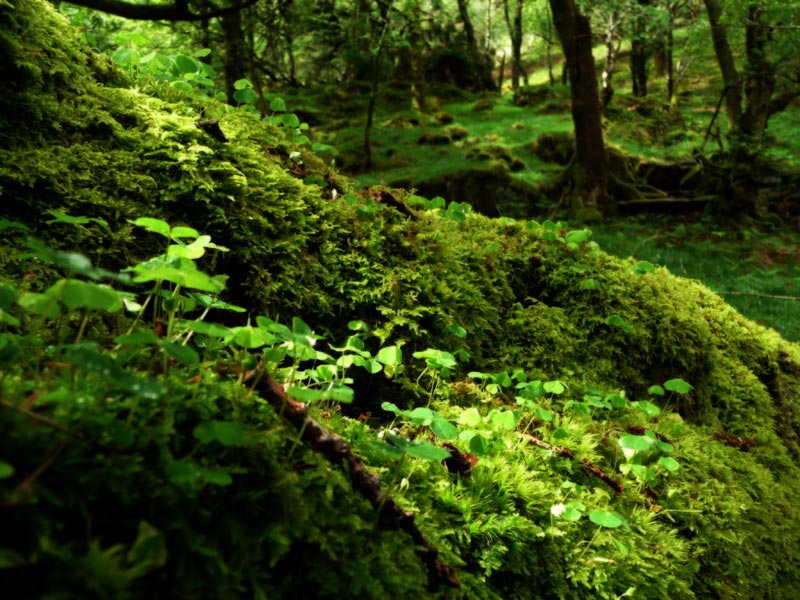
Photo: Jimpix.co.uk

Photo: Jimpix.co.uk

It doesn’t make a lot of sense on the face of it because Champagne or Yvresse is very far from my usual style. At first glance, it appears like a simple, extremely sweet, very feminine fruity-floral. Look closer and take a deeper sniff, however, and you will see a dark, lush forest of green carpeting those fruits and flowers, a base of oakmoss of such high quality that I’ve only smelled its like recently in $400 and $900 fragrances from Roja Dove.

Source: parentium.com

Source: parentium.com

There is green aplenty in Yvresse, but perhaps the real joy stems from the effervescent, incandescent bubbles of gold that hit your nose from the very start. Clever uses of menthol create a chilled sensation that very much evokes the subtle, sparkling tingle of really good, expensive champagne. Yet, the bubbles are only half the story.

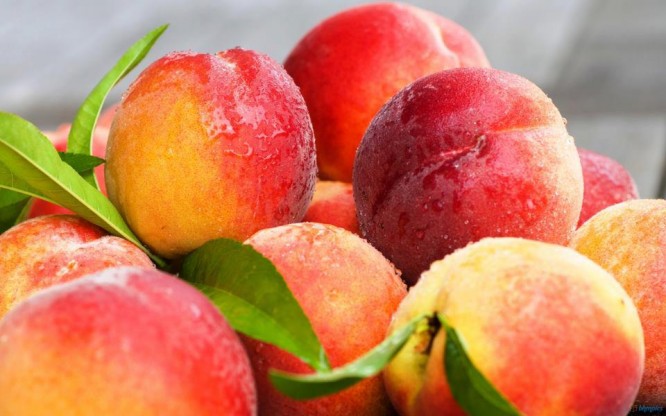
Tart, tangy juiciness drips from lush nectarines, lychee, and peaches with a joyful abandon that feels like the best of summer. Yvresse is most definitely a chypre first and foremost, but the fruited touch makes the scent as warm and as sweet as a big, infectious grin. All of the haughty, aloof, cool distance that the dark green oakmoss in a chypre can create has been replaced by bright, sunny plushness. Even when the fragrance turns drier and less sweet, the lingering touches of peach and vanilla create a softness that is approachable elegance at its best. It’s not the stark, perfect beauty of Grace Kelly (who is perhaps a perfect representation of a chypre’s aloof coolness), but the warm smile of Audrey Hepburn. Yvresse/Champagne is bright joy and sunniness mixed with elegant sophistication and sweet femininity — all in one very affordable bottle.

YSL Champagne ad showing the small, squat parfum bottle, not the EDT one. Source: ladies-with-bottle.blogspot.com

YSL Champagne ad showing the small, squat parfum bottle, not the EDT one. Source: ladies-with-bottle.blogspot.com

Yvresse was created by Sophia Grojsman, and was originally released as Champagne in 1993. The French champagne industry immediately had a snit-fit over the name, outraged that something could be called “Champagne” that wasn’t a French sparkling wine. (Technically, champagne is terroir-specific, as sparkling wines from other regions have a different appellation. To give you just one example, in Spain, they are called “Cava.”) The champagne industry sued for trademark violation, and if you’re rolling your eyes, you’d be right. Yves St. Laurent lost the lawsuit and was forced to change the fragrance’s name to Yvresse, which essentially means a state of intoxicated joy. All that changed was the label on the bottle and its look, not the ingredients themselves.

Yvresse in a 2 oz bottle to the left, Champagne in a 3.4 oz to the right. Photo: my own.

Yvresse in a 2 oz bottle to the left, Champagne in a 3.4 oz to the right. Photo: my own.

The fragrance is most commonly available as an eau de toilette, though a rare parfum version was also released. This review is just for the eau de toilette. I have bottles of both Yvresse and Champagne in that concentration, and find them to be virtually identical. The greatest difference between the two is sweetness and the price, as vintage Yvresse is extremely inexpensive and widely available on eBay. You can find a small bottle as low as $29 right now, but the same size for Champagne costs significantly more. (Almost a $100 more.) For that reason, in part, I used my bottle of Yvresse to test for this review, though the main reason is that my bottle of Champagne is running dangerously low and I want to keep it as long as possible. I’ll repeat that, in my eyes, the two fragrances are almost identical. The reason for the difference in pricing is that far fewer bottles of “Champagne” were released, so they are more of a collector’s item. The smell, however, is the same.

Otto Rose, named for Otto de Jager. Source: ludwigsroses.co.za

Otto Rose, named for Otto de Jager. Source: ludwigsroses.co.za

Fragrantica lists Yvresse’s main notes as:

nectarine, anise, menthol, Otto rose, blue rose, litchi, oak moss, patchouli, vetiver.

Ozmoz has a more complicated list, but, despite its entry date of 1993, shows a photo of the new, modern, very different Yvresse. So, taking things with a grain of salt and the possibility that Ozmoz is providing the reformulated fragrance’s new notes, the olfactory pyramid is supposedly:

Note of Top : Peach, Apricot, Star Anise / Chinese Anise, Cumin

Note of Heart : Jasmine, Carnation, Rose, Cinnamon

Note of Base : Castoreum, Vanilla, Cedar, Styrax
Source: hqdesktop.net

Source: hqdesktop.net

I’ve never seen any list for the original Champagne or Yvresse that includes carnation or jasmine, never mind cumin! I certainly don’t smell either of those three notes, and they’re not mentioned on the note list that came with my bottle of Champagne. Stranger still is Ozmoz’ omission of nectarine, which is commonly known to be a major part of the scent.

To my nose, the notes in vintage Yvresse include:

nectarine, peach, anise, menthol, Otto rose, blue rose, litchi, oak moss, patchouli, vetiver, castoreum, and vanilla. Possibly mandarin orange, cedar, and cinnamon as well.
Source: forwallpaper.com

Source: forwallpaper.com

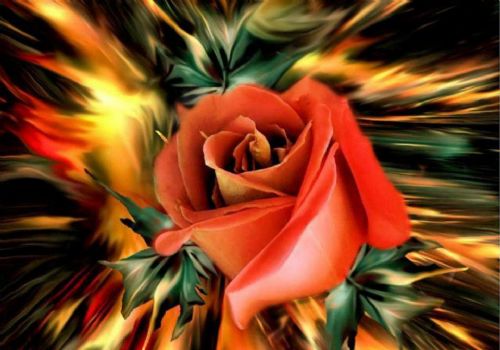
Yvresse opens on my skin with intense fruited sweetness that dissolves instantly into tangy, tart nectarines, orange fruits, a pink rose, and oakmoss. There is a hit of bitter citric zestiness like when you peel a baby tangerine and the oils squirt on your skin. Soft ripe peaches join the parade, but there is as much tartness in the Yvresse’s opening as there is sweetness. There is also brightness, so much brightness that it positively glows. It infuses the deep, dark oakmoss with incredible vibrancy, transforming it from the typically drier aroma of real mousse de chene oakmoss absolute. There is still a massive amount of the dark note in Yvresse, but it’s fresher than the usual scent of dry tree bark with a touch of salt and slightly fusty, dusty, mineralized grey lichen. Instead, it feels like bright emerald green that carpets the forest floor with thick, bouncy plushness.

Other notes soon appear. There is a watery, sweet lychee lurking around the edges, along with a deep, pink, Damascena rose and whiffs of a velvety castoreum. Deep in the base, there are flickers of cinnamon, alongside a bright, fresh, green, almost minty vetiver. The whole bouquet sparkles as effervescently as champagne. There is a fizzy quality as the notes dance around, buoyant, fresh and happy like young girls on a red carpet, only this one is dark green, emphasizing their golden and orange glow even more.

Source: Miriadna.com desktop wallpapers.

Source: Miriadna.com desktop wallpapers.

For all the sweetness in the opening minutes, Yvresse is always much less syrupy on my skin than others have reported and a definite chypre from the very start. The dark, emerald moss is really the key to the fragrance; it’s a solid, dominant note which gives Yvresse a firm, sometimes dry, green spine from head to toe, and from start to finish.

Interestingly, I tried Champagne in a side-by-side test, and the fragrance was both significantly sweeter on my skin, and less mossy. I think the intense syrup stems from the fact that my bottle of Champagne is exactly 20 years old. The inevitable evaporation that occurs over time thereby concentrates some of the fragrance, and that amount of sweetness ends up overwhelming the dryness of the oakmoss in Champagne. In contrast, my much newer bottle of Yvresse (that may be about 10 years old, or a little bit younger) is drier, greener, less sweet, more chypre-like, and with significantly greater brightness. It also fizzles and sparkles from the start. Nonetheless, all of this is a question of degree, mere fractional differences that don’t change the primary essence of the fragrance.

In all cases, both Champagne and Yvresse open with enormous potency and sillage for a fragrance that is a mere eau de toilette. The strong sillage wafts about you like a cloud, projecting a good 4-5 inches of a cloud that is tart nectarines, zesty tangerines, sweet peaches, delicate lychee, a dash of rose, and endless vistas of dark oakmoss. The potent cloud softens a tiny bit after 20 minutes, and hints of other notes appear. There are spices, noticeably dry cinnamon, but there is also something fiery that feels like star anise with almost a chili-pepper, pimento bite. They’re subtle and very muted, however, and you have to really sniff to detect them. 

Source: mport.bigmir.net

Source: mport.bigmir.net

One of the things I love the most about Yvresse is the fizzy sparkle. Originally, I thought it may be the result of the contrast between the deep velvet of the foresty base and the tangy, tart, top notes. Later, I thought that it may be merely the power of suggestion. If so, then everyone who tries Yvresse is equally suggestible because they’ve all noticed the same thing. Something in Yvresse really and truly replicates the nose-tingling bubbles of champagne, subtle though it may be amidst all the powerful accords. However, having stared at the notes for this review, I’ve finally figured out the cause. The “menthol.” It’s a note that initially left me scratching my head, because nothing in Yvresse reads as anything medicinal, camphorated, or even very minty. It translates instead as a cool, almost icy, frosted chill. Yet, menthol makes sense. It serves to amplify the more mossy, green elements in the base, while also diffusing the sweetness at the top. It transforms those fruity accords into something more chilled, while also giving a little fizzy tingle in your nose the way really expensive champagne can do.

Source: Forwallpaper.com

Source: Forwallpaper.com

Thirty minutes in, Yvresse is a sweet, fizzy rose scent infused by tart, sweet fruit, a whisper of dry cinnamon and anise, and endless amounts of dark, dry oakmoss. The oakmoss feels as though it dominates the top, middle, and bottom layers, taking over every part of the fruit and rose accord, balancing it all out in the most elegant, sophisticated mix of green. Deep down in the base, the first touches of vanilla become noticeable, but it will take a while for it to rise up to the top.
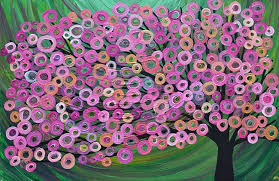
"Pink & Green Tree Painting by Artist Louise Mead." Source: ebsqart.com. (Website link embedded within photo.)

“Pink & Green Tree Painting by Artist Louise Mead.” Source: ebsqart.com. (Website link embedded within photo.)

At the 90-minute mark, the fragrance starts to shift. Yvresse loses a lot of its fizzy, champagne quality, along with its sweetness. As they recede to the periphery, the cool, crisp greenness takes their place, imbued with some sharpness and with the faintest hint of spiciness from the star anise. Equally subtle is the whiff of castoreum in the foundation with its quietly animalic, brown velvetiness. All the base notes are muted, and detectable only if you really sniff hard; the general impression from afar is of a deep, multi-faceted, seamless blend of emerald green, foresty moss infused with roses and fruited sweetness.

Both the fragrance and the individual elements have softened, with projection now limited to only 2-3 inches above the skin. It’s still fantastic for a mere eau de toilette, though. In fact, in every way, from richness, depth, body and projection, Yvresse is really more like an eau de parfum than anything else. It’s certainly ten times stronger and more full-bodied than any current Hèrmes parfum from the ultra-minimalist Jean-Claude Ellena.

Yvresse remains largely unchanged for the next few hours. There are subtle differences in the order or prominence of the notes, but the most noticeable thing about the scent is that it gets drier and darker. Around the start of the third hour, there is a subtle smoked woodiness that appears, leading me to think that the fragrance may indeed have cedar in it as Ozmoz states. The nectarine fades to the sidelines, letting the peach take over, while the vanilla slowly rises to the top. Yvresse becomes a beautifully balanced mathematical equation of fruits and florals; sweetness and dryness; joyful, bright warmth and dry, restrained darkness in a blend that feels like a very grown-up, elegant take on a fruity-floral.
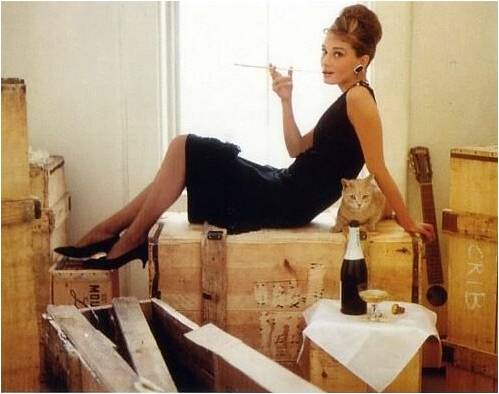
Audrey Hepburn in "Breakfast at Tiffany's."

Audrey Hepburn in “Breakfast at Tiffany’s.”

For me, modern interpretations of the fruity-floral genre always feel very young, very girly in a teenage-like way with its abundance of syrup and purple, fruited patchouli. (Exhibit A would be the terrible, banal, and simpering Chypre Fatal from Guerlain.) Originally, however, the fruited chypre genre was for sophisticated women, with scents like the legendary Mitsouko which is also based on peach and oakmoss. Yvresse is different, because it lacks the powerful bit of “skank” that makes Mitsouko so sensuous (or sexual, in some people’s eyes). It is a much sweeter, sunnier, happier scent without that overly sensuous underpinning. It’s not sexy like Sophia Loren, or a grand dame like Catherine Deneuve (who would perfectly embody Mitsouko). But it’s also not girlish and youthful like a Gigi.

Source: npr.org

Source: npr.org

For all the happy bubbliness of Yvresse’s start, there is too much underlying elegance and sophistication. It is Audrey Hepburn in Breakfast at Tiffany’s, with her charm, genuine warmth, and her open smile, all in a very classique, elegant body. In short, Yvresse is approachable chic and sophistication that never loses sight of its playful side. In modern parlance, Yvresse might perhaps be a very grown-up Reese Witherspoon going to the Oscars.

"Shades of Leaves," abstract photography by Bruno Paolo Benedetti. (Website link embedded withinphoto.)

“Shades of Leaves,” abstract photography by Bruno Paolo Benedetti. (Website link embedded within photo.)

In its final phase, Yvresse is a soft blur of oakmoss infused with abstract floral and fruited elements. For a while around the end of the 6th hour, you can still vaguely distinguish the peach, rose and cedar notes, but they are increasingly folded into that plush, soft, smooth greenness. The nectarine has vanished, as did the lychee and spices hours earlier. There is a subtle vanilla element in the base that feels as airy as mousse, but it’s blended in as well, and feels quite muted. In its final moments, Yvresse is merely a delicate haze of cool, somewhat dry, faintly sweet mossiness.

All in all, Yvresse consistently lasts between 9 and 9.75 hours on my perfume-eating skin, depending on the quantity I apply. With a larger dose, the fragrance takes 5.5 hours to become a skin scent, while a smaller amount yields about 4/25 hours. These are exceptional numbers for a mere eau de toilette, but as noted earlier, Yvresse feels very much like an eau de parfum in strength. 

I absolutely adore Yvresse/Champagne, and it is one of my “happy scents” that I turn to when I need a little energizing boost, or Prozac in a bottle. It always makes me feel more elegant and put-together, even though blazing femininity is not my style of perfumery. I would not recommend Yvresse for most men, as I think the bouquet would be viewed as too feminine by those with more conventional tastes.

However, I know a few confident men who love the fragrance, perhaps because of its mossy chypre character. Men who wear fruity-chypres like Mitsouko and who enjoy sweet scents may like Yvresse. On the other hand, Mitsouko is much drier and with significantly more pungent oakmoss, so don’t expect a very close kinship in that regard. Yvresse may actually be closer in feel to Andy Tauer‘s Une Rose Chyprée, taking a lot of its rich moss with a sunny, happy rose facade, and then tossing in a dab of the tart fruit in his stunning PHI Une Rose de Kandahar. Again, though, Yvresse starts at a much sweeter level.

YSL vintage golden couture, 1967. Photo by David Bailey for Vogue. Source: Styliista.com

YSL vintage golden couture, 1967. Photo by David Bailey for Vogue. Source: Styliista.com

Another fragrance that comes to mind is Viktoria Minya‘s exquisite Hedonist. Yvresse is a very different scent and lacks the boozy, oriental qualities of the niche scent, but the two share that same fizzy feel at the start, a fact I remarked upon even in my review of Hedonist. They also have the same very sunny, opulent, golden sophistication and joyousness. That said, Yvresse very much demonstrates the signature of its maker, Sophia Grojsman, who is responsible for such intensely feminine, sweet fragrances as YSL‘s classic Paris and Lancome‘s Trésor. In short, it definitely skews very feminine in nature.
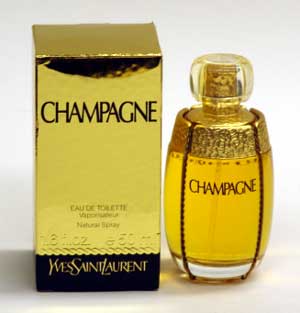
Champagne.

Champagne.

Yvresse is extremely affordable for such an elegant, vintage scent, though the same fragrance under the Champagne name costs significantly more. On eBay, you can find Yvresse for as low as $29 in the smallest 50 ml/1.7 oz size. It’s an absolutely fantastic price for a scent that shows the same complexity, elegance, richness, and nuance as a $200 niche fragrance. Actually, I’ve tested a number of $275 to $425 florals that don’t have one tenth of Yvresse’s sophistication or complexity. I don’t think the $29 figure is the norm, but Yvresse is still a bargain even at its more typical, slightly higher price.

As shown in the Details section below, you can generally find Yvresse on any number of discount or outlet fragrance sites for somewhere in the $42-$65 range for a 60 ml/2 oz size. In the UK, I’ve seen Yvresse sold cheaply for £33.31 in that same size, and for £50.05 for a huge 125 ml/4.25 oz bottle. Online retailers are a more steady, permanent option than relying on the vagaries of what may be offered on eBay, but you’ll sometimes get much better deals on the auction site, so you should check both. Unfortunately, I’ve never seen Champagne offered on any site other than eBay.

Vintage Yvresse but slightly newer and without the wide gold band around the top, and with much paler font in the writing. This version is still vintage Yvresse though.

Vintage Yvresse but slightly newer, without the wide gold band around the top, and with much paler font in the writing. This version is still vintage Yvresse though.

In all cases, it’s cheaper to buy Yvresse than Champagne. To give you an idea of the comparative range of prices for Yvresse versus Champagne on eBay, here are some links which, it goes without saying, will soon become obsolete once the auctions end in a few days: an unopened, boxed Yvresse EDT in a small 1.7 oz/50 ml size is going for $29.99; a 2 oz/60ml boxed Yvresse for $57.19 from FragranceNet; five bottles of boxed Yvresse in a 3.3 oz/100 ml bottle, each for $70.25; or a huge 125 ml/ 4.25 oz boxed Yvresse for $89.99. In contrast, the cheapest starting price for a boxed bottle of Champagne in the small 1.7 oz size is $125, with larger sizes averaging about $195-$200 before a single bid has been placed. For those who are reading this review months down the road, you can use the following search which should work regardless of time and which should not become obsolete: Yvresse and Champagne options on eBay, including the rarer parfum version.

Older vintage Yvresse with the gold band and much deeper, darker font in the writing.

Older vintage Yvresse with the gold band and much deeper, darker font in the writing.

One word of caution regarding names and boxes. No matter which name it is sold under, the eau de toilette always comes with a gold box and the bottle is oval-shaped, like a football. Slightly newer bottles of Yvresse don’t have the wide, dimpled, gold band going around the top of the bottle or dark font for the writing, but they are still vintage Yvresse. In fact, that is the version I own and used for this test. You can compare the bottle shown to the left with the one posted immediately above. They are both vintage. However, any fragrance with a red box is Yvresse Legere, which is a different perfume that was released in 1997 and which has a very different aroma profile. (It’s centered around mimosa, for one thing.)

New, modern, "La Collection Yvresse" from 2011. Source: Fragrantica.

New, modern, “La Collection Yvresse” from 2011. Source: Fragrantica.

Also, you will want to stay far away from anything in an opaque, cream-coloured bottle as shown in the photo to the right. In 2011, under L’Oreal’s ownership, YSL released a new Yvresse in 2011 called La Collection Yvresse. This is a totally different fragrance, no matter what its name purports to be. As that Fragrantica link will show you, the notes are substantially different and limited to 5 things: litchi, nectarine, rose, violet, and patchouli. In short, it is missing half the notes of the original Yvresse, most particularly the essential oakmoss base. I haven’t tried it out of protest, and I never will given my loathing of every single thing put out thus far by L’Oreal under the modern YSL name. They’re all terrible. (You don’t want to get me started on the revolting, emasculated eunuch that is the modern, current “Opium.” It is an utter travesty.)

Yvresse isn’t for everyone, but its cheerfulness makes it a favorite of mine, even if I don’t turn to it as much as I once did. In a few weeks, it will be New Year’s Eve, a time when champagne abounds. This year, I think I shall take my fizziness in a perfume bottle, with vintage golden bubbles from Yves Saint Laurent. It’s the perfect way to ring in 2014:  a note of boundless joy and bright optimism, all wrapped up in sparkling elegance. 
DETAILS:
Cost & Availability: Yvresse/Champagne is available in a variety of different sizes and concentrations. This review is only for the vintage eau de toilette version. I’ve seen bottles of the fragrance in a 1.7 oz/50 ml size, a 2 oz/60 ml size, a 3.3 oz/100 ml size, and a very large 4.25 oz/125 ml size. Prices range from $29 to $95 for Yvresse, but bottles with the Champagne name are consistently higher by a significant amount. The larger sizes of Champagne can even go up to $200. As noted in the review, I don’t think there is any significant, substantial difference between the two. The name change was done for litigation reasons, not reformulation ones. Outside of eBay: Yvresse is sold at a number of different outlet or discount fragrance sites. I found one in Czechoslovakia, others in Russia. In the U.S., Overstock.com sells Yvresse for $43.29 for a 2 oz/60 ml bottle, and they ship internationally to over 100 countries. Yvresse is sold in the same size for $42 from Sophia’s Beauty, and around $47 from Fragrance Original. Another world-wide site selling a lot of Yvresse at a good price is FragranceX which has 2 oz/60 ml bottles priced at $56.62. The PerfumeLoft sells it for a bit higher. Outside the U.S.: A number of the discount sites listed above ship worldwide. However, in the UK, I found Yvresse sold in two sizes at London Perfume Shop for £33.31 for a 60 ml/2 oz size, and for £50.05 for a large 125 ml/4.25 oz size. In Australia, I found Yvresse at ShopandSave for $64.95 (AUD?) for a 2 oz/60 ml bottle. In the Middle East, Yvresse is sold at Bustan PerfumesSamples: if you want to test the fragrance, you can order Yvresse from Surrender to Chance where prices start at $3 for a 1 ml vial. The site also offers Champagne (which it lists with the exact same notes) for the same $3 starting price.

Roja Dove Fetish (Woman)

Succumb To Your Desires.

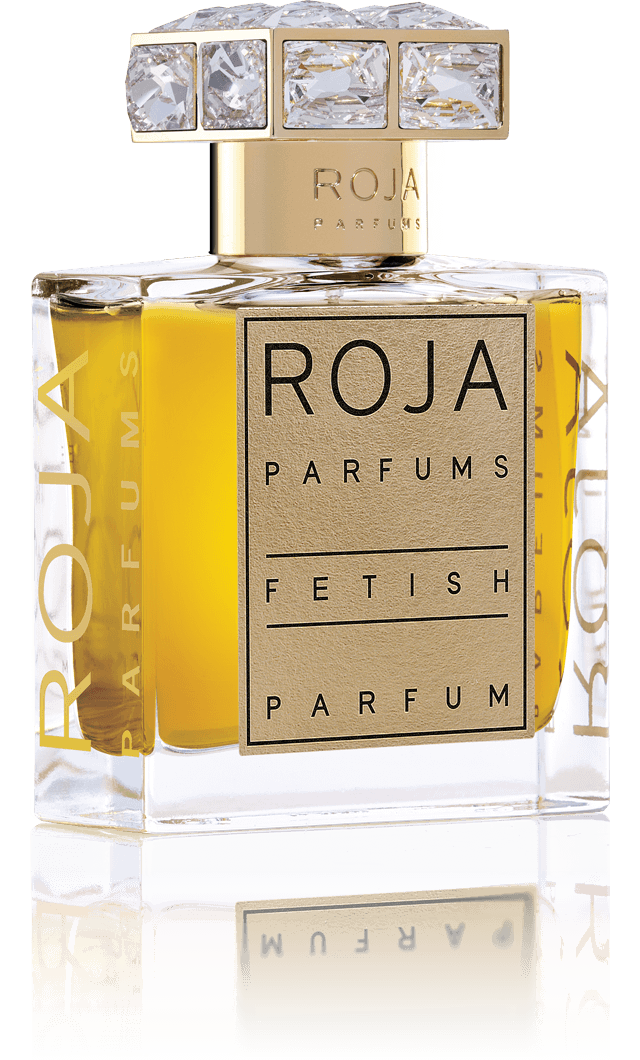
Fetish for women in pure parfum extrait.

Fetish for women in pure parfum extrait.

That is what Roja Dove tells you when he talks about Fetish, his line of chypre-leather fragrances. Yesterday, we explored the men’s version of Fetish Extrait, and, while it didn’t awaken any desires in me, I certainly concede that it is a leather scent. However, I’m wholly unconvinced on that matter when it comes to Fetish for Women (also in pure parfum Extrait form). There was nothing remotely leathered about this white floral chypre on my skin.

On his Roja Parfums website, after he’s ordered you to succumb to your desires, Roja Dove offers the following description for Fetish:

WARM, DRY, FRESH, SWEET, & LEATHERY

“Nothing is darker than leather in all its guises. Beware once you have entered there is no escape, as I have created a perfume that once under its spell there is no return”. Roja Dove

INGREDIENTS

TOP: Bergamot

HEART: Jasmine, Rose, Tuberose, Ylang Ylang

BASE: Castoreum, Cedarwood, Cinnamon, Clove, Galbanum, Musk, Oakmoss, Patchouli, Vetiver

Galbanum

Galbanum

Fetish for Women Extrait (hereinafter just “Fetish“) opens on my skin with galbanum sweetened by jasmine. It’s a combination of great crispness, freshness, and greenness, but without the usual pungent froideur, distance, and iciness that I typically find with galbanum. The ingredient’s sharp edge and unapproachability render it something that I often struggle with, but here, it’s very different. The jasmine adds a fragrant sweetness and warmth, while the galbanum keeps the usually indolic, sometimes heavy flower quite crisp, clean, and green. There is the faintest trickle of jasmine’s sweet syrupy nature lurking underneath, but it’s always kept in check and balance. 

Photo: my own.

Photo: my own.

On the heels of the two main notes is the oakmoss. It feels simultaneously pungent and mineralized, but also a wee bit plush, fresh, and lightly sweetened. In Fetish’s middle layer, hints of dry, woody vetiver and slightly sweet, green patchouli round out the tableau of variegated greens. The one exception to the colour spectrum are the flickers of aldehydic soapiness that dart about. In Fetish’s depths, there are elements of tuberose and extremely dry cedar. Even deeper below, the castoreum briefly stirs. Here, it thankfully lacks the animalic raunchiness or sweaty perianal parts prevalent in Fetish Pour Homme; instead, it merely feels like something velvety brown and soft in the base. A mere drop of animalism, if you will, instead of whole bucketfuls.

For the most part, however, Fetish for Women is primarily a triptych of jasmine, galbanum, and oakmoss on my skin. The degree of each note fluctuates in prominence and strength, but the perfume’s core essence never changes. Not once.

Source: dilei.it

Source: dilei.it

What happens instead is that Fetish goes through a small shrieking period. The galbanum becomes more forceful and incredibly sharp; so, too, does the oakmoss. Something about the two notes in tandem, along with that aldehydic soapiness, consistently creates an almost synthetic sharpness that I find abrasive. I tested Fetish three times, and there is always a brief 20-25 minute period when the jasmine retreats. The loss of its sweetness permits the galbanum’s inherently icy, sharp edge to come out, along with the more fusty, pungent aspects of the oakmoss. I don’t know to what extent the latter may be partially synthetic in nature, but the effect of the overall combination repeatedly causes a tightening sensation in my nose. It’s almost like something verging on sinus pains, but not quite.

"Evernia Prunastri" lichen moss. Source: via supermoss.com

“Evernia Prunastri” lichen moss. Source: via supermoss.com

I want to take a moment to briefly talk about that oakmoss which I suspect is mousse de chene. It is actually a specific type of oakmoss (Evernia prunastri) that is an oakmoss absolute according to The Aroma Connection blog, and, in some people’s eyes, seems to be considered the “true” oakmoss. It’s a grey lichen which grows on trees and has an intensely dank, pungent, fusty aroma that can also be salty and smell like tree bark. Still, “real” oakmoss of any type is largely banned out of perfume existence, and substitutes are often used, either by themselves or as complements to smaller portions of the real thing.

There is a very interesting, detailed, and somewhat technical discussion of the different types of oakmoss on The Aroma Connection, including the various synthetic versions or additives thereto:

we are left with a few synthetic oakmoss chemicals, such as Evernyl (methyl 2-4-dihydroxy-3-6-dimethylbenzoate) and formerly, the less popularly-utilised Orcinyl-3 (3-methoxy-5-methylphenol), which the hype from synthetic aroma chemical producers would try to persuade you ‘represent the essential character compound of oakmoss’.

… It should also be mentioned that a range of commercial oakmoss products exists, some offering a warm, leathery-mossy character, whilst others offer have woody, mossy – almost marine-like aspects.

Here, the oakmoss never has a leather aspect on my skin, but it does have an incredibly sharp character that occasionally smells a little salty and like the bark of a tree. There is a subtle smokiness, but it is mild and overwhelmed by the more pungent, almost acrid characteristics. More importantly for our purposes here, the oakmoss has an undertone that, to me, smells synthetic to me. I don’t react with the equivalent of a sinus headache or pinching otherwise, and it happened to me with both men and women’s versions of Fetish.

On all three occasions with Fetish Woman, the shrieking phase was brief, and never lasted beyond 20-25 minutes, ending about 50 minutes into the perfume’s evolution. Part of the reason why is because the jasmine returns in greater strength to counterbalance the green notes, tame them, and turn them into something less forceful. A Fragrantica commentator described Fetish Pour Homme as being very “shouty,” and I think Fetish for Women has a brief period of the same thing, despite being a considerably softer, tamer fragrance. Actually, “shouty” isn’t so accurate in this case, and a more apt description would be “unbalanced.” Regardless, it’s not a very long period, and Fetish soon calms down.

In fact, it turns a little too mellow and goes too much the opposite extreme. On each occasion where I tested Fetish, a little after one hour, the perfume dropped in sillage, hovered just an inch over the skin, and became a virtual blur of white florals with green notes and oakmoss. By the 90-minute mark, it’s a skin scent.

At times, the oakmoss turns so gentle and muted, it felt like the description that one reader emailed me about with regard to another very oakmossy, green fragrance: “green tea and honey.” To my surprise, the oakmoss in Fetish’s base might truly be described that way from afar. Something about the green accords has the soft, fragrant gentleness of green tea, albeit a very concentrated one that has been infused by a very delicate touch of sweet, white floral syrup. Unfortunately, the somewhat synthetic elements remains, lurking far below, and whenever I take whiffs that are too forceful of my arm, the sharp tightening in my nose returns instantly.

Source: bioloskiblog.wordpress.com

Source: bioloskiblog.wordpress.com

There really isn’t much more to be said about Fetish’s development on my skin. It remains as a blur of white florals atop a chypre base. For a brief period, the jasmine and oakmoss are vaguely distinguishable in their own right, but the notes are generally a haze, overlapping each other, and rarely having any definitive, firm shape. In its final moments, Fetish is merely a nebulous floral smear with something vaguely green about it. All in all, it lasted just over 7.5 hours with 2 large sprays, and a little under 9 hours with double that amount.

I liked Fetish for the most part, but what manifested itself on my skin was also a big disappointment. If I hadn’t been told that this was a “leather” fragrance, I never once would have guessed it. For me, Fetish is exactly and precisely the “floral chypre” that Fragrantica classifies it as on their site. My skin always amplifies base notes, and that includes leather, yet none showed up in any of my 3 tests of the perfume. I was also a little taken aback by the lack of complexity, nuance, and body of the largely simplistic scent that appeared on my skin. Fetish was a perfectly nice — even occasionally lovely — white floral perfume, but nothing more. I’d still enjoy wearing it, however, were it not for the synthetic feel in the base and the fact that it consistently became a skin scent on me between the 60-90 minute range (depending on quantity). For $425 or €395, I expect more. A lot more.

On Fragrantica, the only review for Fetish Woman in extrait version comes from Dubaiscents, a reader and a friend who loves the fragrance. She describes it as “both elegant and feminine but, also tough and a little dirty. One of my all time favorite leather scents!” It sounds infinitely more interesting on her skin than on mine, and I envy her her complex experience. If I had experienced some grit, some toughness, something other than linear two-dimensionality, then perhaps I wouldn’t have been so bored. As it is, I’ve struggled to write this review from sheer lack of inspiration, enthusiasm, and interest. In fact, Fetish bores me so much that I will end this here and now.

DETAILS:
Cost & Availability: The Fetish for Women Pure Parfum is available in a 50 ml/1.7 oz size which costs $435, €395 or £345. In the U.S.: Fetish is available at New York’s Osswald. Outside the U.S.: In the UK, you can buy Fetish directly from Roja Dove at his Haute Parfumerie on the 5th Floor of Harrods London. Roja Dove also has an e-store at Roja Parfums for his personal line of fragrances, and he sells Fetish Extrait for £345. In France, Jovoy Paris seems to be the exclusive distributor for Roja Dove fragrances, and sells Fetish in both the Extrait and Eau de Parfum versions. (The Homme EDP costs €265.) In the UAE, the Paris Gallery carries the whole Roja Parfums line and sells the women’s Fetish Extrait for AED 2,050. Samples: I obtained my sample from Jovoy in Paris. If you’re in the U.S., you can test Fetish Homme in the Extrait version by ordering samples by phone from OsswaldNY. They offer a deal of 10 samples for $10 (shipping included) for domestic customers. Their phone number is: (212) 625-3111. As for Surrender to Chance, it only carries Fetish in the men’s EDP version, but doesn’t offer any version of the women’s fragrance. So, your best bet is really ordering a sample from OsswaldNY.

Roja Dove Fetish Pour Homme

Roja Dove. Source: The Glass Magazine.

Roja Dove. Source: The Glass Magazine.

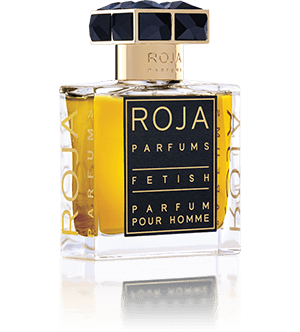
Roja Dove is an enormously respected, admired Master Perfumer, in addition to being a fragrance historian with an appreciation for the grand, classical tradition of haute perfumery. I had the opportunity to try a few of his fragrances at Paris’ Jovoy, and was struck by his Fetish line which was released in 2012. The scents come in both a men and women’s version, with each one then broken down further into an eau de parfum and extrait (or pure parfum) concentration. This review is for Fetish Pour Homme in extrait form.

Source: Roja Parfums website.

Source: Roja Parfums website.

Osswald Parfumerie quotes Roja Dove’s description of the scent:

“Succumb To Your Desires”. Warm, Dry, Sweet, Spicy, Leathery, & Very Sensual. “Leather can be so compulsive that for many it becomes a type of fetish. I then thought of leather in a man’s world. I thought of the soft sensuality of it against the skin, and the timeless appeal of a successful, masculine man and the things he surrounds himself with. Beware, as I have created a perfume that once under its spell there is no return”. Roja Dove

According to Roja Parfums, Fetish Pour Homme (hereinafter just “Fetish“) includes:

TOP: Bergamot, Lemon, Lime

HEART: Fig, Jasmine, Neroli, Violet

BASE: Ambergris, Benzoin, Cardamom, Castoreum, Cinnamon, Elemi, Labdanum, Leather, Musk, Oakmoss, Patchouli, Pepper, Pink Pepper, Vanilla, Vetiver.

Source: leatherchairs.co.uk

Source: leatherchairs.co.uk

Fetish opens on my skin with crisp lime and zesty, clean, slightly soapy citric notes followed immediately by contrasting animalism from pungent, brown, musky castoreum. The latter has an oily feel that is also plush, velvety, and slightly sweet. It is leathery, but leather in its own right soon appears. It has a slightly raw, rubbery facet, but it also feels very aged and burnished. It is heavily infused by cardamom that is nutty and dusty.

In essence, Fetish’s initial bouquet is of a very expensive leather sofa in a gentlemen’s club that has been cleaned with a sharp, waxy, slightly soapy and very bitter lime peel oil, then further oiled by musky, animalic castoreum, before being finished off by a heavy sprinkling of sweet cardamom that was taken from the bottom of a very dusty spice drawer. It’s all spice, bitter lime, sweetness, dust, muskiness, and animal secretions over aged leather — and it’s quite a discordant jolt to my nose.

I struggle with Fetish’s opening sharpness which I find hard to blame on any one, single note. The accords have combined to create enormous bitterness that is one part pungent green, one part smoky tar, and three parts animal. I suspect the oakmoss, smoky elemi wood, leathery fig, dry vetiver, and bitter lime are also partially responsible for a combination that feels as though raw animal hides have been tarred by the most bitter distillation. The fusty, mineralized, almost fossilized, dusty oakmoss and lime peel oil are joined by what seems like bucketfuls of castoreum.

Leather Tanning in Morocco. Photo by Burrard-Lucas via http://www.burrard-lucas.com/photo/morocco/leather_tanning.html

Leather Tanning in Morocco. Photo by Burrard-Lucas via http://www.burrard-lucas.com/photo/morocco/leather_tanning.html

Fetish’s increasingly powerful animalism takes on nuances that aren’t easy for me to bear. Forgive my forthcoming rudeness, but there is no other way for me to describe how the castoreum smells here except to say that it repeatedly reminds me of sweaty anus with a dash of dried urine on genitalia. There is also a sub-tone of fur to the musk, which brings back memories of a sick, elderly German Shepherd Dog that I had with some bowel problems. I never had problems with Serge LutensMusc Kublai Khan, a fragrance that has been described in the most explicit of terms, but Fetish? Fetish is tough, and it evokes all the things that others seem to have encountered in the Lutens fragrance. When that leathered, animalic side is mixed with the oakmoss-lime duo, the final result is one that I found painfully abrasive for the first 10 minutes.

Castoreum, a secretion derived from beaver anal gland sacs.

Castoreum, a secretion derived from beaver anal gland sacs.

Fetish softens a fraction thereafter, losing a minute portion of its musky, anus-like, castoreum aggressiveness. What’s left behind is a bitter, pungent, lime-infused, leathered muskiness that is very oily at its core. The cardamom, subtle tinges of soap, and smoky woods stand close by, on the sidelines, and are soon joined by the arrival of sweetened amber and patchouli. They turn the leather into something slightly gentler, more rounded, and richer.

Fetish continues to subtly change. Twenty minutes in, it is a leather chypre with contrasting undertones of green, mossy bitterness, clean soap, and oily castoreum body parts. The smoky, tarry, phenolic aspects slowly grow stronger, mixing with the very sharp, almost synthetic-smelling soapiness to create a combination that is as much a problem for me as the castoreum-oakmoss pairing. In all honesty, I am not a fan of a single part of Fetish’s opening moments, and find Roja Dove’s earlier leather-chypre creation, the famous Puredistance M, to be a smoother, better balanced, less aggressive, more refined, and infinitely easier fragrance. At the end of the first hour, a dark chocolate aroma begins to become noticeable, undoubtedly from the patchouli mixed with the dark, nutty, toffee elements of the labdanum amber. It would be enjoyable if Fetish weren’t also wafting huge amounts of bitter lime peel oil and fusty oakmoss at the same time.

Early into the third hour, other elements become noticeable. There are tiny hints of violet, neroli and jasmine that pop up in the background, but they are extremely faint and minor. Much more pronounced is the tarry undertone to the leather which feels almost burnt on occasion. The smoky elements may be from the elemi wood, but whatever the source, there is a disagreeably sharp, almost abrasive touch that lingers under the top bouquet of leather, oakmoss, and patchouli-amber.

Source: caffiendsvictoria.com

Source: caffiendsvictoria.com

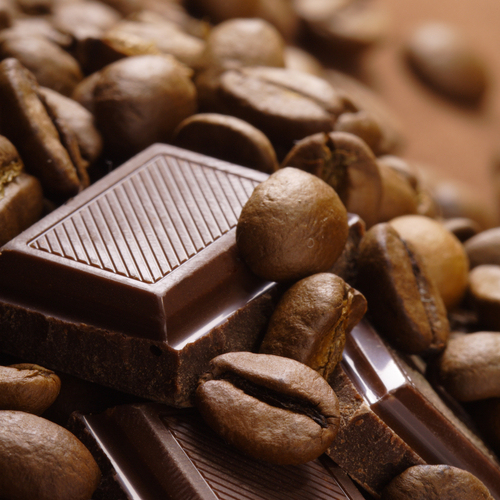
Things only improve for me at the start of the 4th hour when Fetish finally turns soft, mellow, smooth and attractive. It is now an ambered leather with a well-balanced amount of chypre-y moss. There is an additional, quite unusual, undertone as well: the labdanum, patchouli and castoreum have somehow melded together to create a distinctly coffee-dark chocolate aroma. It’s delicious, neither particularly sweet, nor particularly bitter. Fetish’s sillage is soft as well, hovering right on the skin, though it is easily detectable if sniffed up close.

Source: dailymail.co.uk

Source: dailymail.co.uk

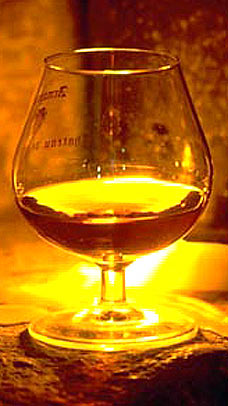
Fetish continues to lose its moss, smoke, and bitterness, turning into a beautiful amber at the 5.25 hour mark with richly burnished, aged, smooth leather, a light dose of spices, and warmth. It has a touch of dark-chocolate caramel from the labdanum-patchouli, along with saltiness from the ambergris. As time passes, Fetish turns almost entirely ambered, taking on an actual cognac aroma along with that hint of dark, dry, bitter chocolate and leather. It’s lovely, and addictive to sniff. The cognac-amber phase continues to the very end when Fetish finally fades away in a blur of golden warmth and sweetness. All in all, it lasted 11.25 hours on me, with initially moderate sillage that dropped about 90 minutes in to hover about 2 inches above the skin. It became a skin scent on me by the end of the fourth hour, but it continued to be easy to detect if you brought your nose to your arm until the end of the seventh hour.

There aren’t many detailed blog reviews of Fetish Pour Homme in Extrait form, but the lone comment on Fragrantica is for the pure parfum version. It’s too lengthy to quote in full here, but the poster, “deadidol,” seems to have had an experience similar to mine and, like me, much preferred Puredistance M. His review begins with talk about the “chypre bitterness” which dominates the scent, followed by “a faint soapiness.” After that,

[a] bulky castoreum, sprinkled with cinnamon, hums along underneath, and I get a gourmand texture that I believe might be patchouli. It’s massive scent, with a lot of individual components at work, yet oddly, I’m not getting that much leather from it—or at least not as much as I expected.

It settles into a scratchy cardamom musk over bronzed resins that come across as a touch candied, yet the tart, bitter notes remain as a reminder of the citric opening as it begins to fade. The whole thing winds down to a very tasteful vanilla musk that manages to sidestep predictability through the residual bitterness that reads as touch mentholated.

This has a wide profile: it’s a very loud and prominent composition which, like its infamous sibling M, is extremely tenacious. […][¶] For me, M keeps the gold medal out of the two, but that’s mainly because Fetish is playing a deck that I’m personally not that drawn to. There are several notes in this that don’t sit right with me, but they sit perfectly within the composition itself, and certainly within its genre. Objectively speaking, it’s an impressive scent although perhaps a tad too shouty; but subjectively, it’s not quite my cup of tea.

His last paragraph encapsulates my views down to a T. Fetish Extrait is well done, but it is also extremely “shouty” in my view, with discordant, sharp, abrasive elements that aren’t my personal cup of tea.

Source: Fragrantica

Source: Fragrantica

Elsewhere, Basenotes has a whole thread to Fetish, but it focuses almost entirely on the Eau de Parfum which most people conclude (again) is extremely similar to Puredistance M, but dirtier, darker, and not quite as nice. I’ve included the link here because there is quite a difference in price between the Eau de Parfum and the Extrait (which is $425 or €395), and so the former may be of greater interest. Some people talk about the Spanish leather and the animalic base in the Eau de parfum, which I can only assume have been ratcheted up a lot in the Extrait judging by what appeared on my skin. Others mention some problems with longevity and projection.

Puredistance M in its various flacons.

Puredistance M in its various flacons.

As regular readers know, Puredistance M is one of my favorite fragrances, but I don’t see it as being a pure leather. I actually see it as being a hardcore Oriental instead. I don’t think Fetish Pour Homme Extrait is a pure leather fragrance either, but it’s definitely much more of one than the M in my view, as well as being more of a chypre. For me, the intensity of the skanky, oily castoreum, along with the pungency and bitterness of the green elements, and the duration of the tarry, phenolic leather stage make the Extrait quite different from Puredistance M. I thought the latter had a much smoother, more balanced chypre opening, with a short leather phase that never felt skanky, dirty, raw, or tarred. When M takes on its main amber oriental characteristics, it not only does so sooner than Fetish, but its notes are profoundly richer, deeper, more molten, and heavy that the amber drydown in the Fetish Pour Homme Extrait. M is never “shouty.” It’s always smooth and refined, and it feels much richer.

As you can tell, I prefer M a thousand times over, but if you’re looking for something with a much stronger leather characteristic, with truly tarry, at times raw, and intense Spanish leather, accompanied by serious chypre elements and some aggressively musky, animalic skank, then Fetish Pour Homme Extrait might be your cup of tea.

DETAILS:
Cost & Availability: The Fetish Pour Homme Extrait or Pure Parfum is available in a 50 ml/1.7 oz size which costs $435, €395 or £345. In the U.S.: Fetish Pour Homme Extrait is available at New York’s Osswald. Outside the U.S.: In the UK, you can buy Fetish directly from Roja Dove at his Haute Parfumerie on the 5th Floor of Harrods London. Roja Dove also has an e-store at Roja Parfums for his personal line of fragrances, and he sells Fetish Extrait for £345. In France, Jovoy Paris seems to be the exclusive distributor for Roja Dove fragrances, and sells Fetish Homme in both the Extrait and Eau de Parfum versions. (The Homme EDP costs €265.) In the UAE, the Paris Gallery carries the whole Roja Parfums line and sells Fetish Pour Homme Extrait for AED 2,050. Samples: I obtained my sample from Jovoy in Paris. If you’re in the U.S., you can test Fetish Homme in the Extrait version by ordering samples by phone from OsswaldNY. They offer a deal of 10 samples for $10 (shipping included) for domestic customers. Their phone number is: (212) 625-3111. In addition, Surrender to Chance carries Fetish Homme in the EDP version starting at $3.99 for a 1/2 ml vial.

Tauer Perfumes PHI Une Rose de Kandahar

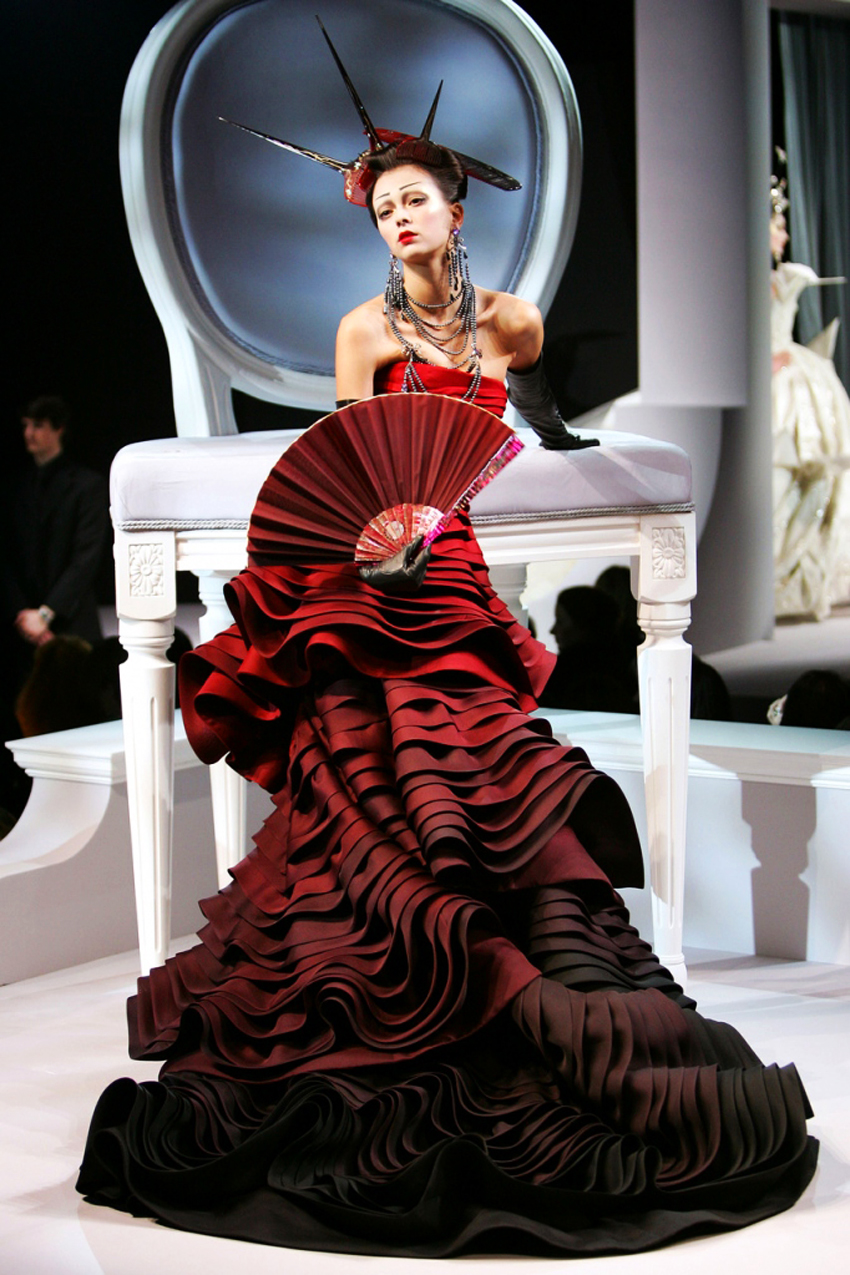
Dior Haute Couture 2007 by Galliano. Source: theberry.com

Dior Haute Couture 2007 by Galliano. Source: theberry.com

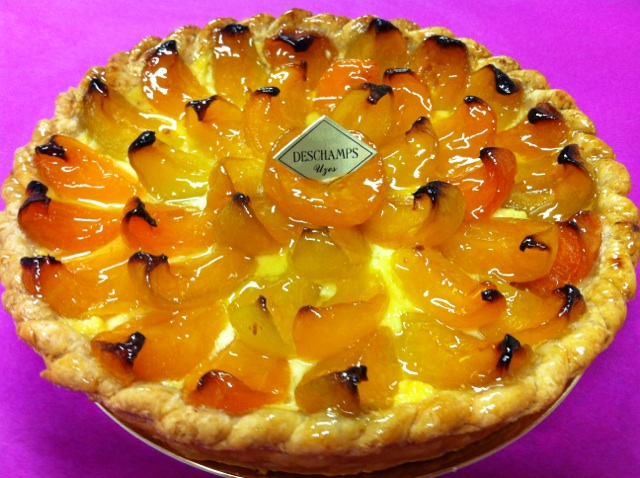
A jewel glowing orange, pink and red, nestled in the embrace of emerald green. A woman wearing the most feminine of opulent haute couture ball gowns. A Paris café whose decadent apricot tart is based in the richest of vanilla custards and lightly flecked with almonds. The faintest curls of smoke floating in the crisp fall air from a pipe whose tobacco is infused with sweetened fruit. Seemingly unconnected images, but images that are all rooted in one fragrance. 

PHI Une Rose de Kandahar (hereinafter sometimes just “PHI“) is a new eau de parfum from Andy Tauer, the founder and nose behind the much-adored Swiss niche house, Tauer Perfumes. PHI is one of Mr. Tauer’s “Collectibles,” a perfume that will be produced in limited quantities due to the rarity of some of its ingredients. As Andy Tauer explains on his website:

Phi is a luxurious scent, inspired by a natural extract of roses produced in Afghanistan’s rose region, Nangarhar. This rose oil is extremely rare and of highest quality. Inspired by these roses, growing in a dry and rough land, Phi is a rare gem, complementing contrasting lines, rich in natural raw materials that add depth and authenticity. Due to the limited amount of the rose oil, une rose de Kandahar is not guaranteed to be available all the time.

PHI. Photo: Hypoluxe.

PHI. Photo: Hypoluxe.

On Fragrantica, PHI is classified as floral, but it seems more accurate to me to call it a chypre with oriental and gourmand touches, or a hybrid. The Tauer website supports this impression, describing PHI as having both “woody and gourmand notes,” along with such chypre standbys as mossy patchouli, and such oriental highlights as ambergris. The perfume’s full list of notes are as follows:

Top: apricot, cinnamon, bitter almond, and bergamot;

Middle: rose of Kandahar essential oil, Bulgaria rose absolute, Bourbon geranium, and dried tobacco leaves;

Base: patchouli, vetiver, vanilla, tonka beans, musk, and ambergris.

Source: forwallpaper.com

Source: forwallpaper.com

I tested PHI three times, and, each time, it opens on my skin with a forceful, jewel-like glow of ruby reds, soft pinks, blushing peachy-orange, and emerald greens. The red and pink visuals come from the most concentrated rose essences, feeling sweet and spicy all at once. The soft peachy-orange is from the apricot, which is tart, juicy, and tangy. Apricot is a note that I rarely see used in perfumery, and I’m a bit of a sucker for it. Here, it’s absolutely beautiful, feeling like bushels of the fruit have been rendered down into a smooth, concentrated purée.

The two shining stars of PHI Une Rose de Kandahar are nestled in a cocoon of emerald green foliage that is pungent, peppered, spicy, and dark. The base is filled with notes that smell like soft, fresh, plush oakmoss, thanks to the effects of patchouli. Yet, to my surprise, something about it also has the darkly mineralized, grey, musty feel of actual oakmoss (or mousse de chene), even though there is no such note in the fragrance. Rounding out the imagery of leaves surrounding a flower is the geranium. It smells like the flower’s fuzzy, green leaves with their piquant, peppery, spicy, pungent aroma. 

Source: forwallpaper.com

Source: forwallpaper.com

The green accords are covered with a heavy dose of Mr. Tauer’s beloved ISO E Super. Though it was less dominant in some wearings than in others, it was always a part of PHI Une Rose de Kandahar. I will never (ever!) share Mr. Tauer’s views on the ghastly synthetic, but I’m relieved to say that it didn’t give me a headache in PHI, despite its sometimes heavy touch. In many ways, the aromachemical that he believes is the perfect photo-finishing touch does work here. It doesn’t smell antiseptic or like pink rubber bandages the way it sometimes can, but, rather, like something that is extremely peppery and a bit spiky. It underscores the feel of the other notes and amplifies, in specific, the geranium.

Source: Patisserie Deschamps, France.

Source: Patisserie Deschamps, France.

Five minutes into PHI’s development, the hints of vanilla that lurk below the surface explode onto the top. It smells just like highly buttered, rich vanilla custard. My skin always amplifies base notes, and I noticed that the vanilla was never prominent on a friend who I let try PHI. On her skin, the perfume’s opening was all rose and greenery, with very little apricot and absolutely no vanilla extract or vanilla custard. PHI was lovely on her skin, but I enjoyed the custard that showed up on me. Something about its combination with the apricot purée that is lightly sprinkled with sweet, spicy cinnamon brought to mind the glazed French apricot tarts that I would have when I lived in Paris. It’s a deliciously edible touch that just verges on the gourmand, and it adds a tasty richness to PHI.

Photo: my own.

Photo: my own.

The overall combination with the deep rose and the oakmoss also made me think of Amouage‘s new Fate Woman which is another rose chypre with fruited overtones and a slightly gourmand vanilla base. The two perfumes are very different in their notes and core, but something about them feels similar in the opening moments. They both have a very intense chypre start with concentrated roses and fruited notes over a dark green heart with touches of rich vanilla. They also share an opulent, luxurious, feminine character that is very sophisticated, and have great sillage and potency in their opening phase. From 3 small sprays, PHI bloomed in a cloud about 4-5 inches around me, perhaps a little more, and it remained that way for about 40 minutes. It was very potent up close, but always extremely airy in feel and weight.

Dried tobacco leaves. Source: colourbox.com

Dried tobacco leaves. Source: colourbox.com

Forty minutes in, PHI starts to change. There are quiet pops of vetiver in the base that add a different touch to the dark foliage around the floral-fruity notes. The base elements now feel a bit less pungent and peppered, more dry and woody. There are also the very smallest, faintest hints of dark, dry tobacco lurking about deep down. Neither note, however, is very prominent in an individual way at this stage, and they never detract from the main trio of apricot, rose, and patchouli-moss.

Around the same time, there is the first whisper of an almond note that will become increasingly more prominent in PHI’s development. The nut is bitter but sweet and fresh, and it adds another delicious gourmand touch to the vanilla and apricot purée. The vanilla has also started to change, probably due to the impact of the drier notes at the periphery. The note is now airier, softer, more like whipped vanilla mousse than thick, buttered, rich custard.

At the end of the first hour, PHI is a smooth bouquet with top notes of apricot purée, spicy rose, and mossy-patchouli-geranium-ISO E Super, and bottom notes of almonds, vanilla mousse, woody vetiver, dry tobacco, and musk in the base. The sillage has dropped, and the perfume hovers about 1.5 inches above the skin, though it is extremely potent and strong when sniffed up close. It’s a beautifully refined, elegant bouquet that is never too sweet and never quite as simple as it appears from a distance.

Source: rbgstock.com

Source: rbgstock.com

PHI remains that way for another few hours, never changing drastically in its core essence, though some of the notes (like the cinnamon) fluctuate in prominence. The notes blur and overlap, blending seamlessly into each other, with only the apricot and the rose really standing out as significant forces in a very distinctive, individual way. It feels very gauzy on the skin, and I must confess that I wish PHI were not quite so sheer and intimate quite so soon; I was rather entranced with it, and wanted more, more, more! Instead, it feels as though the apricot or the rose take turns peeking out seductively like a glimpse of the lace trim on lingerie under a beautiful, jewel-toned dress. I wanted less sheer lace and sheer silk, and much more heavy velvet, but it is a matter of personal preference. PHI is clearly intended to be an elegant, refined fragrance without a sonic, nuclear blast — and it succeeds in its goal admirably.

Source: rexfabrics.com

Source: rexfabrics.com

PHI continues to soften and change. Midway during the third hour, PHI turns into a skin scent of cinnamon-flecked apricots and almonds, atop a sheer vanilla base. The rose is still there, but it is secondary to the other notes and has retreated to the sidelines. Unfortunately for me, the ISO E Super remains like a haze over everything. At the 6.5 hour mark, a dryness creeps into the perfume as flickers of tobacco return. It’s sweetened and mild, like fruited pipe tobacco infused with a large dollop of apricots. There is also a quiet touch of cinnamon mixed in. The vanilla has largely disappeared, but its place has been taken by ambergris with its wonderfully salty, sweet, golden character. A sexy muskiness dances all around. The perfumed jewel now gleams with gold, bronzed apricot, and light brown. All greens and pinks have vanished, leaving PHI as a subtle oriental with dryness and just a touch of warm sweetness.

In its final moments, PHI is merely a nebulous blur of sweetness with abstract dry, woody touches, and a hint of something vaguely fruited. All in all, it lasted just short of 7.75 hours on my perfume consuming skin with 3 small sprays, and around 6.5 hours with less. The sillage starts off as extremely strong, before dropping with every hour to something that is quite soft in feel. And I enjoyed every bit of it, despite the ISO E Supercrappy. Andy Tauer’s exquisite Une Rose Chyprée remains my absolute favorite from the line, but it has very close competition with this new PHI Une Rose de Kandahar. Both of them are absolutely beautiful fragrances whose sophistication always evoke Haute Couture elegance to me. I would absolutely wear them myself, and I say this as someone who isn’t particularly enamoured with rose scents to begin with!

If you’re a man and think that all this sounds too feminine for you, you might be surprised. Though PHI is too new to have a lot of reviews out, one blogger found the perfume to be a masculine rose with a gourmand touch. The Scented Hound wrote:

WHAT I SMELL: PHI goes on with a rather flattened apricot with tinges of cinnamon and almond.  It’s kind of a muted sweetness in that when you smell it, it seems layered with the cinnamon hovering on top.  At this point, I’m thinking PHI is nice (nice = just OK), rather personal and relatively close to the skin, and more apricot than rose which I think is a bit strange.  Then at about the 10 to 15 minute mark, the rose begins to bloom.  And bloom it does.  It’s like the rose suddenly opens its petals and unleashes its glorious fragrance.  I don’t think I have ever experienced a rose fragrance that literally unfolds on my skin that way PHI does and I love it.  The rose is rounded and deep, and to me more masculine than feminine and rather gourmand.  But wait, we’re not done yet, after some more time, the rose becomes creamy.  Still further, PHI reveals its patchouli, making the fragrance a bit sweeter and more heady as its mixed with vanilla and amber gris.  Hours later, add in some tonka for a bit of a growl that helps to take the edge off of the sweetness.  In the end PHI ends up big, but not loud.  This rose is no wallflower, but she’s demure enough to be a bit coy.

The other blog review already out for PHI is an unequivocable rave from I Scent You A Day who writes:

PHI Rose de Kandahar has a Middle Eastern richness to it. Initially it’s honeyed Roses and Almonds and dried Apricots: it reminds me of a scented Souk. At first this edible combination was very Turkish Delight, just for a moment.  But what happens next is that it transforms into, unless I’m mistaken, something not unlike a good Arabian Oud.  I often find Oud too strong for me, but in Rose de Kandahar it’s like a robust backdrop to something altogether more delicate. The irony is that there is no Oud in it, but the combination of Tobacco, Ambergris, Vetiver and Patchouli gives this a very rich and almost prickly base.  It’s like serving an aromatic Bacchanalian feast on a rough granite table.

I think that “prickly” edge that she references is the bloody ISO E Super that Mr. Tauer loves to stick into everything. It also explains why she associated PHI with oud, since the synthetic is used by many perfume houses to accompany their agarwood or woody creations. (Montale, I’m looking at you in particular, but Parfumerie Generale, you’re almost just as bad. And Amouage, you’re not off the hook either, after Opus VII.)

Early reviews on Fragrantica are equally positive. One commentator writes how PHI “is a very unique apricot rose scent. I’ve never smelled another rose like it and I have dozens of rose perfumes in my collection.” Someone much less fond of rose perfumes is equally enthusiastic, saying: “I often find rose scents either too sweet,too watery or too green and wan but no-one does the deep, dark sensual fragrance of a rose like Andy. His roses are blood RED and seriously velvety. […] I will be ordering myself a FB asap.”

Source: RGPeixoto on Flickr. (Website link embedded within photo.)

Source: RGPeixoto on Flickr. http://www.flickr.com/photos/rgp-sep3/4122641355/

I share their enthusiasm, and am considering getting PHI as part of Mr. Tauer’s new Explorer Set. While the perfume costs $141 or €105.30 for a 50 ml/1.7 oz bottle, it is also available as part of a set of three 15 ml bottles for $138 or €102. (See the Details section below.) You can choose between a number of different Tauer fragrances, and I have to admit that Une Rose Chyprée is calling my name just as much as PHI. Whether you get one 50 ml bottle for $141 or a total of 45 ml of three different perfumes for a little bit less, I think it’s quite a decent deal given the quality and richness of the ingredients.

All in all, I’m a big fan of PHI. Its apricot-rose chypre opening is elegant, sophisticated, full-bodied, and opulent; its gourmand stage is delectable, creamy and smooth; and its oriental finish is sexy with a touch of masculinity. It’s lovely — from start to finish.

DISCLOSURE: My sample of PHI Une Rose de Kandahar was provided courtesy of Hypoluxe. That did not impact this review. I do not do paid reviews, my opinions are my own, and my first obligation is to my readers.

DETAILS:
Cost & Availability: PHI Une Rose de Kandahar is an eau de parfum that comes in a 50 ml/1.7 oz bottle that is currently exclusive to the Tauer website where it costs Fr. 130.00 / USD 141.70 / EUR 105.30. [UPDATE 1/25/2015: PHI is out globally and has also returned for a second season, while supplies last. In the U.S., you can buy it from Luckyscent which also ships worldwide and sells samples. Indigo Perfumery and Twisted Lily both sell the perfume and samples. In Canada, it’s sold at Indiescents, along with a sample. Internationally, the perfume or samples are available from First in Fragrance and the other usual Tauer vendors. Buying it directly from Andy Tauer’s website is often a tiny bit cheaper, but he doesn’t ship to every country.] The perfume will remain a Tauer online exclusive for 2013. (See note below at the very end for a special exception in the UK.) Tauer Perfumes sells a sample of PHI in a 1.5 ml glass vial for: Fr. 6 / USD 6.50 / EUR 4.90. There is also a Sample Set of any 5 different Tauer perfumes in 1.5 ml spray vials, including a sample of PHI. The set costs: Fr. 31, $33.80, or €25.10, and there is free shipping to most places in the world. Finally, there is now the new Explorer Set of 3 perfumes of your choice (including PHI Une Rose de Kandahar) for USD $138/ Fr. 126/ EUR 102. Each perfume comes in 15 ml spray bottles. Tauer ships the set to more places, because the 15 ml size passes many countries’ postal regulations (which have problems with full bottles). The exceptions, unfortunately, are Italy, UK, Russia, Spain. For full bottles, Tauer ships to France, Switzerland, Germany and Austria, but not “Great Britain, UK, Russia, Belgium and the Czech Republic.” Complete shipping information is here.
UK Availability: you can order a sample vial of PHI, or pre-order a full bottle from Scent and Sensibility. It sells the perfume for £115, with samples available for £4.50.
Samples: As of 11/21/13, Surrender to Chance now offers samples of PHI, starting at $3.99 for a 1/2 ml vial.