Perfume Review – By Kilian Musk Oud: Cardamom Rose

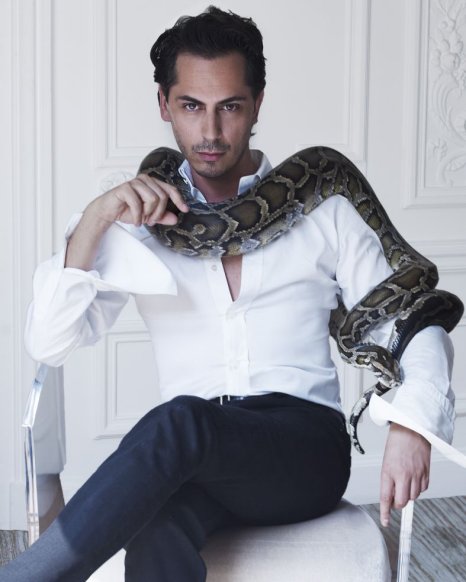
Kilian Hennessy. Source: Metro.co.uk http://metro.co.uk/2012/11/27/kilian-hennessy-the-perfume-industry-is-too-obsessed-with-packaging-549545/

Kilian Hennessy. Source: Metro.co.uk
http://metro.co.uk/2012/11/27/kilian-hennessy-the-perfume-industry-is-too-obsessed-with-packaging-549545/

Consider me surprised. I actually like Musk Oud, a fragrance from the luxury house, By Kilian. I don’t think it’s a fantastic, complex, original, nuanced — let alone impressive — fragrance, but it actually smells really good. And that is truly a first for anything that I’ve tried thus far from Kilian Hennessey, the grandson of the founder of LVMH. Of course, since it is a By Kilian fragrance, my feelings come with all sorts of huge qualifiers regarding sillage, longevity and an even more ridiculous price than usual, but you could have bowled me over with the feather when I kept sniffing my arm appreciatively.

The newly released Musk Oud is the fifth (and last) in Kilian’s Arabian Night Collection of oud perfumes which first launched in 2009. Unlike all the rest of its siblings, Musk Oud was created by the legendary perfumer, Alberto Morillas, who was recently awarded the very first FiFi Lifetime Achievement Award from the U.S. branch of the Fragrance Foundation. He’s a fantastic perfumer and co-created my favorite oud fragrance thus far: the spectacular (and sadly discontinued) forerunner of the whole oud trend, YSL‘s M7. The Kilian website describes Morillas’ latest project as follows:

An animalic perfume with a sensual feminity

Musk Oud is a perfume built on the contrast between a liquorish Rose and an animalic Oud accord of great sensuality. In the opening, the Lemon and Mandarin bring a ray of light warmed by Cardamom and Coriander. The heart is an explosion of Roses made syrupy and intoxicating thanks to the Rum extract CO2. A trace of Frankincense and Indonesian Patchouli bring a smokey facet to the composition saturated with dry woods.

Source: Luckyscent

Source: Luckyscent

Musk Oud’s full list of its notes, as compiled from LuckyScent, is as follows:

Lemon, mandarin, cardamom, coriander, cypress, Bulgarian Rose, geranium, davana, Rum extract, frankincense, Oud accord, Musk accord, patchouli.

Musk Oud is the furthest thing from complicated and, on my skin, it is also the furthest thing from either an animalic musk fragrance or a true oud one. It opens on my skin with a rich, beefy, dark red rose that drips thick, jammy juices and which is lightly infused with lemon and a touch of orange. The whole thing is covered with a heavy layer of gorgeous cardamom, and sits upon a quiet, woody base of cypress tinged with patchouli.

Crimson Rose by Karen Betts. Source: redbubble.com

Crimson Rose by Karen Betts. Source: redbubble.com

Seconds later, like a crocodile’s tail moving in muddy water, there are tiny ripples of animalic musk. To my slight unease, it smells very much like dirty, unwashed hair. However, the note is not only incredibly subtle, it essentially vanishes for most of the perfume’s development. It subsequently pops up only two more times, gives a brief bow for a few minutes, and then disappears completely. I was actually surprised by how evanescent it was since one blogger (who admittedly loathes anything animalic) was completely traumatized by the note in Musk Oud. Since my skin actually amplifies both animalic and base notes, I’d fully prepared myself to be overcome by every possible filthy, dirty, raunchy, unwashed, fetid aroma imaginable. Never happened. Not once. And if it should happen to anyone, it should happen to me with my wonky skin that amplifies animalics. Instead, there were only the most minuscule of stirrings in the brown waters of Musk Oud’s base. Perhaps a more accurate analogy would be to compare it to a mosquito in water instead of a crocodile’s tail.

Cardamom. Source: kitchenheadquarters.org

Cardamom. Source: kitchenheadquarters.org

The primary, overwhelming impression of Musk Oud in the first hour is of a cardamom-rose fragrance with other notes just dancing in the sidelines. The richness of the rose is accentuated by a darkly liqueured note, while the cardamom… oh, what cardamom! It’s sweet, nutty, a little dusky, and very spicy. So much so that it almost feels as though it’s accompanied by a fiery red saffron. Undoubtedly, that is just my mind interjecting things, since saffron is often the third twin to the rose-cardamom combination, but Musk Oud does feel as though there is saffron in there, too. As for the dry base, the cedar is lightly sweetened by patchouli and entwined by subtle tendrils of black smoke. There is absolutely no oud at first, and it takes ten minutes for the note to show its face. It’s slightly medicinal but, like all the other elements in the base at this stage, it is extremely muted and serves only to add indirect depth and body to the overall fragrance.

Things start to go down hill a little near the end of the first hour. It took all of 40 minutes for Musk Oud to become a complete skin scent on me. I tried the perfume twice — which wasn’t hard to do, given the usual, below-average longevity that I experience with all Kilian fragrances — and the second time, I applied double the quantity. This time, Musk Oud took one whole, whopping hour to become so glued to my skin that I had to inhale at my arm like a rabid animal to detect its nuances.
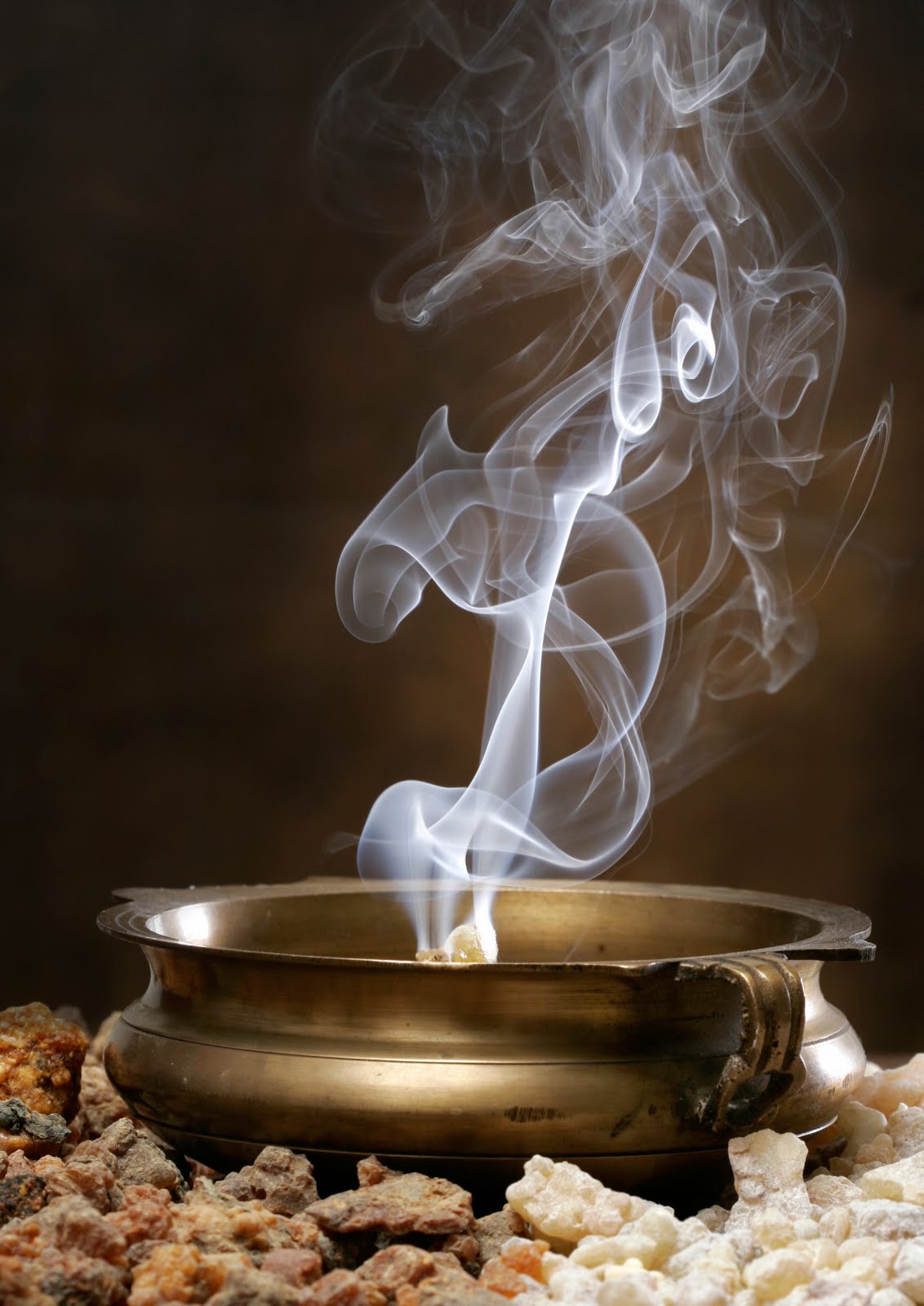
Frankincense Smoke  via iStock photos

Frankincense smoke via iStock photos

And, in truth, those nuances were few and far between — in both tests. Just over an hour into the perfume’s development, the base notes come to the foreground as frankincense and oud emerge as the dominant duo. However, neither note is very rich or deep. There is still a heavy sprinkling of cardamom, but the rose note has receded somewhat to the background. Occasionally, it will pop up and become more noticeable, then vanish, then come back to take over the whole scent for about five minutes, then retreat…. and so on. The animalic musk makes a brief appearance around the 90 minute mark, but quickly decides to throw in the towel completely. So, those simple, repeated notes with their varying fluctuations are really the sum total of Musk Oud. The citrus notes had departed long ago; ditto for the cedar; and there was never any geranium or davana to begin with. As for the rum and patchouli, both are essentially undetectable in any distinctive, individual way, except in helping to create that liqueured base to the rose.

After a brief period of time as an oud fragrance with tablespoon of cardamom, a teaspoon of rose, and a pinch of smoke, Musk Oud turns into a simple, more abstract, woody fragrance. There are subtle flecks of oud and cardamom with just a light whisper of jammy rose, but the whole thing feels quite muted and is extremely hard to detect given the nonexistent sillage. Then, Musk Oud dies entirely, having lasted no more than 3.5 hours with my usual dose and 4.25 hours with my larger one. Neither number is very impressive.

I had been curious to what extent Alberto Morillas’ co-creation of the fabulous M7 might have influenced the smell of another spicy agarwood fragrance. The answer is none at all. With the exception of the citrus, cardamom and oud, the two fragrances have no familial olfactory resemblance at all. To my surprise, it is a wholly unexpected perfume house which comes to mind: Guerlain. Kilian’s Musk Oud really evokes early parts of Guerlain‘s Rose Nacrée du Désert from Les Déserts d’Orient Collection. The first hour of Rose Nacrée has the exact same sort of rich, darkly liqueured, jammy, beefy rose infused with cardamom that dominates Musk Oud. Of course, the two perfumes eventually part ways, with the Guerlain turning into an overly syrupy, sugared, almost gourmand fragrance, while the Kilian turns into frankincense and oud. I’m sure there are even more cardamom-rose fragrances out there that resemble Musk Oud (especially from Montale) because, the truth of the matter is, it’s not a very inventive fragrance. It smells great for what it is, but it treads some well-worn ground.

Going by my experiences, the name “Musk Oud” feels like a misnomer. For one thing, on my skin, there was almost no musk in it. For another, the quantity of agarwood was hardly enough to render the scent a true oud one. It reminded me Kilian‘s Amber Oud which, to my nose and on my skin, had virtually no oud in it at all. Musk Oud has more of the note, but it’s all relative. In fact, given how the fragrance is such a skin scent, what little oud there is may be even harder to detect.

There aren’t a lot of in-depth blog reviews out there for Musk Oud. The fragrance is so new that I couldn’t even find a Fragrantica entry for it. However, out of the two comments on Luckyscent, both focused on the musk issue. One poster loved the scent, writing that Musk Oud was “[j]ust the right balance between the oud and the musk, neither too animalic nor too clean.” The other tried hard to be polite and mask his disdain:

Not impressed. I love rich, deep musk scents. My favorite perfume is Musc Ravageur. So when you name something Oud Musk, well I’m expecting something rich and dark and almost dirty. There is nothing unique about this. It’s not a clean musk mind you, it does have the dirtiness but its done in an oddly sheer way. I will say however, that that is probably perfect for some people. A polite, dirty musk. I guess there is a place for it.

Both commentators thought that the perfume had outstanding longevity and wrote that it “lasted all day.” I think that may be the first time I’ve ever seen that said about any Kilian fragrance, but, hey, I’m happy there are exceptions.

How you feel about Musk Oud will depend solely on two things: how you feel about animalic notes, and how your skin deals with them. The second review on Luckyscent is significant because it underscores that point. If you’re someone who loves a scent like Frederic Malle‘s Musc Ravageur (or, even more extreme, Parfum d’Empire‘s Musc Tonkin), then Musk Oud will be disappointing child’s play. If you’re someone like me whose feelings about musk can depend on its treatment, you may greatly enjoy Musk Oud, especially if your skin chemistry decides to play nicely with the note. But if you’re someone who can’t stand any animalic notes whatsoever, then Musk Oud may be a nightmare regardless of chemistry.

That was the case with Lucas of Chemist in a Bottle whose traumatized account of the fragrance reads, in part, as follows:

The opening act of By Kilian Musk Oud is a tidal wave of musk on my skin. I smell raw, animalic if not a fecal kind of musk. It has that dense, powerful structure that will be definitely too much for those who are not infatuated and obsessive by this raw perfume material. I definitely don’t belong to that group! Couple of minutes later I start to smell trouble. Double trouble because here appears the oud. In the whole oud fragrances trend I am quite lucky that oud notes don’t manifest themselves too bold on my skin. However Musk Oud doesn’t classify as one of those. As I write this my arm is almost dripping with oud. No joke! [¶]

[Later] I was attacked by a hard to describe smell that to me, in the closest comparison, was a mix of unwashed, sweaty clothes and sticky, greasy hair. So gross and so off-putting.

As you can see, a wholly different experience from either myself or the two chaps on Luckyscent. The odd thing is that my skin normally amplifies both musks and agarwood to the point where it can overwhelm a perfume, while Lucas — in testing the exact same fragrance — can find them to be completely minute and tolerable. So, I’m not quite sure what happened here to flip the situation so much on its head but, for me, Musk Oud was neither a musk fragrance nor an oud one. (It certainly was nothing like my experience with Opus VII, the animalic, musky oud fragrance from Amouage!) Where my experience does parallel (a little) that of Lucas is in terms of sillage and longevity. Musk Oud lasted 6 hours on him, and he found the sillage to be very low.
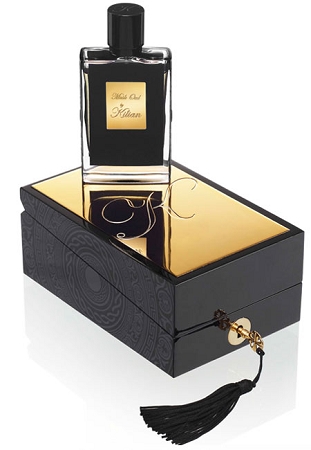
Musk Oud, 50 ml bottle. Source: Aedes.

Musk Oud, 50 ml bottle. Source: Aedes.

I very much enjoyed the cardamon-rose aspects of the fragrance, but I would never buy Musk Oud. I think it’s ridiculously over-priced for what it is, and simply isn’t special enough. Kilian’s prices are high to begin with, but the Arabian Nights Collection takes it to ridiculous levels given the generally uncomplicated, bare bones, and sometimes mundane nature of the scents. (Yes, Amber Oud, I’m looking at you.) Normally, Kilian charges $235 for a small 50 ml/1,7 oz bottle of one of his fragrances, like the recent Flower of Immortality. However, Musk Oud — like all the oud scents in the Arabian Nights Collection — retails for $395 (or €295), with the “cheap” alternative options starting at $185 for a refill bottle. Until Mr. Hennessey corners the world supply of either jammy roses, cardamom, musk or oud, I see nothing in this simple, relatively linear, fleeting, and sometimes impossible to detect fragrance that is worth $400 (more, with tax) for a tiny bottle, or even $185. There are half a dozen fragrances from Montale alone that are based on oud, rose, cardamom, frankincense and/or musk; they cost $110 for the same size bottle, have projection, and last forrrrrrrrrrrrrrrever!

That said, I do think Musk Oud is pretty enough to be worth a sniff or a small decant. However, given the sillage, longevity, cost, uncomplicated and non-oud nature of the fragrance, it may not be worth more than that.
DETAILS:
Cost & Availability: Musk Oud is an eau de parfum that costs $395, $235 or $185 (depending on the form in which you buy it). The lovely lock-box version is 1.7 oz/50 ml of fragrance and costs $395; the refill bottle is $185; and the travel option is $235. In the U.S.: Musk Oud is available at Bergdorf Goodman (in all 3 options), Saks Fifth Avenue (2 options) and Aedes (just the $395 lock box). All 3 options are available at Luckyscent, along with samples for $5 for a 0.7 ounce vial. Outside the U.S.Musk Oud is available on By Kilian’s international website where it costs €295 (with VAT included) for a 1.7 oz/50 ml bottle. The site also has the more affordable options. In London, you can find Musk Oud at Harvey Nichols which carries the 50 ml/1.7 oz size lock box version for £265.00 or the 50 travel refill for £110.00. Harvey Nichols stores around the world, from Dubai to Hong Kong, also carry the Kilian line. In Paris, the Kilian line is carried at Printemps. As for other locations, By Kilian’s Facebook page lists the following retailers and/or locations: “HARVEY NICHOLS (UK, Honk Kong, UAE, Saudi Arabia, Koweit, Turkey), Le BON MARCHE (France), TSUM (Russia), ARTICOLI (Russia) and HOLT RENFREW (Canada).” Samples: Samples are available from Surrender to Chance where prices start at $4.99 for a 1/2 ml vial. 

Perfume Review – Amouage Opus VII: The Heart of Animal Darkness

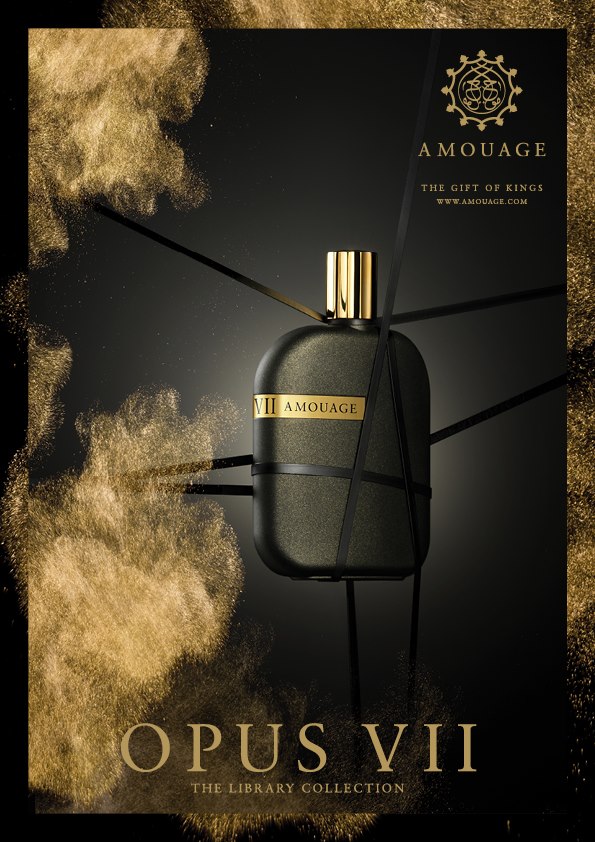
Amouage Opus VIIIn 2010, the royal Omani perfume house, Amouage, launched a new line entitled The Library Collection which was meant to be a “poetic homage to the art of living” and inspired by the concept of memories as treasured books in a library. Just a month ago, in mid-April 2013, Amouage added a seventh “book” to its line, this one created by Alberto Morillas and Pierre Negrin. Opus VII is described as “a green, woody and leather fragrance evoking the juxtaposition of harmony with the intensity of recklessness.” It is a difficult, complex, assertive and very masculine scent that takes you to the heart of darkness in a smoky oud jungle populated by ferocious big cats. 

According to the Amouage press release quoted by CaFleureBon:

Opus VII literally stands out from the previous six editions as it is the first to use a black flacon with gold criss cross lines; an allegory of the mind when thoughts are subjected and diverted. The use of galbumum and violet in Opus VII are integral to the composition and Christopher [Chong]’s vision.

Amouage-Opus-VII-Library-CollectionI don’t see violet listed as one of Opus VII’s notes which — according to both Amouage‘s website and Fragrantica — consist of:

top: Galbanum, Pink Pepper, Cardamom, Nutmeg, Fenugreek
heart: Agarwood Smoke, Patchouli, Ambrox [synthetic amber], Leather, Ambergris
base: Costus Root, Muscone [synthetic musk], Sandalwood, Olibanum [Frankincense], Cypriol [a woody note with earthy and spicy nuances]

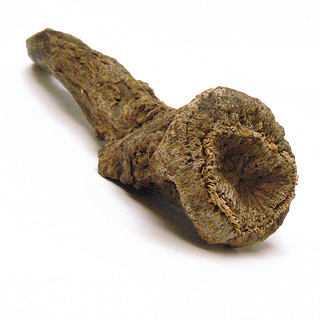
Source: herbalveda.co.uk

Source: herbalveda.co.uk

As always with Amouage, understanding what the perfume smells like requires understanding the more unusual ingredients that the house likes to use. In this case, one of the most important would be the Costus Root. In a long article on animalic notes, The Perfume Shrine describes costus root as “reminiscent of unwashed hair, in more intimate places than just head” and says that it is one of the elements for the trademarked perfumer’s base called “Animalis,” produced by Synarome. In a post on Animalis itself, The Perfume Shrine describes costus root as

a plant essence that has an uncanny resemblence to a mix of unwashed human hair, goat smell and dirty socks. […] It’s also part of the mysterious urinous & musky allure of Kouros by Yves Saint Laurent (which indeed features a healthy dose of costus under phenyl acetate paracresol).

Though the Perfume Shrine says that modern perfume restrictions have limited or “axed” the use of costus, it is a huge part of Opus VII on my skin.

Dried fenugreek leaves via Suhana.co.in

Dried fenugreek leaves via Suhana.co.in

Another big element is Fenugreek, a plant whose dried leaves or seeds are often used in Middle Eastern or Indian cuisine. In fact, I have a large bottle of it in my pantry right now. Fenugreek has an extremely difficult scent to describe; if you’ve ever smelled it, you’ll know it right away, but otherwise, it’s a little complicated. Basically, it’s a very green aroma that is simultaneously sweet, herbaceous and extremely pungent. Though Wikipedia says that it’s called Methi in India and is a key component of some Indian dishes, to me it evokes Middle Eastern or Ethiopian food much more. It is a key ingredient in Persian Ghormeh Sabzi which Wikipedia says is considered to be one of Iran’s national dishes. Whatever its uses, fenugreek is one of those ingredients that, after you eat it, will ooze and seep out of your pores for days in a slightly sour, stale smell. As the Perfume Shrine explains,

An opaque, rather bitter smell with a nutty undertone, it traverses the urinary track to scent a person’s urine as well as their sweat and intimate juices. Its seeds’ odour is comparable to thick maple suryp. Fenugreek is featured in many fragrances which have rippled the waters of niche perfumery with pre-eminent examples Sables by Annick Goutal and Eau Noire by Christian Dior (composed by nose Francis Kurkdjian). Everytime I smell them I am reminded of the intense flavour that this spice gives them. [Bold font emphasis added.]

If all this talk of ingredients with sharp, bitter, animalic and/or urinous aromas is giving you pause, well, I’m sorry to say that both notes are key to understanding Opus VII. I could simply mention “fenugreek” and “costus root” all day long to you but, unless you know what that really entails, you won’t be prepared for the complicated, difficult scent that is Opus VII. 

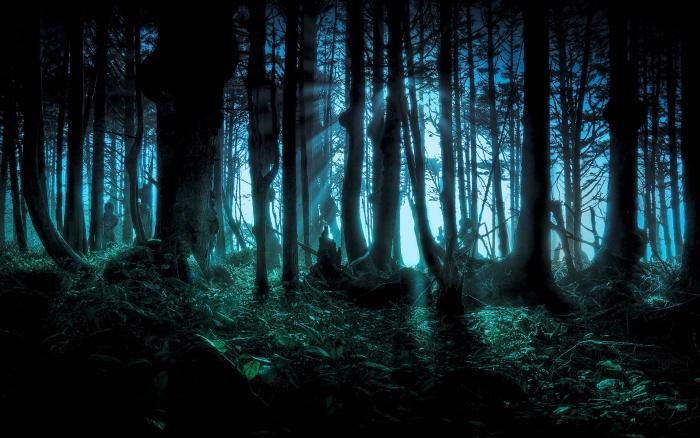
Source: all-hd-wallpapers.com

Source: all-hd-wallpapers.com

The perfume opens on my skin with an immediate burst of oud backed with something lemony that has a strong nuance of urine, along with the darkest of green notes and leather. Woods that are deeply smoky and dark sit atop pungently herbaceous sharp fenugreek with slightly intimate animalic musk, earthy, spicy elements, and sweetly bright, green patchouli. It is a vision of darkness, black and green, the innermost recesses of a forest where a golden jungle cat slithers, slinks and prowls in the shadows before releasing a guttural “rowwwwwwrrrr.” In the footsteps of that opening burst, there are other notes which quickly appear. There is brightly green galbanum that feels almost citric-like in its surprising freshness but which has a dark, liqueured undertone. Pink peppercorns and sharp smoke — black, acrid, and burning like a forest on fire — also join the dance. 

Source: Facebook

Source: Facebook

Few of the notes besides the smoky oud have a chance of competing against the raw animalism of Opus VII’s opening minutes. If you’ve ever been to the wild cat enclosure of a zoo, you’ll know the smell. And, to detect it here, even in a less concentrated, milder form, is a complete shock to the system. It truly feels like a panther or cheetah’s ferocious growl: urinous, like animal droppings, but also musky with a faint tinge of dirty hair underneath. It’s lemon-tinged and sharply evokes YSL‘s vintage Kouros for me, albeit in a significantly softer, milder, tamer manner in Opus VII’s early stage. I lack the guts to be able to wear Kouros myself, but I absolutely adore it on a man and think it’s an incredibly sexy scent. However, that sharply animalic note — often described by some as resembling “urinal cakes” — makes vintage Kouros a deeply polarizing fragrance. I suspect the same will be true of Opus VII.

Despite the sudden shock, I found Opus VII’s opening to be completely mesmerizing, captivating and fascinating. Perhaps much like a scorpion’s victim would watch its slow, ominous walk forward. Opus VII is, on the one hand, exactly like a jungle on fire with its earthy, rooty, dark floor kicked up by panicked animals in full flight, leaving behind leathered, slightly urinous droppings in their wake. On the other hand, it is a deeply woody-leathery fragrance that feels quite smooth, with a savagely sensuous heart at its base and something that seems almost like a velvety floral. Opus VII is such a jungle scent in its opening stage: primal, elemental, ferocious, pungent, fetid, earthy, leathered and sharp — but, also, lushly green in the darkest way possible. Baudelaire would have fully approved of it and would have undoubtedly written a companion piece to Les Fleurs du Mal, entitled perhaps as La Forêt de TerreurI approve, too, in some way that is almost partially terrified. I struggle with galbanum but, here, it’s not the brutal galbanum of Bandit or other famous leather scents. It’s not so green that it might as well be black; instead, it is smooth, spiced, warm and animalic. It’s a leathered, ambered jungle cat’s galbanum, and it actually makes me want to spray on some more. 

Source: Tumblr

Source: Tumblr

Thirty minutes in, Opus VII starts to shift a little. The smokiness that evoked a burning jungle recedes just a hair; the perfume turns slightly more sour and urinous; the pepper notes seem blacker and far less like pink peppercorns; the leather feels darker and muskier; and the subtle spices flicker with a little more fire in the background. Much more importantly, however, the earthy elements intensify. It’s as if the jungle’s humidity hit the blackest soil at the very base of an oud/agarwood tree, turning the earth almost rooty and musky.

Bearded iris via scenicreflections.com

Bearded iris via scenicreflections.com

And, to my surprise, there is a definite impression of iris. A number of bloggers detected it, and they’re right. Though there is no iris or orris root listed in Opus VII, I’m guessing that some combination of the muscone, the earthy-woody cypriol, and the earthy elements of galbanum have created the distinct smell of iris. (Technically, “iris” as a note is impossible to create solely from the flower’s petals; it is replicated by taking rhizomes from the root, and/or often using other notes to lend to an overall impression of the flower’s scent.) I suspect that another thing that helps is ISO E Super.

ISO E Super. Source: Fragrantica

ISO E Super. Source: Fragrantica

Yes, Opus VII starts with a flicker of my most dreaded, hated note on earth: ISO E Super. A flicker that starts to slowly increase in volume until, eventually, it completely ruins the entire fragrance for me. A perfumer once astutely noted that ISO E Super was my “kryptonite” and, sadly, it’s true. For those unfamiliar with the aroma-chemical, you can read my full description of its pros and cons here. In a nutshell, though, it is used most frequently for two reasons: 1) as a super-floralizer which is added to expand and magnify many floral notes, along with their longevity; and 2) to amplify woody notes and add a velvety touch to the base. It seems to be particularly used in fragrances that have vetiver, with Lalique‘s Encre Noire being just one of the many examples. It is also used in a large number of Montale Aoud fragrances, to amplify the wood note to that high-decibel shrieking volume. And it is the sole focus of Geza Schoen’s notorious Molecule 01 fragrance. ISO E Super always smells extremely peppery and, in large doses, has an undertone that is like that of rubbing alcohol, is medicinal, and/or antiseptic. Some people are completely anosmic to the synthetic, while others get searing, vicious headaches from it. It is a constant base in most Ormonde Jayne perfumes, so if you get a headache from those, blame the ISO E Super. I’m not afflicted in that manner, but I cannot stand the smell in large quantities and, my God, it is strong in Opus VII’s second stage.

At the end of the first hour, Opus VII shifts in hue, turning mossily green. Visually, it is no longer the black-green of the jungle’s shadow, seeming almost ebony-like in its darkness. Instead, the perfume now reflects slightly lighter green notes, sweeter, warmer, rounder and backed by amber. The patchouli blooms, feeling as bright as emerald moss, and it helps soften the sharp edges of the urinous leather and the aggressive oud smoke. At the same time, both the iris and the fenugreek note rise in prominence. Though I’m not one to usually rave about iris, here it’s truly lovely and feels like the lushest, most buttery, velvety suede. Creamy and delicate, it has a sturdy woody-rooty undertone that prevents it from feeling gauzy, ethereal and cold. It feels like taupe-brown suede, not grey-white, if that makes any sense. Opus VII starts to turn into warmer, ambered scent where the animalic notes are softened, less sharp, dirty or urinous, the smoke is less aggressive, and the whole thing is more velvety, mossy and earthy.

Source: Sodahead.com

Source: Sodahead.com

Unfortunately, the start of the second hour marks an abrupt right turn in Opus VII’s development. From that fascinating start as olfactory ode to the heart of darkness in a smoky oud forest inhabited by the most powerful of leathery, ambered jungle cats alongside velvety iris and mossy green, the perfume suddenly becomes a fenugreek-oud scent — much like a dark forest through which shines the fluorescent light of ISO E Super. Sure, there are still elements of animalic musk, leather, iris, spices (cardamom, in particular) and amber, but the oud really goes into high gear here. It is always infused with the pungent, herbal fenugreek, the slightly urinous feline musk, and the sharply medicinal, astringent ISO E — and the combination just gets stronger with every minute. By the middle of the third hour, Opus VII is an oud-fenugreek-musk combination above gallons of medicinal, antiseptic ISO E Super. By the end of the fourth hour, it’s predominantly, painfully, and primarily pure ISO E Super and oud, backed by animalic, sour musk over light amber. Honestly, I preferred smelling like a panther just peed on me.

Opus VII’s drydown begins at the fifth hour. The perfume is primarily dark, peppered, woody notes headed by oud, followed thereafter by light, synthetic sandalwood (which has suddenly made its first appearance), the endless ISO E Super, a miniscule pinch of spices, and a lot of sour musk over vague, muted amber. In some odd way that I can’t explain, the whole thing feels generalized and somewhat abstract. Opus VII is also a much softer scent now in terms of sillage, becoming very close to the skin where it lingers on for another few hours. At the end, 8.5 hours in, all that really remains is a musky, spiced oud note, though tiny pockets of scent still pop up occasionally on random patches of arm for another few hours. For the most part, however, Opus VII lasted in full form about 8.5 hours on me. Its sillage was much more moderate than some of Amouage’s floral scents, never projecting in tidal waves, though the scent was still extremely powerful within its small cloud a few inches above my skin.

As you can tell, Opus VII was ultimately not for me but I do think many people will be fascinated by its dichotomy, especially men. I think the perfume will be disconcerting for others and, for women used to mainstream fragrances, it will scream “masculine” in a very negative way. Opus VII is a fragrance for people who like very aggressive leathers, ouds, sharp smoke and animalic notes — all in one — as well as those who don’t get raging headaches from ISO E Super.

I think one of the best reviews for Opus VII comes from Lucas at Chemist in a Bottle. In fact, it was Lucas who so kindly and thoughtfully sent me a small sample of the perfume as a surprise gift. In his review, entitled Black Ink, he wrote:

With the first day of sampling Amouage Opus VII I noticed that it is a perfume of two different natures. The “outer” stratum of the scent is a hard shell. The smell is dense and oily with cypriol oil. When I smell it I get a feeling like I could drown in this scent. It’s mysterious and dark suspension, a black ink that covers everything permanently, making it impossible to return to the previous state. In this kettle particles of warm and spicy cardamom float, blended with a resinous smell of galbanum.

In no time the dark tincture smell gets enriched by the aroma of sandalwood. It’s raw, dirty, not smooth but full of splinters that can hurt your hands when you want to touch it and feel the structure of the wood. Neither musk is soft here. In Opus VII musky tones are animalic, wild and untamed which is additionally pronounced by the earthy, almost rotten patchouli. Maybe it’s just my nose (not used to smelling scents like this one) but so far this Amouage is a beasty creature on me.

Once you survive through the “outer” stratum of Amouage Opus VII the different story begins. After the hard shell is broken, the softer core of the scent is revealed. To me it is still dark, but now it’s more gentle and chic like a black silk scarf. Amber creates warm and sensual aura around the wearer and olibanum adds the restrained mineral quality with a slightly salty touch. Of course oud had to find its place in the composition. Luckily it’s not very powerful. Accompannied by the leathery chords it creates this a little bit mischievous smell of tanner workshop. The smell of raw leather, pigments… it’s all in here.

In the rest of the review, which I recommend reading in full, he notes the presence of the iris note and how the final stage of Opus VII on his skin was spicy and dry. He concludes with a very apt warning: “Bear in mind – this is not an easy to wear perfume. In my opinion one has to be really self-confident and needs to have a strong personality to rock it.”

I agree very much with that last part as well as with his overall impressions of the perfume, though the details of our individual experiences with Opus VII differed. For one thing, I detected very little sandalwood on my skin until the very end. For another, Lucas has often noted that oud notes manifest themselves very softly on his skin. My skin, in contrast, amplifies certain base notes, I think, which may explain the vociferous roar of the oud. But we thoroughly unite on the issue of the raw leather and those prominent animalic notes which, as he put it so well, are “untamed” and completely “beasty” — in the full sense of that word. And, despite having perfume tastes at the opposite ends of the perfume spectrum, we both would run away from wearing Opus VII ourselves.

African lion spraying to mark his territory. Photo: Charles G. Summers, Jr. Source: WildImages on Flickr http://www.flickriver.com/photos/wild_images/2236584479/

African lion spraying to mark his territory. Photo: Charles G. Summers, Jr. Source: WildImages on Flickr http://www.flickriver.com/photos/wild_images/2236584479/

Opus VII is a difficult, thorny scent for a variety of reasons, and it is not one which I would recommend to the vast majority of people. Though there are fascinating, intriguing and, at times, mesmerizing parts, at the end of the day, I think it’s a very masculine scent with extremely assertive edges that border on the abrasive. Some of the notes are wildly aggressive but, taken by themselves, they would be manageable. Even a jungle cat peeing on your arm can be handled, in small doses. But Amouage rarely does anything in moderation, and Opus VII is no exception. The combination of difficult, raw, beastly notes at such supersonic volume (and atop such vast lakes of ISO E Super) made much of Opus VII simply unbearable for me. If Opus VII had been a projection beast — which, thankfully, it is not — then it would have been a complete scrubber right off the bat. As it was, I tried it twice and the second time, I gave up after 6.5 hours. The second time round, the animalic notes were so prominent, I felt as if I’d been chained in a wild cat enclosure and been peed on by a vast legion of feral, growly animals who had been fed a steady diet of antiseptic oud. At $325 or €275 a bottle, Opus VII is a very expensive wildlife experience but, if you enjoy the woody heart of darkness, then give it a try.


DETAILS:
U.S. availability & Stores: Opus VII comes only in a 3.4 oz/100 ml eau de parfum that retails for $325. It is available from Parfums Raffy, the authorized US retailer for Amouage, who offers free domestic shipping and Amouage samples with each order. Parfums Raffy also sells a 2.5 ml sample of Opus VII for $6. Elsewhere, Opus VII is available at Luckyscent and MinNY.
Outside the US: In the UK, Opus VII is not yet available at Les Senteurs which normally carries the full Amouage line. I also don’t see it amongst the Amouage listings at Harrods. However, there is an Amouage boutique in London. In Paris, Opus VII is available via Jovoy for €275 with shipping available throughout the rest of Europe. First in Fragrance usually carries the Amouage line but doesn’t have Opus VII listed on its website for some reason. Of course, the perfume is also available on Amouage’s own website, along with a Library Sampler Set for €50 of the other 6 perfumes in the collection. The website also has a “Store Finder” for about 20 countries which should, hopefully, help you find Opus VI somewhere close to you.
Samples: Samples of Opus VII are available at Surrender to Chance starting at $3.99 for a 1/2 ml vial. The site also sells a Sampler Set for the other 6 of the Library line which starts at $19.99 for 1/2 ml vials.

Perfume Review: Le Parfum Couture Denis Durand for M. Micallef

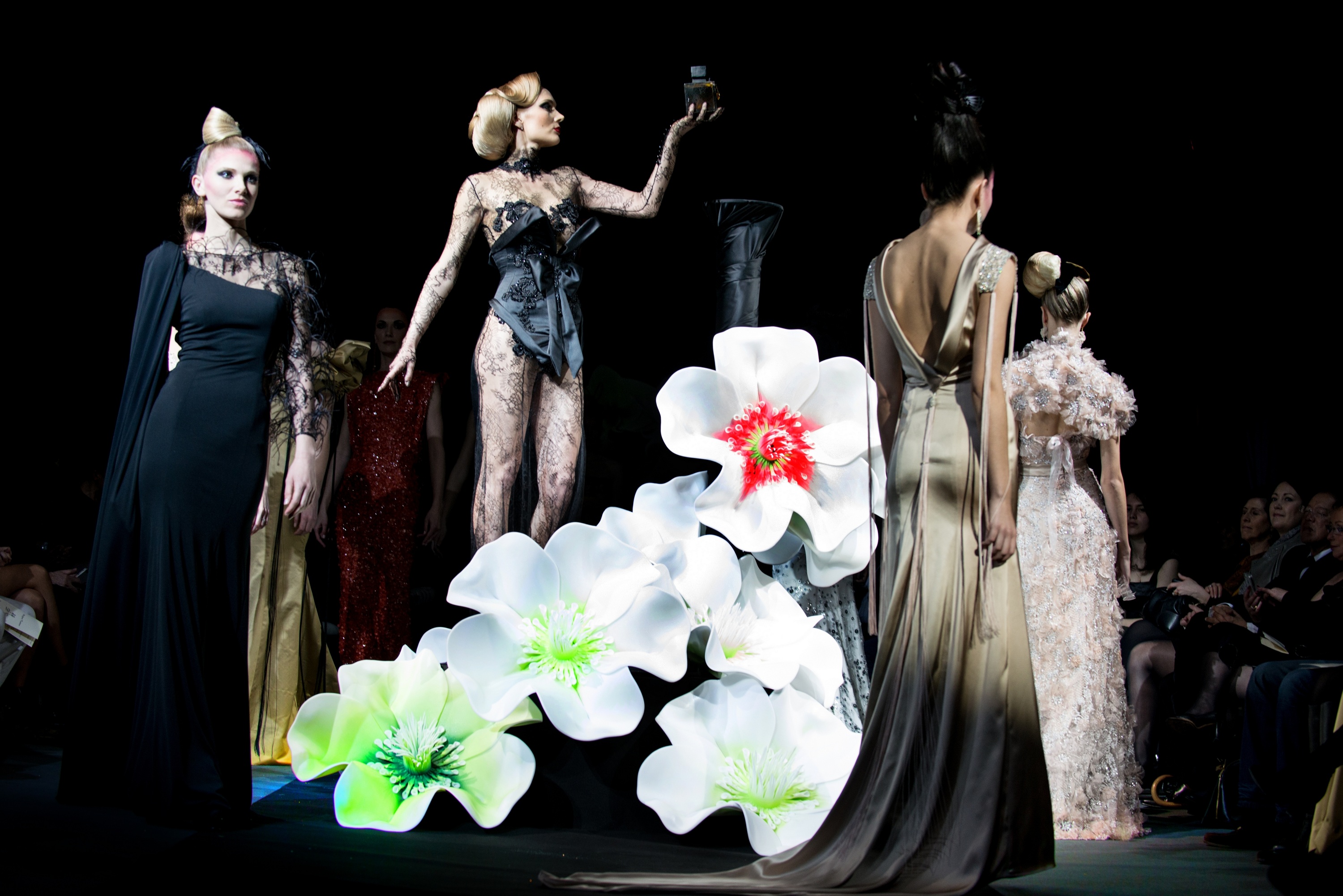
Denis Durand Couture Fashion Show 2 LRHaute couture and haute perfumery seem like a natural fit, especially for the French. So, it’s perhaps not surprising that both things came together with Le Parfum Couture Denis Durand for M. Micallef. It is a new oriental eau de parfum that is the result of collaboration between the French, niche, perfume line, M. Micallef, and the French couturier, Denis Durand. (Given the length of the fragrance’s name, I hope you’ll excuse me if I’ll just refer to it as “Le Parfum Couture Denis Durand” or “Le Parfum Couture” from now on.)

M.Micallef Le Parfum Couture Denis Durand perfume bottle

In the press release, M. Micallef describes the perfume as follows:.

A glamorous, mystical and sophisticated perfume has been born from the close friendship and artistic cooperation between Martine Micallef and Denis Durand: le parfum Denis Durand Couture.

The fragrance composition explodes with citrus head notes and spicy accents of cinnamon. An intense and complex fragrance, the heart and the base cleverly balances the rose, orange blossom and honey softness with the strength of animalic and woody notes.

Dressed with hand sewn delicate Chantilly black lace, the flacon is adorned with a little satin bow and a golden medal engraved with the initials of the two artists.

Denis Durand Le Parfum Couture

The perfume notes according to the statement are as follows:

Top Note: Ceylon Cinnamon, Italian tangerine

Heartnote: Bulgarian Rose, Honey, Orange Blossoms, Animalis

Basenote: Sandalwood, Patchouly, Amber and White Musk.

The “animalis” note is the key to understanding Le Parfum Couture. Upon first sniffing the perfume, even in its vial, I thought there was oud in it. I scanned the notes three times in slight bewilderment, as “oud” wafted out across my desk. But, no, “oud” is not listed anywhere in sight. In utter confusion, I turned to the internet, and was enormously relieved to discover that CaFleureBon‘s Managing Editor, Mark Behnke, had thought the exact same thing. He writes of his experience, and about what that note actually turned out to be:

When I was first wearing Le Parfum Couture Denis Durand I repeatedly mistakenly identified the animalis as oud. Mme Micallef has been so successful in making oud behave in whatever way she needs to achieve a desired effect I thought this was another example. When I did get the note list I had to get a clarification on what animalis is and was told it is a blend of labdanum and castoreum.

Labdanum and castoreum. I would have never guessed it in a million years! I’m very familiar with both notes individually, but the primary essence in Le Parfum Couture Denis Durand doesn’t smell like either one. It most definitely doesn’t smell like labdanum, which is one of my favorite ingredients.

Making matters much more complicated is the argument that CaFleureBon is completely incorrect and that Animalis has absolutely nothing to do with labdanum or castoreum but is, in fact, a trademarked ingredient from the fragrance company Synarome. According to the commentator, “Joe,” on Now Smell This, Animalis is a wholly separate ingredient and a famous perfume “base” that is the key to such scents as Etat Libre d’Orange‘s Vierges et Toreros. The Perfume Shrine article which he cites does indeed give a very different scent description for Animalis, saying that it is the very basis for the descriptive term “animalic” in perfumery and cataloguing its long, “dirty” history in perfumery from vintage Robert Piguet Visa, to being the mystery ingredient responsible for Kouros‘ savage, almost urinous, animalic splendour. Whatever the truth of all this, all I know is that M. Micallef has apparently gone on record as to what that the “Animalis” note is supposed to be.

Honestly, none of this matters one whit to me. Whatever the semantics or technicalities, all I know is that, on my skin, “Animalis” smells like oud — absolutely and exactly, right down to the medicinal facet that agarwood can sometimes reflect. I thought so, CaFleureBon thought so, Now Smell This and others have thought so. Period. Le Parfum Couture is so centered on this one aroma that, for the purposes of this review, I’m simply going to have to refer to it as “oud,” in quotes, because anything else would feel a bit misleading and would create the impression that the perfume smells animalic, “dirty,” urinously leathery, or feral in muskiness. It simply does not.

Le Parfum Couture Denis Durand opens on my skin with a split second blast of pure medicinal “oud” which almost instantly softens under a wave of honey. The “oud” is never just peppered woods, but it doesn’t smell like rubbery, pink bandages or camphor, either. Really, the only way to describe it is medicinal. There are also slightly animalic undertones to the scent, but they are faint. The perfume quickly turns richer, softer, sweeter and heavier, as the medicinal undertones soften a little. The honey note is beautiful; it feels very dark and rich, almost exactly like what you’d smell in a jar. Wisps of rose, cinnamon and tangerine swirl in the background, but they are extremely faint. The primary note is honeyed “agarwood”: rich and potently strong, it is also surprisingly airy in feel.

HoneyAn hour in, Le Parfum Couture is honey, cinnamon, light ambered musk, and rose — all heavily mixed with “oud.” I never smelled orange blossoms in any distinct way, though there is the faintest suggestion of both the flowers and the fruit lurking behind that wonderful honey note. The latter is my favorite, and it is so photo-realistic that I confess to being driven to make hot, buttered toast slathered with honey. In doing so, I noticed a funny oddity: out of the three different kinds of honey in my pantry, the note in Le Parfum Couture Denis Durand was almost exactly like that in my Mitica Orange Blossom Honey. Make of that what you will.

Despite the strong role of that photo-realistic honey, the perfume smells much more like an oud-centric fragrance than anything else. Throughout its entire development, “oud” sings loudest on stage. Other accords come and go, but they are merely supporting players. One of those is the rose note which starts to become significant around the ninety minute mark. As the honey recedes, the rose steps up to take its place. There is the very lightest hint of cinnamon — which feels a lot more like cardamom, actually — along with an even fainter suggestion of animalic musk. The latter is never skanky, dirty, raunchy, or, indeed, very profound. As a whole, the influences of these notes so minor that Le Parfum Denis Durand smells quite similar to By Kilian‘s Rose Oud — only significantly richer, stronger, and mixed with a large amount of honey.

Three and a half hours in, the perfume starts to shift a little. A beautiful, spicy, creamy sandalwood taps the rose on the shoulder, and steps in to dance with the “oud.” Yes, Le Parfum Couture Denis Durand is a little like the game of musical chairs where only the “oud” remains truly constant and powerful, sitting on a throne in the line-up. The sandalwood is lovely and it softens the “agarwood” note, turning it ambered, golden, and much less medicinal. Instead, it starts to feel a little closer to highly peppered woods. The rich honey and the whisper of cardamom-cinnamon add to the shimmery, amber glow. The rose note is still there, but it flickers in the background, adding its subtle touch to the overall effect.

The perfume doesn’t change much in its final dry-down stage. Around 6.5 hours in, it is mostly “oud” with hints of rose and sandalwood. Later, in its final moments, Le Parfum Couture Denis Durand is just amorphous, dry, woodsy notes and “oud” atop the faintest base of light musk and honey. The cinnamon note, which smells even more like cardamom to me, whispers faintly in the background. And that’s about it. All in all, Le Parfum Couture lasted just over 9.25 hours on my perfume-consuming skin. For much of its development, it was quite a strong scent, though always surprisingly airy and light in feel. It projected a few feet in the first hour, then dropped quite a bit, but Le Parfum Couture only became a skin scent around the 5th hour.

There aren’t a ton of in-depth reviews for Le Parfum Couture Denis Durand out there yet, since it was only just released a few weeks ago. One of the few is an admiring assessment from Angela at Now Smell This who seems to have a considerably different experience. Though Angela also detected the “oud,” she had loads of tangerine at the start and then, later, orange blossom. Here are some snippets from her review:

While Parfum Couture could never be called shy, neither is it the crass, room-hogging perfume I feared. Instead, it’s a warm, easy-to-wear oriental balancing tangerine, honey, and amber with a streak of metallic tang. I bet it will find a lot of fans. I’m one. […]

Parfum Couture’s tangerine and honey leap right out of the fragrance at first, reminding me of Byblos by Byblos (remember that one?) layered over the new Schiaparelli Shocking. I like the combination of sweet and animal that honey gives a fragrance — something about it reminds me of drinking sweetened ice tea. As for the citrus, in the mid-1990s I was obsessed with tangerine-laden fragrances, and I even wore Guépard for a while, despite the cheesy gold and green plastic cage over its bottle. (Sorry, all you old office mates.) Parfum Couture reminds me of those fragrances, but softer and more elegantly blended.

Oud isn’t listed in Parfum Couture’s notes, but I swear I detect it cutting the mouthwatering heft of the tangerine and honey. Or is it the “animalis” listed in the perfume’s notes?1 Orange blossom adds buzz, and Parfum Couture’s amber is the shimmery rather than cloying sort. I mostly smell the perfume’s patchouli after I’ve worn it several hours and on my clothing the next day, where it clings in a quiet, sexy way.

CaFleureBon was similarly entranced. In fact, I believe the Managing Editor, Mark Behnke, found Le Parfum Couture to be one of the very best Micallef fragrances ever released. In fact, he thought it was so “smoldering” that it would be his pick for a Valentine’s Day scent. His review describes a little of how Le Parfum Couture manifested itself on his skin:

If the rose and animalis was all that was going on in the heart it would be great but a sweet grace note, courtesy of orange blossom and honey, adds a glowing core to the intensity and it feels like the reflection of light off of satin or the shine off a bared shoulder under the spotlights. With such an intense heart it would have been easy to ease up a bit but Mme Micallef keeps the intensity level high as patchouli and amber produce a foundation for sandalwood and white musk to interact with. This base lightens up on the animalic by using the white musk but patchouli, amber, and sandalwood keep the development at a consistent volume right until the end.

Clearly, I had a very different experience from both of them. For me, Le Parfum Couture Denis Durand was primarily an “oud” fragrance, and it was never as complex or “smoldering” on my skin as it seems to have been on others. If it had been, I think I would have been considerably more wow‘d. I would have loved to experience what Angela at Now Smell This encountered since it seems much more nuanced and sexy. Plus, I adore orange blossoms and orange notes. You can’t imagine my enormous disappointment at how little (if at all) each note appeared on my skin. Lastly, as I’ve noted a few times on the blog recently, I have increasingly severe “oud” fatigue as a whole. It is probably the main reason for why, for my own personal use or tastes, I thought Le Parfum Couture was simply pleasant, as opposed to love at first sniff.

That said, most normal people do not test an “oud” fragrance (or two) each and every week, and many have a considerably greater appreciation for the note than I do now. Those who love it would probably greatly enjoy Le Parfum Couture Denis Durand. It has a richness thanks to that beautiful honey note and a quiet spiciness which separates it out from many of the “oud” fragrances with their simple rose accord. Plus, Le Parfum Couture has that lovely stage where the “oud” duets with the sandalwood in quite an entrancing manner. So, if the notes intrigue you, I would definitely encourage you to give it a sniff. Those who aren’t enraptured by Animalis and its oud-like manifestation here may prefer instead to watch the runway defilé for the release of Le Parfum Couture Denis Durand as shown in the YouTube video below.

DISCLOSURE: Sample provided courtesy of M. Micallef Parfums. I do not do paid reviews, and I always tell a company upfront that there is no guarantee of a good review, or any review at all. I make it very clear that my first obligation is to my readers and to be completely truthful as to my thoughts.

DETAILS:
Cost & Availability: Le Parfum Couture Denis Durand is an eau de parfum that comes in a 50 ml/1.7 oz bottle and costs $190. In the U.S., it is available at Luckyscent, along with a sample for $4. Normally, M. Micallef perfumes are also carried at Parfum1, but Denis Durand Couture is not yet listed there. You may want to check back in a few weeks. In Europe, M. Micallef Le Parfum Couture Denis Durand is carried at First in Fragrance where it retails for €145. The full range of M. Micallef fragrances, including the brand new Denis Durand Couture, is available at Paris’ Jovoy Fragrances. In the U.K., Micallef fragrances are usually carried at Fortnum & Mason, but I don’t see Denis Durand Couture listed on their website at the moment as it is so new. In Australia, you can find M. Micallef at Cara & Co in Sydney, but they don’t have an online store yet. In the Middle East, some of the many places where M. Micallef fragrances are available are: all UAE malls and Dubai Duty-Free locations at the airports; Al Hawaj in Bahrain; Mazaya in Cairo Egypt; everywhere in Kuwait; ABC and Beauty Concept in Lebanon; and Pari Gallery and Bleu Salon in Qatar. For all other locations, you can try the Points of Sale locator on the M. Micallef website. If you want to try a sample of the fragrance, you can do so at Lucky Scent at the link listed above which sells a 0.7ml vial for $4.

Perfume Review: Absolue Pour Le Soir by Maison Francis Kurkdjian

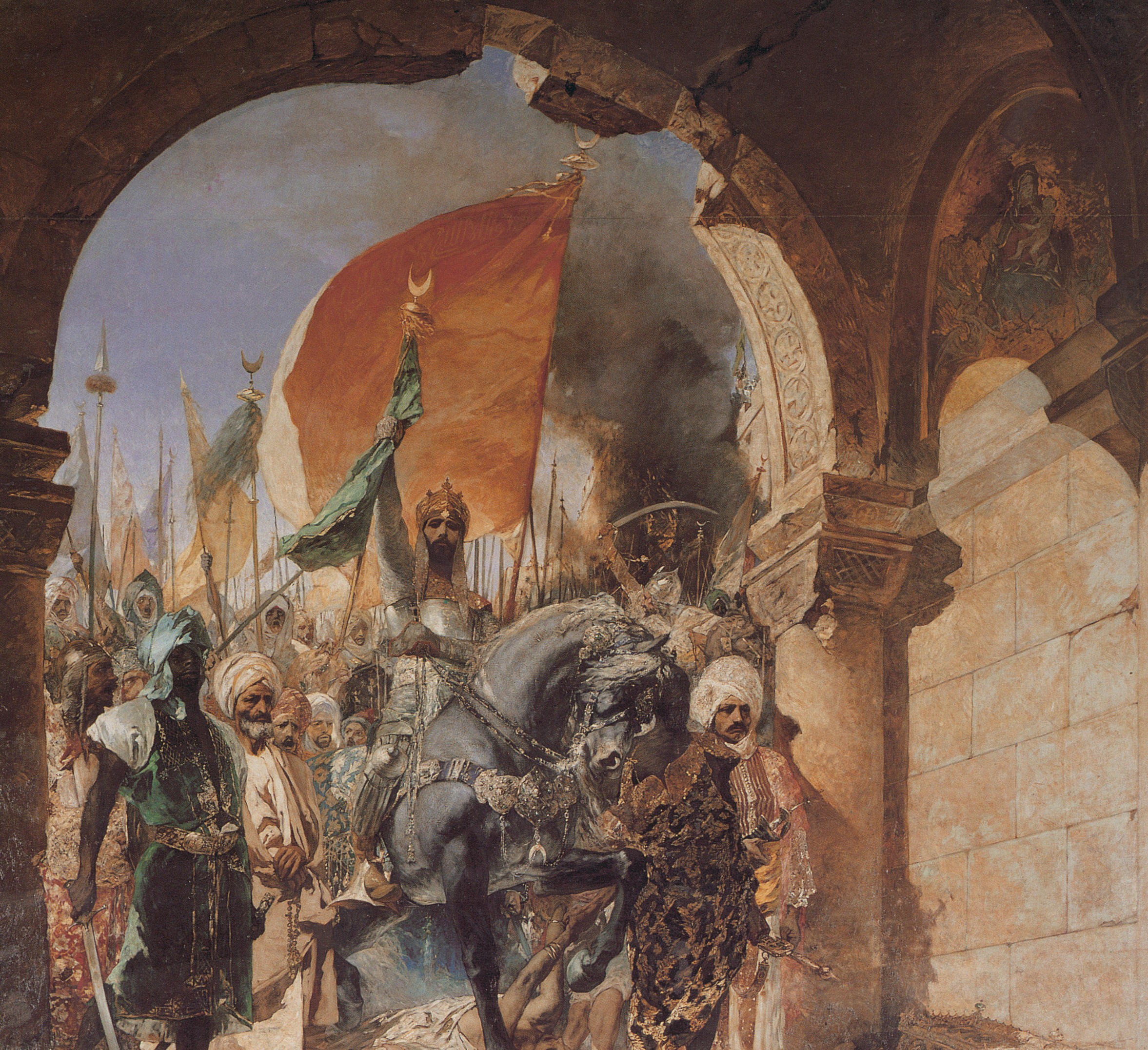
Sultan Mehmed HD Wallpapers siteThe sun was setting in the East. The heat of the city sent shimmering swirls of dust into the air, blending with the smell of spices and the sweat of its people under the rose-tinged sky. But dusk was also when the invaders came. The fierce, sweaty, hairy men stormed the ramparts of the palace, attacking and forcing their way past the Sultan’s guards.

Théodore Chassériau - "Moorish Woman Leaving the Bath in the Seraglio." Wikipedia

Théodore Chassériau – “Moorish Woman Leaving the Bath in the Seraglio.” Wikipedia

They ran down The Passage of Concubines before arriving at the Seraglio, the innermost sanctum of the palace and home to the Sultan’s harem. As they broke down the heavy door made from the finest sandalwood, the smell of their sweat and wet leather mixed with the swirls of incense that billowed from within. They entered the women’s quarters and beheld the naked beauties at their bath. It was an instant war between warm human flesh, the mysteries of women, sweet honeyed intimacy, and feral, musky masculinity.

The Favorite Consort haughtily stepped to the forefront, approached the leader of the invaders and placed one cool, honeyed hand firmly against his sweat-stained leather cuirass. “I will wash your feet with the nectar of the finest Persian roses, feed you molten honey and spiced treats in rooms of silk and incense, and perfume your leather with the finest sandalwood, if you leave the women unharmed.”

"Picking the Favorite" - by Giulio Rosati  - Source: The Athenaeum.Org

“Picking the Favorite” – by Giulio Rosati. Source: The Athenaeum.Org

"The Slave and the Lion" by Georges Rochegrosse.Source: Tumblr

“The Slave and the Lion” by Georges Rochegrosse.
Source: Tumblr

He stared at her, his swarthy face silent. Finally, he nodded but not before pulling her closer to demonstrate his dominion. Their bodies were a meld of musk, sweat, dust and spices, warm flesh, heady flowers, wet leather, creamy sandalwood, sour notes, smoky incense, and ambered honey.

That was the vision which immediately arose in my mind when I wore Absolue Pour Le Soir (“Absolue”) from the luxury niche perfume house of Maison Francis Kurkdjian, Paris (“MFK”).

Francis Kurkdjian.

Francis Kurkdjian.

Francis Kurkdjian began his career as something of a young prodigy in the perfume world and has become one of its most celebrated, admired creators. As Luckyscent succinctly explains,

In the era of perfumer-as-star, Francis Kurkdjian (pronounced “kurr-janh”) has been the first to break away and found a house bearing his name. But Maison Francis Kurkdjian is not just another niche brand: its stated ambition is to become a house with “a soul and history”, the Guerlain of the 21st century. And if anyone can pull it off, it may just be the charismatic boy wonder who had already composed a blockbuster— Jean-Paul Gaultier’s Le Male— at the age of 25, and has since authored a slew of highly acclaimed scents, both mainstream and niche, from the cult Christian Dior Eau Noire to the best-selling Narciso Rodriguez for Her.

Maison Francis Kurkdjian released Absolue Pour Le Soir in 2011 as a more MFK APLS bottleconcentrated, spicier, naughtier, more animalic eau de parfum version of its 2009 cashmere and rose Cologne Pour Le Soir. On its website, the company describes the mood of Absolue as follows:

When the night takes on its own life, the tempo changes. Take along, longuorous [sic] breath. Linger till dawn, keep your head in the stars. You’re suspended in time.

The most detailed set of perfume notes that I’ve found has been on Luckyscent which lists the following ingredients:

Infusion of benzoin from Siam [aka Siam Resin], cumin, ylang-ylang, Bulgarian and Iranian rose honey, incense absolute, Atlas cedarwood and sandalwood.

Source: etshoneysupliers.

Source: etshoneysupliers.

Absolue Pour Le Soir opens on my skin with a rich, dark, molten layer of honey and cumin. There are notes of deeply resinous amber which conjure up a colour image of red-gold in my mind’s eye. There is almost a leathery note like wet, sweat-infused rawhide with an underlying sour-sweet element which evokes a hotly lathered horse and saddle. (It definitely helped contribute to my image of an attack on the seraglio!) I think musk can often have a leather undertone (to my nose at least), so I’m chalking it up to that because there is no doubt that Absolue is a musk perfume. The whole thing is overlaid by that rich honey and resin which oozes over everything like a wave of hot lava.

The cumin becomes much more pronounced after the opening minutes and it soon shares equal footing with the honey. And, yet, it almost feels as though there are other spices too, like cloves, star anise and cinnamon. Flickering and dancing in the background are the rose notes, creamy sandalwood, incense, and almost woody, sweet smokiness from the Siam resin. The resinous notes here don’t feel like pure Siam resin, and I have to wonder if they left out mention of labdanum. That is another resin, but it has a more animalic, musky, masculine, dirty edge to it. (You can read about both types of resin and their differences in my Glossary.) Given that Absolue’s notes don’t actually include any mention of musk as an ingredient, I wouldn’t be surprised if labdanum were used to create some of the more animalic, naughty accords.

There is something about the way that those resins combine with the spices, the rich rose, smoke and sandalwood that repeatedly makes me think of the middle to end stages of my beloved (vintage) Opium. I recently purchased a bottle of the latter from the 1970s (do not ever buy current Opium!) — and the similarities are pronounced in my mind, especially once the sandalwood becomes more noticeable. That said, the two scents are very different. Absolue is much dustier and heavily dominated by musk and cumin — which is not the case with the more floral-dominant spices of Opium.

The cumin is really interesting in Absolue. Unlike some of my other experiences with the note, it never has a really sweat-like accord after that first minute or two. Yes, there is an earthy feel to the scent, but it doesn’t make me give worried sniffs under my arms as some perfumes — like Serge LutensSerge Noire or Amouage‘s Jubilation 25 –have done. Moreover, there is nothing skanky, funky or intimate about the note or how it interacts with the other ingredients. Unlike the very animalic Musc Tonkin by Parfume d’Empire, there are no unsettling impression of deeply feminine intimacy or of unwashed panties. Rather, the cumin in Absolue Pour Le Soir just feels like the pure spice, albeit one which my nose is somehow convinced is mixed with star anise and cloves. The dusty, dusky dryness they impart are a perfect balance to the sweetness of the dark honey and resins; they prevent the perfume from being gourmand in any way.

As time passes, Absolue becomes much more of a true oriental in the grand old style. Superbly blended, the perfume takes on a more complex character and different notes peek out at different times. Sometimes, the creamy, spiced sandalwood is more pronounce while, at other times, the smoke and incense accords come to the foreground. All of them are tinged with cumin for the first hour and, then, by the floral notes for the second (and subsequent) hours, particularly the rich roses and the creamy, very indolic notes of ylang-ylang.

"The Pasha's Concubine" by Ferencz Eisenhut.

“The Pasha’s Concubine” by Ferencz Eisenhut.

The indolic nature of the ylang-ylang may prove to be a problem for some people. Very indolic flowers — like jasmine, tuberose and ylang-ylang — can occasionally take on a very extreme character, evoking impressions of rotting fruit, plastic-y flowers or a litter box. That doesn’t usually happen to me and I’m on record as saying how much I adore some of the most indolic perfumes around, like Robert Piguet‘s Fracas. Here, however, there is a definite sour note on my skin which I suspect stems from the ylang-ylang. It arises after the first  hour and lasts for another solid hour before the perfume transforms again, with the rich rose nectar taking the lead along side the creamy sandalwood and musk.

Over time, Absolue Pour Le Soir changes again. At the fourth hour, it is an absolutely luscious, heady, rich, rose perfume, with incense and sandalwood. In its later stages and during the dry-down, it is predominantly amberous resin and honey with just a dash of musk and a hint of creamy sandalwood. Unlike some, like the Candy Perfume Boy, I never smelled the metholated aspects of cedarwood or any hint of immortelle. Nor did I smell raw beeswax, as a few have mentioned on Luckyscent, or primarily incense notes. But I suspect that the perfume will change slightly each time one wears it, highlighting different facets and some of the comments on Fragrantica bear out that impression. It is a sign of just how brilliantly it has been blended.

I’d read a lot about Absolue Pour Le Soir’s “dirtiness” before trying it out and I really expected a skank monster filled with unsettling intimacy. I tend to struggle with those notes, so the online comments left me with much trepidation. It’s one thing when someone on Luckyscent says simply, “Dirty bee – very naughty, dirty bee!” But when a highly respected perfume blogger like The Candy Perfume Boy writes that it initially triggered a “fight or flight” reflex and that he originally “chose flight“….. well, one starts to worry a little! Not even the fact that he eventually succumbed to buying a full bottle, rapturously calling it a “beautiful, filthy beast” really allayed my hesitancy. Then again, Absolue Pour Le Soir made The Scented Hound, a perfume blogger who generously gave me a sample of the scent, gush in a way that he rarely does. He wrote that the perfume made him feel “incredibly sexy.” In fact, after succumbing to a full bottle (which seems to be a common theme when it comes to this scent), he later wrote that it “makes me want to take myself on a date.”

I think both bloggers’ assessment of the perfume is absolutely correct. As The Candy Perfume Boy wrote so beautifully, “[i]t is a fragrance that has the power to shock due to its dichotomy of ugliness and beauty.” However, I think that the “shock” will depend significantly on how much exposure you’ve had to really musky perfumes. I reviewed Parfum d’Empire‘s famous (infamous?) Musc Tonkin just last week and I think that may have immunized me from things that others may find to be a filthy, dirty beast. With Absolue Pour Le Soir, there is none of the animalic funk (and faint terror, if truth be told) that I felt at the opening minutes of Musc Tonkin. That was a truly “dirty” monster of an opening — all animalic fat, skin and hair. This is not.

Instead, what I found was something that was definitely musky, yes, but not truly animalic or heavily skanky. It was lovely and approachable and, as time went by, damn seductive! I keep having the insane vision of a bottle of Andy Tauer’s dusty, dry, spicy L’Air du Desert Marocain having a three-way with a large pot of musk and a big vat of honey. Well, that overlooks the bottle of cumin and the big vase of the most lusciously meaty, beefy, dark roses to be found this side of Persia. But you get my point.

Those who love clean, fresh or light scents will not be a fan of Absolue Pour Le Soir. Those who despise cumin notes, musks or rich orientals, likewise. But for everyone else, especially those who love spice or some naughtiness in their scents, I strongly urge you to try a sample. Absolue Pour Le Soir is a very unisex, versatile, luxurious fragrance which would work on a man or a woman, at the office or on a date. It has strong sillage for the first hour, after which it becomes moderate for the next hour before becoming significantly closer to the skin at the third hour. You don’t need to violently inhale at your wrist to smell it, but no-one across the room is going to be bludgeoned on the head by it either. It’s extremely heady, but not overpowering. (Unless you drown yourself in it, in which case, it may be a whole other matter.) And Absolue has fantastic longevity. On my perfume-consuming skin, there were faint traces of it over ten and a half hours later!  On Fragrantica, the vast majority of voters put the perfume’s longevity in the highest category (“very long-lasting”).

Plus, by the standards of niche perfumes, it is almost quite affordable. (Well, as “affordable” as this sort of luxury niche perfume can be.) This incredibly high-quality perfume costs $185 for a 2.4 oz bottle – which is almost a third larger than the traditional “small” size of 1.7 oz. Other perfumes of this quality that I have tried have tended to start at $200 (again, for that smaller 1.7 oz quantity), with some going over $300. In my opinion, it is of infinitely better quality than a number of perfumes that I’ve tried from better known houses and that have been in the mid-$200 range. Moreover, it’s a lot more distinctive.

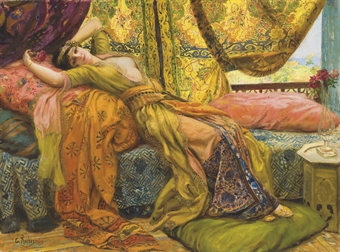
"Reclining Beauty" by Georges Antoine Rochegross. Source: Christie's.

“Reclining Beauty” by Georges Antoine Rochegross. Source: Christie’s.

At the end of the day, though, perfume is meant to be a voyage of the senses — both of mind, smell, and imagination. For me, Absolue Pour Le Soir transports me to the Sultan’s harem. It initially conjures up visions of sweaty, musky, leather-clad warriors who have leaped off their mighty steeds just moments before entering the feminine heart of the palace. Later, it makes me feel like the Sultan’s favorite consort — perfumed, indulged, sensuous — as she reclines over brightly-coloured pillows of raw silk, confident in her power and beauty. At the end, in its absolutely intoxicating dry-down phase of honey and amber, it makes me feel as languid as a cat stretching out in the sun.

Warrior or Consort Queen… it’s all just a few drops away.

DETAILS:
You can buy Absolue Pour Le Soir from the Maison Francis Kurkdjian website where the eau de parfum is available in two different sizes. The 2.4 oz/70 ml bottle costs €115, while the 6.8 fl oz costs €160. Prices are not given for US dollars. You can also order Absolue in a Discovery Kit of 4 samples (which you can also mix up with other scents from the line). “Each pouch contains 4 samples of 2 ml each. It’s up to you to choose.” The sample set costs €12. In America, Absolue Pour Le Soir retails for $185 for the 2.4 oz bottle and can be found at Neiman MarcusBergdorf Goodman, Bigelow, and Luckyscent. In the UK, you can find Absolue at Liberty, London where it retails for £115.00 for the 2.4 oz/ 70 ml bottle. For all other places, you can turn to the company’s website whose Points of Sale page which lists retailers around the world where you may find Absolue or other MFK perfumes, from Europe to Asia, Oceana and the Middle East. If you’d like to try a sample, you can find it at Surrender to Chance which sells vials starting at $3.99 for 1/2 a ml. Luckyscent also sells a sample at the link posted above.