Perfume Review – Frapin Speakeasy: Pancakes in Havana

By now, regular readers of the blog should know that history motivates me as much as perfume. (Actually, probably more.) So, it should come as no surprise that I read about Frapin and had to try one of their fragrances. Frapin is relatively new to the perfume scene, having started just five years ago in 2008, but the line has been making luxury cognac for centuries. In fact, the family behind it goes back almost 800 years! To quote a Vanity Fair article,

The Frapin’s rich family heritage is the stuff of a whimsical, old-world romance novel—and, according to creative director David Frossard, the key inspiration for all seven fragrances in the line.One of the oldest and most established families in France, the Frapins have been distilling cognac from their original Fontpinot Castle, situated on 300 hectares in the Grand Champagne region of France, since 1270 and through 20 generations; they expanded into fragrance in 2008. And if a castle isn’t enough of a fairy tale for you, Louis XIV himself granted official nobility to the Frapin family in 1697.

Frapin Castle. Source: Frapin website.

Frapin Castle. Source: Frapin website.

Frapin, as a perfume house, is perhaps best known for its 1270 fragrance and then, for the limited-edition, Bertrand Duchaufour-created 1697. Both are loved for being very boozy, rich scents, in keeping with Frapin’s goal of replicating the feel and smell of their cognac.

I opted, instead, to try Speakeasy, a perfume whose name appealed to my interest in the Prohibition era of the 1920s when alcohol was constitutionally banned in America, leading to the rise of the Mafia, gangsters, and illegal bootlegging. (My appreciation for the HBO television series, “Boardwalk Empire,” added to it.) For those outside of America, the term “speakeasy” refers to the illegal drinking dens that were operating in secret and where alcohol flowed like water, as the mobsters raked in the cash. It was the era of Al Capone, Meyer Lansky, Lucky Luciano, and the St. Valentine’s Day Massacre.

Source: CaFleureBon

Source: CaFleureBon

Speakeasy is a boozy, woody Oriental fragrance that was released in 2012 and that was created by Marc‐Antoine Cortcchiato, the founder of Parfum d’Empire — yet, another reason why I opted for this perfume over its more famous siblings. And, I have to say, I’m disappointed. For one thing, Speakeasy most certainly does not evoke the 1920s and Prohibition, but, rather, a slightly seedy bar in 1950s Cuba or Miami filled with mojitos, pancakes, and cigars. One commentator on Fragrantica found it brought to mind the 1970s with its vinyl orange plastic, formica green and ruddy browns — and it does that, too. My main problem with Speakeasy, however, is that it’s a hodge-podge that isn’t really enormously interesting. It’s fine, it’s average, it’s neither here, nor there — and it doesn’t inspire much of anything to me. Perhaps it should have been more like Hemingway in his early Cuban days….

Havana. Source: Standard.co.uk.

Havana. Source: Standard.co.uk.

Luckyscent has a wonderful description of the fragrance which, alas, really didn’t bear out in reality for me:

Speak easy: those were the words whispered to clients in illegal bars during the Prohibiton…

Frapin’s new fragrance conjures the film noir allure of an age when danger lurked under the glamour; a tropical bar where Hemingway could have bumped into the characters of To Have and Have Not. Misted glasses, club chairs, smuggled Cuban cigars savored by gentlemen bootleggers under wood ceiling fast churning the damp air…

According to Luckyscent, Speakeasy’s long list of notes includes:

Rum extract, Indian davana, Sweet italian orange and Fizzy lime from Brazil, Cold russian mint and Egyptian geranium, Oriental leather accord, Ciste absolute, Labdanum absolute, Styrax essence, Turkish tobacco accord, Tobacco absolute, Liatrix absolute, Everlasting [Immortelle] flower absolute, Tonka bean absolute and White musks.

Mojito with cigarSpeakeasy opens on my skin with a brief, split-second element of a traditional cologne. There is fresh, zesty lemon, lemon peel, and orange which feels a lot like freshly-squeezed juice. The scent is thin, light and slightly cool in nature. Within seconds, however, the fragrance turns warmer, thicker, smooth and sweet with rum and honey notes. The boozy accord is supplemented by hints of fuzzy, green geranium and mint. The citruses recede slightly to the background where they add a subtle depth to the fragrance but are never hugely dominant. That role is taken, instead, by the rum which is strong and rich, though actually much lighter in feel than I had expected. It feels a little like Captain Morgan’s Rum and bloody close to a Mojito cocktail, but not exactly. Perhaps it’s because the note is infused with dry tobacco leaves and immortelle.
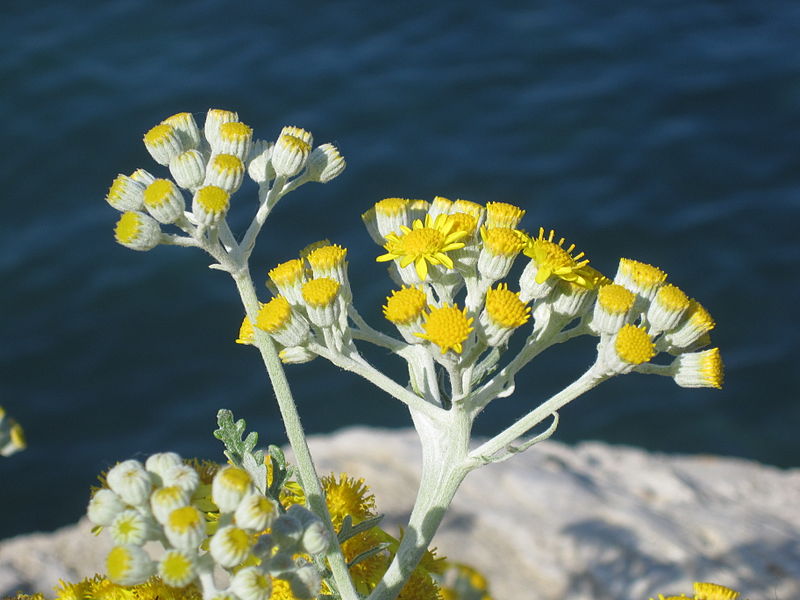
Immortelle, or Helichrysum in Corsica. Source: Wikicommons.

Immortelle, or Helichrysum in Corsica. Source: Wikicommons.

Ah, the immortelle — the reason why Speakeasy may be a hard sell for many. You see, the immortelle is quite dominant in the development of the perfume, and it’s a note which polarizes people greatly. For those unfamiliar with immortelle, it’s is a yellow flower most frequently found in the Southern Mediterranean, and its dry, floral scent usually turns quickly into the aroma of maple syrup. Here, both aspects of  the flower are noticeable. Initially, it is a dry, light, slightly aromatic flowers which join with the tobacco leaves to counter Speakeasy’s boozy sweetness. Later, however, the maple syrup comes out. But I’m getting ahead of myself.

Source: iVillage.com

Source: iVillage.com

Thirty minutes in, Speakeasy is a swirl of rum-infused citruses, dry tobacco leaves, amber, and vaguely amorphous floral notes dominated by the immortelle. It feels a lot less like a Mojito, though the mint still flickers lightly in the background. The orange note lurks there too: it is much less fresh and light; it feels like the caramelized pulp of the fruit. But neither the mint nor the orange can counter the boozy, ambered rum that is the core essence of Speakeasy. At the start of the second hour, Speakeasy decreases in volume and becomes much softer, while also becoming much more brown and orange in hue. There is sticky, rum citrus with sugar cane, melted and caramelized, but also with a subtle hint of saltiness. Florals float in the background, simultaneously fruited and a bit dry. The whole thing sits atop a base of rummy amber with tobacco and hints of immortelle.

From the initial impressions of a Mojito, we’ve now suddenly gone to a 1950s bar in Havana or Miami. It’s filled with heavy-set men in open tropical shirts, sporting heavy gold chains over a visible expanse of black, furry, springy chest-hair. In their thick fingers, they hold fresh Cuban cigars — dry and unsmoked — which they wave in the air at the bartender to order another round of Rum-and-Coke. I can’t get the image out of my head. It doesn’t help that, 3 hours in, Speakeasy takes a turn into root-beer territory backed with rum, more dry tobacco, and a growing hint of maple syrup. The latter initially feels a lot more nutty in nature than the syrup you’d pour over pancakes, but it’s still not really my cup of tea. I like the floral aspects of Immortelle, not the maple syrup, and unfortunately, the former note starts to fade as the latter grows in dominance. Now, my heavy, furry, cigar-wielding, Havana men in tropical shirts also have a side of pancakes to go with their Cuba Libre drinks.

Source: Instructables.com

Source: Instructables.com

By the start of the seventh hour, Speakeasy is maple syrup amber and… maple syrup. Yes, there is still the tobacco — and it still feels like an unlit cigar or dry sheets of tobacco leaves, rather than anything evoking an ashtray — but it’s quite minimal. The immortelle has taken over the show. For the next five hours, Speakeasy is ever softening shades of maple syrup. And that’s it. Truly. I can’t detect a single other element to the scent.

All in all, Speakeasy lasted over under 12.5 hours on my perfume-consuming skin which is quite remarkable. I should note, however, that I did two tests for Speakeasy and the first time, when I applied much less, the longevity and sillage were significantly less pronounced. With the equivalent of one good spray, Speakeasy lasted approximately 9.75 hours and had good sillage. With just a little over 2 sprays (really about 2 and 1/2), the longevity was a few hours more. On both occasions, the sillage was very good for the first hour — even powerful when I applied a greater quantity — and projected three to four inches off my skin. Later, Speakeasy softened, though it was easily detected if I brought my arm anywhere near my nose. It became a skin scent around the eighth hour during my second test.

Despite the rich notes and the excellent projection, Speakeasy surprised me in being quite lightweight in feel. The texture isn’t opaque, heavy, resinous or thick. And, for all the rum involved, it doesn’t feel like a boozy scent. It’s not like HermèsAmbre Narguilé, Guerlain‘s Spiritueuse Double Vanille, Tom Ford‘s Tobacco Vanille, Teo Cabanel‘s Alahine — all scents with a boozy, rummy nature, though they are all perfumes with a huge amount of spice in them, too. Most of those have a large tobacco element as well but, still, they aren’t the same as Speakeasy. Perhaps it’s because Speakeasy has the mojito, maple syrup and pure rum accords, as opposed to the spiced, stewed prunes, raisins and apples of the others. Or, perhaps, it’s because it’s so texturally light.

Whatever the reason, I truly couldn’t summon up much enthusiasm. I have tried and tried to pinpoint why — apart from my issues with smelling like maple syrup — and I think it’s because Speakeasy feels a bit like a hodge-podge. It’s neither a truly boozy, spiced, smoky, amber oriental, nor a light summery, Mojito scent. Tobacco and rum generally work perfectly well together, but the immortelle adds a discordant jangle, as does the mint. The wonderful perfume blogger, The Non-Blonde, summed it up as “chaotic” — and I think she’s absolutely right, even though her experience differed from my own. In her review, she wrote:

Unlike the term “Speakeasy” and its hush-hush connotations, Frapin’s fragrance is a heavy hitter right from the start. It’s noisy and chaotic as the perfume throws almost everything it has at you: herbs and fruit, smoke and syrup– they party like it’s 1929.

Things get smoother rather quickly. The mojito is replaced by a darker and warmer drink. The syrupy sweetness sets the tone for a comfortable old leather, incense, and a rich tobacco. If you dislike immortelle and its burnt maple aroma, there’s no amount of Frapin booze that will help Speakeasy go down better for you. Personally I love it, so the sweeter the better in this case. Tobacco truly dominates the way Speakeasy smells on my skin: light and dark, sweet and smoky. I love it, but must admit that it can be too literal. I never smoked and would rather not smell like I’ve become a smoker in middle-age. It’s actually a little disturbing that the remnants of Speakeasy on my clothes remind me of a smoky bar.

On my skin, there really wasn’t that much tobacco, and it never felt like an ashtray; I honestly never felt as though I’d spent all night in a smoky bar. To me, the note felt much more like that of sheaves of tobacco leaves drying in the hot Virginia sun, or like that of an unsmoked cigar. I also never detected incense or leather, though Speakeasy definitely evokes some sort of old bar with leather and wood. (God, leather and incense may have made it so much better!) Despite these minor differences, though, I share her views on the jangling, chaotic feel to the scent. Don’t get me wrong — Speakeasy is not a bad scent by any means, but it leaves me feeling completely indifferent.

I haven’t tried Frapin’s limited-edition 1697, but I’ve read a comment on Fragrantica to the effect that Speakeasy was like a little “summer sister” to the Duchaufour creation. I have to wonder a little about that as there is no immortelle in 1697’s notes, and that element is such a huge part of Speakeasy’s middle to late stages. Still, those looking for a more boozy, amber scent may want to give “1697” a sniff, while those seeking a lighter, summery fragrance with a more tropical feel may want to opt for Speakeasy. But those who shudder at the mere thought of immortelle — and there are many of you out there — should probably stay away at all costs.

DETAILS:
Cost & Availability: Speakeasy is an eau de parfum that is available only in a 3.4 oz/100 ml and which costs $145. In the U.S., it is available at Luckyscent, Beautyhabit, and MinNewYork (which sells it for $5 more at $150). In Canada, Speakeasy is available at The Perfume Shoppe for CAD $145. In the UK, I’ve read that Frapin fragrances are carried on the specialty floor of Harvey Nichols (Le Floret?), but I don’t know for sure. In France, it is available at Nose for €105 and I think there is free shipping at that price within the EU. For the rest of Europe, there is First in Fragrance which sells Speakeasy for €96. As for samples, I obtained mine from Surrender to Chance which sells vials starting at $4.50 for 1 ml.

Perfume Review – Tom Ford Sahara Noir: Ambered Frankincense

Desert Caravan. Photo: "Artemis." Via Tripwiremagazine.com

Desert Caravan. Photo: “Artemis.” Via Tripwiremagazine.com

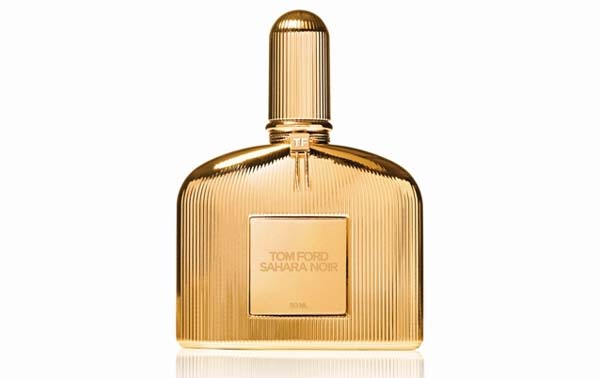
In March 2013, Tom Ford released a new fragrance in his Signature collection called Sahara Noir. It is a rich oriental eau de parfum that is aimed at the Middle Eastern market and that is supposedly Tom Ford’s interpretation of their traditional scents. On May 1, Sahara Noir became available world-wide, and I obtained a sample from a kind sales-assistant at Neiman Marcus. The long and short of it is that Sahara Noir is, essentially, a re-working of Tom Ford’s much beloved, now discontinued Private Blend Amber Absolute, only with oud now added to the mix. There are small differences which I’ll explain later in this review but, for all intents and purposes, Sahara Noir is the new replacement for Amber Absolute.  

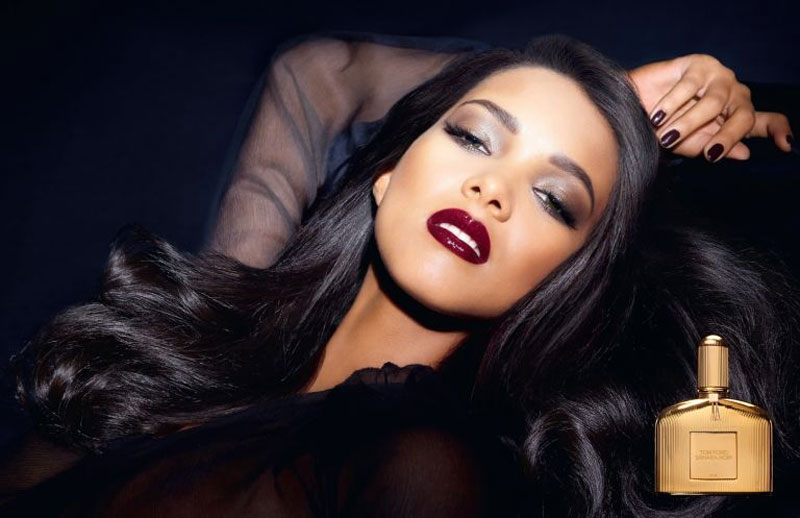
Tom Ford advert for Sahara Noir. Source: Fragrantica.

Tom Ford advert for Sahara Noir. Source: Fragrantica.

In the press release I found back in February, Sahara Noir is described as follows:

Sahara Noir is rich and exotic; it wraps the balsamic, incense-touched notes of frankincense in gold and honey-coloured light,” noted Ford. “Middle Eastern culture has an extraordinary appreciation for the luxurious, emotional and memorable qualities of fragrance; perfume is worn there in a way that feels very familiar to me. Sahara Noir is my interpretation of this heritage.

Tom_ford_sahara_noirThe press release is actually important because of its detailed explanation of the notes — notes which are quite different from what Fragrantica lists. In the official description of the perfume, the company states:

The oriental woody juice is crafted around a heart of frankincense. This key ingredient is complemented by top notes of cistus essence Orpur® (Orpur denotes a natural ingredient of exceptional quality and purity), bitter orange, Jordanian calamus – an oasis sweet grass – and Levantine cypress, famed for growing in the gardens of the 1001 Arabian Nights.

The heart blends frankincense essence Orpur® , cinnamon, cool papyrus extract, Egyptian jasmine templar and rose absolute from Morocco. A beeswax extraction from Burma lends body and a supple, honeyed-animalic richness.

The warm dry down is laced with amber. It is formed by a special blend of labdanum – labdanum absolute and a rich natural fraction of labdanum known as ambreinol – combined with benzoin, vanilla, cedar, frankincense resin, agarwood and balsam.

The notes on Fragrantica mention only:

Top notes are bergamot, mandarin orange, violet, ginger and basil; middle notes are grapefruit blossom, orange blossom, tobacco and black pepper; base notes are amber, cedar, patchouli, oakmoss and leather.

So, if we combine the two lists together, the full set of notes seems to be closer to the following:

bergamot, mandarin orange, violet, ginger, basil, grapefruit blossom, orange blossom, tobacco, black pepper, amber, cedar, patchouli, oakmoss, leather, Jordanian calamus grass, cistus [labdanum] essence Orpur®, cinnamon, papyrus extract, Egyptian jasmine templar, Moroccan rose absolute, beeswax extract, labdanum, ambreinol, benzoin, vanilla, frankincense resin, agarwood [oud], and balsam.

A slightly different set of notes, all in all, don’t you think?

Camel Caravan. Photo by Yann Arthus-Bertrand.

Camel Caravan. Photo by Yann Arthus-Bertrand.

Sahara Noir opens on my skin as slightly bitter amber with heavy frankincense. There are: bitter citruses that feel like the fresh oils from the rind; peppery cedarwood; dry tobacco leaves; bitter but crystalized ginger; and black, dirty patchouli. The whole thing sits atop a powerful base of rich, nutty, heavily leathered labdanum (a type of amber resin), infused with strong frankincense. The amber-frankincense duet smells familiar — as it should to anyone who has smelled Amber Absolute. As the seconds pass, light touches of cinnamon and rich, heavy honey are also noticeable. The whole thing is potent and, yet, much airier and lighter than you’d suspect, given those rich, heavy notes. I’m not saying that Sahara Noir is a sheer, translucent, fresh scent by any means, but it doesn’t feel opaque, thick, and molten.

Labdanum compiled into a chunk. Source: Fragrantica

Labdanum compiled into a chunk. Source: Fragrantica

Less than five minutes into Sahara Noir’s development, the perfume shifts a little and becomes significantly less complex. The citrus notes have all but vanished, leaving behind a scent that is primarily frankincense-infused labdanum amber. Those who don’t like labdanum as a stand-in for amber should perhaps take heed, for Rock Rose or Cistus (its other names) is not to everyone’s taste. Labdanum has quite a masculine, leathery bent to its nutty, resinous, darkly balsamic accord, and I know some amber lovers who aren’t always enthused by its particular aroma.

Swirled into the blend are tobacco leaves, peppery cedar wood, dry papyrus, and the smallest suggestion of oud. The perfume is beautifully blended, so few of these notes are individually distinctive by themselves amidst that dominant pairing of frankincense and labdanum. Yet, by the end of the first hour, the peppery wood notes and oud become much more significant. The tobacco fades away, along with the faint traces of spice and ginger that lurked in the opening. By the 90 minute mark, Sahara Noir is a three-way pairing of labdanum, frankincense and oud. As a side note about that oud, I know a lot of my regular readers really struggle with the note. I do, too, when it is medicinal, antiseptic, fecal, or a bit too much of the noble “rot.” Here, however, it is much more akin to incredibly peppered woods. It’s simultaneously dry, a little bit fiery, and highly sweetened (thanks to the resins and honey)– all at the same time. Yet, for the most part, it is not over-powering or bullying; it is far too overshadowed by the leathery amber and frankincense.

Photo: Federico Bebber. Source: MyModernMet.com

Photo: Federico Bebber. Source: MyModernMet.com

Sahara Noir remains as this triumvirate for hours and hours. I detect absolutely no citrus or floral notes; not a whisper of rose or jasmine anywhere in sight. Midway during the third hour, the perfume becomes richer and softer, turning into a lovely amber with strong oud and frankincense. The labdanum’s leathery edges have been tamed, mellowing into something sweeter and milder with a honeyed accord. The frankincense is in much better balance, though the oud seems to have increased a little in strength. I will be honest and confess that the oud is a little too much for my personal tastes and a little sharp at times, but it is in perfectly equal proportion to the other two notes. Sahara Noir is now a three-way race, with each horse neck-and-neck as they lead into the home-stretch.

With every remaining hour, the triplets soften even further until, finally, Sahara Noir turned into a nutty, honeyed amber with faint traces of smoke and oud. Lurking at the edges is the merest dash of cinnamon, benzoin and vanilla — the latter having a breath of powder — but neither note is very significant. In the final hours, and to my surprise, I could occasionally detect some vague, soft floral notes underlying the amber. It felt most like jasmine, but the whole thing was a bit too muted and amorphous to really tell. Plus, every time I thought I could pinpoint it on my arm, the note flitted away like a ghost. By the very end, Sahara Noir was nothing more than a faint whisper of nutty amber with a soft feel of caramel.

All in all, Sahara Noir lasted just over 9 hours on my perfume-consuming skin. As always with Tom Ford fragrances, I opt for a lesser amount than what I would normally use with everything else. It was Amber Absolute, actually, which taught me it is best to err on the side of caution initially when it comes to the quantity one uses for one of his perfumes. Using the equivalent of two good sprays on my arm, Sahara Noir was generally quite light in feel. It had serious sillage at first which dropped to “average” after the first hour. At that point, someone standing a few feet away wouldn’t be able to detect it, but don’t let that mislead you. When sniffing it, Sahara Noir is very potent, thanks to the frankincense. If you were to spray more than a small amount, I suspect the sillage might blow someone out of the water. I also think a larger quantity would change the nature of the perfume. Time and time again with Tom Ford’s Private Blend fragrances, I’ve noticed that using too much can lead to quite an overwhelming, ’80s-like experience and, more importantly, to the amplification of whatever note is dominant in the perfume. In this case, the frankincense.

tom-ford-amber-absolute

The now discontinued Amber Absolute.

As I noted at the start, Sahara Noir is extremely close to Tom Ford’s Amber Absolute from his much more expensive, more “prestige” Private Blend collection. Amber Absolute was discontinued last year for reasons that I’ve never quite fathomed. It seemed to be one of the big favorites amongst the Tom Ford line as a whole — cherished and adored by a vast number of people, especially friends of mine who enjoy rich amber scents with smoke. I reviewed Amber Absolute and, personally, found the extreme nature of the frankincense to be a bit bullying — and that’s coming from someone who really enjoys the note. For me, the perfume was unbalanced, too shrill and top-heavy with the frankincense, and just a bit too, too much as a whole. I always thought I was in the minority on that assessment, but Sahara Noir makes me wonder if, perhaps, there were more people who shared my views.

You see, Sahara Noir is a much less extreme, more balanced version of Amber Absolute. There is still the labdanum-frankincense accord, but the smoke doesn’t feel acrid and like an 800-pound gorilla. To my nose, Sahara Noir is also slightly more nuanced, along with having a lighter feel and texture, but it’s definitely all relative. There are other — albeit small — differences as well. For one thing, the opening to the two fragrances is not quite the same: the Amber Absolute has much more of a boozy rum, spiced start; Sahara Noir is more citrus-y (for all of about 5 minutes), before turning straight to the labdanum and frankincense. It also has far more dry wood notes, from the very peppery cedar to the oud. Of course, the inclusion of that last element is quite a big difference, though I would argue that — for the most part — it’s a difference of degree and not of kind. The dominance of the core labdanum-frankincense combination in both fragrances makes them much more alike than different, despite the addition of the oud.

All in all, I liked Sahara Noir — but I didn’t love it and I don’t think I’d wear it. For one thing, I’m extremely tired of oud — there seems to be no end in sight to the mania. Everything has oud in it these days. (At this rate, it’s going to be on my bloody pizza next!) Perhaps if I didn’t test at least one oud fragrance a week (and, sometimes, as many three), I’d be more enthusiastic. But Sahara Noir isn’t complex enough to sway my oud fatigue.

For another, while I like frankincense a great deal, I find there is always something a little sharp in the frankincense use by Tom Ford. Sahara Noir lacks the soft, luxuriating, velvety richness of Dior‘s Mitzah, one of my favorite labdanum-frankincense combinations and a fragrance which I thought was much more complex, nuanced, and layered. Perhaps it’s because Mitzah isn’t so focused on just two key notes, and its edges are softened as a result. In particular, both the labdanum and the frankincense in Mitzah are gentler, more rounded, better blended and richer. Perhaps it’s because Mitzah lacks oud with its peppery element which is sometimes a little sharp in Sahara Noir. Whatever the reason, I liked Sahara Noir — but not enough to want to wear it.

As a side note, I cannot help but think Tom Ford decided to tone down his Amber Absolute, while also adding in oud, for marketing reasons. With the inclusion of that note, he could target the extremely wealthy Middle Eastern market, and position Sahara Noir as an exciting new call to their traditional heritage of oud fragrances, as well as heavy, balsamic amber ones. What stumps me is why Sahara Noir isn’t part of his more expensive, potent Private Blend line, instead of the cheaper Signature collection. His intended audience could certainly afford it. I suspect it’s because he didn’t want to underscore quite so easily the enormous overlap between Sahara Noir and a Private Blend fragrance that he just discontinued.

Another source of bewilderment: Sahara Noir is supposedly marketed as a fragrance “for women.” Er…no. I don’t think so! Sahara Noir is as unisex as you can get. In fact, I suspect women who are not used to oud (or heavy frankincense) may blink a little at Sahara Noir. This is not some sweet, gourmand, or spiced soft amber. This is hardcore frankincense and labdanum.

On Fragrantica, the comments thus far seem generally to evince disappointment, though quite a few people really enjoy it. A number of people write about how it is primarily a frankincense fragrance and nothing revolutionary. Well, they’d be right, especially as Sahara Noir replicates Amber Absolute so closely. Two commentators seem to feel it is a complete “knock-off” of Absolue Pour Le Soir by Maison Francis Kurkdjian. With that, I very much disagree. I’ve reviewed Absolue Pour Le Soir and think it is absolutely nothing like Sahara Noir. Absolue is not an ode to frankincense and labdanum; it is a stunning floral oriental that is centered around slightly animalic musk with lovely, rich sandalwood and a variety of other elements.

Some have called Sahara Noir “linear,” and I think it is. But I’ve always thought that term is a negative only when someone absolutely hates the notes that are continuing from start to finish. If you love a rich amber infused with the particularly intense sort of smoke that is frankincense, and if you like the slightly masculine, leathery sort of amber that is labdanum, then I think you might enjoy Sahara Noir. However, those who don’t like oud may not be enthusiastic, and those who already own Amber Absolute can probably skip it.


DETAILS:
Cost & Availability: Sahara Noir is an eau de parfum which generally comes in a 1.7 oz/50 ml bottle. It costs $150 or $165, depending on US retailer, or £100.00. On the Tom Ford website, however, it is shown in 3 different sizes: 1.0 oz/30 ml, 1.7 oz/50 ml, and 3.4 oz/100 ml. I can’t seem to find pricing for the smaller sizes anywhere and, on the Tom Ford website, wasn’t able to click on the links to put it in a shopping cart to ascertain the cost. In the US, you can find Sahara Noir sold in the 1.7 oz/50 ml size at department stores such as Neiman Marcus (which lists its price at $150), Barneys (which sells it for $165, for some odd reason), and Bergdorf Goodman (which lists its price at $150). I couldn’t find it on the Saks or Nordstrom websites. In Canada, I believe Tom Ford is carried at Holt Renfrew, but I don’t know when they will get Sahara Noir. In the UK, you can already find it at Harrods or Selfridges. Both stores sell the 1.7 oz/50 ml size for £100.00. Elsewhere, I’ve seen Sahara Noir listed on Dubai Duty-Free and Souq.com. Tom Ford Beauty doesn’t seem to be carried by retailers in France, but it is in many European nations from Denmark and Belgium to the Russian Federation. Hopefully, you can find a retailer near you using the store locator on the Tom Ford website. As for samples, Surrender to Chance doesn’t have Sahara Noir at this moment as it is far too new, but you can try to find it at any of the department stores listed above to give it a test sniff.

Perfume Review – Lonestar Memories by Tauer Perfumes: Mad Max Meets Sticky Orange

Mad Max the Road Warrior. On an arid desert road, he takes out a flame thrower to burn rubber, asphalt and cars, then relaxes in victory on some very expensive, myrrh-infused, leather car seats before eating some orange sticky toffee pudding and napping in a vanillic-amber haze. That was the essence of my experience with Lonestar Memories from Tauer Perfumes, a fragrance that is actually intended to be an ode to the Wild West and cowboys. For me, it was Mad Max, and then the Queen’s tea. And, surprising as this may sound, it actually works a little.

Scene from Mad Max 2 via cinemasights.com

Scene from Mad Max 2 via cinemasights.com

Lonestar Memories (sometimes written as “03 Lonestar Memories”) is a unisex fragrance by Andy Tauer, a molecular biologist with a PhD who left the world of science in 2005 to become a perfumer. Lonestar Memories was his second creation and released in 2006. It received a 4-star rating from the renowned perfume critic, Luca Turin, who described it as a “wonderfully warm… smoky carnation” in Perfumes: The A-Z Guide.

andy-tauer-03-lonestar-memoriesOn Fragrantica, Lonestar Memories is classified as a “woody chypre” and described as a call to the American West, leather and old jeans. The Tauer website adds more detail:

An ode on birchtar: True and unique, rich and lasting
The scent of a lonesome rider, wearing old jeans and leather jacket, after a long day on the horse in the dry woods, preparing his coffee on the open, smoky fire.

Lonestar Memories’ notes include:

Geranium, Carrot seed, Clary sage, Birchtar, Cistus [or labdanum], Jasmine, Cedar wood, Myrrh, Tonka, Vetiver, Sandalwood.

Silver birch tree. Source: my own photograph.

Silver birch tree. Source: my own photograph.

Birch is a big part of Lonestar Memories, as are the geranium and clary sage. According to Fragrantica, the odor of birch is that of “cooked” wood, and is “a phenolic, tarry smelling ingredient mostly used in the production of leather scents, some chypres and some masculine fragrances.” Clary sage also has a leather undertone, but it is a herbaceous plant that often smells like lavender.

Lonestar Memories opens on my skin with burning rubber, burning orange plastic and the smell of soldering. I’d read repeated references to the odor of electronic soldering — the taking of a high-intensity flame to meld together either pipes, wiring or electronic components — in comments on Luckyscent, but I hadn’t quite believed them. I certainly do now. The comparison truly does apply:

  • Solderingthis one smells like my electronics class – lots of burning plastic and soldering irons
  • the smoky smell is reminiscent of an electronics class (specifically solder smoke)
  • Lonestar Memories absolutely reminds me of the air-exhaust of a laundromat- which I love, so I might buy a bottle.

The source of the smell is the combination of that tarry, smoky birch tar with pungent geranium. The two notes go hand-in-hand for much of Lonestar Memories’ opening hours, though in the opening minutes, the birch tar rules all. It’s not mentholated or camphorous, the way it is in Santa Maria Novella‘s similar Ambra, but, rather, just like black rubber that has been singed along with soldered electronics and plastic-coated wires. My skin cycles through notes rather quickly, so, on me, it only lasted 15 minutes but it seems to have lasted considerably longer on some other people. The overall effect is to make Lonestar Memories not a call to the Wild West or Brokeback Mountain cowboys by a campfire, but, rather, to Mad Max in some futuristic, post-apocalyptic world of asphalt, metal, leather and black rubber.

Mad Max 2.

Mad Max 2.

Accompanying the tarry note is strong, slightly bitter geranium, followed soon thereafter by cedar wood and some syrupy, sweet note that feels like myrrh mixed with tonka, tar and smoke. The sweetness grows with every moment, as syrupy myrrh spreads its resinous, ambery touch. At times, there is almost a vanillic touch to the syrup.

Clary Sage. Source: TreeFrogFarm.com

Clary Sage. Source: TreeFrogFarm.com

Lurking to the side is clary sage, feeling very herbaceous and very much like lavender. The combination of notes creates an odd dichotomy: pungent, floral geranium and herbal lavender, countered by syrupy amber and singed black rubber. Thanks to the growing sweetness from the syrup, the tarry birch accord soon softens and the black rubber begins to transform into the scent of expensive, leather car seats.

The effect of that syrupy myrrh resin on the bitter, pungent geranium creates the key characteristic of Lonestar Memories: an orange accord. At the start, it is slightly bitter and extremely similar to neroli. When combined with the lavender note from the clary sage and the now smoky aspect of the birch tar, the overall scent strongly parallels that of Santa Maria Novella‘s Ambra. There are differences, however, especially with that key orange accord. In Lonestar Memories, the note is sweetened and more akin to actual orange, with just the faintest touch of a bitter edge from the geranium. In Ambra, the note actually does stems from neroli (or bigarade); it is primarily bitter, not to mention quite woody as if petitgrain were used. Lonestar Memories is significantly richer, denser, heavier and thicker in feel and notes than the more airy Ambra which is an eau de cologne. Ambra is also much dryer, much less sweet, and has a mentholated aspect to the birch tar which Lonestar Memories lacks.

Source: Simplyrecipes.com

Source: Simplyrecipes.com

By the end of the first hour, Lonestar Memories is a rich, complex orange amber. It is triggers visions of orange — sticky, sweet, herbaceous, but also bitter, and backed by leather. It feels a lot like an English sticky toffee pudding sauce, thanks to the sweet, vanilla-infused, balsam-like resins which soften the edges of the aromatics and woody notes. Even better, the tarry feel from the birch has largely dissipated, replaced by a smoky woodiness. The changes lead me to think that Lonestar Memories is much more wearable and versatile than I had initially thought.

Unfortunately, that’s when the headache kicked in. I rarely get headaches from fragrances, not even from the ISO E Super which I despise. The few times it does happen, however, the culprit is always a synthetic. And something in Lonestar Memories’s amber base triggers an enormous, insistent throbbing in my temples that eventually leads up to a burning sensation in the bridge of my nose. I have to wonder if there is something like Ambroxan or a similar amber synthetic that is to blame. Whatever the reason, Lonestar Memories gave me a headache on both occasions when I tried it. And I am not alone. On Luckyscent, someone had a similar experience, writing: “the amber drydown is almost metallic, and that gave me a headache.” On Fragrantica, a commentator got a headache but from a very different triggering aroma: “smoky yes but I have a very strong boxed laundry detergent smell that is giving me a bad headache….two advils to heaven.”

Despite the headache, I enjoyed the finish and drydown of Lonestar Memories. The orange note fades a little in prominence to include some vaguely abstract floral element with smoke, vanilla, and caramel-y amber. In the last hours, Lonestar Memories turned into a custardy vanilla with benzoin over the lightest tinge of orange. The sillage of Lonestar Memories was quite strong in the first hour, then it softened and became relatively moderate. It turned into a skin scent about 4.5 hours into the perfume’s development. The longevity was good, too, lasting approximately 9 hours on my perfume-consuming skin. On others, I suspect Lonestar Memories would last for a significantly longer stretch of time as it can be quite a potent fragrance, depending on how much you apply. I would recommend using a light hand if you’re going to be wearing this to a conservative office environment.

There are very split reactions to Lonestar Memories, though the majority on both Luckyscent and Fragrantica seem to adore the fragrance. I think it will all depend on how you react to that difficult opening and, perhaps, how you feel about smoky barbeques. Some of the varied, quite polarized descriptions on Fragrantica may help you decide:

  • The initial burst of barbecue spice and heavy wood smoke quickly mellows into a fantastic earthy accord that is smoothed by myrrh and sweetened with jasmine.
  • Lonestar Memories smells like an Oilman wearing an amber fragrance at a barbecue (well, sort of). This is quite a challenging composition. It opens with a blast of spicy-smoky leather that smells halfaway between tear gas, tar, burnt rubber and, yes, barbecue. Myrrh and amber make their appearance right away adding a consistent dose of sweetness while the smoky feel remarks its presence throughout.
  • Tar, carrot seed, clary sage and wood with flowers place Lonestar Memories somewhere beyond leather. Knize Ten and Etat Libre’s Rien are mild in comparison. LM has a much more burnt quality than these two. ‘Tar’ and ‘burnt’ do to an extent add up to notes of snubbed cigarette and charcoal but the scent ultimately LM brings to mind is burnt wood. Not the smoke of burning wood, but old campfire. LM is nowhere near a daily fragrance for me. I honestly can’t even say that all moments of LM are pleasant. But it’s worth the experience of the top notes to get to the basenotes which lose the feel of charred things and petrochemicals. The base centers on a handsome severity that only a unsmiling, unsweetened floral can give.
  • Does not remind me of American West. Has a medical/hospital opening that I just cant get past. Bad stuff, stay away!
  • Hot afternoon sun in Texas, dust and dirt, melting blacktop tar, burning tires, smoke, and motorcycle exhaust. Sorry – but I think this is a Tauer fail for someone to actually wear.
  • Lonestar is a difficult perfume to understand. It is brash and in your face, but it also tells a story of the Wild West and Cowboys. Although the notes do not mention leather, there is a strong accord of smokey barbeque meat, and you can almost touch the embers on the fire. Like any wood fire, it can become choking at times but it also mesmerizes the wearer.  [¶] If this perfume were a person, it would swagger and wear ripped jeans.
  • If I would have met a man who wears THAT perfume I ve done everything to be his girl!! I smell all the fine things from the beginning: adventure, finest saddle horse leather,smoke, wood, incense, some wild jasmine.. and that man is taking me in his arms only to throw me on his mustang and then he d jump on that horse too and off we go … through the deserty dusty plains, the pine woods not far away along the the route and I get a feeling, that all my wishes will come true..we arrive at a camp fire and my man is sweating a little so his smell becomes sweeter and more cedar-like and I m melting in his arms again, my nose buried in his neck..and the mustang is giving a soft blow through his nostrils and I m in my smokey leathery horse heaven..Oh that perfume!

My experience was different from many of those described. On me, that difficult, tarry, smoked rubber, leathery opening didn’t last for very long, and the perfume was primarily a sticky orange amber. True, there was occasional bitterness from the geranium, along with smoke from the birch, subtle undertones of leather, and occasional dryness from the cedar wood, but none of those notes changed the primary essence of the fragrance.

As a side note, despite the many references to the masculine nature of the fragrance, there are a number of women who really enjoy Lonestar Memories. Yes, it skews a little more masculine than some unisex fragrances, especially with that tarry, burnt rubber opening, but the essence of the fragrance feels very unisex for me. I suppose it all depends on how the smoke, leather and rubber elements from the birch manifest themselves on your skin. It’s definitely an interesting scent to try, but also not one to buy blindly without a test. If Lonestar Memories doesn’t work out, but the underlying elements intrigues you, there is always Santa Maria Novella‘s woodier, dryer, airier, and more herbaceous, lavender-y, neroli Ambra to try.

Have you tried Lonestar Memories? If so, did the opening transport you to a cowboy’s barbeque on the range, or to Mad Max’s Thunderdome?

DETAILS:
Cost & Availability in General: Lonestar Memories is an eau de toilette. In the U.S., you can buy a 1.7 oz/50 ml bottle for $125 from Luckyscent or MinNewYork, as well as directly from Tauer Perfumes where it is cheaper at $102. (See further details below in the Tauer section.) Luckyscent also sell a sample vial for $3. Samples are available from Surrender to Chance as well, starting at $3.99 for a 1/2 ml vial. In Europe, First in Fragrance sells the perfume for €95.00 for a 1.7 oz/50 ml, or for €190.00 for a 3.4/100 ml bottle from. It too carries samples. In the UK, Les Senteurs sells Lonestar Memories for £87.00, along with samples. The Tauer website’s store locator also provides locations in over 10 countries — ranging from France and the Netherlands to Russia, Singapore, the UK, Poland, Romania, Spain and more — where its products are available. You can find that list of stores here.

Cost & Availability from the Tauer Website: The Tauer Perfumes website lists the cost of the 50 ml/1.7 oz bottle as: Fr. 96.00 / USD 102.70 / EUR 77.80. Tauer Perfumes also sells a sample 1.5 ml/ 0.05 oz glass vial of Lonestar Memories for: Fr. 6.00 / USD 6.50 / EUR 5.00. Though they used to ship to most places in the world, you need to know that they can’t ship to a number of places in Europe right now. The website explains that they can only ship to customers in Switzerland, France, Germany and Austria and cannot ship “Great Britain, UK, Russia, Belgium and the Czech Republic.” As a side note, the Tauer website also sells a sample Discovery Set of 5 different Tauer perfumes (for free shipping to most places in the world) which you can choose at will for: Fr. 31.00 / USD 33.50 / EUR 25.70. The website provides the following information:

Free selection: It is your choice to pick a set of 5 DISCOVERY SIZE perfume samples in glass spray vials. 1.5 ml each (0.75 ml of 0.75 ml of UNE ROSE CHYPRÉE or UNE ROSE VERMEILLE or CARILLON POUR UN ANGE) are at your disposal. Pick any scents from the Tauer perfumes range. The amounts of 1.5 (0.75 ml) are minimal amounts. Usually , we will ship around 2 ml (1ml). The DISCOVERY size vials are spray vials and will allow you to enjoy our fragrances for several days.
Packaging: The DISCOVERY SET comes in a glide-cover metal box for optimal protection.
Shipment: This product ships for free within 24 hours after we received your order world wide. Exceptions: Italy, United Kingdom, Russia, Belgium, Czech Republic.

Perfume Review – Chanel Bois des Iles (Les Exclusifs): Out of Africa

Out of Africa. Smoldering sensuality that purrs like a languid cheetah resting on a sandalwood branch. Sophisticated luxury under the most polite and elegant of veneers. The Chanel signature taken to exotic lands.

African sunset. Source: Tumblr

African sunset. Source: Tumblr

That is essence of Bois des Iles, a spectacular Chanel fragrance with a very feline heart that makes me just close my eyes in the deepest of admiration. I’m not generally a Chanel enthusiast; the typical floral-aldehyde signature leaves me rather cold, and I find that restrained aloofness to be far from my style. Whether green and powdery, floral and soapy, or just plain unobtrusive, Chanel rarely tempts me. But Bois des Iles…. my God, is it good! And I’m just talking about the current eau de toilette version from the Exclusifs line. One can only imagine the smoldering richness of the pure Parfum. And the vintage version would probably bring me to my knees in tears of joy.

Ernst Beaux.

Ernst Beaux.

Bois des Iles (which translates to “Wood of the Isles”) has a long, rich history. Ostensibly the very first “woody” fragrance for women, it was released in 1926 and was the result of collaboration between Coco Chanel and her cohort in olfactory adventures, the great, legendary Ernst Beaux. He was a Russian émigré who created some of the greatest perfumes in history, and an extremely intellectual man who supposedly used both Tchaikovsky and the great Russian poet and novelist, Aleksandr Pushkin, as his inspiration for Bois des Iles. In specific, Beaux is said to have created the perfume while entranced by Tchaikovsky’s opera, The Queen of Spades (“La Dame de Pique”), which was based on Pushkin’s story of love, obsession and madness.

Chanel, however, gives a very different backstory for the perfume on its website, describing instead the Paris of the 1920s, gripped by the fever of Africa and exotic lands:

Josephine Baker who danced at Le Bal Negré and who helped trigger the fascination with Africa in 1920s Paris.

Josephine Baker who danced at Le Bal Negré and who helped trigger the fascination with Africa in 1920s Paris.

The year was 1926. People were discovering the explorer within themselves. They danced at the Bal Nègre. Africa became the inspiration for fabrics, jewelry and earthenware. Mademoiselle Chanel and Ernest Beaux took their turn at evoking distant lands with BOIS DES ILES. It’s all there: the precious woods, the opiate scents and magnificent, languid flowers. The fragrance is a mysterious, faraway continent in itself.

I never even knew Africa was mentioned when I was testing the perfume and, yet, oddly, my notes for Bois des Iles were filled with comments about languid cheetahs, the sizzle of the Serengeti, and opiate woods. There is something about the sandalwood heart of the perfume that purrs not like a pussy cat but, rather, like a large, sleek, jungle cat.

Chanel Bois des IlesIt’s very surprising given the current situation worldwide for real Indian sandalwood. The current Bois des Iles is not the exact same formula used in the perfume created back in 1926. This one was released in 2007 as part of Chanel’s prestige, quasi-niche line, Les Exclusifs, and was created by the line’s in-house perfumer, Jacques Polge, who tried to stick as closely as he could to the original version. Unfortunately, he was hampered by the fact that Mysore sandalwood — the essence of the first Bois des Iles — is now in danger of extinction. So, he constructed an ode to sandalwood that doesn’t use the actual ingredient — and what a spectacular job he did!

According to Fragrantica, the notes in Bois des Iles include:

aldehydes, bergamot, neroli, peach; jasmine, rose, lily of the valley, iris, ylang-ylang; vetiver, sandalwood, benzoin, musk.

The perfume’s start on my skin is not exactly joyous. Chanel’s signature floral-aldehyde combination is twisted from its usual sparkling, frothy, soapy nature into something sharp, bitter, pungent and darkly green. It’s still soapy, but it’s also acrid and, yet, simultaneously, tinged with a somewhat odd sweetness. It is unpleasant, but sheer enough to be easily ignored. 

In less than ten minutes, however, the perfume starts to change. The bitterness and green sharpness start to fade away, as the floral notes start to grow stronger. At first, they are initially just abstract; an amorphous and vague sense of general “flowers,” if you will, with no individual components. Soon, however, they start to take shape with a strong rose note, backed by jasmine, then light touches of orange blossom, lily of the valley, and bergamot. The latter doesn’t resemble Earl Grey’s bergamot but, rather, a lemon-nuanced orange. Florals dominate these opening moments of Bois des Iles; the sandalwood cheetah is still sleeping. Instead, rose, orange blossom and citruses dance under the veil of softly soapy aldehydes.

Source: Wallpapers Online.

Source: Wallpapers Online.

Fifteen minutes in, the sandalwood starts to slowly rise to the surface. It’s so creamy, it almost verges on a coconut note. As it starts to infuse the florals, the aldehydes drop; their soapiness is tamer, softer, milder, adding just a subtle touch to the woodsy notes. At the same time, the resins begin to appear, creating a slow amber purr in the background as if some golden, black-spotted cheetah were sunning himself on the sandalwood branches of a great plain. Chanel’s resins are rarely the sort of molten, viscous, heavy, opaque ambers that you find in other houses or perfumes. Yet, here, there is something deep, rich, almost smoking in the combination of the sandalwood and resin. It’s rich and luxurious — all while feeling very lightweight in feel. It’s a combination that really seems to start at a low burn (or purr, if you will), smoldering quietly in the background until it takes over completely by the end in a blaze of smoky, spiced sandalwood glory.

Source: Coverslike.com

Source: Coverslike.com

But, in these opening hours, the cheetah is just awaking, opening his eyes upon a plain of flowers and woods. The bitterness of that green opening vanished long ago, replaced by vetiver that creates a vision of green and brown: its earthy rootiness is combined with the soft, loamy black earth, and just the quietest hint of musk. The bouquet of florals blooms, sometimes abstract, sometimes with more easily detected individual notes like jasmine or ylang-ylang. And, throughout it all, the sandalwood trees smoke little trails of what almost feels like a light incense. Less than 90 minutes in, the sandalwood has an orange-spice feel that is simply beautiful. It mixed with the much more prominent jasmine which is simultaneously sweet, heady, sheer and light, in a beautiful balance. The jasmine is far from indolic, and never feels over-ripe, sour, plastic-y, or verging on the narcotic. Underneath that beautiful jasmine-sandalwood canopy, there are flickers of citrus, orange blossom, amber and vetiver.

For my personal tastes, I would love it if the combination were richer, spicier, and deeper (clearly, I need to get the eau de parfum!), but Bois des Iles is not meant to be unctuous. It’s intended to be a lighter version that is airy and soft. Even the sillage is moderate, wafting out just a foot (or less) in the opening two hours, before dropping further. Bois des Iles is not gauzy or translucent, but it’s definitely not heavy and thick. It is like a cashmere cardigan on your skin, keeping you warm despite its lightness.

Source: 360doc.com

Source: 360doc.com

By the start of the second hour, Bois des Iles is all creamily spiced, rich sandalwood with lightly smoked resins. It’s as smooth as the gait of the waking cheetah, stalking the spiced woods and its golden fiefdom. That image isn’t wholly figurative; there is almost an animalic, leathery quality to the resinous combination — though it is light and just a subtle undertone. The perfume remains that way for hours and hours, until finally, it turns into a slightly powdery amber-and-smoke combination. People are always talking about how Chanel’s orientals have a “gingerbread” accord in the final drydown, and it’s almost like that here, if you really push your imagination. But, on me, the final touches of Bois des Iles are really just spiced amber with some extremely light hints of powder and musk.

Bois des Iles lasted an incredibly long time on my skin. Ten hours later, I could still detect faint traces of it on my arm. But there were times when the perfume replicated my experience with Chanel’s extremely lovely 31 Rue Cambon by taking on ghostly qualities: it seemed to disappear completely from a certain part of my arm, only to pop back up thirty minutes later. The scent in some parts seemed to wax and wane in strength, sometimes seeming to fade, only to end up even stronger than before. It’s a puzzling thing about some of Chanel’s Exclusifs, and I’m hardly the first one to experience it. I sometimes wonder if that ghostly act — which is particularly bad in the case of 31 Rue Cambon — is the reason why a few people (not all or many, but simply a few) think that the perfume has faded away completely in a brief portion of time. I certainly thought so for Rue Cambon and, after all, how many people spend their day constantly smelling their arm (or having someone sniff their neck)?

Nonetheless, longevity seems to be a problem with Bois des Iles. For once, I was incredibly lucky with how long a perfume lasted on me. In contrast, some people on Fragrantica reported Bois des Iles dying after an hour! The numbers are all over the place: one person gave 12 hours in duration, another 7-8 hours, and one saying 30 minutes with “generous spritzing.” Oh dear.

I don’t think that possible longevity issues should stop you from at least trying this beautiful perfume. It all depends on your personal chemistry, and you may have no problems at all. Plus, you need to see what the fuss is about because, for once, it is truly warranted. Even if you ignore the rave reviews littering the blogosphere, consider the perspective of the perfume critics, Luca Turin and Tania Sanchez who awarded it the full 5 stars in Perfumes: The A-Z Guide. There, Ms. Sanchez writes:

What Ernst Beaux’s plush Cuir de Russie did for leather, his cozy Bois des Iles did for sandalwood. Though I’ve never worn a sable stole, I insist it must feel like Bois des Iles: a dark, close, velvety warmth, sleepy and collapsingly soft. For once, the marketing material has it right. Chanel says it smells like gingerbread in the drydown, and so it does, sweet with vanillic balsams and spice. But that description doesn’t begin to communicate the depth of the fragrance: there are aldehydes sifting a powdery brightness over all, so that the fragrance feels sometimes like the brunette sibling of No. 5. There is the delicious top note of citrus and rose, with the fruity brightness of cola. It is basically perfect and, though over eighty years old, seems as ageless as everything Chanel did in those inventive years. If you think of all the best Chanel fragrances as varieties of the little black dress — sleek, dependable, perfectly proportioned — Bois des Iles is the one in cashmere.

My experience with the perfume was not really the same as Ms. Sanchez. For one thing, she doesn’t talk about that difficult opening 10 minutes; read any number of comments on Fragrantica or elsewhere, and the subject does come up. For another, on me, the aldehydes didn’t last for long (thank God). I also think the term “fruity brightness” may create a very misleading impression since this isn’t a fruity perfume by any means. Lastly, I don’t think her review conveys — at all — the true feeling of Bois des Iles with its smoldering sandalwood that is stunningly spiced, smoky, creamy, dark and ambered. The elements she describes are brief, fleeting flickers that never seriously impact the feline heart of this perfume. In fact, all the talk of aldehydes and roses almost detract from the basic fact that Bois des Iles is primarily a very sultry, amber oriental.

Where I absolutely agree with Ms. Sanchez is that Bois des Iles is a sandalwood stunner that is incredibly elegant in feel and simply oozes “money” (or “a sable stole”). It is restrained in that classic Chanel way, but you can almost sense that the woman wearing that perfect, elegant dress is sporting the sexiest of skimpy lingerie underneath it — if she’s wearing any at all….

Comparisons are repeatedly drawn between Bois des Iles and other Chanel perfumes. Three names, in particular, come up: Egoiste, No. 5, and No. 22. It’s been a while since I tried all three that I wouldn’t be able to make acute, detailed comparisons, but my memory syncs up with those of general commentators on Fragrantica. Bois des Iles is more refined than Egoiste, as well as softer, less intense, less complex, and creamier. It’s also less spiced than Egoiste which has a strong cinnamon undertone. (My comments only apply to vintage Egoiste, which I adore, and not to the current, reformulated version.) Bois des Iles also differs from Chanel No. 5 which is sweeter, richer, heavier, more powdery and (to me) soapier, though some seem to disagree on that last part. It is, also, more animalic at its heart, and its primary nature is floral. Bois des Iles’ nature is primarily woody, with the florals being mere accentuating touches. As for No. 22, my memory of that one is the weakest, but I recall it as being much yellower, much sweeter, far soapier with the aldehydes, and with significant powder (which Bois des Iles does not have). All in all, I’d say Bois des Iles was like the lovechild of Egoiste and No. 5, combining the best parts of both.

Bois des Iles is both unisex and incredibly versatile. Its moderate sillage makes it perfect for the office, but it is also a perfume that works well on a night out with friends, on a date, or just to curl up and feel sultry at home. It has immediately become one of my favorite Chanel fragrances, tying with (vintage) Coco and the beautiful oriental, Coromandel, Chanel’s ode to incense and labdanum. But something about Bois des Iles feels much more feline to me than those other two perfumes. Try it, and dine with the cheetah….

"Dining with a cheetah" photo by Leombrumo-Bodi, Vogue 1960. Condé Nast via Tumblr.

“Dining with a cheetah” photo by Leombrumo-Bodi, Vogue 1960. Condé Nast via Tumblr.

Details
Cost & Availability: This review applies only to the Eau de Toilette version of Bois des Iles. It comes in two different sizes: $130 for a 2.5/75 ml oz bottle or $230 for a massive 6.8 oz/200 ml. You can find it exclusively at Chanel boutiques or on the Chanel website. (The more concentrated, richer Parfum is $175 for 0.5 fl. oz.) You won’t find Bois des Iles at Nordstrom, Barney’s, or the like, though readers tell me that it is available at select Saks Fifth Avenue Stores (like the NYC flag-ship and the one in Washington, D.C.). It is also apparently available in-store at NYC’s Bergdorf Goodman and the Seattle Nordstrom (which will ship out to you wherever you are). However, Bois des Iles is not listed on any of those stores’ websites, so your best bet if you’re not near one of them is to go through Chanel itself. You can also use Chanel’s Store Locator guide on their website to try to find Chanel boutiques near you. As a side note, bottles are frequently sold for a bit less than retail on eBay. As for samples, you can find them at Surrender to Chance where prices start at $3.00 for the smallest vial (1 full ml) of the Eau de Toilette. If you want to try the pure Parfum version, it’s $5.99 for a tiny 1/4 ml, $11.98 for a 1/2 ml, $23.96 for a 1 ml vial, and up.