Perfume Review – Dior Ambre Nuit (La Collection Privée)

The sensuous slither of limbs. The expanse of a man’s chest, heated and lightly musky. The slow seduction of a dance that is always completely refined, just hinting at the passion below. The heated languor of the tango is what comes to mind when I wear Ambre Nuit, an incredibly sensuous but highly refined fragrance from Dior‘s prestige line of fragrances called La Collection Privée. (The line is sometimes called La Collection Couturier on places like Fragrantica and Surrender to Chance, but I will go with the name used by Dior itself on its website.) For me, everything about Ambre Nuit calls to mind the Latin tango — from the rhythm of its developing notes, to its mood, to the sensuality that almost borders on the overt but which, ultimately, is too refined and elegant to really cross the line.
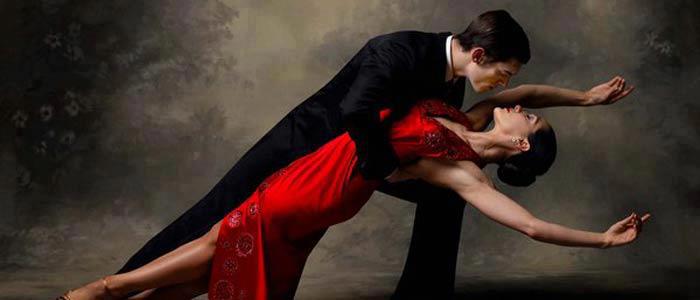
La Vida es Un Tango. Movie still or advert. Source: Facebook.

La Vida es Un Tango. Movie still or advert. Source: Facebook.

Ambre Nuit was released in 2009, the creation of François Demarchy, the artistic director and nose for Parfums Dior. Dior categorizes the fragrance as an “amber woody floral,” and provides the following description:

Source: Basenotes.

Source: Basenotes.

A mysterious fragrance, inspired by the baroque atmosphere and balls of the 18th century, which left their marks on Christian Dior. The tale of a Rose seduced by carnal Amber, which together unveil an unexpected profound, intense and elusive scent.

Describing Ambre Nuit as a “rose” fragrance might be little misleading, in my personal opinion. It is most definitely not that on my skin for the majority of its development, nor for many others. In fact, I would say that “rose” is almost the least of things I experienced with this smoky, woody, amber fragrance. Dior’s list of notes include:

Bergamot di Calabria, Turkish Damascus Rose Essence, New Zealand Ambergris, Gaiac Wood, Cedar Wood and Patchouli.

Fragrantica adds pink peppercorns; Ozmoz adds spices and balsam notes; and I would toss in both frankincense and myrrh. The real key, however, is the ambergris which is a whole other olfactory animal than the regular amber used in the majority of perfumery. A very rare, astronomically expensive ingredient, ambergris has a strong, salty-sweet character that is always sensual, often slightly musky, occasionally a little animalic, and usually so creamily rich that it can border on ambered caramel.

"Tango and Cobblestones",  painting by Aldo Luongo. Source: ipaintingsforsale.com

“Tango and Cobblestones”, painting by Aldo Luongo. Source: ipaintingsforsale.com

Ambre Nuit opens on my skin with sweet, refined patchouli, followed by sun-warmed bergamot and pink peppercorns. Unlike the patchouli note in many commercial fragrances, nothing here smells like the sharp, plastic-y, highly synthetic ingredient that is always painfully loaded with purple fruitness. Though the patchouli smells a little grape-y at first, it is a very refined, subtle aroma that is actually a little black in nature. It has a smokiness that would imply incense as a hidden note, something that is borne out later by the rest of Ambre Nuit’s development. From the start, though, something about the patchouli and smoke accord in Ambre Nuit reminds me of Chanel‘s gorgeous, glorious Coromandel from its Exclusifs collection. 

Source: YouTube.com

Source: YouTube.com

The pink peppercorns in Ambre Nuit differ slightly in aroma from that used in commercial, mainstream perfumery. They have a fiery, spicy edge that evokes red, chili or pimento peppers, instead of something wholly fruity in nature. (The excessive, pink peppercorn and patchouli combination in Marc JacobsLola comes to mind when thinking of things that Ambre Nuit does not resemble!) Here, the pepper infuses the subtle, muted rose note, along with the patchouli, turning the flower into something red, rich, and darkened. Yet, the rose is never so syrupy or sweet as to feel jammy and fruited; it’s too smoky and dry for that. 

All the main top notes sit upon a base of beautifully dry, rich, nuanced woods with amber. The accord is smoky from the gaiac; peppered and aromatic from the cedar; and burnished to a soft, rich edge from the ambergris. The latter feels very much like the real stuff with its salty, musky facets. Here, however, the ambergris also has a subtle undertone of something that is simultaneously honeyed and almost boozy. I suspect the combination of the patchouli, peppercorns, and ambergris is responsible for the almost cognac-like, liqueured undercurrents running through Ambre Nuit.

Ambre Nuit’s nuances in the early stage really show themselves best when a large quantity is applied, but there are dangers with that, as well. I tried the perfume twice, with the first test consisting of one, medium-ish smear, and the second entailing about 2.5 very large ones. With the smaller quantity, it’s harder to detect the full range of the perfume’s layers; Ambre Nuit is so well-blended that it ends up becoming just a single, very smooth, almost abstract, smoky, woody, ambery bouquet after the first thirty to forty minutes. With a larger dose, you can see more of the nuances in the fragrance, but then the pink peppercorns can verge a little on the over-bearing. For me, at least, it was a little sharp, unbalanced, and just tipping towards the screechy category. It wasn’t a problem at all with the smaller dose, so I suspect one has to go the Goldilocks’ route and try for a dose in the middle. Regardless of quantity, in its opening half hour, Ambre Nuit is a beautiful, very potent blend of smoky, liqueured, salty-sweet amber, with dry woods and a quiet touch of delicate roses that have been rendered a little fiery from the peppers and a little sweet from the patchouli.
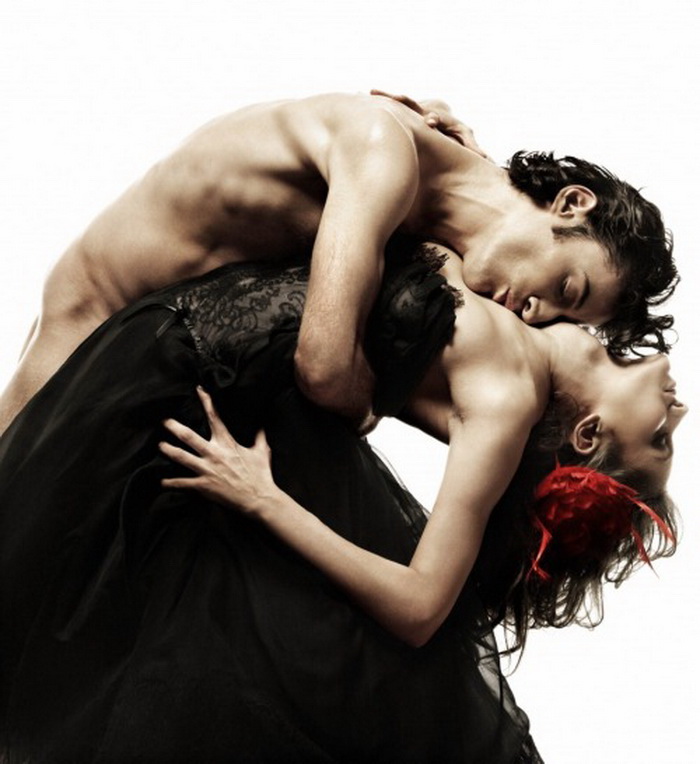
"Dancers" photograph by Erwin Olaf. Source: KontraPLAN magazine.

“Dancers” photograph by Erwin Olaf. Source: KontraPLAN magazine.

What fascinates me, however, is the patchouli and incense combination in Ambre Nuit. I am convinced that there is incense in the perfume. It is as though Dior decided to do a variation of the note in its divine Mitzah, another smoky, oriental, rose-based perfume, but Dior opted to combine incense with ambergris in lieu of Mitzah’s labdanum. Ambre Nuit has the exact same sort of subtle smokiness in the base. The patchouli is a perfect accompaniment to both elements: it’s a little 1970s, hippie-ish, except it’s so refined in Ambre Nuit that it lacks any skanky, musty, musky, pothead-type of dirtiness. Underlying the smoky, salty, sweet notes is an unexpected honey tone that must come from the ambergris. It has subtle beeswax nuance to it as well, which just adds to the richness and depth of the base.

Thirty minutes into Ambre Nuit’s development, the woody notes start to rise to the surface. Gaiac can sometimes have a slightly tarry, asphalt-like character, while at other times, it can smell like burning leaves. Here, both aspects lurk under the creamy, soft, smooth wood. When combined with the incense notes in Ambre Nuit, it serves to create a wonderfully dry accord that counterbalances any sweetness from the patchouli and offsets any heaviness from the ambergris.

"Tango": Freja Beha Erichsen and Baptiste Giabiconi by Karl Lagerfeld for German Vogue.

“Tango”: Freja Beha Erichsen and Baptiste Giabiconi by Karl Lagerfeld for German Vogue.

There is something extremely sensuous about the combination of notes in Ambre Nuit that consistently make me think of an Argentinian tango between heated dancers in some smoky, dark room — except they are dressed in the most refined, elegant, couture outfits. The ambergris’ special, unique features evoke the warmth of heated, slightly musky skin that has been rendered just the faintest bit salty from sweat. The incense conjures up the smoky, dark feel of those dance rooms, while the gaiac and cedar replicate the incredibly smooth, wooden floors that the dancers glide across. The rose note is nothing more than a mere accessory, as inconsequential as the flower in a dancer’s hair, and hardly a significant part of the scent on my skin, especially as Ambre Nuit continues. All the notes, however, are very smooth and refined, thereby ensuring that Ambre Nuit stays a level above the many, mainstream, commercial scents that have similar elements. I must confess, though, I worry a little about those pink peppercorns which could have been handled with a slightly softer touch. They are the only thing that tarnish Ambre Nuit’s more sophisticated balance.

At the end of the first hour, Ambre Nuit is a gorgeous, smoky ambergris perfume. There is a sweet-salty creaminess which is infused by incense, a light flicker of warm musk, a dash of honey, and a tinge of beeswax — all atop very dry, smoky woods. The patchouli has melted into the ambergris, adding to its rich sweetness. And the rose has completely vanished. As a whole, Ambre Nuit  is a little too potent in its sillage in the early hours to be called “airy,” but it has a very plush feel that is as rich as velvet. And, yet, it is not opaque, heavy, or unctuous in any way.

Ambre Nuit never changes in its core essence, but some of its notes fluctuate in prominence. Around the middle of the second hour, the peppery gaiac wood takes the lead, followed by the ambergris, then the smoke, and trailed much further behind by the patchouli. The end of the third hour, however, sees the patchouli join the smoky woods and ambergris in a three-way tie. The whole thing is sweet, salty, smoky, a little bit musky, and absolutely beautiful. Again, the subtle similarities to Chanel‘s Coromandel raise their head for me. Ambre Nuit is significantly woodier and drier, and lacks the delicate, white cocoa powder, benzoin, and vanilla undertones of Coromandel. Yet, oddly enough, the patchouli in Ambre Nuit has taken on a distinctly chocolate-like nuance at its base, though it’s more akin to a gooey, dark chocolate ganache than the airy, white cocoa powder of Coromandel. Still, the way both fragrances are so infused with smoky incense and patchouli, that they feel like very distant cousins.

Ambre Nuit slowly grows closer to the skin, turning softer and more ambered in focus. Around the end of sixth hour, there is an odd quirk which occurred during both tests: the smoke takes on a soapy, white character that reminds me of myrrh. It only lasts about forty minutes, but it was noticeable enough to make me sit up on both occasions and think that the incense had become very churchy. It quickly fades, leaving Ambre Nuit’s remaining and final notes in the drydown phase as an abstract amber that is simultaneously a little dry, a little sweet from the final flickers of patchouli, and a little musky.

Like all of Dior’s Privée fragrances, Ambre Nuit has excellent longevity on my perfume-consuming skin and generally moderate sillage. Ambre Nuit lasted just under 8.5 hours on me with a single, medium-ish smear, and over 11.75 hours with 2.5 large ones. The sillage is significantly greater than some of the other Dior Privée fragrances, no doubt due to the impact of the patchouli which is always a more projecting ingredient. With the larger dose, Ambre Nuit wafted a good 4 inches above my skin for the first hour, thereafter dropping and becoming slightly less. But it took a whole 8 hours before it became a skin scent. If you work in a conservative office environment, I would suggest not spraying with abandon, especially as aerosolisation can increase a perfume’s potency. (Plus, there is that whole issue of needing to create a delicate balance with the pink peppercorns.)

Ambre Nuit is extremely well-liked, with raves on Fragrantica and elsewhere about its sophisticated, refined, opulent and very versatile nature. Interestingly, for some, like the Candy Perfume Boy, Ambre Nuit is much more of an oriental rose fragrance, calling to mind Le Labo‘s woody Rose 31, only with a slightly powdery undertone to the floral note. He adores it, and calls it “utterly fabulous.” For me, Rose 31 was mostly peppery cedar, with massive amounts of ISO E Super and a very muted rose, while Ambre Nuit had no powder at all — clearly, skin chemistry makes a difference. On Fragrantica, the talk isn’t about the powder, but about differing experiences with the rose. For some, it only appears midway during the perfume’s development, while others find it noticeable as a rich, aromatic rose from the start. There is also quite a bit of talk about the incense in the fragrance, too, with one commentator reaching the same conclusion that I did: both incense and myrrh must be part of Ambre Nuit. Others find the opening of Ambre Nuit to be both bright and significantly more citrus-like in focus than it was for me, with zesty grapefruit and bright bergamot.

Regardless of the variations, almost everyone adores Ambre Nuit and, for some, it is the best of the Dior Privée line. I don’t love Ambre Nuit as much as I adore its sibling — the labdanum-incense beauty that is Mitzah — but then, there aren’t a ton of things I like as much as Mitzah. Still, I definitely think it is worth checking out if you are a fan of easy, accessible amber fragrances. It’s not a revolutionary, edgy, unique amber fragrance; and it’s not a heavily spiced or very unctuous, opaque, fully baroque one, either. But it’s not meant to be any of those things.

Dior’s signature perfume style is to create incredibly smooth, refined, well-blended, generally unisex fragrances that take a slightly typical combination of notes, and raise it to a higher, almost couture-like level through the best ingredients and superior crafting. Dior is intentionally trying to create very accessible fragrances, but it wants them to be the height of refinement, sophistication, and discreet elegance. Ambre Nuit is no exception, though the fragrance is significantly more powerful than its softer, more unobtrusive, but equally elegant, siblings. (With great caution in spraying, Ambre Nuit might be appropriate for some conservative office environments.) For some who seek a more revolutionary, perhaps more unique bent to their amber fragrances, Ambre Nuit will probably be a little safe and little uninteresting. But I doubt they’d argue with its silky smooth nature, or with its luxurious undertones. As an added bonus, Ambre Nuit is almost cheap per ounce, relatively speaking, given the quality and the enormous size that Dior provides for its “small” version. The perfume costs $155 for a whopping 4.25 oz/125 ml — almost a full ounce more than the normal “large” version of most perfumes. (You should see the truly large Dior size at a behemoth 15.2 oz or 450 ml! You could use it as a cudgel or weapon!)   

For me, what distinguishes Ambre Nuit from some other ambers on the market is the glorious sensuality of its rare ambergris. When combined with the incense, the smoky, sweet-salty result is damn sexy. Watch the video below, listen to the music and how it undulates in different tempos, and see the lithe, swaying, connected bodies move. That’s Ambre Nuit for me.


DETAILS:
Cost & Availability: Ambre Nuit is an eau de parfum that is available exclusively at Dior boutiques, at Dior online, and a few select, high-end department stores. Dior Privé perfumes come in two sizes: the 4.25 fl oz/125 ml costs $155, while the 8.5 fl oz/250 ml costs $230. (There is a third option which is so enormous, I can’t imagine anyone buying it.) In the U.S.: Ambre Nuit found at Dior’s NYC boutique, and at the main Las Vegas store [call (702) 369-6072]. If you’re really interested, however, what I would do is to call this number instead — (702) 734-1102 — and ask for Karina Lake, the Dior Beauty Stylist at the Las Vegas store. She is an amazingly sweet lady who will also give you a free 5 ml mini bottle of the Dior perfume of your choice, along with 3-4 small 1 ml dab vial sample bottles, to go with your purchase. Even better, you will get free shipping and pay no tax! Tell her Kafka sent you. Elsewhere, New York’s Bergdorf Goodman and San Francisco’s Neiman Marcus also carry the Dior Privée line collection of perfumes.
Outside of the US: you can use the Points of Sale page on the Dior website to find a location for a Dior store near you. You can also navigate the Dior website’s International section to buy the perfume online. The problem is that the site is not very straight-forward. If you go to this page, look at the very far right to the bottom where it will say, in black, “International Version” and click on that. You should see options for Europe, Asia-Oceana, and South America. Within Europe, there are different sub-sites divided by country. The one closest to you should have the perfume available for sale.
Samples: If you want to give Ambre Nuit a sniff, samples are available at Surrender to Chance where prices start at $3.00 for a 1 ml vial. If you’re interested in trying the whole Privée line (minus the new Gris Montaigne), Surrender to Chance sells all 13 fragrances in a sampler set for $35.99.

Perfume Review – Amouage Fate (Man)

Corsica is usually associated with its rocky cliffs, Napoleon, and the Mediterranean sea, but I think Corsica has a special smell, especially inland: slightly dusty, dry, very woody, and sweetly floral. In parts (namely those where I was clambering up rocky mountains like a dying billy-goat), it smelled strongly of immortelle, a flower which is very common to the island, sweet woods, dried greens, and dustiness. So it is Corsica which comes to mind when I tried Fate (Man), the dry, woody, immortelle-based fragrance that is the latest release from the royal perfume house of Amouage.

Corsica. Photo by: Rolling Thunder. Source: Trailjournals.com http://www.trailjournals.com/entry.cfm?id=393192

Corsica. Photo by: Rolling Thunder. Source: Trailjournals.com
http://www.trailjournals.com/entry.cfm?id=393192

Fate — in a dual Men and Women’s versions — was launched just last week in Oman, and will be officially released worldwide in July. A reader of the blog, “Dubaiscents,” whose generosity is only surpassed by her thoughtfulness, sweetness and kindness sent me a sample of both fragrances. I thought I would start with Fate for Men (hereinafter just “Fate”) which was created by Karine Vinchon-Spehner, and which Amouage describes as follows: 

Fate for Man is a spicy and woody construction parodying the force and power of the inevitable.

Top notes: mandarin, saffron, absinth [wormwood], ginger, cumin.

Heart notes: everlasting flower [Immortelle], rose, frankincense, lavandin, cistus, copahu.

Base notes: labdanum, cedarwood, liquorice, tonka bean, sandalwood, musk.

Source: CaFleureBon

Source: CaFleureBon

There is a detailed backstory in the official description of the fragrance about how the “Book of Fate is opened by the mysterious puppetmaster and the carousel, symbolising the wheel of fortune, is set in motion.” There is also talk about how “’Fate’ for man and woman explores the uncertainty of the future and the universal principal [sic] by which the order of things is inescapably prescribed. In his latest conquest, Amouage Creative Director Christopher Chong proclaims a finale that parodies the force of the inevitable, veiled in the mysticism of the unknown.” It’s lovely prose, but it’s not what comes to mind when I wear the perfume. I simply see sunny Corsica.

I tested Fate twice and, while the openings were largely the same, the nuances were slightly different. The first time, Fate opened on my skin with a split second burst of citrus that was quickly replaces by loads of ginger and flickers of dry cumin powder. The scent was simultaneously sweet, pungent, sharp, and slightly dusty in a dried, herbal, powdered sort of way. Immortelle soon followed, and it was my favorite manifestation of the note: the dry, floral aspect where you can smell the flowers as well as the slightly herbal stem. Underlying the whole thing was an amorphous woody base that smelled sweet but dry. The focal point of the opening minutes, however, was the ginger which felt pungent, spicy, biting and a little sharp.

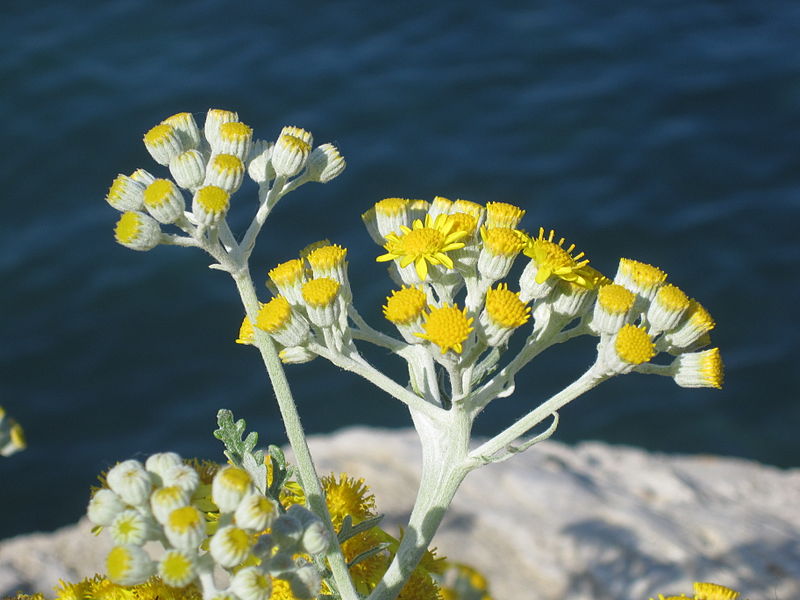
Immortelle, or Helichrysum in Corsica. Source: Wikicommons.

Immortelle, or Helichrysum in Corsica. Source: Wikicommons.

iStock photo via Wetpaint.com

Ginger. iStock photo via Wetpaint.com

The second time I tried Fate, it opened with that same fleeting citrus element, but the main thrust was immortelle. There were flickers of abstract woodiness, ginger, sweetness, and the same subtle hint of cumin powder, but it was the immortelle that really dominated the show. This time, it was beautifully infused with a honey nuance which I assume stemmed from the labdanum in the base. The ginger was much less powerful, and it had different undertones. It was simultaneously like sharp, fresh ginger, but also a little more like dry, ginger powder, and lightly sugared, crystallized ginger as well. This time, the herbal element was also different. Instead of some nebulous “dry green” note, I smelled something that was just like dried tarragon with its anise-like undertones. I know licorice is one of the elements in Fate, but, to me, that has the aroma of the chewy, black candy with its sharper, darker characteristics. What I smell in Fate in the opening hour is something much more like herbal anisic facets of dried tarragon.

Artemisia Absinthe or Wormwood. Source: Esacademic.com

Artemisia Absinthe or Wormwood. Source: Esacademic.com

Despite these subtle differences, the rest of the perfume’s development remained largely the same in both tests. Five minutes in, the wormwood (also known as absinthe or Artemisia absinthium) starts to rise to the surface. It’s sweet, but has a faintly medicinal nuance that smells a little rotten and that strongly evokes the “noble rot” of agarwood (oud). Flickering in the background is a light, muted incense. The cumin has completely vanished from sight — something that will undoubtedly be a relief to the many cumin-phobes out there. I’ve read a few accounts where people have said that they experienced quite a bit of cumin at the start, but the note seems to be a dry, powdered one on their skin, too, and nothing reminiscent of stale, fetid sweat or Indian curries.

As time passes, Fate settles down into its primary essence in this first stage: a dry floral arrangement of immortelle with ginger, sweetened but slightly medicinal wormwood, and frankincense. In the background, there are muted, ghostly flickers of a dry vanilla and warm, sweet muskiness that pop up every now and then. The interesting thing about the scent is the wormwood. It has a slightly oud-like nuance, but it is also sweetened and honeyed. The primary notes fluctuate in intensity, but the overall bouquet remains largely unchanged.

The odd thing about Fate was that the dominant facet seemed to depend largely on temperature. Given where I live, I have the air-conditioning set at very chilly temperatures, and the wormwood in Fate seemed to take on a slightly biting, sharp, bracing tone in the opening hours. However, whenever I went outside into the warm, humid air, the note immediately turned soft, rounded, smooth, almost creamy, and definitely sweet. All medicinal elements retreated, until I re-entered the house and was exposed again to the arctic air. I tried it a few times to see and, each and every time, Fate bloomed in the humid, night air to become significantly more floral and with a sweeter, less oud-like version of wormwood.  

Incense stick. Source: Stock footage and Shutterstock.com.

Incense stick. Source: Stock footage and Shutterstock.com.

Two hours into Fate’s development, the whole thing changes quite dramatically. Indoors or outdoors, Fate has suddenly become a very ambered, sandalwood fragrance that is smoother, warmer, and better rounded. The wormwood’s medicinal veneer has been replaced by a lovely coating of honey from the labdanum, while a lightly peppered cedar stirs in the base. My favorite part, however, is the sandalwood which is rich, creamy, and warmly spiced. It’s absolutely beautiful. Furthermore, to my surprise, the immortelle has remained as a floral element, and hasn’t turned into the maple syrup that I dread so much. The dried, green, anisic herbal note still lurks underneath, but now, it is also joined by black licorice that is lightly salted and sweet. A hint of creamy, slightly vanillic lavender wafts daintily about, while a sweet muskiness dances at the edges like a golden light. The entire thing is intertwined by tendrils of frankincense smoke which tie the elements together like a ribbon does a bouquet.

Fate remains that way for many more hours. The bouquet of notes softens and becomes a skin scent around the start of the fourth hour, but the scent lingers for much longer. Around the sixth hour, Fate turns quite abstract and nebulous: it’s now simply immortelle woodiness infused by a light, sweet muskiness. It’s so sheer, you may think it’s gone, but Fate hangs on tenaciously. In its dying moment, a little over 10.25 hours from its start, Fate is nothing more than a vague, sweet woodiness. Both the middle phase with its beautiful sandalwood amber and the abstract drydown stage are absolutely lovely. Fate’s longevity was good on my voracious skin, but the sillage was moderate to soft. I sprayed, not dabbed, so I actually expected something much more powerful from Fate (especially given Amouage’s usual full-throttled nature), but the furthest it projected was in its first hour when it wafted about 3 inches above the skin.

Fate is a phenomenally complex, extremely unusual, refined, sophisticated scent that initially takes a little adjustment, but which definitely grows on you. The first time, I was very intrigued, but not wowed. I have a tendency to prefer the Women’s versions of Amouage fragrances as they are generally sweeter and not as dry, but the second time I tried Fate, I definitely sat up a little straighter. There is something fascinating about the notes, and the heat definitely improved the scent, in my opinion, by smoothing out some of the more bracing elements of the opening. It also rendered the perfume slightly sweeter which is something you may want to consider when testing Fate.

I think men will go quite crazy for Fate (Man), but I think a number of women will, too. Even though women will have their own version of the scent, Fate (Man) has such perfectly balanced sweetness in its undertones that it renders the fragrance quite unisex, in my opinion. If you like dry, spiced, woody fragrances or oud ones, and if you’re intrigued by the thought of Amouage’s signature frankincense combined with an unusual floral like immortelle, then I think you should definitely seek out a sample.

Fate Man with box.

Fate Man with box.

With Fate, Amouage continues its distinction of being at the forefront of original fragrances that abound with depth, nuance, layers and complexity. Honestly, this is not a perfume that you may adore at first sniff, but it will keep you thinking, sniffing, and trying to pull apart all those beautifully crafted, well-blended layers. And the more you sniff it, the more it seems to sink its elegant, little floral-woody-smoky talons into you. By the time you’re finished, and you set eyes on that simply spectacular iridescent bottle, I fear you may be quite hooked. Even if, at the end, it turns out that you’re not fated for true love, I think you’ll concede that it’s a perfume worthy of huge respect. Try it, and see what your Fate will be.


DETAILS:
Availability & Stores: Fate (Man) is an eau de parfum and is available in two sizes: 1.7 oz/50 ml which costs $280 or €220; or 3.4 oz/100 ml eau de parfum which costs $340 or €270. As of the time of this post, the perfume is not yet officially released beyond the Amouage website and boutiques, but it will be widely available as of July 2013. Unfortunately, the perfume is currently sold out on Amouage online, but I’m sure that will be remedied soon. I will update this post with retail links much later when the perfume is officially released and becomes widely available. 

Perfume Review – Fiore d’Ambra by Profumum: Opium Amber

Photo series for Interview Magazine by Mert & Marcus.

Opium den photo series for Interview Magazine by Mert & Marcus.

The room was a glowing box of silk and soft woods, decorated in shades of gold, bronze, umber, red and brown. The one touch of colour came from the crimson lacquered boxes emitting smoke. It was an opium palace, an amber palace, a place of soft luxury. As the woman stood at the threshold, she took one long, red-taloned finger and ran it down the column of her neck. She could feel the smoke, spices and vanillic powder coating her bare skin, cloaking her in its soft, sheer, silken caress. She could smell cinnamon and cloves, and perhaps a touch of carnation. She wished she could bottle the aroma forever.  

Photo series for Interview Magazine by Mert & Marcus.

Opium den photo series for Interview Magazine by Mert & Marcus.

Someone has. It is the smell of Fiore d’Ambra, a soft, dry, spicy, slightly powdered and vanillic amber eau de parfum from Profumum (sometimes called “Profumum Roma” or “Profvmvm,” but also written as “Pro Fvmvm” on the company’s website). I should confess here and now that Profumum has become my latest obsession, a house that seems tailor-made for my tastes with the richness of their perfumes — perfumes that are said to have 43% to 46% perfume oil. It’s astoundingly high, the highest I’ve ever seen, but you know what? You can smell it. It shows in the richness of the fragrances which have, somehow, also managed the feat of feeling airy and light. I don’t quite know how Profumum did it, especially given how they use the richest ingredients that always feel opaquely luxurious, but they have. And now, I’m completely obsessed. 

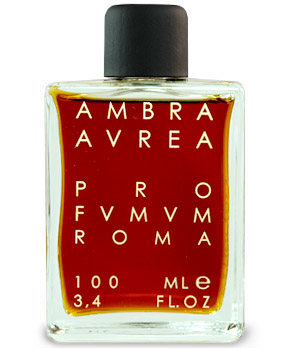
Profumum Fiore d'AmbraFiore d’Ambra is different from its almost twin sister, Ambra Aurea, a scent which many consider to be one of the best amber perfumes around. (I think it is!) But Fiore d’Ambra is also excellent. Profumum‘s website describes it very simply:

A candle diffuses the scent of opium and amber
An elegantly unmade bed
And my book on the night table.
In my mind thoughts of her.

[NOTES:] Opium flowers, Amber, Spices

I haven’t the faintest clue what “opium flowers” may be, since I highly doubt Profumum has mined poppy flowers from the fields of Afghanistan, but Fiore d’Ambra opens on my skin with a blast that takes me back to my beloved: YSL‘s vintage Opium. Whatever those “opium” notes may be, Fiore d’Ambra replicates some of the base elements in Opium with its dry, highly spiced, warmed woods. It’s not the power of suggestion; I suspect the similarities stem from a heaping dose of cinnamon and cloves that have combined with the amber and, I’d bet, a small dose of ambergris as well. There is also a nebulous, rich but airy, dark floral scent flickering around the edges. I couldn’t figure it out until I saw a Basenotes commentator say that he smells carnation, and I’d bet he’s right.

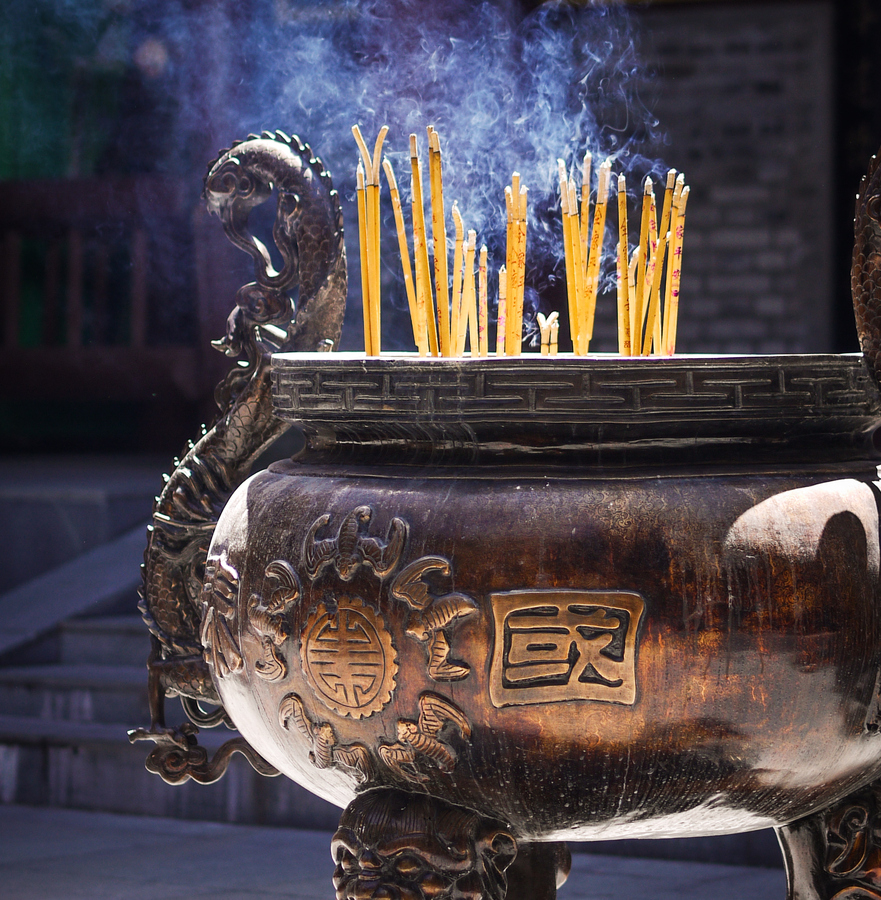
China Incense - Don Daniele at 500px Com http://500px.com/photo/17207583

Incense in China – Don Daniele at 500px Com
http://500px.com/photo/17207583

There are other things that must be lurking in Fiore d’Ambra as well. Incense, to begin with. I’d venture it is primarily frankincense with its sharper, slightly more forceful, biting character, but also some myrrh as well, since the perfume develops a somewhat nuttier, softer sort of smoky edge later on its development. In addition, there has to be benzoin, as Fiore d’Ambra takes on a slightly powdered vanillic base, along with sandalwood and perhaps another sort of medium-dark wood accord .

Whatever the particular makeup of Fiore d’Ambra, it is a superbly blended perfume. It may have certain notes rise to the surface as the others retreat, it may undulate like the waves in terms of intensity, but its primary character never really changes: soft, dry amber infused with spices, a slightly herbal note, incense, and a dusting of vanilla powder. In the very opening moments, the “opium” is fierce, the smoke is fiery, and both elements are accompanied by something a wee bit bitter at the edges as well as an extremely subtle green, herbal note. Soon, the amber in Fiore d’Ambra softens, turning slightly woody, but always infused by notes of cinnamon, perhaps star anise and cloves, and the start of the lightest powder imaginable. With every passing hour, the perfume softens in its elements, especially the smoke. Eventually, about six hours later, Fiore d’Ambra is a powdered, cinnamon, vanilla-caramel amber with the merest whisper of a herbal note. In its final moments, Fiore d’Ambra is just a sheen of soft, warm vanillic powder with a flicker of amber.

All in all, Fiore d’Ambra lasted a surprisingly short 8.5 hours on my perfume consuming skin — and I sprayed, not dabbed, quite a bit. I expected much, much more from a perfume that is supposedly 43% concentration, especially as the smallest smears of its sister, Ambra Aurea, lasted a good 13.5 hours and 16 hours on my voracious, perfume-consuming skin. The sillage of Fiore d’Ambra was also lower than I expected, though slightly more in keeping with that of Ambra Aurea. Neither perfume is going to project across the room, but Fiore d’Ambra was particularly soft.

There aren’t a lot of in-depth reviews for the perfume out there, probably because Fiore d’Ambra isn’t a very complicated scent at the end of the day, but there is a very positive short one from Nathan Branch who writes:

Starts off as a powdery soft, pleasantly sweet amber perfume and crosses the finish line as a musky, woodsy fragrance shrouded in a lightly powdered veil.

Layers of cinnamon and clove (or what the manufacturers call “opium”) add a bit of spice, with the ambergris at the base (and it smells like the real deal) diffusing like clockwork to achieve an earthy and sophisticated finish.

Fiore d’Ambre is restrained and feminine — nothing wild, experimental or unusual, but anyone lucky enough to lean in close will think you smell intoxicatingly lovely. In fact, I think I’m getting drunk on it as I type this . . . *hiccup*

A more detailed assessment of Fiore d’Ambra comes from a Basenotes poster, “sommerville metro man,” who seems to have the same experience that I did:

I do enjoy my amber centered scents and Profumum has one of my favorites in Ambra Aurea which used amber in a way which brought out its more strong lines. In this 2008 release Fiore D’Ambra chooses to explore the sweeter side of amber and is just as successful as its predecessor. Profumum can be frustrating with their note lists, for instance the note list for this scent is ambre gris and opium. Who knows what that means but it does free one to experience a scent without too many pre-conceived notions of what should be there. Other, than of course, amber which is in the name. From the top the amber is present and this is a sweet amber full and round. It is paired with a lovely sweet incense accord that amplifies the sweeteness of the amber without taking over the scent. The amber persists into the heart where there is a spiciness present but it has a floral character to it which makes me think carnation because there is a hint of clove. Again this is partnered well with the amber as the contrast brings out a different facet of the amber. In the base a soft creamy sandalwood mixes with the amber to finish this off in traditional territory with an accord I’ve smelled many times before and it feels like coming home as the amber and sandalwood mix together like peas and carrots. Profumum have now done two very different takes on amber and Fiore D’Ambra is every bit as good as Ambra Aurea, to me. If I was to be stuck with only these two scents as my amber contingent in my wardrobe I’d be fine with that.

I completely agree with his last sentence because both perfumes are very well done. I happen to prefer Ambra Aurea just by a hair because I love its honeyed, satiny, salty, nutty, caramel ambergris and because I think it’s richer, stronger, and slightly more unusual (real ambergris!). But the spices, smoke and powder in Fiore d’Ambra are lovely, and I could easily be happy with just that one if I didn’t know of its twin sister’s existence. Ultimately, I think it’s a question of personal tastes as to which one will suit you best. Take, for example, the rapturous assessment by one Profumum fan who likes Ambra Aurea, but who is utterly enamoured by the refinement and vanilla base of Fiore d’Ambra:

The prestigious, glorious, heavenly diamond of Ambers. This turned out to be the best out of the following:

Ambra Aurea by Profumum, Ambre Russe by Parfum d’Empire, Ambre Sultan by Serge Lutens, L’eau d’Ambre Extreme by L’Artisan Parfumeur, and various other pure Amber oils and paste.

Fiore d’Ambra is refined without the funk stink of Ambre Sultan, Ambra Aurea that I found. It’s an uplifting ethereal rich amber with a vanilla like warmth. And at the top is just a hint of spiciness that is so fine it makes the whole vessel skyrocket. I was haunted for a month by this as a sample, but the price made me seek as many other options as possible. This is the winner – very precious, rare, and expensive.

The magic of Fiore sits just above unisex to me, into a feminine leaning, but ultimately transcends gender in it’s opulent luxury. Sillage is high in my opinion, and longevity is satisfying. I can still smell this on my skin waking up in the morning.

Ambra Aurea

Ambra Aurea

Honestly, you have to try both. I don’t care which one captures your heart and soul; if you are an amber lover, you simply have to try both. They may be a little linear, they may not morph into a thousand and one things, and they both may be a little soft in sillage, but I’m telling you, the Profumum ambers are magic, simply magic. If you’re a hardcore Orientalist, I will bet you my bottom dollar that you will fall for the opulent richness of one of them. (You can read my review of Ambra Aurea to help you decide which one to start with, if you don’t want to get samples of both.) I have already made plans with some friends to split a bottle of Ambra Aurea three-ways, and, thanks to the generosity of a very sweet friend of mine, have a small one of Fiore D’Ambra to tide me over for now.

But there is no stopping this obsession of mine with both perfumes (I plan to layer them for the ultimate amber experience), and with the line as a whole. In fact, I have the new(ish) Olibanum (incense, myrrh, orange blossom and sandalwood) to review later this week, and will then set my sights on trying Fumidus (which is supposed to smell like smoky Laphroaig scotch with vetiver and birch notes) and work my way through the rest of the line. It’s a testament to Profumum, its quality, its richness, and its opulent luxuriousness that — my loathing for gourmet fragrances be damned — I will even get the vanilla Vanitas and the orange-vanilla Dulcis in Fundo at some point down the road. Surely that tells you something!

I realise I sound completely deranged with obsession and lust, but I’m telling you: you must try this shamefully (shamefully!) under-appreciated line of fragrances. You simply have to!

DETAILS:
Cost & Availability: Fiore d’Ambra is an Eau de Parfum that only comes in a large 3.4 oz/100 ml bottle which costs $240 or €179. In the U.S.: it is available at Luckyscent and OsswaldNYC. Outside the U.S.: In the UK, Profumum perfumes are sold at Roja Dove’s Haute Parfumerie in Harrods. Elsewhere, you can find Fiore d’Ambra at Paris’ Printemps store, Switzerland’s OsswaldPremiere Avenue in France (which also ships worldwide, I believe), and Parfumerie Soleil d’Or. According to the Profumum website, their fragrances are carried in a large number of small stores from Copenhagen to the Netherlands, Poland, France, the rest of Europe, and, of course, Italy. However, Profumum itself does not have an e-Store. You can use the Profumum Store Locator located on the left of the page linked to above. Samples: Surrender to Chance carries samples of Fiore d’Ambra starting at $4.99 for a 1/2 ml vial. You can also order from Luckyscent.

Perfume Review: Mona di Orio Eau Absolue (Les Nombres d’Or)

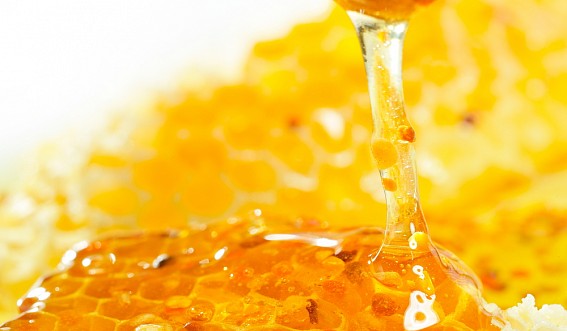
A lazy day in the sun. The summer’s heat brings out the spiciness of the sugar cane and Jamaican bay trees in the distance. Oranges and lemons hang heavy from the trees in a grove nearby. As the heat warms your body even further, you stretch out on your chaise lounge by the pool and reach for a refreshing glass of lemonade. And then you slather sweet, citrus-infused honey on yourself as if it were suntan lotion.

knstrct.com

knstrct.com

Images of sun, heat, honey and citrus are what come to mind when I wear Eau Absolue, the latest release from Mona di Orio and part of her Nombres d’Or Collection. Mona di Orio was an extremely talented perfumer who died tragically at the age of 41 in 2011 from post-surgical complications. Yet, the new Eau Absolue is her creation, based on a formula made by Ms. Orio before her death as an ode to the Mediterranean. According to an article on Now Smell This, Mona di Orio’s business partner and the company’s co-founder,Jeroen Oude Sogtoen, was determined to remain faithful to her formula, her vision, her style and her legacy, so her formula has not been altered in any way.

Mona di Orio Eau AbsoluePart of that Mona di Orio signature style is something called “Chiaroscuro.” It is a term which refers to the interplay between dark and light, and a way of creating depth or three-dimensionality by using sharp, bold contrasts. The chiaroscuro construction is very much at play in Eau Absolue which is described on the Mona di Orio website as a “Hesperide Woody Balsamic” with the following character:

Eau Absolue is a memoir steeped in Mona di Orio’s love for the Mediterranean. Composed in her signature olfactory chiaroscuro construction, the scent envelopes in joyous warmth.

Eau Absolue effervesces like a summer breeze carrying a zestful bouquet of bergamot, mandarin, clementine and Petitgrain. These bright, convivial citruses splash against the epicurean spice of pink peppercorn.

The scent becomes earthy and softly floral, with whispers of geranium, dry vetiver and balsamic St Thomas Bay Leaf. The nocturnal shade intensifies, arching ever deeper, until plunging directly into a caress of cistus labdanum, the ambry smell of the Mediterranean, and sensual musk, an elegant and intoxicating denouement.

Eau Absolue Notes:
Sicilian bergamot, clementine and Petitgrain Citronnier, Litsea Cubeba from China, Egyptian geranium, vetiver from Java & Haiti, Jamaican St. Thomas Bay Leaf, pink peppercorn from Peru, cedar wood from Virginia, musk, cistus labdanum.

A brief explanation of some of these notes may be useful. According to my research, Litsea Cubeba (or “May Chang”) oil comes from an evergreen tree or shrub native to China. It possesses a lemon-like odor that has sometimes been compared to lemongrass or lemon verbena, thought it is supposedly sweeter than lemongrass. As for Jamaican St. Thomas Bay Leaf (Pimenta racemosa), its aroma isn’t like that of the dried leaves used in cooking. Instead, it is said to have a spicy, balsam-like odor that is like a resin, though some say it’s also a little like cloves due to all the eugenol in the plant.

Orange and lemon via Herbal Teas InternationalFrom the very first sniff, Eau Absolue is a rich lemon-honey fragrance. The honey is not dark but sweet, imbued with delicate floral notes and strong dashes of that litsea cubeba. It really smells as described: like lemongrass but sweeter; like verbena but richer and without any soapiness. It’s heady and beautiful. There is also a subtle, sweet muskiness underlying the notes. Slowly, slowly, as if on tiptoes, there is: a hint of juicy, fresh mandarin orange; the spicy resin of the St. Thomas Bay leaf; a ghostly bit of petitgrain with its bitter, woody nuance; and the merest pinches of cedar.

Source: Mobiwalt.com

Source: Mobiwalt.com

And that generally is the sum-total of the entire fragrance for most of its lifespan on my skin. Eau Absolue fluctuates in the depth, degree or intensity of some of its notes, but the primary bouquet remains the same with absolutely no change or additions. Even out of those original notes, the main, dominant scent on my skin is a lovely lemon-infused honey with spicy resin, orange and a whisper of musk — the remaining notes merely circle around the back like shadows in the sunlight. Around the 40 minute mark, the honey turns richer, deeper, and darker, while also taking on a slightly sulfurous nuance, similar to that in Vero Profumo‘s Onda. I don’t mind it, but it can be a little sharp for a while.

Source: Wallpaperscraft.com

Source: Wallpaperscraft.com

Two hours into the perfume’s development, Eau Absolute softens, losing a bit of that edge, while simultaneously becoming even more resinous, spicy and balsamic as the St. Thomas bay leaf becomes much more prominent. Interestingly, there is also a sudden, but subtle, flicker of smokiness to the base which intensifies as times goes on. If Eau Absolue were a recipe, it would now be something like this: 2 cups of honey with 3 teaspoons of sun-sweetened lemon; 2 teaspoons of spicy resin; a teaspoon of warm, juicy orange; a teaspoon of dark smoke; and a dash of light, soft, sweet musk.

Source: 123rf.com

Caramelized sugar cane cubes. Source: 123rf.com

The perfume remains that way until the drydown starts at the top of the sixth hour when Eau Absolue turns into sweetened, spicy woodiness infused by smoky, caramelized honey and the merest hint of orange. The smoky nuance is fascinating because it’s almost like singed sugar cane, both the leaf and the sugar cubes itself. It’s beautifully warm, woody, dry, spicy, and molten — all at once. There is also an occasional note of melted wax, as if the honey had deepened to the point that it had turned into solid beeswax and then been melted. It’s not prominent and is just a subtext to the overall honey note, but it’s there. Another note that has deepened is the musk which has now taken on an ambery quality. It’s not animalic, raunchy or intimate at all on me, but feels more like the light muskiness from heated, sweetened skin. The whole combination is incredibly light and airy, though it is also a skin scent at this point.

Source: wallpapers.free-review.net

Source: wallpapers.free-review.net

The drydown begins at the sixth hour, but Eau Absolue is by no means finished. On my voracious, perfume-consuming skin, Eau Absolute lasted almost another 8 hours! Granted, I frequently thought it had vanished, only to be surprised by its tenaciousness as it chugged away subtly and silently as the most infinitesimal veil. In its final three hours, Eau Absolue turned into general, abstract, nebulous, sweet muskiness and nothing more. All in all, it lasted just short of 14 hours on me, even if was an amorphous, sheer skin scent for eight of those hours. The longevity was astounding, especially as I did not apply any more than my usual quantity. In terms of sillage, it was quite powerful at the start, radiating out a good 5-6 inches for the first hour before becoming a little bit softer. Even when the perfume was wafting only an inch or so above my arm, the notes were still potent and very strong within that small cloud.

I am a sucker for honey fragrances, so I absolutely adored Eau Absolue, but I must advise caution when it comes to this perfume. Honey is one of those notes which can turn rancid, intimately animalic, funky, or sour on one’s skin, depending on skin chemistry. And the same applies to labdanum which can often manifest itself with a honey characteristic. I’ve noticed that my skin not only amplifies labdanum, but also minimizes the barnyard aspect, one of its many possible nuances. While I’m lucky that both honey and labdanum bloom on me, that’s not the case with everyone. Take, for example, a friend of mine who is an experienced perfumista and whose skin chemistry normally works well even with a rich, musky, labdanum, slightly animalic perfume like Maison Francis Kurkdjian‘s stunning Absolue Pour Le Soir. She had an atrocious experience with Mona di Orio’s Eau Absolue. She gave me permission to quote her private description to me: Eau Absolue “was instant nose wrinkling, gasping, rotten, fermented body odor and stinky shoes.” Oh dear.

I think my skin chemistry’s interaction with labdanum explains why I found “honey” to be the primary essence of Eau Absolue on me, while other reviewers had quite a different experience. For example, it was all green, citric, soapy, animalic notes for Now Smell This whose review reads, in part:

Eau Absolue is citrusy, but because of the perfume’s weight and other notes it smells to me more like a green fragrance with bergamot, lemon, and orange rather than like a classic Eau de Cologne. On first sniff, Eau Absolue is thick with a mélange of tart citrus rind and smashed green stems. Bay leaf smoothes away any sharp edges, and an underpinning of cedar casts an almost horsey-animalic note deep in the perfume’s heart.

All in all, Eau Absolue feels clean and green-fresh, reminding me of an expensive bar of artisanal soap. Over time the citrus ebbs, and the fragrance becomes a tiny bit sweeter but remains green. Eventually it gracefully fades, growing quieter, but still true to the perfume’s overall story. Like the other Mona di Orio fragrances I’ve tried, it’s dense and warm, not an airy tingle of citrus like, say, Guerlain Eau de Cologne Impériale.

Lucas of Chemist in the Bottle also got lots of green notes, along with a very pulpy citrus opening (that he briefly found to be reminiscent of household cleaners), then petitgrain, big doses of geranium, light cedar, a slightly burnt and mineralized amber and, in the final drydown, a “sweaty feel” to the base. He was not a fan.

As always, my experience was closest to that of The Non-Blonde (we really must have extremely similar skin), though she doesn’t seem to have experienced heaps of honey:

Eau Absolue opens with a rather misleading burst of citrus. It’s bracing and lemony, dry and slightly bitter like a very grownup drink. This early summer morning is followed closely by unfolding layers of crisp aromatics, woods and spices that surround and protect a resinous-incense core. Cistus labdanum can turn quite dirty and musky. In Eau Absolue Mona di Orio kept the barnyard at a safe distance, though there is an animalic presence in the late dry-down. Somehow the fragrance manages not to get its white shirt soiled even though it steps dangerously close at times.

The juxtaposition of clean and dirty notes makes the dry-down of Eau Absolue very enchanting. It’s warm and slightly ambery, you can almost feel and smell crumbling soil that has soaked sunshine and clean air all day. Eau Absolue is almost bursting with life– it’s zesty, peppery, and just animalic enough to feel the heartbeat under the surface.

Sunshine and warmth, after the start of a cool citrus drink. It’s very much what Eau Absolue evoked in me, too. And that impression extended as well to a reviewer on Fragrantica who called Eau Absolue “breathtakingly beautiful” with a “warm and summery… Mediterranean vibe[.]” (The only other review currently up on Fragrantica simply says: “it is a cologne, yet rather animalic.”) 

My suggestion to you is to try Eau Absolue if you know your skin chemistry works well with animalic notes, honey and/or labdanum. I didn’t think the perfume was animalic at all (beyond general, light muskiness), and The Non-Blonde thought Eau Absolue kept “the barnyard at a safe distance,” but if your skin tends to amplify those notes and, more importantly, if you hate the result, then you may feel the distance is not far enough. As for me, I adored Eau Absolue’s beautiful honey-citrus essence and plan on getting a decant for myself — something I’m not frequently inspired to do. I don’t think I’ll want to smell of honey every day and I don’t know how versatile it is, but I find something incredibly soothing, comforting, cozy and relaxing about Eau Absolue. I swear, I think my blood pressure and stress level went down two notches while wearing it. I give it two thumbs up.

DETAILS:
Cost, Sizes, Sets & Availability: Eau Absolue is an eau de parfum, and comes in a variety of different options and sizes. The full bottle is 3.4 oz/100 ml and costs $230, €160 or £135.00. It is available world-wide on the Mona di Orio website which also sells a 5 ml roll-on version for €12 or a Travel Set of 3 x 10ml bottles for €85. There is also a Nombres d’Or Discovery Set of 8 x 5ml bottles which is sold for €90 and, for the company’s website version at least, Eau Absolue is included. (Boxes from other vendors don’t seem to have been updated yet to include this brand new fragrance.) In the U.S.: you can find Eau Absolue at Luckyscent, Parfum1, and MinNewYork (which also offers free shipping within the US). All three places sell samples of the perfume. LuckyscentParfum1 sell the Discovery Set of 8 x 5ml roll-on bottles of the entire Nombres d’Or for $145, while MinNY discounts the set for $5 off, pricing it at $140. Luckyscent’s version of the box doesn’t currently include Eau Absolue since it is so new, so you may want to buy the set offered directly from Mona di Orio’s website if you’re interested in trying Eau Absolue as well. You can also purchase a bottle of Eau Absolue in the 100 ml size from Olfactif which has a perfume subscription service. Outside the U.S: In the UK, you can find Eau Absolue at Les Senteurs which sells it for £135.00 and which also carries a sample vial for sale. In Paris, I see Mona di Orio listed on the Marie Antoinette Paris website but can’t find prices or individual perfumes for the line. In the Netherlands, Eau Absolue is carried at Skin Cosmetics. For the rest of Europe, you can turn to Germany’s First in Fragrance which carries the perfume for €160.00, along with a sample for purchase. In the United Arab Emirates, the Mona di Orio line is sold at Harvey Nichols. In Australia, Eau Absolue is available at Melbourne’s Peony Haute Perfumerie for AUD $230. For all other countries from Russia to Spain, you can use the Store Locator guide on the company website. Samples: Samples are available at Surrender to Chance or The Perfumed Court (both of whom sells vials starting at $6.99 for a 1 ml), at Luckyscent, Parfum1, and many of the European retailers linked to above.