Les Escales de Dior: Pondichéry, Portofino, Parati & Marquises (The Cruise Collection)

Dior is a perfume house that I like quite a bit, and to which I’m bound by the ties of childhood nostalgia. A few weeks ago, I stumbled across the name of a Dior perfume that was wholly new to me, Pondichery, and I sat up in excitement when I read about it. A trip to India through tea, cardamon, jasmine and sandalwood, all done in a refreshing summer manner…. It called to me like the sirens to Odysseus. It didn’t take me long to realise that Dior had a whole, rarely discussed Cruise Collection of eau de toilettes that it had initially released back in 2008 called Les Escales de Dior, and which now numbered four in all: Escale à Pondichéry, Escale à Portofino, Escale à Parati, and Escale aux Marquises. The PR press copy, as quoted by Harrods, explains the collection’s style:

Les Escales de Dior is a Collection of fresh and sophisticated fragrances, inspired by the casual chic style of the Dior Couture Cruise Collection. In each destination that inspires an “Escale”, François Demachy, Dior’s Perfumer-Creator, selects the highest raw materials, exclusive to the Dior House.

Three of the four Escale fragrances. Source: mujerglobal.com

Three of the four Escale fragrances. Source: mujerglobal.com

I tend to become a little obsessed with things so, even though I still have quite a few of Dior’s wonderful, Privé Collection to get through, I became determined to get my hands on Les Escales de Dior. (The line is sometimes called The Cruise Collection on places like Fragrantica and Surrender to Chance, but I will go with the name used by Dior itself on its website.) When Dior’s wonderful Karina Lake called me from the Las Vegas boutique with some news about a fragrance, it seemed like the perfect opportunity to beg for samples of the Escale collection.

I’ve been working through them, and they’re generally nice eau de toilettes with some very pretty bits, an uncomplicated nature, and a somewhat commercial bent. There’s nothing wrong with them, especially for their low price and large size, and commercial perfume buyers seem to adore a number of them — but they’re not for me. Given how simple they are, I thought I’d provide a relatively brief synopsis of the four fragrances in a single post, instead of treating each one individually to a lengthy, in-depth review. 

ESCALE À PONDICHERY

Escale à Pondichéry (hereinafter referred to simply as “Pondichery“) was released in 2009, and is categorized by Dior as a “green floral citrus.” Dior describes it as:

An olfactive immersion in India. François Demachy was inspired by the black tea extract during his journey in India: a fresh, sophisticated and elegant note. The new fragrance, Escale à Pondichéry, is rich in natural essences coming from the Indian continent, selected by the Dior House for their superior quality: cardamon essence, sandalwood essence and jasmine sambac absolute.

Source: fann.sk

Source: fann.sk

Pondichery opens on my skin with black tea, the juiciest bergamot, and nutty cardamon. The notes combine to create a strong but delicate aroma of tea with lemon that is just barely milky in undertone and lightly spiced with cardamom. It feels crisp, refreshing, juicy, aromatic, and airy, all at once. A subtle hint of white musk stirs in the base, smelling simultaneously clean and a little bit floral. I’m not a fan of white musk, even in subtle doses, but I can see why it was added. It helps accentuate the impression of a breezy, summer cruise. In fact, Pondicherry really evokes the crisp, well-starched, ironed whites of boat or cruise people, or the colonial past of the British in one their warm, Empire territories. Cricketers in India, or colonialists in the West Indies, are as much a fit for the visuals of crisp white as a modern-day cruise.

The tea accord is lovely but, for me, the white musk competes dominates just as much and ruins it all. My skin tends to amplify the synthetic, and I’m not a fan of  “fresh, clean” notes, no matter how popular they may be with the general public. For large stretches of time in Pondichery, it’s hard for me to smell much below the tidal wave of white crispness. Whenever I succeed, the tea is quite lovely with its strong undertones of refreshing lemon. About ten minutes into Pondichery’s development, the fragrance turns into a very summery, clean citrus scent with tea and an abstract floral note. Unfortunately, the latter never feels like jasmine, let alone concentrated Jasmine Sambac Absolute. Instead, the note is sharp, slightly chemical in nuance, potent in all the wrong ways, and yet, mutedly restrained in terms of an actual floral character. It is like a hygienically clean, fresh, unnatural jasmine, if you will, reinforced by laboratory-created white musk and infused with something disagreeably synthetic and lemony. (Yes, I have a strong bias against commercial synthetics!)

Tea with milkThankfully, Pondichery improves in time, and becomes quite pretty on occasion. After that difficult opening, the fragrance eventually settles into place and loses some of its synthetic and laundry-clean musk overtones. At the end of the second hour, Pondichery is a tea fragrance with slightly milky, lemony undertones, accompanied by fresh floral musk. There are occasional hints of creamy, white woods in the base, but they are abstract and certainly can’t be distinguished as real sandalwood. On occasion, the milky, sweet, creamy tea note is accompanied by something that smells like almonds, but it is subtle. Once in a while, a flicker of warm, lightly spiced nuttiness stirs in Pondichery’s base, but it never feels like cardamom (which has long lost any individual distinctiveness), so it must be that fake, ersatz “sandalwood” synthetic used to replicate the almost extinct Mysore wood. In its drydown stage, Pondichery grows more abstract, amorphous, and hazy, turning into a simple clean, white, musky woodiness.

All in all, Pondichery lasted just short of 10.75 hours on my skin, which might be surprising for an eau de toilette, except my skin hangs onto white musk like the damn plague. For the same reason, Pondichery had moderate projection for as long as the first 6 hours, wafting a few inches above the skin, before it turned into a discrete skin scent. On Fragrantica, the majority of voters found Pondichery’s longevity to be “moderate,” and its sillage to be “soft,” followed by “moderate” as the next choice.

Pondichery seems to be an extremely popular summer fragrance, with Fragrantica commentators loving its tea notes, its refreshing citrus tones, and the depth added by its subtle woody base. Men like it as much as women, so it’s quite unisex in its appeal. On the Nordstrom site, buyers positively rave about how wonderfully fresh, light, and beautiful Pondichery is, and the number of times the word “fresh” is used in a positive manner underscores to me one more time just how much the casual perfume buyer loves clean, white musk in commercial perfumery. If that is your taste, you should absolutely check out Pondichery. It’s versatile, affordable, and easy to wear. Parts of it are quite pretty, and I can see why the tea accord appeals to so many people.

ESCALE À PORTOFINO

Source: goldparfumer.ru

Source: goldparfumer.ru

Escale à Portofino (hereinafter just simply “Portofino“) was the very first Escale fragrance. It was launched in 2008, and is described by Dior as an “aromatic citrus” that is an “invigorating burst of sweet freshness.” The notes, according to Fragrantica, are as follows:

Top notes are bergamot, petitgrain and lemon; middle notes are almond, orange blossom and juniper berries; base notes are cedar, cypress, galbanum, caraway and musk.

Portofino opens on my skin with every possible part of a citrus tree: neroli with its bitter, spicy greenness, followed by regular, feminine, sweet orange blossoms; crisp, aromatic lemon; juicy, sun-ripened bergamot; and quiet hints of the woody twigs from the petitgrain. There are subtle flickers in the base that almost seem like sharp galbanum and something mossy. There are muted whispers of cedar lurking below, as well, accompanied by white musk. I don’t detect any almonds, nor cypress with its slightly piney characteristics.
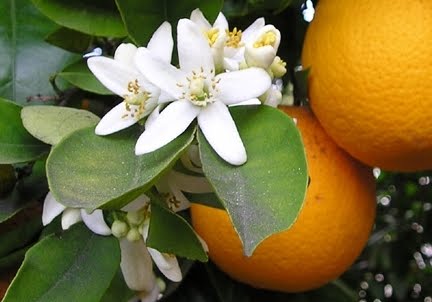
Orange blossoms via the Pattersonfoundation.org.

Orange blossoms via the Pattersonfoundation.org.

The whole thing is a very clean, refreshing, bright, summery, aromatic citrus that feels like an eau de cologne, though it initially has the strength and richness of an eau de toilette. At the end of the first hour, Portofino becomes simpler and hazier, devolving into a neroli and orange blossom fragrance with soft white musk. At the 90-minute mark, Portofino turns into a complete skin scent. There are fluctuating levels of orange blossom and white musk, but no woodiness and no almonds. It remains that way to the end when, in its final moments, Portofino dies away merely as a clean citrus musk. All in all, the fragrance lasted just short of 6 hours on my skin, and I seem to be one of the lucky ones.

On Fragrantica, most people seem to love Portofino, though there are a complaints about the fragrance’s weak longevity and projection. Some people found Portofino to be far “too citrusy,” a few thought it smelled artificially synthetic in its lemony nature, and seven people complained that it smelled like lemony dishwashing liquid or lemon furniture cleaner. (Actually, I stopped counting after the 7th one, as there are a lot of reviews for Portofino on the site.) A large number of people (28) compared Portofino to an old eau de cologne dating back to 1792: 4711 Original Eau de Cologne by Maurer & Wirtz. I haven’t tried the fragrance to know how it similar it is, but Portofino with its orange blossoms seems much warmer to me than a pure cologne with its brisker, crisper, thinner nature. Still, as a whole, the majority of Fragrantica commentators spoke positively and appreciatively about how Portofino was “refreshing,” “light,” “chilly,” “elegant,” “luxurious,” and/or perfect for summer. The word “fresh” was used repeatedly, as well. Again, it’s not my thing, but if that’s your style, you may want to consider giving Portofino a sniff.

ESCALE À PARATI

Source: cosmetics-parfum.com

Source: cosmetics-parfum.com

Escale à Parati (hereinafter just “Parati“) is an eau de toilette that was released in 2012. Fragrantica explains the perfume’s name, its inspiration, and its notes:

Parati (or Paraty) is historical and touristic town in Brazil, situated on the Green Coast (Costa Verde) near Rio de Janeiro.

Francois Demachy, the Dior in-house perfumer, found the inspiration for this fragrance in vivid and pastel colors of the landscape, laughter, wind, music, samba and sea. The fragrance captures Brazilian exotics with citrus and woody notes of bitter orange, lemon, petit grain, rosewood, mint, cinnamon, red berries and tonka bean.

Source: my-parfum.net.ua

Source: my-parfum.net.ua

Parati opens on my skin with lemons and oranges. It’s juicy, fresh, bright, and light, and seems well-suited to summer. Quickly, the citrus bouquet is followed by warm, sweet woodiness, and hints of mint. There is something a little synthetic in feel in the basenotes, but it’s minor. Quiet whispers of slightly bitter, woody, petitgrain twigs lurk about, but they never detract from the overall cool and fresh nature of the fragrance.

Blood Orange. Source: Twitter.

Blood Orange. Source: Twitter.

In less than ten minutes, however, Parati turns warmer and creamy in feel. The tonka bean adds a soft sweetness, though it doesn’t reflects a vanilla characteristic at this stage. Now, Parati is a creamy citrus fragrance dominated by a blood orange tonality, and accompanied by cinnamon and soft, muted rosewood. Around the 90-minute mark, the fragrance starts to gain more vanillic overturns, turning into a creamy, orange scent with soft woods and a subtle dusting of cinnamon, all cocooned in a warm, custardy vanilla. Parati remains that way largely towards its end, turning more abstract, hazy and soft until it is merely a trace of sweet vanillic woodiness. All in all, Parati lasted just over 4.5 hours on me, with soft, discreet sillage throughout.

On Fragrantica, people seem to have experienced a substantially more citrusy fragrance than I did. In fact, a number of commentators compare Parati to a cologne with its dominant, simple, citric blast. A handful mention the cinnamon and Parati’s warm woodiness, but they’re not many. As a whole, there doesn’t seem to be as much enthusiasm for Parati as there is for the rest of Dior’s Escale fragrances, but the scent is only a year old while others, like Portofino, have been around for quite a while now. I liked parts of Parati because its warmer, slightly sweeter nature didn’t feel as “fresh and clean” to me as some of the other crisp, light, citric scents, but it’s clearly a matter of personal taste.

ESCALE AUX MARQUISES

Source: Marieclaire.it

Source: Marieclaire.it

Escale Aux Marquises (hereinafter just “Marquises“) was launched in 2010, and is a warm, floral citrus eau de toilette. Fragrantica lists its notes as follows:

blood orange, pink pepper, cardamom, pepper, cinnamon, ginger, clove, nutmeg, coriander, elemi resin, benzoin, amalfi lemon and tiare flower.

Source: rmwebed.com.au

Source: rmwebed.com.au

Tiaré is a large component of the scent, so it may be helpful to briefly discuss its aroma. The flower is a tropical, Tahitian kind of gardenia whose scent is often associated with suntan lotion due to its use in Monoi-type of products. It has a creamy, rich aromaa that can sometimes feel like coconut or custardy vanilla, but which isn’t actually much like either. It’s a very lush, indolic, heady scent, and it lies at the heart of Marquises.

Blood Orange via FragranticaThe Dior fragrance opens on my skin with bright, juicy, slightly tart blood orange. There are hints of pink peppercorn, but Marquises is quickly infused by a heady blast of creamy, lush tiaré. The overall effect is to turn Marquises into something that distinctly resembles an exotic, orange-vanilla popsicle. Soon after, lovely whiffs of fresh, slightly spicy ginger follow, along with cloves, cardamon, and bitter nutmeg. Subtle tinges of lemon and fruity pink pepper berries lurk underneath.

Nutmeg. Source: Kootation.com

Nutmeg. Source: Kootation.com

The spices, however, are quite prominent and, within minutes, I’ve gone from smelling like an orange popsicle to some sort of spiced butter cookie. It’s the result of the tiaré’s very buttery undertones, combined with the nutmeg in particular. Behind the sweet, spicy, buttery, slightly vanillic warmth are bursts of juicy, tart, fresh citruses, though they sometimes feel like a Jack in the Box, popping up only occasionally and in varying strengths. On my skin, Marquises is never a full-on, predominantly citric scent, and is much more about the tiaré and spices.

Ten minutes in, Marquises is creamy, tropical, lush, sweet, very heady and slightly indolic, with buttery vanilla sweetness, loads of dusky spices, and a slight undertone of citric freshness. Ginger adds a quiet zing, especially in conjunction with the blood orange, while the nutmeg adds a slightly bitter edge that helps cut through some of the heady, unctuous richness. Sometimes the scent feels quite floral, but I’m still struck by the occasional impression that I smell like a shortbread butter cookie sprinkled with nutmeg. It’s not bad at all, especially as Marquises has enough dryness, spice and citruses to keep the scent from feeling gourmand in any way. The whole thing is very airy, bright, and heady.

Thirty minutes in, Marquises shifts a little. There is suddenly a quiet woodiness that stirs in the base and, surprisingly, it has quite a smoky aroma. It smells a little acrid, a bit sharp, and reminds me of the scent of burning leaves in the fall. It comes from the elemi, and it feels a little disconcerting in the midst of all the Tahitian floral creaminess mixed in with butter cookie and orange popsicle accords. Then again, I suppose those last three things are an unusual combination, in and of themselves.

Source: Kootation.com

Source: Kootation.com

At the 90-minute mark, Marquises settles into its main, final bouquet: tiaré backed by strong hints of blood orange (that has a slightly neroli and orange blossom undertone), with subtle spices and woodiness, all flecked by a vanilla creaminess. It’s a soft blur of muted notes that all overlap each other, never feeling individually distinct. Marquises hugs the skin as a discreet whisper, turning increasingly soft until it’s nothing more than a sweet, vaguely creamy floral citrus scent with some amorphous woodiness. All in all, it lasted just over 3.75 hours, which is pretty much in line with many reports on Fragrantica, though one poor soul said Marquises died after a mere 30 minutes.

Marquises seems hugely adored by those who have tried it on Fragrantica, many of whom call it “beautiful.” For a few people, it’s actually their favorite from the Escale collection. As a whole, commentators find it citrusy, fresh, and elegant, though some find the spices to dominate, and a rare few think the fragrance smells masculine. Judging by the votes, the main notes that people have experienced are: tiaré (54), blood orange (52), and lemon (51), followed by ginger (43), nutmeg (41), and cardamon (41). The common complaint, however, is that Marquises barely lasts on the skin. Yet, some people find the scent to be lovely and luxurious enough to warrant re-application during the day, and Dior certainly sells Marquises in a generous size at a decent enough price for that to be an option. (The smallest bottle is 75 ml/ 2.5 oz in size and costs $75, £56.00, and about €67,90.) I thought the scent was quite pretty at times, and it never felt very synthetic, so if you’re looking for a warm, airy citrus fragrance with a bit of a quirk, then Marquises may be right up your alley.

ALL IN ALL:

I liked small bits in each of the Dior fragrances, and thought they were generally pretty on occasion. None of them are revolutionary, original, edgy, complex, nuanced, or of luxurious depth, but I don’t think a commercial, summery Cruise line of fresh, citrusy eau de toilettes is meant to be. That said, neither light, crisp citruses nor fragrances that scream “fresh and clean” are to my personal taste, especially when white musk is involved. However, the commercial mass-market taste is for precisely such fragrances, so the Escale collection is aimed at a specific target audience.

For those who appreciate such scents, the Dior eau de toilettes seem ideal, especially for summer. They’re light, easy to wear, versatile, unisex, and affordable (especially given how the “small” Dior size is almost an ounce more than the starting size of most brands). Les Escales may have iffy longevity, depending on the particular fragrance in question and on your personal skin chemistry, but eau de toilettes have moderate longevity in general. As for sillage, the Dior style is for very discreet, soft fragrances as a whole — something which makes them ideal for anyone concerned about wearing fragrances to work, or those who prefer merely a subtle suggestion of scent. All in all, they are well-suited to a particular perfume style and taste.

DETAILS:
Cost & Availability: The Escale fragrances are all eau de toilette in concentration, and are available at Dior boutiques, at Dior online, and select department stores. The fragrances generally come in two sizes: a 75 ml/ 2.5 oz bottle which costs $75, £56.00, and about €67,90; and a 4.25 fl oz/125 ml which costs $98 or €91. (There is a massive 200 ml bottle as well, but I can’t find pricing on that and few places seem to carry it online.)  In the U.S.: the Escale line of fragrances can be found at select department stores, Dior’s NYC boutique, and at the main Las Vegas store [(702) 369-6072]. If you’re really interested, however, what I would do is to call this number instead — (702) 734-1102 — and ask for Karina Lake, the Dior Beauty Stylist at the Las Vegas store. She is an amazingly sweet lady who will also give you free Dior perfume samples, free shipping, and you’ll pay no tax! Tell her Kafka sent you. (I get nothing for recommending her, by the way. I merely think she’s wonderful, and I’ve bought from her myself.) Elsewhere, you can find the full Escale line at Macy’s (though I don’t know how many of the stores carry the fragrances in-house), and two of the fragrances (Pondichery and Portofino) are also available at Nordstrom. A friend in San Francisco informed me that he had difficulty finding the Cruise Collection in department stores, and located them actually at Disneyland, so not every Nordstrom or Macy’s may have them. As a side note, a large 4.2 oz tester bottle of Pontichery is on sale at FragranceNet for $66.46 with a coupon. The others may be similarly discounted on that site, so you may want to check. Outside of the US: In the UK, you can find the Escale Collection at Harrods where prices start at £56.00. In France, you can find the Escale line at French Sephora which sells the 75 ml bottles for €67,90 and the larger 125 ml bottles for €96,90. The link will take you to the Pondicherry entry, but you can find the other fragrances from the Escale link shown midway down on the page. In addition, you can use the Points of Sale page on the Dior website to find a location for a store near you.
Samples: If you want to give any of the Escale fragrances a sniff, samples are available at Surrender to Chance where prices start at $2.99 for a 1 ml vial.

Vero Profumo Mito Eau de Parfum: Effortless Italian Style

Villa d'Este. Photo: Mirko Costantini. http://www.mirkocostantini.it/

Villa d’Este, Italy. Photo: Mirko Costantini. http://www.mirkocostantini.it/

A vision of dappled green that is flecked with yellow and slowly turns to gold in a shimmering veil of crispness and sweetness. The most beautiful gardens, as simple as they are ornate, as refined as they are timeless. They are the gift of centuries past, and their beauty has been passed down from Renaissance princes to commoners today. A palatial garden whose essence has been distilled into tiny drops of perfume:

The warm air is pervaded by a pleasant sensation of white flowers, jasmine and newly blooming magnolias, garlands of moist moss, aromatic leaves and proud cypresses. Slowly the fragrance rises.

Source: Wikicommons

Source: Wikicommons

Up, up, higher and higher still, to join, all of a sudden, the crystalline jets gushing in the fountains and resting on the mirrors of water in the garden. Millions of miniscule water particles intertwine to create a shining, perfumed veil that rests on the cold marble shoulders of countless statues: gods, nymphs, fauns, dragons and mermaids. Time has stood still in the garden: yesterday is today is tomorrow.

For a moment the perfume fills our desire, satisfies our need for lightness and our yearning for better times. The myth of a timeless eternity.

Source: Fragrantica

Source: Fragrantica

That is the description of Mito from its creator, Vero Kern, the founder of the Swiss niche perfume house of Vero Profumo (sometimes written with unusual punctuation as “.vero.profumo.“). Mito is an eau de parfum from the chypre category that was released in 2012, and which was inspired by the stunning Renaissance gardens of the Ville d’Este in Tivoli, Italy. In an explanation provided by First in Fragrance, Ms. Kern says:

I was struck by its architecture, the splendour of the park where classical statues and fountains spring up out of the blue. In a sense it takes me back to my childhood, to the garden full of people and little statues where I daydreamed as a child. […] the scent of the water in the basins, of the white flowers, the grass, the moistness. The air is pervaded with elegance, mythology and an almost androgynous beauty that is both masculine and feminine at the same time. This garden smells of the Mediterranean and of Italy, of ancient and modern history, of echoes of a past not necessarily better than the present or the future. It fills me with calm and energy at the same time. That is why I am dedicating a perfume to it.

According to Luckyscent, Mito’s list of notes includes:

Citrus blend, magnolia grandiflora, white magnolia champaca, jasmine, galbanum, hyacinth, cypress blend, moss.

Villa d'Este. Source: loasa.ch

Villa d’Este. Source: loasa.ch

Mito opens on my skin with the darkest essence of green: foresty, bright, spicy, pungent, citrusy, zesty, refreshing, crisp, and crunchy, all at once. It’s a flood of galbanum, cypress, lemon, and even something a little more bitter and tart like lime — some of which feel concentrated to their very core. Mito is profoundly rich and opulent in its intensity, a tidal wave of the darkest types of green across the spectrum. Yet, it’s done in a manner that actually sparkles and which definitely calls to mind the source of the perfume’s inspiration, with diamond-like rivulets of water tossed into the air from ancient fountains and gleaming like crystals in the bright sunlight in front of a panoply of green. For all that galbanum can often (or usually) be pungently abrasive, arid, and sharp, the note here is uplifting, fresh, and infused with the sweet juiciness of sun-ripened lemons. The citrus is too intense to feel like the squirt of fresh juice; it feels more like the concentrated essence of a 1000 lemons, and perhaps three or four limes tossed in as well.  

Photo: Jimpix.co.uk

Photo: Jimpix.co.uk

Within minutes, the bouquet is joined by a beautiful burst of oakmoss that feels so plush, it’s akin to the thickest, downiest Bavarian goose-down duvet. The note is fresh and bright but, to my surprise, it has an unexpected undertone of something minty. The oakmoss is never dusty, fusty, mineralized or grey in feel like some of the mosses in the old vintage chypres. Instead, it’s utterly alive and vibrant, almost springy, and the brightest of emerald-green. Joining it is a note of much darker green-black from the cypress. It’s subtle at first, but carries a slightly piney nuance that makes one think of towering, ancient trees bordering the edges of that lovely garden.

Source: rpgwebgame.com

Source: rpgwebgame.com

The whole thing evokes a dappled landscape of green, highlighted by touches of sweetly warmed yellow. I can’t emphasize enough how enormously bright, refreshing, crisp, brisk, and yet, also rich, heady, deep, and smooth Mito is in these opening minutes. Yet, to be a little honest, the concentrated nature of that lemony freshness also sometimes calls to mind liquid Joy lemon dishwashing liquid in its intensity. The image is fleeting, however, especially around the five-minute mark when a hint of something floral starts to lurk in the base. It’s indistinct at this point and very subtle, a blur of rich, white sweetness that hints at things to come.

Forty minutes into Mito’s development, the fragrance has softened to a cloud of sweet, sun-warmed citrus atop a quiet base of fresh, almost minty moss with dark woods. There is a gauzy, sheer veil of gardenia that wafts all around, as delicate as a small breeze. Down below, tiny flickers of cypress emit subtle hints of piney evergreen. Unfortunately for my personal tastes, the whole thing hovers right on the skin. In fairness, Mito seems intended to be a discreet, elegant, wholly unobtrusive, restrained skin scent that evokes Spring in the most elegant of Italian styles — and it accomplishes that in spades.

Street Chic Milano. Photo: Marina Ciucholo via Fashion Door with ViewonMagazine.

Street Chic Milano. Photo: Marina Ciucholo via Fashion Door with ViewonMagazine.

Wearing Mito, I cannot help but think of something other than those exquisite Villa d’Este gardens. I think of the Italian style in general, and of those ineffably elegant men and women who stride around in beautifully tailored clothes that scream effortless chic in a way that marks them as the direct, modern, fashion descendants of haughty Roman aristocrats in their elegant togas.

Source: vespaclubsevilla.com

Source: vespaclubsevilla.com

If you’ve ever been to Rome or Milan, you’ll known what I’m talking about. The men in their dark suits with crisp white shirts who reflect a classical ease that George Clooney has so successfully adopted. The long-legged women in their simple, sleek, dark dresses with large sunglasses and Audrey Hepburn simplicity who bypass all fashion constrictions to navigate their Vespas with nonchalant ease. Or the ones who stride about in long, flowy, draped clothes with Missoni-like patterns. They all have that intangible, somewhat aloof, restrained, luxurious, high-end minimalism that is elegance taken to a concentrated degree, but always done in the most effortless of ways. To me, that is Mito. Springtime in fashionable Rome, reflected through the greenness of the princely Villa d’Este gardens.

Magnolia. Source: Kathy Clark via FineArtAmerica.com

Magnolia. Source: Kathy Clark via FineArtAmerica.com

As time passes, Mito becomes increasingly floral, warm, and golden. At the end of the first hour, the gardenia note becomes more prominent and, slowly, quiet flickers of jasmine start to stir. By the 90-minute mark, magnolia comes out to play and, soon, takes over completely. Mito is now a lovely bouquet of creamy, velvety, lush magnolia trailed by jasmine and a very muted gardenia note, all atop a base of oakmoss and cypress. There is a subtle undercurrent of smokiness in the wood, a whiff of evergreen, and a lingering trace of something citrusy. The floral sweetness feels like a glowing light in a nestled embrace of green.

My skin always amplifies honeyed notes, and Mito is no exception. The honeyed undertone to magnolia, along with its lemony nuances, becomes increasingly prominent. The jasmine lurks at the edges, but Mito is largely a magnolia fragrance on my skin for most of its long shelf-life. From the end of the second hour, until its final moments, Mito is a gauzy, soft, restrained whisper of infinitely creamy, lush, lemony, honeyed magnolia with green notes. Initially, the latter can be teased apart into the moss and cypress’ piney-evergreen accords, but they blur into an abstract greenness by the start of the fourth hour. The citrus note lingers at the periphery for a while, as does the gardenia, but they fade away about 4.25 hours into Mito’s development. Something else takes their place, and it’s a soft, delicate vanilla tonality that lurks beneath the creamy, sweet magnolia. By the start of the fifth hour, Mito is a discreet, sheer shimmer of magnolia atop a base of green, vaguely mossy plushness with flickers of sweetness and muted vanilla. In its final moments, the fragrance is an abstract, creamy, sweet floral warmth. All in all, Mito lasted just short of 8.75 hours on me, with extremely soft, muted sillage throughout.   

Mito is a beloved fragrance, and I can see why. It’s not to my personal tastes or style, but I think it’s rich, well-crafted, and infinitely elegant. A lot of people call it a deeper, richer, plusher cousin of Chanel‘s Cristalle, and I think that’s quite accurate. On Fragrantica, there is nothing but glowing reviews for Mito, and the blogosphere is equally positive. Everyone finds Mito to be the most wearable, easy, approachable Vero Profumo scent, and a number of people talk about its peachy heart amidst the mossy base. Take, for example, Bois de Jasmin whose four-star review reads, in part, as follows:

Mito feels like a soft breeze, an uplifting and bright perfume. It layers its tart citrus notes over the crunchy green of galbanum, and in the Eau de Parfum, the exhilarating sensation is particularly pronounced. But give it an hour on your skin, and it becomes velvety and warm. The green now fades into the white of jasmine petals and the yellow of ripe peach. Mito reminds me of Chanel Cristalle crossed with the ripe opulence of Rochas Femme, but the total is more than the sum of its parts.

… I find Mito to be the most wearable from the collection. It’s not overly demanding or flamboyant. If Rubj is the sultry Jean Harlow, Mito is the coolly elegant Grace Kelly. It has great tenacity, but its sillage is moderate, a plus or minus depending on how you like to wear your perfume. […][¶] It’s a luminous perfume from top to bottom.

Even though my experience with Mito was largely about the magnolia and had nothing to do with peaches, I think Bois de Jasmin has summed up the core feel of the fragrance. So, too, does The Non-Blonde whose perceptions of the fragrance seem a little closer to my own:

The fragrance opens with a herbal-citrus note, a bit of a green grass and a feeling of a morning breeze passing through wind chimes. The flowers in this garden feel faraway and a bit abstract. I admit that I didn’t get the magnolia until the weather cooled down considerably so that the blooming phase on the skin takes longer. Mito isn’t about the big Magnolia of the south (or even the one in my neighbor’s backyard), so the flower doesn’t distract from the green impression, just softens it and gives it a more abstract feel, all the way to the crisp and quiet wood and moss dry-down.

Vero Kern created a feel-good and beautiful perfume without compromising or coddling the wearer. I think of Mito as wearing an exquisite and very put-together outfit, accessorized to the nines, yet it has enough movement and flow that you don’t feel restricted, pulled or pinched,  neither are the clothes wearing you. It’s that kind of an effortless elegance.

George Clooney. Photographer: Sam Jones for TIME magazine.

George Clooney at his Lake Como house. Photographer: Sam Jones for TIME magazine.

Yes, to borrow from both bloggers, Mito is effortless elegance done in the manner of a soft breeze. I think it’s very pretty, even if it’s not me, and a scent that would be perfect on both men and women alike. I can see George Clooney wearing Mito just as easily as I can see one of his well-dressed, leggy, interchangeable brunette girlfriends. Mito is approachable, versatile, and suited for those who prefer a more discreet, unobtrusive, gauzy, but rich fragrance that is always elegant. It’s not as haughty or cold as some green chypres can be, thanks to the warmth of its floral heart, and it’s not a flamboyant diva scent, but it’s the embodiment of springtime in Italy and a perfect homage to the Villa d’Este.  


DETAILS:
Cost & Availability: Mito is an eau de parfum that comes in a 50 ml/1.7 oz bottle that retails for $215, £138 or €145 (often more from different European vendors). In the U.S.: Mito is available at Luckyscent for $200 for a 50 ml/1.7 oz bottle. (The Vero Profumo website does not seem to have an e-shop from which you can buy the perfume directly.) Outside of the U.S.: the Vero Profumo Facebook page offers a whole list of European retailers from Kiev, Russia, to Oslo, Norway, and Italy. It also adds: “Since 2010 distributed worldwide by Campomarzio70 in Rome Italy, in selective boutiques and perfumeries such as ROJA DOVE, Harrods Urban Retreat London, JOVOY Paris, Parfums Rares and many more. Campomarzio70, marketing@campomarzio70.it will inform you where you find the nearest retailer in your country.” In the UK, you can find all Vero Profumo perfumes at Harrod’s Roja Dove Haute Parfumerie, but there is no online website through which you can purchase perfumes. (It is not the same site as the Harrod’s website.) You can also find Mito (and the full Vero Profumo line along with samples) at London’s Bloom Perfumery which sells the fragrance for £138, along with samples. In Paris, you can find Mito at Jovoy Paris, where it retails for €145. In the Netherlands, you can find it at Leanne Tio Haute Parfumerie where it costs €150, but seems to be currently sold out. In Italy, you can find it at Alla Violetta boutique for €145, along with samples. Germany’s First In Fragrance sells Mito for €145, but they are currently sold out. The site also carries the complete Vero Profumo line, offers sample sets, and ship throughout the world. Samples: I obtained Mito from Surrender to Chance which sells the fragrance starting at $5.99 for a 1/2 ml vial.

Tom Ford Private Blend Fleur de Chine (Atelier d’Orient Collection)

Source: wallpaperswiki.org

Source: wallpaperswiki.org

A gentle veil of sweetened, creamy white flowers. That’s the essence of Fleur de Chine, the latest Private Blend fragrance from Tom Ford. It is part of a brand-new collection of perfumes within his Private Blend line that were released in July 2013. The collection is called Atelier d’Orient, and consists of four fragrances: Shanghai LilyPlum JaponaisRive d’Ambre, and Fleur de Chine.

Source: The Moodie Report

Source: The Moodie Report

According to the Moodie Report, Tom Ford’s inspiration for Fleur de Chine was the Asian cinematic femme fatale. As Ford apparently told the site:

‘For Fleur de Chine, I imagined the romantic and mysterious women from Asia’s cinematic past – from the ’30s femme fatale in a cheongsam and dark lipstick, to the ’60s Hong Kong heroine of In the Mood for Love [….] I wanted to capture that fascinating, exquisite and slightly scandalous femininity.’

Fleur de Chine is an eau de parfum that was created by Rodrigo Flores Roux of Givaudan, and its full set of notes — as compiled from the Moodie Report, Fragrantica and Surrender to Chance — are:

HuaLan flower, star magnolia, tea blossom, clementine, bergamot, hyacinth, jasmine tea, lilac, syringa, plum, tea rose, wisteria, white peach, peony, hinoki, Chinese cedarwood, amber, Laotian benzoin, styrax and vetiver.

Source: made-in-china.com

Source: made-in-china.com

It might be useful to go through a few of those notes. As Fragrantica explains, Hinoki is a type of light-coloured cypress prized in Japan that emits an aroma of evergreen with lemon. The “HuaLan flower” is a bit more complicated to explain. A Google search brought up the following results: Mo Li Hua Nan, Bai He Hua Lan, Yu Lan Hua, and Hua Lan. The names all seem to be different variations for the same sort of flowering tea where woody-ish-looking, green tea leaves are wrapped around night-blooming jasmine petals in the shape of a ball. I actually tried a number of these in China; you drop the dried ball into hot water and it slowly blooms, just like a flower, emitting a floral aroma infused with that of tea leaves.

I had problems testing Fleur de Chine because it feels like a floral will o’ the wisp with notes dancing in the air just out my reach. I think I have a relatively decent nose, but Fleur de Chine often felt just too nebulous and vague to pull apart. In fact, I initially put some on, then felt as though the fragrance was starting to die on my skin within less than 10 minutes. So I applied another good smear, and then two more, for a total of 5 really big smears! I felt as though I were chasing the notes, and it was incredibly frustrating. My second time around, using my regular, normal application of about 2 to 2.5 really big smears, the fragrance felt even simpler. Alas, in all cases, Fleur de Chine essentially dissolved on itself, and became a rather singular floral fragrance that was extremely lovely to sniff and actually quite seductive at times, but wholly without distinction, body, or complexity.

Source: Wallpaper777.com

Source: Wallpaper777.com

So, let’s start with my first attempt to get to the heart of Fleur de Chine. The fragrance opens on my skin with light, gauzy florals dominated by lilac and hyacinth. The scent is simultaneously watery and a little bit powdery. A minute later, a lemony, honeyed, very rich magnolia arrives on the scene to add some creaminess to the fragrance. It was at this point that I put on my 3rd big smear, and I immediately detected a whiff of plum. It all seemed a little out of my grasp, indistinct, and amorphous, so I put on a fourth and fifth wallop that essentially wet my forearm. It enabled me to detect the hinoki and a subtle tinge of vetiver. Without these additional doses, Fleur de Chine would have been nothing more than thin fizzes of lilac, magnolia, a hint of hyacinth, and a general, ephemeral, lemony, slightly watery, pastel florality. If you’re detecting some frustration in these words, you’d be correct.

Hinoki Cypress gate at a Japanese temple. Source: es.123rf.com

Hinoki cypress gate at a Japanese temple. Source: es.123rf.com

With the 5 huge smears, however, it was easier to detect some nuance to the fragrance. Fleur de Chine’s woody base was quite evident, as was the honeyed magnolia, the bergamot, and the vetiver. Unfortunately, the plum and hyacinth seemed to vanish within minutes, as did the touch of powderiness. Ten minutes into Fleur de Chine’s development, the jasmine started to rise from the depths. At times, the fragrance felt like nothing more than abstract, sweet, white florals with lemony nuances and with dry woods that can just barely be teased apart into cedar and hinoki.

Magnolia. Source: wallpaperpimper.com

Magnolia. Source: wallpaperpimper.com

Yet, just when I was beginning to give up on the damn thing, Fleur de Chine started to shift. There was something vaguely tea-like wafting around, similar to  the blooming, woody, floral tea balls that I’d tried in China. At the 20-minute mark, Fleur de Chine suddenly became a creamy, velvety magnolia with lemony bergamot, honey, and very sweet jasmine. The latter has a wee touch of woodiness to it, though whether it stems from the HuaLan tea or from the abstract woods in the fragrance’s base, I have no idea. At the end of the first hour, Fleur de Chine is a beautifully soft, seductive, slightly indolic swirl of magnolia and jasmine with lemoned honey and a hint of vanilla. All the other notes — the woods, the vetiver, the lilac, the hyacinth, and the plum — have vanished.

It’s essentially the end of the tale, as Fleur de Chine never once changes from that triptych of notes: magnolia, jasmine, and vanilla. All that happens over the next few hours is that the strength or order of the notes fluctuates. Sometimes, the jasmine is more apparent. Once in a while, especially around the start of the fifth hour, it seems as though the vanilla has taken over entirely. Eventually, everything returns to the primary focus of a creamy, velvety, lush magnolia with its lemony, honeyed nuances. In its final moments, if you want to be really generous, you can say that Fleur de Chine is blurry magnolia with vanilla. It may be more accurate, however, to call it a haze of some amorphous, wispy, creamy, lemony, white floral with some general sweetness. All in all, after applying a large dose of 5 extremely big smears, Fleur de Chine became a skin scent around the end of the 3rd hour and lasted just over 6.25 hours in total on my skin.

The second time I tested Fleur de Chine, I applied my regular dose of about 2 to 2.5 very good smears, and got nothing more than magnolia and lemony honey from the start. Perhaps some of the lemon undertone stemmed from the bergamot, perhaps it was from the magnolia, but the creamy, lush, sweetened floral dominated. About five minutes in, I think I detected a subtle swirl of lilac, followed by a tiny whiff of hyacinth, but I wouldn’t bet my life on it. There was also a subtle dryness underlying the floral blur, but it was very intangible. Either way, within forty minutes, Fleur de Chine became a soft, creamy magnolia scent with all its traditional undertones and the merest suggestion of sweet jasmine. The fragrance was initially quite potent when smelled up close, but it couldn’t have projected more than 1.5 inches off the skin. At the 90-minute mark, there was a subtle undercurrent of vanilla, and Fleur de Chine then took on the same trajectory as it did the first time around. It’s also around the 90-minute mark when the fragrance became a total skin scent. Almost 3 hours into the perfume’s development, it died completely. I’m not sure how to describe what it smelled like at that point, beyond saying “indistinct lemony floral.”

Magnolia. Source: desktopwallpapers4.me

Magnolia. Source: desktopwallpapers4.me

Fleur de Chine is too new to have a lot of detailed blog reviews out there. Persolaise has a brief round-up of the four new Atelier scents, and wrote this about Fleur de Chine:

Leather pops up in Fleur De Chine too, but in this case it’s the ‘well-worn handbag’ variety, a la Aromatics Elixir, a scent to which this one clearly owes some allegiance. In fact, it owes allegiance to several others too, because it plays out very much like an homage to classic feminines of decades gone by. The aldehydic opening echoes White Linen, the mossy woodiness is reminiscent of Knowing and the richness of the floral elements could have come straight from Beautiful. In other words, it’s a tribute to all things Lauder, which raises the question of precisely what makes it ‘oriental’.

His experience is night and day apart from mine, but I agree that Fleur de Chine could be something produced by Estée Lauder. It is pretty, perhaps even “chic” as he calls it, and quite seductive at times, but, at the end of the day, I think it is wholly unoriginal and deeply uninteresting.

Over at CaFleureBon, Mark Benhke also detected “a fizz of aldehydes” in the “lightly floral opening of magnolia, hyacinth, and hualan flower.” He writes that “[s]ingly each of these notes have a distinct lightness of being but together they harmonize into something stronger and so what early on seems flimsy develops a spine and really takes hold.” Later, he detected a jasmine tea accord, a hint of wisteria (lilac), and peach atop a base of dry woody notes. There is also something apparently about a lipstick smell: “Deep down in the heart is a hint of a lipstick accord like a red rim on the end of crushed out cigarette; only there to be noticed if you’re looking for it.”

Alas, I don’t seem to have the skin chemistry for anything quite as interesting as all that. The odd thing is that my skin really emphasizes aldehydes, and usually amplifies them into a soapy mess, yet I didn’t experience any with Fleur de Chine. Instead, my skin merely did what it always does: accentuate anything that is even remotely honeyed. I think both bloggers had a much more interesting experience with Fleur de Chine than I did, and yet, to me, neither one of them seems particularly wowed by the fragrance. I find that telling. Persolaise may call Fleur de Chine “chic” and find it to be more impressive than some of its other siblings in the Atelier d’Orient collection, but I read that as quite a relative thing.

Wisteria via placesmustseen.com

Wisteria via placesmustseen.com

Over at Fragrantica, the only thing that seems clear about the scent is that the majority of voters thus far put Fleur de Chine’s longevity at “moderate.” The term is defined by 3-6 hours in duration. The fragrance is too new to have a lot of reviews but, judging by the votes on the notes, a number of people (3) seem to think that wisteria, a flower that smells of lilacs, is the dominant note. Bergamot and magnolia have the same number of votes (3). As for the fragrance itself, absolutely no-one seems passionately over the moon about it. To wit:

  • It reminds me to “En passant” from Frederick Malle, which I love but tends to be more real wisteria. I think this one is a slightly less interesting interpretation.
  • This is beautiful, floral, fresh and slightly rainy. The rain might be the best part. Maybe too powdery for me.
  • Its nice but not unique I suppose. Fleur de Chine is the hardest to fill in my split.

On Basenotes, the sole review for Fleur de Chine thus far describes an experience almost identical to mine:

The top note is nice, with magnolia, jasmine and bergamot opening up with a lovely hyacinth added, and merging with a nice Chinese tea note. Wood is present in the base but overall it is a bit dull towards the end. Two hours longevity on me.

I don’t even know what to say at this point about Fleur de Chine that I haven’t already said in my review for Rive d’Ambre. I think the fragrance is marketed at people with wholly different tastes than my own, or even the usual Tom Ford buyers who like his more opulently heavy, spicy, layered, sometimes bombastic, super-charged scents. The Atelier d’Orient collection seems to be aimed at the Asian luxury market, and at people who may prefer more discreet, gauzy, simple, uncomplicated fragrances. Fleur de Chine is far from being a bad perfume; it is actually very pretty at times, and even somewhat elegant and chic, I suppose. However, it’s also ridiculously over-priced for its wispy, linear, extremely simple, one-dimensional, and short-lived nature. Then again, I’m not the target audience. If I had to choose a favorite from the Atelier line, I would opt for Shanghai Lily which is truly beautiful, though it too turns flat like the rest of its siblings. Still, out of all of them, and on a purely relative basis, it has the most depth, body, nuance, and beauty. I would absolutely wear it if a bottle fell into my lap — but I can’t fathom ever spending money to actually buy it. Quite frankly, there are more interesting, complex, distinctive, and long-lasting fragrances out there for the price.

DETAILS:
Cost & Availability: Private Blend Fleur de Chine is an eau de parfum which comes in three sizes that cost: $210, €180, or £140.00 for a 50 ml/1.7 oz bottle; $280 or £320.00 for a 100 ml/3.4 oz bottle; and $520 or €420 for a 250 ml/8.45 oz bottle. The line is not yet listed on the Tom Ford websiteIn the U.S.: you can find Fleur de Chine at Neiman Marcus and Bergdorf Goodman. Neither Nordstrom nor Saks has new collection up on their website yet. Outside the U.S.: In Canada, I believe Tom Ford is carried at Holt Renfrew, but they only list 2 of the old fragrances on their online website. In the UK, you can find Fleur de Chine at HarrodsHarvey NicholsHouse of Fraser, or Selfridges. All four stores sell the small 1.7 oz/50 ml size for £140.00, and the super-large 250 ml bottle for £320.00. In France, Fleur de Chine is available at Premiere Avenue which sells the 50 ml bottle for €180, and the large 250 ml bottle for €420. They ship throughout Europe, and I believe they might ship world-wide but I’m not sure. For other all other countries, you can use the store locator on the Tom Ford website to find a retailer near you. Samples: You can buy samples of Fleur de Chine at Surrender to Chance starting at $3.99 for a 1/2 ml vial.

Perfume Review: Tom Ford Private Blend Rive d’Ambre (Atelier d’Orient Collection)

Tom Ford Rive d'Ambre 50 ml

Source: Harvey Nichols.

Bright citruses turned to softened amber gauziness. That’s the essence of Rive d’Ambre, the latest Private Blend fragrance from Tom Ford. It is part of a brand-new collection of fragrances within his Private Blend line, and was just released in July 2013. The collection is called Atelier d’Orient, and consists of four perfumes: Shanghai LilyPlum JaponaisFleur de Chine and Rive d’Ambre.

None of the new Atelier d’Orient fragrances are listed yet on Tom Ford’s website, but, according to the Moodie Report and press copy, Tom Ford’s inspiration for Rive d’Ambre was the way that “precious citrus fruits” are a “talisman of good fortune in Asia[.]” As Ford apparently told the Moodie Report:

Source: singaporeflorist.com.sg -

Source: singaporeflorist.com.sg –

‘Rive d’Ambre is inspired by the tradition of presenting precious citrus fruits as gifts,” revealed Ford. “True to my nature, the sparkling fruits are wrapped in rich and warm sensuality.’

That last bit of egoism made me roll my eyes, as did the press copy used by Neiman Marcus for its description of Rive d’Ambre: “Tom Ford Rive d’Ambre is a golden-toned eau de cologne with a veil of colonial elegance.” Colonial elegance? I’m not going to touch that one with a ten-foot pole, but my thoughts are slightly sardonic. 

Rive d’Ambre is an eau de parfum that was created by Olivier Gillotin of Givaudan, and its notes — as compiled from Fragrantica and Surrender to Chance — include:

bergamot, lemon, bitter orange, tarragon, cardamom, spearmint, benzoin, pear wood, cognac, tolu balsam and amber.

Rive d’Ambre opens on my skin with a burst of freshly squeezed lemon and bergamot, followed by squirts of slightly bitter oil from the skin of a zested orange that is tart, sweet and bright, all at once. There is also a ton of pepper from ISO E Super, and a hint of some fresh, green herbs that only faintly and vaguely resemble tarragon. Rive d’Ambre has the brisk, very fresh, clear-as-a-bell opening of a citrus cologne that has been modernized to remove any barbershop nuances. The crispness is beautifully bright and refreshing.

Source: wallpaperswide.com

Source: wallpaperswide.com

It takes less than three minutes for Rive d’Ambre to start to soften, and for its edges to start to blur. The fragrance never had a roar to begin with, but it’s turned into a very muted, quiet meow in an astonishingly brief amount of time. In fact, it felt as though the notes were slipping away, out of my grasp, and vanishing into the air, so I actually applied a second dose, for about 4 very large smears, all in all. The same result ensued, even with the greater quantity. Clearly, Rive d’Ambre is meant to be a muted, discreet hint on your skin, and nothing more. Fifteen minutes in, Rive d’Ambre is a soft haze of citruses that are starting to grow warmer, sweeter, and more golden. The fragrance now feels less like a crisp cologne, and more like a slightly ambered eau de toilette strongly infused with citruses. It’s pretty, but it’s also neither very distinctive, nor very original. 

Bergamot. Source: a1.ro

Bergamot. Source: a1.ro

At the end of the first hour, Rive d’Ambre starts to change. From a distance, the fragrance still smells like citruses with a soft, warm glow. Up close, however, if you really, really inhale forcefully at your arm, you can detect a slight woodiness stirring at the base. There is also a really beautiful herbal note that sometimes resembles spearmint, and, at other time, a more pure, sweet, herbal mint. It’s one of my favorite parts, especially given the strong lingering taint of ISO E Super in the fragrance. Eventually, a new note appears in the base, though it’s as soft and muted as everything else to do with Rive d’Ambre. It’s a hint of dry, but boozy, sweetness that just barely suggests cognac.

Mark Rothko, "No. 14-10 Yellow Greens," 1953.

Mark Rothko, “No. 14-10 Yellow Greens,” 1953.

Unfortunately, shortly before the two-hour mark, Rive d’Ambre basically collapses in on itself. The fragrance feels totally flat; the notes have dissolved into an empty, hollow shell of themselves; and everything feels muffled, muted, and hidden. Rive d’Ambre is now primarily an amorphous, abstract hint of flat citruses with dry woodiness atop a sweetened, warm base. By the end of the third hour, the base becomes sweeter with the infusion of the tolu balsam resin, creating a fragrance that is primarily rich amber at the top. A hint of cognac dryness trails a few feet behind, and a whisper of citrus brings up the rear. An hour later, the citrus disappears entirely, and Rive d’Ambre quietly emits amber, a dry woodiness, a hint of sweetness, and an absolutely gorgeous whiff of cognac. The latter is simultaneously dry, and with a tiny subtext of smokiness. The overall combination results in a very pretty drydown that is actually a wee more complex than the early stage of Rive d’Ambre had led me to expect.

Still, the fragrance feels a lot like a will o’ the wisp at times. It’s an airy gauze that’s so sheer, thin, and soft, you have to forcibly sniff with your nose right on your skin to detect anything more than a nebulous “amber.” At its very end, in its final moments, Rive d’Ambre truly is nothing more than an abstract blur. All in all, Rive d’Ambre lasted just shy of 6.75 hours on my skin, but with the use of a double dose. Others have reported 3 or 4 hours in duration, which wouldn’t surprise me at all. If I’d applied my regular dose, I doubt I would have been able to detect any detailed layers to the scent, or that it would have lasted above 3 hours on my perfume-consuming skin. It’s a problem for a fragrance with such a high price tag, and it’s one that isn’t limited solely to me.

For the most part, the reaction to Rive d’Ambre seems very short on enthusiasm. On Basenotes, one person entitled his review, “A one-trick citrus pony with little reason to exist.” Another wrote: “very light and non descript and does not last. A poor effort.” Over on Fragrantica, one commentator enjoyed the first hour of Rive d’Ambre but found it quickly “falls off a cliff for me[.]” I’m not sure if that refers to the flatness of the notes or to the longevity issue, given that he also complained about how quickly Rive d’Ambre disappeared on him even with a very “liberal” application in quantity. Interestingly, two people on Fragrantica thought there was little to no amber at all in the fragrance! I suspect that those whose skin chemistry amplifies base notes will detect more amber, while those whose skin intensifies the top notes in a fragrance will have primarily a citric experience.

Source: .popularscreensavers.com

Source: popularscreensavers.com

If one were in PR, one might positively describe Rive d’Ambre as a bright, warm, citrusy glow. It would be technically correct, but it would also be an extremely good spin on things. Which brings me to my main point about Rive d’Ambre. I think those used to Tom Ford’s signature style in such Private Blends as Tobacco Vanille, Oud Wood, Amber Absolute, and some others will find Rive d’Ambre to be a mundane, generic, unoriginal dullard without character and oomph.

However, in my opinion, Tom Ford is not aiming Rive d’Ambre at them or at me, but at people who actually dislike his usual style. A friend and fellow blogger, The Black Narcissus, lives in Japan, and he told me that the Japanese would never abide the usual Tom Ford heaviness or drama. It seems that some in the Asian market find the usual Tom Ford signature to be overbearing, excessively heavy, and overly oriental or spicy. Being the good businessman that he is, Tom Ford is targeting a very wealthy market that loves luxury goods by offering something more appealing, though I wonder how they’d feel about the PR copy’s reference to “colonial elegance.” Still, it doesn’t hurt that his muted, tamed, conventional fragrance will also appeal to buyers everywhere who appreciate some freshness in their fragrances. For example, in that Basenotes thread, one person actually adores the “unique brightness” of Rive d’Ambre, while another likes how it is a fresher, lighter interpretation of an amber. I can see the appeal of that last point for those who aren’t hardcore amber lovers.

In short, Rive d’Ambre isn’t a terrible fragrance by any means, but what you think of it will depend purely on your expectations and taste. That’s true of all fragrances, but it’s perhaps more true of Rive d’Ambre than most, given its extremely simplicity, lack of body, and muted unobtrusiveness. This is a perfume for people who prefer fresher, more discreet, wispy, gauzy fragrances. It is an utterly safe, conventional, but bright, initially zesty, very crisp citrus that turns into ambered warmth, thereby feeling unisex and avoiding the impression of a traditional men’s cologne. It’s not my style or my taste, but it’s ideal for a specific group of people out there. That said, I think the longevity issue will be a problem for everyone. The reports seem to be consistent: even if you apply a lot, the fragrance will disappear far sooner than you’d expect.

Whether Rive d’Ambre is ridiculously over-priced for what it is then becomes a question of taste. I personally think Rive d’Ambre is absurdly expensive for such a simple, unoriginal, short-lived fragrance, but then, I’m not one whose idea of a perfect scent involves bergamot, lemon, and some amber. So, for me, it’s a total pass. Nonetheless, if you’re a citrus lover who has disliked Tom Ford’s usual brash, bold, or intense style, or if you’re someone struggles with more traditionally heavy ambers, then perhaps Rive d’Ambre will be your version of Goldilocks’ perfume. 

DETAILS:
Cost & Availability: Private Blend Rive d’Ambre is an eau de parfum which comes in three sizes that cost: $210, €180, or £140.00 for a 50 ml/1.7 oz bottle; $280 or £320.00 for a 100 ml/3.4 oz bottle; or $520 for a 200 ml/8.45 oz bottle. The line is not yet listed on the Tom Ford websiteIn the U.S.: you can find Rive d’Ambre at Neiman Marcus and Bergdorf Goodman. Neither Nordstrom nor Saks has new collection up on their website yet. Outside the U.S.: In Canada, I believe Tom Ford is carried at Holt Renfrew, but they only list 2 of the old fragrances on their online website. In the UK, you can find Rive d’Ambre at Harrods, House of Fraser, or Selfridges. All three stores sell the small 1.7 oz/50 ml size for £140.00, and the super-large 250 ml bottle for £320.00. The smaller size is also carried at Harvey Nichols. In France, Rive d’Ambre is available at Premiere Avenue which sells the 50 ml bottle for €180. They ship throughout Europe, and I believe they might ship world-wide but I’m not sure. For other all other countries, you can use the store locator on the Tom Ford website to find a retailer near you. Samples: You can buy samples of Rive d’Ambre at Surrender to Chance starting at $3.99 for a 1/2 ml vial.