Perris Monte Carlo Bois d’Oud

Honeyed oud, plummy fruits, the smoky smell of burnt leaves and singed wood interwoven with delicate florals, vanilla, and white creaminess, all combined in a mix that resembles some other well-known fragrances on the market before turning into its own creature — that’s the essence of Bois d’Oud, a fragrance from Perris Monte Carlo.

Source: Fragrantica.

Source: Fragrantica.

Perris Monte Carlo is a relatively new house that emerged in 2012. I’ve been curious about it for a while as it is based in my old home, so I obtained two samples of the line. The majority of the fragrances, including Bois d’Oud, were launched in 2012 in Europe, before later being released in the U.S. in 2013. I can’t find a company website to see how Perris would describe Bois d’Oud, only a lot of PR babble about how the company’s signature involves luxury, gold, and prestigiousness. It all sounds terribly nouveau riche and obnoxious, so let’s get directly to the perfume’s notes.

According to First in Fragrance, Bois d’Oud’s ingredients are:

Top Note: Bergamot
Heart Note: Peach, Plum, Jasmine, Iris, Rose, Orange Blossom
Base Note: Cedarwood, Agarwood (Oud), Patchouly, Vanilla, Ambergris, Labdanum (Rockrose), Musk

Honey and plums. Photo: Alice Carrier at Bread and Honey blogspot. (Website link embedded within photo.)

Honey and plums. Photo: Alice Carrier at Bread and Honey blogspot. (Website link embedded within photo.)

Bois d’Oud opens on my skin with the richness of honey-drenched oud, followed by plums, a patchouli rose, smokiness, and a toffee’d, dirty, labdanum amber. There are subtle strains of orange blossom, and, indeed, a light flicker of orange itself. The overall effect is of a multi-faceted, dark sweetness that is dominated by plummy fruit, oud, and honey.

Bois d’Oud’s opening immediately and instantly calls to mind Arabian Oud‘s Kalemat. The Perris fragrance is slightly different with more plums, a stronger oud presence, and the inclusion of orange blossoms in lieu of blueberries. It is also thinner, sheerer, and less opaque in feel than Kalemat’s opening. For a brief moment, Bois d’Oud also reminds me of an oud version of Serge LutensFille en Aiguilles, though there are even more differences with this one. Bois d’Oud is less plummy than that one, lacks the heavy frankincense element, has honey instead of brown sugar sap, includes a very noticeable strain of jammy rose, and its smokiness seems to stem from different sources. Throughout Bois d’Oud’s development, I kept feeling like I was smelling something akin to guaiac wood, with its aroma of burning leaves in a fall bonfire, as well as its occasional facet of stale dustiness. That’s all very different than Fille en Aiguilles. Ultimately, perhaps the combination of honeyed sweetness, slightly dirty ambered labdanum, oud and darkly plummy fruits is closer to a third fragrance that came to mind during Bois d’Oud’s development: Nasomatto‘s Black Afgano. Bois d’Oud opens like a mix of Kalemat and Black Afgano, before eventually moving closer to the latter.

Source: picsfab.com

Source: picsfab.com

10 minutes into its development, the notes in Bois d’Oud realign themselves. The plum takes a small step back, while the peach, orange blossom, and jammy patchouli rose step more to the foreground. The orange blossom adds a subtle (very subtle) soapy undertone to the fragrance, though it’s fleeting. The peach adds a different sort of fruitness, but it is the patchouli which is most prominent. It’s a purple fruitchouli that is thoroughly intertwined with the rose, but it doesn’t feel like dark molasses so much as syrup. Very sweet syrup that underscores the strong impression of honey. The oud, fruit and floral accords are quite drenched with both elements, creating the impression of stickiness, though the perfume is very airy in weight.

Source: ghulmil.com

Source: ghulmil.com

The whole bouquet is nestled in a cocoon of abstract woods and a subtle tinge of smokiness. As noted above, I keep feeling as though there should be guaiac wood listed in the notes, because something in Bois d’Oud replicates its particular form of singed dryness. It goes beyond the smell of mere cedar, though both woods can have a dusty, stale undertone like the one that appears later on in Bois d’Oud. In truth, I really don’t smell cedar in the way that I’m used to, and all the wood notes beyond the oud feel really indistinct in an individual manner. As for the oud, it is not medicinal, fecal, raw, or butch. It is merely honeyed, and a little bit musky.

Photo: TheCozyApron.com. (For a recipe for grilled cinnamon plums with honey and marscapone vanilla, click on the photo. Website link is embedded within.)

Photo: TheCozyApron.com. (For a recipe for grilled cinnamon plums with honey and mascarpone vanilla, click on the photo. Website link is embedded within.)

Bois d’Oud continues to shift. About 20 minutes in, the vanilla emerges in the base, along with what I can only describe as a white creaminess. It’s doesn’t feel like it comes wholly from the vanilla, though that does seep over into it. I can only describe it as something that is almost like white, honeyed beeswax, but not quite. It doesn’t smell waxy or even particularly honeyed, so perhaps it’s not an offshoot of labdanum (which can often take on those nuances), either. Whatever the source, it goes beyond a mere textural thing and is one of my favorite parts of Bois d’Oud, especially when it has that lightly vanillic flavour to it. Interestingly, as the vanilla creaminess grows stronger, the honey note that burst out of the gates grows weaker and thinner.

At the same time, the first glimmer of a dry, woody aromachemical appears. It emphasizes my early impression that the oud note is synthetic, not real. As Andy Tauer once noted in his blog, most purported “oud” fragrances on the market today use hardly any of the increasingly expensive, real ingredient, relying instead on chemical substitutes put into a cypriol base. It smells like that here with Bois d’Oud. At first, it is quite a subtle chemical twinge, thanks to the growing creaminess and soft vanilla that help to cushion the note. Later, though, it becomes a slightly different matter.

"Coffee and cream" Art Print by Shalisa Photography/ Sharon Lisa Clarke on FineartAmerica.com

“Coffee and cream” Art Print by Shalisa Photography/ Sharon Lisa Clarke on FineartAmerica.com

As a whole, Bois d’Oud at the end of 30 minutes is a well-blended bouquet of oud, patchouli rose, slightly vanillic creaminess, plum, and labdanum amber with flickers of orange blossoms, smokiness, and an abstract woodiness. Bois d’Oud still feels syrupy, but now it is from the purple fruitchouli more than from the honey. The peach lingers in the sidelines, but it is quite muted. It’s the same story with the cedar, and that subtle smokiness.

Bois d’Oud doesn’t change substantially for the next few hours. It drops in sillage at the start of the 2nd hour, hovering just 2 inches above the skin at best, and its weight feels as though it were cut by 60%. I keep having images of translucent cream tulle, splattered by plummy, purple fruitchouli and roses, then sprayed with a synthetic oud. Something in the base is taking on a faintly medicinal vibe, though it’s not the “pink rubber band-aid” smell that oud can sometimes have. Whatever it is, I’m not a fan. Equally disappointing is how that lovely vanilla and white, cream beeswax note is being increasingly overshadowed by a woody, stale dustiness that probably stems from the cedar.

Bois d’Oud turns into a skin scent about 2.5 hours in, though it easy to detect up close, thanks to the plummy, syrupy patchouli in particular. The honey, peach and orange blossoms have vanished, though the jammy rose lingers. The vanilla seems very muffled, while the aromachemical aspect is not. The focus of the scent is increasingly on oud and dry woods, infused with that creamy note and the subtle touch of abstract, stale dustiness. Bois d’Oud feels now like a Montale fragrance. You can take that how you will.

I’m obviously not enthused about this stage, but I have to say that Bois d’Oud recovers very well, changes again, and has an extremely nice drydown. Near the end of the 4th hour, Bois d’Oud takes on more ambered and earthy nuances. There is suddenly a lot of gritty, dark, golden amber lurking about the edges, creeping closer to the main stage. At the same time, there are undertones of something that smells like dry tobacco. Much more noticeable is a definite animalic muskiness that wafts about as well, adding a dirty earthiness and the tiniest, subtle touch of skankiness.

Source: samsunggalaxy.co

Source: samsunggalaxy.co

For the most part, Bois d’Oud is now a soft blend of creamy woods, oud, dirty labdanum amber, dryness, earthiness, and a tinge of animalic muskiness. The bouquet is still infused with roses and a syrupy sweetness, but both are much lighter touches that have been diffused or countered by the new elements. Unfortunately, Bois d’Oud has become very gauzy and thin, and you have to sniff really hard to detect its nuances.

The earthiness and skanky musk slowly fade away, and their place is taken by other elements. There is the faintest trace of soft, sweetened powder that briefly pops up in the base for about 40 minutes. Up to top, there is a subtle stale smokiness that flitters about. It’s not quite the smell of campfire ashes, nor the smell of burning leaves, but subtle parts of both, amidst the stronger smell of singed wood. It’s that guaiac wood impression that I talked about earlier As a whole, Bois d’Oud feels much drier at the end of the 5th hour and the start of the 6th, much more purely focused on its wood notes, though that quiet creaminess still remains.

Source: top.besthdwallpapers.info

Source: top.besthdwallpapers.info

Bois d’Oud’s notes slowly shift in terms of their prominence and order. For a few hours, the perfume consists of sweet oud, creaminess, amber, and dry woods, upon a base consisting of an aromachemical tinge and plumminess, all lightly flecked by that whisper of singed woods and dustiness. Slowly, though, the creaminess fades away and the amber takes over.

By the end of the 9th hour, Bois d’Oud is a gauzy blur of amber, followed by abstract woodiness and a lingering touch of sweetness. It’s very nice, and has almost a caramel undertone to it, thanks to the labdanum. At times, the syrupy jamminess of the patchouli rears its head, but generally the fragrance is centered on ambered woods in a mix of dryness with sweetness. That is how the perfume remains until its very end, almost 11.5 hours from the start.

Source: pugetsoundbites.wordpress.com

Source: pugetsoundbites.wordpress.com

On Fragrantica, people seem to really like Bois d’Oud. I was interested to see that the notes the people found most dominant were, in order: oud (22 votes), plum (18), vanilla (16), and patchouli (14). Several people picked up on the creaminess, which they found to be vanillic in nature. Others talk about the plums, sweetness, and, in one case, the peach. One woman compared Bois d’Oud to a Montale fragrance, a brand she says she loves, and wrote, in part:

the scent is quite a stunner. It is very similar to Velvet Aoud from Montale, only richer, sweeter and woodier. There is a plastic kind of aura which reminds me of Iris Ganache from Guerlain.

I cannot smell the bergamote they describe for the top notes. It’s had a syrupy feel, without being too sugary. The sweetness must come from the plum and the peach. I do not smell any flowers of any kind. There is a strong woody, forest-like smell, which isn’t fresh at all… Aoud is the most dominant note, along with dried fruits. Like dried plums and apricots, which have a lot of sweetness and a little saltiness in them. Lots of them! The roses and jasmine, if there, are totally hidden to my nose. Maybe the smallest amount of neroli and iris…. Cedar is listed, but cedar for me is always a “fresh” kind of wood, a little green…. I don’t smell that either… The woods in here are deep and dark. There is also a lot of ambregris which has a vanillary tone, but no distinctive vanilla. I cannot smell much musk or patchouli. No freshness here.

Overall, I would call this a fruity woody, if such a category existed…
Case and point: dried fruits + aoud + dark woods + ambregris. Great silage and longevity, fairly linear, becomes a tad fresher in the base, surprisingly. [Emphasis with bolding added by me.]

Source: spicewallpaper.blogspot.com

Source: spicewallpaper.blogspot.com

Other impressions of Bois d’Oud are:

  • one of the best Ouds on the market surpasses all Montale creations IMO, this could be a vintage M7 flanker, enough said!
  • The beginning, to me was all about the oud, not very sweet – quite earthy and musk-laden. It reminded me very much of M Micallef’s Oud Gourmet – and I didn’t find it at all fruity. About 5 hours later now, the vanilla has really come out and it feels more creamy. I’m really loving this dry down, but am sorry to not have experienced the plum notes and creaminess earlier on.
  • very special frag in a perfume world lately dominated by oud in all his forms ,this a sirupy quite sweet oud maybe one of the most feminine around ,it reminds me a lot of the first original not reformulated poison by dior ..anyway a definitely worth buying frag  7/10   [Emphasis to names with bolding added by me.]
Source: souq.com

Source: souq.com

On Basenotes, the very first review at the top of the page almost made snort with its amusing conclusion:

Perris is based in Monaco, the juice made in Italy, and the thrift store bling of the bottles is aimed straight at the Middle Eastern market.

Yes, I think the bottle’s bling definitely approaches the tacky level, and is not representative of Monaco. (I promise you, Monaco is not a vulgar place, at least it wasn’t when I lived there. This newcomer, Perris, seems to be quite a different kettle of fish, though.) The rest of the review from “Gimme Green” is interesting, and seems to reflect my perception of a stale dustiness underlying Bois d’Oud:

Dry, dark, dusty wood with touches of sweetish suede and hints of dry fruit. Faded rose petals crumble about it. Lived in and somewhat musty.
Has a shut in feel, so claustrophobics beware.
The oud is of a recognizable sort (something similar is in Dueto’s City Love) and I imagine this is one synthetic we’ll come across more and more.
It’s modest, un-fresh and a satisfying wear, if not exactly breaking new ground. An oud one can don and not be distracted by. Plumps out and opens up surprisingly in the deep drydown.
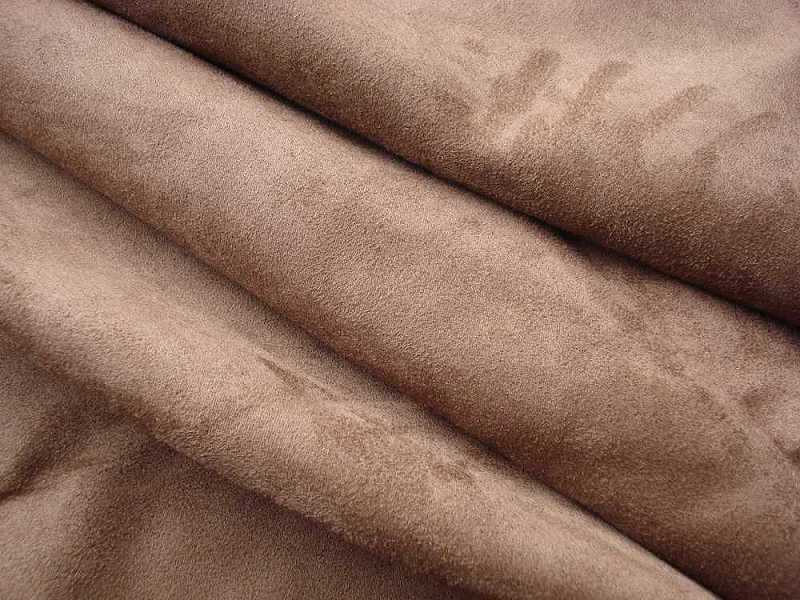
Suede. Source: seasonalcolor.yuku.com

Suede. Source: seasonalcolor.yuku.com

One commentator, “Darvant,” also detected a suede tonality, along with an incense-y rubberiness and a strong floral element that included the jasmine. He writes, in part:

So luxurious, stormy, spicy/fruity and intoxicating in its first explosion but in a while so silky, slightly powdery, delicately rubbery (almost as a golden musky/resinous suede). […] a tornado of diverse elements by soon interacting each other in an armonic olfactory orchestra as luxurious hesperides, mellow plummy/orangy fruits, sambac jasmine, exotic sweet spices and powdery iris (the latter in its heady and mastering role). By soon the spicy/fruity drama is encompassed and comforted by a soothing accord of mossy galbanum, smooth balsams, animalic resins and probably rubbery/incensey suede. The influencing iris provides hints of floral powder perfectly integrated with musks, star anise and suede. A touch of olibanum or just powdery iris, woodsy resins and velvety suede? Probably it’s the note of agarwood (as linked with iris and star anise) which provides a sort of suede/rubber (vaguely boots polish type of) boise vibe around. The sambac jasmine affords an incredibly glamour “icy” spark in the air, as well as combined with musky amber, anise, talky iris and may be aldehydes. Actually in conclusion a velvety rubbery suede type of vibe emerges from the storm with all its exotic silkiness. A dark patchouli provides structure and stableness for all the general oriental mélange.

PS. In the dry down the vanilla emerges and tames a bit the agarwood spicy “gassiness”. The agarwood resin smells slightly synthetic and some people can demur it but i add that this element does not understate the extreme sophistication of the olfactory performance and can’t veil in any way the beauty of its glamour modernity.

In sharp contrast to all those layers, a third Basenotes poster wrote that he or she detected nothing more than “dry woods… [b]ut it’s such a nice smell, that it’s more than enough. Not groundbreaking though.”

I agree with that last statement. Bois d’Oud is not a revolutionary or unusual scent, as all the perfume comparisons from me and various forum commentators should make clear, but it’s not identical like the others either. It is not as dark, dry or smoky as Black Afgano; it seems smoother, plummier, more gourmand at times, and sheerer. Despite the initial resemblance to Kalemat or to an oud version of Fille en Aiguilles, Bois d’Oud later turns into something quite different from either one. I haven’t tried Montale’s Velvet Aoud to know how it might compare, or the Micallef scent mentioned on Fragrantica, but I can say that I think Bois d’Oud differs from vintage M7. There are a few token similarities in terms of how oud is mixed with plummy, resinous, labdanum notes, but as a whole, the two fragrances are very different, in my opinion.

Perhaps the ultimate reason why Bois d’Oud stands slightly apart from similar takes on the plummy-oud genre is the inclusion of the vanilla, creaminess and dustiness. Half-gourmand, half-not. Is that enough for perfume lovers who own similar scents in the same style? I don’t know. It’s going to be an individual decision.

All in all, if you like very plummy oud fragrances with sweetness, amber and vanilla, you may want to give Bois d’Oud a sniff. It is firmly unisex, in my opinion, and has good longevity with decent sillage. The perfume is not hugely expensive per ounce at $150 or €125 for 100 ml of eau de parfum, especially as you can find it priced for less than retail. Will it blow your socks off? I highly doubt it, but Bois d’Oud has some very enjoyable parts, along with a useful, versatile easiness about it.

DETAILS:
Cost & Availability: Bois d’Oud is an eau de parfum that is available only in a 100 ml size. It costs €125 and £125. In the U.S., I think it costs $150, but I can’t find a ton of retailers to confirm that. The company has no website that I could find, either. In the U.S.: the Perris Monte Carlo line appears to be sold at Henri Bendel in New York, but their website only shows the Imperial Oud Black bottle. That seems to be a different fragrance entirely, but, oddly, subtext on the page also mentions Bois d’Oud. I have no explanation for that. Like Bendel, Neiman Marcus only carries the Imperial Oud and the new Rose de Taif. Elsewhere, I’ve noticed Amazon sellers offering Bois d’Oud. One sells a 10 ml decant for $35, while another has a 100 ml tester bottle for $100. Outside the U.S.: in the U.K., you can find Bois d’Oud at 10 Corso Como for £125, along with the rest of the Perris line. The perfume is also available at First in Fragrance for €125. I noticed Bois d’Oud on sale for €105 at the Parfum Center in the Netherlands, while it’s at regular price at Celeste. In Spain, you can buy it from Novento Grados, in Italy at Etos Profumeria, in Greece at Rosina Perfumery, and in Munich at Bruckner. In the Middle East, I found Bois d’Oud at Souq.com for AED 596. Kuwait’s Universal Fragrances has most of the line discounted for $99. Samples: Surrender to Chance doesn’t have Bois d’Oud in an individual form, but it has a Perris Monte Carlo Sample Set of 5 fragrances from the line in 2 ml atomizers for $38.99. You can order Bois d’Oud in an individual vial from The Perfumed Court where prices start at $4.96 for a 1 ml vial.

Slumberhouse Zahd (Limited Edition)

Photo: Lisa Rochon at chasinghome.org.

Photo: Lisa Rochon at chasinghome.org.

Close your eyes and imagine Paris at Christmas. It’s after midnight. In the shadow of Sacre Coeur, nestled in a warren of small streets, there is a small, private, members-only theater. It glows like a ruby jewel, decorated in velvet in shades of blood-red and black. A dry smoke lingers in the air, and cranberry mulled wine flows like a river. A buffet is set discreetly to the side, laden with Ruby red port wine, stewed plum compote, tart cherries in burgundy claret, and dark, bitter chocolate. The theatre special is a balsamic vinegar reduction, infused with butter, cranberries, plums, chocolate, smoke, and tobacco. Men in masks like Casanova sit hidden in velvet alcoves, eating spiced cranberry cake, smoking, or smearing their lovers’ skin with the chocolate-cherry balsamic glaze. When morning comes, the theatre becomes darker, the velvet curtains change to brown, the wine dries up, and all that is left is a dry, sweet woodiness. Welcome to the world of Zahd.

Photo by Catherine at @strawbeemochi, Twitter. Used with grateful thanks.

Photo by Catherine at @strawbeemochi, Twitter. Used with grateful thanks.

Zahd is the newest creation from Josh Lobb at Slumberhouse, the Portland indie perfume house. Zahd is a parfum extrait that was just released in limited quantities. Only 125 bottles were made, all of which were offered for pre-order back in Fall 2013. Such is the popularity of both Slumberhouse and Mr. Lobb himself that Zahd sold out in a mere 24 hours. The perfume was shipped out about 10 days ago, and one of my close friends, Kevin, was kind enough to share a sample with me.

Zahd is a lot more nuanced and complex than it initially appears from the outside where it deluges the wearer in the darkened delights of a semi-sweet, semi-dry cranberry molasses. I’d actually argue that it is the most subtle, well-balanced, and carefully modulated of all the Slumberhouse scents that I have tried thus far. Some of them have always been a little heavy-handed, shall we say, in their bold intensity and concentrated focus. (Perhaps I’m still recuperating from the drydown of Sova Extrait….) Zahd is different. It  feels like the incredibly talented Josh Lobb is honing his talents, and learning to appreciate the effects of a more nuanced, subtle approach, while still maintaining the Slumberhouse signature of concentrated richness. The result is a fragrance that may actually be the easiest Slumberhouse to wear, if not the best Slumberhouse to date.

Source: ebay.co.uk

Source: ebay.co.uk

As a limited edition fragrance that is now sold out, Zahd isn’t mentioned on the Slumberhouse website, but Mr. Lobb provided CaFleureBon with a wonderfully detailed analysis of the perfume, his inspiration, and even a poem he wrote on the feelings that it is meant to capture. The long piece is worth reading, but I’ll only quote Mr. Lobb’s description of the perfume and why the cost of its ingredients meant it could only be done as a one-time deal:

As I began creating the formula for Zahd, I realized I was subconsciously sculpting the scent to replicate how I felt crushed red velvet would smell if a fabric could be transformed into scent. I wanted something lush, opulent, alluring, completely gender neutral and ultimately mysterious. From this point I began incorporating other ideas involving heavier elements from traditional middle eastern perfumery to add both weight and complexity.  Over the course of these two years I created roughly 80 prototypes of Zahd in my attempts to fine tune the fragrance to the smoothest, most rounded and perfected version of itself. In curating my materials palette, I realized that the addition of lotus, mysore sandalwood and an attar I commissioned specifically for Zahd had bumped this fragrance into not only the realm of excessive cost but also into being nearly impossible to replicate. Realizing that this would be a special release that I would only be able to offer in such a limited amount, it only made sense to offer Zahd for this occasion.

According to Mr. Lobb, Zahd incorporates notes of:

cranberry, champaca flower, benzoin, plum, pink lotus, fir, cocoa, tolu balsam, gromwell, wine ether, mysore sandalwood, cherry, incense and oak to create a dark, velvety berry scent. The perfume itself is a deep ruby red color and is concentrated at 30% to create an incredibly powerful and long lasting extrait.

Source: Pbs.org

Source: Pbs.org

Zahd opens on my skin with thick wave of cranberries covered with spices that smell like cloves and cinnamon. The tart, sweet, spiced fruits are thoroughly immersed in plum molasses that has a definite liqueured undertone, one that extends far beyond mere wine and into Ruby red port territory. It’s dense, velvety, and a little bit treacly in feel. Subtle flickers of a dark, bitter chocolate lurk at the edges, along with smoky undertones, though they don’t smell like frankincense. The overall bouquet is of concentrated cranberries with plums, dark port liqueur, and spices, all shot through with a vein of darkness.

There are other elements hovering in the distance. There is the subtlest suggestion of something vaguely floral that momentarily pops up its head in the opening 15 minutes, though it is indistinct and muted. It doesn’t smell like champaca to me, and I honestly can’t place it, though it doesn’t matter much as the note is very short-lived in nature. Much more noticeable is a different sort of fruited undertone. Deep in the base are cherries, accompanied by tobacco and what feels almost like a leathered apricot. I know tobacco isn’t mentioned in Zahd’s list of notes, but something definitely creates the smell of Tobacco Absolute for me, particularly later on in the perfume’s development.

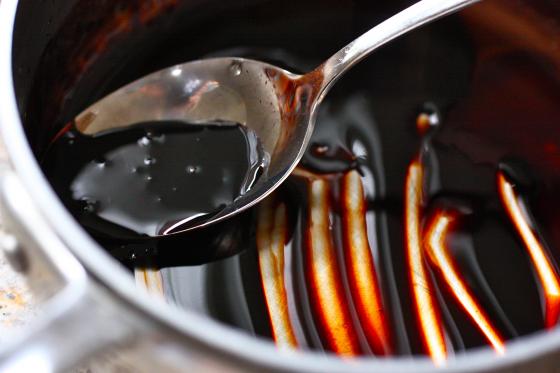
Balsamic vinegar reduction. Photo: Jenna at Eat, Live, Run. EatliveRun.com. (Website link embedded within.)

Balsamic vinegar reduction. Photo: Jenna at Eat, Live, Run. EatliveRun.com. (Website link embedded within.)

One of my favorite parts of Zahd is the strong undercurrent of something darkly balsamic in the base. For once, I don’t mean “balsamic” in the sense of a dark, thick resin. No, I mean something that is like actual balsamic vinegar that has been reduced down (with a ton of butter) to make a dense sort of glaze or demi-glace. It smells like sour cherries and chocolate, while still retaining a lingering trace of something wine-like. (If you haven’t tried a balsamic reduction, I highly recommend it. It works beautifully with everything from filet mignon and duck to fruit, especially strawberries.)

Trisamber, via IFF.

Trisamber, via IFF.

My least favorite part of Zahd is something aromachemical in the base. The first time I wore the perfume, I applied only a little bit of the burgundy juice, and the primary bouquet was of heavily spiced cranberries with an incredibly powerful, super arid, woody synthetic. It was very difficult for me, so I contacted Josh Lobb on Twitter to ask if Zahd contained any aromachemicals. Mr. Lobb was extremely gracious, and courteously walked me through Zahd’s other elements. He quickly determined that the troublesome nuances I was describing had to be something he called “Trisamber” which turns out to be an IFF creation with a very woody, dry, somewhat ambered aroma profile.

You may find Mr. Lobb’s Twitter discussion of the aromachemical interesting, as it also helps to underscore that Zahd’s core is about darkness, not sweetness:

https://twitter.com/slumberhouse/status/439494550290460674
https://twitter.com/slumberhouse/status/439496671643594753

Mr. Lobb also added:

  • The trisamber is an interesting note, to me it smells like blackness, like someone turned the lights off, a bit mysterious
  • I definitely see it as a divisive scent. Without trisamber Zahd leaned a bit too gourmand for my liking

I was extremely touched by how he took the time to so courteously and patiently explain Trisamber to me, as well as by his understanding for my particular sensitivity. I know most people have no problems whatsoever with aromachemicals, but my nose is really finely attuned to them, and a few are really difficult for me to bear when they are extremely desiccated in nature.

Source: designerwallcoverings.com

Source: designerwallcoverings.com

The thing that is interesting about the Trisamber is that it really was not as profound an issue when I applied a lot of Zahd. In my main test, I used 3 times more perfume, a little over half a 1 ml vial but less than 2/3rd, and fully expected the aromachemical to be worse. I was shocked to find it was better. Much better.

Oddly enough, the greater quantity seemed to downplay the harsh aridity, probably because it allows Zahd’s other elements to shine more brightly. As a result, the Trisamber doesn’t feel like a wave of dryness that hits you in heavy amounts from the first sniff. Instead, it slowly seeps out after about 15 minutes, and, even then, it is very well-blended within the overall bouquet, appearing mostly as a very subtle dry darkness that wafts about. It is remains an arid note (though not so much as the Norlimbanol that I’ve encountered in the past), woody, and faintly ambered, but it is counterbalanced by the other elements. Still, the Trisamber feels very jangly at times and, I have to admit, it gives me a small twinge in the head whenever I smell Zahd up close for too long a period of time.

Despite all that, I really like the dark touch that Zahd exudes. Mr. Lobb is undoubtedly correct that, without the Trisamber and the other darker touches, Zahd would have skewed too gourmand in nature. They cut through the sweetness, provide a balance, and ensure that the perfume never veers into diabetic territory. Yet, I think the dark foundation does much more than just that; I think it actually makes the perfume. It’s not merely the Trisamber, but also the liqueured, balsamic, cherry-and-dark-chocolate tonalities, mixed with that subtle suggestion of something smoky. Mr. Lobb thought of crushed velvet curtains, and he does succeed in creating that visual. He also goes beyond, to conjure up that cozy jewel-box of a theatre with dark shadows, that mystery he referred to in his discussion of Trisamber. The overall effect is to make Zahd very much of a mood fragrance for me, a mood that goes beyond the expected holiday smell of simple spiced cranberries.

Source: This Girl Can blogspot, lkng.wordpress.com.

Source: This Girl Can blogspot, lkng.wordpress.com.

At the end of 30 minutes, Zahd slowly starts to shift. The black chocolate becomes more noticeable, and is accompanied by a tobacco accord that feels a little leathery. The darkness is further underscored by a greater sense of smokiness, though it never smells like incense to me. Rather, it’s more akin to burning leaves in the fall.

As a whole, Zahd is extremely potent up close, with initially huge sillage that fools you into thinking that the perfume is very dense in weight. As it wafts about 4 inches around you, the liqueured and molasses accords make you imagine something as chewy as a red velvet cake. Yet, the sillage drops after 40 minutes to about 2-3 inches, and the perfume continues to soften with time. Zahd actually ends up feeling almost delicate and light, despite its richness and the density of its notes. To borrow the term of one of my readers, Tim, it has “weightless heaviness” at the end of the first hour.

Source: primermagazine.com

Source: primermagazine.com

I thoroughly enjoyed Zahd opening the 2nd time around, especially as the greater dosage amplified the perfume’s velvety richness. The Trisamber was not as dominant, and the overall bouquet was really pretty. I love how Zahd replicates the smell of a very expensive port wine, only made from cranberries, plums, and cherries instead of the usual grapes. I’m a sucker for port, both the Ruby and Tawny varieties, especially when served with chocolate, so the overall combination is really a hit for me. (It also makes me wonder if Mr. Lobb is a secret foodie.)

Zahd has sweetness, yes, but it is very carefully calibrated sweetness that is kept fully in check by the darker, drier elements. The subtle suggestions of tartness and of oaked woodiness also help. Those of you who are phobic about fruit scents, let me reassure you that Zahd is not some commercial fruit cocktail with diabetic syrup. It is instead a very deep, rich scent whose spiced cranberry focus is dominated by shades of burgundy and black. Speaking of which, the colour of the juice is beautiful with its mulled wine resemblance. It is also the reason why I must warn you not to wear white or light-coloured clothing if you plan on spraying on Zahd. The fragrance stained my skin to a port wine shade that remained for hours. While I love the colour in general, I imagine it would be quite difficult to get out of clothing.

Image: Dejainnightmare via imgarcade.com

Image: Dejainnightmare via imgarcade.com

The Trisamber aromachemical grows more dominant by the start of the 3rd hour, thoroughly infusing its dark dryness into the cranberry-plum cocktail. It’s a hard note to describe in-depth, but its power feels steely, hard, and jangly, almost like an abrasive roughness that is quite textural in feel. It sets up a dichotomy where you have the velvety plushness of the spiced fruit, port, and balsamic reduction accords, on the one hand, and something that is drier, tougher, and not as smooth, on the other. The contrasts make Zahd feel like some sort of avant-garde, modernist take on fruitiness that completely up-ends its usual characteristics in commercial perfumery.

Zahd is rather linear in nature, and doesn’t shift twist or turn in a massive way throughout its lifespan. Initially, all that happens is that the perfume softens even further, turning into a blur of dry-sweet port wine that hovers about 1-2 inches above the skin at the end of the 3rd hour. But slowly, very incrementally, Zahd turns drier and woodier. Over the next few hours, the plummy base feels as though it’s becoming darker and more resinous. On my skin, the cherry and plum actually seem to overtake the cranberry. As the spiced note weakens, the Trisamber woodiness increases. Zahd feels like a liquid that has evaporated to an even deeper concentration, devoid of the extra frills and embellishments. Yet, it is very soft in feel. And, about 4.75 hours into its development, it turns into a skin scent.

"Kaiser Prime Nebula" by Nethskie at nethskie.deviantart.com.  http://nethskie.deviantart.com/art/Kaiser-Prime-Nebula-177426428

“Kaiser Prime Nebula” by Nethskie at nethskie.deviantart.com. http://nethskie.deviantart.com/art/Kaiser-Prime-Nebula-177426428

The notes continue to realign themselves in fractional degrees. At the start of the 7th hour, there is as much of a dry, tobacco-like aroma as there is plum. The aroma is dark, vaguely dirty and earthy, and feels almost like raw tobacco juice that has been stewed. The cranberry now feels even more muted than before. Even the balsamic, cherry glaze feels weaker, not to mention thinner and milder. The Trisamber’s dryness and darkness remains throughout, adding to Zahd’s woody feel. At the same time, a dark golden touch appears. It doesn’t feel like amber so much as an abstract, very dry… well, goldenness. That’s about the best I can do to describe it.

As a whole, Zahd smells of dark, fruited sweetness with dry woods and darkness. You can still detect the spiced cranberry if you sniff hard, though my skin seems to emphasize the plum, but the fruited elements feel increasingly abstract. So do the dry elements, which can’t really be singled out as oak, tolu balsam, or even Trisamber in any hugely distinctive, individual way. The perfume is really well-blended, and coats the skin like a rich but gauzy coating. Zahd continues in that vein for a few more hours until it finally fades away as a mix of dry sweetness. All in all, Zahd lasted just under 15 hours on my skin with the large dose (a little more than 1/2 of a 1 ml vial, or about 2 good sprays), and about 10.75 hours with 2 small smears.

Source: droiddnaforum.com

Source: droiddnaforum.com

As I stated earlier, I find Zahd to be the most wearable of Slumberhouse’s fragrances that I’ve tried thus far. I wasn’t hugely impressed by it in my first go-around, primarily because of the way that the Trisamber was such a huge part of the scent, but I have a particular issue with aromachemicals that others don’t have. (Lucky devils.) The more important point, though, is that Zahd unfurled its subtle nuances and layers when I applied more of it, which is something you may want to keep in mind. For whatever reason, it was generally just a simple, spiced cranberry fragrance with aromachemical dryness when I used only a small amount. The lovely plum, dark chocolate, port, balsamic cherry glaze, burnt leaves, and that inexplicable tobacco tonality all shone through with the larger dosage.

Zahd feels firmly unisex to me, and it seems like something that both men and women would enjoy. I don’t know how versatile it may be for daily use, but then, Zahd is very much of a mood fragrance, in my opinion. 

I think it’s rather a shame that Zahd is a limited-edition scent. I really think it is one of the best Slumberhouse creations to date, and seems to really reflect Mr. Lobb’s personal evolution as a perfumer. I’ve said repeatedly that he has enormous talent, and that I both admire him and respect him. It’s really hard to believe that he is wholly self-taught, because he’s very good at this. He is also someone who is driven by a genuine passion to make perfumes that are outside the box, something that I always think should be applauded. On top of it all, in his interviews and interactions with others, he always comes across like a really nice guy. All of that is why I’ve always wanted to love his fragrances but, alas, none of them have suited me personally.

The primary reason is that many of them felt a little over the top with their monolithic, untrammeled intensity. (I haven’t tried Norne, which I suspect would fit my tastes much better, but I’ve tested 5 Slumberhouse fragrances thus far.) I think the best example of my point would be Sova Extrait, which I haven’t officially reviewed because it was pulled from the line soon after I bought my sample. Sova reflects something that I’ve experienced with a number of Slumberhouse fragrances, only taken to an extreme degree: a glorious, almost addictive start, but a development which just wears one down with an increasingly loud, bulldozer-ish quality and with such hyper-saturated richness that it becomes thoroughly exhausting.

Source:  hd4desktop.com

Source: hd4desktop.com

Zahd is none of those things. It still isn’t me, but this is a perfume that reflects a much more delicate touch. The Slumberhouse signature of rich boldness is still there, but it is more carefully calibrated. Even better, the richness doesn’t feel unctuous, oily, overwhelming, or cloying as it does in a few of the scents. (Pear + Olive, I’m staring at you.) You also don’t feel burnt out by linear heaviness, as though you’ve just ingested six rich cakes, when you merely asked for a single slice. (Ore, that one applies to you. How I could have loved you, if only you hadn’t force-fed me!) With Zahd, the Slumberhouse singular focus still remains, only now it is leavened with more complexity and more mature depth.

It’s as though Mr. Lobb has learned to simultaneously add more nuanced layers, while also editing himself. The best example of the latter would be the spiced nature of the cranberries in Zahd. The spices are a subtle undertone, not a full-on blast. In my review of Mr. Lobb’s Jeke, I talked about the overpowering nature of an accord made from spiced apple, mulled wine and potpourri-like elements. That spiced potpourri aroma could easily have happened here with Zahd as well, with just a different sort of fruit being the focal point. But it didn’t — thanks to very careful editing. Mr. Lobb’s growing maturity and confidence as a perfumer shows itself in the fact that he manages to express his signature voice or identity without having to resort to Rammstein-like levels of loudness.

I realise that Mr. Lobb has said it wouldn’t be cost-effective to put Zahd into general production, but I think admirers of his fragrances may want to beg him to reconsider. Perhaps he can price it a little higher than the $150 he charged for the 30 ml Extrait. I suspect really hardcore Slumberhouse fans would pay it gladly. It also seems rather a shame that those new to the line won’t get the chance to try Mr. Lobb at his best. All in all, I have to say, “Job well done!”

DETAILS:
Cost & Availability: Zahd is no longer in production. There was a one-time pre-order in Fall 2013 for only 125 bottles, each of which was 30 ml of pure parfum extrait which cost $150. Mr. Lobb sold out within 24 hours. He does not have any more bottles for sale, and does not have samples. There are also no sample sites which offer Zahd to test. I obtained my vial from an extremely thoughtful friend. Thank you, Kevin!

Review En Bref: Serge Lutens Laine de Verre

My Reviews en Bref are always for scents that, for whatever reason, may not warrant one of my more exhaustive, detailed assessments. This time, it’s for the brand new Serge Lutens‘ fragrance, Laine de Verre, which was released in February 2014.

Fiberglass. Source: featurepics.com

Fiberglass. Source: featurepics.com

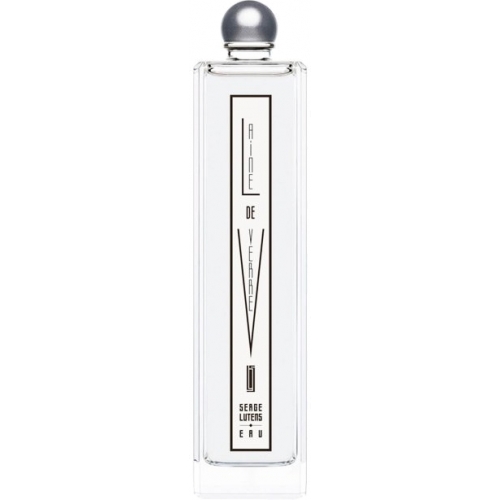
Laine de Verre is an eau de parfum created by Christopher Sheldrake, and the third in Serge Lutens’ Eaux series. A number of people have described the L’Eau (or Water) series as anti-perfumes, and I think that’s quite accurate. It is always one of the many reasons why I struggle with Laine de Verre, a perfume inspired by fiber-glass. Yes, fiber-glass or glass wool insulation, and no, I’m not joking.

The Serge Lutens website describes Laine de Verre in the usual abstract terms:

It is only after he had been penetrated by the winter that, laying down his arms, the Lord of Glass came to place
at the feet of the Lady of Wool flowers and ferns which had frosted on him.

Source: marieclaire.fr

Source: marieclaire.fr

Luckyscent has a much more detailed olfactory assessment, along with their guess at Laine de Verre’s notes:

A fragrance named after an insulating material? That’s what “laine de verre” means: glass wool. […] His third offering in the Eaux series expresses “a domestic quarrel between my feminine and my masculine” sides, the maestro explains: the Lord of Glass, offering the ferns and flowers etched on his body by frost to the Lady of Wool.

The result is as playfully weird and avant-garde as you’d expect, with a huge aldehydic burst in the top notes – the odorant equivalent of orange soda pop bubbles fizzing in your nose. A whiff of ozone, the slightest hint of metal-tinge rose… There are shards of glass in that ball of mohair wool!

But just when you’re shivering, the “wool” half of the equation kicks in, or rather, rises in a fuzzy haze of musk and cashmeran – one of the most attractive and complex synthetic notes, musky, woody, ambery with comforting a hint of dustiness…

[Notes]: Citrus notes, aldehydes, musks, cashmeran.

I don’t agree with their characterization of the perfume as a whole, but I think their description of cashmeran is quite accurate given how the synthetic manifests itself here. As for the note list, I don’t think it is complete, especially as they themselves mention roses. They’re right, there is a very clear floral presence that lurks about Laine de Verre’s edges. It is a pale, watery, pink rose, and it is joined by other notes which that list omits as well. Very synthetic notes….

Source: de.wallpaperswiki.org

Source: de.wallpaperswiki.org

I’m going to say this as candidly and bluntly as possible, upfront: I’m the wrong target audience for a “fragrance” like this. Laine de Verre is about as much “me” as I am Marilyn Monroe or Vladimir Putin. There was always zero chance that I would like it, and I knew that from the start. I don’t like aldehydes, I can’t abide white musk, I have very limited tolerance for synthetics, and absolutely none for synthetics in massive, walloping, high doses. I don’t enjoy scratchy fiberglass, or metallic textures. I also can’t fathom the whole concept of spending a lot of money on a perfume that doesn’t smell at all of perfume, of a fragrance that is intentionally made to be an “anti-perfume.” With a niche price tag to boot. I simply cannot bear any of those elements, individually, let alone all combined into one. Which is perhaps why Laine de Verre was essentially a scrubber on me from the very first moment, though I actually stuck through with it to the bitter end.

Source: depositphotos.com

Source: depositphotos.com

Laine de Verre opens on my skin with a Wagnerian level of aggressive, soapy aldehydes. They are cold, icy, and definitely manage to convey the sensation of scratchy, glass and metallic wool shards that pierce you through the nose. One reason why is the almost equally aggressive dose of synthetic, clean, white musk. In the trail of the dominant two notes comes a bright, fresh, lemony aroma, along with a nebulous, elusive hint of floracy that feels very dewy and watery. Dust lurks in the corners, next to a sense of dry woodiness, though both are extremely subtle at this point. The whole thing feels very gauzy and translucent in colour, but extremely sharp and strong in terms of the actual notes. In fact, every single time I smell the icy cocktail, I experience a searing pain through my head, and it takes only 5 minutes for a powerful headache to be my constant companion. That clean, white musk is just a killer.

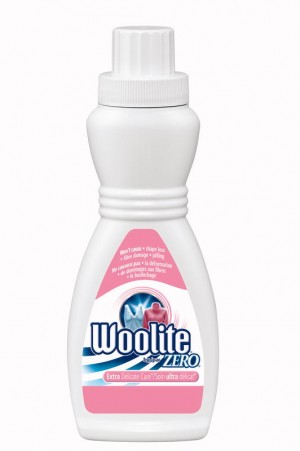
Woolite Delicates via rbnainfo.com.

Woolite Delicates via rbnainfo.com.

The aldehydes are interesting, at least on an intellectual level and at first. They initially create a very classique, slightly elegant, old-time, vintage feel to the scent, especially in conjunction with the sharp, crisp, lemony notes and the hint of something rosy. The aldehydes truly smell a lot more like actual fizzy molecules in the opening minute than anything else, but it takes less than 2 minutes for the soapy undertone to rise to the top. Before a full 3 minutes have passed, Laine de Verre takes on a definite “Woolite Delicates” aroma. I know because I went to check the bottle in my laundry room. The nebulous floral aroma is different, and Woolite doesn’t have the zesty citric element, but there is no doubt in my mind: my arm was reeking massive amounts of something not too far off from Woolite.

Source: soap.com

Source: soap.com

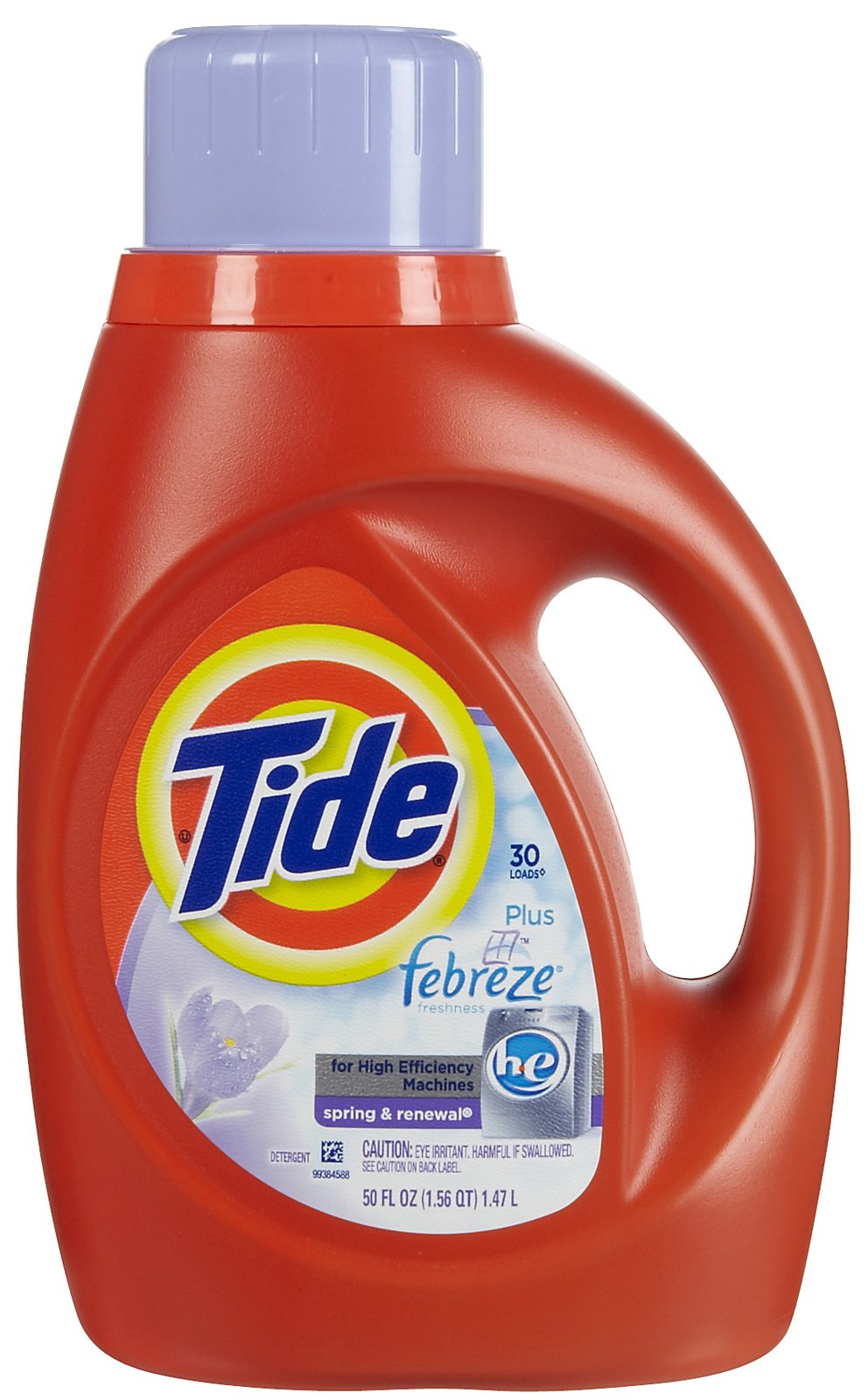
At first, Laine de Verre’s soapy, clean detergent smell bore the same sort of delicacy that Woolite has, but that doesn’t last for long. Exactly 15 minutes into the perfume’s development, the Woolite turned into concentrated Tide laundry cleaner. Specifically, the HE concentrated version with Febreeze. I know, because I own that too, and I compared the Lutens fragrance torturing me on my arm with the bottle in my laundry room. Tide has a much more aggressive, thickly soapy aroma than the more gentle Woolite Delicates, and Laine de Verre was painfully close. Its olfactory bouquet also wasn’t particularly helped by the slightly dusty quality that lurks in the perfume’s background, along with an abstract, dry woodiness.

Both of them are a bit of a contradiction to the very liquidy, wet feel to Laine de Verre. Honestly, I wouldn’t be surprised if the perfume also contained Calone, because there is a very aquatic nuance to Laine de Verre. It helps underscore the very designer feel to the scent, as if it were some sort of distant Acqua di Gio relative, or a more expensive version of the Clean brand of fragrances with their focus on white, laundry-based anti-perfumes. None of this is a compliment in my eyes, by the way….

Source: telshopmobile.com

Source: telshopmobile.com

Laine de Verre is quite potent at first, but the perfume also feels very gauzy in weight. The sillage only wafts about 2-3 inches at first, then drops at the end of the first hour to sit about an inch above the skin. It turns into a skin scent near the end of the 2nd hour, which fully in line with the goal of creating an intimate anti-perfume that is an “Eau” in nature.

Laine de Verre does improve, thankfully, though not drastically. Something happens around the start of the second hour where the aggressive quality of Tide laundry detergent softens, and the perfume takes on a more balanced, elegant feel. It feels like a super-light crystal, if that makes sense. It is still painfully soapy on my skin with a sharp, clean, white musk, but I can see how some people might now see this as a very elegant scent. An olfactory version of minimalistic, cubist art, perhaps.

I know the woman who would wear this, and it would probably be one of my best friends who is incredibly fashionable but who hates wearing perfume. She never does — ever — though the last time I saw her she casually asked what I would recommend were she ever to change her mind. Something minimalistic, sleek and elegant that wasn’t really perfume. I had no suggestions for her then, because everything I considered seemed too much like actual fragrance, no matter how light or fresh. Now, though, I finally have a name. Laine de Verre is perfect for someone who doesn’t want to smell of anything at all, while simultaneously giving off some sort of indescribable, elusively intangible, elegant vibe to match her sleek, streamlined, elegant clothes.

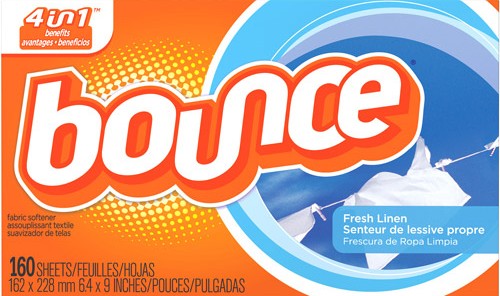
Bounce dryer sheets.

Bounce dryer sheets.

Laine de Verre continues its up and down trajectory. By the end of the 2nd hour, that brief moment of elegance vanishes, and the perfume turns into a skin scent which has progressed from Woolite to Tide to, now, Bounce dryer sheets. It’s all the fault of that damn white musk, which seems to take over. As a whole, Laine de Verre is a soapy, vaguely floral, dry scent with strongly synthetic “clean” notes.

Source: hdw.eweb4.com

Source: hdw.eweb4.com

Then, it gets better again, relatively speaking. The impression of Bounce dryer sheets dissipates by the start of the 5th hour, probably because abstract elements of sweetness arrive to dull the white musk. Laine de Verre is a now a nice, delicate, feminine, aldehydic floral musk. I can’t easily pinpoint the flowers. There was always a subtle touch of a dewy, pale pink rose from the start, but is it now joined by jasmine perhaps? There is something sweeter and deeper that goes beyond the rose, aldehydes and cashmeran wood accords, but it’s so muffled and muted that it’s hard to distinguish. In fact, even the rose and wood elements are hard to detect from afar, as everything is blended quite seamlessly together. None of it is my cup of tea, but at least it smells relatively elegant from afar.

Source: ukcurtainsandinteriors.co.uk

Source: ukcurtainsandinteriors.co.uk

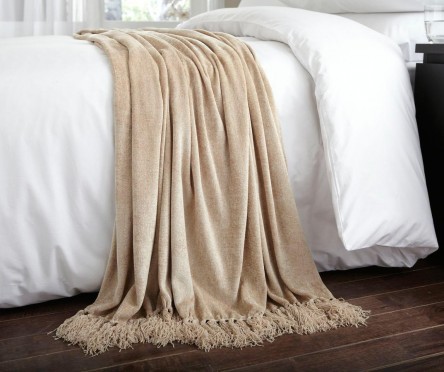
The one thing I can genuinely say is quite nice about Laine de Verre is the drydown. In its final 90 minutes, the perfume radiates a softly creamy wood note that is very pretty. There is still plenty of that revolting white musk, but Laine de Verre now has a wonderfully soft texture that feels fuzzy, like the thinnest cream chenille blanket. It’s far too soft to feel even like wool. Actually, it calls to mind fresh cotton wisps that you see in those films about cotton plantations. In its final hour, Laine de Verre is as much about a textural sensation as an actual smell. It is a soft, creamy, wispy, woody scent with clean freshness. All in all, Laine de Verre lasted just short of 8 hours on my skin, thanks mostly to the white musk and synthetics which my skin clings onto like mad.

Generally, in my full reviews, I like to provide other people’s perspectives on a scent, but I rarely do that in the Reviews en Bref and I’m not going to do so here. You can look up the comments on Fragrantica, if you’d like. I’m simply not that enthused about Laine de Verre to spend a substantial amount of my time talking about it, though I find it less horrifying and traumatic than the equally soapy, sharp, synthetic, white musk La Vierge de Fer that was released last Fall. At least this one isn’t priced at $310. Both fragrances, however, are what I personally consider to be “scrubbers.” Serge Lutens is one of my favorite houses, and there is no-one whom I worship more on a personal level than Monsieur Lutens himself, so disliking one of his perfumes is always painful. But I’m afraid I do.

As a whole, I suspect Laine de Verre won’t impress the hardcore Lutens fan who originally fell in love with the house because of its complex, rich signature. The L’Eau series hasn’t been a hit with any Lutens lovers that I personally know, perhaps because “anti-perfume perfumes” seems to contradict the very point of buying a Serge Lutens to begin with. I don’t think Laine de Verre will make the vast majority of them change their minds. However, if you actually hate perfume, you may want to give it a try.

DETAILS:
Cost & Availability: Laine de Verre is a eau de parfum that comes two sizes: in a 1.7 oz/50 ml size that costs $110, €75, or £67; and a 100 ml/3.4 oz size which costs $160, €105 or £94. U.S. sellers: Laine de Verre is available in both sizes at Luckyscent. The Lutens line is also always available at Barneys and Aedes, but I don’t see Laine de Verre listed at the time of this review. The perfume is also not yet shown on the U.S. Serge Lutens website. Outside the U.S.: the International Serge Lutens website has Laine de Verre in the small and large sizes. In Canada, The Perfume Shoppe always carries the Lutens line, but Laine de Verre is too new to be listed. In the UK, Harvey Nichols implies it is the exclusive carrier of Laine de Verre which it offers in both sizes. In France, you can find the regular Lutens line at Sephora, but there is also the online retailer, Premiere Avenue, which has the large size for €105. For other countries, you can use the Store Locator on the Lutens website. Samples: Samples are available at Surrender to Chance where prices start at $4.99 for a 1 ml vial, as well as at Luckyscent.

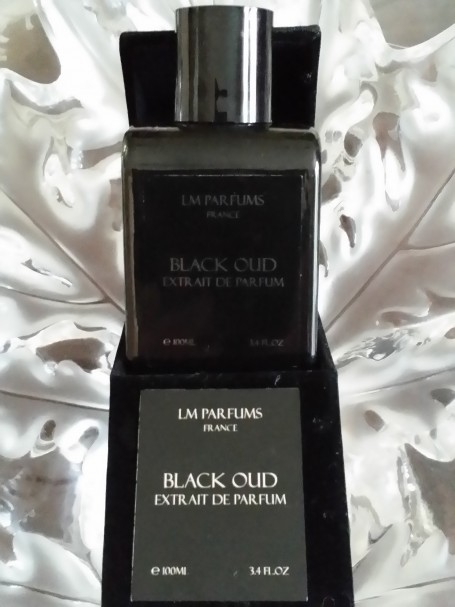
LM Parfums Black Oud

The darkness of incense and an extremely refined oud, speckled with red-brown, earthy, and fiery spices. A deep woodiness that is soon married with a purple liqueured richness, before its sweetness eventually turns drier. Bold richness that moves into an intimate, gauzy whisper. Those are some of the different aspects of Black Oud from LM Parfums.

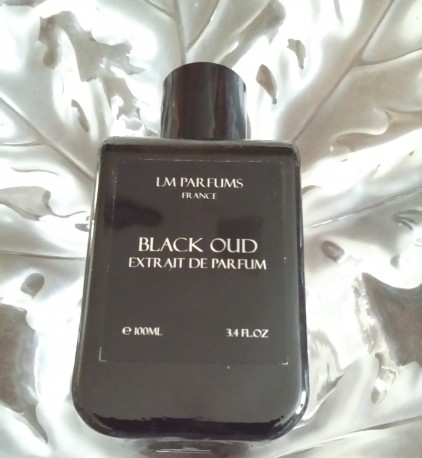
Photo: my own.

Photo: my own.

Black Oud is a pure parfum extrait that was released in 2012. LM Parfums describes the perfume and its notes as follows:

«Blend into the middle of a black and white tainted forest, be in the most obscure darkness, to deliver the fragrance of Oud.» This is my wish to take you into the depth of Indonesia.

Photo: my own.

Photo: my own.

The subtlety of the Oud fragrances, mixed to cistus gum, wrapped with nutmeg, caraway, and incense, this generous fragrance brings in its wake cedar, amber and sandalwood, embellished with a touch of musk.

Top Notes: Nutmeg, Cumin, Incense.
Heart Notes: Oud Wood, Labdamum.
Base Notes: sandalwood, Cedar, Civet, Castoreum, Vanilla, Amber.

Source: wallpaperup.com

Source: wallpaperup.com

Black Oud opens on my skin with a darkness quite worthy of its name. I’m surprised by that, since so many perfumes labelled “Noir” or “Black” don’t actually convey that sense or impression to me. Black Oud does — at least in its opening minutes. There is a burst of beautifully refined, high-quality agarwood that is thoroughly infused with a spicy, peppered sweetness. There is dusty, vaguely earthy cumin, but also the fiery bite of what feels like red, pimento chilis. A rich, very darkly resinous stickiness follows moments later, along with what feels distinctly like a jammy patchouli note. It completely throws me off, as nothing in the notes indicates patchouli, but that is what I smell. It’s a deeply purpled, velvety, liqueured richness with a vaguely fruited aspect. 

I love Black Oud’s opening. The spices are the key, adding a great depth to the smooth, refined oud. They are dusty, dusky, and dry, but never sweaty. I don’t smell the nutmeg at all on my skin, but the cumin is really lovely. For all its spiced dryness, it also smells oddly fresh in a way, and something about it evokes rye bread more than anything curried, sweaty or stale. The whole bouquet is wrapped up with a thick ribbon of billowing, black frankincense, but it is blended so seamlessly into the notes that it’s more of an overall feel of darkness than a sharp, easily delineated note.

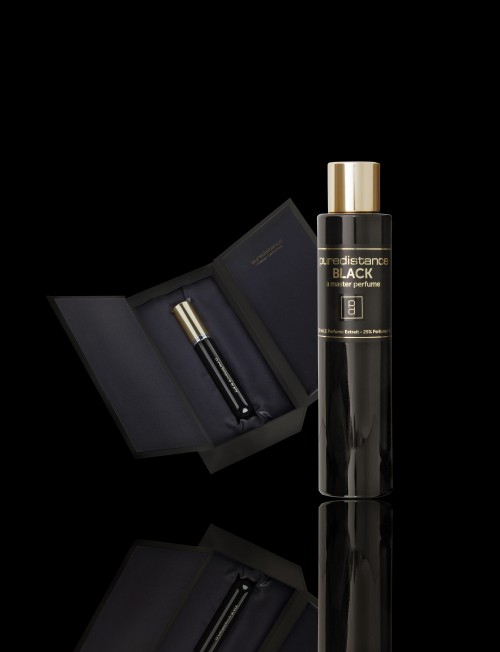
Black in bottle, non-travel form.

Black in bottle, non-travel form.

I’ve worn Black Oud a number of times, and on each occasion in the opening minutes, my initial impression is always the same thing: a much better, more refined, drier Puredistance Black. (Puredistance insists on typing it as BLACK, but I refuse.) Black Oud was released in 2012; Puredistance’s Black in summer of 2013. They are both Extrait perfumes with spices, incense, oud, and a liqueured patchouli sweetness, though Puredistance refuses to release its exact notes for the fragrance and Black has a definite floral component. I was the only blogger out of the first lot who initially reviewed Black to say that I didn’t like it, and I received a bit of flack for it. Well, I stand by my opinion, as I still don’t like Black.

Source: quotes-pictures.feedio.net

Source: quotes-pictures.feedio.net

In the opening moments, Black Oud blows the Puredistance scent out of the water. It’s much smoother, more refined, and deeper. Unlike the Puredistance scent, the overall effect of one actually feels black in mood, perhaps because Black Oud is much smokier, drier, less unctuously sweet, and more spiced. The jammy, purple, fruit-chouli aroma is much more subtle in Black Oud’s opening phase, while the incense is much more profound. In addition, the oud note feels more luxuriously smooth and expensive. However, as we will soon see, the early differences soon fade, and I’m afraid Black Oud becomes a lot closer to Puredistance Black in nature. Several of the things in Puredistance Black that I struggled with manifest themselves here, to the point where I wonder if Antoine Lie made LM Parfums’ Black Oud a year before he made the significantly more expensive (and over-priced) Puredistance Black.

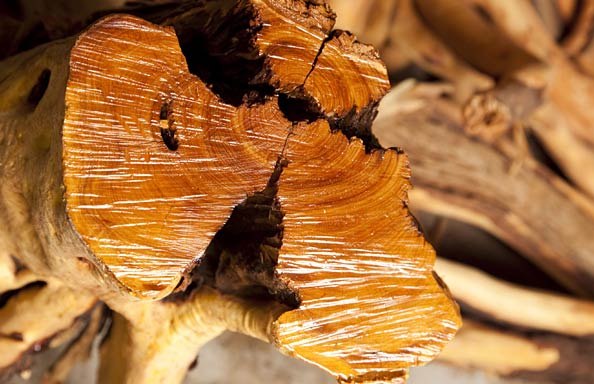
Mysore sandalwood cross-section. Source: vk.com

Mysore sandalwood cross-section. Source: vk.com

It takes very little time for Black Oud to start to evolve. Exactly 5 minutes into Black Oud’s development, the sandalwood peaks up its head. It’s muted at first, but it’s a lovely, subtle touch of spicy, creamy, smoky red-gold woodiness that feels like real Mysore wood. Laurent Mazzone has shown his willingness with the spectacular Hard Leather to spend any amount of money on the genuine Mysore wood, no matter how costly the rare ingredient may be, and I think he must have insisted on the real thing for Black Oud as well.

A few minutes later, other changes occur. The cumin starts to slowly melt into the other notes, creating a more abstract sense of “spiciness” instead of a distinct, individual cumin note. The sandalwood grows stronger, while the labdanum suddenly starts to stir. It’s got a deliciously toffee’d, vaguely dirty, almost chocolate-y undertone. Yet, Black Oud is never skanky, raunchy, urinous or dirty in any way on my skin. I never detect the civet, castoreum, or nutmeg, though there is a subtle muskiness and earthiness that creeps in towards the end of the perfume’s development.

As a whole, Black Oud in the opening half-hour is a very smooth, delicately spiced, liqueured, black-purple oud scent that is infused heavily with smoky incense and that inexplicable jammy element, then lightly flecked with Mysore sandalwood and labdanum amber. While LM Parfums’ Hard Leather is a lusty, “skanky” take on leather, incense, oud, and sandalwood, Black Oud is the sweeter, non-animalic, more purely oud and incense sibling. Every single one of its elements feels rich, seamless, and luxuriously refined, but the whole thing is also very gauzy in feel. Surprisingly so for an Extrait concentration.

"Purple Velvet Gold Flakes" by *Will3style at Deviantart.com. http://will3style.deviantart.com/art/Purple-Velvet-Gold-Flakes-258099755

“Purple Velvet Gold Flakes” by *Will3style at Deviantart.com. http://will3style.deviantart.com/art/Purple-Velvet-Gold-Flakes-258099755

Black Oud slowly turns sweeter, as the liqueured, fruited, patchouli-like jamminess grows stronger. Unfortunately for me, there is the first twinge of something aroma-chemical that stirs in the base. I’m not a fan of it, though it’s thankfully subtle and muted at this point. What is much prettier, however, is the cumin which adds a dry, almost herbal, green-brown spiciness to the base.

At the start of the 2nd hour, the aroma-chemical in the base turns into one of the main notes. It smells like some sort of very arid, “amber” substitute, but also very woody, harsh and, to my nose, jangly with its sharp edges. I don’t like it one bit, though I realise that I have a sensitivity to aromachemicals, and that the vast majority of people can’t detect them. At least the dryness of the note (whatever it is) helps to cut through some of Black Oud’s increasing sweetness, though the jammy liqueur is still very prominent. The incense retreats to the sidelines, along with the spiciness, while the sandalwood slowly starts to fade away.

Art by: LordmOth on Deviant Art. (Click on photo for website link embedded within.)

Art by: LordmOth on Deviant Art. (Click on photo for website link embedded within.)

Black Oud also turns thinner and sheerer, with sillage that now projects only about an inch above the skin. By the 1.75 hour mark, the perfume is a gauzy thin blur of refined oud, the excessively dry aromachemical, incense smokiness, and the jammy fruitchouli note. There is a subtle nuance of something vaguely herbal and earthy in the base, but the overall impression is of a non-floral, woodier, drier version of Puredistance Black.

Black Oud remains largely unchanged for the next few hours. Thankfully, the harsh aromachemical note disappears by the end of the 3rd hour, and my mood improves. By the middle of the 4th hour, Black Oud is a skin scent that slowly turns drier and woodier. It’s a sheer, very pretty blend of vaguely oud-y woodiness and sweetness with tiny, subtle flickers of smokiness, earthiness, and something vaguely herbal lurking at the edges. Around the 7th hour, a touch of beeswax appears, undoubtedly from the labdanum, and a growing element of muskiness.

Source: hotguyscollection.com

Source: hotguyscollection.com

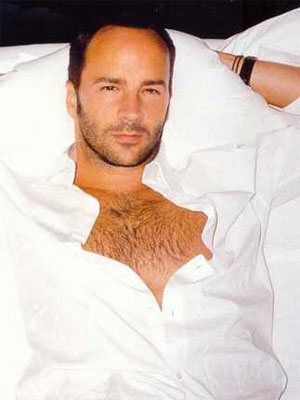
In its final hours, Black Oud also takes on sexy muskiness that has a tobacco-like undertone and a velvety earthiness that almost feels mushroom-y at times. I suspect it stems from the castoreum. As a whole, though, Black Oud’s drydown is generally just abstract woodiness with a touch of sweetness and dryness blended within. Something about it is quite seductive. Call me crazy, but this is what I imagine Tom Ford to smell like. Sweet, dry, woody muskiness with a touch of the scent of a man’s warm skin, all wrapped in a very refined, understated bouquet. Yes, I know Tom Ford is the least “under-stated” person around, but he is what I think of when I smell Black Oud’s drydown: open-shirted, bare-chested and revealing skin that carries the discreet musky sweetness of Black Oud.

As noted earlier, Black Oud is an extrait or pure parfum. It doesn’t feel like it on my skin, I’m afraid. On a few occasions when I’ve worn it, I was surprised by how quickly it faded. Two decent-sized sprays gave me between 9 and 9.75 hours in duration, but the perfume consistently became a skin scent at the start of the 3rd hour. I frequently thought that it had vanished by the end of the 5th hour, but, no, Black Oud definitely lingered, and was noticeable when I put my nose directly on my skin and smelled very hard. With 3 big sprays, Black Oud lasted a good 12 hours on my skin, but, again, it was extremely discreet.

A number of LM Parfums start strongly and then become much more intimate, as that seems to be part of the brand’s overall aesthetic. The gorgeous Sensual Orchid is one example, where the opulent, bold, narcotic sensuality slowly turns into something more romantically discreet, as though it were olfactory lingerie. I am starting to have the impression that Laurent Mazzone might feel that a subtler suggestion is better for his bolder, richer aromas, the new Hard Leather excepted. So, when seen in that light, perhaps Black Oud’s softness and subtlety makes sense, but I was still taken aback. It really didn’t feel like an Extrait on my skin, and its wispiness was another thing that made me think of the intentionally “whispering” Puredistance Black.

While I have extremely wonky, perfume-consuming skin, I’m apparently not alone on the issue of Black Oud’s subtlety and limited projection. On Fragrantica, two other people felt the same way, though their overall assessment for the fragrance was very positive. For example:

If Valentino ever produced an OUD based fragrance it would smell something like this.

Romantic and Deep are the key words here. A rich mix of delicate spices and oud emphasizing the intricate balance between eastern and western perfumery. Smooth pristine and dressed up.

It isn’t loud by any means. In fact I think it is a sleeper that will wake up at unexpected moments. It is however very durable.

Leave it on for a while before you try to decipher it….it’s one of those. […][¶]

EDIT :
Been wearing this for a full day now. I hate to say it but this has nothing to do with an Extrait as far as projection goes. […] EDIT : TWO Days later. I share the same feelings still. Nice *subtle* romantic oud scent that lasts a good amount of time as a skin scent with just minimal projection. [¶] DEFINITELY not one of the stronger Extraits/Parfums that I have sampled but what can you expect for $225 100ml Extrait.

Others agree on the romantic, refined nature of Black Oud, including a woman commentator who offers up the first review below:

  • This perfume is a dream come true : when I wear it,I have the feeling that I smell a mysterious lover’s smell (a latin one, of course !)on my skin all day long! Very erotic ! Wonderful ! You’ll feel very sexy while wearing it (for men or women.)
  • very amazing perfume and it’s like Black Afgano but with more Oud and more sillage .. [¶] I love this perfume[.] [Emphasis to name added by me.]

On Basenotes, there are 3 reviews for Black Oud, 2 of which are positive and one is a mere “neutral.” Their views, in part or in full, are as follows:

  • Simple comfort to wear animalic oud scent.
  • It starts quite alcoholic and spiced , with a soft frankincense. Then it develops to a sweet-rosey oud .Finally it dries down towards a kind of animalic sandalwood . [¶] This reminds me of L’Air du Desert Marocain with a touch of oud .This is not dark nor black . [¶] Longevity is regular , taking into account that this is an extract of parfum . [¶] Over-priced for what it is , 200 eur . [Emphasis to name added by me.]
  • Wonderfully smooth and powerful scent [….][¶] I love it, it isn’t too powerful, very “smooth” as someone else mentioned, and it is really just what I was looking for, a sensual date scent. […]
Source: HDwallpapers.

Source: HDwallpapers.

One perfume blogger who isn’t a fan of agarwood wrote that Black Oud was the first scent with the note that she liked. The site, Esperanza Van Der Zon, wrote, in part:

Black Oud became the first oud perfume I really liked. It is a very well blended oud extrait with rich wood and incense elements. The oud is not dominating the perfume but part of the whole composition like a primus inter pares, equal amongst the other notes. It is hard to detect individual notes as they are very well blended. But I do detect rich frankincense lingering at the beginning, followed by warm dark woods to continue to labdanum and golden oud. The extrait changes its scent showing some different aspects at first but does not change very much during the day on my skin. What remains is a warm wooden resinous drydown, modern, strong, very present and with a little edge. Compared to a texture it would be soft black wool, still a bit tingling when you touch it. […][¶]

Although the Black Oud is an extrait (pure perfume), its sillage is enormous, one spitz is enough for a whole day. Some called Black Oud a sillage monster. I would say this extrait is for true sillage lovers or people who do not like to reapply during the day. You can still scent Black Oud after 24 hours so have some caution when applying !

Her sillage and longevity experiences are obviously quite different from what I or some of the Fragrantica people experienced, so skin chemistry is clearly key. What I found interesting about her review is how taken she was by Black Oud. Even though she found the perfume a “bit too masculine” by her standards, she said she would still buy a full bottle if it were cheaper:

There are cold days I really enjoy wearing Black Oud. It is a pity it only comes in 100 ml bottles for about 200 euro. If it was sold in smaller bottles I would have bought a full bottle some time ago.

That’s quite an endorsement from someone who says bluntly that she does “not like oud very much.”

Speaking of prices, Black Oud costs $225 or €195 for the 100 ml bottle. It may not be cheap, but it is substantially less expensive than Puredistance Black which costs almost $600 for a similar 100 ml size. (Both are Extrait fragrances, so their prices can definitely be compared on an equal basis.)

Source: 8tracks.com

Source: 8tracks.com

Black Oud is a much better value than the Black, and a better fragrance as a whole, in my opinion, because it feels much more refined. The oud smells more luxurious and smoother, and the perfume lacks the annoying rose-fruitchouli singularity of Puredistance Black. The latter ended up making me think of pinks and purples, fluffy clouds, and Turkish delight. It was not “Black,” let alone very smoky or woody on my skin. In fact, it smelled significantly aromachemical in nature, and was much more generic in profile, two reasons why I think Puredistance Black is badly over-hyped and over-priced for what it is.

Black Oud, on the other hand, seems darker, smokier, woodier, and drier. The opening 30 minutes are really fantastic, and the drydown is both pretty and quite sexy. The middle stage, alas, didn’t thrill me at all; I don’t like whatever amber aromachemical was used in the base, and the liqueured sweetness of Black Oud was a bit difficult for me as a whole. I’m also not enthused by the discreet, intimate sillage. However, at the end of the day, all of those things are a matter of personal tastes and skin chemistry. Black Oud isn’t very me, but I can respect it (minus that aromachemical bit) and I can completely see why people find it to be a beautifully blended oud fragrance. Puredistance Black, on the other hand, just leaves me scratching my head. At best.

In short, if you’re looking for a refined, approachable oud scent with sweetness, incense, and dryness, you may want to give Black Oud a sniff.

Disclosure: Perfume provided courtesy of LM Parfums. That did not impact this review. I do not do paid reviews, my opinions are my own, and my first obligation is honesty to my readers. 

DETAILS:
Cost & Availability: Black Oud is pure parfum extrait that is available only in a 100 ml/3.4 oz bottle which costs $225 or €195. In the U.S.: Laurent Mazzone’s fragrances are sold exclusively at Osswald NYC. If, at some point in the future, you don’t see Black Oud listed at that link, it’s because Osswald takes down a perfume’s page when they’re temporarily out-of-stock, then puts it back up later. Outside the U.S.: you can buy Black Oud directly from LM Parfums. In addition, they offer large decant samples of all LM Parfums extraits which are priced at €19 for 5 ml size. LM Parfums also owns Premiere Avenue which sells both Black Oud and the 5 ml decant. It ships worldwide. In the UK, the LM Parfums line is exclusive to Harvey Nichols. In Paris, LM Parfums are sold at Jovoy. In the Netherlands, you can find Black Oud at ParfuMaria. The LM Parfums line is also available at Silks Cosmetics. In Germany, First in Fragrance carries the full line, and sells samples as well. You can also find LM Parfums at Essenza Nobile, Italy’s Vittoria Profumi, or Alla Violetta. In the Middle East, I found most of the LM Parfums line at the UAE’s Souq perfume site. For all other countries, you can find a vendor near you from Switzerland to Belgium, Lithuania, Russia, Romania, Croatia, Azerbaijan, and more, by using the LM Parfums Partner listing. Laurent Mazzone or LM Parfums fragrances are widely available throughout Europe, and many of those sites sell samples as well. Samples: A number of the sites listed above sell samples. In the U.S., none of the decanting sites carry LM Parfums, but you can call Osswald NYC at (212) 625-3111 to order samples. They have a special phone deal for U.S. customers where 10 samples of any 10 fragrances in 1 ml vials is $10 with free shipping. However, they are currently out of vials until mid-March.