Perfume Review: Habanita by Molinard (Eau de Toilette)

Source: Sensibility.com

Source: Sensibility.com

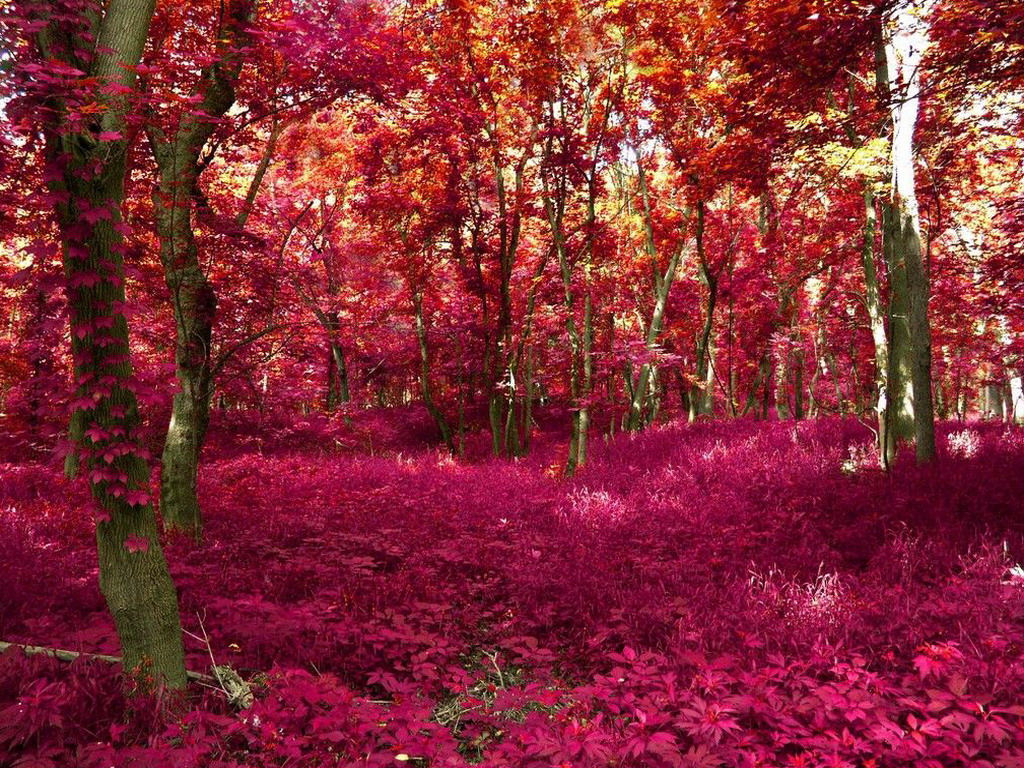
By day, she was a delicate ingenué, tending to her charges in her job as a nanny in a Bohemian arrondissement of 1920s Paris. She would wear long, old-fashioned, frilly, white dresses up to her neck and dainty ankles, and she dusted her body in floral and raspberry-scented powder.

Source: Insfashion.com

Source: Insfashion.com

By night, she haunted the smoky nightclubs of Montmartre and La Pigalle, luring men with the subtle tease of a dominatrix’s black leather whip that she eccentrically carried as she danced away the night in a flapper dress as white as silvered snow. She still smelled of raspberry powder, but now, she was also imbued with the smoke from the long cigarettes she held in a leather holder between her vermillion-red lips. Men did not fall for that pale face of baby innocence and floral sweetness, but for the contrast between her angelic facade and the biting sharpness that issued from her lips. She was a powerhouse of forcefulness and paradoxical contradictions that awed even the wild Zelda Fitzgerald. Her name was Habanita.

Habanita is perhaps the most famous, influential, historical perfume that is never sold in stores. It is a legend amongst perfumistas — and not only for its long history, or for how it is a tobacco perfume that is made without a single drop of actual tobacco. Habanita comes from the Grasse perfume house of Molinard, first established in 1849 and still run as an entirely family-owned business to this day. In 1921, Molinard released Habanita as perfumed sachets to enable those newly emancipated, modern women who smoked to do so with a perfumed cover to hide their habit. As the perfume blog, Now Smell This, succinctly explains, Habanita was originally introduced:

not as a personal fragrance but as a product to scent cigarettes. It was available in scented sachets to slide into a pack of cigarettes, or in liquid form: “A glass rod dipped in this fragrance and drawn along a lighted cigarette will perfume the smoke with a delicious, lasting aroma” (quoted in The Book of Perfume, page 76).

Habanita EDT bottle and box.

Habanita EDT bottle and box.

The perfume version soon followed in 1924, housed in a beautiful, black Lalique bottle decorated with cavorting nymphs. As the Molinard website proudly announces, it became known as “the most tenacious perfume in the world.” I’m unclear if that description applies to the pure parfum, solid parfum, the eau de parfum or to the eau de toilette, but I’m pretty sure you can describe almost all Habanita concentrations, now and in the past, as pretty damn tenacious! In the 1980s, Molinard reformulated Habanita and this is the version that I’m writing about, in eau de toilette concentration. Finally, in 2012, Molinard issued a new (and, again, reformulated) Eau de Parfum concentration as well.

2012 was also the year that I bought a big bottle of Habanita Eau de Toilette, blindly, off eBay, and due solely to the force of the blogosphere adoration for the scent. My post-lady handed me a small leaking package, commenting, “Boy! That’s strong!” And it was. There wasn’t a huge quantity that had seeped out, but that moderate amount, even partially dried, left a mindbogglingly enormous trail of scent in my wake as I made the walk back to my house from the postboxes. Later, I sprayed some on me and was almost blown out of the water by its strength. I enjoyed every bit of it, back then, overcome by its power, its novelty, and its unusual nature.

Unfortunately, a few more wears (and a very bad experience later in the fall with the scent on clothing) quickly led to a radical change in thought. The simple truth is that I don’t like Habanita very much and, if I’m really, truly honest with myself, I know deep down that I never did, and that my first initial appreciation stemmed purely out of wishful thinking. (Plus, a huge desire to justify a blind buy.) I wanted to like it; I knew I should like it, especially given the history (and my total faiblesse or weakness when it comes to anything historical), but mostly, I wanted to like it. So, I convinced myself that I did. Now that I’m a perfume blogger, I put great thought and analysis into each review, I rip things apart in a way I never did, don’t engage in risky blind buys, and I’m candid with myself from the start. If that post-box trip were to happen now, I would admit right away that Habanita is most definitely not for me, though I’d still respect and admire it for its history. And, dammit, I still want to like it! I almost feel like a traitor to history.

Habanita is classified on Fragrantica as an “Oriental” perfume, but I personally consider it more of a chypre-leather. The notes — as compiled from both Now Smell This and Fragrantica — seem to be:

bergamot, raspberry, peach, orange blossom, galbanum, oakmoss, jasmine, rose, ylang ylang, lilac, orris root, heliotrope, patchouli, amber, leather, musk, vetiver, cedar, sandalwood, benzoin and vanilla.

Habanita is a complicated scent on some levels and a simple one on others. If you were solely to smell the bottle, you’d detect makeup powder with florals, citrus and chypre notes. Even when on the skin, unless you really looked at the notes while smelling the perfume, you may initially conclude that you’re dealing with an avalanche of makeup powder alongside powerful (but completely amorphous, abstract) floral notes backed by the feel of scented tobacco paper and tinges of leather.

Source: Amazon.fr

Source: Amazon.fr

The same thing happens when you put Habanita on the skin, though greater nuances are immediately noticeable, because it’s an incredibly elusive scent in terms of its layers. There are citrusy notes atop leather that has hints of something vaguely verging on animalic. The leather feels almost raw, at times, and there feels like whiffs of castoreum underneath it. The notes are sharp and, on some tests, can seem either medicinal or quite sour on the skin as well. I suspect it’s due to the galbanum which is never noticeable in an individual, distinct, separate way, but whose effects can be seen most indirectly in that leather. As a side note, galbanum’s sharpness was often used in leather fragrances — notably in Robert Piguet‘s Bandit — so I wouldn’t be surprised if that was the cause for the raw, sometimes sour nuance to the leather here.

Dried raspberries via Nuts.com

Dried raspberries via Nuts.com

Habanita also contains a powerful whiff of something that is extremely hard to pinpoint if you don’t stare at the ingredient list, a note that is rarely used in high-end, niche, or classic perfumery: raspberry. Each and every time I put on Habanita, I struggle to place that one, odd, unusual, seemingly “off” element before I remember, “Oh, raspberry. Right.” I don’t know about you, but I actually can’t recall ever smelling raspberry in a significant way in perfumery. Making it all the more complicated for me is the fact that the raspberry in Habanita is not like the fresh, sweet, fruit of summer days. It feels simultaneously: desiccated, syrupy, sour, leathered, and highly powdered. Honestly, I’ve never smelled anything quite like it and, on my skin, it is always a heavy part of Habanita’s opening hours.
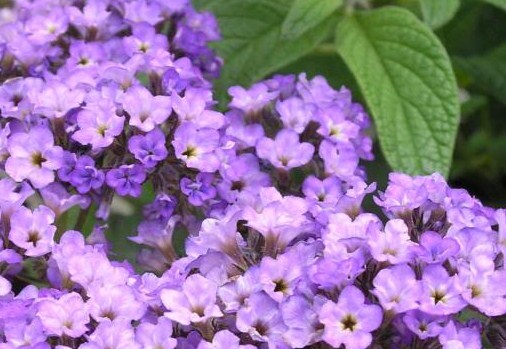
Heliotrope.

Heliotrope.

Nothing, however, can possibly detract from the powder note which is created by the iris, orris root, heliotrope and vanilla (perhaps, also benzoin) notes. It is not baby powder or talcum powder simply because this one is scented — and scented with a variety of things to boot. Thanks to the heliotrope, it has a subtext of almonds mixed with Play-Doh. The orris root — an ingredient long used in makeup and lipsticks as a fixative — gives it a makeup vibe, while the florals imbue it with rose, lilacs, and a whiff of jasmine. The vanilla adds its voice to the powder, too, perhaps solidifying some of the makeup associations.

There is something much more important underlying the powdered note, however, something that makes many people classify Habanita as a tobacco scent. The interplay of the powder elements with the other notes in Habanita create the overwhelming feel of powdered tobacco paper. Growing up in France, there were a number of cigarette boxes whose silver paper lining I recall being scented with a powdered note. I’ve never seen it in America, but I have seen similar sorts of boxes in India, the 1980s Soviet Union, Italy, and other parts of Europe. It’s a hard scent to describe if you’ve never encountered it because it doesn’t have the aroma of cigarette, nor stale ashtrays, but also not of paper or pure powder. It simply smells like talcum-powder tobacco paper.

I suspect the reason lies in the vetiver. It’s not like the sort of vetiver that most of us are used to; it doesn’t smell anything like the note in Chanel‘s Sycomore, for example, or Guerlain‘s Vetiver. It’s neither fresh and green, nor rooty, earthy, or woody. And, yet, when combined with the other elements, it creates “tobacco” in a powdered, papery form. Luca Turin categorizes Habanita as a “vetiver vanilla,” while CaFleureBon simply writes: “[a]lthough the perfume Molinard Habanita was originally produced to scent women’s cigarettes, it contained no tobacco and incorporated rose, vetiver, vanilla, and incense notes.” Whatever the exact alchemical reason for the note, “tobacco paper” is a profound part of Habanita’s character for much of the perfume’s development.

Habanita’s opening, as I’ve described it, can vary a little in its nuances. Sometimes, in the first minutes, the extremely sharp, almost pungently bracing, opening note of citrus-rose-leather softens a little, bringing out more of the powder. At other times, the note turns extremely sour on the skin, probably due to the arrival of copious amounts of raspberry which always turns into syrupy, raspberry leather dosed by talcum powder. Sometimes, the vanilla is much more immediately noticeable, while occasionally, the leather with its castoreum-like undertone doesn’t hang back quite as much. Every now and then, I get a fleeting flicker of lilacs in the florals tones, but generally, it is a rose note which rises to the surface.

Almost invariably, whatever the nuances, I get a headache. There are synthetics in the reformulated Habanita EDT, and it gives me that telltale burning sensation high up in the bridge of my nose. I’m not the only one who thinks the reformulated version is quite synthetic. The blogger, Brian, from “I Smell Therefore I” am wrote in a comment to his review of Habanita: “I think current Habanita is probably so synthetic that the pyramid is pure fantasy.” I fear that may be true. I do know that I’m not the only one who got a burning sensation from Habanita; I had a friend try it a while back, and they had a similar reaction.

Source: Allposters.com

Source: Allposters.com

Regardless, as Habanita opens up and develops, it turns into a scent that is primarily raspberry-vanillic powder with amorphous florals, Play-Doh undertones, and a whisper of raw, black leather in the background. It’s seriously extreme, a turbo-charged powder that feels like something from the vivid imagination of Willy Wonka.

Eventually, about five hours in, Habanita turns into something much more leathered in feel. It’s not like a cold, stony leather, exactly, but it’s definitely not like a richly buttered, oiled, soft, creamy leather. It feels like a rubbery, black leather jacket, imbued by a layer of sharp smoke. There is no incense listed on Habanita’s notes, but there certainly should be. At the same time, both the leather and the smoke are backed by the scented powder, fleeting flickers of rose, and a lingering sharpness that feels more dark green than ever before. Undoubtedly, it’s the galbanum which has risen to the surface alongside the leather. At times, wearing Habanita, I’ve also detected something that feels very much like the powerful black, smoky tea, Lapsang Souchong; only here, it’s imbued with some sharp, green, citrus elements. It’s all due to that endless black smokiness underlying Habanita. The whole thing evokes the image of a 1920s smoky club but, also, of that same 1920s flapper draped in a leather jacket atop a large Harley-Davidson, smoking as she flexes her whip. Whatever it is, it involves some sort of femme fatale domination and cigarettes. It’s… different.

Lara Stone, the dutch model, photographed by Mert & Marcus for Interview Magazine.

Lara Stone, the Dutch model, photographed by Mert & Marcus for Interview Magazine.

In its final hours, Habanita turns into a fruited-powder scent with rubbery leather. It usually lasts about 8.5 to 9 hours on my perfume-consuming skin, almost all of that time pulsating away with high-intensity projection. On someone with normal skin, I wouldn’t be surprised if two good sprays lasted 16 hours or more. Four sprays, and you may be smelled from New York to California for more than a few days. If you think I’m exaggerating, check the longevity votes on Fragrantica where 49 people chose “very long-lasting,” 37 chose “long-lasting,” and 1 person chose “poor.” Similar numbers apply to the sillage: 46 for “enormous,” 43 for “heavy,” with 5 for “soft.”

As for fabric, I can tell you that Habanita will last on it forever. In my last wearing of Habanita — the time that put me off it more or less for good — I quickly sprayed some on my neck and on my sweater in a rush out the door. It was Fall and the weather was generally cool, so I can’t chalk it up to the heat for what happened next: a blast of incredibly sourness hit my skin, followed by that avalanche of scented powder. I put up with it, mostly because I didn’t have a choice, when I started to detect an odd smell wafting up from my sweater. It was like sour, powdered cigarette smoke. And it just kept getting stronger and more sour until I felt actually quite embarrassed. When I got home, I hurriedly took off the sweater and didn’t give it a second thought, certain that the perfume would eventually go away. Four months later, during an unexpected cold burst, I took out the sweater to wear it only to detect a massive amount of sour, stale, powdered cigarettes, and that odd, sour, raspberry note. The sweater went off to the dry cleaner, and Habanita was permanently banished to the darkest recesses of my armoire. Basta!

It is impossible to write about Habanita without bringing up the well-known perfume blogger, Denyse Beaulieu of Grain de Musc. Even before she wrote her recent book, The Perfume Lover, Ms. Beaulieu was well-known to adore Habanita. It is one of her favorites, along with Robert Piguet‘s legendary black leather and galbanum fragrance, Bandit. But it was Habanita which was her signature scent for years and years. I suspect my tastes range far from those of Ms. Beaulieu who seems to adore the dominatrix-like, black leather fragrances. I liked Bandit when I tried it, but I had to force myself to really, really give it a chance, and it is a very difficult fragrance. At the end of the day, it is a little too brutal for me, a little too harsh, probably due to the galbanum (a note I struggle with) as much as that ferocious black leather. 

The new Habanita 2012 Eau de Parfum.

The new Habanita 2012 Eau de Parfum, Editions Privée.

Habanita is not Bandit — not by any stretch of the imagination, but it is an equally difficult perfume to wear, even if the reasons are different. I suspect that I would have a considerably better time of things with the vintage version, especially the vintage Eau de Parfum, as I’ve read that it’s lovely and apparently has quite a bit of sandalwood. But this review is for the current version of Habanita in eau de toilette, not the vintage Eau de Parfum or the new 2012 Eau de Parfum. If you’re interested in those concentrations, you can read some comparative assessments of the EDP from some readers of Grain de Musc. As a side note, the Eau de Toilette is no longer available or listed on the Molinard website, which leads some people and even the Perfume Posse to speculate that it has been discontinued and replaced by the IFRA-compliant 2012 Eau de Parfum version. According to one person on Fragrantica, Molinard confirmed it to her in an email. Despite that fact, however, the eau de toilette is still easily found and in plentiful quantities, especially on eBay.

I think the best assessment of the Three Faces of Habanita comes from the perfume blog, I Smell Therefore I Am. In it, Brian compares vintage Habanita (Version 1), the reformulated Eau de Toilette which is what I’m reviewing (Version 2), and the new Eau de Parfum released in 2012 (Version 3). A portion of his review for Vintage Habanita versus the current Habanita is as follows:

When I read on Fragrantica that a reader thought Habanita had, on first spritz, the “strongest blast of baby powder, EVER,” I felt pretty sure she was referring to Version 2.  No mistake, Version 1 is powdered as well, but not to the same degree.  I would argue there’s a lot more going on in Version 1, but the nose approaching Version 2 could easily mistake bombast for complexity.  I like Version 2 a lot, and it smells very rich.  It’s also incredibly powdered.  I say that in a good way.  Almost without fail, when someone talks about powder overload and Habanita I feel sure they’re referring to Version 2.  Version 1 is thick, too, but you feel its layers.  Version 2 is a sort of wall of scent; equal parts tobacco, vanilla, and oakmoss.  Fragrantica lists raspberry, peach, orange flower, Lilac, Ylang-Ylang, rose, bergamot.  I’d be lying if I told you I get anything remotely floral, and not getting any closer to the truth if I led you to believe this is because the fragrance is so “well-blended”.  I believe that Version 2 is a much cruder facsimile of Version 1, and that many people take this crudeness to be the source of its infamous reputation.  Again, I love this version.  I happen to like crude and bombastic.  But Version 2 resembles some of my favorite cheapo drugstore fragrances (Toujours Moi comes to mind) and relates to Version 1 the way they relate to their earlier formulations.  Many people get root beer or cola from this version.  I never really have.

I think his review is very interesting, and I agree on Habanita having a small similarity to the “cheapo drugstore fragrances.” But I don’t share his love for Habanita. In part, it’s because I dislike very powdery perfumes, but the powder isn’t, per se, my real problem. It is Habanita’s sharpness, the sourness that almost feels rancid at times, the sheer overbearing forcefulness of that powder, and the lingering cigarette effect which I find difficult to bear. A few people on Fragrantica have even written that the perfume has a morbid feel to it, with one talking about Habanita’s opening blast of dead florals evoked “a plague [death] mask.” Though I don’t agree, I can certainly understand it because, every time I start to think that, maybe, just maybe, I can handle the perfume, I quickly realise that I’ve really had enough. Habanita always starts out as an interesting novelty that, on some level, fascinates me with its uniqueness, its oddness, its almost niche-like complexity. But then it just becomes too damn much. The constant burning in my nose from the synthetics doesn’t help much, either. Undoubtedly, it would be a whole other matter if I tried vintage Habanita, let alone vintage Habanita Eau de Parfum with its slightly different notes and its sandalwood base. But I don’t have it, so I can only tell you about the current Eau de Toilette. And, in my opinion, it’s a stinker. It really is.

My favorite review for Habanita on Fragrantica amusingly sums up just a miniscule fraction of what I think about the scent. In it, “nikitajade” writes:

First initial spray I am hit full in the face with powder. Like an angry nanny has just slammed down the Johnsons&Johnsons again. ARGGGGHHHHH. Luckily, as it dries down the baby powder disappears and this smoky, leathery gorgeous fruit and spice appears. I’ll just say the nanny apparently moonlights as a dominatrix and leave it at that.

I’m significantly less appreciative of the fragrance than she is, but Habanita receives a LOT of love of Fragrantica, even from those who find it impossible to wear:

  • As others have said, yes it is leathery-dusty-powdery with just a touch of vanilla. Yes, at first it is so sharp it numbs your nostrills. But I love Habanita. The same way I love a classic houndstooth Chanel deux pieces, but would never wear it. If there was a perfume museum, Habanita would be on a pedestal in the main gallery.
  • What a masterpiece. I almost doomed it at the first sniff, for the sweet powder. But man, how i´m happy i didn´t. [¶] Just the history and idea of Habanita is stunning. […]  It´s like an old daguerreotype of mysterious young lady who´s beauty persists for centuries. [¶] Habanita smells velvety smooth and incendiary. Maybe it’s the balance of its main attributes – woman (lipstick, powder, rose) + man (tobacco, leather, motor oil).
  • Habanita is such a BIG TEASER, [¶] The most complicated smell I’ve ever come across. She introduced herself in sweet, fresh, delightful feminine manners…BUT it’s not too long before she stripped off of her light floral dress into the hidden dark & nasty clinging leather suit. She would captivate you, tortured you like a real dominatrix, and you just couldn’t help but yield to her eventually… After an hour, as the leather faded she might show some mercy and comforted you with the most beautiful ghost of heliotrope in rich smokey creamy powder. [..]

There are pages of similar reviews, with vast swathes of them using the word “femme fatale” and raving about how stunning Habanita is, about how she sends you back in time to the most elegant 1920s club filled with velvet and passion. Intermixed in those gushing accolades (most of which go on for far too many paragraphs for me to quote them) are a handful of solitary voices who talk about how sour the perfume was on their skin, how it smelled “rank and stank,” about the hot rubberiness of the leather, “burnt gasoline,” or about the impossibility of dealing with all that powder. More than a few said it made them think of an old lady locked in a room and chain-smoking, or the 1980s Love’s Baby Soft fragrance “covered with cigarettes.” One person — who says she loves leather fragrances — said it was absolutely the worst thing she’d smelled in years, akin to car cleaner and incredibly “dirty.” The dissenting voices are comparatively few and far between though, because, for the most part, Habanita is worshipped. We’re talking hardcore genuflection and obéissance here!

Vintage Habanita ad. Source: The Perfume Posse.

Vintage Habanita ad. Source: The Perfume Posse.

It’s even more loved on the blogosphere. I could link you to a gazillion reviews, but the most interesting one was this more balanced assessment from Anne-Marie at the Perfume Posse which sums up the feel of Habanita, along with its elusiveness:

What I love about Habanita is the elusiveness created by the powdery notes (orris and heliotrope). For me, powder suffuses the whole thing, but it shifts constantly. Suddenly I get a sharp bite of sticky fruit. The powder takes over again, but in the next whiff it clears and I get  … oh yes, vanilla! … and so on through all the major effects: flowers, vetiver, woods, leather, and so on. For me there is no real top-middle-base structure in Habanita, just a series of fascinating and deeply alluring fragrant moments, all glimpsed through that whispy veil of powder. The contrast of sweet/soft with bitter/acrid (almost Bandit-like) notes has me utterly enthralled.

Many people get tobacco and smoke, but I don’t. I do get a smoke-like effect created by vetiver and leather. Or okay, perhaps that would be a leather-like effect created by smoke and vetiver? I can’t tell. But look, if Habanita was produced firstly as a fragrance to add to cigarettes, why would it smell of cigarettes itself? Put like that, it doesn’t make sense, does it?  […]

Depending on your tastes and sensory experience, Habanita will seem absurdly old-fashioned or intriguingly niche-like and modern to you.

I think that last statement is very true, and I’ve heard it echoed a number of times by others. Habanita feels extremely old-fashioned while — simultaneously and oddly — seeming completely modern, and very much the sort of thing that a perfume house like Etat Libre d’Orange might put out. It isn’t really timeless so much as so odd, so off-kilter, and so old-fashioned that it could be a modern niche perfumer’s intentional, revolutionary riff on old perfumery. It’s a completely paradoxical fragrance.

I also find it to be an elusive one, not only in terms of assessing the notes and individual layers, but as a whole. Every now and then, something about it makes me lift up my head and go, “Hmm…. maybe.” But, each and every time, that thought is short-lived because, deep down, I really don’t like it. Not the deluge of powder, not the feel of cigarettes, not the synthetics that burn my nose, not the sour sharpness, not that odd raspberry note, not  the black rubbery undertones…. nothing. But I keep feeling as though I must love it, that I should love it. It’s the only perfume I know that leaves me so utterly torn between expectations and wishful thinking, versus the simple reality deep-down. It’s one reason why I’ve taken this long to review Habanita. Everything about it is just so damn complicated.

The honest truth, though, is that I really can’t bear it. In six months from now, a year from now, or even three, I will probably still be bullying myself over this fragrance and still be hating every moment of it on my skin, while still feeling incredibly guilty for being an utter philistine. So be it. I am a Philistine. Modern Habanita is not for me. You can start stoning me in…. three, two, one….
DETAILS:
Cost & Availability: The Habanita fragrance being reviewed here is the non-vintage, recently discontinued Eau de Toilette concentration which is easily available on eBay at prices ranging from around $25 to $50. The usual size of the black, Lalique bottle is 3.3 oz/100 ml, though I have very, very infrequently seen something in a totally different bottle which is neither black nor covered with the usual Lalique forms and which is 1 oz/ 30 ml. I have no idea if it’s genuine or not. Habanita is available from Sophia’s Beauty for $27.50 for a large 3.3 oz bottle of the EDT. It is also sold on Amazon via third-party sellers (usually the same ones who are selling on eBay). In terms of samples, Surrender to Chance carries both the EDP and the EDT. The EDT sample begins at $2.99 for a 1 ml vial. Habanita also comes in an Eau de Parfum form which is available in a variety of sizes from the Molinard website which are priced at €45 and €91, depending on size. Molinard also offers accompany body products and a candle. On eBay, the Eau de Parfum bottles are usually in a 2.5 oz/75 ml bottle size and go for around $45. As a final note, “Miss Habanita” is a totally different fragrance!

Perfume Review: Mona di Orio Ambre (Les Nombres d`Or Collection)

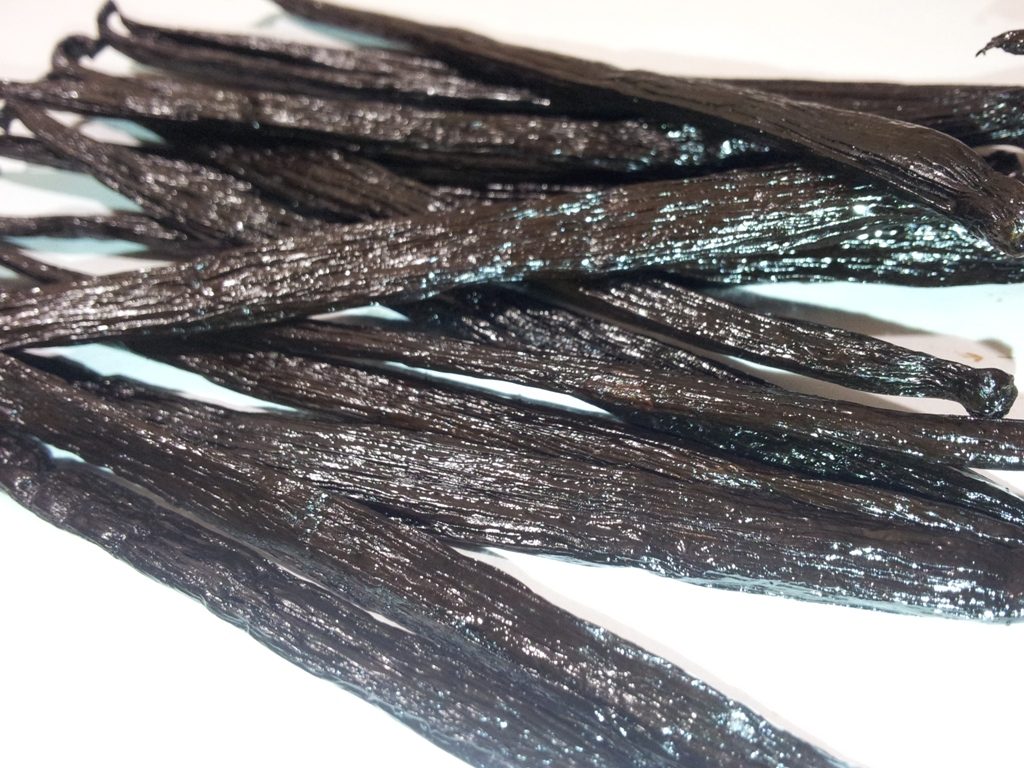
Vanilla Beans

Vanilla beans.

The chef’s kitchen was airy and sparkling white, almost dainty at times. So too was his mise en place: small crystal bowls filled with ylang-ylang, a silver tray covered with the finest Madagascar vanilla bean pods, and a large pile of cedar. He began with the vanilla pods, slicing them horizontally, scooping out the tender flesh inside and grinding it to a thick paste. He added some butter, a few yolks and gallons of cream, then whipped the whole thing into the airiest custard possible. Nay, actually, by the time he finished, it was more like a vanilla custard mousse, flecked with bits of the black bean pod.

Chef Tre Ghoshal via Flickr.

Chef Tre Ghoshal via Flickr.

The chef was a talented man who believed in invention and originality in his food, so he turned his attention to the ylang-ylang. It was a rich, buttery, heady flower that felt very yellow to him. So he ground it down into an emulsion filled with a few pinches of butter. He thought it would bring out the flower’s intrinsic nature. He took the emulsion, folded it into the vanilla mousse and then set about for the twist: he whipped in the lightest pinch of black pepper, and covered the whole thing with a veil of white, confectioner’s powder. With great care, he placed the bowl of powdered vanilla-ylang-ylang mousse over a smoker filled with cedar chips. As he set fire to the wood, its delicate smoke wafted up into the air. The chef added a glass dome over the contraption, trapping the smoke and letting its delicate tendrils seep into the powdered, floral, vanilla custard mousse. Phase One was complete.

Chef Michael Gillet of The Bazaar by José Andrés. Photo: Antoinette Bruno. Source: Starchefs.com

Chef Michael Gillet of The Bazaar by José Andrés. Photo: Antoinette Bruno. Source: Starchefs.com

Phase Two was almost a completely separate affair. About three hours after the frothy, airy smoked-infused mousse was finished, when all the powder had vanished, and only woody elements really remained, he waved his culinary magician’s hand over the creation and turned it to amber. He would never reveal his secret of how he made his dessert suddenly turn into something very different — far from the almost Guerlainade-like opening with its dainty vanillic powder and the unexpected cedar smoke atop that airy, custard mousse — but it was different.

Golden Champagne via PicStopinSuddenly, it was ambered, golden-bronze, dryer, smokier, spicier, and with a surprisingly unexpected undertone of nutty hazelnut. Or was it actually a light dusting of marron glacé? Whether it was glazed chestnuts or toasted hazelnuts, he would never tell, but everyone who tasted his ambered vanilla wondered. Their greatest surprise, however, was the complete disappearance of the powder, to be replaced by something that would have been boozy had it not been so gauzy and lightweight. It didn’t matter — they liked it. Even the critic who normally despised anything with a gourmand character liked it. Not enough perhaps to go out and actually buy it, but the critic would absolutely eat it again if it ever fell into his lap.

The chef’s tale is really the tale of Mona di Orio‘s Ambre, a surprising perfume that perhaps doesn’t warrant the name “Amber” for the full first half of its development but which I liked quite a bit. It is an extraordinarily easily, wearable perfume that traverses from being a slightly modern twist on Guerlainade — Guerlain’s signature of vanillic powder that is at the base of all their classic perfumes — to a completely different end of the spectrum. In a way, it’s almost as if Mona di Orio has upended the usual Guerlain pyramid that traditionally starts with one thing and ends with vanilla powder. This is the complete reverse. And, at all times, it’s light, airy, almost frothy and cheerful, with unexpected twists of cedary smoke, bits of pepper, and then, later, boozy amber whipped into gauzy air.

Mona di Orio AmbreAmbre was released in 2010 as part of Mona di Orio‘s Les Nombres d`Or Collection. It is an is an eau de parfum, though Luckyscent and Fragrantica both erroneously list it as an eau de toilette. The company categorizes it otherwise and, naturally, we’ll go with their designation. Mona di Orio’s website describes Ambre as follows:

As delightfully sensual as bias-cut silk, Ambre draws you in to its world with curls of smoky amber. Cedar draws you further into the mystery while vanilla adds a slightly sweet resinous kick that can’t help but delight. Ylang ylang adds a glaze of innocent soapiness to the Film-Noir aspects, but never completely obscures them; who would want to? Easily as at home, at a ball or an intimate evening out, Ambre manages to be both reminiscent of something from long ago yet as fresh as tomorrow, and always very, very French.

Its notes include:

Cedarwood from Atlas, Ylang Ylang from Comores, Benzoin, Tolu [amber resin], Absolu Vanilla from Madagascar.

Source: Soapgoods.com

Source: Soapgoods.com

The very first blast of Ambre on my skin is vanilla. Rich, concentrated, almost buttered, and very much like the paste that you scrape out of a black Madagascar vanilla pod. Immediately on its heels come the bucketfuls of the ylang-ylang. The flower’s similarly buttered, rich, almost banana-like nature feels almost velvety. When combined with the vanilla, result is the overwhelming impression of a thick vanilla custard — except this one feels so light, it might as well have been whipped into a mousse! The pairing of the two rich notes is prevented from being cloying or overly sweet by a heavy dose of cedar, adding a lovely, dry counterbalance to the perfume’s richness. It’s not peppery but, rather, more akin to tendrils of woody smoke. Amber is the last one on the scene, smelling like vanillic benzoin instead of anything thick, balsamic and molten like Tolu.

For my tastes, this is much more my sort of “vanilla” than Mona di Orio’s super-popular Vanille (also from Les Nombres d’Or collection) which I thought was painfully excessive in its buttered undertones and sweetness. Then again, I cannot abide gourmand perfumes as a general rule, and I rarely succumb to any vanilla fragrances to begin with. Perhaps the appeal of Ambre is that the vanilla is not meant to be the primary focus but, rather, second or third to the floral and woody notes; it falls much more in the oriental category than in any gourmand one. I know that when I think of Ambre, months from now, I will always think of it first and foremost as a vanilla perfume infused with florals and smoke, before having to remind myself about the amber.

Source: Wisegeek.com

Source: Wisegeek.com

I was musing on the issue of Ambre’s surprising appeal when, suddenly, less than three minutes in, I was hit by a huge wave of powder. It isn’t like makeup powder or talc but, instead, evokes a white veil of confectioner’s sugared powder suddenly blanketing my vanilla-ylang-ylang-smoke mousse. It takes over Ambre completely, dominating the top notes and leaving the ylang-ylang to peek up from underneath.

When the powder combines with the vanilla, the result calls to mind a riff on Guerlainade, the signature base for classic Guerlain perfumes. Here, it’s much tamer than in the old French classics, mostly due to the impact of the cedar. Though it seems completely non-existent in any individually distinctive way, the note’s effects are present in a certain dry, smoky woodiness at the base that alleviates that Guerlainade a little. Mona di Orio’s airiness is another difference which impacts the nature of the powder. In Guerlain perfumes, especially in its vintage beauties, the famous signature base can sometimes feel very heavy and plush. It’s also often marked by orris root which creates a makeup or lipstick impression. Here, however, the absence of the orris root — and the presence of the smoky wood in a perfume that is quite airy overall — shifts the Guerlainade-like note away from the full-on, traditional, makeup powder and to something much more modern. To me, it feels closer to confectioner’s powder with its sweetened nature, but I know others smelled only lipstick.

Less than fifteen minutes into Ambre’s development, it starts to shift a little, like a mousse that is starting to settle. Its sillage drops and the perfume softens. It feels incredibly floaty (to invent a word), hovering like gauze just an inch above the skin. The notes have blended into a perfect whole: powder-and-vanilla-custardy-mousse-with-florals-and-light-smoke. And it remains that way for quite a while, with only minor changes. Slowly, the vanilla feels less custardy and much lighter, while the powder element slowly starts to drop in prominence. The cedar with its light tinges of smoke begins to rise much more to the surface until, suddenly, three hours in, Ambre has completely changed. Now, it is smokier, dryer and with an unexpected booziness that definitely feels like the super-rich amber resin, Tolu Balsam. The powder has finally become less predominant, though it continues to mix and meld with the vanilla. In the background, subtle tinges of ylang-ylang adds some subtle, creamy, velvety richness.

Source: Wallpaperscraft.com

Source: Wallpaperscraft.com

For the most part, however, the impact of the powder and floral notes is minimal because Ambre has finally begun to match its name. Tolu Balsam is one of my favorite ambers because of its spicy nuance and its slightly smoky feel that, here, is further accentuated by the cedar. The wood, in turn, has shifted a little to reveal a tone that just almost, just barely, verges on peppered. And the whole thing sits atop a base of warm, cozy, rich vanilla infused by smoke. There are flickers of something interesting in that combination of Tolu and concentrated vanilla: nuttiness. There is definitely an undertone that calls to mind roasted hazelnuts with the smallest, faintest suggestion of marron glacé. The whole thing is extremely subtle, almost ghostly, especially given the strong vanilla note, but I found myself sniffing my arm in appreciation for its occasional flickers here and there. As a whole though, the perfume is primarily a vanillic-amber in nature.

I wish Ambre had remained that way for a while, but it didn’t. The lovely, spicy Tolu Balsam phase lasted just over two hours — and almost as a skin scent at that. Finally, about 5.5 hours in the perfume’s development, the drydown begins. It begins as a simple, vanillic, benzoin amber that has the smallest suggestion of woodiness and powder. It’s so sheer and light, you have to forcefully inhale at your arm to detect it. Finally, just short of the eighth hour, Ambre fades even more to become nothing more than a general, amorphous, woody-vanilla flicker.

Most people seem to classify Ambre as … well, an amber perfume. To me, and on my skin, it was primarily a vanilla. Not a gourmand vanilla, thank God, but definitely a vanilla. And I liked this “vanilla” significantly more than the perfumista favorite from Mona di Orio: Vanille. I truly couldn’t handle it, though I still recommend Vanille for those who enjoy sweet perfumes and want a non-traditional vanilla fragrance with a twist. My problem is that I cannot abide excessive sweetness. As a result, Vanille was too, too much, but — like Goldilock’s porridge — Ambre was the perfect balance with its floral, dry wood, and smoke notes. Taking the issue of relativity even further, as someone who worships potent, massively opaque, moltenly resinous Orientals, I find it well-nigh impossible to think of the perfume as an “Amber.” The strength of that vanilla absolute, even in the drydown phase, makes it the dominant note in my mind.

On that same scale, I have to rate Ambre as a very airy, gauzy fragrance. Others seem to agree, though the term a number of people use on Fragrantica and elsewhere is “silky” instead of “airy.” They also find the sillage to be, on average, very “moderate.” In terms of longevity, the largest amount of votes is for “moderate,” followed then by “long-lasting.”

The consensus seems to end there, however, as reviews for the perfume itself on Fragrantica are sharply split. One commentator, “Hélio Sérgio Rocha,” picked up on the two separate phases of the perfume, writing:

The opening is sweet, powdery and light. [¶] The Ylang Ylang gives a sweet floral aspect to this scent and i can feel some honey too.

Then this perfume gets smoky and silky itself. [¶] I do not see on it distinct phases on the ofactory pyramid, but I feel a combination of two different phases: a sweeter one; and darker another. […] 

Funny how this scent starts with a luminous amber and ends with an resinous aspect, so dark, mysterious and smoky. [¶]  

I felt i was wearing a silk made cloth as a second skin of mine …  [Paragraph and format alterations are my own, due to length.]

Many share his feelings, writing about how Ambre is an incredibly “cozy,” warm, “spiced,” amber fragrance that was “refined and elegant,” or “heaven in a bottle.” (The word “cozy” comes up repeatedly.)

On the complete opposite end of the spectrum, however, are those who shudder at Ambre’s powder, finding it to be far too excessive and, as a result, a complete deal-breaker. One woman thought the opening smelled just like baby powder, though she really liked the spicy amber phase (where she, too, smelled a nut-like undertone). And a good portion of men found the perfume to be too feminine, with one writing that it was “not unisex at all in my mind.”

As noted above, I really didn’t find the powder note to be akin to makeup or lipstick, and on my skin, it was far from overwhelming. I don’t like a lot of powder, especially if it smells like makeup or, even worse, like baby powder, so I would tell you if I detected that on my skin. I didn’t. In fact, I actually liked the powder stage a little — perhaps because of the rich ylang-ylang-custard-vanilla-smoke combination underneath it. Plus, I truly believe that the dry, smoky cedar note (and the absence of orris root) prevents the perfume from being very much like lipstick. Nonetheless, I completely agree with much of the other comments about how the amber stage was more enjoyable in its cozy spiciness, and how Ambre leans quite feminine. I don’t think this is a perfume that anyone should purchase blindly.

While I myself would never buy Ambre, I would absolutely wear it if a bottle somehow fell into my lap. I’d wear it frequently, in fact, and for one simple reason: it’s an incredibly easy perfume. I can see this as fitting a wide variety of circumstances, but especially when you’re in a rush and want to spray something simple while you’re on your way out the door. Ambre is the furthest thing from revolutionary, complicated, or novel. It’s hardly a masterpiece, and isn’t even particularly interesting on some levels. But it’s one of those very practical, daily staple-like perfumes that could be a good workhorse scent for someone who would like a little cozy comfort, a little sweetness, and a good amount of vanilla (with light amber) and no gourmand tendencies. Unfortunately, I think a full bottle costs a damn sight too much at $230 for such a simple, staple scent. On the other hand, that price is for a large 3.4 oz/100 ml bottle, and there are much cheaper alternatives available in terms of travel sets and minis. Plus, as I always say, price is a very subjective, personal matter.

Perhaps the biggest problem is that Ambre is not a perfume that will drive people wild with enthusiasm and excitement. But we all need perfumes that are easy, breezy, simple basics; perfumes that you can just spray and go. If you can handle some powder (or, perhaps, a lot of powder?), then Ambre fits the bill nicely.

DETAILS:
Cost, Sizes, Sets & Availability: Les Nombres d`Or Ambre is an eau de parfum, and comes in a variety of different options and sizes. The full bottle is 3.4 oz/100 ml and costs $230. It is available world-wide on the Mona di Orio website. In the U.S., you can find it at Luckyscent, Parfum1, and MinNewYork (which also offers free shipping within the US). There is also a Discovery Set of 8 x 5ml roll-on bottles of the entire Nombres d’Or collection which Mona di Orio sells for €90, and Luckyscent/ Parfum1 for $145. MinNY discounts the set for $5 off, pricing it at $140. Mona di Orio also offers a Travel Set of just the Ambre perfume in 3 bottles of 10 ml each, with the whole set priced at €85 (or about $110 with today’s currency conversion rate). That set is not offered at Luckyscent or Parfum1. In the UK, you can find Ambre at Les Senteurs which sells it for £135.00 and which also carries a sample vial for sale. The perfume is also carried on Roullier White in the UK. In Paris, I see Mona di Orio listed on the Marie Antoinette Paris website but can’t find prices or individual perfumes for the line. In the Netherlands, it is carried at Skin Cosmetics, but they say that they are out of stock at the moment. For the rest of Europe, you can turn to Germany’s First in Fragrance which carries the perfume for €160.00, along with a Travel Kit of 3 x 10 ml bottles for €85, and a smaller sample for purchase. In the United Arab Emirates, it’s sold at Harvey Nichols. In Australia, it’s sold at Melbourne’s Peony Haute Perfumerie for AUD $230. For all other countries from Russia to Spain, you can use the Store Locator guide on the company website. Samples: I obtained mine from Surrender to Chance which sells them starting at $6.99 for a 1 ml vial. Of course, you can also find samples at Luckyscent, Parfum1, and many of the European retailers linked to above.

Perfume Review: Le Labo Rose 31

The kingdom of Pepper was sometimes affectionately called by its old, Norse name: Pepper & Pink. It wasn’t a vast land, but every square inch seemed to be populated by various forms of pepper. From the biting burst of freshly ground Malabar nuggets to the cedar trees which swathed its flanks from North to South and the great lakes of ISO E Super which dotted the landscape. It was ruled by a king called Ginger who was a chef at heart, willy-nilly tossing in spices off the royal balcony to his people below. For the most part, his subjects were a homogeneous people, descended either from the tribe of Pepper or from the royal house of Ginger. A small minority hailed from the nomads called Pink Rose. They were a demure lot, always dainty and shy, reeking of the pinkest, lightest, most translucent rose that was to be found. They were so quiet at times that haughty critics like Luca Turin sneering called them “Not Rose,” while others though they were mere myths and didn’t even believe they existed. Certainly, they were far outnumbered by the Peppers, with their fiery bite, and by the more rambunctious royal Gingers, but all of them were all ruled by the vast plains of cedar trees and the large lakes of ISO E Super.

Source: hdwallpapers4desktop.com

Source: hdwallpapers4desktop.com

That is the kingdom of Rose 31, a creation from the niche perfume house, Le Labo. A much-loved fragrance, Rose 31 is an eau de parfum whose number — 31 — purportedly refers to the number of its ingredients. Now Smell This explains more:

[Le Labo was] established by Fabrice Penot and Eddie Roschi (both formerly of Giorgio Armani fragrances) in 2006. Le Labo started with 10 fragrances by well-known perfumers, and is known for blending the essential oils with alcohol and water at the time of purchase and providing customized labels for the bottles.

Initial releases in early 2006 were Fleur d’Oranger 27, Jasmin 17, Labdanum 18 (originally Ciste 18), Ambrette 9, Iris 39, Bergamote 22, Rose 31, Vetiver 46, Patchouli 24 and Neroli 36. In each case, the number in the fragrance name refers to the number of notes that make up the scent’s composition, and the name is taken from the ingredient in the highest concentration; to take one example, Jasmin 17 has 17 ingredients, with jasmine being in the highest concentration. The names are thus not necessarily related to what the fragrance is meant to smell like.

Le Labo Rose 31The issue of not smelling like what it is named is something that actually comes up quite a bit with regard to Rose 31. Fragrantica classifies Rose 31 as a “floral woody musk” and says it was created by Daphne Bugey. Some of its 31 notes — as compiled from both Fragrantica, Luckyscent, and my own nose — are as follows:

Grasse rose, caraway, cumin, pepper, clove, nutmeg, cedar, ISO E Super, frankincense, amber, labdanum, vetiver, guaiac wood, animalic notes, and agarwood (oud).

I tested Rose 31 twice, to slightly different outcomes in terms of the opening burst. The first time, the perfume opened with almost entirely peppered, woody and spiced notes, followed on only much later by a minute trace of rose. The second time, the rose was upfront, and present from the start. I’ll cover both beginnings.

During that first test, Le Labo’s opening consisted of galloping amounts of pepper, sharp and backed by peppery cedary woods, and what felt like a light dash of ISO E Super. For those unfamiliar with the aroma-chemical, you can read my full description of its pros and cons here, especially as I’ll be mentioning ISO E Super quite a bit in this review. In a nutshell, though, the synthetic is used most frequently for two reasons: 1) as a super-floralizer which is added to expand and magnify many floral notes, along with their longevity; and 2) to amplify woody notes and add a velvety touch to the base. It seems to be particularly used in fragrances that have vetiver or, to a lesser extent, other wood notes like cedar. ISO E Super always smells extremely peppery and, in large doses, has an undertone that is like that of rubbing alcohol, is medicinal, and/or astringent. To those unfamiliar with the synthetic, all they detect is “extra, extra pepperiness.” Some people are completely anosmic to the note, while others get extreme headaches from it. (Ormonde Jayne fragrances, and others like Lalique‘s Encre Noire or Terre d’Hermès are particularly egregious in that respect.) I don’t get headaches from ISO E Super, but I cannot stand it in large quantities and I can detect its peppered element with its rubbing alcohol base a mile away.

Caraway seeds.

Caraway seeds.

Thankfully for me, the ISO E Super is light at the start, outweighed fully by a glorious complement of spices that feel as though a mad chef went to town like a dervish. I really adore that first opening to Rose 31 that I experienced. There is the most miniscule dash of cumin — powdery, dusty, a wee bit animalic, and nothing like that used in Indian curries. Much more prominent, however, are the caraway seeds which feel nutty, a little anise-like in tone, and a bit woody. (Technically, there is a difference between caraway and cumin. The terms may be used interchangeably by many, but that would be a mistake as they are not the same thing and their aroma, to my nose at least, differs in undertone.)

Source: Girl's Gone Child at Girlsgonechild.net . (Link embedded within. Click on photo.)

Source: Girl’s Gone Child at Girlsgonechild.net. (Link embedded within. Click on photo.)
http://www.girlsgonechild.net/2011/12/eat-well-gift-of-garam-masala.html

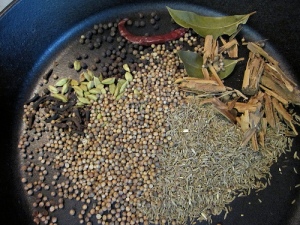
Both spices share equal space on Le Labo’s stage with heaping cups of ginger that is, simultaneously, both freshly pungent and spicy, and slightly crystallized and sweet. There are whiffs of nutmeg that subtly add a sharp, bitter edge to the perfume, along with the spicy, red-hot kick of cloves. The whole thing is covered by a heavy veil of pepper that feels as though a chef just emptied an entire bottle of Malabar peppercorns with the rest of the spices into a sauté pan to roast, bringing out their bite, their fire, and their subtle earthy woodiness. In the background, there are flickers of white smoke from frankincense.

The dominance of the cedar, underscored by the ISO E Super, and the pepper ensures a perfect balance between woods and spices. Rose 31 never feels like a dusty, spice shop, but nor does it feel like a purely woody fragrance either. Well, at this stage, anyway. The powerful ginger that threads its way throughout much of Rose 31’s tapestry also ensures a subtle freshness and zing to the scent. When you add in the beautiful frankincense smoke — never cold, musty, earthy or dank, but sweet and almost earthy — the result in those opening minutes is utterly fascinating.

Source: HDwallpapers.

Source: HDwallpapers.

During that first test, I found myself agreeing a little with Luca Turin, the famous perfume critic, whose low, two-star review of Le Labo Rose 31 in Perfumes: The A-Z Guide is sneeringly entitled “Not Rose.” I hate agreeing with Luca Turin on anything; it almost offends my soul. Though I didn’t share his contemptuous views of the perfume as whole, I had to reluctantly admit that I couldn’t detect a trace of rose anywhere in that first hour. I even looked up some reviews for Rose 31 in which people wrote with utter bafflement about how completely nonexistent the rose was on their skin, no matter how many times they tested the perfume.

Then, I did the second test, and all the notes I wrote about earlier were backed from the start by the presence of the flower. It’s not huge, but the rose is definitely there, almost translucent in its pinkness and dainty freshness. Oddly, it never felt imbued by the heaping dollops of pepper; instead, to my nose, it almost stood apart, never tainted by the fiery, spicy notes, but remaining something dainty, sweet, and light. It was very pretty and well-meshed into the fragrance, but, unexpectedly, I found the non-rose opening in the first test to be much more interesting, and unusual. (The word “fascinating” appears more than a handful of times in my notes.)

Regardless of that small difference, the perfume’s development subsequently remained the same during both tests. Fifteen minutes in, the oud appears. It is not medicinal, astringent, or evocative of pink rubber bandages (my most hated form of oud). Instead, it is a bit more fiery and yet another source of pepper added to the mix. It also has a subtle, delicate undercurrent of honey which makes it quite lovely. As some of my regular readers know, I’ve got oud-fatigue, but this is an absolutely brilliant and fitting way to use the note, taking advantage of one of its intrinsic qualities to shore up the general peppered cocktail of notes. What helps with my enormous enthusiasm is the growing honeyed sweetness of Rose 31, the perfectly blended balance of notes, and the way in which each one mixes into a harmonious, greater whole. Truth be told, I was rather shocked by how much I initially liked this perfume, since I certainly didn’t expect it. Then again, I thought I’d be smelling yet another rose-wood-oud fragrance.

iStock photo via Wetpaint.com

iStock photo via Wetpaint.com

The oud is merely a muted backdrop player at this point, along side that other shadowing ghost, the ISO E Super, and all of them subsumed under the powerful ginger note. As time passes, the latter feels incredibly dominant, bringing back some memories of Versace‘s Crystal Noir in which pepper and ginger also perform a key duet. (Its top notes are pepper and ginger, with cardamom in lieu of the clove and nutmeg here.) Then, finally, at the end of the first hour, the rose makes its hesitant appearance. It’s slight, far from heavy in texture, and never feels jammy or fruited; instead, it’s almost watery and tea-rose like in nature.

Source: Wallsave.com

Source: Wallsave.com

Unfortunately for me and my joy at that wonderful opening, the 90 minute mark ushers in a strong wave of ISO E Super. Words cannot begin to describe my disappointment as that annoying subtext of rubbing alcohol begins its steady thrumming beat in the background. There is still heavy amounts of ginger, pepper and frankincense, but the growing force of the cedar woods and ISO E dominate. Even the oud and guaiac seem to have grown a little in strength — just two more sources of peppered woods that soon overtake the entire perfume. By the end of my second test, I felt almost browbeaten into submission but that constant, one-note, drumming beat.

The great nuances of the opening start, the complexity of the notes, the fascinating juxtapositions, and that perfect balancing act are all gone — thrown asunder by the top-heavy, unbalanced cedar-pepper-ginger-ISO E Super combination. Sure, there are flickers of other things that occasionally pop up: vetiver makes a late appearance with a darkly rooty, earthy accord; bitter nutmeg and honeyed labdanum dance around the far edges once in a blue moon; and subtle muskiness is a quiet vein underneath. But, they are tiny in nature and degree. Instead, for hours and hours and hours, it’s primarily just various sources of dark, peppered woods. The drydown doesn’t make me happier, either, because, five hours in, Rose 31 turns into an abstract, amorphous, generalized woody scent, with a hint of gingery rose and the start of soapiness. Eventually, that soapiness starts to take over until, in its final hours, Rose 31 is nothing more than a vague, musky, woody, soap scent. What a huge disappointment after that first glorious hour!

All in all, Rose 31 lasted just a wee bit over 9.5 hours on my perfume consuming skin. The sillage was initially excellent, though it quickly dropped after the first hour to become just a few inches above the skin. The perfume became a skin scent around the 5th hour, the same time when the drydown began and Rose 31 lost its shape entirely. On Fragrantica, the overwhelming majority of votes puts the sillage at “moderate” and the longevity at “long-lasting,” though there are a handful of votes for “poor” and “moderate” as well.

As noted earlier, Luca Turin is not a fan of Rose 31. In Perfumes: The A-Z Guide, his short, succinct assessment is incredibly harsh:

This aldehydic carrot juice was, unaccountably, composed by the brilliant Daphné Bugey, of Firmenich, who did Kenzo Amour and four sensational (and as yet unavailable) Coty reconstructions. Is Le Labo some sort of rehab where perfumers go when their noses are tired?

Ouch! Well, I rarely agree with Luca Turin, and I certainly won’t start now. I think the perfume is better than he believes, though I’m not sure that’s saying much. Clearly, Rose 31 is far from my personal cup of tea. As a side note about Daphné Bugey creating Kenzo Amour: that fragrance is listed as one of the perfumes with the most amount of ISO E Super, a whopping 48% according to the Perfume Shrine. As a result, it is often mentioned by people as a fragrance that gives them a searing headache. But ignoring the headache-inducing qualities of the ISO E Super, Rose 31’s eventual tidal wave of the synthetic — and the parallel way in which the pepper note is created by every possible source — suddenly makes a lot more sense. Perfumers who love ISO E Super just can’t seem to let go of it. (Geza Schoen, I’m staring straight at you!)

General reviews of Le Labo Rose 31 seem evenly split between those who find the cedar note to be unbalanced and overwhelming, and those who love the fragrance. A number of those in the latter category repeatedly comment on how the opening of Rose 31 reminds them of Caron‘s much beloved Poivre Sacré. I haven’t tried the latter, so I can’t help. But perhaps a sampling of Fragrantica opinions on the perfume will provide some light on whether you’d like the perfume or not:

  • Although I absolutely do not enjoy this fragrance, I need to give credit where credit is due. Immediately, the rose is detectable upon the initial spray/splash of the top notes and for me, that’s all I detect. It’s a very subdued yet masculine rose that exudes something very sensual but as the basenotes appear, that all changes. One thing, out of all the rose scents that I’ve encountered, this one has to be the most natural but when the cedar arrives, it ruins the whole aura of the scent. The cedar is too overpowering/cloying and masks everything the rose is trying to present. The two blended extremes almost seem to be competing with one another only the cedar always has the upper-hand. […] 
  • The top notes are very peppery in the same vibe of Caron’s Parfum Sacre, but then the cumin and cedar take top places, I find quite nice but I think suits a man better because of the cedar and have a very wood basenote.
  • Perfumes containing rose and spice are always dark, heavy, and complex. Rose 31 seems unnaturally crisp and ethereal. I think it contains a lot of Iso E Super, which usually smells so synthetic, but it seems to work so well here. [¶] The rose is a clean, magenta rose that reminds me of the Enchanted Rose in Beauty and the Beast that is protected under a crystal dome–perfect and sparkling in a way that only a fairy tale could be. [¶] I don’t smell cumin. Instead I smell a something like a translucent cinnamon hard candy. […]
  • there is hardly any rose in it, it is a very nice woody fragrance though
  • Dark prickly aldehydes and musk and woods. Like most Le Labos they seem to have forgotten to put the main ingredient in. […]
  • There’s no rose in this perfume. NO Rose. Period. [¶] What IS there? Well, there’s musk, woods, some kind of flower and some kind of vegetable, and more musk. Clean musk. Nothing spicy, nothing dirty. If one uses his imagination, it could be described as “dark”, I guess; but I wouldn’t.
  • smells like soap in bad way

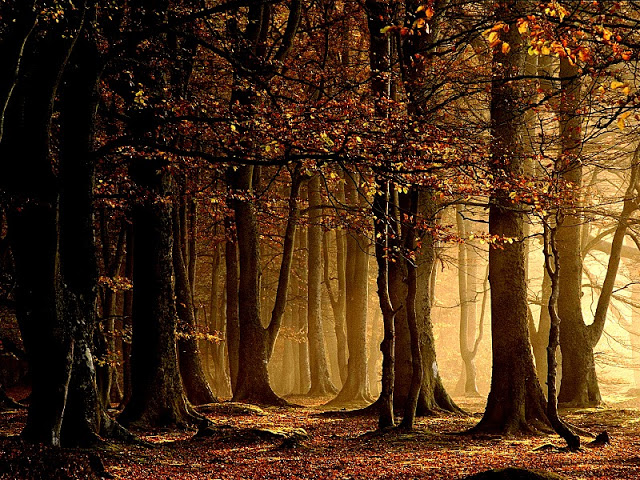
Confused? Well, as I mentioned at the start, the main issue seems to be whether the rose note appears or not. And the bottom line seems to be that — even for those who do smell it — the cedar and woodsy notes eventually take over and, then, fully dominate. Whether you smell the ISO E Super (and yay for one Fragrantica poster who smelled loads of it!), the musk, the soap, or the other spices, the main thing you’re bound to take away from the fragrance is dark, peppered, cedary woods. You may have noticed  that the photos of the woods in this review have gone from: rosy, warm, and multi-faceted; to gold-tinged and autumnal; to dark sepia; finally ending with dark black with soapy white. That’s very intentional. It’s really how this perfume feels to me in large part.

Source: Wall321.com

Source: Wall321.com

If you love cedar, then you should definitely try Rose 31. All the other notes may just be an added bonus. If you’re not a fan of highly peppered woods — especially in perfumes that bang that main drumbeat for hours on end — then you won’t enjoy Rose 31. It’s really as simple as that.


DETAILS:
Cost & Availability: Le Labo Rose 31 is an eau de parfum (though it also comes in a perfume oil) and comes in two sizes: 1.7 oz/50 ml for $145; and 3.4 oz/100 ml for $220. Le Labo Website Options: Rose 31 is available directly from Le Labo which says that it will personally make up the bottle for each customer: “all Le Labo products are personalized with labels that bear the client’s name.” The company has a variety of different country options for the website, from North America to UK to France to International. On its North American website, Rose 31 comes in everything from the Eau de Parfum to body lotion, shower gel, massage oil, and more. The prices are the same as listed above: 1.7 oz/50 ml for $145; and 3.4 oz/100 ml for $220. They also offer a tiny 15 ml bottle for $58. I’m assuming they ship to Canada, too, given the website name. On the UK website, Rose 31 eau de parfum costs £95 for the small size and  £138 for the larger 100 ml bottle. Other sizes are also available, including a small 15 ml/0.5 fl. oz bottle for £40. On the International Labo website, Rose 31 costs €110 and €170 for the 1.7 and 3.4 oz bottles, respectively. Le Labo also offers perfumes in a Travel Refill Kit of 3 x 10 ml bottles (of your choice, and which you can mix or match) for $120. Lastly, Le Labo also has a Sample Program: “Our sampling program comes in two forms – a Discovery Set of 3 x 5 ml  (0.17 fl.oz.) glass rods with spray and cap and a personalized label with your name on it, ideal for hard core testing of 3 different scents before making up your mind, and a standard (yet beautiful) sample of 1.5 ml (0.05 fl.oz.), available for all scents and ideal for more cost conscious clients who fall in love at first whiff.” I think the individual samples cost $6. As for their shipping prices, I’m afraid I can’t find any pricing information. Le Labo World Boutiques: Le Labo has store locations from New York to London and Tokyo, as well as retailers in a ton of countries from Australia to Italy to Korea. You can find a full list of its locations and vendors hereIn the U.S., Le Labo Rose 31 is also available from Barneys (in the big $220 size) and from Luckyscent, who also sells samples for $6, along with the perfume oil and what seems to be Rose 31 detergent. (???!!). Additional bath and body versions of Rose 31 are available from the Fairmont hotel online store, along with its Canadian counterpart. Outside the US: In Canada, Le Labo is carried by Toronto’s 6 by Gee Beauty, but not on their online website for direct purchase. Call to order by phone. In the UK, Le Labo is carried at Harrods’s Designer Department on the First Floor, and at Liberty which offers Rose 31 in a variety of different sizes and forms. For the Eau de Parfum, prices are £95 or £138, depending on size. In the Netherlands, you can find Le Labo products and Rose 31 at Skins Cosmetics which sells the Eau de Parfum for €111.85 or €172.90, depending on size. It also carries other concentrations or versions of Rose 31. In Australia, Le Labo is carried at Mecca Cosmetics. Mecca’s full listing of Le Labo Products can be found here. Rose 31 ranges in price from AUD$198 to AUD$308, depending on size. Samples: I obtained my sample from Surrender to Chance which sells the Eau de Parfum starting at $3.99 for 1 ml vials.

Perfume Review – Vintage Opium by YSL: A Tribute

Her name would go down in history as one of the greatest temptresses of all time: Salome. But, that night, she was not aware of the infamy which would forever follow her. As she stepped into the palace’s Great Hall, fire burned in her heart; she was a warrior with a mission. Not even the Great Hall could douse the bonfires of spice, smoke, sandalwood, cloved pepper, and molten amber which girded her golden limbs under the misleadingly sweet aura of roses, succulent oranges, heady jasmine, tart plums, and fleshy peaches.

"Salome Dancing before Herod", c.1876 by Gustave Moreau.

“Salome Dancing before Herod”, c.1876 by Gustave Moreau.

The hall was monstrously large, one vast chamber of onyx marble and gold. Her footsteps echoed as she passed the phalanxes of mighty columns, each one wider than ten men, and festooned with ropes of twisted gold. Rows of tall slaves created a corridor of flickering light, as each one struggled under the weight of a heavy, gold candelabra. The corridor led straight up to the throne, atop a large dias, but the fifteen-foot high, gold-and-jeweled monstrosity was empty. Before it, in a comfortable pile of silk pillows, lounged the King. Herod was too fat to fit into the throne; besides, he thought the bodies of the slave girls festooned around him, and hand-feeding him delicacies, would be a good cover to conceal the excitement that he would undoubtedly show. “She had finally agreed!,” he thought, as his eyes gleamed and he licked his plump lips wetly. The royal court seemed equally excited, chattering nervously about the fame of Salome’s beauty and dancing. They fell silent as she finally drew near and stared at her almost as greedily as the king.

She was a tiny figure, and all but hidden under a mountain of veils. Sheer, in and of themselves, their vast number completely obscured her raven hair and lithe, golden body. Thirty one in all, the veils were ornate, gauzy, in a variety of colours and, magically, made out of the most aromatic, perfumed ingredients: sandalwood ochre, bergamot green; plum purple; orange; blood-red rose; pure jasmine white; chocolate labdanum; dusty clove and cinnamon; the ivory-grey of frankincense smoke; the flesh colour of the ripest peach….

As the music started, she lifted one long arm from beneath the gauzy pile, flexing it like a swan, her long fingers fluttering in the air. Her chin was pointed straight up at that hidden ceiling, miles above, and one shapely, toned, muscular leg swept to the side. Folds of orange gauze glided over her fingers, while clove, cinnamon, frankincense, carnation, rose and bay leaf moved in time with her leg. The swishing of the veils radiated waves of scent out upon the silent courtiers, shimmering flecks of dust that twinkled amber gold in the candlelight. The scents melded together into the most perfect whole, each billowing out like a wave, each one more powerful than the last, until the courtiers swayed to the scent. King Herod forgot to eat, and moaned as he was hit by a tidal wave of spiced sandalwood tinged with heaps of cloves, citrus and cedar, myrrh and frankincense. Rumblings of dry woody notes, bay leaf and patchouli could be heard from beneath the folds of the veils, keeping time to the music as it became faster and faster.

Georges Rochegrosse (French, 1859–1929), "Salome Dancing Before King Herod," 1887. Joslyn Art Museum

Georges Rochegrosse (French, 1859–1929), “Salome Dancing Before King Herod,” 1887. Joslyn Art Museum

A horde of drummers suddenly appeared, clad in every hue of amber: tolu balsam, benzoin, and labdanum. “Bom, bom….bom, bom, bom…. bom, bom, bom, bom,” their hands moved faster and faster, as did Salome. She stood on one daintily arched foot, twirling in a pirouette of veils, reflecting colours like the jewels glowing on the giant throne. It became all a swirl of notes, a perfect dance of powerful spices atop her silken peach skin, tinged by jasmine that slinked up to the surface from the heat of her body.  Unbeknownst to the leering, panting king who watched her, pearls of sweat formed on her rose-tipped breasts, lending a subtle tinge of musk to the floral, citrus, spiced, patchouli amber radiating out from her like waves from the center of a vortex. She danced so fast, frankincense seeped out in white billows, and veils began to fall off her body. One arch of her back, and the carnation veil flew off to disappear atop King Herod’s head. He clawed at it, tossed it to the side in a frenzy of panic lest he miss a glimpse of her body, and the carnation vanished from sight.

"Tattooed Salome," c.1876 by Gustave Moreau.

“Tattooed Salome,” c.1876 by Gustave Moreau.

For hours and hours, Salome undulated and twisted, swayed and moved, arched and fluttered, until, finally, only seven veils were left. They blended into one beautiful, spiced whole, jasmine and roses on that main base of fiery spices, sweet musk, black smoke and vanilla. The veils just barely covered her lithe, muscular body made from a sinuous mix of sandalwood, patchouli and every possible resinous, balsamic, amber known to man. With a  flickering glance at the musicians, Salome suddenly dropped to the ground and the music stopped. There, she slithered like a sexual serpent across the floor, rolling around, and turning in a way that just revealed a glimpse of her musky flesh. As she clawed her way towards the king, she whispered, “Anything my heart desires, your Majesty? Anything in your kingdom? Do you swear it?” Herod could barely breathe. “Yes, yes.” He had no blood flow to his brain. “I have sworn it twice already. I swear it again before the court, may God strike me down if I don’t. I will give you anything your heart desires. Now, please. Finish.

Gustave Moreau - "Die Erscheinung," or "L'Apparition." 1875. Part of Moreau's Salome series.

Gustave Moreau – “Die Erscheinung,” or “L’Apparition.” 1875. Part of Moreau’s Salome series.

Salome nodded and, with a single move, was on her feet, swaying with the music that had started again and shedding her veils until she was a blur of naked, ambered flesh. Silky, smooth, creamy, heated, molten flesh — radiating spiced sandalwood, patchouli, endless layers of amber, vanilla, jasmine, and musk. Faster and faster, and faster, she moved until her body dropped in a pile of sinuous limbs. There was complete silence, punctuated by the king’s small moans and shallow breaths as he stared at Salome’s naked body. Still on the ground, she calmly lifted her head, stared at him, and coolly said: “His head. On a silver platter. I want St. John the Baptist’s head.

The story of Salome is many things but, ultimately, it is a story of a temptress and seduction. It is the story of the lure of sex. And, to me, few perfumes better represent seduction, temptation, tantalizing teases, sex, wild abandon, mystery, and, yes, a warrior’s fiery strength than Opium. YSL‘s magnificent creation is justifiably considered the benchmark oriental, the standard by which all others are measured. (And, in my opinion, the standard by which all others fail to measure up.) It is my beloved, my favorite perfume in the world, my equivalent of Gollum’s “Precious.” As with Gollum, Opium drives me a little mad, but it is also the most empowering perfume I’ve ever worn. I wear it when I need armour and feel like I will be riding out into battle, as much as I wear it to seduce.

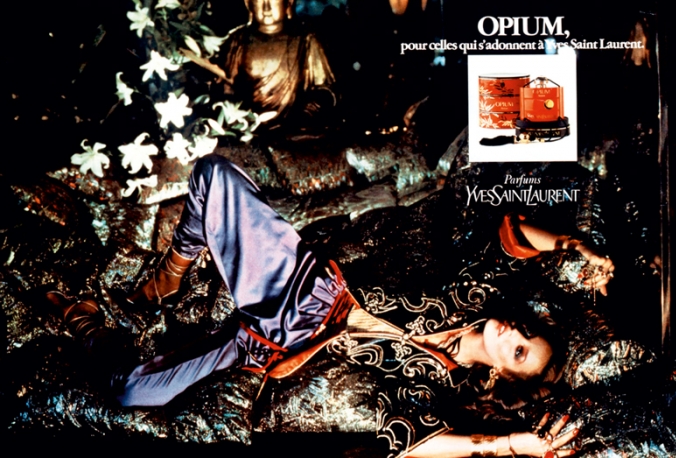
Opium ad, 1977, featuring Jerry Hall. Photo: Helmut Newton. Source: Marieclaire.it

Opium ad, 1977, featuring Jerry Hall. Photo: Helmut Newton. Source: Marieclaire.it

I refer, of course, only to the glory that is vintage Opium Eau de Toilette. The current version is a eunuch. It is a travesty which is not even worth acknowledging and which certainly does not deserve the name “Opium.” A complete and utter travesty. Adding insult to injury, there are plans for a future, additional reformulation of Opium already in the works, from what I’ve read, due to EU regulations that will take effect in the next year or so. The present abomination is bad enough; one can only shudder at what will happen when the eunuch is fully dismembered. So, to preempt a wave of tears at the thought of what has already happened to my beloved, and how much worse it’s going to get, let’s focus on the true, real, original Opium.

1977 Opium advert featuring Jerry Hall. Photo: Helmut Newton. Source: Vogue.com

1977 Opium advert featuring Jerry Hall. Photo: Helmut Newton. Source: Vogue.com

Opium was released in 1977, the creation of Jean Amic and Jean-Louis Sieuzac. It has a mind-boggling list of notes. Simply mind-boggling. Those of you who wonder why I’m rarely impressed by modern fragrances, well, it’s because most of them have a fraction of the notes present in old vintage classics. And notes equal depth, body, complexity, sophistication and richness. But even a lot of the old classics don’t have as many notes as my beloved. According to Fragrantica‘s listing (which is more for the current version than the vintage), Opium has 31 ingredients, but God only knows how much greater the number is for the vintage version, especially unofficially.

Top notes are coriander, plum, citruses, mandarin orange, pepper, jasmine, cloves, west indian bay and bergamot; middle notes are carnation, sandalwood, patchouli, cinnamon, orris root, peach, lily-of-the-valley and rose; base notes are labdanum, tolu balsam, sandalwood, opoponax, musk, coconut, vanilla, benzoin, vetiver, incense, cedar, myrrh, castoreum and amber.

I don’t like dissecting the notes for my truly, truly beloved fragrances as I generally do. I refused to do it for (vintage) Fracas, and I won’t for (vintage) Opium beyond what I’ve already written above as Salome’s Dance of the (31) Veils. For me, Opium is far too sacred for analysis, far too much a work of art. Plus, it is such a superbly blended masterpiece that a lot of the notes meld and melt into one multi-faceted whole. It’s like the bloody Hope Diamond. It’s just so big, so brilliant, so reflective of so much, but all in one giant piece.

That said, there are definite stages where some aspects shine a little more than others. In the beginning, it’s the burst of orange, infused with seemingly every ounce of fiery, dusty clove and cinnamon available on earth. It’s backed by a hint of plum and peach, but, to me, those notes have never radiated very brightly on my skin. Instead, there are dry woody notes, cedar, a dash of bay leaf, and two different kinds of incense: frankincense and myrrh. Hints of floral notes (especially jasmine) take full sway later, in the middle stage, along with the start of creamy coconut and vanilla. Later, as that phase is winding down, more and more of the amber resins start to dominate: from the more balsamic-heavy, dark, smoky Tolu amber; to the nutty, slightly animalic, minutely leathery labdanum; the sweeter, more vanilla-like tones of benzoin; and what I personally believe is ambergris (but which Fragrantica’s listing for the current version of Opium lists as just plain “amber.”) Opium also has castoreum which is detectable mainly in the dry-down in the slightly animalic leather note. Not a raunchy, harsh, obvious leather, but more of a leather feel like something sumptuously rich, thick, velvety and plush. The sort of heavy velvet that Henry VIII would wear.

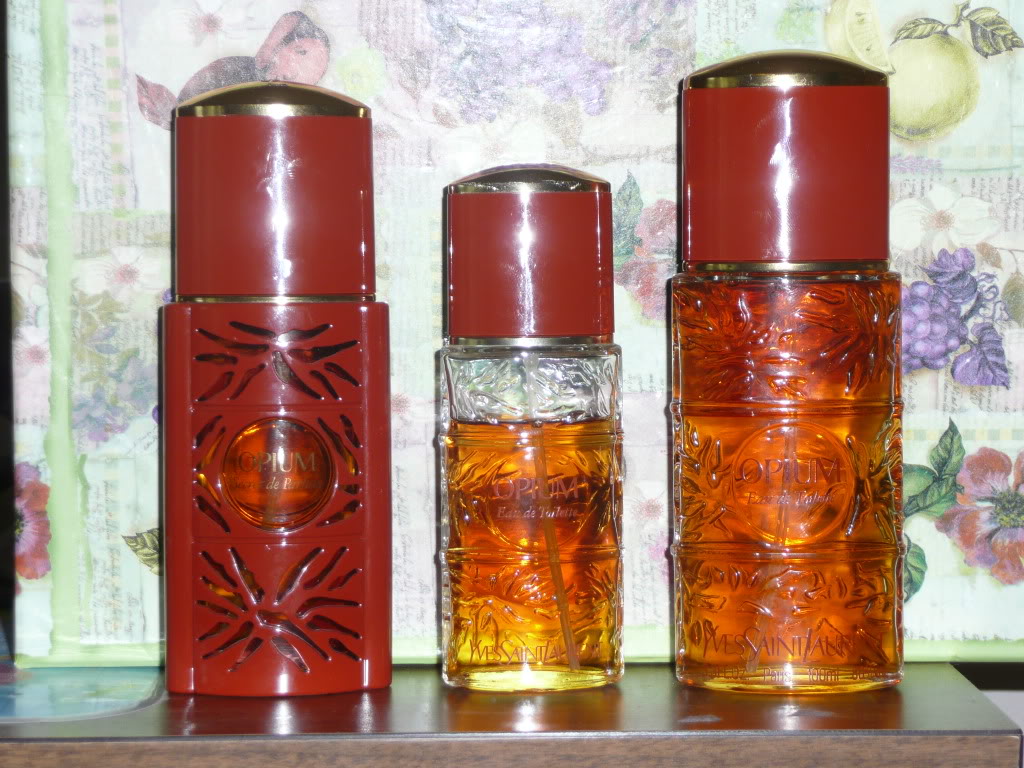
My 1970s bottle of vintage Opium EDT. Note how the box says New York on it and "Made in U.S.A," in addition to the usual Paris notation.

My 1970s bottle of vintage Opium EDT. Note how the box says New York on it and “Made in U.S.A,” in addition to the usual Paris notation.

The problem is that some of these notes and, more importantly, their dominance seem to vary depending on just how vintage your bottle of Opium is. I have two bottles of eau de toilette. The tiny remainder of one from the early 1990s (1992, I think), and a large 1970s bottle which I bought on eBay late last year. It is, oddly and quite unusually, from a short, limited-distribution run when Opium was made in America, not in Paris. Unfortunately, the top notes have gone off, and that evaporation has just concentrated some of the spiced notes to an almost brutal degree. Once, however, you get past the thorny first 40 minutes, the glory of Opium’s base is revealed in full splendour, with gallons (and gallons!) of real Mysore sandalwood. It does not even remotely compare to my early 1990s bottle, though the latter has the benefit of Opium’s always spectacular orange, citrus start being intact.

While I miss that beautiful opening with my 1970s version (due to evaporation of the top notes), I find it interesting to compare the two versions because changes were clearly made in between that have nothing to do with the top notes. My 1970s bottle is a behemoth in sillage and longevity, as was the Opium that I grew up on and which bewitched a seven-year old child to the point of sneaking in sprays from her mother’s tasselled bottle. (Yes, I was an early bloomer, perfume-wise.) My 1990s version doesn’t create an enormous cloud around me at the start, becomes closer to the skin far more quickly, and doesn’t last as long on my perfume-consuming skin. My 1970s bottle clearly has real animal musk — something now prohibited for cruelty reasons. My 1990s version does not, since I believe that the prohibition against natural musk was in place by then. My 1970s version has real castoreum; I can’t smell much of its leathery undertone in the 1990s version. And the 1990s version has weaker undertones, especially the coconut and vanilla of the middle and final stages. In fact, every note is muted in the 1990s version (which should just tell you how bad the post-2000 versions are).

eBay photo showing a bottle and box identical to my 1990s version with all the swirls.

eBay photo showing a bottle and box identical to my 1990s version with all the swirls.

Perhaps the most immediately obvious difference is the huge chasm regarding the spices and the sandalwood accords. Even in the 1990s, Mysore sandalwood was becoming more scarce, and I think there is significantly less of it in my 1990s version than in the 1970s. But the truly overwhelming thing is in the spices, namely the cloves. A while back, I wrote a post centered on a Reuters article about IFRA, the EU and changes to legendary perfumes that have already been carried out, unannounced, often undetected, and definitely kept secret. Raymond Chaillan, who collaborated on the creation of Opium, told Reuters that his co-creation has hugely changed. One reason:

Clove oil and rose oil, which contain a component called eugenol. [¶]… When it was launched in 1977, the original Opium was full of eugenol and also contained linalool, and limonene found in citruses. In large doses, Eugenol can cause liver damage, while oxidized linalool can cause exzema and prolonged exposure to pure limonene can irritate the skin.

My personal (admittedly biased) response: unless one bathes daily and for hours in gallons of Opium, I can’t see anyone spraying enough of the perfume to cause liver damage! Regardless, judging between my two versions, I can absolutely see a sharp drop in the amount of clove, as well as the roses, in the later perfume. And 1992 was far, far before the IFRA/EU regulations of 2008!

Vintage Opium bottles. Source: "Rizack2" on Fragrantica

Vintage Opium bottles. Source: “Rizack2” on Fragrantica

As a result, in my personal opinion, the best versions of Opium are from the 1980s, as well as any late-1970s bottles made in France, then any early 1990s version. I think that a 1980s version may have the best chance of keeping the top notes and avoiding evaporation, while still having that 1970s concentration. Obviously, though, it always depends on how a particular bottle of perfume was kept. It’s quite possible that a perfectly preserved, sealed 1970s bottle of Opium that was kept in a cool, dark place would be even better! My bottle was not sealed but was in almost pristine condition — and even so, it suffered. (Then again, it is 36 years old!) As for my 1992 bottle, though weaker than anything from the 1970s, it’s still much, much stronger than what followed it. I’ve read that Opium underwent a reformulation in 1999-2000. In fact, according to a poster on a Fragrantica thread, there may even have been another 1990s reformulation back in 1995! (Remember, the companies were continuously reformulating Opium, in secret, as my 1970s bottle demonstrates). The Fragrantica poster, “Andrapi” writes:

most likely Opium was reformulated in 1999-2000 (as the 99% of fragrances) due to the first wave of so-called “restriction laws”. You can clearly see because the “long-ingredients-list” on the box, became mandatory.

Then; remember before 1995 there was no bar-code : if the box lacks the bar-code, you can date the bottle as a very precious vintage one for sure [.]

More: during years 1995-2004 Saint Laurent batched its perfumes with 4-numbers code on the box and 5-numbers (the previous ones plus “1”) code on the bottom of the bottle (example: on the box 6321, on the bottle 63211. This means: 1996)

Since 2005 to 2011: 1 number plus 3 letters, both on box and bottles (example 7HAA , this means 2007).

The bastard eunuch version of Opium that is currently on the market. Note the lack of swirls in the glass on the bottle, and the very big difference in the box.

The bastard eunuch version of Opium that is currently on the market. Note the lack of swirls in the glass on the bottle, and the very big difference in the box.

So, let’s say you’re interesting in vintage Opium and are willing to brave the wilds of eBay to get one. How can you tell it’s vintage? Well, if you’re looking to purchase the glass EDT bottles, the best way to tell is by the swirls on the bottle. The new, castrated formulation has hardly any swirls in the glass, as compared to the original one. The box is also hugely different, losing its golden leaves just as the perfume has lost its notes and potency. There are a few threads on the matter at Fragrantica which might help you, starting with this one (which is where I obtained that photo of the three, vintage, glass, EDT bottles shown up above). An even more extensive thread, showing a ton of different bottles, from the pure parfum to various flankers can be found here (in that previously quoted Fragrantica thread).

Yves Saint Laurent, Opium, bottle designed by Pierre Dinand in 1977, photographed by Damien Fry (2011). Source: Phaidon.com.

Yves Saint Laurent, Opium, bottle designed by Pierre Dinand in 1977, photographed by Damien Fry (2011).
Source: Phaidon.com.

As a side note, all this discussion of Opium pertains to the eau de toilette which is the most common, usual form of the fragrance. There is an eau de parfum (as well as a pure parfum extract concentration), but I have the vague sense they were issued a few years after 1977. I am probably mistaken, however, especially as I know my mother had the tasselled, solid bottle (which is usually the shape of the eau de parfum bottle) back in 1977 and that is what is shown in all the adverts from the time. Regardless, the eau de parfum is not my area of speciality, and most of the discussions of “vintage Opium” usually pertain to the eau de toilette concentration. All I can tell you is that, in 2009, Opium (owned at this point by L’Oreal) re-issued the parfum version in what was supposedly a new bottle but which was also, in my opinion, yet another reformulation. Beyond that, however, I’m afraid I’m not a huge help on the issue of the parfum.

Non-vintage bottle.

Non-vintage bottle.

As for prices, they vary wildly. On eBay, it is all a question of patience and luck. Create a notification for vintage Opium, check the feedback scores of the seller, and then just pray that someone doesn’t outbid you. You may be lucky and get a small bottle for around $65, or you may be unlucky and end up paying around $150. For the parfum concentration, I’ve seen some sealed, 1 oz vintage bottles go for around $350. Granted, they are parfum and sealed, but it’s still high, even for Opium. Generally, though, whatever you pay, it will still be a lot cheaper than the retail cost of many modern, niche fragrances today, especially if you opt for a smaller size. The glass EDT bottles vary in size from 1 oz/30 ml to 1.6 oz, to sizes like my 2.3 oz bottle or the large 3.4 oz/100 ml bottles. You have to look at the photo of the bottles! The less swirls it has, the more it is absolutely certain that it is a new bottle of the reformulated garbage. Don’t listen to what the sellers say, either; right now, someone is selling a bottle entitled “vintage” which is clearly a post-1999/2000 bottle. (See photo to the right of the modern, reformulated eunuch Opium.) The glass has to be covered by swirls to be at least from the 1990s in age.

One last note, YSL issued an Opium for Men in 1995. It’s been a long time since I smelled it but, based on my recollection of it, it was significantly more muted, more citrus-y, less spiced, and with a very diluted sandalwood base. It’s fine, I suppose. But I wouldn’t bother with it. Men can absolutely wear Opium (original, women’s version), and honestly, I think it’s a thousand times more masculine than some of the unisex fragrances put out today for men. As between a fluffy, saccharine-sweet scent like By Kilian‘s Love (Don’t be Shy) and Opium for Women, I can tell you which one would be a better fit on a man — and it’s not the one that smells of cloying, orange marshmallows! Real Opium would be wickedly seductive on a man, but it would never suit someone used to tamer, milder scents. Opium is a powerhouse, a molten, living, breathing fire dragon that will chew you up and spit you out if you can’t handle her.

Even Luca Turin, the great perfume critic, said: “It is unquestionably one of the greatest fragrances of all time.” While the rest of his Five-Star review (entitled “Spice King”) is a more reflective contemplation on the limits of spicy oriental perfumes due to their focus on the drydown materials, he finally says that he personally tires of Opium:

Opium said one thing and one thing only, with tremendous force. While this was the most cogent statement ever made by balsams [the deepest kind of amber resin], one does tire of it.

Mr. Turin, there you go again. Just when I think I may finally agree with you, you come out with something like that. Well, His Majesty may tire of Opium, but I would shoot myself in the head if I went with some of the other Five-Star perfumes he praises, such as Davidoff‘s Cool Water, L’Artisan Parfumeur‘s Dzing! (which almost drove me to a complete meltdown), or L’Artisan Parfumeur‘s Vanilia which he cheerfully praises for being “vulgar” beyond all limits.

No, thank you, I will take instead what “is unquestionably one of the greatest fragrances of all time” with its 31 glorious notes, evoking raw sexuality, power, and a dragon’s fiery breath. I will keep Opium as my warrior’s shield and sword, as my source of molten ambered invulnerability, and as my means to seduce like Salome. I will wear it, and dance away its 31 glorious veils from sundown to sunrise. Then, when the sky is touched by morning flames of gold and red, I will spray on more of my liquid fire and smile at its secret power. My secret power. My Opium. My love.