Perfume Review: Parfumerie Générale Djhenné

PG22 DhjenneIn September 2012, the French niche perfume house, Parfumerie Générale, released its 22nd fragrance Djhenné (or PG22 Djhenné) in celebration of its 10th anniversary. Described as an “aromatic woody soft leather,” the eau de parfum is meant to evoke the most golden of sunny, desert, oasis-like experiences. Parfumerie Generale’s website states:

Surrendering to the sun.

Lush oasis, Djhenné is a warm shadow. A Leather sheath with gold Wheat and Myrrh, protecting from the burning sun’s shroud, the delicate spearmint leaves and the heady whiteness of Seringa Blossom…

Exploring the olfactory theme of the Oasis, Pierre Guillaume gives us an aromatic, woody orchestration of leather and warm sand, wavering between the floral freshness of an accord of grey lavender, spearmint and seringa and the warmth of a “blond leather” note made up of Blue Cedar, essence of Myrrh, Cocoa Beans and Wheat Absolute.

In an interview with FragranticaPierre Guillaume, the founder and nose behind Parfumerie Generale, explained the notes in Djhenné:

I wanted to recreate the fragrance of an oasis. […] It’s just a metaphor. I meant a fresh accord surrounded by hot sand. Oasis, a lazy hot atmosphere, and a little bit of freshness in a hot desert. I started my fresh accord with three kinds of lavender—Lavandine, Lavande Pays and Lavande Barreme, enhanced the freshness with orange and artemisia, and added more green notes by including mint and the Stemone molecule. Exactly this molecule is used to create an accord on the subject of fig leaves. That is why, I guess, Djhenne reminds you of Bois Naufrage.

[As for the scent of hot sand] I composed it of my favorite accord of white leather (you smell it in Cuir VenenumCuir d`IrisTubereuse Couture and other my perfumes), cocoa absolute, cedar from Morocco, myrrh, cumin and caraway. And also wheat absolute, a great but rare ingredient from Robertet—it possesses a rich balsamic scent with a hint of roasted wheat flakes. […]

There is no coconut in this perfume, I guess it’s a disguise born out of combinations of some notes. I would rather say that Djhenne is a mineral fougère with a leather accent.

The short summation of the notes is as follows:

Grey lavender, mint leaves, seringa blossom, cocoa beans, blue cedar, wheat absolute, myrrh, blond leather accord.

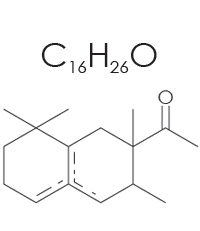
ISO E Super. Source: Fragrantica

ISO E Super. Source: Fragrantica

I would add another one to that list: ISO E Super. Djhenné opens on my skin with an immediate blast of antiseptic rubbing alcohol. It is the first and most obvious note, followed thereafter by creamy lavender, lush wheat, some abstract floral note, sweet myrrh and lightly peppered cedar. Soon, there is a sweet note of something that smells a lot like the lightly peppered, dried tobacco leaves along with cocoa and leather. There is a definite resemblance to parts of Serge Lutens‘ wonderful Chergui, but Djhenné has a considerably more woody, peppered elements, not to mention that blast of ISO E Super synthetic and the additions of lavender.

My favorite part of Djhenné’s opening has to be the cocoa note with its impression of lightly dusted, milk chocolate powder that calls to mind a faintly milky, cocoa-sprinkled Chai. The note is never thick, gooey, or viscous, but daintily dry and sweet. Underneath it is the sweet myrrh which creates a nutty, lightly caramelized undertone. There is also an initial whiff of mint, though it quickly recedes to the background. Equally subtle is the lavender which is sweet, instead of pungently dry or acrid, and that continuous note of dried, sweet tobacco. Flickering quietly is the leather accord which, actually, feels a lot more like a very beige woody-leather accord, thanks to the beautiful richness of the wheat absolute. The overall sum-total effect is very pretty and well-balanced, in large part thanks to the many dry notes that counter any feeling of huge sweetness. I never detected coconut or anything reminiscent of dry, granular, arid sand. Unfortunately for me, it’s hard to detect — let alone enjoy — the full nuances of Djhenné because the ISO E Super rubbing alcohol accord lies above it all like a heavy cloud. I feel like a dog, sniffing at a thick lawn of grass in hopes of detecting a few drops of scent lurking underneath.

Djhenné shifts slightly as time passes, though the ISO E clings on tenaciously as the main note. At  the 25 minute mark, the abstract floral note recedes, as does some of the lavender, while the cocoa powder becomes more prominent, leaving Djhenné as a combination of: ISO E Super, cocoa, sweetly nutty myrrh, a hint of mint and a heavy dollop of cedared woods. An hour in, the peppered ISO E woods and cedar take over, followed by the cocoa, then the wheat and myrrh. There are nuances of something that feels like leather at times but, on me, it’s always just a subtle element of the wood notes and never feels like pure, individually distinct leather, per se.  Like a wave that hits the shore and then falls back, the cedar and woody elements start to ebb after an hour, leaving ISO E Super and cocoa powder, with some other light elements like the wheat and myrrh. Like Chergui, there are lightly powdered elements and something that continues to feel like dried tobacco leaves flickering in the background.

Light, natural, cocoa powder

Light, natural, cocoa powder

At the middle of the third hour, Djhenné turns into a skin scent that is primarily dusty cocoa powder and vanilla, alongside that bloody endless ISO E Super, atop a base of creamy white woods. The perfume was airy and lightweight in feel from the start without huge projection, but now, it’s even softer, more muted, and sits right on the skin. In its final stages, Djhenné turns into a cocoa powder and vanilla scent. Only at the very end does the synthetic ISO E finally vanish. In terms of longevity, Djhenné lasted 6.75 hours on my skin, but tiny spots of vanilla-cocoa scent seemed to pop up here or there for another two hours.

It’s hard for me to truly and properly assess Djhenné without the impact of the ISO E Super. The synthetic was far too powerful on my skin, overshadowing everything else for most of the perfume’s duration on my skin. Only in its final hour or so was I spared of that perpetual note of disinfectant rubbing alcohol. It tainted everything, injecting its peppered antiseptic tones even into the cocoa powder that I loved so much. To those damn lucky few who can’t detect the full nuances of ISO E Super or whose nose reads it only as “extra pepperiness” or “velvety woods” — I envy you. And I’m sure you’ll adore Djhenné.

All in all, it’s a versatile, incredibly easy perfume that is neither truly gourmand nor a truly woody oriental or even a real aromatic fougère — but a lovely hybrid of all three. I think it is firmly unisex with the cocoa powder (and the occasional similarities to Chergui) making it something that would easily captivate women as much as men. Its very soft, light sillage would also make it appropriate for a lot of offices. Lastly, it’s also quite affordable at $100 for 1.7 oz/50 ml of eau de parfum.

Alas, for me, personally, I rue the day that perfumers fell so in love with ISO E Super that they decided to inject it into seemingly half the fragrances under the sun. And without warning, en plus! If ISO E Super were a person, I would have stabbed it to death already, and declared myself to be acting by reason of insanity.

DETAILS:
Cost & Availability: Djhenné comes in a 3 different sizes on the Parfumerie General website: 1 oz, 1.7 oz, and 3.4 oz. The prices in Euros are, respectively: €60, €90, and  €125. You can find a list of international retailers on the company’s website hereIn the U.S., it is available from Luckyscent for $100 for 1.7 oz/50 ml, along with a sample. I’m sure it’s available elsewhere, but I’m too fed up to bother listing my usual 15-20 links to retail websites around the world. Samples: I obtained my sample from Surrender to Chance which sells Djhenné starting at $5.99 for a 1 ml vial.

Perfume Review – Amouage Opus VII: The Heart of Animal Darkness

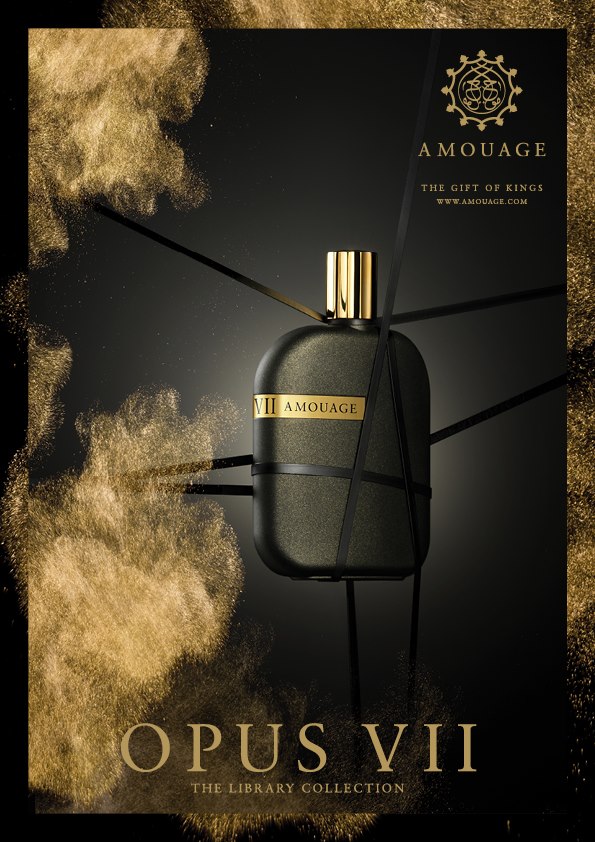
Amouage Opus VIIIn 2010, the royal Omani perfume house, Amouage, launched a new line entitled The Library Collection which was meant to be a “poetic homage to the art of living” and inspired by the concept of memories as treasured books in a library. Just a month ago, in mid-April 2013, Amouage added a seventh “book” to its line, this one created by Alberto Morillas and Pierre Negrin. Opus VII is described as “a green, woody and leather fragrance evoking the juxtaposition of harmony with the intensity of recklessness.” It is a difficult, complex, assertive and very masculine scent that takes you to the heart of darkness in a smoky oud jungle populated by ferocious big cats. 

According to the Amouage press release quoted by CaFleureBon:

Opus VII literally stands out from the previous six editions as it is the first to use a black flacon with gold criss cross lines; an allegory of the mind when thoughts are subjected and diverted. The use of galbumum and violet in Opus VII are integral to the composition and Christopher [Chong]’s vision.

Amouage-Opus-VII-Library-CollectionI don’t see violet listed as one of Opus VII’s notes which — according to both Amouage‘s website and Fragrantica — consist of:

top: Galbanum, Pink Pepper, Cardamom, Nutmeg, Fenugreek
heart: Agarwood Smoke, Patchouli, Ambrox [synthetic amber], Leather, Ambergris
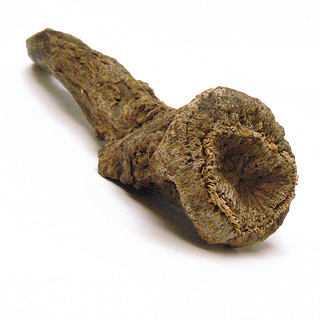
base: Costus Root, Muscone [synthetic musk], Sandalwood, Olibanum [Frankincense], Cypriol [a woody note with earthy and spicy nuances]
Source: herbalveda.co.uk

Source: herbalveda.co.uk

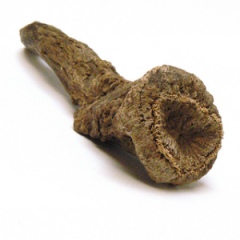
As always with Amouage, understanding what the perfume smells like requires understanding the more unusual ingredients that the house likes to use. In this case, one of the most important would be the Costus Root. In a long article on animalic notes, The Perfume Shrine describes costus root as “reminiscent of unwashed hair, in more intimate places than just head” and says that it is one of the elements for the trademarked perfumer’s base called “Animalis,” produced by Synarome. In a post on Animalis itself, The Perfume Shrine describes costus root as

a plant essence that has an uncanny resemblence to a mix of unwashed human hair, goat smell and dirty socks. […] It’s also part of the mysterious urinous & musky allure of Kouros by Yves Saint Laurent (which indeed features a healthy dose of costus under phenyl acetate paracresol).

Though the Perfume Shrine says that modern perfume restrictions have limited or “axed” the use of costus, it is a huge part of Opus VII on my skin.

Dried fenugreek leaves via Suhana.co.in

Dried fenugreek leaves via Suhana.co.in

Another big element is Fenugreek, a plant whose dried leaves or seeds are often used in Middle Eastern or Indian cuisine. In fact, I have a large bottle of it in my pantry right now. Fenugreek has an extremely difficult scent to describe; if you’ve ever smelled it, you’ll know it right away, but otherwise, it’s a little complicated. Basically, it’s a very green aroma that is simultaneously sweet, herbaceous and extremely pungent. Though Wikipedia says that it’s called Methi in India and is a key component of some Indian dishes, to me it evokes Middle Eastern or Ethiopian food much more. It is a key ingredient in Persian Ghormeh Sabzi which Wikipedia says is considered to be one of Iran’s national dishes. Whatever its uses, fenugreek is one of those ingredients that, after you eat it, will ooze and seep out of your pores for days in a slightly sour, stale smell. As the Perfume Shrine explains,

An opaque, rather bitter smell with a nutty undertone, it traverses the urinary track to scent a person’s urine as well as their sweat and intimate juices. Its seeds’ odour is comparable to thick maple suryp. Fenugreek is featured in many fragrances which have rippled the waters of niche perfumery with pre-eminent examples Sables by Annick Goutal and Eau Noire by Christian Dior (composed by nose Francis Kurkdjian). Everytime I smell them I am reminded of the intense flavour that this spice gives them. [Bold font emphasis added.]

If all this talk of ingredients with sharp, bitter, animalic and/or urinous aromas is giving you pause, well, I’m sorry to say that both notes are key to understanding Opus VII. I could simply mention “fenugreek” and “costus root” all day long to you but, unless you know what that really entails, you won’t be prepared for the complicated, difficult scent that is Opus VII. 

Source: all-hd-wallpapers.com

Source: all-hd-wallpapers.com

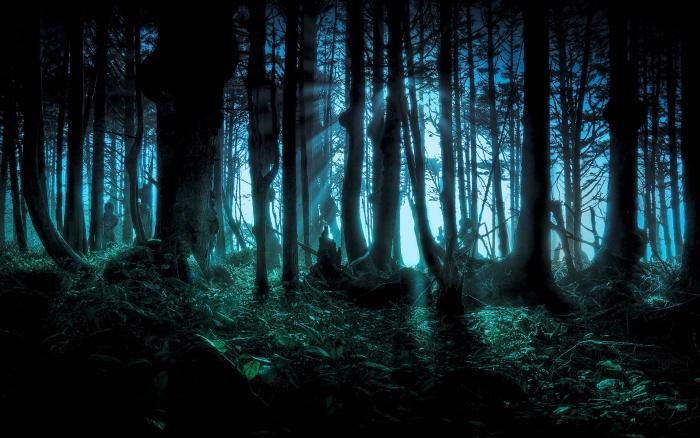
The perfume opens on my skin with an immediate burst of oud backed with something lemony that has a strong nuance of urine, along with the darkest of green notes and leather. Woods that are deeply smoky and dark sit atop pungently herbaceous sharp fenugreek with slightly intimate animalic musk, earthy, spicy elements, and sweetly bright, green patchouli. It is a vision of darkness, black and green, the innermost recesses of a forest where a golden jungle cat slithers, slinks and prowls in the shadows before releasing a guttural “rowwwwwwrrrr.” In the footsteps of that opening burst, there are other notes which quickly appear. There is brightly green galbanum that feels almost citric-like in its surprising freshness but which has a dark, liqueured undertone. Pink peppercorns and sharp smoke — black, acrid, and burning like a forest on fire — also join the dance. 

Source: Facebook

Source: Facebook

Few of the notes besides the smoky oud have a chance of competing against the raw animalism of Opus VII’s opening minutes. If you’ve ever been to the wild cat enclosure of a zoo, you’ll know the smell. And, to detect it here, even in a less concentrated, milder form, is a complete shock to the system. It truly feels like a panther or cheetah’s ferocious growl: urinous, like animal droppings, but also musky with a faint tinge of dirty hair underneath. It’s lemon-tinged and sharply evokes YSL‘s vintage Kouros for me, albeit in a significantly softer, milder, tamer manner in Opus VII’s early stage. I lack the guts to be able to wear Kouros myself, but I absolutely adore it on a man and think it’s an incredibly sexy scent. However, that sharply animalic note — often described by some as resembling “urinal cakes” — makes vintage Kouros a deeply polarizing fragrance. I suspect the same will be true of Opus VII.

Despite the sudden shock, I found Opus VII’s opening to be completely mesmerizing, captivating and fascinating. Perhaps much like a scorpion’s victim would watch its slow, ominous walk forward. Opus VII is, on the one hand, exactly like a jungle on fire with its earthy, rooty, dark floor kicked up by panicked animals in full flight, leaving behind leathered, slightly urinous droppings in their wake. On the other hand, it is a deeply woody-leathery fragrance that feels quite smooth, with a savagely sensuous heart at its base and something that seems almost like a velvety floral. Opus VII is such a jungle scent in its opening stage: primal, elemental, ferocious, pungent, fetid, earthy, leathered and sharp — but, also, lushly green in the darkest way possible. Baudelaire would have fully approved of it and would have undoubtedly written a companion piece to Les Fleurs du Mal, entitled perhaps as La Forêt de TerreurI approve, too, in some way that is almost partially terrified. I struggle with galbanum but, here, it’s not the brutal galbanum of Bandit or other famous leather scents. It’s not so green that it might as well be black; instead, it is smooth, spiced, warm and animalic. It’s a leathered, ambered jungle cat’s galbanum, and it actually makes me want to spray on some more. 

Source: Tumblr

Source: Tumblr

Thirty minutes in, Opus VII starts to shift a little. The smokiness that evoked a burning jungle recedes just a hair; the perfume turns slightly more sour and urinous; the pepper notes seem blacker and far less like pink peppercorns; the leather feels darker and muskier; and the subtle spices flicker with a little more fire in the background. Much more importantly, however, the earthy elements intensify. It’s as if the jungle’s humidity hit the blackest soil at the very base of an oud/agarwood tree, turning the earth almost rooty and musky.
Bearded iris via scenicreflections.com

Bearded iris via scenicreflections.com

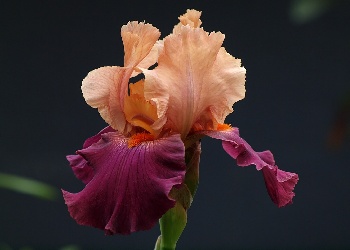
And, to my surprise, there is a definite impression of iris. A number of bloggers detected it, and they’re right. Though there is no iris or orris root listed in Opus VII, I’m guessing that some combination of the muscone, the earthy-woody cypriol, and the earthy elements of galbanum have created the distinct smell of iris. (Technically, “iris” as a note is impossible to create solely from the flower’s petals; it is replicated by taking rhizomes from the root, and/or often using other notes to lend to an overall impression of the flower’s scent.) I suspect that another thing that helps is ISO E Super.

ISO E Super. Source: Fragrantica

ISO E Super. Source: Fragrantica

Yes, Opus VII starts with a flicker of my most dreaded, hated note on earth: ISO E Super. A flicker that starts to slowly increase in volume until, eventually, it completely ruins the entire fragrance for me. A perfumer once astutely noted that ISO E Super was my “kryptonite” and, sadly, it’s true. For those unfamiliar with the aroma-chemical, you can read my full description of its pros and cons here. In a nutshell, though, it is used most frequently for two reasons: 1) as a super-floralizer which is added to expand and magnify many floral notes, along with their longevity; and 2) to amplify woody notes and add a velvety touch to the base. It seems to be particularly used in fragrances that have vetiver, with Lalique‘s Encre Noire being just one of the many examples. It is also used in a large number of Montale Aoud fragrances, to amplify the wood note to that high-decibel shrieking volume. And it is the sole focus of Geza Schoen’s notorious Molecule 01 fragrance. ISO E Super always smells extremely peppery and, in large doses, has an undertone that is like that of rubbing alcohol, is medicinal, and/or antiseptic. Some people are completely anosmic to the synthetic, while others get searing, vicious headaches from it. It is a constant base in most Ormonde Jayne perfumes, so if you get a headache from those, blame the ISO E Super. I’m not afflicted in that manner, but I cannot stand the smell in large quantities and, my God, it is strong in Opus VII’s second stage.

At the end of the first hour, Opus VII shifts in hue, turning mossily green. Visually, it is no longer the black-green of the jungle’s shadow, seeming almost ebony-like in its darkness. Instead, the perfume now reflects slightly lighter green notes, sweeter, warmer, rounder and backed by amber. The patchouli blooms, feeling as bright as emerald moss, and it helps soften the sharp edges of the urinous leather and the aggressive oud smoke. At the same time, both the iris and the fenugreek note rise in prominence. Though I’m not one to usually rave about iris, here it’s truly lovely and feels like the lushest, most buttery, velvety suede. Creamy and delicate, it has a sturdy woody-rooty undertone that prevents it from feeling gauzy, ethereal and cold. It feels like taupe-brown suede, not grey-white, if that makes any sense. Opus VII starts to turn into warmer, ambered scent where the animalic notes are softened, less sharp, dirty or urinous, the smoke is less aggressive, and the whole thing is more velvety, mossy and earthy.

Source: Sodahead.com

Source: Sodahead.com

Unfortunately, the start of the second hour marks an abrupt right turn in Opus VII’s development. From that fascinating start as olfactory ode to the heart of darkness in a smoky oud forest inhabited by the most powerful of leathery, ambered jungle cats alongside velvety iris and mossy green, the perfume suddenly becomes a fenugreek-oud scent — much like a dark forest through which shines the fluorescent light of ISO E Super. Sure, there are still elements of animalic musk, leather, iris, spices (cardamom, in particular) and amber, but the oud really goes into high gear here. It is always infused with the pungent, herbal fenugreek, the slightly urinous feline musk, and the sharply medicinal, astringent ISO E — and the combination just gets stronger with every minute. By the middle of the third hour, Opus VII is an oud-fenugreek-musk combination above gallons of medicinal, antiseptic ISO E Super. By the end of the fourth hour, it’s predominantly, painfully, and primarily pure ISO E Super and oud, backed by animalic, sour musk over light amber. Honestly, I preferred smelling like a panther just peed on me.

Opus VII’s drydown begins at the fifth hour. The perfume is primarily dark, peppered, woody notes headed by oud, followed thereafter by light, synthetic sandalwood (which has suddenly made its first appearance), the endless ISO E Super, a miniscule pinch of spices, and a lot of sour musk over vague, muted amber. In some odd way that I can’t explain, the whole thing feels generalized and somewhat abstract. Opus VII is also a much softer scent now in terms of sillage, becoming very close to the skin where it lingers on for another few hours. At the end, 8.5 hours in, all that really remains is a musky, spiced oud note, though tiny pockets of scent still pop up occasionally on random patches of arm for another few hours. For the most part, however, Opus VII lasted in full form about 8.5 hours on me. Its sillage was much more moderate than some of Amouage’s floral scents, never projecting in tidal waves, though the scent was still extremely powerful within its small cloud a few inches above my skin.

As you can tell, Opus VII was ultimately not for me but I do think many people will be fascinated by its dichotomy, especially men. I think the perfume will be disconcerting for others and, for women used to mainstream fragrances, it will scream “masculine” in a very negative way. Opus VII is a fragrance for people who like very aggressive leathers, ouds, sharp smoke and animalic notes — all in one — as well as those who don’t get raging headaches from ISO E Super.

I think one of the best reviews for Opus VII comes from Lucas at Chemist in a Bottle. In fact, it was Lucas who so kindly and thoughtfully sent me a small sample of the perfume as a surprise gift. In his review, entitled Black Ink, he wrote:

With the first day of sampling Amouage Opus VII I noticed that it is a perfume of two different natures. The “outer” stratum of the scent is a hard shell. The smell is dense and oily with cypriol oil. When I smell it I get a feeling like I could drown in this scent. It’s mysterious and dark suspension, a black ink that covers everything permanently, making it impossible to return to the previous state. In this kettle particles of warm and spicy cardamom float, blended with a resinous smell of galbanum.

In no time the dark tincture smell gets enriched by the aroma of sandalwood. It’s raw, dirty, not smooth but full of splinters that can hurt your hands when you want to touch it and feel the structure of the wood. Neither musk is soft here. In Opus VII musky tones are animalic, wild and untamed which is additionally pronounced by the earthy, almost rotten patchouli. Maybe it’s just my nose (not used to smelling scents like this one) but so far this Amouage is a beasty creature on me.

Once you survive through the “outer” stratum of Amouage Opus VII the different story begins. After the hard shell is broken, the softer core of the scent is revealed. To me it is still dark, but now it’s more gentle and chic like a black silk scarf. Amber creates warm and sensual aura around the wearer and olibanum adds the restrained mineral quality with a slightly salty touch. Of course oud had to find its place in the composition. Luckily it’s not very powerful. Accompannied by the leathery chords it creates this a little bit mischievous smell of tanner workshop. The smell of raw leather, pigments… it’s all in here.

In the rest of the review, which I recommend reading in full, he notes the presence of the iris note and how the final stage of Opus VII on his skin was spicy and dry. He concludes with a very apt warning: “Bear in mind – this is not an easy to wear perfume. In my opinion one has to be really self-confident and needs to have a strong personality to rock it.”

I agree very much with that last part as well as with his overall impressions of the perfume, though the details of our individual experiences with Opus VII differed. For one thing, I detected very little sandalwood on my skin until the very end. For another, Lucas has often noted that oud notes manifest themselves very softly on his skin. My skin, in contrast, amplifies certain base notes, I think, which may explain the vociferous roar of the oud. But we thoroughly unite on the issue of the raw leather and those prominent animalic notes which, as he put it so well, are “untamed” and completely “beasty” — in the full sense of that word. And, despite having perfume tastes at the opposite ends of the perfume spectrum, we both would run away from wearing Opus VII ourselves.

African lion spraying to mark his territory. Photo: Charles G. Summers, Jr. Source: WildImages on Flickr http://www.flickriver.com/photos/wild_images/2236584479/

African lion spraying to mark his territory. Photo: Charles G. Summers, Jr. Source: WildImages on Flickr http://www.flickriver.com/photos/wild_images/2236584479/

Opus VII is a difficult, thorny scent for a variety of reasons, and it is not one which I would recommend to the vast majority of people. Though there are fascinating, intriguing and, at times, mesmerizing parts, at the end of the day, I think it’s a very masculine scent with extremely assertive edges that border on the abrasive. Some of the notes are wildly aggressive but, taken by themselves, they would be manageable. Even a jungle cat peeing on your arm can be handled, in small doses. But Amouage rarely does anything in moderation, and Opus VII is no exception. The combination of difficult, raw, beastly notes at such supersonic volume (and atop such vast lakes of ISO E Super) made much of Opus VII simply unbearable for me. If Opus VII had been a projection beast — which, thankfully, it is not — then it would have been a complete scrubber right off the bat. As it was, I tried it twice and the second time, I gave up after 6.5 hours. The second time round, the animalic notes were so prominent, I felt as if I’d been chained in a wild cat enclosure and been peed on by a vast legion of feral, growly animals who had been fed a steady diet of antiseptic oud. At $325 or €275 a bottle, Opus VII is a very expensive wildlife experience but, if you enjoy the woody heart of darkness, then give it a try.


DETAILS:
U.S. availability & Stores: Opus VII comes only in a 3.4 oz/100 ml eau de parfum that retails for $325. It is available from Parfums Raffy, the authorized US retailer for Amouage, who offers free domestic shipping and Amouage samples with each order. Parfums Raffy also sells a 2.5 ml sample of Opus VII for $6. Elsewhere, Opus VII is available at Luckyscent and MinNY.
Outside the US: In the UK, Opus VII is not yet available at Les Senteurs which normally carries the full Amouage line. I also don’t see it amongst the Amouage listings at Harrods. However, there is an Amouage boutique in London. In Paris, Opus VII is available via Jovoy for €275 with shipping available throughout the rest of Europe. First in Fragrance usually carries the Amouage line but doesn’t have Opus VII listed on its website for some reason. Of course, the perfume is also available on Amouage’s own website, along with a Library Sampler Set for €50 of the other 6 perfumes in the collection. The website also has a “Store Finder” for about 20 countries which should, hopefully, help you find Opus VI somewhere close to you.
Samples: Samples of Opus VII are available at Surrender to Chance starting at $3.99 for a 1/2 ml vial. The site also sells a Sampler Set for the other 6 of the Library line which starts at $19.99 for 1/2 ml vials.
Perfume Review: Histoires de Parfums 1725 (Casanova)

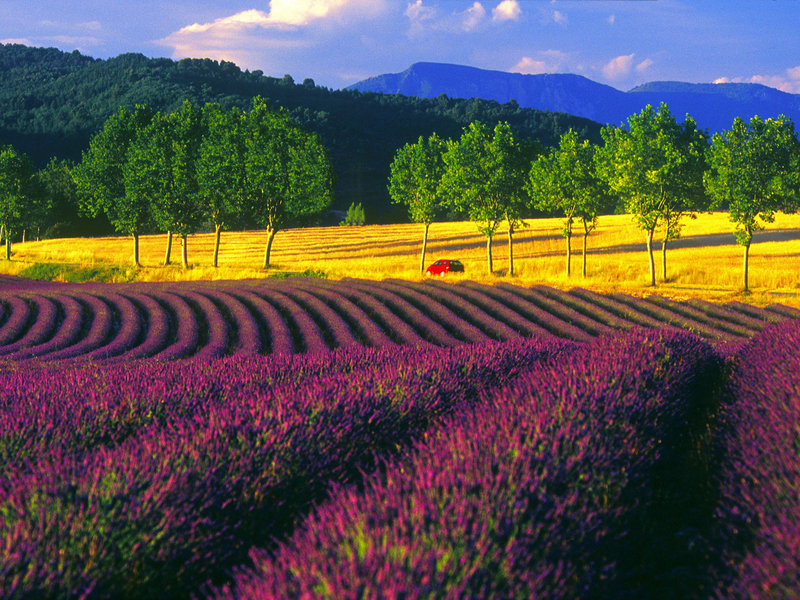
Lavender fields in Provence.

Lavender fields in Provence.

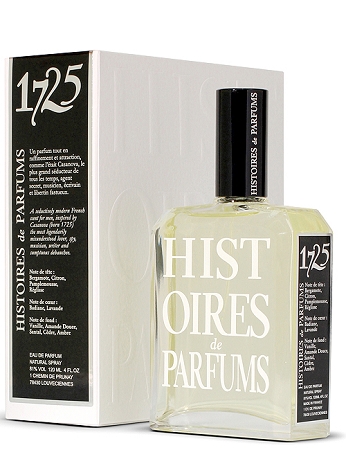
Famous characters and mythical years, captured in a bottle. The lyrical, olfactory tribute to history is at the heart of Histoires de Parfums, a French niche perfume house founded in 2000 by Gérald Ghislain. As the Histoires de Parfums website explains, each of the early fragrances was entitled just with a date in history, the year in which a legendary figure was born. In the case of “1725,” it was Giacomo Girolamo Casanova who is best known for being a libertine, lover and seducer of women, though he was also much, much more. For example, did you know that some scholars believe Casanova helped write some of the lyrics to Mozart’s Don Giovanni opera, that he translated the mighty Iliad, got into a heated debate over religion with the brilliant Voltaire, or that he was a highly respected political advisor?

Giovanni Casanova via Wikimedia.

Giovanni Casanova via Wikimedia.

I bring up these other attributes because some may think that a perfume dedicated to Casanova would be a mighty oriental, intended to seduce with opulent, sensuous notes — and they would be mistaken. Histoires de Parfums has taken a very different tack with 1725, creating an aromatic fougère with gourmand qualities. The company’s full description for 1725, along with its notes, is as follows:

Venice, the riparian city of love. In that year of 1725 was born the man whose name would symbolize seduction: Giacomo Girolamo Casanova.

1725 Casanova HdP« What is love then? An illness to which man is prone to any age », claimed the one who was one after the other abbot, officer, scholar, writer, banker, con artist, magician, infantryman, spy, diplomat, but always claiming his Venetian origins. For every Casanova, here is an eau de parfum inviting intense pleasure, an amber fern mixing fine wooded tunes and touches of lemony freshness, sublimed by the elegance of lavender. Warmed with heady spices and colored by sweet fruits.

Originality: vanilla lavender combination.

Top Note: Bergamot, Citrus, Grapefruit, Licorice

Heart Note: Lavender, Star Anise

Base Note: Vanilla, Almond, Sandalwood, Cedar, Amber

1725 Casanova doesn’t evoke either the man or sybaritic Venice to me. Instead, I’m taken to modern Provence, perhaps the Luberon before Peter Mayle’s wonderful Year in Provence books made it less of a magical secret. I see vast fields of lavender infused by the aroma of a thousand patisserie shops at its base. They are filled with vanillic almond croissants, pate d’amande, aniseed galettes, and frothy vanilla drinks. Surrounding the lavender fields is a long avenue of cedar trees that create a bridge to the orchards of yellow lemons and zesty yellow grapefruits. The corridor of woody trees is occasionally tinged by smoke but, more frequently, by that wafting scent of vanilla from the patisseries at the bottom of the hill. To me, that is the perfume in a nutshell.

Source: Worldfortravel.com

Source: Worldfortravel.com

1725 Casanova opens on my skin with aromatic herbs and citruses with underlying spices and a quietly muted leather note. The lemon is zesty, fresh, very crisp and similar to the juice in unsweetened lemonade. The grapefruit is similarly yellow and tart. Intermingled with both notes is lavender that feels smooth, not bitter or pungent. A little bit of spicy anise flickers at the edges and, within seconds, is joined by some very exuberant almond atop a light vanilla base.

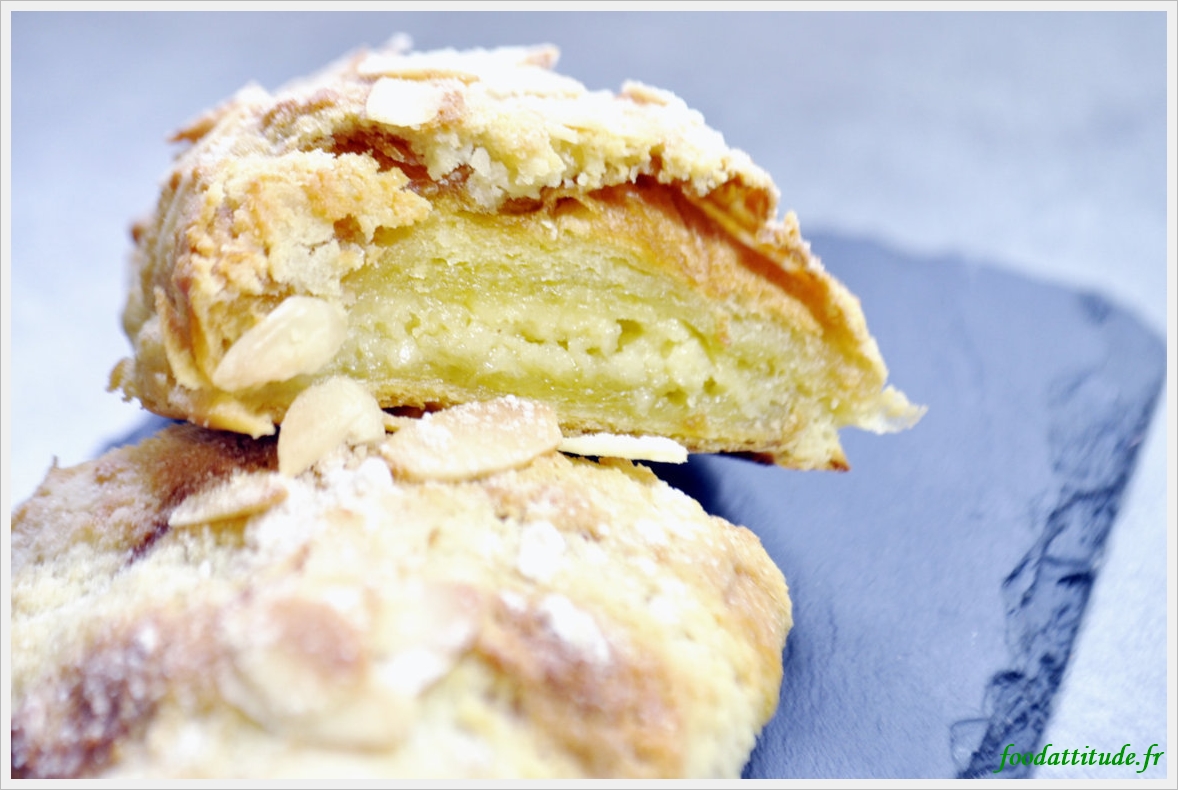
Croissants aux amandes via foodattitude.fr

Croissants aux amandes via foodattitude.fr http://www.foodattitude.fr/article-croissants-aux-amandes-113855705.html

The almond and vanilla notes are in sharp contrast to the lavender and citrus. The former evokes a French breakfast pastry; the latter, the herbaceous hills of Provence where fields of lavender meet orchards of citrus fruits. The sweetness of the almond-vanilla accord prevents Casanova’s opening from feeling like a primarily masculine fragrance with its typical fougère combination of herbaceous, aromatic citruses and lavender.

Fennel fronds.

Fennel fronds.

Still, the perfume seems almost split into two until, about five minutes in, a bridge is formed between the two camps, thanks to the advent of the cedar note. It’s just barely peppered but, instead, creamy and backed by lightly spiced anise. The latter doesn’t feel like black licorice candy or even dried star anise; instead, it feels more like the fresh green fronds of an anise vegetable or, as Americans call it, fennel. It’s a beautifully delicate, subtle note, especially when mixed with the creamy wood accord, and the two together help to bridge the divide between the other competing groups. But I still found 1725 to be a bit jangly and discordant at the beginning.

Source: Usafilm.info

Source: Usafilm.info

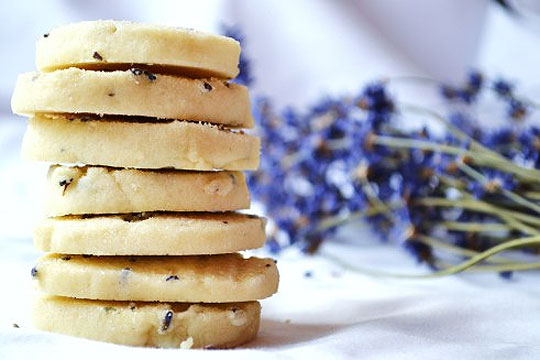
Twenty minutes in, 1725 Casanova turns into a smoky cedar and lavender perfume, with the tiniest dash of citrus and anise notes– all over a vanilla-almond base. The cedar note is beautiful, especially with the lavender — a note that some of you know that I absolutely despise in large quantities. Here, however, it is well done, adding just a subtle aromatic herbaceous quality to the peppered woods while also feeling airily creamy and sweetened. It helps that it’s subtle, creating an overall gauzy haze over the notes, but never smelling like those revoltingly concentrated sachets of dried lavender that were as ubiquitous in the South of France (especially Cannes) as the air you breathed. (If you lived in Cannes, which is right next to Grasse, you were so inundated by lavender sachets, oils, perfumes, creams, bath products, and lavender of every possible formulation, you ended up almost being traumatized. Few places in the South of France are so deluged and bombarded with the note as Cannes which is only about 18 minutes away from the world’s center of perfumery and lavender. So, by the time we escaped to Monte-Carlo, it was too late; I was scarred for life with a searing, deeply rooted, life-long lavender phobia.)

To my surprise, it is actually the vanilla note in 1725 Casanova with which I have greater difficulty. Infused by almond like that in pate d’amande, there is something extremely sickly about it. And, despite its generally light airiness, it feels both cloying and somewhat synthetic. Thankfully, however, about an hour into Casanova’s development, it softens and becomes significantly better. No longer cloying and quite so jangly (for lack of a better term), it mellows out into a much more harmonious note, blending in well with both the marzipan-like almond and the lavender.

Source: Epicurus.com

Source: Epicurus.com

Starting at the 90 minute mark and for the rest of Casanova’s development, the perfume becomes a well-modulated, balanced, almondy-vanilla fragrance that has almost a heliotrope-like quality and which is infused with light, sweetened lavender — all atop a base of smoky wood notes touched fleetingly with softly spiced, herbal anise. It’s not dessert-like or gourmand; 1725 has too much lavender, light smoke and dry woods for that, but it’s also not a truly masculine fougère, either.

1725 remains that way until its very end, never changing in any dramatic way but merely softening until, finally, it is nothing more than a soft vanilla with a touch of lavender over an abstract, woody base tinged with the smallest whisper of smoke. Its sillage was generally moderate at the start, never projecting loudly; this is far too refined a fragrance for volume. Instead, it creates a very small, soft cloud within which the perfume is quite detectable. 1725 Casanova became a skin scent around the fourth hour, remaining there for a number more hours until it finally faded away shortly after the 8 hour mark.

It is surprisingly pretty — even to one who despises lavender. I wore 1725 Casanova to dinner with my parents and, to my surprise, it was a huge hit with the two biggest perfume snobs I know. I don’t know who is more difficult to please: my mother or my father. Almost everything I make them smell is greeted with disdainful silence and a faintly curled lip. Occasionally, there is a single raised eyebrow, a faint shudder, and a horrified comment on the state of modern perfumery. (“Why would anyone want to smell like food??!!) Out of perhaps 50 recent fragrances, I can only remember four or five perfumes receiving enthusiastic approval. Yet, both of them really liked 1725. Frankly, I couldn’t quite believe it. They did disagree somewhat on how powerful a perfume it was: my father thought it was strong; my mother scoffed. And, to my amusement, my mother refused to believe that 1725 Casanova was technically classified as a masculine fragrance. Simply refused. (“That’s a woman’s perfume,” to which my father responded, “Who cares? It smells really good.”)

I agree with both of them. 1725 Casanova is about as unisex as it comes. It’s also an extremely wearable, easy fragrance that would fit a variety of casual situations. I myself wouldn’t go near lavender on any frequent basis (let alone spend actual money on it), but if I think 1725 Casanova is pretty, then those with less violent lavender antipathies may love it.

On Fragrantica, opinions seem split. Half the posters think 1725 Casanova is a charming, lovely, wearable, and even elegantly sophisticated scent; the other half think it’s not hugely interesting, especially as compared to some other Histoires de Parfums perfumes. (The aggressively masculine leather scent, 1740 known as Marquis de Sade, is often mentioned.) Men seem to be more critical, while the few women who have reviewed 1725 seem to like it for themselves. And I think both facts really sum up the perfume: it’s not a very masculine scent, let alone a complicated one. As such, it will fall short with men who prefer the more unusual, and much more obviously masculine, fragrances from the same brand. Yet, there are enough admirers who find it utterly “charming” and timeless to show that it really depends on whether you want something classically elegant or something a little more rakishly adventurous.

One such admirer is the famous perfume critic, Luca Turin, who categorizes 1725 Casanova as an “Anisic Lavender” and gave it a Four Star review in Perfumes: The A-Z Guide:

Anisic notes are hard to handle in perfumery: they are sweetly happy on their own (few things smell better than star anise in a bag) but usually stand out in ensemble playing as a pan flute would in a string quartet. This clever fragrance associates two such notes, licorice and star anise, to a lavender-citrus structure and somehow clips the whole thing together with a touch of heliotropin and cedarwood. Top and heart are wonderfully melodious, and the drydown comes close enough to L’Heure Bleue to feel its gravitational pull, but then escapes again. Very good.

My experience wasn’t identical to his, especially as I never detected a strongly black licorice note and the anise one was much more like soft fennel than truly spicy, almost bitterish, woody, very pungent, dried star anise. That said, I can see why he would compare 1725’s drydown to L’Heure Bleue, and I do think it’s a good fragrance — even with the lavender.

As a final note, a huge number of people on Fragrantica seem to think 1725 Casanova resembles MDCI‘s Invasion Barbare. I haven’t tried or reviewed the latter, so I can’t comment, but 33 people voted on the similarity on each perfume’s page. A few noted subtle differences, such as one commentator who said that Casanova was similar but “with the violet removed and the notes toned down and refined.” All I can tell you is that 1725 is significantly cheaper than the MDCI fragrance: a 2 oz/60 ml bottle of Casanova costs $125, while the exact same size for Invasion Barbare costs $250.

In short, if you like anise and lavender, then I’d definitely recommend giving 1725 a sniff.

DETAILS:
Cost, Availability, Decant Sets & Samples: 1725 Casanova is an Eau de Parfum that comes in two sizes: 2.0 oz/60 ml for $125 or €145; or 4 oz/120 ml for $205. (Further decant or mini-sized options are below). Both full bottle sizes are available on the Histoires de Parfums website, which also has a fantastic sample program (6 samples of your choice) whose $20 price goes towards the purchase of a large 4 oz. bottle. Further details are available here as to how the process works. Shipping is free for all orders anywhere in the world for purchases over $130; below that, there is a $10 shipping fee. In the U.S., 1725 Casanova is available from Luckyscent in both sizes, along with samples. BeautyHabit has not only the 2 bottles but also a 14 ml decant for $36. The perfume is also found on Amazon in the smaller $125 size. The Perfume Shoppe (which has a Canadian division) sells 14 ml decants of 1725 for $36. Another option may be from Beauty Cafe which sells a 3 Bottle Nomad Kit of any 3 HdP fragrances in 14 ml bottles for $96. Outside the U.S.: In the UK, you can find it at Roullier White for GBP £125 for the smaller 2 oz/60 ml bottle. For the rest of Europe, you can find it at First in Fragrance for €145 for the 2 oz bottle. In Australia, you can find it on sale at City Perfume for AUD$179 for 2.0/60 ml oz or at the full AUD$190 price at Peony Melbourne. For all other countries, Histoires de Parfums vast Store Locator lists retailers from South Africa to the Netherlands, Sweden and Kuwait. Samples: You can find samples at a number of the retailers linked to above. Surrender to Chance has a variety of different options and sizes for 1725 Casanova, from samples to decants. Samples begin at $4.99 for a 1 ml vial.

New Perfume Releases: Tom Ford Atelier d’Orient Collection

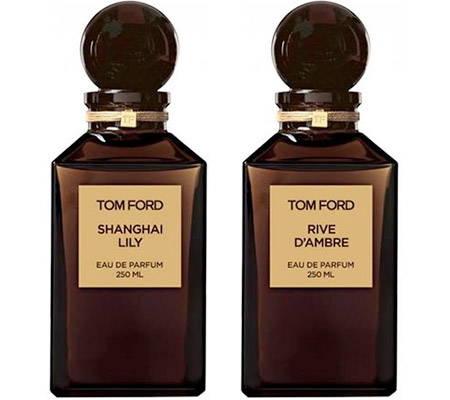
Tom Ford is releasing a new collection of fragrances within his Private Blend line. The collection is called Atelier d’Orient and will consist of four perfumes: Shanghai LilyPlum JaponaisFleur de Chine and Rive d’Ambre.

Source: Fragrantica

Source: Fragrantica

Now Smell This (“NST”) has the press releases for each scent which is provided below. The only site I’ve found that has the details of the notes for each fragrance is Miss Fashion News, so I’ve added that underneath the NST quote:

Shanghai Lily ~ “Opulent. Tantalising. Elegant. Tom Ford’s Shanghai Lily eau de parfum is a floral oriental scent that transports the senses into a world of rare and opulent ingredients from the historic silk road. Warm spices, elegant florals and addictive notes of vanilla and frankincense create a hazy reverie of glamour and temptation.”

NOTES from Miss Fashion News: bitter orange, pink peppercorns, black pepper, clove, jasmine, rose, tuberose, vetiver, cashmere wood, benzoin (Laos), castoreum, cistus, gaiac wood, vanilla and incense. 

Plum Japonais ~ “Delectable. Luscious. Sensual. Tom Ford’s Plum Japonais eau de parfum reveals the extraordinary beauty of the ume plum by juxtaposing it with a lush and unconventional mélange of exotic asian ingredients. Rich and luxurious, it is a fragrance with irresistible complexity.”

NOTES from Miss Fashion News: saffron, cinnamon bark (Laos), immortelle, plum blossom, camellia blossom (Japan), agar wood, amber, benzoin (Laos), fir balsam absolute, and infusions of vanilla.

Fleur de Chine ~ “Dramatic. Smouldering. Seductive. Tom Ford’s Fleur de chine eau de parfum is an unequivocally romantic and haunting floral fragrance touched with a reverence for the great scents of the past. Precious asian flowers, including hualan flower and star magnolia, are arranged in a bouquet of rare beauty for a scent that lingers on.”

NOTES from Miss Fashion News: blossoms of tea, magnolia, fresh clementines, white peach, bergamot, hyacinth, hinoki wood, leaves of jasmine tea, plum, rose tea, wisteria, amber, peony, benzoin from Laos, styrax, Chinese cedar, and vetiver.

Rive d’Ambre ~ “Ornate. Compelling. Warm. Tom Ford’s Rive d’Ambre is a golden toned eau de cologne with a veil of colonial elegance. Precious citrus fruits – a talisman of good fortune in asia – are beautifully illuminated by a warm and seductive amber background.”

NOTES from Miss Fashion News: essential oils of bergamot, lemon and bitter orange with notes of tarragon, green mint, and cardamom [along with]… cognac oil [and] tolu balsam[.]

Source: Fragrantica

Source: Fragrantica

The collection is already out in the UK at Harvey Nichols, along with other British department stores like Harrods and Selfridges. The price for the 50 ml/1.7 oz bottles is £140.00, while the massive 250 ml bottles are retailed at £320.00. No word yet on when precisely the collection will hit the U.S. or elsewhere, and what the U.S. pricing may be. However, Miss Fashion News says that European pricing is €180 for 50 ml and €430 for 250 ml.

Lastly, Miss Fashion News also has some more information about the story associated with each scent — such as how Fleur de Chine is meant to reference the 1930s-1960s femme fatales of the Chinese silver screen — so you may want to glance at that, too, if you’re interested. Also, while Now Smell This has a more generalized, press release description of the scents, there are additional details in the comment section from its UK readers who have already given the four fragrances a quick sniff. So you may want to check out the responses if any of the fragrances intrigue you. One interesting tidbit: one poster says that the UK prices seem to have gone up for these four fragrances as compared to the other Private Blend perfumes. And looking at the Harvey Nichols’ prices in British pounds, I would agree. So, U.S. pricing is bound to also increase from the current $205 rate for the small 1.7 oz/50 ml bottles.