Perfume Review: Mona di Orio Eau Absolue (Les Nombres d’Or)

A lazy day in the sun. The summer’s heat brings out the spiciness of the sugar cane and Jamaican bay trees in the distance. Oranges and lemons hang heavy from the trees in a grove nearby. As the heat warms your body even further, you stretch out on your chaise lounge by the pool and reach for a refreshing glass of lemonade. And then you slather sweet, citrus-infused honey on yourself as if it were suntan lotion.

knstrct.com

knstrct.com

Images of sun, heat, honey and citrus are what come to mind when I wear Eau Absolue, the latest release from Mona di Orio and part of her Nombres d’Or Collection. Mona di Orio was an extremely talented perfumer who died tragically at the age of 41 in 2011 from post-surgical complications. Yet, the new Eau Absolue is her creation, based on a formula made by Ms. Orio before her death as an ode to the Mediterranean. According to an article on Now Smell This, Mona di Orio’s business partner and the company’s co-founder,Jeroen Oude Sogtoen, was determined to remain faithful to her formula, her vision, her style and her legacy, so her formula has not been altered in any way.

Mona di Orio Eau AbsoluePart of that Mona di Orio signature style is something called “Chiaroscuro.” It is a term which refers to the interplay between dark and light, and a way of creating depth or three-dimensionality by using sharp, bold contrasts. The chiaroscuro construction is very much at play in Eau Absolue which is described on the Mona di Orio website as a “Hesperide Woody Balsamic” with the following character:

Eau Absolue is a memoir steeped in Mona di Orio’s love for the Mediterranean. Composed in her signature olfactory chiaroscuro construction, the scent envelopes in joyous warmth.

Eau Absolue effervesces like a summer breeze carrying a zestful bouquet of bergamot, mandarin, clementine and Petitgrain. These bright, convivial citruses splash against the epicurean spice of pink peppercorn.

The scent becomes earthy and softly floral, with whispers of geranium, dry vetiver and balsamic St Thomas Bay Leaf. The nocturnal shade intensifies, arching ever deeper, until plunging directly into a caress of cistus labdanum, the ambry smell of the Mediterranean, and sensual musk, an elegant and intoxicating denouement.

Eau Absolue Notes:
Sicilian bergamot, clementine and Petitgrain Citronnier, Litsea Cubeba from China, Egyptian geranium, vetiver from Java & Haiti, Jamaican St. Thomas Bay Leaf, pink peppercorn from Peru, cedar wood from Virginia, musk, cistus labdanum.

A brief explanation of some of these notes may be useful. According to my research, Litsea Cubeba (or “May Chang”) oil comes from an evergreen tree or shrub native to China. It possesses a lemon-like odor that has sometimes been compared to lemongrass or lemon verbena, thought it is supposedly sweeter than lemongrass. As for Jamaican St. Thomas Bay Leaf (Pimenta racemosa), its aroma isn’t like that of the dried leaves used in cooking. Instead, it is said to have a spicy, balsam-like odor that is like a resin, though some say it’s also a little like cloves due to all the eugenol in the plant.

Orange and lemon via Herbal Teas InternationalFrom the very first sniff, Eau Absolue is a rich lemon-honey fragrance. The honey is not dark but sweet, imbued with delicate floral notes and strong dashes of that litsea cubeba. It really smells as described: like lemongrass but sweeter; like verbena but richer and without any soapiness. It’s heady and beautiful. There is also a subtle, sweet muskiness underlying the notes. Slowly, slowly, as if on tiptoes, there is: a hint of juicy, fresh mandarin orange; the spicy resin of the St. Thomas Bay leaf; a ghostly bit of petitgrain with its bitter, woody nuance; and the merest pinches of cedar.

Source: Mobiwalt.com

Source: Mobiwalt.com

And that generally is the sum-total of the entire fragrance for most of its lifespan on my skin. Eau Absolue fluctuates in the depth, degree or intensity of some of its notes, but the primary bouquet remains the same with absolutely no change or additions. Even out of those original notes, the main, dominant scent on my skin is a lovely lemon-infused honey with spicy resin, orange and a whisper of musk — the remaining notes merely circle around the back like shadows in the sunlight. Around the 40 minute mark, the honey turns richer, deeper, and darker, while also taking on a slightly sulfurous nuance, similar to that in Vero Profumo‘s Onda. I don’t mind it, but it can be a little sharp for a while.
Source: Wallpaperscraft.com

Source: Wallpaperscraft.com

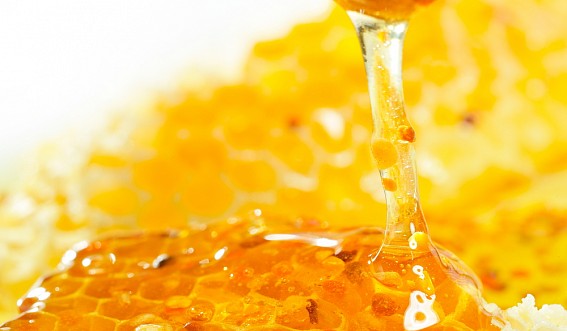
Two hours into the perfume’s development, Eau Absolute softens, losing a bit of that edge, while simultaneously becoming even more resinous, spicy and balsamic as the St. Thomas bay leaf becomes much more prominent. Interestingly, there is also a sudden, but subtle, flicker of smokiness to the base which intensifies as times goes on. If Eau Absolue were a recipe, it would now be something like this: 2 cups of honey with 3 teaspoons of sun-sweetened lemon; 2 teaspoons of spicy resin; a teaspoon of warm, juicy orange; a teaspoon of dark smoke; and a dash of light, soft, sweet musk.

Source: 123rf.com

Caramelized sugar cane cubes. Source: 123rf.com

The perfume remains that way until the drydown starts at the top of the sixth hour when Eau Absolue turns into sweetened, spicy woodiness infused by smoky, caramelized honey and the merest hint of orange. The smoky nuance is fascinating because it’s almost like singed sugar cane, both the leaf and the sugar cubes itself. It’s beautifully warm, woody, dry, spicy, and molten — all at once. There is also an occasional note of melted wax, as if the honey had deepened to the point that it had turned into solid beeswax and then been melted. It’s not prominent and is just a subtext to the overall honey note, but it’s there. Another note that has deepened is the musk which has now taken on an ambery quality. It’s not animalic, raunchy or intimate at all on me, but feels more like the light muskiness from heated, sweetened skin. The whole combination is incredibly light and airy, though it is also a skin scent at this point.

Source: wallpapers.free-review.net

Source: wallpapers.free-review.net

The drydown begins at the sixth hour, but Eau Absolue is by no means finished. On my voracious, perfume-consuming skin, Eau Absolute lasted almost another 8 hours! Granted, I frequently thought it had vanished, only to be surprised by its tenaciousness as it chugged away subtly and silently as the most infinitesimal veil. In its final three hours, Eau Absolue turned into general, abstract, nebulous, sweet muskiness and nothing more. All in all, it lasted just short of 14 hours on me, even if was an amorphous, sheer skin scent for eight of those hours. The longevity was astounding, especially as I did not apply any more than my usual quantity. In terms of sillage, it was quite powerful at the start, radiating out a good 5-6 inches for the first hour before becoming a little bit softer. Even when the perfume was wafting only an inch or so above my arm, the notes were still potent and very strong within that small cloud.

I am a sucker for honey fragrances, so I absolutely adored Eau Absolue, but I must advise caution when it comes to this perfume. Honey is one of those notes which can turn rancid, intimately animalic, funky, or sour on one’s skin, depending on skin chemistry. And the same applies to labdanum which can often manifest itself with a honey characteristic. I’ve noticed that my skin not only amplifies labdanum, but also minimizes the barnyard aspect, one of its many possible nuances. While I’m lucky that both honey and labdanum bloom on me, that’s not the case with everyone. Take, for example, a friend of mine who is an experienced perfumista and whose skin chemistry normally works well even with a rich, musky, labdanum, slightly animalic perfume like Maison Francis Kurkdjian‘s stunning Absolue Pour Le Soir. She had an atrocious experience with Mona di Orio’s Eau Absolue. She gave me permission to quote her private description to me: Eau Absolue “was instant nose wrinkling, gasping, rotten, fermented body odor and stinky shoes.” Oh dear.

I think my skin chemistry’s interaction with labdanum explains why I found “honey” to be the primary essence of Eau Absolue on me, while other reviewers had quite a different experience. For example, it was all green, citric, soapy, animalic notes for Now Smell This whose review reads, in part:

Eau Absolue is citrusy, but because of the perfume’s weight and other notes it smells to me more like a green fragrance with bergamot, lemon, and orange rather than like a classic Eau de Cologne. On first sniff, Eau Absolue is thick with a mélange of tart citrus rind and smashed green stems. Bay leaf smoothes away any sharp edges, and an underpinning of cedar casts an almost horsey-animalic note deep in the perfume’s heart.

All in all, Eau Absolue feels clean and green-fresh, reminding me of an expensive bar of artisanal soap. Over time the citrus ebbs, and the fragrance becomes a tiny bit sweeter but remains green. Eventually it gracefully fades, growing quieter, but still true to the perfume’s overall story. Like the other Mona di Orio fragrances I’ve tried, it’s dense and warm, not an airy tingle of citrus like, say, Guerlain Eau de Cologne Impériale.

Lucas of Chemist in the Bottle also got lots of green notes, along with a very pulpy citrus opening (that he briefly found to be reminiscent of household cleaners), then petitgrain, big doses of geranium, light cedar, a slightly burnt and mineralized amber and, in the final drydown, a “sweaty feel” to the base. He was not a fan.

As always, my experience was closest to that of The Non-Blonde (we really must have extremely similar skin), though she doesn’t seem to have experienced heaps of honey:

Eau Absolue opens with a rather misleading burst of citrus. It’s bracing and lemony, dry and slightly bitter like a very grownup drink. This early summer morning is followed closely by unfolding layers of crisp aromatics, woods and spices that surround and protect a resinous-incense core. Cistus labdanum can turn quite dirty and musky. In Eau Absolue Mona di Orio kept the barnyard at a safe distance, though there is an animalic presence in the late dry-down. Somehow the fragrance manages not to get its white shirt soiled even though it steps dangerously close at times.

The juxtaposition of clean and dirty notes makes the dry-down of Eau Absolue very enchanting. It’s warm and slightly ambery, you can almost feel and smell crumbling soil that has soaked sunshine and clean air all day. Eau Absolue is almost bursting with life– it’s zesty, peppery, and just animalic enough to feel the heartbeat under the surface.

Sunshine and warmth, after the start of a cool citrus drink. It’s very much what Eau Absolue evoked in me, too. And that impression extended as well to a reviewer on Fragrantica who called Eau Absolue “breathtakingly beautiful” with a “warm and summery… Mediterranean vibe[.]” (The only other review currently up on Fragrantica simply says: “it is a cologne, yet rather animalic.”) 

My suggestion to you is to try Eau Absolue if you know your skin chemistry works well with animalic notes, honey and/or labdanum. I didn’t think the perfume was animalic at all (beyond general, light muskiness), and The Non-Blonde thought Eau Absolue kept “the barnyard at a safe distance,” but if your skin tends to amplify those notes and, more importantly, if you hate the result, then you may feel the distance is not far enough. As for me, I adored Eau Absolue’s beautiful honey-citrus essence and plan on getting a decant for myself — something I’m not frequently inspired to do. I don’t think I’ll want to smell of honey every day and I don’t know how versatile it is, but I find something incredibly soothing, comforting, cozy and relaxing about Eau Absolue. I swear, I think my blood pressure and stress level went down two notches while wearing it. I give it two thumbs up.
DETAILS:
Cost, Sizes, Sets & Availability: Eau Absolue is an eau de parfum, and comes in a variety of different options and sizes. The full bottle is 3.4 oz/100 ml and costs $230, €160 or £135.00. It is available world-wide on the Mona di Orio website which also sells a 5 ml roll-on version for €12 or a Travel Set of 3 x 10ml bottles for €85. There is also a Nombres d’Or Discovery Set of 8 x 5ml bottles which is sold for €90 and, for the company’s website version at least, Eau Absolue is included. (Boxes from other vendors don’t seem to have been updated yet to include this brand new fragrance.) In the U.S.: you can find Eau Absolue at Luckyscent, Parfum1, and MinNewYork (which also offers free shipping within the US). All three places sell samples of the perfume. LuckyscentParfum1 sell the Discovery Set of 8 x 5ml roll-on bottles of the entire Nombres d’Or for $145, while MinNY discounts the set for $5 off, pricing it at $140. Luckyscent’s version of the box doesn’t currently include Eau Absolue since it is so new, so you may want to buy the set offered directly from Mona di Orio’s website if you’re interested in trying Eau Absolue as well. You can also purchase a bottle of Eau Absolue in the 100 ml size from Olfactif which has a perfume subscription service. Outside the U.S: In the UK, you can find Eau Absolue at Les Senteurs which sells it for £135.00 and which also carries a sample vial for sale. In Paris, I see Mona di Orio listed on the Marie Antoinette Paris website but can’t find prices or individual perfumes for the line. In the Netherlands, Eau Absolue is carried at Skin Cosmetics. For the rest of Europe, you can turn to Germany’s First in Fragrance which carries the perfume for €160.00, along with a sample for purchase. In the United Arab Emirates, the Mona di Orio line is sold at Harvey Nichols. In Australia, Eau Absolue is available at Melbourne’s Peony Haute Perfumerie for AUD $230. For all other countries from Russia to Spain, you can use the Store Locator guide on the company website. Samples: Samples are available at Surrender to Chance or The Perfumed Court (both of whom sells vials starting at $6.99 for a 1 ml), at Luckyscent, Parfum1, and many of the European retailers linked to above.

Perfume Review- Dior Gris Montaigne (La Collection Privée)

Source: Fashionfave.com

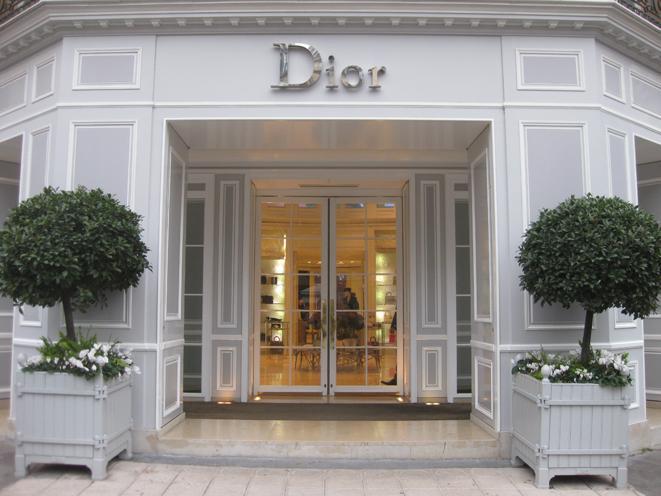
30, Avenue Montaigne. Home of Dior. Source: Fashionfave.com

It’s not often that a perfume’s inspiration parallels memories in your own life. Dior’s flagship headquarters at 30, Avenue Montaigne, and the famous “Dior Grey” were big parts of my childhood and teenage years. As a small child, I spent endless hours in the beautiful, grey-white mansion: I often sat on one of the large, grey, stuffed and studded, round banquettes in the vast, rectangular room on the second or third floor with its wall of tall French windows as I waited for my mother to try on clothes. I would sit and stare at the floor, looking for dropped pins in the light grey carpet as one of the elegant seamstresses would flit around my mother, making alterations. I became a little pet to a few of them who were always amused by my efforts at “helping,” and by my unsolicited opinions on the outfits in question. And Dior Grey — that special, elegant twist on dove grey that is the signature colour of the house — became a favorite of mine, to the point that I often wanted to have a room in that colour. And, eventually, I did.

Source: Dualshow.com

Source: Dualshow.com

The original room upstairs in a photo that must be from the '50s. Source: fashionnation1on1.wordpress.com

The original room upstairs in a photo that must be from the ’50s. Source: fashionnation1on1.wordpress.com

Later, the third or fourth time I lived in Paris, I was a teenager and our flat was two blocks away from the flagship store. Monday through Friday, I would wait for the school bus to take me to my high-school in St. Cloud, and the pick-up location was exactly catty-corner or on a diagonal line across from the store. I spent countless mornings, staring at that beautiful, elegant facade from afar and trying to see inside the windows. As an adult, Dior Grey remained one of my favorite colours. And, right now, my bedroom is done to approximate the interiors that I remembered from childhood: the walls are painted Dior Grey, the furniture is silver, mirrored or white, and the room is filled with silver and black touches.

Having been imprinted with Dior from childhood, much like one of Konrad Lorenz’s ducklings, it was virtually impossible not to have high expectations for a perfume that is meant to evoke both Dior’s flagship headquarters and its trademark colour. In fact, I knew that nothing could possibly live up to that weighted mental baggage, so I intentionally and explicitly tried to wipe them all from my mind when I tested Gris Montaigne.

Dior Gris Montaigne

It is brand new, just released, and the latest member of Dior‘s prestige La Collection Privée line of perfumes. (The line is sometimes called La Collection Couturier, but I go by the name used by Dior itself on its website.) The Privée line consists of thirteen perfumes that are exclusive to Dior boutiques (only one in the US, in Las Vegas) and to its website. (It would have been fourteen, but Gris Montaigne has come in to replace the glorious Mitzah which has essentially been discontinued — to justified howls of horror from perfumistas across the world.) Like the rest of its siblings, Gris Montaigne was intended to illustrate and celebrate key moments in the life of its founder, Christian Dior, and was created by François Demarchy, the artistic director and nose for Parfums Dior.

Dior describes Gris Montaigne in a way that brings back a flood of childhood memories:

And if grey were a perfume?

The olfactory signature of the Couture House’s legendary location, 30, Avenue Montaigne, has become a reality. The perfumer’s response to couture, this sophisticated chypre fragrance is a bold interpretation of the Dior Grey. The Couture Grey featured in the collections since 1947, the Grey Emotion of Christian Dior’s family home in Granville, Pearl Grey like the facade of the boutique on Avenue Montaigne.

Colour becomes a perfume: a burst of citrus, a floral heart of Turkish Rose and Jasmine Sambac from the Indian region of Tamil Nadu, followed by a woody note heightened with Indonesian Patchouli set against an ambery backdrop of moss.

The notes for the fragrance, according to Dior, are simple:

Essence of Calabrian Bergamot, Turkish Damask rose, Indian Jasmine Sambac, Indonesian Patchouli, and Absolute of Macedonian moss.

Source: g-1.com

Source: g-1.com

Gris Montaigne opens on my skin with a light citrus note, followed immediately thereafter with florals headed by rose. The bouquet sits atop a patchouli base that is, initially at least, beautifully flecked by soft amber, creamy sandalwood and the lightest sprinkling of powder. The rose is infused with quiet inflections of bergamot, while the patchouli adds a subtle warm and fleshiness to the very delicate note. There are also subtle touches of oakmoss in the base; it doesn’t feel like pungent, dry, arid, almost mineralized oakmoss, but it doesn’t feel completely bright green and fresh, either. The prettiest part of the perfume in those early minutes is the sandalwood. It’s nothing like real Mysore sandalwood with its distinctive spiciness, richness and depth, but the synthetic version used here has a lovely softness, creaminess and smoothness.

A room in the re-vamped Montaigne store. Source: ru.fashionmag.com

A room in the revamped Montaigne store. Source: ru.fashionmag.com

In its very earliest moments, Gris Montaigne is lovely. The light sprinkles of powder — combined with the very subtle oakmoss — make the perfume feel both classique in inspiration and a modern, neo-chypre in type. It’s a delicate, feminine, refined scent and, call me crazy, but it actually does evoke both the colour grey and the Dior rooms at Avenue Montaigne. For all that I tried to ignore the name and its associations, for all that I went into testing this perfume with the express plan of considering this an unnamed scent (“Just consider it Perfume ‘ABC’ from House XYZ,”), somehow, I can smell those rooms. The reason is the clean, floral, feminine, restrained, gauzy aroma. It’s almost a little sterile in its grey softness. But that word seems unfair because of all the negative connotations, so let’s say instead that Gris Montaigne has a touch of the restrained, aloof, professional, endlessly feminine, floral and slightly powdered feel of those coolly muted, elegant rooms.

purple smokeTen minutes later, the perfume starts to change. Cedar starts to rise to the surface, adding a quiet dryness to the floral notes. Unfortunately, the patchouli also starts to become more dominant, turning Gris Montaigne into a distinctly fruity-patchouli rose atop that base of dry, peppered cedar. Purple patchouli is not only my least favorite kind, but it’s also a common note in a lot of commercial, inexpensive, fruity-floral fragrances today — and big reason why I can’t stand many of them. There is something about its character in Gris Montaigne which reminds me of Chanel‘s Coco Noir, except the Dior is drier thanks to that cedar note and isn’t so clobbered by the fruity-patchouli (which I thought verged on the bullying in Coco Noir). Despite that, from the 30-minute mark to the 90-minute one, the purple patchouli and the dry cedar battle for the rosy heart of Gris Montaigne. The trio always rests above that light oakmoss base flecked with the smallest touches of amber and sandalwood. I wish the sandalwood were as noticeable as it had been initially but, alas, there isn’t much of it.

Inside the re-designed Dior headquarters. Source: Glamshops.ro

Inside the re-designed Dior headquarters. Source: Glamshops.ro

Gris Montaigne, like the rest of its siblings in the elegant Privée Line, is a beautifully blended perfume. Like the newly redesigned, revamped Paris headquarters, it’s light, airy and filled with bright touches from that fruity-patchouli whose almost syrupy sweetness seems to dominate for a good portion of the second hour. God, there is so much of it! At other times, however, especially right after the end of the first hour, it feels as though cedar has almost taken over. Increasingly, Gris Montaigne has an abstract element to it as well. One sometimes has the impression that it’s nothing more than an ordinary, common, generalized, nebulous, fruity-floral patchouli perfume. Even when jasmine joins the party, around the 90 minute mark, it doesn’t do much to transform the scent or to give it greater nuance.

And Gris Montaigne goes further downhill from there becoming softer and hazier with every passing hour, with only the purple note really standing out as something distinctive. (Oh so much purple patchouli!) By the start of the fifth hour, Gris Montaigne is a sheer, bland, floral-patchouli scent infused with some spicy dryness atop some light amber. There is a small modicum of relief in the eighth hour when the sandalwood re-appears. It actually works well with the patchouli, creating a spicier, richer version of the note than what flickered at the start. But the sandalwood is just a small touch, and it really doesn’t change what is the sole note left in Gris Montaigne at this point: fruity patchouli. The rose is a whisper, there is no jasmine, the powder vanished after the first 10 minutes, and the cedar threw in the towel a while back. In its final moments, Gris Montaigne is a simple note of abstract, sheer, general sweetness, and nothing more.

All in all, Gris Montaigne lasted just under 10.75 hours on my perfume-consuming skin. It became closer to the skin about 90 minutes in and had minimal projection, but the forcefulness of that patchouli made it definitely noticeable if you brought your arm anywhere near to your nose. Gris Montaigne didn’t become a skin scent until the fifth hour and, like all the Privée perfumes that I’ve tried, it has surprisingly enormous longevity given the moderate-to-low sillage.

I hate to say it, but Gris Montaigne feels extremely generic for most of its lifespan. It’s a refined take on a thousand similar fruity-floral scents, but not much more than that. You may be wondering how much of my assessment is due to my personal baggage involving that name and the perfume’s inspiration. It’s a fair question and the answer is: my assessment is absolutely tainted by it. Because, without those strong personal associations, I would rip this perfume to shreds, especially over the patchouli. The sole reason I’ve being half as kind as I am is because of the beautiful opening minutes and because of my nostalgia. The bottom line is that, in my opinion, Gris Montaigne is far from being a worthy successor to Mitzah, even though the planning and development of Gris Montaigne meant it had to be in the works long, long before the decision to discontinue the other fragrance.

In placing Gris Montaigne in the context of its siblings, I realised two things. First, Gris Montaigne seems to reflect a desire to take advantage of the modern, mass-market hunger for and profitability of fruity-floral scents. Second, it also symbolizes a shift in the colour spectrum of Dior’s Privée Line away from the darker, richer, orange-brown labdanum glory of Mitzah, or the amber-coloured hues of similarly spicy, deep fragrances like Ambre Nuit and Leather Oud. With the discontinuation of Mitzah and Vetiver, the arrival of Gris Montaigne seems to turn the hues of Dior’s Privée Line into something much more floral, pastel, and light in colour. It may be an unfair assessment, and it’s probably wholly off. Yet, I can’t help feel that Gris Montaigne marks a move towards something more pale, more bland, and more commercially… er… fruitful. (Pun intended.) Bottom line, Gris Montaigne is pretty, but in a way that makes it like any number of commercial scents out there, from Chanel’s Coco Noir to…. well, take your pick.

All my criticisms notwithstanding, I do think there are a lot of people who will like Gris Montaigne, especially if they keep their expectations low. For one thing, it is a very easy fragrance to wear, the sort of thing one could just spray on and go. Everyone needs a versatile perfume that is uncomplicated and could fit a variety of situations, from the office to a child’s playdate to a dinner date. Gris Montaigne would absolutely work for that. It is also a scent whose very feminine nature and restrained sillage will make it practical for those who prefer more unobtrusive scents while still keeping an elegant and refined edge. I think it will generally be a little too feminine for the average guy — but I also don’t believe in gender lines in perfumery, so if you can rock it, wonderful!

I did my best to be fair to this scent, but if you think I failed in that endeavour, I wouldn’t blame you. Sometimes, it’s hard to let go of the past, and it makes the nature of a review even more subjective. But I’m convinced that — if I were given Gris Montaigne to smell blindly — I still wouldn’t like it and my bottom line would still be the same: it’s nothing special.

DETAILS:
Cost & Availability: Gris Montaigne is an Eau de Parfum that comes in 3 different sizes: a “small” size at 4.25 fl oz/125 ml which costs $155, and a very large 8.5 fl oz/250 ml bottle which costs $230. (There is also a simply ginormous, giant
15.2 oz/450 ml bottle that is available, but who could possibly go through that?) The perfume is available exclusively at Dior boutiques, Dior online, and in a handful of upscale department stores that have a large Dior section. In the U.S.: you can find the entire Privée Line at New York’s Bergdorf Goodman, and a good portion are also at San Francisco’s Neiman Marcus. Outside of those two cities, your best bet is to call your local Neiman Marcus to see if they carry any of the Privée line. In terms of the Dior boutique in Las Vegas, Gris Montaigne arrived this week (8/12/13), and you can call the store [(702) 369-6072] to buy it directly. I would try to call this Dior number — (702) 734-1102 — and ask for Karina Lake, the Dior Beauty Stylist at the Las Vegas store. She is an amazingly sweet lady who will give you a free 5 ml mini bottle of the Dior perfume of your choice, along with 3-4 small 1 ml dab vial sample bottles. Even better, you will get free shipping and pay no tax! Tell her Kafka sent you. (I get nothing from the recommendation, by the way.)
Outside of the US: I believe the Dior Privée line is carried at London’s Selfridges and at Paris’ Galleries Lafayette. It is obviously available at any concrete, brick-and-mortar Dior store in your country as well. You can use the Points of Sale page on the Dior website to find a location for a Dior boutique near you. You can also navigate the Dior website’s International section to buy the perfume online. The problem is that the site is not very straight-forward. If you go to this page, look at the very far right to the bottom where it will say, in black, “International Version” and click on that. You should see options for Europe, Asia-Oceana, and South America. Within Europe, there are different sub-sites divided by country.
Samples: You can order samples of Gris Montaigne from Surrender to Chance, where prices start at $3 for a 1 ml vial. They also sell a 13-piece sampler set of the Privée Line (minus the new Gris Montaigne) for $35.99. I obtained my sample from The Perfumed Court which is not my favorite place to shop and which is also generally more expensive than Surrender to Chance. They sell vials of Gris Montaigne starting at $4.99 for 1 ml.

Perfume Reviews – Tom Ford Private Blends Black Violet & Jasmin Rouge

The famous French author, Stendhal, once said “Beauty is nothing other than the promise of happiness.” I think that quote applies to perfume, too. Stendhal’s quote and his brilliant classic, Le Rouge et Le Noir (“The Red and The Black”) came to mind when I decided to review Tom Ford‘s Red and Black perfumes in his Private Blend collection: Jasmin Rouge & Black Violet. Good perfume can lead to happiness but, alas, only one of Tom Ford’s fragrances holds that promise.

BLACK VIOLET:

TF Black VioletPrivate Blend Black Violet was released in 2007, the creation of perfumer, Clement Gavarry, and is classified on Fragrantica as Chypre Floral. Personally, I would call it more an Aromatic Woody scent, for reasons that will soon become apparent. Tom Ford’s press release for the perfume, as quoted in part by Nordstrom, describes Black Violet and its notes as follows:

Crisp citrus surrounds a modern pulpy fruit accord fused with black violets. Woody accents fold into oak moss, adding the universally comforting sensation of warmth.

Notes: lemon, lime, mandarin, orchid, violet, cedarwood, torchwood, vetiver, oakmoss.

Black Violet‘s opening phase is going to be a shock to anyone who expects the name to actually live up to its promise, because there is nary a violet in sight. Not one. Even more surprising, Black Violet starts as the most classic of men’s colognes. There is tart lemon juice, lime, and bergamot that is exactly like a man’s cologne or aftershave in its thinness and lightness.

Source: hdiphonewallpapers.us

Source: hdiphonewallpapers.us

Lurking below is vetiver and, even further below, is the faintest touch of some woody note. At first, it’s not spicy, peppered, or smoky, but just something vague. Ten minutes later, however, it starts to take on form and some weight, becoming a quiet dryness. If you’re wondering what the hell this has to do with violets, you’re not alone. There’s certainly none at the start. Same story with the mandarin notes which may have provided some beneficial juiciness or sweetness. There is also no oakmoss (the foundational element for a true “chypre”) that I can smell. While that is not surprising in this day and age of IFRA/EU restrictions on perfume ingredients (especially oakmoss), I don’t smell even a synthetic version in any concrete, substantial, distinctive form. If it’s there, it’s not detectable to my nose.

Vetiver roots, the primary source of the essential oil. Photo:  Herbariasoap.com

Vetiver roots, the primary source of the essential oil. Photo: Herbariasoap.com

Thirty minutes into its development, Black Violet slowly becomes a dry citrus scent with vetiver and flickers of a lightly smoked wood accord. The lime, lemon and bergamot no longer feel individually distinct or separate; they’ve just morphed into an overall “citrus” note. The entire perfume feels incredibly thin in weight and low in sillage. I have the hardest time accepting that this is an “eau de parfum” — the second strongest concentration of fragrance after pure parfum — instead of eau de cologne, the very lightest concentration. In fact, I’ve smelled a number of men’s eau colognes that are significantly more potent than Black Violet. 

Source: Lovetextures.com

Source: Lovetextures.com

Then, exactly at the one hour mark, Black Violet suddenly changes completely. The citrus men’s cologne aspect retreats and, in its place, is a dewy, earthy floral in the most muted, generalized, amorphous of ways. The floral tone is delicate, damp and green, never feeling quite like violets, but more like some random, delicate, purple flower mixed with what feels like a dash of lilac or hyacinth. It’s a ghostly note that pops up, only to dart away, before eventually returning to start the whole tease all over again. The lingering traces of citrus are similarly subtle, hiding in the background, too. More easily apparent is a cool, earthy note that is just like the dark, damp garden soil first thing in the morning. It’s not rooty, dirty, or dank, but lightly floral.

For the span of the second hour, Black Violet remains as a translucent mix of earthiness, dewy florals, and microscopic flickers of citrus — all muted, indistinct, and so close to the skin that it’s extremely hard to detect. It becomes softer and softer with every moment, turning floral muskiness atop some creamy, woody element tinged with a tiny drop of amber, before finally ending as nothing more than musky woodiness. All in all, Black Violet lasted 3 hours and 10 minutes on my skin with at least 90 minutes of that time being essentially so translucent that I thought it had vanished completely. When I say this perfume is thin in weight, hazy in feel, and close to the skin, I’m really not kidding.

It’s not just me and my perfume-consuming skin, either. The Non-Blonde had an extremely similar experience to mine, from the men’s cologne aspect right down to saying “I can barely smell it after three hours.” She’s much kinder and more generous to the perfume than I am — calling it an “abstract ‘smells good’ veil” at the end — but then, I think she’s probably a nicer, more diplomatic person as a whole. My problem with the scent is this: 1) that it is so vague in form and definition that it’s practically nebulous after the men’s cologne opening; 2) I was disappointed by the generic woodiness which followed; 3) the damp, abstract floral stage was pretty, but too translucent and brief to justify the price of the perfume; and 4) given all these issues, along with the microscopic sillage and terrible longevity, it feels completely outrageous to ask $205 for the smallest bottle of this supposed “eau de parfum.” (Yes, I tend to get peevish about perfume prices when the fragrance is so generically vague, fleeting, and sheer.) Even if you purchased Black Violet off eBay for a lower price than retail, I simply don’t think it’s all that special.

JASMIN ROUGE:

Tom Ford Jasmine RougeA significantly better perfume, in my opinion, is Tom Ford‘s Jasmin Rouge which was released in 2011 as part of his Private Blend collection. (As a side note, Fragrantica lists it as being part of Tom Ford’s lower-level, cheaper Signature Collection, but that is not how Tom Ford categorizes it on his website.) Jasmin Rouge was created by Rodrigo Flores-Roux, and was the winner of the 2012 Fragrance Foundation FiFi Award for “Best New Fragrance for Women” in the “Speciality Luxe” category. It’s a sophisticated, refined scent that is beautiful in its opening, smells very expensive, and is definitely worth a sniff, even if its full development isn’t perfect enough to perhaps warrant a full bottle. 

Tom Ford describes Jasmin Rouge as follows:

Voluptuous.  Sensuous. Audacious. Tom Ford Jasmin Rouge is a voluptuous, saturated, spiced floral. An unexpected blend of precious sambac jasmine sepals absolute, an ingredient never used before in perfumery with dusky clary sage and rich spices, it unveils a new facet of jasmine’s erotic decadence. Jasmin Rouge is as audacious as lacquered red lips. Its deep red bottle evokes lush and hedonistic glamour.

It’s a bit of hyperbole but, as one who love jasmine fragrances, I think it’s generally quite accurate, at least for Jasmin Rouge’s opening stage. There is definitely a voluptuous sensuality to the perfume; and its concentrated, saturated nature takes jasmine to both hedonist levels and very glamourous ones. 

According to Fragrantica, the notes in Jasmin Rouge include:

Top notes: bergamot, mandarin, cinnamon, ginger, cardamom, black and white pepper.

Heart: Sambac jasmine, broom, neroli, ylang-ylang, clary sage.

Base: Mexican vanilla, labdanum, leather, wood and amber notes.

Source: Hdwallpaperes.com

Source: Hdwallpaperes.com

Despite this plethora of notes, Jasmin Rouge is a soliflore: a fragrance centered around one main note. Yes, there are varying nuances from start to finish, but it’s primarily a super-concentrated jasmine perfume in nature, so those who can’t stand the note or find that jasmine turns plastic-y on their skin should probably stop reading here.

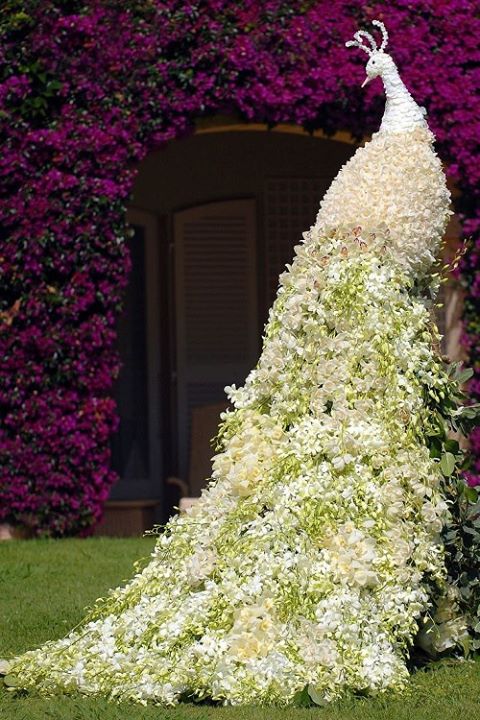
Jasmine peacock created from jasmine flowers. Source: Hdwallpaperes.com

Jasmine peacock created from jasmine flowers. Source: Hdwallpaperes.com

Jasmin Rouge opens on my skin with seemingly every possible variation of the flower: green and fresh; spicy; indolic, lush and heady; fruity; and lightly musky. The very first minutes are filled with a surprising purple note that is exactly like very dark, Concord grapes. The note soon disappears, replaced by flickers of citrus and mandarin dancing about in the background. The heady, rich, velvety jasmine is the one, true star, however, evoking a summer’s evening when the night-blooming jasmine cast out their fragrant tendrils across the sky like sirens calling to Odysseus. It’s sweet but also airy, potently strongly, and spectacularly stunning.

Jasmin Rouge calls to mind what would be my favorite jasmine soliflore, if it actually lasted on my skin: Serge LutensÀ La Nuit. It is a perfume that many consider to be the gold standard for jasmine soliflores, and it’s truly an exquisite fragrance. Unfortunately, it has the lifespan of a squashed gnat on my skin. (Seriously. 30 minutes tops!) Like the Lutens, Jasmin Rouge is a super-charged, rich, heady jasmine fragrance. Unlike the Lutens, the opening of the Tom Ford perfume has beautiful touches of orange blossom, mandarin and slightly bitter, dry neroli underlying its star. I also detect something that feels like ylang-ylang, though it’s not listed in the notes. And, unlike the Lutens, Jasmin Rouge actually lasts on the skin.

Source: 4coolpics.com

Source: 4coolpics.com

In that lovely opening stage, the fruity-floral bouquet sits upon a base that is, at first, creamily sweet and daintily touched by a milky, light vanilla. Slowly, slowly, the base starts to turn drier, woodier, and spicier; it minimizes the fruited elements and helps prevent any excessive sweetness. So, too, does the slightly green feel of the perfume. It’s almost as if leaves have been brought in to keep the jasmine from turning ripe, over-blown, cloying, or with that feeling of decayed excess that truly indolic flowers (like jasmine, tuberose or gardenia) can sometimes project. Don’t get me wrong, Jasmin Rouge is indolic and heavy — almost boozy in its initial extremeness — but it’s also simultaneously green, fresh and light. It’s a marvelous tight-rope act, and I could not stop sniffing my arm.

Diane Millsap painting, "White Floral I" via Ebsqart.com. (Link to retail page embedded within.)

Diane Millsap painting, “White Floral I” via Ebsqart.com. (Link to retail page embedded within.)

Two hours into the perfume’s development, Jasmin Rouge starts to lose some of its flair. It’s now woodier, drier, lighter, and sits much closer to the skin. There is still a spicy green nuance to the flower, but much of the perfume’s depth (and most of its powerful projection) has dropped out. The citrus, mandarin, orange blossom, and neroli touches seem more nebulous; the perfume’s body seems less lushly opulent and juicy; and there is a slight (just slight) tinge of smokiness at the very edges. I’m not quite as obsessed with the scent now, though I suspect those who want a dry, less purely floral element to their fragrance may be happier.

Catherine Jeltes Painting, "Modern Brown Abstract Painting WinterScape." Etsy Store, GalleryZooArt, linked within. (Click on photo.)

Catherine Jeltes Painting, “Modern Brown Abstract Painting WinterScape.” Etsy Store, GalleryZooArt, linked within. (Click on photo.)

Jasmin Rouge’s drydown begins midway around the fifth hour, when the perfume quietly emits woody notes with touches of smoke, pepper and musk. The jasmine is no longer the dominant note; it feels just as green and spicy as before, but it’s sheer and muted. Jasmin Rouge is now more of a bland, abstract woody fragrance where the light, beige notes just happen to be infused with jasmine, rather than the other way around. In its dying moments, just over 8.25 hours in, Jasmin Rouge is simply an amorphous, vaguely ambered, woody scent. All in all, it has good longevity, especially for a soliflore. It has extremely intense sillage at first, but the projection starts to drop after the first hour and the perfume becomes a skin scent by the start of the third hour.

I liked Jasmin Noir a lot more than most of the critics and bloggers out there. Their main issue is with the bland final stage, and I agree with them to an extent. However, I don’t dismiss the perfume as readily as they do. Bois de Jasmin‘s summation pretty much encapsulates the overall perspective of the blogosphere: “Jasmin Rouge is simply an up-market version of a familiar crisp fruity floral. Though it is lovely, it does not offer any revelations.” I think the perfume is better than that. It smells rich, doesn’t smell cheap or synthetic, screams luxury, is both green and lush, and oozes sex appeal and sensuality. I haven’t found a ton of jasmine soliflores to do that — with the exception of the stunning À La Nuit (with its zero longevity on my skin). And I can’t get over how beautiful the green spiciness is! I do wish Jasmin Rouge had retained more of its juicy, opulent, heady beginning for longer (since I prefer my pure florals to remain as such), and I would have also preferred less woods, but all that is a matter of personal taste.

The real question is whether Jasmin Rouge is special enough for the cost. I can only say that I think it’s worth the cost more than most of the other pure florals I’ve tried from Tom Ford. (For example, I thought the Jardin Noir Collection was terribly over-priced for the scents in question. I couldn’t stand Ombre de Hyacinth, and I thought Café Rose was both cloying and exhausting.) In short, it’s all relative. I would absolutely wear Jasmin Rouge if a bottle fell into my lap, but would I actually buy it? I don’t know, especially as I have issues with Tom Ford’s retail prices. If it means anything, I definitely plan on looking on eBay, since Private Blend fragrances can be found there for much more reasonable rates.

The bottom line for Jasmin Rouge is that you have to really love jasmine to wear it. Those who don’t may find the perfume to be the equivalent of death by white flowers, especially if their skin chemistry tends to turn jasmine plastic-y or sour. Those who love the note will undoubtedly adore Jasmin Rouge’s opening, and the unusual spicy greenness underlying such a lush, concentrated, heady bouquet. I’m less certain as to how they’d feel about the drydown, however, or the perfume’s linearity — it all depends on one’s taste. But Jasmin Rouge is absolutely worth a test sniff, so skip the Black and go for the Red. If perfume is nothing other than the promise of happiness (to paraphrase Stendhal), then Jasmin Rouge’s opulently heady, spicy florals and very feminine, sensual, sophisticated, refined manner might possibly be your ticket there.

DETAILS:
BLACK VIOLET – Cost & Availability: Private Blend Black Violet is an eau de parfum and retails for: $205 for a 50 ml/1.7 oz bottle, $280 for a 100 ml/3.4 oz bottle or $495 for a 200 ml/8.45 oz bottle. It is listed on the Tom Ford website. (However, it doesn’t seem clear how you can purchase it from there as I don’t see a shopping cart capability for the perfume.) In the U.S.: You can also find Black Violet at fine department stores such as Nordstrom, BloomingdalesNeiman MarcusSaks Fifth Avenue, and Bergdorf Goodman. Outside the U.S.: In Canada, I believe Tom Ford is carried at Holt Renfrew, but I don’t see Black Violet listed as one of their 2 Tom Ford fragrances on the online website. In the UK, you can find it at Harrods or House of Fraser. Both stores sell the small 1.7 oz/50 ml size for £135.00, or £300.00 for the super-large 250 ml bottle. The Selfridges website is currently out of stock of the perfume, but you may want to check later. For the rest of Europe, Premiere Avenue is one of the few online retailers that I’ve seen carry Tom Ford fragrances, and it sells Black Violet for €180, €260 or €420, depending on the size.  It is a French site that ships worldwide. I know that Tom Ford Beauty is carried in-store at a number of other retailers throughout Europe, from Denmark and Belgium to the Russian Federation. You can use the store locator linked below on the website to find a retailer near you. In Australia, I saw Black Violet listed on a number of retail sites via the GetPrice website, with prices starting at AUD$220. It is also listed on the Feeling Sexy Australia website for AUD$249.95, but I have no clue if that’s a reputable site or not. The Tom Ford line is supposedly carried at David Jones stores, but Black Violet is not one of the handful of Tom Ford fragrances carried on the its website. Elsewhere, Tom Ford fragrances are carried in numerous different countries; hopefully, you can find one near you using the store locator on the Tom Ford website. Samples: You can probably get free samples of Black Violet from any of the department stores listed above, in-store, but you can also order a sample from Surrender to Chance, starting at $3 for a 1/2 ml vial.
JASMIN ROUGE – Cost & Availability: Private Blend Jasmin Rouge is an eau de parfum and retails for: $205, £135.00 or €180 for a 50 ml/1.7 oz bottle; $280, €260, £300.00 for a 100 ml/3.4 oz bottle; or $495 for a 200 ml/8.45 oz bottle. It is listed on the Tom Ford website, but it doesn’t look as though you can buy it directly off of there. In the U.S.: Jasmin Rouge is carried at department stores such as NordstromBloomingdalesNeiman MarcusSaks Fifth Avenue, and Bergdorf GoodmanOutside the U.S.: In the UK, you can find Jasmin Rouge at Selfridges or Harrods, both of which sell all three sizes of the bottles: the small 1.7 oz/50 ml size for £135.00, the 100 ml bottle for £195, or £300.00 for the super-large 250 ml bottle. For the rest of Europe, Premiere Avenue is the first online website that I’ve found to carry the full Tom Ford line, including all three sizes of Jasmin Rouge. Here is the link for the smallest cheapest size, the 1.7 oz/50 ml bottle which retails for €180. The company ships worldwide, I believe, but you need to email them to ask for the full details. (I did find an Italian vendor, Vittoria Profumi, but it’s selling the same bottle for way over retail at €265.) In the UAE and Dubai, I found Jasmin Rouge at Souq.com. Australian vendors of Jasmin Rouge proved to be hard to track down, especially as Fresh was out of stock of the perfume (which it sells for AUD$259), but I’m sure there are others out there. For all other countries, you can use the Tom Ford’s Store Locator guide linked up above in the Black Violet section. Samples: You can probably get free samples of Jasmin Rouge from any of the department stores listed above, in-store, but you can also order a sample from Surrender to Chance, starting at $3 for a 1/2 ml vial.

Perfume Review – Slumberhouse Jeke: Smoky Autumn

Sometimes, you come across a perfumer and you just admire them — even if you’ve only started to explore their line and even if things don’t work out perfectly for you. While it’s understandable to admire the legend that is Serge Lutens, it may seem more unusual to be incredibly impressed by an Indie perfumer after just one perfume. But that’s the case with me and Josh Lobb of Slumberhouse, a niche, indie perfume brand out of Portland, Oregon. I tried his Pear + Olive months ago, was incredibly awed by parts of it, and even more taken with the man behind it. It’s not about whether a particular fragrance works for me or not; it’s about the sheer thought, creativity, effort, and candour of the man himself. To me, Josh Lobb — a 31-year old, completely self-taught perfumer — seems like an American version of Andy Tauer, with all the same talent, approachability, originality, modesty, and honesty. 

Slumberhouse-300x154

Slumberhouse describes itself as follows:

Slumberhouse is a boutique cologne label in the heart of Portland, OR; created and inspired by urban and street culture, art, film and music – especially the new school of hiphop and graffiti artists. We are a group of young gents who march to our own beat, embracing an absolute disregard for other brands, trends and marketing cliches. Slumberhouse represents an unequivocal love for the art of fragrance making.

What’s captured my attention, however, is the fascinating genuineness of Josh Lobb. In his personal blog on the website, the talented Mr. Lobb reveals his personal struggle with keeping costs down while using the best, absolute ingredients; his realisation that he was barely breaking even with many scents; and his personal journey in making some of the Slumberhouse fragrances. And, from the start, I was intrigued by Jeke.

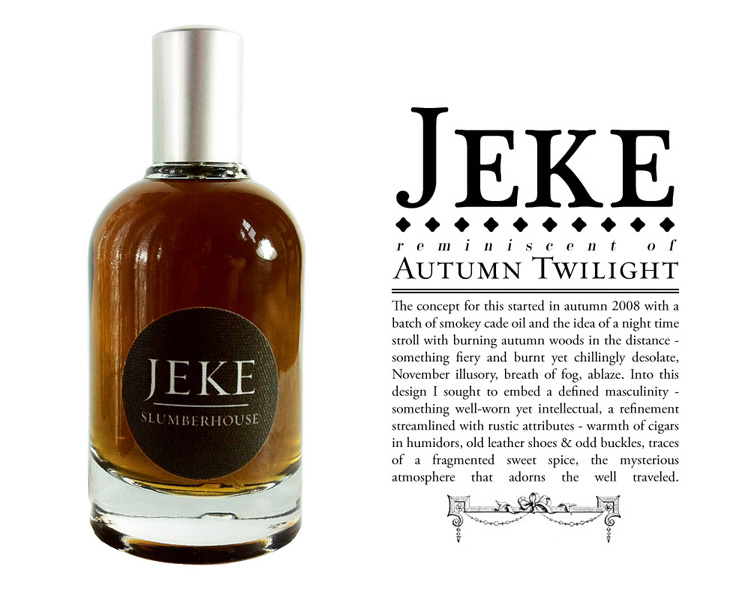
Jeke-Slumberhouse

Jeke is classified on Fragrantica as a “woody oriental” perfume. It was originally an Eau de Parfum but, just recently, that was discontinued and the perfume was made available solely as an Extrait de Parfum concentration. As I’ll explain later, CaFleureBon says that there are some minor alterations and difference with the new version which has significantly less smoke than the Eau de Parfum. Unfortunately, that is the version that I obtained from Surrender to Chance (which doesn’t carry the new extrait). However, the two versions seem sufficiently alike to make it worth a review of the EDP, though I’ll update it later if I ever obtain the pure parfum extrait.

Slumberhouse’s website description for Jeke is as follows:

A breath of fog in the autumnal humidor.

Benzoin, Patchouli, Tobacco, Lapsang Souchong, Vanilla, Clove

Fragrantica‘s notes are slightly different and would make the full list seem more like this:

Cade, Tobacco, Patchouli, Benzoin, Labdanum, Lapsang Souchong, Vanilla, Clove.

Source: Theatlantic.com

Source: Theatlantic.com

Cade is a very big part of Jeke, so it may be worth a brief summary of its aroma. It is an oil extracted from the juniper plant and has a very smoky, campfire, phenolic, tarry character (which explains why it is often paired with birch tar in leather fragrances). In Jeke, it dominates the opening which is an unusual mix of: burnt rubber, diesel, smoke, tobacco, patchouli, molasses, and leather. There is a slightly mentholated, eucalyptus undertone to the smoky campfire of the cade, as well as a dark, black, slightly rubbery, leather element. The tobacco smells just like the concentrated form in chewing tobacco and, at this stage, not like the sweet, fruited leaves used in pipe tobacco. Flickering all around the edges is a chewy, black, thick sweetness that is as dark as molasses and far heavier than that evoked by labdanum resin. The molasses note is infused with heavy, spicy cloves and dark, black patchouli.

Source: Bonfirehealth.com

Source: Bonfirehealth.com

Something about the opening minutes of Jeke evokes not only a very butch, hyper-masculinity but, also, Halloween. The perfume is far more than just the scent of fall; it really brings to mind Halloween night with its darkness and the feel of burning leaves in the slightly chilled air. Yet, that butch, rubbery, diesel-like nuance quickly softens from the extremely sharp, sometimes overpowering, raw beginning to something with smoother, more manageable smokiness.

Scene from Mad Max 2 via cinemasights.com

Scene from Mad Max 2 via cinemasights.com

Jeke’s tarry smokiness reminds me strongly of Serge LutensBoxeuses which I just recently reviewed, only Jeke takes the darkness, smokiness, tarry, molasses and leather character of Boxeuses and amplifies it by a hundred in a very Mad Max sort of way. For the opening minutes, at least, when Jeke lacks the smoothness and fruited softness of Boxeuses. Yet, despite its initial intensity, there is a very plummy undertone to Jeke which also reminds me of Boxeuses. In the latter, it was a much sweeter, much more multi-faceted, fruited molasses but, in Jeke, it feels very much like a dark plum purée. Stewed prunes in a light, sweet, syrup.

Source: CrownsNestPrimitiveShoppe.com (link embedded within, click on photo.)

Source: CrownsNestPrimitiveShoppe.com (link embedded within, click on photo.)

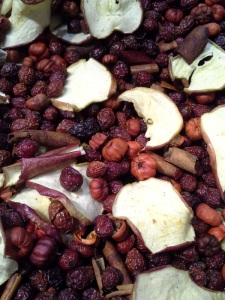
There is also something else going on, something I initially couldn’t put my finger on, but an incredibly familiar scent. It was driving me a little mad trying to pinpoint it, and then it came to me. Potpourri! Jeke has a massive element of potpourri underlying every part of its character. I actually have a bag of expensive red and purple potpourri with wood shavings and spiced fruited elements that I took out to compare — and it’s identical to Jeke! Spiced red apple with mulled wine potpourri. Once you make that mental association in your head, it’s impossible to shake off. Later, in a second test, I took my sample of Jeke, applied a hefty, double dose to my other arm, sniffed, and…. yes, spiced apple potpourri from the start.

Fifteen minutes into Jeke’s development, the perfume shifts a little. It’s even softer now, a lovely mélange of incense, smoke, prunes, spiced apple potpourri, tobacco and dark resins. There is a subtle tea note that truly does evoke the smoky nature of Lapsang Souchang tea. The clove element has relaxed, the rubber-diesel accord has receded, and the whole perfume feels significantly warmer and better-rounded. Yet, there is still a subtle singed element, along with the feel of burning leaves and campfires; Jeke still evokes Halloween; and it is still extremely potent. However, that rubbery, mentholated, diesel edge has gone, taking away the butch elements and ending my thoughts of Mad Max in the Thunderdome.

Instead, now, all I can really smell is potpourri with its mix of autumnal apples, dark fruits, smoke, and a slightly sharp, dried patchouli sweetness. Every fall, one of my neighbors would burn a particular scented candle from Slatkin, along with its scented oils, over every inch of her house — and the aroma is incredibly close to what wafted off my arm. Jeke is smokier, has a noticeable tobacco nuance and subtle flickers of black rubber, but the dominant note on me is always red apple potpourri. It’s cozy, but not quite what I had expected, if truth be told. The leather nuances vanish after the first hour, along with all traces of rubber, leaving Jeke with nothing more than that main accord, trailed by fruited tobacco and cade smoke. Then, to my surprise, Jeke becomes completely abstract at the start of the third hour: amorphous, muted, generalized spice and smoke notes. And it remains that way for the rest of its duration.

Source: Wallpaperswide.com

Source: Wallpaperswide.com

Another unexpected surprise is Jeke’s sillage. Slumberhouse perfumes are famous for being powerhouse scents of massive duration and strength, but that didn’t quite apply to Jeke’s projection on me. The perfume began with good projection that started dropping about 20 minutes into its development; Jeke became close to the skin just short of the 90 minute mark; and it became a skin scent after the second hour. It was so light on the skin that I thought it was close to dying after 3.5 hours. It didn’t, but every hour, it felt like Jeke was going to finally vanish, only to have the subtlest, faintest traces cling doggedly and stubbornly to the skin. (Votes on Fragrantica overwhelmingly put Jeke’s sillage at “moderate,” but I have to wonder if that’s for the Extrait version. Almost everyone, however, agrees that the longevity is enormous.) All in all, Jeke lasted 9 hours with a small dose and 10.25 hours with a large dose with most of that time passed as a skin scent that was primarily abstract sweetness, spice and smoke. The drydown — all 6 hours of it — was very pretty but not always easy to detect in its muted quality on my skin.

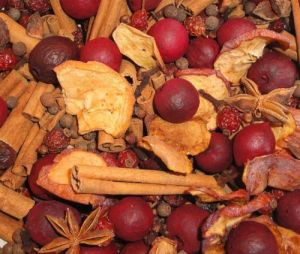
Potpourri from Scentualnature.com (Website link embedded within.)

Potpourri from Scentualnature.com
(Website link embedded within.)

Jeke ended up not being my personal style, but I think it’s a very good fragrance. My difficulty lies in the potpourri element. I didn’t see any references to it in the largely positive Fragrantica comments, but a search for Slumberhouse, Jeke and potpourri brought up a few Basenotes threads where a number of people detected “red apple potpourri” or “potpourri” in some other Slumberhouse fragrances. One example would be Rume, which a Basenotes commentator said was “a bit too literally potpourri-like for me to wear very much,” though he ended up buying a bottle because he was such a huge Slumberhouse fan. What really reassured me, however, and made me realize I wasn’t completely insane for detecting potpourri was a comment from Mr. Lobb himself. In another Basenotes thread, a commentator (“alfarom“) posted an excerpt of an email in which Mr. Lobb described Grev (another Slumberhouse fragrance) as “a kind of masculine potpourri with a slight tinge of red apple skin.” Honestly, that would be a pretty good description of Jeke Eau de Parfum, too, except I think there would be a dash of plum (or mulled wine) to go with that spiced red apple skin accord. The bottom line, however, is that “masculine potpourri” seems to be a sort of signature base for a number of Slumberhouse fragrances.

What seems to be the new Jeke in Extrait form. Source: Indiescents.com

What seems to be the new Jeke in Extrait form. Source: Indiescents.com

As noted earlier, Jeke is now available only in extrait de parfum concentration, and not in the Eau de Parfum which I’m reviewing and which is offered at decanting sites like Surrender to Chance. I once read Mr. Lobb’s explanation for the change and the differences between the two perfumes in his Slumberhouse blog, but the website is almost always down when I try to access it. So, instead, so I shall rely on CaFleureBon‘s comparison of the two fragrance formulations:

Jeke Extrait… [“seemed like a richer opulent version of the EDP”] for me as in its EDP form this is what I call a “smoke monster”. Sometimes it would eat me alive and other times it would surround me and fascinate me before leaving me unscathed. The core of Jeke in both forms is the combination of cade and tobacco over a resinous base. In the Extrait form the “smoke monster” is much more controlled and for the first time I noticed an amazingly beautiful patchouli lurking among the maelstrom. Once I had them side-by-side I really noticed the patchouli in the EDP but the whole composition seemed more balanced and when the labdanum and benzoin kick in this really feels decadent. The Extrait feels like a rough jewel which has now been cut and faceted into a brilliant gem.

It sounds to me like Mark Behnke’s experiences with Jeke EDP involved significantly more smoke than what I experienced. In fact, his comments about the patchouli in the Extrait form makes me wonder if the “potpourri” aspect is now even stronger than before. But it is the smoke issue which really leaves me feeling a bit bewildered, especially when I read the Fragrantica comments where some people find the smoke to be far too powerful. One person even compared Jeke to Andy Tauer‘s Incense Extreme, finding that the Jeke blew the Tauer out of the water. (“Tauer represents the violins. Jeke the symphony of churches.“) I have no idea if the comments about the overwhelming amount of smoke apply to the EDP or the Extrait, but judging by the dates, I would suspect they’re referring the Extrait with its milder quantity. In which case, I can only say that I didn’t find the supposedly “stronger” note in the EDP version to be overpowering at all. It certainly wasn’t a “smoke monster,” to me.

Out of all the reviews out there for Jeke, my favorite comes from a commentator, “42gr,” on Fragrantica who wrote, in part:

I’ve tested my way through, many fragrances.

This blows me away, away, away.
It resonates in my head. It repeats.

It is so good it feels illegal to feel this good about a fragrance.

I am drinking single malt Islay Scotch in my father’s Orthodox Church. The white bearded priest swings his silver censer of burning smoking resin. Incanting. 

It reminds me of burnt ashes from the campfire from the night before. Laphroaig, Peat, Church Resin, Medicine. And then a touch of sweet tobacco. […]

This is Etta James singing I’d rather go blind.

Jeke is completely and utterly an intoxicating fragrance.

I pay no other this homage.
Smoky, dirty, gorgeous.

I didn’t have the same experience (at all) and, yet, I can absolutely see his vision, what he felt, and why. I can especially see why he’s imagine drinking Laphroaig (my absolute favorite single malt) in an Orthodox church filled with incense. For the sake of completely accuracy, I should add that he later updated his review to add that, in time and with extensive wearing, the amount of smoke felt far, far too excessive, especially in an Australian summer. However, in all fairness to Jeke, I really don’t think it’s a fragrance to wear in 104 degree temperatures!

The bottom line is that, regardless of version, I think Jeke is a perfume that will appeal enormously to people with certain tastes. Men who adore smoky, tobacco fragrances will probably love it. And some women may greatly enjoy the smoky, campfire, fall aspects, if they don’t mind the more rubbery, diesel-like start. However, women who are used to more mainstream fragrances, or who prefer either fruity, clean, floral or gourmand offerings, will probably find Jeke to be far too masculine in nature. Those who love sweet, fruited florals with a strong gourmand undertone would probably prefer Pear + Olive. I think it all depends on what you’re used to.

As for me, I remain a huge fan and admirer of Mr. Lobb. I can’t believe he’s self-taught, and think that he’s incredibly talented. Slumberhouse is a house worth exploring, so I truly hope that more people will try out the line. 


DETAILS:
Cost & Availability:  Jeke is now an extrait de parfum and comes in a 1 oz/30 ml size which costs $125. It is available directly from Slumberhouse itself which also sells a Discovery Set of 4 of their perfumes in 2 ml vials for $20. (Again, the website often fails to load, so give it a few tries especially if you’re looking for samples as Slumberhouse has a great program for that and provides very generous sizes.) The perfume is also available from IndieScents, along with a sample for $5, and from Parfum1 which also sells with a 0.7 ml sample vial for $4.50. In addition, Parfum1 offers a Discovery Pack of 4 fragrances (including Jeke), each in a 0.7 ml vial for $16. Parfum1 offers free shipping for all domestic orders above $75, $5.95 for orders below $75, and international shipping for a (high) fee. I obtained my sample (of the now obsolete Eau de Parfum concentration) from Surrender to Chance which sells Jeke starting at $5.99 for a 1 ml vial. In terms of overseas availability, in an interview with Basenotes, Josh Lobb wrote “anyone who wants to order should feel free to send an email or contact Sundhaft in Germany.” You can find their website here.