Naomi Goodsir Bois d’Ascese: Monks & Georgia O’Keeffe

Source: Bonfirehealth.com

Source: Bonfirehealth.com

It’s twilight, a few stars shimmer in the horizon, and the skies’ purple hues are tinged by the slowly seeping, oncoming wave of darkness. The forest already feels blackened, and the tall trees stand guard like sentinels at Nature’s chapel. They surround the campsite where a large bonfire crackles and hisses. There is the driest of black smoke, and the scent of charred trees with an almost tarry, leathered edge. From the ground to the trees, the drought has struck; everything is so dry, there is fear that an errant spark would set the whole forest ablaze. And, in fact, the smell of the cade tree logs burning in the bonfire would probably alarm Smokey the Bear. Yet, amidst the scent of a forest burnt to a cinder, there is a subtle ambered sweetness underlying the dry smoke. It’s subtle, but it’s there — a tiny, golden ember at the heart of the forest’s smokiest bonfire.

That’s the aromatic, nutshell essence of Bois d’Ascese, a woody-incense perfume from the Australian milliner, Naomi Goodsir. Bois d’Ascese was one of two fragrances released in 2012 by the house in its first foray into the aromatic arts, and both are eau de parfums created by Julien Rasquinet. Like its sibling, Bois d’Ascese (or Ascetic‘s Wood) was received with great appreciation and praise, but I’m afraid I’m a little underwhelmed. Bois d’Ascese is a well-crafted fragrance with intentional starkness and almost sculptural minimalism, but it never really moved me. I tried it twice because I really wanted to love it, but I’m afraid it was far too severe. I tend to be a sybarite in my perfume tastes, not a monk who seeks extreme austerity.

Source: Enquire.it

Source: Enquire.it

Naomi Goodsir’s description of Bois d’Ascese is beautifully evocative:

a secluded CHAPEL,
BLAZING dusk,
moment
of GRACE,
DIVINE smoke,
silent CANTIQUE.

by Julien RASQUINET

Incense woody (2012)
A captivating & reassuring smoke. Notes of tobacco & whisky, are supported by cinnamon, amber & cistus labdanum. Oakmoss, smoked cade wood, almost burnt, prolong the incense of Somalia with power & elegance.

Photo: Narinder Nanu via washingtonpost.com

Photo: Narinder Nanu via washingtonpost.com

Bois d’Ascese opens on my skin with smoked cade and charred wood, infused with dry incense. It’s the scent of campfires taken to the extreme, with singed trees about to go up in flames or that have already burnt to the ground. Cade is an interesting note which is sometimes used in leather fragrances. It comes from prickly juniper shrubs, and the essential oil is often called Juniper Tar as a result. It has an intensely dark, smoky, and tarry aroma, due to something called phenols and creosol. On occasion, cade oil even has a turpentine-like undertone. Here, with Bois d’Ascese, the cade — in all its various manifestations — is the fragrance’s dominant note from start to finish. It’s austere, intense, blackened, tarry, stark, and with a smoky nature that is underscored even more by the dry incense.

However, Bois d’Ascese also has other touches, subtle though they may be. Underneath the burning cade, there is a tinge of dry sweetness, but it’s infinitesimal in the opening minutes. Also lurking in the base are light flickers of tobacco, though they feel charred like everything else. After about five minutes, there is a subtle touch of burnt wax which I assume stems from the labdanum, infused by the burning campfire smoke, but it quickly fades away. Eventually, after about forty minutes, the fragrance turns a little less severe. The tobacco grows a tiny bit stronger, the ambered warmth starts to rise to the surface, and Bois d’Ascese feels a little richer. It’s all relative, however, and a question of degree.

Georgia O' Keeffe, "Deers Skull with Pedernal" Source: wikipaintings.org

Georgia O’ Keeffe, “Deers Skull with Pedernal” Source: wikipaintings.org

All these changes are but mere blips in the overall landscape which, by and large, is that of a forest set on fire. Yet, despite the scent of burnt wood, the overall dryness of the scent is such that I keep visualising a parched, dry desert. In specific, I see Georgia O’Keeffe paintings with their bleak, stark, barren, desiccated beauty. There is a dryness to Bois d’Ascese that feels like the subject of her paintings, as well as the way that certain notes are presented in sharp, unrelieved focus. Unlike the paintings, however, there is no light to offset the dark smokiness at the perfume’s core, though the Bois d’Ascese is very airy in weight. In fact, in its dark severity, the fragrance takes on an aesthete’s harshness that is almost medieval in nature and quite evocative of a monk. I realise that I’m mixing metaphors and genres, but the fragrance conjures up both things for me. The bottom line is an austere dryness that is both artistic and, for me, off-putting.

Source: layoutsparks.com

Source: layoutsparks.com

At the end of the second hour, the incense shifts a little, taking on a subtle, soapy aspect in the undertone, much like myrrh, but not quite as High Church as that note can sometimes be. That tiny, brief hint of myrrh’s soapiness fades in and out, however, never dominating the main type of smoke from the incense and campfire wood. There is a slight increase in the amber sweetness, but on a scale of 1 to 10 with “10” representing bone-stark woody dryness, Bois d’Ascese has merely dropped down to a 8.95. Eventually, around the end of the sixth hour, it drops down further to about a 7.5 on the numeric scale, as the incense grows slightly warmer and a touch sweeter. I smell no whisky, oakmoss or cinnamon, and the tobacco was a minor touch that largely faded after the first hour.

Source: Theatlantic.com

Source: Theatlantic.com

Bois d’Ascese lasts for hours and hours on my skin. Its core nature of burnt wood with campfire smoke never, ever changes, not even after 11 hours. All that really happens is that the incense gets a microscopic hint of amber, and that the smokiness eventually overtakes the tarry, slightly turpentine-like, slightly leathery cade as the primary note around the end of the seventh hour. All in all, Bois d’Ascese lasted 11.5 hours on me with a small dose, and well over 13.75 hours with a larger quantity. It is generally somewhat thin and gauzy in feel, without an opaque heaviness or richness, and its projection is moderate.

Anthony van Dyke, "Portrait of a Monk" via Wikipaintings.org.

Anthony van Dyke, “Portrait of a Monk” via Wikipaintings.org.

Bois d’Ascese is perfectly nice, and absolutely elegant in its minimalism, but it’s not for me. Judging by Naomi Goodsir’s description, it seems as though Bois d’Ascese was intentionally meant to be austere, severe and sternly smoky, so I certainly can’t blame it for that. I can only blame my own tastes for needing something more nuanced, complex, rich, deep, and warm. I love incense fragrances, but nothing quite so severe and puritanical. Apart from visions of a burning forest, Smokey the Bear having a fit, and campfires, Bois d’Ascese also conjures up dark, Flemish 17th-century art and Georgia O’Keeffe desert paintings. The actual smell of the perfume may belong in the first group, but the spartan, monastic, completely desiccated feel of the fragrance visually evokes the second category for me. In fact, I suspect that Anthony van Dyke’s medieval monk (along with many of the Spanish Inquisitors) would have greatly appreciated Bois d’Ascese. That said, the fragrance is well-done, and I think those who love hardcore smoke or incense fragrances should absolutely check it out.

Bois d’Ascese is generally appreciated by men and women alike. The reviews on Luckyscent, on Fragrantica (even the opening one referencing mesquite smoke), or on various Basenotes threads are largely very positive in nature. Bloggers seem to feel the same way. Take, for example, Kevin from Now Smell This whose review I stumbled upon after writing my comparison to Georgia O’Keeffe’s paintings, and who, I was delighted to see, also thought of New Mexico. (Georgia O’Keeffe’s paintings are set in New Mexico). His review reads, in part, as follows:

Bois d’Ascèse conjures one of my favorite places — northern New Mexico; the fragrance creates a dry, austere, pungent scene. Willa Cather was on my mind as I wore this fragrance (I’m reading her letters) and […] Santa Fe, Ranchos de Taos, and Acoma, Isleta and Laguna pueblos.

… As Bois d’Ascèse develops, quickly, it begins to smell like an outdoor scene: a dry valley full of baking stones and adobe houses, junipers oozing sap. The aroma of incense (or a piñon-fueled campfire) is on the wind. Up close Bois d’Ascèse is intense (and long lasting); but its sillage is sweeter and gentler. In the extreme dry-down, a malty note emerges with some amber.

Within ten minutes of application, Bois d’Ascèse settles into a linear, smoky wood/incense perfume…where it remains for hours. I enjoy the fragrance, but I would have liked more layers of development and some unexpected “pops” from that campfire. Bois d’Ascèse’s main ingredient is either one helluva tenacious accord or a super-powerful single ingredient. A flower, strong, assertive, would have been welcomed somewhere in Bois d’Ascèse: a lily blooming in the adobe’s court yard, perhaps? Marigold would be heavenly. A fistful of pungent desert herbs/leaves? I layered Bois d’Ascèse with a mimosa fragrance oil I own and love the result. Bois d’Ascèse reminds me of Boadicea the Victorious Explorer, but it’s even more “bleak.” (That is not a put-down by the way!)

I agree with almost every part of his assessment, though I don’t like Bois d’Ascese the way he does. But, yes, for me, the fragrance absolutely needs something a little more to alleviate its severe linearity and its arid, New Mexico desert feel.

Despite the general praise for Bois d’Ascese, a tiny minority find the scent is too much like a smoking campfire or charred woods, and really dislike it. For example, on Fragrantica, some of the extremely rare, critical reviews read, in part, as follows:

  • I’ve tried both fragrances from this house and I am impressed with the creativity and the longevity/projection. However I also found them to be disturbing. As in please get this off me now. [¶] This One: Industrial smelling. Like freshly greased tools picked from a tool box. Cold with no sweetness and nothing to comfort you. [¶] This is unique but not elegant in anyway. I can’t believe someone would even try to dress this up.
  • I have a neighbor who burns crappy wood (like pallets), often wet, and garbage in his damned outdoor fire pit. That’s what this stuff smells like. The few spices and other notes are overwhelmed by wet smokiness that’s astonishingly persistent. I’ve washed my hands repeatedly and still can’t get rid of the scent. If you want to smell like you spent the night sweating next to a bonfire you’ve found your perfume. If you don’t, there are a million really good incense perfumes out there–keep looking. A suggestion to the brand: perhaps change the name from Ascetic’s Wood to Flagellant’s Wood? Seems more like the experience.

I had to laugh at the description of “Flagellant’s Wood,” because I think there is great truth in it, as my repeated monk references demonstrate. (Some of Opus Dei’s numeries might want to give Bois d’Ascese a go….) Though there are a handful of other comments similar to those quoted above — and all involving a struggle with the charred cade smoke — the bottom line is that they’re outweighed at least 3:1 by those who absolutely adore the fragrance. One person even calls it “meditative” in its smoky beauty, and, on some levels, he’s right.

In short, Bois d’Ascese is a very particular kind of fragrance, and it may not be for everyone. However, if you enjoy woody scents that skew somewhat masculine and that are completely dominated by a very elegantly severe, austere, dark, tarry smokiness, you definitely should give it a sniff. If you love campfire scents, Bois d’Ascese may even be true love for you. I shall stick to something a little more sybaritic and luxurious in nature.

DETAILS:
Cost & Availability: Bois d’Ascese is an eau de parfum that is available only in a 50 ml/1.7 oz size, and which retails for $150 or €110. The Naomi Goodsir website doesn’t have an e-boutique from which you can purchase the perfume directly. In the U.S.: You can purchase Bois d’Ascese from Luckyscent and MinNewYork. Both sites sell samples. Outside the U.S.: In Europe, you can purchase Bois d’Ascese for €110 from France’s Premiere Avenue, or from Germany’s First in Fragrance. In Paris, you can find it at the Nose boutique; in Denmark, at Nagpeople; in the Netherlands at ParfuMaria; and in Russia, at Ry7. In Italy, you can turn to Alla Violetta which also offers samples for sale. In Australia, Peony Melbourne carries the Naomi Goodsir line, and sells Bois d’Ascese for AUD$179. For all other countries, you can use the Naomi Goodsir Retailers list to find a vendor near you. Samples: I obtained my vial from Luckyscent, which sells samples for $4 for a 0.7 ml vial. You can also order Bois d’Ascese from Surrender to Chance where prices start at $8.99 for a 1 ml vial.

Guerlain Tonka Imperiale

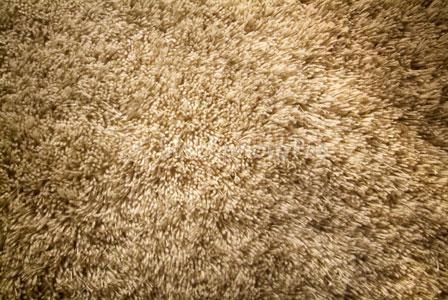
There is a house in the suburbs, virtually indistinguishable from its neighbors, and merely one more in a line of perfectly square, pretty boxes with perfectly trimmed lawns on a perfectly pleasant, quiet street. It’s not large enough to be a true McMansion, but it certainly bears all the characteristics of that generic sameness. If you look closely, you can see that it’s made of the very finest building blocks, the very best that money can buy. Inside and out, however, it’s a sea of bland beigeness with interiors that are awash with taupe, egg-shell, and cream as far as the eye can see. There is nary a whiff of anything strong in contrast; no pops of colour, no thick veins of black. The lack of edge or individual character carries through even to the house’s carpeting: thick, plush shag rugs in which you can sink your bare feet. It’s easy comfort without particular style, and always in unremarkable, unrelieved, suburban taupe.

Source: loan-help.org

Source: loan-help.org

Tonka Imperiale from Guerlain is a beige house in the suburbs for me. It’s well-appointed and well-made, but a sea of bland, characterless, generic taupe as far as the eye can see. And I despise taupe with a violent passion. I’m sure it’s a colour that can be elegant in some interior decorating, and there are probably people on whom the colour looks good in clothing, but, personally, I would like to stab taupe in the eye with a large chef’s knife. And, for me, when I wear Tonka Imperiale, all I see is that bland colour. I know a lot of my friends will undoubtedly be upset with this review as they love the fragrance. To them, I can only apologise. I know Tonka Imperiale is a luxuriously made creation that probably encapsulates elegant comfort. I’m sure it’s wonderful on all of you. Unfortunately, it’s not something that I think is particularly special for its high price.   

Guerlain Tonka ImperialeTonka Imperiale is part of Guerlain’s exclusive L’Art et La Matière collection which was launched in 2005 to celebrate the opening of Guerlain’s renovated headquarters in Paris. The collection’s name means Art and (raw) Materials, and represents Guerlain’s goal of creating olfactory Art through the use of the finest raw materials in perfumery. As Fragrantica further explains, “L’Art et la Matière” is also “a pun after the French expression L’Art et la Manière – the art and manners.”

Tonka Imperiale is the seventh fragrance in the collection, and was released in 2010. Like all its siblings, it was created by Guerlain’s in-house perfumery, Thierry Wasser. On its website, Guerlain describes the scent as a “woody oriental” and write:

AN ASTONISHING CONSTRUCTION THAT BLOWS HOT AND COLD

With Tonka Impériale, Thierry Wasser has created a woody oriental composed around one of Guerlain’s star ingredients,the tonka bean. It has to be said that this precious seed, one of the cult components of the Guerlinade, is particularly dear to the House.

Tonka Impériale is well-named: a subtle blend of balmy scents, rich in contrasting facets, with accents of honey, gingerbread, almond, hay and tobacco. The fragrance comes in a spray bottle with sleek, contemporary lines. One side is ornamented with a gold plate like a talisman.

Tonka Beans

Tonka Beans

The notes for the perfume, as compiled from Guerlain and Fragrantica, are:

Top notes: bergamot, butter almond, white honey, and rosemary.

Heart notes: jasmine, tonka beans and light tobacco. Bottom notes: incense, cedar wood, pine.

Depending on treatment, tonka beans can smell of vanilla, hay (coumarin), or even bittersweet almonds. And it is the latter which dominates the opening of Tonka Imperiale on my skin, thanks to the supplemental effects of the almond butter. The perfume begins with a burst of the white nuts, first bitter and raw, then quickly infused with sweetness. There is a honeyed quality underlying the note, but it’s light, not thick, yellow, or molten. It suits the description of “white honey” given by Fragrantica, because this feels quite translucent. Quickly, a subtle herbal element breezes through, followed by an amorphous woody note that isn’t immediately distinguishable. Tobacco lurks underneath, feeling pale, blonde and sweet, like leaves sitting in the sun. Traces of sweetened hay and the faintest speck of bergamot are the final touches that dot the landscape.

Source: donnamarie113 on Deviantart.com

Source: donnamarie113 on Deviantart.com

The primary bouquet, however, is of almonds and vanilla. The almond note is so concentrated, it’s more akin to the distilled essence that one uses in baking. The vanilla is rich and sweet, but it’s airy instead of custardy, more pale and white in visual hue. It’s also subtly backed by sweetened vanillic powder. It’s the famous Guerlainade, Guerlain’s signature note, which is placed front and center, right at the top, rather than appearing, as it traditionally does, at the very end in the perfume’s drydown. Tonka Imperiale is a very simple fragrance at its core: bitter, honeyed, sweet almonds with vanilla. It feels a lot like crème anglaise, only this one includes almond concentrate.    

Eventually, other notes appear to dance at the edges. In the first hour, there are minute, minuscule traces of woodiness. It’s generic, beige and abstract in large part, though if you really, really focus, you can perhaps persuade yourself that you can detect the hazy, faint edges of cedar. The real dryness in the scent comes from the tobacco which has quietly filled the base, seeping up to subtly impact the vanilla-almond combination at the top. Slowly, the bergamot becomes a little more noticeable, but like a number of things in this scent, it is restrained, and muted. By the end of the second hour, jasmine and incense suddenly pop up on the periphery. Both are flickers that are barely imperceptible initially. In fact, on my skin, it takes almost six hours for the incense to be noticeable in any substantial way.

Until that point, Tonka Imperiale is primarily an almond-vanilla scent atop an abstract, amorphous woody base that is lightly infused with tobacco and smoke. The Guerlainade powder, the jasmine and the other notes register in pale, light, subtle hues. It’s all effortless, easy, extremely well-blended, and swirls around you like a very expensive, soft, airy cloud. It’s not earth-shattering, but it’s perfectly pleasant. To me, it seems simplistic and dull, but I can see how it might be a comfortable, easy, cozy scent for some, especially those who love a gourmand sweetnes in their fragrances.

Source: news.com.au

Source: news.com.au

Still, I can’t help but visual a house in the suburbs, though not one excessive or large enough to be a true McMansion. Tonka Imperiale is not chic, cool, or hip enough to be an apartment in the city; it’s certainly not a loft in Soho or a penthouse decorated in sleek black, silver, and modern edges. It’s also not large, opulent, or over-the-top enough like an Amouage Ubar to be a massive estate with a palatial mansion out in the country. It’s merely a comfortable, unremarkable, pretty, well-built house in the suburbs awash in taupe and beige.

The unrelieved blandness never changes. At the 4.5 hour mark, the sillage drops, and Tonka Imperiale is now a skin scent. The almond has now fallen behind the honey, jasmine and vanilla, though it still precedes the woody notes that are in the base. It’s the same story with the tobacco. As a whole, and if I’m being charitable, Tonka Imperiale is an interesting mix of sweetness with dryness, I suppose. By the start of the seventh hour, the fragrance is Guerlainade vanillic powder with a faint whisper of almonds and honey, and sits atop with some smoky incense, though the latter is so sheer, gauzy, and thin, it’s hardly a robust foundation. In its final hours, Tonka Imperiale is merely Guerlainade with some dryness. All in all, the fragrance lasted just short of 11 hours, with moderate to soft sillage throughout.

Taupe shag carpeting. Source: stockphotopro.com

Taupe shag carpeting. Source: stockphotopro.com

Tonka Imperiale is intentionally meant to pay homage to a particular note, so I can’t fault it for focusing so heavily on the tonka, right down to its occasional almond-like facets. The fragrance does what it sets out to do, and does so in the typical Guerlain way. I’m not blaming it for that. I do blame it, however, for being such unrelieved blandness for $250. For that amount, it would be nice to have some character, some contrasting edge to counter the dull monotony of a sea of taupe and beige. Supposedly, the incense is meant to be that edge. If they say so. Perhaps I’m merely unlucky with my skin.

Or, perhaps, Tonka Imperiale is exactly the way it’s supposed to be: a plush, simple, comforting, gourmand scent dominated by vanillic tonka, almonds and Guerlainade, with an incredibly restrained dose of tobacco and incense. So restrained, in fact, that neither of those minor supporting players can possibly counter the two main, gourmand players on center stage. Fine. But Guerlain’s headlong descent into simplistic and/or gourmand scents at an extremely high price tag continues to alienate me. Tonka Imperiale would be a great comfort scent at about $100, though I personally still wouldn’t go near it due to all that taupe beigeness. But $250? For a plush, beige shag rug? No, thank you. Not for me.

Others, however, don’t share my issues. As noted earlier, I have a number of friends who love Tonka Imperiale so much, they’ve bought full bottles of it. On Fragrantica, there are raves about how wonderful the fragrance is, and how it is a luxurious “masterpiece.” To wit, one comment calling it “[F]rench romantic ART,” and saying: “Oh my god …..what is this scent…luxury…elegant…charismatic…sweet…sensual…very sexy for me.” Others, however, think Tonka Imperiale is vastly over-priced, with a number finding the fragrance’s opening to be extremely similar to Mugler‘s Pure Havane. One person had an issue with Tonka Imperiale’s drydown, comparing it to Calvin Klein‘s Obsession, her “worst nightmare.” On my skin, Tonka Imperiale’s drydown wasn’t similar to Obsession at all, and I can’t compare it to Pure Havane’s opening, as I’ve never tried it. All I can say is that those of you who have problems with Guerlainade, and who continuously have it turn into sour baby powder on your skin may want to stay away from a fragrance that showcases the brand’s tonka signature.

The bottom line is this: if you love modern Guerlain fragrances — with all that that entails, for good or for bad — and if you adore cozy gourmands, then you may want to give Tonka Imperiale a sniff. You will have plenty of company in Tonka Imperiale’s vast fan club. If, however, you’re looking for a fragrance with some edge, character, or distinctive flair for your $250, you may want to look elsewhere. It’s an unrelieved sea of beige and taupe in the suburbs. 

DETAILS:
Cost & Availability: Tonka Imperiale is an eau de parfum that costs $250 for 2.5 fl. oz/75 ml. It is available at Guerlain boutiques, and is listed on its website, but Guerlain doesn’t seem to sell the fragrance via an e-shop of sorts. (There is no shopping cart, for example, in which to put the fragrance for purchase.)In the U.S.: Tonka Imperiale is available on the NordstromSaks Fifth AvenueNeiman Marcus, and Bergdorf Goodman websites. (With the exception of Bergdorf Goodman which definitely carries the more exclusive line of Guerlain fragrances in-store, I don’t know if it is available within the other shops themselves.) Outside the U.S.: In the U.K, you can find Tonka Imperiale at Harrods and, apparently, London’s Selfridges, but neither store offers the fragrance online. As for price, I read that, back in 2011, Tonka Imperiale retailed for £175. I don’t know how much it is now. In France, the fragrance is obviously available at Guerlain stores. For all other countries, you can use Guerlain’s Store Locator on its website. Samples: If you’d like to give Tonka Imperiale a test sniff, you can get a sample from Surrender to Chance where prices start at $4.99 for half of a 1/2 ml vial.

Neela Vermeire Perfume Giveaway: Winners!

Random.org has spoken, and I have the names of the two winners for the perfume giveaway kindly provided by Neela Vermeire Créations, Parfums Paris (“NVC“).

Congratulations

THE WINNERS:

NVC Giveaway Winners

Mohur Eau de Parfum

Mohur Eau de Parfum

Grand Prize: to FeralJasmine! One full bottle of Mohur Eau de Parfum (retail cost: $250 for 55 ml/1.85 oz at Luckyscent), along with a sample vial of Ashoka Eau de Parfum and a sample vial of Mohur Extrait pure parfum.

Second Place: to SultanPasha! The “Try your India” sample set (Trayee, Mohur Eau de Parfum, and Bombay Bling), plus one sample of Ashoka and one sample of Mohur Extrait pure parfum.

CONTACT ME:

You have FIVE (5) days to contact me with your shipping information which I will then forward on to Neela Vermeire. Deadline is end of the day, my time or Central Standard Time in the U.S., on September 20th. Please send an email to Akafkaesquelife @ gmail . com  (all one word, scrunched together). If you don’t, and if I fail to hear from you within the deadline, I will give the gift to the next person on the list, and/or move the winners up by one.

SHIPPING:

Neela Vermeire Créations will send the prizes directly to the winners, and pay for all shipping costs. Given that NVC is located in the Paris, it may take some time (up to 14 days, depending on your location and Customs processing) for you to receive your gift. It may take even little longer if your country has really nightmarish customs issues. Neither Neela Vermeire nor I am responsible for items that are destroyed by customs or that are lost in transit for some reason. The Grand Prize cannot be replaced.

FINALLY:

Thank you again to Neela Vermeire for her generosity, kindness and thoughtfulness in offering two fantastic gifts. I really hope the two winners will let Ms. Vermeire and me know what you think of the perfumes when you receive them and have the chance to try them. For everyone else, you can always order samples of Ms. Vermeire’s creations from Luckyscent or, in an even better deal, directly from the Neela Vermeire Creations website. (If the e-store is not loading for you, you can send an email to order either of the two perfume sets.) Thank you to everyone for stopping by, and may the fragrant winds take to you India. 

Source: mariyatourtravels.com -

Source: mariyatourtravels.com –

Mazzolari Lui: Equestrian Patchouli

Somewhere, there is a horseman who smells like this — and, I don’t mean that in a bad way. Lui is a patchouli fragrance with a surprisingly animalic, leather twist, and I quite enjoyed it. It is the scent of dark, slightly dirty patchouli infused with the aroma of a leather saddle and a heated, musky horse galloping over earthy vetiver. Despite an intensely masculine opening, its animalic nature is ultimately a refined one that calls to mind virile, macho polo players more than cowboys on the range. On the right skin, it would be sexy as hell. On me, it was a bit less than what I had expected.

"Dressage Black and White" by Diana Rose Greenhut or DianaExperiment. http://www.flickr.com/photos/dianagreenhut/5830354123/

“Dressage Black and White” by Diana Rose Greenhut or DianaExperiment. http://www.flickr.com/photos/dianagreenhut/5830354123/

Lui is an eau de toilette from the Italian niche house of Mazzolari. The house goes back to 1888, but Lui was released in 2006. As a lover of dark patchouli fragrances, I couldn’t believe my eyes when I read its description and the sheer range of gushing, raving reviews. It seemed like Lui might be my Holy Grail for patchouli, a scent good enough to tempt me into considering a blind buy. I’m glad I tested it first because, intriguing and interesting as it is, I’m not in love with it.

Lui in its black box that opens like a book. Source: The Different Scent company.

Lui in its black box that opens like a book. Source: The Different Scent company.

Some basic details on the fragrance are hard to obtain. Mazzolari’s website is best navigated by someone who speaks Italian — and that is not one of my languages. I can’t find any information on who created the scent, and I don’t trust Google Translate’s version of Mazzolari’s description for the scent. So, let’s go with Luckyscent which describes Lui as follows:

Potent and virile, Lui is the fragrance of a refined man with a wild streak a mile wide. Rich with patchouli, vetiver and leather, this is a complex and unguarded scent, completely comfortable on the skin yet smokin’ hot underneath. Hints of sandalwood tame the wild animal, while a dark amber and rich musk enhance the raw sensuality of Lui. Raw and elegant at the same time, Lui is an uninhibited fragrance for a man who likes to keep everyone guessing…and just a little on the edge.

The notes — as compiled from Luckyscent, Fragrantica and elsewhere — seem to be:

Indonesian patchouli, vetiver, leather, sandalwood, Texas cedar, spices, ambergris and flowers trails.

Nic Rolden, polo player, via Horsenation.com

Nic Rolden, polo player, via Horsenation.com

Lui opens on my skin with patchouli dominated by a leather note that feels raw, very butch, and somewhat fecal. It smells a little like the inside of a brand new, extremely expensive leather shoe that has a touch of horse manure smeared on its sole. The leather has a strong whiff of sweaty horse attached to it. In short, it’s raw, animalic, slightly musky, earthy, and a bit fecal, all at once. For me, it was an instant flashback to the smell of my own horse after a long ride and of being in the stables afterwards. I didn’t mind it one bit, and actually enjoyed the very equestrian feel of it. It also strongly called to mind the horsey note in an old, classic, leather fragrance, but I can’t seem to recall which one it might be. (It’s not Hermès’ Equipage.) Regardless, it’s a twist on leather that I find more interesting than that in many modern leather fragrances that I’ve tried recently, though I have to wonder how some non-equestrians might take it. Women, in particular, may find Lui’s opening to be overly masculine, and the leather a little bit too raw.

Polo player, Nic Roldan.

Polo player, Nic Roldan.

The horsey leather aroma completely overshadows the patchouli in the opening minutes, and is soon joined in its potent blast by a strong, rooty earthiness from the vetiver. The latter feels sharply green, almost herbal in nature, and with a slight funk that adds to the unexpected twist. Something about the overall combination really feels like the musky, sweet earthiness of a slightly heated horse, its sweaty leather reins, and the whiff of the stables all around. Yet, it’s not hardcore barnyard by any means. I have a friend who is in the racing and horse world, and he often retains the lingering traces of his day on his skin, even after a shower sometimes. If you imagine patchouli’s dark, slightly spicy, slightly smoky sweetness infused with an earthy greenness and a strong trace of the horse world on a very masculine guy’s heated, slightly musky skin, then you’d have the feel of Lui’s opening minutes.

Argentinian polo player Nacho Figueras. Source: DailyMail.co.uk

Argentinian polo player Nacho Figueras. Source: DailyMail.co.uk

With every passing minute, however, the horsey leather loses its fecal edge and softens its initial intensity, though its animalic essence never fades completely away. Instead, 45 minutes in, it retreats to the sidelines to hide behind the patchouli. At the same time, the sandalwood and some abstract, amorphous spiciness rear their head in the base, adding a woody depth and richness to the fragrance. More noticeable is the growing hint of a slightly smoky, green cedar lurking about the edges. It creates a strong visual of dark greens, rich red-browns, and leathery darkness. The overall effect calls to mind an elegant dressage equestrian or tough polo players, not John Wayne wearing chaps and riding on a Western saddle on a desert range. Somehow, the horsey leather in Lui is a very refined note despite its masculine edge.

Source: wallpaperswa.com

Source: wallpaperswa.com

Lui is primarily a triptych of patchouli, leather and vetiver, that never changes its core essence for an incredibly long period of time. The degree and strength of the three main notes fluctuate over time, as does the indirect impact of the notes in the base, but Lui is really a leather-patchouli scent with vetiver. At the end of the second hour, Lui feels like soft swirl of patchouli from afar, but every time you sniff your arm closely, the animalic, hard, horsey leather pops up. Hour after hour, I thought it may have finally vanished, but it lurks behind the patchouli’s dark richness. The vetiver eventually melts fully and completely into the scent, joining the subtle, almost indirect, muted sandalwood and spices in the base, but the leather never does. It never loses its distinct touch of the stables either, no matter how light it may be. I like it — but I’m admittedly rather passionate about the horse world.

It takes about nine hours (!!) for Lui to change a little, and, even then, it’s only temporary. The fragrance takes on the slightest tinge of powderiness, and Lui becomes much sweeter, too. The powder is never significant, however, and only lasts an hour or two before Lui returns to its primary bouquet of patchouli with hints of leather. Lui remains that way until its very end, an astonishing 13.25 hours later. Did I mention that this is an eau de toilette?!!

Lui’s potency is something that is frequently mentioned in comments on places like Luckyscent. An an eau de toilette, the fragrance has a certain lightweight feel and thinness. Yet, it also has the strength of a powerful eau de parfum. For the first two hours, Lui felt like a very noticeable but soft, airy cloud that hovered about 2-3 inches above the skin, but then, it quickly dropped and turned even thinner in feel. Its potency, however, was always very good. I had read that two sprays can last forever, but that Lui is better appreciated with a light application. I ignored that last part, and I applied 3 very large-ish smears (yes, I love my black patchouli!) which is probably less than 2 sprays from an atomizer, and I was incredibly impressed by Lui’s longevity. The projection was merely moderate, however, though Lui is strong when sniffed up close for at least 7 hours. At that point, the fragrance finally became a gauzy veil right atop the skin. Even so, it still didn’t take much effort to detect the patchouli leather. If this is an eau de toilette, I can’t begin to imagine what an eau de parfum from Mazzolari might be like!

Lui generally gets extremely positive reviews. Take a look at some of the Luckyscent comments that made me temporarily consider a blind buy:

  • Mazzolari Lui is truly mind-blowing. Two spritzes MAX to the mid-section is all you need to enjoy this heady, deep, hypnotizing italian brew. Pure masculine power and erotisism in a bottle. 
  • Lui is one scent that has elicited more positive comments than any other in my wardrobe. As has been stated, it lasts for hours, and the drydown is just so very nice. I can’t think of any other scent that compares. Wonderfully masculine, yet comforting and should be be in every man’s repetoire of fragrances.
  • Way too many new fragrances are samey, dull and unremarkable. Glad I found this. Deep, powerful but refined. Great evening scent. Get a sample, you’ll realise it’s worth the price-tag. I’ve always loved patchouli but it goes sweet on me. This time it didn’t.
  • When lightly applied this really shines as a dark, smoldering Patchouli based scent. The Patchouli takes twists and turns and finally gives way to a wonderful Ambergris base. Wonderful, wonderful, wonderful – though apply it lightly or you won’t like it.

Fragrantica commentators are equally enthusiastic. To give you just one example, the assessment by “alfarom” who writes:

  • Someone may describe Lui as simplistic, I prefer to say it goes straight to the point with no frills. A dark, butch and testosterone driven animalic bomb, built around a patchouli-amber structure. The opening is brutal with a massive dose of civet and other animalic “amenities”. Definitely not for the faint of heart. A thick patchouli note, breaks in right away and together with amber, drive the fragrance towards a slightly powdery, leathery, endless drydown. Old school, challenging, dirty and by all means mascuilne. [¶] If you like hair-chested types of fragrances such as Parfum D’Habit, Macassar and the likes, this stuff is for you. Me? I’m sold.

Yet, for all that Lui is marketed and loved as a men’s fragrance, women like it, too. One example is the Non-Blonde who tried Lui, and bought a full bottle. Her review reads, in part:

Lui is supposedly a masculine fragrance. The notes are sandalwood, cedar, patchouli, ambergris, vetiver and spices. It’s strong and heavy on the patchouli. Not for the faint of heart, that’s for sure. The impression from the very first note to the drydown is of a dark and earthy scent. The woods aren’t dry. The sweetness is kept in check by the spices (cinnamon? clove? It depends. Nothing too obvious).

The earthiness has reminded my husband of JAR’s very dank and oakmossy Shadow. I’m not sure if the two are comparable, but I sort of know what he’s talking about. The darkness of the wood and the spicy depth of Lui do have something in common with Shadow, but it’s sweeter which makes it more wearable for women. Or, at least, for me. I loved it on my husband as well as on myself. It has a lot of presence and gives an aura of confidence. The patchouli here is sexy, not a head shop scent. It’s strong and would probably not appeal to those who only go for subtle.

The one exception to all these largely similar accounts seems to be Nathan Branch who had a totally different experience, one centered almost predominantly around powder:

Lui by Mazzolari is yet another powdery sandalwood/patchouli kitten masquerading as a musky wild cat. The non-blonde insists that Lui is earthy with dark woods and a spicy depth, and a reviewer at Base Notes waxes on about how animalic and potent it is, but Lui could only be considered “earthy” or “animalic” if you’re used to wearing perfumes that are predominantly violets or lily of the valley.

Lui opens up with a blast of Johnson & Johnson baby powder, then settles itself into heavily sweetened sandalwood and patchouli territory until it rides off into a light musk sunset crowned with plush, pink clouds. There’s nothing particularly singular or interesting in the way it goes about its business, but it’s nice enough for social gatherings and will probably get you some notice, provided you’re hanging out with a group of ex-hippie mothers at a baby shower.

Oh dear. I have to emphasize that his experience seems to be atypical, but I think it’s an important one to keep in mind if your skin amplifies powder notes.

For me, personally, I think I shall pass on Lui. I really liked certain bits of it, and enjoyed my test quite a bit, but I wasn’t wowed or deeply enamoured. The main reason is that I’m looking for a dark, deep, super spicy, opaque, black patchouli fragrance, and Lui sometimes seemed be heavily leather and vetiver in focus. The amber never showed up on me, and the spicy, smoke that I like with my patchouli was almost imperceptible. In short, I was looking for something extremely specific when I tried it, and, in that sense, I was disappointed. In all other ways, however, I enjoyed Lui and think it’s a very good fragrance. I also think it might completely turn my head to smell it on a guy’s musky, warm skin.

Adolfo Cambiaso. Photo: Gabriel Rocca.

Adolfo Cambiaso. Photo: Gabriel Rocca.

Nonetheless, I don’t think Lui is for everyone. You have to love animalic leather that feels almost raw and butch at the start, before it mellows into something smoother, mellower, and softer. You also have to love patchouli with a dirty edge. Those of you used to purple, fruited patchouli of the sort in Coco Noir or any host of commercial, mainstream fragrances, be aware that this is a totally different animal. (Thank God!) Lui is a masculine fragrance in bent, but I certainly think some women could wear it. Women who have a riding or equestrian background, in particular, might absolutely love it. It takes a very familiar aroma, and transforms it in a very refined, sexy manner. In short, if you love patchouli and animalic, masculine leather, Lui is one to keep in mind.

DETAILS:
Cost & Availability: Lui is an eau de toilette that comes in a 100 ml/3.4 oz size and which costs $175, €109 or €125. In the U.S.: You can find Lui at Luckyscent. Outside the U.S.: Mazzolari has a website, but it doesn’t seem to have an e-store or to list vendors outside of its own boutiques in Italy. I didn’t find it the easiest website to navigate, though it may have been a language barrier. I found Lui sold at Essenza Nobile for €125, Germany’s The Different Scent (for the same amount), and First in Fragrance for €109. I had difficulty finding other vendors in other countries, such as the UK, France, or Oceania. Samples: I obtained my sample of Lui from Surrender to Chance where prices start at $3.99 for a 1 ml vial.