Celebrities, Best-Selling Fragrances, Sales Figures & The Perfume Industry

A few days ago, I read an article on Stylecaster pertaining to the celebrity perfume industry, and the money that is involved. I always knew there was a lot of money involved, but that article inspired me to really explore further and to research in greater detail the issue of celebrity fragrances and the sector’s profitability.

Sarah Jessica Parker for "Covet." Source: Fragrantica

Sarah Jessica Parker for “Covet.” Source: Fragrantica

What I learnt… well, I can’t even begin to process some of the details. In fact, the numbers for Britney Spears alone left me with my jaw rather agape. It’s simply too much for my tiny, little mind. She’s not alone, however, in experiencing fragrance success. Beyoncé, Paris Hilton, the boy band, One Direction, the American baseball player, Derek Jeter, Sarah Jessica Parker, and the original celebrity perfume endorser, perhaps the mother of this whole trend, Elizabeth Taylor, they’ve all done well. Some of them (i.e., Britney) have made an absolute killing! As The Hollywood Reporter wrote in an article earlier this year, “[o]f the top-selling 100 fragrances, 31 are tied to celebrities, all of them hoping to become the next Elizabeth Taylor.

Perfume has become such a profitable business that, as you will see at the end of this article, even universities are trying to get in on the game, having their own perfumes to encapsulate their college ethos and campus feel. From the University of Florida to Penn State, and many more, everyone is trying to get a piece of the profits. Not even the fabulously wealthy, legendary baseball team, the New York Yankees, is immune to the lure.

Before getting to the Stylecaster article which triggered all this, I thought it would be helpful to first have some basic, background figures to put things into an overall context. The global fragrance industry is valued at over $25 billion a year, with the Wiki-Invest entry for Elizabeth Arden putting the number closer at $36.6B! Nonetheless, in the U.S., the perfume sales figures have recently slowed. (You can read all the financial numbers for 2013 perfume sales, as well as other statistics and reports on the global perfume industry in general in my prior piece, 2013 Fragrance Sales Figures, Revenue & Emerging Markets.)

THE U.S. PERFUME MARKET & JUSTIN BIEBER:

Source: musicactivation.com

Source: musicactivation.com

One reason for the dip in U.S. fragrance sales is, in part, the absence of any major celebrity perfume blockbuster hits. According to a report from the Euromonitor International analysis group, Justin Bieber’s fragrance (“Someday”) alone, by itself, contributed enormously to U.S. market sales in the previous year! 

After growing by 9% in 2011, sales of fragrances grew by just 3% in 2012. It appears that an improving economy in 2011 combined with pent-up demand and extensive product innovation led to strong growth in 2011, but this was not able to be repeated in 2012. Fragrance sales in 2011 had benefited from higher-income shoppers who felt more comfortable spending on others and themselves as the economy improved. The 2011 blockbuster launch of Justin Bieber also contributed to strong growth in 2011 as teenagers and young girls pestered their parents to buy them the pop singer’s fragrance. In 2012, there was no must-have celebrity fragrance to entice consumers.

Justin Bieber may have had one of the most successful perfume launches in history. According to Women’s Wear Daily, his Someday fragrance “shattered” sales records, netted more than $3 million in retail sales at Macy’s in less than three weeks. The $35-$45 fragrance was priced right and, let’s face it, Justin Bieber’s fans are very… enthusiastic, to put it politely.

There may not have been any Bieber-like monster successes recently, but it’s not for the lack of trying by other celebrities. There are the Olsen Twins with their upcoming, new and very first fragrance, Nirvana Black, which Womens Wear Daily says will be a $55-$75 woody scent that is exclusive to Sephora upon its official January launch and which is accompanied by a second fragrance, a musky floral called Nirvana White. From the young fashionistas’ fragrance debut, to Jay-Z, Rihanna, and Maroon 5‘s Adam Levine, the celebrities are all trying desperately hard, putting out new fragrances to appeal to their fans. They don’t all succeed, but when they do, the profits are astonishing.

THE STYLECASTER ARTICLE:

This is where we come to the Stylecaster report by Leah Bourne, entitled “Celebrity Fragrances: Why Stars Do Them, and How Much Do They Really Make.” For someone like myself who covers almost exclusively the high-end or luxury niche perfume market, the well-written piece was mesmerizing, fascinating, revolting, and depressing in equal measure. My stomach sank from the very opening paragraph:

Jay Z & his Gold. Source: Eonline.com

Jay Z & his Gold. Source: Eonline.com

Jay-Z’s latest big-budget project isn’t an album, a tour, or even a clothing line: It’s a fragrance he’s dubbed “Gold Jay Z.” The rapper reportedly picked the name after combing through hundreds of options, eventually striking inspiration when he said, “This is the shit; it’s gold.” If Gold—which hits stores on Black Friday and ranges from $39 to $70—mimics the success of other celebrity fragrances, that’ll be a pretty fair assessment.

beyonces_heat_fragranceI sighed, then sighed even more at reading about his wife, Beyoncé. Her perfume, Heat, was released in 2010. Some factoids according to Stylecaster:

  • 72,000 bottles were sold in the first hour of its release at Macy’s department store in NYC as she was signing autographs;
  • Macy’s sold $3 million worth in the first month;
  • Fast forward to August 2013, and the “Heat Collection” (which I’m assuming now involves flankers as well) was allegedly “named the current best-selling celebrity fragrance brand worldwide, with $400 million earned at retail globally so far.”

beyonce-heat

Other depressing facts from the Stylecaster article:

  • In 2012, there were 85 celebrity perfume launches, compared to only 10 a decade earlier.
  • Celebrity fragrance sales are now pulling in over $1.3 billion a year—a huge chunk of the total $5.2 billion fragrance industry in the US.
  • Paris Hilton’s perfume line is valued at $1.5 billion.
  • Britney Spears has sold over a billion bottles of perfume in the last five years, with global sales of over $1 billion. “You better believe that a huge chunk of Spears’ estimated $220 million net-worth stems from her various perfumes.”

These are cumulative sales figures, of course, but the numbers add up. Take, for example, the year 2011 which Forbes Magazine breaks down by best-selling perfumes in the U.S. market. A few tidbits from that report, with some supplemental research tossed in as well:

  • “Topping our list this year is White Diamonds by Elizabeth Taylor. Elizabeth Arden sold $54 million worth of the scent in the U.S. last year.”
Derek Jeter's ad for his fragrance, Driven, released by Avon.

Derek Jeter’s ad for his fragrance, Driven, released by Avon.

  • The American baseball star, Derek Jeter, had $27 million in sales in 2011 for his perfume, Driven. Forbes quotes the Euromonitor research group which states that “scents for men are bought by women for their boyfriends and husbands. So the appeal of Driven probably has more to do with Jeter’s persona than with his baseball skills.” In fact, the The Hollywood Reporter article from this spring quotes Euromonitor as saying that Driven “is the second-biggest celebrity fragrance, with more than $20 million in annual sales.”
  • Forbes’ “third place” listing for 2011 takes us back to Heat by Beyoncé. It says her perfume “did well right out of the gate with $21 million in sales. It doesn’t hurt that Beyoncé promoted the fragrance with a steamy commercial deemed too hot for daytime TV in the U.K.” The Hollywood Reporter, however, says the numbers are much higher, saying that her perfumes earned $38 million in sales in 2011.

The people who I actually thought would lead the list came in fourth! The celebrities I know best for selling fragrances are people like Sarah Jessica Parker, Jessica Simpson, P. Diddy/Puff Daddy, and Britney Spears. Sarah Jessica Parker’s fragrances are the rare, few celebu-scents that often get decent praise on their own merits from perfume experts, so I certainly didn’t expect her to be far below someone like Derek Jeter! The fourth place 2011 numbers (which Forbes erroneously states as yet another “third place”) are:

Four scents tie for third place, each with $18 million in sales: Unforgivable by P. Diddy’s Sean John brand, NYC by Sarah Jessica Parker, Fancy by Jessica Simpson and Harajuku Lovers by Gwen Stefani. [Emphasis to names added by me.] [¶] NYC is an impressive newcomer. Parker has several other scents, including Lovely, Dawn and Endless, but NYC, which launched in 2009, is her bestseller.

BRITNEY SPEARS:

Source: paroutudo.com

Source: paroutudo.com

One of the most successful celebrities in the perfume world on a long-term, cumulative basis may be Britney Spears. Amusingly, while her music isn’t always a big hit, her perfumes seem to be. Even when she was having her very public meltdown and her music career was stalling, Stylecaster says that she was still raking in the money — and it was primarily from her fragrances. It is nothing but ironic that Britney’s latest music single is called, of all things, “Perfume,” and seems to have bombed, when she has jaw-dropping success with actual fragrance.

Britney Curious perfumeHere are some numbers from her Wikipedia entry (with footnote links kept in if you want to double-check, as we all know Wikipedia can sometimes be dodgy):

  • Spears endorsed her first Elizabeth Arden fragrance “Curious” in 2004, and earned $100 million in sales in just five weeks.[3] .
  • To date (2012), Curious has sold over 500 million bottles worldwide[.][5]
  • On May 21, 2009, it is posted on her official website that Spears has the number one selling celebrity fragrance line on the market. Her Elizabeth Arden scents make up 34% of all fragrance sales.[6]
  • “Britney competed against other celebrities such as Céline Dion and Jennifer Lopez to succeed in becoming the number one celebrity perfume endorser of all time with global perfume sales of over one billion.”
  • “To date, Spears has grossed an estimated $10 billion from perfume sales across the globe, with sales of more than a billion.”

Honestly, I am highly skeptical about that figure of a $10 billion gross, and suspect that it is some Britney fanboy is exaggerating. I also can’t find numbers for to support that claim, though I’ll be honest and say I didn’t do extensive, exhaustive digging.

One thing needs to be noted, Britney Spears herself is not getting either $1 billion or $10 billion, no matter how many bottles of perfumes she sells. She receives only a small percentage. (More on celebrity percentages later, down below.) What she has is an exclusive multi-year trademark and licensing deal with Elizabeth Arden which is set to expire next year in 2014. I hope Ms. Spears has a good lawyer who is is negotiating a hefty increase in her cut of the profits, because she’s certainly helped Elizabeth Arden’s sales.

Plus, Elizabeth Arden can afford it, thanks to their share of the perfume market. According to the Elizabeth Arden Wiki-Invest stock page:

The global fragrance industry has a market cap at $36.6 billion dollars. Currently Elizabeth Arden has a 15% market share from their owned and licensed brands North America compared to the 2% market share in Europe. Europe has largest fragrance market at $13 billion which is currently twice that of North America.

If Britney Spear’s perfumes make up 34% of that Elizabeth Arden’s sales, and if the company’s market share is 15% of an allegedly $36.6 billion dollar-per-year industry, well, then, she clearly makes a lot. However, we don’t know what her percentage agreements are with Elizabeth Arden, and how much she herself gets back from the gross profits. The bottom line is that Britney Spears probably has probably brought in well over a $1 billion in perfume sales for Elizabeth Arden by now, but I simply refuse to believe it’s anywhere close to $10 billion, and Britney herself is not making anywhere close to those figures.

The Hollywood Reporter seems to agree, with a considerably more conservative assessment of Britney’s success. Their March 2013 article on celebrity fragrance states:

Spears, after launching Curious, which has sold more than 500 million bottles since 2004, released 10 more fragrances. Collectively, Spears’ scents take in $30 million a year.

Whichever report you believe, one thing is clear: Britney’s fragrances are doing a lot better than Perfume, her song.

THE ORIGINAL PERFUME CELEBRITY: ELIZABETH TAYLOR

elizabeth-taylor-white-diamonds

Elizabeth Taylor & White Diamonds.

What would be interesting to me is to know how Britney Spears compares with the great Elizabeth Taylor who, arguably, really set off this whole celebrity perfume mania to begin with. Stylecaster disagrees, saying that there were celebrity fragrances far before La Grand Liz, but conceding that she made it the thing that it is today:

The history of celebrity fragrances dates back almost 100 years, when Elsa Schiaparelli designed a curvy perfume bottle in the 1930s modeled after actress Mae West. In the 1950s, Givenchy sold a scent created for Audrey Hepburn. However, the business of celebrity fragrances really kicked into overdrive when Elizabeth Taylor launched White Diamonds in 1991, in collaboration with Elizabeth Arden. That perfume has since grossed more than $1 billion and counting—in fact, Taylor made more money from her fragrances than all of her film roles combined.
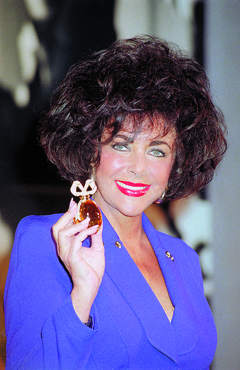
Elizabeth Taylor poses with a $100,000 special edition bottle of her “White Diamonds” fragrance in New York in 1991. Photo: AP via Chicago Sun Times.

Elizabeth Taylor poses with a $100,000 special edition bottle of her “White Diamonds” fragrance in New York in 1991. Photo: AP via Chicago Sun Times.

Think of that for a second: Elizabeth Taylor made more money from her perfumes than she did in ALL her films, combined. It’s an astonishing thought at first, but perhaps completely logical when you consider what star salaries were back then.

Yet, even after her death, her fragrances sell. And sell big. White Diamonds sold more than $54 million worth in 2010, according to Forbes magazine. According to the Chicago Sun-Times, sales of all of her perfumes totaled $76.9 million in just one year. However, Elizabeth Taylor had a small hit from the very start, with her first fragrance in 1987 called Passion. The official Dame Elizabeth Taylor website states: “By 1991, sales of Passion reached an estimated $100 million dollars giving it a coveted spot on the list of top ten selling fragrances of all time.”

In short, Britney may be selling more now, but La Liz had decades of a head-start, and I would be fascinated to compare their overall sales and gross profit figures. Unfortunately, I haven’t been able to find how much Elizabeth Taylor or her estate have made from the sales of her perfumes since she began in 1987, but it has to be quite a lot. All I know is that Elizabeth Arden — Britney’s company — is the one who licenses Taylor’s perfumes, a fact which further explains the company’s large market share. (As a side note, Elizabeth Arden’s celebrity and designer stable also includes Usher, Mariah Carey, Hilary DuffKate Spade, Juicy Couture, Liz Claiborne, and Badgley Mischka.)

THE CELEBRITY CUT & PERCENTAGE:

As noted above, there is a big difference between the overall bottle sales, and the amount that the star receives his or her self. The Stylecaster article had an interesting tidbit on the issue of how much celebrities really make:

Celebrities tend to make between 5 and 10 percent of sales for licensing their name to a scent on top of an upfront payment of $3 million plus. With sales in the hundreds of millions for some of these fragrances—you do the math. Bottles of perfume and cologne typically sell for between $60 and $100, and the cost of making them is usually about 25 percent of retail—so the return is enormous.

It’s a siren’s lure for a variety of reasons, as Stylecaster explains:

‘Celebrities see it as a revenue stream without a lot of responsibility, and the manufacturers see it as a revenue stream to help their bottom line,’ said Rochelle Bloom, president of the Fragrance Foundation. […]

And with traditional streams of revenue for stars drying up (album sales, back-end movie deals) the lure of fragrance money is stronger than ever. It’s also a possible revenue stream, should the fragrance be a hit, for stars to continue making money after their heyday has passed.

Other sources add to the picture. While The Hollywood Reporter agrees that ancillary revenue streams as fragrances and clothing lines are becoming more important to a star’s overall financial well-being, it quotes slightly different figures:

A top celebrity — one who appeals to the young women powering the market — now can demand $3 million to $5 million as an upfront payment, plus a 6 percent or 7 percent royalty on sales, say insiders.

The article notes that celebrity endorsements are low-risk for the star, and well worth it for the perfume company as a way to distinguish the new brand. If the cost of making a fragrance is only a fraction of the retail cost (and I’ve actually read the number is far, far lower than the 25% stated in these pieces), then the extra payout to the celebrity can be a good investment.

The problem with this seemingly win-win situation is that it has completely over-saturated the perfume market. The Hollywood Reporter states that, nowadays:

big profits hardly are guaranteed. “The domination of the celebrities is diluting the magic of the fragrance business,” says Sue Phillips of tracking website Scenterprises.com, adding that a star like J.Lo will issue less expensive “flanker” scents such as Miami Glow, Love at First Glow, Glowing, etc., after an initial hit like Glow, thus crowding out upstarts. […]

Faced with increased competition, fragrance-makers must prove their products quickly lest they be yanked from Nordstrom or Sephora. A perfume used to have three years to turn a profit. Now? “It’s exactly like the movie business,” says Isaac Lekach at ID Perfumes, which helped launch fragrances for Perry, Selena Gomez and Paris Hilton and is working on a new scent for Adam Levine. “If you don’t have a strong opening weekend, good luck relying on word-of-mouth.”

WHAT LEADS TO SUCCESS:

Snooki perfume ad. Source: Fragrantica.

Snooki perfume ad. Source: Fragrantica.

If not everyone makes it, then what are the factors for success? It seems to depend often on both the celebrity’s popularity, fan access to test the fragrance, price points, actual smell, and, most importantly of all, the degree of the celebrity’s involvement in promotion. Perfumes from Nicole “Snooki” PolizziKate Walsh, and Denise Richards were quick failures. (In my opinion, it helps if the celebrity’s image isn’t an embarrassing one, à la Snooki.)

Stylecaster says that success depends on a “perfect storm of celebrity involvement, celebrity fan base, and lastly, whether the perfume actually has an appealing smell.”

Why has Knowles’ Heat been such a huge hit? The singer allowed her fans to sample Heat at all of her North American shows during her The Mrs. Carter Show World Tour earlier this year. “We always talk about bringing entertainment to retail,” said Marsha Brooks, Vice President of Global Marketing, Fragrances, for Coty Beauty. “With this scent, we brought retail to entertainment.” Simply put, selling perfume at a massive concert tour isn’t a retail channel open to the Chanels and Thierry Muglers of the world, but it is open to Beyoncé.

Paris Hilton perfume ad for her second fragrance, Fairy Dust. Source: http://frillr.com/?q=node/9796

Paris Hilton perfume ad for her second fragrance, Fairy Dust. Source: http://frillr.com/?q=node/9796

Paris Hilton’s line of fragrances has had unexpected longevity, despite Hilton’s increasingly low-profile, because Hilton has proved to be a tireless promoter of her line which is valued at $1.5 billion. She released her first fragrance in 2004 and is still tweeting about it to her over 12 million Twitter followers.

In contrast, the article implies that Jennifer Aniston barely bothered with her perfume, and the lack of promotion led to unimpressive sales.

THE TEEN FACTOR IN CELEBRITY SALES:

What I’m surprised that the Stylecaster article doesn’t mention is what can only be called The Teen/Tween Factor. Justin Bieber’s sales are uniformly attributed to the shrieking hordes of his teen and pre-teen fans. Youth trumps, and Jennifer Aniston, Kate Walsh, and women of a certain age simply aren’t going to have quite the same allure to susceptible 13-year-old girls who will pester their parents for their idol’s scent. Jennifer Aniston could have promoted that fragrance as much as she’d wanted, but I doubt she’d have the One Direction effect.

Source: Daily Mail.

Source: Daily Mail.

The boy band just came out with their first fragrance in August called, quite simply, One Moment. When it launched at Harrods, 3,000 bottles sold in just two days. The entertainment site, Eonline, says that “the boys were set to earn $561,312 (or 360,000 pounds) in its first week on sale in the U.K.” According to the Daily Mail (I know, I know!!), that the figure was calculated from preorder sales plus the more than-3,000 bottles that have been sold in just two days at the Harrods in London. Each boy will “personally earn around £2 for every 30ml Eau de Parfum bottle sold, which means the group is due to bank £360,000 in 7 days.” Further numbers and figures:

Escentual.com CEO Rakesh Aggarwal said: ‘Our Moment is predicted to sell around 180,000 units in the first week alone, making it one of the fastest selling fragrances of all time.

‘It’s certainly looking like it’s going to be the most successful celebrity perfume launch of the year and sales in America are expected to be bigger still,’ says Aggarwal.

On the basis of 180,000 sales of the most popular 30ml Eau de Parfum, which retails at £19.99, the turnover for the first week will come in at nearly £3.6m.

Furthermore, the Christmas shopping period accounts for about 70% of annual perfume sales, a figure I’ve seen a lot lately. With the manufacturers adding special holiday gift sets and other products to go with the One Direction fragrance, the Escentual’s CEO estimates that those teenage boys may make £2m over the holidays from an estimated overall turnover of £10m for the range over Christmas.

THE MADNESS SPILLS OVER:

The crazy profits in the perfume world have not gone unnoticed by other groups. There was Pizza Hut‘s limited-edition fragrance which The Huffington Post insists smells nothing like actual pizza and everything like cinnamon rolls or dough. (I’ll take their word for it.) But something with much less of a novelty, amusement factor caught my eye recently: university perfumes.

Source: Wall St. Journal

Source: Wall St. Journal

American educational institutions have apparently noticed everyone else was making a huge profit, and decided, “Why not us?” The goal seems to be to bottle the school’s aromatic feel or the symbolic olfactory representation of four years of the college experience, and making a profit. I’m feeling extremely sardonic and irritable at this point, so I’ll let a November 12th article by the Cleveland Plain Dealer newspaper speak instead:

What scent comes to mind when you think of your college? [¶] Is it aromatic, from the blossoming trees on the college quad? [¶] Or a stale beer smell from your favorite bar?

Each campus has its own fragrance identity, according to a New York company that is developing perfumes and colognes for colleges inspired by elements such as the school colors, campus style, flowers, traditions and location.

Masik Collegiate Fragrances has introduced what it calls “The Scent of School Spirit” at 17 large universities, most in the south and southeast.  […][¶]

[For Texas A&M university] Masik Fragrances developed something … aromatic. The men’s scent “captures the pride and meaning of being an Aggie,” its website says. “Refreshing top notes of Italian Lemon, Bergamot and Iced Pineapple opens in to a body of vivid florals, raw Nutmeg and Cinnamon. Robust base notes of rich Amber, silver Moss and aged woods are deeply rooted embodying the strength of the Century Tree.”

I have actually visited the Texas A&M campus, as it has one of the top veterinary centers in the entire country, and, yet, I find myself startled at the olfactory notes listed in the description. In all fairness, however, I simply cannot wrap my head around this entire concept to begin with! I know it shouldn’t be so odd, given that perfumes all have a back story; and, really, how is this really so different than trying to capture the scent of India or the Villa d’Este in a bottle? Regardless, when I read Masik’s list of notes for, to give just one example, Penn State University Men’s and Women’s fragrances, I just wanted to snort. I think it’s the obviously mercenary angle behind it all, behind an academic institution’s attempts to venture into the perfume field.
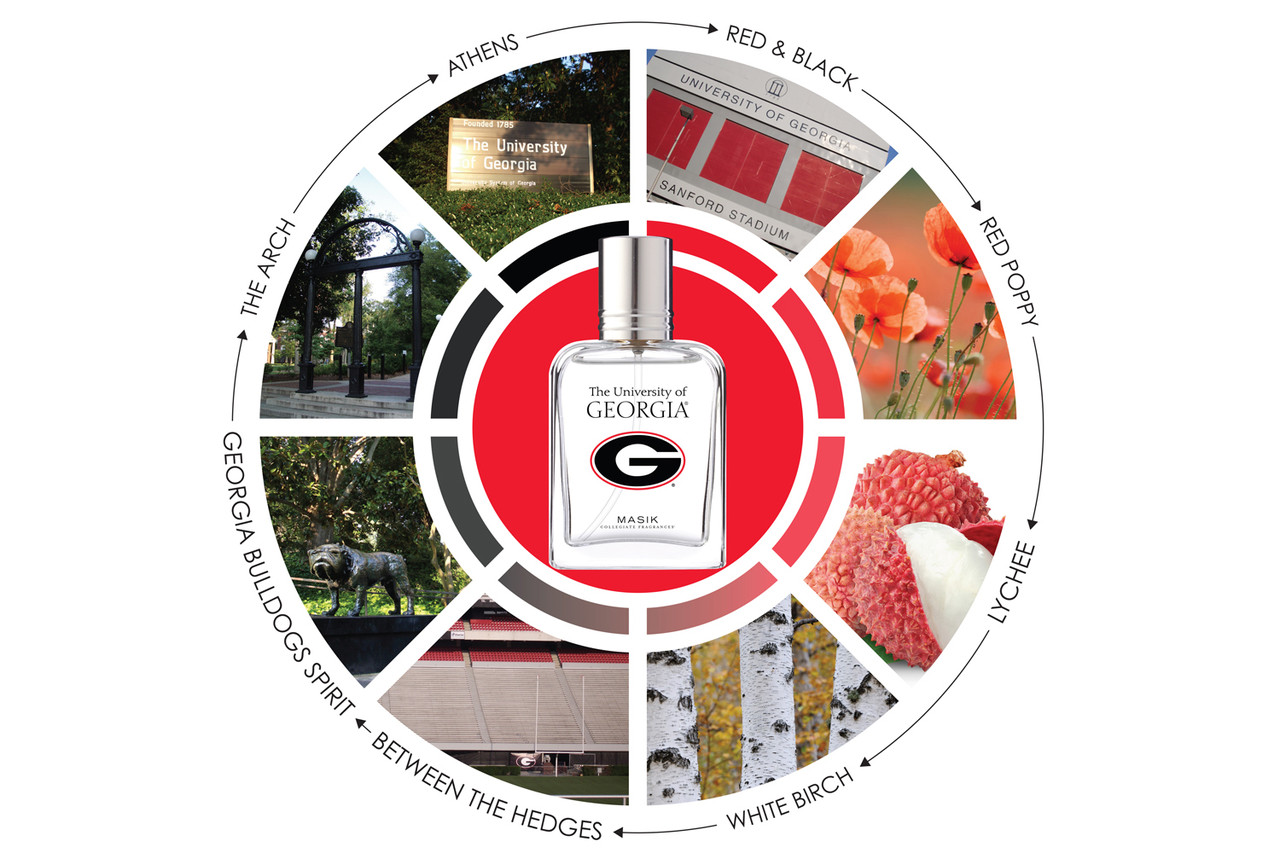
The assessment for the University of Georgia's scent. Source: Masik via the Wall St. Joural.

The assessment for the University of Georgia’s scent. Source: Masik via the Wall St. Journal.

In all fairness, however, the schools seem to be making mere peanuts, at least by the standards of we’ve talked about here. According to that Cleveland article:

To translate a school’s essence into a scent, Masik relies on Fragrance Resources, an international fragrance company with a lab in New York, the Wall Street Journal reported. […][¶] Several options are created and presented to a panel of students and administrators.

Colleges, which license a litany of products, get royalty payments from sales of the fragrances, which cost about $40 for a 1.7-ounce bottle. The fragrances are sold at campus bookstores, boutiques and some department stores.

At Louisiana State University, that revenue has amounted to just $5,500 over the past four years, said Brian Hommel, director of trademark licensing at LSU, in the article. But he says there is a benefit to having the school’s brand associated with a chic product.

The university’s tiny profit over four years is significantly smaller than I had expected, given their enormous alumni base and the role played by nostalgia. Louisiana State University made a little under $1,600 a year, a figure which stands in sharp contrast to the millions made by the next institution who decided to enter the perfume world.

Source: Yankees website.

Source: Yankees website.

According to the Wall St. Journal, the powerful, venerable baseball team, the New York Yankees, had a perfume made for them by a group called Cloudbreak that “the company says garnered nearly $10 million in retail sales in 2012.” Even if the Yankees got a mere 5% of those sales, it’s still a rather decent amount for something that required very little in actual sweat or effort on their part. That problably explains why, in looking at the Yankees’ website, they seem to have fallen headlong into perfumed products, with men and womens’ lines, bath items, and special limited-edition scents. Their marketing machine has even come up with a $5 “Fragranced Bracelet” in simple black rubber, though no actual scent notes are listed. If that thing is properly perfumed instead of being a Pinocchio-worthy case of false pretenses, I promise I’ll stop rolling my eyes.

FINALLY:

It seems very, very easy to put out ridiculous or novelty perfumes, let alone celebrity fragrances, but none of these figures should make you forget the simple bottom line: you still need backers with very deep pockets to succeed. As the university example demonstrates, not even institutions with a big support base in the form of alumni can profit easily in this game. Those who do, have not only millions behind them, but also a wide network of distributors and the power of multi-national conglomerates. Justin Bieber and Derek Jeter have Avon, while Britney Spears and Liz Taylor have Elizabeth Arden. At the higher end of the scale, Tom Ford succeeds, in part, because of the sheer might of the Estée Lauder behemoth.

The most famous perfume houses now have to pay a pretty penny to stand out and make a splash in the highly saturated perfume market. Take Chanel, for example. According to Adage, the fashion house owned by the Wertheimer brothers (whose grandfather helped co-found Chanel Parfums) spent “$139 million on measured media in the U.S. in 2012, with magazines accounting for $78.3 million. In 2011, it spent $130 million on total U.S. measured media.” In 2004, Chanel reportedly paid Nicole Kidman $4 million to be the face of Chanel No. 5, and spent £18 million on a 2-minute ad by Baz Luhrmann that was later cut down to 30-seconds. Last year, it was $7 million to Brad Pitt, with a video that was widely mocked. The rising costs of marketing and publicity may explain why, this year, Chanel is going with a dead celebrity, Marilyn Monroe, for their latest Chanel No. 5 campaign.

Less wealthy perfume houses don’t have the same resources, so they are looking to technology and futuristic inventions for help instead. According to The Hollywood Reporter article, there are efforts to integrate scents with digital devices to bring fragrance into a more multi-dimensional, lifestyle experience:

Jean-Paul Gaultier and Azzaro quietly are working on next-generation celebrity-scent convergence. Soon digitally powered fragrances could be incorporated into computer ports and cable TV boxes so that when consumers play songs or watch shows, they will be hit with a multisensory experience. If that happens, fragrances could end up marketing celebrities instead of the other way around.

Celebrities, however, don’t have to bother with any of that, at least not for now. Their efforts can be much simpler, and yield much more immediate results. When Rihanna launched her perfume, she tweeted to her millions of followers about it. As the Stylecaster article noted, Beyoncé gave samples of her fragrance away at her concerts, and watched the profits subsequently pour in from full-bottle purchases. Chanel paid Brad Pitt $7 million for the much ridiculed Chanel ad last year; Justin Bieber simply has to show up and point at his gaudy, plastic flower-topped perfume bottle for his crazed fan to go completely insane. Britney Spears has an epic meltdown, and her perfumes still rake in the cash.

We live in a celebrity driven world, and the perfume industry is no exception. With the money that is involved, none of that is going to change any time soon. So, get use to Britney Spears laughing all the way to the bank, as she exceeds that reported $1 billion dollars in sales. To use the very famous, very vulgar quote, “It’s Britney, b****.”

Tom Ford Oud Fleur & Tobacco Oud (Private Blend Collection)

Tom Ford recently came out with Oud Fleur and Tobacco Oud, two new agarwood fragrances to join his original Oud Wood perfume. The latter has only been re-packaged into a new bottle to match its baby siblings and has not changed. As a result, this review will focus simply on Oud Fleur and Tobacco Oud.

OUD FLEUR:

Oud Fleur via chicprofile.com

Oud Fleur via chicprofile.com

According to CaFleureBon, Oud Fleur was created by Yann Vasnier of Givaudan who has made a number of fragrances for Tom Ford. The perfume’s notes on Fragrantica are extremely limited:

rose, patchouli, agarwood (oud), sandalwood and resins.

I tried Oud Fleur twice, and I realised mere minutes into my first test that half of the things I was scribbling on my notepad weren’t on that list. From cardamom to ginger, apricot-y osmanthus, and more, the notes I detected didn’t match up with Fragrantica’s bare bones description. So I did some digging, and I found a much more substantial list at The Moodie Report which is presumably quoting a Tom Ford Press release. It describes Oud Fleur as follows:

Private Blend Oud Fleur is composed around an oud wood core, amplified with additional woody notes: patchouli, sandalwood, incense, styrax, cistus, a leather accord, ambergris and castoreum.

The Middle East’s Damascus Rose heritage is evoked with a blend of Rose Bulgaria ORPUR, Rose Absolute Morocco and Rose Absolute Turkey ORPUR, said to combine fresh petal, nectar and stem-like scent signatures.

This floral heart is enhanced with ginger CO2, cardamom seed oil ORPUR, cinnamon bark Laos ORPUR and pimento berry. The composition is completed with a touch of Geranium Egypt ORPUR, tagette, osmanthus, davana oil and a date accord.

So, the succinct list of notes would be:

pimento, cinnamon, cardamom, ginger, three different types of rose absolutes, geranium, tagette, osmanthus, davana oil, a date accord, patchouli, sandalwood, incense, styrax, cistus [labdanum amber], a leather accord, ambergris and castoreum.

Osmanthus. Source: en.wikipedia.org

Osmanthus. Source: en.wikipedia.org

A few words about the ingredients on that list and in the Moodie press release, as they may not be familiar to everyone. “ORPUR” seems to be the name given by Givaudan, the fragrance aroma and ingredients giant, to its ultra, high-end “pure naturals.” Osmanthus is an Asian flower whose aroma can be like that of apricots, tea, and/or limpid, dewy, light florals.

Davana. Source: hermitageoils.com/davana-essential-oil

Davana. Source: hermitageoils.com/davana-essential-oil

Davana is an Indian flower whose aroma is very creamy, rich, and heady with a subtext of apricots and fruit as well. Tagette or tagete is the name of plant in the marigold family that has an odor which is “sweet, fruity and almost citrus-like.” Some sources say that, depending on type, tagette oil can be a little musky, pungent and sharp with herbaceous notes that soon turn into something very fruited, almost like green apples. As for castoreum, I’ll spare you what it is, but its aroma is animalic, very leathery and a bit sharp. On occasion, it will have a slightly civet-like urinous edge that often turns into something deeper, more rounded, sensuous, and musky. Tiny amounts are often added to non-leather fragrances to provide a plush, velvety, rich brownness in the base, and a bit of subtle “skank.” Finally, on a more familiar note, pimento is simply another name for a type of spicy red chili pepper. 

Source: impfl.com

Source: impfl.com

As always with Tom Ford fragrances, the amount you apply impacts the notes that you detect, their prominence, and their forcefulness. In addition, the potency of many Private Blend fragrances means tha it’s better starting off with a lesser amount. As a result, the first time I tried Oud Fleur, I only applied about 2 really giant smears, or about 1.5 sprays. It made the expected difference to the notes in the opening hour. Oud Fleur started with a much more creamy, mellow, soft aroma that was primarily a dewy, pale rose infused with fruited elements and strewn lightly with spices over a very creamy, sweetened wood base. Everything was creamy and soft. There was even a subtle whiff of a very creamy saffron note like an Indian rice pudding dessert lightly sprinkled with cardamom. The rose flits in and out of the top notes, while the patchouli works from the base to add a subtle touch of fruited sweetness. There was just the merest, faintest suggestion of something leathered, dark, and chewy underneath, but Oud Fleur’s main composition was of very creamy woods. 

Source: popularscreensavers.com

Source: popularscreensavers.com

It was one of my favorite parts of the perfume. With a minimal quantity, Oud Fleur’s opening stage somehow consisted of a sandalwood-like fragrance more than an oud one. It never feels like actual Mysore sandalwood, but the impression of something similar has been created through subtle augmentation via the spices and resins. It boosts what feels like a rather generic “sandalwood” base into something very much like the real thing with its spiced, slightly smoked, sweet, golden-red aroma. It’s all largely thanks to that cardamom note with the subtle saffron-like element (which probably stems from the pimento). The final result for Oud Fleur’s first hour is a fragrance that is a lovely, delicate blend of creamy woodiness with sweet, dusty spices and a subtle sprinkling of light rose petals. It’s all incredibly sheer and seems to positively evaporate from my skin within minutes.

Ginger. iStock photo via Wetpaint.com

Ginger. iStock photo via Wetpaint.com

The second time I tested Oud Fleur, however, I applied about 4 massive smears which would be the equivalent of 3 small sprays, and the perfume’s opening hour was substantially different and much more spicy. Oud Fleur began with a blast of ginger, vanilla, rose, patchouli, amorphous, vague woodiness, and a hint of slightly skanky, animalic leather. The leathery element disappeared within seconds, but the somewhat urinous, feline or civet-like edge of the castoreum hovered about for another minute before it, too, vanished. Sweet florals quickly took their place, from the ginger-infused osmanthus to the creamy davana with its fruited apricot overtones. There was a hint of light spice from the sandalwood, then heaps more from a heavy, rich dose of nutty, dry cardamom.

Source: splendidtable.org

Source: splendidtable.org

With a much bigger application, the ginger came to the foreground, but Oud Fleur’s opening hours were also heavily dominated by the pimento which was completely nonexistent during my first test. It added a fiery kick to the fragrance, feeling precisely like the sort of peppered heat of a red chili pepper. The larger application also brought significantly greater definition to the floral notes. Before, Oud Fleur was primarily a creamy wood fragrance that was initially dominated by a dewy, pale rose with some fruitedness, cardamom, and some other vaguely osmanthus-like elements. The second time, however, Oud Fleur opened mainly as fruity-floral fragrance with heavy amounts of chili and ginger, and a lot of the davana flower’s apricot-floral overtones. There was no real incense, and the woody notes were largely overwhelmed.

Damascena roseAn hour into Oud Fleur’s development, the perfume’s main bouquet is of: sharp, biting pimento; dusty, sharp ginger; creamy davana apricots; floral, apricot-y osmanthus; and a heavy burst of rose. There are slight touches of incense and oud, but little sandalwood or leather. The rose alternates between being jammy and fruited (as a result of the patchouli and other accords), and being dewy, pale, soft and fresh. It also waxes and wanes in prominence, like a small wave hitting Oud Wood’s creamy shores before retreating. On occasion, it’s also supplemented by some greenness from the geranium.

Source: taste.com.au

Source: taste.com.au

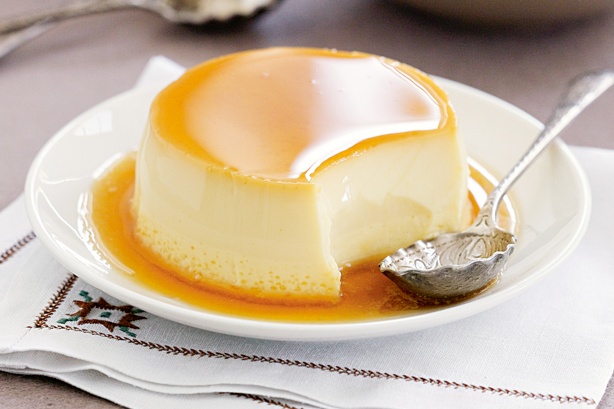
By the middle of the second hour, Oud Fleur smells like a creamy, almost custardy, almost mousse-y, airy flan infused with slightly burning spikes of chili pepper, then covered with a blanket of lightly sweetened, fruited flowers. The notes have blurred into each other, the fragrance feels increasingly soft, and hovers just an inch above the skin.

If you’ll notice, I haven’t mentioned oud or agarwood in either of my descriptions of Oud Fleur’s opening stage. There’s a reason for that. In both tests, the oud lurked completely at the fragrance’s edges, popping up like a ghost once in a while to give a little animalic “Boo” in the softest of whispers. On occasion, it took on a more musky, leathered feel (thanks to the castoreum and leather accords); at other times, it was more sweet, seeming like Indian oud instead of the Laotian kind on the list. Actually, to be honest, this doesn’t seem like real agarwood at all. It feels more synthetic than real, and it’s certainly not profoundly woody, deep, or dominant. In all cases, however, the note is really like Casper the Friendly Ghost throughout the majority of Oud Fleur’s lifespan. This is an “oud” perfume for people who actually dislike or struggle with oud. 

"Cosmic Swirls Beige" by Jeannie Atwater Jordan Allen at fineartamerica.com

“Cosmic Swirls Beige” by Jeannie Atwater &Jordan Allen at fineartamerica.com http://fineartamerica.com/featured/cosmic-swirls-beige-jeannie-atwater-jordan-allen.html

The differences in the two openings really lasts about two to three hours at most, and then the two roads of Oud Fleur merge into one. Basically, the second, more robust, spiced version of Oud Fleur takes on the soft, gauzy, creamy woodiness of the first version. It merely takes three hours, instead of just under two hours, for Oud Fleur to turn into a creamy flan-like bouquet infused with slightly fruited florals, abstract beige woodiness, the smallest flecks of oud, a tinge of incense, and some amber. Eventually, the floral elements fade away, leaving a generic, indistinct creamy woodiness with a hint of amber and some tonka vanilla. In its final moments, Oud Fleur is a nebulous smear of woods with a tinge of powdered sweetness.

Oud Fleur has decent longevity and low sillage on my skin. With 2 big smears, the perfume opened very softly, became a skin scent after about 90 minutes, and lasted a total of 7.75 hours. With 4 very big smears, Oud Fleur opened with moderate sillage that projected about 3 inches, then dropped after 2 hours to hover just an inch above the skin. It became a skin scent at the start of the 4th hour, and remained as a sheer, gauzy wisp for several more hours. All in all, it lasted just a little over 9.25 hours.

Oud wood with its "noble rot." Source: The Perfume Shrine via Dr. Robert Blanchette, University of Minnesota - forestpathology.coafes.umn.edu

Oud wood with its “noble rot.” Source: The Perfume Shrine via Dr. Robert Blanchette, University of Minnesota – forestpathology.coafes.umn.edu

I think Oud Fleur is a pretty, pleasant fragrance that has some wonderful creamy bits and can be quite lovely at times. It is more complicated than a simple, small application would lead you to believe, and veers from being sweet, sexy and feminine, to being quite cozy in an elegant manner. However, at heart, it’s really a misnamed fragrance that is more a light fruity-floral with spices and some generic woods than an actual oud fragrance. If I’m to be honest, I think Oud Fleur is very pretty, but somewhat over-priced for a fragrance that isn’t very distinctive. I also think those expecting a true agarwood perfume, or something with the heavy, woody richness of Oud Wood will be sorely disappointed. The same applies to anyone seeking a very masculine or true oud. This is not Xerjoff or Amouage territory!

On the other hand, those who liked By Kilian‘s Playing with the Devil (In The Garden of Good and Evil) would probably like Oud Fleur quite a bit. For me, Tom Ford accomplished what Kilian Hennessey failed to do, creating a fruity-floral with a bit of a fiery, spicy bite (the Devil) that turns into soft, creamy, floral woodiness (Goodness in the Garden). By the same token, women who enjoy soft fruity-florals and don’t like oud may greatly enjoy Oud Fleur. Men who are looking for a more woody twist on creamy florals with some cozy sweetness in the base may feel the same way.      

TOBACCO OUD:

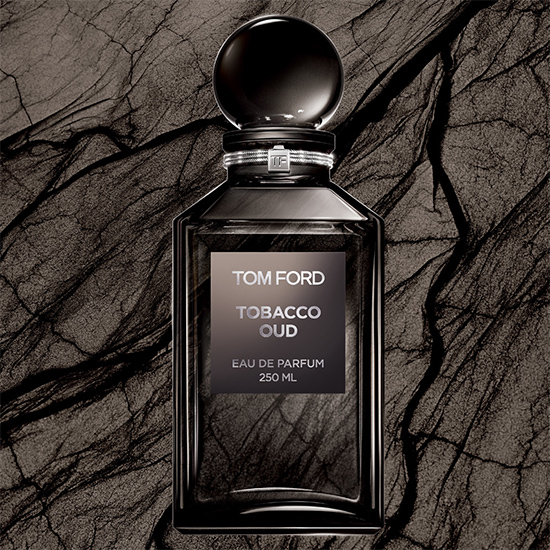
Tobacco Oud via beautyscene.net

Tobacco Oud via beautyscene.net

Tobacco Oud is a fragrance that mimicked a wide range of many existing Tom Ford fragrances on my skin. I kid you not, Tobacco Oud had parts that were extremely similar to four different Tom Ford Private Blends. In order: Amber Absolute, Tobacco Vanille, Café RoseSahara Noir, then back to Amber Absolute in the drydown. Make of that what you will when you contemplate Tobacco Oud’s originality….

According to CaFleureBon, Tobacco Oud was created by Olivier Gillotin of Givaudan who made Tobacco Vanille for Tom Ford. The Moodie Report describes the fragrance and its notes as follows:

As its name suggests, Private Blend Tobacco Oud features a tobacco accord inspired by “dokha,” a blend of herbs, flowers and spice-laden tobacco that was smoked in secret five centuries ago during a ban on smoking — and retains its allure as a widely used tobacco today.

Other key ingredients include roasted Tonka organic absolute, coumarin, sandalwood, amber, cistus oil, cistus absolute, cedarwood Atlas ORPUR, patchouli and castoreum. 

So, a succinct summary of notes would be:

A ‘Dokha’ Tobacco accord, herbs, coumarin, flowers, Tonka bean absolute, sandalwood, cistus [labdanum amber] oil, cistus [labdanum amber] absolute, oud, amber, cedarwood, patchouli, and castoreum.

Labdanum compiled into a chunk. Source: Fragrantica

Labdanum compiled into a chunk. Source: Fragrantica

Tobacco Oud opens on my skin with a burst of amber and labdanum, then hints of tobacco and oud. For those of you who may mistake the two, labdanum and amber have very different smells. As one perfume nose told me in her studio, labdanum is “real amber,” while “amber” is often the compilation of various other notes to create that overall impression. Labdanum has a very particular, completely unique aroma that is dark, slightly dirty, very nutty and toffee’d with subtle, underlying nuances of honey, beeswax, musk, and/or something a bit leathery. It is almost always a deeper, richer, denser, stronger, darker aroma that is less soft, creamy, and cuddly than regular, lighter “amber.”

All of this is key, because labdanum is really at the heart of Tobacco Oud, as well as its forbearer, the now discontinued, labdanum monster, Amber Absolute, and Amber Absolute’s extremely similar replacement, Sahara Noir. On my skin, Tobacco Oud opens exactly like Amber Absolute, with hints of Tobacco Vanille. That last part can’t be very surprising given that the same perfumer also made this new tobacco fragrance.

Source: visualparadox.com

Source: visualparadox.com

After the opening burst of labdanum, other elements emerge. Joining the tobacco in second place is patchouli, adding a subtle jamminess and additional layer of sweetness to the scent. Bringing up the rear are hints of: vanilla; a smoky, very dry, very brittle cedar; a whisper of oud; and a subtle flicker of something vaguely herbal that is too faint to really place. Tobacco Oud’s main, overall bouquet is of a nutty, dirty, dark, rich, labdanum toffee infused with a fruited pipe tobacco, a jammy sweetness, strong cedar, and a hint of vanilla. The perfume is initially rich and strong in its potency, but it’s far from being dense, opaque, or thick in feel. Actually, it feels much airier than the heavy Amber Absolute, even from the start.

Source: gawallen.piczo.com

Source: gawallen.piczo.com

Ten minutes in, other nuances appear under the top notes. There is a whiff of something floral, something almost rose-like, but it’s very minor at first. Much more noticeable is the subtle aroma of burnt beeswax, along with the merest suggestion of a darkened leather coated with honey. Both are side-effects of the labdanum. My skin tends to amplify the note, but it also makes patchouli act like a bullhorn a lot of the times, and Tobacco Oud is no exception. It takes the patchouli and runs with it, bringing out a definite syrupy, fruited, almost fruit-chouli like sweetness. Less than 30 minutes into Tobacco Oud’s development, the patchouli merges into the floral note to create a jammy rose sweetness that completely overwhelms the tobacco. I’ll be honest, I was a bit baffled, but, clearly, it’s the patchouli at play and, as usual, my skin wreaks havoc with it.

As the notes begin to blur into each other and overlap, Tobacco Oud turns into a labdanum, patchouli, and sweetened rose fragrance on my skin with only the vaguest suggestion of tobacco, oud, incense smoke, or cedar. Around the 75-minute mark, Tobacco Oud’s projection drops, the notes become even softer, and the fragrance loses most of its tobacco layer. The jamminess of the rose mixed with the dark labdanum amber creates something that, on my skin, distinctly resembles portions of Tom Ford’s Café Rose.

Tom Ford advert for Sahara Noir. Source: Fragrantica.

Tom Ford advert for Sahara Noir. Source: Fragrantica.

As regular readers will know, I’m not a fan of jammy, fruit-chouli, so it’s a huge relief when it fades by the end of the second hour and Tobacco Oud changes again. Now, it’s a gauzy, sheer, relatively dry-ish amber infused with frankincense and the merest flicker of oud. In short, the third hour opens in Sahara Noir territory, only Tobacco Oud is substantially thinner and weaker in feel. As the review linked above makes clear, I found Sahara Noir itself to be a copy of Amber Absolute, only much better balanced and less bullying, but somewhat lighter, less unctuous, without quite so much frankincense intensity, and with the new (but subtle) addition of oud.

Source: openwalls.com

Source: openwalls.com

So, really, Tobacco Oud has really returned cycled back to the beginning. The main difference is in density, thickness, projection and dryness. Tobacco Oud seems much drier than Amber Absolute, much less opaque, resinous, indulgently dense and gooey in its labdanum. It’s weaker in both weight and sillage, hovering just an inch above the skin at the middle of the third hour. To me, Tobacco Oud is actually much less smoky or incense-heavy than either Sahara Noir or Amber Absolute. Yet, it also feels dryer, probably because the labdanum isn’t such a heavy, rich layer.

Source: rexfabrics.com

Source: rexfabrics.com

Tobacco Oud continues to devolve, reflecting neither of its namesake elements in any noticeable way. Near the end of the 4th hour, it loses the remainder of its incense, turning into a scent that is primarily gauzy, wispy labdanum with a hint of nebulous woody dryness that can just vaguely, barely, be made out as “oud.” Even that goes by the end of the 6th hour. From that pointon, until Tobacco Oud’s final moments, the perfume is a mere smear of soft amber. All in all, it lasted 9.5 hours on my skin with generally low sillage after the third hour.

People’s reactions to Tobacco Oud seem highly mixed, and generally much less enthusiastic than the response to Oud Fleur. On Fragrantica, almost all the talk about Tobacco Oud centers on just how much of those two namesake notes are in the scent, and the degree of similarity it shares to Amber Absolute. A number of people find the two perfumes to be very similar in their opening stage, but dissimilar in overall development, weight, and feel. A few find zero similarity, no doubt because they experienced a heavy amount of tobacco. (Oddly, a number of those bring up Sahara Noir instead.) Obviously, the more the tobacco element manifests itself on your skin, the less you’re likely to think Tobacco Oud resembles Amber Absolute.

To give you an idea of the debate and divergence in opinion, here are some snippets from Fragrantica:

  • Tobacco and Oud you are looking for? Look elsewhere. This fragrance is very similar to Amber Absolute at the top of this, rich with resinous amber but not as rich and less patchouli than AA. This fragrance is slightly drier. This fragrance does not have the longevity and projection that Amber Absolute has. There is no Oud and very minimal tobacco. Once this dries down, it turns into an amber/sandalwood scent with very light spices. […] This is very similar to amber absolute but if you’re an amber absolute fan this would not be a suitable replacement. It definitely lacks the richness that AA has.
  • tobacco oud? this is more amber absolute with just a bit of spices. nice scent and good sillage and longevity.
  • The tobacco is the most prominent aspect of it (considerably more so than the oud), and the note is split between the herbal facets of tobacco leaves and a genuinely dirty smoke effect. The spices are surprisingly grungy for a Tom Ford, and I’m assuming that there’s some civet or some choyas playing up against the patchouli to get this effect. The oud is minimal […] This is all placed over a fairly stock amber base that’s got a vanillic edge, but is largely characterless. It’s the same thing you find at the base of the lifeless Rive d’Ambre. [¶] There’s no connection to Amber Absolute here whatsoever. None. [¶] There is, however, what appears to be a hint of benzoin that draws some parallels to Sahara Noir, but the similarity is minimal. […] As an oud fragrance, it’s lackluster, but it’s on par with the other non-oud ouds from similar brands [.]
  • it is a very simple scent with a deep onslaught of a pipe’a’riffic notion. kinda like a cherry black and mild before it is burnt. i like it but i can’t see myself smelling like this often. it’s more like a novelty item then a fragrance i would wear. however it is a quality product and for someone who is looking for a very specific item. this fits your pipe tobacco needs.
  • Oh dear, love tobacco vanille, love oud wood more. This is nasty

Personally, I was much more interested in what a close friend of mine thought, as she is a die-hard Tom Ford fan whose “holy grail” fragrance is Oud Wood, followed then by Amber Absolute. For her, Oud Wood and Amber Absolute are absolute perfection. She is the very talented, thorough, globally successful beauty blogger, Temptalia, and her review of Tobacco Oud reads, in part, as follows:

Tobacco Oud opens with a burst of smoke, spice, and almost reminds me of incense burning at an altar. It’s dry, like walking in the woods during autumn, when it’s chilly enough that fireplaces are crackling, but there’s no snow or rain yet. Or stepping into a dry sauna–it’s just a lot of smokiness and drier woods to me; I keep thinking cedarwood (which is a note). There’s amber in the background, somewhere, that’s fleeting initially, and then it settles in for a long stay. It morphs into a mix of smoke, spice, amber, labdanum, and the beginning tendrils of vanilla. Finally, it becomes a more comforting, warmer scent that smells of lightly sweetened vanilla with a soft smokiness and a wee bit of spice that lingers. Oud is here and there throughout the first few hours of wear; it’s not the star–the smokiness from tobacco is definitely more in the forefront. If you’re looking for a strong oud note, it’s not in this scent.

The discontinued Amber Absolute.

The discontinued Amber Absolute.

She too has noted how Tom Ford fragrances differ substantially in smell depending on the quantity applied, and I think her observations are useful, along with the ever-helpful comparisons to her beloved Amber Absolute:

I found Tobacco Oud’s metamorphosis was greatly influenced by the number of sprays; less than two, and it was very, very dry and lacked warmth, but three sprays gave me that warmth that I missed the first time I wore it, and that warmth made me understand some of the comparisons to Amber Absolute. With that being said, Amber Absolute is much, much heavier on the amber; it’s headier, thicker, warmer, cozier; when Amber Absolute opens, I get that resinous quality but not the smokiness that I wafts from Tobacco OudAmber Absolute is also sweeter throughout the wear, where Tobacco Oud turns slightly sweeter from the tonka bean after six to eight hours of wear. Even if the two had more similarities than differences, the most marked difference is that Amber Absolute is a monster–it has more projection, longevity, and overall, it is just more potent. Amber Absolute–one spray split between my wrists–is still a skin scent twenty-four hours after I’ve applied and taken a shower.

Tobacco Oud is standing in front of the hearth and warming your hands, a brief respite from the cool outdoors.  Amber Absolute is curling up in a luxurious blanket in your favorite chair and settling in for the night.

Due to differences in skin chemistry, the opening I experienced was much more ambered and sweet than hers, as well as with substantially less tobacco and dryness. Nonetheless, I think she’s absolutely right about the overall differences, and she’s summarized them extremely well. I also agree that Amber Absolute has far greater sillage, weight, and duration.

That said, my dear friend has what I affectionately call “unicorn skin,” because she gets longevity from all fragrances to a degree that is simply unique. I’ve never seen numbers (from anyone!) like what she regularly gets from a single, tiny, split spray of perfume. (Any perfume, any brand — doesn’t make a difference.) She’s in a whole other territory, beyond even “glue skin,” and verging on something completely epic. It fills me with the deepest envy, but it also requires me to caution you that you should not take her longevity numbers as the typical norm.

You should, however, listen to the die-hard Oud Wood and Amber Absolute fan when she tells you that Tobacco Oud won’t satisfy your oud itch, and that it won’t measure up to Oud Wood or Amber Absolute for anyone who is truly passionate about either fragrance. I couldn’t agree more. Tobacco Oud isn’t a bad perfume, but, as this discussion should make clear, it’s incredibly generic and wholly unoriginal.

In essence, Tobacco Oud is like a Greatest Hits remix of the Tom Ford line, only played at a much lower volume, and not in High-Definition or surround-sound. Unfortunately, the sum total effect is not equal to the originals by themselves. I’m truly not sure to whom Tom Ford is marketing this fragrance, especially at $210 for the smallest sized bottle. All the people who love ouds and/or tobacco scents will have infinitely better, richer, more opulent choices elsewhere — often for much less. And, for the exact same price, Tom Ford fans can always turn to his existing line-up (or to eBay for Amber Absolute). I know a ton of guys who own both Oud Wood and Amber Absolute (with a few owning Tobacco Vanille and/or Sahara Noir as well). Layer some combination of those fragrances, and you’ll get a more potent, richer, deeper Tobacco Oud. Why spend $210 for a less distinctive, ersatz copy? Do they really think Tom Ford aficionados are that stupid, or that unfamiliar with the rest of the line? The only possible explanation lies in the perfume industry cycle, and the pressures imposed by annual shareholder reports on large conglomerates like Estée Lauder (which owns Tom Ford). Because perfume originality, creativity, body, depth, and quality aren’t it.

DETAILS:
Cost & Availability: Both Oud Fleur and Tobacco Oud are eau de parfums. They come in three sizes that cost: $210, €180, or £140.00 for a 50 ml/1.7 oz bottle; $280 or £320.00 for a 100 ml/3.4 oz bottle; and $520 or €420 for a 250 ml/8.45 oz bottle. There are also accompanying bath products to go with Tom Ford’s original Oud Wood fragrance. In the U.S.: you can find the two new Oud perfumes at Nordstrom Neiman Marcus, Saks Fifth Avenue, Bloomingdales, and Luckyscent (which has just started to carry Tom Ford’s Private Blend collection). I don’t see the new Oud fragrances on the Bergdorf Goodman site, only the original Oud Wood. Outside the U.S.: In Canada, I believe Tom Ford is carried at Holt Renfrew, but they only list the old Oud Wood on their online website, not the new ones. In the UK, you can find the Oud collection at HarrodsHarvey NicholsSelfridges, or House of Fraser. All four stores sell the small 1.7 oz/50 ml size for £140.00, and the super-large 250 ml bottle for £320.00. In France, Tom Ford Private Blend fragrances are available at the Sephora in Paris, along with Premiere Avenue which sells the 50 ml bottle for €180, and the large 250 ml bottle for €420. (Scroll down the page at the link above to see the new Oud listings.) Premiere Avenue ships throughout Europe, and I believe they might ship world-wide but I’m not sure. For other all other countries, you can use the store locator on the Tom Ford website to find a retailer near you. Samples: I bought my samples of the new Oud fragrances at Surrender to Chance which sells both Oud Fleur and Tobacco Oud (as well as Oud Wood) starting at $3.99 for a 1/2 ml vial.

Téo Cabanel Barkhane: Mitzah’s Brother

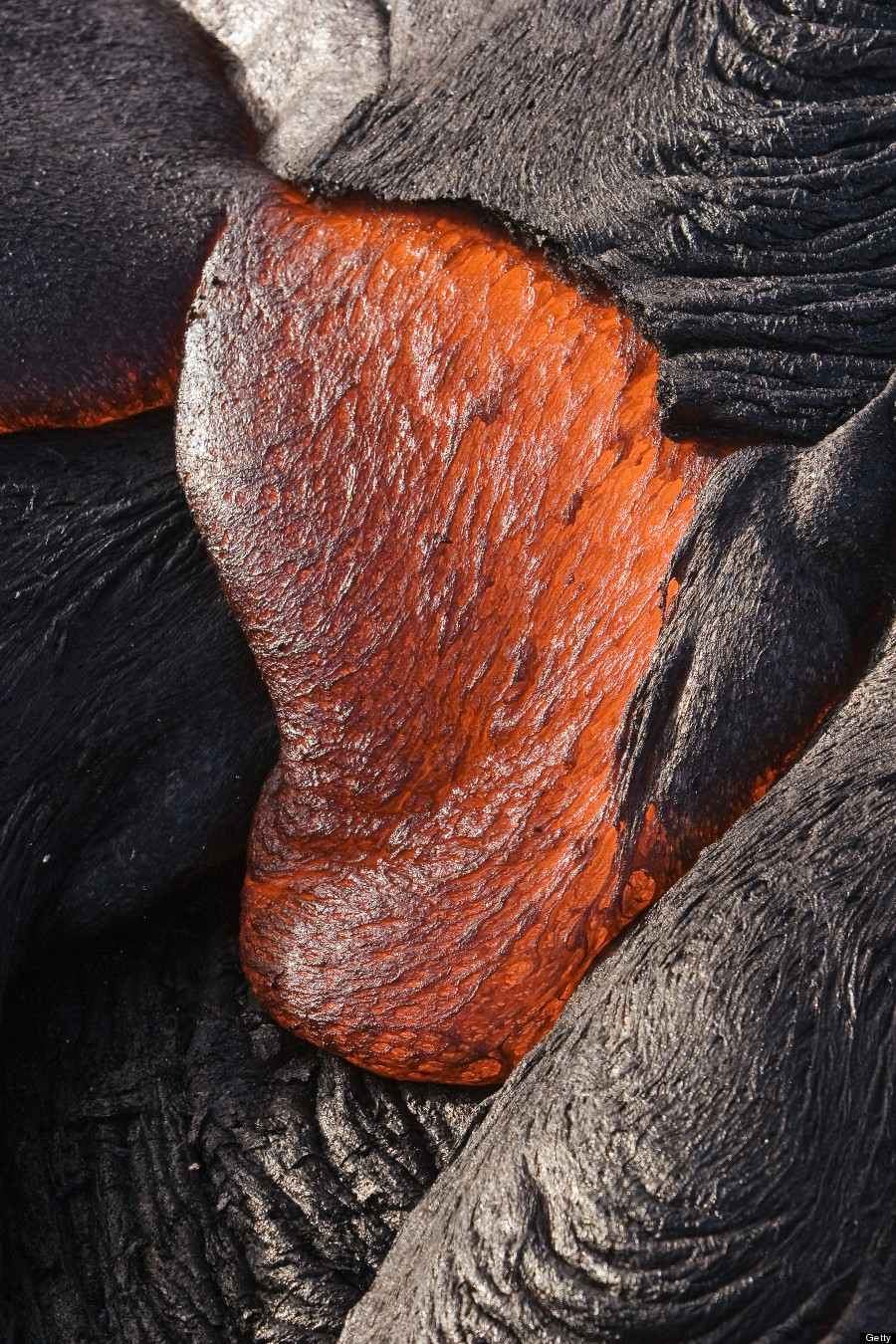
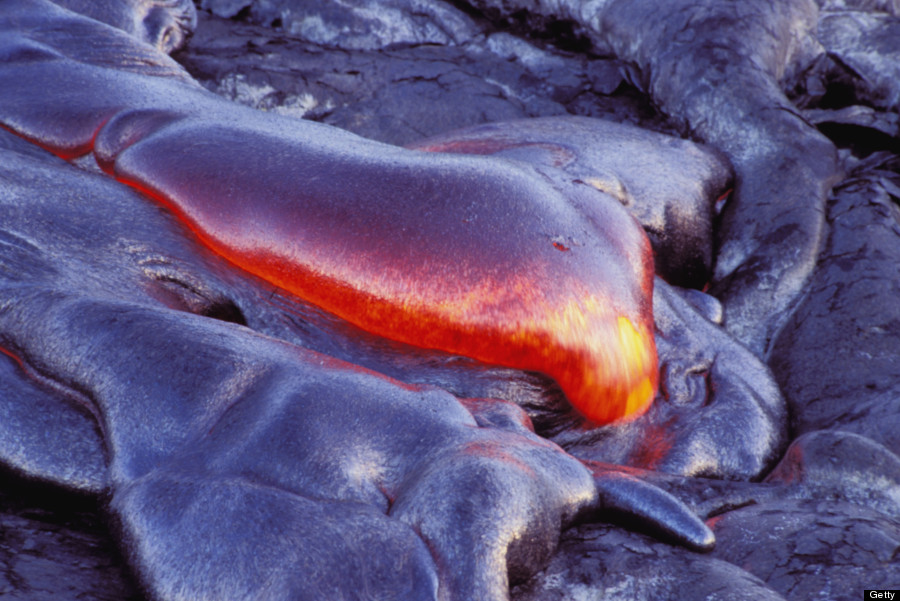
Close your eyes, and imagine a river. It’s heavy, swollen with rain, and moving incredibly fast. It would be a “white-water rapids” except this water is thick, dense, chewy, and powerful. It’s not even really water at all, but more like volcanic lava flow; a turgid, toffee thickness of labdanum and patchouli, a mighty force of smoldering, spiced, slightly smoky blacks, browns, and reds that are lightly flecked with bronzed gold. The heady, potent force field of Mitzah-esque labdanum calls you like a siren. You get on a canoe, and shoot forward on the fast-moving, rich, toffee river with incredible speed and power.

Source: natures-desktop.com

Source: natures-desktop.com

Then, suddenly, abruptly, almost impossibly, after less than two hours….. you slooooow to a crawl. The chewy, dense, smoldering river water starts to dry up around you, becoming thinner, lighter, softer. Before you can blink, it’s turned into to a trickle, evaporating around you, until you’re left stranded in the middle of a dry, leathery riverbed with only the smallest pool of amber around you. A pool so sheer and so soft that you’re almost convinced it’s not actually there, and are completely shocked when you detect faint traces of it every hour when you check.

Source: grist.org

Source: grist.org

As time passes, the disbelief grows at the severity of the contrasts, and by the mere fact that this seemingly invisible drop of water actually still remains. As night falls, there is no more amber and you are alone with only by the faintest whiff of animalic leather. Then, even that remaining puddle of water vanishes, and you’re left longing for the mighty river that began your journey so many hours earlier.

Teo Cabanel logoThat story is the nutshell tale of my journey with the brand-new release from Téo Cabanel Parfums. When a small, hugely under-appreciated, relatively unknown perfume house makes one of your favorite fragrances in the world, you tend to root for it, and want to love all its creations. If the house comes with a fascinating history — complete with the notorious style icon, the Duchess of Windsor, as its most ardent fan — and if you’re a history fanatic, then you are even more compelled to want to like it. The reality, however, is that not all perfumes are created equal. And some fall short of the glory set by their siblings. That is the case with Barkhane, a lovely fragrance from the same house that created my beloved Alahine, but hardly a match for the latter’s potent, fierce, boozy, and utterly spectacular, sophisticated, spicy smolder.

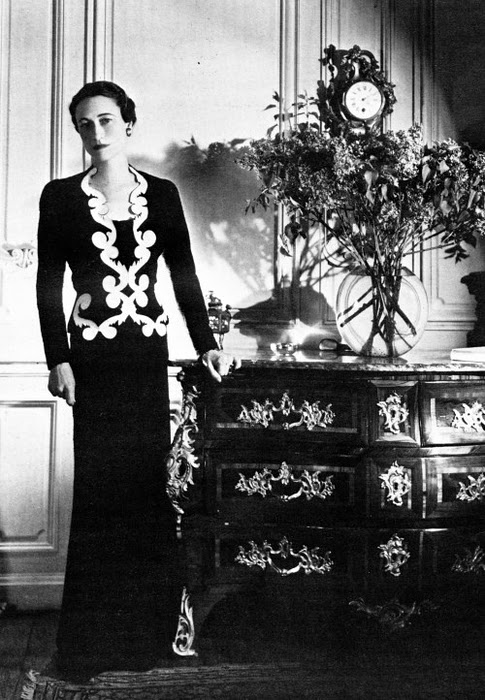
The Duchess of Windsor

The Duchess of Windsor

Barkhane is an eau de parfum from the French perfume house, Téo Cabanel. It is a very old brand that was founded in 1893 in Algeria by Théodore Cabanel, a talented, very prolific perfumer who moved to Paris in 1908 where he developed well over 150 different perfume formulae. He fast came to the attention of high society, and became a favorite of the Duchess of Windsor — the woman for whom King Edward VIII famously gave up the British throne. In fact, she refused to be without two of Cabanel’s fragrances (Julia and Yasmina), ordering bottles in massive quantities, and Cabanel became her official perfumer.

Unfortunately, over time, the house faded away, but it was essentially reborn in 2003 under the direction of Caroline Illacqua who had a distant connection to Cabanel’s daughter. Illacqua brought in the perfumer, Jean-Francois Lattya very famous “nose” who created YSL for Men, YSL‘s Jazz, Givenchy III, Van Cleef & Arpel‘s Tsar and, allegedly, Drakkar Noir as well. (If so, I assume he worked alongside Pierre Wargnye who is usually credited with that famous men’s cologne). Latty now works solely as the in-house perfumer for Téo Cabanel.

Barkhane in the 50 ml bottle. Source: Téo Cabanel website.

Barkhane in the 50 ml bottle. Source: Téo Cabanel website.

This week, the two released Barkhane, an eau de parfum that is the first of the Cabanel line to include oud. The company describes the perfume (and explains its name) as follows:

Rich, warm and mysterious, Barkhane borrows its name from the smooth, velvety dunes which gently ripple under powerful desert winds. Barkhane owes its refined elegance to the very finest ingredients. All at once powerful and subtle, it develops its own fascinating uniqueness.

The press release documents describe the fragrance as a “woody-chypre,” which I find quite odd as Barkhane has the most oriental notes and smell imaginable. According to the description on Téo Cabanel’s website and on Fragrantica, Barkhane’s notes include:

bergamot, labdanum, Indonesian patchouli, geranium, cumin, curry tree, vetiver, oud, myrrh, tonka bean, vanilla and musk.

Mitzah. Source: Fragrantica.

Mitzah. Source: Fragrantica.

I sprayed Barkhane on my skin, and my response was instantaneous: I actually cried out aloud, “Mitzah!” Then, I sniffed the vial, sniffed my skin again, and almost did a happy dance. The first line on my note pad is: “Mitzah, Mitzah, Mitzah!” For those of you unaware of the name, Mitzah is one of Dior‘s elite Privée line of fragrances and a huge cult hit with a very passionate following. Or, rather, I should say, it was, since the imbeciles at Dior suddenly decided to discontinue it for reasons that no sane person (including people who work at Dior) can fathom. Mitzah is one of my favorite perfumes, still available at some Dior boutiques and Dior online, but the remaining stock won’t last forever, and one day, it will be nothing more than a ridiculously priced hot commodity on eBay. So, as you can imagine, I was thrilled that there may be an alternative out there should my giant bottle ever dry up.

Source: HuffingtonPost.com

Source: HuffingtonPost.com

Barkhane opens like Mitzah on steroids. No two ways about it. It has some of Alahine’s explosive, nuclear opening, but with the Mitzah aroma. Could there really be greater joy? When you sniff the vial, it’s all roses and labdanum, but the opening burst on the skin is purely the labdanum. It feels like a tidal wave of brown, nutty, leathery, sweet toffee with an almost caramelized undertone and richness. It’s immediately followed by incense smoke, and dark, chewy, spiced, real patchouli.

Then, the spices appear. There is a heaping teaspoon of sweetened curry, with just the merest dash of dry, dusty cumin. There is nothing sweaty about the mixture, and absolutely no trace of body odor. It also doesn’t smell like food or actual Indian curry dishes. The spices are blended seamlessly into Barkhane, never feeling very noticeable in a heavy, distinctive way, and really smelling more like the dry dustiness surrounding a spice merchant in a Moroccan souk or bazaar. Even if they weren’t so well-blended in the fragrance, the simple fact is that there is little that could possibly trump that powerful wave of labdanum toffee and slightly smoky patchouli.

Source: hdwallpaperstop.com

Source: hdwallpaperstop.com

Other notes flit about Barkhane’s edges. There is a bitter citrus note like the slightly sour peel of a lemon rind that has been dried. A subtle hint of woody, equally dried vetiver pops up in tiny doses. Underneath the heavy top notes, there are also subtle flecks of geranium’s greenness, some golden musk, and a sliver of vanilla. The geranium is the most interesting thing to me because, at first sniff on the skin, Barkhane differs from Mitzah in not having that undercurrent of rose. But it is the oddest thing: if you smell the vial, you definitely smell roses under the labdanum amber. And, on the skin, the same thing slowly starts to appear. It has to be the geranium whose flowers can often have a spicy, rose-adjacent, rich red smell. In short, something about the combination of the geranium and the patchouli seems to have recreated the aroma of deep, ruby-red roses in Barkhane, thereby completing the similarity to Mitzah.

Source: Huffingtonpost.com

Source: Huffingtonpost.com

Even if I didn’t know and love Mitzah, I would adore Barkhane’s opening. It’s a chewy, spicy, smoky fragrance that is absolutely stunning. The sweetness is perfectly balanced by the dry spices and the suggestion of woodiness. Speaking of which, to my nose, there is absolutely no “oud” that ever appears in Barkhane. There is a definite dry woodiness underlying the fragrance, but it’s wholly amorphous and lacking in distinction to me. It’s probably the subtlest part of the fragrance as a whole, because Barkhane’s real source of dryness are the spices and incense.

At first, Barkhane is massively potent. In that way, it is like all the Téo Cabanel fragrances that I’ve tried thus far (Alahine & Oha), but it’s not quite as ferocious as Alahine can be. That is a fragrance that is much better with less, especially as a heavy application can completely and utterly blow out your nose at first sniff. (It did to me the very first time I tried it.) To give you an idea of the potency of some Cabanel fragrances, my parents each applied a small dab of Alahine in solid form, and I could smell them almost across the whole length of the house. And even up a flight! (Alahine is unisex, by the way, and found an immediate fan in my father.) Barkhane doesn’t quite pack the same nuclear punch as Alahine in its opening minutes, but it certainly tries. And it’s definitely much more powerful than Mitzah at the start.

ApothCab2Thirty minutes in, Barkhane unfurls and blooms into the loveliest, deep, dark labdanum amber with a floral undertone. It really smells like that heady, powerful, concentrated, dark rose note that Téo Cabanel loves so much and which is probably their signature. The curry note is also starting to become more prominent. It is dusty, evoking an old apothecary’s cabinet from centuries past, a cabinet whose wooden drawers carry the lingering traces of spice and time. The patchouli continues to be forceful, and the smoke seems to have increased, adding yet another subtle dose of dryness to the nutty, slightly dirty, very toffee-smelling amber.

50 minutes in, Barkhane starts to change in weight, texture, and feel. It becomes softer, tamer, milder, dropping quickly in its heaviness, projection, and power. Now, it hovers only 3 inches above the skin, a fact that should tell you something about its opening minutes. While that is still very strong, the more significant fact is that Barkhane feels much thinner than it did at its start. It’s now more like darkened silk, rather than an opaque river of black, viscous, dense resin. The perfume continues to turn more sheer — and, then, suddenly, it drops like the wind.

Source: scenicreflections.com

Source: scenicreflections.com

Ninety minutes into its development, Barkhane is suddenly a skin scent. From a powerful Saharan sandstorm, it’s become a veritable puff of air — and it’s a shockingly fast transformation. Barkhane is now the sheerest glaze of dark, toffee’d labdanum, infused with patchouli, spices and incense. It feels amorphous, intangible, elusive, and likely to slip away at any moment. What happened?! Every 20 minutes, I sniff my arm in the expectation that Barkhane has completely vanished. My nose is right on the skin, and, at times, I have to practically inhale to detect anything beyond the amber, but it didn’t die. My notes are filled with time calculations, and the disbelieving words: “still there.” By the end of the 3rd hour, I wrote “almost all gone.” I was utterly mystified. To have that degree of drastic change is not something I’ve experienced often.

Photo: Heather A. Riggs, available at her Etsy store, ShyPhotog. (Website link embedded within photo.)

Photo: Heather A. Riggs, available at her Etsy store, ShyPhotog. (Direct website link embedded within photo.)

Even more bewildering is the fact that Barkhane seems to have come back to life, albeit in the sheerest, most translucent manner imaginable. Hour after hour, it hung on as a labdanum-patchouli-incense fragrance. To my complete disbelief, Barkhane actually seemed to get stronger around the start of the 8th hour!! It was still a skin scent, but easier to detect. I’ve never been anosmic to amber, especially not to labdanum, so I can’t explain it, but I’m currently at the end of a second full test and the same situation is unfolding. Crazily enough, Barkhane lasted just over 11.75 hours on me. In its final hour, it turned completely leathery with an animalic, musky edge that almost bordered on the subtly urinous, but not quite. The amber warmth remained, adding a faint glow of warmth, but Barkhane was primarily a nebulous, vague, dry, animalic leather fragrance that lingered in gauzy patches that were scattered across the skin.

In the end, Barkhane’s long duration is consistent with the other Téo Cabanel fragrances that I’ve tried, but the sillage issue is quite new to me. I was really convinced that Barkhane was about to die at the end of the third hour! Making matters more bewildering is that I had actually sprayed quite a lot of Barkhane, at least by my particular Téo Cabanel standards: 3 sprays that were very big and full-sized due to the large nozzle. For this generally intense line of fragrances, that is a lot for a starting test! (Do not ever try that with Alahine, for example, at least until you get used to it.) In my second test, I used 4 and 1/2 large sprays, but the situation followed the same path with only a fractional increase in the time that it took Barkhane to turn to gauze.

Barkhane is too new for there to be reviews out in the blogosphere, but I went to Fragrantica in hopes that someone may have shared their experience there. They haven’t, but I was relieved to see some early votes in the longevity and sillage sections:

    • One person gave Barkhane the lowest longevity rating which is “Weak,” and which is defined as “1h – 2h.” However, two people chose “long lasting” which is defined as “7h – 12h.”
    • For projection, 2 people gave it the lowest rating at “Soft,” while one person chose “Moderate.”

I need to make something clear: sillage is a personal preference. Some people don’t want fragrances that howl at the moon, and that’s fine. Mitzah has discreet sillage, too, but the difference is that Mitzah becomes unobtrusive after about 5 or 6 hours! The comparative difference with Barkhane — and the speed of the changes in so many areas as weight, feel, and projection — can’t be ignored. More to the point, when it feels almost certain that a fragrance is about to die after a mere 3 hours, then it has to be discussed, regardless of what the end result is or one’s personal tastes. Judging by the very early Fragrantica votes, there is clearly someone out there for whom Barkhane didn’t die at the end of the 3rd hour, but even sooner and after a mere 1-2 hours. I have to wonder if sillage played a role in that result; if a perfume’s projection seems virtually nonexistent at times, then people who can’t sniff voraciously at their arm every 20 minutes may well conclude that their perfume has vanished.

On the other hand, early votes also demonstrate that Barkhane had great longevity on some people — and it does. So, if you’re looking for something like Mitzah that is even more discreet and intimate, then you’ve got to try Barkhane. In the ways that perhaps matter most, it’s a knock-out. It’s a sophisticated amber that has been done with great finesse and, as always with Téo Cabanel, with extremely high-quality ingredients.

All in all, only one thing stops Barkhane from getting high ratings across the board. Ignoring that one (significant) issue, Barkhane is really lovely: a heady, sweet, spicy, smoky, slightly leathery, nutty and toffee’d amber with lovely decorative flourishes in an incredibly chic, smooth, seamless, refined bouquet. It’s sexy, and seductive in its dark, smoldering glow, but also comforting in its warmth and softness. It would work well on all genders, and it would be perfect for a very conservative office environment (although I would still be careful with the quantity that you apply, given the potency of Barkhane’s first hour). If you’re not looking for the mighty Saharan wind, but the lightest, sheerest, most intimate whisper of darkened amber, then you should definitely try Barkhane. 

DISCLOSURE: My sample of Barkhane was courtesy of Hypoluxe. That did not influence this review. I do not do paid reviews, my views are my own, and my first obligation is honesty to my readers.

DETAILS:
All the Téo Cabanel fragrances in a sample set. Source:  Téo Cabanel e-store.

All the Téo Cabanel fragrances in a sample set. Source: Téo Cabanel e-store.

Cost & Availability: Barkhane is an eau de parfum that comes in a 50 ml/1.7 oz size that costs $130 or €95. It is also available in a 100 ml/3.4 oz size that isn’t quite as common and which costs €120. You can order Barkhane directly from the Téo Cabanel website (which also has a French language version), along with a Sample Set of all 7 Cabanel fragrances in 1.5 ml vials for a set price of €8.50.

In the U.S.: you can order Barkhane in the 50 ml size (at $130) from Luckyscent which now carries a number of the Téo Cabanel line, including my beloved Alahine. (I should add, however, that the latter is also available from discount retailers for a cheaper price, and you can check the Alahine review for some old links.) Luckyscent also offers samples starting at $4 a vial for 0.7 ml.  (It’s a much better deal ordering directly from the company!)

Outside the US: In Canada, Cabanel’s website lists Fritsch Fragrances as its primary vendor. In the UK, London’s Bloom Parfumery carries some Téo Cabanel, but not all. You can call or email to see if they will carry Barkhane once it releases in the UK. Elsewhere, Téo Cabanel is usually carried at Fortnum & Mason’s, but I don’t see it shown online. Liberty’s states that Téo Cabanel fragrances are available only in their actual store. The Téo Cabanel line is carried at Germany’s First in Fragrance, but Barkhane is too new to be shown on the website yet. There are a vast number of perfume shops in the Netherlands and Germany which carry the Teo Cabanel line, so you can check the company’s website link for retailers that is provided down below. As a whole, for European readers, I saw Téo Cabanel online at Parfums MDP (which I think is in the UK?) for the same Euro rate as the company’s website. They say that there is “free worldwide postage” which I find to be stunning (and hard to believe)! I’ve also read  that the perfumes are available at: the Hotel George V in Paris, Les Galeries Lafayette, Douglas (France, Lithuania, Russia), Kadewe Berlin, Oberpollinger Munich, and Albrecht in Frankfurt. For all other countries or specific cities, you can use the company’s Store Locator guide on their website.

Samples: Barkhane is available to test at Luckyscent, at the link above. It is too new for it to be carried at other places, but I will try to update this post if someone other than Luckyscent offers samples. Your best bet for the next few months is the latter, or the Téo Cabanel website with their very affordable sample set.

Oriza L. Legrand Perfume Giveaway: The Ten Winners!

Random.org has spoken, and I have the names of the ten winners for the huge perfume giveaway so generously provided by Oriza L. Legrand Parfums (“Oriza“).

Congratulations

THE WINNERS:

I input all the names into Random.org, and its machine has spat out the list of winners. (If you’re unfamiliar with Random.org and curious about how it all works, you can read about the process, their certification by outside third parties to have true randomness in the selection, and more in their Frequently Asked Questions.)

Without further ado, the first ten winners chosen at random by Random.org are:

Oriza Giveaway Winners List

Congratulations to: Devon Hernandez, Lavanya, Elly, Bruno, Julia, Martin Drigotas, Trine, Tora, ‘Fume Ho, and Caro!

Each of those ten people will get ONE travel spray in a 10 ml spray of their choice of perfume. If you haven’t made up your mind yet, you have a little bit of time to read up on the 7 fragrances in the Oriza line, from the brief summaries in the first article below, to the proper reviews in the subsequent two pieces.

Part I – Oriza, its Paris store, and the return of its fragrances;

Part II – Reviews for Chypre Mousse, Horizon & Reve d’Ossian; and

Part III – Reviews for Relique d’Amour, Oeillet Louis XV, Jardins d’Armide & Deja Le Printemps.

Oriza Chypre Mousse labelThose of you who are pondering Chypre Mousse may be interested in the comments from Cacomixtle, a reader who bought the fragrance blindly on my suggestion, and who cried at its beauty when she put it on. In the comments to the second article, she wrote, in part:

Oh my god, Kafka, my Chypre Mousse came today and it’s so beautiful it’s making me cry. It’s the most perfume (for me) ever. I am absolutely in love, I have no idea how they made it smell like this, and otherworldly and haunting is such a perfect description of it…. I definitely smell the violet flowers too, and they’re my favorite sort (some violets smell like bathroom cleaner to me, meh) and so well melded with the velvet green. I swear I can actually smell ferns, and I do actually know what many ferns smell like!

The mushrooms (I’m assuming they used some kind of octanol-3 synthetic or natural isolate) is so very well done and multi-faceted without turning the perfume into mushroom soup (too easy to do with that particular molecule!), and good lord, this is well done! I totally get what you mean about the Lutenesque/De Profundis feel too…  […]

This perfume seems to fallen out of some Scandinavian fairy tale…. of the beautiful huldra with their tree bark backs and fox tails deep in the old forests. I’m so very enchanted by it, I never quite imagined a perfume could be like this. It needs a soundtrack and a landscape all it’s own…

Reve d'Ossian label. Source: Oriza L. Legrand.

Reve d’Ossian label. Source: Oriza L. Legrand.

Of course, there are other lovely Oriza fragrances, too, each with their special character and twist. My suggestion to you if you’re torn between choices is to go with your gut and your instinctive feel.

Oriza Horizon labelThat said, please feel free to ask me any questions you may have in the comments. After all, 10 mls is a big size and most of you are working blindly, so you want to make the right choice! Don’t hesitate to let me know your general perfume tastes, fragrances you’ve loved, and, perhaps just as important, your skin chemistry. Not all the Oriza fragrances have great projection or longevity. Some can be quite intimate on the skin, and a few can be a bit fleeting. I’ve heard from a few people that one of the most beautiful Oriza fragrances from the line, Relique d’Amour, doesn’t last a huge amount of time on them. By the same token, the lovely Horizon and Reve d’Ossian can be quite be soft after a few hours. So, read the descriptions, think it over, and I’ll help if I can.

CONTACT ME:

You have THREE (3) days to contact me with your shipping information and choice of Oriza fragrance. I will then forward that information on to Oriza in Paris. The deadline is end of the day, 11:59 p.m. my time or Central Standard Time in the U.S., on Saturday November 16th. (So, for those of you in places like France, it would be 7 a.m. on Sunday morning. The UK is -6hrs GMT.)

Please send an email to Akafkaesquelife @ gmail . com  (all one word, scrunched together) with the necessary information.

If you don’t, and if I fail to hear from you within the deadline, I will give the gift to the next person on the list, and/or move the winners up by one.

SHIPPING:

Oriza will send the prizes directly to the winners, and pay for all shipping costs. Given that the company is located in the Paris, and will have to individually prepare 10 travel sprays of all your varied choices, it may take some time (2 weeks, depending on your location and Customs processing) for you to receive your gift. It may take even little longer if your country has really nightmarish customs issues.

Neither Oriza L. Legrand nor I am responsible for items that are destroyed by customs or that are lost in transit for some reason.

Composite of old Oriza photos and adverts, created by forevergreen.eu .  http://forevergreen.eu/a-fleur-de-peau/reliques-parfumees/

Composite of old Oriza photos and adverts, created by forevergreen.eu .
http://forevergreen.eu/a-fleur-de-peau/reliques-parfumees/

FINALLY:

I would like to thank you Oriza’s two owners, Hugo Lambert and Franck Belaiche, for their enormous generosity, kindness and thoughtfulness in offering ten fantastic gifts. They have put their heart and soul into Oriza, trying to stay true to its great legacy, working to keep it relevant in today’s modern world, and doing it all on their own. I wish them nothing but the greatest success, and I fervently hope that this giveaway sparks new interest in a venerable house that goes back almost 300 years. 

I also hope the winners will let me know what they think of their perfume choice when they receive it and have the chance to try it. Better yet, if you love it, you can always tell Oriza, by emailing them at: Contact @ OrizaParfums.com (all one word, scrunched together).

For everyone else, you can always order samples of Oriza’s creations directly from the company. The full, complete set of Oriza fragrances comes in a sample package that costs €9 for 7 fragrances, each in a 2 ml spray vial. I think it’s a great deal, and the chance to take a trip back in time.

Thank you to everyone for stopping by, and may the fragrant winds always keep you safe.