Perfume Review – By Kilian Musk Oud: Cardamom Rose

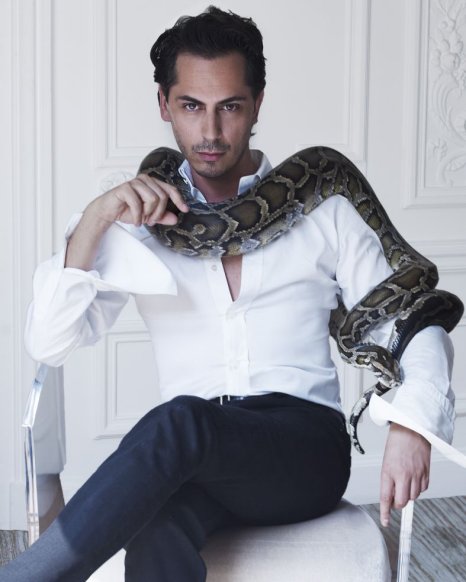
Kilian Hennessy. Source: Metro.co.uk http://metro.co.uk/2012/11/27/kilian-hennessy-the-perfume-industry-is-too-obsessed-with-packaging-549545/

Kilian Hennessy. Source: Metro.co.uk
http://metro.co.uk/2012/11/27/kilian-hennessy-the-perfume-industry-is-too-obsessed-with-packaging-549545/

Consider me surprised. I actually like Musk Oud, a fragrance from the luxury house, By Kilian. I don’t think it’s a fantastic, complex, original, nuanced — let alone impressive — fragrance, but it actually smells really good. And that is truly a first for anything that I’ve tried thus far from Kilian Hennessey, the grandson of the founder of LVMH. Of course, since it is a By Kilian fragrance, my feelings come with all sorts of huge qualifiers regarding sillage, longevity and an even more ridiculous price than usual, but you could have bowled me over with the feather when I kept sniffing my arm appreciatively.

The newly released Musk Oud is the fifth (and last) in Kilian’s Arabian Night Collection of oud perfumes which first launched in 2009. Unlike all the rest of its siblings, Musk Oud was created by the legendary perfumer, Alberto Morillas, who was recently awarded the very first FiFi Lifetime Achievement Award from the U.S. branch of the Fragrance Foundation. He’s a fantastic perfumer and co-created my favorite oud fragrance thus far: the spectacular (and sadly discontinued) forerunner of the whole oud trend, YSL‘s M7. The Kilian website describes Morillas’ latest project as follows:

An animalic perfume with a sensual feminity

Musk Oud is a perfume built on the contrast between a liquorish Rose and an animalic Oud accord of great sensuality. In the opening, the Lemon and Mandarin bring a ray of light warmed by Cardamom and Coriander. The heart is an explosion of Roses made syrupy and intoxicating thanks to the Rum extract CO2. A trace of Frankincense and Indonesian Patchouli bring a smokey facet to the composition saturated with dry woods.

Source: Luckyscent

Source: Luckyscent

Musk Oud’s full list of its notes, as compiled from LuckyScent, is as follows:

Lemon, mandarin, cardamom, coriander, cypress, Bulgarian Rose, geranium, davana, Rum extract, frankincense, Oud accord, Musk accord, patchouli.

Musk Oud is the furthest thing from complicated and, on my skin, it is also the furthest thing from either an animalic musk fragrance or a true oud one. It opens on my skin with a rich, beefy, dark red rose that drips thick, jammy juices and which is lightly infused with lemon and a touch of orange. The whole thing is covered with a heavy layer of gorgeous cardamom, and sits upon a quiet, woody base of cypress tinged with patchouli.

Crimson Rose by Karen Betts. Source: redbubble.com

Crimson Rose by Karen Betts. Source: redbubble.com

Seconds later, like a crocodile’s tail moving in muddy water, there are tiny ripples of animalic musk. To my slight unease, it smells very much like dirty, unwashed hair. However, the note is not only incredibly subtle, it essentially vanishes for most of the perfume’s development. It subsequently pops up only two more times, gives a brief bow for a few minutes, and then disappears completely. I was actually surprised by how evanescent it was since one blogger (who admittedly loathes anything animalic) was completely traumatized by the note in Musk Oud. Since my skin actually amplifies both animalic and base notes, I’d fully prepared myself to be overcome by every possible filthy, dirty, raunchy, unwashed, fetid aroma imaginable. Never happened. Not once. And if it should happen to anyone, it should happen to me with my wonky skin that amplifies animalics. Instead, there were only the most minuscule of stirrings in the brown waters of Musk Oud’s base. Perhaps a more accurate analogy would be to compare it to a mosquito in water instead of a crocodile’s tail.

Cardamom. Source: kitchenheadquarters.org

Cardamom. Source: kitchenheadquarters.org

The primary, overwhelming impression of Musk Oud in the first hour is of a cardamom-rose fragrance with other notes just dancing in the sidelines. The richness of the rose is accentuated by a darkly liqueured note, while the cardamom… oh, what cardamom! It’s sweet, nutty, a little dusky, and very spicy. So much so that it almost feels as though it’s accompanied by a fiery red saffron. Undoubtedly, that is just my mind interjecting things, since saffron is often the third twin to the rose-cardamom combination, but Musk Oud does feel as though there is saffron in there, too. As for the dry base, the cedar is lightly sweetened by patchouli and entwined by subtle tendrils of black smoke. There is absolutely no oud at first, and it takes ten minutes for the note to show its face. It’s slightly medicinal but, like all the other elements in the base at this stage, it is extremely muted and serves only to add indirect depth and body to the overall fragrance.

Things start to go down hill a little near the end of the first hour. It took all of 40 minutes for Musk Oud to become a complete skin scent on me. I tried the perfume twice — which wasn’t hard to do, given the usual, below-average longevity that I experience with all Kilian fragrances — and the second time, I applied double the quantity. This time, Musk Oud took one whole, whopping hour to become so glued to my skin that I had to inhale at my arm like a rabid animal to detect its nuances.
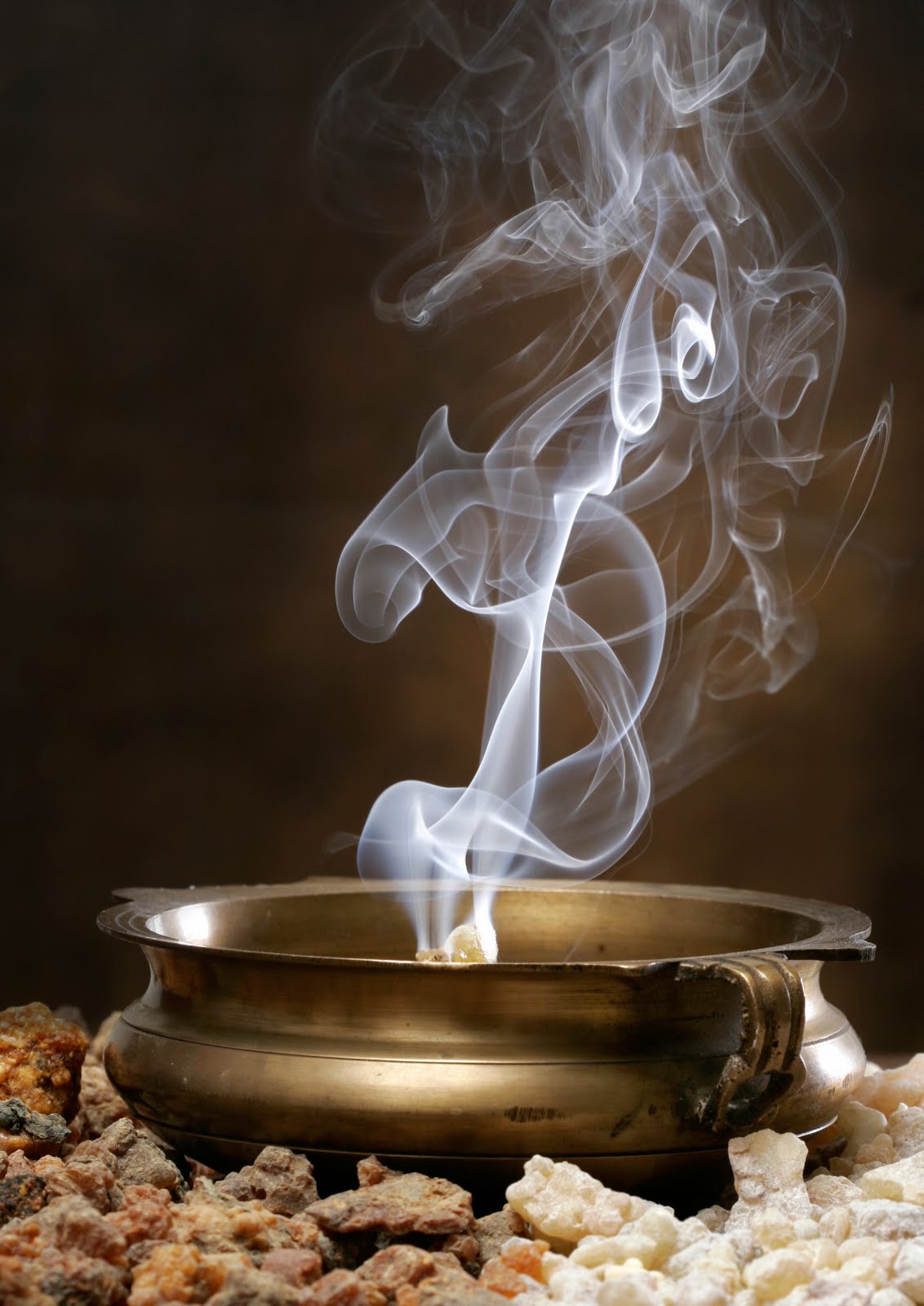
Frankincense Smoke  via iStock photos

Frankincense smoke via iStock photos

And, in truth, those nuances were few and far between — in both tests. Just over an hour into the perfume’s development, the base notes come to the foreground as frankincense and oud emerge as the dominant duo. However, neither note is very rich or deep. There is still a heavy sprinkling of cardamom, but the rose note has receded somewhat to the background. Occasionally, it will pop up and become more noticeable, then vanish, then come back to take over the whole scent for about five minutes, then retreat…. and so on. The animalic musk makes a brief appearance around the 90 minute mark, but quickly decides to throw in the towel completely. So, those simple, repeated notes with their varying fluctuations are really the sum total of Musk Oud. The citrus notes had departed long ago; ditto for the cedar; and there was never any geranium or davana to begin with. As for the rum and patchouli, both are essentially undetectable in any distinctive, individual way, except in helping to create that liqueured base to the rose.

After a brief period of time as an oud fragrance with tablespoon of cardamom, a teaspoon of rose, and a pinch of smoke, Musk Oud turns into a simple, more abstract, woody fragrance. There are subtle flecks of oud and cardamom with just a light whisper of jammy rose, but the whole thing feels quite muted and is extremely hard to detect given the nonexistent sillage. Then, Musk Oud dies entirely, having lasted no more than 3.5 hours with my usual dose and 4.25 hours with my larger one. Neither number is very impressive.

I had been curious to what extent Alberto Morillas’ co-creation of the fabulous M7 might have influenced the smell of another spicy agarwood fragrance. The answer is none at all. With the exception of the citrus, cardamom and oud, the two fragrances have no familial olfactory resemblance at all. To my surprise, it is a wholly unexpected perfume house which comes to mind: Guerlain. Kilian’s Musk Oud really evokes early parts of Guerlain‘s Rose Nacrée du Désert from Les Déserts d’Orient Collection. The first hour of Rose Nacrée has the exact same sort of rich, darkly liqueured, jammy, beefy rose infused with cardamom that dominates Musk Oud. Of course, the two perfumes eventually part ways, with the Guerlain turning into an overly syrupy, sugared, almost gourmand fragrance, while the Kilian turns into frankincense and oud. I’m sure there are even more cardamom-rose fragrances out there that resemble Musk Oud (especially from Montale) because, the truth of the matter is, it’s not a very inventive fragrance. It smells great for what it is, but it treads some well-worn ground.

Going by my experiences, the name “Musk Oud” feels like a misnomer. For one thing, on my skin, there was almost no musk in it. For another, the quantity of agarwood was hardly enough to render the scent a true oud one. It reminded me Kilian‘s Amber Oud which, to my nose and on my skin, had virtually no oud in it at all. Musk Oud has more of the note, but it’s all relative. In fact, given how the fragrance is such a skin scent, what little oud there is may be even harder to detect.

There aren’t a lot of in-depth blog reviews out there for Musk Oud. The fragrance is so new that I couldn’t even find a Fragrantica entry for it. However, out of the two comments on Luckyscent, both focused on the musk issue. One poster loved the scent, writing that Musk Oud was “[j]ust the right balance between the oud and the musk, neither too animalic nor too clean.” The other tried hard to be polite and mask his disdain:

Not impressed. I love rich, deep musk scents. My favorite perfume is Musc Ravageur. So when you name something Oud Musk, well I’m expecting something rich and dark and almost dirty. There is nothing unique about this. It’s not a clean musk mind you, it does have the dirtiness but its done in an oddly sheer way. I will say however, that that is probably perfect for some people. A polite, dirty musk. I guess there is a place for it.

Both commentators thought that the perfume had outstanding longevity and wrote that it “lasted all day.” I think that may be the first time I’ve ever seen that said about any Kilian fragrance, but, hey, I’m happy there are exceptions.

How you feel about Musk Oud will depend solely on two things: how you feel about animalic notes, and how your skin deals with them. The second review on Luckyscent is significant because it underscores that point. If you’re someone who loves a scent like Frederic Malle‘s Musc Ravageur (or, even more extreme, Parfum d’Empire‘s Musc Tonkin), then Musk Oud will be disappointing child’s play. If you’re someone like me whose feelings about musk can depend on its treatment, you may greatly enjoy Musk Oud, especially if your skin chemistry decides to play nicely with the note. But if you’re someone who can’t stand any animalic notes whatsoever, then Musk Oud may be a nightmare regardless of chemistry.

That was the case with Lucas of Chemist in a Bottle whose traumatized account of the fragrance reads, in part, as follows:

The opening act of By Kilian Musk Oud is a tidal wave of musk on my skin. I smell raw, animalic if not a fecal kind of musk. It has that dense, powerful structure that will be definitely too much for those who are not infatuated and obsessive by this raw perfume material. I definitely don’t belong to that group! Couple of minutes later I start to smell trouble. Double trouble because here appears the oud. In the whole oud fragrances trend I am quite lucky that oud notes don’t manifest themselves too bold on my skin. However Musk Oud doesn’t classify as one of those. As I write this my arm is almost dripping with oud. No joke! [¶]

[Later] I was attacked by a hard to describe smell that to me, in the closest comparison, was a mix of unwashed, sweaty clothes and sticky, greasy hair. So gross and so off-putting.

As you can see, a wholly different experience from either myself or the two chaps on Luckyscent. The odd thing is that my skin normally amplifies both musks and agarwood to the point where it can overwhelm a perfume, while Lucas — in testing the exact same fragrance — can find them to be completely minute and tolerable. So, I’m not quite sure what happened here to flip the situation so much on its head but, for me, Musk Oud was neither a musk fragrance nor an oud one. (It certainly was nothing like my experience with Opus VII, the animalic, musky oud fragrance from Amouage!) Where my experience does parallel (a little) that of Lucas is in terms of sillage and longevity. Musk Oud lasted 6 hours on him, and he found the sillage to be very low.
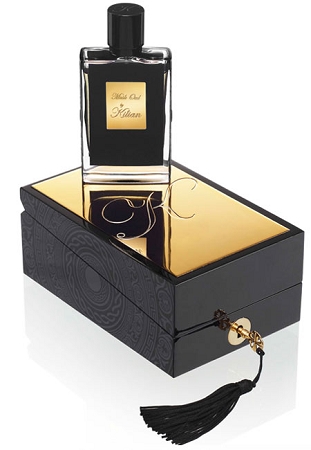
Musk Oud, 50 ml bottle. Source: Aedes.

Musk Oud, 50 ml bottle. Source: Aedes.

I very much enjoyed the cardamon-rose aspects of the fragrance, but I would never buy Musk Oud. I think it’s ridiculously over-priced for what it is, and simply isn’t special enough. Kilian’s prices are high to begin with, but the Arabian Nights Collection takes it to ridiculous levels given the generally uncomplicated, bare bones, and sometimes mundane nature of the scents. (Yes, Amber Oud, I’m looking at you.) Normally, Kilian charges $235 for a small 50 ml/1,7 oz bottle of one of his fragrances, like the recent Flower of Immortality. However, Musk Oud — like all the oud scents in the Arabian Nights Collection — retails for $395 (or €295), with the “cheap” alternative options starting at $185 for a refill bottle. Until Mr. Hennessey corners the world supply of either jammy roses, cardamom, musk or oud, I see nothing in this simple, relatively linear, fleeting, and sometimes impossible to detect fragrance that is worth $400 (more, with tax) for a tiny bottle, or even $185. There are half a dozen fragrances from Montale alone that are based on oud, rose, cardamom, frankincense and/or musk; they cost $110 for the same size bottle, have projection, and last forrrrrrrrrrrrrrrever!

That said, I do think Musk Oud is pretty enough to be worth a sniff or a small decant. However, given the sillage, longevity, cost, uncomplicated and non-oud nature of the fragrance, it may not be worth more than that.

DETAILS:
Cost & Availability: Musk Oud is an eau de parfum that costs $395, $235 or $185 (depending on the form in which you buy it). The lovely lock-box version is 1.7 oz/50 ml of fragrance and costs $395; the refill bottle is $185; and the travel option is $235. In the U.S.: Musk Oud is available at Bergdorf Goodman (in all 3 options), Saks Fifth Avenue (2 options) and Aedes (just the $395 lock box). All 3 options are available at Luckyscent, along with samples for $5 for a 0.7 ounce vial. Outside the U.S.Musk Oud is available on By Kilian’s international website where it costs €295 (with VAT included) for a 1.7 oz/50 ml bottle. The site also has the more affordable options. In London, you can find Musk Oud at Harvey Nichols which carries the 50 ml/1.7 oz size lock box version for £265.00 or the 50 travel refill for £110.00. Harvey Nichols stores around the world, from Dubai to Hong Kong, also carry the Kilian line. In Paris, the Kilian line is carried at Printemps. As for other locations, By Kilian’s Facebook page lists the following retailers and/or locations: “HARVEY NICHOLS (UK, Honk Kong, UAE, Saudi Arabia, Koweit, Turkey), Le BON MARCHE (France), TSUM (Russia), ARTICOLI (Russia) and HOLT RENFREW (Canada).” Samples: Samples are available from Surrender to Chance where prices start at $4.99 for a 1/2 ml vial. 

Perfume Review – Atelier Cologne Orange Sanguine: Liquid Orange

Liquid sunshine. Summer citrus in a bottle. A holographic, 3D jewel of orange. A kaleidoscopic burst of every glorious citrus fruit you can imagine, taken from its stem to its green leaves to the very tree itself, bottled in its purest essence. That’s Orange Sanguine, a concentrated eau de cologne from Atelier Cologne and a glorious, affordable scent that will give you whiplash from disbelief at its utterly spectacular opening.

Source: wallpapermi.com

Source: wallpapermi.com

Atelier Cologne is an interesting perfume house. Started in 2010 by founders and romantic partners, Sylvie Ganter and Christophe Cervasel, Atelier is the first fragrance house entirely dedicated to fragrances in the classic cologne formulation. As many perfumistas know, eau de cologne is typically the mildest, weakest form of fragrance, so the creators decided to take it one step beyond. They created a whole new formulation of perfumery called the Cologne Absolue. As the Atelier website explains:

[c]ombining innovative constructions and extremely high concentrations, Cologne Absolue is a cologne of character exalting the magical freshness of cologne coupled with the lasting power of eau de parfum.

In an interesting (and rather sweet) Vanity Fair article on the couple, how they fell in love, and their unique perfume creation, Ms. Ganter explains:

the “cologne absolute” … marries the richness of an eau de parfum with the airy freshness of a citrus cologne.

The secret, Ganter will tell you, is about using a precise concentration of essential oils—each cologne absolute contains a range from 12 to 20 percent—and extracting the best ingredients from around the globe to preserve their intensity and beauty. “We blend familiar notes of vanilla, amber, rose … [but] with fresh citruses, to give them a new and unexpected personality,” Ganter says of her growing scent portfolio, which includes such hits as the bestselling Bois Blonds, a warm blend of Tunisian neroli, Haitian vetiver, and woods; and Orange Sanguine, a sparkling whiff of blood orange, jasmine, and tonka beans, which won a FiFi award (the Oscars of fragrance) last year. [Font emphasis added to the names.]

In 2012, the French FiFi awards gave Orange Sanguine their Experts Award for a fragrance sold in less than 100 stores. It’s quite an achievement for a house that had opened just two years before.

Orange Sanguine Atelier CologneOrange Sanguine was created by perfumer, Ralf Schweiger, who is perhaps best known for his Lipstick Rose for Frederic Malle. (It is an atrocious scent, in my opinion. One of the very few perfumes I had to actually scrub off — and I can put up with a lot!) But Orange Sanguine is a very different matter, indeed. In an interview with CaFleureBon, Mr. Schweiger talked about his inspiration and goal behind the fragrance which is centered more on blood oranges than on the regular variety:

What was your inspiration for Orange Sanguine?

RS: Blood oranges are my favorite citrus fruit! LOVE them! They have this tart green spiciness and their gorgeous bloody color is amazing, not a uniform red when you cut them but this red marble effect… I prefer their taste to regular oranges, especially squeezed for juice.

What does Orange Sanguine conjure up for you?

RS: It is quite literal, my idea of what a blood orange scent should smell like: slightly tart but a little sweet as well, green and a little scratchy… as I described earlier, I have in mind a cut orange with this gorgeous color and pattern to it…

Can you describe the key ingredients of Orange Sanguine and their properties/specificities?

RS: Orange Sanguine is more of a concept and not so ingredient driven. I prefer a combination of bitter orange peel oil amongst others and a choice of specific ingredients to present the sensation of full-bodied tartness. The ingredients used to give the heart and base notes were chosen to help prolongate the freshness over time.

What sets Orange Sanguine apart?

RS: It is an accord made only of orange-type citrus oils without bergamot with its distinct floral character; it is not a classic cologne structure but uses modern style perfumery notes.

Orange Sanguine as an eau de cologne absolue contains 15% concentrated perfume oils (which puts it at the level of some eau de parfums) and contains the following notes:

Top notes : blood orange from Italy, bitter orange from Spain, red mandarin from Italy

Heart notes : jasmine from Egypt, geranium from South Africa, black pepper from Madagascar

Base notes : tonka bean from Brazil, sandalwood from Indonesia, cedarwood from Texas

Blood Orange via Fragrantica

The very first time I tried Orange Sanguine, I was so stunned that I actually said “Oh My God” out loud. I wrote it in my notes, alongside “WOW! Liquid gold! Sunshine in a bottle!” Orange Sanguine opens with a positive canon-ball explosion of orange that is so zesty, fresh, tart, sour, sweet, zingy, and multi-faceted that you can get whiplash from sniffing your arm. Instead of being unctuously thick, gooey or syrupy, the scent is so fresh and aromatic that it’s almost more like concentrated citruses. But it’s never anything as completely banal as orange pulp. You truly smell the bitter, almost spicy blood orange at its core, along with tart notes that feel like tangerines, the bitterness of the twigs and stem, the greenness that feels like the leaves from the tree, and the pulpy meat of the fruit inside. There is a sharply pungent smell of concentrated citrus oil that feels as if you just took a knife and sliced through the rind of the fruit, squirting its oils in the air.

Source: Shutterstock.com

Source: Shutterstock.com

If you took 15 oranges, rendered them into pulpy juice and tossed in a cup of the grated rinds, you still wouldn’t have this smell. You really wouldn’t. Perhaps if you took a 100 citruses — of every possible variety — condensed into the purest concentrated nectar, then you might have the base. But, again, that alone still would not be enough to encapsulate Orange Sanguine. The slightly bitter woodiness of the twigs and stems, the aromatic fragrances of fresh, waxy green leaves, and the perfect balance between sweet and sour, tart and tangy would also have follow. Orange Sanguine manages all that, and more. As the moments pass, even further layers seem to be added. I could detect notes that smelled much like sour, tart white grapefruit and — in a throwback to my old home in Montecito which had tons of the trees — even the fragrant, tangy kumquats that I used to eat by the bucketful. Then, 15 minutes in, the geranium appears, adding even further to the visual of green leaves nestling a glowing, ruby and orange gold compilation of fruit. The geranium adds a light piquancy and spicy bitterness that feels much more like the fuzzy green of the leaves than just the aroma of the flower.

Source: uuhy.com

Source: uuhy.com

The whole thing is so photo-realistic, it feels like a hologram. A dazzling display of citruses that are so fresh, it simultaneously feels as though they’re hanging straight off the tree and warmed by the sun but, also, as if they’ve been chilled in the fridge, dappled with condensation. Cool and crisp, Orange Sanguine never feels leaden, thick, syrupy or heavy. It’s almost bewildering how Ralf Schweiger made something that feels so concentrated be so incredibly airy and almost aquatic in nature. Honestly, I can’t say it enough: Orange Sanguine’s opening is truly a masterpiece, an olfactory achievement of breathtaking magnitude in those early moments.

Source: Dreamstime.com Royalty Free stock photos

Source: Dreamstime.com Royalty Free stock photos

I tried Orange Sanguine three times and, on one of those occasions, the glorious opening shifted into something a little rockier. On my second test, in order to assess longevity issues, I put on a larger dose — the dabbed equivalent of two medium-to-large sprays. And, less than 20 minutes in Orange Sanguine’s development, I got a blast of soap that was so extreme, I felt as if I’d been doused in suds. I’m not a fan of soapiness, and this was a huge amount! Perhaps even worse was a similar large blast of something so synthetic that it burned my nose. I was not happy in the slightest, especially as the synthetic note lasted for over an hour, and the soapiness even longer still. In fact, the perfume turned into something very much like geranium soap over an amorphous, slightly synthetic, generalized “woody” base. It wasn’t sandalwood in any distinct form; instead, it was just some sort of vague creamy, beige base.

However, on my first and third test, I used much less of the fragrance and had a slightly different outcome. There was no synthetic burst or burning of the nose. Soapiness was still an issue, however, on each occasion starting between the 20 to 30 minute marks. It wasn’t as hugely overwhelming as that one time and, though I absolutely despise “soapy, clean” fragrances, it was significantly more manageable. Still, there is no doubt that Orange Sanguine’s glorious opening does eventually turn in every instance into something very reminiscent of the most expensive, luxury French soaps. It’s geranium-citrus soap to my nose with, sadly, much of that photo-realistic, concentrated citrus nectar fading from its spectacular, dizzying heights and turning into something much more amorphous, vague and generalized. There is also a creamy base to the notes that starts to become more apparent with time. It’s never anything distinct like jasmine, vanilla or sandalwood, but, rather, something just can only be (poorly) described as “creamy.” The edges of the perfume have become softer, the scent feels richer and fuller, though it’s still an airy fragrance in terms of weight.

Pink geranium and its leaf. Source: alajnabiya.blogspot.com

Pink geranium and its leaf. Source: alajnabiya.blogspot.com

Orange Sanguine continues as geranium-citrus soap for several hours. The base feels like some sort of vague impression of gauzy beigeness. Eventually, during its final stage, the perfume turns into some abstract notion of orange muskiness, and that’s about it. There really isn’t a whole lot to the perfume.

Some people have talked about how Orange Sanguine is an orange fragrance mired in a wonderful, creamy sandalwood base. Others think that the base is ambered. I don’t think so — for either note. I truly don’t. At best, perhaps you can say that Orange Sanguine has “sandalwood” in its most synthetic, abstract, amorphous, artificial form. But, honestly, to my nose, there is no sandalwood, even in a synthetic form. And the same goes for the amber or any vanilla note. Whatever the synthetic base, the impression to me is just of vague, indefinite, indistinct, creamy, beige… something. In its very final moments, Orange Sanguine is simply some abstract orange muskiness. In fairness, it’s not supposed to be much more than an orange fragrance from start to finish — the interview with the perfumer, Ralf Schweiger, underscores that point. Nonetheless, Orange Sanguine isn’t a complicated, morphing, heavily nuanced scent beyond the citruses (geranium and soap).

There is massive, gushing, overwhelming love for Orange Sanguine — by men and women alike — but there are some minor dissenters, too. In a nutshell, the few complaints on sites like Fragrantica, MakeupAlley, or Luckyscent can be summed up as follows: 1) it’s an orange bomb; 2) it’s overly sweet (with one person finding it too bitter); and 3) it’s synthetic (someone on Luckyscent wrote: “smells more like my orange-glo spray cleaners after 20-mins. Too synthetic.”). On Fragrantica, those people who noted the soapy aspect or the synthetic element in the first hour didn’t seem particularly bothered by it. On Luckyscent, the issue of sweetness seemed to be a far greater problem, while on MakeupAlley, there were some minor comments about both soapiness and longevity.

Source: Twitter.

Source: Twitter.

Honestly, I think all of those points are valid and worth consideration. Orange Sanguine is not a fragrance for those who prefer their orange notes mixed with a variety of different elements; it is an orange bomb and it is largely linear. It also has soapiness — a great deal of it, in fact, if you spray on a large quantity — and that will be a deal-breaker for some, while others may adore the “clean” aspect that the soap imparts. Orange Sanguine may also be far too sweet for some, while too bitter for those who don’t like blood oranges (this was actually raised as an issue by one or two people who seem to hate that variety of orange). And, it does have a synthetic aspect that becomes more noticeable if you spray on a lot of it.

It’s also a fragrance that may have problematic longevity for a number of people. I’ve read a number of comments about how Orange Sanguine only lasts a short time (between 3-5 hours). On me, with my voracious, perfume-consuming skin, I was actually surprised to get between 6 and 7.5 hours, consistently, depending on quantity and amount. I know one blogger who initially thought Orange Sanguine’s longevity to be its only defect but who subsequently noted that the perfume did, in fact, stay on for a surprising length of time.

Yet, despite all those issues, I found myself fascinated by Orange Sanguine and it is a fragrance that I would wholeheartedly recommend for a test sniff at the very least. For one thing, that opening is truly stunning. If ever you’ve struggled to get out of bed on a Monday morning, I think Orange Sanguine would be the answer. For another thing, my God, is it affordable for niche perfumery! The perfume comes in three sizes: from the very practical 1 oz/30 ml, to a large 3.3 oz/100 ml, to a super-sized, monstrously huge 6.7 oz/200 ml bottle. The prices are, respectively: $60, $95 or $155; €39 for the 30 ml small; or €90 or £75.00 for the large 100 ml. (Orange Sanguine is also widely available and is even sold at Sephora!) If you have longevity issues, you can buy the gigantic 200 ml bottle for $155 or £95.00 which comes to very little per ounce and can therefore splash away with reckless abandon. (In U.S. currency, the 6.7 oz bottle breaks down to approximately $23 an ounce, while the 3.3 oz bottle ends up being $47 an ounce — both are better deals, per ounce, than the $60 bottle which is 1 oz/30 ml.) Plus, if you order the large 6.7 oz bottle from the Atelier website, they will throw in the 1 oz/30 ml “travel” bottle for free, along with a leather pouch engraved with your initials. Granted, I know few people could possibly go through a 6.7 oz bottle of any perfume, but Orange Sanguine does engender incredible passion in some. In fact, one of my best friends in Denmark has worn Orange Sanguine obsessively every day for months and can’t stop raving about it. He had contemplated buying Frederic Malle‘s Bigarade Concentrée, but opted instead for Orange Sanguine. It has now become his signature scent, and I have no doubt that he could easily finish one of the mammoth bottles in a year or two.

All of that brings me to a few other points. Yesterday, I reviewed another well-known orange-citrus fragrance: Malle’s Bigarade Concentrée. It was a scent which engendered incredible apathy; I didn’t even find it interesting enough to hate it — despite reeking of cumin-inspired stale sweat and armpits on me, and despite having utterly atrocious sillage (with barely better longevity). But I want to explicitly state that the two perfumes have nothing in common beyond the use of an orange note. They are fundamentally different, with the Malle being a drier, orange-woody-cumin fragrance and Orange Sanguine being a photo-realistic citrus with geranium and soap. Also, whatever my problems with Orange Sanguine’s synthetic element and soapiness, I still would take it over the Malle — any day, hands down. In fact, it is a testament to Orange Sanguine that I actually pondered the extent to which I hate soapy scents, if I could get over it, and if the low cost would make it worth considering a bottle. The opening is really that fantastic!

Lastly, Orange Sanguine is an incredibly easy, uncomplicated, versatile fragrance that both men and women could wear. It’s also one of those things that would work well for the office as well, as its sillage is far from monstrous. In fact, I found the fragrance to drop in projection after the first hour and it stayed just an inch or two above the skin. It certainly won’t be something that perfume-phobes should object to; as one person on Fragrantica wrote, “[i]t’s the sort of thing that causes people who profess to dislike perfume to perk up and say, ‘Something smells good!'”

In short, if you like citrus scents or are looking for something fresh, zingy and zesty for summer, then you should give Orange Sanguine a sniff. Perhaps it will be too much for you, due to some of the problems I’ve noted, but it is a perfume that is truly worth exploring. And, if you fall in love with it, I have no doubt Orange Sanguine will become a summer mainstay. What an opening. What a truly spectacular opening!

DETAILS:
Orange Sanguine full lineCost & Availability: Orange Sanguine is a concentrated cologne that comes in 3 sizes: 1 oz/30 ml, 3.3 oz/100 ml; and a giant 6.7 oz/200 ml. You can find it sold at a number of places, starting with the Atelier Cologne website where the prices are, respectively, $60, $95 and $155 depending on bottle size. In terms of freebies, if you buy the massive 6.7 oz bottle, the company says it will give you: “a travel spray refilled with the Cologne Absolue of your choice in its leather pouch engraved with your name or initials.” The travel spray is, in fact, the 30 ml/1 oz bottle! The company also sells various Gift and Travel Sets that you may want to check out, such as a refillable 1 oz/30 ml travel size in a box with soap, postcards, leather pouch, etc. starting at $80, or a travel box of 7 travel minis that are each 7.5 ml for prices starting at $95. The company sells samples (in a set of all their 11 perfumes in small vials for $15), candles and more. I can’t find shipping information or costs. As a side note, Atelier has a few shops: at least one in Paris, and also one in New York. Other Vendors: You can also find Orange Sanguine at SephoraLuckyscentNeiman MarcusBeautyBarBirchbox, and Bergdorf Goodman (which also carries soap and candle forms). Outside the U.S.: In Canada, you can find it on Sephora.Canada at prices starting at CAD$70 for the small 1 oz bottle, CAD$100 for the large 3.3 oz bottle, and CAD$165 for the massive 6.7 oz bottle. In France, you can find Orange Sanguine at Sephora.Fr for €39 for the small 1 oz/30 ml bottle and €90 for the 3.3 oz/100 ml bottle. Other Sephoras may also carry it, though I didn’t see it on some like Sephora Mexico or Singapore. You can use the International Sephora site to look up the branch near you, from Greece to Spain. In the UK, you can find Atelier perfumes at Selfridges or Les Senteurs where prices start at £75.00 for the 100 ml/3.3 oz size bottle. Both carry the soaps and candles, but Les Senteurs also sells samples. In addition, I’ve read that Atelier is carried at Liberty London and Fortnum & Mason, but I don’t see Atelier Colognes listed on either of their websites. For all other countries, you can use the Store Vendor locator on the Atelier company website to find retailers near you. Atelier Colognes is sold by vendors from Etiket in Canada and Skin Cosmetics in the Netherlands, to Italy, Russia and Romania. However, I couldn’t find any vendors in Australia or the Middle East listed via the company website. For samples: you can turn to a number of the vendors listed above, or you can order from Surrender to Chance which is where I obtained my vial at prices starting at $3 for 1 ml.

Perfume Review: Agonist The Infidels

Agonist is a Swedish perfume house launched in 2008 whose focus seems to be the close interplay of perfume and sculptured art within the context of Norse culture. As the company’s website explains:

AGONIST creates pure 100% natural fragrances inspired by the Nordic climate and culture. Raw materials and product give form to a Swedish but even more Nordic clarity, – fresh with a vigourous weight and beautiful low tones.

In close collaboration with prominent perfumers, unique Eau de Parfums are created according to the traditional art of fine perfumery. The fragrances are then artistically sculptured  in handcrafted Swedish glass created in collaboration with glassartist Āsa Jungnelius at Kosta Boda.

Agonist The Infidels Refill BottleIn the case of The Infidels, it seems to be the second in a series of perfumes that began with The Infidel, singular. (Fragrantica says The Infidels is the third, but doesn’t give the name of the second in the series.) The issue of The Infidel, singular, seems to be a confusing one since it is a perfume with fundamentally different elements. And, yet, many reviews of The Infidels, plural, bring up the notes (black current or cassis, green cumin, lavender, etc.) of its predecessor.

The Infidels, plural, is an oriental perfume which Agonist describes as follows:

The Infidels. A deep 100% natural perfume inspired by the exact moment when the bud is about to burst. The heart of the rose with a deep and sensual ambience.

Top Notes: Pink Pepper Corn, Sicilian Lemon, Cloves, Indian Davana and Elemi

Body Notes: May Rose, Turkish Rose, Sambac Jasmine, Egyptian Jasmine, Burmese Magnolia, Iris, Comoros Ylang Ylang, Somali Myrrh, Opoponax

Base Notes: Patchouli, Sandalwood, Vetiver, Cistus, Peruvian Balm, Lebanese Cedarwood, Virginia Cedarwood, Indian Amber, Bourbon Vanilla.

Between the notes and the perfume name which conjured up images of The Crusades and the Middle East, I was enormously excited to try The Infidels. I was certain I’d be taken to the desert, to Constantinople, to North Africa, to a land filled with molten resins and frankincense. Given that long list of heady notes, it was a sure bet it would be something deliciously ambered and oriental. Imagine my utter disbelief then when I was taken to a 7-11 filled with… Juicy Fruit. Yes, Juicy Fruit gum, only in solid syrup form. Hours and hours of Juicy Fruit syrup without end….

The Infidels opens on my skin with lemons and cloves, backed by pink peppercorns and apricot-infused florals. From what I’ve read, Davana is a flower native to India with an apricot aroma — and it is a heavy component of the Infidels. In the opening seconds, it is backed by some other fruity note that is tart, almost like green plums or cassis, but not quite. There is also some sweetly nutty smoke, elemi pepper, velvety magnolia, jasmine and rose. It’s an extremely unusual combination, and it sits atop a subtle booziness that feels almost like a melony-lemon liqueur. Not Midori, but some sort of odd, fruity cocktail liqueur that goes far beyond the usual rum-like nuance to many ambers.

As the minutes pass, some notes deepen while new ones join the party. The magnolia becomes significantly more pronounced: lovely, lush, smoothly buttered and rich, but never sour or over-ripe in an indolic way. There are soft, flickering touches of iris that add to the overall velvety creaminess of the florals. Sweet patchouli and lemon-nuanced vetiver lend a small voice in the background. And, at the base, the myrrh overshadows the frankincense with its nutty, sweet, almost vanillic warmth; its smoke tendrils are soft and muted. Then, suddenly, a strong banana aroma, undoubtedly from the ylang-ylang, comes barreling through, joining the dominant apricot-lemon-pink peppercorns fruity aspect of The Infidels.

Juicy Fruit gumWithin twenty minutes, all subtle nuances in the perfume disappear, and The Infidels becomes a solid wall of one thing and one thing only: Juicy Fruit chewing gum. Imagine the scent of the chewing gun, then concentrate it down by a thousand, put it above the faintest iota of sweetened vanillic amber, and that is The Infidels. The scent is thick and, in its nauseatingly cloying sweetness and richness, feels almost more like the sort of highly sweetened but artificial cough syrup that one gives children to lull them into thinking they’re not having actual medicine. It is one solid, immovable, unshakeable, unwavering wall. Nothing else flickers underneath it; nothing else has the remotest chance of competing against that barrage. And it never changes for the 10.75 hours that The Infidels lasted on my skin. It only becomes softer and, at the very end, a tiny bit musky but, no, it was Juicy Fruit until its dying breath.

The Infidels had very good longevity and moderate sillage. It was strong at first, wafting about 5 inches above the skin, before dropping around 40 minutes into the perfume’s development to hover an inch or two. Within that space, it was forceful. I actually felt my stomach churning at times wearing it. So much so that when I tried to make dinner, the sheer cloying strength of that Juicy Fruit syrup completely put me off eating.

In reading the reviews on Fragrantica, one thing is clear to me: a number of people are really writing about The Infidel, singular, perfume with its notes of black currant and green cumin. The rest…. well, the comments are all over the place from references to powder to a few who smelled cough syrup and general weirdness.

Even Now Smell This seems to have confused the two fragrances, writing:

The Infidels contains notes of blackcurrant, green cumin, bergamot, magnolia, tonka bean, lavender, patchouli, labdanum and amber.

The Infidels is a beautifully blended leather fragrance with spicy and floral accents. The Infidels goes on soft and smooth with lots of  “silky” labdanum; don’t expect a “shock” of blackcurrant or green cumin (each of these notes has been “blunted” in the composition — I think even cumin-haters won’t mind the sweet/powdery cumin in The Infidels).

The Infidels, plural, original bottle.

The Infidels, plural, original bottle.

Making matters more confusing, they even show the red bottle of The Infidels for a discussion of notes from The Infidel, singular, which has a blue bottle (with something resembling a bloodied hatchet). And, speaking of the bottles, that is all that a lot of people initially discussed when The Infidel (singular) and, then, The Infidels (plural) were released. You see, the bottles are somewhat of a big deal. As in a huge, ridiculously over-priced, artsy-fartsy deal.

The Infidel, singular, bottle.

The Infidel, singular, bottle. Original, non-refill version.

Initially, back in 2010, each perfume bottle seemed to cost almost $500 because they were only available in those hand-blown, sculpted shapes from the famous Swedish Kosta Boda glass works factory. Now Smell This’ review for The Infidels spends more discussing the bottle than it does the black currant and green cumin in the perfume. (It’s in the other one! The singular one!) The Infidels (plural) red bottle supposedly has steel pins which you use to apply the scent — which just makes me think of a grenade wielded by someone into agony and S&M. (Given the bloodied hatchet look of the Infidel bottle, I’m really starting to wonder about whomever chose “Agonist” for the brand’s name.) On Luckyscent, almost two-thirds of the comments focus on the cost of the bottle.

Well, Agonist must have heard the outcry because the perfume is now available in “refill” bottles which cost $195 for 1.7 oz/50 ml. That is the affordable, cheap version for poor people. The original, main bottle costs — now, today, in 2013 — almost $1500 at Aedes and over 20,000 rubles in Russia’s Lenoma. (See Details section below.) Yes, for a 50 ml/1.7 oz size. Agonist is clearly very, very serious about the whole concept of perfume as art….

Honestly, even if The Infidels cost the price of a pack of Juicy Fruit gum, I wouldn’t wear it. I’m not even sure how I managed to last almost 11 hours with it. Pun intended, it was an agonizing experience.

DETAILS:
Cost & Availability: The Infidels is an eau de parfum that comes in a 1.7oz/50 ml “refill” bottle for $195 or €125. Agonist’s website offers both the “refill” bottle and a handmade “sculpture” art bottle from the famous Kosta Boda glass works factory. It costs €980 or a crazy $1,470 from Aedes in New York. (It used to be over $500 from what I’ve read.) Agonist also sells a Sample Set of 6 perfumes, each in a 2ml vial, for €24. In the U.S.: The Infidels is available in the 1.7 oz bottle from Luckyscent for $195, along with samples. Other vendors are Aedes and HirschleifersThe Perfume Shoppe (which has a store in Canada) sells “1 Travel & Trial Size Spray Atomizer filled w/ Your Choice” of Agonist perfume, including The Infidels, for $65 but it seems a little high for a measly 4 ml spray bottle. Outside the U.S.: I’ve struggled to find websites that carry Agonist fragrances overseas. In the UK, The Infidels is available at Liberty London and The Conran Store for £125. The only other two online sites that I’ve found are First in Fragrance, and Essenza Nobile which sell the 1.7 oz bottle for €125. Elsewhere, and relying on Agonist’s Facebook page, it appears that Agonist is also carried by the Paris department store, Printemps, in its exclusive “Scent Room” and, in Sweden, by the NK Department store. In Australia, apparently Agonist is carried at the Assin concept and high-fashion store. In Kuwait, it is carried by Parfumerie d’Exception. In Russia, Lenoma has the art bottle for a huge price (over 20,000 rubles). Beyond that, I have no clue. The company has no store locator on its website. Samples: Surrender to Chance doesn’t carry Agonist. Your best bet is Luckyscent at the link above.

Perfume Review – Frapin Speakeasy: Pancakes in Havana

By now, regular readers of the blog should know that history motivates me as much as perfume. (Actually, probably more.) So, it should come as no surprise that I read about Frapin and had to try one of their fragrances. Frapin is relatively new to the perfume scene, having started just five years ago in 2008, but the line has been making luxury cognac for centuries. In fact, the family behind it goes back almost 800 years! To quote a Vanity Fair article,

The Frapin’s rich family heritage is the stuff of a whimsical, old-world romance novel—and, according to creative director David Frossard, the key inspiration for all seven fragrances in the line.One of the oldest and most established families in France, the Frapins have been distilling cognac from their original Fontpinot Castle, situated on 300 hectares in the Grand Champagne region of France, since 1270 and through 20 generations; they expanded into fragrance in 2008. And if a castle isn’t enough of a fairy tale for you, Louis XIV himself granted official nobility to the Frapin family in 1697.

Frapin Castle. Source: Frapin website.

Frapin Castle. Source: Frapin website.

Frapin, as a perfume house, is perhaps best known for its 1270 fragrance and then, for the limited-edition, Bertrand Duchaufour-created 1697. Both are loved for being very boozy, rich scents, in keeping with Frapin’s goal of replicating the feel and smell of their cognac.

I opted, instead, to try Speakeasy, a perfume whose name appealed to my interest in the Prohibition era of the 1920s when alcohol was constitutionally banned in America, leading to the rise of the Mafia, gangsters, and illegal bootlegging. (My appreciation for the HBO television series, “Boardwalk Empire,” added to it.) For those outside of America, the term “speakeasy” refers to the illegal drinking dens that were operating in secret and where alcohol flowed like water, as the mobsters raked in the cash. It was the era of Al Capone, Meyer Lansky, Lucky Luciano, and the St. Valentine’s Day Massacre.

Source: CaFleureBon

Source: CaFleureBon

Speakeasy is a boozy, woody Oriental fragrance that was released in 2012 and that was created by Marc‐Antoine Cortcchiato, the founder of Parfum d’Empire — yet, another reason why I opted for this perfume over its more famous siblings. And, I have to say, I’m disappointed. For one thing, Speakeasy most certainly does not evoke the 1920s and Prohibition, but, rather, a slightly seedy bar in 1950s Cuba or Miami filled with mojitos, pancakes, and cigars. One commentator on Fragrantica found it brought to mind the 1970s with its vinyl orange plastic, formica green and ruddy browns — and it does that, too. My main problem with Speakeasy, however, is that it’s a hodge-podge that isn’t really enormously interesting. It’s fine, it’s average, it’s neither here, nor there — and it doesn’t inspire much of anything to me. Perhaps it should have been more like Hemingway in his early Cuban days….

Havana. Source: Standard.co.uk.

Havana. Source: Standard.co.uk.

Luckyscent has a wonderful description of the fragrance which, alas, really didn’t bear out in reality for me:

Speak easy: those were the words whispered to clients in illegal bars during the Prohibiton…

Frapin’s new fragrance conjures the film noir allure of an age when danger lurked under the glamour; a tropical bar where Hemingway could have bumped into the characters of To Have and Have Not. Misted glasses, club chairs, smuggled Cuban cigars savored by gentlemen bootleggers under wood ceiling fast churning the damp air…

According to Luckyscent, Speakeasy’s long list of notes includes:

Rum extract, Indian davana, Sweet italian orange and Fizzy lime from Brazil, Cold russian mint and Egyptian geranium, Oriental leather accord, Ciste absolute, Labdanum absolute, Styrax essence, Turkish tobacco accord, Tobacco absolute, Liatrix absolute, Everlasting [Immortelle] flower absolute, Tonka bean absolute and White musks.

Mojito with cigarSpeakeasy opens on my skin with a brief, split-second element of a traditional cologne. There is fresh, zesty lemon, lemon peel, and orange which feels a lot like freshly-squeezed juice. The scent is thin, light and slightly cool in nature. Within seconds, however, the fragrance turns warmer, thicker, smooth and sweet with rum and honey notes. The boozy accord is supplemented by hints of fuzzy, green geranium and mint. The citruses recede slightly to the background where they add a subtle depth to the fragrance but are never hugely dominant. That role is taken, instead, by the rum which is strong and rich, though actually much lighter in feel than I had expected. It feels a little like Captain Morgan’s Rum and bloody close to a Mojito cocktail, but not exactly. Perhaps it’s because the note is infused with dry tobacco leaves and immortelle.

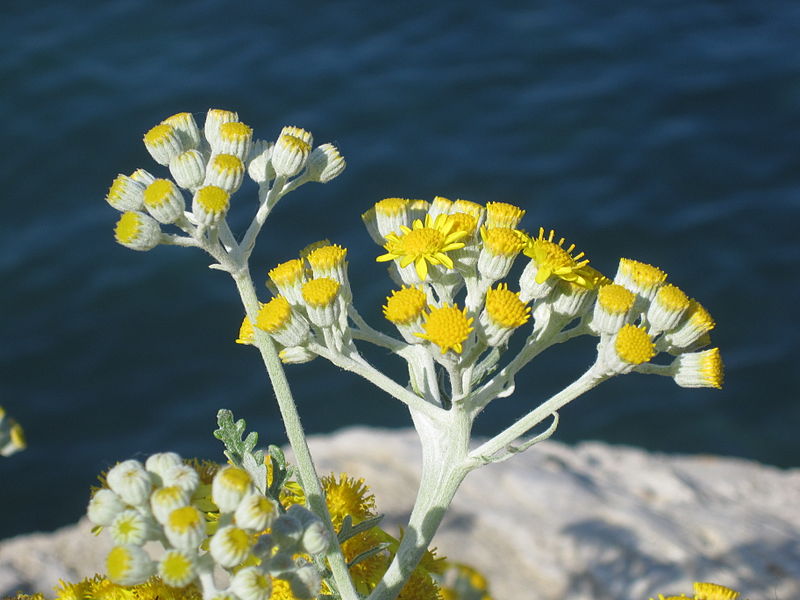
Immortelle, or Helichrysum in Corsica. Source: Wikicommons.

Immortelle, or Helichrysum in Corsica. Source: Wikicommons.

Ah, the immortelle — the reason why Speakeasy may be a hard sell for many. You see, the immortelle is quite dominant in the development of the perfume, and it’s a note which polarizes people greatly. For those unfamiliar with immortelle, it’s is a yellow flower most frequently found in the Southern Mediterranean, and its dry, floral scent usually turns quickly into the aroma of maple syrup. Here, both aspects of  the flower are noticeable. Initially, it is a dry, light, slightly aromatic flowers which join with the tobacco leaves to counter Speakeasy’s boozy sweetness. Later, however, the maple syrup comes out. But I’m getting ahead of myself.

Source: iVillage.com

Source: iVillage.com

Thirty minutes in, Speakeasy is a swirl of rum-infused citruses, dry tobacco leaves, amber, and vaguely amorphous floral notes dominated by the immortelle. It feels a lot less like a Mojito, though the mint still flickers lightly in the background. The orange note lurks there too: it is much less fresh and light; it feels like the caramelized pulp of the fruit. But neither the mint nor the orange can counter the boozy, ambered rum that is the core essence of Speakeasy. At the start of the second hour, Speakeasy decreases in volume and becomes much softer, while also becoming much more brown and orange in hue. There is sticky, rum citrus with sugar cane, melted and caramelized, but also with a subtle hint of saltiness. Florals float in the background, simultaneously fruited and a bit dry. The whole thing sits atop a base of rummy amber with tobacco and hints of immortelle.

From the initial impressions of a Mojito, we’ve now suddenly gone to a 1950s bar in Havana or Miami. It’s filled with heavy-set men in open tropical shirts, sporting heavy gold chains over a visible expanse of black, furry, springy chest-hair. In their thick fingers, they hold fresh Cuban cigars — dry and unsmoked — which they wave in the air at the bartender to order another round of Rum-and-Coke. I can’t get the image out of my head. It doesn’t help that, 3 hours in, Speakeasy takes a turn into root-beer territory backed with rum, more dry tobacco, and a growing hint of maple syrup. The latter initially feels a lot more nutty in nature than the syrup you’d pour over pancakes, but it’s still not really my cup of tea. I like the floral aspects of Immortelle, not the maple syrup, and unfortunately, the former note starts to fade as the latter grows in dominance. Now, my heavy, furry, cigar-wielding, Havana men in tropical shirts also have a side of pancakes to go with their Cuba Libre drinks.

Source: Instructables.com

Source: Instructables.com

By the start of the seventh hour, Speakeasy is maple syrup amber and… maple syrup. Yes, there is still the tobacco — and it still feels like an unlit cigar or dry sheets of tobacco leaves, rather than anything evoking an ashtray — but it’s quite minimal. The immortelle has taken over the show. For the next five hours, Speakeasy is ever softening shades of maple syrup. And that’s it. Truly. I can’t detect a single other element to the scent.

All in all, Speakeasy lasted over under 12.5 hours on my perfume-consuming skin which is quite remarkable. I should note, however, that I did two tests for Speakeasy and the first time, when I applied much less, the longevity and sillage were significantly less pronounced. With the equivalent of one good spray, Speakeasy lasted approximately 9.75 hours and had good sillage. With just a little over 2 sprays (really about 2 and 1/2), the longevity was a few hours more. On both occasions, the sillage was very good for the first hour — even powerful when I applied a greater quantity — and projected three to four inches off my skin. Later, Speakeasy softened, though it was easily detected if I brought my arm anywhere near my nose. It became a skin scent around the eighth hour during my second test.

Despite the rich notes and the excellent projection, Speakeasy surprised me in being quite lightweight in feel. The texture isn’t opaque, heavy, resinous or thick. And, for all the rum involved, it doesn’t feel like a boozy scent. It’s not like HermèsAmbre Narguilé, Guerlain‘s Spiritueuse Double Vanille, Tom Ford‘s Tobacco Vanille, Teo Cabanel‘s Alahine — all scents with a boozy, rummy nature, though they are all perfumes with a huge amount of spice in them, too. Most of those have a large tobacco element as well but, still, they aren’t the same as Speakeasy. Perhaps it’s because Speakeasy has the mojito, maple syrup and pure rum accords, as opposed to the spiced, stewed prunes, raisins and apples of the others. Or, perhaps, it’s because it’s so texturally light.

Whatever the reason, I truly couldn’t summon up much enthusiasm. I have tried and tried to pinpoint why — apart from my issues with smelling like maple syrup — and I think it’s because Speakeasy feels a bit like a hodge-podge. It’s neither a truly boozy, spiced, smoky, amber oriental, nor a light summery, Mojito scent. Tobacco and rum generally work perfectly well together, but the immortelle adds a discordant jangle, as does the mint. The wonderful perfume blogger, The Non-Blonde, summed it up as “chaotic” — and I think she’s absolutely right, even though her experience differed from my own. In her review, she wrote:

Unlike the term “Speakeasy” and its hush-hush connotations, Frapin’s fragrance is a heavy hitter right from the start. It’s noisy and chaotic as the perfume throws almost everything it has at you: herbs and fruit, smoke and syrup– they party like it’s 1929.

Things get smoother rather quickly. The mojito is replaced by a darker and warmer drink. The syrupy sweetness sets the tone for a comfortable old leather, incense, and a rich tobacco. If you dislike immortelle and its burnt maple aroma, there’s no amount of Frapin booze that will help Speakeasy go down better for you. Personally I love it, so the sweeter the better in this case. Tobacco truly dominates the way Speakeasy smells on my skin: light and dark, sweet and smoky. I love it, but must admit that it can be too literal. I never smoked and would rather not smell like I’ve become a smoker in middle-age. It’s actually a little disturbing that the remnants of Speakeasy on my clothes remind me of a smoky bar.

On my skin, there really wasn’t that much tobacco, and it never felt like an ashtray; I honestly never felt as though I’d spent all night in a smoky bar. To me, the note felt much more like that of sheaves of tobacco leaves drying in the hot Virginia sun, or like that of an unsmoked cigar. I also never detected incense or leather, though Speakeasy definitely evokes some sort of old bar with leather and wood. (God, leather and incense may have made it so much better!) Despite these minor differences, though, I share her views on the jangling, chaotic feel to the scent. Don’t get me wrong — Speakeasy is not a bad scent by any means, but it leaves me feeling completely indifferent.

I haven’t tried Frapin’s limited-edition 1697, but I’ve read a comment on Fragrantica to the effect that Speakeasy was like a little “summer sister” to the Duchaufour creation. I have to wonder a little about that as there is no immortelle in 1697’s notes, and that element is such a huge part of Speakeasy’s middle to late stages. Still, those looking for a more boozy, amber scent may want to give “1697” a sniff, while those seeking a lighter, summery fragrance with a more tropical feel may want to opt for Speakeasy. But those who shudder at the mere thought of immortelle — and there are many of you out there — should probably stay away at all costs.

DETAILS:
Cost & Availability: Speakeasy is an eau de parfum that is available only in a 3.4 oz/100 ml and which costs $145. In the U.S., it is available at Luckyscent, Beautyhabit, and MinNewYork (which sells it for $5 more at $150). In Canada, Speakeasy is available at The Perfume Shoppe for CAD $145. In the UK, I’ve read that Frapin fragrances are carried on the specialty floor of Harvey Nichols (Le Floret?), but I don’t know for sure. In France, it is available at Nose for €105 and I think there is free shipping at that price within the EU. For the rest of Europe, there is First in Fragrance which sells Speakeasy for €96. As for samples, I obtained mine from Surrender to Chance which sells vials starting at $4.50 for 1 ml.