Frapin 1270

Frapin Chateau via the Frapin website.

The Frapin Chateau via the Frapin website.

In France’s wine country, in a parallel universe, there is a cognac estate covered by acres of fruit trees whose heavy, sun-ripened treasures drip their sweet juices straight into oak barrels filled with rum and brandy. There, the rich stew of rum raisin, orange, and plums is infused with vanilla, the light powder of tonka, and cocoa. There is a suggestion of grape flowers that swirls in the air, vying with caramel and dry woods that are streaked with the tiniest vein of smokiness. As night falls, the golden booziness fades away, leaving a cozy sheath of creamy vanilla woods. The date is 1270, the golden blend is called 1270, and the estate is the ancient one of the House of Frapin.

Frapin is relatively new to the perfume scene, having started just six years ago in 2008, but the line has been making luxury cognac for centuries. In fact, the family behind it goes back almost 800 years. To quote a Vanity Fair article,

The Frapin’s rich family heritage is the stuff of a whimsical, old-world romance novel—and, according to creative director David Frossard, the key inspiration for all seven fragrances in the line. One of the oldest and most established families in France, the Frapins have been distilling cognac from their original Fontpinot Castle, situated on 300 hectares in the Grand Champagne region of France, since 1270 and through 20 generations; they expanded into fragrance in 2008. And if a castle isn’t enough of a fairy tale for you, Louis XIV himself granted official nobility to the Frapin family in 1697.

Frapin Castle. Source: Frapin website.

Frapin Castle. Source: Frapin website.

Frapin, as a perfume house, is perhaps best known for its 1270 fragrance which is an eau de parfum created by Sidonie Lancesseur and released in 2010. In the press copy quoted by many sites, Frapin explains the meaning behind the 1270 name, as well as what the scent is meant to evoke:

1270 via Luckyscent.

1270 via Luckyscent.

Named for the year the Frapin family established itself in the Cognac region of France (and continues to make cognac to this day), 1270 was created by Beatrice Cointreau, great granddaughter of Pierre Frapin.

Together with Frapin’s Cellar Master, she sought to create a noble fragrance full of the scents surrounding the creation of cognac. 1270 is dry, rich, velvety and smooth.

The flowers of the once-proud Folle Blanche (a grape nearly extinct from the region), the vineyard grass, the wine warehouse, the rich smell of damp earth in the cellars, the wood of new casks, the loamy smell of humus where the ancestral cognacs are stored- all these notes can be detected in 1270. Gorgeous is putting it mildly… this scent defies flowery prose.

The notes in 1270, as compiled from Fragrantica and First in Fragrance, include:

Top: Candied Orange, Nut, Raisin, Plum, Cocoa, Tonka Bean, Coffee
Heart: Vine Flower, Everlasting Flower [Immortelle], Linden Blossom (Tilia), Pepper, Spices
Base: Woods, Guaiac Wood, White Honey, Vanilla

Source: vk.com

Source: vk.com

1270 opens on my skin with Bourbon vanilla and light brandy booziness, followed by juicy oranges, dark plums, caramelized cooked raisins, and a tiny sprinkling of cocoa powder. There is also the faintest suggestion of sweetened powder from the tonka vanilla. As a whole, 1270 feels quite concentrated, but also very light at the same time.

My immediate, first impression is of a deliciously cozy, warm fragrance that feels comforting and soothing. I particularly like how well-balanced the notes are, from the boozy cognac (which sometimes veers into rum territory), the fruited juiciness, and 1270’s overall sweetness. Neither element feels out of whack with the others. Even better, the perfume isn’t painfully sweet or cloying on my skin at all. For someone like myself who isn’t particularly enthused by gourmand fragrances and who shies away from extreme sweetness, 1270 feels just right.

Rum Raisins. Source: Diary of a Mad Hausfrau. (Website link embedded within photo.)

Rum Raisins. Source: Diary of a Mad Hausfrau. (Website link embedded within photo.)

A vague woodiness lurks in 1270’s background, evoking the image of old cognac barrels made out of oak. At first, it is merely a light touch, but it starts almost immediately to seep towards the core bouquet of notes. On my skin, that bouquet is primarily of a boozy, fruited sweetness dominated by rum-raisin and caramelized Bourbon vanilla. The orange notes are muted at this point, as is the light dusting of cocoa powder. One of my favorite parts is the odd sensation of grape flowers (does such a thing even exist?) that pops up every now and then. It’s a subtle floralacy with a nuance of dark, damask grapes, and much more interesting than the more typical rum-raisin molasses.

1270 slowly begins to shift. The muted touch of cocoa suddenly becomes quite prominent after 40 minutes, as does the orange. The perfume feels like a dance of swirling elements, from the cocoa-dusted oranges, to the brandy-rum, and the tonka vanilla. The woody accord looks on from the sidelines, biding its time and letting the main fruited elements shine in the spotlight. The wood note still feels primarily like oak, but the guaiac is slowly becoming more noticeable as well. As for the vanilla, its Bourbon-like nuances slowly fade, replaced by the delicate, very cozy, soothing touches of pure tonka. I keep thinking of caramelized vanilla, even though tonka really has nothing to do with that, but something in 1270 underscores that impression.

Photo: Kevin Lynch at closetcooking.com

Photo: Kevin Lynch at closetcooking.com

At first, 1270 is simultaneously both a very potent scent, and a really sheer one. It almost feels thin in its gauziness. The notes themselves are strong, but not the weight of the perfume. Even the sillage is soft. Though 1270 initially wafts 2-3 inches above the skin, the projection drops quickly after 20 minutes. By the end of the first hour, 1270 hovers a mere inch above the skin. It turns into a skin scent shortly before the 2.25 hour mark, lingering on for many more hours as a discrete cozy cocoon of warmth that feels quite suitable as an office scent.

Vanilla powder. Source: food.ninemsn.com.au

Vanilla powder. Source: food.ninemsn.com.au

1270’s first major change occurs at the end of 90 minutes. At that point, the woody element leaps onto center stage, pushing the cognac fruits back, and dancing with the tonka vanilla. 1270 has suddenly transformed into a tonka vanilla scent thoroughly infused with dry woods and a light nuance of smoky darkness lurking deep in its base. The guaiac is now more evident than the oak, but there feels as though a touch of cedar is flitting about, too.

About 2.5 hours into the perfume’s development, the woods grow smoother, but also a touch smokier as well. Guaiac can sometimes have the aroma of autumnal leaves burning in a bonfire, and there is the lightest suggestion of that here in 1270 as well. The leaves are lightly dusted by an amorphous blend of spices, but the main bouquet is of soft vanilla woods. Something about the overall combination reminds me of a more refined, more elegant version of Imaginary Author‘s Memoirs of a Trespasser, but without the latter’s synthetics, guaiac sourness, or stale nuances. 1270 continues to manifest a lingering trace of cognac fruitiness at its edges, but I don’t detect any immortelle with its maple syrup characteristics. There is no linden blossom either on my skin, and absolutely zero coffee.

A lovely creaminess arrives at the start of the 4th hour, transforming the vanilla woods into something richer and warmer. It muffles the touch of smokiness, turning 1270’s main focus back to tonka coziness with dry woods and vanilla. The latter is a lovely note that feels as silky as ice-cream, but never too sweet. An abstract floral element pops up every now and then; it feels like a white flower, but still nothing like lemony linden blossoms. The cognac fruits continue to linger on at the edges, but they are the tiniest, muted touch now. The same thing applies to the sprinkles of spice that, occasionally, seem like cinnamon.

Source: wallpaperscraft.com

Source: wallpaperscraft.com

As a whole, 1270 is primarily a swirl of rich, creamy tonka vanilla with oaked woods. And it remains that way for hours to come. A few secondary notes wax and wane in the distance, but the core essence of the perfume is quite linear. 1270 simply turns more sheer and translucent, a mere trace of golden silkiness on the skin. In its final moments, 1270 is a smear of something vaguely vanillic that is alternatively sweet and a little dry.

Every time I wore 1270, I kept thinking about how it would be a great office fragrance for someone who wanted a very personal, subtle touch of warm sweetness. 1270’s longevity adds to this impression, as 3 small spritzes from my atomizer resulted in a fragrance that remained an incredibly long time on my skin. The two times that I tried 1270, it consistently lasted over 10 hours: roughly 10.75 hours with a small quantity, and 12.5 with double the amount. In all cases, however, I had to put my nose right on the skin, and sniff hard to detect it after 6 hours. This is a very intimate, discreet fragrance. As a side note, I happen to think that 1270 skews a tiny bit feminine, primarily because of the lightly powdered tonka, but there are quite a few men who adore the scent, so it’s going to come down to your personal tastes.

Photo: choco-mello.blogspot.com

Photo: choco-mello.blogspot.com

Reading the reactions to 1270 on Luckyscent was interesting because they range all over the place. Some people rave about 1270 as the most delicious thing ever, while a few simply shrug. One woman finds the perfume to be too masculine, while a man thought it was too feminine. A few people talk about how 1270 smells like pineapples, while others talk about either vanilla butterscotch, rum raisins, or honeyed flowers. One person complains that it actually was not boozy at all. For some, it is too sweet, while others say think it is just perfect. A number of people aren’t enthused by the opening, but love the “spicy,” “warm” drydown. Others fall in love immediately from the start. There is also absolutely no agreement on how long the fragrance lasts, its potency, or its sillage. One person wrote about how 1270 was heartbreakingly fleeting, others say it lasts forever. As you can see, there is no consensus — on anything at all.

On Fragrantica, it’s almost the same story. However, judging by the votes given in the longevity and sillage categories, there does seem to be more of an agreement. For duration, there were 29 votes for Moderate (3-6 hours) and 25 for Long-Lasting (7-12 hours). In terms of sillage, the vast majority (53 people) found 1270 to have the lowest amount of projection possible, voting for the “soft” category, followed by 32 people choosing “moderate.”

Pineapple upside-down cake. Source: browneyedbaker.com

Pineapple upside-down cake. Source: browneyedbaker.com

I was interested to see that, once again, the issue of pineapple came up in terms of what people detected in 1270. For quite a few people actually, though most seemed to love it. One chap writes, in part:

The pineapple note is the first thing that hits you and it’s sweet and realistic then there’s a coffee, patchouli, cacao, vanilla wonderfully Nutty gourmand thing.
1270 is a class act from start to finish it makes you smell edible…positively edible. I don’t mean this in a ridiculous sense but in a deeply sensual way. The pineapple is persistent and you do get a jammy, plummy little bit figgy thing too it’s an immense fragrance.
If you couldn’t tell I adore this scent my first impressions have been very good however it didn’t last very long on my skin. Once again a second wear should yield answers regarding longevity.

Update: Upon wearing a second time I’m just as captivated as when I first caught a whiff of this lovely juice. To me the prominent notes are pineapple, cacao and wood. It’s almost like a pineapple upside-down cake covered in nutella, it has a kind of caramelized quality without being too sweet. I think that’s because of the honey element and the fact that it doesn’t feel ‘blended’ particularly, more like the pineapple sits right on the top and feels juicy and clear compared to the warm,sweet base. I adore this fragrance and really want it but the performance is a bit of a let down and it doesn’t project. Despite this it smells really really good[.]

Source: colourbox.com

Source: colourbox.com

Other posters had a vastly different experience. I was surprised to see that, for a few people, 1270 actually did have a coffee aroma, mixed in with all the rest. For a handful, plum was much more noticeable. Below are some other impressions of 1270, from women and men alike, including a review from someone who doesn’t like cognac but loves this fragrance:

  • It would be a strange choice for someone who doesn’t even like/drink cognac, but…love at first sniff! Warm and cozy, this scent envelops you and carries away. A co-worker told me that a woman wearing this scent does not belong in the mundane office environment, more like a gent’s club where expensive cigars are being smoked, expensive leathers are everywhere you look, expensive drinks are being poured. [¶] No great projection or longevity. It is a very intimate scent. However, and maybe for this exact reason, I want to hold on to it and never let it go.
  • The opening made me fall in love with this perfume. best opening ever! I couldn’t believe how good this smelled. it’s a delicious raisin/plummy/sweet honey/coffee/vanilla combo. Incredibly blended. I’ve heard a couple people say this reminds them of butterscotch, and I can see that too I guess. 1270 has two distinct phases on my skin. 1st- the awesome opening which lasts an hour or two. 2nd- a subtle vanilla drydown that goes away way too quickly. This perfume lasts a total of about 2 to 3 hours on me. This would be my signature if not for the poor longevity. Still and all, I will always always own a bottle of this, no matter how quick it disappears on me. love it love it love it.
  • Legitimate liquor in the form of perfume. [¶] 1270 is somewhat spicy, also boozy, however, the fruity notes are outstanding, most notably plum, who joins perfectly to honey, a mix warm and sweet, and later comforted by creamy vanilla. [¶] It creates the appearance gourmand, but feel a background resin, coffee or chocolate, something like that, delightfully well done, a scent so perfect that I do not care about the projection, i walk with a decant.
  • This perfume gyrates all sweetness and spice without tip-toeing over the line into cloying. Far too simple for my tastes at this price tag, however, but a lovely, comforting fragrance nonetheless. I wish Frapin had walked the line a little tighter, risked a little more for a truly unforgettable fragrance instead of this very lovely, but very safe bet.
  •  Initially I loved it, a rich gourmand scent with my favorite vanilla tonka accord. Yum. Sniffing it was so satisfying with the pineapple, plum and coffee smells and it was sweet and somehow chewy like Panforte. My only hesitation was that it was maybe too masculine for me. Well I got over the masculine problem but what finally kept this from being a “love” is the longevity. On me it doesn’t last more than six hours and if I’m going to spend this kind of money I’d like it to last all day. Also, as the weather has gotten warmer, I’ve found it somehow smells more musky and manly. I’ll try it again in when the weather cools down[.]
Photo: Dove Voice via congok.com

Photo: Dove Voice via congok.com

A few men find 1270 to be similar to Thierry Mugler‘s A*men line, with one saying “[t]his is a beautiful fragrance….a niche version of Pure Malt with more natural ingredients.” However, a number of other people think that 1270 is merely pleasant, but without sufficient complexity or uniqueness. I don’t think they’re wrong on that score. 1270 is extremely nice, but it’s not the most original, edgy, complicated or nuanced fragrance around.

However, in all fairness, that is not Frapin’s goal. They seek to make boozy fragrances with refined, top-notch ingredients for a scent that is comforting, cozy, luxurious and sweet. The price tag for that is, currently, $145 or €105 for a large 100 ml bottle, a decent figure which is quite moderate by the admittedly skewed standards of the niche world. Even better, you can still find 1270 in a few places for much less. (See the Details section at the end.) So, is this a scent that is worth $145? That will depend strongly on your personal tastes, and on how long 1270 lasts on your skin. It certainly smells expensive to me, and feels high-quality in nature.

Two minor, unrelated issues are worth mentioning. First, a handful of people on Luckyscent have stated that they think 1270 has been reformulated, as their recent purchases reflected a scent that is markedly different from what they had once owned. I wouldn’t be surprised if that were true, as all perfumes seem to get watered down or reformulated into something weaker after a while. Second, there seems to be a weird situation on a number of retail sites, including Frapin’s own e-boutique itself, where 1270 is the one perfume in the range which is unavailable or unlisted. 1270 has not been discontinued, as it is Frapin’s flagship fragrance, so I can only assume that it has sold out.

As a whole, I thoroughly enjoyed 1270, but I wasn’t moved by passionate love. It’s nice, very nice, but it’s a little hard to get excited about 1270 and I can’t figure out why. Perhaps it is because, at its core, 1270 is both uncomplicated and very discreet, two things that aren’t my personal cup of tea. Perhaps, I simply find it hard to lose my crackers over very sweet vanillic scents. I don’t know. That said, I definitely think that 1270 is worth trying if you’re looking for a very intimate, cozy fragrance that is an easy, “wearable,” “grown-up gourmand.”

Given the very sharp divergence in opinions, however, I don’t think 1270 is suitable for a blind buy. Maybe, it will turn to caramelized “pineapple upside-down cake covered in nutella” on you, or will feel too much like something suitable for someone of the opposite gender. 1270 might be a “fleeting heartbreaker,” or perhaps it lasts but turns out to be too sweet for your personal tastes. Try before you buy!
DETAILS:
Cost & Availability: 1270 is an eau de parfum that is available only in a 3.4 oz/100 ml and which costs $145, €105 or £98. In the U.S.: 1270 is available at Luckyscent, though they are currently back-ordered with future shipments to go out in April. You find 1270 currently in stock at Beautyhabit. MinNewYork does not have 1270 listed among the Frapin scents on their website. Amazon has 1270, and discounts it for $110 instead of $145. The seller is alternatively said to be Frapin itself or “Euro Sale.” Outside the U.S.: In Canada, 1270 is available at The Perfume Shoppe for CAD $145. In Europe, you should technically be able to buy 1270 directly from Frapin’s perfume website. However, it is the strangest thing: 1270 is the sole Frapin fragrance not listed. In the U.K., it is available at Bloom Perfumery. In France, Frapin is carried by a whole host of sellers. Premiere Avenue sells 1270 at the old price of €96. Some Frapin retailers don’t show 1270 on their websites with the rest of the Frapin scents, like Paris’ Jovoy. Other Paris retailers, however, are Marie-Antoinette in the Marais and Nose. In the Netherlands, you can find 1270 at ParfuMaria. For the rest of Europe, there is First in Fragrance which sells 1270 for €105. In Australia, you can find 1270 at Meyers or Libertine which sells it for AUD$195. In Dubai, you can find Frapin at Harvey Nicks, among other vendors. For all other countries from Italy and Lithuania to Austria, South Africa, Kuwait, the Ukraine, Russia and many others, you can use Frapin’s Points of Sale page. SamplesSurrender to Chance sells 1270 starting at $3.99 for a 1 ml vial. A number of the vendors on this page also sell samples.

Arte Profumi Fumoir: Campfire Smoke & Promises

The promise of Russian leather, birch tar, smoke, ambergris, and velvet-covered, opulent smoking rooms in gentlemen’s clubs lies at the heart of Fumoir, a new and expensive eau de parfum from the Italian perfume house, Arte Profumi. From the company’s elegant description right down to Fumoir’s notes (which also include pepper, cumin, and rose), the perfume sounds glorious on paper. 

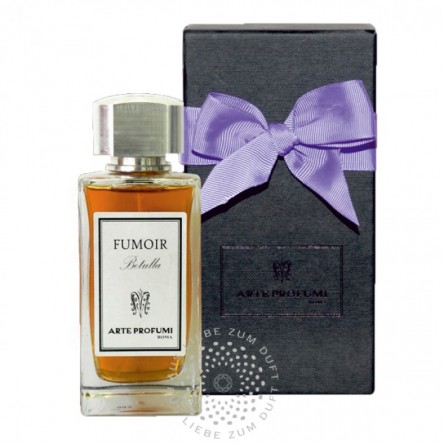
Fumoir, via First in Fragrance.

Fumoir, via First in Fragrance.

Arte Profumi, whose name translates to The Art of Perfume, is based in Rome and seems to have been founded around 2013, the year when it launched all its fragrances. Fumoir is classified as a leather scent, but its name refers to smoking rooms at a gentleman’s club, as well as to a smoke house. Arte Profumi‘s website has little by way of description for the scent, and absolutely no notes: 

FUMOIR
Birch
… conversations among men,
in reserved rooms,
covered by wood, leather and velvet
surrounded by smoke.

Source: Wingtip.com

Source: Wingtip.com

First in Fragrance has much more information, and describes Fumoir as follows:

“Fumoir” by Arte Profumi is dedicated to a very special world – the world of gentlemen’s clubs and the pleasures of tobacco.

The quite, intense and distinctive fragrance takes no prisoners. Pepper and cumin are the strong vanguard. The fragrance bites wonderfully with smoky and leather notes, the rose in the heart is known only by hearsay and ambergris stays firmly in the background. The rest is pure and driven to extreme masculinity.

“Fumoir” doesn’t rely on hints. Whoever enjoys assertive smoky notes and old, creaking leather, or prefers a statement to diplomacy, will love “Fumoir”. The name in French not only means gentlemen’s room or smoking room but also smoke house. 

The notes, as compiled from First in Fragrance and Fragrantica, are:

 pepper, cumin, birch tar, tobacco, russian leather, rose and ambergris.

Talisker, an Islay single malt. Photo: Savuista at the Savuista blog.http://savuista.blogspot.com/2013_10_01_archive.html

Talisker, an Islay single malt. Photo: Savuista at the Savuista blog.http://savuista.blogspot.com/2013_10_01_archive.html

Fumoir opens on my skin with beautiful birch, manifesting itself as campfire smokiness infused with a peaty, somewhat salty, single malt, Islay Scotch. I’m quite serious when I say that I actually murmured out loud, “Laphroaig on steroids!” which is a huge compliment, as I love Laphroaig the most out of the all the Islay malts. Here, the Scotch is amplified with that gloriously burnt wood, campfire smokiness that is such a core component of birch.

Birch Tar pitch via Wikicommons.

Birch Tar pitch via Wikicommons.

Birch tar is more than just smoky, though. It is often a key element in creating the impression of leather, especially Russian leather. Back in the old days, Russian tanners cured hides with the tar, and something in the popular imagination (or perhaps just in my imagination) tends to associate the leather aroma with dashing, fierce, or untamed Cossacks. (As a side note, Chanel‘s Cuir de Russie probably helped in creating this association.)

Here, in Fumoir, the campfire aroma of scorched birch wood is soon followed by a definite note of blackened, tar-encrusted leather. At this point in the perfume’s evolution, the leather very much feels like its own distinct, individual element. Unfortunately, it later ends up being subsumed into the birch tar, which drives Fumoir from its very first moment until its end.

Source: lamag.com

Source: lamag.com

The leather is really lovely at this point. It is so black and sultry in its smoky, rugged heft. Yet, there is an odd meatiness about it that continuously reminds me of a mesquite-smoked barbecue. Fiery black pepper thoroughly covers it and the overall effect is… well, you may call me crazy, but I keep thinking of Steak au Poivre. Perhaps it’s the result of the cumin with the pepper and birch, creating a combination which my mind is translating into a big, fat, meaty steak, covered with walloping amounts of pepper, and thoroughly infused with smoke from a campfire that is burning mesquite wood. The cumin really isn’t visible in its usual way, apart from that odd impression, and I detect no rose at all at this point.

Four members of the Tsar's Imperial Russian Cossack bodyguard. Source: Pinterest.

Four members of the Tsar’s Imperial Russian Cossack bodyguard. Source: Pinterest.

Instead, Fumoir is a bonfire of darkness, singed woodiness, tar, peaty whiskey, and leather. The latter slowly takes on a slightly animalic touch, a raw, butch quality. For the first time in a long time when smelling a birch leather fragrance, I’m really transported to the steppes of Imperial Russia with its Cossacks. It never really happened with Cuir de Russie, but then, Fumoir is not as refined as that scent and it lacks the avalanche of soapy aldehydes that dominated the Chanel scent on my skin. In short, the Italian perfume has a very untamed, fierce element that the Chanel never did. At the same time, both the campfire smoke and the leather are stripped of the forest or chilly pine aroma that other fragrances with birch often carry.

My favorite part of the scent, though, is definitely the Laphroaig single malt aspect that I noted earlier. As the opening minutes pass, the note grows stronger, and its peaty smokiness works incredibly well with the meatiness of the leather, the pepper, and the birch. Scotch and a campfire steak, how perfect is that?!

Photo: Savuista at the Savuista blog. http://savuista.blogspot.com/2013_10_01_archive.html

Photo: Savuista at the Savuista blog. http://savuista.blogspot.com/2013_10_01_archive.html

Alas, my overall enthusiasm is suddenly tempered exactly 15 minutes into Fumoir’s development when a synthetic note stirs in the base. It smells of very dry tobacco but, also, of an ISO E-like aromachemical. It is wrapped up in an extremely arid woodiness, as well as with a touch of very, amorphous golden… something. I can’t pinpoint what it may be. My first thought was Givaudan’s tobacco synthetic, Kephalis, that is often used for its leathered undertones. Later, though, I wonder if it’s Givaudan’s Ambermax with its peppered, ISO E Super-like notes? The dry, ambergris substitute, Ambroxan? A combination of Kephalis and one of the ambers seems most likely. Whatever the real cause(s) may be, there is definitely something that is not right and very fake in Fumoir’s base.

As a whole, the perfume’s overall bouquet in the opening stage is of tarry birch wood charred in a campfire and infused with mesquite, pepper, Laphroaig whiskey, and meaty Cossack leather, all lightly flecked by a dry tobacco whisper and a good dose of aromachemicals.

Source: speckyboy.com

Source: speckyboy.com

Then, Fumoir slowly, very slowly, starts to shift. 40 minutes in, the perfume starts to gradually turn warmer and fractionally sweeter. The peaty whiskey fades away, while a kernel of “amber” in the base begins to bloom, seeping over the tarred leather and birch smoke. It creates a small dot of goldenness in the pitch black, but it is an abstract amber, an impression more than a clearly delineated, crisp note.

And it most certainly is not actual, very expensive ambergris, no matter what is listed in the notes. This is nothing like the scent that dominates a fragrance like Profumum‘s Amber Aurea. This is a wholly abstract construct that is nebulous, dry, and, increasingly, subject to a chemical taint, just like the equally nebulous tobacco note. The “amber” is actually why I mentioned those particular aromachemicals up above. Neither its ISO E-like jangly sharpness nor its excessive dryness is a joy.

The problem is that far too much of both synthetics have been used for them to blend well into Fumoir, though they certainly seem to help with the perfume’s projection. The perfume is very potent in the opening hour, and with good sillage that wafts out about 3-4 inches above the skin before eventually dropping at the end of the first hour. Despite the forcefulness of the birch smoke, Fumoir is quite airy in feel, and it grows thinner with time. Actually, it feels rather like an eau de toilette in nature, one which has a powerful start, but little actual body or depth.

"Gold smoke" by etafaz on deviantART.

“Gold smoke” by etafaz on deviantART.

At the end of the first hour, Fumoir is largely a two-note symphony centered on the main aspects of birch: burnt campfire smoke and leather. The pepper, whiskey, and vaguely abstract cumin element have faded away. However, the “tobacco” is finally starting to emerge in its own right, along with the “amber” in base. I don’t mind synthetics in fragrances if they are well-blended, in balanced proportions, and don’t render the scent into something that is heavily chemical in nature, but I have enormous issues when the quantity is high, especially at Arte Profumi’s prices. (More on that later.) Plus, Fumoir gives me a faint headache whenever I smell it too deeply for too long up close. That is a telltale sign that the aromachemicals are in a large quantity, as I don’t have such a reaction otherwise. Needless to say, I’m feeling rather grumpy at this point, and it only gets worse.

At the end of the 3rd hour, Fumoir smells of aromachemical amber, burnt wood in a campfire, and birch tar that is vaguely leathered, all in a warm blend infused with abstract, peppered, tobacco tonalities. It feels richer than it actually is, and it also reminds me of a very synthetic version of Naomi Goodsir‘s Bois d’Ascese, though not as interesting. Fumoir’s sillage has dropped to about an inch above the skin, but the notes aren’t hard to detect up close.

Source: Theatlantic.com

Source: Theatlantic.com

Fumoir is largely linear in nature, which is fine if you like the notes in question. Obviously, I don’t, but it doesn’t help that the simplicity of Fumoir’s bouquet is becoming increasingly boring. From afar, it really is nothing more than the birch tar’s burnt woods and some extremely arid relative of ISO E Supercrappy. For a brief period about 6.25 hours in, the rose appeared, turning Fumoir into a dry, woody rose and birch tar scent on an abstract amber base. It feels like a very distant cousin to Le Labo‘s Rose 31, only the nebulous rose is massively dominated by campfire smoke and an amber synthetic, instead of cedar woods and actual ISO E Super.

Campfire ashes. Source: dansdepot.com

Campfire ashes. Source: dansdepot.com

The resemblance doesn’t last long, and Fumoir returns to its core scent of birch tar smoked woods with aromachemical amber and aromachemical tobacco. By the middle of the 8th hour, the notes veer between acrid, smoked, and ashtray-like in their nuances. There is a subtle vein of dirtiness that lurks underneath, like really old, stale cumin, mixed with mesquite. The whole thing makes me feel incredibly dirty — in an unclean way, and not in the good, sexy, skanky way.

I’d suppressed the urge for a very soapy shower for hours, but, finally, towards the end of the 10th hour, I gave in and washed off Fumoir. It was exactly 9.75 hours into the perfume’s development, and Fumoir would probably have endured even longer as my skin holds onto synthetics like mad. In all honesty, I think it was the monotony which got to me even more than the acrid, burnt, stale, fetidness of the final hours. Fumoir is all about the birch tar first and foremost, then the two other aromachemicals. The remainder of the notes are hardly key players, and the lovely Cossack Russian leather subsumes itself into the overall scorched woods aroma in a way that renders it a mere undertone in the perfume’s overall scent.

I tested Fumoir twice, increasing the amount of fragrance that I applied, and the overall result was largely the same in both instance. The only difference is that I didn’t detect any rose note with larger quantity of Fumoir. It was just more linear, aromachemical laden, and boring. And I washed it off even sooner.

I couldn’t find any blog reviews for Fumoir, and the fragrance has no comments listed on its Fragrantica page. There isn’t even a Basenotes entry for it. However, Parfumo (which is like a European Fragrantica) has some votes for the quality, sillage and longevity of the scent. So, even if there are no actual comments posted, perhaps you may find 3 people’s numerical assessment of the fragrance useful:

  • 3 votes each for Longevity and Sillage, each coming in at an 83% ranking;
  • 3 votes for the scent as a whole, which puts it at 2.5 stars or a 50% ranking.

I think the 2.5 out of 5 rating for the fragrance is generally fair, though perhaps a bit high for me personal. Still, it’s telling that 3 people who may not be as annoyed as I am by massive amounts of aromachemicals don’t think highly of the scent either.

It doesn’t help that Fumoir is neither cheap nor easily accessible. It is exclusive to Europe at this point, though you can easily find samples at Surrender to Chance. Even if you were to order it from First in Fragrance in Europe (or Jovoy for EU-based customers), Fumoir costs €225 for the 100 ml bottle. At today’s exchange rate, that comes to roughly $308. This is not a scent worth $308 or €225! It simply is not, even if you don’t share my disdain for aromachemicals. There is none of the rich body, nuanced complexity, or interesting development that would warrant such a price. I generally liked Arte Profumi’s Ecclesiae incense fragrance, though I thought the price for that one was too high as well, but Fumoir lacks its sibling’s quality.

Photo: Narinder Nanu via washingtonpost.com

Photo: Narinder Nanu via washingtonpost.com

More to the point, if you’re an ardent fan of campfire birch scents, there are much better alternatives out there at a much better price. There is the richer, deeper, piney Arso from Profumum Roma; there is the drier, more austere, interesting Bois d’Ascese from Naomi Goodsir (which is hardcore birch, campfire smoke!); and there is also Jovoy‘s Private Label with its heavy vetiver focus amidst the peaty birch campfire smoke and Mad Max leather. They’re all significantly better fragrances.

In short, Fumoir fails to live up to its promises, and I would skip it.

DETAILS:
Cost & Availability: Fumoir is an eau de parfum that comes in a 100 ml/3.4 oz size and costs €225. There are no American distributors for the Arte Profumi line that I could find. Arte Profumi has a website, but not an e-shop or a Stockist/Retailers list, so your best bet in obtaining the scent is from two big European perfume sites. Paris’ Jovoy and Germany’s First in Fragrance both carry the scent. The latter also sells samples and ships internationally. I couldn’t find any retailers in the UK, the Netherlands, or outside of Europe. If you’re in Italy, however, the company has two boutiques in Rome. Samples: Surrender to Chance now sells Fumoir starting at $4.50 for a 1/2 ml vial. There is also an Arte Profumi Sample Set starting at $12.99 for 3 of its fragrance (including Fumoir and Ecclesiae which I previously reviewed) in a 1/2 ml size.

Arte Profumi Ecclesiae

Greek Orthodox CenserThere is a small church nestled in a pine forest clearing, a church whose wooden pews are covered by the dust of ages and whose stony floors echo the footsteps of monks swinging a thurible censer. White smoke from myrrh fills the air like a thin wall of purification, but that is not unexpected in such a traditional place. What is different is the bridge outside, a bridge made of creamy, honeyed beeswax and sweet myrrh. It links the stony, dusty Catholic church to its polar opposite on the far side of the world, an oriental temple filled with black smoke, not white olibanum. It is a temple where spicy patchouli sweetness and dry woods are offered to the gods alongside the frankincense, swirling together in a haze of great warmth. Two sides of the same coin, two very different worlds, and two very different perfumed aromas. But they’ve been bottled into one fragrance, Ecclesiae.

The Arte Profumi line. Source: Profumo.net

The Arte Profumi line. Source: Profumo.net

Ecclesiae is an eau de parfum from the Italian perfume house, Arte Profumi. The company, whose name translates to The Art of Perfume, is based in Rome and seems to have been founded around 2013, the year when it launched all its fragrances. I first encountered the line at Jovoy in Paris, though I never gave them a proper testing. The name stuck in my mind, however, so when Surrender to Chance suddenly started to carry a few of the scents, I seized the opportunity. Arte Profumi’s website isn’t very detailed or helpful, but the one thing that it makes clear is that its founders are passionate about art:

The passion for modern art and, at the same time the world of essences, as well as the need for combining them has led to the organization of multi-sensorial events.

By extraction, you get the concept of perfume as works of art, capable of replacing visual impressions through the perception of olfactory consent.

A source of inspiration for this implementation was the distant recollection of an old dressmaker’s shop where the choice of cloths, original patterns and precious trimmings stood for a lifestyle.

Source: Profumo.net

Source: Profumo.net

Arte Profumi’s website doesn’t provide the official description or notes for Ecclesiae, but I found the details on First in Fragrance:

A touch of eternity in the hallowed stone halls of a medieval cathedral where prayer and hymns along with incense soar heavenwards – in fragrant clouds of smoke, circling choirs of angels in reverence and devotion.

Arte Profumi pays homage to frankincense with their sacred scent aptly named “Ecclesiae”. Spicy elemi paves the way for the protagonist frankincense and a heart of sandalwood. Smoky, earthy patchouly and vetiver lend the composition depth and volume, a choir with many voices that intone the same harmony.

Friends of church fragrances and frankincense, but also lovers of oriental fragrances will welcome this creation from Arte Profumi as a blessing. 

Top Note: Elemi
Heart Note: Frankincense, Sandalwood
Base Note: Patchouly, Vetiver

Source: Wikipedia

Source: Wikipedia

Judging by what appeared on my skin, I think those notes are a bit incomplete or lacking in detail, because Ecclesiae opens with a heavy amount of myrrh. The white smoke is infused with elemi that reflects both its piney and its lemony characteristics. The patchouli arrives quietly on the sidelines, casting a tiny millimeter of spice to the cool, dusty, chilly notes. An equally muted hint of woodiness lurks in the base, evoking the pews in an old church. Much more significant, however, is another element not mentioned on the list — sweet myrrh or opoponax — which adds a honeyed touch to the bouquet. The overall effect evokes a cool, austere church in the middle of a forest and one whose wooden pews haven’t been dusted in months (or years).

Yet, even from the start, Ecclesiae may be the warmest, churchy, olibanum fragrance that I’ve ever tested. This is no brittle, High Mass fragrance with soapy, dusty, cold notes like Heeley‘s Cardinal, a fragrance that I personally found to be well-nigh unbearable with its piercing white musk and cotton. I haven’t tried the seminal Commes des Garcons‘ Avignon to compare, primarily because I generally find the “High Church” coldness, dustiness and soapiness of myrrh to be extremely difficult to handle. It doesn’t help that my skin often turns the note into soap by the end of a fragrance’s development as well.

The large incense thurible at the Cathedral of Santiago de Compostela. Source: catholicpilgrim.org

The large incense thurible at the Cathedral of Santiago de Compostela. Source: catholicpilgrim.org

So you can imagine my surprise at the difference here with Ecclesiae. This is a dusty, cool, white incense, yes, but there is something really lovely about how the notes are handled. It’s never too cool or barren, never too ancient and aloof in feel. There is the merest touch of warmth that ensures I never feel as though I were about to join some monks in a vow of silence in a very isolated, ancient church. At the same time, there is something honeyed about Ecclesiae that goes far beyond the usual waxy touches provided by sweet myrrh.

On the other hand, I don’t detect any sandalwood, and the patchouli isn’t at all distinct in its usual way at first. However, a few minutes in, there is a muted earthiness wafting around, along with the faintest flicker of something nuttied and vaguely chocolate-y. It wasn’t apparent in my first test when I only applied a small quantity of Ecclesiae, but 3 big dabs definitely bring out the perfume’s sweeter, richer undertones. As the warmer elements rise to the surface, the elemi’s lemon facets fade away, and its smell of chilled, fresh, pine needles soften.

FrankincenseTen minutes in, Ecclesiae is primarily an olibanum and sweet myrrh fragrance, lightly infused with muted patchouli and abstract woodiness. It hovers in a moderate, extremely lightweight, airy bouquet that wafts about 3 inches above the skin. I really like the scent, and find it to be very refined. There is a polished feel to Ecclesiae but, more importantly, it’s been perfectly calibrated so that the incense never feels ponderous, overly somber, or gloomy. My favorite part is the honeyed beeswax of the sweet myrrh which cuts through the dusty aspects of the myrrh, and thereby ensures that the perfume is never stony or icy.

"Javascapes" by Photographer Daniel G. Walczyk. Source: http://devidsketchbook.com

“Javascapes” by Photographer Daniel G. Walczyk. Source: http://devidsketchbook.com

Ecclesiae starts to slowly, very slowly, transform. The perfume grows warmer with every passing minute; the patchouli’s sweetness becomes more noticeable; and Ecclesiae takes on a creamy, beeswax softness as the sweet myrrh starts to build the bridge to the perfume’s second stage. Ecclesiae is also turning more indistinct and hazy in feel, as the notes start to overlap, and its sillage drops. At the end of 25 minutes, the fragrance is only about 1-2 inches above the skin.

Sometimes, I think I can detect patchouli proper, as there is an extremely subtle vein of earthiness that darts about. Most of the time, though, I wonder if it is my imagination, as the secondary, non-incense notes really lack clear delineation. There is something in the base that gives me a little bit of a temporary head twinge if I take really deep, prolonged sniffs, though it’s very minor and brief. It may be the slightly clean, soapy undertones to the myrrh, but perhaps it stems from the supposed “sandalwood.” I doubt it is the real stuff; I certainly smell nothing remotely like the Mysore wood in Ecclesiae. At best, the perfume has a generic creaminess in the base, though I think it results more from the truly lovely sweet myrrh.

Source: Robert.Maro.net

Source: Robert.Maro.net

The bridge that I mentioned at the start takes full shape at the end of the first hour, when the sweet myrrh starts to transform Ecclesiae. The perfume becomes creamier, smoother, and warmer, while the olibanum incense loses much of its remaining dustiness. Ecclesiae now feels like a very cozy church filled with candlelight from tapers dripping sweetened, creamy wax on soft floors, instead of a stony, barren, dusty place set in a forest. The sweet myrrh feels like a gateway into another world with a very different church dominated by entirely more oriental smells.

Beijing incense burning on Buddha's birthday. Photo: Jason Lee/Reuters via the WSJ

Beijing incense burning on Buddha’s birthday. Photo: Jason Lee/Reuters via the Wall Street Journal.

90 minutes in, Ecclesiae has suddenly turned into a spicy fragrance dominated by oriental frankincense smoke. It is thoroughly infused with an abstract woodiness, a peppered spiciness, and earthy touches. There is also something that most definitely smells like either bitter nutmeg or cloves, though I can’t explain why. The patchouli adds a reddish hue to the colour palette, while greenness arrives with the first hint of a dry, woody vetiver. The olibanum remains, but, as a whole, though, Ecclesiae is now dominated by black frankincense and warmth. It is a startling volte-face from the initial notes centered on white, dusty myrrh, to the point that you feel as though you’re in a very different place of worship. The notes are still blurry around the edges, but there is no mistaking that spicy, woody quality.

Incense stick. Source: Stock footage and Shutterstock.com.

Incense stick. Source: Stock footage and Shutterstock.com.

In fact, Fragrantica labels Ecclesiae as an “Oriental Woody” fragrance, something that initially perplexed me when I smelled the perfume’s opening notes on my skin. “Oriental” carries a very different connotation in my mind than that created by the “High Mass” churchy olibanum note with its cold facade. But Fragrantica is absolutely right in its assessment. Ecclesiae has a warm oriental heart, dominated by woody notes as much as it is by frankincense. In truth, Ecclesiae is really like two perfumes (and churches) in one, with the honeyed beeswax acting as a bridge between the two.

Ecclesiae remains largely the same for the next few hours. It is a warm, oriental, spicy, woody fragrance dominated by frankincense, with patchouli spices and earthiness, followed then by lingering strains of olibanum smoke and sweet myrrh. The vetiver is never really more than a muted flicker on my skin, while the sandalwood never shows up at all. What does appear, however, is a powdery quality that creeps in at the end of the third hour. The sillage drops even further, and Ecclesiae becomes a complete skin scent about 2.75 hours into its development.

Source: Wikicommons.

Source: Wikicommons.

Ecclesiae eventually turns into a blur of lightly powdered myrrh and frankincense after 4.25 hours, and it stays that way until its very end. There are growing touches of soapiness flitting about, but that may be simply the result of what my skin always does to olibanum. Either way, Ecclesiae is pretty linear, and very soft — both in feel and sillage. It is one of those fragrances that is so intimate in its projection that you’re constantly surprised when you see that it is still hanging on. All in all, it lasted just short of 9.5 hours, though I had to put my nose right on my skin in order to detect it by the middle of the 6th hour.

I couldn’t find any blog reviews for Ecclesiae, and the fragrance has no comments listed on its Fragrantica page. There isn’t even a Basenotes entry for it. In fact, Ecclesiae is not a fragrance that is carried in the U.S. at all. Generally, I try to avoid reviewing scents that are so limited in distribution or unknown, but I liked Ecclesiae quite a bit. Given my usual leeriness about olibanum, how painfully soapy it can become on my skin, and my dislike of dusty, cold “High Church” fragrances, I think that says something.

Alas, even if one were to order Ecclesiae from First in Fragrance in Europe (or Jovoy for EU customers), it is very expensive. The 100 ml bottle costs €225 which, at today’s exchange rate, comes to roughly $304 — and this is not a perfume worth $304, in my personal opinion. The perfume is too lightweight and sheer, the sillage is too weak, and the longevity iffy unless you apply a lot. That’s not merely my perception, either. On the Parfumo website (which is a bit like a European Fragrantica), Ecclesiae has no reviews but I was interested to see some votes for sillage or longevity:

  • 2 votes give the Longevity a 63% ranking;
  • 2 votes give the Sillage a 38% ranking.

It’s obviously not outstanding as a whole, but it’s a lot more troubling for $304 or €225.

Source: Fragrantica.

Source: Fragrantica.

I cannot tell you how much I wish Ecclesiae had more heft, weight, projection and richness. It is a thoroughly enjoyable take on incense fragrances, and feels extremely polished. Something about it reflects Italy’s inimitable, elegant, refined style, though I’m less enthused about the quiet discreetness that goes along with it. I would definitely wear Ecclesiae on occasion if a bottle ever fell into my lap, but I would never consider buying it. Then again, I’m not one who loves white incense passionately, so perhaps things might be different if I were a hardcore olibanum fan. Price is a subjective matter, after all.

So, if you truly love Churchy fragrances, then I encourage you to order a sample of Ecclesiae from Surrender to Chance or First in Fragrance. It’s very lovely, and nicely done.

DETAILS:
Cost & Availability: Ecclesiae is an eau de parfum that comes in a 100 ml/3.4 oz size and costs €225. There are no American distributors for the Arte Profumi line that I could find. Arte Profumi has a website, but not an e-shop or a Stockist/Retailers list, so your best bet in obtaining the scent is from two big European perfume sites. Paris’ Jovoy and Germany’s First in Fragrance both carry the scent. The latter also sells samples and ships internationally. I couldn’t find any retailers in the UK, the Netherlands, or outside of Europe. If you’re in Italy, however, the company has two boutiques in Rome. Samples: Surrender to Chance now sells Ecclesiae starting at $4.50 for a 1/2 ml vial. There is also an Arte Profumi Sample Set starting at $12.99 for 3 of its fragrance (including Ecclesiae) in a 1/2 ml size.

Aftelier Perfumes Cuir de Gardenia

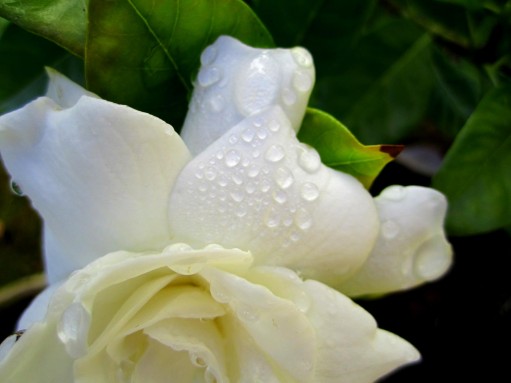
Source: Mostbeautifulflower.com

Source: Mostbeautifulflower.com

The beauty of a gardenia, with all its multi-faceted richness and inherent contradictions, captured in a perfume that is sometimes much more about a mood than a particular set of notes. That is Cuir de Gardenia, a feat of technical skill, innovation, and perfume mastery by the acclaimed doyenne of all-natural perfumery, Mandy Aftel of Aftelier Perfumes

On her website, Ms. Aftel has a wonderfully detailed explanation of why Cuir de Gardenia is different from many “gardenia” scents, along with discussion of its character and structure:

Cuir de Gardenia retains the unique beauty of the tiare [Tahitian gardenia] flower, not allowing it to morph into the hundreds of petals of a floral bouquet. I had been incredibly fortunate to find an artisanal grower and distiller of the ultra-rare, costly, precious gardenia. In Cuir de Gardenia, I wanted to retain the pure loveliness of the creamy sweet and singular gardenia fragrance, and knew that the rounded warmth of an oil-based perfume (solid and extrait) would be the perfect format.

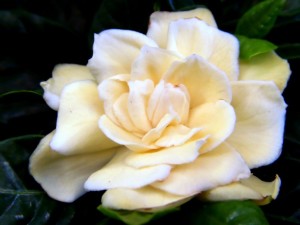
Tiare or Tahitian gardenia. Source: Kootation.com

Tiare or Tahitian gardenia. Source: Kootation.com

Cuir de Gardenia is unusual in that it has no top notes; I created it in such a way that the gardenia appears immediately, unimpeded from the opening of the perfume onward, merging seamlessly with the leather. The natural isolates ethyl phenyl acetate (reminiscent of a bunch of sweet peas) and the candy-like maltol contribute sweet and floral notes to the animalic base of the perfume.

Source: Fragrantica

Source: Fragrantica

Cuir de Gardenia comes in two concentrations: an extrait de parfum oil and a solid perfume. This review is for the former, the extrait de parfum. The perfume is classified on Fragrantica as a “floral woody musk,” while Ms. Aftel categorizes it as “dry woods.” According to Ms. Aftel, the notes are:

Middle: tiare (gardenia) absolute, jasmine grandiflorum absolute, benzyl acetate.
Base: castoreum, ethyl phenyl acetate, maltol.

It was interesting to smell Cuir de Gardenia merely in the vial. You are struck by an intense burst of heady, rich gardenia with hints of jasmine and a strongly animalic whiff.

Source: Chris Maher or "Artonline" at Deviantart.com. (Website link embedded within.)

Source: Chris Maher or “Artonline” at Deviantart.com. (Website link embedded within.)

The latter evoked two very different images in my mind. First, the smooth flanks of an animal covered in leather that has been burnished in lush perfumed oils. Second, the flanks of the human body, with the curve over the hips and slightly musky, satiny smoothness. There is something to both visuals, as Cuir de Gardenia is more than a mere floral scent. Still, there is no doubt that the main note is unquestionably gardenia. In the vial, it smells like a full-throttled gardenia or, more accurately, the essence of thousands of flowers distilled into a few, concentrated, precious drops. As a whole, Cuir de Gardenia is almost more of a mood and feeling than a mere scent.

It’s a different matter on the skin, at least at first. Cuir de Gardenia is an oil, and the first thing I was struck by when I applied it was the glistening, golden sheen it leaves on the skin. For me, smell of the oil initially acted as a barrier between the headiness of the flower that was so apparent from sniffing the vial. You have to give it a few minutes for the oiliness to dissipate and melt. Once the heat of your skin breaks it down, Cuir de Gardenia starts to show itself in all its multi-faceted richness.

North American Beaver via Wikipedia.

North American Beaver via Wikipedia.

Cuir de Gardenia opens on my skin with a fierce blast of strong castoreum musk, infused with the fresh gardenia flower, greenness, and a tinge of sourness. Depending on how much of the perfume you apply, the castoreum either leads the charge or comes in second place. When I applied a lot (about 3 big dabs of the oil), the muskiness was both intense and very animalic, verging almost on the feral. (You can read more about castoreum on Fragrantica, if you’re interested.) It made me think of how Ms. Aftel was reported to buy a very ancient, vintage stock of the beaver secretion from the estate of a former perfumer and how that ingredient is said to be such a part of her Secret Garden fragrance. I suspect the same stock was used for Cuir de Gardenia.

Source: freerangedairy.org

Source: freerangedairy.org

When I applied a smaller amount of the oil, the dominant impression for me was something else. I was struck by how Cuir de Gardenia felt more like a texture. Yes, there is the gardenia that is more moderately indolic and encased in a subtle warmth tinged with the castoreum’s musky, plush, velvety undertones. However, my main impression was rich, Devon clotted cream and butter. Cuir de Gardenia opens like floral butter, touched by a hint of sourness and green. The latter is an unexpected freshness that feels quite contradictory given how rich and ripe the flower can be.

Source: 123rf.com

Source: 123rf.com

I’m struck by the polarity and juxtapositions. Velvety petals that feel like buttered cream, next to dewy moisture and greenness. You have the gardenia on the stem in the early morning hours, but also the headiness of that same flower after it’s been plucked and its aroma has concentrated over time. None of it feels blowsy or decayed; there are initially no mushroomy undertones nor earthiness the way gardenia can sometimes manifest. Depending on quantity, it is either quietly lusty in its muskiness, or a little bit feral.

Ten minutes in, Cuir de Gardenia smells like buttermilk with its green, sour cream undertones. Deep in the base, there is a subtle whiff of something rubbery, but it’s more textural than anything black or leathered. It’s as if there were so much gardenia richness that it has coagulated and solidified into a hardened oil. I know I’m not doing a good job of explaining all of this, but that is because I’ve never quite encountered a gardenia like this one. For a perfume centered around one main note, there are a lot of unexpected, almost contradictory, complex facets in the opening hour.

Photo: onewomanshands.blogspot.com

Photo: onewomanshands.blogspot.com

I think that’s a testament to Ms. Aftel’s deft handling of the flower. It would have been all to easy for Cuir de Gardenia to be a simple, indolic, voluptuous gardenia. With all that richness, you’d almost expect a single-minded, typical gardenia. Instead, Cuir de Gardenia is one of those rare scents that somehow captures all the tiny, often disparate, layers to the flower actually growing in nature. What it isn’t is raunchy or dirty. This is a very different sort of “indolic” theme than what one usually encounters, one that is more musky than voluptuously narcotic on my skin.

And, in truth, Cuir de Gardenia’s headiness is a very quiet one. I’m not surrounded by an avalanche of gardenia; there is no nuclear-tipped cloud wafting around me, emanating a lavishly thick, voluptuous fleshiness. Cuir de Gardenia is much more restrained. I have to admit, I personally prefer my white flowers on the Wagnerian side, but there is no denying Cuir de Gardenia’s refinement. It is more akin to Vivaldi’s Four Seasons than to the Ride of the Valkyries, more Mozart’s Eine Kleine Nachtmusik Allegro than Beethoven’s Ninth or his Ode to Joy. None of that is meant as an insult. I love all those pieces, deeply, and I listen to Mozart more than I do to Wagner’s powerful “Apocalypse Now“- style piece, but there is no denying that there are distinct differences in style, tone, and mood.

At the end of 30 minutes, the perfume hovers an inch above the skin in a mix that is at once delicate, restrained, and rich. When you apply a larger quantity of Cuir de Gardenia, it adds another hour to the time frame before the sillage drops. In both cases, when smelled up close, the perfume is a massively concentrated hit of lush, buttery smooth gardenia infused with greenness and a tinge of buttermilk sourness. The gardenia is carefully placed upon a soft castoreum base that is very quietly musky, plush, velvety, and dark. Yet, there is very little of the animalic whiff that I detected when I smelled Cuir de Gardenia in the vial or that the perfume opened with when I applied a lot. The castoreum seems to have melted into the petals, having an indirect effect on the notes in a much more discreet manner. The whole thing is lovely, and I’m very impressed by the carefully calibrated balance.

"Dressage Black and White" by Diana Rose Greenhut or DianaExperiment on Flickr. (Website link embedded within.)

“Dressage Black and White” by Diana Rose Greenhut or DianaExperiment on Flickr. (Website link embedded within.)

You may have noticed that I’ve barely mentioned leather at this point. Well, initially, it didn’t show up on my skin in any discernible fashion. Then, suddenly, right at the 30 minute mark, things start to change. There is a muted impression of an ultra-expensive, high-end Hermès saddle which carries the tiniest lingering traces of the horse it had been on many hours before. There is something almost akin to civet in the animalic muskiness that is starting to stir on my skin. Lurking in the distance and at the edges are tiny flickers of notes that are simultaneously mushroom-y, earthy, vaguely chocolate-y, and nutty. It is undoubtedly due to the gardenia’s mushroom side combined with the castoreum. Whatever the cause, it adds dimension to what was previously and primarily a fresh-ripe, green-creamy floral bouquet.

The issue of the leather is perhaps the best evidence for how beautifully Cuir de Gardenia has been blended and the technical mastery involved. For the first hour, the leather never stays in one place on my skin, but moves throughout the notes like a very friendly ghost. Sometimes, he stops to say hello, and remains to chat for 4 or 5 minutes. Then, he drifts away to other worlds for a brief span, before popping back in. Every time I think he’s finally vanished, he waves a dark, friendly, leathered arm at you from the horizon. Then, suddenly, 90 minutes in, he decides to move in permanently. And he’s brought luggage with him! Suitcases filled with black smoke whose tiny tendrils wind their way up from their depths to slowly wrap their threads around the creamy gardenia. The leather ghost gives you a cheeky grin, puts his feet up, and is there to stay.

Yet, I want to emphasize that this is a very subtle, muted “leather” as a whole. It’s not the sort of leather that you have in fragrances like Etat Libre‘s hardcore, black Rien, the deeper, burnished brown leather of Puredistance M, the distinct leather of Parfums Retro‘s Grand Cuir, or the animalic leather of LM ParfumsHard Leather. The note here is more about an impression of leather. It is strongly infused with an animalic edge that sometimes feels a bit civet-like in nature, and it creates a subtle kinship to horsey leather. To be clear, though, the note is never fecal but is primarily just musky. Still, if you’re expecting a true, hardcore leather fragrance, you need to put those thoughts aside. Cuir de Gardenia is a spotlight on gardenia first and foremost. The flower merely happens to have a animalic leather undertone that distinguishes it from the traditional take on the note.

"Gardenia sketch" by Angel H. Juarbe on Fine Art America. http://fineartamerica.com/featured/gardenia-sketch-angel-h-juarbe.html

“Gardenia sketch” by Angel H. Juarbe on Fine Art America. http://fineartamerica.com/featured/gardenia-sketch-angel-h-juarbe.html

From the start of the third hour until its end, Cuir de Gardenia is a seamless blend of gardenia with animalic “leather” and musky touches. The smokiness lingers, but it becomes increasingly overshadowed by the warmth in the base that makes the gardenia more golden in feel. It is a skin scent on me at the 2.5 hour mark, but Cuir de Gardenia’s longevity is excellent. As an extrait or pure parfum, that is to be expected, but Cuir de Gardenia is also an all-natural perfume, so I was surprised when I noted Cuir de Gardenia lingering well after the 7th hour. All in all, with 3 big dabs, the perfume lasted just short of 11 hours on my perfume-eating skin. It was a mere whisper after the 6th hour that you could detect only if you put your nose right on your skin, but it was most definitely there. With a smaller quantity, Cuir de Gardenia lasted just under 9 hours.

As many of you know by now, Cuir de Gardenia has been a massive hit. Over 12 different bloggers have placed it on their Best of 2013 list, from The Perfume Shrine and The Non-Blonde to The Fragrant Man, Angela at Now Smell This, and many others. Out of the full reviews, I think that of The Non-Blonde is worth noting. On her skin, Cuir de Gardenia was more overtly sensual (or sexual?) than it seemed to be on me. Furthermore, her review includes a useful comparison between the extrait parfum and the solid:

Cuir de Gardenia, the new perfume from Aftelier tells the story of luxury, eccentricity, and sensuality. […][¶] This gardenia smells warm: warm from the tropical sun and sands as well as warm skin. The creamy aspect is also there, musky and sensual. This flower is unmasked by top notes. There’s nothing there to lighten the mood or make it go down easily. Instead, you get a journey from flora to fauna, as the creamy gardenia becomes fattier and more animalic and the perfume embraces the skin and wraps it an unmistakable buttery leather. […]

Cuir de Gardenia is offered as an extrait and a solid perfume, to keep the warmth and sensuality on skin-level. This perfume is pure decadence– you don’t want to send it into the stratosphere on a cloud of volatile alcohol molecules. I suspect that beyond the preciousness of the raw materials, a big sillage would have been just too much for polite company: this thing requires intimacy, which this format allows. Applied where it truly counts, Cuir de Gardenia is sweet and intense. I find it incredibly sexy in a very femme way, but then again, I’m all woman. Men who feel comfortable in dirty gardenia fragrances (from JAR Jardenia to Lutens Une Voix Noire) shouldn’t hesitate to try this Aftelier perfume in either form. The solid smells more animalic upon application but becomes smoother and almost honeyed after an hour or so. The extrait works for me in an opposite way– its true leather and castoreum nature becomes more pronounced with time. They layer beautifully, obviously, and last for at least six hours even when dabbed extremely sparingly.

Cuir de Gardenia was originally meant to be a limited-edition release, but the degree of the positive response has led Ms. Aftel to make the perfume a permanent part of her line, and to also offer it in a new 1/4 oz (about 7.4 ml) extrait bottle. It’s not cheap at $195 (or $240 for the solid), but you really need to keep in mind just what we’re talking about here: real gardenia, not a synthetic recreation through other notes. As I’ve mentioned a few times, gardenia is one of those flowers whose aroma cannot be easily captured through distillation of its petals. When you smell “gardenia” in a perfume, you’re usually smelling some combination of tuberose, jasmine, or synthetics. A fragrance made purely from actual, genuine gardenia is incredibly rare.

Tiare. Source: wahinewednesdays.com

Tiare. Source: wahinewednesdays.com

The Fragrant Man offers insight on yet another difficult aspect of using gardenia, especially when it’s the Tahitian kind called tiaré:

[Ms. Aftel’s Cuir de Gardenia] is a breakthrough moment for gardenia ‘fume lovers. The issue with gardenia oil is that when it leaves its heated homeland the scent changes to ‘off’ or more precisely, indolic at the unpleasant end of the spectrum. It is unstable when taken out of its natural tropical environment. We are talking about Tiare here, the gardenia that is native to Polynesia so my guess is that Tahiti or New Caledonia is probably the source. In these islands the local people make manoi oils. Tourists are often charmed by the scent of these oils until they arrive back home. This has happened to me. […] Manoi oil is coconut oil usually blended with the Tahitian gardenia known as Tiare but also with frangipani, ylang ylang and vanilla, in an enfleurage type process. Coconut oil is the carrier fat for the scent.

Ms. Aftel has found a way around all that, while also avoiding synthetics and gardenia substitutes. The result is a fragrance that seems to drive many men and women wild. (You can read The Fragrant Man‘s proper review of the scent, subtitled “Olfactory Orgasm,” which not only includes links to all the other reviews out there, but also has a discussion on the role of antique castoreum in recreating the leather note.)

There are a few other male bloggers who also fell hard for Cuir de Gardenia. In the case of The Black Narcissus, his immediate, instant reaction to Cuir de Gardenia was so extreme that the usually elegant writer could barely get the words out:

STOP THE PRESS! AFTELIER PERFUMES’ CUIR DE GARDENIA EXTRAIT IS GORGEOUS

the perfume, just deliciously arrived in my postbox: immediately, for me, knee weakening. not gardenia, as in gardenia,… tiare:a tropical, moist, neptunian, sultry white witch emerging, hair slicked to shoulders, from the sea. sweet Italian bubble bath honey. cuir: but fresh.tango’s eminently wearable younger sister, unencumbered

Photo: Chris or "Rapt in Roses" on Flickr. (Website link embedded within photo.)

Photo: Chris or “Rapt in Roses” on Flickr. (Website link embedded within photo.)

I liked Cuir de Gardenia a lot, but it was more quiet and restrained on my skin than I had expected. It is infinitely creamy, but I think I like my white flowers to show more skin, to ooze ripened sexuality like a heaving bosom on a courtesan. In other words, I like my big white flowers to be narcotically BIG WHITE FLOWERS, Wagner and Valkyrie style.

Yet, it’s hard not to be impressed and a little bit seduced by a more tasteful, refined take when it is as rich, buttery and multi-faceted as Cuir de Gardenia is. The perfume is a study of paradoxes — paradoxes which are perhaps the best and truest manifestation of the flower in nature that I have ever encountered — but done with an ingenuous animal twist. The whole thing is intellectually fascinating, but Cuir de Gardenia is also a testament to pure skill. You can’t be a niche perfumista today without hearing about Ms. Aftel’s role as the professor, alchemical wizard, and pioneer of all-natural perfumery. You hear it, but you may not really understand it fully until you try something like Cuir de Gardenia.

Or, in my particular case, her Chef Essences which I have to say here and now blew my foodie mind in such a way that my eyes rolled back in my head, and I was considering engaging in lewd acts with the bottle. (Well, not quite, but… close. I was certainly molesting the bottle of Ginger Essence in full disregard of the instructions on the stated quantity, and I was pretty much drooling on both myself and my food. The degree of my reaction, amazement and disbelief over those genius fragrant oils cannot be stated enough, and they will be the subject of a review sometime in the next 2 weeks, once I finish my cooking tests. Those Chef Essences…. Good God!) If Cuir de Gardenia didn’t arouse quite such an intense reaction in me, it is only because I care about food much more than I do about perfume. Gastronomy is my first love, while perfume is perhaps my fifth, so don’t misinterpret my tone. I think Cuir de Gardenia is very pretty, even if it isn’t really very “me.” It is also, without a doubt, masterfully done.

I think that anyone who passionately adores their lush, big white flowers should give Cuir de Gardenia a sniff. Those who normally fear white flower bombs would probably enjoy it as well, given the perfume’s intimate restraint and refinement. At the same time, the animalic side and suggestion of leather make Cuir de Gardenia a fragrance that men can pull off. The perfume’s low sillage also means that it is something you can wear to work, though I personally think Cuir de Gardenia feels far too special for such mundane, daily events. My only note of caution is for those who are accustomed to more commercial, traditionally sweet, or conventional florals. If you’re not used to castoreum, I don’t know how you will respond to Cuir de Gardenia’s very animalic muskiness. 

All in all, I think Cuir de Gardenia would be perfect for a date night, or an evening when you want to discreetly tantalize. It is delicate sensuality done with great refinement. 

Disclosure: My sample was courtesy of Aftelier Perfumes. That did not impact this review. I do not do paid reviews, my opinions are my own, and my first obligation is honesty to my readers.

DETAILS:
Cost & Availability: Cuir de Gardenia is exclusive to the Aftelier website, and is available in 3 different sizes. There is a 2 ml mini of Pure Parfum extrait for $55; a new 1/4 oz bottle (about 7.4 ml) of the Extrait for $195; or a 0.25 oz of solid perfume in a handmade, sterling silver compact for $240. Samples are available for $6 for a 1/4 ml vial. Ms. Aftel ships worldwide, and you can find further information on her FAQ page.