Loree Rodkin Gothic I Eau de Parfum: Cozy Comfort

Source: lewallpaper.com

Source: lewallpaper.com

Winter’s cold temperatures tend to bring out my appreciation for cozy scents. It is perhaps my second favorite category in general, after Orientals, but even more so in the dark gloom of December and January. There is something instinctive and biological about the tendency to hibernate that emerges in the cold, winter months, but I have a yearlong habit of curling up with simple, cozy scents at night. After a long day, there is nothing I love more than to toss on some comfortable clothing after a hot shower, put on perfume, and chill in front of the television. At those times, I reach for something that I will enjoy on an instinctive level, a scent that doesn’t require focus on all its details, but something simple, warm, soothing, and luxuriously deep.

Gothic I EDP original bottle on Luckyscent.

Gothic I EDP original bottle on Luckyscent.

I think Gothic I definitely qualifies. It is an eau de parfum from the jewellery designer, Loree Rodkin, and I spent more than a few nights last month and in the recent freezing days enjoying its rich warmth. It’s all thanks to one of my readers, “CC,” who wrote to me during my patchouli series to inquire if I had ever tried Gothic I (as in the number “1”), and who generously insisted on sending me a small decant. She thought I might be interested because Gothic I (which I’ll just simply call “Gothic“) has two kinds of patchouli in it, though it also has vanilla.

It turns out that, on my skin, Gothic is almost entirely a vanilla scent, but it’s a lovely one! Vanilla is not a category of fragrances that I generally seek out, and I most definitely avoid gourmands for my own, personal use. Yet, deep down, but I have a huge appreciation for a certain kind of vanilla: the rich, Madagascar, Bourbon extract type that feels simultaneously deep, heavy, dark, and somewhat dry. That’s essentially the broad profile of Gothic, which also has the benefit of strongly resembling Profumum Roma‘s much more expensive Dulcis in Fundo, but with a touch of patchouli.

Gothic was released in 2013 as the eau de parfum version of Ms. Rodkin’s earlier oils, and is considered the signature fragrance of her line. Its notes are as simple as the fragrance itself, which Luckyscent describes (with an inexplicable touch of the romance novel, in my opinion) as follows:

A moody vanilla shrouded in a mist of light woods and patchouli. Sensuous and unrepentant. We picture long hair whipping in the wind, a search by candlelight and a man driven half mad by love. Still, for all of its gorgeous drama, we could wear this everyday. It has the luxuriant skin-caressing softness of a vintage silk velvet cape. Worn over nothing. Voluptuous and mesmerizing.

Notes: Vanilla pod, Madagascar vanilla, spice accord, Tunisian patchouli and Indian patchouli.
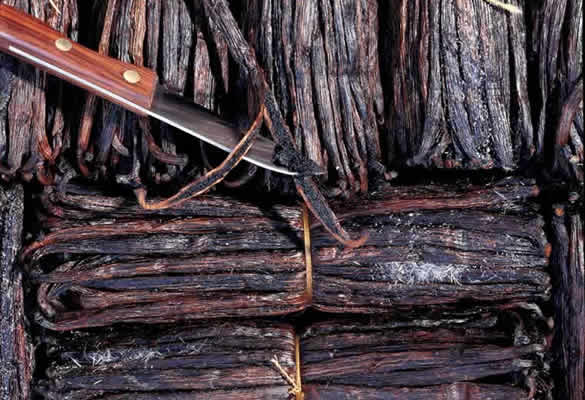
Picture of vanillin crystalizing out to surface of Bourbon vanilla beans. Source: amadeusvanillabeans.com

Picture of vanillin crystallizing out onto the surface of Bourbon vanilla beans. Source: amadeusvanillabeans.com

Gothic is far from “moody,” in my opinion, and definitely doesn’t evoke any man driven half mad with love, but it’s definitely a voluptuous, luxurious scent. It opens on my skin with the richest, most buttery vanilla imaginable, as thick as if pots of butter and custard had been poured into it. Seconds later, it is infused by a momentary boozy sweetness, then a breath of warm patchouli. There is the merest hint of abstract spices dancing all around, perhaps a dash of cinnamon, with the tiniest pinch of nutmeg, and something woody. As a whole, though, Gothic is 3-parts Bourbon vanilla extract, and one-part patchouli. Perhaps a more accurate set of numbers would be 80% vanilla, and 20% patchouli, at least for the opening 30 minutes.

Source: biofarmacia.ro

Source: biofarmacia.ro

Gothic is extremely concentrated and dense in feel, but the sillage isn’t nuclear. It envelops you in a deep cloud about 3-4 inches above the skin at first. The smell is utterly delicious, but it is initially much drier and much less sweet than its very close relative, the Dulcis in Fundo. It lacks the waffle cones and caramelized sugar aspect of the Profumum fragrance, and somehow seems fractionally less gourmand in nature.

Ten minutes in, the perfume shifts a little. There is an odd, utterly unexpected touch of flour that creeps in. I have the strangest image of Gothic as a really rich, but dry, baked vanilla cake, dusted with patchouli, and with the faintest remnants of flour left in the buttered tin. Vanilla, patchouli, flour, and butter… none of it seems remotely “gothic” in nature, but the fragrance is also not as unctuous as those notes may suggest. There is nothing gooey or saccharine-like in the sweetness, nothing that makes me feel queasy by excess. One’s perceptions of “cloying” may depend on definition and on one’s personal yardstick, but, to me, Gothic isn’t cloying despite its richness because of the undercurrents of dry woodiness and spice created by the other elements. In any event, the flour, butter, patchouli and spice all retreat to the sidelines, less than 30 minutes into Gothic’s development.

Source: footage.shutterstock.com

Source: footage.shutterstock.com

They continue to impart a slight, indirect touch on the fragrance which is now almost entirely rich vanilla. And, there, Gothic remains until its very end. To my surprise, at the end of the 2nd hour, hints of caramelization and waffle cones creep in. They turn the perfume into a virtual clone of Dulcis in Fundo, only Gothic has that muted, muffled whisper of patchouli floating in the background. The incredibly smooth, rich, dense vanilla lies right on the skin, though it’s very strong when smelled up close. Once in a while, a delicious trail of richness in the air would catch me by surprise, and I’d realise it was a tendril of Gothic that had followed me. Generally, Gothic turns into a true skin scent somewhere between 5.5 and 6.5 hours, depending on the quantity you apply. With 3 medium-to-good sized sprays from the little atomizer, the perfume lasted almost 15 hours on my perfume consuming skin. With a lesser amount, it lasted around 12.5 hours.    

Gothic I EDP in the new, vertical bottle.

Gothic I EDP in the new, vertical bottle.

Nothing about Gothic’s scent is complicated, but sometimes simplicity has its own charms. I think that’s especially true if you’re looking for a comfort scent to curl up with on a cold winter day. The only complication that tripped me up in terms of the perfume was figuring out the bottles, prices, and various options. I was used to seeing the square bottle offered by Luckyscent for $140, and the first time I looked at Loree Rodkin’s site back in December, that was also what was shown. This week, however, the perfume appears on her website in a tall, narrow bottle shape which threw me off because Ms. Rodkin confusingly offers an identical looking thing that is labelled as a “room spray.” The perfume I tested was the 50 ml Eau de Parfum, but the “Ambiance” room spray is an large 4 oz bottle described as Eau de Cologne (for the room??) and priced significantly lower at $75. (It’s $25 less on Amazon, via Loree Rodkin herself.) Either way, the Eau de Parfum seems to have changed in its bottle shape to look extremely close to that of the “Room Spray,” so if you’re looking into the fragrance make sure you get the right version.

The Gothic I Ambiance "Room Spray" bottle. Source: Amazon.

The Gothic I Ambiance “Room Spray” bottle. Source: Amazon.

Then, there was the question of price. Gothic I is priced at $140 on Luckyscent, but numerous comments there talk about $250 a bottle. Obviously, the prices have dropped substantially, which is pretty unusual in the perfume world where things only go up and up. The pricing makes me even more intrigued by the Ambiance room spray. It can hardly be air freshener, and I assume that it is mere eau de cologne in strength, but $49.99 on Amazon for a huge 120 ml/4 oz (versus $150 for a 50 ml bottle of eau de parfum) seems like an excellent deal, even if one is getting the anorexic, Diet version.

Gothic I EDP original bottle shown on Fragrantica and Luckyscent.

Gothic I EDP original bottle shown on Fragrantica and Luckyscent.

Still, the best part of Gothic really is its enormous richness and depth. There is a great description of it on Fragrantica:

when I got my nose on this patchouli / vanilla bomb (sample from Luckyscent) I felt the earth move.

The vanilla here is not sickly, rather it is dark and seductive. The patchouli has been stripped of its crusty afghan coat and been given a good scrub up. It’s a delicious combination that purrs gently on the skin, but projects like a monster and lasts all day. It borders on gourmand but thankfully (I sold my Musc Ravageur as I didn’t want to smell like a cinnamon bun) stays out of the kitchen. If you find Serge Luten’s Un Bois Vanilla and its ilk just too sweet, this might be the one for you.

That review is from a man, and the only other review comes from a woman who had a very different experience:

I wish I could wax rhapsodic about this one, but its medicinal pungency overwhelms any vanilla tendencies. While retaining its earthiness, this is a less dank and more fresh and minty patchouli. The spices add to the medicinal quality that reminds me of old, plastic-y Band-Aid strips. I think this one might be too bright and sweet for those lovers of dark, brooding fragrances, but too earthy for those looking to graduate from cupcake vanilla scents.

I’m rather amazed by what skin chemistry can do. Clearly, she’s experiencing real, hardcore, genuine patchouli to a huge (and very green) degree, and she’s obviously not a fan. I am, but I experienced almost none of it in Gothic. It may have started at 20%, at best, but it quickly became a mere 5% on my skin, if even that.

I actually have to wonder if the commentator did not leave her review in the wrong place, because it sounds to me as though she’s really describing Gothic II. It is a scent which I’m now dying to try, and which seeks to really showcase the element in a strong, fierce way with notes that include:

cloves, incense, sandalwood, frangipani, indian patchouli, Tunisian patchouli, and madagascar vanilla. 

The more typical descriptions of Gothic (#1) talk about how the scent is dominated by vanilla. Consider this review on Australian Perfume Junkies, where the guest blogger, “Kymme CV,” writes:

Gothic I opens with an enormous sweet vanilla slap in the face, just like a vanilla custard-pie but more! This ‘vanilla’ is an exotic, deep, rich and velvety vanilla. But it’s really not that simple a fragrance. There’s a real depth to the Madagascan vanilla that comes alive once the spice starts to come through. Now we’ve got nutmeg on our vanilla pudding! The spice accords mixed with the vanilla give the fragrance a dramatic nuance.

When I first wore Gothic I hours passed before I started sensing the patchouli notes coming through. However, each time my body temperature rose a little the patchouli blend came storming through. At first I didn’t even realise it was me that I could smell! As soon as my body cooled again, back came the vanillas.

Skin chemistry is obviously responsible for how much patchouli you experience, and the posts on MakeupAlley seem to support that view. There, the assessments for Gothic are mixed, primarily because of the price of the Gothic oil, but also because of the degree of patchouli. Apparently, not everyone shares my love of actual, original true patchouli. I’m crushed…. Facetiousness and joking aside, here is a glimpse of the range of perspectives:

  •  I adore complex scents – especially woods, incense, spice, but sometimes I simply crave something sweet…like wanting a fudge brownie on occasion, but not daily. This is one of my fragrance equivalents to a fudge brownie. It’s an incredibly sultry, rich, sweet vanilla intensified with patchouli and woods. It layers gorgeously with other fragrances, softening all sharp edges. It’s in the same vein as Des Filles a la Vanille’s Vanille, but much longer lasting and deeper.
  • I adore this fragrance. It’s the nicest patchouli fragrance I ever smelled. I am also a big fan of Les Nereides Patchouli Antique. I love Gothic I more.
  •  While this one is pretty expensive, it’s also a lovely, warm, rich, Oriental vanilla with incredible lasting power. A dab on the back of a wrist lasts me well past 7 hours and then some. Sometimes a strong patchouli gives me difficulty, but this one is blended beautifully and gives the fragrance just enough backbone without being over-powering. Mostly I smell a sweet vanilla with amber/patchouli undertones and a good dose of sweet wood and benzoin. Heavenly!
  • A pleasant patchouli/vanilla oil that smells somewhat “chocolaty” and is unpleasantly overpriced and over-hyped about. Voleur de Roses smells patchy and gothic, this smells like a sweet girly girl with ponytails and a bar of chocolate candy in her hand –and NOT Gothic.

All those reviews date from 2005-2007, and the reference to an “oil” makes it clear that they are not talking about Gothic I Eau de Parfum at all, but the very expensive oil which predates it by about 8 years. For all I know, it may be quite different in smell, and with more patchouli essence.

I agree with them that the oil seems very over-priced at $110 for 7 ml, but the new 2013 eau de parfum might be worth it for those who love extremely rich vanillas with a dash of dry patchouli woodiness, and a microscopic sliver of spices. It’s $140 for 50 ml, and a little goes a long way. The Profumum may be cheaper per milliliter at $240 for 100 ml, but they’re both excellent fragrances. I personally like the Rodkin version more than the Profumum, because some patchouli is always preferable to none. Plus, Gothic is much less gourmand — relative as that may be for a fragrance devoted to the richest vanilla imaginable. It’s a dry, almost woody vanilla, not an unctuous, gooey one that drips sugar. And it’s fantastic on a cold winter’s night or as a bedtime scent.

I’ve always said that I have the best and kindest readers around, but “CC” went out of her way to seek me out with her generous offer. All because she knew of my passion for patchouli! Thanks to her, I’m definitely tempted to buy a bottle of Gothic, but the only thing stopping me is the possibility of a version that may have three times the patchouli, along with incense and spice. Unfortunately, Gothic II is not offered at Surrender to Chance, but I am on the hunt, and quite determined now. In the meantime, I shall treasure my little decant of Gothic I, and the sign of friendship that went along with it.

As for all of you, if you love rich, woody vanillas, and have some tolerance for real patchouli, do try Gothic I. Don’t expect a patchouli scent, or you’ll be sorely disappointed. In terms of vanilla fragrances, though, this is a lovely one.
DETAILS:
Cost & Availability: Gothic I is an eau de parfum that comes in a 50 ml bottle that costs $137 or $140. The fragrance is also available as a perfume oil in a 7 ml roll-on bottle, as well as a room fragrance called Ambiance Eau de Cologne in a 4 oz/118 ml bottle. Loree Rodkin website: Loree Rodkin sells Gothic I EDP in a tall 50 ml bottle for $137. She sells the Ambiance Eau de Cologne — which she describes as a “room spray” — for $75 for a 4 oz bottle. However, the Loree Rodkin Amazon page sells that same fragrance (which it says originally retails for $175) for $49.99. For readers in Japan, there is also a Rodkin Japan website. Other vendors: Luckyscent also sells Gothic I EDP in the original square box for $140, along with the 7 ml concentrated Gothic oil for $110. You can also buy it from Net-a-Porter. Outside the U.S.: I’ve had difficulty finding Gothic I sold at any stores outside the U.S., even though Loree Rodkin’s stuff is carried in a number of countries, from the UK to Switzerland, Greece, Austria, Taiwan, the UAE, and others. From what I’ve seen of the UK and French sites, they don’t carry her fragrances, only her jewellery. You can find the full list at her Locations page. Samples: Luckyscent sells samples, as does Surrender to Chance which offers Gothic I EDP starting at $7.99 for a 1 ml vial.

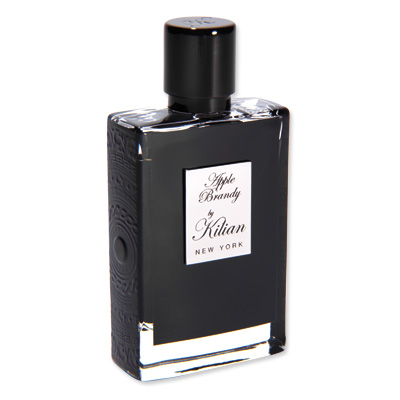
By Kilian Apple Brandy

Source: dailymail.co.uk

Source: dailymail.co.uk

Some fragrances are not meant to be practical, versatile, daily experiences. They’re intended to be playful whimsy, a bit of a laugh for those with very deep pockets who can afford to indulge in a rich man’s expensive luxury once in a blue moon. I think that’s perhaps the best way to interpret and approach Apple Brand, the brand-new, recently released perfume from By Kilian. It is a fragrance that really isn’t something practical for most people to wear on a daily basis, unless you want your boss to think you’re an alcoholic and write you up to HR, or a police officer to look at you askance and subject you to a breathalyzer test. In a nutshell, Apple Brandy makes you smell like you were smeared from head to toe with a 1000 plates of Crepe Suzette, and then fell into an oak barrel of cognac after an all-night bender.

Source: Instyle.com.com

Source: Instyle.com.com

Apple Brandy is an eau de parfum that was created by Sidonie Lancesseur, and was released at the end of 2013 as a scent exclusive to Kilian Hennessy‘s new store in New York’s meatpacking district. As the Kilian website description makes clear, the fragrance is both a playful wink at the “Big Apple,” and an homage to his Hennessey cognac heritage:

BRANDY is the term used to designate “Cognac“ when your product is not actually produced in the region of Cognac. In order to recreate this very specific “Cognac” scent that belongs in Kilian’s olfactive memory, Sidonie created an accord combining the smoked wood from the Oak casks – Cedar wood from Texas, white Cedar from China and Labdanum from Spain – and the sugar from the alcohol – Vanilla and Ambroxan.

APPLE is of course a wink to New York, the “Big Apple”. In order to create an “Apple accord” that would not be anecdotal or too simplistic, we created an “Apple liquor” that would blend, rather than contrast, with the “Oak cask” accord.

The complete list of notes is as follows:

Oaken barrel, Texas cedar, Chinese white cedar, Spanish labdanum, Vanilla, Ambroxan.

Source: NYTimes.

Source: NYTimes.

Apple Brandy opens on my skin with a tsunami of pure, hard alcohol. I absolutely adore boozy notes, but Apple Brandy takes it to a whole new extreme and level, to the point where I actually said, “Whoaa…..” out loud. For an instant, the opening note is of apple — tart, crisp, and tangy like a Fuji — but it is almost immediately covered with cognac. The liqueur is sweetened with an extremely nutty, toffee’d undertone, and has traces of oak and a thick amber as well. It’s nice, but, my God, is there a lot of it! It’s intense, almost to the point of rawness, and beyond any “booziness” that I’ve previously encountered.

Source: yumsugar.com

Source: yumsugar.com

The overall effect is exactly like a caramelized apple at a fair, covered in heavy, dense toffee, and then dunked into an oak barrel of alcohol. Perhaps a more precise comparison is to Crepe Suzette, the kind were the apple-stuffed crepes are doused with sugar, then flambéed to a caramelized crisp with copious amounts of brandy. On the side, and all around the plate, is a luxurious crème anglaise sauce of slightly eggy, rich vanilla.

Crepes with creme anglaise. Source: foodspotting.com

Crepes with creme anglaise. Source: foodspotting.com

The intensity of the alcohol tsunami softens after 5 minutes, losing some of its rawness and undiluted, hard edge. I still smell like apple Crepe Suzette, but it’s after some of the brandy has been burned off. The first time I tested it, Apple Brandy was actually quite enjoyable as a cozy, warm, dense, boozy gourmand. I liked the ambered apple compote, and I have a particular weakness for crème anglaise sauce. The vanilla isn’t a huge part of the scent on my skin, but the flickers of it at the edge provide a lovely richness that makes Apple Brandy feel like a decadent indulgence. My favorite part, however, is the oak which really evokes oak barrels in the strongest way possible. It rather brilliant, in my opinion.

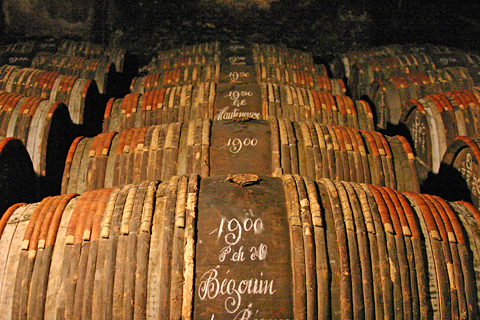
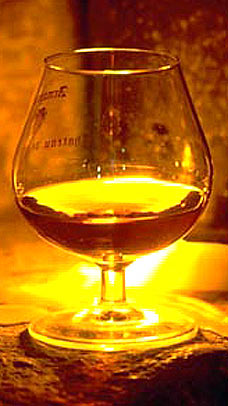
Oak Barrel with 1973 GC Le Peu Hennessy cognac/ Source: blog.cognac-expert.com

Oak Barrel with 1973 GC Le Peu Hennessy cognac/ Source: blog.cognac-expert.com

Apple Brandy is an enormously linear scent with very little change throughout its lifespan. It never transforms in any substantial way, but there are variations of degree that occur after the first hour. The fragrance’s apple tonalities weaken and slowly fade, while the oak barrels become much more dominant. There is something incredibly appealing about the oak when doused by the caramelized apple and the heady, boozy cognac. The wood is extremely smooth, slightly smoky, and rich, adding a layer of depth to the otherwise simplistic scent. The cedar never appears on me in any distinctive way, but I think it works indirectly from the edges, heightening the oak with that subtle smokiness. Really, the wood parts are beautifully done as a counterbalance to the Crepe Suzette and hard liqueur.

Ambroxan. Source: Aromachemicals.net

Ambroxan. Source: Aromachemicals.net

At the end of the first hour, Apple Brandy becomes increasingly drier and woodier, particularly as the Ambroxan starts to stir in the base. The synthetic, alas, is a little difficult for me. According to the Good Scent Company‘s olfactory database, Ambroxan’s strength is assessed as “high” or intense, and its aroma is: “ambergris, old paper, sweet labdanum, dry.” Here, it initially adds a warm, sweet, ambered feel to Apple Brandy’s opening, but the dryness takes over about 90 minutes into the perfume’s development. I am much more sensitive to aromachemicals than the average person, and Ambroxan is no exception. The inside of my nose hurts each time I sniff my arm up close, but it’s thankfully not an extreme reaction. As a whole, the aromachemical is well-blended into the fragrance, and doesn’t seem hugely excessive. Still, it’s enough to make Apple Brandy a much drier scent than it was originally.

At the start of the third hour, Apple Brandy is a blur of sweetened booze and woodiness on a very dry base. The caramelized apple compote note is muffled, and soon fades away entirely. The vanilla really never showed itself on my skin outside the opening hour where it was more of a supporting player on the sidelines. As for the other notes, they feel quite indistinct and abstract, lacking delineation and overlapping each other, with only the brandy really dominating. The sillage — which was initially quite intense with only a small amount of perfume applied — now drops, hovering only an inch or so above the skin.

Hennessy's aged, cognac oak barrels. Source: graperadio.com

Hennessy’s aged, cognac oak barrels. Source: graperadio.com

That’s really the sum total of Apple Brandy’s development on my skin. From the third hour until its very end, the fragrance is merely a dry, semi-sweet, woody, oak and cognac bouquet. In its final drydown, Apple Brandy is just an abstract smear of woodiness tinged with some vague sense of booziness. All in all, the perfume lasted just over 9.5 hours, with generally good sillage that only became a skin scent at the start of the 6th hour.

Source: autoblog.com

Source: autoblog.com

I enjoyed parts of Apple Brandy a great deal, but I have numerous caveats and issues with the scent. I live in a place where I cannot go anywhere without driving, and where the jackbooted police are notoriously aggressive over the smallest thing. I simply would not dare wear Apple Brandy outside my house for fear that — were I ever to get pulled over — the police would think I’d been drinking and driving. Knowing the police here, there is no way they’d believe my protests, “Officer, it’s only my fragrance.” I wince just imagining the scene.

I also would not be comfortable wearing the scent to social occasions either, lest people think I’d been on a bender or had alcohol problems. The smell of liquor is simply so intense from a few dabs, especially in the first two hours, that regular application might smell as though I’d doused my clothes with an entire bottle of expensive brandy. Lastly, as an attorney whose speciality was employment law for big corporations, I would strongly advise against wearing Apple Brandy to any workplace, period. This is the sort of thing that would lead to HR problems, because it really does not convey an appropriate, professional image.

Source: it.123rf.com

Source: it.123rf.com

On the upside, Apple Brandy might be a lovely scent to wear in your own home on a chilly, snowy winter’s night. It is the perfume equivalent of having a brandy while sitting before a fire. Yet, even as I write that, my brains whispers the other problems with the scent: it’s linear, it’s a novelty act, and it would get boring very quickly. I enjoyed parts of Apple Brandy quite a bit the first time around, especially before the dryness and Ambroxan kicked in. The second time around, however, I was less enthused and a bit bored. There is a somewhat exhausting quality to the scent; it beats you over the head at first, and you’re quite awed by both the intensity and the novelty. Later, though, its unchanging nature wears you down a bit, and you’d like something a bit different than just the incessant clamour of brandied oak barrels. In short, Apple Brandy’s playful, exuberantly celebratory act is perhaps something best suited to a rare occasion.

All of that brings me to the next issue: price. Apple Brandy costs $235 for a small 50 ml bottle, and unlike many other Kilian fragrances, I don’t see the (relatively) cheaper refill option listed. I personally would never spend $235 on a fragrance I wouldn’t dare to wear outside the house, and to which I’d turn only once in a blue moon as a novelty. On the other hand, in the same way that a really expensive bottle of brandy can be an occasional indulgence, so too is Kilian’s perfume equivalent. Parts of it are truly enjoyable at times.

At the end of the day, price is a subjective matter, so if you have no problems spending $235 to smell like flambéed Crepe Suzette and Hennessy oak barrels, go for it. Just don’t spray on a lot, or you may appear like an alcoholic on a bender. And, for the love of God, don’t drive while wearing Apple Brandy!

DETAILS:
Cost & Availability: Apple Brand is an eau de parfum that costs $235 for a refillable 1.7oz/50 ml bottle that comes in a black, wooden box. I don’t see the actual, and usually cheaper, refill option listed. The fragrance is said to be exclusive to the new Kilian store in New York, but you can purchase it from the US Kilian website. You can’t find it in Europe, or from the Kilian International site. However, you can always try to call the new boutique in New York to purchase it by phone. The store’s address and phone number are: 804 Washington Street, NEW YORK CITY, NY, 10014. +1 212-600-1298.  Samples: I obtained my sample of Apple Brandy from Surrender to Chance where prices start at $6.99 for a 1/2 ml vial.

Odin New York 11 Semma: Chili Peppers & Tobacco

Source: Odin Facebook page.

Source: Odin Facebook page.

One of my perfume resolutions for 2014 was to explore perfume houses that aren’t as well-known, and to pass wider afield of the usual mainstay niche brands. Odin New York isn’t new, but it is much less well-known than the Le Labos and L’Artisans of our little world. The company is a hip, edgy men’s fashion retailer in New York who branched out into unisex fragrances in 2009. Each fragrance comes with a name and a number, like 04 Petrana, 08 Seylon, or 10 Roam.

I sniffed much of the line while in Paris, noticing that the fragrances seemed to get consecutively darker or more oriental as the numbers grew higher. Still, they were all too sheer, light, and insubstantial for my tastes. In addition, I was unimpressed with their concept of an “Oriental,” and didn’t find any of the scents to be particularly interesting. They felt rather pedestrian, lacking oomph, distinctiveness, and soul. However, when I heard that Odin New York had released a new perfume that was centered around tobacco, I decided to keep an open mind. After all, it was number 11, so, at the very least, it should finally be dark and rich enough, right? Not exactly.

Source: Fragrantica

Source: Fragrantica

11 Semma was released late in 2013, and is an eau de parfum that was initially available only for pre-order at Barney’s New York. Odin describes it as follows:

SEMMA is a collection of notes from distant lands veiled in mystery. A vibrant composition bended in discoveries of sweet tobacco leaf and warm myrrh. Core spices of cinnamon bark and herbaceous clove intertwine within the brightness of fresh chili pepper. Aged sandalwood and powdery tonka bean uncover a buoyancy both familiar and enduring.

Top: Warm Myrrh, Fresh Chili Pepper
Middle: Cinnamon Bark, Herbaceous Clove
Bottom: Sandalwood, Tonka Bean, Sweet Tobacco

11 Semma (or “Semma“) opens on my skin with a puzzling but very distinctive aroma of fresh citruses that resemble bergamot. There is no such note listed in the olfactory pyramid, but I smelled subtle elements of citrus for a good 40 minutes on my skin. It is followed by a delicate carnation note, but within seconds, a fiery burst of chili pepper arrives on the scene.

Source: wallpapersfor.biz

Source: wallpapersfor.biz

Piquant, peppered, spicy, and fierce, the chili infuses every part of the crisp bergamot and sweet carnation. Hints of smoky myrrh, dried tobacco, and a whisper of cinnamon follow, but everything is subsumed under the dancing peppers. The spices and sweetness melt into the vague woodiness upon which the fragrance is based, suffusing it with some of the undertones of sandalwood, though it never feels like the real wood to me. I like how the chili adds a bite to the carnation, which felt almost rose-like in its sweetness until the fiery pepper transformed it. As a whole, Semma’s opening bouquet is of a highly spiced, peppered, biting carnation-rose mixed with juicy, ripe bergamot, dry tobacco, and a touch of smoke.

Kephalis. Source: Givaudan.

Kephalis. Source: Givaudan.

Ten minutes in, there is the first whiff of something that smells of ISO E Super infused with tobacco. I have to wonder if it is Kephalis, because it really aggravates my nose when smelled up close in a way that regular ISO E Super does not. Kephalis is a cousin to ISO E Super, only woodier and drier. Givaudan‘s description of the synthetic is useful, as it points out that Kephalis is used to recreate tobacco and woody tonalities:

Kephalis is a very versatile and rich product, used as a long lasting heart/basic note. It blends well with floral notes (jasmine, rose, violet, lavender, etc.) as well as sophisticated amber, woody-aldehydic, tobacco and masculine creations.

Source: Walltor.com

Source: Walltor.com

Whether Semma has Kephalis or actual ISO E Super, it is initially only a brief whiff of something peppered, and serves to amplify the fiery bite of the chili note. It also helps to offset the growing sweetness of the carnation note. There is something about the floral accord that my nose keeps translating as a jammy rose aroma, but thanks to the other elements, it is never cloying or excessive. Ten minutes in, the synthetic tobacco aroma grows stronger, along with the cinnamon and a touch of smokiness. The chili pepper is very authentic in feel, right down to the burning whiff of capsaicin that you’d get if you bit into a Habanero pepper.

Source: art4uk.co.uk

Source: art4uk.co.uk

11 Semma really seems to have three distinct stages. For the first 40 minutes, it is entirely fiery chili peppers with jammy, sweet, fruited carnation, followed by dry tobacco, cinnamon, and a touch of myrrh, all infused with an increasingly sharp, aggressive, peppered ISO E Super or Kephalis aromachemical. Semma is an airy, sheer, insubstantial cloud that wafts 3 inches above the skin. It may not have much heft or weight, but it is extremely strong when sniffed up close. Unfortunately, within 30 minutes, the notes become more and more indistinct, apart from the chili, and the perfume feels utterly bland except for that one element of fieriness. There is nothing terribly wrong with it (except for the aromachemicals that really hurt my nose), but it just feels so damn pedestrian. It doesn’t feel rich, luxurious, deep, or complex. It is merely… there.

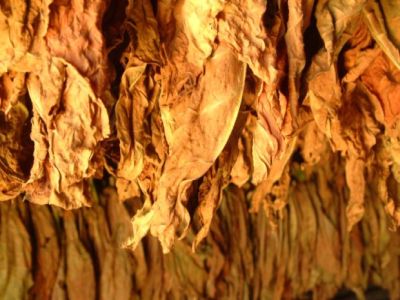
Dry tobacco leaves. Source: cigarettesplace.net

Dry tobacco leaves. Source: cigarettesplace.net

At the end of the first hour, the second and main stage begins when the ISO E Super/Kephalis takes over, and transforms the scent into a scratchy, super dry, prickly, jangling tobacco synthetic. There are fading hints of chili pepper capsaicin, and an increasingly abstract, amorphous, sweet floral element, but both are muted, and recede further to the edges as time goes by. In the base, Semma’s extreme dryness and generic woodiness are lightly flecked by powdered cinnamon and vanilla, but neither note is enough to add much warmth or softness to the dry scent. Semma remains this way for the next few hours, with all the notes becoming hazier and less distinct except for the arid tobacco aromachemical. At the end of the 3rd hour, the sillage drops, and Semma hovers right above the skin.

Source: rgbstock.com

Source: rgbstock.com

The final stage begins shortly after the start of the 6th hour. Semma has devolved into a generic, dry, tobacco woody blur, infused with cinnamon and vanilla. The drydown is nice, relative to the sharpness of the opening, though I admit my feelings are influenced by the fact that the bloody aromachemicals have finally dulled and retreated to the sidelines. The growing presence of the vanilla helps make the scent softer, and cozier. Now, Semma is merely an amorphous, fuzzy haze of dryness, sweetness, and woodiness. The tobacco is still the most distinctive element in a distinct, individual way, but it finally feels much more muted and hazy as well.

In its final moments, Semma is a nebulous, generic woody sweetness. There are suggestions of vanilla and a dry spice, but it’s subtle. To my surprise, the fragrance never really demonstrated the “powdery elements” referenced in Odin’s description or in Fragrantica‘s entry. All in all, Semma lasted just under 10.5 hours on my skin. It wasn’t a sillage monster, and projected about 3 inches at most in its opening hour. However, the aromachemicals make it extremely potent when sniffed up close. As a whole, Semma had moderate sillage that became soft at the start of the 4th hour. It took about 6 hours for Semma to become a true skin scent.

As you might have guessed by now, I didn’t think much of 11 Semma. Even if we put aside the excessive aromachemicals, the fragrance simply wasn’t all that interesting. Another abstract, dry, woody fragrance led primarily by a synthetic, arid tobacco… how novel. I do give kudos for the use of chili pepper, despite it being chemical as hell, because at least it added some whimsy. But a whiff of Habanero-pepper capsaicin isn’t enough to rescue the pedestrian, familiar character of Semma. Plus, it’s so thin in its simplicity! If there were some added richness, like a deep amber heart, oodles of labdanum nuttiness, creamy vanilla, substantial smoke, a tinge of leather, or even some molten warmth, then maybe Semma would feel more luxurious. At $165 or €140 a bottle, I’d like something other than generic tobacco dryness with aromachemicals and a whiff of vanilla-cinnamon.

11 Semma is too new for there to be any blog reviews about it, with the exception of CaFleureBon. Naturally, they liked it, though they concede that it is really only the chili pepper which makes Semma interesting:

When I first put it on, I was disarmed by the vegetal aroma of a fresh, snappy pepper, assertively making a statement before the spice notes try to stomp it down. Like an unexpected giggle, this pepper note pops up here and there even when you think it is gone. Myrrh, cinnamon, and clove are some of my favorite perfume notes this time of year, but without this fresh, almost humorous blast of chili up top and weaving its way in and out, Semma wouldn’t be as interesting.

As the perfume wears, the blend of notes creates a haze of autumn around your body. The perfume takes on that “favorite old sweater” quality, comfortable and warm. It is familiar, yet unique enough to be a welcome addition to the cool-weather wardrobe. It has some sweetness from the myrhh and tonka, but it is balanced by the woods and tobacco. The drydown is lovely, and longevity is also quite good. All in all, this is a pleasure from beginning to end.

There are no reviews for Semma at this time in either its Fragrantica or Basenotes entries. I must say, I’m glad, as that means I don’t have to talk about it further. Life is too short for such mediocrity.

DETAILS:
Cost & Availability: Semma is an eau de parfum that comes in a 100 ml/3.4 oz size and costs $165 or €140. In the U.S.: you can purchase Semma directly from Odin New York, which offers free domestic shipping, but does not ship world-wide. The fragrance is also available at Barney’s, Fellow Barber, and at numerous brick-and-mortar stores throughout America. You can find a list of shops from Wisconsin to Texas at Odin US Stockist page. Outside the U.S.: I had difficulty finding online retailers for both Odin in general and 11 Semma in specific. Those sites which do carry Odin often only offer about 6-8 of the line. I found no Canadian vendors. In the UK, I’ve read that Odin is carried in Liberty London, but the site shows no products under the Odin entry. In Paris, 11 Semma is already available at Colette where it is priced at €140. Odin fragrances are also carried at Sens Unique in the Marais district of the 4ieme arr., but it does not have an e-Store, unfortunately. I do remember from my visit to Sens Unique in September that they have all the Odins on the market. Elsewhere in France, Odin is carried by Premiere Avenue, but not 11 Semma. Your best bet would be to use the Odin EU and Odin Asia stockist links to find a vendor near you. Samples: I obtained my sample from Surrender to Chance which sells Semma starting at $4.99 for a 1 ml vial.

Reviews en Bref: Imaginary Authors Memoirs of a Trespasser & Soft Lawn

As always, my Reviews en Bref are for scents that — for whatever reason — didn’t warrant a full, exhaustive, detailed review. I recently tried out some fragrances from Imaginary Authors, an American indie line begun in 2012 by perfumer, Josh Meyers. In another post, I looked at Cape Heartache and The Cobra & The Canary. This time, I will focus on Memoirs of a Trespasser, and Soft Lawn.

According to its website, the Imaginary Authors line was “born from the concept of scent as art and art as provocation.” Each fragrance is entitled with the name of a book, penned by an imaginary author who does not actually exist. All the fragrances are eau de parfum in concentration, and a vast majority were released in 2012.

MEMOIRS OF A TRESPASSER:

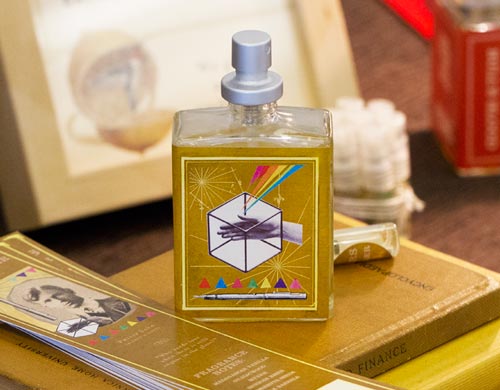
Source: Fragrantica

Source: Fragrantica

Memoirs of a Trespasser is meant to be an author’s memoir of his exotic travels, with a hallucinatory bent. The fragrance is an oriental vanilla, and its notes are:

Madagascar Vanilla, Guaiacwood, Myrrh, Benzoin Resin, Ambrette Seeds & Oak Barrels.

Memoirs of a Trespasser opens on my skin with vanilla, a weird fruitiness, musky sweetness, and oak. There is a momentary booziness, followed then a soft, creamy guaiac wood. The whole thing is laced with a scratchy, synthetic, aroma-chemical hum that is common to many of the Imaginary Authors fragrances, and which them so difficult for me. Here, it is dry, but sweet, with only a trace of the peppered element distinctive to ISO E Super. Yet, at the same time, the note is extremely dry, as if another aromachemical is responsible. Perhaps it is ISO E’s drier relative, Kephalis, but whatever it is, each and every time I smell Memoirs of a Trespasser up close, the inside of my nose feels raw, bloodied and scraped.

Within minutes, Memoirs of a Trespasser turns into a cloying, sickly Bourbon vanilla with a subtle tinge of soapy, cold myrrh, followed by smoky, woody notes and peppered, dry aromachemicals. I find the whole combination oddly nauseating, perhaps because the vanilla smells like a really cheap version of Madagascar extract with a hot, buttered rum undertone. I’m also not keen on the unexpected fruited nuance that smells like oranges, peaches, and Tang juice all in one. It doesn’t last long, perhaps 25-30 minutes, but it perplexes me the whole time. Out of all the notes, I like the oak element the best, but that is not saying much.

Towards the end of the second hour, Memoirs of a Trespasser shifts with the woody elements bypassing the vanilla and taking its place as the dominant accord. The primary bouquet is of lightly smoked guaiac wood, followed by myrrh and a touch of thin, dry vanilla, all infused with ISO E-like synthetics. The guaiac is difficult for me here, especially as it takes on an increasingly stale sourness as time goes by, which meshes oddly with the dry-sweetness of the other elements. A clean, white muskiness also starts to become noticeable, adding to the fragrance’s synthetic hum.

By the end of the 5th hour, Memoirs of a Trespasser is really various forms of sour, dry, smoky woodiness with a light sweetness and only a suggestion of vanilla extract. It remains that way for a while, until suddenly the vanilla returns at the start of the 8th hour. From that point until its end, almost 12 hours from the start, Memoirs of a Trespasser is a dry vanilla scent imbued by an abstract woodiness and a hint of powder.

I didn’t enjoy any of it, probably because I had the same extremely strong physical pain in my nose that I did to testing The Cobra & The Canary. I don’t know if it is an issue of the quantity of synthetics used in Imaginary Authors’ fragrances, or something else, but the degree of my reaction to the line far exceeds what I normally experience. This is not like the occasional headaches I get from ISO E Super when a vast quantity is used, but something akin to my more serious reaction to the super chemical Norlimbanol, and its relative, Kephalis.

Few people share my sensitivity to chemicals, and many are anosmic to things like ISO E Super. Yet, even without the synthetics, I wasn’t impressed by Memoirs of a Trespasser. It was simplistic, uninteresting, quite cloying at first, and discordant as a whole. It never felt refined or sophisticated. It was simply…. there.

SOFT LAWN:

IA Soft LawnSoft Lawn is described in the context of an imaginary author in 1916 who attended Princeton University and was a tennis champion. The notes are:

NOTES: Linden Blossom, Laurel & Ivy leaves, Vetiver, Oakmoss, Fresh Tennis Balls & Clay Court.

Soft Lawn opens on my skin with freshness and green notes that are crisp, bright, and aromatic. On occasion, they are almost a little herbal, as there is a minty nuance lurking underneath at the start. Then, a soft floral creeps in, along with a clean, fuzzy, synthetic element. Hints of vetiver, grassiness, and ISO E Super dance around the edges. The floral note initially smells only vaguely like linden blossom, but not as sweet, lemony, or honeyed as it usually is. As a whole, Soft Lawn truly smells like a freshly opened can of tennis balls with linden, vetiver, green elements, and synthetics.

Linden blossom. Source: www.selfsufficientish.com

Linden blossom. Source: www.selfsufficientish.com

As time passes, the fragrance shifts a little, though not by much and primarily in a textural way. The lemon undertone to the linden blossom becomes more prominent, along with the overall floral aspect. As a whole, though, the notes are very blurred, lacking delineation, clearness, and force. In contrast, the ISO E Super and its peppered touch are much more distinct, noticeable in a clear, separate way that stands out.

Source: wallsave.com

Source: wallsave.com

The oddest thing about Soft Lawn for me is how the fragrance’s texture is its primary smell. It’s hard to explain, but Soft Lawn soon turns into something wholly fuzzy in feel. It’s an amorphous, indistinct blur of floral greenness. The fuzziness of the tennis ball texture is its actual smell, though its infused with that fresh, green floracy. The whole thing is imbued with a synthetic freshness that is initially sweet, delicate, and light.

There really isn’t much more to Soft Lawn than that. The fragrance never changes in any substantial way on my skin, and I tested it twice. It’s linear, simplistic, and uncomplicated, though Soft Lawn is not completely terrible from afar in the beginning as some sort of extremely generic, green freshness, I suppose. Up close, however, it smells industrial to my nose, with the aromachemicals increasingly dominating the scent. Perhaps it is the power of suggestion, but Soft Lawn does smell almost entirely of tennis balls on me after the first hour. All in all, the perfume generally lasted about 11-12 hours on my skin, with moderate sillage throughout, but I didn’t apply a lot due to my problems with all the synthetics in the IA line.

My experiences with the Imaginary Authors line led me to ask a family member for a Zyrtec anti-allergy pill before my second test of Soft Lawn, in case I had potentially developed allergies for the very first time in my life. Nope, that was not the cause of my pain. I was fine until I smelled Soft Lawn up close, and then…. bam, it felt as though someone had taken a straight razor to the skin inside my nose.  Even without the synthetics though, I find it hard to summon up much enthusiasm for the fragrance. I’m not keen to smell like tennis balls, I don’t like Soft Lawn’s lack of nuance or definition, and it’s a damn boring scent from start to finish. I’m afraid I simply don’t get it.

ALL IN ALL:

My primary problem with the Imaginary Authors line is obviously the physical pain I experienced but, even apart from that, I struggled with the scents as a whole. None of them felt sophisticated, refined, or elegant to me. Each one seemed to merely exist, as if a combination of related (and sometimes random) notes were put together primarily with an eye to meeting a plot line about a tennis champion or an imaginary person who went on travels to exotic places. It’s hard to explain because it’s not about a scent being unfinished or amateurish, though some element of both seems to be the case with each of the fragrances.

Rather, it’s more about the feel of the perfumes as something lifeless on the skin. Some of them lack a defining identity or force beyond the novelty factor, whether it is “tennis balls” or the unusualness of the hodge-podge combinations. The Cobra & The Canary seemed to have the greatest actual or developed character out of those that I’ve tried, but it is not an approachable, easy fragrance in my opinion. I could see more of the original story and goal in The Cobra & The Canary, but the rest transported me nowhere, evoked nothing, and felt as if they were merely just… there.

I understand wanting to do something different and experimental, about wanting to create a novel fragrance that is outside the usual box. I think that’s laudable, but being different for the sake of being different doesn’t always work. Successful execution is also key, as they often tell chefs on shows like “Top Chef” when they are trying to be different but fall flat on their face with some utterly peculiar combination.

Still, the Imaginary Authors line has enough fans for all of this to be a highly subjective matter of personal opinion. At the end of the day, the fragrances simply don’t work for me.

DETAILS:
Cost & Availability: Each of the fragrances is an eau de parfum that comes in a 60 ml bottle that costs $85. You can purchase them directly from Imaginary Authors. The company also offers a sample service, where each perfume costs $6 per vial with the full set of 8 priced at $35. Imaginary Authors’ full line is carried by several Portland retailers, along with Parfums1, which ships overseas, though at a high price. The line is also carried at Brooklyn’s Twisted Lily. You can find other US vendors, along with some Canadian ones, at Imaginary Authors’ Stockist site. There are no European retailers listed. Samples: In addition to the sites listed above, you Surrender to Chance sells several scents from line, including Soft Lawn, and Memoirs of a Trespasser, for $4.25 for a 1 ml vial.