Perfume News: 2013 U.S. FiFi Awards – Fragrance Foundation Winners

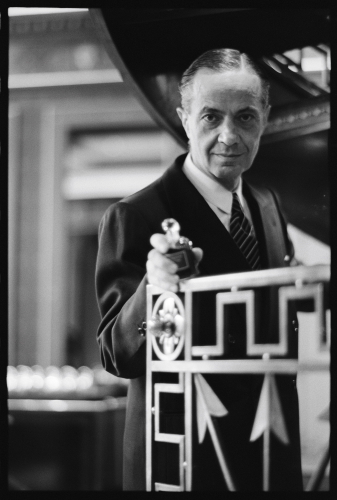
Tonight, at New York’s Lincoln Center, the Fragrance Foundation issued its 2013 awards for mainstream, commercial fragrances. This is the U.S. arm of the foundation, as the UK and French FiFi awards were awarded earlier this year. Winners were announced via the Fragrance Foundation’s Twitter page, but, for ease of reading, I’ll just rely on CaFleureBon‘s announcement post:

Master Perfumer Alberto Morillas of Firmenich is the first recipient of a new category, Perfumer of the Year, Lifetime Achievement Award.

Perfumer Extraordinaire of the Year: Robertet

Fragrance of the Year: Women’s Luxury Florabotanica by Balenciaga Paris (Coty Prestige) Perfumers Olivier Polge and Jean-Christophe Herault

Fragrance of the Year: Women’s Prestige
DOT Marc Jacobs (Coty Prestige) Perfumer Annie Buzantian

Fragrance of the Year: Women’s Popular
Justin Bieber’s Girlfriend (Elizabeth Arden)

Fragrance of the Year: Men’s Luxury
Colonia Intensa Oud by Acqua Di Parma

Fragrance of the Year: Men’s Prestige
Tom Ford Noir (Tom Ford Beauty) Perfumer Olivier Gillotin

Fragrance of the Year: Men’s Popular
James Bond 007 (P&G Prestige Products)

Best Packaging of the Year: Women’s
Florabotanica by Balenciaga Paris (Coty Prestige)

Best Packaging of the Year: Men’s
Montblanc Legend (Interparfums Luxury Brands)

Media Campaign of the Year: Women’s

Dolce & Gabbana Pour Femme (P&G Prestige Products)

Media Campaign of the Year: Men’s
Dolce & Gabbana The One for Men Sport (P&G Prestige Products)

Retail Innovator of the Year: QVC

Consumer’s Choice Award-Men’s:

Acqua di Giò Essenza by Giorgio Armani Perfumer Alberto Morillas

Consumer’s Choice Award-Women’s: 

Justin Bieber’s Girlfriend (Elizabeth Arden)

Fragrance Celebrity of the Year: Taylor Swift

Fragrance Hall of Fame:
Red Door by Elizabeth Arden

Again, these FiFi awards are only awarded to mainstream, commercial scents. The Niche category has its own separate section and awards, though it is relegated to the sidelines and (sadly and pathetically) lumps in all sorts of perfumers from artisanal to some extremely high-end luxury lines. You can see the full list of the finalists who were going up for the prize in my post on the nominees here. If you want to read more about the Fragrance Foundation and past winners, you can turn to the organisation’s website here. I have no commentary on the choice of Taylor Swift, let alone the double win for Justin Beiber’s fragrance. I shall only say that I think Alberto Morillas is a great perfumer, and a hearty congratulations to him on receiving the very first ever Fifi Lifetime Achievement Award.

Perfume Reviews – Tocca Liliana & Florence: Variations on Gardenia

Good perfume isn’t about cost, age or even a particular fragrance category. For all the niche perfumes I cover, there are certainly some good mainstream, commercial scents out there. Granted, they tend to have a significantly higher quantity of synthetics to make the price point profitable for the company and, granted, I cannot stand heavily synthetic perfumes but, even so, there are some very nice mainstream perfumes available.

One such perfume that I always end up giving an appreciative sniff to when I encounter it is Florence, by the fashion and beauty brand, Tocca. For years, I’ve liked Florence, a very crisp, almost green, gardenia floral scent. For years, I’ve sprayed it in stores and contemplated buying a bottle. Then, earlier this year, Tocca came out with with another gardenia scent: Liliana, a fruity-floral fragrance meant to evoke the roaring 1920s and a party on a lush, green lawn. I finally decided to review both of them. Bottom line, one I still like (a lot), and one made me grit my teeth and wince for large parts of it. Let’s start with the bad one first.

LILIANA:

Tocca LilianaLiliana is an eau de parfum that, like allTocca fragrances according to Fragrantica, is made by perfumers Ellen Molner and James BellTocca‘s website describes the perfume and its notes as follows:

A lush, green, rolling lawn is the setting for a roaring 20s party in full swing.  Liliana conjures a reveler in the bloom of youth dancing the Charleston amidst flowing bottles of champagne and a spirited jazz band.

The lowering sun casts a golden sparkle as an intoxicating bouquet of muguet, gardenia and peony wafts from the gardens, filling the night with joie de vivre.

Top Notes: Italian Bergamot, Neroli, Watery Peach

Middle Notes: Muguet [Lily of the Valley], Gardenia, White Peony

Bottom Notes: Sandalwood, Musk, Benzoin, Patchouli

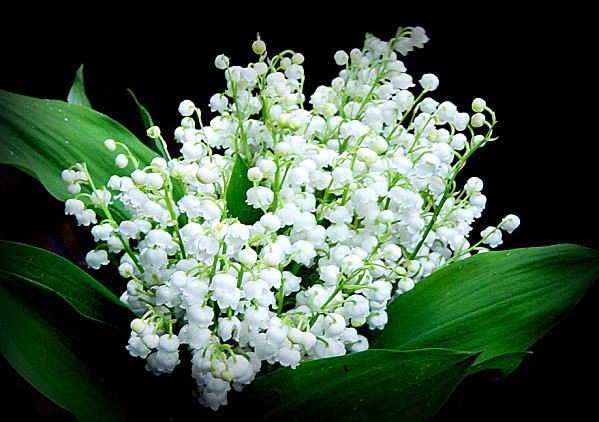
Muguet or Lily of the Valley.

Muguet or Lily of the Valley.

They left out a note — ISO E Super — but we’ll get to that later. Liliana opens on my skin with a burst of green and whiteness. There is: crisp, green lily of the valley; sweet, light peony (and what feels like freesia); a good dollop of white, synthetic musk; and fruited citruses. It feels watery and visually translucent in its whiteness, though it is a strong scent and quite synthetic in its crisp, fruity-floral feel. The potent muguet (or lily of the valley) note feels sharp and infused with an alcoholic edge that reminds me of a cleaning product. The peony is sugary sweet and also feels synthetic. Soon, gardenia joins the party — and it does nothing to transform the perfume from any number of white, floral, fruity-floral scents sold at places like Bath & Body Works.

purple smokeMinutes into Liliana’s development, it is simultaneously sharp in its gardenia-peony-muguet combination and incredibly cloying. It’s tooth-achingly sweet, especially once the increasingly powerful, synthetic, patchouli adds its booming voice to the mix. It’s not a soft, mossy, or even black patchouli, but a purple one — the kind so frequently used in commercial scents, including Chanel‘s Coco Noir.

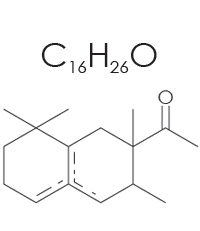
ISO E Super. Source: Fragrantica

ISO E Super. Source: Fragrantica

Liliana continues as a blur of white and green floral notes, combined with that shrill patchouli and the cheap white musk, until eventually ISO E Super pops up at the thirty minute mark. The synthetic is sometimes considered a “super-floralizer” to amplify and extend the life of floral notes, so I’m not completely shocked it appears in Liliana. But I hate ISO E Super with the searing passion of a thousand suns, and it torments me for at least a few hours in Liliana. Since most people can’t even smell it and since a few like the smell, I’ll spare you my repeated descriptions of the note and just let you read about it here if you’re interested. Be aware, however, that some people get serious migraines from the synthetic — even when they can’t detect it in any individual, distinct manner. I don’t normally get headaches from ISO E Super, but Liliana did give me the small start of one.

The perfume does eventually improve — somewhat. Midway during the second hour, Liliana becomes much less abrasively sharp and much less cloyingly sweet than it was at the start. My teeth no longer feel like I need a dentist’s visit for cavities. The gardenia note softens and becomes fuller, the muguet deepens, the patchouli isn’t quite as offensively purple and loud, and the whole thing verges on actually being a bit pretty. Even the ISO E Super improves (relatively speaking), adding a velvety, slightly abstract, vaguely woody feel to the base. It’s still somewhat peppered, but it is much less painful than it was in its opening cannon fire.

Liliana eventually turns into a fruity gardenia scent with light musk. It feels significantly less cheap and less like some thin, sheer, synthetic body spray that you could purchase at Bath & Body Works. It does seem more like eau de parfum and, in fact, I can genuinely see the mental image that Tocca wants to evoke: a garden party with lush, rolling expansive green lawns, the “Pretty Young Things” of the 1920s dressed all in crisp white clothes, and perhaps playing croquet. Liliana remains that way for another few hours before finally fading away as clean, white, amorphous floral musk. All in all, it lasted just a hair over 7 hours on my perfume-consuming skin. The sillage was quite strong at first, before dropping a little at the start of the second hour. It only became a skin scent about 5 hours into its development, so people who have perfume-phobes as office co-workers may not want to spray with abandon.

As you can tell, Liliana was not my cup of tea. However, young women who love extremely sweet fruity-florals would probably adore this one. The few reviews available on Fragrantica seem to support that conclusion, with the word “lush” being frequently used and one commentator saying she felt badly for thinking Tocca had “old lady perfumes.” Well, I grant her that — Liliana certainly doesn’t smell like Shalimar or L’Heure Bleue, two legendary classics that are often derisively called “old ladyish.” But the real problem to me is that it doesn’t even smell like a good fruity-floral. There are certainly some great ones out there, but Liliana made me actually go check the “Siberia” portion of my bathroom cabinets for some of the Bath & Body Works fragrances that I’ve been given. And I’ll be damned if the first hour of Liliana didn’t replicate a number of them in feel and quality! There’s nothing wrong with Bath & Body Works, but, given that they cost around $14 and Liliana costs $68 for a small 1.7 oz/50 ml bottle, I think I’ll pass.

FLORENCE:

Tocca FlorenceLike Liliana, Florence is white floral eau de parfum that is centered around gardenia. Like Liliana, it’s not a hugely complicated perfume and never really morphs one way or another. Unlike Liliana, however, it has no brutishly sweet purple patchouli, no “clean” white musk, and is not a fruity-floral. It is really more like a gardenia (with tuberose) soliflore — a perfume centered around one main scent — and it’s a lovely one at that. I don’t know if I’d ever actually buy it, but that is only because I have about five gardenia-tuberose fragrances already and, ultimately, I don’t wear pure florals enough to warrant Florence becoming Gardenia-Tuberose Version #6.

Florence was released in 2006 and is appropriately classified on Fragrantica as a “floral green.” Tocca describes the perfume and its notes as follows:

A Parisian beauty and sophisticate, Florence conjures memories of old-world Paris.

Top Notes: Italian Bergamot, Grapefruit Leaves, Green Pear, Apple

Middle Notes: Ivory Gardenia, Crushed Violet Petals, Jasmine, Tuberose, Blue Iris

Bottom Notes: Blonde Wood, White Musk

Gardenia-beauty

From the first sniff in the bottle to its opening moments on the skin, Florence is light, green, fresh, airy, delicate, crisp, almost dewy gardenia. It’s backed by a dainty touch of violets and green pear, the latter feeling like a very summery, watery nectar. There are touches of other fresh green notes, too, along with subtle whiffs of tuberose but Florence is primarily a gardenia scent. As many of you know, gardenia is one of those flowers whose aroma can’t really be captured from the petals, whose scent cannot be distilled, and whose aroma has to be recreated using other essential oils. (Fragrantica has a little bit on this issue if you’re interested.) Tuberose is one of the main ways to create the smell of the gardenia and its rich, indolic, heady nature is also the reason why many “gardenia” perfumes feel buttery rich. The thickness is why some people run screaming from gardenia as a cloying, headache-inducing scent, but the actual flower on the bush has a very delicate, dewy, green, airy fragrance. And that’s the form of gardenia captured here in Florence.

As time passes, Florence doesn’t change in any significant way. The violet and pear notes quickly fade away, though something green — probably the grapefruit leaves and/or bergamot — always stays to undercut any buttery, heavy, indolic or cloying aspects to the gardenia. The iris note was virtually nonexistent from the start on my skin, the citrus or apple don’t exist in any noticeable, distinctively individual way, and the base never reflects the woody or white musk components. Instead, it’s gardenia, gardenia, gardenia, tuberose, and a dash of jasmine, all together in a very fresh, dewy, green way until the 90 minute mark when Florence becomes a little bit deeper, creamier and richer. It’s still never indolic or cloying, however, and always feels green and almost watery, despite the potency of its fragrance.

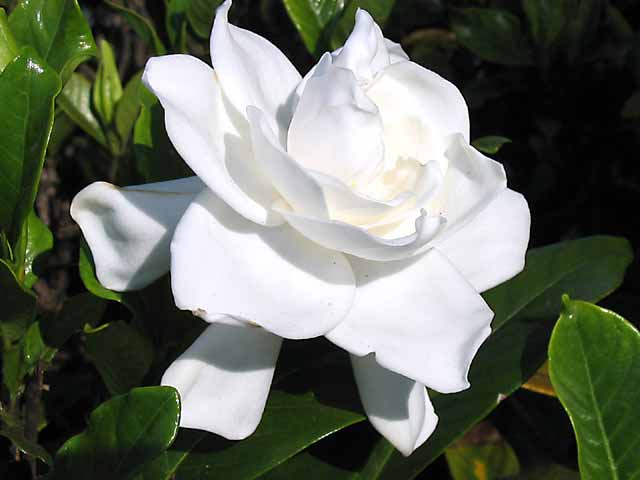
Source: Mostbeautifulflower.com

Source: Mostbeautifulflower.com

I happen to really enjoy the greenness that marks much of Florence’s character, but I would be the first to say that it’s not exactly a revolutionary or complex perfume. Yet, for all that, green gardenia fragrances are much harder to find than you’d expect. Florence feels greener, airier and lighter than the other “gardenia” (but really tuberose) fragrances to which it is often compared on Fragrantica. Take, for example, the eponymous Michael Kors fragrances — both “Michael” and the “Michael Kors” version which seems to have replaced it. I own the latter and found it to be a considerably richer fragrance that has a more vanillic opening. More to the point, to me, it is primarily a tuberose fragrance which just happens to have some other white flowers following far behind. Florence is even airier than the eponymous Carolina Herrera perfume (“Carolina Herrera“) which is an absolutely ravishing, rich, deep tuberose fragrance (that was supposedly once Angelina Jolie’s signature fragrance). I own the Carolina Herrera as well, and think it’s almost all heady, indolic, ripe, blooming tuberose and jasmine, with gardenia feeling quite overshadowed. It certainly doesn’t feel like a dewy, green gardenia scent with only small dashes of tuberose and jasmine.

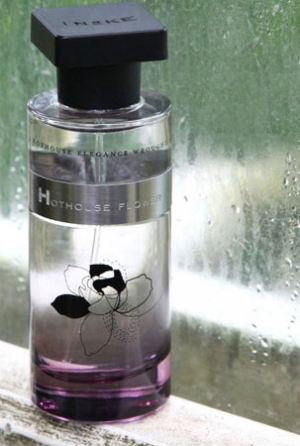
Ineke Hothouse Flower.

Ineke Hothouse Flower.

To me, Tocca’s Florence actually brings Ineke‘s Hothouse Flower to mind, even though the two fragrances are ultimately very different. I found Hothouse Flower to have some dark, peppered and woodier notes underlying parts of it, along with dashes of galbanum and green tea. It’s a more nuanced, complex gardenia soliflore, but it is the closest thing that I’ve smelled to Florence’s dewy, green fragrance. Both perfumes evoke the feel of the actual flower on the bush, first thing in the morning, with Spring just around the corner.

However, Florence is much stronger than Hothouse Flower and lasts considerably longer on my skin. Florence’s projection was quite strong at first, before dropping down to create a small cloud about 3-4 inches around you. It may not be noticeable across the room (unless you use a lot), but you can certainly detect without bringing your arm to your nose. It only became a skin scent on me around the fifth hour, while the Ineke did so after about 50 minutes. And, on my perfume-consuming skin, Florence lasted approximately 7.75 hours with just a small spray.

There is a lot of love for Florence on Fragrantica, especially by those who normally dislike gardenia perfumes. It is frequently described as “heady,” while simultaneously being called “airy” and “light” in feel. Some people who seem to share my perfume-consuming skin noticed, as I did, how long a single spray will last. A number of people experienced a lot more of either the pear, iris or woody notes than I did, while others detected nothing but gardenia. Interestingly, one commentator didn’t like it because, as a gardenia lover, it was too green and “unripe,” and she preferred a more mature, creamy, indolic, buttery gardenia note. Another found it far too strong, saying she preferred more subtle perfumes. And one wrote paragraphs about “BIG GARDENIA” (with the phrase in all-caps) and how it was nothing but that on her. Yet, despite a few dissenters, Florence seems to be much-loved with many writing about how it felt fun, flirty, feminine, non-retro, not heavy or old, but carefree and airy. I share their opinion.

If you’re looking for a gardenia scent that isn’t cloying, heavy, or indolic, I think you should definitely give Florence a sniff. It’s easy, versatile, feminine, would work as both a day fragrance or a date-night one, has good longevity, and smells like a good quality perfume. It is also quite affordable at $68 for 1.7 oz/50 ml of eau de parfum. But those who prefer unobtrusive, soft, discreet, low-sillage perfumes may want to take caution. On that relative scale of things, Florence will undoubtedly be too powerful and strong; it will be “BIG GARDENIA,” even if it is a green one. Still, I think it may be the prettiest perfume out of the Tocca line.

DETAILS:
Cost & Accessibility: Both Liliana and Florence are Eau de parfums which come in either a 1.7 oz/50 ml bottle for $68 or in a 0.33 fl oz rollerball for $20. You can find Liliana and Florence on Tocca’s website. Sephora (USA) also carries Liliana and Florence (along with Florence’s various associated products like lotion, skin care, etc.). Tocca perfumes are also sold at Barneys New YorkBluemercury & AnthropologieOutside the U.S.: In Canada, Sephora sells Liliana for CAD$85 and Florence for CAD$72. I can’t seem to find Tocca on the French Sephora website. International readers may want to check the Sephora International List for one near you to see if Tocca is carried. For all other countries, the Tocca’s Stockist link on its website lists the following international retailers (or retailers who sometimes ship internationally): Shopbop.comSteven AlanGabriela de la VegaWarmMontaigne Market – Paris; Couverture – London; Space Mue – Seoul; Blood Orange – Sydney; and The Block – Vancouver. Samples: You can probably get free samples of the perfumes at all the sites linked to above but, if that doesn’t work for you, Surrender to Chance carries Florence (but not Liliana) starting at $2.99 a vial.

Perfume Review- Serge Lutens Boxeuses

Serge Lutens via The Perfume Magazine

Serge Lutens via The Perfume Magazine

I’m a huge fan of Serge Lutens and his fragrances, even when I can’t wear them. To me, there is no other perfumer who seems so genuinely intellectual as a person, so philosophically theoretical and inquisitive, and so damn original across the broad range of his fragrances. Serge Lutens and his perfumes fascinate me on every level, and I constantly find myself intellectually engaged by what he’s trying to do, as well as often being emotionally touched by what he actually creates, even when I can’t wear them, find some fault with them, or am left undecided and completely confused as to what I actually think…. (Datura Noir, I’m looking straight at you for that last one!)  

Serge Lutens BoxeusesBoxeuses is another Lutens perfume that fascinates me. It’s not one that I love, or that ultimately worked very well for me, but I deeply admire it. It evoked a sharply divergent set of impressions — from Rasputin fleeing a dacha in the woods to, structurally, a sandwich — but, as always with Serge Lutens, it made me think. I cannot tell you how rare that is for me when it comes to perfumery. Boxeuses was released in 2010 and is the creation of Lutens’ favorite cohort in olfactory adventures, Christopher Sheldrake. Its description — like all of Lutens’ descriptions — is a fun, intellectual source of amusement. Except for Parfums d’Empire, I think no-one does better stories for their perfumes than “Uncle Serge,” as he is affectionately known in the perfume community. His background tales are frequently a mix between some sort of romantic, whimsical Proustian or Zola-like saga, and Camus-influenced existential angst. They rarely, however, seem to actually encapsulate the feeling or scent of the perfume, in my opinion. And the brief synopsis of Boxeuses on the Lutens website is no exception:

Now’s the time to fight.

To get the idea, think of Russian leather tanned on birch bark.
Now add animalic notes, strong enough to suggest a black eye.
In other words, it’s time to see stars!

Source: TheWeek.co.uk

Source: TheWeek.co.uk

“Boxeuses” translates to women boxers in English, but I have to say that was the last thing that came to mind when I smelled the perfume. As for the notes, Serge Lutens almost never provides a list, so it’s a little bit of a guessing game as to what Boxeuses actually contains. Compiling the elements from Fragrantica, Surrender to Chance, and the Perfume Shrine, the list would seem to be:

Leather, licorice, birch tar, fruit, plum, violet, cedar, styrax, incense, spices, cade oil.

Boxeuses opens on my skin with a bouquet of notes that are so dark purple, they verge on black: plum molasses; violet cherry cola; black licorice; leathery, black fig compote; and sweet dried fruits topped by heaping dollops of prune over a richly resinous, smoky base. Birch tar is a huge part of that base with its tarry, smoky character. It’s a hard aroma to describe if you’ve never smelled it, especially as it’s quite different here from the way I’ve encountered it before. It’s not mentholated, not like eucalyptus, not like diesel, not like rubber, and not chilly — and, yet, it almost feels like all of it. It never seems like pure leather to me but, rather, like extremely gooey, black, resinous molasses, filled with a dark, pungent, almost sharp smoke that has a diesel-like undertone to it. The molasses smells like the thickest concentration of stewed prunes, plums and black figs. I have no idea if black figs are actually in Boxeuses, but something about that sticky foundation smells like the grainy, densely sweet, slightly spiced, slightly leathered, earthy aspects of thick, Black Mission fig jam.

Fig Jam. Source: Bettycupcakes.com (For recipe for homemade fig jam, click on photo. Link to website imbedded within.)

Fig Jam. Source: Bettycupcakes.com (For recipe for homemade fig jam, click on photo. Link to website imbedded within.)

The real key to Boxeuses, however, comes from the birch tar and cade elements in conjunction with that fruit. As the Perfume Shrine explains in an article on ingredients often used in leather perfumes, birch tar has a very smoky, tarry, phenolic character and was frequently used by Russian or Finnish tanneries to treat leather. It’s a key part of leather perfumes like the legendary Chanel classic, Cuir de Russie. Cade oil comes from juniper trees and has the aroma of a smoky campfire. Those two notes combine with the fruit to create what I can only describe as a jammy-fruited-molasses tar with black smoke and, also, a hugely liqueured edge. It’s as if every dark fruit in the world had been cooked in and then soaked in a wood-infused casket of vodka, cognac and smoky tar, then left to seep and age for 75 years. Sadly, I think I’m still not doing justice to its particular and unusual nuance in Boxeuses. 

Silver birch tree. Source: my own photograph.

Silver birch tree. Source: my own photograph.

Five minutes into the perfume’s development, the leather aspect starts to rise a little from the depths of that smoky, fruity, dark molasses base. It’s never a cold, raw, harsh leather; nothing about it feels black or steely. This is a fruit-soaked, jammy leather tinged with church incense and backed by dark woods. It’s beautiful and, oddly, conjured up Rasputin in my mind. Perhaps it’s the mental association of church frankincense with birch tar — an element so often used to treat the leather boots of Imperial Tsarist officers’ boots — and Cuir de Russie. Whatever the reason, the image which comes to mind is Rasputin, wandering around a birch forest in the snow outside a luxurious Russian dacha. He is followed by women trying to serve him sweet, stewed fruit or to cover him with a leather coat. His clothes reek of church incense and smoke, and he’s completely drunk on some dark fruit liqueur which makes him stumble and lose his way amidst the sea of trees. I grant you, it’s not what I’m suppose to imagine with Boxeuses but, despite all the fruit at the base of the perfume, Boxeuses has a very strong feel of the outdoors and winter, of snow and Russian forests, of campfire smoke and sharp incense.

Painting: Julie McInnes. Source: FineartAmerica.com

Painting: Julie McInnes. Source: FineartAmerica.com

Twenty minutes in, the perfume shifts a little. Black licorice becomes more prominent, flickering tongues of salt over the campfire flames whose smokiness has increased even more. The dried fruits and the always subtle leather nuance have receded to the background, working their magic from afar and with indirect impact, and leaving the tarry birch woods, church incense and salty black licorice to duke it out at center court. At the forty minute mark, the three are still the most prominent notes, though I somehow smell a salty beeswax element as well.

Then, suddenly, exactly one hour in, Boxeuses suddenly becomes abstract: the notes all morph into one vague, generalized soft accord without a hugely distinctive, individualized character. There is still salty black licorice flickering but now, it’s in the distance along with much else. The perfume feels as though it’s muted and seen through a foggy veil where the overall impression is of very amorphous dark woods with smoke, licorice and some vaguely fruited-molasses elements. Part of the problem is Boxeuses’ sillage on my skin. It’s soft from the start and, on both occasions where I tested the perfume, it started to hover just barely above the skin between the 40 minute and 1 hour marks. It’s such a soft fragrance, it feels abstract. Even during the second test where I applied substantially more, Boxeuses became nondescript quite quickly and much sooner than I had expected. The notes feel so translucent, despite their underlying purple hue, that they lack any distinctiveness.

Black Licorice WheelsAnd that never changed for the rest of Boxeuses’ limited duration on my skin. Two hours in, the perfume turns into abstract licorice woods. There is still a hint of birch in the background; it’s enough to infuse the licorice note with smoke and to make it take on a slightly burnt aspect. Nonetheless, it feels as though Boxeuses is starting to slowly die on my skin. It gives a few gasps during the third hour, almost like a second wind before death: the jammy, dark, pruney-fig molasses note reappears, joining the smoked licorice element and bringing amber along as a companion. Then, just barely after the fourth hour, Boxeuses gives its final hiccup. It is barely ambered, smoked woods — and nothing more. The exact duration of Boxeuses on my skin in the two tests was: 3 hours and 50 minutes with an average dose; and 4 hours and 30 minutes with a large dose.

Source: Royalty-Free-RF-Clipart

Source: Royalty-Free-RF-Clipart

Boxeuses’ structure consistently calls to mind a very badly cut sandwich. The top and the bottom — the “bread,” if you will — consist of the plummy-stewed-liqueured-dark molasses. The middle of the sandwich is all black “meat”: black birch tar, black frankincense smoke, and black, salty licorice. The top piece of bread is thick; the bottom one is sliced so thin as to be flimsy and translucent. Separating the “bread” from the “meat” is some sort of layer that brings in elements of both parts. Perhaps we can call it a “mayonnaise” which mixes part of the dark fruited molasses with elements of smoke and birch. It’s the overlap area, if you will, which takes place immediately after the thick opening minutes of liqueured molasses and, also, at the very end when the molasses returns. It may not be the most on-point or perfect analogy, but it’s what comes to mind when I think of the perfume’s evolution.

As you may have gathered, I found Boxeuses to be fascinating, but something about it didn’t sweep me off my feet, even apart from the sillage and longevity issues. To me, Boxeuses was always more of an intriguing intellectual construct. Yet, given the notes, I really should have loved it. For one thing, unlike some very intellectual Lutens creations that I’ve reviewed (like Tubereuse Criminelle, for example), Boxeuses is imminently wearable. I’m not too sure of how versatile it is all year-round, particularly in light of the very cold weather, snowy, winter feel of it, but on the Lutens scale of versatility, this is somewhere in the middle. Not as practical or versatile as my beloved Chergui or the cozy Five O’ Clock au Gingembre, but also not as distinctive as the difficult Tubereuse Criminelle, the rich, patchouli-chocolate Borneo 1834, or the complicated Serge Noire. For me, it falls somewhere in that middle category with De Profundis and Cuir Mauresque. Yet, Boxeuses doesn’t move or interest me anywhere close to those last two perfumes which are huge Lutens favorites of mine. Boxeuses is nice and quite enjoyable, but, at the end of the day, it didn’t really rock my world. It never tugged at me while I was wearing it or make me think, “Wow.” It also didn’t have a huge, lingering effect afterwards where I’d continue to think of the scent days or weeks later.

I’m sorry, Uncle Serge. Please forgive me. I will always be a devout, loyal member of your fan club. 


Details:
Cost & Availability: Boxeuses is an eau de parfum that is part of the Serge Lutens “European Exclusives” line, which means it is available only in the larger 75 ml Bell Jar size. It retails for $290 for a 75 ml/2.5 oz bottle. You can find Boxeuses on the Serge Lutens website (US and international). Elsewhere in the U.S., you can normally find even exclusive Bell Jar Lutens sold at the New York Barney’s store. Even the exclusive De Profundis was shown on the company’s website, along with a note stating: “This product is only available for purchase at the Madison Avenue Store located at 660 Madison Avenue. The phone number for the Serge Lutens Boutique is (212) 833-2425.” However, Boxeuses is not listed or shown. I’m sure it’s sold in store, however, so you may want to check. Outside the US: In Europe, the price is considerably cheaper at €125 from the French Lutens website or from their Paris boutique. For other countries, you can use the Store Locator on the Lutens website. Samples: You can order samples of Boxeuses from Surrender to Chance (where I bought mine) starting at $3.99 for a 1/2 ml vial.

Perfume Review – Atelier Cologne Orange Sanguine: Liquid Orange

Liquid sunshine. Summer citrus in a bottle. A holographic, 3D jewel of orange. A kaleidoscopic burst of every glorious citrus fruit you can imagine, taken from its stem to its green leaves to the very tree itself, bottled in its purest essence. That’s Orange Sanguine, a concentrated eau de cologne from Atelier Cologne and a glorious, affordable scent that will give you whiplash from disbelief at its utterly spectacular opening.

Source: wallpapermi.com

Source: wallpapermi.com

Atelier Cologne is an interesting perfume house. Started in 2010 by founders and romantic partners, Sylvie Ganter and Christophe Cervasel, Atelier is the first fragrance house entirely dedicated to fragrances in the classic cologne formulation. As many perfumistas know, eau de cologne is typically the mildest, weakest form of fragrance, so the creators decided to take it one step beyond. They created a whole new formulation of perfumery called the Cologne Absolue. As the Atelier website explains:

[c]ombining innovative constructions and extremely high concentrations, Cologne Absolue is a cologne of character exalting the magical freshness of cologne coupled with the lasting power of eau de parfum.

In an interesting (and rather sweet) Vanity Fair article on the couple, how they fell in love, and their unique perfume creation, Ms. Ganter explains:

the “cologne absolute” … marries the richness of an eau de parfum with the airy freshness of a citrus cologne.

The secret, Ganter will tell you, is about using a precise concentration of essential oils—each cologne absolute contains a range from 12 to 20 percent—and extracting the best ingredients from around the globe to preserve their intensity and beauty. “We blend familiar notes of vanilla, amber, rose … [but] with fresh citruses, to give them a new and unexpected personality,” Ganter says of her growing scent portfolio, which includes such hits as the bestselling Bois Blonds, a warm blend of Tunisian neroli, Haitian vetiver, and woods; and Orange Sanguine, a sparkling whiff of blood orange, jasmine, and tonka beans, which won a FiFi award (the Oscars of fragrance) last year. [Font emphasis added to the names.]

In 2012, the French FiFi awards gave Orange Sanguine their Experts Award for a fragrance sold in less than 100 stores. It’s quite an achievement for a house that had opened just two years before.
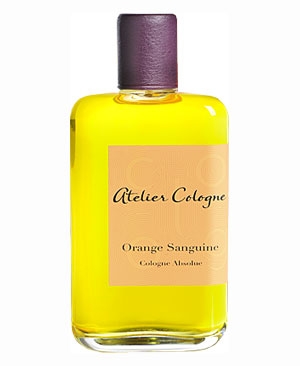
Orange Sanguine Atelier CologneOrange Sanguine was created by perfumer, Ralf Schweiger, who is perhaps best known for his Lipstick Rose for Frederic Malle. (It is an atrocious scent, in my opinion. One of the very few perfumes I had to actually scrub off — and I can put up with a lot!) But Orange Sanguine is a very different matter, indeed. In an interview with CaFleureBon, Mr. Schweiger talked about his inspiration and goal behind the fragrance which is centered more on blood oranges than on the regular variety:

What was your inspiration for Orange Sanguine?

RS: Blood oranges are my favorite citrus fruit! LOVE them! They have this tart green spiciness and their gorgeous bloody color is amazing, not a uniform red when you cut them but this red marble effect… I prefer their taste to regular oranges, especially squeezed for juice.

What does Orange Sanguine conjure up for you?

RS: It is quite literal, my idea of what a blood orange scent should smell like: slightly tart but a little sweet as well, green and a little scratchy… as I described earlier, I have in mind a cut orange with this gorgeous color and pattern to it…

Can you describe the key ingredients of Orange Sanguine and their properties/specificities?

RS: Orange Sanguine is more of a concept and not so ingredient driven. I prefer a combination of bitter orange peel oil amongst others and a choice of specific ingredients to present the sensation of full-bodied tartness. The ingredients used to give the heart and base notes were chosen to help prolongate the freshness over time.

What sets Orange Sanguine apart?

RS: It is an accord made only of orange-type citrus oils without bergamot with its distinct floral character; it is not a classic cologne structure but uses modern style perfumery notes.

Orange Sanguine as an eau de cologne absolue contains 15% concentrated perfume oils (which puts it at the level of some eau de parfums) and contains the following notes:

Top notes : blood orange from Italy, bitter orange from Spain, red mandarin from Italy

Heart notes : jasmine from Egypt, geranium from South Africa, black pepper from Madagascar

Base notes : tonka bean from Brazil, sandalwood from Indonesia, cedarwood from Texas

Blood Orange via Fragrantica

The very first time I tried Orange Sanguine, I was so stunned that I actually said “Oh My God” out loud. I wrote it in my notes, alongside “WOW! Liquid gold! Sunshine in a bottle!” Orange Sanguine opens with a positive canon-ball explosion of orange that is so zesty, fresh, tart, sour, sweet, zingy, and multi-faceted that you can get whiplash from sniffing your arm. Instead of being unctuously thick, gooey or syrupy, the scent is so fresh and aromatic that it’s almost more like concentrated citruses. But it’s never anything as completely banal as orange pulp. You truly smell the bitter, almost spicy blood orange at its core, along with tart notes that feel like tangerines, the bitterness of the twigs and stem, the greenness that feels like the leaves from the tree, and the pulpy meat of the fruit inside. There is a sharply pungent smell of concentrated citrus oil that feels as if you just took a knife and sliced through the rind of the fruit, squirting its oils in the air.

Source: Shutterstock.com

Source: Shutterstock.com

If you took 15 oranges, rendered them into pulpy juice and tossed in a cup of the grated rinds, you still wouldn’t have this smell. You really wouldn’t. Perhaps if you took a 100 citruses — of every possible variety — condensed into the purest concentrated nectar, then you might have the base. But, again, that alone still would not be enough to encapsulate Orange Sanguine. The slightly bitter woodiness of the twigs and stems, the aromatic fragrances of fresh, waxy green leaves, and the perfect balance between sweet and sour, tart and tangy would also have follow. Orange Sanguine manages all that, and more. As the moments pass, even further layers seem to be added. I could detect notes that smelled much like sour, tart white grapefruit and — in a throwback to my old home in Montecito which had tons of the trees — even the fragrant, tangy kumquats that I used to eat by the bucketful. Then, 15 minutes in, the geranium appears, adding even further to the visual of green leaves nestling a glowing, ruby and orange gold compilation of fruit. The geranium adds a light piquancy and spicy bitterness that feels much more like the fuzzy green of the leaves than just the aroma of the flower.

Source: uuhy.com

Source: uuhy.com

The whole thing is so photo-realistic, it feels like a hologram. A dazzling display of citruses that are so fresh, it simultaneously feels as though they’re hanging straight off the tree and warmed by the sun but, also, as if they’ve been chilled in the fridge, dappled with condensation. Cool and crisp, Orange Sanguine never feels leaden, thick, syrupy or heavy. It’s almost bewildering how Ralf Schweiger made something that feels so concentrated be so incredibly airy and almost aquatic in nature. Honestly, I can’t say it enough: Orange Sanguine’s opening is truly a masterpiece, an olfactory achievement of breathtaking magnitude in those early moments.
Source: Dreamstime.com Royalty Free stock photos

Source: Dreamstime.com Royalty Free stock photos

I tried Orange Sanguine three times and, on one of those occasions, the glorious opening shifted into something a little rockier. On my second test, in order to assess longevity issues, I put on a larger dose — the dabbed equivalent of two medium-to-large sprays. And, less than 20 minutes in Orange Sanguine’s development, I got a blast of soap that was so extreme, I felt as if I’d been doused in suds. I’m not a fan of soapiness, and this was a huge amount! Perhaps even worse was a similar large blast of something so synthetic that it burned my nose. I was not happy in the slightest, especially as the synthetic note lasted for over an hour, and the soapiness even longer still. In fact, the perfume turned into something very much like geranium soap over an amorphous, slightly synthetic, generalized “woody” base. It wasn’t sandalwood in any distinct form; instead, it was just some sort of vague creamy, beige base.

However, on my first and third test, I used much less of the fragrance and had a slightly different outcome. There was no synthetic burst or burning of the nose. Soapiness was still an issue, however, on each occasion starting between the 20 to 30 minute marks. It wasn’t as hugely overwhelming as that one time and, though I absolutely despise “soapy, clean” fragrances, it was significantly more manageable. Still, there is no doubt that Orange Sanguine’s glorious opening does eventually turn in every instance into something very reminiscent of the most expensive, luxury French soaps. It’s geranium-citrus soap to my nose with, sadly, much of that photo-realistic, concentrated citrus nectar fading from its spectacular, dizzying heights and turning into something much more amorphous, vague and generalized. There is also a creamy base to the notes that starts to become more apparent with time. It’s never anything distinct like jasmine, vanilla or sandalwood, but, rather, something just can only be (poorly) described as “creamy.” The edges of the perfume have become softer, the scent feels richer and fuller, though it’s still an airy fragrance in terms of weight.

Pink geranium and its leaf. Source: alajnabiya.blogspot.com

Pink geranium and its leaf. Source: alajnabiya.blogspot.com

Orange Sanguine continues as geranium-citrus soap for several hours. The base feels like some sort of vague impression of gauzy beigeness. Eventually, during its final stage, the perfume turns into some abstract notion of orange muskiness, and that’s about it. There really isn’t a whole lot to the perfume.

Some people have talked about how Orange Sanguine is an orange fragrance mired in a wonderful, creamy sandalwood base. Others think that the base is ambered. I don’t think so — for either note. I truly don’t. At best, perhaps you can say that Orange Sanguine has “sandalwood” in its most synthetic, abstract, amorphous, artificial form. But, honestly, to my nose, there is no sandalwood, even in a synthetic form. And the same goes for the amber or any vanilla note. Whatever the synthetic base, the impression to me is just of vague, indefinite, indistinct, creamy, beige… something. In its very final moments, Orange Sanguine is simply some abstract orange muskiness. In fairness, it’s not supposed to be much more than an orange fragrance from start to finish — the interview with the perfumer, Ralf Schweiger, underscores that point. Nonetheless, Orange Sanguine isn’t a complicated, morphing, heavily nuanced scent beyond the citruses (geranium and soap).

There is massive, gushing, overwhelming love for Orange Sanguine — by men and women alike — but there are some minor dissenters, too. In a nutshell, the few complaints on sites like Fragrantica, MakeupAlley, or Luckyscent can be summed up as follows: 1) it’s an orange bomb; 2) it’s overly sweet (with one person finding it too bitter); and 3) it’s synthetic (someone on Luckyscent wrote: “smells more like my orange-glo spray cleaners after 20-mins. Too synthetic.”). On Fragrantica, those people who noted the soapy aspect or the synthetic element in the first hour didn’t seem particularly bothered by it. On Luckyscent, the issue of sweetness seemed to be a far greater problem, while on MakeupAlley, there were some minor comments about both soapiness and longevity.

Source: Twitter.

Source: Twitter.

Honestly, I think all of those points are valid and worth consideration. Orange Sanguine is not a fragrance for those who prefer their orange notes mixed with a variety of different elements; it is an orange bomb and it is largely linear. It also has soapiness — a great deal of it, in fact, if you spray on a large quantity — and that will be a deal-breaker for some, while others may adore the “clean” aspect that the soap imparts. Orange Sanguine may also be far too sweet for some, while too bitter for those who don’t like blood oranges (this was actually raised as an issue by one or two people who seem to hate that variety of orange). And, it does have a synthetic aspect that becomes more noticeable if you spray on a lot of it.

It’s also a fragrance that may have problematic longevity for a number of people. I’ve read a number of comments about how Orange Sanguine only lasts a short time (between 3-5 hours). On me, with my voracious, perfume-consuming skin, I was actually surprised to get between 6 and 7.5 hours, consistently, depending on quantity and amount. I know one blogger who initially thought Orange Sanguine’s longevity to be its only defect but who subsequently noted that the perfume did, in fact, stay on for a surprising length of time.

Yet, despite all those issues, I found myself fascinated by Orange Sanguine and it is a fragrance that I would wholeheartedly recommend for a test sniff at the very least. For one thing, that opening is truly stunning. If ever you’ve struggled to get out of bed on a Monday morning, I think Orange Sanguine would be the answer. For another thing, my God, is it affordable for niche perfumery! The perfume comes in three sizes: from the very practical 1 oz/30 ml, to a large 3.3 oz/100 ml, to a super-sized, monstrously huge 6.7 oz/200 ml bottle. The prices are, respectively: $60, $95 or $155; €39 for the 30 ml small; or €90 or £75.00 for the large 100 ml. (Orange Sanguine is also widely available and is even sold at Sephora!) If you have longevity issues, you can buy the gigantic 200 ml bottle for $155 or £95.00 which comes to very little per ounce and can therefore splash away with reckless abandon. (In U.S. currency, the 6.7 oz bottle breaks down to approximately $23 an ounce, while the 3.3 oz bottle ends up being $47 an ounce — both are better deals, per ounce, than the $60 bottle which is 1 oz/30 ml.) Plus, if you order the large 6.7 oz bottle from the Atelier website, they will throw in the 1 oz/30 ml “travel” bottle for free, along with a leather pouch engraved with your initials. Granted, I know few people could possibly go through a 6.7 oz bottle of any perfume, but Orange Sanguine does engender incredible passion in some. In fact, one of my best friends in Denmark has worn Orange Sanguine obsessively every day for months and can’t stop raving about it. He had contemplated buying Frederic Malle‘s Bigarade Concentrée, but opted instead for Orange Sanguine. It has now become his signature scent, and I have no doubt that he could easily finish one of the mammoth bottles in a year or two.

All of that brings me to a few other points. Yesterday, I reviewed another well-known orange-citrus fragrance: Malle’s Bigarade Concentrée. It was a scent which engendered incredible apathy; I didn’t even find it interesting enough to hate it — despite reeking of cumin-inspired stale sweat and armpits on me, and despite having utterly atrocious sillage (with barely better longevity). But I want to explicitly state that the two perfumes have nothing in common beyond the use of an orange note. They are fundamentally different, with the Malle being a drier, orange-woody-cumin fragrance and Orange Sanguine being a photo-realistic citrus with geranium and soap. Also, whatever my problems with Orange Sanguine’s synthetic element and soapiness, I still would take it over the Malle — any day, hands down. In fact, it is a testament to Orange Sanguine that I actually pondered the extent to which I hate soapy scents, if I could get over it, and if the low cost would make it worth considering a bottle. The opening is really that fantastic!

Lastly, Orange Sanguine is an incredibly easy, uncomplicated, versatile fragrance that both men and women could wear. It’s also one of those things that would work well for the office as well, as its sillage is far from monstrous. In fact, I found the fragrance to drop in projection after the first hour and it stayed just an inch or two above the skin. It certainly won’t be something that perfume-phobes should object to; as one person on Fragrantica wrote, “[i]t’s the sort of thing that causes people who profess to dislike perfume to perk up and say, ‘Something smells good!'”

In short, if you like citrus scents or are looking for something fresh, zingy and zesty for summer, then you should give Orange Sanguine a sniff. Perhaps it will be too much for you, due to some of the problems I’ve noted, but it is a perfume that is truly worth exploring. And, if you fall in love with it, I have no doubt Orange Sanguine will become a summer mainstay. What an opening. What a truly spectacular opening!

DETAILS:
Orange Sanguine full lineCost & Availability: Orange Sanguine is a concentrated cologne that comes in 3 sizes: 1 oz/30 ml, 3.3 oz/100 ml; and a giant 6.7 oz/200 ml. You can find it sold at a number of places, starting with the Atelier Cologne website where the prices are, respectively, $60, $95 and $155 depending on bottle size. In terms of freebies, if you buy the massive 6.7 oz bottle, the company says it will give you: “a travel spray refilled with the Cologne Absolue of your choice in its leather pouch engraved with your name or initials.” The travel spray is, in fact, the 30 ml/1 oz bottle! The company also sells various Gift and Travel Sets that you may want to check out, such as a refillable 1 oz/30 ml travel size in a box with soap, postcards, leather pouch, etc. starting at $80, or a travel box of 7 travel minis that are each 7.5 ml for prices starting at $95. The company sells samples (in a set of all their 11 perfumes in small vials for $15), candles and more. I can’t find shipping information or costs. As a side note, Atelier has a few shops: at least one in Paris, and also one in New York. Other Vendors: You can also find Orange Sanguine at SephoraLuckyscentNeiman MarcusBeautyBarBirchbox, and Bergdorf Goodman (which also carries soap and candle forms). Outside the U.S.: In Canada, you can find it on Sephora.Canada at prices starting at CAD$70 for the small 1 oz bottle, CAD$100 for the large 3.3 oz bottle, and CAD$165 for the massive 6.7 oz bottle. In France, you can find Orange Sanguine at Sephora.Fr for €39 for the small 1 oz/30 ml bottle and €90 for the 3.3 oz/100 ml bottle. Other Sephoras may also carry it, though I didn’t see it on some like Sephora Mexico or Singapore. You can use the International Sephora site to look up the branch near you, from Greece to Spain. In the UK, you can find Atelier perfumes at Selfridges or Les Senteurs where prices start at £75.00 for the 100 ml/3.3 oz size bottle. Both carry the soaps and candles, but Les Senteurs also sells samples. In addition, I’ve read that Atelier is carried at Liberty London and Fortnum & Mason, but I don’t see Atelier Colognes listed on either of their websites. For all other countries, you can use the Store Vendor locator on the Atelier company website to find retailers near you. Atelier Colognes is sold by vendors from Etiket in Canada and Skin Cosmetics in the Netherlands, to Italy, Russia and Romania. However, I couldn’t find any vendors in Australia or the Middle East listed via the company website. For samples: you can turn to a number of the vendors listed above, or you can order from Surrender to Chance which is where I obtained my vial at prices starting at $3 for 1 ml.