Review En Bref: A Lab on Fire What We Do In Paris Is Secret

My Reviews En Bref are for fragrances that — for whatever reason — didn’t merit one of my lengthy, exhaustive, detailed assessments.

Source: A Lab on Fire's Flickr page.

Source: A Lab on Fire’s Flickr page.

Fluffy, clean, powdery, gourmand, and very young. That, in a nutshell, is the summation for A Lab on Fire‘s What We Do in Paris Is Secret. “What We Do In Paris Is Secret” is a bloody long name, so I’ll just shorten it to “What We Do in Paris” or “WWDIP.” The fragrance is an eau de parfum from the legendary perfumer, Dominique Ropion, long considered one of the most technically brilliant, talented, master perfumers. A Lab on Fire is a new niche brand, created in 2011, and, according to Now Smell This, is a sister house to S-Perfume. According to that NST article, A Lab on Fire’s mission is to create fragrances in collaboration with master perfumers, and to “emphasize the juice over the packaging (What We Do is housed in a plain lab bottle with a smear of black paint and a label, and there’s a ziploc bag instead of a box[.].” Hence, a very utilitarian, minimalistic bottle in a silver bag.

The WWDIPIS bag. Source: Fragrantica

The WWDIP bag. Source: Fragrantica

What We Do In Paris was released in 2012, and is classified on Fragrantica as a Fruity Floral. Luckyscent says the perfume notes are as follows:

Bergamot, honey, lychee, Turkish rose essence, tonka bean, vanilla, heliotrope, tolu, sandalwood, ambergris, musks.

What We Do In Paris opens on my skin with a soft, fragile rose note, infused with powder and honey. It is quickly followed by something chemical with a strong aroma of burnt plastic and a faint undertone of medical astringent. I test What We Do In Paris twice, and the same thing occurred both times. The combination is quickly joined by a light, watery, pastel, fruity note that just barely hints at being sweet lychee, but it is almost completely buried under the chemical element and by the advent of a new arrival. It’s powder. Full-blown powder, bursting on the scene, feeling girly and light, infused with vanilla and an almond note from the heliotrope. The whole thing is bound up with enormous sweetness, though it never feels like honey, and feels very airy, soft, and gauzy.

Vanilla powder and essence. Source: food.ninemsn.com.au

Vanilla powder and essence. Source: food.ninemsn.com.au

Within minutes, What We Do In Paris changes. The rose note recedes far to the background, the lychee vanishes completely, and the perfume is reduced to an incredibly feminine cloud of sweet powder scented with vanilla and heliotrope. There is a faint whiff of clean, sweet, light musk at the edges, but that’s about it. The notes are so sheer and minimalistic, I actually doubled the amount of my dose to see if it were a simple problem of application and amount. Nope. What We Do In Paris emphasizes two main notes, and you bloody well better like them. Occasionally, like a ghost, there will be flickers of rose from far recesses of the perfume’s depths, and that lingering trace of burnt plastic chemicals, but generally What We Do In Paris is all about the vanilla, almond-heliotrope powder.

Play-Doh set and station via Amazon.com

Play-Doh set and station via Amazon.com

In the middle of the second hour, the perfume turns warmer, softer, and just a little bit richer. It’s all highly relative for this airy, frothy, singularly limited gourmand confection. The minuscule hints of rose have vanished, and a subtle undertone of amber stirs in the base. The more almond-y nuance of the heliotrope has turned into actual Play-Doh, and the vanilla seems richer.

Around the 4.75 hour mark, What We Do In Paris gains another side. Now, there are the creamy, generic, beige woods that modern perfumery insists on pretending is “sandalwood,” but which smell absolutely nothing like the real kind from Mysore. There’s also a subtle sense of something ambered in the base, though it has no chance of competing with the dominant accords. WWDIP is now a simple blend of Play-Doh heliotrope, vanilla, sweet powder, and ersatz, fake, “sandalwood” creaminess flecked with amber. In its final moments, What We Do In Paris is merely creamy sweetness with vanillic powder. It lasted just shy of 6.25 hours on my skin, and had soft sillage.

WWDIP is far from my personal cup of tea. It’s soft, sweet, and fluffy, though I’m not sure I mean that as a compliment. It’s a pleasant enough scent that skews extremely feminine and gourmand in nature, but is also extremely simple with limited range and a total lack of depth. What We Do In Paris is not fruity or floral enough to merit a “fun and flirty” designation, but it does scream “youthful.” It seems like the perfect sort of innocuous, soft, sweet, powdery scent for a young, female, high school student. It’s so pleasantly and innocuously powdery sweet that it actually seems more like a commercial scent that you’d find at the mall, instead of a niche fragrance that costs $110.

The surfeit of sweetness and the young, safe, fluffy banality bore me, but a lot of gourmand lovers seem to adore What We Do In Paris. It’s a fragrance that has often been compared to the cult hit Luctor et Emergo from The Peoples of The Labyrinths, as well as to Kenzo‘s Amour. The drydown has even been admiringly compared to Givenchy‘s notorious Amarige. I love Amarige, own it, and don’t find a lot of similarities between its lovely, richer, deeper, more appealing amber in the drydown, and the deluge of powdered sweetness in WWDIP. I haven’t tried the other scents to know how they may compare, but Now Smell This and Freddie of Smelly Thoughts found some overlap between What We Do In Paris and other gourmand fragrances, including Serge Lutens‘ Rahat Loukoum and Louve. Like me, Freddie wasn’t bowled over by What We Do In Paris, calling it “slightly immature” and “safe and predictable.” He called it “a perfect blind buy for someone who just likes to smell good but doesn’t care of what in particular.”

If you’re a gourmand lover, however, and are looking for an uncomplicated, completely safe scent, you may want to read the glowing, gushing raves on Luckyscent where many people find WWDIP to be delicious, sweet nectar and utterly addictive. Everyone talks about the powder or Play-Doh, but they generally love it, with only a few dissenters finding the perfume to be excessively sweet or like “baby powder.” One admiring commentator said the fragrance was delicious Play-Doh in “a comforting, loving feminine role-model wearing kind of way. Reminds me of a kind pre-school teacher.” I agree with that last bit. I could definitely see a pre-school teacher wearing WWDIP as a scent that would comfort and soothe toddlers….


DETAILS:
Cost & Availability: What We Do In Paris Is Secret is an eau de parfum that is most commonly available in a 60 ml bottle that costs $110 or, generally, around €110. There is also a 15 ml bottle that is sold by some vendors for €24. Both sizes are listed on the Lab on Fire website, but it doesn’t seem to have an e-store offering online purchase. In the U.S.: you can find What We Do In Paris at Luckyscent. Outside the U.S.: In France, I found the perfume in a 15 ml size bottle at Colette which sells it for €24. I couldn’t find any UK vendors, but I didn’t search exhaustively. In the Netherlands, WWDIP is sold at Skins in the 60 ml bottle for €115,85. In Germany, First in Fragrance offers What We Do In Paris for €110, and I believe they ship worldwide. For all other locations, you can turn to the Lab on Fire Stockists list on their Facebook page which lists vendors from Austria to Poland, Greece, Switzerland and elsewhere in the EU. No UK or Australian vendors are listed, however. Samples: I obtained my vial from a friend, but you can buy samples at Surrender to Chance which offers WWDIP starting at $5.99 for a 1ml vial.

Perfume Review: Xerjoff Mamluk (Oud Stars Collection)

Mamluk. Source: Fragrantica.

Mamluk. Source: Fragrantica.

Xerjoff is an uber-luxury, Italian niche perfume house founded in 2004 by Sergio Momo. In 2012, Xerjoff (pronounced as “Zer-joff”) launched its Oud Stars Collection of fragrances which included Mamluk, a gourmand take on agarwood. Like the rest of its siblings, Mamluk was created by the perfume house’s founder, in conjunction with Sonia Espelta and Laura Santander

The notes in Mamluk according to Xerjoff and Luckyscent include:

Italian Bergamot, Honey, Caramel Accord, Jasmine Garndiflorum, Osmanthus, Laos Benzoin, Vanilla Madagascar, Indian Oud, Crystal Musks, and Amber.

Photo: Blentley via fr.fotopedia.com

Photo: Blentley via fr.fotopedia.com

Mamluk opens on my skin as the most unbelievably sweet bouquet of lemon and honey with a beautiful, but faint, floral tinge. Quickly, sour notes emerge, smelling rather urinous, though simultaneously infused with an incredible sugariness. Thankfully, both the sourness and the pee-like nuance are very short-lived, and fade away in a matter of minutes. In the meantime, subtle whiffs of a sharp, slightly astringent oud flicker on and off, while musk, amber, and a warm plushness stir in the base.

The famous Cora "Sun Drop" yellow diamond. Source: extravaganzi.com

The famous Cora “Sun Drop” yellow diamond. Source: people.com.cn

What’s interesting about Mamluk’s opening minutes is that, despite smelling the nuances of the individual notes, you’re subsumed by the overall effect which is far more over-reaching, all-encompassing and lovely. Yes, you can detect the lemon or the subtle florals, along with the other elements, but Mamluk envelops you in a blooming cloud that feels absolutely radiant. It’s like a giant, yellow diamond shining in the dark, throwing off rays of crystal clarity and sharpness. And, yet, there is incredible softness billowing out as well. It’s like a juxtaposition of angles but, also, of extremes that’s very hard to describe. Take, for example, that lemon and honey combination. It is so sweet, it almost hurts; so intense, it can verge on the sharp; and yet, there is a radiant softness that almost glitters.

Bergamot. Source: a1.ro

Bergamot. Source: a1.ro

Ten minutes into Mamluk’s development, the perfume turns even sweeter and warmer. The citrus is heady, conjuring images of the fruit lying ripe, thick, and heavy on the branch, and so sweetened by the sun that it verges on the over-blown. The subtle floral nuances are simultaneously airy, thick, gauzy, dainty, indolic, and slightly voluptuous. Again, it’s the story of contradictory extremes. In the background, the Indian oud now feels so sweetened that it almost verges on the caramelized. It’s a far cry from the medicinal, ripe cheese and fecal characteristics of the very aged, rare agarwood from Laos that dominates Mamluk’s very masculine sibling, Zafar. The overall effect of the different elements in Mamluk is an intoxicating, honeyed headiness that feels almost piercing in its sweetness and glitter.

Slowly, slowly, the sweetness starts to take some shape. Twenty minute in, the heavy honey cloud takes on a definite salty caramel undertone. There is a similar salty vibe to the musk and golden amber, leading me to believe that there may be actual ambergris — that really rare, difficult to find, incredibly expensive ingredient — in Mamluk, and not the generic sort of “amber” that is used in most perfumery. The floral notes aren’t as easy to distinguish. They feel amorphous, and never like distinct jasmine or osmanthus. In fact, I don’t smell any of osmanthus’ tea or apricot undertones, though I detect something that feels a lot like peach. Perhaps, it’s the effect of the rich honey and the lurking caramel that have made the osmanthus into something far richer than delicate apricot. Over time, the caramel becomes stronger and more powerful, infusing everything with its sugary tones. When combined with the honey, the sweetness completely overpowers and overshadows the subtle flickers of oud, which now retreats far, far to the background, never to be seen again until the drydown. At the 40-minute mark, even the flowers feel as though they’ve been drenched in caramel and, to be honest, it’s a bit cloying at this stage. Have I mentioned that Mamluk is a very sweet fragrance?

Source: Wallpaperscraft.com

Source: Wallpaperscraft.com

Mamluk never changes in its primary essence, only in its shape. From start to finish, it is predominantly a very sweet citrus-honey fragrance with other notes that circle around it like planets around a honeyed sun. For the first three hours, the florals are the main lady-in-waiting, though they always feel abstract and indistinct. Sometimes the floral-peach note seems a little more prominent, sometimes the caramel, but, at all times, the star of the show is the tangoed dance of honey and heavy, sun-sweetened lemon.

The only big change in this period is in Mamluk’s texture which becomes softer, warmer, smoother, lighter, and less thick. The edges have been rounded out, even blurred, so that the whole thing feels more billowy than ever. The perfume feels better balanced, particularly the sweetness which, at the start of the second hour, seems much less overwhelming. Mamluk is that oddest of combinations: a fragrance whose potent, indolic notes feel simultaneously thick and airy, strong and light, voluminous and heavy, sharp and blurry. It would almost feel like a vague cloud, except you can clearly detect those main notes — limited and monotonous as they may be.

It’s only around the fourth hour that the notes themselves start to shift their place in the rotation. Now, the oud starts to peek out from behind the sun. It’s as though it needed the power of the other notes to fade a little before it had the chance to be noticed. Taking its place in the background is the floral bouquet which becomes softer and less noticeable with every passing hour. Mamluk is now a honey-citrus perfume infused with sweetened agarwood and the barest suggestion of rich vanilla bean paste. In its final moments, Mamluk is nothing more than abstract sweetness with the vaguest suggestion of honey.

All in all, Mamluk lasted a little over 11.25 hours on my perfume-consuming skin. It’s an incredibly powerful perfume, even when its projection drops from its initial heady heights towards the end of the second hour. At that point, Mamluk only wafts 3 inches above the skin, though it is still extremely strong within that small cloud. It takes the fragrance about 7.5 hours to become a skin scent, though it doesn’t require voracious sniffing to detect it even then. For all that Mamluk sometimes feels like a billowing, radiant cloud in weight, the strength of the fragrance cannot be under-estimated. I merely dabbed, approximately 2.5 large-ish smears, and I cannot imagine the power of Mamluk if one actually sprayed it on, never mind if one sprayed on a lot. My God, they might smell you out at the space station!

I like Mamluk, though I think one could get a little bored of it and exhausted by the fierce onslaught of its richness. It’s linear, monotonous, far from complex, and, yet, it’s also pretty, lush, rich, heady, and languid. Mamluk is really a honey lover’s fragrance, and not something I’d ever recommend to those whose skin chemistry always turns the note sour, urinous, or animalic. I’m lucky and, with one single perfume exception, honey always blooms on my skin, so obviously this review reflects that aspect. As a whole, Mamluk feels quite unisex, though it may be too feminine for those men who like their agarwood on the very undiluted, masculine, edgy, raw side (like in Zafar). Mamluk is actually a perfect fragrance for those who normally struggle with oud, who like it highly tamed and sweetened, and who prefer it to be a minor, unobtrusive player instead of a main one. It’s definitely a fragrance for those who love very sweet or gourmand perfumes. For me personally, it’s a little too repetitive, one-dimensional, and boring, but I can definitely see its heady charms. Mamluk is frightfully expensive, however, and I personally think it’s actually far too expensive for its very simple nature. However, price is always a subjective issue, and Mamluk does feel opulently luxurious, so if you love honey and dislike strong oud, then you may want to give it a try.

DETAILS:
General Cost: Oud Stars Mamluk is an eau de parfum that is only available in a 50 ml/1.7 oz bottle that costs $315 or €240. In the U.S.: you can buy Mamluk from Luckyscent, though they seem to be back-ordered. There is also an Oud Stars Discovery set of 6 fragrances in 15 ml sizes for $250, but they are sold out of that too at the moment. Mamluk is also offered by Parfums Raffy for the same price of $315, and it is not sold out there. MinNY does not list Mamluk, though it does offer a sample for purchase. Outside the U.S.: You can order Mamluk directly from Xerjoff for €240, or you could opt for the sample set (which is currently sold out) for €195. In the UK, Xerjoff is carried at Roja Dove’s Haute Parfumerie in Harrods. In Paris, Mamluk is carried at Jovoy which sells it for €240, Germany’s First in Fragrance sells it for €247, and the Netherland’s Aafkes for €240. In Russia you can buy Mamluk at Orental for what seems to be 6,000 Ru, and also at Lenoma. The Oud Stars Discovery Set is offered by some perfume retailers, such as Aafkes and First in Fragrance. It’s priced at €195 for 6 different fragrances in 15 ml sizes. For all other locations from Sweden to the Middle East, you can turn to the List of Retailers on the Xerjoff site to find a Xerjoff vendor near you. Samples: you can buy Mamluk from Surrender to Chance where prices start at $6.99 for a 1/2 ml vial. Samples are also sold at MinNY.

Review En Bref: Vero Profumo Kiki Eau de Parfum

As always, my Reviews en Bref are for a fragrance that, for whatever reason, didn’t warrant one of my long, exhaustive, detailed assessments. In this case, it’s Vero Profumo‘s Kiki Eau de Parfum.

Cannes

Kiki takes me back to my childhood. It returns me to the sun-drenched hills and promenades of Cannes, to the Croisette where we’d sit at Le Festival to have a sandwich, and to the hills where our villa’s long driveway was lined with enormous lavender bushes and mimosa trees. Sun, blue skies, the glitter of turquoise waters, the relaxing heat of a city made fragrant by the flowers that surrounded you everywhere — those are all parts of my childhood summers in Cannes, a city that is just a 15-minute car ride from Grasse whose famous floral fields have made it the perfume-making center of the world.

Unfortunately, not all aspects of that trip down memory lane are pleasant. My time in Cannes created a strong backlash against lavender that, at times, seemed to besiege me from every nook, cranny, drawer, cupboard, kitchen, restaurant, boutique, promenade, street, house, garden, market, and every other possible, conceivable location imaginable. It was well-nigh unbearable to someone with a sensitive nose, and it left a definite mark. Since that time, I cannot stand lavender unless it’s done really well and is not abrasive. That’s not the case for Kiki, a fragrance whose opening I briefly struggled with before it turned into a plain, pretty, banal blur.

Vero Profumo Kiki EDP

Source: Luckyscent.

Vero Profumo (sometimes written with odd punctuation as “.vero.profumo.“) is a Swiss niche perfume line that was established in 2007 with three pure parfums called Onda, Kiki, and Rubj. Kiki in Eau de Parfum form came along three years later, in 2010, and the new concentration had a new formula and notes to go along with it. This time, there was passion fruit — which is probably why Fragrantica puts Kiki in the “aromatic fruity” category. Luckyscent provides the full list of notes:

Lavender essential oil, bergamot, citron, passion fruit, lavender absolute, geranium, caramel, patchouli, musk.

Source: 123rf.com

Dried lavender in a marché in Provence. Source: 123rf.com

Kiki Eau de Parfum opens on my skin with a sonic boom of sharp, pungent, herbal, almost medicinal, dried lavender. In less than a minute, however, it is infused by a strange, intense sweetness that just barely hints at being caramel. The bitter, harsh dried lavender of the sachets that plagued my childhood summers — the exact type of lavender I despise the most — is on full show here. It continues unabated for a few minutes until suddenly, drastically and quite dramatically, it starts to soften. It’s now slightly gentler, warmer, sweeter, rounder, and subtly flecked by a tart, tangy fruitness and by the merest floral whisper from the geranium. 

The fruit notes are interesting. Fresh citruses are mixed into the tart, tangy, sweet, and slightly musky character of the passion fruit. Quickly, they start to infuse the lavender, creating a potent bouquet of bracing, sharp, pungently dry, forceful, but sweetly fragrant lavender with tart, sensuously musky passion fruit and general sweetness. The caramel, patchouli, and subtle, slightly spicy, floral tones of the geranium work in the background, having an indirect effect but never being forcefully noticeable in their own right. It underscores how well-blended Vero Profumo fragrances always are, but it also marks the beginning of something that becomes problematic later on: blurriness. We’ll get to that later. 

Lavender at a Provence marché. Source: Picstopin.com

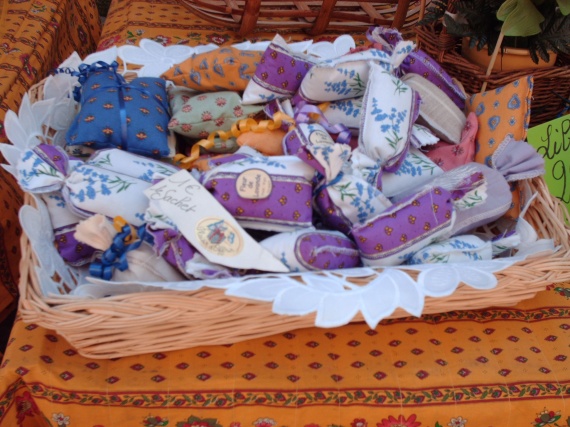
Sachets of dried lavender at a Provence marché. Source: Picstopin.com

Ten minutes into Kiki’s development, the only distinctive, individual notes are passion fruit and lavender ensconced in an amorphous, airy sweetness. It never feels as though there is full-on caramel in Kiki; there is nothing at all like the rich, heavy, unctuous gooeyiness of the caramel you find in desserts. Actually, it rather feels as though the caramel is infused with vanilla, whipped into a frothy, bubbly, foam-like airiness. It’s extremely pretty, but very subtle. So subtle that it fails to ever fully tame the forceful pungency of that lavender. Even with the sweet notes that infuse it, the lavender is still too much like those Grasse dried sachets of my nightmares with their sharp, abrasive, aggressive, herbal blasts that assault everything they touch. (Maybe I need therapy for my feelings of hostility towards the poor plant?)

Kiki continues its bilateral focus for a while longer. At the twenty-minute mark, the perfume is bracing lavender, soft lavender, sweetened lavender, and fruity lavender, lightly infused with sweet musk and sweetness. If my words sound repetitive and redundant, it’s because they’re meant to be. Kiki is primarily and predominantly one singular theme with only minor, subtle variations. In the background, hints of citruses twinkle like dainty, tiny lights one sees in distant hills. Soft patchouli darts around like a firefly. A very pretty, plush, warn, snuggly softness stirs at the base, feeling as cozy as a cashmere throw. The whole thing is subsumed into a very powerful, potent, forceful combination that is, simultaneously, very airy and very lightweight in feel. Objectively, it’s very pretty; intellectually, I can’t find any of it to be very complex or interesting.

Less than an hour into Kiki’s development, it all starts to turn a little hazy. The perfume’s texture feels creamy, soft, and smooth, but the notes are increasingly blurry. There are a lot of very well-blended perfumes where the elements don’t feel quite so nebulous, intangible, abstract and amorphous. At least, not quite so soon. Kiki has turned into an almost hazy blur of soft, sweet, musky floralness that just barely hints at lavender. Once in a blue moon, the vanillic caramel pops up like a ghost to feel a little more concrete, but it is incredibly fleeting. There is a sweet musk, presumably from the passion fruit, but it has no concrete basis. Even the hint of lavender feels like a flittering, darting thing that you’re trying to grab onto, but it keeps slipping away. It’s an exercise in frustration to pin anything down beyond the general, abstract, creamy, floral sweetness. Even Casper the Friendly Ghost has more structure to his shape and form.

That’s all there is to Kiki on my skin. For the next few hours, its mellow, creamy, floral sweetness darts about like a will o’ the wisp, becoming closer and closer to the skin. It’s a pretty smell, but it’s nothing more than that. The word “boring” actually comes to mind. Exactly 3.75 minutes into the perfume’s development, Kiki is nothing more than sweet, musky vanilla on my skin. It lingers on, soft as a gauzy whisper, for another few hours, then dies completely just over the 6.75 hour mark.

Some of you may think that I can’t objectively and fairly judge a perfume that is centered around a note I dislike so much. You may have a point. However, if reviewers only focused on things they knew they would like, then every magazine, newspaper or website would have to hire thousands of sub-specialists. That’s simply not reality. Perfume reviewing is, by its very nature, even more subjective than most fields, but that doesn’t mean my issues with a particular note automatically doom a fragrance. I loathe ISO E Super, but I’ve given good reviews for a number of fragrances with the dreaded note. I am not a passionate iris fan, but that hasn’t stopped me from loving a few perfumes built around it, either. And, regular readers will know that I have very much appreciated a couple of fragrances which showcased lavender. I gave enormous praise to Histoires de Parfums‘ 1725 Casanova, a lavender aromatic fougère which just barely straddles the gourmand category with its vanilla. It’s lovely enough that I’ve actually considered wearing it. I also greatly admired and liked Santa Maria Novella‘s Ambra which has lavender with neroli and birch tar. And I’ve adored a number of fragrances that have clary sage, a lavender-like plant, or which have featured lavender in conjunction with other notes. So, I don’t hate all perfumes with lavender, but they have to be really good ones to get over my lack of enthusiasm for the note.

At the end of the day, Kiki simply isn’t all that special in my opinion. What manifested itself on my skin was pretty, yes, but it’s neither interesting nor complex. I think the whole thing actually verges on the plain and banal. And that is a far greater problem to me than a brief twenty-minute struggle with the lavender at the beginning. So, Kiki is a complete pass. I’ll stick to Vero Profumo’s honey-vetiver chypre, Onda, whose complexities, nuances, range, and beauty made my jaw drop. It’s a brilliant fragrance that has my heartiest admiration, intellectually and emotionally. Kiki does not.


DETAILS:
Cost & Availability: The Kiki fragrance being reviewed here is only the Eau de Parfum version and retails for $200 or €125 (often more from different European vendors) for a 50 ml/1.7 oz bottle. In the U.S.: Kiki is available at Luckyscent for $200 for a 50 ml/1.7 oz bottle. (The Vero Profumo website does not seem to sell the perfumes.) Outside of the U.S.: the Vero Profumo Facebook page offers a whole list of European retailers from Kiev, Russia, to Oslo, Norway, and Italy. It also adds: “Since 2010 distributed worldwide by Campomarzio70 in Rome Italy, in selective boutiques and perfumeries such as ROJA DOVE, Harrods Urban Retreat London, JOVOY Paris, Parfums Rares and many more.  Campomarzio70, marketing@campomarzio70.it will inform you where you find the nearest retailer in your country.” I checked the website for Campomarzio70 and it doesn’t seem to sell the perfumes online, since I could find no “online cart” (so to speak), no pricing options or no way to purchase the perfumes, but you can try to check for yourself. In the UK, you can find all Vero Profumo perfumes at Harrod’s Roja Dove Haute Parfumerie, but there is no online website through which you can purchase perfumes. (It is not the same site as the Harrod’s website.) You can also find Kiki (and the full Vero Profumo line along with samples) at London’s Bloom Perfumery which sells the Eau de Parfum for £138.00. In Paris, at Jovoy Paris, Kiki retails for €145. In the Netherlands, you can find it at Leanne Tio Haute Parfumerie where it costs €150. In Italy, you can find it at Alla Violetta boutique for €125. Germany’s First In Fragrance sells Kiki EDP for €150, but they also carry the complete Vero Profumo line, offers sample sets, and ship throughout the world. Samples: I obtained Kiki from Surrender to Chance as part of Vero Profumo Three-Perfume Sample Set (Onda, Rubj, and Kiki); the set is only for the EDP concentration and prices begin $13.99 for a 1/2 ml vial of each. Surrender to Chance also sells Kiki EDP individually starting at $5.99 for a 1/2 ml vial, and up.

Perfume Review – Serge Lutens Fumerie Turque

I had high hopes for this one. Very high hopes. Smoke, tobacco, leather, vanilla, and spice. The famous, beloved Chergui supposedly ratcheted up a notch. Turkish rose, smoke, and honeyed pipe tobacco in a sensuous, opulent, oriental fragrance done by Uncle Serge and that mad wizard, Christopher Sheldrake. Well, not on my skin…. 

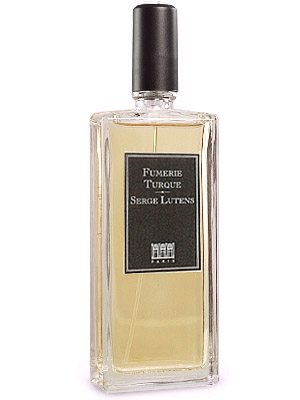
The old, discontinued, vintage 1.7 oz/50 ml version of Fumerie Turque.

The old, discontinued, vintage 1.7 oz/50 ml version of Fumerie Turque.

Fumerie Turque is an eau de parfum that was created by Serge Lutens‘ favorite perfumer, Christopher Sheldrake, and released in 2003. Though it is primarily an expensive Paris Bell Jar perfume that is exclusive to Serge Lutens’ Paris headquarters, Fumerie Turque came out at some point in a regular, cheaper, import-version, 1.7 oz/50 ml bottle that is still sometimes available online. And, somewhere along the line, the fragrance was reformulated — quite drastically, according to some — to become a softer, less tobacco-centered, more vanillic, sweet fragrance. My sample is of the current version, and it leads me to wonder what on earth it must have been like before.
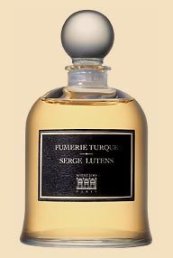
The Bell Jar of Fumerie Turque that is now the only version sold by Serge Lutens.

The Bell Jar of Fumerie Turque that is now the only version sold by Serge Lutens.

Serge Lutens describes Fumerie Turque on his website as follows:

Smoking can kill you.

That’s one reason why I like using leafy blond tobacco as a raw material together with honey, underpinned with a few, slightly obscured hints of rose petal.

For some reason, Fragrantica has two entries for Fumerie Turque. There is no indication of which is the entry for the current version, and each lists slightly different notes. I haven’t seen that before, even for reformulated fragrances. Whatever the explanation, if one compiles both versions, the notes in Fumerie Turque would seem to include:

white honey, candied Turkish rose, juniper berries, chamomile, Egyptian jasmine, smoked leather, beeswax, Balkan tobacco, red currants, Peru balsam, patchouli, tonka, styrax, suede, and vanilla.

Styrax resin via themysticcorner.com

Styrax resin via themysticcorner.com. (Website link embedded within photo.)

Fumerie Turque opens on my skin with smoke, vanilla, leather and spices. The fragrance is dominated by styrax, a resin which has a very dry, smoky, spicy, leathery nuance. It infuses everything it touches, including the rose note which starts out being sweet, but which quickly turns dry and smoky. Alongside are tobacco curls, nestled amidst sweet vanilla and a light touch of vanillic powder. In the background is the faintest chilly touch of a woody, pine note that feels syrupy and resinous, almost as if it were juniper resin instead of juniper berries. Wafts of a floral, slightly tea-like note flit about, as if the chamomile has been infused with the same, spicy, chewy, dense styrax as everything else.

There is something a little bitter and sour about the blend, despite the sweet, smoky, somewhat leathery notes underneath. It must be the honey with its slightly sulphurous undertones. Honey is an extremely tricky note for some people, as their skin chemistry can turn it sour, urinous, skanky, animalic, raunchy, or some combination thereof. I happen to be generally lucky with the element, which I adore, even on those rare occasions when it can feel almost sulphurous as it does here. But, I must say, I am not at all keen about its sour nuances in Fumerie Turque. I’m even less enthused as it gets worse, quickly turning into a smell that is simultaneously stale, sour, bitter, sharp, acrid, and, eventually, almost rancid in feel. The beautiful, sweet, freshness of the rose has receded along with the vanilla, its powder, the juniper berries, and the dark, tea-like chamomile, leaving the harsher, animalic notes utterly untamed. Rank bitterness is what comes to mind, and I imagine that people who traditionally have always had problems with honey might fare even worse.
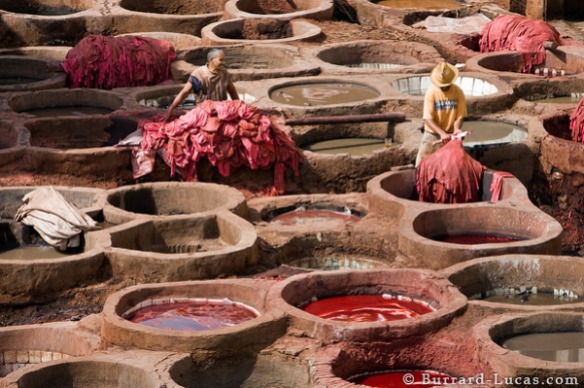
Leather Tanning in Morocco. Photo by Burrard-Lucas via http://www.burrard-lucas.com/photo/morocco/leather_tanning.html

Leather Tanning in Morocco. Photo by Burrard-Lucas via http://www.burrard-lucas.com/photo/morocco/leather_tanning.html

Ten minutes into Fumerie Turque’s development, those harsher notes become extremely prominent. The leather feels almost raw, like tannery hides left to cure in the sun. There is a tarry, animalic, phenolic, musky sharpness to the smell. And the rank sourness of the honey now feels quite rancid. Making matters worse is the tobacco, a note I normally love. Here, it feels neither like dried tobacco leaves, nor like sweet, fruited, honeyed pipe tobacco. Instead, it smells like a stale, dirty ashtray with the remnants of a few, old cigars.

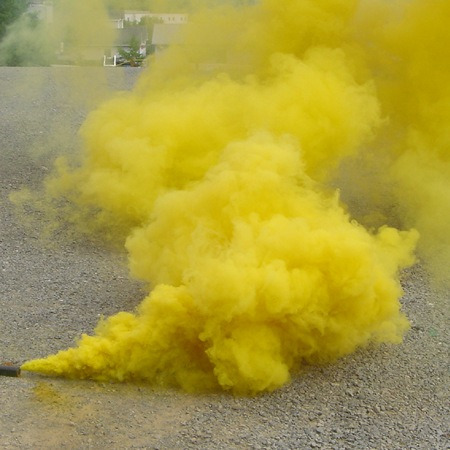
Source: skylighter.com

Source: skylighter.com

To be honest, I’m somewhat appalled by the overall combination: urinous, sulphurous, rancid honey with raw leather and stale ashtray smoke is really not my cup of tea. Not even the occasional flickers of rose and vanilla which pop up and down, going back and forth from the background to the foreground, can fix the stale, sour, bitter, animalic pungency emanating from my arm. And, have I mentioned the word “rancid” yet? I once had the misfortune of cleaning a friend’s fridge which had been left untouched for over a year; the smell of the rotten eggs had a similar sulphurous, smoky rancidness. Only here, they’re mixed in with a disconcerting stale sweetness. I know the horrible bouquet is due purely and solely to my skin’s chemistry — just as I know that others may (and do) have a wholly different, extremely positive scent sensation with this much admired fragrance — but I can only recount my own experiences and, thus far, it’s revolting. I’ve never, ever had honey go south on me… until now!

Source: 123rf.com

Source: 123rf.com

Fumerie Turque continues in that painful vein for a while. The vanilla makes every valiant attempt to come to the foreground to soften things, and once in a while, it actually succeeds. It’s short-lived, however, as the rancid sourness marches on like a Turkish army hell-bent on whipping me into submission. Thirty minutes into Fumerie Turque’s progression, beeswax joins the Devil’s Brigade, mocking me with yet another, additional layer of sourness. The animalic, almost dirty, raw leather, and the stale tobacco ashtray aromas join in, cackling gleefully at the faint whimpers that are starting to emanate from my miserable little self. I look at the Fumerie Turque’s longevity rankings on Fragrantica (“very long lasting” say the majority), mutter some expletives, and contemplate sending dear Uncle Serge a “Dear John” letter. I also wonder if it’s too early to start drinking.
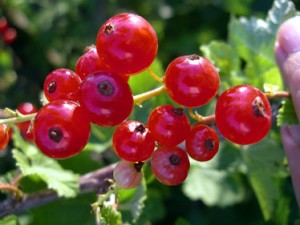
Red Currants via onlyfoods.netClose to the end of the second hour, Fumerie Turque decides to take some pity on me. It starts to soften, becoming milder, less feral and brutal. The leather, ashtray and honey elements take on a rounder, less intentionally hostile and aggressive edge, though their undertones retain that rancid stench that is still too bloody sharp and acrid for my tastes. Thankfully, the sillage has dropped from its previously potent levels, making me hope that Fumerie Turque has decided to engage in an olfactory cessation of hostilities. Er… not quite. We are now launching into a whole new sort of merciless madness. At the 2.5 hour mark, Fumerie Turque turns into a strange mélange of vaguely sour, vanillic baby powder infused with the odd tartness of red currants berries, atop a base of light, sweet smoke and somewhat treacly rose. I sighed so deeply, you have no idea, and wonder what Uncle Serge would think of a blotchy, tear-splattered letter.
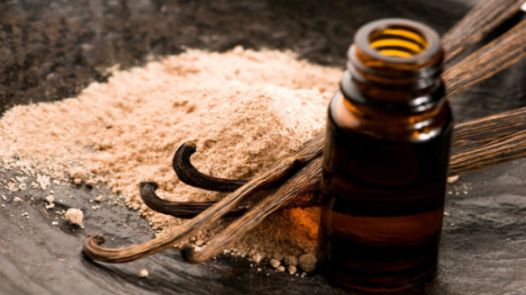
Vanilla powder and essence. Source: food.ninemsn.com.au

Vanilla powder and essence. Source: food.ninemsn.com.au

Fumerie Turque continues its descent into powdery, smoke-tinged sweetness. It’s quite a relief, given what came before. Close to the end of the fourth hour, there is more vanillic baby powder, tart fruit notes, whispers of smoke, and a definite subtext of honeyed sourness. The new addition, however, is beeswax — and it’s the only part of the somewhat muted, faded combination that I find pleasant. Around the middle of the fifth hour, Fumerie Turque fades into abstract, powdery vanilla with honey and a whisper of beeswax, and remains that way until the end. All in all, Fumerie Turque lasted just short of 6.75 hours, which is much less than the enormous longevity that I had braced myself for. On average, the sillage was moderate: very forceful in terms of projection for a brief period at the start, but then, significantly softer while still being noticeable within the tiny bubble that wafted an inch above my skin.

Normally, with fragrances that take such a terrible turn on my skin, I would give the perfume two tests. Sometimes, maybe even three. I couldn’t do it with Fumerie Turque. I simply couldn’t. It wasn’t only that extremely difficult opening but, rather, how exhausting the progression was in its forcefulness and in the unalleviated monotony. Fumerie Turque isn’t linear from start to finish but, within its two distinct stages, it certainly feels a little singular. I always say that there is nothing wrong with linear fragrances if you love the notes in question but, obviously, that was not the case here. 
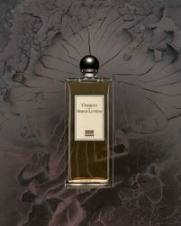
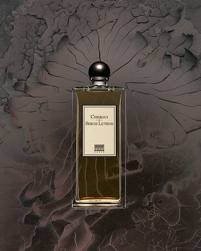
Chergui.

Chergui.

There are a few reasons why I’m so incredibly disappointed with the manner in which Fumerie Turque manifested itself on my skin, beyond the really obvious ones, that is. First, many people consider the fragrance to be the more advanced, complex, sophisticated brother to Serge Lutens’ Chergui. Fumerie Turque is supposed to be richer, smokier, less vanillic or powdery (in both its original and reformulated version, presumably) than the fragrance that I own and love. It seemed indubitable that Fumerie Turque would be even more up my alley.

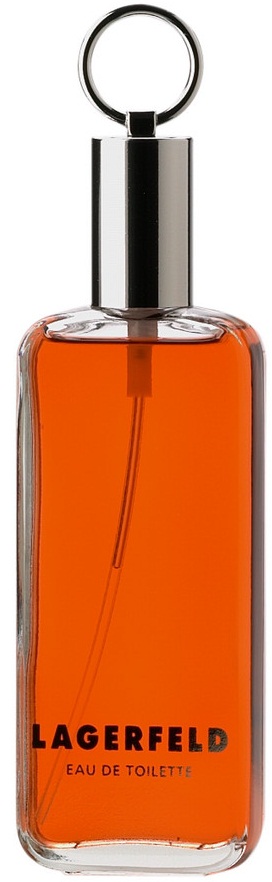
Karl Lagerfeld Cologne. The non "Classic" but vintage bottle.

Karl Lagerfeld Cologne. Not the current “Classic” bottle, but the vintage one.

Second, Fumerie Turque seemed very familiar upon first sniff of the fragrance in the vial. It instantly and immediately brought to mind one of my favorite comfort scents, the superb Karl Lagerfeld Cologne in vintage formulation. Karl Lagerfeld’s 1980s beauty is actually the sole reason I started this blog. I needed a place to properly express my love for this fragrance when I reacquired a bottle on eBay, and I couldn’t do it in a Facebook status post, though I certainly spent a good few paragraphs trying. My very first perfume review was, in fact, a rushed, hurried, rather short affair on the joys of Karl Lagerfeld’s interpretation of and homage to Shalimar. A few parts of that review:

Imagine your boyfriend’s leather jacket, covered with honey, and in an old Russian or Greek Orthodox church filled with smoky incense and the whiff of a passerby in rose and jasmine…. this is better. If there were a honey seller in a stall sandwiched between a musky spice vendor of nutmeg, tarragon and anise, and one who sold sweetly fragrant tobacco that your uncle put in his pipe — all in a giant leather store filled with the finest British leather saddles, which was in a Turkish bazaar… this is better.

[…] Some say that it’s like a male-version of Shalimar and I suppose it’s the faint touch of powder in it. But if Meryl Streep wears Shalimar (and she does), then Tina Turner would wear this. If Shalimar is a Rolls Royce, this is James Bond’s Aston Martin or perhaps a BEAST of a muscle car driven by a Russian Orthodox monk in a leather jacket. That’s it! This is the smell for Rasputin, though one commentator elsewhere said that they thought Robert Redford in the Great Gatsby would wear this. I disagree. This is pure leather smoke covered with honey.

And….. it’s sex on a stick. […] Just be warned, it’s not for the faint of heart and that, depending on your body chemistry, powder may predominate over leather, tobacco or honey. Also, if you’re not into powerful scents, do not put on more than one spray.

Not a week goes by that I don’t regret the brevity of that article (relative to my usual verboseness). Not a week passes that I don’t vow to do the perfume proper justice with a revisit. Karl Lagerfeld Cologne has been a favorite fragrance of mine for over two decades — and Kafkaesque exists purely and solely because of it.

That fragrance is what I immediately came to mind when I took a gandering sniff of Fumerie Turque in the vial: a richer, smokier, drier, less powdery, less sweet Karl Lagerfeld. I couldn’t believe it. My jaw dropped, and I couldn’t wait to try it on the skin. Later, much later, after the bloody, leathery, stale, rancid chum in Fumerie Turque’s shark-infested waters had faded away, I was surprised to discover that I wasn’t the only one who thought there were similarities between the two fragrances. A passing, brief comment on a Basenotes thread devoted to Fumerie Turque said: “When I read these threads, I wonder how many who enjoy FT have tried the original Lagerfeld Cologne (before it became “Classic”).” I have no idea who the poster, “Bigsly,” is, but I want to give him a hearty Bravo for unknowingly reassuring me that I’m not insane (and, also, for his excellent taste). Because, yes, when I read positive descriptions of Fumerie Turque on Fragrantica, they sounds a bit like what I experience with Karl Lagerfeld.
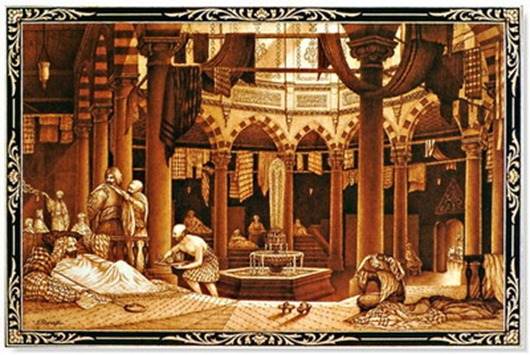
Source: turkishculture.blogspot.com

Source: turkishculture.blogspot.com

There are significant differences, however. The Karl Lagerfeld is much sweeter, more vanillic, and more powdery than the largely acrid Fumerie Turque. It has a bergamot, citric, and subtle, vaguely herbal element to its beginning. More importantly, the leather is very different in Karl Lagerfeld; it lacks the raw, animalic outbursts in Fumerie Turque, while being significantly stronger and richer than it is in Chergui. Also, the tobacco smoke is sweeter than the more acrid, stale, dirty version in Fumerie Turque, more akin to pipe tobacco, and is additionally supplemented by incense. If the Lagerfeld didn’t precede both Lutens fragrances by almost 20 years, I would call it a lovechild of Chergui and Fumerie Turque, combining the best parts of both in a much stronger, more potent, intense, powerful blast. But Karl did it first. There is also another big difference: the Lagerfeld is available in vintage form for a mere pittance on eBay. You can buy a 2 oz bottle for between $20-$30, depending on times, vendors and competing bidders. Sometimes, they can go up to $45, but I bought my bottle for about $18! The key — and this is really important — is to AVOID anything that has the word “Classic” on the bottle because that is the reformulated rubbish version! (I beg of you, don’t do it. It’s not the same at all.)

I realise that my review of Fumerie Turque has descended into an ode to Karl Lagerfeld Cologne, so let’s return to that Basenotes thread. It’s interesting because the chap had an equally brutal start to Fumerie Turque, which he bought blindly based on the positive praise for the fragrance. Though he subsequently fell in love with Fumerie Turque, I think his experience is illuminating, in part because it also references some other well-known fragrances:

I sprayed some on my bicep. OH NO!!! I REALLY SCREWED UP BUYING THIS STUFF!!! Immediately, I got this sickly powdery feminine stale urine porta-potty smell that some of the negative reviews had mentioned. Totally, totally unwearable. […]  five minutes later I noticed that tobacco note– and it was actually a very nice specimen of tobacco. If only that other “pissy, honey, rose” stuff wasn’t going on…

Yet, he gave it a second shot, mostly due to the many, many raves for Fumerie Turque from people he respected. And, this time, he noticed some differences. First, there was a strong similarity between Fumerie Turque’s “beeswax and the emerging red currants/fruit” and the smell of Chanel‘s Antaeus, a fragrance that he had initially hated but then grown to love. Second, with a little time, Fumerie Turque developed into something lovely on his skin:

… the pipe tobacco was starting to come out very noticeably. I’ve truly NEVER experienced a fragrance that did such a 180 in the wearing and bloomed into something so cool. It still had a bit of that Habanita powdery quality and that dense honeybun beeswax in the base, but the tobacco was starting to steal the show in a big way. Some people call this scent “smokey” but thankfully, it’s not smokey to my nose– at least not in a negative manner. The first time I smelled it, it did conjure the back room of a bar where there had probably been a lot of second hand smoke, but once it started to blossom, it was smooth and ethereal. Again the beeswax is right there in the beginning and it almost makes you nauseous, but it only takes about two minutes for the composition begin unfolding into what it will become. As time goes on, the scent becomes more “blonde” as in blonde tobacco, and begins to feel lighter, but not lesser.

To compare this to a tobacco scent like Pure Havane almost makes me laugh now. I like Pure Havane a hell of a lot, don’t get me wrong– but this stuff is on a whole different level. This is adult, it’s grown up seduction in a bottle. Pure Havane is the most playful, fun tobacco scent I’ve tried, but Fumerie Turque is not for children. […]

What Fumerie Turque is, is an ACTUAL PERFUME.  […] Christopher Sheldrake has created a real masterpiece here. Top to bottom. Something that relies on a little necessary chaos out of the bottle to get on its feet, but once it does, and starts walking upright, god it’s beautiful. [Emphasis in bold added by me to the perfume names.]

There are numerous gushing, quite poetic raves about Fumerie Turque on Fragrantica (where it is enormously loved in both of the perfume’s listings), but I chose that particular Basenotes review for a reason. It highlights how some people can have a very positive experience with Fumerie Turque at the end, despite the sour, “pissy” start.

It also shows that, as many Basenotes commentators agree, Fumerie Turque is a perfume that can sometimes take a few tries. A number of Lutens fragrances require patience but, given the trickiness of honey as a note, Fumerie Turque may require more patience than most. In all candour, if I didn’t already have my beloved Karl Lagerfeld and Chergui, I probably would have given Fumerie Turque the necessary second chance that so many people say it requires, especially as I found some of the vintage bottles (which are supposed to be far better than the current version) available online for a significantly cheaper price than the current Bell Jar formulation. But I do have Lagerfeld and Chergui, so I’m not hugely motivated. Plus, there is also the simple reality that some honey fragrances never work out on a person’s skin, no matter how many chances you give them.

Would I recommend that you give Fumerie Turque a shot? Well, never as a blind buy, no. However, if you love Chergui, then yes, by all means, give Fumerie Turque an exploratory sniff. Get a sample, see if it works for you, and, if you love it, then you can get the more affordable vintage version that I’ve found on some of the online retailers below. (Actually, I would highly recommend the Karl Lagerfeld above all else, especially if powder notes don’t go south on your skin.) On the other hand, if you don’t love Chergui, or if you already know for a fact that honey is always one of your fatal notes, then I would advise that you stay clear of Fumerie Turque entirely. If it didn’t work on my honey-loving skin, I can’t imagine how badly it might turn out for those who never have any luck with the note. I suspect you’d end up in a foetal position, crying for a Silkwood shower….

DETAILS:
General Cost & Discounted Sales Prices: Fumerie Turque is an eau de parfum that Serge Lutens now offers only in the large 2.5 oz/75 ml bell jar version that costs $290, or €135. However, you can still find the smaller 1.7 oz/50 ml bottle (that is now considered “vintage” or discontinued) on some U.S. and European perfume websites. About seven of the usual, big, online perfume sites (Amazon, FragranceNet, etc.) have Fumerie Turque listed, but the fine print shows it as “Sold Out.” However, I found the perfume at several smaller vendors. Buy Beauty Deals sells the 1.7 oz/50 ml bottle of Fumerie Turque for $108.50, A Matter of Fax for $117.11, Perfume Mart for $121.50, Fragrance Zoo for $127.49, Planet Aroma sells Fumerie Turque for $130.63, Islander Mall for $132.92, and SurfAvenueMall for $140. I have no idea how reputable any of these vendors may be.
Serge Lutens: You can find Fumerie Turque in the bell jar option on the U.S. and International Lutens website (with non-english language options also available). It’s priced at $300 or €135.
U.S. sellers: Fumerie Turque is exclusively available at Barney’s in the bell jar format for $290. The site has a notice which states: “This product is only available for purchase at the Madison Avenue Store located at 660 Madison Avenue. The phone number for the Serge Lutens Boutique is (212) 833-2425.” I did not find Fumerie Turque listed at Luckyscent or any of the big, niche perfume vendors.
Outside the U.S.: In Canada, I think you can find “Fumerie Turque – Retired” at The Perfume Shoppe for what is US$120, since it is primarily an American business with a Vancouver branch, but I’m not sure what they mean by “retired” and if the perfume is actually in stock. For Europe, I couldn’t find the 50 ml bottle sold at a single online vendor. It’s the expensive bell-jar, or nothing. In Australia, you can get Fumerie Turque on sale in the discontinued 50 ml bottle from Brand Shopping for AUD$199.65 with free shipping. In the Middle East, I saw the “vintage” Fumerie Turque listed on the Universal Perfume‘s site. However, there is something weird going on where there is no pricing, and it won’t let you put it in your cart until you give one. Elsewhere on the site, the perfume is priced as $189.99.
Samples: You can test out Fumerie Turque by ordering a sample from Surrender to Chance where prices start at $3.99 for a 1/2 ml vial. There is also a Serge Lutens Sample Set of 3 Paris Exclusives (Fumerie Turque, along with Borneo 1834 and Chergui), which starts at $11.50 for a 1/2 ml vial of each. Fumerie Turque is also included as an option in a Lutens Sample Set for $18.99 where the vials are also 1/2 ml each, but you get your choice of 5 Lutens Non-Export fragrances (ie, those that are Paris exclusives).