Profumum Olibanum

Concentrated simplicity is the hallmark of Profumum Roma, an Italian perfume house that takes a few olfactory notes, and then ramps them up with the richest amount of perfume oils on the market. In the case of Olibanum, the focus is incense, infused with citruses and piney resins in a play between light and dark.

Source: Luckyscent.

Source: Luckyscent.

Olibanum is an eau de parfum that was released in 2006. The name may refer to myrrh, a cool, white, dusty sort of incense used in church rituals, but the fragrance also celebrates the black smokiness of frankincense, while simultaneously playing a little shell-game with citruses. Profumum‘s website describes the perfume very simply:

Sacred and profane, mistery and shade
Wax guttering, someone praying
Steps, echoing through the gothic and ancient archways
to the cathedral of Saint Michel.

[Notes:] Incense, Myrrh, Orange flowers, Sandalwood

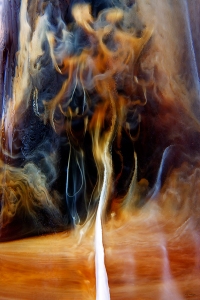
"Abstract Pines" by Chris Shepherd at Shepherdpics.com

“Abstract Pines” by Chris Shepherd at Shepherdpics.com

I’ve noticed that Profumum tends to brush over the details or specifics in their perfume lists, and Olibanum is no exception. I’d bet that there are a number of ingredients missing from that cursory summary. Olibanum opens on my skin with lemon and herbs, then a powerful blast of a resinous, aged, green pine note. On its heels is myrrh and something distinctly medicinal, infused with a breath of orange sweetness. There is also a soapy element, along with dry woods, and they both feel very oily in nature. Something about the overall effect reminds me of face cream or a tonic with herbal elements, countered by that lemoned oil.

I really disliked Olibanum upon my first wearing some months ago, but it’s easier the second time around, even if it my description thus far may lead you to think otherwise. It’s still hard, however, to summon up wild enthusiasm for an opening that really starts off as lemon oil with green, resinous, herbal notes, along with amorphous woods and cold, soapy incense. It’s not Nivea or lemon furniture polish, nor green, piney medicine either, but it is some combination of things in all three of those genres, put together. And, yes, I repeat, this is a much kinder take on Olibanum’s start than I had initially when it seemed merely like extremely acrid, dusty soapiness. (I think applying a larger quantity helps.) Bottom line: Olibanum’s opening moments are not a joy, though the bouquet is thankfully light and sheer in weight.

Abstract Green Fantasy by Bruno Paolo Benedetti. Source: imagesinactions.photoshelter.com (Website link embedded within.)

Abstract Green Fantasy by Bruno Paolo Benedetti. Source: imagesinactions.photoshelter.com (Website link embedded within.)

Things soon change, however, and for the better. About 5 minutes later, a fruity element arrives on the scene, though it’s abstract and indistinct at first. At best, it conjures up the image of a green, unripened orange. Lurking in the base is something very leathered, like a dark resin from a juniper tree. Slowly, the medicinal overtones start to fade, and the frankincense rises to the top. Olibanum turns into a fresh, but deep, lemon, pine, incense fragrance with unsweetened fruitiness. It smells nothing like Pine-Sol, if that is your fear, and it is thanks to the sharp bite of the smoke. If anything, the forest, green notes make Olibanum feel more like a herbal take on a traditional myrrh fragrance. There is hardly any of the cold, ancient dustiness that such scents usually carry. Instead, Olibanum feels increasingly rich and warm. The initial gauzy thinness changes, the perfume solidifies with some heft, and the notes grow in strength.
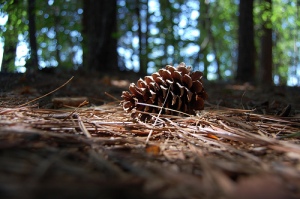
Photo: David Gunter Source: Flickr (website link embedded within photo.)

Photo: David Gunter Source: Flickr (website link embedded within photo.)

Olibanum continues to morph by small degrees. 15 minutes in, a black and somewhat peppered sort of smokiness weaves its way through the top notes, while a surprising creaminess grow in the base. The primary bouquet is now of frankincense as much as the myrrh, both infused with lemons, a slightly leathered pine resin, amorphous woodiness, and some creaminess in texture. The tiniest whisper of oranges flits about, growing more distinct and sweetened with time. The thing that strikes me more, however, is that peppered woodiness. I really wouldn’t be surprised if Olibanum contained a good dose of cedar to go along with the juniper-pine elements.

Olibanum has an unexpected trajectory in its development for a few reasons. The most noticeable is how Olibanum seems to grow in concentration at the end of the first hour. It is very far in terms of both feel and smell from how it was in the opening minutes. It suddenly has the signature Profumum heft and body, and it is growing smokier by the minute as well. The piney resin becomes stronger too, evoking the scent of freshly crushed needles and woody cones on a forest floor. Olibanum doesn’t have a super-complex bouquet, but it stands out for its richness, as well as for the lemony creaminess underlying it all.

Pine tree sap. Source: howtocleanstuff.net

Pine tree sap. Source: howtocleanstuff.net

The second really strange thing is the interplay of the secondary notes. Profumum fragrances are really well-blended, but Olibanum has an unusual peekaboo situation going on with the lemon and pine. Every single time over the next four hours that I think the pine has replaced the lemons, that the lemons have superseded the resins, or that the oranges have disappeared, the situation somehow reverses itself.

About 90 minutes in, the pine seemed to retreat, but then 40 minutes later, Olibanum suddenly took on a Pine Sap Absolute sort of aroma. It actually felt like a less-sweetened, drier version of Profumum‘s Arso, only with a very different sort of smokiness centered on frankincense instead of campfire aromas. By the same token, just when I was certain that the lemon was a mere hint and fading away, it suddenly returned and seemed to overtake the pine. Back and forth we go, for at least four more hours. The sillage continues to drop, but the perfume’s smokiness seems to grow.

Source: hdwallpapers.lt

Source: hdwallpapers.lt

At the end of 5 hours, Olibanum changes again. It now hovers right on the skin, though it is still extremely potent and powerful when smelled up close. The more interesting thing, though, is the undercurrent of darkness. There are definite traces of something both leathered and burnt underlying Olibanum’s interplay on frankincense and myrrh. At times, it smells almost like raw tobacco juice, along with a burnt sweetness. At other times, it smells like singed leather, singed woods, or tarry resins. Either way, the darkness takes over, the creaminess fades away, and Olibanum turns very dry.

What I don’t detect — now or ever — are orange blossoms in the floral, sweet way to which we are all accustomed. There is, however, a definite touch of mentholated rubberiness in the base that I suspect comes from the flowers.

Art by: LordmOth on Deviant Art. (Click on photo for website link embedded within.)

Art by: LordmOth on Deviant Art. (Click on photo for website link embedded within.)

As a whole, Olibanum is now just various forms of smokiness, infused with abstract, dry woodiness, a subtle sweetness, and teasing, fluctuating levels of pine and lemons. Speaking of lemons, the note suddenly makes a big comeback in the 9th hour (literally), and Olibanum becomes a lemon-incense-smoke fragrance all of a sudden. (I told you those notes played peekaboo!) It fades after 40 minutes, leaving Olibanum as an abstract blur of dry smokiness and frankincense, which is how the perfume remains until its very end. All in all, Olibanum lasted a hair over 13.75 hours on my perfume-consuming skin with 3 small dabs.

I’m not the only one who noticed the odd relay race involving the citrus notes, as someone made a very similar comment on Luckyscent:

Opens with a strong, sharp, clean green citrus. Drys down to a smokey refined incense. But on the way the citrus and incense seem to trade places a few times creating a very non linear and interesting dry down.

The other comments on the side are generally positive, though there are a number who are distinctly unenthused, whether by Olibanum’s difficult opening or the intensity of the incense. A random sampling of responses:

  • I didn’t care for the first sniff. But when I put it on. Magic. Lemongrass, Incense, and Oud accented perfectly. An unusual combination that keeps surprising me.
  • it took me a little while to warm up to this strange perfume, but now it’s my go-to citrus! I get frankincense and nonspecific citrus-rind. it’s not one of those seductive niche scents on first application… but it grows on you as one of those scents that is just right for skin!
  • Frankincense, frankincense, frankincense…no thanks
  • It’s the hint of orange blossom that makes the scent a year-round one for me. Plus, it has none of the cumin or curry notes that ruin many other incense scents. It feels perfect on me – it smells like nothing else I’ve tried (and I’ve tried MANY scents!). While LuckyScent rates this as a masculine scent I think it’s strongly a unisex scent. The Olibanum is prominent but not powdery like some other scents. How I wish I could afford a full bottle. Thankfully a little goes a long way with this scent as I have been living off decants and samples for several years. I’ll wear it at work and I find patients and coworkers are not bothered by it as it tends to meld with my skin if I keep the amount to a small spray. Large sprays = a large silliage monster. It is much better to keep this to one or two sprays at a time. It lasts a long while (at least 6 hours or more). It’s my favorite incense ever[.]

An interesting point is how Olibanum stacks up to some other incense fragrances, as there are a few posters who mention Olivier Durbano‘s Rock Crystal and Avignon. I haven’t tried either fragrance to be able to compare, so perhaps you’ll find the comments to be useful:

  • A lovely, dry, woody incense with none of the (cloying, in my opinion) sweetness of scents like Avignon and Red Palisander. A little too strong and bitter on first application, but it quickly mellows into long-lasting goodness.
  • Too strong for my taste. It gave off this rich incense-resinous scent which nauseated me. I’ll stick to Comme de Garcone’s: Avignon.
  • Dry, dry, dry. After two hours on my wrist, I am still waiting for those white flowers to bloom. I was hoping that the orange blossom would round out Olibanum’s edges, much like the lily does to L’Artisan Passage d’Enfer, but it just isn’t happening for me. It’s a nice enough scent, but not for everyday. And it smells almost exactly like Olivier Durbano Rock Crystal… though Rock Crystal is a little more complex with its coriander and cumin. Given that Olibanum is twice the price, buy Rock Crystal instead and spend that extra $100 in your wallet on another bottle of perfume.
  • This is a fantastic scent! Similar to Rock Crystal, but without the (for me) unpleasant “sticky”, musty notes from cumin and coriander in the drydown after a few hours. Olibanum is “cleaner”. The incense note appeared not instantly, but only after half an hour. [Emphasis and bolding to other perfume names added by me.]

On Basenotes, the perfume is generally very well-liked with 8 positive reviews, 2 neutrals, and 1 negative one. The latter merely says, “Incense shouldn’t smell like sandy tobacco.” Everyone else seems to love Olibanum, with one calling it a “masterpiece.” The poster, “Dollar & Scents,” provides a wonderfully detailed description of Olibanum’s many, unusual nuances:

Upon application, one is treated to a medicinally resinous myrrh, at once cooling and green, but sharply sour, with a slightly moist, mushroom-like mustiness. And, a somewhat dark, orange blossom infuses its sweet fruity, earthy and indolic aspects. This dank, green melange meanders to the middle, where a pure olibanum, reminiscent of an infusing frankincense during the celebration of a High Mass, envelops the bitter greenness with its alluring splendor. A faint, rustic tabacco undercurrent, like a freshly-opened pack of cigarettes, drifts in and out. Transitioning to the comforting base, a smooth and creamy sandalwood lifts the frankincense, while a slightly terpene, conifer nuance presents. A sublime drydown ensues. An exalted scent to be sure, this masculine composition is an all-season fragrance, with average projection and good longevity.

For “Alfarom,” Olibanum is a worthy and real alternative to Avignon, the leader in the incense category. He writes:

This is a real alternative to seminal scents like Avignon or Incense Extreme. Olibanum is great if you like smoky incense based fragrances but it’s quite different form the well known antagonist scents of the same family. Together with the usual liturgic vibe Profumum introduced a sealing wax effect that make Olibanum irresistible. While the opening is still quite severe and chilling, the drydown turns dry-and-warm, meditative and comfortable. A terrific woody-green option. Highly recommended!

Source: journeytoorthodoxy.com

Source: journeytoorthodoxy.com

Personally, I think Olibanum differs from those liturgical scents that I’ve tried. It never once evoked the dustiness of an old church with stony steps and cold chilliness. There are no dustbeams in the air, no waxy pews or piercing myrrh chilliness. And, thankfully, the soapy touches of the start fade away. For me, Olibanum is about citruses and smoke with darkly leathered, pine resins, not church rituals or the alienating dust of ages. Then again, as I said, I’m not really an aficionado of the High Church, liturgical style of incense fragrances, so I hope the view of experts quoted above helps you a little. 

One thing I can tell you clearly, however, is that Profumum’s fragrances seem to consistently reflect a very Italian signature. Their approach is very similar to that of luxury fashion designers, like Giorgio Armani or Valentino, who intentionally opt for fluid, minimalistic, clean lines, but always put together with great refinement and the most opulent fabrics. Profumum’s perfumes are very much the same: they have just a handful of notes done in a simple, generally linear manner, but with great richness and at the most concentrated levels. 

The downside to that is that the fragrances are easily, and with some justification, accused of being… well, too simple and linear. They are. No question about that at all. None of them are edgy, revolutionary, or complicated. If anything, they really verge on comfort scents, for whatever notes they decide to highlight. All of that makes Profumum’s  prices far too high for some people. Again, I won’t argue, though price can be a very subjective issue.

Right now, Profumum’s fragrances are generally priced at $240 or €179 for 100 ml of what is really a super-concentrated perfume. Given the reported 43%-46% fragrance oils that the company uses in each scent, their fragrances really amount to an Extrait or Pure Parfum. Is it worth it? Well, it depends on whether you love the notes in question. Incense lovers seem to adore Olibanum! While I think the perfume becomes much better after its difficult start, I’m not so enthused simply because I’m not one for this category or type of incense fragrance as a whole. However, I love Profumum’s Ambra Aurea and Patchouly, and think those are very worth it. I also enjoy their Acqua di Sale salty-beach fragrance, and think their gourmand vanilla, Dulcis in Fundo, is nicely done. In short, it’s all subjective and dependent on your personal tastes. The quality is unquestionably and definitely there throughout, which is why Profumum is one of my favorite lines.

I must add that I’ve heard Profumum will be increasing its prices in February or March 2014. I think $260 was the number being bandied about. So, if you’ve longed to buy a Profumum fragrance — whether Olibanum or another one — now might be the time. 

DETAILS:
Cost & Availability: Olibanum is an Eau de Parfum that only comes in a large 3.4 oz/100 ml bottle which costs $240 or €179. (There is also an accompanying, concentrated body oil, and a shower gel.) Profumum unfortunately doesn’t have an e-shop from which you can buy their fragrances directly. In the U.S.: Olibanum is available at Luckyscent, but it is back-ordered until March. If you buy it now, you would probably save on the upcoming price increase for the Profumum line. Olibanum is also sold at OsswaldNYC. In addition, they have a special phone deal for samples if you’re in the U.S.: any 10 fragrances in 1 ml vials for $10 with free domestic shipping. You have to call, though, to order the samples, and there may be brand exceptions. Their number is (212) 625-3111. Outside the U.S.: In the UK, Profumum perfumes are sold at Roja Dove’s Haute Parfumerie in Harrods. Elsewhere, you can find the line at Paris’ Printemps store, Switzerland’s OsswaldPremiere Avenue in France (which also ships worldwide, I believe), France’s Soleil d’Or, the Netherlands’ Celeste (which sells it for €180, along with the shower gel), Hungary’s Neroli, and Russia’s Lenoma boutiques. According to the Profumum website, their fragrances are carried in a large number of small stores from Copenhagen to the Netherlands, Poland, France, the rest of Europe, and, of course, Italy. You can use the Profumum Store Locator located on the left of the page linked to above. Samples: Surrender to Chance carries samples of Olibanum starting at $4.99 for a 1/2 ml vial. You can also order from Luckyscent.

Arte Profumi Ecclesiae

Greek Orthodox CenserThere is a small church nestled in a pine forest clearing, a church whose wooden pews are covered by the dust of ages and whose stony floors echo the footsteps of monks swinging a thurible censer. White smoke from myrrh fills the air like a thin wall of purification, but that is not unexpected in such a traditional place. What is different is the bridge outside, a bridge made of creamy, honeyed beeswax and sweet myrrh. It links the stony, dusty Catholic church to its polar opposite on the far side of the world, an oriental temple filled with black smoke, not white olibanum. It is a temple where spicy patchouli sweetness and dry woods are offered to the gods alongside the frankincense, swirling together in a haze of great warmth. Two sides of the same coin, two very different worlds, and two very different perfumed aromas. But they’ve been bottled into one fragrance, Ecclesiae.

The Arte Profumi line. Source: Profumo.net

The Arte Profumi line. Source: Profumo.net

Ecclesiae is an eau de parfum from the Italian perfume house, Arte Profumi. The company, whose name translates to The Art of Perfume, is based in Rome and seems to have been founded around 2013, the year when it launched all its fragrances. I first encountered the line at Jovoy in Paris, though I never gave them a proper testing. The name stuck in my mind, however, so when Surrender to Chance suddenly started to carry a few of the scents, I seized the opportunity. Arte Profumi’s website isn’t very detailed or helpful, but the one thing that it makes clear is that its founders are passionate about art:

The passion for modern art and, at the same time the world of essences, as well as the need for combining them has led to the organization of multi-sensorial events.

By extraction, you get the concept of perfume as works of art, capable of replacing visual impressions through the perception of olfactory consent.

A source of inspiration for this implementation was the distant recollection of an old dressmaker’s shop where the choice of cloths, original patterns and precious trimmings stood for a lifestyle.

Source: Profumo.net

Source: Profumo.net

Arte Profumi’s website doesn’t provide the official description or notes for Ecclesiae, but I found the details on First in Fragrance:

A touch of eternity in the hallowed stone halls of a medieval cathedral where prayer and hymns along with incense soar heavenwards – in fragrant clouds of smoke, circling choirs of angels in reverence and devotion.

Arte Profumi pays homage to frankincense with their sacred scent aptly named “Ecclesiae”. Spicy elemi paves the way for the protagonist frankincense and a heart of sandalwood. Smoky, earthy patchouly and vetiver lend the composition depth and volume, a choir with many voices that intone the same harmony.

Friends of church fragrances and frankincense, but also lovers of oriental fragrances will welcome this creation from Arte Profumi as a blessing. 

Top Note: Elemi
Heart Note: Frankincense, Sandalwood
Base Note: Patchouly, Vetiver

Source: Wikipedia

Source: Wikipedia

Judging by what appeared on my skin, I think those notes are a bit incomplete or lacking in detail, because Ecclesiae opens with a heavy amount of myrrh. The white smoke is infused with elemi that reflects both its piney and its lemony characteristics. The patchouli arrives quietly on the sidelines, casting a tiny millimeter of spice to the cool, dusty, chilly notes. An equally muted hint of woodiness lurks in the base, evoking the pews in an old church. Much more significant, however, is another element not mentioned on the list — sweet myrrh or opoponax — which adds a honeyed touch to the bouquet. The overall effect evokes a cool, austere church in the middle of a forest and one whose wooden pews haven’t been dusted in months (or years).

Yet, even from the start, Ecclesiae may be the warmest, churchy, olibanum fragrance that I’ve ever tested. This is no brittle, High Mass fragrance with soapy, dusty, cold notes like Heeley‘s Cardinal, a fragrance that I personally found to be well-nigh unbearable with its piercing white musk and cotton. I haven’t tried the seminal Commes des Garcons‘ Avignon to compare, primarily because I generally find the “High Church” coldness, dustiness and soapiness of myrrh to be extremely difficult to handle. It doesn’t help that my skin often turns the note into soap by the end of a fragrance’s development as well.

The large incense thurible at the Cathedral of Santiago de Compostela. Source: catholicpilgrim.org

The large incense thurible at the Cathedral of Santiago de Compostela. Source: catholicpilgrim.org

So you can imagine my surprise at the difference here with Ecclesiae. This is a dusty, cool, white incense, yes, but there is something really lovely about how the notes are handled. It’s never too cool or barren, never too ancient and aloof in feel. There is the merest touch of warmth that ensures I never feel as though I were about to join some monks in a vow of silence in a very isolated, ancient church. At the same time, there is something honeyed about Ecclesiae that goes far beyond the usual waxy touches provided by sweet myrrh.

On the other hand, I don’t detect any sandalwood, and the patchouli isn’t at all distinct in its usual way at first. However, a few minutes in, there is a muted earthiness wafting around, along with the faintest flicker of something nuttied and vaguely chocolate-y. It wasn’t apparent in my first test when I only applied a small quantity of Ecclesiae, but 3 big dabs definitely bring out the perfume’s sweeter, richer undertones. As the warmer elements rise to the surface, the elemi’s lemon facets fade away, and its smell of chilled, fresh, pine needles soften.

FrankincenseTen minutes in, Ecclesiae is primarily an olibanum and sweet myrrh fragrance, lightly infused with muted patchouli and abstract woodiness. It hovers in a moderate, extremely lightweight, airy bouquet that wafts about 3 inches above the skin. I really like the scent, and find it to be very refined. There is a polished feel to Ecclesiae but, more importantly, it’s been perfectly calibrated so that the incense never feels ponderous, overly somber, or gloomy. My favorite part is the honeyed beeswax of the sweet myrrh which cuts through the dusty aspects of the myrrh, and thereby ensures that the perfume is never stony or icy.

"Javascapes" by Photographer Daniel G. Walczyk. Source: http://devidsketchbook.com

“Javascapes” by Photographer Daniel G. Walczyk. Source: http://devidsketchbook.com

Ecclesiae starts to slowly, very slowly, transform. The perfume grows warmer with every passing minute; the patchouli’s sweetness becomes more noticeable; and Ecclesiae takes on a creamy, beeswax softness as the sweet myrrh starts to build the bridge to the perfume’s second stage. Ecclesiae is also turning more indistinct and hazy in feel, as the notes start to overlap, and its sillage drops. At the end of 25 minutes, the fragrance is only about 1-2 inches above the skin.

Sometimes, I think I can detect patchouli proper, as there is an extremely subtle vein of earthiness that darts about. Most of the time, though, I wonder if it is my imagination, as the secondary, non-incense notes really lack clear delineation. There is something in the base that gives me a little bit of a temporary head twinge if I take really deep, prolonged sniffs, though it’s very minor and brief. It may be the slightly clean, soapy undertones to the myrrh, but perhaps it stems from the supposed “sandalwood.” I doubt it is the real stuff; I certainly smell nothing remotely like the Mysore wood in Ecclesiae. At best, the perfume has a generic creaminess in the base, though I think it results more from the truly lovely sweet myrrh.

Source: Robert.Maro.net

Source: Robert.Maro.net

The bridge that I mentioned at the start takes full shape at the end of the first hour, when the sweet myrrh starts to transform Ecclesiae. The perfume becomes creamier, smoother, and warmer, while the olibanum incense loses much of its remaining dustiness. Ecclesiae now feels like a very cozy church filled with candlelight from tapers dripping sweetened, creamy wax on soft floors, instead of a stony, barren, dusty place set in a forest. The sweet myrrh feels like a gateway into another world with a very different church dominated by entirely more oriental smells.

Beijing incense burning on Buddha's birthday. Photo: Jason Lee/Reuters via the WSJ

Beijing incense burning on Buddha’s birthday. Photo: Jason Lee/Reuters via the Wall Street Journal.

90 minutes in, Ecclesiae has suddenly turned into a spicy fragrance dominated by oriental frankincense smoke. It is thoroughly infused with an abstract woodiness, a peppered spiciness, and earthy touches. There is also something that most definitely smells like either bitter nutmeg or cloves, though I can’t explain why. The patchouli adds a reddish hue to the colour palette, while greenness arrives with the first hint of a dry, woody vetiver. The olibanum remains, but, as a whole, though, Ecclesiae is now dominated by black frankincense and warmth. It is a startling volte-face from the initial notes centered on white, dusty myrrh, to the point that you feel as though you’re in a very different place of worship. The notes are still blurry around the edges, but there is no mistaking that spicy, woody quality.

Incense stick. Source: Stock footage and Shutterstock.com.

Incense stick. Source: Stock footage and Shutterstock.com.

In fact, Fragrantica labels Ecclesiae as an “Oriental Woody” fragrance, something that initially perplexed me when I smelled the perfume’s opening notes on my skin. “Oriental” carries a very different connotation in my mind than that created by the “High Mass” churchy olibanum note with its cold facade. But Fragrantica is absolutely right in its assessment. Ecclesiae has a warm oriental heart, dominated by woody notes as much as it is by frankincense. In truth, Ecclesiae is really like two perfumes (and churches) in one, with the honeyed beeswax acting as a bridge between the two.

Ecclesiae remains largely the same for the next few hours. It is a warm, oriental, spicy, woody fragrance dominated by frankincense, with patchouli spices and earthiness, followed then by lingering strains of olibanum smoke and sweet myrrh. The vetiver is never really more than a muted flicker on my skin, while the sandalwood never shows up at all. What does appear, however, is a powdery quality that creeps in at the end of the third hour. The sillage drops even further, and Ecclesiae becomes a complete skin scent about 2.75 hours into its development.

Source: Wikicommons.

Source: Wikicommons.

Ecclesiae eventually turns into a blur of lightly powdered myrrh and frankincense after 4.25 hours, and it stays that way until its very end. There are growing touches of soapiness flitting about, but that may be simply the result of what my skin always does to olibanum. Either way, Ecclesiae is pretty linear, and very soft — both in feel and sillage. It is one of those fragrances that is so intimate in its projection that you’re constantly surprised when you see that it is still hanging on. All in all, it lasted just short of 9.5 hours, though I had to put my nose right on my skin in order to detect it by the middle of the 6th hour.

I couldn’t find any blog reviews for Ecclesiae, and the fragrance has no comments listed on its Fragrantica page. There isn’t even a Basenotes entry for it. In fact, Ecclesiae is not a fragrance that is carried in the U.S. at all. Generally, I try to avoid reviewing scents that are so limited in distribution or unknown, but I liked Ecclesiae quite a bit. Given my usual leeriness about olibanum, how painfully soapy it can become on my skin, and my dislike of dusty, cold “High Church” fragrances, I think that says something.

Alas, even if one were to order Ecclesiae from First in Fragrance in Europe (or Jovoy for EU customers), it is very expensive. The 100 ml bottle costs €225 which, at today’s exchange rate, comes to roughly $304 — and this is not a perfume worth $304, in my personal opinion. The perfume is too lightweight and sheer, the sillage is too weak, and the longevity iffy unless you apply a lot. That’s not merely my perception, either. On the Parfumo website (which is a bit like a European Fragrantica), Ecclesiae has no reviews but I was interested to see some votes for sillage or longevity:

  • 2 votes give the Longevity a 63% ranking;
  • 2 votes give the Sillage a 38% ranking.

It’s obviously not outstanding as a whole, but it’s a lot more troubling for $304 or €225.

Source: Fragrantica.

Source: Fragrantica.

I cannot tell you how much I wish Ecclesiae had more heft, weight, projection and richness. It is a thoroughly enjoyable take on incense fragrances, and feels extremely polished. Something about it reflects Italy’s inimitable, elegant, refined style, though I’m less enthused about the quiet discreetness that goes along with it. I would definitely wear Ecclesiae on occasion if a bottle ever fell into my lap, but I would never consider buying it. Then again, I’m not one who loves white incense passionately, so perhaps things might be different if I were a hardcore olibanum fan. Price is a subjective matter, after all.

So, if you truly love Churchy fragrances, then I encourage you to order a sample of Ecclesiae from Surrender to Chance or First in Fragrance. It’s very lovely, and nicely done.

DETAILS:
Cost & Availability: Ecclesiae is an eau de parfum that comes in a 100 ml/3.4 oz size and costs €225. There are no American distributors for the Arte Profumi line that I could find. Arte Profumi has a website, but not an e-shop or a Stockist/Retailers list, so your best bet in obtaining the scent is from two big European perfume sites. Paris’ Jovoy and Germany’s First in Fragrance both carry the scent. The latter also sells samples and ships internationally. I couldn’t find any retailers in the UK, the Netherlands, or outside of Europe. If you’re in Italy, however, the company has two boutiques in Rome. Samples: Surrender to Chance now sells Ecclesiae starting at $4.50 for a 1/2 ml vial. There is also an Arte Profumi Sample Set starting at $12.99 for 3 of its fragrance (including Ecclesiae) in a 1/2 ml size.

Aftelier Perfumes Cuir de Gardenia

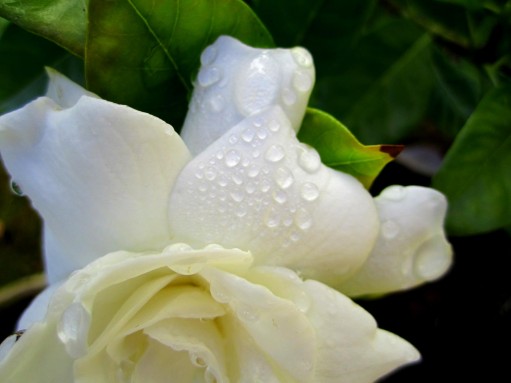
Source: Mostbeautifulflower.com

Source: Mostbeautifulflower.com

The beauty of a gardenia, with all its multi-faceted richness and inherent contradictions, captured in a perfume that is sometimes much more about a mood than a particular set of notes. That is Cuir de Gardenia, a feat of technical skill, innovation, and perfume mastery by the acclaimed doyenne of all-natural perfumery, Mandy Aftel of Aftelier Perfumes

On her website, Ms. Aftel has a wonderfully detailed explanation of why Cuir de Gardenia is different from many “gardenia” scents, along with discussion of its character and structure:

Cuir de Gardenia retains the unique beauty of the tiare [Tahitian gardenia] flower, not allowing it to morph into the hundreds of petals of a floral bouquet. I had been incredibly fortunate to find an artisanal grower and distiller of the ultra-rare, costly, precious gardenia. In Cuir de Gardenia, I wanted to retain the pure loveliness of the creamy sweet and singular gardenia fragrance, and knew that the rounded warmth of an oil-based perfume (solid and extrait) would be the perfect format.

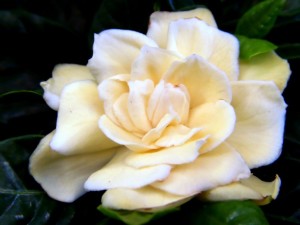
Tiare or Tahitian gardenia. Source: Kootation.com

Tiare or Tahitian gardenia. Source: Kootation.com

Cuir de Gardenia is unusual in that it has no top notes; I created it in such a way that the gardenia appears immediately, unimpeded from the opening of the perfume onward, merging seamlessly with the leather. The natural isolates ethyl phenyl acetate (reminiscent of a bunch of sweet peas) and the candy-like maltol contribute sweet and floral notes to the animalic base of the perfume.

Source: Fragrantica

Source: Fragrantica

Cuir de Gardenia comes in two concentrations: an extrait de parfum oil and a solid perfume. This review is for the former, the extrait de parfum. The perfume is classified on Fragrantica as a “floral woody musk,” while Ms. Aftel categorizes it as “dry woods.” According to Ms. Aftel, the notes are:

Middle: tiare (gardenia) absolute, jasmine grandiflorum absolute, benzyl acetate.
Base: castoreum, ethyl phenyl acetate, maltol.

It was interesting to smell Cuir de Gardenia merely in the vial. You are struck by an intense burst of heady, rich gardenia with hints of jasmine and a strongly animalic whiff.

Source: Chris Maher or "Artonline" at Deviantart.com. (Website link embedded within.)

Source: Chris Maher or “Artonline” at Deviantart.com. (Website link embedded within.)

The latter evoked two very different images in my mind. First, the smooth flanks of an animal covered in leather that has been burnished in lush perfumed oils. Second, the flanks of the human body, with the curve over the hips and slightly musky, satiny smoothness. There is something to both visuals, as Cuir de Gardenia is more than a mere floral scent. Still, there is no doubt that the main note is unquestionably gardenia. In the vial, it smells like a full-throttled gardenia or, more accurately, the essence of thousands of flowers distilled into a few, concentrated, precious drops. As a whole, Cuir de Gardenia is almost more of a mood and feeling than a mere scent.

It’s a different matter on the skin, at least at first. Cuir de Gardenia is an oil, and the first thing I was struck by when I applied it was the glistening, golden sheen it leaves on the skin. For me, smell of the oil initially acted as a barrier between the headiness of the flower that was so apparent from sniffing the vial. You have to give it a few minutes for the oiliness to dissipate and melt. Once the heat of your skin breaks it down, Cuir de Gardenia starts to show itself in all its multi-faceted richness.

North American Beaver via Wikipedia.

North American Beaver via Wikipedia.

Cuir de Gardenia opens on my skin with a fierce blast of strong castoreum musk, infused with the fresh gardenia flower, greenness, and a tinge of sourness. Depending on how much of the perfume you apply, the castoreum either leads the charge or comes in second place. When I applied a lot (about 3 big dabs of the oil), the muskiness was both intense and very animalic, verging almost on the feral. (You can read more about castoreum on Fragrantica, if you’re interested.) It made me think of how Ms. Aftel was reported to buy a very ancient, vintage stock of the beaver secretion from the estate of a former perfumer and how that ingredient is said to be such a part of her Secret Garden fragrance. I suspect the same stock was used for Cuir de Gardenia.

Source: freerangedairy.org

Source: freerangedairy.org

When I applied a smaller amount of the oil, the dominant impression for me was something else. I was struck by how Cuir de Gardenia felt more like a texture. Yes, there is the gardenia that is more moderately indolic and encased in a subtle warmth tinged with the castoreum’s musky, plush, velvety undertones. However, my main impression was rich, Devon clotted cream and butter. Cuir de Gardenia opens like floral butter, touched by a hint of sourness and green. The latter is an unexpected freshness that feels quite contradictory given how rich and ripe the flower can be.

Source: 123rf.com

Source: 123rf.com

I’m struck by the polarity and juxtapositions. Velvety petals that feel like buttered cream, next to dewy moisture and greenness. You have the gardenia on the stem in the early morning hours, but also the headiness of that same flower after it’s been plucked and its aroma has concentrated over time. None of it feels blowsy or decayed; there are initially no mushroomy undertones nor earthiness the way gardenia can sometimes manifest. Depending on quantity, it is either quietly lusty in its muskiness, or a little bit feral.

Ten minutes in, Cuir de Gardenia smells like buttermilk with its green, sour cream undertones. Deep in the base, there is a subtle whiff of something rubbery, but it’s more textural than anything black or leathered. It’s as if there were so much gardenia richness that it has coagulated and solidified into a hardened oil. I know I’m not doing a good job of explaining all of this, but that is because I’ve never quite encountered a gardenia like this one. For a perfume centered around one main note, there are a lot of unexpected, almost contradictory, complex facets in the opening hour.

Photo: onewomanshands.blogspot.com

Photo: onewomanshands.blogspot.com

I think that’s a testament to Ms. Aftel’s deft handling of the flower. It would have been all to easy for Cuir de Gardenia to be a simple, indolic, voluptuous gardenia. With all that richness, you’d almost expect a single-minded, typical gardenia. Instead, Cuir de Gardenia is one of those rare scents that somehow captures all the tiny, often disparate, layers to the flower actually growing in nature. What it isn’t is raunchy or dirty. This is a very different sort of “indolic” theme than what one usually encounters, one that is more musky than voluptuously narcotic on my skin.

And, in truth, Cuir de Gardenia’s headiness is a very quiet one. I’m not surrounded by an avalanche of gardenia; there is no nuclear-tipped cloud wafting around me, emanating a lavishly thick, voluptuous fleshiness. Cuir de Gardenia is much more restrained. I have to admit, I personally prefer my white flowers on the Wagnerian side, but there is no denying Cuir de Gardenia’s refinement. It is more akin to Vivaldi’s Four Seasons than to the Ride of the Valkyries, more Mozart’s Eine Kleine Nachtmusik Allegro than Beethoven’s Ninth or his Ode to Joy. None of that is meant as an insult. I love all those pieces, deeply, and I listen to Mozart more than I do to Wagner’s powerful “Apocalypse Now“- style piece, but there is no denying that there are distinct differences in style, tone, and mood.

At the end of 30 minutes, the perfume hovers an inch above the skin in a mix that is at once delicate, restrained, and rich. When you apply a larger quantity of Cuir de Gardenia, it adds another hour to the time frame before the sillage drops. In both cases, when smelled up close, the perfume is a massively concentrated hit of lush, buttery smooth gardenia infused with greenness and a tinge of buttermilk sourness. The gardenia is carefully placed upon a soft castoreum base that is very quietly musky, plush, velvety, and dark. Yet, there is very little of the animalic whiff that I detected when I smelled Cuir de Gardenia in the vial or that the perfume opened with when I applied a lot. The castoreum seems to have melted into the petals, having an indirect effect on the notes in a much more discreet manner. The whole thing is lovely, and I’m very impressed by the carefully calibrated balance.

"Dressage Black and White" by Diana Rose Greenhut or DianaExperiment on Flickr. (Website link embedded within.)

“Dressage Black and White” by Diana Rose Greenhut or DianaExperiment on Flickr. (Website link embedded within.)

You may have noticed that I’ve barely mentioned leather at this point. Well, initially, it didn’t show up on my skin in any discernible fashion. Then, suddenly, right at the 30 minute mark, things start to change. There is a muted impression of an ultra-expensive, high-end Hermès saddle which carries the tiniest lingering traces of the horse it had been on many hours before. There is something almost akin to civet in the animalic muskiness that is starting to stir on my skin. Lurking in the distance and at the edges are tiny flickers of notes that are simultaneously mushroom-y, earthy, vaguely chocolate-y, and nutty. It is undoubtedly due to the gardenia’s mushroom side combined with the castoreum. Whatever the cause, it adds dimension to what was previously and primarily a fresh-ripe, green-creamy floral bouquet.

The issue of the leather is perhaps the best evidence for how beautifully Cuir de Gardenia has been blended and the technical mastery involved. For the first hour, the leather never stays in one place on my skin, but moves throughout the notes like a very friendly ghost. Sometimes, he stops to say hello, and remains to chat for 4 or 5 minutes. Then, he drifts away to other worlds for a brief span, before popping back in. Every time I think he’s finally vanished, he waves a dark, friendly, leathered arm at you from the horizon. Then, suddenly, 90 minutes in, he decides to move in permanently. And he’s brought luggage with him! Suitcases filled with black smoke whose tiny tendrils wind their way up from their depths to slowly wrap their threads around the creamy gardenia. The leather ghost gives you a cheeky grin, puts his feet up, and is there to stay.

Yet, I want to emphasize that this is a very subtle, muted “leather” as a whole. It’s not the sort of leather that you have in fragrances like Etat Libre‘s hardcore, black Rien, the deeper, burnished brown leather of Puredistance M, the distinct leather of Parfums Retro‘s Grand Cuir, or the animalic leather of LM ParfumsHard Leather. The note here is more about an impression of leather. It is strongly infused with an animalic edge that sometimes feels a bit civet-like in nature, and it creates a subtle kinship to horsey leather. To be clear, though, the note is never fecal but is primarily just musky. Still, if you’re expecting a true, hardcore leather fragrance, you need to put those thoughts aside. Cuir de Gardenia is a spotlight on gardenia first and foremost. The flower merely happens to have a animalic leather undertone that distinguishes it from the traditional take on the note.

"Gardenia sketch" by Angel H. Juarbe on Fine Art America. http://fineartamerica.com/featured/gardenia-sketch-angel-h-juarbe.html

“Gardenia sketch” by Angel H. Juarbe on Fine Art America. http://fineartamerica.com/featured/gardenia-sketch-angel-h-juarbe.html

From the start of the third hour until its end, Cuir de Gardenia is a seamless blend of gardenia with animalic “leather” and musky touches. The smokiness lingers, but it becomes increasingly overshadowed by the warmth in the base that makes the gardenia more golden in feel. It is a skin scent on me at the 2.5 hour mark, but Cuir de Gardenia’s longevity is excellent. As an extrait or pure parfum, that is to be expected, but Cuir de Gardenia is also an all-natural perfume, so I was surprised when I noted Cuir de Gardenia lingering well after the 7th hour. All in all, with 3 big dabs, the perfume lasted just short of 11 hours on my perfume-eating skin. It was a mere whisper after the 6th hour that you could detect only if you put your nose right on your skin, but it was most definitely there. With a smaller quantity, Cuir de Gardenia lasted just under 9 hours.

As many of you know by now, Cuir de Gardenia has been a massive hit. Over 12 different bloggers have placed it on their Best of 2013 list, from The Perfume Shrine and The Non-Blonde to The Fragrant Man, Angela at Now Smell This, and many others. Out of the full reviews, I think that of The Non-Blonde is worth noting. On her skin, Cuir de Gardenia was more overtly sensual (or sexual?) than it seemed to be on me. Furthermore, her review includes a useful comparison between the extrait parfum and the solid:

Cuir de Gardenia, the new perfume from Aftelier tells the story of luxury, eccentricity, and sensuality. […][¶] This gardenia smells warm: warm from the tropical sun and sands as well as warm skin. The creamy aspect is also there, musky and sensual. This flower is unmasked by top notes. There’s nothing there to lighten the mood or make it go down easily. Instead, you get a journey from flora to fauna, as the creamy gardenia becomes fattier and more animalic and the perfume embraces the skin and wraps it an unmistakable buttery leather. […]

Cuir de Gardenia is offered as an extrait and a solid perfume, to keep the warmth and sensuality on skin-level. This perfume is pure decadence– you don’t want to send it into the stratosphere on a cloud of volatile alcohol molecules. I suspect that beyond the preciousness of the raw materials, a big sillage would have been just too much for polite company: this thing requires intimacy, which this format allows. Applied where it truly counts, Cuir de Gardenia is sweet and intense. I find it incredibly sexy in a very femme way, but then again, I’m all woman. Men who feel comfortable in dirty gardenia fragrances (from JAR Jardenia to Lutens Une Voix Noire) shouldn’t hesitate to try this Aftelier perfume in either form. The solid smells more animalic upon application but becomes smoother and almost honeyed after an hour or so. The extrait works for me in an opposite way– its true leather and castoreum nature becomes more pronounced with time. They layer beautifully, obviously, and last for at least six hours even when dabbed extremely sparingly.

Cuir de Gardenia was originally meant to be a limited-edition release, but the degree of the positive response has led Ms. Aftel to make the perfume a permanent part of her line, and to also offer it in a new 1/4 oz (about 7.4 ml) extrait bottle. It’s not cheap at $195 (or $240 for the solid), but you really need to keep in mind just what we’re talking about here: real gardenia, not a synthetic recreation through other notes. As I’ve mentioned a few times, gardenia is one of those flowers whose aroma cannot be easily captured through distillation of its petals. When you smell “gardenia” in a perfume, you’re usually smelling some combination of tuberose, jasmine, or synthetics. A fragrance made purely from actual, genuine gardenia is incredibly rare.

Tiare. Source: wahinewednesdays.com

Tiare. Source: wahinewednesdays.com

The Fragrant Man offers insight on yet another difficult aspect of using gardenia, especially when it’s the Tahitian kind called tiaré:

[Ms. Aftel’s Cuir de Gardenia] is a breakthrough moment for gardenia ‘fume lovers. The issue with gardenia oil is that when it leaves its heated homeland the scent changes to ‘off’ or more precisely, indolic at the unpleasant end of the spectrum. It is unstable when taken out of its natural tropical environment. We are talking about Tiare here, the gardenia that is native to Polynesia so my guess is that Tahiti or New Caledonia is probably the source. In these islands the local people make manoi oils. Tourists are often charmed by the scent of these oils until they arrive back home. This has happened to me. […] Manoi oil is coconut oil usually blended with the Tahitian gardenia known as Tiare but also with frangipani, ylang ylang and vanilla, in an enfleurage type process. Coconut oil is the carrier fat for the scent.
Ms. Aftel has found a way around all that, while also avoiding synthetics and gardenia substitutes. The result is a fragrance that seems to drive many men and women wild. (You can read The Fragrant Man‘s proper review of the scent, subtitled “Olfactory Orgasm,” which not only includes links to all the other reviews out there, but also has a discussion on the role of antique castoreum in recreating the leather note.)

There are a few other male bloggers who also fell hard for Cuir de Gardenia. In the case of The Black Narcissus, his immediate, instant reaction to Cuir de Gardenia was so extreme that the usually elegant writer could barely get the words out:

STOP THE PRESS! AFTELIER PERFUMES’ CUIR DE GARDENIA EXTRAIT IS GORGEOUS

the perfume, just deliciously arrived in my postbox: immediately, for me, knee weakening. not gardenia, as in gardenia,… tiare:a tropical, moist, neptunian, sultry white witch emerging, hair slicked to shoulders, from the sea. sweet Italian bubble bath honey. cuir: but fresh.tango’s eminently wearable younger sister, unencumbered

Photo: Chris or "Rapt in Roses" on Flickr. (Website link embedded within photo.)

Photo: Chris or “Rapt in Roses” on Flickr. (Website link embedded within photo.)

I liked Cuir de Gardenia a lot, but it was more quiet and restrained on my skin than I had expected. It is infinitely creamy, but I think I like my white flowers to show more skin, to ooze ripened sexuality like a heaving bosom on a courtesan. In other words, I like my big white flowers to be narcotically BIG WHITE FLOWERS, Wagner and Valkyrie style.

Yet, it’s hard not to be impressed and a little bit seduced by a more tasteful, refined take when it is as rich, buttery and multi-faceted as Cuir de Gardenia is. The perfume is a study of paradoxes — paradoxes which are perhaps the best and truest manifestation of the flower in nature that I have ever encountered — but done with an ingenuous animal twist. The whole thing is intellectually fascinating, but Cuir de Gardenia is also a testament to pure skill. You can’t be a niche perfumista today without hearing about Ms. Aftel’s role as the professor, alchemical wizard, and pioneer of all-natural perfumery. You hear it, but you may not really understand it fully until you try something like Cuir de Gardenia.

Or, in my particular case, her Chef Essences which I have to say here and now blew my foodie mind in such a way that my eyes rolled back in my head, and I was considering engaging in lewd acts with the bottle. (Well, not quite, but… close. I was certainly molesting the bottle of Ginger Essence in full disregard of the instructions on the stated quantity, and I was pretty much drooling on both myself and my food. The degree of my reaction, amazement and disbelief over those genius fragrant oils cannot be stated enough, and they will be the subject of a review sometime in the next 2 weeks, once I finish my cooking tests. Those Chef Essences…. Good God!) If Cuir de Gardenia didn’t arouse quite such an intense reaction in me, it is only because I care about food much more than I do about perfume. Gastronomy is my first love, while perfume is perhaps my fifth, so don’t misinterpret my tone. I think Cuir de Gardenia is very pretty, even if it isn’t really very “me.” It is also, without a doubt, masterfully done.

I think that anyone who passionately adores their lush, big white flowers should give Cuir de Gardenia a sniff. Those who normally fear white flower bombs would probably enjoy it as well, given the perfume’s intimate restraint and refinement. At the same time, the animalic side and suggestion of leather make Cuir de Gardenia a fragrance that men can pull off. The perfume’s low sillage also means that it is something you can wear to work, though I personally think Cuir de Gardenia feels far too special for such mundane, daily events. My only note of caution is for those who are accustomed to more commercial, traditionally sweet, or conventional florals. If you’re not used to castoreum, I don’t know how you will respond to Cuir de Gardenia’s very animalic muskiness. 

All in all, I think Cuir de Gardenia would be perfect for a date night, or an evening when you want to discreetly tantalize. It is delicate sensuality done with great refinement. 

Disclosure: My sample was courtesy of Aftelier Perfumes. That did not impact this review. I do not do paid reviews, my opinions are my own, and my first obligation is honesty to my readers.

DETAILS:
Cost & Availability: Cuir de Gardenia is exclusive to the Aftelier website, and is available in 3 different sizes. There is a 2 ml mini of Pure Parfum extrait for $55; a new 1/4 oz bottle (about 7.4 ml) of the Extrait for $195; or a 0.25 oz of solid perfume in a handmade, sterling silver compact for $240. Samples are available for $6 for a 1/4 ml vial. Ms. Aftel ships worldwide, and you can find further information on her FAQ page. 

Yosh Sombre Negra: Dark Shadows

Source: Wall321.com

Source: Wall321.com

Deep in the heart of the forest, where the sun never shines, there is a campfire surrounded by mighty trees. All around it, as far as the eye can see, there is vetiver forming a peaty, green carpet. It clambers up the trees, covering even the branches with a vista of green. In that clearing, though, the smoke burns as black as a panther, smelling of both the piney trees around it and of incense. Tarry and leathered, it merges with the vetiver to send a smoke signal up to the sky, announcing the arrival of “dark shadows.” But this is not Joseph Conrad’s Heart of Darkness and you should not be fooled by what’s on the surface. If you peer really hard, you can see small spots of colour: cloved umber, patchouli brown, mint, honeyed yellow, iris grey suede, and soapy white. It’s Sombre Negra.

Source: Barney's.

Source: Barney’s.

Sombre Negra (“Dark Shadow”) is an eau de parfum from the San Francisco perfumer, Yosh Han. Sombre Negra was the first in her darker line of perfumes called “M,” and has a very confusing history. It was initially a limited-edition fragrance created in 2010 exclusively for Luckyscent, and centered around dark, mushroom notes like “choya loban,” teak, cypress, vetiver and tobacco.

Then, in 2011, she made a second version that she reportedly called “M:001 Sombre Negra.” It’s completely unclear to me whether this version is also exclusive to Luckyscent. Reading Luckyscent’s description very carefully and with literal interpretation, one might think it was and that there were still two versions out there. It doesn’t help that the description for Sombre Negra on some other U.S. retailers (like Barney’s) references the old notes. I emailed Ms. Yan a few days ago to obtain clarification on the issue, but have not yet received a response.

To me, it simply doesn’t make sense that the new version remains a Luckyscent exclusive, or that there continues to be two different perfumes with the same name. Everyone who has tested Sombre Negra from late 2011 onwards seems to be talking about the second Version 2.0 with its different notes and smell. Moreover, Yosh fragrances are carried throughout Europe, and I highly doubt all the European perfumistas who talk about the new, more patchouli and clove-centered fragrance are universally obtaining their samples from Los Angeles’ Luckyscent. 

So, I’m going to assume that Version 2 has completely replaced the original, limited-edition 2010 Luckyscent exclusive. You should too, but be aware that any discussions of Sombre Negra dated before the end of 2011 are referencing a very different fragrance, one that was reportedly much darker, earthier and smokier. This review is for the new, updated post-2011 version. [UPDATE 2/3/14 – Ms. Han has confirmed that all the vendors currently selling Sombre Negra, whether in Europe or America, are selling the new version. “Lucky Scent was the only retailer to carry the original. The M:001 version is available to everyone.”]

Yosh’s website has no individual page for Sombre Negra that I can quote for its (current) description or notes, so we have to rely on Luckyscent‘s old entry:

Please note, this is a newly re-imagined Sombre Negra.
Perfumer Notes: ”I launched a Limited Edition Sombre Negra exclusively with LuckyScent in 2010. That fragrance to me was dark and edgy. Very dense. I wanted to explore the idea of shadows and their mutations so I decided to create a new edition of Sombre Negra. The new M:001 Sombre Negra incorporates citrus top notes that reflect a flash of lightening – a spark of fire that quickly vanishes but casts new and elongated shadows. Rose, tonka and orris were added to give it some depth and fullness. Nutmeg and cumin give the fragrance a kind of vegetative musk and suede element to an otherwise smokey and leathery fragrance. It is still very masculine but Sombre Negra is also the ‘boyfriend fragrance’ that women are falling in love with and keeping for themselves.

[Notes]: Vetiver, patchouli, cedar, olibanum, pink pepperberry and black peppercorn, clove, juniper, citrus, nutmeg, cumin, tonka and orris root.

Source: science.nationalgeographic.com

Source: science.nationalgeographic.com

I think Sombre Negra‘s opening is absolutely fantastic. It is a sinewy, hefty, opaque burst of peaty vetiver, campfire smoke, cloves, honey, and pepper. Trailing behind is an utterly mesmerizing, perfectly balanced, tarry aroma that is simultaneously fresh, piney, resinous, and infused with birch tar smoke. I wouldn’t be surprised if the “juniper” note in the listing were really a reference to cade oil, which is a distillation of the prickly juniper and has a particularly smoky, phenolic character. Whatever the source of the tar, I love how it plays off the peaty vetiver and the smoke.

Peat bricks in an outdoor fire. Source: freeirishphotos.com

Peat bricks in an outdoor fire. Source: freeirishphotos.com

That smoke, that smoke… my God, it’s beautiful. It’s exactly like the smell that you’d get from a campfire outdoors, but there is also incense in there as well. What makes it my favorite part of the fragrance is the way it has the most minuscule drop of honey in it, along with tobacco and leather facets. I’m guessing that those are the indirect result of the patchouli which pops its head up 5 minutes into Sombre Negra’s development. Initially, it is a subtle note that is more woody, sweet, and tobacco-like than green, but traces of the patchouli’s mentholated side are skulking around in the corners.

The whole thing is utterly glorious, and feels like a distant, non-floral, 5th cousin removed from Amouage‘s Tribute Attar. They have the same fantastic smokiness, though the Sombre Negra is more complex than an attar centered around incense and rose. Yet, Sombre Negra has its own floral component, too. The iris appears after 7 minutes, though it is a dry, rooty kind. There seemed to be a brief pop of rose, too, but both flowers are quickly overshadowed by the mint note that bursts on the scene. Whether it stems from a fresh, Haitian kind of vetiver or from the patchouli, I have no idea, but the wintergreen doesn’t really seem to fit in for me.

Tar pit bubbles. Source: Los Angeles' La Brea tar and asphalt pits. tarpits.org

Tar pit bubbles. Source: Los Angeles’ La Brea tar and asphalt pits. tarpits.org

Sombre Negra is becoming smokier, darker, and more leathered with every minute. Its tarry blackness has a distinct oily quality to it, perhaps from the undiluted, pure patchouli. Visions of oil slicks and the La Brea tar pits float around my head, alongside the image of that campfire deep in the heart of a vetiver forest. There is a muted pop of yellow from a lemon, but it’s gone in an instant. Much more noticeable, however, is the growing influence of the clove which lends big splotches of brown-umber to the colour palette. It’s spicy, deep, but also smooth and warm, and it works beautiful with the patchouli. Unfortunately, at this point in the game, the patchouli isn’t my favorite sort with its chewy, toffee’d, spiced, sweet, smoky brownness, but a very green kind. Not even the cloves can counter the growing presence of slightly camphorated mintiness that is wafting off my arm.

Art by: LordmOth on Deviant Art. (Click on photo for website link embedded within.)

Art by: LordmOth on Deviant Art. (Click on photo for website link embedded within.)

As a whole, Sombre Negra in the opening 10 minutes is a panoply of somber, dark elements, just as the name suggests, but I find a playfulness underlying it. I haven’t the foggiest notion of why. All I can say is that Sombre Negra feels like an oddly cheerful, whimsical take on blackness. Perhaps it is due to the spicy warmth of the cloves, mixed with the touch of honey (where is it coming from?!) and the dangling, distant suggestion of some sweetened warmth.

It only takes another 5 minutes for the perfume to turn smoother and softer, as the more intense elements are slowly tamed. The cloves grow stronger, but there is also a hint of powder that starts to flit about. The tobacco, tarry, and oily elements retreat, the iris steps forward, and the green patchouli moves to stand next to the vetiver on center stage. The menthol and mint remain, but, to my sadness, that beautiful, honey-tipped campfire smoke is slowly dissipating and thinning out. So is the peaty quality of the vetiver. Soon, Sombre Negra’s primary bouquet is a green vetiver-patchouli duo, infused by cloves, light cade smoke, faintly powdered sweetness, and iris.

Source: wallpaperswide.com

Source: wallpaperswide.com

The smoke is now a thin tendril that ties all the elements to each other, instead of that dense, deep, powerful wall of Sombre Negra’s start. It’s all lovely, but it isn’t quite as spellbinding as the opening minutes with its multi-faceted complexity. However, the thinner, reduced amount of smokiness will probably be a very good thing for most people, as I suspect some may find the opening 10 minutes difficult if they’re not accustomed to that degree of blackness. Certainly, Sombre Negra is a more approachable, moderated scent after 40 minutes as a whole, and it just gets mellower with every passing half hour. I’m not so enthused about that, but then, I’m someone who adores the intensity of Amouage’s Tribute.

Patchouli. Source: womenworld.com.ua

Patchouli. Source: womenworld.com.ua

There are subtle changes that begin to occur after Sombre Negra’s forceful beginning. 30 minutes in, the sillage drops, the perfume lies an inch above the skin, and Sombre Negra feels much thinner, though it is still very rich when smelled up close. 40 minutes in, the traces of leather that were so noticeable in the beginning now lurk only on the periphery. Instead, an iris-driven suede starts to become very noticeable. It’s all very pretty and soft, a nice addition to the vetiver-patchouli with its mint and quiet campfire smoke. Then, alas, 70 minutes in, Sombre Negra turns into a skin scent. If I dab on a lot, I can push that time frame to a little over 90 minutes, but Sombre Negra never projects much on me. I have to wonder what would happen if I had a spray sample, as aerosolisation definitely increases sillage.

Haitiian vetiver grass. Source: astierdemarest.com

Haitian vetiver grass. Source: astierdemarest.com

Skin chemistry is key in all this and, as you will see later, I’m not the only one who thinks that Sombre Negra may be wildly different depending on how your skin handles particular notes. It explains my greatest problem with Sombre Negra’s second stage and subsequent development. I’ve noticed that, on occasion, my skin takes vetiver — at least the fresh, green kind that is usually the Haitian sort of vetiver — and runs with it. The note becomes amplified to the detriment of much else around it, overpowering the other elements, and changing what is (on everyone else’s skin) a more balanced creation. I think that is the case here with Sombre Negra because, for the majority of its lifespan, the fragrance is green vetiver first and foremost, from top to bottom. Other elements exist, fluctuating in various degrees over the next few hours, but few of them are in proportion or change the primary vetiver bouquet. Either way, it’s a green show, not a black, smoky one. I’m rather crushed.

Source: Dreamstime.com Royalty Free stock photos

Source: Dreamstime.com Royalty Free stock photos

The one exception to the “Vetiver Supercedes All” situation is the olibanum or myrrh. Unfortunately, here again, we have another note that my skin handles oddly. On most people, olibanum translates as the smell of incense, though a cool, white sort of smoke that is usually described as “High Church.” On my skin, however, 8 out of 10 times, olibanum/myrrh = soap. Pure soap. And I am not a fan of soapiness…. With Sombre Negra, the myrrh first pops up 2.5 hours in as a subtle soapiness, and it just grows from there. Meanwhile, the patchouli fades away, the cloves retreat to the sidelines, and the iris’ suede and powder tonalities become these ghostly things that only occasionally pop up to chirp “hello.” Unhappily for me, the mint remains, which may be merely another side of the vetiver or it may stem from the patchouli. As a whole, Sombre Negra becomes a thin, gauzy blend of vetiver, followed by mint, olibanum soap, and cade campfire smoke.

Source: bioloskiblog.wordpress.com

Source: bioloskiblog.wordpress.com

It becomes even simpler from there. At the end of the 4th hour, Sombre Negra is primarily vetiver with a little soapiness and campfire smoke. At the start of the 6th hour, it is soapy vetiver and there it remains until its very end when it finally fades away as an abstract, nebulous sort of woody cleanness. All in all, Sombre Negra lasted just under 12 hours on my skin, with the majority of its time as vetiver with soapiness. If you’re one of those people for whom olibanum manifests as actual smoke, then you can read that as “vetiver incense” instead. I was not so fortunate.

The skin-determinant issue of the vetiver is something that was noted by another blogger as well. My friend, the sultry Victoria of EauMG had a similar experience with Sombre Negra. Her review reads, in part:

Sombre Negra smells pitch black, smoky, and caliginous. [¶] Sombre Negra opens as a smoky vetiver with earth. The smoky vetiver and slightly damp earth/mushrooms are held together by warm, masculine spices. It really is both damp and dry; I find this interesting. Soon an animalic leather appears that reminds me a little of the base of Tom Ford Tuscan Leather. It’s a mossy, cade leather. The leather is bound to the vetiver with masculine, overcast spices. The dry-down is dark, masculine, spicy with tonka and leather. […][¶]

I really recommend wearing this on the skin (I do with all scents, but especially with this one). On my skin, the vetiver is very pronounced and the rest is incense and leather. I seriously get vetiver from top to bottom. On others they seem to be getting more patchouli or woods. I think all versions sound good, but this one really seems to adapt to the wearer’s skin.

Sombre Negra has above average projection and longevity.

For The Scentualist, Sombre Negra is one of those fragrances that isn’t for the masses, but one which he finds to be an enchanting, dark delight that has become his second favorite incense fragrance. His positive review reads, in part:

Sombre Negra shines with a double personality, being at the same time ubiquitous and ethereal, two features that are not at hand for the majority of olfactory creations.

From the first moments subsequent to spraying some whiffs of Sombre Negra onto my wrist, I was able to detect a beguiling aroma of smoke (due to incense), juxtaposed, in no longer than one minute, to a note of myrrh that was simply divine. Then, as the top notes vanished and Sombre Negra was entering slowly into its mid development and finally the dry down, a pervading aroma of frankincense (olibanum) was filling my nostrils with joy. In the end, I loved especially the fact that, opposed to the majority of incense-based fragrance, Sombre Negra manages to deliver this fascinating note without being too conspicuous about it (like in Olibanum from Profumum, for example). [¶][…]

Overall, this is one of my favorite fragrances, which made Sombre Negra into the second spot (side by side with Keiko Mecheri’s Oliban) of my incense benchmark.

As Victoria of EauMG noted, Sombre Negra seems to change with the wearer’s skin, and that explains why she got vetiver from top to bottom while The Scentualist experienced incense.

Source: philiphartiganpraeterita.blogspot.com

Source: philiphartiganpraeterita.blogspot.com

For the same reason, accounts vary on Fragrantica, too, where reports range from campfires and gasoline, to chocolate-nutmeg woodiness or even a resemblance to a chypre. A few examples, from both men and women:

  • On my skin (female) I got alot of smoke, too much at first, which faded after an hour to reveal a manly chypre with a little smoke on top. For me this is a very masculine frag, I find it sexy in a subtle way. If it were on my man I would want to nuzzle into his neck. I thought it unremarkable at first but I couldn’t stop smelling it and wanting to wrap up into it like a blanket. I get no cloves or incense. On me it is a chypre with subtle smoke and subtle woods and some kind of manly musk under it that I am very attracted to. Sexy but not overt, not groundbreakingly different but it doesn’t obviously have to be, just simply done right. […] for me, just perfectly subtle sexy, gets you without you even knowing it. purrrr.
  • A bit masculine, although it is marketed as unisex. There are 2 versions of this and I have the latest. By the looks of the notes I would say the recent version is toned down a bit from the first (no tobacco). This settles into a woody, vaguely chocolaty nutmeg concoction after a rip snorting patchouli cedar vetiver opening.
  • Sombre Negra is fantastic. It’s smokey with clove and unmistakably manly. I love it.
  • Man up! […] smoke and spice stars in this action flick that we know as sombre negra. Like Django unchained, this will either offend or will be praised. Personally, I think this is a 5 star general.
  • This is masculine indeed and only for black scents lovers, just like having a patch of gasoline moving with you like a ghost (talking about the latest version, tobacco note gone) fizzling sizzling dark patchouli combo…. [¶] Colonnel Kurtz signature scent…
Terre d'Hermès ad. Source: Parfumo.net

Terre d’Hermès ad. Source: Parfumo.net

One commentator saw Sombre Negra to be a dark, woodier version of Hermès‘ Terre d’Hermès, writing:

I wonder if there are any fans of Hermes Terre out there who wished Jean Claude-Ellena could produce a darker version of his smash hit. A “Terre Noire” if you like. Well, this is what I imagine “Terre Noire” would be like!

With Sombre Negra we take the path away from the bright citrus orchards and into the dark, dank forest and explore the earthy side of the Terre notes. Yippee! This, for me, is a dream come true my friends. All the notes are there – Patchouli (lots of it), pepper, cedar and vetiver – but they are amped up and complemented by a favourite of mine (and this is the clincher): CLOVES! Oh yes, my fellow clove lovers, if you dig cloves then you must try this.

As the first medicinal waft of cloves hit my nostrils this was love at first sniff. It was like Yosh had taken all my favourite notes and made a fragrance just for me. Just a pity the sillage and longevity and moderate and we’re down to skin scent within three or four hours. However, this bold, distinctive, sassy, sexy perfume really deserves your attention. Check it out. (Note: this review refers to the newly reformulated version of Sombre Negra).

Source: quotes-pictures.feedio.net

Source: quotes-pictures.feedio.net

Another commentator had even more difficulty with the sillage and longevity, though, for him, Sombre Negra bore a resemblance to Caron‘s Yatagan:

The opening notes reminded me of Yatagan. After 30 minutes, it changed, and a slight sweet side was felt. It was very good, but not long-lasting, after 3 hours was almost gone.

At night I changed to Yatagan, so I could compare. They are different.
Yatagan is champagne brut.
Sombre Negra is demi-sec.    [Formatting changes to the line-by-line writing done by me for space reasons.]

The version that everyone is describing sounds amazing, and I have to confess that I’m deeply envious. My skin simply didn’t want to comply, though I have to repeat how much I loved the opening moments of Sombre Negra. I suspect that brief stage is pretty much what everyone else is experiencing throughout. If that is the case, then I cannot recommend Sombre Negra enough to those who love truly dark scents.

However, I must emphasize that this is a scent best suited to perfumistas who appreciate smoke, vetiver, cloves, and the true sort of dark patchouli. If you don’t like any of things (and I know some people who struggle deeply with vetiver, while others despise cloves), then Sombre Negra probably won’t be for you.

I also think the perfume skews masculine, though women who love dark perfumes will thoroughly enjoy it. Victoria of EauMG brought up Bvlgari Black, and while I haven’t tried it, I know enough about it to say that she’s right in putting Sombre Negra in the same category. However, by all accounts, Bvlgari Black is a very rubbery scent with leather, gasoline and tobacco notes on a vanilla base. Sombre Negra is not rubbery and, in my opinion, the presence of those other elements are extremely tangential. Instead, the core is centered on vetiver, olibanum, and patchouli, with a dash of cloves and iris. Nevertheless, the point is, if you’re a woman who likes Bulgari Black, then you may appreciate Sombre Negra as well. It definitely has the same dark, smoky feel to it.

All in all, Sombre Negra would be a great fragrance on the right skin, and I think it is very well done indeed.

DETAILS:
Cost & Availability: Sombre Negra is an eau de parfum that only comes in 50 ml bottle and costs $130 or €130. The Yosh website does not have an e-store. In the U.S.: you can buy Sombre Negra from Luckyscent, and that is the one place where you’re guaranteed and certain to get this current version. I’m truly not sure about which version other US retailers carry. They include Barney’s (which lists the old notes of “choya loban,” but that’s probably just an outdated description) and b-glowing (which offers 15% off your first order if you subscribe). There is also a San Francisco store called Veer and WanderOutside the U.S.: In Canada, Yosh is carried at The Perfume Shoppe, but Sombre Negra is not listed amongst their offerings when I clicked on the Yosh category. However, oddly enough, the company does have a separate listing for Sombre Negra that came up in a Google search. You should check with the company for availability. In the UK, I couldn’t find a retailer. In Paris, you can find Sombre Negra at Colette which also sells it via their e-shop. Germany’s First in Fragrance sells Sombre Negra for €130, with a sample for €7, and they ship world-wide. Essenza Nobile also carries Sombre Negra and ships world-wide. In the Netherlands, Amsterdam’s Perfume Lounge carries the Yosh line. In Dubai, Yosh is carried exclusively at Saks Fifth Avenue. In Russia, I think it’s available at iPerfume, but the Cyrillic translation doesn’t make it totally clear to me. For all other locations, you can look up a vendor near you on the Yosh website. It’s not easy to navigate and does not have separate pages, so I cannot give a specific link directly to their Stockist page, but they list a few retailers from Belgium, Italy and Germany, to a handful in Asia. Samples: You can obtain a sample from Luckyscent. Surrender to Chance does not have Yosh fragrances, so another alternative is The Perfumed Court which sells Sombre Negra starting at $3.99 for a 1/2 ml vial.