Naomi Goodsir Bois d’Ascese: Monks & Georgia O’Keeffe

Source: Bonfirehealth.com

Source: Bonfirehealth.com

It’s twilight, a few stars shimmer in the horizon, and the skies’ purple hues are tinged by the slowly seeping, oncoming wave of darkness. The forest already feels blackened, and the tall trees stand guard like sentinels at Nature’s chapel. They surround the campsite where a large bonfire crackles and hisses. There is the driest of black smoke, and the scent of charred trees with an almost tarry, leathered edge. From the ground to the trees, the drought has struck; everything is so dry, there is fear that an errant spark would set the whole forest ablaze. And, in fact, the smell of the cade tree logs burning in the bonfire would probably alarm Smokey the Bear. Yet, amidst the scent of a forest burnt to a cinder, there is a subtle ambered sweetness underlying the dry smoke. It’s subtle, but it’s there — a tiny, golden ember at the heart of the forest’s smokiest bonfire.

That’s the aromatic, nutshell essence of Bois d’Ascese, a woody-incense perfume from the Australian milliner, Naomi Goodsir. Bois d’Ascese was one of two fragrances released in 2012 by the house in its first foray into the aromatic arts, and both are eau de parfums created by Julien Rasquinet. Like its sibling, Bois d’Ascese (or Ascetic‘s Wood) was received with great appreciation and praise, but I’m afraid I’m a little underwhelmed. Bois d’Ascese is a well-crafted fragrance with intentional starkness and almost sculptural minimalism, but it never really moved me. I tried it twice because I really wanted to love it, but I’m afraid it was far too severe. I tend to be a sybarite in my perfume tastes, not a monk who seeks extreme austerity.

Source: Enquire.it

Source: Enquire.it

Naomi Goodsir’s description of Bois d’Ascese is beautifully evocative:

a secluded CHAPEL,
BLAZING dusk,
moment
of GRACE,
DIVINE smoke,
silent CANTIQUE.

by Julien RASQUINET

Incense woody (2012)
A captivating & reassuring smoke. Notes of tobacco & whisky, are supported by cinnamon, amber & cistus labdanum. Oakmoss, smoked cade wood, almost burnt, prolong the incense of Somalia with power & elegance.

Photo: Narinder Nanu via washingtonpost.com

Photo: Narinder Nanu via washingtonpost.com

Bois d’Ascese opens on my skin with smoked cade and charred wood, infused with dry incense. It’s the scent of campfires taken to the extreme, with singed trees about to go up in flames or that have already burnt to the ground. Cade is an interesting note which is sometimes used in leather fragrances. It comes from prickly juniper shrubs, and the essential oil is often called Juniper Tar as a result. It has an intensely dark, smoky, and tarry aroma, due to something called phenols and creosol. On occasion, cade oil even has a turpentine-like undertone. Here, with Bois d’Ascese, the cade — in all its various manifestations — is the fragrance’s dominant note from start to finish. It’s austere, intense, blackened, tarry, stark, and with a smoky nature that is underscored even more by the dry incense.

However, Bois d’Ascese also has other touches, subtle though they may be. Underneath the burning cade, there is a tinge of dry sweetness, but it’s infinitesimal in the opening minutes. Also lurking in the base are light flickers of tobacco, though they feel charred like everything else. After about five minutes, there is a subtle touch of burnt wax which I assume stems from the labdanum, infused by the burning campfire smoke, but it quickly fades away. Eventually, after about forty minutes, the fragrance turns a little less severe. The tobacco grows a tiny bit stronger, the ambered warmth starts to rise to the surface, and Bois d’Ascese feels a little richer. It’s all relative, however, and a question of degree.

Georgia O' Keeffe, "Deers Skull with Pedernal" Source: wikipaintings.org

Georgia O’ Keeffe, “Deers Skull with Pedernal” Source: wikipaintings.org

All these changes are but mere blips in the overall landscape which, by and large, is that of a forest set on fire. Yet, despite the scent of burnt wood, the overall dryness of the scent is such that I keep visualising a parched, dry desert. In specific, I see Georgia O’Keeffe paintings with their bleak, stark, barren, desiccated beauty. There is a dryness to Bois d’Ascese that feels like the subject of her paintings, as well as the way that certain notes are presented in sharp, unrelieved focus. Unlike the paintings, however, there is no light to offset the dark smokiness at the perfume’s core, though the Bois d’Ascese is very airy in weight. In fact, in its dark severity, the fragrance takes on an aesthete’s harshness that is almost medieval in nature and quite evocative of a monk. I realise that I’m mixing metaphors and genres, but the fragrance conjures up both things for me. The bottom line is an austere dryness that is both artistic and, for me, off-putting.

Source: layoutsparks.com

Source: layoutsparks.com

At the end of the second hour, the incense shifts a little, taking on a subtle, soapy aspect in the undertone, much like myrrh, but not quite as High Church as that note can sometimes be. That tiny, brief hint of myrrh’s soapiness fades in and out, however, never dominating the main type of smoke from the incense and campfire wood. There is a slight increase in the amber sweetness, but on a scale of 1 to 10 with “10” representing bone-stark woody dryness, Bois d’Ascese has merely dropped down to a 8.95. Eventually, around the end of the sixth hour, it drops down further to about a 7.5 on the numeric scale, as the incense grows slightly warmer and a touch sweeter. I smell no whisky, oakmoss or cinnamon, and the tobacco was a minor touch that largely faded after the first hour.

Source: Theatlantic.com

Source: Theatlantic.com

Bois d’Ascese lasts for hours and hours on my skin. Its core nature of burnt wood with campfire smoke never, ever changes, not even after 11 hours. All that really happens is that the incense gets a microscopic hint of amber, and that the smokiness eventually overtakes the tarry, slightly turpentine-like, slightly leathery cade as the primary note around the end of the seventh hour. All in all, Bois d’Ascese lasted 11.5 hours on me with a small dose, and well over 13.75 hours with a larger quantity. It is generally somewhat thin and gauzy in feel, without an opaque heaviness or richness, and its projection is moderate.

Anthony van Dyke, "Portrait of a Monk" via Wikipaintings.org.

Anthony van Dyke, “Portrait of a Monk” via Wikipaintings.org.

Bois d’Ascese is perfectly nice, and absolutely elegant in its minimalism, but it’s not for me. Judging by Naomi Goodsir’s description, it seems as though Bois d’Ascese was intentionally meant to be austere, severe and sternly smoky, so I certainly can’t blame it for that. I can only blame my own tastes for needing something more nuanced, complex, rich, deep, and warm. I love incense fragrances, but nothing quite so severe and puritanical. Apart from visions of a burning forest, Smokey the Bear having a fit, and campfires, Bois d’Ascese also conjures up dark, Flemish 17th-century art and Georgia O’Keeffe desert paintings. The actual smell of the perfume may belong in the first group, but the spartan, monastic, completely desiccated feel of the fragrance visually evokes the second category for me. In fact, I suspect that Anthony van Dyke’s medieval monk (along with many of the Spanish Inquisitors) would have greatly appreciated Bois d’Ascese. That said, the fragrance is well-done, and I think those who love hardcore smoke or incense fragrances should absolutely check it out.

Bois d’Ascese is generally appreciated by men and women alike. The reviews on Luckyscent, on Fragrantica (even the opening one referencing mesquite smoke), or on various Basenotes threads are largely very positive in nature. Bloggers seem to feel the same way. Take, for example, Kevin from Now Smell This whose review I stumbled upon after writing my comparison to Georgia O’Keeffe’s paintings, and who, I was delighted to see, also thought of New Mexico. (Georgia O’Keeffe’s paintings are set in New Mexico). His review reads, in part, as follows:

Bois d’Ascèse conjures one of my favorite places — northern New Mexico; the fragrance creates a dry, austere, pungent scene. Willa Cather was on my mind as I wore this fragrance (I’m reading her letters) and […] Santa Fe, Ranchos de Taos, and Acoma, Isleta and Laguna pueblos.

… As Bois d’Ascèse develops, quickly, it begins to smell like an outdoor scene: a dry valley full of baking stones and adobe houses, junipers oozing sap. The aroma of incense (or a piñon-fueled campfire) is on the wind. Up close Bois d’Ascèse is intense (and long lasting); but its sillage is sweeter and gentler. In the extreme dry-down, a malty note emerges with some amber.

Within ten minutes of application, Bois d’Ascèse settles into a linear, smoky wood/incense perfume…where it remains for hours. I enjoy the fragrance, but I would have liked more layers of development and some unexpected “pops” from that campfire. Bois d’Ascèse’s main ingredient is either one helluva tenacious accord or a super-powerful single ingredient. A flower, strong, assertive, would have been welcomed somewhere in Bois d’Ascèse: a lily blooming in the adobe’s court yard, perhaps? Marigold would be heavenly. A fistful of pungent desert herbs/leaves? I layered Bois d’Ascèse with a mimosa fragrance oil I own and love the result. Bois d’Ascèse reminds me of Boadicea the Victorious Explorer, but it’s even more “bleak.” (That is not a put-down by the way!)

I agree with almost every part of his assessment, though I don’t like Bois d’Ascese the way he does. But, yes, for me, the fragrance absolutely needs something a little more to alleviate its severe linearity and its arid, New Mexico desert feel.

Despite the general praise for Bois d’Ascese, a tiny minority find the scent is too much like a smoking campfire or charred woods, and really dislike it. For example, on Fragrantica, some of the extremely rare, critical reviews read, in part, as follows:

  • I’ve tried both fragrances from this house and I am impressed with the creativity and the longevity/projection. However I also found them to be disturbing. As in please get this off me now. [¶] This One: Industrial smelling. Like freshly greased tools picked from a tool box. Cold with no sweetness and nothing to comfort you. [¶] This is unique but not elegant in anyway. I can’t believe someone would even try to dress this up.
  • I have a neighbor who burns crappy wood (like pallets), often wet, and garbage in his damned outdoor fire pit. That’s what this stuff smells like. The few spices and other notes are overwhelmed by wet smokiness that’s astonishingly persistent. I’ve washed my hands repeatedly and still can’t get rid of the scent. If you want to smell like you spent the night sweating next to a bonfire you’ve found your perfume. If you don’t, there are a million really good incense perfumes out there–keep looking. A suggestion to the brand: perhaps change the name from Ascetic’s Wood to Flagellant’s Wood? Seems more like the experience.

I had to laugh at the description of “Flagellant’s Wood,” because I think there is great truth in it, as my repeated monk references demonstrate. (Some of Opus Dei’s numeries might want to give Bois d’Ascese a go….) Though there are a handful of other comments similar to those quoted above — and all involving a struggle with the charred cade smoke — the bottom line is that they’re outweighed at least 3:1 by those who absolutely adore the fragrance. One person even calls it “meditative” in its smoky beauty, and, on some levels, he’s right.

In short, Bois d’Ascese is a very particular kind of fragrance, and it may not be for everyone. However, if you enjoy woody scents that skew somewhat masculine and that are completely dominated by a very elegantly severe, austere, dark, tarry smokiness, you definitely should give it a sniff. If you love campfire scents, Bois d’Ascese may even be true love for you. I shall stick to something a little more sybaritic and luxurious in nature.

DETAILS:
Cost & Availability: Bois d’Ascese is an eau de parfum that is available only in a 50 ml/1.7 oz size, and which retails for $150 or €110. The Naomi Goodsir website doesn’t have an e-boutique from which you can purchase the perfume directly. In the U.S.: You can purchase Bois d’Ascese from Luckyscent and MinNewYork. Both sites sell samples. Outside the U.S.: In Europe, you can purchase Bois d’Ascese for €110 from France’s Premiere Avenue, or from Germany’s First in Fragrance. In Paris, you can find it at the Nose boutique; in Denmark, at Nagpeople; in the Netherlands at ParfuMaria; and in Russia, at Ry7. In Italy, you can turn to Alla Violetta which also offers samples for sale. In Australia, Peony Melbourne carries the Naomi Goodsir line, and sells Bois d’Ascese for AUD$179. For all other countries, you can use the Naomi Goodsir Retailers list to find a vendor near you. Samples: I obtained my vial from Luckyscent, which sells samples for $4 for a 0.7 ml vial. You can also order Bois d’Ascese from Surrender to Chance where prices start at $8.99 for a 1 ml vial.

Serge Lutens Santal de Mysore

A taste of India. It’s hard not to talk about food when discussing Santal de Mysore, Serge Lutens‘ dark, gourmand tribute to that rare, precious Indian wood. Once abundant, Mysore sandalwood is so depleted and protected that it might as well be extinct for everyone but perfumers with the deepest pockets. In the case of Santal de Mysore, I think some clever olfactory alternatives have been used to recreate the dark, deep, spicy, smoky smell of Mysore sandalwood in a fragrance that is as much about food as it is about the precious wood.

The special, limited, and cheaper, 50 ml anniversary issue.

The special, limited, and cheaper, 50 ml anniversary issue.

Santal de Mysore is an eau de parfum that was created with Lutens’ favorite perfumer, Christopher Sheldrake. It was released either in 1991 or 1997, depending on what you read, and the only reason that is significant is because a special anniversary 50 ml bottle seems to have been issued at some point in time. The bottle is significantly cheaper than Santal de Mysore’s usual bell jar form, and is even discounted further on a few online retail sites. Normally, however, Santal de Mysore is considered one of Serge Lutens’ non-export Paris Exclusives that is only available at his Paris headquarters or at Barney’s in New York.

The Bell Jar form available from Serge Lutens.

The Bell Jar form available from Serge Lutens.

On his website, Lutens gives a brief description of the fragrance that hints at its notes and makes explicit its extremely spiced nature

What incredible sandalwood!

This scent takes spices to the limit – they nearly cry out against the sandalwood base. One perceives saffron and, strangely enough, wild carrot. 
Sweetness paves the way for a blast of heat!

The perfume notes are, as always, kept secret but the list — as compiled from LuckyscentFragrantica, Barney’s, and the Lutens statement — seem to include:

Mysore sandalwood, cumin, spices, styrax balsam, caramelized Siamese benzoin, saffron, cinnamon, rosewood, and wild carrot.

Baghali Polo. Source: Cooking Minette.

Baghali Polo. Source: Cooking Minette.

Santal de Mysore opens on my skin with a burst of spices. There is light curry, followed by leathery burnt styrax resin with a charred caramel aroma, saffron, a slightly herbal note that smells exactly like buttered dill, and a touch of sweetened carrots. I’m actually a little surprised by how the much-maligned curry note, noticeable as it is, feels so light. Perhaps a better description is to say that it doesn’t smell of the stale, cumin, body odor that I had so feared, or of really potent, yellow curry. Instead, for me, the strongest aroma is actually hot buttered dill and, specifically, a dill pilau or rice dish in Persian cuisine called Baghali Polo (or sometimes, Sabzi Polo). (There is a recipe for Baghali Polo with lovely photos at Cooking Minette.) Santal de Mysore is more than 75% Baghali Polo on my skin, right down to the little blob of melted saffron butter that some chefs put on top of mound. I really couldn’t believe it, but there is absolutely no doubt at all in my mind of the similarities.

Styrax resin via themysticcorner.com

Styrax resin via themysticcorner.com

There is a spicy wood note underlying it all, but it doesn’t smell like Mysore sandalwood to me. I’ve stopped hiding the fact that I’m a complete sandalwood snob, but that has nothing to do with it in this case. Santal de Mysore doesn’t smell of sandalwood in its opening minutes primarily because the curry, herbal, spiced accords overwhelm everything else in their path. This is a primarily a food fragrance on my skin, not a woody one.

Five minutes in, the styrax’s burnt, blackened aroma becomes less harsh, and the resin takes on a slightly tamer aspect. Now, it merely smells very dark, chewy, and balsamic, with sweetened leather, caramel and smoke swirled in. Flickers of cinnamon and saffron dance quietly at the edges, adding a spicy richness to the woody foundation, but I still think that this is “Mysore sandalwood” only by virtue of being built up by additives, instead of the real thing. My belief is underscored by a very definite whiff of something synthetic in the base which gives me a tell-tale pain behind my eye each and every time I take a very deep sniff up close. 

Ebanol via Givaudan.

Ebanol via Givaudan.

So, I looked up sandalwood aroma-chemicals, and I would bet that Santal de Mysore uses Ebanol. Givaudan describes it as follows:

Olfactive note:

Sandalwood, Musk aspect, Powerful

Description:

Ebanol has a very rich, natural sandalwood odour. It is powerful and intense, bringing volume and elegance to woody accords and a diffusive sandalwood effect to compositions. Ebanol is highly substantive on all supports.

Javanol via Givaudan.

Javanol via Givaudan.

Givaudan also sells something called Javanol, and there are elements of something similar to its description which pop up at the final stages of Santal de Mysore. Javanol‘s description reads:

Olfactive note:

Sandalwood, Creamy, Rosy, Powerful

Description:

Javanol is a new-generation sandalwood molecule with unprecedented power and substantivity. It has a rich, natural, creamy sandalwood note like beta santanol.

I don’t know about Javanol due to the “rosy” description given above, but I wouldn’t be surprised if Santal de Mysore contained Ebanol. For one thing, the woody note in the fragrance smells extremely synthetic, but also dark and powerful. For another, have I mentioned just how rare it is for a fragrance to have true Mysore sandalwood these days? Finally, there is a support from another skeptic, Tania Sanchez. In her book with Luca Turin, Perfumes: The A-Z Guide, she diplomatically and tactfully writes:

Sandalwood oil from Mysore, India, was for a long time both fairly cheap and gorgeous — which is probably why it was overharvested to the point of needing government protection. I have a small reference sample of the real thing, with its inimitably creamy, tangy smell of buttermilk. I have no idea if Santal de Mysore manages to use any of it or if it depends on the Australian sandalwood (totally different plant and material) or synthetics, because it aims to cover any gaps with an overpowering coconut-and-caramel accord reminiscent of Samsara, a tropical fantasy of rum in oak barrels for armchair pirates.

I don’t smell coconut and I personally don’t see the similarities to Guerlain‘s Samsara, but I fully agree that Christopher Sheldrake must have sought to cover the gaps created by the use of synthetics in Santal de Mysore’s base by adding an overpoweringly strong spice and food element as a supplement. I may be a sandalwood snob, but that doesn’t change my impression that the “Mysore sandalwood” aroma is an artificially created construct, and it smells like it.

It takes less than 20 minutes for Santal de Mysore to start to shift. The fragrance softens, and drops in projection surprisingly quickly on my skin. Yet, it’s still very potent — even a little sharp — when smelled up close. It’s an intense bouquet of dill, buttered rice and light herbal, cumin curry, followed by saffron, sweet carrots, and chewy, gooey, thickly resinous black sweetness atop a base of spiced, synthetic woods. It’s odd, unusual, very foodie, interesting, somewhat appealing, and somewhat off-putting — all at once. By the 90-minute mark, the green, herbal spiced elements feel even stronger as the styrax’s slightly leathery, burnt caramel aroma continues to soften.

Dried fenugreek leaves via Suhana.co.in

Dried fenugreek leaves via Suhana.co.in

I have to wonder if there is fenugreek in Santal de Mysore, along with something like dried leeks. There are whiffs of something in the fragrance that very much resemble bottles I have of both herbs in my kitchen. Whatever the specifics, the “curry” in Santal de Mysore smells to me like something green in nature, more than spicy red or yellow. To be specific, it’s more along the lines of a Saag than a Korma or Rogan Josh curry made with a possible Garam Masala base. The cumin is there, lurking below, but I truly don’t think it’s as predominant as the more herbal, green curry elements. Even stronger is the burnt caramel aroma that is perhaps the first real thing you smell from a distance.

By the end of the second hour, Santal de Mysore turns creamy, smooth, and much better balanced in terms of its spices. There is almost a floral nuance to the deep woods, but the synthetic element remains as well. On some spots on my arm, it’s even a little sharp. Around the 3.5 hour mark, the herbal notes feel almost solely like fenugreek and dried leeks, rather than the earlier buttered dill rice. The dominant bouquet, however, is of cinnamon mixed with burnt caramel. Santal de Mysore’s sillage drops even further, and the fragrance now floats a mere inch above the skin.

Source: samsunggalaxy.co

Source: samsunggalaxy.co

The perfume’s final dry down begins near the middle of the sixth hour. Santal de Mysore finally — finally — smells primarily of the eponymous woods in its title. It’s rich, deep, smoky, sweet, dark, and beautifully creamy. The woods are now the sole star of the show, though they coat the skin like a veil. The sandalwood probably isn’t real, given the way the woods smelled so synthetic earlier on, but the overall effect is definitely that of Mysore woods. I feel like singing Etta James’ famous song, “At Last.” The lovely drydown continues for another three hours or so, until the fragrance finally fades away as sweetened woods. All in all, Santal de Mysore lasted just shy of 10.25 hours on my skin, with moderate sillage that turned quite soft after a few hours.

How you feel about Santal de Mysore will depend on a few things: your thoughts on curry and cumin, and your patience. Whether your read the comments on Fragrantica or that of samplers/buyers on Luckyscent, it’s always the same issue. For many people, the fragrance is simply too foodie, with curry being the main problem. For a few, it’s the burnt caramel that is the issue. For others, however, the fragrance’s final drydown is worth it, and they urge patience with the early notes, arguing that they are short in duration and quickly mellow into beautiful sandalwood. To give one example, a Luckyscent commentator wrote:

i wish i could afford jugs of this stuff. it is a tricky one, though! at first, it smells gourmande — curry, black pepper, and butter. delicious to eat, but not so great to smell liek a kitchen. oooh, but wait for it… if you are a sandalwood lover, it is worth the wait. and you don’t have to wait long! on the skin, it mellows out (and warms up!) really quickly. the harsh foodie smells dissipate in maybe 5 minutes, and then the silky road down sandalwood lane begins. this sandalwood is deep, warm, rich, and buttery. it is maybe 2:1 sweet:spicy as sandalwood goes. but you know how some sandalwoods are lovely, but kind of mixed up with vanilla or amber scents? this one is subtly more smokey, spicy, and just enough of a sour or a bitter touch to balance out the sweet buttery parts so that they are not overwhelming. this is a rich, deep sandalwood, as long as you are not turned off by the weirdness of its first few minutes.

There are numerous opinions on the other end of the spectrum, however, and they are probably best represented by this Fragrantica review:

Great scent if you’re… an Indian chef ;), as it smells exactly the same as curry. Disturbing cloud of heavy cumin and nose-drilling curcuma. No trace of sandalwood or benzoin whatsoever. Literally spicy scent that is harsh and nauseating at the same time. A big no-no..

I’m afraid that Santal de Mysore isn’t for me. I simply don’t like foodie scents in general, and I would have great difficulty walking out of the house smelling of either Persian Baghali Polo or Indian Saag. If it were merely a matter of minutes, I could deal with it, but it was hours and hours on my skin. You may have substantially better luck, but, in all cases, you have to be able to withstand the curry aspects of the opening stage. If you’re one of those people who is utterly phobic about cumin in all its possible manifestations, then I would advise staying away from Santal de Mysore. If you love sandalwood above all else, and enjoy gourmand scents, then you may want to exercise some patience and see how things develop on you. One thing is for certain, Serge Lutens and Christopher Sheldrake truly give you an olfactory carpet ride to India.

DETAILS:
General Cost & Discounted Sales Prices: Santal de Mysore is an eau de parfum that comes in a discontinued 1.7 oz/50 ml size and in a 75 ml bell jar size. The retail price of the small 50 ml bottle is $200, while the bell jar costs $300 or €135. However, Santal de Mysore is currently discounted at FragranceX which sells Santal de Mysore for $164.50, and Bonanza which sells it for $167.57. Parfums1 sells Santal de Mysore for $180, with free U.S. shipping and no tax. 
Serge Lutens: Santal de Mysore is offered only in the bell jar version on the U.S. and International Lutens website (with other language options also available), and costs $300 or €135. 
U.S. sellers: Santal de Mysore is available in the 1.7 oz/50 size for $200 at Luckyscent and Beautyhabit. It is available in the $300 bell jar version from Barney’s with the following notice: “This product is only available for purchase at the Madison Avenue Store located at 660 Madison Avenue. The phone number for the Serge Lutens Boutique is (212) 833-2425.”
Outside the U.S.: In Canada, you can find Santal de Mysore at The Perfume Shoppe for what may be US$200, but I’m never sure about their currency since it is primarily an American business with a Vancouver store. They also offer some interesting sample or travel options for Lutens perfumes. Elsewhere in Europe, it’s extremely hard to find the old 50 ml bottle, leaving your only real option to trek to Paris to get the bell jar. I couldn’t find any UK retailers. However, France’s Premiere Avenue has the 50 ml bottle and sells it for €106. I believe they ship world-wide, or at least through the Euro zone. In Australia, the 50 ml bottle of Santal de Mysore is sold on BrandShopping for AUD$160.95 and on HotCosmetics for AUD$217. In Russia, I found what appears to be SergeLutens.Ru which sells Santal de Mysore in the 50 ml bottle, but I don’t think Serge Lutens has a Russian website. It’s clearly a vendor of some kind, though. 
Samples: You can test out Santal de Mysore by ordering a sample from Surrender to Chance where prices start at $3.99 for a 1/2 ml vial. There is also a Five Lutens Bell Jar Sample Set starting at $18.99 where you get your choice of 5 non-export Paris Exclusives with each vial being a 1/2 ml. 

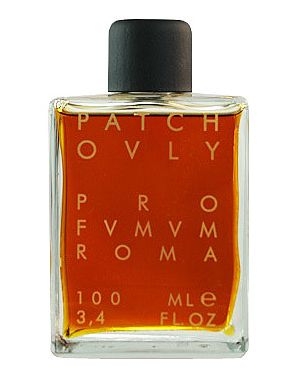
Profumum Patchouly & Santalum

Simplicity done in the richest, most concentrated way possible seems to be the signature of Profumum Roma. It is an Italian niche perfume house founded in 1996, and commonly called Profumum by most. (The name is also sometimes written as “Profvmvm,” but, making matters more complicated, the company puts it as “Pro Fvmvm” on their website, skipping the “Roma” part entirely). As regular readers will know, I’ve become utterly obsessed with Profumum’s fragrances, after trying their two great, incredibly rich ambers, Fiore d’Ambra and Ambra Aurea. I ended up falling hard for the latter with its gorgeous, rare, salty, expensive ambergris. In my opinion, it is the best, richest, and most luxurious amber fragrance around.

I think Profumum is a shamefully under-appreciated house, so I’ve become determined to go through their line and draw some attention to their fragrances. Last time, it was the turn of Acqua di Sale. Today, it’s time for Patchouly and Santalum, fragrances which focus, respectively, on patchouli and on sandalwood. One of them is absolutely lovely. The other, alas, was not, and is my first big disappointment from the line.

PATCHOULY:

Patchouli is one of my favorite notes when it is dark, chewy, and somewhat dirty. These days, however, the patchouli used in perfumery is usually the purple, fruited sort. I’m not a fan, to put it mildly, so it was with some trepidation that I approached Profumum’s soliflore. What I found was a callback to the past, an utterly glorious, hardcore, seriously dark patchouli that felt as rich as a thick, six-inch brownie infused with resins, caramel and nuttiness. A long time ago, when I was 14, my signature scent was a fragrance from the French jewellery house, Ylang Ylang. The eponymous fragrance was a visual feast of black, gold, and brown, redolent of black patchouli and incense, golden amber, and spicy brown sandalwood. For decades now, I’ve been searching for a scent to replicate that old favorite, only to fail again and again. Profumum’s Patchouly is not it, either, but the opening twenty minutes came so close, I could have cried.

Profumum PatchoulyPatchouly is an eau de parfum that was released in 2004. Profumum‘s website describes the fragrance and its notes very simply:

Remote regions of my unconscious are in turmoil.
I hardly hold the emotions that overcome me,
like memories of antique pleasures.

Patchouli, Amber, Sandal, Incense.

The description from Luckyscent also references memories and antiques and, in my opinion, is generally quite on point in its characterisation of the scent:

A devastatingly rich and earthy take on patchouli that fully exploits its profound and powerful nature. Amber helps bring out its irresistible, chewy sweetness that is just this side of narcotic, sandalwood accentuates its warm heart and incense wraps it all in a veil of intrigue. This is like opening a forgotten trunk found in the attic of an old manor, and discovering a bewitching mix of memories and treasures. The scent of warm, dry wood envelops you as a honeyed swirl of memories flit about like smoke. Deep and evocative.

"Fading Flower" by Hani Amir via Fotopedia.com

“Fading Flower” by Hani Amir via Fotopedia.com

Patchouly opens on my skin with a blast of blackness. Dark, chewy, dirty, smoky patchouli with a bite of black incense. It’s followed by ambergris, an expensive, rare element that seems to be the signature base of so many of Profumum’s Orientals, and whose unique, special characteristics differ so widely from that of the usual “ambers” on the market. Here, the ambergris has a musky, salty, earthy, slightly mushy, and faintly sweaty aroma with a caramel undertone. It adds to the rich, resinous, chewiness of the patchouli.

The two notes create an earthy funk but, to me, it never smells of 1970s hippies and “head shops.” Actually, to be totally honest, I’ve never been quite sure what exactly the term entails. It’s often used to describe a certain kind of dark patchouli, but I’m too young or too square to know about the whole ’70s drug culture. Though I’ve been in modern, Bohemian, hippie, counter-culture shops that had patchouli, crystals, incense, tie-dye garments, and other things, this is not the same sort of smell that wafted about there. The patchouli here is dark, yes, but it’s far too infused with ambergris’ sweet and salty goldenness to be a true ’70s, dirty, skunky funk.

Source: footage.shutterstock.com

Source: footage.shutterstock.com

Though Patchouly is essentially a simple soliflore — a fragrance focusing on one primary element — there is more going on under the surface. A spicy undercurrent lurks about in those opening minutes, almost as if cloves, black pepper, and perhaps chili were added to the notes. I’ve found that Profumum’s notes are not always complete, so it’s quite possible there are spices tossed into the mix as well. Further down below in the base is a subtle touch of leatheriness, though it feels more like a subset of one of the resins than any actual leather. The whole thing adds up to a mix that is smoky, spicy, sweet, salty, earthy, and chewy, all at once.

The glorious, dark funk of the patchouli doesn’t last long. Unfortunately for me, ten minutes into the Patchouly’s development, the hardcore nature of the note is soon weakened and diffused by the increasingly prominent ambergris. It softens the beautiful chewiness of that black patchouli, infusing it with a salty, nutty, caramel, satiny richness.The smokiness of the incense recedes to the edges, as does much of the momentary spiciness of the opening. Thirty minutes in, the primary, dominant note in Patchouly is the salty, musky, caramel-sweet ambergris. The fragrance feels a lot like Profumum’s Ambra Aurea, only mixed with patchouli and a hint of incense. 

Source: wallpaperswa.com

Source: wallpaperswa.com

As time passes, the ambergris takes over completely. It’s a disappointment, but perhaps understandable. Patchouli doesn’t have the best reputation as a note, given that whole “head shop” thing of the past. Consequently, keeping it within the warm embrace of an amber cocoon prevents it from being too overwhelming for people, the majority of whom do not like a dark, dirty version of the note. Still, I personally would have preferred that both the patchouli and the incense not weaken quite so fast. I’m sure everyone else, however, will be thrilled by that.

At the 1.25 hour mark, Patchouly turns, soft, gauzy, and blurry around the edges. It is still extremely potent up close, but the fragrance is more diffused in weight and feel. It floats about like a golden-black veil about 3-4 inches above the skin, wafting a chewy, musky, caramel amber with streaks of patchouli. It’s still dense and earthy, but not quite in the same way or for the same reasons. And it’s far too golden, sweet and nutty to feel truly dark. By the start of the fourth hour, Patchouly is primarily an amber and musk fragrance, only lightly tinged with its eponymous note. The fragrance smells like sweet, warmed flesh that is a tiny bit musky from time in the sun or from exertion. Patchouly has essentially melted to create a “my skin but better” bouquet of musk atop a base of rich, satiny, caramel ambergris. It remains that way until the very end, almost 11.75 hours from the perfume’s start.

I think Patchouly is a beautiful fragrance, especially for those who are leery of true, hardcore patchouli scents and who prefer something softer or tamer. It is an incredibly rich, luxurious, long-lasting fragrance that I think is extremely sexy. However, the extremely close similarities to Ambra Aurea may make Patchouly feel a little redundant for anyone who owns the other Profumum fragrance. I happen to have a large decant of Ambra Aurea, and that is the only thing stopping me from yearning for an immediate bottle of Patchouly.

There aren’t a ton of blog reviews for Patchouly out there. Perfume-Smellin’ Things has a short paragraph on the scent which Marina also liked a lot:

An expansive, full-bodied patchouli scent with generous helpings of sweet amber, velvety sandalwood and a dry, dark incense note that, from the middle stage on, seems to overwhelm the aforementioned amber and wood and to rule the blend alongside patchouli. I liked this one a lot. I am not sure I will be buying a bottle, I am not that big a fan of patchouli and will never be able to finish a 100ml jug…I must also add that it layers wonderfully well with Fiori d’Ambra and Acqua e Zucchero, adding to them the depth and the va va voom that both are missing.

People seem to detect different notes underlying that patchouli. On Fragrantica, the note had a chocolate nuance on some people’s skin. Others talk about the ambergris, or note some vanilla in the base. For one blogger, Nathan Branch, the fragrance had a medicinal opening, though he thought the Profumum scent was the best of a number of patchouli fragrances that he tested:

Profumum Patchouly: leaps out of the gate as a no-nonsense, take no prisoners medicinal patchouli. Your average sweet and floral perfume lover will be startled by the high-pitched mint & mothball breath of Profumum Patchouly and flee to seek comfort and solace elsewhere. True patchouli aficionados, however, will be thrilled. Includes amber, sandalwood and incense ingredients (the incense is especially nice), but these are added sparingly and only show up much later in the game. […] In summation: Profumum Patchouly is the most genuinely patchouli-ish of the bunch, graced with a nice incense afterburn

If you’re tempted by the fragrance, but have lingering trauma from the ’70s, perhaps this Fragrantica review from “MsLeslie” will reassure you:

Ever since 1967, when I was a run-away teenager in the Haight Ashbury trying [and failing] to be a flower child, I have loathed the nasty, oily, musty smell of patchouly exuding from the bodies around me. And I have avidly avoided patchouly ever since.

Or at least I did until I received this amazingly gorgeous Patchouly from Profumum Roma in a grab-bag of samples from the Perfumed Court a few months ago.

THIS patchouly is irresistable! It is rich, deep, intense, complex, with a strong redeeming sweetness that balances out the musty quality. 

This is a beautiful scent!

It really is! Absolutely lovely, and a must-sniff for anyone who loves real patchouli.

SANTALUM:

Profumum SantalumSandalwood is one of my favorite notes, so I was incredibly excited to try Profumum’s eau de parfum tribute called Santalum. Released in 2003, Profumum describes the scent as follows:

Scented votive fumes rise to the sky.
Flower garlands, statues and columns everywhere.
Carpets and drapes have been prepared.
The warm and humid air diffuses
the scent of the sacred forest.
The ceremony has started…

Sandalwood absolute, Myrrh, Spices

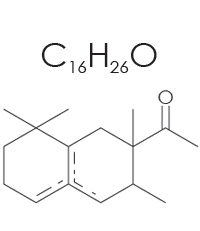
Santalum was a disappointment from the start. Those of you who are regular readers have christened me a “sandalwood snob,” and while it is absolutely true, it is not the reason for my enormous irritation with the scent. Well, not the main one, at least. The problem, for me, is that Santalum is a synthetic, ISO E Super hot mess. The fragrance opens on my skin with a medicinal, oud-like undertone, followed by incense, hints of powdery sweetness, and spices. The wood is rich and creamy, sweet and smoky. It’s lightly dusted by cinnamon and a hint of cloves. Within minutes, the powdery element overtakes the oud-like overtone, but also weakens some of the fragrance’s smokiness. There is a strong resemblance to Crabtree & Evelyn‘s now discontinued, vintage, 1973 fragrance, Sandalwood.

ISO E Super. Source: Fragrantica

ISO E Super. Source: Fragrantica

Then, the ISO E Super kicks in. At first, the synthetic only faintly resembles ISO E Super, and is merely a dry, woody aroma. In exactly 9 minutes, however, the note shows its true colours, and starts to make my head throb. Something else lurks in the base, too, a synthetic approximation of sandalwood that isn’t even that terrible, ersatz, fake Australian version that so many fragrances have come to rely upon these days. Santalum turns more powdery, though it is still creamy, lightly smoked, and faintly imbued with a quiet spiciness. At the end of the first hour, the fragrance is a vague approximation of “sandalwood” with large amounts of synthetics and ISO E Super, light dashes of cinnamon, hints of incense, and powderiness — all atop a slightly ambered base.

Source: the3dstudio.com

Source: the3dstudio.com

Santalum remains that way until its very end. The levels of cinnamon, powder, and incense fluctuate, weakening over time, but the strongly synthetic undertones are a constant. The only real change to the fragrance is in its feel. It takes less than 90 minutes for Santalum to turn sheer, airy, and very light in weight. It’s a surprise for a Profumum scent, given their usual richness, concentrated, dense feel. Still, to be fair, there are occasions when the fragrance wafts by in the air around you, and it is quite pretty, but it’s something that is much better smelled from a distance. By the end of the fourth hour, however, Santalum is a faded, blurry, abstract haze of creamy woods with a light undertone of synthetics, powder and cinnamon atop an ambered base. It only vaguely smells like “sandalwood,” and I’m talking about the ersatz kind, not even the real Mysore one.  All in all, the fragrance lasted just over 8.75 hours, with generally soft sillage throughout.

By all accounts, Santalum has been reformulated from a dark, rich, woody, myrrh fragrance into something that is significantly lighter and more powdery. I have no idea if the fragrance was always such a synthetic bomb, but I do know that I’m not the only one who was disappointed with the existing version. On Fragrantica, the most recent review is from 2012 and states:

This is not the best use of sandalwood in perfume. I got a lot of camphor-like notes (oud?) in the opening and what I suspect is Austalian sandalwood, much different and greener than the wonderful Indian sandalwood,that is beautifully woody and resinous. then comes plastic, along with some powder. this smells similar to Crabtree and Evelyn’s sandalwood gift set, so if you like powder with your sandalwood, you may like this. Longevity was about 3 hours.

Other reviews from 2012 also reference the powderiness of Santalum, along with yet another comment about a “medicinal” nuance to the scent. As a whole, the comments reflect either qualified, hesitant “liking,” or actual disappointment. Older reviews, in contrast, are much more positive and talk extensively about the fragrance’s myrrh, incense, and amber. On Luckyscent, one commentator wrote:

I bought Santalum about a year ago and really enjoy the richness and warmth of its scent. I bought another bottle this year and was disappointed in the re-engineering done to the product. It’s dark ambery appearance has been replaced with a slightly off-color yellow. The product’s scent is lighter now and much of the richness of its former rendition is no longer present to my nose.

Clearly, something has changed — and not for the better. One doesn’t have to be a sandalwood snob to find the fragrance disappointing, but, even if you like powdery “sandalwood,” I think there are probably better versions out there for the price. In my opinion, the current version of Santalum isn’t worth it.


DETAILS:
PATCHOULY Cost & Availability: Patchouly is an Eau de Parfum that only comes in a large 3.4 oz/100 ml bottle which costs $240 or €179. Profumum unfortunately doesn’t have an e-shop from which you can buy their fragrances directly. In the U.S.: Patchouly is available at Luckyscent, and OsswaldNYC. Outside the U.S.: In the UK, Profumum perfumes are sold at Roja Dove’s Haute Parfumerie in Harrods. Elsewhere, you can find Patchouly at Switzerland’s Osswald, Paris’ Printemps store, Premiere Avenue in France (which also ships worldwide, I believe), France’s Le Parfum et Le Chic (which sells it for €185), the Netherlands’ Celeste (which sells it for €180), and Russia’s Lenoma (which sells it for RU16,950). According to the Profumum website, their fragrances are carried in a large number of small stores from Copenhagen to the Netherlands, Poland, France, the rest of Europe, and, of course, Italy. You can use the Profumum Store Locator located on the left of the page linked to above. Samples: Surrender to Chance carries samples of Patchouly starting at $4.99 for a 1/2 ml vial. You can also order from Luckyscent.
SANTALUM Cost & Availability: Santalum is an Eau de Parfum that only comes in a large 3.4 oz/100 ml bottle which costs $240 or €179. Profumum unfortunately doesn’t have an e-shop from which you can buy their fragrances directly. In the U.S.: Santalum is available at Luckyscent, and OsswaldNYCOutside the U.S.: In the UK, Profumum perfumes are sold at Roja Dove’s Haute Parfumerie in Harrods. Elsewhere, you can find Santalum at Switzerland’s Osswald, Paris’ Printemps store, Premiere Avenue in France (which also ships worldwide, I believe), Le Parfum et Le Chic (which sells it for €185), the Netherlands’ Celeste (which sells it for €180), and Russia’s Lenoma (which sells it for RU16,950). For all other locations from Copenhagen to the Netherlands, Poland, France, the rest of Europe, and, of course, Italy, you can use the Profumum Store Locator to find a vendor near you. Samples: Surrender to Chance doesn’t carry Santalum, but you can order from Luckyscent at the link listed above.

Amouage Tribute Attar: The Devil’s Elixir

Amouage TributeWhat sorcery is this?! What dark magic created such a devil’s elixir? It’s simply cruel to make something that smells this good, and make it so expensive. It really verges on the sadistic.

Those were a few of my thoughts as I tried Tribute, an attar from Amouage. A reader of the blog, “Dubaiscents,” whose generosity is only surpassed by her thoughtfulness, sweetness, and kindness sent me a sample of the divine scent. Tribute seemed to by-pass most of my normal analytical skills, going straight for the jugular, and triggering an atavistic, primal, wholly incoherent desire to dive headlong into a pile of old leather jackets topped by a blanket of roses in a tarry birch woodshed filled with frankincense smoke. Honestly, the thought that hit me from the start was that Tribute was Darth Vader’s perfect rose — and I mean that in the absolute best way possible.

Source: all-wallpapers.net

Source: all-wallpapers.net

One can’t explain Tribute without first taking a small detour into what constitutes an “attar.” Attars (or ittars) are concentrated perfume oils made from natural botanicals and without using an alcohol as a base. As Wikipedia explains, the process goes back thousands of years in the Middle East and India, whereby the essential oils left from distilling flower petals, woods, and herbs are often distilled down further into a base, then aged. The site, Broken Earth Naturals, explains the difference between attars and essential oils:

Source: Broken Earth Naturals.

Source: Broken Earth Naturals.

Traditionally Attars are similar to essential oils in that they are distilled using water or steam and are the pure oils taken from the distillation of botanical material. Attars are different from essential oils because Attars are usually herbs and flowers, or even woods and resins which are being distilled into a base oil such as sandalwood. These distillates are then allowed to age for varying amounts of time. Some attars are aged for only 20 days while others may be aged for many years. Like fine wines, when properly stored, attars grow in perfection.

An even more technical, detailed explanation of the process is available at Bio-Bytes, which seems to imply that paraffin is used nowadays to compensate for the lack of real sandalwood oil as a base.

Amouage’s Tribute attar does not have the traditional sandalwood base, but the process which has been followed is the ancient one and seems to include the aging process as well. In a press release quoted by Now Smell This, Amouage describes Tribute as follows: 

Combining with frankincense in graceful accord, the subtle majesty of saffron forms with it the top chord of the fragrance, and heralds the transition into an elaborate and powerful range of floral heart notes, chief among which are Jasmine and Rose Taifi.

Once it reaches full maturity, warm, richly spiced base notes such as leather, tobacco, cedarwood, patchouli and vetiver emerge to round out the fragrance, creating a gentle but powerfully intriguing finish that harks back to the traditional use of attars by ancient healers and prophets, who employed them to enhance moods, and uplift the soul.

Tribute was released in 2009, and Fragrantica says that it was made with the help of perfumers from Grasse, France. According to Luckyscent, its notes include:

Rose Taifi, Jasmine, Saffron, Frankincense, Cedarwood, Tobacco, Leather, Patchouli, Vetiver.

Elsewhere, I’ve seen other ingredients mentioned as a part of the scent, from Cade and Juniper (which is where cade oil comes from) to Birch Tar. As the Perfume Shrine explains, all three notes are common sources in perfumery for a certain kind of leather aroma. To me, Tribute is all about the birch tar and not about the more piney nuance that I associate with juniper, so I strongly agree with Mark Behnke who, in an article for Fragrantica, talked repeatedly about the birch tar aspect to the attar’s leather facade.

The concentrated nature of attars — and those from Amouage in specific — lends to some caution in application. I’d read repeated reports that a mere drop of Tribute could last well over 24 hours in duration, a fact commonly pointed to as a justification for the perfume’s incredibly high price for an incredibly tiny bottle. Given my wonky skin, I decided to go a little wild, live on the edge, and apply two mediumish drops. By the end of the day, I had wished I had doused myself in the oil, as Tribute simply gets better, and better, and better….

Source: wallpaperfo.com

Source: wallpaperfo.com

Tribute opens on my skin with a burst of birch tar, cedar, rose, frankincense smoke, saffron, leather and patchouli. Each note is crystal clear for a second, hanging in the air like a bell, and, yet, part of a greater, gloriously well-blended sum total at the same time. Within seconds, however, certain notes converge to dominate, and to create the impression of a rose taken to the woodshed where it is surrounded by black leather set on fire with tar and dark incense. It’s all done in the best, darkest, dirtiest, smokiest way possible. As those two, small, satiny drops of dark, thick oil melt further into the skin, the birch tar rises like Darth Vader breathing blackly from the bowels of frankincense and leather. You can almost hear him heavy-breathing in the corner as the rose turns into smoky leather. Swirls of blackness abound all around, from the incense to the phenolic, tarry birch so beloved by the Russian cossacks of old for their leather. Cedar circles around the vortex, adding a woody touch to the smoky elements. And, behind the dark clouds, lies the shining ruby light of the rose.

Photo: Jon Gonzo on Flickr. (Site link embedded within photo.)

Photo: Jon Gonzo on Flickr. (Site link embedded within photo.)

Like black-garbed knights, the notes in Tribute follow in a definite progression of strength in those early moments. General Birchtar leads the troops, carrying the leather banner loudly and proudly, with frankincense as his roaring second in command. Lieutenant Cedar follows, then the Sargeant Taif. The rose is beefy, concentrated, and blackened, but a touch spicy, too, thanks to the fiery saffron. The remaining elements bring up the rear in a much more indistinct form, though the patchouli occasionally pops up to make his voice heard. Only the jasmine is a no-show at this point.

Source: wallpaper-source.com

Source: wallpaper-source.com

I love the rose in Tribute, simply love it, especially at the end of twenty minutes when it becomes much more pronounced. I’m generally not one to go crazy about rose notes, but this one is simply beautiful. If flowers were meat, the Taif rose in Tribute would have the refinement of Filet Mignon, but the large, thick feel of a Porterhouse or a mammoth slab of Prime Rib. At all times, it’s done rare, dripping its juices as dark as blood. It’s spicy, syrupy, smoky, leathery, beefy, woody, and jammy, all at once, and its growing prominence makes Tribute the most fascinating blend of tarry blackness and sweet crimson. Forty minutes in, the Taif rose takes its place as the star of the show. Infused with the tarry leather and frankincense, it’s a tough, butch rose that is well-suited for those men who think rose scents are girly things that they can’t wear. Yet, there is more to Darth Vader’s rose than just leather and smoke. The spicy saffron lends it a touch of fieriness, while the patchouli adds a subtle undertone of beautifully balanced sweetness.

Lara Stone, the dutch model, photographed by Mert & Marcus for Interview Magazine.

Lara Stone, the Dutch model, photographed by Mert & Marcus for Interview Magazine.

Slowly, very slowly, Tribute shifts a little. At the end of the second hour, it mellows, deepens, and softens, turning into a well-blended bouquet whose tough, sharp edges have been smoothed out. It’s still a dark fragrance, but Darth Vader has left the building and Lara Stone has taken his place. The fragrance wafts about in a mellower, deeper, richer cloud of leather, rose, tarry woods, and smoke. Tribute stays on this course for hours to come, with the leather becoming more aged, oiled, burnished, and smooth with every moment. At the start of the fourth hour, the fragrance finally drops in projection, no longer radiating out across the room.

The sillage is a point worth explaining in detail. Tribute doesn’t start as a nuclear-tipped perfume which can knock out someone across the room, but it definitely creates a small cloud around one. While walking around my house, I was surprised to detect little wafts of a smoky, dark rose lingering in a tiny, faint way in the air in a place I had been about ten minutes earlier. Tribute definitely sends little tendrils of scent out in a soft wave, but this is a naturally made fragrance oil, not a conventional perfume with its synthetic elements or alcohol base. As such, the scent never feels powerful or overwhelming in quite the same way a normal fragrance — even one of Amouage’s regular, powerful perfumes — does. The best way I can explain it is that there is a softness to its presence, no matter how strong it might be. Tribute doesn’t pulsate out like a tidal wave the way something like a Tom Ford Private Blend or a 1980s powerhouse like Poison might, but, then again, I only put on two small drops. What might happen if you went overboard, and put on the true equivalent of a spray of perfume, heaven only knows.

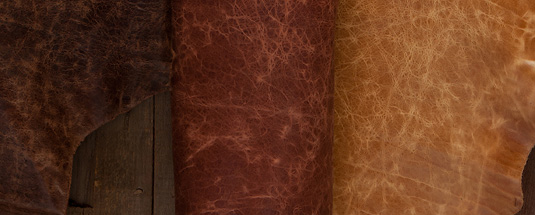
Aged, antique leather. Source: buffaloleatherstore.com

Aged, antique leather. Source: buffaloleatherstore.com

There are other changes to the fragrance, too. About 3.75 hours in, the leather is no longer so tarry and smoky, but, instead, has turned into a smoother, richer, oiled leather. In addition, the rose is not quite so dominant, though it is still wholly intertwined with the leather. The frankincense has been smoothed over and softened. Faint traces of the saffron, cedar, and patchouli remain in differing degrees, but the vetiver vanished long ago on my skin. As a whole, Darth Vader has been left well behind, and Tribute now feels like a very beloved, well-worn, warm leather jacket whose inner collar and neck carry the lingering traces of a deep, dark rose. At the 4.5 hour mark, the fragrance starts becoming closer to the skin, and the rose has retreated somewhat, leaving a scent that is primarily smoky, incense leather at its core.

Source: saab92x.com

Source: saab92x.com

I thought Tribute was a sexy scent from the start, but the fragrance ramps it up in its middle and final stages. About 5.25 hours in, Tribute is an intoxicating swirl of smoky woods and rich, aged leather that is faintly infused with sweetness and a lingering trace of rose. Quiet, muted flickers of saffron have popped back up at the edges, but they’re nutty rather than spicy or fiery. Towards the end of the 6th hour, Tribute turns into a skin scent, but it’s one that is so warm, rich, and sweet, it’s positively addictive. Something about the scent makes me feel like diving headlong into a pile of aged, burnished leather, burrowing my nose deeper and deeper into its multi-layered richness. If you’ve ever worn your boyfriend or partner’s old leather jacket, it’s that smell, only infused with some floral sweetness and incense.

Source: Hdwallpaperes.com

Source: Hdwallpaperes.com

It just gets better with time, as Tribute’s final stage takes that beautiful leather richness and mixes it with jasmine. Midway during the 7th hour, the jasmine finally comes out to play, and its addition lends a touch of feminine softness to the leather. Tribute is now sweet, warm, jasmine leather with a touch of frankincense smoke and nutty saffron. Even as a skin scent, the intoxicating aroma is still somewhat potent when you put your nose right on your skin. Despite the thinner, lighter feel at the end of 8 hours, the scent itself remains rich, deep and smooth. It’s utterly sexy, and stays that way until its final moments when Tribute is nothing more than a soft blur of sweetened leather. All in all, two tiny drops lasted just short of 10.75 hours on my perfume-consuming skin. It’s not the 24 hours of legend with a single drop, but then, my skin is wonky and doesn’t retain fragrances like other people. It certainly doesn’t hold onto natural perfume oils for such a long period of time, so I’m still very impressed.

As you can tell, I loved Tribute, but it is not a scent that I would recommend for everyone. I think men who love dark, smoky, slightly tarry, and very masculine leather fragrances should run to try it, especially those who normally find rose scents to be too feminine. On the other hand, women who are used to traditional feminine fragrances, delicate florals, and soft, sweet, dainty rose scents will want to stay far away. Tribute’s Darth Vader opening and the focus on tarry leather make it a scent that will skew very masculine for some women. Yet, those who like very dark, smoky, leathery fragrances may well fall in love with Tribute’s multi-faceted richness. If you can handle something like Bandit or Black Afghano, Tribute will be your cup of tea.

Tribute is enormously beloved by men (and some women), but out of the many positive reviews out there, my favorite may come from The Perfume Posse who raves about it in two separate, humourous posts. In the first, Patty writes, in part:

I barely dotted a drop on a wrist, went downstairs to talk to my son, and his first comment was, “what smells so good?”  That drop was permeating the room and wafting like  a pig farm in the summer.  Of course I mean that in a good way.  I went to the movies about 30 minutes later, and I was filling the theater with this magical scent — all Amouage Tribute Attar. […][¶]

This thing comes out of the bottlle like the fiercest, smokiest rose covered in leather and tobacco you have ever smelled.  Think Hell’s Angel Rose.  Put your nose down to it, and it’s floral dipped in diesel, mostly diesel, not so much floral.  I say that with love because I’m fairly fond of that.  But  if that’s not really your thing – diesel, I mean –  just wait a while, put it on in a location far from your nose and wait for it to perfume the air with saffron and spices.  This thing spins and whirls and changes in the drydown, leaning more to the leather, then the rose comes back through, and then it feels like almost all spice and saffron, then it starts huffing smoky vetiver like a coal-fired locomotive.  I don’t know that I’d say it’s a rose perfume.  It is, but it’s so much more than that. […] I’m bewitched.  

In the second review (for another Amouage attar, Al Mas), another Perfume Posse reviewer, Musette, talks about her experience with Tribute:

My first introduction to Amouage attars came in the form of  Amouage Tribute.  I was immediately smitten but it’s one of those attars I can only wear …..where?  There are so few comfortable places.  I mean, it’s so gorgeous!!!  But it’s so smoky, so complex, so…..foreign…that it …well, after a few nervous glances towards nearby fire extinguishers  I now tend to wear it At Home.  Lounging around in a silk caftan, on a silk divan, fanning myself (with a silk fan, scented with Amouage Tribute Attar).   Or tucked up in bed, apres-bain, with the Really Good Sheets.  Or at the opera.  Seriously.  It’s perfect for the opera.  Or a gallery opening, where you want to make a Statement.   One drop of  Amouage Tribute will scent your 3/4 length leather gloves for a month!  It lasts for a day and shimmers and glows through all its smoky-deep facets to an incredible drydown but, make no mistake – it’s deep.  

Source: The Telegraph newspaper.

“The Good, The Bad, and The Ugly.” Source: The Telegraph newspaper.

As you can see, women love Tribute, too, though they aren’t always sure where to wear it. While I can easily envision a woman wearing Tribute while lounging in a silk caftan at home, a better image for me personally would be a young Hugh Hefner in his silk pajamas, with a velvet robe, smoking a pipe in his leather-filled study, and being caressed by beautiful women who can’t stop sniffing his neck. I don’t see Tribute fitting in even remotely at the opera, but I can easily imagine Clint Eastwood wearing Tribute in his Sergio Leone western days to go with his cheroot cigar and squinty-eyed toughness. Or Darth Vader rising from the smoke. Tribute reflects all their different, contrasting sides. It is every forceful, tough, macho, dark, aggressive, but very sexy, man imaginable — concentrated into one or two silky, unctuous drops.

There seems to be one big problem with Tribute, beyond that of its astronomical price: batch numbers. On Fragrantica, there are a few references to differences in scent from one batch of attars to another, though it seems to be less of an issue for Tribute than it is for Amouage’s sister attar, Homage. Homage’s Luckyscent page is filled with talk about how the attar’s aroma can vary from one bottle to another, so it’s something I wanted to mention. As one Fragrantica commentator wrote with regard to Tribute:

I went to Amouage’s factory. The truth is that Amouage produces its attars with varying quality. I am not sure why this is happening but they have some problems controlling quality of the end-product, probably because they have different inputs for each batch. I personally got my hands on 3 different qualities of the Tribute. Only one of them was as good as it was supposed to be. The other two batches had either too much tobacco or too much vetiver or too little rose etc in the final bouquet. So please try the bottle before you buy it, don’t rely on the tester, try THAT VERY BOTTLE. The same problem is with other, originally excellent, attars – Al Mulook, Al Mas, Eidyya, Bard al Budur, Al Andaluz. The way to correct the Tribute that has too much tobacco is to add further 5-15% of Ajmal’s rose oil – the spicy and zesty Kashmiri rose that they widely sell in their shops in the arabic countries (they also call it Ruh al Ward). After mixing wait for 2-3 months keeping the bottle in the dark cool cabinet. The result exceeded my expectations! Good luck.

The issue that he references may explain one of the few, persistent complaints regarding Tribute: some people think the fragrance smells too strongly of tobacco and, in specific, of cigarette smoke. As one Fragrantica commentator put it, she smelled like “a smoky camel”:

Not a single waft of rose, jasmine, or any lighter essence. On me, the scent became thickly redolent of tobacco and leather, and for some reason I kept thinking about camel hide. I grew up in parts of the Middle East, and know what camels smell like. I’m very fond of camels, and defend them against their nasty reputation. I’d be crabby too if I had to carry loads on my back through baking hot terrain.

I just don’t want to smell like a smoky camel now. And I did all day.  

Obviously, all of this is a problem at $370 (without tax) for the smallest, tiniest bottle. Not everyone can visit the Amouage factory in Oman to test the fragrance and to choose their own bottle to minimize the risk of getting an excessively smoky, tobacco version. Amouage is charging too high a price for there to be such discrepancies, but the simple fact of the matter is that the very process of attar creation may make such variations an unfortunate part of the process. I’m not trying to minimize the problem, but it does seem to be somewhat unavoidable.

Yet, despite the occasional off batch, the majority of people seem wholly enamoured with Tribute. Take, for example, Basenotes, where the fragrance has an overall 93% positive rating with 79% giving it five stars, and 14% giving it four. If the fragrance were cheaper, I think those numbers would be even higher, because the issue of cost does come up repeatedly. Only one person gave Tribute a single star, and that seems to be because, four bottles of Tribute later, he claims the fragrance in 2012 was reformulated from its original 2009 version. There may have been reformulation or maybe it was a batch issue, I don’t know.

All I can say is that I would absolutely buy Tribute if I had a spare $370 lying around for a bottle a little larger than Visine or Tic-Tacs — risky batch issues be damned. I would buy it, try to suppress the urge to slather it on all over, then burrow into its rich, fiery, smoky depths, and sigh with pure contentment. Unfortunately, neither my wallet nor my somewhat cheap-skate side (which really mentally struggles with that 12 ml size, no matter how much I try to rationalise the longevity of single drops) will put up $370. So, I’ll simply treasure my remaining droplets, and wear it on those days when I would like Darth Vader’s strength mixed with the sweetest flowers of the East. Tribute is dark magic of the very best kind, and its smoky lure has bewitched me, too.

[UPDATE: Amouage discontinued Tribute and all its attars in Spring 2014. You can read the reasons here. The retailers linked below sold out of Tribute in 2014, and it is virtually impossible to find these days except on rare occasion on eBay. The closest thing to it is Ame Sombre (Grade 1) attar from Sultan Pasha which was intentionally designed as a tribute to Tribute, only in much stronger, heavier, and more powerful form.]

DETAILS:
Cost, Availability & Stores: Tribute is a concentrate perfume oil, an attar, and is available in three sizes: 12 ml which costs $370, €265 or £225; 15 ml which costs $420; or 30 ml which costs $665, or £400.00. The perfume is not sold directly through the Amouage website, but is available through a number of different online vendors. In the U.S.: Tribute is available in all three sizes from Luckyscent, along with a sample for $14. It is available in the smallest and largest sizes from Parfums Raffy, Amouage’s authorized distributor in the U.S., along with Parfum1, and MinNY, all of which also sell samples. The small $350 bottle is also offered by ZGO.  Outside the U.S.: In Canada, you can get Tribute from The Perfume Shoppe which sells the perfume oil in the small 12 ml size for US$350. In the UK, Tribute Attar is available at Harrods which sells the large 30 ml size for £400, but they are sold out at the time of this post. London’s Les Senteurs also carries Tribute which it sells in the small 12 ml size for £225. In the Netherlands, I found Tribute at Parfumerie.nl for €265 for 12 ml. In Italy, Tribute seems to be available from Alla Violetta for €266 for 12 ml, but it’s unclear to me whether they are currently sold out. In Germany, Tribute is available from Parfumerie Brueckner for €267 for 12 ml. Germany’s First in Fragrance also carries Tribute which it sells for €265 for 12 ml, but they are currently sold out. In Russia, I found Tribute at Eleven7ru. Kuwait’s Universal Perfumes sells the 30 ml bottles of Tribute at discounted prices, but I’m not sure what they mean by discontinued batch and “new version.” The prices, respectively, are $499 and $599 for 30 ml, which is lower than retail cost. Samples: Vials of Tribute are available from many of the retailers linked above, but also from Surrender to Chance which sells Tribute starting at $14.99 for a 1/4 ml vial.