Jardins d’Ecrivains Orlando

Tilda Swinton as "Orlando." 1992, Sony pictures. Source: Cineplex.com

Tilda Swinton as “Orlando.” 1992, Sony pictures. Source: Cineplex.com

A young aristocrat of great beauty, born at the time of Queen Elizabeth I, becomes the elderly queen’s lover. A young man of androgynous looks who goes to sleep one day and wakes up days later as a woman. Centuries pass, she lives forever with adventures high and low, but love is a constant throughout. “Love, the poet said, is woman’s whole existence.”

Tilda Swinton, Orlando. Source: moviemail.com

Tilda Swinton, Orlando. Source: moviemail.com

Virginia Woolf wrote that line, and that story. Her novel, Orlando, is the inspiration for a perfume of the same name from Jardins d’Ecrivains, a perfume house founded by Anaïs Biguine. Ms. Biguine takes her inspiration from great literature and the beauty of gardens, whether Gigi from the French writer, Colette, George from George Sand, or Wilde from one of my favorite authors, Oscar Wilde. I can sometimes seen the literary connection which is extremely clear in cases like George, a perfume I bought for myself and which I reviewed yesterday. In the case of Orlando, it was much less apparent, but I still very much like the perfume. Orlando is a strange case for me, a perfume which actually evokes no stories or images at all for much of its existence, and one whose opening I struggled with. Yet, it always stayed in my head, perhaps because I find its middle and ending stages incredibly comfortable, soothing, and addictive.

Source: ZGO.

Source: ZGO.

Jardins d’Ecrivains describes Orlando, the perfume, as follows:

Jardins d’Ecrivains puts its own interpretation on the fascinating Virginia Woolf fantasy. An androgynous character with eternal youth, Lord Orlando in the Elizabethan era becomes Lady Orlando in the 18th century.

Quirky blends with the eclectic and timeless in a spellbinding fragrance. Irrational dreams, an eastern monarchy and a sense of the divine linger in its wake.

A unusual character comes through in the first notes, before the transcendent heart of the fragrance draws you in. And the warm, soft base notes convey its delicate spirit.

Top notes : Orange – Pink peppercorn – Ginger

Middle notes : Amber – Patchouly – Cloves

Base notes : Wood of Gaiac – Musk – Balsam of Peru

Clove Studded Orange. Source: DwellWellNW blog at DowntoEarthNW.com

Clove Studded Orange. Source: DwellWellNW blog at DowntoEarthNW.com

Orlando opens on my skin as a mix of the sharp, spicy, clean, white, fresh, smoky, and woody. There is a powerful blast of clean, white musk infused with heavy dollops of orange, clove and ginger. The pungent spices are followed by a slightly smoky guaiac wood that carries the lingering smell of leaves burning in an autumnal bonfire. The zesty, tangy bits of orange pulp are thickly dispersed throughout, as is a dark, resinous, treacly balsam resin that is lightly smoked. Moments later, the pink pepper arrives on the scene, feeling both fruited and a little bit biting. Its sharpness adds greater pungency to the cloves, but also wakes up the ginger a little. The latter is interesting because it doesn’t smell like fresh ginger but, rather, like the tamed, warm, slightly woody, powdered, bottled kind that is sitting in my pantry. Lurking far below, in Orlando’s shadows, is a patchouli note that pops up fleetingly every now and then. For the most part, it’s pretty indistinct, adding merely a dark feel to the base than smelling of actual patchouli in its own right.  

It’s all lovely, except for the white musk which is something I struggle with in general. Here, it doesn’t smell of something that is purely soapy like aldehydes, though there is that touch of soapiness underlying it. Rather, it’s almost like a highly scented, potent, floral hairspray — but not completely. Whatever it is, it’s too much and, yet, for some odd reason, it almost works. Almost. If I liked musk more, I’d probably be more amazed at the freshness and natural crispness that it imparts to Orlando as a counterbalance to all those dark, heavy, spicy notes. Unfortunately, I really don’t like white musk, whatever its symbolic intentions and goal in the perfume.

Osmanthus. Source: en.wikipedia.org

Osmanthus. Source: en.wikipedia.org

There is something else, too, which I can’t explain or pinpoint. There is a floral note that has struck me every time that I’ve tested Orlando, but which doesn’t appear anywhere on the notes. It’s a subtle element that I really can’t put my finger on. It’s almost like a watery, dewy, pale rose, but not quite. A lot of the times, it feels like osmanthus with its somewhat nutty, apricot, tea-like undertones, but there is also a faintly powdery heliotrope suggestion as well. I have to say, it is driving me a little mad to try to place it. I certainly can’t explain it, except to say that it may be the indirect effect of the orange, the floral-smelling white musk, and some other note. But, I’m telling you, Orlando has a definite floral element on my skin.

Whatever the reasons or the cause, I think it adds an additional level of interest or complexity to a scent that, by and large, is quite simple on my skin. Orlando isn’t a fragrance that twists and morphs a thousand ways. What’s interesting though is that the overall impression of the perfume in the opening stage is of a very crisp, clean, dark, chewy set of contradictions. In fact, I’m starting to think that “contradictions” and paradoxes may be the Jardins d’Ecrivains signature. Still, the bottom line is that, from afar, Orlando’s opening is primarily and generally a bouquet of orange, cloves, and clean musk, infused with smoky guaiac, all over a darkly resinous base. You have to smell it up close to get the details, and it doesn’t seem to change for a while. 

When it does change, however, oh, how it becomes pretty! At first, the change is very subtle and minor. By the end of the first hour, Orlando merely becomes softer, smoother and creamier with a light golden hue from the amber which has risen up to the surface. With every passing moment, however, the fragrance turns even creamier, losing that clean, fresh, white, hairspray-like crispness. The musk becomes more skin-like, sweet, and golden.

Source: stonecontact.com

Source: stonecontact.com

Then, at the 2.5 hour mark, the beauty sets in. Like Lord Orlando’s metamorphosis into Lady Orlando, the perfume blooms as sheer magic. It is a warm, lightly smoked, incense-y amber that is practically fluffy and sweet. It is infused with soft ginger, guaiac wood that now feels smooth and pale, and the perfect balance of cloves, alongside a light drop of orange, a subtle layer of patchouli, and a flicker of that indescribable floral note. There is a subtle waxy element lurking deep down in the depths. More importantly, though, the Peru Balsam has transformed into a creamy cinnamon-vanilla mousse. There is almost a honeyed sweetness to it, though it never feels like actual honey.

Something about the combination turns Orlando into a scent that feels related to sandalwood. The perfume has the same sort of fragrant, spicy, smoky, sweet, golden-red aroma that is actually like a creamy gingerbread caramel at times. I found it utterly addictive, and it would have felt like perfect bedtime cocoon for this insomniac to try to relax and get some sleep, except that I found myself constantly sniffing my wrists. You all know my feelings on sandalwood, and Orlando is absolutely not a Mysore sandalwood fragrance, but the combination of the notes does evoke the same overall, sensory feel. It’s light, cozy, simple, uncomplicated, but really soothing.
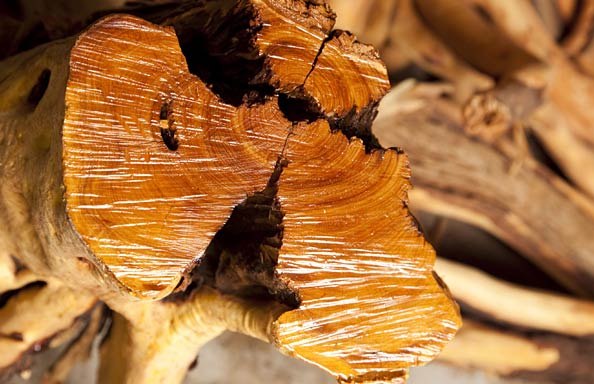
Sandalwood cross-section. Source: http://vk.com/wall172858112_51

Sandalwood cross-section. Source: http://vk.com/wall172858112_51

Orlando continues to soften, turning into a silken caress. At the end of the 4th hour, Orlando’s sillage drops and the fragrance hovers right on the skin. It’s all gold, red, ginger, spices, amber and creamy guaiac wood, with a hint of smoke and sweet musk. Midway during the 8th hour, it’s merely a glaze of spiced clove-ginger-cinnamon-vanilla with a light smokiness. In its final moments, almost 13 hours from the start, it was merely a sweetened, lightly musky woody fragrance infused with a subtle hint of spices. My skin consumes perfume voraciously, but Orlando consistently lasts between 11.5 and 13.5 hours on me, depending on the quantity applied. Three large smears from my dab vial gave me 12.75 hours, with small portions of my skin continuing to chug on well past the 13th hour. I suspect the numbers would be increased if I sprayed since aerosolization amplifies longevity.

Like all the Jardins d’Ecrivains line, Orlando is a fantastic deal for the price. It is $110 or €85 for 100 ml of eau de parfum. That comes to a mere fraction more than $1 per ml. The fragrance is also easily available throughout the U.S. and Europe, as well as on various Amazon sites from Jardins d’Ecrivains itself. (See the Details section at the end.) I don’t think Orlando is as unique, interesting or complex as George, and I really don’t like the musk of the beginning, but I’ve enjoyed it each and every time after the first 2 hours.

I’m not the only fan of Orlando. Nancy of Make Perfume, Not War is wholly obsessed with the fragrance. In a review entitled Divine Duality, she writes, in part:

The fragrance opens with some prickly spices– orange, pink pepper, and ginger, according to the official notes, which smell to me like a natural version of aldehydes minus the soapiness. Usually I cannot abide aldehydes, but here the effect makes me smile; CaFleureBon describes it perfectly as “a sense of clamorous potential”… [¶]

Orlando next morphs into a strong, dark, masculine wood with spices and resinous qualities …with precious woods (according to the notes, guaiac and peru balsam) possessing simultaneously a vintage and modern feel. There is even a touch of furniture polish to my nose, one of those odd scents I find appealing, having spent a lot of time in antique shops, auction houses, and estate sales as a child. […][¶]

Eventually, Orlando warms and sweetens without ever losing the undertones of dark wood. On me, it turns into a sweet but not too sweet, clean but not too clean, warm spicy sexy wood scent, all of the previous stages still present but melting into, yes, a twilight glow. It now skews much more feminine, which is highly appropriate given that Wolff’s character starts out male and wakes up as a woman. The drydown provides contrasts of warm and cool, light and dark, and masculine and feminine that make Wolff’s theme apparent.

The Scented Hound had a very different olfactory journey, with a minty, mentholated stage in the opening, and a subtle “sour tang” from the guaiac wood, before Orlando turned woody with some “distant” amber. He concluded that Orlando was “mysterious, conflicted, emotional” and said:

Orlando is a strange perfume for me.  It’s a fragrance that seems to draw some very primal emotions from inside me. It’s beautiful and pensive and is not something that I could ever wear on a daily basis.  However, it’s the perfect fragrance for those quiet fall and winter days when you just want to retreat into your own private world.   

Lucas of Chemist in the Bottle had a different journey as well. In his review, he writes that Orlando began on his skin with an overwhelming amount of cloves followed by candied orange peel along with white elements. The fruit soon turned into “orange liqueur” with cloves in an aroma that was darker than the usual holiday, Christmas combination of those two notes. Then, Orlando took on

a deep and rough woody quality. Guaiac wood is a kind of dark tree and so is its smell. Powerful, intensive with balmy and resinous facets. This note somehow cuts off the earlier accords and marks the new beginning of the scent. From now on Orlando is untamed, wild and slightly unpredictable. Now is the moment when the character turns from he to she.

On his skin, the musk wasn’t clean, white or like hairspray, but “animalic, lusty and provoking[.]” The amber wasn’t significant, and the peru balsam was also different to his nose, as it “creates a feeling like you were wandering around the forest just after the rainy season. All is damp, the ground is loose and muddy.” Meanwhile, the smell of patchouli “evokes fall, with its fallen leaves, pine cones and nature preparing for a winter sleep. Moldering leaves are a quilt for the earth.” As you can see, a very different experience from both Nancy, the Hound, and myself. For Lucas, Orlando was beautiful but too complicated a scent, the “kind of perfume that I personally find difficult to wear on a daily basis. It requires more focus, more space and more attention to fully appreciate it.”

Source: ParfuMaria, Netherlands.

Source: ParfuMaria, Netherlands.

Different skin chemistry leads to different results, but it seems Nancy of Make Perfume, Not War hit the nail on the head when she talked about Orlando’s “duality.” On the one hand, there is Lucas’ dark woods and The Hound’s pensive, mysteriousness; on the other, Nancy’s “swirls of gold and red and plush textures, and contrasts of dark and light” that was much closer to my own cozy, sweet, ambered, gingerbread-sandalwood-like experience. Perhaps, Orlando the perfume represents Orlando the character better than I had thought. Either way, I think it’s an intriguing, rather different fragrance that is well-worth exploring for yourself.

DETAILS:
Cost & Availability: Orlando is an eau de parfum that comes in a 100 ml/3.4 oz bottle and which costs $110, €85 or £73. You can order it directly from the Jardins d’Ecrivains website, but I do not know their shipping policy. In the U.S.: You can find the line at BeautyhabitAmazon (sold by Jardins d’Ecrivains itself), and ZGO. In New York, you can find the fragrances at the new Brooklyn niche perfumerie, The Twisted Lily. In Cleveland, Ohio, it is carried at Indigo ParfumeryOutside the U.S.: In the UK, you can purchase Jardins d’Ecrivains fragrances from London’s Bloom Perfumery where it costs £73, with samples available for £2. The line is also sold at The Conran Shop, though Orlando appears to be the exception on the website. In addition, the Jardins d’Ecrivains line is available at a slight discount from Amazon UK. In Paris, the line is carried at Marie-Antoinette, my favorite perfume shop in the city, and they happily take emails or calls for overseas purchases. Jardins d’Ecrivains is also available at Jovoy. In the Netherlands, Jardins d’Ecrivains is available at ParfuMaria, while in Spain, it is sold at Nadia Parfumeria, and in Italy, at Alla Violetta. The Jardins d’Ecrivains line is sold for slightly higher than retail price at Germany’s First in Fragrance, along with samples. In Russia, you can find Jardins d’Ecrivains at Parfums Selective. For other vendors throughout France (and there are many!), as well as one in Belgium, you can check the Jardins d’Ecrivains Points of Sale page on their website. The page includes numerous headings for countries from Sweden to Japan and Kuwait, but nothing is actually listed for any of them. Samples: A few of the sites linked above offer samples for sale, but not all. In the U.S., you can find Orlando at Surrender to Chance where prices start at $3.25 for a 1 ml vial. Just as a side note, StC doesn’t carry the full line, only Orlando, George and Dame aux Camellias.

Oriza L. Legrand: Chypre Mousse, Horizon & Reve d’Ossian

Oriza logo. Sourc: the Oriza L. Legrand website.

Oriza logo. Source: the Oriza L. Legrand website.

An ancient perfume house whose fragrances have been brought back to life like Sleeping Beauty awakened with a kiss. Oriza L. Legrand (hereinafter just “Oriza”) is not a well-known house, but its perfumes have a unique character that is redolent of the past and the classic French tradition. Yesterday, I provided an overview of the brand, its history and how its fragrances have been tweaked from the 1900s to suit today’s tastes. Today, I’d like to briefly review three Oriza perfumes: Chypre Mousse, Horizon, and Reve d’Ossian. The remaining four, primarily floral fragrances — Relique d’Amour, Jardins d’Armide, Oeillet Louis XV, and Deja Le Printemps — are the focus of another post.

CHYPRE MOUSSE:

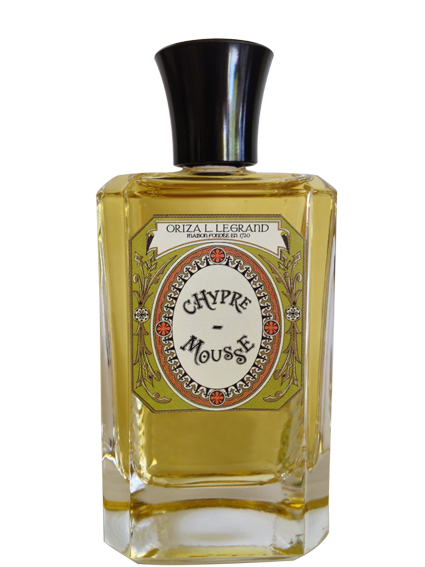
Chypre Mousse. Source: Oriza L. Legrand.

Chypre Mousse. Source: Oriza L. Legrand.

Oriza describes Chypre Mousse (at the link imbedded above in the title) as the essence of nature in autumnal woods:

After the first rainfall in September nature exude scents of humus, peat and wetland. [¶] This is the time for a promenade in the woods to enjoy the freshness after the heat of summer. [¶] Autumn encourages us to contemplate, to observate nature that gently prepares us for the coming winter and its frostbite.

The mossy paths, precious jewels of the undergrowth, are brightened by the last rays of sun. [¶] Cyprus-Moss evokes in us our surrounding nature which soon will be covered by the first fall of snow. [¶] Smell of damp undergrowth of scorched leaves and the scent of moss before picking mushrooms and chestnuts.

Chypre-Mousse, a Fragrance of the House Oriza L. Legrand launched in 1914 for the dandies of this world!

Top Notes[:] tonic & balsamic: Wild mint, clary sage, wild fennel & green shoots.
Heart notes[:] aromatic & flowing properties: Oakmoss, Galbanum, Angelica, fern, wild clover, Mastic & Violet leaves.
Backgrounds[:] Notes mossy & leathery: Vetiver, Pine Needles, Oak Moss, Mushroom fresh Humus, Roasted Chestnut Leather, labdanum & Balms.

Source: it.forwallpaper.com

Source: it.forwallpaper.com

As outlined in my earlier post on Oriza, I went to the boutique with the goal of sniffing and possibly buying a very different perfume, Horizon. I’m generally not one who buys a perfume without testing, especially given my crazy skin and how voracious it is. So, I sprayed both fragrances on my skin and on the sweater that I was wearing, walked out of the store to think about it, and headed on my way to Serge Lutens to buy my precious bell-jar. I went four blocks, sniffing myself throughout, then stopped dead in my tracks, and headed back. I had to have Chypre Mousse, then and there, without further testing. Suffice it to say, that is extremely unusual for me.

Source: photocase.com

Source: photocase.com

I’m not sure how to best describe Chypre Mousse. It’s not the typical oakmoss fragrance; it has neither the dark grey, mineralized, dusty fustiness of some oakmoss fragrances, nor the bright green, softly plush, fresh mossy feel of others. To me, it smells like the damp forest floor, wet leaves, dewy violets, earthy mushrooms, drenched forests, and a symphony of green, brown, grey, and purple. Again and again, I go back to Oriza’s description of “green shoots,” because there is something of youthful life that is pushing through the wet floor of a verdant forest.

Source: Cottage Environmentalist blog at fifthlake.wordpress.com

Source: Cottage Environmentalist blog at fifthlake.wordpress.com

Chypre Mousse opens with a pungent but sweet oakmoss that feels as though it’s sprouted right off the bark of a tree deluged by rain. There is a dark leather underlying it, covered in resinous, piney tree sap, swirled with darkened mosses, and speckled with reddish mushrooms. The strip of leather lies atop a mound of leaves whose autumnal oranges and browns have turned darker with dampness and water. All around are bunches of fresh violets, pushing out through the soil, past the green shoots, and in the wet space left untouched by the gnarled, woody roots of surrounding pine trees. The dewy, sweet purple flowers form a bright spot of colour in the dark, green forest.

Source: 123rf.com

Source: 123rf.com

The leather, wood, mushrooms, wet leaves, violets, grass, and moss are backed by traces of other notes. The sweetest black earth, the freshest of green herbs, the stoniest of grey boulders, the darkest of tree sap, and just the subtlest hint of smoky incense. The forest has come alive in a symphony that is leafy, earthy, green, woody version of Serge Lutens‘ delicate floral masterpiece, De Profundis. There is the same sort of haunting delicacy, of dewy wetness, of youthful life. The two perfumes are fundamentally different in notes, but they share a very similar feel. And, oddly, there is something of a chrysanthemum undertone in Chypre Mousse. Perhaps it’s the slightly piquant, peppered, floral greenness created by the other accords together that creates that strange impression. Whatever the cause, Chypre Mousse has the same haunting, evocative impact on me.

The most interesting aspect of Chypre Mousse may be the more unexpected notes. I have no idea what the “hummus” reference in Oriza’s list means, but the mushroom-y touch is fascinating. So is the combination of that leather note which has somehow been transformed by the other elements into something familiar, and yet not. This is leather that has been left out in the rain to have Nature and the forest absorb it, transforming it into something that is more a part of their world.

Source: modavesen.com

Source: modavesen.com

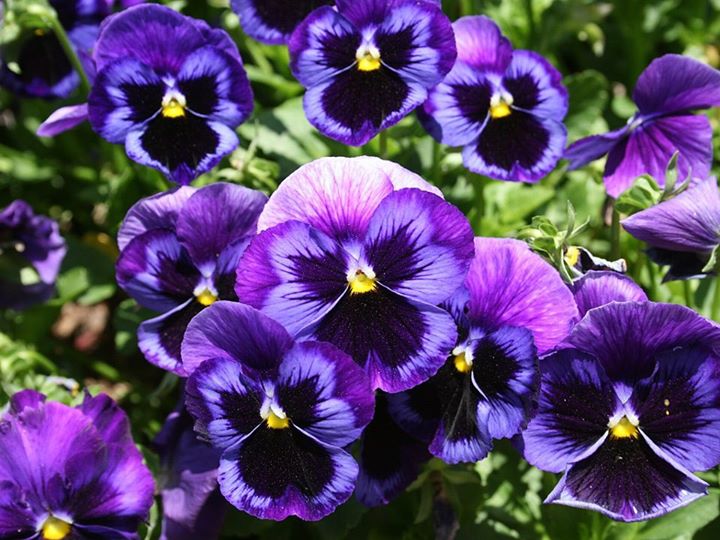
Yet, what I consistently found myself thinking about were the violets or pansies, whose tender refrain wraps its ribbons around you. The funny thing is, I never knew Chypre Mousse included them in my four or five early wearings, and I thought I was quite mad for detecting their delicate, purple hues in a scent intended to be a mossy, mushroom, earthy, forest one. In fact, long before I actually looked at Oriza’s list of notes, I sprayed Chypre Mousse on four people, and asked if they could detect violets. They merely scrunched up their eyes, responding with some form of dubious: “I guess.”

For them, Chypre Mousse was something indescribable, inexplicable, odd, but utterly mesmerizing. A swirl of unusual notes in a well-blended, seamless, elegant bouquet that they couldn’t place or categorize. One Paris fashionista who tested it took a single sniff of her arm, and immediately said, “I’ve never smelled anything like it. Where can I buy it?!” She couldn’t describe it, and neither could two others. A fourth tester was an experienced perfumista, and just looked at me with bewilderment. “What is this??!” Her initial response was uncertainty, but every passing minute changed that. She loved how she couldn’t put her finger on the scent or what lay underneath it. Even more so, she was astounded by the trails of aroma that followed in the air around her. As someone whose skin squashes both projection and longevity, she couldn’t get over it.

Source: wallpaperup.com

Source: wallpaperup.com

That brings me to Chypre Mousse’s sillage and longevity. It’s outstanding, even on my crazy, perfume-consuming skin. Two small sprays will create a large cloud all around me for the first hour, followed later by projection that extends about six inches. Later, when the sillage drops around the end of the third hour, Chypre Mousse continues to send out ribbons of scent in the air around you. And it lasts for ages. On average, I get around 10 hours with two small sprays, and well over 12 hours with more.

There are no entries for Chypre Mousse on Fragrantica thus far, but Ida Meister wrote a piece entitled Fragrant Snippets on a few of the Oriza scents. Like me, she was knocked off her feet by Chypre Mousse, and ordered a bottle right away. Her summation for the scent reads as follows:

It is Confession Time. I didn’t want to wait for another week: I ordered this edp PRONTO. 😉

Chypre-Mousse sings to me. All that lurks in the forest, humid and expectant after the first September rains. The exquisite aromas of the undergrowth; peat, mushrooms, humus. Moss and more moss; sheer delight for me, who craves that velvety green aromatic cushion beneath the nose, the feet, my fingers! A carpet of russet leaves underfoot, the seductive aroma of grilled chestnuts around the corner. Oriza may have had dandies in mind for Chypre-Mousse, but it is my ongoing intoxicating love affair with all things Green. I will wear my velvet cloak of chypre gratefully.

Chypre Mousse sings to me as well. I think it is an absolute masterpiece. To me, it doesn’t smell old-fashioned or dated for one simple reason: I’ve never smelled anything quite like it. From any age.

HORIZON:

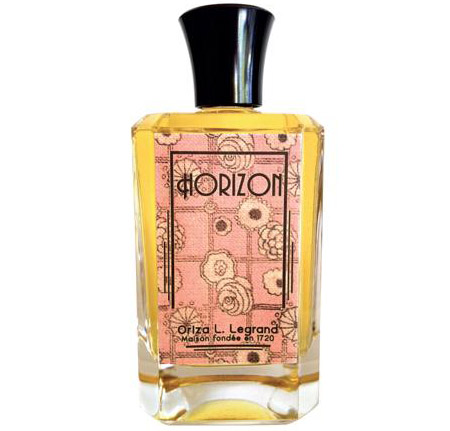
Horizon. Source: Oriza L. Legrand.

Horizon. Source: Oriza L. Legrand.

Horizon was originally released in 1925, and Oriza describes the fragrance as the embodiment of its decade:

After World War I, the Roaring Twenties reflect the desire of the exotic and the need also through fashion and decoration. [¶] The East and particularly Asia, provide new HORIZONS. [¶] The frenzy for exotic travel and encourages artists to transcend the culture of the East in their creations: new silk, fine embroidery, pearl beads, woody scents, heady and sweet …

In the euphoria of the Roaring Twenties, the female body is revealed, it abolished the corset, the flappers open the eyes and smoking languidly.

Slumming it in the salons of Paris!

The materials, colors, shapes symbolize a new freedom and portend, at the dawn of the Roaring Twenties, the hope of a new HORIZON. [¶][…] [An] Oriental fragrance for boys and tomboys, fragrance of Precious Woods and Ambergris agreements Tabac Blond and Soft Leather.

Top Notes: Bitter orange, Tangerine Confit & Dried Rose.
Heart Notes: Cognac Amber, Aromatic Tobacco Leaves, Cocoa, Roasted Almonds, Old Oak & Patchouli.
Base Notes: Benzoin, Amber Gray [ambergris], Peat, Tabac Blond, Vanilla, Honey & Soft Leather.

Source: dailymail.co.uk

Source: dailymail.co.uk

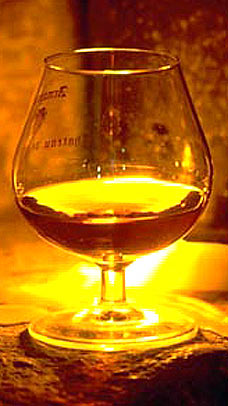
Horizon called its siren cry to me the minute I read that long list of notes. Bitter orange and cognac? Patchouli and leather? Ambergris and tobacco? I was almost certain I would buy it, though things ended up differently when I smelled Chypre Mousse. But it was a very close thing. Horizon bloomed on my thin sweater with an explosion of Armagnac that was rich, nutty, and boozy beyond belief. I felt as though I’d actually had a bottle of aged brandy poured on me. Tendrils of smoke, patchouli, amber, and tobacco stirred underneath, but the main bouquet was a forceful explosion of booze in a kaleidoscope of reds, browns, amber, and gold.

It’s a different matter on skin. Very different, in fact, and significantly softer. I have to say that I’m glad I didn’t end up purchasing Horizon in the end for the simple reason that my skin seems to eat it up like a wolf who hasn’t seen food in weeks. I also can’t decide if Horizon is less complex on actual skin, or simply so much milder that all its layers aren’t as easy to detect. Whatever the case, Horizon is, for the most part, primarily just a boozy, cognac patchouli on me. You can definitely detect the other notes if you sniff closely and pay close attention, but, from afar, it is primarily a very soft patchouli cloud. I much prefer the deeper, more potent, robust version on fabric, alas.

Source: wallpaperswa.com

Source: wallpaperswa.com

On skin, smelled up close, Horizon opens with leather, patchouli, and cognac, followed by faint hints of bitter dark chocolate that grow stronger with the passing minutes. There are whiffs of caramelized, candied orange and something smoky. This is a true patchouli scent, in all its brown, red, amber glory, smelling spicy, leathered, ambered, and chewy, all at once. Lurking at the edges, there is subtlest hint of something nutty. It never smells almond-y to me, but more like toasted hazelnuts. The whole thing sits atop a base of ambergris that has the element’s special, unique characteristics: a very salty sweetness that is also slightly musky, marshy, sweaty, and rich.

Source: 123rf.com

Source: 123rf.com

There is a definite chewiness and earthiness to Horizon’s opening that soon changes into something lighter on my skin. For the first 25 minutes, the perfume is a dark, dense, orange-brown-black mass in visuals, but it turns creamier, smoother, gentler. There are slow stirrings of a very custardy vanilla in the base. At the 45-minute mark, Horizon seems softer and thinner in weight, with sharply reduced sillage, and a movement away from that very dark, leathery, chewy patchouli and leather opening. The orange bits have receded, the boozy cognac has started to evaporate, dark chocolate has turned into milk chocolate, and the patchouli feels infused with cream.

Source: popularscreensavers.com

Source: popularscreensavers.com

I’m consistently saddened by how quickly the fragrance becomes airy and light. It sits soft and low, with a scent trail that really only lingers for about 40 minutes before it drops to hover an inch or two above the skin. And then it drops even more. At the end of the second hour and the start of the third, Horizon sits right on the skin as a blur of creamy patchouli amber with the tiniest hints of milk chocolate, vanilla, and cognac. By the 6.5 hour mark, Horizon fades away as a blur of patchouli sweetness. It has to be me and my wonky chemistry, for Horizon feels quite potent and forceful in the first ten minutes. And a mere spray on my shirt continues to pulsate in full force days later.

Those with normal skin seem to have fared much better. Take, for example, Ida Meister whose Fragrantica piece on Horizon talks about the perfume’s longevity, along with how beautiful and modern it felt:

1925. Really???

Horizon smells utterly contemporary—it brings to mind Bois 1920’s Real Patchouly and Chantecaille’s Kalimantan. Truly well-aged patchouli is a joy, even for many who are phobic about it, having been previously traumatized by the cheap 1960-1970’s “head shop” astringent nostril-singeing variety.  😉  Horizon is as suave as it gets: ambery, boozy, honeyed and oaken. It feels utterly without gender. Horizon is a resinous silk duvet which enfolds you tenderly and possesses remarkable longevity. You can be a throwback to the Summer of Love or a CEO in an Ermenegildo Zegna couture suit; either way, it fits. It is heavenly in its own right, and a perfect illustration of classicism: if the design is excellent, it will remain so in the future. [It DID.]

On Parfumo, the lone review for Horizon is extremely positive, and talks about 12-14 hours of duration. The chap also mentions that his immediate reaction to testing the scent was “this smells like vintage Yohji Homme.” I may be remembering things incorrectly, but I believe I read somewhere that Yohji Homme was one of Luca Turin‘s favorite fragrances, and something whose loss or changes he’s mourned. Going back to the Profumo review, the commentator describes Horizon’s development, in part, as follows:

Horizon opens with a quick dash of almond before a slight powdery cocoa note emerges, mingling with a subtle dark dulled rose. As the fragrance enters the early heart the cocoa turns less powdery, blooming to full milk chocolate, as it mixes with the primary heart accord of boozy cognac and benzoin-laced semi-sweet amber. Natural woods and a touch of underlying anise join the remnants of the dull rose in support. As the fragrance enters the late dry-down, the cognac and dull rose dissipate while the relatively sweet amber remains dominant, now joined by traces of sanitized patchouli and suede-like leather. Projection is average and longevity is excellent to outstanding at 12-14 hours on skin.

You have no idea how utterly envious I am of such longevity. I loved the opening minutes of Horizon on me and, even more, the complete cognac-fest that exploded on my clothing. On the basis of smell alone, Horizon’s initial bouquet is extremely close to the ideal patchouli that I’ve been looking for since my old favorite from the 1980s, even if the subsequent development became very different. Alas, Horizon doesn’t ultimately work for me, but I’m sure that you will have better luck. It’s a lovely fragrance.

RÊVE D’OSSIAN:

Reve d'Ossian label. Source: Oriza L. Legrand.

Reve d’Ossian label. Source: Oriza L. Legrand.

The romantic, 19th-century poetic style of Ossianism with its poems of fairies, dark forests and mysterious wood are the heart of the inspiration for Reve d’Ossian. Oriza’s detailed explanation on the fragrance and its backstory reads, in part:

Reve d'Ossian bottle. Source: Oriza L. Legrand website.

Reve d’Ossian bottle. Source: Oriza L. Legrand website.

The [Ossian-style] poems achieved international success (Napoléon Bonaparte was a great fan) and many writers, painters and artists were influenced by the works, including Ingres, Schubert and Oriza L. Legrand Perfumes. […]

“Rêve d’Ossian” is a perfect perfume for those who claim a difference and the rich heritage of the History. Dark and precious essences, wooden notes filled with the mystery of the forest with fairies and pixies…

Top Notes: Frankincense and Pine woods.
Heart Notes: Cinnamon, Benzoin, Tonka Bean and Opopanax [sweet myrrh].
Base Notes: Tolu Balm, Sandalwood, Leather, Labdanum, Amber and Musks.

Source: www.sciencedaily.com

Source: www.sciencedaily.com

Reve d’Ossian opens on my skin with sharp black pepper, myrrh’s white incense, warmly sweet cinnamon, aromatic pine needles, and dust. It’s like an old monastery’s library in the middle of some German forest. For me, the dominance of the dust and incense makes the opening share some thematic similarities to Bertrand Duchaufour‘s Dzonghka for L’Artisan Parfumeur and, to a lesser extent, Heeley‘s Cardinal. I’m not generally a huge fan of High Church fragrances with olibanum or myrrh, and even less so for things with great dustiness, so I’m rather pleased when the latter quickly disappears. Less than five minutes into Reve d’Ossian’s development, it vanishes, a small soapiness takes its place, and the whole thing turns more ambered.

FrankincenseQuickly, Reve d’Ossian turns into a warmer, woodier fragrance with flitting bits of green pine needles that feel as though you’ve crushed them on your walk through the forest and on your way to church. There is a dark resinous feel underlying the white incense smoke, a pungently aromatic overtone reminiscent of a wintery forest, and the feel of crisp, sweet, piney sap. Less than 60 minutes in, Reve d’Ossian turns soft, a hazy blur of the two types of myrrh incense — olibanum and opoponax — with a touch of amber and only a hint of the great, green, woody outdoors.

Source: de.123rf.com

Source: de.123rf.com

At the 2.5 hour mark, the focus of the perfume shifts away from the incense. Reve d’Ossian is now largely an amber scent infused with nutty, warm, soft sweetness of myrrh and a hint of olibanum’s soapy whiteness. It lies right on the skin with extremely weak sillage. The fragrance turns into more of a blur, and, at the start of the 6th hour, all traces of amber and sweet myrrh opoponax fade away. In fairness to Oriza, a greater application (around 4 sprays from the atomizer) yielded far better results, just close to 7.5 hours. The sillage, however, remained moderate to soft.

Reve d’Ossian is one of the few Oriza fragrances to have a Fragrantica entry. With regard to longevity and projection, the majority of the votes put it at “moderate,” though a few also vote for “weak” in each category. The few reviews thus far are all positive in nature with the most detailed, descriptive one stating:

It’s quite close to a balsamic Baghari by Piguet.
A surprising opening, aerial and metallic (aldehydes and terpineols?) notes of pine, old wood and foam on wet stone but it’s warming gently, blowing a strange impulse to this myrrh fragrance. The smell of warm lightly ambered paper, dry almost dusty leather binder. An impression of moor in the autumn.
It is so at odds with our modern conception of the perfume he could be the last release of Comme Des Garçons: Odeur 1900, without changing anything.
Truly a beautiful work of resurrection of the house, all these completely forgotten fragrances are high quality, both modern in their treatment and completely faithful to the spirit of time: a real success.

I haven’t tried Piguet‘s Baghari or the Comme de Garcons‘ scent to be able to compare, but I do agree with much of his description, especially the parts about a dusty leather binder and the dominant role of the myrrh. I also agree that it has a high-quality smell. That said, I think Reve d’Ossian has some problems with it: it has a linear aspect, it’s not enormously complex, and it has sillage issues.

Nonetheless, I liked it, even though it’s not the sort of scent I normally go for, and I thought it was done with a lot of graceful elegance. There was something very appealing about Reve d’Ossian, very softly comforting in its amber heart. I actually don’t think it smells very dated at all, and it’s hard to believe that it was originally created in 1905, more than 107 years ago. When you think of how many scents from the early 1900s were floral orientals or chypres like Mitsouko, while today niche fragrance counters abound with a plethora of “churchy” incense, amber scents, it seems clear that Oriza L. Legrand was far ahead of its time.

Next time, we’ll visit the remaining four creations of Oriza L. Legrand which are largely floral fragrances that are centered around carnation, lily, and assorted spring bouquets.

PRACTICAL DETAILS:
WebsiteOriza L. Legrand. There is an actual e-Store that sells the perfumes and offers perfume samples. All 7 fragrances in the range are offered in 2 ml spray vials for €9. Shipping is listed as €9 extra, but a friend said he was charged only €7. The perfumes themselves are all eau de parfum in concentration, at around 18% perfume oil, and cost €120 for 100 ml/3.4 oz. Other vendors in Europe: For a few other French vendors, like Marie-Antoinette in Paris’ Marais quarter, as well as one store in Sweden and one in the Netherlands, you can check Oriza Points of Sale page. The Netherlands retailer is Parfumaria.

Puredistance Black: Shades of Purple & Pink

The night is dark, and full of terrors.”

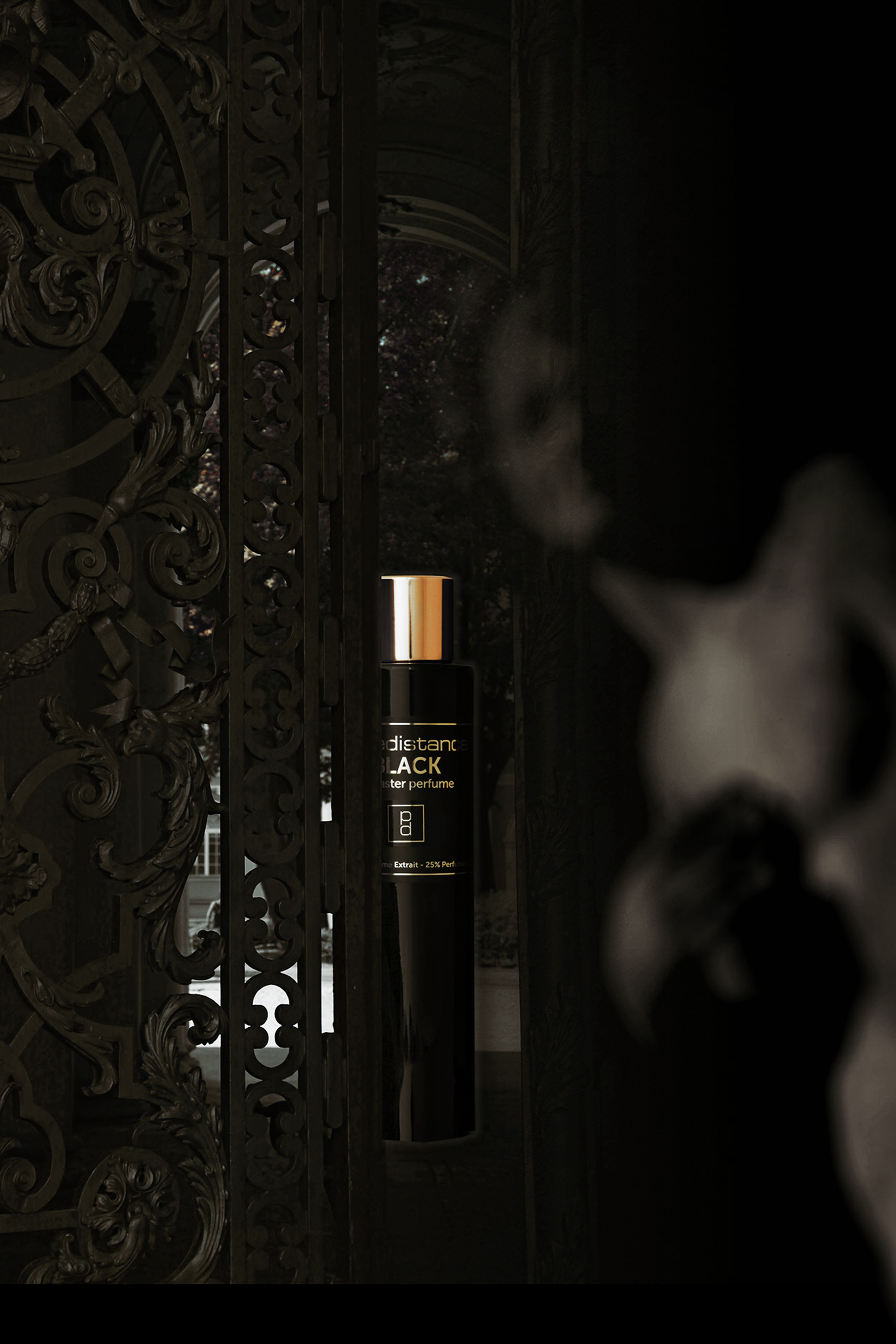
Source: Puredistance.

Source: Puredistance.

That is one my favorite quotes from the television series, Game of Thrones, and I often come up with fun variations for different occasions. It’s a line which sticks in my head, so I wasn’t surprised when it popped back up just before I began testing Black, the new, about-to-be-released fragrance from one of my favorite perfume houses, Puredistance. The luxury brand talks about how the scent was inspired by “the concept of black,” and about how it is a “mysterious fragrance that stays in the shadow, giving away – only every now and then – part of its nature.”

Upon reading that part of the press release, and seeing the image sent by the company, all I could think of was, “the night is dark (black), and full of luxury.” Well, not quite. As it turns out, Black is indeed an extremely luxurious fragrance that smells very expensive, but I found it to be as purple and pink as humanly possible. At one point, it evoked fluffy pink clouds, and I almost expected a chubby cherub to be sitting on one and offering me turkish delight. For me, “Black” is the absolute furthest thing from its name, and is not my personal cup of tea. It’s not a bad fragrance by any means — in fact, it’s well done and clearly emanates luxury — but we all have subjective tastes or things that we struggle with, and I struggled quite a bit with Black.  

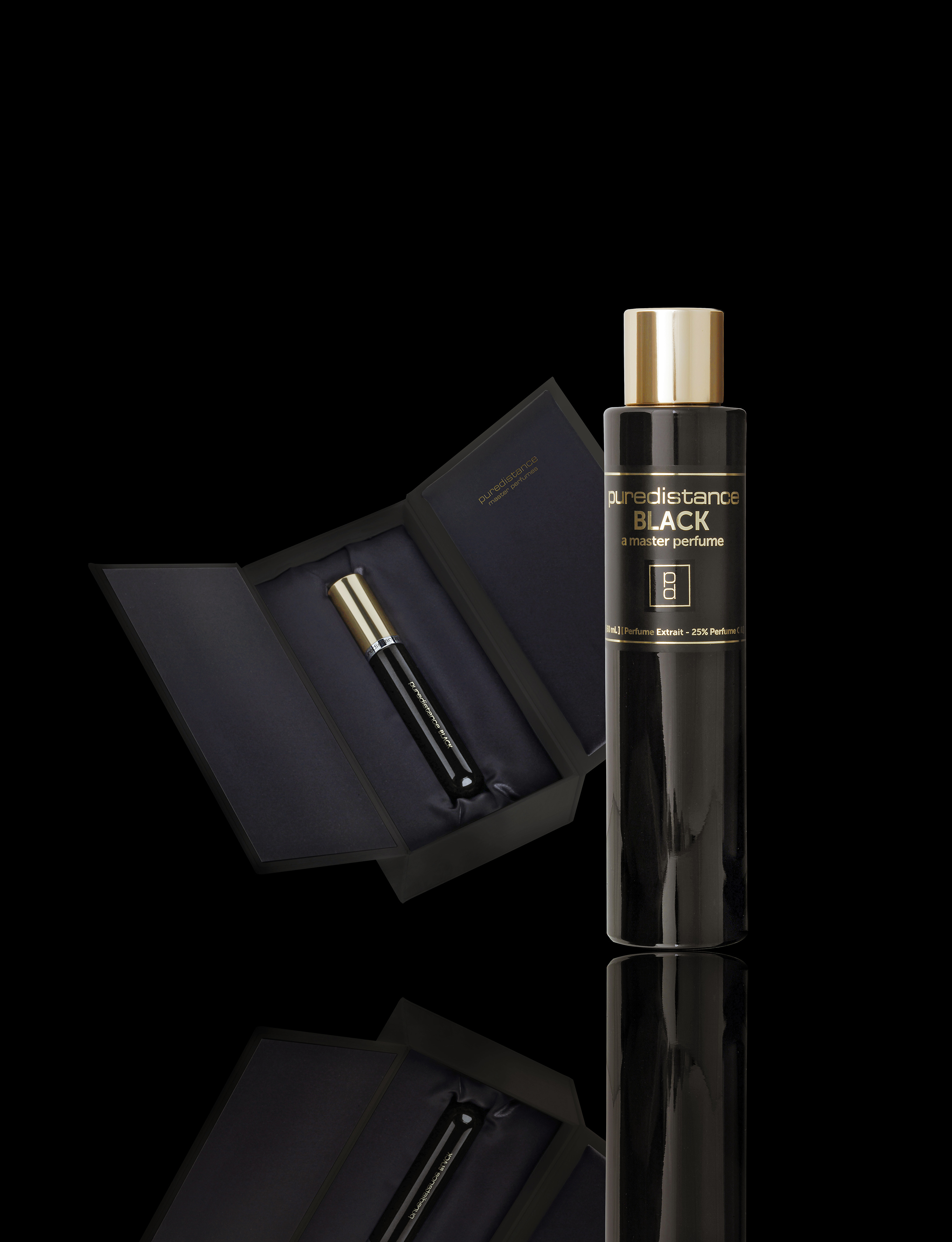
Black in the 17.5 travel flacon. Source: Puredistance.

Black in the 17.5 travel flacon. Source: Puredistance.

Like all of Puredistance’s fragrances, Black was created by a master perfumer, in this case, Antoine Lie, and is the very highest perfume concentration, an extrait de parfum. Black clocks in at 25% perfume oil, a figure that is surpassed only by Puredistance’s exquisite floral, Opardu (which has 32%). Black will be released at the start of December, and is described as follows:

Puredistance Black is an understated elegant and mysteriously charming perfume inspired by the concept of BLACK; a concept that for centuries has been associated with secrets, mystery and style.

Puredistance BLACK is created in Paris by the famous French Perfumer Antoine Lie based on a concept of Puredistance founder Jan Ewoud Vos. The essence of the concept was to create a perfume that is close to the wearer and releases sensual and elegant scent layers in a whispering way – without shouting. A mysterious fragrance that stays in the shadow, giving away – only every now and then – part of its nature.

Black in bottle, non-travel form.

Black in the regular, non-travel, bottle form.

As part of the whole concept of mysterious shadows, Puredistance wants you to treasure the “beauty of the unknown,” and merely describes the scent as one that is more “masculine and oriental” than Puredistance “I.” The company is keeping secret Black’s perfume notes, saying only that you should “Envision, Smell, Feel. Don’t analyse.” If you’re a regular reader, you all know how well I manage not to analyse things…. It’s hopeless. I was incapable of just smelling, feeling, letting go and not analysing with the uber-luxury brand, JAR, and it’s not possible here, either. It simply is not my personality or forte in life, given my obsessiveness with both facts and details. 

So, based on what I smelled, let me give you my guess of the notes in Puredistance Black:

Ginger, cardamom, absinthe wood (wormwood), saffron, rose, patchouli, myrrh, opoponax (sweet myrrh), amber, sandalwood (not from Mysore), and benzoin.

What I’m less absolutely certain of is the possible inclusion of oud, a tiny touch of elemi wood or guaiac as an additional source of woody smoke, and a drop of vanilla. It’s extremely possible, but I wouldn’t bet my life on it.

Cardamom. Source: www.kitchenheadquarters.org

Cardamom. Source: www.kitchenheadquarters.org

Puredistance Black opens on my skin with a blast of cardamom, immediately followed by ginger, amber, absinthe wood, incense, saffron, patchouli, and a whisper of rose. There is a balanced sweetness, a suggestion of sandalwood, and a saffron that is neither buttery nor hot, but wonderfully spicy. The ginger adds a lovely, fresh, piquant bite that works beautifully with the sweeter notes and the woodsy notes.

Speaking of the latter, I guessed absinthe (or wormwood) for a few reasons. First, even before I tested the perfume and simply upon taking the vial out of its white, satin pouch, I was hit by an extremely strong blast of oud-like woodiness that was herbal, spicy, and green — too much so to be real agarwood. It was also extremely similar in smell to the wood note in Amouage‘s Fate Man, a fragrance that officially includes wormwood. On the skin, the woodsy notes was surprisingly less dominant and forceful than what was wafting out of the vial, but it felt even less than complete, total agarwood in nature. Absinthe shares a few cursory, initial similarities with oud, so that’s what I’m going on.

purple smokeThe initial opening of Black in the first two minutes is lovely, but then, my nemesis takes over: purple, fruited patchouli. For all that I love black/brown patchouli, I despise the purple kind that is ubiquitous and everywhere in modern perfumery. A friend asked me the difference the other day, and I think my explanation may help some other people too.

For me, traditional (and rather 1980s) patchouli is brown/black in hue, with chewy undertones of sweet amber, spice, leather, wood, and incense smoke. The current, modern version of patchouli is purple in hue because it’s fruity, syrupy, jammy, incredibly sweet, and with grape and berry undertones. The very original type of patchouli is the 1970s, hippie kind that is really, really black, dirty patchouli and that people describe as a “head shop” scent. Some examples of fragrances with a strong purple patchouli note would be: almost every commercial, department store perfume containing “patchouli,” Marc JacobsLola, Chanel‘s Coco Noir, Le Labo‘s Ylang 49, Frederic Malle‘s Portrait of a Lady, and, now, alas, Puredistance Black. An example of black/brown, more traditional patchouli would be something like Profumum Roma‘s Patchouly, Serge LutensBorneo 1834, Chanel‘s Coromandel, or Reminiscence‘s Patchouli. It’s not a long list at all because that sort of patchouli is incredibly uncommon nowadays.

Source: Tasty Yummies blog. (Link to website embedded within photo. For recipe for Concord grape jam, click on photo.)

Source: Tasty Yummies blog. (Link to website embedded within photo. For recipe for Concord grape jam, click on photo.)

I spent all this time outlining the specific smell and nature of purple, “fruit-chouli” because it is the heart of soul of how Puredistance Black manifests itself on my skin. No less than three minutes into the perfume’s development, the saffron-oud blast takes on an almost grape-y, berry, jammy overtone that is incredibly sweet. Five minutes in, I feel as though I’ve been covered by fruit syrup. Twenty minutes in, I feel as though I’ve been transformed into a berry tart with unctuous, cloyingly sweet, fruited, purple Smucker’s jam, then sprinkled with rose petals and a dusting of saffron. I have to be honest, I lost my appetite — and I hadn’t eaten in over 12 hours.

I wish there were a substantial counter-balance to the deluge of fruit-chouli in the opening hour. There is a herbal, woody note that flitters about like a tiny hummingbird, but it’s far, far underneath, and wholly unable to compete with the grape-y, berry onslaught that is stomping over my arm like a Panzer unit in full fury. I know my skin tends to amplify base notes, but this is a bit ridiculous. I think sadly back to that absolutely lovely opening with its spicy, gingered, slightly herbal, ambered woodiness, but it’s gone, smothered by unctuous, purple, saffron-rose-infused molasses. Even the absinthe gasps for air, then retreats to the corner to hide its head.

"Purple Velvet Gold Flakes" by *Will3style at Deviantart.com. http://will3style.deviantart.com/art/Purple-Velvet-Gold-Flakes-258099755

“Purple Velvet Gold Flakes” by *Will3style at Deviantart.com. http://will3style.deviantart.com/art/Purple-Velvet-Gold-Flakes-258099755

There is no salvation in low sillage, either. That promised description of a wispy perfume that “stays in the shadow”? Ha! Black’s opening is strong and potent, with significant sillage, wafting in a purple cloud almost a foot around me. I normally would be thrilled, but the fruit-chouli is starting to crush my spirit. For a whole hour, I’m drenched by jammy, grape-berry molasses, that is just lightly infused by particles of saffron-infused rose, incense, absinthe wood, and honeyed amber. The ginger is no longer noticeable, and neither is the cardamom.

Source: hdwallpaperplace.com

Source: hdwallpaperplace.com

It was with enormous relief that things start to slowly — very slowly — improve at the end of the first hour. The Smucker’s patchouli jam lessens fractionally, allowing the rose to finally come out properly from its gooey purple shadow. The rose is sweet, just slightly dewy, and pink in visuals. With each passing moment during the second hour, it takes on a weight of its own, and starts to diffuse the fruitedness of the perfume. The woody notes and light incense are also more noticeable, though they’re largely blended into the greater whole.

Rose-flavoured Turkish Delight.

Rose-flavoured Turkish Delight.

By the start of the third hour, Puredistance Black’s purple hues have turned into a gorgeous shade of pink. The perfume wafts about 2 inches above the skin, and has a soft, creamy texture like a fluffy cloud of saffron-rose. In fact, Black takes on a Turkish Delight, or loukhoum quality, though without any of the sugared powderiness often associated with that confection. The patchouli remains, but it is quite mild as compared to its original, completely nuclear blast. Instead, it merely adds to the loukhoum association with a soft touch of grape. It actually works perfectly and brilliantly now. The absinthe wormwood and touch of incense lurk in the shadows, leaving an image that is primarily that of a pink, fluffy, creamy cloud. I almost expect to see a pink-cheeked cherub sitting on one of them.

I mean it quite sincerely when I saw that I enjoyed this phase of Black. I really did. It reminded me of a significantly richer, creamier, more luxurious version of the drydown phase of Tom Ford‘s Noir de Noir. There, the syrupy, very baroque rose with saffron, truffle earthiness, and the merest, speckled touch of oud also turned into a loukhoum confection in its final stage, but there are big difference. Noir de Noir was much thinner at that point than Black, had an almost violet-y touch, and, more to the point, was extremely powdered in nature. I wasn’t particularly fond of the violet, vanillic powder of the drydown, and I’m relieved that Puredistance Black has none of it at this stage.

Source: 8tracks.com

Source: 8tracks.com

Even better, Black is infinitely deeper, smoother, richer, creamier, and more opulent. The perfume is fluffy, but rich; sweet but not excessive; and an utterly beautiful, creamy, deep, pink rose with just the right amount of fruited patchouli. There is also the very necessary touch of woodiness which Noir de Noir lacked in its drydown, adding a balance to the floral sweetness. Here, the woody element has the faintest flicker of herbaceousness, but, more importantly, a creamy smoothness that makes me wonder if there is generic, Australian sandalwood or cashmeran underneath.

Black remains as this lovely mix for a few hours with only minor alterations. For example, at the start of the fifth hour, the perfume drops to lie just barely above the skin. The herbal absinthe wood that continues to hide behind the floral loukhoum changes in strength, fluctuating from mild to weak on the overall scale of things. And there is a growing hint of something anisic that is rising to the surface.

At the 6.5 hour mark, however, Black begins to transform. It takes on a licorice undertone and slight whiteness which makes me think that it must have myrrh. It is a note which is known to display an anisic, herbal facet, in addition to a slightly churchy, cold, white, incense note. The latter is extremely subtle in Black, but it’s there as well. At the same time, there also is a flickering shade of something honeyed which resembles very much sweet myrrh or opoponax. In addition, Black is starting to show a slightly vanillic powderiness that makes me suspect the presence of benzoin. In its final change, the perfume has turned into a gauzy veil that sits right on the skin, though it is still easily noticeable and potent when sniffed up close.

"Pink abstract" by Montserrat Lopez Ortiz via fineartamerica.com

“Pink abstract,” painting by Montserrat Lopez Ortiz via fineartamerica.com

Black still smells of a floral confection first and foremost, but the newcomers become increasingly noticeable. And, in all honesty, I’m not completely thrilled by the overall effect. There is a cloying undertone to the rose Turkish delight when combined with the anisic, slightly cold, white incense-y myrrh, the sweet myrrh, and the vanillic powder. It’s not helped by a new spiciness that faintly resembles All-Spice powder and/or star anise. In small doses and for a short period of time, the sum total is perfectly fine, but Black stays this way for hours on end. I found it a little fatiguing, if truth be told.

In its very final stage, starting at the 9th hour, Black turns into a whisper of sweet vanillic powder with rose, a vague blur of myrrh, a flicker of abstract woodiness, and an odd underlying tinge of sourness. It’s all a shadow of its former self, coating the skin like the sheerest, thinnest glaze. Black finally fades away about 14 hours from the start with four squirts from the small sample, and 15.25 hours with 5 medium sprays. (Note: My sample atomizer didn’t release the same amount as would be available from a regular bottle as it had a very small hole and a wonky release, so the quantity applied was not as large as those numbers may suggest. It would really be the equivalent of 3 small-to-medium smears from a dab vial, and 4 large ones.)

I tested Black twice, and I’m afraid I wasn’t very enamoured on either occasion. I don’t mind the middle phase, but I wasn’t crazy about the last one. And there aren’t words whatsoever to describe my reaction to the opening hour. As I said, I thought Black significantly and substantially improved at the start of the second hour, but the first one was rough.

Yet, it’s important to put my comments into context: I absolutely loathe purple, fruited patchouli. I try to grit my teeth and get over it when the note is minor, but when it is significant, substantial, and potent, then I simply can’t bear it. I don’t think others have quite the intensity of my reaction to fruit-chouli, which isn’t helped by having a skin chemistry that amplifies the note. In short, my reaction is very subjective and personal to me.

It’s also a reaction that is not even remotely common to others who have tested perfume. Black has generally been greeted with uniform admiration and liking, even by those who usually share my perfume tastes and skin chemistry. Take, for example, The Non-Blonde who writes, in part:

Puredistance is stepping into unexpected new territory with Black, a dark and romantic fragrance created by perfumer Antoine Lei[.] … Black [is] an oriental with an edge that could have come straight out of the labs at Amouage.  […]

Puredistance Black holds my interest from the very first second. A medicinal camphoric note there that lets you know that the raw materials here are real and uncompromising. Soon it becomes honeyed and steeped in booze, making the maybe-oud go down easily and deliciously. Perfumes of this kind, from Amouage to By Kilian often use their sillage to assert themselves as luxury. Not here, though, and as the press materials stress– this is a feature, not a bug. And I have to say that I love it. Black is not exactly a skin scent but it lives and thrives on skin level;  the emotional storm is very much there, manifesting itself for one’s own personal pleasure for a full day and night, just without broadcasting it to the world.

My reaction was also different from those who did detect the patchouli, but had a completely different perception of its nature. In a gushing rave, The Perfume Shrine described Black as follows:

a quasi-brutal opening with a tangy citric fruitiness allied to the darkest, earthiest patchouli possible, like snails coming out of the bush in the dusk, but the cloak of the night soon mollifies it with a woody cluster of honeyed plummy-cedar notes reminiscent of the Lutens canon and a “suede” orientalism. The sweet melange is also reminiscent of pipe tobacco, laced with a boozy aftertaste that lingers. (I hypothesize smoky cypriol/cyperus and vetiver should be featured too). Chewy, a meat course for non vegetarians. […]

Puredistance Black reminds me of the darkness and weirdness factor of Goutal’s Un Parfum Cheri, par Camille, fueled by an intense Indonesian patchouli grade replete with all its earthy chocolate and darkness “dirty” facets. […] Black would be also liked by those who appreciate Borneo 1834 and Bois de Violette or by oudh and tobacco fragrances fans, as the bittersweet oriental feel would appeal.

I’ve tested both the Lutens fragrances that she mentions, and I see absolutely no similarity between the patchouli in Borneo 1834 and Black. Not even remotely. As for Bois de Violette, I don’t think mere fruited sweetness with wood is enough to make the perfumes comparable in style. Clearly, we have very different skin and skin chemistry.

Patchouli — of any kind — isn’t mentioned at all by two bloggers with whom I generally have very similar perfume opinions, as well as perfume tastes. Take the lovely Caro of Te de Violetas who writes:

The initial impression is one of chaos: its fiery opening smolders with notes of chili pepper, cinnamon, and green cardamom, soon overlapped by the bitterness of saffron and absinthe. A smoky touch of oud dominates the blend for a while and brands its character. I am not especially devout of oud but the effect here is restrained and it suffices to cast a veil of mystery. The whole effect is opaque but lightweight and refined. As I near my nose to my wrist, I can’t shake from my head images of Bogart and Bacall. The progression is as smooth as velvet. As it turns softer, well into the drydown, vanillatobacco and tonka ensure a plushy sweetness but the darkness never completely fades away.

As a woman, I can wear Black more comfortably than the rugged M, but I still prefer to smell this on a beloved man or on a handsome stranger.

The Scented Hound also never mentions patchouli, though parts of his experience sound to me as though they involved both absinthe wood and myrrh:

WHAT I SMELL:  Black opens with a sweet and deep incense and smoky accord.  I want to say there’s some bergamot and what seems to be a bit of floraled honey mixed with the smokiness.  That initial smokiness breaks away somewhat to reveal this almost butter like creamy light almond.  But as soon as I notice that, the incense starts to waft up from the bottom again, this time with what seems to be a bit of sueded leather. There’s a bit of sour that makes an appearance that doesn’t detract, but like the smoke and incense, seems to pop in and out.  After around 15 minutes it seems like there is a bit of peppered metallic that makes an appearance.  Again, it comes and goes like all of the other notes which seem to intermix seamlessly without one note dominating.  In the end you’re left with a very light, close to the skin, smooth and elegant slightly woody incensed perfume.

As all of this should make clear, Puredistance Black is different things to different people. All these reviews are dissimilar, though mine seems to veer furthest outside any common thread.

So, the bottom line is that you should try Black for yourself, and make up your mind. If, by chance you generally share similarities with my type of skin and perfume taste, don’t be put off by my review. For example, if you love Tom Ford’s Noir de Noir, or if you would like an even richer version of its drydown, you absolutely should consider Puredistance Black. I will only caution you on one thing: if you’re expecting another, darker, woodier version of Puredistance’s absolutely spectacular “M,” then you will be disappointed. They are nothing alike — and every reviewer who mentions “M” is absolutely consistent on that point.

Perhaps that is small part of why I struggled with Black. M happens to be one of my all-time favorite (modern) fragrances, an absolutely magnificent marvel that is in my Top Ten, and which I would bathe in, if it were possible. The chypre-oriental-leather-amber mix is also the perfect representation of my perfume tastes. I don’t do well with sweetness, and Black turned into a very extreme, very pink example of that. If I had experienced something actually black in hue, with smoky, woody, dark Orientalism, then I suspect M might have had some stiff competition. As it is, I’m afraid it doesn’t.

DISCLOSURE: My small vial of Black was provided courtesy of Puredistance. That did not impact this review. I do not do paid reviews, my opinions are my own, and my first obligation is to my readers.

DETAILS:
Cost & Availability: Black is an extrait de parfum concentration (the highest), will officially debut in December 2013, and will be available in a variety of different sizes on the Puredistance website. Its European retail price will be as follows: €165 for the 17.5 ml travel spray, €275 euro for 60 ml (about 2.1 oz), and €490 euro for the 100 ml/3.4 oz bottle. The American prices are, respectively: $198, $330, and $590. Until its official release, samples of Black are being temporarily offered as part of a promotional special from Puredistance (at the website linked up above). The promotion involves: 2 x 2ml vials of the Extrait for $39 or €29, with free shipping. Retailers: Upon its release, Black will be offered at the usual Puredistance retailers which include: Luckyscent and MinNY in the US; Jovoy in Paris; and London’s Roja Dove’s Haute Parfumerie division on the 5th floor of Harrods. You can already pre-order at Luckyscent. For all other countries, you can use Puredistance’s Store Locator which lists retailers from Australia and New Zealand to Austria and Russia. I will try to remember to update this post later with more direct links, as well as links to sample sites like Surrender to Chance which normally offers Puredistance fragrances in vials that you can buy for testing.

New Perfume Release: LM Parfums Hard Leather

As fate would have it, this morning I received the press release for LM Parfums‘ new fragrance, Hard Leather. Just yesterday, I talked about my overall impressions of the perfume which I got to test in Paris a few weeks ago, and absolutely loved. Hard Leather is set to launch in a few weeks, in November 2013. While I don’t have an exact date yet, I do have the notes and concentration of the perfume. [Update: The perfume has released and I have a full review of it. I have also placed it on my Best of 2013 list.]

I thought I’d post the full photographic press release instead of just writing out the text. I think the visuals are sexy and very sleekly cool, and I’m not just saying that because black is my favorite colour.

LM Parfums Hard Leather

LM Parfums Hard Leather 2

LM Parfums Hard Leather 3

LM Parfums HL 4

So, in short, the notes in Hard Leather are:

Rum, Leather, Iris, Honey, Sandalwood, Cedarwood, Oud, Frankincense, Styrax and Vanilla.

Hard Leather is an extrait (or pure parfum) in concentration and comes in a 100 ml/3.4 oz bottle. LM Parfums’ extrait line usually costs $225 or €195, with the company offering 5 ml decants for €19. I don’t have pricing for Hard Leather, but I assume it will be in the same range. The line is available in the U.S. at OsswaldNY, and Hard Leather should be no exception. In Europe and elsewhere, you can buy LM Parfums directly from Laurent Mazzone’s website, as well as from numerous retailers. Links to online vendors who generally carry the line are below.

DETAILS:
In the U.S.: Laurent Mazzone’s fragrances used to be European exclusives, but the range just came to America two months ago. It’s sold exclusively at OsswaldNYC, with samples available for purchase by telephone order. Outside the U.S.: In Europe, you can buy the perfumes directly from LM Parfums. (There is also this other LM Parfums site.) Samples are available for €14 or €19, depending on the perfume in question and its concentration, and they come in a good 5 ml size. In the UK, the LM Parfums line is carried exclusively at Harvey Nichols. In France, you can find the perfumes, and 5 ml samples of each at Laurent Mazzone’s own Premiere Avenue. In Paris, LM Parfums are sold at Jovoy. Germany’s First in Fragrance carries the full line and sells samples as well. You can also find LM Parfums at Essenza Nobile, Italy’s Vittoria Profumi, or Alla Violetta. In the Netherlands, you can find LM Parfums at Silks Cosmeticsor Parfumaria. In the Middle East, I found most of the LM Parfums line at the UAE’s Souq perfume retailer. For all other countries, you can find a vendor near you from Switzerland to Belgium, Lithuania, Russia, Romania, Croatia, Azerbaijan, and more, by using the LM Parfums Partner listing. Laurent Mazzone or LM Parfums fragrances are widely available throughout Europe, and many of those sites sell samples as well.