
Serge Lutens Bois et Fruits: Autumnal Sweetness

Some of the Lutens Bell Jars. Source: Barneys.

Some of the Lutens Bell Jars. Source: Barneys.

A funny thing happens when a Serge Lutens addict visits the mothership in Paris. A profusion of scents, sensations, sights, and lust floods over you, leaving you rather at a loss to make objective decisions on the spot. Or perhaps that was merely my experience in visiting Les Palais Royal. In any event, it took me two visits to make up my mind about what to buy, and one of the main bell jar candidates was Bois et Fruits.

The rare, 50 ml spray bottle of Bois et Fruits. Source: Luckyscent.

The rare, 50 ml spray bottle of Bois et Fruits. Source: Luckyscent.

In the end, I walked out with Fourreau Noir and De Profundis, but I kept thinking about Bois et Fruits. I know it is a favorite of Serge Lutens’ personal assistant, the Paris boutique manager, Suleiman, with its blend of wooded, spiced, and candied fruits. Upon my return, I took the wild chance of looking up the fragrance to see if this expensive $310 bell-jar might possibly have been released in another form at some point. After all, Rousse and some other Paris Bell Jar exclusives seemed to have come out in a cheaper, limited-edition 50 ml spray bottle from time to time, so perhaps Bois et Fruits as well? To my joy, it had. And not only that, but the $200 retail price in the U.S. was significant undercut by discount retailers who offered it for around $82. Score! I’ve never hit the “Buy” button quite so quickly. Bois et Fruits is not the perfect scent, and it has some flaws which make it hard for me to swallow at $310, but it’s certainly fantastic and perfect enough for $82.

The official bottle for the perfume, the Bell Jar version. Source: Serge Lutens Facebook page.

The official bottle for the perfume, the Bell Jar version. Source: Serge Lutens Facebook page.

Having started at the end of the tale, let’s go back to the beginning. Bois et Fruits is an eau de parfum that was created by Christopher Sheldrake, and released in 1992. It is one of a quartet of “Bois” (or wood) fragrances to follow from Lutens’ ground-breaking, debut perfume, Féminité du Bois for Shiseido. The latter is a highly admired, much-loved fragrance which essentially served as the mothership for all the Bois siblings which followed.

Luca Turin, the famous perfume critic, has a very useful explanation of the history of the Bois line, their perfume structure, and how Bois et Fruits differs from both its mother and its siblings. In Perfumes: The A-Z Guide, he talks of how the “woody-fruity structure of Féminité du Bois was first devised by the perfumer Pierre Bourdon, … and then passed on to perfumer Christopher Sheldrake, who developed it with Lutens… to keep it as dark and transparent as possible.” When Lutens decided to open his own perfume house, he needed more perfumes for his line, and decided to do variations on his uber-successful Féminité.

Enter the technique known as overdosage, widely propagated by Bourdon, in which a backstage component in one perfume is moved to the forefront in a new composition, a sort of rotation in perfume space. From Féminité du Bois came four variations, three of which create new effects by bold-typing one of the components of the original: musk (Bois et Musc), fruit (Bois et Fruits), amber (Bois Oriental).

Source: laundryetc.co.uk

Source: laundryetc.co.uk

Serge Lutens explicitly states that Bois et Fruits is the fruit-dominated child of Feminité du Bois:

Like candied fruit.

This is another descendant of Féminité du bois, whose base notes contained a complex blend of several types of plums. Here, unadulterated, it’s like candied fruit.

It’s an accurate assessment, but it is only part of the story. It leaves out the important counter-balance to those sweetened fruits: the spices and wood. Luckyscent puts the woods front and center at the start of its description of Bois et Fruits:

A cornucopia of luscious woods and succulent fruits, Bois et Fruits is what we think Paradise would smell like…We are addicted to the candied cedar note in the heart of the fragrance. Surrounded by ripe, honeyed plums, figs, apricots and peaches, the woody note of Bois et Fruits is absolutely delectable. We would not call this darkly-sensual concoction gourmand in an obvious manner, but there is a sweet, lush quality in Bois et Fruits that is nothing short of mouthwatering. A blissful, endlessly enjoyable bled that is as sensuous as it is comforting, Bois et fruits is divine!

As always, Serge Lutens keeps the notes in his fragrance secret, so it’s a guessing game to know what is involved. Fragrantica, Luckyscent, and Surrender to Chance estimate that Bois et Fruits contains:

cedar, plum, fig, peach and apricot.

Barney’s tosses in cinnamon and Turkish rose, but doesn’t think there is apricot. I would include a lot more than that. To my nose, the notes in Bois et Fruits would be, in order of importance:

Plum, Peach, Cedar, Cumin, Apricot, Cloves, and Figs. Possibly, vanilla, almonds, and either licorice or anise.

Source: RebootwithJoe.com

Source: RebootwithJoe.com

Bois et Fruits opens on my skin with the dripping juices of sun-sweetened peaches, followed by plums and the tiniest hint of apricots. The fruits are infused with a distinct, definite note of cumin, and something strongly resembling chewy, black licorice. The entire bouquet is cocooned by dry, dusty cedar, then softened with what I’d swear is a touch of almond-y vanilla. In the distance, the fig flits about, simultaneously a bit leathered and quite milky. The whole thing is a very soft, airy cloud that radiates out by a foot in the opening minutes, but soon softens to something tamer.
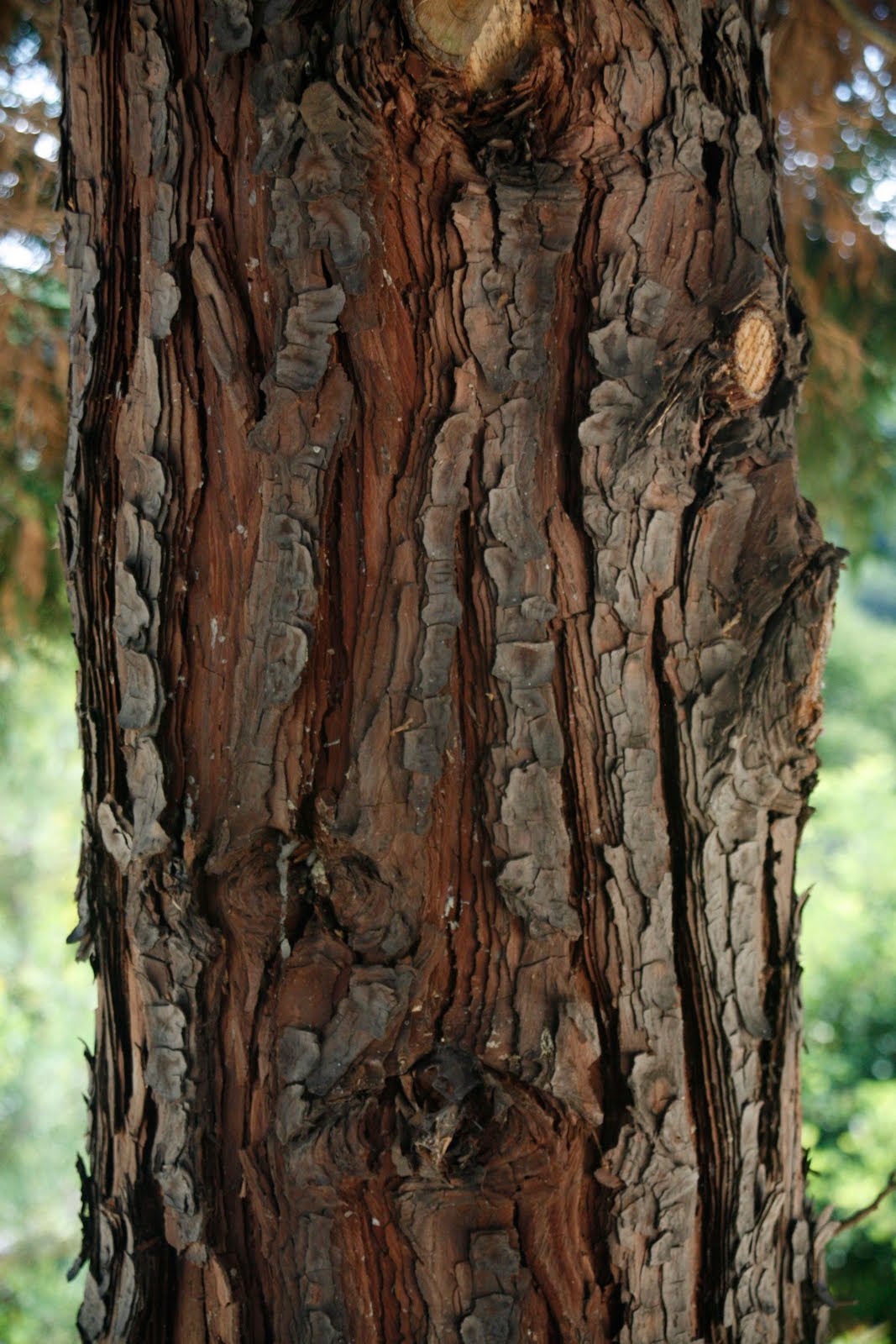
A young cedar tree trunk.

A young cedar tree trunk.

I enjoy the sweetness of the fruits so much that I sprayed Bois et Fruits onto my other arm during my test for this review, and I was completely taken aback to see that the fragrance had quite a different opening. I generally stick to one arm for all my tests, out of some odd thought about scientific conformity, but maybe that idea isn’t so weird after all, as the notes in Bois et Fruits were all jumbled up in a different order and with different strengths.

While the two scents soon ended up in the same place, on my other arm, Bois et Fruits opened with a very cognac-y, boozy note, followed by peaches, dusty cedary, and sweet, light, almost osmanthus-like apricots. The cedar was strong and pronounced, but there wasn’t a lot of plum at first. And there was absolutely no cumin at all — to the point that I thought I’d gotten it all wrong, until it suddenly popped up after about eight minutes. There was also no any licorice, almond, or fig tonalities, and very little vanilla. On the other hand, there was a milky anise element that flitted in and out, and anise is related to licorice. In any event, the two versions end up in the same place after about 20 minutes, so the minor differences aren’t significant in the long run, and I’ll just stick to writing about the version on the arm that I usually use for testing.

Photo: David Hare. Source: open.az

Photo: David Hare. Source: open.az

After 10 minutes, the notes seamless blend into each other. The fruits are on top, and the woods are diffused throughout, but in the base, the cumin adds a soft, muffled growl. It’s not a sweaty note like body odor, the way cumin can sometimes be, but it’s definitely a subtle touch of animalism and light “skank.” It works subtly from afar to add complexity to what would otherwise be primarily a two-pronged scent. I’ve seen one person describe the cedar as a “sweaty” note, but I would bet my bottle of Bois et Fruits that there is the cumin in the fragrance. For the most part, it’s a dusty note, like the powdered kind you’d find in a spice market, but with a distinct earthiness underneath. I have to admit, it’s my favorite part of the fragrance, even though I’m not usually enamoured by cumin. Something about the spicy dryness and earthy muskiness adds a brilliant counter-balance to the sweetened juices of the fruits, while simultaneously accentuating the dryness of the cedar.,

Soon, a subtle creaminess starts to stir and rises to join the top notes. It’s not vanilla or almonds, but neither is it purely milky fig, either. It’s like a teaspoon of ice-cream flecked with sweetness, as if the lactonic qualities of the fig had melded with the dryish vanilla to create the impression of textural creaminess. I still wonder about the black licorice note that I initially detected because, at the same time as the creaminess, there seems to be some sort of milky white anise lurking about.

Cloves, close up. Source: www.toothachesremedies.net

Cloves, close up. Source: www.toothachesremedies.net

About 30 minutes in, there is an accord which strongly resembles parts of Serge LutensSerge Noir, a fragrance dominated, in part, by cloves and cumin. Christopher Sheldrake and Serge Lutens reportedly worked on Serge Noire for more than 10 years, and it was released in 2008. It wouldn’t surprise me one bit if the cumin-clove-cedar trio in the 1992 Bois et Fruits was later “overdosed” in the way that Luca Turin describes above to become the foundation for Serge Noire. The difference is that the trio are much more subtle and balanced in Bois et Fruits, while they’re tripled in strength in Serge Noire. In any event, both my arms are most definitely radiating cloves, but it’s so well-blended that, from afar, the whole thing merely translates to dry, brown spices.

The unusual thing about Bois et Fruits’ overall development is how the notes never seem to stay in the same place from one minute to the next. It’s like a horse race where several contenders are all racing neck-and-neck near the finish line. Sometimes the Peach-Plum horse takes the lead and dominates, but the next minute, it’s the Clove-Cumin chestnut horse, and three minutes after that, it’s the Cedar stallion. Trailing far, far behind is the vanilla, looking like just a speck in the distance.

Source: narutoforums.com

Source: narutoforums.com

About 2.5 hours in, the horse race looks a little different. The clove has faded away, and the cumin softens to a dryly spiced woodiness with a very earthy feel. The cedar adds a similarly dry touch to counter the fruits which are primarily just plum now, with much weaker amounts of peach. The apricot never really showed up on my skin, beyond the opening minutes, and the almond note didn’t last much longer. What is more noticeable throughout is the muskiness lingering at the edges. It melts into the cumin’s earthiness, evoking the image of heated skin. To be precise, a guy’s skin under layers of thick, winter clothing after he’s exerted himself. Let me be clear: it does not smell fetid, and there is absolutely no impression of ripe body odor or smelly armpits, but there is a subtle sweatiness that evokes warmed, musky skin.

An hour later, around the 3.5 hour mark, Bois et Fruits is a discrete, very soft sheath of dark brown silk. Yet, the scent is still strong up close, and tendrils of spiced plum occasionally float in the air around you. It’s an airy, gauzy, balanced blend of plum, cedar, cumin, with just a touch of peach. Slowly, Bois et Fruits grows more abstract, the cumin and peach fade away, and the remaining notes lose their shape or distinctness. In its final moments, Bois et Fruits is merely plummy sweetness with a hint of dry woodiness. All in all, it lasted just a hair above 8.75 hours on my skin with 3 sprays from an actual bottle (as opposed to an atomizer). Through out it all, Bois et Fruit evoked images of an autumnal forest filled with trees bearing heavy, ripe fruits in a colour palette of red, orange, and dark brown softness.

Source: wallpapervortex.com

Source: wallpapervortex.com

On Fragrantica, the perfume has received mixed reviews. Judging by the longevity votes, a number of people think Bois et Fruits doesn’t last long, and it also has moderate to weak sillage. Quite a few posters talk about Feminité du Bois, the mother perfume, with most commentators agreeing that Bois et Fruits is much more fruited in nature. One woman, “woodlandwalk,” had an interesting comparison of the two fragrances, and her experience with Bois et Fruits mirrors my own to some extent:

Very Autumnal! I find Bois et Fruits easier to wear than Feminite du Bois. I love Feminite du Bois because I love the smell of cedar wood, but often FdB can feel a bit one dimensional – so if you find FdB a little too ‘wood workshop’, Bois et Fruits might suit you.

The sweaty cedar and boozy plum of FdB are softened considerably here with fig and apricot, so Bois et Fruits is a little more pillow-like – you can relax into it. The fig adds a lactonic (milky) note so it just feels more smooth. There’s a ‘nutty’ quality to it – a sort of bitter-sweet almond that again gives a softer edge

The apricot is slightly syrupy in feel, so this with the fig and less spicy notes makes for a sweeter, cosier, easier to wear perfume, still boozy though, and very warm. Friendly.

On me the silage is fairly close to skin, longevity soft to moderate. This perfume is growing on me and I might upgrade from decant to full bottle.

I obviously detected a lot more spices than she did, but little apricot. On the other hand, I’m glad I’m not crazy, and that she noted the almonds too! I also agree that Bois et Fruits feels quite pillowy soft.

Others describe the scent in the same vein, talking about autumn and sweetness:

  • Bois et Fruits is a fragrance that would be perfect for fall and winter- and in a way makes me think of Christmas and those very rich cakes with dried fruit and spices. The fragrance is heavy, oozing with sweet, juicy and smoky plum and apricot. If I could give it a texture, it would be that of a liquid honey that has been warmed up. I would classify it as oriental-gourmand, although it does not feature vanilla nor honey, it is very sweet, almost edible. The scent is so intense and long lasting, 5 hours later smells as if it was just sprayed.
  • I love the dried,succulent fruits(mainly apricot on my skin), against the warm, spicy cedar. It`s like an imagenary tree covered in red,brown and yellow leaves with peaches, plums and apricots(.All growing at the same tree.) Under the heavy loaded branches, a dragon is sleeping peacefully, only opening one eye now and then just in case.. Perfect for autumn!

Some people were not as enthused. Some prefer Feminité du Bois, while a few thought Bois et Fruits smelled “pungent,” no doubt due to the cedar. One thought the fragrance was too cedary, while another thought it was too fruity instead. There is also the same sort of split amongst the Fragrantica critics about whether the fragrance is too dry or too sweet.

In short, for Bois et Fruits more than for most scents, it’s really going to come down to your skin chemistry. Mine happens to amplify base notes and sweetness, and, yes, I happen to find the fragrance very sweet. It would be too much so for me normally, but it works in this rare instance because of the dryness and spices that lurk underneath. Plus, I find the cumin to make all the difference. It is the perfect, well-calibrated amount to add character, while simultaneously helping to cut through the fruits. Still, if your skin chemistry is like mine, then you should try Bois et Fruits only if you enjoy the possibility of a very sweetened, fruity fragrance with a lesser dose of dry woodiness.

All the blog reviews that I’ve found for Bois et Fruits are positive, though none of them rave about the scent as a complex masterpiece. It’s not, as it is too simple for that. But it is still very appealing, as Perfume-Smellin’ Things reports. In fact, it is seems to be her favorite Lutens out of them all, and she imagines it to be “the scent of Paradise”:

Les Eaux Boisées are my favorite part of Les Salons du Palais Royal collection, and of them, Bois et Fruits is the most beloved.

Bois et Fruits combines cedar with notes of peach, apricot, figs, and plums, and thus emphasizes the fruity side of its “Great Mother”, Féminité du Bois. Having said that, Bois et Fruits is actually much drier and less sweet than Féminité. It starts with a dry cedar note, within seconds the ripe fruitiness of figs and plums becomes apparent, the fruits balance the dryness of the woods and cedar keeps the potentially excessive sweetness of fruits in check. The overall effect to my nose is that of dried fruits mixed with a slightly incensy, sometimes even almost leathery accord. Bois et Fruits is a subtler scent, it is much less forceful than Féminité du Bois, and even though it has fruits in its title, it actually translates much less fruity on my skin that its predecessor. I always imagine that Bois et Fruits is the scent of Paradise, or at least of the woodier, wilder part of the Garden of Eden.

Victoria of Bois de Jasmin also didn’t think Bois et Fruits was all that sweet, and she liked it. In her four-star review, she wrote:

Chris Sheldrake and Serge Lutens’s Bois et Fruits (1992) captures a moment of autumn before one becomes aware of its farewell connotations. Warm cedarwood is folded over lusciously ripe fall fruits—figs, peaches, and plums, which speak more of a voluptuous aspect of autumn than of its nostalgic side. This fragrance is one of few instances when fruit is not rendered as treacly and artificial. Instead, sweet resinous cedar married to fruit results in a very elegant scent with the brightness of sweet-sour plum courting the soft powderiness of fig.

I think her four-star rating (which is what Luca Turin also gives it in his Perfumes Guide) is perfect, because the fragrance does have some flaws. I agree with those on Fragrantica that its sillage and longevity tend to be on the lighter side of things, but there is also something else. For me, Bois et Fruits doesn’t stand out enough to warrant inclusion in the Bell Jar line. Those are the most complex, nuanced, morphing, and twisting Lutens scents, so their high price is understandable and usually worth it. They are the masterpieces that, whether or not you can wear them, are brilliant works of olfactory art for the most part.

Bois et Fruits doesn’t measure up to that standard. For me, it would be a perfect addition to the regular export line, and it’s well-worth it at $82. It’s great for autumn, and it also works wonderfully as a layering scent to go with much drier or smokier fragrances. But I’m very dubious about the U.S. retail cost of $200, and I honestly could not imagine spending the much-inflated U.S. Bell Jar price of $310 on Bois et Fruits. Not in a million years.

The bell jar is cheaper in Euros at €145, without the annoying, extra-high U.S. mark-up, and I think it may have been €135 back when I was in Paris. Yet, if you notice, I didn’t buy it even at that price, and the main reason is that it didn’t stand out as much as its siblings in the bell jar line. It simply didn’t feel special, complex, or strong enough — lovely and succulent as it may be. Fourreau Noir, De Profundis, Boxeuses, Un Voix Noire, and some of the other Bell Jar fragrances are in a different class, in my opinion. However, I found one European online retailer to carry the rare, discounted 50 ml spray bottle of Bois et Fruits, which is priced €105, and that may be much more reasonable for what it is.

I wouldn’t recommend Bois et Fruits for everyone. You must like sweet perfumes, and a lot of fruit. You also have to appreciate cedar, and a touch of cumin. If you do, and if you can buy Bois et Fruits at a discount, I think you’ll enjoy it very much. It’s not very intense or edgy, it’s definitely not very complicated, but it is quite an Autumnal treat.
DETAILS:
General Cost & Discounted Sales Prices: Bois et Fruits is an eau de parfum that comes in a 2.5 oz/75 ml bell jar that costs $310 or €145. However, you also can find it in a 1.7 oz/50 ml spray bottle which retails for $200, but which is massively discounted on some sites for much less. Bois et Fruits is currently on sale at FragranceNet where the 1.7 oz/50 ml bottle is priced at $84.31, when you include their an additional 15% OFF with the coupon code RESFT5. (I think I bought mine for $82, so it may have gone up a wee bit since then.) The site offers free domestic shipping, but they also ship world-wide. Bois et Fruits is also discounted on Amazon, where the seller is listed as Serge Lutens, and the perfume is priced at $96.87. Beauty Encounter sells the perfume for $99 if you use their 20% off code.
You should also check eBay as the fragrance is sometimes deeply discounted there. At the very least, it is commonly in the $95-range. 
Serge Lutens: you can find Bois et Fruit in the expensive bell jars on the U.S. and International Lutens website, with non-English language options also available for the latter.
U.S. sellers: Bois et Fruits in the 50 ml atomizer bottle is available for $200 at Luckyscent, Barney’s, and AedesBarney’s also sells the very expensive bell jar form.
Outside the U.S.: In Canada, you can find Bois et Fruits at The Perfume Shoppe for what may be CAD$200 or US$200. I’m never sure about their currency choice, since it is primarily an American business. They also offer some interesting sample or travel options for Lutens perfumes. In the UK, I couldn’t find any vendors as this is primarily a Paris exclusive bell jar. However, in France, I found it sold at Laurent Mazzone’s Premiere Avenue in the 50 ml atomizer bottle for €106, and the site ships worldwide. French Sephora carries a lot of the Lutens perfumes, but again, Bois et Fruits is a Palais Royal Paris exclusive. In Australia, the perfume is on sale at the FragranceNet site for AUD $94.41, with the discount code, instead of what it says is the Australian retail price of AUD $223.96. 
Samples: You can test out Bois et Fruits by ordering a sample from Surrender to Chance where prices start at $6.99 for a 1 ml vial. There is also a Five Lutens Sample Set for $18.99 where you get your choice of five non-export, Paris exclusives, each of which comes in a 1/2 ml vial. 

By Kilian Apple Brandy

Source: dailymail.co.uk

Source: dailymail.co.uk

Some fragrances are not meant to be practical, versatile, daily experiences. They’re intended to be playful whimsy, a bit of a laugh for those with very deep pockets who can afford to indulge in a rich man’s expensive luxury once in a blue moon. I think that’s perhaps the best way to interpret and approach Apple Brand, the brand-new, recently released perfume from By Kilian. It is a fragrance that really isn’t something practical for most people to wear on a daily basis, unless you want your boss to think you’re an alcoholic and write you up to HR, or a police officer to look at you askance and subject you to a breathalyzer test. In a nutshell, Apple Brandy makes you smell like you were smeared from head to toe with a 1000 plates of Crepe Suzette, and then fell into an oak barrel of cognac after an all-night bender.

Source: Instyle.com.com

Source: Instyle.com.com

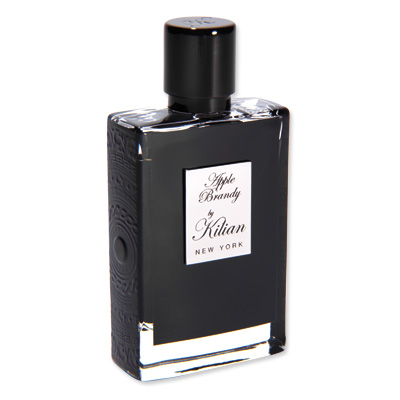
Apple Brandy is an eau de parfum that was created by Sidonie Lancesseur, and was released at the end of 2013 as a scent exclusive to Kilian Hennessy‘s new store in New York’s meatpacking district. As the Kilian website description makes clear, the fragrance is both a playful wink at the “Big Apple,” and an homage to his Hennessey cognac heritage:

BRANDY is the term used to designate “Cognac“ when your product is not actually produced in the region of Cognac. In order to recreate this very specific “Cognac” scent that belongs in Kilian’s olfactive memory, Sidonie created an accord combining the smoked wood from the Oak casks – Cedar wood from Texas, white Cedar from China and Labdanum from Spain – and the sugar from the alcohol – Vanilla and Ambroxan.

APPLE is of course a wink to New York, the “Big Apple”. In order to create an “Apple accord” that would not be anecdotal or too simplistic, we created an “Apple liquor” that would blend, rather than contrast, with the “Oak cask” accord.

The complete list of notes is as follows:

Oaken barrel, Texas cedar, Chinese white cedar, Spanish labdanum, Vanilla, Ambroxan.

Source: NYTimes.

Source: NYTimes.

Apple Brandy opens on my skin with a tsunami of pure, hard alcohol. I absolutely adore boozy notes, but Apple Brandy takes it to a whole new extreme and level, to the point where I actually said, “Whoaa…..” out loud. For an instant, the opening note is of apple — tart, crisp, and tangy like a Fuji — but it is almost immediately covered with cognac. The liqueur is sweetened with an extremely nutty, toffee’d undertone, and has traces of oak and a thick amber as well. It’s nice, but, my God, is there a lot of it! It’s intense, almost to the point of rawness, and beyond any “booziness” that I’ve previously encountered.

Source: yumsugar.com

Source: yumsugar.com

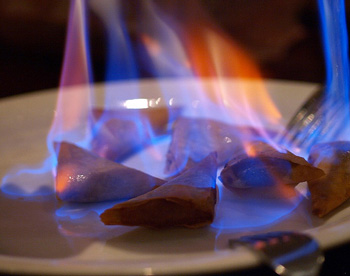
The overall effect is exactly like a caramelized apple at a fair, covered in heavy, dense toffee, and then dunked into an oak barrel of alcohol. Perhaps a more precise comparison is to Crepe Suzette, the kind were the apple-stuffed crepes are doused with sugar, then flambéed to a caramelized crisp with copious amounts of brandy. On the side, and all around the plate, is a luxurious crème anglaise sauce of slightly eggy, rich vanilla.

Crepes with creme anglaise. Source: foodspotting.com

Crepes with creme anglaise. Source: foodspotting.com

The intensity of the alcohol tsunami softens after 5 minutes, losing some of its rawness and undiluted, hard edge. I still smell like apple Crepe Suzette, but it’s after some of the brandy has been burned off. The first time I tested it, Apple Brandy was actually quite enjoyable as a cozy, warm, dense, boozy gourmand. I liked the ambered apple compote, and I have a particular weakness for crème anglaise sauce. The vanilla isn’t a huge part of the scent on my skin, but the flickers of it at the edge provide a lovely richness that makes Apple Brandy feel like a decadent indulgence. My favorite part, however, is the oak which really evokes oak barrels in the strongest way possible. It rather brilliant, in my opinion.

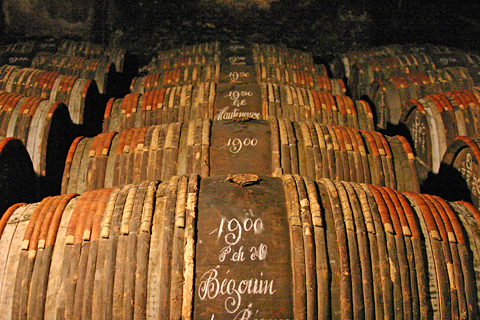
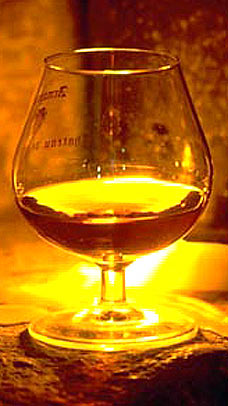
Oak Barrel with 1973 GC Le Peu Hennessy cognac/ Source: blog.cognac-expert.com

Oak Barrel with 1973 GC Le Peu Hennessy cognac/ Source: blog.cognac-expert.com

Apple Brandy is an enormously linear scent with very little change throughout its lifespan. It never transforms in any substantial way, but there are variations of degree that occur after the first hour. The fragrance’s apple tonalities weaken and slowly fade, while the oak barrels become much more dominant. There is something incredibly appealing about the oak when doused by the caramelized apple and the heady, boozy cognac. The wood is extremely smooth, slightly smoky, and rich, adding a layer of depth to the otherwise simplistic scent. The cedar never appears on me in any distinctive way, but I think it works indirectly from the edges, heightening the oak with that subtle smokiness. Really, the wood parts are beautifully done as a counterbalance to the Crepe Suzette and hard liqueur.

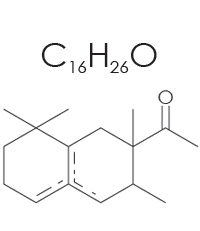
Ambroxan. Source: Aromachemicals.net

Ambroxan. Source: Aromachemicals.net

At the end of the first hour, Apple Brandy becomes increasingly drier and woodier, particularly as the Ambroxan starts to stir in the base. The synthetic, alas, is a little difficult for me. According to the Good Scent Company‘s olfactory database, Ambroxan’s strength is assessed as “high” or intense, and its aroma is: “ambergris, old paper, sweet labdanum, dry.” Here, it initially adds a warm, sweet, ambered feel to Apple Brandy’s opening, but the dryness takes over about 90 minutes into the perfume’s development. I am much more sensitive to aromachemicals than the average person, and Ambroxan is no exception. The inside of my nose hurts each time I sniff my arm up close, but it’s thankfully not an extreme reaction. As a whole, the aromachemical is well-blended into the fragrance, and doesn’t seem hugely excessive. Still, it’s enough to make Apple Brandy a much drier scent than it was originally.

At the start of the third hour, Apple Brandy is a blur of sweetened booze and woodiness on a very dry base. The caramelized apple compote note is muffled, and soon fades away entirely. The vanilla really never showed itself on my skin outside the opening hour where it was more of a supporting player on the sidelines. As for the other notes, they feel quite indistinct and abstract, lacking delineation and overlapping each other, with only the brandy really dominating. The sillage — which was initially quite intense with only a small amount of perfume applied — now drops, hovering only an inch or so above the skin.

Hennessy's aged, cognac oak barrels. Source: graperadio.com

Hennessy’s aged, cognac oak barrels. Source: graperadio.com

That’s really the sum total of Apple Brandy’s development on my skin. From the third hour until its very end, the fragrance is merely a dry, semi-sweet, woody, oak and cognac bouquet. In its final drydown, Apple Brandy is just an abstract smear of woodiness tinged with some vague sense of booziness. All in all, the perfume lasted just over 9.5 hours, with generally good sillage that only became a skin scent at the start of the 6th hour.

Source: autoblog.com

Source: autoblog.com

I enjoyed parts of Apple Brandy a great deal, but I have numerous caveats and issues with the scent. I live in a place where I cannot go anywhere without driving, and where the jackbooted police are notoriously aggressive over the smallest thing. I simply would not dare wear Apple Brandy outside my house for fear that — were I ever to get pulled over — the police would think I’d been drinking and driving. Knowing the police here, there is no way they’d believe my protests, “Officer, it’s only my fragrance.” I wince just imagining the scene.

I also would not be comfortable wearing the scent to social occasions either, lest people think I’d been on a bender or had alcohol problems. The smell of liquor is simply so intense from a few dabs, especially in the first two hours, that regular application might smell as though I’d doused my clothes with an entire bottle of expensive brandy. Lastly, as an attorney whose speciality was employment law for big corporations, I would strongly advise against wearing Apple Brandy to any workplace, period. This is the sort of thing that would lead to HR problems, because it really does not convey an appropriate, professional image.

Source: it.123rf.com

Source: it.123rf.com

On the upside, Apple Brandy might be a lovely scent to wear in your own home on a chilly, snowy winter’s night. It is the perfume equivalent of having a brandy while sitting before a fire. Yet, even as I write that, my brains whispers the other problems with the scent: it’s linear, it’s a novelty act, and it would get boring very quickly. I enjoyed parts of Apple Brandy quite a bit the first time around, especially before the dryness and Ambroxan kicked in. The second time around, however, I was less enthused and a bit bored. There is a somewhat exhausting quality to the scent; it beats you over the head at first, and you’re quite awed by both the intensity and the novelty. Later, though, its unchanging nature wears you down a bit, and you’d like something a bit different than just the incessant clamour of brandied oak barrels. In short, Apple Brandy’s playful, exuberantly celebratory act is perhaps something best suited to a rare occasion.

All of that brings me to the next issue: price. Apple Brandy costs $235 for a small 50 ml bottle, and unlike many other Kilian fragrances, I don’t see the (relatively) cheaper refill option listed. I personally would never spend $235 on a fragrance I wouldn’t dare to wear outside the house, and to which I’d turn only once in a blue moon as a novelty. On the other hand, in the same way that a really expensive bottle of brandy can be an occasional indulgence, so too is Kilian’s perfume equivalent. Parts of it are truly enjoyable at times.

At the end of the day, price is a subjective matter, so if you have no problems spending $235 to smell like flambéed Crepe Suzette and Hennessy oak barrels, go for it. Just don’t spray on a lot, or you may appear like an alcoholic on a bender. And, for the love of God, don’t drive while wearing Apple Brandy!

DETAILS:
Cost & Availability: Apple Brand is an eau de parfum that costs $235 for a refillable 1.7oz/50 ml bottle that comes in a black, wooden box. I don’t see the actual, and usually cheaper, refill option listed. The fragrance is said to be exclusive to the new Kilian store in New York, but you can purchase it from the US Kilian website. You can’t find it in Europe, or from the Kilian International site. However, you can always try to call the new boutique in New York to purchase it by phone. The store’s address and phone number are: 804 Washington Street, NEW YORK CITY, NY, 10014. +1 212-600-1298.  Samples: I obtained my sample of Apple Brandy from Surrender to Chance where prices start at $6.99 for a 1/2 ml vial.

Reviews en Bref: Imaginary Authors Memoirs of a Trespasser & Soft Lawn

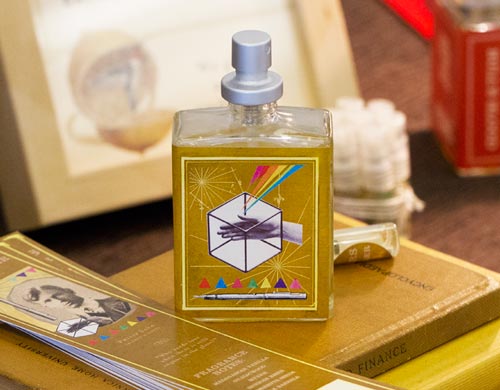
As always, my Reviews en Bref are for scents that — for whatever reason — didn’t warrant a full, exhaustive, detailed review. I recently tried out some fragrances from Imaginary Authors, an American indie line begun in 2012 by perfumer, Josh Meyers. In another post, I looked at Cape Heartache and The Cobra & The Canary. This time, I will focus on Memoirs of a Trespasser, and Soft Lawn.

According to its website, the Imaginary Authors line was “born from the concept of scent as art and art as provocation.” Each fragrance is entitled with the name of a book, penned by an imaginary author who does not actually exist. All the fragrances are eau de parfum in concentration, and a vast majority were released in 2012.

MEMOIRS OF A TRESPASSER:

Source: Fragrantica

Source: Fragrantica

Memoirs of a Trespasser is meant to be an author’s memoir of his exotic travels, with a hallucinatory bent. The fragrance is an oriental vanilla, and its notes are:

Madagascar Vanilla, Guaiacwood, Myrrh, Benzoin Resin, Ambrette Seeds & Oak Barrels.

Memoirs of a Trespasser opens on my skin with vanilla, a weird fruitiness, musky sweetness, and oak. There is a momentary booziness, followed then a soft, creamy guaiac wood. The whole thing is laced with a scratchy, synthetic, aroma-chemical hum that is common to many of the Imaginary Authors fragrances, and which them so difficult for me. Here, it is dry, but sweet, with only a trace of the peppered element distinctive to ISO E Super. Yet, at the same time, the note is extremely dry, as if another aromachemical is responsible. Perhaps it is ISO E’s drier relative, Kephalis, but whatever it is, each and every time I smell Memoirs of a Trespasser up close, the inside of my nose feels raw, bloodied and scraped.

Within minutes, Memoirs of a Trespasser turns into a cloying, sickly Bourbon vanilla with a subtle tinge of soapy, cold myrrh, followed by smoky, woody notes and peppered, dry aromachemicals. I find the whole combination oddly nauseating, perhaps because the vanilla smells like a really cheap version of Madagascar extract with a hot, buttered rum undertone. I’m also not keen on the unexpected fruited nuance that smells like oranges, peaches, and Tang juice all in one. It doesn’t last long, perhaps 25-30 minutes, but it perplexes me the whole time. Out of all the notes, I like the oak element the best, but that is not saying much.

Towards the end of the second hour, Memoirs of a Trespasser shifts with the woody elements bypassing the vanilla and taking its place as the dominant accord. The primary bouquet is of lightly smoked guaiac wood, followed by myrrh and a touch of thin, dry vanilla, all infused with ISO E-like synthetics. The guaiac is difficult for me here, especially as it takes on an increasingly stale sourness as time goes by, which meshes oddly with the dry-sweetness of the other elements. A clean, white muskiness also starts to become noticeable, adding to the fragrance’s synthetic hum.

By the end of the 5th hour, Memoirs of a Trespasser is really various forms of sour, dry, smoky woodiness with a light sweetness and only a suggestion of vanilla extract. It remains that way for a while, until suddenly the vanilla returns at the start of the 8th hour. From that point until its end, almost 12 hours from the start, Memoirs of a Trespasser is a dry vanilla scent imbued by an abstract woodiness and a hint of powder.

I didn’t enjoy any of it, probably because I had the same extremely strong physical pain in my nose that I did to testing The Cobra & The Canary. I don’t know if it is an issue of the quantity of synthetics used in Imaginary Authors’ fragrances, or something else, but the degree of my reaction to the line far exceeds what I normally experience. This is not like the occasional headaches I get from ISO E Super when a vast quantity is used, but something akin to my more serious reaction to the super chemical Norlimbanol, and its relative, Kephalis.

Few people share my sensitivity to chemicals, and many are anosmic to things like ISO E Super. Yet, even without the synthetics, I wasn’t impressed by Memoirs of a Trespasser. It was simplistic, uninteresting, quite cloying at first, and discordant as a whole. It never felt refined or sophisticated. It was simply…. there.

SOFT LAWN:

IA Soft LawnSoft Lawn is described in the context of an imaginary author in 1916 who attended Princeton University and was a tennis champion. The notes are:

NOTES: Linden Blossom, Laurel & Ivy leaves, Vetiver, Oakmoss, Fresh Tennis Balls & Clay Court.

Soft Lawn opens on my skin with freshness and green notes that are crisp, bright, and aromatic. On occasion, they are almost a little herbal, as there is a minty nuance lurking underneath at the start. Then, a soft floral creeps in, along with a clean, fuzzy, synthetic element. Hints of vetiver, grassiness, and ISO E Super dance around the edges. The floral note initially smells only vaguely like linden blossom, but not as sweet, lemony, or honeyed as it usually is. As a whole, Soft Lawn truly smells like a freshly opened can of tennis balls with linden, vetiver, green elements, and synthetics.

Linden blossom. Source: www.selfsufficientish.com

Linden blossom. Source: www.selfsufficientish.com

As time passes, the fragrance shifts a little, though not by much and primarily in a textural way. The lemon undertone to the linden blossom becomes more prominent, along with the overall floral aspect. As a whole, though, the notes are very blurred, lacking delineation, clearness, and force. In contrast, the ISO E Super and its peppered touch are much more distinct, noticeable in a clear, separate way that stands out.

Source: wallsave.com

Source: wallsave.com

The oddest thing about Soft Lawn for me is how the fragrance’s texture is its primary smell. It’s hard to explain, but Soft Lawn soon turns into something wholly fuzzy in feel. It’s an amorphous, indistinct blur of floral greenness. The fuzziness of the tennis ball texture is its actual smell, though its infused with that fresh, green floracy. The whole thing is imbued with a synthetic freshness that is initially sweet, delicate, and light.

There really isn’t much more to Soft Lawn than that. The fragrance never changes in any substantial way on my skin, and I tested it twice. It’s linear, simplistic, and uncomplicated, though Soft Lawn is not completely terrible from afar in the beginning as some sort of extremely generic, green freshness, I suppose. Up close, however, it smells industrial to my nose, with the aromachemicals increasingly dominating the scent. Perhaps it is the power of suggestion, but Soft Lawn does smell almost entirely of tennis balls on me after the first hour. All in all, the perfume generally lasted about 11-12 hours on my skin, with moderate sillage throughout, but I didn’t apply a lot due to my problems with all the synthetics in the IA line.

My experiences with the Imaginary Authors line led me to ask a family member for a Zyrtec anti-allergy pill before my second test of Soft Lawn, in case I had potentially developed allergies for the very first time in my life. Nope, that was not the cause of my pain. I was fine until I smelled Soft Lawn up close, and then…. bam, it felt as though someone had taken a straight razor to the skin inside my nose.  Even without the synthetics though, I find it hard to summon up much enthusiasm for the fragrance. I’m not keen to smell like tennis balls, I don’t like Soft Lawn’s lack of nuance or definition, and it’s a damn boring scent from start to finish. I’m afraid I simply don’t get it.

ALL IN ALL:

My primary problem with the Imaginary Authors line is obviously the physical pain I experienced but, even apart from that, I struggled with the scents as a whole. None of them felt sophisticated, refined, or elegant to me. Each one seemed to merely exist, as if a combination of related (and sometimes random) notes were put together primarily with an eye to meeting a plot line about a tennis champion or an imaginary person who went on travels to exotic places. It’s hard to explain because it’s not about a scent being unfinished or amateurish, though some element of both seems to be the case with each of the fragrances.

Rather, it’s more about the feel of the perfumes as something lifeless on the skin. Some of them lack a defining identity or force beyond the novelty factor, whether it is “tennis balls” or the unusualness of the hodge-podge combinations. The Cobra & The Canary seemed to have the greatest actual or developed character out of those that I’ve tried, but it is not an approachable, easy fragrance in my opinion. I could see more of the original story and goal in The Cobra & The Canary, but the rest transported me nowhere, evoked nothing, and felt as if they were merely just… there.

I understand wanting to do something different and experimental, about wanting to create a novel fragrance that is outside the usual box. I think that’s laudable, but being different for the sake of being different doesn’t always work. Successful execution is also key, as they often tell chefs on shows like “Top Chef” when they are trying to be different but fall flat on their face with some utterly peculiar combination.

Still, the Imaginary Authors line has enough fans for all of this to be a highly subjective matter of personal opinion. At the end of the day, the fragrances simply don’t work for me.

DETAILS:
Cost & Availability: Each of the fragrances is an eau de parfum that comes in a 60 ml bottle that costs $85. You can purchase them directly from Imaginary Authors. The company also offers a sample service, where each perfume costs $6 per vial with the full set of 8 priced at $35. Imaginary Authors’ full line is carried by several Portland retailers, along with Parfums1, which ships overseas, though at a high price. The line is also carried at Brooklyn’s Twisted Lily. You can find other US vendors, along with some Canadian ones, at Imaginary Authors’ Stockist site. There are no European retailers listed. Samples: In addition to the sites listed above, you Surrender to Chance sells several scents from line, including Soft Lawn, and Memoirs of a Trespasser, for $4.25 for a 1 ml vial.

Imaginary Authors Cape Heartache and The Cobra & The Canary

I was intrigued by the concept of scent intertwined with literature, so I recently tried out some fragrances from Imaginary Authors, an American indie line begun in 2012 by perfumer, Josh Meyers. Today, the focus will be the new 2013 scent, Cape Heartache, followed by The Cobra & The Canary. In a follow-up post, I’ll briefly cover Memoirs of a Trespasser, and Soft Lawn.

According to its website, the Imaginary Authors line was “born from the concept of scent as art and art as provocation.” Each fragrance is entitled with the name of a book, penned by an imaginary author who does not actually exist. All the fragrances are eau de parfum in concentration, and the vast majority were released in 2012.

CAPE HEARTACHE:

Cape Heartache.

Cape Heartache.

Imaginary Authors describes Cape Heartache, in the context of an imaginary novel set in a homestead in the forests of the Pacific Northwest in 1881. The fragrance was released this year, and its notes are as follows:

NOTES: Douglas Fir, Pine Resin, Western Hemlock, Vanilla Leaf, Strawberry, Old Growth, Mountain Fog.

I have absolutely no idea what “Old Growth” and “Mountain Fog” are supposed to entail as specific ingredients, but I can tell you what is missing from that list: ISO E Super or, as one of my readers accurately calls the cheap aromachemical, “ISO E Supercrappy” (™ SultanPasha). It’s there — and there is a lot of it!

ISO E Super. Source: Fragrantica

ISO E Super. Source: Fragrantica

I tried Cape Heartache a number of time, and the first time, I scrubbed it off after 10 minutes. Three sprays gave me so much ISO E Supercrappy that I had the most enormous migraine imaginable, complete with red-hot shooting pains through my eye and drilling in the back of my skull. As regular readers will know, I am sensitive to certain synthetics, but they don’t affect me physically unless a huge amount is used in the fragrance. Cape Heartache, like all of its siblings, is painfully synthetic, and filled with cheap aroma-chemicals. Sadly, it is not even the worst of the lot.

The fourth time I tried Cape Heartache, I carefully applied less, and I had an easier time of it so long as I never actually smelled my arm up close for any significant amount of time. Obviously, that makes writing a detailed review well nigh-impossible. Even apart from the ISO E, however, I disliked the scent so much, I still scrubbed it off after a couple of hours. However, I’m nothing if not determined, so I finally took two Tylenols ahead of time, avoided excessive application, and forced myself to get down to it. Thanks to the paracetamol, instead of being torturous, I merely find Cape Heartache to be a nauseating, cloying, linear, discordant scent.

Source: Cakechooser.com

Source: Cakechooser.com

Cape Heartache opens on my skin as strawberry shortcake and pine. There are the crisp needles on the forest floor, sweetened pine resin with brown sugar, and buttery, slightly floured, strawberry shortcake biscuits. Seconds later, ISO E Supercrappy follows, smelling like antiseptic toner, typewriter cartridge fluid, and chilled, metallic, peppered chemicals. It grows increasingly strong, adding an industrial bent to the cloying, sweet, top notes. I assume that the ISO E is intended to evoke the “mountain fog” mentioned in the notes, and it certainly does add a note of icy, thin chilliness. It also gives me a painful tightening in my nose at best, and a ferocious, almost crippling migraine at worst.

Strawberry Shortcake doll. Source: cakechooser.com

Strawberry Shortcake doll. Source: cakechooser.com

Cape Heartache’s dominant bouquet is a massive, walloping, thick spread of strawberry jam infused with pine resin. The fruited element has an undertone of floured, buttered bread, and it makes me think of the children’s cartoon, Strawberry Shortbread, as well as the Cabbage Patch dolls of the 1980s.

I refuse to think of Serge LutensFille en Aiguilles, a glorious scent to which a number of people find similarities. It would be a travesty to compare the bizarre Imaginary Authors version with Christopher Sheldrake’s masterpiece. Plus, there are differences between the two scents: Cape Heartache has very little smokiness as compared to the Lutens, and its heart is not darkness but strawberry jam, flour, and butter. There is no cheap ISO E Super in the Lutens, the fruited element is different, and the sweetness stems from different things. I can’t wrap my head around Cape Heartache, and it doesn’t help when a touch of vanilla joins the wholly discordant hodge-podge. 

Source: hdwallpapers.mi9.com

Source: hdwallpapers.mi9.com

Cape Heartache turns softer, sweeter, and less heavily piney after ten minutes, though the typewriter toner fluid of ISO E Super continues to thrum away. During one test, its peppered, prickly, spiky tones completely overwhelmed the strawberry pine, while on another occasion, the synthetic stood more to the sidelines. The quantity that you apply clearly makes a difference. After an hour, Cape Heartache is a blur of strawberry and pine resin, with fluctuating levels of vanilla and floured, buttered bread nuances. The scent never changes from its core essence, remaining in one linear line until its end almost 11.5 hours from the start. The sillage was soft after the second hour, though the fragrance was strong when smelled up close for quite a number of hours afterwards.

I could not bear Cape Heartache, but I’m in a distinct minority on that point. The blogosphere is filled with joyous raves about the scent, and how it’s perfect for winter. Perhaps if you have a fondness for strawberries, pine, and very sweet scents, along with total anosmia to ISO E Super, you may enjoy it. I would never recommend it, though.

THE COBRA & THE CANARY:

Imaginary-Authors-Canary-and-Cobra-CaFleureBonThe Cobra & The Canary is a leather and iris scent which Imaginary Authors describes as follows:

When a tip from a clairvoyant leads 23-year old Neal Orris to a rural Connecticut barn housing his deceased father’s secret obsession, a pristine 1964 Shelby Cobra Roadster, it is the getaway ticket he was desperately searching for. After liberating his best friend Ike from his dead-end job on the family farm, the two hit the open highway. Aiming for the Palm Springs race tracks, their journey is a blur of seedy motels, cool swimming pools, hot debutantes, cocktails, and cigarette smoke. Each stop finds the friends inventing new pseudonyms and personas for themselves, their innocent game hurtling into the depths of decadence and desolation.

NOTES: Lemon, Orris, Tobacco Flowers, Leather, Hay Fields & Asphalt.

It’s a lovely story, but The Cobra & The Canary was hell on earth for me. I mean it. The fragrance is laden with a cheap aromachemical that made me feel as though I’d been punched in the nose, had a scalpel scrape off the skin inside, and had a bloody nose. I have never had that reaction to a fragrance before, and it’s been a while since I experienced genuine physical pain in sniffing a fragrance. Each and every time.

Norlimbanol. Source: leffingwell.com

Norlimbanol. Source: leffingwell.com

The degree of the painful rawness that The Cobra & The Canary triggered in my nose makes me wonder if the fragrance has Norlimbanol, an ISO E-like cousin from Givaudan’s stable of aromachemicals that has an incredibly dry feel, and is used to recreate a leather nuance. The note in The Cobra & The Canary doesn’t smell identical to the Norlimbanol that I’ve encountered it previously, but the scent has dryness to a massive, sharp degree and there are also moments a few hours into its development where there was a definite ISO E-like tonality.

It’s undoubtedly something related to Norlimbanol, but whatever the actual synthetic may be, I felt actual, genuine physical pain every time I sniffed the scent — and I’ve tried it a few times. The first time, I had such a sharp pain in my nose and behind my eye, I had to scrub it off almost immediately. The next few times, I lasted a bit longer, but not by much. I finally gave it a full test, but my nose had to recuperate for two days afterwards from the metaphoric skin scraping.

Broken asphalt via good-wallpapers.com.

Broken asphalt via good-wallpapers.com.

The Cobra & The Canary opens on my skin with sun-sweetened lemon and dry, chemical synthetics. There is a floral element that vaguely resembles iris, but more frequently smells like a combination of lemony linden blossoms with a touch of narcissus. There is a subtle whiff of blackened leather and hay lurking underneath in these early moments, but it was hard to detect under the tsunami of synthetics. Initially, the latter merely smelled dry, but it soon transformed into a stronger tarry, rubbery note like the dry blackness of an asphalt road on a scorching day. The Cobra & The Canary’s olfactory list mentions asphalt, along with leather, and they’re definitely both there. As a whole though, the fragrance’s overall bouquet in the first minutes is of lemony florals with sweetness, a touch of hay, a subtle whiff of tarry leather, and an arid aromachemical.

Black latex rubber via bodysolid.com

Black latex rubber via bodysolid.com

The Cobra & The Canary starts to shift after 15 minutes. The lemon note begins to fade, and is replaced by a more prominent orris butter aroma. Something about the iris’ undertone in combination with the other notes evokes an industrial cleaner, along with carpeting in a sterile office. The leather element grows increasingly strong at the same time. It’s blackened and dark, with rubbery undertones akin to birch tar, though it lacks the diesel or smoky undertones of a truly birch-based creosote. Instead, it smells more like rubber latex, and is infused with the scratchy, sharp, synthetic aridness. By the start of the second hour, the synthetic leather has taken over much of The Cobra & The Canary, followed by the iris butter and the smell of industrial cleaner. Trailing behind in last place is the first suggestion of a soft suede with the tiniest hint of something powdery.

Source: artid.com

Source: artid.com

Over the next few hours, the leather and the Norlimbanol-related synthetic slowly give way to the iris butter. The Cobra & The Canary turns into an iris butter scent, with a touch of powder and a tarry, rubber latex edge by the middle of the 4th hour. The industrial cleanness replaces the dry arid, asphalt note as the dominant chemical, but both are much more muted than they were initially. Still, they hover under the top notes, giving me the feel of a nose bleed each time I smelled the fragrance up close.

Eventually, The Cobra & The Canary turns into a dry, powdered iris suede scent with greyish, industrial-smelling cleanness and general dryness. By the end, it’s a vague blur of something iris-y with that industrial signature. It lasted well over 12.5 hours on my skin, by which point, I’d had enough of the bloody thing and washed off the final traces.

ALL IN ALL:

I realise that I am more sensitive than most to certain synthetics like clean white musk, ISO E Super, Kephalis, and Norlimbanol. Aromachemicals usually have much larger molecules than other olfactory ingredients, which explains some of my reaction. This degree of pain, however, is pretty rare for me. It’s been more than 24 hours since that last test of The Cobra & The Canary, and the inside of my nose still feels a touch raw and bruised.

Experiencing actual, physical pain from perfumery never puts me in a good mood, which is why I’m going to eschew my usual approach to reviews. I normally try to include other people’s experiences, both positive and negative, to give a full, comprehensive picture of a scent. I don’t care enough to do so this time. Suffice it to say that Imaginary Authors has its fair share of admirers, and I seem to be in the minority. I also seem to be far from the target audience, as I don’t enjoy the chemical signature that I detected in all the Imaginary Author scents. Unlike some, I don’t consider the heavy use of intense synthetics to be appealing, revolutionary, or creative perfumery. 

Perfume tastes and reviewing are inherently subjective, personal matters. For me, all the Imaginary Authors fragrances that I ordered and have tried (which is half of the line at this point) are terribly cheap in smell, synthetic, simplistic, unpleasant, and largely linear. The perfumes cost $85, so they can hardly be filled with expensive oils and luxurious essences, but I am not judging them by the standards of an Amouage scent or something three times the IA price. (Plus, I’ve certainly given plenty of bad reviews to Amouage, Puredistance, Kilian, Armani, Serge Lutens, and other expensive lines for using cheap aromachemicals.) I’m judging Imaginary Authors in a vacuum, with each as an individual creation. And none of the scents is my personal cup of tea.

There are plenty of people who like The Cobra & The Canary, and I know for a fact there are tons who absolutely worship Cape Heartache. I’m glad it works for them.

DETAILS:
Cost & Availability: Each of the fragrances is an eau de parfum that comes in a 60 ml bottle that costs $85. You can purchase them directly from Imaginary Authors, with the following direct link for Cape Heartache. The company also offers a sample service, where each fragrance costs $6 per vial with the full set of 8 priced at $35. Imaginary Authors’ full line is carried by several Portland retailers, along with Parfums1, which ships overseas, though at a high price. The line is also carried at Brooklyn’s Twisted Lily. You can find other US vendors, along with some Canadian ones, at Imaginary Authors’ Stockist site. There are no European retailers listed. Samples: you can find samples of Cape Heartache at Parfums1, and Canada’s Italian Barber which sells a 2 ml plastic vial for $4.50.  Surrender to Chance sells Cape Heartache for $4.25 for a 1 ml vial, along with several other scents from line, including Soft Lawn, The Cobra & The Canary, and Memoirs of a Trespasser.