Perfume Review: Vero Profumo Rubj Eau de Parfum

A “ravished ballerina” is perhaps the best known description for Rubj (pronounced as “Ruby”) Eau de Parfum from Vero Profumo, a cult favorite that is hugely adored amongst perfumistas. That evocative summation from Now Smell This was only the first of many admiring reviews which have since followed. So, I fully expect to be tarred and feathered when I say that I absolutely hated Rubj. It is quite a shock to me because orange blossom fragrances are amongst my favorites, I don’t have huge issues with cumin, and I simply adored Onda by the same, very talented, extremely original perfumer. Alas, on my skin, Rubj was primarily and mainly the scent of sweaty feet, combined with rancid body odor. 

Vero Profumo (sometimes written with odd punctuation as “.vero.profumo.“) is a Swiss niche perfume line that was established in 2007 with three pure parfums called Onda, Kiki, and Rubj. Vero Kern, the founder and nose behind Vero Profumo, explains on her website that eroticism and originality were the goals behind each one. In 2010, the fragrances were released in eau de parfum concentration. They were not simply a milder form of the originals but, rather, slightly altered versions. Fragrantica provides Ms. Kern’s explanation of the key differences:

The new perfumes are not the diluted version of the extracts. […] In order to render the scents lighter and easier to wear, the compositions have been simplified; yet that “je ne sais quoi” unmistakably characterizing the extracts is still clearly there. “I replaced the animalic notes with the unique scent of the passionfruit – says Vero Kern – I personally love it very much and think that it lends a sensual and erotic lightness to the composition”.

Rubj EDPLuckyscent provides the following notes for Rubj Eau de Parfum which is categorized on Fragrantica as a “floral oriental”:

Bergamot, mandarin, neroli, passion fruit, cumin, orange flower absolute, tuberose, basil, cedar, oak moss, musk.

I tried Rubj twice — three times if you’re including the fact that I gave it one more attempt this morning as I sat down to write this review. The first time, I applied the equivalent of two small sprays, only via dab method. The second time, I increased the quantity to about 3.5 good sprays. With the greater quantity, I could detect far more nuances, but the first  time, my experience was almost entirely sweaty feet, followed later by rancid, sour, stale, musky body odor with just occasional hints of orange blossom lurking in the background. From start to finish, that was about it. So, this review will recount my experiences the second time around.

Oranges via Yun free photosRubj opened on my skin with a breathtakingly ethereal bouquet of orange: orange blossoms; delicate, but tart and tangy, baby mandarins; juicy orange meat; slightly dry neroli; and a soupçon of tuberose. It sits atop a base of light cedar, infused with basil and salty, fresh, brightly green oakmoss. It was absolutely beautiful. And it lasted all of about 15 seconds….

Passion fruit. Source: fo-od.co.uk.

Passion fruit. Source: fo-od.co.uk.

Almost immediately thereafter, cumin and passion fruit explode upon the scene. My God, is it brutal! Filled with animalic notes and a very skanky musk, the cumin collides with the wet, earthy, gooey, over-ripe, indolic passion fruit to create one very unmistakable scent: sweaty feet. I cannot get over it and, as the smell grows stronger and stronger, an instinctive shudder wracks my body. Soon, something else gets added to the mix: body odor. It is sour, stale, and absolutely rancid in its muskiness. In gyms all across the world, men have bags filled with items reeking of this scent. Granted, the gym bags don’t usually also have a whiff of salty orange blossoms lurking underneath, but it’s close enough.

Source: 941foot.com

Source: 941foot.com

For the next two hours, the essential core of Rubj doesn’t change significantly on my skin. At times, the basil is a bit more noticeable; at others, the saltiness of the oakmoss is more predominant. Yet, at all times, the dominant elements are that brutal cumin combined with the skankiness of the passion fruit. By the start of the third hour, however, tuberose rises to the surface, and Rubj turns into a combination of tuberose and animalic, cumin-infused body odor with a hint of tart, juicy oranges behind it. The overall effect is simultaneous sour, fetid, and over-ripe. There were more than a few moments where my skin was radiating out the scent of unwashed, dirty, caked panties. I don’t even dare post a photo symbolizing what Rubj calls to mind! I’m not a prude but, frankly, I cannot imagine a circumstance where I would want to go out in public smelling like this.

Vero Kern says on the very first page of Vero Profumo’s website: “I love everything that reminds of the smell of skin.” And her replication of that scent was glorious in Onda EDP which I adored passionately, in part, because of how it evokes the smell of skin. There, it felt fresh and sweet, and, as I wrote in my review, conjured up the slightly heated aroma of skin when you’re intertwined with your lover in the early moments of intimacy. With Rubj, however, the scent as it manifested itself on my skin was closer to that of unwashed genitalia. The smell of skin, way, way, way after love-making is over, if you will.

Source: Sodahead.com

Source: Sodahead.com

At the start of the sixth hour, and until the final traces of the fragrance are gone from skin, Rubj returns back to animalic, dirty, raunchy musk with a light touch of florals. There is tuberose but, primarily now, orange blossoms. Neither has the faintest chance against the smell of body odor and sweaty feet. All in all, Rubj EDP lasted 8.5 hours on my perfume-consuming skin at the greater dosage and 7 hours with the lesser one. The sillage was never enormous or powerful at any time — a fact for which I am most grateful. Rubj always was soft in terms of projection, and became close to the skin approximately 3.5 hours into its development at the higher dosage and 2 hours at the lower one. As a whole, it is a surprisingly airy, light perfume in texture and feel.

As I noted at the start of the review, Rubj EDP is a hugely adored cult favorite. The review from Angela at Now Smell This that began the “ravished ballerina” associations calls it “innocent and carnal,” as well as “very, very sexy.” Two gushing reviews at Luckyscent go further:

  • Goodness, someone’s been a naughty girl. This is the most frankly sexual scent I have ever smelled. It has a heavy narcotic quality that is sleepy and langorous. Heavy, intense orange blossom over a musk that is like nothing I’ve every smelled before (in a perfume). This is glamorous, old school, femme fatale. I realize I’m babbling, but it has scrambled my brains. Do try, do try, do try this beauty.
  • I love the extrait to death but find it a bit overwhelming at times. I love its mouthwatering tartness, indolic jasmine and civet base; but that can get a bit too much. The EDP on the other hand is, I find, to be quite different. Opens with a surprising grapefruit-like citrus as opposed to the tartness of berries that conjure up images of scarlet rubies. The EDP is more of a suave, maroon linen cloth. It is much airier and greener, giving it an entirely different beauty that is much more approachable than the extrait. It is still somewhat suggestive due to the discrete use of cumin. Deceptively gorgeous.

If only I had experienced a discreet use of cumin! How I wish I could have experienced the lovely “spring bouquet” mentioned by one person on Fragrantica, or the orange blossom extravaganza adored by others. Instead, my experience is much closer to that of a number of Fragrantica commentators who had a less than enchanting experience. One commentator describes Rubj as: “Tuberose and cumin. Didn’t sit well with me – an overblown tuberose with a B.O undertone.” Another calls it “medicinal” tuberose, and a third writes about “a smelly armpit kinda smell. it’s kinda like cumin-body odor over a slightly floral scent.” But I relate to, and feel most strongly for, “catbiscuit” who wrote:

I fully expect to be punished for my review here but as long my penalty doesn’t involve being doused in Rubj EDP I think I will be okay.

I have worked really hard to like this perfume with multiple skin tests and a paper test in case my skin was distorting the fundamentals of the creation. I even turned on the air-conditioner in case the ambient heat was the problem. 

To no avail, Rubj EDP still smells for all the world like the skin is oozing the waste product of last night’s champion indian curry banquet out through its pores in rivulets of warm sweat. Passionfruit-basil-tuberose I can pick them up but the whole is greater than the sum of its parts. 

It isn’t until the musk enters in the drydown (on a skin test) that Rubj truly defies belief though. It has that peppery, fruity, musky male odour found emanating from a healthy scrotum after a sweaty day’s work. As a heterosexual woman this is enjoyable in small doses and infiniately superior to the curried sweat accord but still mind-boggling to say the least.

Good God, is that accurate! Well, she and I can be pilloried together — so long as the punishment is never more Rubj.


DETAILS:
Cost & Availability: The Rubj fragrance being reviewed here is only the Eau de Parfum version and it is available at Luckyscent for $220 for a 50 ml/1.7 oz bottle. (The Vero Profumo website does not seem to sell the perfumes.) Outside of the US, the Vero Profumo Facebook page offers a whole list of European retailers from Kiev, Russia, to Oslo, Norway, and Italy. It also adds: “Since 2010 distributed worldwide by Campomarzio70 in Rome Italy, in selective boutiques and perfumeries such as ROJA DOVE, Harrods Urban Retreat London, JOVOY Paris, Parfums Rares and many more.  Campomarzio70, marketing@campomarzio70.it will inform you where you find the nearest retailer in your country.” I checked the website for Campomarzio70 and it doesn’t seem to sell the perfumes online, since I could find no “online cart” (so to speak), no pricing options or no way to purchase the perfumes, but you can try to check for yourself. In the UK, you can find all Vero Profumo perfumes at Harrod’s Roja Dove Haute Parfumerie, but there is no online website through which you can purchase perfumes. (It is not the same site as the Harrod’s website.) At Jovoy Paris, Rubj retails for €165. In the Netherlands, you can find it at Leanne Tio Haute Parfumerie where it costs €170. Germany’s First In Fragrance carries not only the complete Vero Profumo line but also offers sample sets. They sell Rubj Eau de Parfum for €150. They ship throughout the world. As for samples, I obtained mine from Surrender to Chance as part of Vero Profumo Three-Perfume Sample Set (Onda, Rubj, and Kiki); the set is only for the EDP concentration and prices begin $13.99 for a 1/2 ml vial of each. Surrender to Chance doesn’t sell Rubj EDP individually but it does sell the Pure Parfum for $9.99 for a 1/4 ml vial, $19.98 for a 1/2 ml vial, and up.

Perfume Review – Frapin Speakeasy: Pancakes in Havana

By now, regular readers of the blog should know that history motivates me as much as perfume. (Actually, probably more.) So, it should come as no surprise that I read about Frapin and had to try one of their fragrances. Frapin is relatively new to the perfume scene, having started just five years ago in 2008, but the line has been making luxury cognac for centuries. In fact, the family behind it goes back almost 800 years! To quote a Vanity Fair article,

The Frapin’s rich family heritage is the stuff of a whimsical, old-world romance novel—and, according to creative director David Frossard, the key inspiration for all seven fragrances in the line.One of the oldest and most established families in France, the Frapins have been distilling cognac from their original Fontpinot Castle, situated on 300 hectares in the Grand Champagne region of France, since 1270 and through 20 generations; they expanded into fragrance in 2008. And if a castle isn’t enough of a fairy tale for you, Louis XIV himself granted official nobility to the Frapin family in 1697.

Frapin Castle. Source: Frapin website.

Frapin Castle. Source: Frapin website.

Frapin, as a perfume house, is perhaps best known for its 1270 fragrance and then, for the limited-edition, Bertrand Duchaufour-created 1697. Both are loved for being very boozy, rich scents, in keeping with Frapin’s goal of replicating the feel and smell of their cognac.

I opted, instead, to try Speakeasy, a perfume whose name appealed to my interest in the Prohibition era of the 1920s when alcohol was constitutionally banned in America, leading to the rise of the Mafia, gangsters, and illegal bootlegging. (My appreciation for the HBO television series, “Boardwalk Empire,” added to it.) For those outside of America, the term “speakeasy” refers to the illegal drinking dens that were operating in secret and where alcohol flowed like water, as the mobsters raked in the cash. It was the era of Al Capone, Meyer Lansky, Lucky Luciano, and the St. Valentine’s Day Massacre.

Source: CaFleureBon

Source: CaFleureBon

Speakeasy is a boozy, woody Oriental fragrance that was released in 2012 and that was created by Marc‐Antoine Cortcchiato, the founder of Parfum d’Empire — yet, another reason why I opted for this perfume over its more famous siblings. And, I have to say, I’m disappointed. For one thing, Speakeasy most certainly does not evoke the 1920s and Prohibition, but, rather, a slightly seedy bar in 1950s Cuba or Miami filled with mojitos, pancakes, and cigars. One commentator on Fragrantica found it brought to mind the 1970s with its vinyl orange plastic, formica green and ruddy browns — and it does that, too. My main problem with Speakeasy, however, is that it’s a hodge-podge that isn’t really enormously interesting. It’s fine, it’s average, it’s neither here, nor there — and it doesn’t inspire much of anything to me. Perhaps it should have been more like Hemingway in his early Cuban days….

Havana. Source: Standard.co.uk.

Havana. Source: Standard.co.uk.

Luckyscent has a wonderful description of the fragrance which, alas, really didn’t bear out in reality for me:

Speak easy: those were the words whispered to clients in illegal bars during the Prohibiton…

Frapin’s new fragrance conjures the film noir allure of an age when danger lurked under the glamour; a tropical bar where Hemingway could have bumped into the characters of To Have and Have Not. Misted glasses, club chairs, smuggled Cuban cigars savored by gentlemen bootleggers under wood ceiling fast churning the damp air…

According to Luckyscent, Speakeasy’s long list of notes includes:

Rum extract, Indian davana, Sweet italian orange and Fizzy lime from Brazil, Cold russian mint and Egyptian geranium, Oriental leather accord, Ciste absolute, Labdanum absolute, Styrax essence, Turkish tobacco accord, Tobacco absolute, Liatrix absolute, Everlasting [Immortelle] flower absolute, Tonka bean absolute and White musks.

Mojito with cigarSpeakeasy opens on my skin with a brief, split-second element of a traditional cologne. There is fresh, zesty lemon, lemon peel, and orange which feels a lot like freshly-squeezed juice. The scent is thin, light and slightly cool in nature. Within seconds, however, the fragrance turns warmer, thicker, smooth and sweet with rum and honey notes. The boozy accord is supplemented by hints of fuzzy, green geranium and mint. The citruses recede slightly to the background where they add a subtle depth to the fragrance but are never hugely dominant. That role is taken, instead, by the rum which is strong and rich, though actually much lighter in feel than I had expected. It feels a little like Captain Morgan’s Rum and bloody close to a Mojito cocktail, but not exactly. Perhaps it’s because the note is infused with dry tobacco leaves and immortelle.

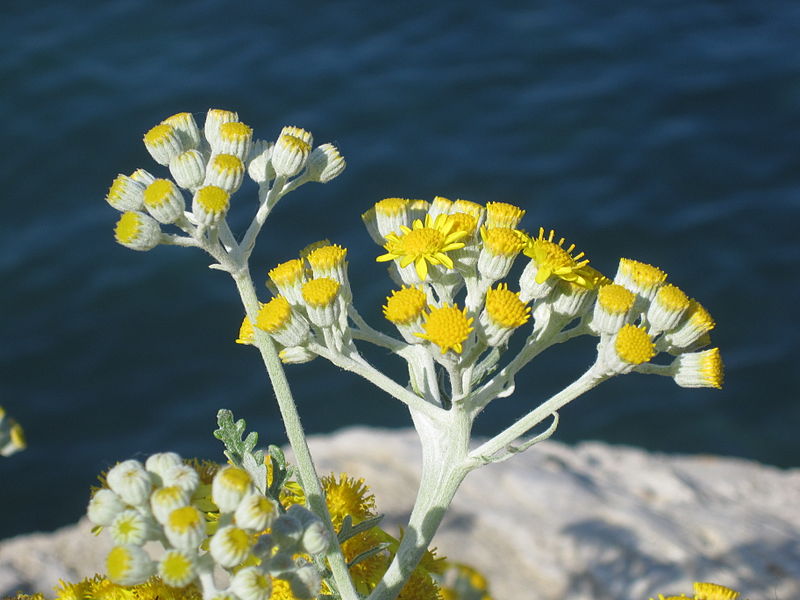
Immortelle, or Helichrysum in Corsica. Source: Wikicommons.

Immortelle, or Helichrysum in Corsica. Source: Wikicommons.

Ah, the immortelle — the reason why Speakeasy may be a hard sell for many. You see, the immortelle is quite dominant in the development of the perfume, and it’s a note which polarizes people greatly. For those unfamiliar with immortelle, it’s is a yellow flower most frequently found in the Southern Mediterranean, and its dry, floral scent usually turns quickly into the aroma of maple syrup. Here, both aspects of  the flower are noticeable. Initially, it is a dry, light, slightly aromatic flowers which join with the tobacco leaves to counter Speakeasy’s boozy sweetness. Later, however, the maple syrup comes out. But I’m getting ahead of myself.

Source: iVillage.com

Source: iVillage.com

Thirty minutes in, Speakeasy is a swirl of rum-infused citruses, dry tobacco leaves, amber, and vaguely amorphous floral notes dominated by the immortelle. It feels a lot less like a Mojito, though the mint still flickers lightly in the background. The orange note lurks there too: it is much less fresh and light; it feels like the caramelized pulp of the fruit. But neither the mint nor the orange can counter the boozy, ambered rum that is the core essence of Speakeasy. At the start of the second hour, Speakeasy decreases in volume and becomes much softer, while also becoming much more brown and orange in hue. There is sticky, rum citrus with sugar cane, melted and caramelized, but also with a subtle hint of saltiness. Florals float in the background, simultaneously fruited and a bit dry. The whole thing sits atop a base of rummy amber with tobacco and hints of immortelle.

From the initial impressions of a Mojito, we’ve now suddenly gone to a 1950s bar in Havana or Miami. It’s filled with heavy-set men in open tropical shirts, sporting heavy gold chains over a visible expanse of black, furry, springy chest-hair. In their thick fingers, they hold fresh Cuban cigars — dry and unsmoked — which they wave in the air at the bartender to order another round of Rum-and-Coke. I can’t get the image out of my head. It doesn’t help that, 3 hours in, Speakeasy takes a turn into root-beer territory backed with rum, more dry tobacco, and a growing hint of maple syrup. The latter initially feels a lot more nutty in nature than the syrup you’d pour over pancakes, but it’s still not really my cup of tea. I like the floral aspects of Immortelle, not the maple syrup, and unfortunately, the former note starts to fade as the latter grows in dominance. Now, my heavy, furry, cigar-wielding, Havana men in tropical shirts also have a side of pancakes to go with their Cuba Libre drinks.

Source: Instructables.com

Source: Instructables.com

By the start of the seventh hour, Speakeasy is maple syrup amber and… maple syrup. Yes, there is still the tobacco — and it still feels like an unlit cigar or dry sheets of tobacco leaves, rather than anything evoking an ashtray — but it’s quite minimal. The immortelle has taken over the show. For the next five hours, Speakeasy is ever softening shades of maple syrup. And that’s it. Truly. I can’t detect a single other element to the scent.

All in all, Speakeasy lasted over under 12.5 hours on my perfume-consuming skin which is quite remarkable. I should note, however, that I did two tests for Speakeasy and the first time, when I applied much less, the longevity and sillage were significantly less pronounced. With the equivalent of one good spray, Speakeasy lasted approximately 9.75 hours and had good sillage. With just a little over 2 sprays (really about 2 and 1/2), the longevity was a few hours more. On both occasions, the sillage was very good for the first hour — even powerful when I applied a greater quantity — and projected three to four inches off my skin. Later, Speakeasy softened, though it was easily detected if I brought my arm anywhere near my nose. It became a skin scent around the eighth hour during my second test.

Despite the rich notes and the excellent projection, Speakeasy surprised me in being quite lightweight in feel. The texture isn’t opaque, heavy, resinous or thick. And, for all the rum involved, it doesn’t feel like a boozy scent. It’s not like HermèsAmbre Narguilé, Guerlain‘s Spiritueuse Double Vanille, Tom Ford‘s Tobacco Vanille, Teo Cabanel‘s Alahine — all scents with a boozy, rummy nature, though they are all perfumes with a huge amount of spice in them, too. Most of those have a large tobacco element as well but, still, they aren’t the same as Speakeasy. Perhaps it’s because Speakeasy has the mojito, maple syrup and pure rum accords, as opposed to the spiced, stewed prunes, raisins and apples of the others. Or, perhaps, it’s because it’s so texturally light.

Whatever the reason, I truly couldn’t summon up much enthusiasm. I have tried and tried to pinpoint why — apart from my issues with smelling like maple syrup — and I think it’s because Speakeasy feels a bit like a hodge-podge. It’s neither a truly boozy, spiced, smoky, amber oriental, nor a light summery, Mojito scent. Tobacco and rum generally work perfectly well together, but the immortelle adds a discordant jangle, as does the mint. The wonderful perfume blogger, The Non-Blonde, summed it up as “chaotic” — and I think she’s absolutely right, even though her experience differed from my own. In her review, she wrote:

Unlike the term “Speakeasy” and its hush-hush connotations, Frapin’s fragrance is a heavy hitter right from the start. It’s noisy and chaotic as the perfume throws almost everything it has at you: herbs and fruit, smoke and syrup– they party like it’s 1929.

Things get smoother rather quickly. The mojito is replaced by a darker and warmer drink. The syrupy sweetness sets the tone for a comfortable old leather, incense, and a rich tobacco. If you dislike immortelle and its burnt maple aroma, there’s no amount of Frapin booze that will help Speakeasy go down better for you. Personally I love it, so the sweeter the better in this case. Tobacco truly dominates the way Speakeasy smells on my skin: light and dark, sweet and smoky. I love it, but must admit that it can be too literal. I never smoked and would rather not smell like I’ve become a smoker in middle-age. It’s actually a little disturbing that the remnants of Speakeasy on my clothes remind me of a smoky bar.

On my skin, there really wasn’t that much tobacco, and it never felt like an ashtray; I honestly never felt as though I’d spent all night in a smoky bar. To me, the note felt much more like that of sheaves of tobacco leaves drying in the hot Virginia sun, or like that of an unsmoked cigar. I also never detected incense or leather, though Speakeasy definitely evokes some sort of old bar with leather and wood. (God, leather and incense may have made it so much better!) Despite these minor differences, though, I share her views on the jangling, chaotic feel to the scent. Don’t get me wrong — Speakeasy is not a bad scent by any means, but it leaves me feeling completely indifferent.

I haven’t tried Frapin’s limited-edition 1697, but I’ve read a comment on Fragrantica to the effect that Speakeasy was like a little “summer sister” to the Duchaufour creation. I have to wonder a little about that as there is no immortelle in 1697’s notes, and that element is such a huge part of Speakeasy’s middle to late stages. Still, those looking for a more boozy, amber scent may want to give “1697” a sniff, while those seeking a lighter, summery fragrance with a more tropical feel may want to opt for Speakeasy. But those who shudder at the mere thought of immortelle — and there are many of you out there — should probably stay away at all costs.

DETAILS:
Cost & Availability: Speakeasy is an eau de parfum that is available only in a 3.4 oz/100 ml and which costs $145. In the U.S., it is available at Luckyscent, Beautyhabit, and MinNewYork (which sells it for $5 more at $150). In Canada, Speakeasy is available at The Perfume Shoppe for CAD $145. In the UK, I’ve read that Frapin fragrances are carried on the specialty floor of Harvey Nichols (Le Floret?), but I don’t know for sure. In France, it is available at Nose for €105 and I think there is free shipping at that price within the EU. For the rest of Europe, there is First in Fragrance which sells Speakeasy for €96. As for samples, I obtained mine from Surrender to Chance which sells vials starting at $4.50 for 1 ml.

Perfume Review – Tom Ford Sahara Noir: Ambered Frankincense

Desert Caravan. Photo: "Artemis." Via Tripwiremagazine.com

Desert Caravan. Photo: “Artemis.” Via Tripwiremagazine.com

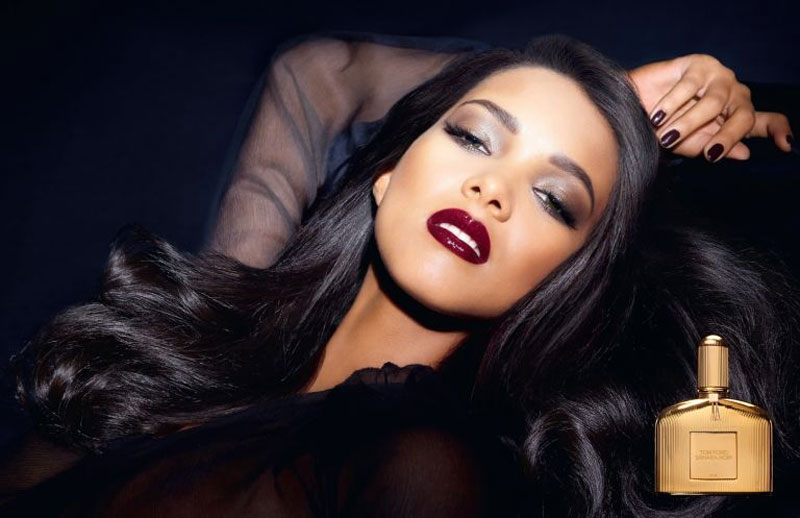
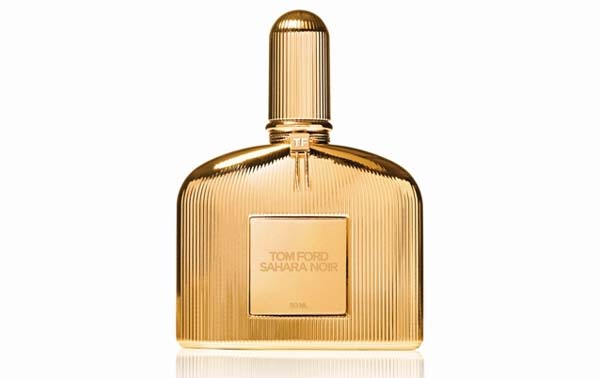
In March 2013, Tom Ford released a new fragrance in his Signature collection called Sahara Noir. It is a rich oriental eau de parfum that is aimed at the Middle Eastern market and that is supposedly Tom Ford’s interpretation of their traditional scents. On May 1, Sahara Noir became available world-wide, and I obtained a sample from a kind sales-assistant at Neiman Marcus. The long and short of it is that Sahara Noir is, essentially, a re-working of Tom Ford’s much beloved, now discontinued Private Blend Amber Absolute, only with oud now added to the mix. There are small differences which I’ll explain later in this review but, for all intents and purposes, Sahara Noir is the new replacement for Amber Absolute.  

Tom Ford advert for Sahara Noir. Source: Fragrantica.

Tom Ford advert for Sahara Noir. Source: Fragrantica.

In the press release I found back in February, Sahara Noir is described as follows:

Sahara Noir is rich and exotic; it wraps the balsamic, incense-touched notes of frankincense in gold and honey-coloured light,” noted Ford. “Middle Eastern culture has an extraordinary appreciation for the luxurious, emotional and memorable qualities of fragrance; perfume is worn there in a way that feels very familiar to me. Sahara Noir is my interpretation of this heritage.

Tom_ford_sahara_noirThe press release is actually important because of its detailed explanation of the notes — notes which are quite different from what Fragrantica lists. In the official description of the perfume, the company states:

The oriental woody juice is crafted around a heart of frankincense. This key ingredient is complemented by top notes of cistus essence Orpur® (Orpur denotes a natural ingredient of exceptional quality and purity), bitter orange, Jordanian calamus – an oasis sweet grass – and Levantine cypress, famed for growing in the gardens of the 1001 Arabian Nights.

The heart blends frankincense essence Orpur® , cinnamon, cool papyrus extract, Egyptian jasmine templar and rose absolute from Morocco. A beeswax extraction from Burma lends body and a supple, honeyed-animalic richness.

The warm dry down is laced with amber. It is formed by a special blend of labdanum – labdanum absolute and a rich natural fraction of labdanum known as ambreinol – combined with benzoin, vanilla, cedar, frankincense resin, agarwood and balsam.

The notes on Fragrantica mention only:

Top notes are bergamot, mandarin orange, violet, ginger and basil; middle notes are grapefruit blossom, orange blossom, tobacco and black pepper; base notes are amber, cedar, patchouli, oakmoss and leather.

So, if we combine the two lists together, the full set of notes seems to be closer to the following:

bergamot, mandarin orange, violet, ginger, basil, grapefruit blossom, orange blossom, tobacco, black pepper, amber, cedar, patchouli, oakmoss, leather, Jordanian calamus grass, cistus [labdanum] essence Orpur®, cinnamon, papyrus extract, Egyptian jasmine templar, Moroccan rose absolute, beeswax extract, labdanum, ambreinol, benzoin, vanilla, frankincense resin, agarwood [oud], and balsam.

A slightly different set of notes, all in all, don’t you think?

Camel Caravan. Photo by Yann Arthus-Bertrand.

Camel Caravan. Photo by Yann Arthus-Bertrand.

Sahara Noir opens on my skin as slightly bitter amber with heavy frankincense. There are: bitter citruses that feel like the fresh oils from the rind; peppery cedarwood; dry tobacco leaves; bitter but crystalized ginger; and black, dirty patchouli. The whole thing sits atop a powerful base of rich, nutty, heavily leathered labdanum (a type of amber resin), infused with strong frankincense. The amber-frankincense duet smells familiar — as it should to anyone who has smelled Amber Absolute. As the seconds pass, light touches of cinnamon and rich, heavy honey are also noticeable. The whole thing is potent and, yet, much airier and lighter than you’d suspect, given those rich, heavy notes. I’m not saying that Sahara Noir is a sheer, translucent, fresh scent by any means, but it doesn’t feel opaque, thick, and molten.

Labdanum compiled into a chunk. Source: Fragrantica

Labdanum compiled into a chunk. Source: Fragrantica

Less than five minutes into Sahara Noir’s development, the perfume shifts a little and becomes significantly less complex. The citrus notes have all but vanished, leaving behind a scent that is primarily frankincense-infused labdanum amber. Those who don’t like labdanum as a stand-in for amber should perhaps take heed, for Rock Rose or Cistus (its other names) is not to everyone’s taste. Labdanum has quite a masculine, leathery bent to its nutty, resinous, darkly balsamic accord, and I know some amber lovers who aren’t always enthused by its particular aroma.

Swirled into the blend are tobacco leaves, peppery cedar wood, dry papyrus, and the smallest suggestion of oud. The perfume is beautifully blended, so few of these notes are individually distinctive by themselves amidst that dominant pairing of frankincense and labdanum. Yet, by the end of the first hour, the peppery wood notes and oud become much more significant. The tobacco fades away, along with the faint traces of spice and ginger that lurked in the opening. By the 90 minute mark, Sahara Noir is a three-way pairing of labdanum, frankincense and oud. As a side note about that oud, I know a lot of my regular readers really struggle with the note. I do, too, when it is medicinal, antiseptic, fecal, or a bit too much of the noble “rot.” Here, however, it is much more akin to incredibly peppered woods. It’s simultaneously dry, a little bit fiery, and highly sweetened (thanks to the resins and honey)– all at the same time. Yet, for the most part, it is not over-powering or bullying; it is far too overshadowed by the leathery amber and frankincense.

Photo: Federico Bebber. Source: MyModernMet.com

Photo: Federico Bebber. Source: MyModernMet.com

Sahara Noir remains as this triumvirate for hours and hours. I detect absolutely no citrus or floral notes; not a whisper of rose or jasmine anywhere in sight. Midway during the third hour, the perfume becomes richer and softer, turning into a lovely amber with strong oud and frankincense. The labdanum’s leathery edges have been tamed, mellowing into something sweeter and milder with a honeyed accord. The frankincense is in much better balance, though the oud seems to have increased a little in strength. I will be honest and confess that the oud is a little too much for my personal tastes and a little sharp at times, but it is in perfectly equal proportion to the other two notes. Sahara Noir is now a three-way race, with each horse neck-and-neck as they lead into the home-stretch.

With every remaining hour, the triplets soften even further until, finally, Sahara Noir turned into a nutty, honeyed amber with faint traces of smoke and oud. Lurking at the edges is the merest dash of cinnamon, benzoin and vanilla — the latter having a breath of powder — but neither note is very significant. In the final hours, and to my surprise, I could occasionally detect some vague, soft floral notes underlying the amber. It felt most like jasmine, but the whole thing was a bit too muted and amorphous to really tell. Plus, every time I thought I could pinpoint it on my arm, the note flitted away like a ghost. By the very end, Sahara Noir was nothing more than a faint whisper of nutty amber with a soft feel of caramel.

All in all, Sahara Noir lasted just over 9 hours on my perfume-consuming skin. As always with Tom Ford fragrances, I opt for a lesser amount than what I would normally use with everything else. It was Amber Absolute, actually, which taught me it is best to err on the side of caution initially when it comes to the quantity one uses for one of his perfumes. Using the equivalent of two good sprays on my arm, Sahara Noir was generally quite light in feel. It had serious sillage at first which dropped to “average” after the first hour. At that point, someone standing a few feet away wouldn’t be able to detect it, but don’t let that mislead you. When sniffing it, Sahara Noir is very potent, thanks to the frankincense. If you were to spray more than a small amount, I suspect the sillage might blow someone out of the water. I also think a larger quantity would change the nature of the perfume. Time and time again with Tom Ford’s Private Blend fragrances, I’ve noticed that using too much can lead to quite an overwhelming, ’80s-like experience and, more importantly, to the amplification of whatever note is dominant in the perfume. In this case, the frankincense.

tom-ford-amber-absolute

The now discontinued Amber Absolute.

As I noted at the start, Sahara Noir is extremely close to Tom Ford’s Amber Absolute from his much more expensive, more “prestige” Private Blend collection. Amber Absolute was discontinued last year for reasons that I’ve never quite fathomed. It seemed to be one of the big favorites amongst the Tom Ford line as a whole — cherished and adored by a vast number of people, especially friends of mine who enjoy rich amber scents with smoke. I reviewed Amber Absolute and, personally, found the extreme nature of the frankincense to be a bit bullying — and that’s coming from someone who really enjoys the note. For me, the perfume was unbalanced, too shrill and top-heavy with the frankincense, and just a bit too, too much as a whole. I always thought I was in the minority on that assessment, but Sahara Noir makes me wonder if, perhaps, there were more people who shared my views.

You see, Sahara Noir is a much less extreme, more balanced version of Amber Absolute. There is still the labdanum-frankincense accord, but the smoke doesn’t feel acrid and like an 800-pound gorilla. To my nose, Sahara Noir is also slightly more nuanced, along with having a lighter feel and texture, but it’s definitely all relative. There are other — albeit small — differences as well. For one thing, the opening to the two fragrances is not quite the same: the Amber Absolute has much more of a boozy rum, spiced start; Sahara Noir is more citrus-y (for all of about 5 minutes), before turning straight to the labdanum and frankincense. It also has far more dry wood notes, from the very peppery cedar to the oud. Of course, the inclusion of that last element is quite a big difference, though I would argue that — for the most part — it’s a difference of degree and not of kind. The dominance of the core labdanum-frankincense combination in both fragrances makes them much more alike than different, despite the addition of the oud.

All in all, I liked Sahara Noir — but I didn’t love it and I don’t think I’d wear it. For one thing, I’m extremely tired of oud — there seems to be no end in sight to the mania. Everything has oud in it these days. (At this rate, it’s going to be on my bloody pizza next!) Perhaps if I didn’t test at least one oud fragrance a week (and, sometimes, as many three), I’d be more enthusiastic. But Sahara Noir isn’t complex enough to sway my oud fatigue.

For another, while I like frankincense a great deal, I find there is always something a little sharp in the frankincense use by Tom Ford. Sahara Noir lacks the soft, luxuriating, velvety richness of Dior‘s Mitzah, one of my favorite labdanum-frankincense combinations and a fragrance which I thought was much more complex, nuanced, and layered. Perhaps it’s because Mitzah isn’t so focused on just two key notes, and its edges are softened as a result. In particular, both the labdanum and the frankincense in Mitzah are gentler, more rounded, better blended and richer. Perhaps it’s because Mitzah lacks oud with its peppery element which is sometimes a little sharp in Sahara Noir. Whatever the reason, I liked Sahara Noir — but not enough to want to wear it.

As a side note, I cannot help but think Tom Ford decided to tone down his Amber Absolute, while also adding in oud, for marketing reasons. With the inclusion of that note, he could target the extremely wealthy Middle Eastern market, and position Sahara Noir as an exciting new call to their traditional heritage of oud fragrances, as well as heavy, balsamic amber ones. What stumps me is why Sahara Noir isn’t part of his more expensive, potent Private Blend line, instead of the cheaper Signature collection. His intended audience could certainly afford it. I suspect it’s because he didn’t want to underscore quite so easily the enormous overlap between Sahara Noir and a Private Blend fragrance that he just discontinued.

Another source of bewilderment: Sahara Noir is supposedly marketed as a fragrance “for women.” Er…no. I don’t think so! Sahara Noir is as unisex as you can get. In fact, I suspect women who are not used to oud (or heavy frankincense) may blink a little at Sahara Noir. This is not some sweet, gourmand, or spiced soft amber. This is hardcore frankincense and labdanum.

On Fragrantica, the comments thus far seem generally to evince disappointment, though quite a few people really enjoy it. A number of people write about how it is primarily a frankincense fragrance and nothing revolutionary. Well, they’d be right, especially as Sahara Noir replicates Amber Absolute so closely. Two commentators seem to feel it is a complete “knock-off” of Absolue Pour Le Soir by Maison Francis Kurkdjian. With that, I very much disagree. I’ve reviewed Absolue Pour Le Soir and think it is absolutely nothing like Sahara Noir. Absolue is not an ode to frankincense and labdanum; it is a stunning floral oriental that is centered around slightly animalic musk with lovely, rich sandalwood and a variety of other elements.

Some have called Sahara Noir “linear,” and I think it is. But I’ve always thought that term is a negative only when someone absolutely hates the notes that are continuing from start to finish. If you love a rich amber infused with the particularly intense sort of smoke that is frankincense, and if you like the slightly masculine, leathery sort of amber that is labdanum, then I think you might enjoy Sahara Noir. However, those who don’t like oud may not be enthusiastic, and those who already own Amber Absolute can probably skip it.


DETAILS:
Cost & Availability: Sahara Noir is an eau de parfum which generally comes in a 1.7 oz/50 ml bottle. It costs $150 or $165, depending on US retailer, or £100.00. On the Tom Ford website, however, it is shown in 3 different sizes: 1.0 oz/30 ml, 1.7 oz/50 ml, and 3.4 oz/100 ml. I can’t seem to find pricing for the smaller sizes anywhere and, on the Tom Ford website, wasn’t able to click on the links to put it in a shopping cart to ascertain the cost. In the US, you can find Sahara Noir sold in the 1.7 oz/50 ml size at department stores such as Neiman Marcus (which lists its price at $150), Barneys (which sells it for $165, for some odd reason), and Bergdorf Goodman (which lists its price at $150). I couldn’t find it on the Saks or Nordstrom websites. In Canada, I believe Tom Ford is carried at Holt Renfrew, but I don’t know when they will get Sahara Noir. In the UK, you can already find it at Harrods or Selfridges. Both stores sell the 1.7 oz/50 ml size for £100.00. Elsewhere, I’ve seen Sahara Noir listed on Dubai Duty-Free and Souq.com. Tom Ford Beauty doesn’t seem to be carried by retailers in France, but it is in many European nations from Denmark and Belgium to the Russian Federation. Hopefully, you can find a retailer near you using the store locator on the Tom Ford website. As for samples, Surrender to Chance doesn’t have Sahara Noir at this moment as it is far too new, but you can try to find it at any of the department stores listed above to give it a test sniff.

Reviews en Bref: Dzing! and Dzongkha by L’Artisan Parfumeur

As always, my Reviews en Bref are for perfumes that — for whatever reason — didn’t seem to warrant a full, exhaustive, detailed analysis.

DZING!

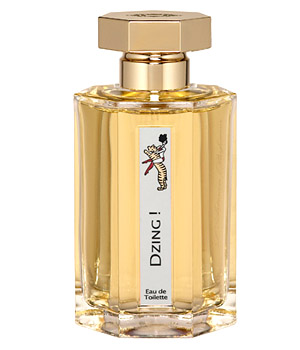
L'Artisan DzingDzing! is an eau de toilette fragrance from L’Artisan Parfumeur which seeks to evoke the circus. The woody scent was launched in 1999 and created by the highly respected perfumer, Olivia Giacobetti. The company describes it as follows:

This shockingly unique fragrance, created by Olivia Giacobetti, Dzing! is a magical evocation of a circus of dreams and imagination. Everything is soft hued and slow moving, sights and sounds rolling by in the Big Top. Everything is there, the scent of saddle leather as pretty girls on horses canter by, sawdust, the rosin on the acrobats’ hands as they arc through the air, black panther fur, fire-eaters and gasoline, the vintage canvas overhead, the caramel scent of candyfloss and toffee apples. The circus as conceived by L’Artisan Parfumeur, comforting but contrasted with the occasional roar tearing through the night.

The most complete list of notes for Dzing! (which I shall call “Dzing” for the sake of convenience) comes from Fragrantica which mentions:

leather, ginger, tonka bean, musk, white woods, caramel, saffron, toffee, candy apple and cotton candy.

Dzing opens on my skin as rubbing-alcohol, candy apple. Seconds later, it explodes into a sharply synthetic cloud of artificial notes: white cotton candy fluff; dry dust; cheap leather; cheap caramel; cloying, cheap vanilla; and amorphous, cheap, synthetic gourmand notes. I’ve smelled better things a 99 Cent Store. I cannot imagine a scenario outside of testing where I’d wear Dzing for longer than a minute without shrieking.

Surrealists' Circus. Painting by Hank Grebe, 1976

Surrealists’ Circus. Painting by Hank Grebe, 1976

The truly repellant aspect is in the revolting alcohol undertones and the cheap, pink, “Made in China” plastic aspect to all the artificial, laboratory-made notes. It’s as if the Mad Scientist infected the body of P.T. Barnum with a plan for world domination through olfactory torture. As the moments pass, the cheap Chinese, mass-produced, pink plastic note rises in prominence, as does the vanilla and the overall shrill cacophony of fakeness. This may be absolutely one of the worst things I’ve smelled in a while. I’m taken back to Tijuana, Mexico, and one of the cheap, tourist shops which sell tiny, plastic dolls, plastic shoes, and every possible hodge-podge of plastic tchotchkes. I wouldn’t object to a well-executed gourmand take on the smells of a circus, but the sheer deluge of cheap plastic and synthetics goes too far. Yes, I realise that almost every word out of my mouth includes the word “cheap” or “plastic,” but you have simply no idea how terrible Dzing smells. $145 for this? It would be easier to roll around naked on the industrial, synthetic carpeting in one of those 99 Cent stores that reek of fake vanilla, cheap apple-caramel candles, and, yes, PLASTIC.

Dzing must be a joke, right? Not a tongue-in-cheek, sweetly winking, happy, positive tease but, rather, a malicious, nefarious, completely sadistic joke created by an anti-social nihilist who intends to fumigate his victims while making a symbolic statement on the decline of Western civilisation, the corruption and decadence of capitalistic ventures like expensive perfumery, and the stupidity of those who think that the Emperor is wearing clothes. People, the Emperor is naked! NAKED! I’m not going to comment any further on this Ionesco-worthy, Absurdist, olfactory scheme to make me lose my mind.

DZONGKHA

Dzongkha is an eau de toilette fragrance created by Bertrand Duchaufour and inspired by the remote Buddhist mountain kingdom of Bhutan in the eastern Himalayas. L’Artisan describes it as follows:

Rich with aromatic influences: temple stones and incense, the sweet aroma of spiced chai tea, the heat of warm leather around fires, the heart of any temple or home in snowbound lands. Vetiver and green papyrus float through soft smoke with touches of peony, lychee and delicate iris. Dzongkha tells a special story on every skin: that of Dzongkha itself, the spiritual language of Bhutan.

l_artisan_dzongkha

On Fragrantica, Dzongkha is classified as a “woody spicy” fragrance and its notes are:

Top notes are peony, cardamom and litchi; middle notes are spices, white tea, vetiver, incense and cedar; base notes are leather, iris and papyrus.

Dzongkha opens with an unpleasant note of sharp incense. It’s not smooth, rich or soothing incense, but alcohol-like, bracing, and pungent. It is followed immediately by spices, predominantly cardamom, with what also feels like saffron, too. There are dry paper notes from the papyrus that evoke the feeling of an old book. Peony swirls in the background along with leather and tea notes.

The incense note is the key to much of Dzongkha’s early start. It is odd in its bracing bitterness and unbelievably desiccated. In combination with the papyrus, the overall effect is that of dust — whether a very old library or an abandoned church. Either way, it’s not enormously pleasant. Slowly, slowly, the cardamom heats up, warming the scent a little. Now, Dzongkha feels like cardamom-infused dust, atop a sharp, synthetic, incense note that burns a little. The whole thing is very airy, sheer and lightweight in feel, with low projection, and, yet, it is quite a strong scent in the beginning. I chalk it up to the synthetic undertone to the incense.

Thirty minutes in, Dzongkha has turned into cardamom dust with acrid incense, tea, spicy woods, and general earthy notes atop a growing base of leather. There is a light smattering of abstract florals flittering about in the background. The peony accord is muted and does little to alleviate the arid nature of the perfume. As time passes, the latter just gets worse and by the 90 minute mark, Dzongkha has turned into the most revoltingly bitter leather, vetiver and smoke fragrance. It is a veritable dust bowl of pungent, acrid dryness. At the same time, it also feels rancid and dark green — a bit like the moments in the legendary leather perfume, Bandit, from Robert Piguet with its deluge of sharply bitter, pungent galbanum and cold black leather. Yet, Dzongkha is a thousand times dryer, thanks to the incense note. I cannot believe how closely it replicates actual household dust, only in piles and heaps.

Dzongkha continues to change with time. By the start of the fourth hour, it is soapy, dark vetiver with bitter smoke, black leather and dust. It is still acrid and abrasively bitter — and I still can’t stand it. Midway into the fifth hour, the soapy element increases and takes on a sharply synthetic, dry, bitter incense accord. The combination smells extremely similar to that in another Bertrand Duchaufour incense creation for L’Artisan Parfumeur: Passage d’Enfer. I hated the latter, so I didn’t enjoy the overlap. In fact, my misery rose exponentially with every minute of Dzongkha’s sharply acrid, cloyingly soapy, painfully dust-like, and perpetually synthetic evolution. In its final moments, Dzongkha was just some amorphous soapy musk. All in all, it lasted 7 hours — all of them unpleasant, when they weren’t complete misery.

Testing Dzing and Dzongkha in the same day — even if the Dzing was only a few hours long — was an incredibly painful ordeal. For all that Dzing was mind-bogglingly terrible, it didn’t actually bring me down and make me feel low the way the incredibly unpleasant Dzongkha did. Really bad perfume experiences can feel almost oppressive, and Dzongkha certainly felt that way. I know it has its admirers, people who find its incense, spices and leather to be pleasant, even relaxing at times. All I can say is that I’m happy for you if it works. For myself, I’d like to forget this day entirely.


DETAILS:
Cost & Availability: Dzing and Dzongkha are both eau de toilette concentrations and cost $145, €95.00, or £78.00 for a 100 ml/ 3.4 oz bottle. Dzing is available on the L’Artisan website (where you can switch currency and sites from American to European) and Luckyscent. It should be available at Barneys, but I don’t see it listed on the website. In the UK, the L’Artisan line is carried at Harrods but I don’t see Dzing listed there. In Europe, it is available at First in Fragrance for €95. As for Dzongkha, it is available at the L’Artisan website, Luckyscent, and Barneys. In the UK, it is available at Harrods which also sells the smaller 50 ml size bottle. For the rest of Europe, it is available at First in Fragrance and other retailers. You can find a list of stores from Japan to Italy carrying L’Artisan products on the company’s Store Locator site. Samples are available at Surrender to Chance starting at $3.99 for a 1 ml vial for Dzing and Dzonghka.