Serge Lutens Fourreau Noir: Dark, Delectable Magic

Only he could do it. Only Serge Lutens could make a fragrance that a lavender-phobe would not only love, but buy. And not just buy a regular bottle of it, but buy a bloody expensive, exclusive bell jar! Only a true master could make a fragrance that is essentially everything that I dislike in a fragrance, and bring me to my knees.

Photo: my own.

Photo: my own.

It’s as though Uncle Serge decided to make me eat my hat by checking off every box that would normally make me wince — lavender, gourmand, sweet, sheer, discreet, and even sometimes vanishing, no less — intentionally combine them all into a single scent, and make the final result be something utterly beyond my ability to resist. It’s actually amusing at this point — and I say that as one who needs to take frequent breaks in typing to sniff the air around me with the glazed eyes of an addict. Only Le Grand Serge and Christopher Sheldrake could manage that. 

Photo: my own.

Photo: my own.

Fourreau Noir is an Oriental eau de parfum that was created by Christopher Sheldrake, and released in 2009. As noted above, it is one of the famous bell jar “Paris Exclusives,” which means that it not sold world-wide, but is generally exclusive to Serge Lutens’ Paris headquarters. That said, it can actually be purchased outside of France, either from Barney’s New York or directly from Serge Lutens’ international and U.S. websites, though it’s always at a big mark-up if you are buying outside of France. 

Uncle Serge describes the scent and the meaning of its name as follows:

A fourreau in French means a sheath for a dagger as well as a form-fitting dress… ready to embrace the voluptuous contours of a widow’s body.

Maybe you’ve heard of the brown bean used to extract vanillin? Its name is the tonka bean. It grows in abundance on a tree in the Amazonian rain forest. Sweet and fluid, its fragrance lingers, living its mark.

Photo: my own.

Photo: my own.

As always, Serge Lutens keeps the perfume’s notes secret. Fragrantica says they are:

Lavender, tonka, musk, almonds, smokey accords

Based on what I smell, however, I think the list would be longer. My guess is:

Lavender, Incense, Patchouli, Almonds, Tonka Bean, Vanilla, Cedarwood, and Musk. There may be some ambery element as well.
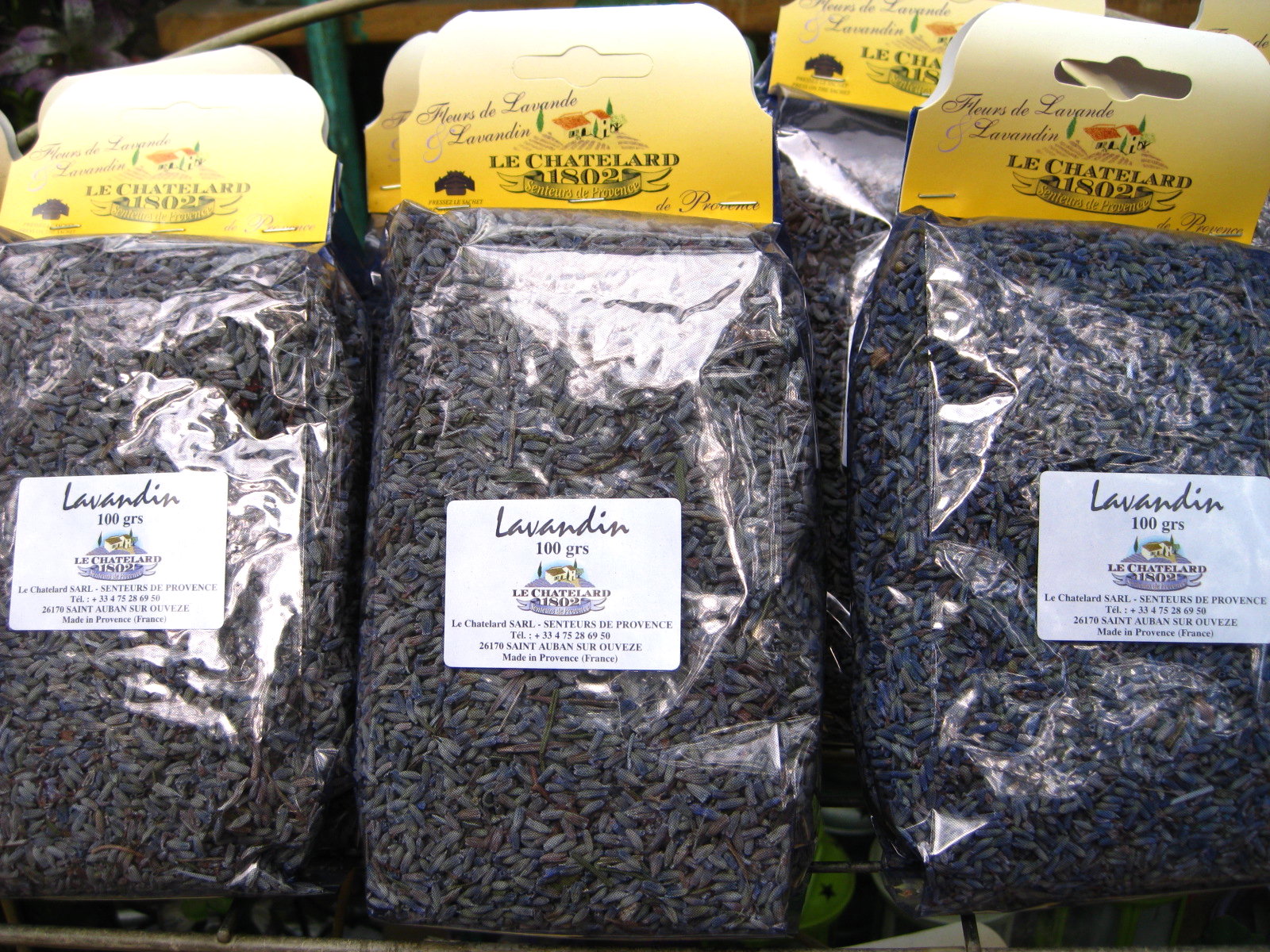
Photo: my own.

Photo: my own.

Fourreau Noir opens on my skin with lavender. Have I mentioned lately just how much I loathe lavender? It is a note that I struggle with deeply, due to childhood experiences living in Cannes, in the South of France, where dried herbal sachets of the blasted stuff were ubiquitous. Their sharp, pungent, aggressively herbal aroma was everywhere, and it didn’t help matters that the driveway to our house had lavender growing as if it were on steroids. I had a sensitive nose even back then, and the aromatic deluge left a mark, making me avoid lavender as an adult whenever and wherever possible. As you might have gathered by now, this is the first of what will be several examples of Serge Lutens making me eat my hat because, yes, Fourreau Noir opens with lavender. And lots of it. En plus, it’s pungent, herbal, and dried — everything that would normally send a bone-deep shiver through my body.

Source: background-pictures.feedio.net

Source: background-pictures.feedio.net

Those magicians, Messieurs Lutens and Sheldrake, quickly coat and cloak the lavender with the black sheath talked about in Fourreau Noir’s description. Like loving tentacles, incense wraps itself around those blasted purple stalks, lovingly turning them dark and smoky. Within moments, my hated, floral, herbal nemesis is also infused with sweetness from a lightly spiced, chewy, slightly earthy patchouli. It, too, is a bit smoked, and the dark sheath is even further supplemented by what smells to me like dry, also smoky cedar wood.
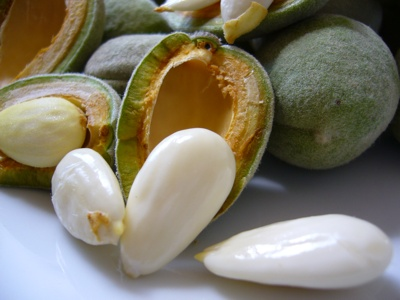
Source: amyglaze.com

Source: amyglaze.com

There is something a little synthetic about all the sharpness, something biting that almost burns my nose, but it is soon countered by a wave of warm sweetness. Like a pale, white counterpart to the the black incense tendrils, creamy vanilla and tonka bean seep through. They curl their way around the sharp notes, fractionally dulling their razor’s edge. The sweetness is gauzy but strong, light but potent, and always feels like the very frothiest mousse. Subtle hints of a bitter fresh almond soon follow, along with an intangible woodiness that differs a little from the smoky, dry cedar. 

Five minutes in, the patchouli starts to slowly become more prominent, feeling wonderfully red-brown with its spicy, sweet, earthy facets. It’s potent, but never dense, chewy, or opaque in feel. It is true patchouli, even down to the very fleeting, momentary and faint hint of something medicinal in its character. It is a touch which underscores the more herbal aspects of the lavender. Yet, despite that, the flower is never completely like the aggressively pungent, aggressively herbal, dried, acrid note that is the stuff of my nightmares. Thanks to the impact of the other notes, especially the patchouli and incense, the lavender has been transformed into something different. It is now simultaneously incense-y, a little floral, and a little darkly leathered, herbal, and sweet.  

Source: layoutsparks.com

Source: layoutsparks.com

Fourreau Noir encompasses you like a cloud that is at once almost translucent and as tough as steel. I’ve worn differing amounts, but most recently tried 3 decent-sized sprays, and Fourreau Noir’s opening spread its tentacles about 4-5 inches around me. It is potent and intense, yet oddly feels as insubstantial and thin as the smoke it contains. It’s like being covered in a swirl of incense and lavender, tendrils that weave about you as thin as an invisible thread, but with enormous tenacity. I’m amazed by how sheer it is, and by the mental images of translucency. Take that as Exhibit No. Two of Serge Lutens making me eat my hat, as perfumes with a gauzy, almost invisible sheerness are far from my personal cup of tea.

Source: footage.shutterstock.com

Source: footage.shutterstock.com

What’s even more baffling about the odd case of Fourreau Noir is that it actually feels as though it disappears from my skin from time to time. On past occasions, there were times when fragrance felt as though it had evaporated after about 90 minutes, and it wasn’t always easy to detect. Yet, it still lingered all around me, an undeniable cloud of incense, patchouli, and lavender. It would follow me like a lap-dog, leaving a small trail in the air. At other times, however, I couldn’t detect any projection at all, but Fourreau Noir was clearly pulsating and evident on my skin. Occasionally, it seemed to slip away like a ghost, only to reappear, almost stronger than it had been before, just as I was about to apply more. Fourreau Noir is a perplexing creature with a mind of its own, flitting about, encapsulating you, weaving some mysterious spell around you that makes you ignore all your usual issues or concerns as you smell that entrancing mixture of sharp contrasts. Dry, smoky, sweet, earthy, herbal, and woody — it’s all there, all around you, potent and dark, and yet, as insubstantial as a ghost. How can I love it so?!  

Exhibit Three of Le Grand Serge making me tolerate what I normally dislike is the synthetic feel underlying Fourreau Noir’s opening hour. It is most definitely there, and I can’t stand fragrances whose unnatural sharpness almost burns my nose if I smell my arm up close. It’s not only that a few of the notes like the lavender or the incense feel like a razor at times, but something genuinely synthetic in the base. I can’t pinpoint what it may be, though I suspect it’s the musk, combined with notes that are inherently a bit sharp in nature. And, yet, I don’t mind it. Even though it lingers high in my nose and burns a little, Fourreau Noir is simply too beautiful a combination for me to really care. Yes, Uncle Serge, I will have another piece of that humble pie.
Source: dreamstime.com

Source: dreamstime.com

The fragrance continues to subtly shift. Twenty minute in, the patchouli becomes increasingly prominent, while the almond and vanilla foam in the base start their slow rise to the surface. As the supporting actors begin to arrive on stage, they counterbalance the lavender’s herbal, almost leathery undertone, the fierceness of the incense, and the dryness of the cedar. The vanilla tames the beastly lavender and smoke, while the almond’s bitter facets add a fascinating contrast to the earthiness of the lightly spiced patchouli.
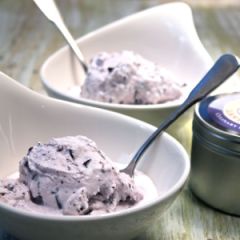
Source: A Spicy Perspective. (For recipe for lavender chocolate ice cream, click on photo. Website link embedded within.)

Source: A Spicy Perspective. (For recipe for lavender chocolate ice cream, click on photo. Website link embedded within.)

At the end of the first hour, Fourreau Noir turns much sweeter, and borders almost on the gourmand. The lavender is now creamy, rich, and feels like lavender ice cream infused with almond extract. Yet, the perfume isn’t really a true dessert-y fragrance, thanks to the constant presence of the dry notes that swirl all around like a dark cloud. From the temple-like, black incense trails, to the dry smoky cedar, and even the earthy spiciness of the patchouli, there are too many checks and balances to the creamy lavender-vanilla-almond sherbert. What the sweeter notes really do is to soften that early razor sharpness, though the synthetic undertone to Fourreau Noir still remains at the base.

The perfume continues to soften. About 2.5 hours in, it lingers extremely close to the skin, and the patchouli has become as prominent as the incense, while the lavender has started to recede. There is something almost ambered to Fourreau Noir’s base, though the golden sweetness and warmth may simply be the indirect impact of the tonka bean on the patchouli. Whatever the cause, Fourreau Noir is now primarily a bouquet of patchouli amber with smoky incense, atop a vanilla base that is infused with almond and lavender, and lightly flecked with musk and abstract, dry woodiness.

Source: backgrounds.mysitemyway.com

Source: backgrounds.mysitemyway.com

There is also the merest, subtlest suggestion of something that smells like gingerbread, and it becomes increasingly strong. By the end of the 4th hour, it’s quite noticeable and I suspect that the creamy woods, the vanilla, and patchouli’s spicy, earth sweetness have all melded together to create a sweet-spiced gingerbread accord. It’s too dry, however, to be like actual dessert or cloying; the sweetness is perfectly balanced. In fact, the unexpected gingerbread element eventually turns drier and woody, taking on an almost sandalwood-like aroma. The overall effect strongly calls to mind Chanel‘s gorgeous Bois des Iles with its very close replication of Mysore sandalwood in its base and drydown.

Fourreau Noir turns increasingly abstract, and its final drydown is a simple, utterly lovely mix of sweetness, woodiness, and creamy smoothness. It’s a patchouli amber gingerbread with the lightest hint of spices, incense, and creamy, wispy, gauzy vanillic sweetness. All in all, Fourreau Noir’s duration averages out to about 10.5 hours on my perfume-consuming skin with three sprays being the median quantity applied. A smaller amount yields about 9.5 hours, while 4 big sprays results in about 11.75 hours. At all times, however, the fragrance feels sheer, almost translucent, and gauzy in weight. The sillage generally drops after about 75-minutes with a small amount, 90-minutes with a medium amount, and 2.5 hours with more. Fourreau Noir only becomes a true skin scent on me around the end of the fourth hour, though there are the issues mentioned earlier about the fragrance sometimes acting like a ghost in terms of projection, as well as strength on the skin.

I was surprised to read some of the reactions to Fourreau Noir as it has alternatively been described as a very clean scent, a masculine one, a deliciously gourmand one, a perfume similar to Chergui, and even, on one rare occasion, an animalic, almost dirty fragrance. All those opinions are noticeable on Fragrantica and in blog reviews. The Non Blonde referred to the latter in her very positive assessment of Fourreau Noir where she compared it to a cozy, cuddly, fuzzy, long sweater with a slightly clean vibe: 

Sometimes my taste in perfume makes me question my sanity. Many reviews and impressions of Fourreau Noir, a 2009 non-export Serge Lutens release, mention/lament/ celebrate two accords- black smoke and a dirty animalic heart. For some of the people who tried Fourreau Noir (the loaded name translates as black sheath) these aspects made it difficult to wear. Me? My skin diffuses smoke and domesticates large beasts. I find Fourreau Noir not just soft and cuddly but also as comfortable and embracing as an old hoodie fresh from the laundry.

I mentioned laundry for a reason. The lavender note is strong in the opening and quite persistent after. […] Fourreau Noir is fuzzy and warm as though it just left the dryer. The lavender over a sweet gourmand base supports this idea, though it’s not exactly Downy Lavender-Vanilla fabric softener. Don’t worry.

Fourreau Noir is musky, but to me it’s a fairly clean musk with a hint of fruitiness. The tactile equivalent is of a soft silk-merino knit, kind of like the long wrap sweater with caressing kimono sleeves I’m wearing now as I’m typing this review. This coziness is helped greatly by the sweet gourmand dry-down. Tonka bean, almond cookies covered in very light powdered sugar and lots and lots of immortelle. I love immortelle on its mapley goodness, and in this case the maple smells like it was aged and smoked in old wood barrels. This is the kind of stuff I expect and enjoy from our favorite uncle.

Obviously, my experience is a bit different from hers, and I don’t find that musk to be either clean or dirty, but I definitely agree that our mutually adored, favorite uncle created a beautiful scent whose drydown is of sweet, smoked, woody goodness.

At the end of the day, I find Fourreau Noir to be a delectably dark fragrance that is quite addictive in its coziness. It really shouldn’t have wrapped its tendrils around me in quite the way that it did. It is a fragrance centered, in large part, on a note that I despise, but it was genius to mix lavender with such unexpected elements as dark smoke, almonds and patchouli. It obviously helps that I’m a sucker for patchouli, but still, everyone who knows me is shocked that Fourreau Noir is the fragrance that I chose as my first bell jar. I am too, actually.

Source: wall.alphacoders.com

Source: wall.alphacoders.com

I had initially gone to the Palais Royal with plans to get a very different scent, perhaps the beautiful De Profundis with its delicate floral heart and gorgeous purple liquid. (I actually ended up with De Profundis as my second bell jar perfume!) While there, testing all the different perfumes, the gardenia-tobacco ode to Billie Holiday, Une Voix Noire, beckoned to me even more insistently than when I had tried it. My beloved Cuir Mauresque (the perfume that Serge Lutens himself wears) trumped both of them, but it’s ridiculous to buy it in a rare, expensive bell jar form when the perfume is also available for much cheaper overseas in a regular 1.7 oz spray bottle.

I was actually testing the Bois series of fragrances, and marveling over Bois et Fruits, when I happened to put Fourreau Noir on my wrist. It caught my attention almost immediately, but there was far too much going on, and I needed to assess each fragrance’s longevity. There were no samples to be had, so I clutched little scented strips wrapped tightly in plastic and went home to ponder the issue. Two days later, when I returned, I was still undecided. It was down between Bois et Fruits and Fourreau Noir, with Une Voix Noir perhaps in third place.

In the end, something about Fourreau Noir seemed more special to me, more unique, mysterious, and entrancing. I loved the mix of sweetness with the sharp, dry incense, and the way that dark smoke weaved its gauzy, tenacious tendrils around me like a witch’s spell. Fourreau Noir has never really seemed like a pure lavender fragrance to me; if it had, I would have run a mile in the opposite direction shrieking for help. It also seemed to be beyond easy categorization; neither “gourmand” nor “dark incense” really describe its core essence. In some ways, it’s everything and nothing, just like its peculiar, occasionally ghostly sillage that can also be a tenacious, sheer, potent cloud. It is a fragrance that seems at once very simple, but also very nuanced and layered.

Perhaps the best explanation for Fourreau Noir’s hold over me is the dark elusiveness at its heart, an elusiveness that is so very Serge Lutens. How else can one explain a lavender phobe falling for such a fragrance? I tried the much-vaunted, endlessly worshiped, lavender gourmand fragrance, Kiki, from Vero Profumo, and was bored to tears. I found it simple, uninteresting, lacking in nuance, and banal. Perhaps I simply needed dark magic? Or perhaps only a master like Serge Lutens can create a perfume that encompasses everything one dislikes, but make it so delectable that you can’t help but fall into its addictive embrace. Yes, the answer has to be Serge Lutens. Now, if you’ll excuse me, I have to put on some lavender, and eat some humble pie.

DETAILS:
Cost & Availability: Fourreau Noir is an eau de parfum that is part of the Serge Lutens “Paris Exclusives” line, which means it is available only in the larger 2.5 oz/75 ml Bell Jar size. It retails for $300 or €140 (I think) for a 75 ml/2.5 oz bottle. You can buy Fourreau Noir directly from the U.S. Serge Lutens website or from the International one. For some reason, the International Site seems to be temporarily out of the fragrance at the time of this review (which is why I can’t get the definitive Euro price), but you can recheck the listing later. There is also the rare option of purchasing Fourreau Noir in 2 refillable black sprays, each of which is 30 ml, for a total of 60 ml. The price is $190 on the U.S. Lutens website, and €120 on the International one.
In the U.S.: you can also find Fourreau Noir sold exclusively at Barney’s New York store. The website has a notice stating: “This product is only available for purchase at the Madison Avenue Store located at 660 Madison Avenue. The phone number for the Serge Lutens Boutique is (212) 833-2425.”
Personal Shopper Options: One way of getting Fourreau Noir at a cheaper price is Shop France Inc run by Suzan, a very reputable, extremely professional, personal shopper who has been used by a number of perfumistas. She will go to France, and buy you perfumes (and other luxury items like Hermès scarves, etc.) that are otherwise hard to find at a reasonable price. Shop France Inc. normally charges a 10% commission on top of the item’s price with 50% being required as a down payment. However, and this is significant, in the case of Lutens Bell Jars, the price is $225 instead. The amount reflects customs taxes that she pays each time, as well as a tiny, extra markup. It’s still cheaper than the $300 (not including tax) for the bell jar via Barney’s or the US Serge Lutens website.  Another caveat, however, is that Suzan is limited to only 10 bell jars per trip, via an arrangement with the Lutens house. There is a wait-list for the bell jars, but she goes every 6-8 weeks, so it’s not a ridiculously huge wait, I don’t think. If you have specific questions about the purchase of Lutens bell jars, or anything else, you can contact her at shopfranceinc@yahoo.com. As a side note, I have no affiliation with her, and receive nothing as a result of mentioning her.
Samples: You can order samples of Fourreau Noir from Surrender to Chance starting at $3.99 for a 1/2 ml vial. The fragrance is also available as part of a Five Piece Non-Export Sampler Set, where you can choose 5 Lutens Paris Exclusives for a starting price of $18.99 for a 1/2 ml vial. 

Tom Ford Oud Fleur & Tobacco Oud (Private Blend Collection)

Tom Ford recently came out with Oud Fleur and Tobacco Oud, two new agarwood fragrances to join his original Oud Wood perfume. The latter has only been re-packaged into a new bottle to match its baby siblings and has not changed. As a result, this review will focus simply on Oud Fleur and Tobacco Oud.

OUD FLEUR:

Oud Fleur via chicprofile.com

Oud Fleur via chicprofile.com

According to CaFleureBon, Oud Fleur was created by Yann Vasnier of Givaudan who has made a number of fragrances for Tom Ford. The perfume’s notes on Fragrantica are extremely limited:

rose, patchouli, agarwood (oud), sandalwood and resins.

I tried Oud Fleur twice, and I realised mere minutes into my first test that half of the things I was scribbling on my notepad weren’t on that list. From cardamom to ginger, apricot-y osmanthus, and more, the notes I detected didn’t match up with Fragrantica’s bare bones description. So I did some digging, and I found a much more substantial list at The Moodie Report which is presumably quoting a Tom Ford Press release. It describes Oud Fleur as follows:

Private Blend Oud Fleur is composed around an oud wood core, amplified with additional woody notes: patchouli, sandalwood, incense, styrax, cistus, a leather accord, ambergris and castoreum.

The Middle East’s Damascus Rose heritage is evoked with a blend of Rose Bulgaria ORPUR, Rose Absolute Morocco and Rose Absolute Turkey ORPUR, said to combine fresh petal, nectar and stem-like scent signatures.

This floral heart is enhanced with ginger CO2, cardamom seed oil ORPUR, cinnamon bark Laos ORPUR and pimento berry. The composition is completed with a touch of Geranium Egypt ORPUR, tagette, osmanthus, davana oil and a date accord.

So, the succinct list of notes would be:

pimento, cinnamon, cardamom, ginger, three different types of rose absolutes, geranium, tagette, osmanthus, davana oil, a date accord, patchouli, sandalwood, incense, styrax, cistus [labdanum amber], a leather accord, ambergris and castoreum.

Osmanthus. Source: en.wikipedia.org

Osmanthus. Source: en.wikipedia.org

A few words about the ingredients on that list and in the Moodie press release, as they may not be familiar to everyone. “ORPUR” seems to be the name given by Givaudan, the fragrance aroma and ingredients giant, to its ultra, high-end “pure naturals.” Osmanthus is an Asian flower whose aroma can be like that of apricots, tea, and/or limpid, dewy, light florals.

Davana. Source: hermitageoils.com/davana-essential-oil

Davana. Source: hermitageoils.com/davana-essential-oil

Davana is an Indian flower whose aroma is very creamy, rich, and heady with a subtext of apricots and fruit as well. Tagette or tagete is the name of plant in the marigold family that has an odor which is “sweet, fruity and almost citrus-like.” Some sources say that, depending on type, tagette oil can be a little musky, pungent and sharp with herbaceous notes that soon turn into something very fruited, almost like green apples. As for castoreum, I’ll spare you what it is, but its aroma is animalic, very leathery and a bit sharp. On occasion, it will have a slightly civet-like urinous edge that often turns into something deeper, more rounded, sensuous, and musky. Tiny amounts are often added to non-leather fragrances to provide a plush, velvety, rich brownness in the base, and a bit of subtle “skank.” Finally, on a more familiar note, pimento is simply another name for a type of spicy red chili pepper. 

Source: impfl.com

Source: impfl.com

As always with Tom Ford fragrances, the amount you apply impacts the notes that you detect, their prominence, and their forcefulness. In addition, the potency of many Private Blend fragrances means tha it’s better starting off with a lesser amount. As a result, the first time I tried Oud Fleur, I only applied about 2 really giant smears, or about 1.5 sprays. It made the expected difference to the notes in the opening hour. Oud Fleur started with a much more creamy, mellow, soft aroma that was primarily a dewy, pale rose infused with fruited elements and strewn lightly with spices over a very creamy, sweetened wood base. Everything was creamy and soft. There was even a subtle whiff of a very creamy saffron note like an Indian rice pudding dessert lightly sprinkled with cardamom. The rose flits in and out of the top notes, while the patchouli works from the base to add a subtle touch of fruited sweetness. There was just the merest, faintest suggestion of something leathered, dark, and chewy underneath, but Oud Fleur’s main composition was of very creamy woods. 

Source: popularscreensavers.com

Source: popularscreensavers.com

It was one of my favorite parts of the perfume. With a minimal quantity, Oud Fleur’s opening stage somehow consisted of a sandalwood-like fragrance more than an oud one. It never feels like actual Mysore sandalwood, but the impression of something similar has been created through subtle augmentation via the spices and resins. It boosts what feels like a rather generic “sandalwood” base into something very much like the real thing with its spiced, slightly smoked, sweet, golden-red aroma. It’s all largely thanks to that cardamom note with the subtle saffron-like element (which probably stems from the pimento). The final result for Oud Fleur’s first hour is a fragrance that is a lovely, delicate blend of creamy woodiness with sweet, dusty spices and a subtle sprinkling of light rose petals. It’s all incredibly sheer and seems to positively evaporate from my skin within minutes.

Ginger. iStock photo via Wetpaint.com

Ginger. iStock photo via Wetpaint.com

The second time I tested Oud Fleur, however, I applied about 4 massive smears which would be the equivalent of 3 small sprays, and the perfume’s opening hour was substantially different and much more spicy. Oud Fleur began with a blast of ginger, vanilla, rose, patchouli, amorphous, vague woodiness, and a hint of slightly skanky, animalic leather. The leathery element disappeared within seconds, but the somewhat urinous, feline or civet-like edge of the castoreum hovered about for another minute before it, too, vanished. Sweet florals quickly took their place, from the ginger-infused osmanthus to the creamy davana with its fruited apricot overtones. There was a hint of light spice from the sandalwood, then heaps more from a heavy, rich dose of nutty, dry cardamom.

Source: splendidtable.org

Source: splendidtable.org

With a much bigger application, the ginger came to the foreground, but Oud Fleur’s opening hours were also heavily dominated by the pimento which was completely nonexistent during my first test. It added a fiery kick to the fragrance, feeling precisely like the sort of peppered heat of a red chili pepper. The larger application also brought significantly greater definition to the floral notes. Before, Oud Fleur was primarily a creamy wood fragrance that was initially dominated by a dewy, pale rose with some fruitedness, cardamom, and some other vaguely osmanthus-like elements. The second time, however, Oud Fleur opened mainly as fruity-floral fragrance with heavy amounts of chili and ginger, and a lot of the davana flower’s apricot-floral overtones. There was no real incense, and the woody notes were largely overwhelmed.

Damascena roseAn hour into Oud Fleur’s development, the perfume’s main bouquet is of: sharp, biting pimento; dusty, sharp ginger; creamy davana apricots; floral, apricot-y osmanthus; and a heavy burst of rose. There are slight touches of incense and oud, but little sandalwood or leather. The rose alternates between being jammy and fruited (as a result of the patchouli and other accords), and being dewy, pale, soft and fresh. It also waxes and wanes in prominence, like a small wave hitting Oud Wood’s creamy shores before retreating. On occasion, it’s also supplemented by some greenness from the geranium.

Source: taste.com.au

Source: taste.com.au

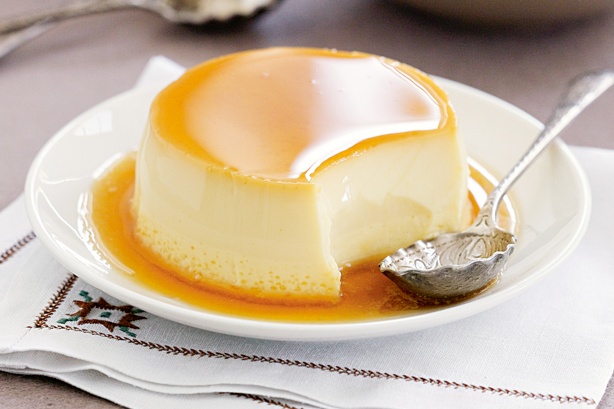
By the middle of the second hour, Oud Fleur smells like a creamy, almost custardy, almost mousse-y, airy flan infused with slightly burning spikes of chili pepper, then covered with a blanket of lightly sweetened, fruited flowers. The notes have blurred into each other, the fragrance feels increasingly soft, and hovers just an inch above the skin.

If you’ll notice, I haven’t mentioned oud or agarwood in either of my descriptions of Oud Fleur’s opening stage. There’s a reason for that. In both tests, the oud lurked completely at the fragrance’s edges, popping up like a ghost once in a while to give a little animalic “Boo” in the softest of whispers. On occasion, it took on a more musky, leathered feel (thanks to the castoreum and leather accords); at other times, it was more sweet, seeming like Indian oud instead of the Laotian kind on the list. Actually, to be honest, this doesn’t seem like real agarwood at all. It feels more synthetic than real, and it’s certainly not profoundly woody, deep, or dominant. In all cases, however, the note is really like Casper the Friendly Ghost throughout the majority of Oud Fleur’s lifespan. This is an “oud” perfume for people who actually dislike or struggle with oud. 

"Cosmic Swirls Beige" by Jeannie Atwater Jordan Allen at fineartamerica.com

“Cosmic Swirls Beige” by Jeannie Atwater &Jordan Allen at fineartamerica.com http://fineartamerica.com/featured/cosmic-swirls-beige-jeannie-atwater-jordan-allen.html

The differences in the two openings really lasts about two to three hours at most, and then the two roads of Oud Fleur merge into one. Basically, the second, more robust, spiced version of Oud Fleur takes on the soft, gauzy, creamy woodiness of the first version. It merely takes three hours, instead of just under two hours, for Oud Fleur to turn into a creamy flan-like bouquet infused with slightly fruited florals, abstract beige woodiness, the smallest flecks of oud, a tinge of incense, and some amber. Eventually, the floral elements fade away, leaving a generic, indistinct creamy woodiness with a hint of amber and some tonka vanilla. In its final moments, Oud Fleur is a nebulous smear of woods with a tinge of powdered sweetness.

Oud Fleur has decent longevity and low sillage on my skin. With 2 big smears, the perfume opened very softly, became a skin scent after about 90 minutes, and lasted a total of 7.75 hours. With 4 very big smears, Oud Fleur opened with moderate sillage that projected about 3 inches, then dropped after 2 hours to hover just an inch above the skin. It became a skin scent at the start of the 4th hour, and remained as a sheer, gauzy wisp for several more hours. All in all, it lasted just a little over 9.25 hours.

Oud wood with its "noble rot." Source: The Perfume Shrine via Dr. Robert Blanchette, University of Minnesota - forestpathology.coafes.umn.edu

Oud wood with its “noble rot.” Source: The Perfume Shrine via Dr. Robert Blanchette, University of Minnesota – forestpathology.coafes.umn.edu

I think Oud Fleur is a pretty, pleasant fragrance that has some wonderful creamy bits and can be quite lovely at times. It is more complicated than a simple, small application would lead you to believe, and veers from being sweet, sexy and feminine, to being quite cozy in an elegant manner. However, at heart, it’s really a misnamed fragrance that is more a light fruity-floral with spices and some generic woods than an actual oud fragrance. If I’m to be honest, I think Oud Fleur is very pretty, but somewhat over-priced for a fragrance that isn’t very distinctive. I also think those expecting a true agarwood perfume, or something with the heavy, woody richness of Oud Wood will be sorely disappointed. The same applies to anyone seeking a very masculine or true oud. This is not Xerjoff or Amouage territory!

On the other hand, those who liked By Kilian‘s Playing with the Devil (In The Garden of Good and Evil) would probably like Oud Fleur quite a bit. For me, Tom Ford accomplished what Kilian Hennessey failed to do, creating a fruity-floral with a bit of a fiery, spicy bite (the Devil) that turns into soft, creamy, floral woodiness (Goodness in the Garden). By the same token, women who enjoy soft fruity-florals and don’t like oud may greatly enjoy Oud Fleur. Men who are looking for a more woody twist on creamy florals with some cozy sweetness in the base may feel the same way.      

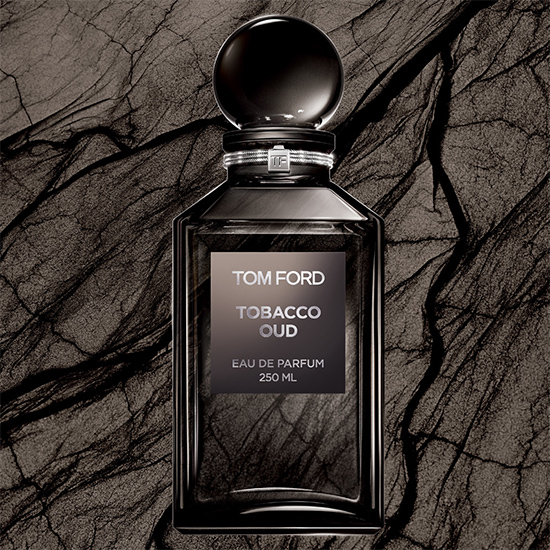
TOBACCO OUD:

Tobacco Oud via beautyscene.net

Tobacco Oud via beautyscene.net

Tobacco Oud is a fragrance that mimicked a wide range of many existing Tom Ford fragrances on my skin. I kid you not, Tobacco Oud had parts that were extremely similar to four different Tom Ford Private Blends. In order: Amber Absolute, Tobacco Vanille, Café RoseSahara Noir, then back to Amber Absolute in the drydown. Make of that what you will when you contemplate Tobacco Oud’s originality….

According to CaFleureBon, Tobacco Oud was created by Olivier Gillotin of Givaudan who made Tobacco Vanille for Tom Ford. The Moodie Report describes the fragrance and its notes as follows:

As its name suggests, Private Blend Tobacco Oud features a tobacco accord inspired by “dokha,” a blend of herbs, flowers and spice-laden tobacco that was smoked in secret five centuries ago during a ban on smoking — and retains its allure as a widely used tobacco today.

Other key ingredients include roasted Tonka organic absolute, coumarin, sandalwood, amber, cistus oil, cistus absolute, cedarwood Atlas ORPUR, patchouli and castoreum. 

So, a succinct summary of notes would be:

A ‘Dokha’ Tobacco accord, herbs, coumarin, flowers, Tonka bean absolute, sandalwood, cistus [labdanum amber] oil, cistus [labdanum amber] absolute, oud, amber, cedarwood, patchouli, and castoreum.

Labdanum compiled into a chunk. Source: Fragrantica

Labdanum compiled into a chunk. Source: Fragrantica

Tobacco Oud opens on my skin with a burst of amber and labdanum, then hints of tobacco and oud. For those of you who may mistake the two, labdanum and amber have very different smells. As one perfume nose told me in her studio, labdanum is “real amber,” while “amber” is often the compilation of various other notes to create that overall impression. Labdanum has a very particular, completely unique aroma that is dark, slightly dirty, very nutty and toffee’d with subtle, underlying nuances of honey, beeswax, musk, and/or something a bit leathery. It is almost always a deeper, richer, denser, stronger, darker aroma that is less soft, creamy, and cuddly than regular, lighter “amber.”

All of this is key, because labdanum is really at the heart of Tobacco Oud, as well as its forbearer, the now discontinued, labdanum monster, Amber Absolute, and Amber Absolute’s extremely similar replacement, Sahara Noir. On my skin, Tobacco Oud opens exactly like Amber Absolute, with hints of Tobacco Vanille. That last part can’t be very surprising given that the same perfumer also made this new tobacco fragrance.

Source: visualparadox.com

Source: visualparadox.com

After the opening burst of labdanum, other elements emerge. Joining the tobacco in second place is patchouli, adding a subtle jamminess and additional layer of sweetness to the scent. Bringing up the rear are hints of: vanilla; a smoky, very dry, very brittle cedar; a whisper of oud; and a subtle flicker of something vaguely herbal that is too faint to really place. Tobacco Oud’s main, overall bouquet is of a nutty, dirty, dark, rich, labdanum toffee infused with a fruited pipe tobacco, a jammy sweetness, strong cedar, and a hint of vanilla. The perfume is initially rich and strong in its potency, but it’s far from being dense, opaque, or thick in feel. Actually, it feels much airier than the heavy Amber Absolute, even from the start.

Source: gawallen.piczo.com

Source: gawallen.piczo.com

Ten minutes in, other nuances appear under the top notes. There is a whiff of something floral, something almost rose-like, but it’s very minor at first. Much more noticeable is the subtle aroma of burnt beeswax, along with the merest suggestion of a darkened leather coated with honey. Both are side-effects of the labdanum. My skin tends to amplify the note, but it also makes patchouli act like a bullhorn a lot of the times, and Tobacco Oud is no exception. It takes the patchouli and runs with it, bringing out a definite syrupy, fruited, almost fruit-chouli like sweetness. Less than 30 minutes into Tobacco Oud’s development, the patchouli merges into the floral note to create a jammy rose sweetness that completely overwhelms the tobacco. I’ll be honest, I was a bit baffled, but, clearly, it’s the patchouli at play and, as usual, my skin wreaks havoc with it.

As the notes begin to blur into each other and overlap, Tobacco Oud turns into a labdanum, patchouli, and sweetened rose fragrance on my skin with only the vaguest suggestion of tobacco, oud, incense smoke, or cedar. Around the 75-minute mark, Tobacco Oud’s projection drops, the notes become even softer, and the fragrance loses most of its tobacco layer. The jamminess of the rose mixed with the dark labdanum amber creates something that, on my skin, distinctly resembles portions of Tom Ford’s Café Rose.

Tom Ford advert for Sahara Noir. Source: Fragrantica.

Tom Ford advert for Sahara Noir. Source: Fragrantica.

As regular readers will know, I’m not a fan of jammy, fruit-chouli, so it’s a huge relief when it fades by the end of the second hour and Tobacco Oud changes again. Now, it’s a gauzy, sheer, relatively dry-ish amber infused with frankincense and the merest flicker of oud. In short, the third hour opens in Sahara Noir territory, only Tobacco Oud is substantially thinner and weaker in feel. As the review linked above makes clear, I found Sahara Noir itself to be a copy of Amber Absolute, only much better balanced and less bullying, but somewhat lighter, less unctuous, without quite so much frankincense intensity, and with the new (but subtle) addition of oud.

Source: openwalls.com

Source: openwalls.com

So, really, Tobacco Oud has really returned cycled back to the beginning. The main difference is in density, thickness, projection and dryness. Tobacco Oud seems much drier than Amber Absolute, much less opaque, resinous, indulgently dense and gooey in its labdanum. It’s weaker in both weight and sillage, hovering just an inch above the skin at the middle of the third hour. To me, Tobacco Oud is actually much less smoky or incense-heavy than either Sahara Noir or Amber Absolute. Yet, it also feels dryer, probably because the labdanum isn’t such a heavy, rich layer.

Source: rexfabrics.com

Source: rexfabrics.com

Tobacco Oud continues to devolve, reflecting neither of its namesake elements in any noticeable way. Near the end of the 4th hour, it loses the remainder of its incense, turning into a scent that is primarily gauzy, wispy labdanum with a hint of nebulous woody dryness that can just vaguely, barely, be made out as “oud.” Even that goes by the end of the 6th hour. From that pointon, until Tobacco Oud’s final moments, the perfume is a mere smear of soft amber. All in all, it lasted 9.5 hours on my skin with generally low sillage after the third hour.

People’s reactions to Tobacco Oud seem highly mixed, and generally much less enthusiastic than the response to Oud Fleur. On Fragrantica, almost all the talk about Tobacco Oud centers on just how much of those two namesake notes are in the scent, and the degree of similarity it shares to Amber Absolute. A number of people find the two perfumes to be very similar in their opening stage, but dissimilar in overall development, weight, and feel. A few find zero similarity, no doubt because they experienced a heavy amount of tobacco. (Oddly, a number of those bring up Sahara Noir instead.) Obviously, the more the tobacco element manifests itself on your skin, the less you’re likely to think Tobacco Oud resembles Amber Absolute.

To give you an idea of the debate and divergence in opinion, here are some snippets from Fragrantica:

  • Tobacco and Oud you are looking for? Look elsewhere. This fragrance is very similar to Amber Absolute at the top of this, rich with resinous amber but not as rich and less patchouli than AA. This fragrance is slightly drier. This fragrance does not have the longevity and projection that Amber Absolute has. There is no Oud and very minimal tobacco. Once this dries down, it turns into an amber/sandalwood scent with very light spices. […] This is very similar to amber absolute but if you’re an amber absolute fan this would not be a suitable replacement. It definitely lacks the richness that AA has.
  • tobacco oud? this is more amber absolute with just a bit of spices. nice scent and good sillage and longevity.
  • The tobacco is the most prominent aspect of it (considerably more so than the oud), and the note is split between the herbal facets of tobacco leaves and a genuinely dirty smoke effect. The spices are surprisingly grungy for a Tom Ford, and I’m assuming that there’s some civet or some choyas playing up against the patchouli to get this effect. The oud is minimal […] This is all placed over a fairly stock amber base that’s got a vanillic edge, but is largely characterless. It’s the same thing you find at the base of the lifeless Rive d’Ambre. [¶] There’s no connection to Amber Absolute here whatsoever. None. [¶] There is, however, what appears to be a hint of benzoin that draws some parallels to Sahara Noir, but the similarity is minimal. […] As an oud fragrance, it’s lackluster, but it’s on par with the other non-oud ouds from similar brands [.]
  • it is a very simple scent with a deep onslaught of a pipe’a’riffic notion. kinda like a cherry black and mild before it is burnt. i like it but i can’t see myself smelling like this often. it’s more like a novelty item then a fragrance i would wear. however it is a quality product and for someone who is looking for a very specific item. this fits your pipe tobacco needs.
  • Oh dear, love tobacco vanille, love oud wood more. This is nasty

Personally, I was much more interested in what a close friend of mine thought, as she is a die-hard Tom Ford fan whose “holy grail” fragrance is Oud Wood, followed then by Amber Absolute. For her, Oud Wood and Amber Absolute are absolute perfection. She is the very talented, thorough, globally successful beauty blogger, Temptalia, and her review of Tobacco Oud reads, in part, as follows:

Tobacco Oud opens with a burst of smoke, spice, and almost reminds me of incense burning at an altar. It’s dry, like walking in the woods during autumn, when it’s chilly enough that fireplaces are crackling, but there’s no snow or rain yet. Or stepping into a dry sauna–it’s just a lot of smokiness and drier woods to me; I keep thinking cedarwood (which is a note). There’s amber in the background, somewhere, that’s fleeting initially, and then it settles in for a long stay. It morphs into a mix of smoke, spice, amber, labdanum, and the beginning tendrils of vanilla. Finally, it becomes a more comforting, warmer scent that smells of lightly sweetened vanilla with a soft smokiness and a wee bit of spice that lingers. Oud is here and there throughout the first few hours of wear; it’s not the star–the smokiness from tobacco is definitely more in the forefront. If you’re looking for a strong oud note, it’s not in this scent.

The discontinued Amber Absolute.

The discontinued Amber Absolute.

She too has noted how Tom Ford fragrances differ substantially in smell depending on the quantity applied, and I think her observations are useful, along with the ever-helpful comparisons to her beloved Amber Absolute:

I found Tobacco Oud’s metamorphosis was greatly influenced by the number of sprays; less than two, and it was very, very dry and lacked warmth, but three sprays gave me that warmth that I missed the first time I wore it, and that warmth made me understand some of the comparisons to Amber Absolute. With that being said, Amber Absolute is much, much heavier on the amber; it’s headier, thicker, warmer, cozier; when Amber Absolute opens, I get that resinous quality but not the smokiness that I wafts from Tobacco OudAmber Absolute is also sweeter throughout the wear, where Tobacco Oud turns slightly sweeter from the tonka bean after six to eight hours of wear. Even if the two had more similarities than differences, the most marked difference is that Amber Absolute is a monster–it has more projection, longevity, and overall, it is just more potent. Amber Absolute–one spray split between my wrists–is still a skin scent twenty-four hours after I’ve applied and taken a shower.

Tobacco Oud is standing in front of the hearth and warming your hands, a brief respite from the cool outdoors.  Amber Absolute is curling up in a luxurious blanket in your favorite chair and settling in for the night.

Due to differences in skin chemistry, the opening I experienced was much more ambered and sweet than hers, as well as with substantially less tobacco and dryness. Nonetheless, I think she’s absolutely right about the overall differences, and she’s summarized them extremely well. I also agree that Amber Absolute has far greater sillage, weight, and duration.

That said, my dear friend has what I affectionately call “unicorn skin,” because she gets longevity from all fragrances to a degree that is simply unique. I’ve never seen numbers (from anyone!) like what she regularly gets from a single, tiny, split spray of perfume. (Any perfume, any brand — doesn’t make a difference.) She’s in a whole other territory, beyond even “glue skin,” and verging on something completely epic. It fills me with the deepest envy, but it also requires me to caution you that you should not take her longevity numbers as the typical norm.

You should, however, listen to the die-hard Oud Wood and Amber Absolute fan when she tells you that Tobacco Oud won’t satisfy your oud itch, and that it won’t measure up to Oud Wood or Amber Absolute for anyone who is truly passionate about either fragrance. I couldn’t agree more. Tobacco Oud isn’t a bad perfume, but, as this discussion should make clear, it’s incredibly generic and wholly unoriginal.

In essence, Tobacco Oud is like a Greatest Hits remix of the Tom Ford line, only played at a much lower volume, and not in High-Definition or surround-sound. Unfortunately, the sum total effect is not equal to the originals by themselves. I’m truly not sure to whom Tom Ford is marketing this fragrance, especially at $210 for the smallest sized bottle. All the people who love ouds and/or tobacco scents will have infinitely better, richer, more opulent choices elsewhere — often for much less. And, for the exact same price, Tom Ford fans can always turn to his existing line-up (or to eBay for Amber Absolute). I know a ton of guys who own both Oud Wood and Amber Absolute (with a few owning Tobacco Vanille and/or Sahara Noir as well). Layer some combination of those fragrances, and you’ll get a more potent, richer, deeper Tobacco Oud. Why spend $210 for a less distinctive, ersatz copy? Do they really think Tom Ford aficionados are that stupid, or that unfamiliar with the rest of the line? The only possible explanation lies in the perfume industry cycle, and the pressures imposed by annual shareholder reports on large conglomerates like Estée Lauder (which owns Tom Ford). Because perfume originality, creativity, body, depth, and quality aren’t it.

DETAILS:
Cost & Availability: Both Oud Fleur and Tobacco Oud are eau de parfums. They come in three sizes that cost: $210, €180, or £140.00 for a 50 ml/1.7 oz bottle; $280 or £320.00 for a 100 ml/3.4 oz bottle; and $520 or €420 for a 250 ml/8.45 oz bottle. There are also accompanying bath products to go with Tom Ford’s original Oud Wood fragrance. In the U.S.: you can find the two new Oud perfumes at Nordstrom Neiman Marcus, Saks Fifth Avenue, Bloomingdales, and Luckyscent (which has just started to carry Tom Ford’s Private Blend collection). I don’t see the new Oud fragrances on the Bergdorf Goodman site, only the original Oud Wood. Outside the U.S.: In Canada, I believe Tom Ford is carried at Holt Renfrew, but they only list the old Oud Wood on their online website, not the new ones. In the UK, you can find the Oud collection at HarrodsHarvey NicholsSelfridges, or House of Fraser. All four stores sell the small 1.7 oz/50 ml size for £140.00, and the super-large 250 ml bottle for £320.00. In France, Tom Ford Private Blend fragrances are available at the Sephora in Paris, along with Premiere Avenue which sells the 50 ml bottle for €180, and the large 250 ml bottle for €420. (Scroll down the page at the link above to see the new Oud listings.) Premiere Avenue ships throughout Europe, and I believe they might ship world-wide but I’m not sure. For other all other countries, you can use the store locator on the Tom Ford website to find a retailer near you. Samples: I bought my samples of the new Oud fragrances at Surrender to Chance which sells both Oud Fleur and Tobacco Oud (as well as Oud Wood) starting at $3.99 for a 1/2 ml vial.

Téo Cabanel Barkhane: Mitzah’s Brother

Close your eyes, and imagine a river. It’s heavy, swollen with rain, and moving incredibly fast. It would be a “white-water rapids” except this water is thick, dense, chewy, and powerful. It’s not even really water at all, but more like volcanic lava flow; a turgid, toffee thickness of labdanum and patchouli, a mighty force of smoldering, spiced, slightly smoky blacks, browns, and reds that are lightly flecked with bronzed gold. The heady, potent force field of Mitzah-esque labdanum calls you like a siren. You get on a canoe, and shoot forward on the fast-moving, rich, toffee river with incredible speed and power.

Source: natures-desktop.com

Source: natures-desktop.com

Then, suddenly, abruptly, almost impossibly, after less than two hours….. you slooooow to a crawl. The chewy, dense, smoldering river water starts to dry up around you, becoming thinner, lighter, softer. Before you can blink, it’s turned into to a trickle, evaporating around you, until you’re left stranded in the middle of a dry, leathery riverbed with only the smallest pool of amber around you. A pool so sheer and so soft that you’re almost convinced it’s not actually there, and are completely shocked when you detect faint traces of it every hour when you check.

Source: grist.org

Source: grist.org

As time passes, the disbelief grows at the severity of the contrasts, and by the mere fact that this seemingly invisible drop of water actually still remains. As night falls, there is no more amber and you are alone with only by the faintest whiff of animalic leather. Then, even that remaining puddle of water vanishes, and you’re left longing for the mighty river that began your journey so many hours earlier.

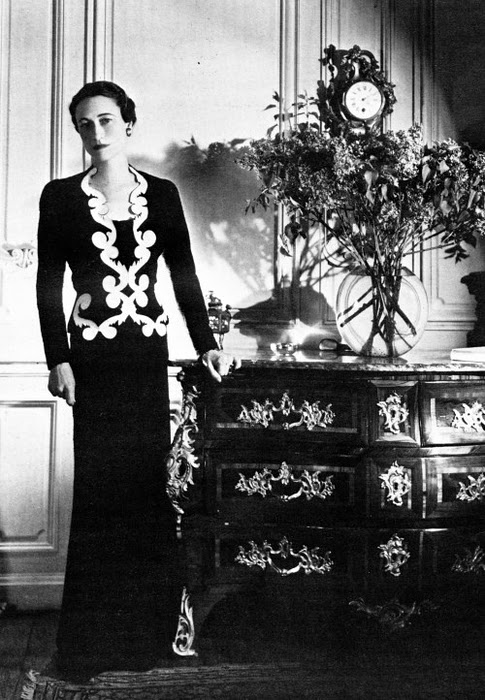
Teo Cabanel logoThat story is the nutshell tale of my journey with the brand-new release from Téo Cabanel Parfums. When a small, hugely under-appreciated, relatively unknown perfume house makes one of your favorite fragrances in the world, you tend to root for it, and want to love all its creations. If the house comes with a fascinating history — complete with the notorious style icon, the Duchess of Windsor, as its most ardent fan — and if you’re a history fanatic, then you are even more compelled to want to like it. The reality, however, is that not all perfumes are created equal. And some fall short of the glory set by their siblings. That is the case with Barkhane, a lovely fragrance from the same house that created my beloved Alahine, but hardly a match for the latter’s potent, fierce, boozy, and utterly spectacular, sophisticated, spicy smolder.

The Duchess of Windsor

The Duchess of Windsor

Barkhane is an eau de parfum from the French perfume house, Téo Cabanel. It is a very old brand that was founded in 1893 in Algeria by Théodore Cabanel, a talented, very prolific perfumer who moved to Paris in 1908 where he developed well over 150 different perfume formulae. He fast came to the attention of high society, and became a favorite of the Duchess of Windsor — the woman for whom King Edward VIII famously gave up the British throne. In fact, she refused to be without two of Cabanel’s fragrances (Julia and Yasmina), ordering bottles in massive quantities, and Cabanel became her official perfumer.

Unfortunately, over time, the house faded away, but it was essentially reborn in 2003 under the direction of Caroline Illacqua who had a distant connection to Cabanel’s daughter. Illacqua brought in the perfumer, Jean-Francois Lattya very famous “nose” who created YSL for Men, YSL‘s Jazz, Givenchy III, Van Cleef & Arpel‘s Tsar and, allegedly, Drakkar Noir as well. (If so, I assume he worked alongside Pierre Wargnye who is usually credited with that famous men’s cologne). Latty now works solely as the in-house perfumer for Téo Cabanel.

Barkhane in the 50 ml bottle. Source: Téo Cabanel website.

Barkhane in the 50 ml bottle. Source: Téo Cabanel website.

This week, the two released Barkhane, an eau de parfum that is the first of the Cabanel line to include oud. The company describes the perfume (and explains its name) as follows:

Rich, warm and mysterious, Barkhane borrows its name from the smooth, velvety dunes which gently ripple under powerful desert winds. Barkhane owes its refined elegance to the very finest ingredients. All at once powerful and subtle, it develops its own fascinating uniqueness.

The press release documents describe the fragrance as a “woody-chypre,” which I find quite odd as Barkhane has the most oriental notes and smell imaginable. According to the description on Téo Cabanel’s website and on Fragrantica, Barkhane’s notes include:

bergamot, labdanum, Indonesian patchouli, geranium, cumin, curry tree, vetiver, oud, myrrh, tonka bean, vanilla and musk.

Mitzah. Source: Fragrantica.

Mitzah. Source: Fragrantica.

I sprayed Barkhane on my skin, and my response was instantaneous: I actually cried out aloud, “Mitzah!” Then, I sniffed the vial, sniffed my skin again, and almost did a happy dance. The first line on my note pad is: “Mitzah, Mitzah, Mitzah!” For those of you unaware of the name, Mitzah is one of Dior‘s elite Privée line of fragrances and a huge cult hit with a very passionate following. Or, rather, I should say, it was, since the imbeciles at Dior suddenly decided to discontinue it for reasons that no sane person (including people who work at Dior) can fathom. Mitzah is one of my favorite perfumes, still available at some Dior boutiques and Dior online, but the remaining stock won’t last forever, and one day, it will be nothing more than a ridiculously priced hot commodity on eBay. So, as you can imagine, I was thrilled that there may be an alternative out there should my giant bottle ever dry up.

Source: HuffingtonPost.com

Source: HuffingtonPost.com

Barkhane opens like Mitzah on steroids. No two ways about it. It has some of Alahine’s explosive, nuclear opening, but with the Mitzah aroma. Could there really be greater joy? When you sniff the vial, it’s all roses and labdanum, but the opening burst on the skin is purely the labdanum. It feels like a tidal wave of brown, nutty, leathery, sweet toffee with an almost caramelized undertone and richness. It’s immediately followed by incense smoke, and dark, chewy, spiced, real patchouli.

Then, the spices appear. There is a heaping teaspoon of sweetened curry, with just the merest dash of dry, dusty cumin. There is nothing sweaty about the mixture, and absolutely no trace of body odor. It also doesn’t smell like food or actual Indian curry dishes. The spices are blended seamlessly into Barkhane, never feeling very noticeable in a heavy, distinctive way, and really smelling more like the dry dustiness surrounding a spice merchant in a Moroccan souk or bazaar. Even if they weren’t so well-blended in the fragrance, the simple fact is that there is little that could possibly trump that powerful wave of labdanum toffee and slightly smoky patchouli.

Source: hdwallpaperstop.com

Source: hdwallpaperstop.com

Other notes flit about Barkhane’s edges. There is a bitter citrus note like the slightly sour peel of a lemon rind that has been dried. A subtle hint of woody, equally dried vetiver pops up in tiny doses. Underneath the heavy top notes, there are also subtle flecks of geranium’s greenness, some golden musk, and a sliver of vanilla. The geranium is the most interesting thing to me because, at first sniff on the skin, Barkhane differs from Mitzah in not having that undercurrent of rose. But it is the oddest thing: if you smell the vial, you definitely smell roses under the labdanum amber. And, on the skin, the same thing slowly starts to appear. It has to be the geranium whose flowers can often have a spicy, rose-adjacent, rich red smell. In short, something about the combination of the geranium and the patchouli seems to have recreated the aroma of deep, ruby-red roses in Barkhane, thereby completing the similarity to Mitzah.

Source: Huffingtonpost.com

Source: Huffingtonpost.com

Even if I didn’t know and love Mitzah, I would adore Barkhane’s opening. It’s a chewy, spicy, smoky fragrance that is absolutely stunning. The sweetness is perfectly balanced by the dry spices and the suggestion of woodiness. Speaking of which, to my nose, there is absolutely no “oud” that ever appears in Barkhane. There is a definite dry woodiness underlying the fragrance, but it’s wholly amorphous and lacking in distinction to me. It’s probably the subtlest part of the fragrance as a whole, because Barkhane’s real source of dryness are the spices and incense.

At first, Barkhane is massively potent. In that way, it is like all the Téo Cabanel fragrances that I’ve tried thus far (Alahine & Oha), but it’s not quite as ferocious as Alahine can be. That is a fragrance that is much better with less, especially as a heavy application can completely and utterly blow out your nose at first sniff. (It did to me the very first time I tried it.) To give you an idea of the potency of some Cabanel fragrances, my parents each applied a small dab of Alahine in solid form, and I could smell them almost across the whole length of the house. And even up a flight! (Alahine is unisex, by the way, and found an immediate fan in my father.) Barkhane doesn’t quite pack the same nuclear punch as Alahine in its opening minutes, but it certainly tries. And it’s definitely much more powerful than Mitzah at the start.

ApothCab2Thirty minutes in, Barkhane unfurls and blooms into the loveliest, deep, dark labdanum amber with a floral undertone. It really smells like that heady, powerful, concentrated, dark rose note that Téo Cabanel loves so much and which is probably their signature. The curry note is also starting to become more prominent. It is dusty, evoking an old apothecary’s cabinet from centuries past, a cabinet whose wooden drawers carry the lingering traces of spice and time. The patchouli continues to be forceful, and the smoke seems to have increased, adding yet another subtle dose of dryness to the nutty, slightly dirty, very toffee-smelling amber.

50 minutes in, Barkhane starts to change in weight, texture, and feel. It becomes softer, tamer, milder, dropping quickly in its heaviness, projection, and power. Now, it hovers only 3 inches above the skin, a fact that should tell you something about its opening minutes. While that is still very strong, the more significant fact is that Barkhane feels much thinner than it did at its start. It’s now more like darkened silk, rather than an opaque river of black, viscous, dense resin. The perfume continues to turn more sheer — and, then, suddenly, it drops like the wind.

Source: scenicreflections.com

Source: scenicreflections.com

Ninety minutes into its development, Barkhane is suddenly a skin scent. From a powerful Saharan sandstorm, it’s become a veritable puff of air — and it’s a shockingly fast transformation. Barkhane is now the sheerest glaze of dark, toffee’d labdanum, infused with patchouli, spices and incense. It feels amorphous, intangible, elusive, and likely to slip away at any moment. What happened?! Every 20 minutes, I sniff my arm in the expectation that Barkhane has completely vanished. My nose is right on the skin, and, at times, I have to practically inhale to detect anything beyond the amber, but it didn’t die. My notes are filled with time calculations, and the disbelieving words: “still there.” By the end of the 3rd hour, I wrote “almost all gone.” I was utterly mystified. To have that degree of drastic change is not something I’ve experienced often.
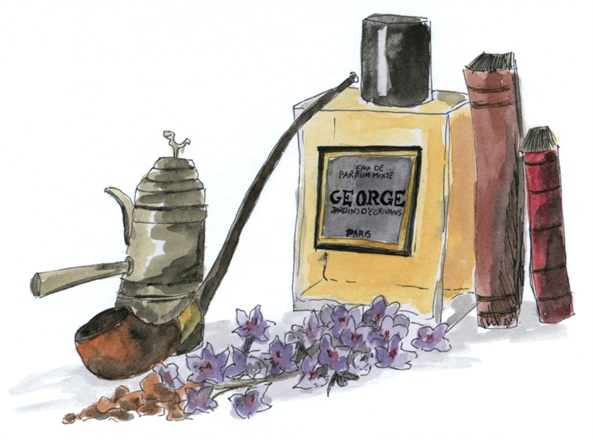
Photo: Heather A. Riggs, available at her Etsy store, ShyPhotog. (Website link embedded within photo.)

Photo: Heather A. Riggs, available at her Etsy store, ShyPhotog. (Direct website link embedded within photo.)

Even more bewildering is the fact that Barkhane seems to have come back to life, albeit in the sheerest, most translucent manner imaginable. Hour after hour, it hung on as a labdanum-patchouli-incense fragrance. To my complete disbelief, Barkhane actually seemed to get stronger around the start of the 8th hour!! It was still a skin scent, but easier to detect. I’ve never been anosmic to amber, especially not to labdanum, so I can’t explain it, but I’m currently at the end of a second full test and the same situation is unfolding. Crazily enough, Barkhane lasted just over 11.75 hours on me. In its final hour, it turned completely leathery with an animalic, musky edge that almost bordered on the subtly urinous, but not quite. The amber warmth remained, adding a faint glow of warmth, but Barkhane was primarily a nebulous, vague, dry, animalic leather fragrance that lingered in gauzy patches that were scattered across the skin.
In the end, Barkhane’s long duration is consistent with the other Téo Cabanel fragrances that I’ve tried, but the sillage issue is quite new to me. I was really convinced that Barkhane was about to die at the end of the third hour! Making matters more bewildering is that I had actually sprayed quite a lot of Barkhane, at least by my particular Téo Cabanel standards: 3 sprays that were very big and full-sized due to the large nozzle. For this generally intense line of fragrances, that is a lot for a starting test! (Do not ever try that with Alahine, for example, at least until you get used to it.) In my second test, I used 4 and 1/2 large sprays, but the situation followed the same path with only a fractional increase in the time that it took Barkhane to turn to gauze.

Barkhane is too new for there to be reviews out in the blogosphere, but I went to Fragrantica in hopes that someone may have shared their experience there. They haven’t, but I was relieved to see some early votes in the longevity and sillage sections:

    • One person gave Barkhane the lowest longevity rating which is “Weak,” and which is defined as “1h – 2h.” However, two people chose “long lasting” which is defined as “7h – 12h.”
    • For projection, 2 people gave it the lowest rating at “Soft,” while one person chose “Moderate.”

I need to make something clear: sillage is a personal preference. Some people don’t want fragrances that howl at the moon, and that’s fine. Mitzah has discreet sillage, too, but the difference is that Mitzah becomes unobtrusive after about 5 or 6 hours! The comparative difference with Barkhane — and the speed of the changes in so many areas as weight, feel, and projection — can’t be ignored. More to the point, when it feels almost certain that a fragrance is about to die after a mere 3 hours, then it has to be discussed, regardless of what the end result is or one’s personal tastes. Judging by the very early Fragrantica votes, there is clearly someone out there for whom Barkhane didn’t die at the end of the 3rd hour, but even sooner and after a mere 1-2 hours. I have to wonder if sillage played a role in that result; if a perfume’s projection seems virtually nonexistent at times, then people who can’t sniff voraciously at their arm every 20 minutes may well conclude that their perfume has vanished.

On the other hand, early votes also demonstrate that Barkhane had great longevity on some people — and it does. So, if you’re looking for something like Mitzah that is even more discreet and intimate, then you’ve got to try Barkhane. In the ways that perhaps matter most, it’s a knock-out. It’s a sophisticated amber that has been done with great finesse and, as always with Téo Cabanel, with extremely high-quality ingredients.

All in all, only one thing stops Barkhane from getting high ratings across the board. Ignoring that one (significant) issue, Barkhane is really lovely: a heady, sweet, spicy, smoky, slightly leathery, nutty and toffee’d amber with lovely decorative flourishes in an incredibly chic, smooth, seamless, refined bouquet. It’s sexy, and seductive in its dark, smoldering glow, but also comforting in its warmth and softness. It would work well on all genders, and it would be perfect for a very conservative office environment (although I would still be careful with the quantity that you apply, given the potency of Barkhane’s first hour). If you’re not looking for the mighty Saharan wind, but the lightest, sheerest, most intimate whisper of darkened amber, then you should definitely try Barkhane. 

DISCLOSURE: My sample of Barkhane was courtesy of Hypoluxe. That did not influence this review. I do not do paid reviews, my views are my own, and my first obligation is honesty to my readers.

DETAILS:
All the Téo Cabanel fragrances in a sample set. Source:  Téo Cabanel e-store.

All the Téo Cabanel fragrances in a sample set. Source: Téo Cabanel e-store.

Cost & Availability: Barkhane is an eau de parfum that comes in a 50 ml/1.7 oz size that costs $130 or €95. It is also available in a 100 ml/3.4 oz size that isn’t quite as common and which costs €120. You can order Barkhane directly from the Téo Cabanel website (which also has a French language version), along with a Sample Set of all 7 Cabanel fragrances in 1.5 ml vials for a set price of €8.50.

In the U.S.: you can order Barkhane in the 50 ml size (at $130) from Luckyscent which now carries a number of the Téo Cabanel line, including my beloved Alahine. (I should add, however, that the latter is also available from discount retailers for a cheaper price, and you can check the Alahine review for some old links.) Luckyscent also offers samples starting at $4 a vial for 0.7 ml.  (It’s a much better deal ordering directly from the company!)

Outside the US: In Canada, Cabanel’s website lists Fritsch Fragrances as its primary vendor. In the UK, London’s Bloom Parfumery carries some Téo Cabanel, but not all. You can call or email to see if they will carry Barkhane once it releases in the UK. Elsewhere, Téo Cabanel is usually carried at Fortnum & Mason’s, but I don’t see it shown online. Liberty’s states that Téo Cabanel fragrances are available only in their actual store. The Téo Cabanel line is carried at Germany’s First in Fragrance, but Barkhane is too new to be shown on the website yet. There are a vast number of perfume shops in the Netherlands and Germany which carry the Teo Cabanel line, so you can check the company’s website link for retailers that is provided down below. As a whole, for European readers, I saw Téo Cabanel online at Parfums MDP (which I think is in the UK?) for the same Euro rate as the company’s website. They say that there is “free worldwide postage” which I find to be stunning (and hard to believe)! I’ve also read  that the perfumes are available at: the Hotel George V in Paris, Les Galeries Lafayette, Douglas (France, Lithuania, Russia), Kadewe Berlin, Oberpollinger Munich, and Albrecht in Frankfurt. For all other countries or specific cities, you can use the company’s Store Locator guide on their website.

Samples: Barkhane is available to test at Luckyscent, at the link above. It is too new for it to be carried at other places, but I will try to update this post if someone other than Luckyscent offers samples. Your best bet for the next few months is the latter, or the Téo Cabanel website with their very affordable sample set.

Jardins d’Ecrivains George & The Politics of Gender Identity

Photo: William Wright. Source: Oldhouseonline.com

Photo: William Wright. Source: Oldhouseonline.com

The slim figure hurriedly dismounted from the horse and strode into the house. It was a blur of movement in a billowing white shirt and tightly fitted leather pants that still carried the lingering traces of the saddle and horse. A small, thin cheroot cigar was placed between firm, full lips that smiled broadly upon seeing the old-fashioned library parlour. It was filled with comfortable, shabby armchairs broken in from use and covered in a faded chintzy material. Books lay strewn over all the tables, while the smell of old paper wafted from the many bookcases that lined the walls. A large vase of flowers stood in the sunlight that streamed through the large, open windows, and the smell of neroli orange blossoms filled in the air. At times bitter, at times languidly soft and heady, their aroma swirled around the tobacco from the cheroot, the leather, and the faintest trace of powdered heliotrope from the garden outside. A warm, golden haze filled the room, welcoming, beckoning. George was home. Her home.

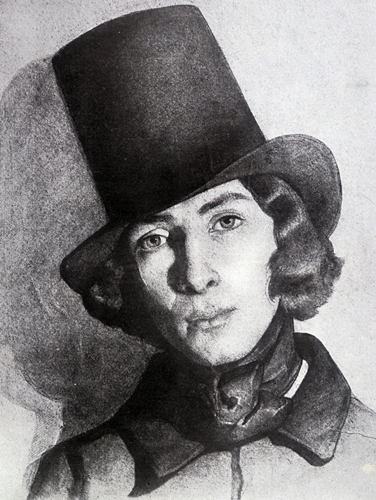
Portrait of George Sand in masculin attire, done in the 19th Century. Author unknown.

Portrait of George Sand in masculine attire, done in the 19th Century. Author unknown.

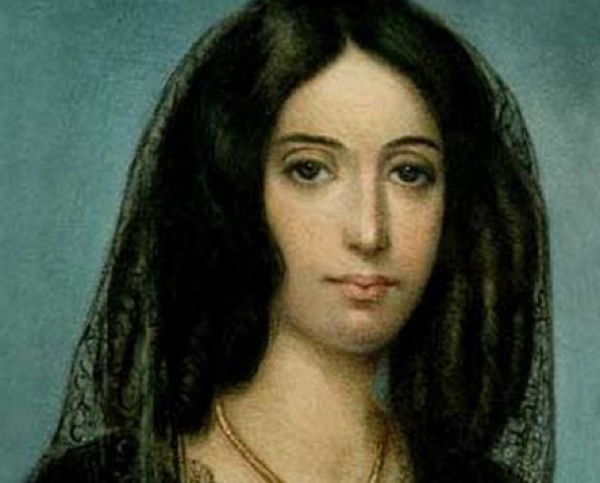
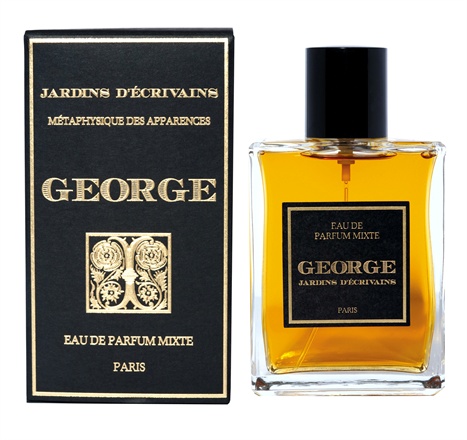
George is a perfume from Jardins d’Ecrivains, a perfume house founded by Anaïs Biguine. It is a small, French niche house that originally began with scented candles before releasing perfumes in 2012. George was the first of five, and all the fragrances are inspired by famous French literature and the beauty of gardens. George was named after George Sand, the pseudonym and pen name of a woman, the brilliant Amantine Lucile Aurore Dupin. She was a 19th-century literary (and sometimes political) figure who wrote scores of novels, plays, essays, and more. She is perhaps best known, however, for her (then) unconventional actions which raised polite society’s eyebrows in horror: she dressed in men’s clothing, smoked cigars, and had high-profile affairs.

George Sand portrait. I can't find the painter's name.

George Sand portrait. I can’t find the painter’s name.

There were practical reasons for dressing as a man, namely, the fact that it allowed her to enter worlds and haunts that would have kicked her out had she tried to enter in women’s clothing. Perhaps more importantly for the somewhat impoverished Amantine, it was cheaper, and trousers made it easier to move about. Still, the bottom line is that  “George,” as she was known, was largely indifferent to most of society’s strict rules and customs. She was a free-spirit who followed only the dictates of her heart and of her fierce intellect. It made her fascinating to the men around her, some of whom became quite obsessed with George. The most famous example: her long-time lover, Frederic Chopin.

George via Vogue.it

George via Vogue.it

It’s quite a tall order to try to encapsulate George Sand in a fragrance, but I think Jardins d’Ecrivains did so quite well. The eau de parfum is a chiaroscuro, a study of sharp contrasts in notes, textures, and colour. It is a paradox of masculine and feminine, with notes of darkness shining through the white. Jardins d’Ecrivains describes it a little differently, however, writing:

The message is loud and clear… singularity, modernity, elegance and complexity, and consequently a certain approach to the metaphysics of appearances.
GEORGE was just that… indefinable, man and woman, at ease with and amused by both statuses.

The George eau de parfum is for men and women who know who they are and who like to reveal a brief glimpse of their soul in the fragrance they leave behind them.

Top notes : Neroli – Bergamot

Middle notes : Heliotrope – Coffee – Tobacco

Base notes : White musk – Balsam of Peru – Myrrh

George drawing via Vogue Italia.

George drawing via Vogue Italia.

George opens on my skin with a blast of mentholated orange blossoms that have a distinctly eucalyptus-mint undertone mixed with leather. They are followed by the lightest hint of tobacco and smokiness over a dark, almost viscous-like, thick resin. Jardins d’Ecrivains lists neroli as George’s ingredient, but that is merely the name for a different method of treating orange blossoms, creating an aroma that is often more pungent, woody, spicy, bitter and edgy than the more sweet, florid, languid, indolic “orange blossom.” At its heart, however, both are really just different takes on the same flower. So, here, I shall use “orange blossoms” to better convey the whiteness that I see visualized.

Heliotrope.

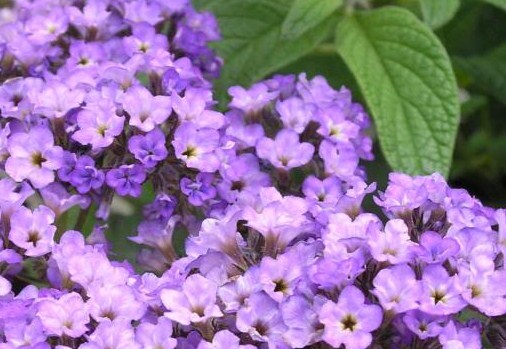
Heliotrope.

There are other notes underlying that powerfully sharp, herbal, minty, chilled, and camphoraceous start. There are bits of a pulpy, juicy bergamot which sometimes feels a bit more like orange than lemon or “Earl Grey.” There is a dark, sweet musk as well. Much more noticeable is the subtle undertone of heliotrope. It doesn’t start out as the sort of powdered, almost almond-like element that many of us are familiar with in Guerlain fragrances. Here, it is more like a subtle touch of sweetness that occasionally verges on a Play-Doh-like aroma. It’s very subtle, but it’s there at George’s edges.

All these elements are completely at the periphery to the main trio of notes that dominate the fragrance: neroli orange blossom, tobacco, and Peru Balsam. The latter is one of my favorite types of amber resins with a dark, thick, slightly spicy aroma. The tobacco is equally dark, but also dry. Something has happened with these three main ingredients, perhaps added by the subtle smoke of the myrrh, but they seem to have come together to create a distinctly leathery note that runs through George like a dark, pulsing, treacly vein.

Orange Blossom. Photo: GardenPictures via Zuoda.net

Orange Blossom. Photo: GardenPictures via Zuoda.net

Photo: Gaia's Perspective or GollyGForce on Flickr. (Click on photo for link, embedded within.)

Photo: Gaia’s Perspective or GollyGForce on Flickr. (Click on photo for link, embedded within.)

From start, almost to finish, leather fills the air, adding darkness to the purity of the white flowers like leather trousers on an androgynous lad wearing a crisp, white, floral shirt. It starts off being slightly bitter and completely covered by the thick layer of mentholated, camphorous, eucalyptus-mint like note that covers George’s top notes. Later, it turns into something softer, musky and with a slightly animalic undertone. Jardins d’Ecrivains says that the perfume includes “coffee,” and perhaps that explains some of the initial bitter darkness. That said, I’ve worn George numerous times and never once smelled “coffee” that feels like what I drink every morning. I have no doubt that it is there, but I think the element has combined with the other accords to create the overall feel of something very different on my skin.

Eucalyptus leaves.

Eucalyptus leaves.

Every time that I have worn George, a subtle transformation begins around 15 minutes into its development. Every, single, time. The fragrance slowly — very slowly — starts to lose some of its eucalyptus-mint veneer. It’s something that can be quite pungently dark at first, and I have to admit that the first two times I tested George at the Marie-Antoinette boutique in Paris, it almost threw me off at first. Each time, however, a sudden softening occurred and George begin to slowly transform before my eyes. The drastic nature of the change is not my imagination. Even the owner of Marie-Antoinette was amazed at how the fragrance began on my skin (not great), and what it became. In a nutshell, George bloomed from an almost medicinal, very leathery, pungently herbal, dark start into something considerably sexier, more sensuous, more floral, and better rounded.

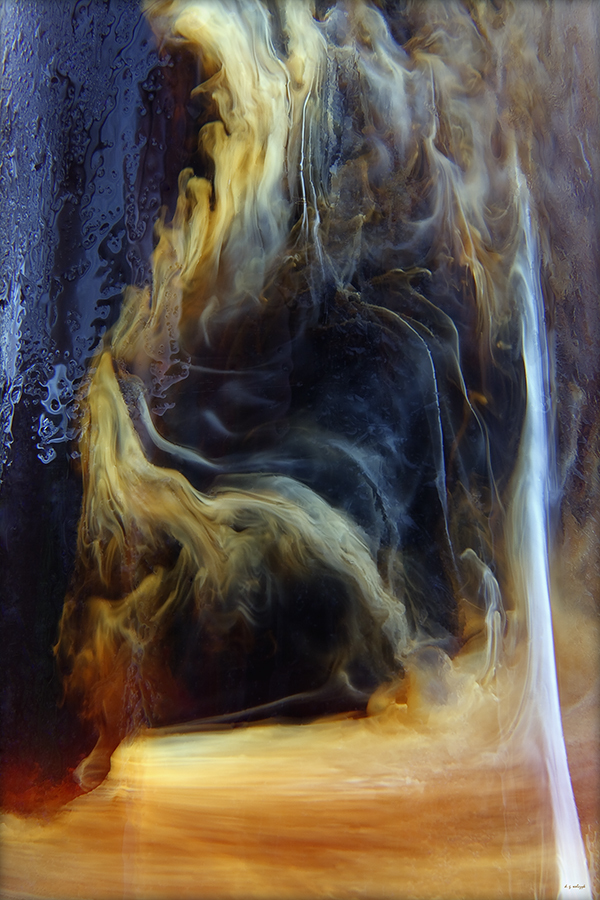
"Javascapes 3" by Photographer Daniel G. Walczyk. Source: http://devidsketchbook.com

“Javascapes 3” by Photographer Daniel G. Walczyk. Source: http://devidsketchbook.com

By the end of 40 minutes, George was a beautiful bouquet of heady, quite spicy, almost indolic orange blossoms infused with dry tobacco, a subtle smokiness, and a sweet musk, all over a darkly ambered resinous base. The mentholated edge remained, as did the leather, but they were both significantly smoother, better rounded, less aggressive. More importantly, they added an enigmatic, mysterious, subtly masculine quality to the otherwise feminine florals. From afar, George seems like one of those fragrances whose bouquet is a deceptively simple one of spicy neroli orange blossoms with a certain “something” that is darkly “odd.” Up close, however, the layers bloom, creating a chiaroscuro play of contrasts: masculine darkness with a kind of something almost “dirty” and bitter under airy, billowing, white clouds of sweet, feminine florals. On occasion, there is even something animalic that almost — just almost — borders on a whiff of something “horsey” to the leather.

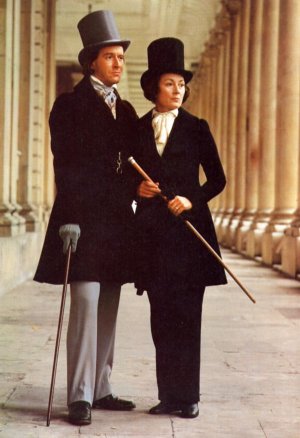
"Chopin and George Sand" in the film, "Notorious Woman." Source: http://www.alanhoward.org.uk/notorious.htm

“Chopin and George Sand” in the film, “Notorious Woman.” Source: Alan Howard & the film website. http://tinyurl.com/llpxjwe

When mixed with the tobacco and the other dark elements, the result is a paradox that is very much like George Sand herself. People who haven’t read her works often know her only in the context of her turbulent affair with Chopin, or as “that cross-dressing woman who slept with the great pianist.” The truth of the matter is that her talents equaled his, and, in my opinion, she was far cleverer, far more intellectual and brilliant. She was also a trailblazing pioneer and social revolutionary in terms of her feminist impact. Yet, putting aside her intellectual and social contributions, Amantine was also a deeply sensuous woman who could also comfort Chopin like the mother that she was, or dump him to follow her desires elsewhere. (There is a lot of controversy about both their roles in their torrid, turbulent, 9-year affair, the events that ended it, and what ensued. In many ways, she broke his heart, and he never got over it.)

George, the perfume, embodies many facets of that complex woman, from her soft, feminine side to her large sensuous appetites to her dark, masculine facade. Leather and cigars, coupled with spicy, languid, indolent orange blossom neroli, and the faintest whisper of powdery, sweet heliotrope, all atop a warm, plush, deep amber base. For the longest time, George doesn’t substantially transform from that core essence. It remains largely a mix of the bitter and the sweet, the floral and the woody, the smoky and the slightly mentholated, the leathered and the ambered.

In many ways, George is an extremely linear scent, and the only changes are really ones of degree, not of kind. At the 90-minute mark, the perfume turns slightly more animalic and musky, as the slightest whiff of that horsey note I talked about appears. There is also an almost civet-like undertone to the leather, though it’s extremely subtle. about 2.5 hours in, George turns soft, silky, and a little bit abstract. It has lost all its hard edges, as the notes melt into each other to create even more of an ambered glow. Now, the perfume is primarily amber and tobacco, only lightly dusted by neroli and that tiny, small suggestion of heliotrope. It really reminds me of the story and scene with which I began this review: the cozy library parlor with sunlight streaming in, old-fashioned leather books, and the smell of cigars mixed with the flowers in the vase.

"Javascapes 2" by Photographer Daniel G. Walczyk. Source: http://devidsketchbook.com

“Javascapes 2” by Photographer Daniel G. Walczyk. Source: http://devidsketchbook.com

George softens further as time passes. At the start of the 5th hour, the perfume feels like labdanum amber with its warm, nutty, slightly leathered, slightly “dirty” edge. The faintest trace of some smokiness, probably from the myrrh, lingers, as does the bittersweet lushness of the florals. Whispers of minty menthol underlie the florals, along with a sweet muskiness. George’s sillage has dropped, lingering just an inch or two above the skin. By the start of the 8th hour, it is a skin scent, and by the 10.75 hour mark, it has gone. In its final moments, George is merely a nebulous blur of ambered warmth with some abstract “dark” elements and the suggestion of something floral.

I don’t think George is the easiest perfume to approach and love at first glance, but if you keep sniffing, I think you’ll see her (his?) complexity. It’s at this point that I should tell you that I own George, but I’m still a bit torn on the scent, though not always for the reasons you may imagine. Part of my problem is that I absolutely adored almost the entire Jardins d’Ecrivains line from the first sniff, but I simply couldn’t choose between them. At first, Gigi captured my attention because I’m a sucker for a big, white floral bomb. George did too, but the darkness of the opening threw me off, and Gigi was much more approachable. I went home from the lovely, adorable Marie-Antoinette boutique in Paris with different Jardins d’Ecrivains scents sprayed all over me, and some samples to try to make up my mind. I concluded that I loved Orlando. Then, I became torn between Orlando and Wilde. No, it was Gigi. No, it was Orlando and Gigi. Or was it Wilde?

I went back to Marie-Antoinette with Gigi primarily on my mind, but when I got there, I became screwed up all over again. It was becoming a nightmare to decide, and I only had that day. I sprayed George on me, and started to waffle even more. The adorable, knowledgeable owner of Marie-Antoinette helped a little by saying that there were a lot of white flower scents like Gigi, but George was the most original, different, interesting and unique. I was still dubious about it, judging by its opening blast on my skin, but he insisted that I wait 15 minutes before I smelled it again. I followed his directions — and I bought George.

It is a testament to the Jardins d’Ecrivains line that I’m still not completely sure I bought the right perfume. Orlando and Wilde remain in my head, and I have samples of both to torment me. That said, George has garnered me compliments from both women and men when I have worn it. But that opening….. it can be tough. I won’t deny it. And it most definitely won’t be for everyone. One Paris fashionista on whom I sprayed George recoiled a little, even though she followed my instructions and didn’t smell her arm until 30 minutes had passed. She’s someone who likes pure ambers or pure florals. George’s mentholated leathery darkness was too alien to her usual perfume tastes, and too masculine.

I think that is the exact reason why some reviews on Fragrantica focus on the gender classification for George, and why a few women had a hard time with the scent. The point is underscored by two very opposite impressions of George from two different women. Take, for example, this first perception of the perfume:

For the first couple minutes that this is on, it’s a warm, womanly scent with musk and hints of coffee and warm tobacco. But it quickly dries down to a bland, strange fragrance on my skin. I get the neroli and something that’s very much like a powdery spearmint. It reminds me of toothpaste and rest area bathrooms (sort of a clean-trying-to-cover-up-dirty feel). This stage lasts for about an hour on me and I really don’t like it.

Over time, I start to smell a smoky tobacco (which reminds me of someone smoking cigarettes in a bathroom) and hints of coffee again, but it’s too little too late, and is still mixed with that weird, sharp mint and soapy floor cleanser smell. It really is a dirty rest stop type of scent for me… not good.

Now, compare it to this next one:

I just have to say in rebuttal to the previous review that I, as female as they come, wore this today for the 3rd time in as many months… and now that fall is here I felt that George was adequately feminine – and certainly very, very sexy. Although the heliotrope isn’t the most obvious note, it’s at the center; I feel like George is built around it.

Recently, I’ve been wearing Archives 69 by Etat Libre which is predominantly a tobacco scent, and it’s also unisex. It warmed me up for George. Today, I wore George with pink lipstick, pink leggings and a lace top, lol! I’m a huge admirer of George Sand. Please stop whatever you’re doing right this moment and look up the movie ‘Impromptu’ from 1991, find it and watch it! This perfume *is* the scent of Amandine Aurore Lucie Dupin, who became famous for taking a man’s name, wearing trousers, and smoking cigars in public. Oh yes, this is unisex. Only it takes a special type of lover to pull it off.

Judi Davis as George Sand in "Impromptu" (also featuring Hugh Grant as Chopin).

Judi Davis as George Sand in “Impromptu” (also featuring Hugh Grant as Chopin).

That review was actually not a “rebuttal” to the first quoted comments, but to a male Fragrantica poster who essentially argued that George was not an appropriate or suitable fragrance for a traditional female. His rather sexist perceptions:

Olala Georges, GEOrges! you’re GorGEOUS!
Are you sure this is a fragrance for women too? This is really for women living alone in the middle of the forest, cutting wood, have not shaved since … what year is it anyway?, Smoking a pipe in one hand and playing arm iron of the other.
But where were they get their musk? it is either a bottle forgotten since 1902 in the basement of Guerlain or else some extract juice from Canadian lumberjack pants in beaver leather . It requires a lot to like dirty underwear.
You’ve always dreamed of spending a wild and sweating night under or on top of a bearskin picked up in a lost bar in the wild North-East? Well, you’re going to get a taste!
I love 🙂

You should see the curled lip with which I read that comment. Women can’t wear George unless they’re some dirty, uncivilized, quasi-animal-like, masculine creature living in the wild with unshaven armpits and hairy legs??! Is he serious? What century are we, and does he stick his “woman” in the kitchen with a spatula, a powdery rose perfume, and a baby under her delicate arm? I’m utterly revolted. Next, he’ll be saying that men can’t wear perfumes with roses and white flowers, even though it’s been a tradition going back over a 1000 years in the Middle East and India. What about all the European kings who wore fragrances consisting of violets and powder? Or the very female Catherine de Medici whose personal fragrance from Santa Maria Novella was the basis for what subsequently became known as men’s “cologne“? Is he going to question the masculinity of the Sultans who wore jasmine, not leather or lavender? Or are men to be applauded if they try something different, while women are to be portrayed in quasi-lesbianic stereotypes as dirty creatures who don’t shave and who live alone away from all civilizing male influence or from the desire to appeal to men? I despise gender classifications that stem from parochial, narrow-minded ignorance and bigotry. What year is this, and does he not know any history?!

My apologies for that slight detour and heated tone, as I know none of you are so ignorant, let alone Neanderthal barbarians or cavemen. You all realise that perfume is a matter of personal taste, skin chemistry, exploration, and responding to some notes more than others. But the debate between the male and female Fragrantica posters does prove that gender classification continues to play a role in perceptions of perfumery. And it’s something that irks me, even apart from the social history of perfumery. This is a current, ongoing, social perception involving gender lines that can be quite rigid, and we’re in the 21st century! I was annoyed on my visits to several Sephoras in Paris because they all created a very literal divide by placing perfumes on opposite sides, with one wall labeled as “Pour Homme,” and another labelled “Pour Femme.” I had to go back and forth from one wall to the next to try perfumes that are often wholly unisex. Who decided that the entire Serge Lutens collection belonged at the “Female” wall? Why do men feel so worried or disconcerted if they like a fragrance that they mentally classify as “female”? And why does it matter if something feels “masculine” if you like it? Isn’t that all that matters, that you like something and that it makes you feel happy?!

You’d be surprised by the questions I get from both genders worrying about whether a fragrance is too ….. something…. in one category or another. I find it so silly that society has decided to categorize lavender, to give just one example, as a more “masculine” note, while roses are ostensibly a woman’s domain. I’ll spare you the history of fragrance classification in the West, but it basically began as a 19th century marketing thing. It seems to have taken on a life of its own — to the point where a man will question a woman’s appearance, lifestyle and choices if she wears a fragrance like George. Or a woman feels she can’t wear it because it’s no longer “womanly,” to quote that one Fragrantica poster.

Putting aside this issue of gender roles, and getting back to George, I think it’s clear that Jardins d’Ecrivains succeeded admirably in its goal of creating a perfume that crosses conventional, mainstream, or typical gender lines. In that way, Anaïs Biguine created a perfume that is clearly quite polarizing but, as George’s own description bluntly states (or warns), it is a fragrance “for men and women who know who they are[.]” It is for those who are more confident in their gender identity, who don’t want to be boxed into superficial classifications of “male” scents or “female scents,” or who are open to enjoying a wider array of olfactory notes.

Does that mean that George is the easiest fragrance in the Jardins d’Ecrivains line? No, I don’t think it is. Intentionally so. However, I firmly believe that men who are comfortable enough with orange blossom can wear George, just as much as women with an appreciation for tobacco and a sometimes animalic leather. George is a fragrance that women have loved on my skin, and I believe that it is also the favorite of Jardins d’Ecrivains’ female founder. At the same time, I know quite a few men who single out George as their top pick.

Take, for example, Kevin of Now Smell This who wrote a beautiful review that talks about the real “George” as much as about the fragrance. George (the perfume) was different on his skin than on mine, and I think his experience may be instructive in showing a different side to the fragrance:

George opens with a dark, “polished” vibe; it’s heavy on delicious-smelling Peru balsam and myrrh; these notes, along with citrus, conjure a dim, shuttered study, full of books. There’s a soupçon of an acidic/sharp aroma one sometimes detects in old papers…and dried plants… […] I also detect aromas of waxed wood paneling and floors, and lit beeswax candles —- with their whiff of honey…and sweet smoke. As George develops, I smell “woody” black coffee beans, and a touch of sweet, natural-smelling tobacco (imagine a pinch of freshly cured tobacco taken from a leather pouch). Neroli and heliotrope do their work in the periphery…their scents drifting into my imagined study through open windows or Sand’s Eau de Cologne. At the end of George’s development, the rich notes turn “dusty”…providing a pungent powdery finish (the white musk in George is neither utilitarian, nor too sweet). […]

George Eau de Parfum is, appropriately, unisex [….]

[It] would have made my “Best of 2012” list if I had smelled it before that post.

Judi Davis as "George Sand" in "Impromptu."

Judi Davis as “George Sand” in “Impromptu.”

As you can see, George can be different things to different people, in small part due to perceptions of gender classifications in perfumery and in notes. For this, more than for some other fragrances perhaps, it really comes down to your personal tastes and an open mind. There is no doubt that it is a very different take on white florals. In fact, I think George Sand would have thoroughly enjoyed its paradoxes, and would have tipped her top hat to Jardins d’Ecrivains.

DETAILS:
Cost & Availability: George is an eau de parfum that comes in a 100 ml/3.4 oz bottle and which costs $110, €85 or £73. You can order it directly from the Jardins d’Ecrivains website, but I do not know their shipping policy. In the U.S.: You can find the line at BeautyhabitAmazon (sold by Jardins d’Ecrivains itself), and ZGO. In New York, you can find the fragrances at the new Brooklyn niche perfumerie, The Twisted Lily. In Cleveland, Ohio, it is carried at Indigo ParfumeryOutside the U.S.: In the UK, you can purchase Jardins d’Ecrivains fragrances from London’s Bloom Perfumery where it costs £73, with samples available for £2. George is also sold at The Conran Shop. In addition, the Jardins d’Ecrivains line is available at a slight discount from Amazon UK. In Paris, the line is carried at Marie-Antoinette, my favorite perfume shop in the city, and they happily take emails or calls for overseas purchases. Jardins d’Ecrivains is also available at Jovoy. In the Netherlands, Jardins d’Ecrivains is available at ParfuMaria, while in Spain, it is sold at Nadia Parfumeria, and in Italy, at Alla Violetta. The Jardins d’Ecrivains line is sold for slightly higher than retail price at Germany’s First in Fragrance, along with samples. In Russia, you can find Jardins d’Ecrivains at Parfums Selective. For other vendors throughout France (and there are many!), as well as one in Belgium, you can check the Jardins d’Ecrivains Points of Sale page on their website. The page includes numerous headings for countries from Sweden to Japan and Kuwait, but nothing is actually listed for any of them. Samples: A few of the sites linked above offer samples for sale, but not all. In the U.S., you can find George at Surrender to Chance where prices start at $3.25 for a 1 ml vial.