Mazzolari Lui: Equestrian Patchouli

Somewhere, there is a horseman who smells like this — and, I don’t mean that in a bad way. Lui is a patchouli fragrance with a surprisingly animalic, leather twist, and I quite enjoyed it. It is the scent of dark, slightly dirty patchouli infused with the aroma of a leather saddle and a heated, musky horse galloping over earthy vetiver. Despite an intensely masculine opening, its animalic nature is ultimately a refined one that calls to mind virile, macho polo players more than cowboys on the range. On the right skin, it would be sexy as hell. On me, it was a bit less than what I had expected.

"Dressage Black and White" by Diana Rose Greenhut or DianaExperiment. http://www.flickr.com/photos/dianagreenhut/5830354123/

“Dressage Black and White” by Diana Rose Greenhut or DianaExperiment. http://www.flickr.com/photos/dianagreenhut/5830354123/

Lui is an eau de toilette from the Italian niche house of Mazzolari. The house goes back to 1888, but Lui was released in 2006. As a lover of dark patchouli fragrances, I couldn’t believe my eyes when I read its description and the sheer range of gushing, raving reviews. It seemed like Lui might be my Holy Grail for patchouli, a scent good enough to tempt me into considering a blind buy. I’m glad I tested it first because, intriguing and interesting as it is, I’m not in love with it.

Lui in its black box that opens like a book. Source: The Different Scent company.

Lui in its black box that opens like a book. Source: The Different Scent company.

Some basic details on the fragrance are hard to obtain. Mazzolari’s website is best navigated by someone who speaks Italian — and that is not one of my languages. I can’t find any information on who created the scent, and I don’t trust Google Translate’s version of Mazzolari’s description for the scent. So, let’s go with Luckyscent which describes Lui as follows:

Potent and virile, Lui is the fragrance of a refined man with a wild streak a mile wide. Rich with patchouli, vetiver and leather, this is a complex and unguarded scent, completely comfortable on the skin yet smokin’ hot underneath. Hints of sandalwood tame the wild animal, while a dark amber and rich musk enhance the raw sensuality of Lui. Raw and elegant at the same time, Lui is an uninhibited fragrance for a man who likes to keep everyone guessing…and just a little on the edge.

The notes — as compiled from Luckyscent, Fragrantica and elsewhere — seem to be:

Indonesian patchouli, vetiver, leather, sandalwood, Texas cedar, spices, ambergris and flowers trails.

Nic Rolden, polo player, via Horsenation.com

Nic Rolden, polo player, via Horsenation.com

Lui opens on my skin with patchouli dominated by a leather note that feels raw, very butch, and somewhat fecal. It smells a little like the inside of a brand new, extremely expensive leather shoe that has a touch of horse manure smeared on its sole. The leather has a strong whiff of sweaty horse attached to it. In short, it’s raw, animalic, slightly musky, earthy, and a bit fecal, all at once. For me, it was an instant flashback to the smell of my own horse after a long ride and of being in the stables afterwards. I didn’t mind it one bit, and actually enjoyed the very equestrian feel of it. It also strongly called to mind the horsey note in an old, classic, leather fragrance, but I can’t seem to recall which one it might be. (It’s not Hermès’ Equipage.) Regardless, it’s a twist on leather that I find more interesting than that in many modern leather fragrances that I’ve tried recently, though I have to wonder how some non-equestrians might take it. Women, in particular, may find Lui’s opening to be overly masculine, and the leather a little bit too raw.

Polo player, Nic Roldan.

Polo player, Nic Roldan.

The horsey leather aroma completely overshadows the patchouli in the opening minutes, and is soon joined in its potent blast by a strong, rooty earthiness from the vetiver. The latter feels sharply green, almost herbal in nature, and with a slight funk that adds to the unexpected twist. Something about the overall combination really feels like the musky, sweet earthiness of a slightly heated horse, its sweaty leather reins, and the whiff of the stables all around. Yet, it’s not hardcore barnyard by any means. I have a friend who is in the racing and horse world, and he often retains the lingering traces of his day on his skin, even after a shower sometimes. If you imagine patchouli’s dark, slightly spicy, slightly smoky sweetness infused with an earthy greenness and a strong trace of the horse world on a very masculine guy’s heated, slightly musky skin, then you’d have the feel of Lui’s opening minutes.

Argentinian polo player Nacho Figueras. Source: DailyMail.co.uk

Argentinian polo player Nacho Figueras. Source: DailyMail.co.uk

With every passing minute, however, the horsey leather loses its fecal edge and softens its initial intensity, though its animalic essence never fades completely away. Instead, 45 minutes in, it retreats to the sidelines to hide behind the patchouli. At the same time, the sandalwood and some abstract, amorphous spiciness rear their head in the base, adding a woody depth and richness to the fragrance. More noticeable is the growing hint of a slightly smoky, green cedar lurking about the edges. It creates a strong visual of dark greens, rich red-browns, and leathery darkness. The overall effect calls to mind an elegant dressage equestrian or tough polo players, not John Wayne wearing chaps and riding on a Western saddle on a desert range. Somehow, the horsey leather in Lui is a very refined note despite its masculine edge.

Source: wallpaperswa.com

Source: wallpaperswa.com

Lui is primarily a triptych of patchouli, leather and vetiver, that never changes its core essence for an incredibly long period of time. The degree and strength of the three main notes fluctuate over time, as does the indirect impact of the notes in the base, but Lui is really a leather-patchouli scent with vetiver. At the end of the second hour, Lui feels like soft swirl of patchouli from afar, but every time you sniff your arm closely, the animalic, hard, horsey leather pops up. Hour after hour, I thought it may have finally vanished, but it lurks behind the patchouli’s dark richness. The vetiver eventually melts fully and completely into the scent, joining the subtle, almost indirect, muted sandalwood and spices in the base, but the leather never does. It never loses its distinct touch of the stables either, no matter how light it may be. I like it — but I’m admittedly rather passionate about the horse world.

It takes about nine hours (!!) for Lui to change a little, and, even then, it’s only temporary. The fragrance takes on the slightest tinge of powderiness, and Lui becomes much sweeter, too. The powder is never significant, however, and only lasts an hour or two before Lui returns to its primary bouquet of patchouli with hints of leather. Lui remains that way until its very end, an astonishing 13.25 hours later. Did I mention that this is an eau de toilette?!!

Lui’s potency is something that is frequently mentioned in comments on places like Luckyscent. An an eau de toilette, the fragrance has a certain lightweight feel and thinness. Yet, it also has the strength of a powerful eau de parfum. For the first two hours, Lui felt like a very noticeable but soft, airy cloud that hovered about 2-3 inches above the skin, but then, it quickly dropped and turned even thinner in feel. Its potency, however, was always very good. I had read that two sprays can last forever, but that Lui is better appreciated with a light application. I ignored that last part, and I applied 3 very large-ish smears (yes, I love my black patchouli!) which is probably less than 2 sprays from an atomizer, and I was incredibly impressed by Lui’s longevity. The projection was merely moderate, however, though Lui is strong when sniffed up close for at least 7 hours. At that point, the fragrance finally became a gauzy veil right atop the skin. Even so, it still didn’t take much effort to detect the patchouli leather. If this is an eau de toilette, I can’t begin to imagine what an eau de parfum from Mazzolari might be like!

Lui generally gets extremely positive reviews. Take a look at some of the Luckyscent comments that made me temporarily consider a blind buy:

  • Mazzolari Lui is truly mind-blowing. Two spritzes MAX to the mid-section is all you need to enjoy this heady, deep, hypnotizing italian brew. Pure masculine power and erotisism in a bottle. 
  • Lui is one scent that has elicited more positive comments than any other in my wardrobe. As has been stated, it lasts for hours, and the drydown is just so very nice. I can’t think of any other scent that compares. Wonderfully masculine, yet comforting and should be be in every man’s repetoire of fragrances.
  • Way too many new fragrances are samey, dull and unremarkable. Glad I found this. Deep, powerful but refined. Great evening scent. Get a sample, you’ll realise it’s worth the price-tag. I’ve always loved patchouli but it goes sweet on me. This time it didn’t.
  • When lightly applied this really shines as a dark, smoldering Patchouli based scent. The Patchouli takes twists and turns and finally gives way to a wonderful Ambergris base. Wonderful, wonderful, wonderful – though apply it lightly or you won’t like it.

Fragrantica commentators are equally enthusiastic. To give you just one example, the assessment by “alfarom” who writes:

  • Someone may describe Lui as simplistic, I prefer to say it goes straight to the point with no frills. A dark, butch and testosterone driven animalic bomb, built around a patchouli-amber structure. The opening is brutal with a massive dose of civet and other animalic “amenities”. Definitely not for the faint of heart. A thick patchouli note, breaks in right away and together with amber, drive the fragrance towards a slightly powdery, leathery, endless drydown. Old school, challenging, dirty and by all means mascuilne. [¶] If you like hair-chested types of fragrances such as Parfum D’Habit, Macassar and the likes, this stuff is for you. Me? I’m sold.

Yet, for all that Lui is marketed and loved as a men’s fragrance, women like it, too. One example is the Non-Blonde who tried Lui, and bought a full bottle. Her review reads, in part:

Lui is supposedly a masculine fragrance. The notes are sandalwood, cedar, patchouli, ambergris, vetiver and spices. It’s strong and heavy on the patchouli. Not for the faint of heart, that’s for sure. The impression from the very first note to the drydown is of a dark and earthy scent. The woods aren’t dry. The sweetness is kept in check by the spices (cinnamon? clove? It depends. Nothing too obvious).

The earthiness has reminded my husband of JAR’s very dank and oakmossy Shadow. I’m not sure if the two are comparable, but I sort of know what he’s talking about. The darkness of the wood and the spicy depth of Lui do have something in common with Shadow, but it’s sweeter which makes it more wearable for women. Or, at least, for me. I loved it on my husband as well as on myself. It has a lot of presence and gives an aura of confidence. The patchouli here is sexy, not a head shop scent. It’s strong and would probably not appeal to those who only go for subtle.

The one exception to all these largely similar accounts seems to be Nathan Branch who had a totally different experience, one centered almost predominantly around powder:

Lui by Mazzolari is yet another powdery sandalwood/patchouli kitten masquerading as a musky wild cat. The non-blonde insists that Lui is earthy with dark woods and a spicy depth, and a reviewer at Base Notes waxes on about how animalic and potent it is, but Lui could only be considered “earthy” or “animalic” if you’re used to wearing perfumes that are predominantly violets or lily of the valley.

Lui opens up with a blast of Johnson & Johnson baby powder, then settles itself into heavily sweetened sandalwood and patchouli territory until it rides off into a light musk sunset crowned with plush, pink clouds. There’s nothing particularly singular or interesting in the way it goes about its business, but it’s nice enough for social gatherings and will probably get you some notice, provided you’re hanging out with a group of ex-hippie mothers at a baby shower.

Oh dear. I have to emphasize that his experience seems to be atypical, but I think it’s an important one to keep in mind if your skin amplifies powder notes.

For me, personally, I think I shall pass on Lui. I really liked certain bits of it, and enjoyed my test quite a bit, but I wasn’t wowed or deeply enamoured. The main reason is that I’m looking for a dark, deep, super spicy, opaque, black patchouli fragrance, and Lui sometimes seemed be heavily leather and vetiver in focus. The amber never showed up on me, and the spicy, smoke that I like with my patchouli was almost imperceptible. In short, I was looking for something extremely specific when I tried it, and, in that sense, I was disappointed. In all other ways, however, I enjoyed Lui and think it’s a very good fragrance. I also think it might completely turn my head to smell it on a guy’s musky, warm skin.

Adolfo Cambiaso. Photo: Gabriel Rocca.

Adolfo Cambiaso. Photo: Gabriel Rocca.

Nonetheless, I don’t think Lui is for everyone. You have to love animalic leather that feels almost raw and butch at the start, before it mellows into something smoother, mellower, and softer. You also have to love patchouli with a dirty edge. Those of you used to purple, fruited patchouli of the sort in Coco Noir or any host of commercial, mainstream fragrances, be aware that this is a totally different animal. (Thank God!) Lui is a masculine fragrance in bent, but I certainly think some women could wear it. Women who have a riding or equestrian background, in particular, might absolutely love it. It takes a very familiar aroma, and transforms it in a very refined, sexy manner. In short, if you love patchouli and animalic, masculine leather, Lui is one to keep in mind.
DETAILS:
Cost & Availability: Lui is an eau de toilette that comes in a 100 ml/3.4 oz size and which costs $175, €109 or €125. In the U.S.: You can find Lui at Luckyscent. Outside the U.S.: Mazzolari has a website, but it doesn’t seem to have an e-store or to list vendors outside of its own boutiques in Italy. I didn’t find it the easiest website to navigate, though it may have been a language barrier. I found Lui sold at Essenza Nobile for €125, Germany’s The Different Scent (for the same amount), and First in Fragrance for €109. I had difficulty finding other vendors in other countries, such as the UK, France, or Oceania. Samples: I obtained my sample of Lui from Surrender to Chance where prices start at $3.99 for a 1 ml vial.

Armani Privé Oud Royal & Cuir Noir (2013) (Mille et Une Nuits)

Armani is re-releasing some of its limited-issue Privé line, and I obtained samples of three of the fragrances from La Collection des Mille et Une Nuits. This review is for Oud Royal and Cuir Noir, neither of which is complicated enough or compelling enough to warrant an individual review. In fact, I’m starting to wonder if Armani could ever make a fragrance that would move me. His style is simply too bloodlessly refined for my tastes. Plus, for the cost, I keep thinking that one could do better. That is especially true for one of the Privé fragrances which seems to have been reworked into something completely different and rather terrible.

THE RE-LAUNCH:

Refinery29 has the details on which Armani Privé fragrances are being returned to the market:

The brand has been releasing its ultra-exclusive Privé scents in limited-editions since 2004, usually debuting just one at a time in small batches. Once they sold out, they were gone for good. Well, someone over there was feeling generous, because this summer sees the launch of four brand-new scents and the re-issue of all 10 of the previously launched scents. […]

The four “new” scents — Oud Royal, Cuir Noir, Ambre Orient, and Rose d’Arabie — were originally launched overseas back in 2011, but never made it to the U.S. They are part of the La Collection des Mille et une Nuits that was inspired by the classic Arabian tale, One Thousand and One Nights. They showcase notes of oud, leather, amber, and rose, respectively.

There is no word on whether these 2013 fragrances have been re-worked and re-formulated, but I think at least one of those fragrances must have been, as you will soon see.

OUD ROYAL:

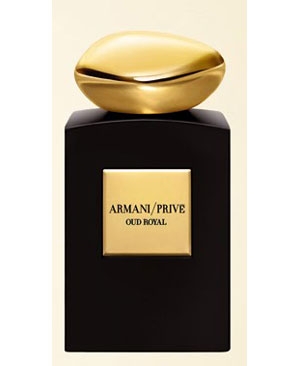
Armani Oud RoyalAccording to Fragrantica, Oud Royal was created by Alberto Morillas, while Bois de Jasmin says it is Symrise perfumer Evelyne Boulanger. Some people give the original release date as 2010, others say 2011. Regardless of whoever made Royal Oud or when, the fragrance is certainly described with opulence. In the original press release description of the fragrance, as quoted by Now Smell This, Oud Royal and its notes are described as follows:

“When Giorgio Armani turned his attention to oud, he decided to work it the way he would a heavy brocade lined with gold and silver, leaving its weight, its noble intensity and majestic sedateness. Respectful of its personality, Giorgio Armani set about highlighting each facet of character in its composition: depth is amplified by an amber harmony, the reddish glow is fanned with spices, the dark earth reflections are smoked with a veil of myrrh and incense.” Additional notes include black earth note, animalic notes.

The current description of the fragrance on Armani’s website is largely the same, though much less detailed and focusing more on the mystical nature of oud wood. Thus far, that much is the same. Armani, however, doesn’t list any notes for the fragrance. So, if we take the Now Smell This press release report, and combine it with the notes listed on Fragrantica, the list of ingredients in Oud Royal would be:

Oud from Laos, saffron, amber, rose, sandalwood, myrrh, incense, black earth and animalic notes.

Oud Royal opens on my skin with a very leathery facade, so much so that I actually had to double-check my sample to make sure I hadn’t accidentally put on Cuir Noir. The fragrance is dry, earthy, very dusty, only slightly sweetened by saffron, and reminds me strongly of Dior‘s Leather Oud. There is a subtle undertone of smokiness, but it’s extremely muted. After about five minutes, the saffron becomes a little more noticeable, taking on an almost meaty quality, but, like almost everything else in the fragrance, it’s restrained, refined, and very polite. The rose also makes an appearance at this time, but it’s bloodless, and remains a muted, virtually hidden presence in the perfume’s life.

It takes a mere 30 minutes for Oud Royal to turn into a highly refined, elegant, very pleasant blur. It hovers discretely above the skin as a pleasant haze of soft leather and oud, with saffron and a touch of incense. The rose is barely perceptible, the saffron loses its meaty touch, and the fragrance eventually turns slightly sweeter at the end of 90-minutes. A pretty little pop of sandalwood appears around the end of the fifth hour, but it is very subtle and is largely overpowered by the oud. Those are all minor changes, however, and the core essence remains the same: an extremely pleasant, almost pretty, soft, gauzy leather-oud fragrance that sticks close to the skin. All in all, Oud Royal lasted just short of 7.75 hours on my skin, with weak sillage throughout.

Our Royal is exquisitely blended, very refined, and highly conservative in every way imaginable. I can see its high quality, and even its prettiness, but something ultimately leaves me unmoved. On some levels, it seems like the perfect oud fragrance for those who: 1) dislike true agarwood scents; 2) are looking for a refined fragrance that is highly unobtrusive, in addition to being somewhat blandly safe; and 3) have a lot of money to spend on a prestige name in luxury goods. I think all three factors must apply for Oud Royal to really be worth your while.

The general reaction to Oud Royal is mixed. Bois de Jasmin seems to have been singularly unimpressed, giving the fragrance a 3-star (“adequate”) rating and finding its price (even back in 2010) to be too high for the scent in question:

the fragrances from this collection are in fact quite opulent, well-crafted, made with high-quality materials. Yet, as I am trying to get over the sticker shock of £170 per bottle (according to Harrod’s pricing,) I have to ask myself whether this price is warranted. I really enjoy the decadent sensuality that Oud Royal conveys as well as its prêt-a-porter interpretation of the leather-oud notes that sometimes are quite difficult to wear (such as by Kilian Pure Oud, beautiful though it is.) Yet, it does not strike me as particularly new or original. Or perhaps, something of this Arabian Tale was lost in translation.

On Basenotes, there are mixed reviews in one thread, while a Basenotes poll about the best oud fragrances for men that gives 11 different options has Oud Royal coming in seventh place with 4% of the votes. Are those voting numbers representative or comprehensive? No, and I’m not claiming that they are. Nonetheless, the poll shows that Oud Royal — while being perfectly pleasant and beautifully refined — isn’t necessarily a fragrance that sweeps people away. At the end of the day, the bottom line is that there really isn’t much to say about Oud Royal, and I think it has been intentionally made that way.

CUIR NOIR:

Source: Aishti.com

Source: Aishti.com

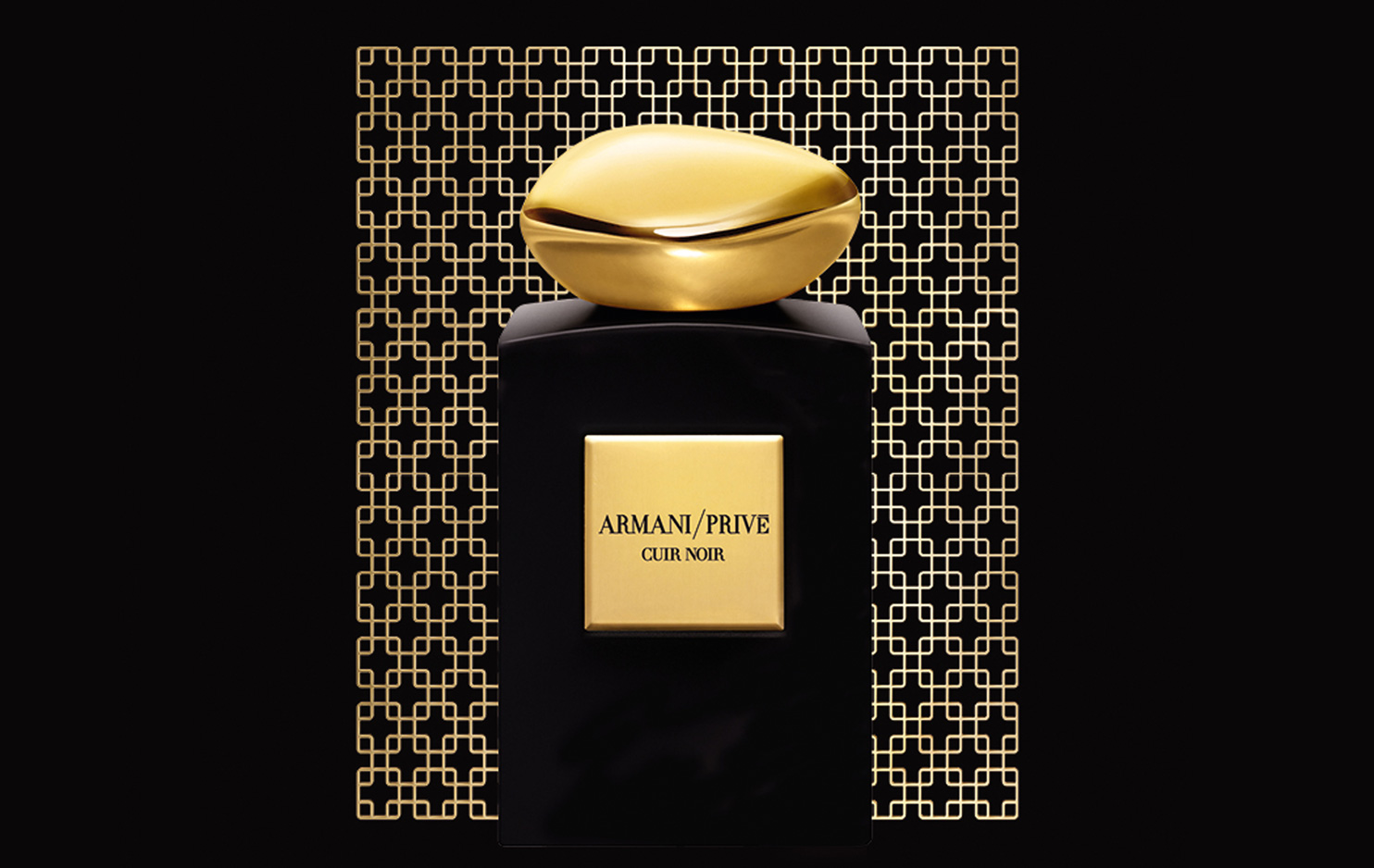
I find Cuir Noir to be singularly misnamed, and rather irritating to describe. The fragrance sample I obtained from Neiman Marcus would be more aptly called Saffron Rose, because a leather fragrance it is not. You wouldn’t know that from the Fragrantica description, however, which seems to quote the original Armani press release from 2011:

Cuir Noir was inspired by the art of Arabian tanners. “Leather is an art. From Cordoba, Spain to the borders of the Atlas Mountains. With a wine patina, it takes the name of “cordovan”. Tattooed with gold, it is called “maroquin”.” The perfume composition consists of Australian Sandalwood, Rose essence, Coriander, Nutmeg (in the top); Leather, Smoky Guaiac and Oud (in the heart); Tahitian Vanilla absolute and Benzoin balm (in the base).

I read that description, started testing the fragrance, then immediately stopped in my tracks. Leather? Sandalwood? Nutmeg? Not on my skin, it wasn’t. I double-checked the name printed on the manufacturer’s vial, I re-read Fragrantica, and then I went online to see what some reviews might say, because what was appearing on my skin was gooey, rose syrup with walloping, hefty amounts of saffron, and nary a whiff of leather in sight! I read with confusion Bois de Jasmin‘s bored, negative review of the scent and paid close heed to the statement: “Cuir Noir was created by perfumer Nathalie Lorson and includes notes of Bulgarian rose, nutmeg, coriander, guaiac wood, leather, oud, Australian sandalwood, ambergris accord, benzoin.”

I’ve concluded that Armani must have changed his mind about Cuir Noir, and that it must now be a very different thing from what it was back when it was originally released for the Middle Eastern market. You see, in his current description for the scent on his website, Armani barely bothers to talk about leather at all. Instead, the purportedly black leather fragrance is actually a tribute to saffron, and with rather a different focus from what Fragrantica originally quoted back in 2011:

Cuir Noir showcases the raw material Saffron, a spice with leather accents. The roundness and sensuality of its notes bring suppleness and warmth, reflecting the enveloping sensuality of skin-on-skin contact.  Derived from the crimson stigmas of Crocus sativus, saffron is the world’s most expensive apice [sic]. Its ochre colour symbolises inner happiness, which is why saffron-hued clothing is often mentioned in ancient mythology, tragedies and poetry. In perfumery, saffron lends a full, leathery and sensual note to fragrance compositions.  With Cuir Noir, Giorgio Armani journeys into the heart of an Arabian night. He revisits  the saffron accord to create a captivating Oriental. Golden and voluptuous, saffron infuses a profoundly sensual experience  that recalls the redolence of tanned hides with the wild scent of tallow and  e [sic] smouldering, tarry aroma of black birch.

Well, I don’t smell any tarry black birch at all, but the description does explain why my skin is reeking almost solely of saffron mixed with a syrupy, gooey, jammy rose. It’s revolting, cloyingly sweet, and backed by a sort of chewy darkness that feels like purple patchouli. Cuir Noir is also wholly unoriginal in bent, a retread of very tired old ground walked by so many other fragrances. In fact, the scent reminds me strongly of Tom Ford‘s Café Rose which was the same sort of jammy rose, saffron bomb on my skin.

From beginning to linear end, the same two notes dominate Armani’s Cuir Noir. For the first five minutes, there were flickers of something smoky (though it never felt like guaiac wood), but leather? Bah! BAH, I tell you! My notes are littered with comments about saccharine sweetness, and the complete absence of any mythical tanners from Cordoba. Even the oud is pretty much of a lost cause; it disappears within thirty minutes. Oddly, around the 10 minute mark, there was a momentary pop of a powdered lipstick tonality with a slightly violet aspect, but it vanished within minutes.

Cuir Noir becomes soft and sheer very fast. It takes less than 30 minutes for the moderate sillage to begin its sharp decline and drop; by the 90-minutes mark, the fragrance is a complete skin scent. Yet, Cuir Noir is oddly potent when sniffed up close, and I had almost a burning sensation when I sniffed the saffron, patchouli, rose combination during the second hour. It makes me wonder just how synthetic the fragrance is, and how much fruit-chouli is lurking underneath.

Cuir Noir doesn’t drastically change from its main, boring, sickly-sweet combination until the very end, so I should be thankful that it died so soon. In its final drydown, a rich, faintly custardy vanilla note shows up, along with some abstract, generic smoky woodiness that might be guaiac or ersatz, fake, Australian “sandalwood,” but both notes are as muted and sweetened as everything else in the fragrance. All in all, the fragrance lasted exactly 4.75 hours, ending as a whimper of vanilla sweetness. I know my skin eats fragrances quickly, but come on! For a $275 eau de parfum that is ostensibly made from the richest and best ingredients, that seems rather pathetic. As for the mythical tanners from Cordoba, all I can do is mutter about misleading names, and analogize to that old 1980s commercial for Wendy’s: “Where’s the beef?!”

As you can tell, I’m hugely unimpressed by Cuir Noir, especially in light of its $275 price tag. I never tested the original version released in the Middle East, but I find it hard to believe that the 2011 fragrance whose descriptions and reviews I read is the same one I tested now. The difference between the press release quoted by Fragrantica and what is now on the Armani website seems too vast. I even contemplated the possibility that Fragrantica was incorrect in its description of the scent’s leather, seeming press release quotes notwithstanding. So, I checked the Cuir Noir entry on Osmoz. Nope, Fragrantica wasn’t mistaken. Osmoz usually relies on press release descriptions, too, and its entry for Cuir Noir reads:

The Italian designer was inspired by the refined, ancient art of making leather. He wanted to “recreate the fascinating atmosphere of tanneries, which blend the pungent odor of tallow with the burnt and tarry aromas of black birch.’

Osmoz does reference that “This oriental-leather scent opens with spicy notes of coriander and nutmeg, with a sort of saffron effect.” However, that mere “effect” still differs from the way saffron is highlighted front and center in Armani’s description which, again, states flat-out “Cuir Noir showcases the raw material Saffron.” That seems to be a far cry from Armani’s prior focal point in 2011.

My conclusion about a difference in versions is further underscored by reading the reviews on Fragrantica where very little matches with either Armani’s current description or the manufacturer’s fragrance sample that I obtained from Neiman Marcus. References to leather (subtle as it was even then and lasting a mere 30 minutes) are joined by comments about the vanilla custard drydown, and quite a bit of talk of the amber. One person writes of a sort of industrial machine scent in the fragrance:

My father used melted stannary and resin to glue together small metal parts of broken machines. I used to love to see how the metal melts and the resin melts and evaporates into a wonderful perfume. The melted resin is what this perfume reminds me of.

There is not a single word about saffron. Not one. Not even indirectly. And there is nothing about how Cuir Noir is equally dominated by the rose note, either. The only things that seem to be exactly the same are the vanilla custard drydown, and the fact that the old version barely lasted on people either. There are complaints about its short longevity, with one person saying that it didn’t last above 4 hours.

Bois de Jasmin also seems to be describing a different scent. Her review is brief, so brief as to feel like she just wants to get the whole thing over with. Giving it 3 stars for “adequate,” her entire description of the way Cuir Noir actually smells is limited to four sentences:

Cuir Noir starts out as a big sweet amber and leather in the style of Tom Ford Amber Absolute or Annick Goutal Ambre Fétiche. There is a distinctive rose note that lingers from top to drydown. The medicinal, smoky oud is such a rich accent that it makes the leather play a second fiddle. Fans of oriental blends will enjoy Cuir Noir, but if you are looking for a smoky rich leather, it will not satisfy the craving.

Well, I certainly agree with her last statement, but I am more convinced than ever that the 2013 version of Cuir Noir is a wholly different fragrance. My skin might be even more insane than I had previously thought, but that doesn’t change the fact that saffron is the focus of Cuir Noir’s entry on the Armani website. No, this has to be a new version, it simply has to be.

ALL IN ALL:

I was unimpressed with both fragrances given their high price, but if one looks at Oud Royal in a complete vacuum, it isn’t a bad fragrance by any means. It’s actually quite pretty! Oud Royal has the trademark Armani signature stamped all over it: luxury ingredients incorporated seamlessly into a well-blended blur that is hyper-refined and proper to the point of being too elegant and bloodless. It’s just like Armani’s clothes: superbly crafted and reflecting a refinement that is minimalistic, aloof, and understated. Unlike his Privé line of clothing, however, Oud Royal lacks the style to make it really stand out. It’s also linear, uncomplicated, and so refined as to feel rather dull on occasion.

When I tested Nuances, Armani’s limited-edition, ridiculously priced ($500+) iris haute Couture line fragrance earlier this year, I thought part of my discomfort stemmed from the fact that I wasn’t an iris lover. Now, however, I think that the Armani signature simply doesn’t move me. I truly think that, if Armani could sanitize the slightly dirty, earthy qualities of oud to render it as suffocatingly prim as he did to the iris in Nuances, then he absolutely would. Oud Royal lacks the claustrophobic qualities of Nuances, a fragrance so elegant that its refinement gasps for life, but that’s not saying much. After all, there’s only so much one can do to suck all character out of oud combined with leather. That said, I still find Oud Royal to be largely unremarkable, in my opinion, and I much prefer the more nuanced, richer, longer-lasting Dior version (Leather Oud) with its significantly more palatable price tag.

As for Cuir Noir, I’m not sure the 2011 version was much to write home about, but the 2013 absolutely is not! In short, the less said about Cuir Noir, the better. Bah!

DETAILS:
Cost & Availability: Both Oud Royal and Cuir Noir are eau de parfums that come in a 100 ml/3.4 oz bottle and which cost $275, or £190. The Euro price in 2012 was €205, but I don’t know if it has been increased for the re-launch. Armani: You can purchase Oud Royal or Cuir Noir directly from the US Armani website, where the fragrances are listed under the Mille et Un Nuit section. However, I couldn’t see either perfume listed on the Armani International Privé section, and I’ve somehow never been able to select a Privé fragrance to put into a shopping cart on that particular site. Maybe you can figure out how it works. Finally, the UK Armani site does not carry Oud Royal, but does list Cuir Noir. In the U.S.: All four of the new Armani re-releases are sold exclusively at Neiman Marcus, which is where I obtained my samples. Outside the U.S.: In the UK, Harvey Nichols carries Oud Royal and Cuir Noir. The Heathrow Duty-Free boutique carries Oud Royal, but not Cuir Noir. In France, the fragrances are listed on the French Armani site, but no prices are given, and it doesn’t seem as though you can actually purchase fragrances directly from the website. In South Africa, I found Armani Privé at a store called Luminance. For all other locations, you can rely on the Index of different geographical Armani websites, or use their store locator within the site applicable to your area. Samples: I’m afraid you have to rely on an Armani store near you for Oud Royal, or the sales counter of one of the handful of boutiques that carries the Privé line. However, Surrender to Chance does offer samples of Cuir Noir starting at $4.99 for a 1/2 ml vial. Given the newness of the relaunched fragrances, I’m assuming they carry the original 2011 fragrance and not what I am testing now.

État Libre d’Orange Rien: Bondage Leather

Candice Swanepoel in "Strict" by Mert & Marcus for Interview Magazine September 2011.

Candice Swanepoel in “Strict” by Mert & Marcus for Interview Magazine September 2011.

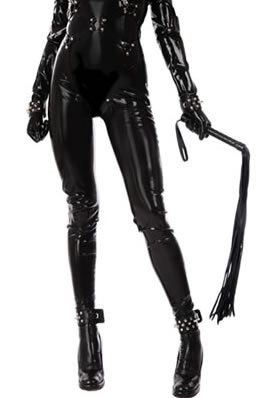
A cool chick, dressed in fake leather that she’d bought at a cheap, second-hand store. By day, she worked in the industrial backrooms of a carpeting warehouse, trying to get the smell of dust and sanitized, synthetic cleaners out of her hair. With her torn fishnet stockings and combat boots, she exuded an air of toughness like the black whip she wielded at nights, in her other job, as a dominatrix at an exclusive BDSM club downtown. The clean scent of her slightly musky skin was coated with powder, the palest of pink roses, a touch of iris, and a sharp sweetness. The pale delicacy of it all contrasted with the feral meow of the raunchy cat smell that lingered under the fake leather, and with the incense that she loved to burn. On her evening breaks at the club, she would lounge nonchalantly against the wall, her long leg in its black patent, thigh-high stiletto boot crooked behind her as she restlessly flicked the whip to the side, and did her best James Dean with each long drag of her cigarette. When men asked her name, she would coldly reply, “Rien.”

Source: Lenoma.ru

Source: Lenoma.ru

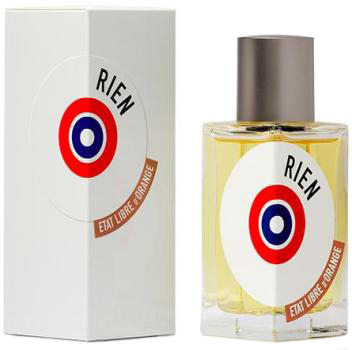
Rien is a leather and aldehyde fragrance from the quirky, eccentric French niche house of État Libre d’Orange (hereinafter just “État Libre“). It is an eau de parfum created by Antoine Lie and released in 2006. The fragrance gives a nod at Robert Piguet‘s legendary Bandit, but without the latter’s famous green-black hues from galbanum. It also shares similarities to L’Artisan Parfumeur‘s Dzing! and Molinard‘s Habanita. Like all those fragrances, Rien is a love it-or-leave-it proposition. I hated it. Deeply.

État Libre describes Rien and its notes as follows:

RIEN, THE STORY…

Nothing is Everything. Do not believe what you first see… under the demureness of the name, there is the spicy savor of blackcurrant bays and the musky notes of blond suede. ‘Rien’ is a second skin perfume, a perfume that clings to the body and perseveres in the mind. Like venial sin on the verge of becoming mortal, it is irresistible and resolutely pervasive. As light as mohair and as precious as cashmere, the fragrance envelops skin with a powdered caress. It has the meticulous elegance and hypnotic beauty of a modern Dorian Gray, in a feminine/masculine version. An entrancing fragrance that leaves an unforgettable imprint. Utter charm, utterly charismatic. The vanilla/opium accord of the drydown reinforces the addiction. ‘Rien’ is an essential. A perfumer’s confession

Rien.

Incense, rose, leather, cistus [Labdanum], oakmoss, patchouli, amber, cumin, black pepper, aldehydes…

I’m a bit confused by the fact that some of the notes mentioned in État Libre’s story aren’t included in the notes. “Blackcurrant bays?” Apart from my ignorance as to what constitutes a berry’s “bay,” there is also the issue of Luckyscent listing a few additional or separate elements. For example, it lists mousse de chene (which is technically different from mere oakmoss), in addition to styrax (a vanillic resin) and iris. If Luckyscent is correct, then the complete list of notes would look more like this:

Incense, rose, leather, iris, labdanum, mousse de chene, styrax, oakmoss, patchouli, amber, cumin, black pepper, aldehydes.

Source: hdwallpapers.lt

Source: hdwallpapers.lt

Rien opens on my skin with aldehydes and a nuclear blast of black-green. For once, the aldehydes don’t translate on my skin as pure soap and foam, but rather as something fizzy, sweet, and with a wax candle undertone. They also have a salty, nose-tickling smell that is enormously similar to Alka-Seltzer tablets dropped in water.

Dried oakmoss or tree moss.

Dried oakmoss or tree moss.

The green note smells sharp — so much so that it almost resembles galbanum more than mere oakmoss. Yet, despite its pungent, bitter acridness, it clearly has the traditional musty, grey mineralized feel of lichen. It’s an extremely cold note that has a mineral and metallic clang to it, along with a salty quality that obviously carried over to impact the aldehydes. The grey-green moss is also infused by incense, though it is not the usual dark, black, smoky kind. This is more like the mentholated, medicinal, almost anise-like tonalities of myrrh, but without its cold, white, High Church feel. The overall combination feels as sharp as the crack of a black-and-green leather whip across raw flesh. Have you seen those old films like “Mutiny on the Bounty,” where mutineers or slaves were whipped as punishment across their backs? That’s the crack you feel here with Rien’s opening. 

Civet. Source: focusingonwildlife.com

Civet. Source: focusingonwildlife.com

Some other notes stir and whimper submissively under this aggressive barrage of sharpness. There are subtle flickers of a pale, pink rose and of a slightly powdered iris hiding fearfully in the base. More defiant is the feral meow of the civet, sounding like a cat in heat as it lets off a sharp, bitter, animalic note. I’m not one of those people who always thinks civet smells like a “cat’s anus,” but something about the note in Rien strongly conjured up that pejorative term. Civet is a note that cannot be naturally harvested any longer due to animal cruelty and abuse issues, so the aroma is commonly replicated by synthetic versions. In Rien, it might be some very cheap stuff, because the civet feels not just animalic, but so sharp that it could cut you. Then again, given the rest of the fragrance, it’s undoubtedly intentional….

Source: ellequebec.com

Source: ellequebec.com

The most interesting parts of the fragrance to me are the leather and the mousse de chene. Let’s start with the former. There is something very synthetic about the leather, almost intentionally so, because the material smells like new, unworn, black patent shoes mixed with the cheap, plastic-y smell of fake, plastic leather, or “pleather.” As a lawyer in San Francisco, one of my areas of speciality was sexual harassment defense, and I gained some working knowledge of BDSM and sex clubs, as well as every possible kinky twist that you might imagine in a city as sexually open as San Francisco. When I wore État Libre’s Rien, all I could think about was bondage leather, whips, and rubber outfits in San Francisco (and a truly bizarre case). Here, however, the material always has a slightly powdered, dusty, rubbery, plastic, industrial undertone to it. I wouldn’t be particularly fond of the aroma, in and of itself, on the best of days, but when combined with the waxy, fizzy, nose-tickling aldehydes, the acrid, black incense, and the crack of the oakmoss, it’s really is not my cup of tea.

"Evernia Prunastri" lichen moss. Source: via supermoss.com

“Evernia Prunastri” lichen moss. Source: supermoss.com

And let’s talk about that oakmoss. Mousse de chene is actually a specific type of oakmoss (Evernia prunastri) which is an oakmoss absolute according to The Aroma Connection blog, and, in some people’s eyes, seems to be considered the “true” oakmoss. It’s a grey lichen which grows on trees and has an intensely dank, pungent, fusty aroma that can also be salty and smell like tree bark. Still, the truth is that “real” oakmoss of any type is essentially banned out of perfume existence, so substitutes are used. There is a very interesting, detailed, and somewhat technical discussion of the different types of oakmoss on The Aroma Connection, including the various synthetic versions or additives thereto. The site also helpfully provides the following aroma description:

It should also be mentioned that a range of commercial oakmoss products exists, some offering a warm, leathery-mossy character, whilst others offer have woody, mossy – almost marine-like aspects.

Here, both types of aromas are present. The oakmoss has a sharp mossy, salty character that smells quite distinctly like the bark of a tree, but it also has a leathery quality to it. Later, it turns warmer, but the opening moments of Rien are really a whack on the head with its colder, sharper aspects that are further amplified by the black pleather and acrid smoke.

Thankfully, about forty minutes, Rien starts to soften its sharp edges, turning smoother, sweeter, and a hair less insolently hostile. There is a gentle warmth stirring deep in its depths, aided by the slow awakening of patchouli along with vanillic touches from the styrax. Unfortunately, these more positive aspects are off-set by a soft, sweet, musky smell that feels like the aroma of newly placed, industrial carpeting in an office, or rolled up carpet in a warehouse somewhere. It’s a smell that is sharp, musty, dusty, almost glue-like, but also sanitized clean. I blame it on the combination of the aldehydes with the oakmoss, along with some help perhaps from white musk. Atop this dusty, somewhat industrial, musty, clean bouquet is a sprinkling of sweet powder; it’s not quite vanillic, but it’s definitely not like iris or makeup powder either.

Source: ehow.com

Source: ehow.com

At the 75-minute point, Rien’s base is a mix of cloyingly sweetened, dusty oakmoss with bondage leather, rubber, that sanitized industrial aroma, and some patchouli. The whole thing is wrapped up with sharp myrrh-like incense smoke, and even sharper animalic civet. The syrupy brown sweetness now filling the oakmoss juxtaposes sharply with its more pungent, mossy, mineralized aspects. The juxtaposition grows even more contrary when you add in the synthetic, “office clean” vibe and the dominatrix’s rubbery, black leather. I can’t bear any of it.

Source: Thriftcore.com

Source: Thriftcore.com

I’m also having extremely pained flashbacks to L’Artisan‘s Dzing!, a fragrance that almost made me lose my mind with its extremely similar dusty scent mixed with synthetic, cloying sweetness. Dzing! reminded me of those cheap trinket, tourist shops you find in Tijuana where the smell of plastic toys and shoes from China mixes with dust, vanilla air freshener, clean notes, rubber, and sweetness. Both perfumes are intended to be leather fragrances but, to me, the “leather” in Dzing! smelled solely of cheap, industrial plastic accompanied by cloying, synthetic, vanillic sweetness. It’s nowhere near as bad in Rien — the aroma is more dusty pleather than hardcore, pink plastic with glue and chemical undertones — but the two fragrances share enough synthetic similarities to make me wince. 

At the end of the second hour, Rien’s combination of aldehydes with plastic leather remains the dominant feature, but the oakmoss recedes a little. Slowly rising to take its place is the patchouli, resulting in a discordant dusty-musty-soapy-patchouli combination. The amber also becomes more prominent, though it never once feels like labdanum with its wonderfully nutty, rich, sometimes dirty, resinous characteristics. Instead, the amber here is just a generic, vague, muted warm glow in the base, infused with myrrh smoke, styrax’s vanillic hues, the feral animalic skank of the civet, and those godawful industrial synthetics. Is there no end to this nightmare?

The perfume continues its subtle shifts. Slowly, Rien transforms into a bouquet of clean, musky, supposedly “skin” tonalities with aldehydic underpinnings, accompanied by fruited notes from the patchouli. There is powder that feels a little like that in makeup, thanks to the orris, but it also resembles powdered vanilla. The sharpness of the synthetic civet vies with the swirl of equally sharp dark smoke, which now feels more like frankincense than bitter myrrh. And the floral elements grow more prominent.

By the start of the fourth hour, Rien is a soft blur of clean, musky, aldehydic skin infused with muted floral notes of rose and iris, as well as a fruited elements that resembles dried raspberries. The smoke and plastic leather wrap it up like a bow, creating a bouquet that calls to mind the sharp, powdery, fruited, black leather, florals and smoke of Molinard‘s Habanita eau de toilette. (A combination that resulted in my struggling enormously with Habanita as well, by the way, and which ended in me disliking it immensely.)

Rien’s undercurrent of animalic, almost urinous civet remains unabated, as do the prickly, biting synthetics in the base, but Rien has (thankfully) lost its aura of freshly cleaned, commercial carpeting. The reason may lie in the growing warmth and amber in the fragrance’s foundation, which has finally managed to diffuse some of the oakmoss-aldehyde-pleather combination’s bite. At the same time, the sillage drops, and the whole bouquet hovers just an inch above the skin. Rien is still extremely potent when smelled up close, and I suspect the synthetics are the reason why.

So, to summarize, we’ve gone from Bandit to Dzing! to Habanita. No matter how much I may dislike the fragrance, I have to give Rien credit for pulling off so many clever referential nods in a row. Rien remains in its Habanita-like phase for a few hours before reaching its last stage near the end of the seventh hour.  At that point, Rien is really just powder on my skin with a slightly floral nuance and quite a bit of stale sourness. The bloody fragrance sets me free just after the tenth hour when it finally dies away. I rushed to put on some Puredistance M, so that a leather fragrance I actually enjoyed would wipe the bad taste away.   

Sons of Anarchy photo via wall321.com.

Sons of Anarchy photo via wall321.com.

As noted earlier, Rien is one of those difficult fragrances that people either love or hate. To balance out my perspective, I thought I’d share the views of The Non-Blonde who accurately describes the fragrance as “edgy” in a review which reads, in part, as follows:

It’s dirty, animalic, leathery, and smoky. There’s a hint of hot asphalt and burnt rubber, the kind you get when notes of black leather, cistus, and cumin come together. But Rien is also directly connected to Robert Piguet’s Bandit, not just in the smoke, leather and uncompromising oakmoss, but also in the softening that happens when the fragrance unfolds and gives a peek at its floral heart (more apparent in Bandit’s extrait concentration).

I used to think of Rien as very butch. I’m not so sure nowadays, though it is completely gender neutral. Rien is urban, has a distinct and deliberate synthetic twist– rubber, smoke, and some metallic parts, but also very human and warm. Wearing Rien is like taking a whiff of skin warmed under the biker’s leather jacket. […]

Rien can be downright dangerous in large amounts. I’ve noticed it the very first time I tried it and I maintain this view to this day. It’s one of my favorite perfumes from ELdO, but its non-perfuminess and the medicinal quality it takes when sprayed lavishly can be a major turn-off for those who don’t appreciate its style and heavy dusty leather boots.

I think we detect very much the same thing, particularly as Rien does have a whiff of warm skin under a biker’s leather jacket, in addition to ties with Bandit and the “deliberate synthetic twist” that she noted. I may have different terms and aroma sensations for the synthetic parts, since Rien was more sanitized, industrial office carpeting on my skin than asphalt, but the synthetic and urban feel is very much the same. Where we part ways is that she happens to think Rien is “daring and seductive,” while I simply hate it. Profoundly. And, no, I did not apply a lot. It doesn’t take much to be deluged by Rien’s abrasively acrid, synthetic, extremely sharp weirdness.

People’s assessment of Rien on Fragrantica is generally very consistent in terms of how the fragrance manifests itself on people’s skin, but there is a big split as to whether people actually like the final result. Some consider Rien to be a “masterpiece” precisely because of its difficult notes. Others found it to be utterly unbearable. Some examples of the range in perspective:

  • it’s suede and little else. Smells like a department store leather jacket area. Also has a nice hint of industrial carpet. Ever walk into a new office? Yep, that’s what I’m smelling. Not something I’d want to wear. I don’t smell anything animalic or balmy or like incense or wood. JUST ALDEHYDES.
  • Truly the bizarro spiritual successor of Magie Noire and Aromatics Elixir! It smells yellow, pissy, leathery, turpentine-like, but also like patchouli and clean earth. At times it smells like a corrupted Chanel No. 5, with muted and expensive-smelling florals. A masterpiece with unbeatable strength and longevity, great in hot or cold weather, and devastatingly sexy on men and women alike. If you want to project a certain fuck-off image then you must have it. Vastly superior to the more timid Bandit, I must say.
  • All I smell is brand-new snow tires in a garage. [¶] And I can’t scrub it off. Must be those 60,000+ mile steel-belted tire models. I just might have to wrap my wrist in a towel and duct tape it up…so that I might get to sleep tonight.
  • strong aldehydes, remining me of grandmas classical perfumes, and the heavy leather scent. There is also a strong animalistic note and the animalistic and oakmoss notes clash with something industrial, plasticky.
  • I’ve read quite a few of the reviews here and mostly I see negative remarks. All I have to say is – ARE YOU PEOPLE CRAZY? This is one of the most magnificent perfumes I have ever smelled! And believe me I have smelled (and owned) a lot of great perfumes. Chanel’s Cuir de Russie, Guerlain’s Mitsouko (which is my most favorite scent ever!), L’Heure Bleue ( some say old-fashioned, I say classic) -I could go on and on, but I won’t. [¶] Anyway, my point is I would put Rien in the same line up as any of the greats. It is a masterpiece of perfumery. And this is said by a 56 year old woman, who only a couple of years ago was afraid to go out of her Guerlain, Chanel, Dior comfort zone.

There is the same sharp split at Basenotes. The negative reviews talk about such things as how Rien is “mainly a piercing, industrial note like glue, solvent or hot light bulbs. A woody-spice note in an quirky mutant, sci-fi vein. Hot plastic, volatile glue… really not my scene.” The positive ones rave about how Rien is a challenging, strange beauty that has ties to everything from Habanita, Bandit, and Dzing!, to such famously skanky or urinous fragrances as Kouros and Bal à Versailles. On both sites, I get the impression that men generally seem to outnumber the women in terms of loving Rien, so I’d definitely not worry about the fragrance being very feminine in nature.

How you feel about Rien may depend on how you view certain notes. If you’re someone who is ambivalent about Bandit, please be aware that the leather here is much more intense, not as smooth, and is significantly more synthetic or industrial in feel. If you dislike aldehydes, industrial notes, black rubber, synthetic plastic aromas, incredibly sharp civet, urinous elements, and/or super mineralized, dusty, pungent oakmoss, then stay away. On the other hand, however, if you’re someone who loves oakmoss fragrances that are very animalic, skanky, aldehydic or dusty, then I’d definitely recommend you giving Rien a test sniff. (But do not blind buy!) If you go one step further and genuflect before the altar of Bandit, Habanita, or Kouros, then Rien should absolutely be your next stop. I’m sure you’ll enjoy cracking that whip to the feral yowls of the civet!


DETAILS:
Cost & Availability: Rien is an eau de parfum that is most commonly available in a 1.7 ml/50 ml size, but which can also be purchased directly from Etat Libre’s website in a large 3.4 oz/100 ml bottle as well. The prices listed there are in Euros: €69.00 for a 50 ml/1.7 oz bottle, and €119.00 for a 100 ml/3.4 oz bottle. Samples are also available for €3.00. Etat Libre offers worldwide shipping, and free delivery to or within France. In the U.S.: Rien can be purchased from LuckyScent for $80 for a 50 ml/1.7 oz bottle, with samples for $3, and from MinNY. You can also purchase it from Parfum1 in the large 3.4 oz/100 ml bottle for $149. The site offers free domestic shipping, with international shipping available for a fee. Outside the U.S.: You can purchase Rien from Etat Libre’s new London store at 61 Redchurch Street for £60, as well as from its Paris one located at 69, rue des Archives, 75003. Elsewhere in the UK, I found Rien on Amazon UK for £58.49 for the 1.7 oz/50 ml bottle through a third-party vendor . It is also sold at London’s Les Senteurs for £59.50, with samples also available for purchase. In Germany, Rien is available at First in Fragrance in the small size for €69. The site ships worldwide. In the Netherlands, I found it at ParfuMaria in the large 100 ml size for €119. In Italy, it’s available at ScentBar and in Spain, it’s sold at The Cosmeticoh. In Russia, Lenoma carries the full Etat Libre line. For all other locations or vendors from Canada to the Netherlands and Sweden, you can use the Store Locator listing on the company’s website. Samples: you can order a sample of Rien from Surrender to Chance where prices start at $4.75 for a 1 ml vial.

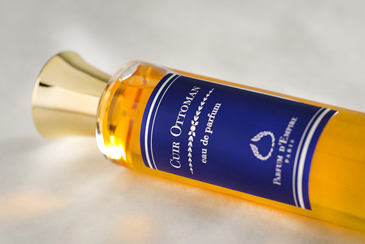
Perfume Review: Parfum d’Empire Cuir Ottoman

The fluffiest, grey-white clouds flecked with gold, and the most expensive Italian leather shoes — that’s what comes to mind when I wear Cuir Ottoman by Parfum d’Empire, the always interesting French niche brand founded and run by Marc-Antoine Corticchiato. It is a house that seeks to embody history in a bottle, focusing on long-lost empires and the most ancient of ingredients that were “coveted for centuries for their refinement, aphrodisiac properties and use in sacred rituals. It is this age-old link between perfume, eroticism and spirituality that he has sought to revive with Parfum d’Empire.”

Source: 1ms.net wallpapers.

Source: 1ms.net wallpapers.

Cuir Ottoman is a unisex eau de parfum that is intended to explore the best of Turkish leather, done in a manner as indolent as a sultan’s Turkish bath, and wrapped with white flowers “as white-fleshed and opulent as the odalisques painted by Delacroix, Ingres and Matisse.” It’s a glorious thought and, as someone who once planned on becoming a historian, I’ve repeatedly said how much I love the historical inspirations for Parfum d’Empire’s fragrances. The descriptions are often dead on, too, and convey a real sense of the fragrance’s essence. This time, however, I just don’t see it.

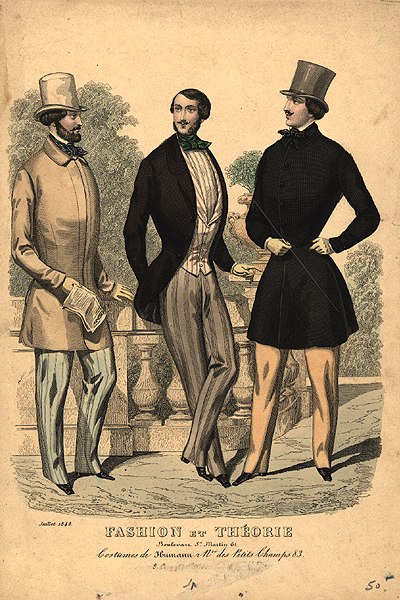
Victorian dandies. Men's fashion plate, 1848. Source: Wikipedia.

Victorian dandies. Men’s fashion plate, 1848. Source: Wikipedia.

Cuir Ottoman is the most civilized, refined, sophisticated, smooth, leather fragrance I’ve come across in a while. It starts out being the epitome of cool austerity before turning into an indulgently fluffy, soft cloud — two things I’d never associate with the hedonistic excesses, brutality, or carnal appetites of the Ottoman Empire. To me, this is more Queen Victoria’s leather: well-mannered, preternaturally proper, formal, and controlled in the most luxuriously sophisticated manner. If not Victorian leather, then perhaps Beau Brummell’s from the Regency Era with his focus on refinement that had a slightly dandyish quality about it. Make no mistake, this is not a “Wham, Bam, Thank You, Ma’am” leather that bulges with muscles or macho masculinity. If that’s what you’re expecting, you’ll be sorely disappointed. If, however, you’re looking for supple smoothness that skirts on the feminine and, later, just barely nods its head at the gourmand, then look no further.   

Source: Basenotes/

Source: Basenotes/

The Parfum d’Empire website has a lovely story that explains the elements and inspiration for Cuir Ottoman, but perhaps the most relevant part for the purposes of this discussion concerns the treatment of leather:

Though the leather note is appreciated by connoisseurs, it is so assertive it is seldom featured in perfumery. […][¶][So, Marc-Antoine Corticchiato] set off for the Ottoman Empire, inspired by the secular tradition of leatherwork in Anatolia — up to the 19th century Turkish leather was the most highly coveted in Europe. He added iris, which already presents leathery facets, after learning that its powdery notes were often used to soften the smell of the finest skins.

Soft leather, powdery leather, leather refined to preclude all animalistic savagery and brutishness — I think you see where we’re going. The full list of notes in Cuir Ottoman complete the rest of the picture. As provided by Luckyscent, they include:

jasmine, leather, iris, benzoin, balsams, resins, incense.

A. Testoni (Amedeo Testino) via Testoni.com

A. Testoni (Amedeo Testino) via Testoni.com

Cuir Ottoman opens on my skin as the most expensive of new, Italian leather shoes. Testoni, perhaps. Or perhaps a more accurate description would be the most expensive of leather handbags, right down to their calfskin, suede interior. The aroma of new leather, with its beautifully immaculate smoothness, wafts around my skin, followed by flurries of powder-soft iris that flit about as delicately as snowflakes. The iris flakes are just barely floral, just imperceptibly powdery, but completely velvety and buttery in feel. In the background lurks the merest hint of jasmine, but that’s about it. There is nothing even remotely animalistic, brutal, raw, or musky in its manifestation on my skin. No rough leather with an almost fecal edge the way some uncured leather can have; no phenolic, tarry, smoky or barnyard notes; and no animalic, urinous, intimately raunchy, or sour notes. Not one bit. 

Suede lining to Bottega Veneta black woven tote. Source: discounthandbagbuy.com

Suede lining to Bottega Veneta black woven tote. Source: discounthandbagbuy.com

Cuir Ottoman shifts very slowly, and only in degrees. At the forty minute mark, it starts to become warmer and a smidgen sweeter. The iris slowly starts to recede from its cool heights and becomes lightly flecked by jasmine. It is still primarily, however, an iris leather fragrance that smells exactly like new leather shoes or a new handbag. The fragrance continues to soften and, at the one hour mark, the sillage drops substantially. The fresh leather feels completely warmed over now and so smooth, it’s almost creamy. About 90 minutes in, the tonka bean rises to the surface, adding a beautiful, delicate, and perfectly balanced sweetness to the other accords. 

Cuir Ottoman is so well-blended that, at this point, the notes swirl together as soft as a cloud. It’s a nebulous, fluffy, absolutely creamy blend of iris, leather and vanilla, threaded with the lightest touch of jasmine and vanillic powder into one smooth, sum total. The individual elements are there, but they’re not as individually distinct as they once were. Instead, they simply create an overall feel and olfactory impress of highly refined softness that radiates delicate warmth, florals, and sweetness the way a cloud is shaded by light. It’s a masterful twist on leather that doesn’t evoke the remotest vision of the Sultanate or the Ottoman hordes.

Source: naturalhdwallpaper.com

Source: naturalhdwallpaper.com

In fact, it doesn’t really evoke leather much at all after the first two hours, especially when the note turns more into a muted version of suede. The reason stems, in part, from the iris powder but, increasingly, it’s because of the tonka bean which turns Cuir Ottoman into something just barely hinting at the gourmand. As the vanilla becomes more and more prominent, even the iris accord feels more indistinct. Around 2.5 hours in, Cuir Ottoman is a powdered vanilla and suede fragrance that feels creamy, soft and smooth, and which hovers just above the skin. The fragrance remains that way for hours and hours, almost yummy in its vanilla essence and lightly evoking Guerlainade, Guerlain’s signature of powdery but creamy tonka bean.

All in all, Cuir Ottoman lasted 12.75 hours on my voracious, perfume consuming skin which is quite astonishing given the airy, light, sheer quality of the fragrance. I’ve noted the same thing with all the fragrances from the line which, indubitably, I find too sheer for my personal tastes but which have incredible longevity. Yet, despite my preference for significantly heavier fragrances (I’m still hoping for the spectacular Ambre Russe in triple-strength concentration!), the light, airiness of Cuir Ottoman is really ideal and well-suited to the nature of the scent. It is perfectly modulated in every way, right down to its weight. Cuir Ottoman isn’t supposed to be something brutish, opaque, or heavy, and the texture wouldn’t work with the delicacy of its notes.

There is a lot of love out there for Cuir Ottoman, except from Luca Turin. (Naturally!) In Perfumes: The A-Z Guide, “His Majesty” sniffs out a disdainful Three Star review which reads, in part, as follows:

This leather is in fact barely a leather at all, more a sweet-woody-tea-like composition. It is solid and beautifully crafted, but feels a little like the compulsory figures at skating: solid, precise, impressive, and unsurprising.

I agree with parts of his assessment, especially about how little Cuir Ottoman feels like a true or hardcore leather fragrance. I also agree that it is solid, beautifully crafted and impressive, but I mean it all in a much more positive way. Is it unimpressive because it’s so refined? In my opinion, that is actually part of what makes Cuir Ottoman stand out. After all, people (especially Luca Turin) lavish praise on Chanel‘s Cuir de Russie for its smoothness and luxurious take on leather, so why fault Cuir Ottoman for those same attributes? I think the latter is infinitely more wearable than Cuir de Russie which, on my skin, was piles of horse manure under a heavy veil of soap. No, thank you.

On Fragrantica, the majority of the reviews are overwhelmingly positive for Cuir Ottoman. People’s experiences seem to verge into three camps: those who find the opening to be harsh, sharply animalistic or raw; those who spend paragraphs raving about the fragrance’s refinement and luxurious nature; and those who think it’s a distinctly feminine fragrance, either because of the limited nature of the leather or because of the powder. A large number of those who fall into the first camp still adore the fragrance, finding it to be softened and balanced by the subsequent accords, and concluding that Cuir Ottoman is a “mesmerizing… masterpiece.” (Other adjectives from both men and women include: sensational, classy, rich, virile, luxurious, refined, and erotic.) The handful who have posted negative reviews have had the leather turn on them, finding it to be either: a “shoe polish note,” faintly urinous, reminiscent of burning plastic, or rubbery and smoky like a garage. Interestingly, some have experienced far more smoky incense than any leather at all, so, as you can see, it all depends on your skin chemistry.

For me, personally, Cuir Ottoman veers far from my style and taste in perfumery, but I find something incredibly appealing, fascinating, and compulsively sniffable about the fragrance. It oozes refinement from start to finish, but the cozy, creamy, gauzy, just barely, minutely gourmand drydown phase is especially addictive. I doubt I’d ever be tempted to buy a full bottle, but the perfume has my heartiest admiration. It is a scent that I’d strongly recommend for those who are a bit terrified of leather in perfumery, though I wonder if the drydown might not turn into something evoking “baby powder” on some skins. Nonetheless, I think Cuir Ottoman is extremely versatile, wearable, and also, well-suited for an office environment given its soft sillage but superb longevity. It is also incredibly affordable, especially for such a high-quality, superbly well-crafted niche fragrance. Cuir Ottoman may lean a little feminine for some men, however, so if you prefer a more macho, tough, obvious leather fragrance, then I’d suggest something more along the lines of Montale‘s very masculine Aoud Cuir d’Arabie. But, if you’re looking for an ultra sophisticated, suave, leather-suede that reeks of refinement and elegance, then Cuir Ottoman is definitely one to try.

DETAILS:
Cost, Availability & Sample Sets: Cuir Ottoman is an eau de parfum and costs $75 (or €66) for a small 1.7 oz/50 ml bottle, while the large 3.4 oz/100 ml bottle costs
$110, €92, or £84.50. Parfum d’Empire’s website carries only the large 100 ml bottle at the European price of €92. If you want to try out Cuir Ottoman and some other fragrances from the line, Parfum d’Empire offers two different sample sets directly from its own website. The first Mini Sample Set is for 3 fragrances of your choice in 2 ml vials for €6 or €10 (depending on your location) with free shipping, while the Full Sample Set of all 13 Parfum d’Empire fragrances also is for 2 ml vials with free shipping and costs €14 or €22 (for the EU or the rest of the world). In the U.S.: You can buy Cuir Ottoman at Luckyscent which sells the smaller bottle in a 1.7 oz/50 ml size for $75, along with the larger 3.4 oz/100 ml bottle for $110 and a sample for $3. MinNewYork sells that same 50 ml bottle for $100. Elsewhere, The Perfume Shoppe which has a Canadian branch in Vancouver is currently out of stock of Cuir Ottoman. Outside the U.S.: In the UK, you can find Cuir Ottoman at Les Senteurs which sells the large 100 ml bottle for £84.50, along with a sample. In Paris, you can find Cuir Ottoman in both sizes at Jovoy Paris which sells the smaller 50 ml/1.7 oz bottle for €66. I believe the Parfum d’Empire line is also sold at Les Galleries Lafayette. For the rest of Europe, Germany’s First in Fragrance sells the large 3.4 oz bottle for €115, along with samples, while France’s Premiere Avenue sells it for the retail price of €92. Both sites ship internationally. In Australia, Libertine sells Cuir Ottoman for AUD$150 for the 50 ml/1.7 oz size. In the UAE, you can find Parfum d’Empire fragrances at Les Galleries Lafayette in Dubai. For all other countries from Oman to Italy and Russia, you can find Cuir Ottoman at a retailer near you using the Store Locator on Parfum d’Empire’s website. Samples: To test Cuir Ottoman for yourself, Surrender to Chance sells samples starting at $3.49 for a 1 ml vial. Many of the sites listed above sell samples of it as well.