Perfume Review: Jour Ensoleillé by Sonoma Scent Studio

A sunny day, late in the summer and spent in dappled woods. Fall is around the corner, but the heat of that summer’s day is matched by the brightness of the sun. Jour Ensoleillé (“Sunny Day”) is a floral chypre perfume from the beloved, Indie, artisanal line, Sonoma Scent Studio (or “SSS”), which seeks to encapsulate the feel of that summer’s day in the woods.

Jour Ensoleillé via SSS. (34 ml bottle.)

Jour Ensoleillé via SSS. (34 ml bottle.)

Jour Ensoleillé was released in 2007, the creation of Sonoma Scent Studio’s founder and nose, Laurie Erickson. It is a largely natural perfume with minimal synthetics, and comes in what is essentially extract de parfum or pure parfum concentration. It is also cruelty-free — something which I always approve of most wholeheartedly — and almost vegan. (The beeswax prevents it from being purely vegan). The company describes the perfume on its website as follows:

Jour Ensoleillé (sunny day) marries a lively floral blend of orange blossom, tuberose, and jasmine with a soft woodsy, mossy base that is gently chypre in nature. Like the golden late summer sunshine as the season moves toward fall, Jour Ensoleillé warms your spirit with its uplifting blend of woods and florals. The woodsy base makes this fragrance appropriate for men as well as women, though the floral notes are prominent.

The image associated with Jour Ensoleillé from SSS.

The image associated with Jour Ensoleillé from SSS.

The notes are:

Orange blossom, neroli, tuberose, jasmine, beeswax absolute, labdanum absolute , myrrh, sandalwood, ambergris, vetiver, green leaves, oakmoss absolute.
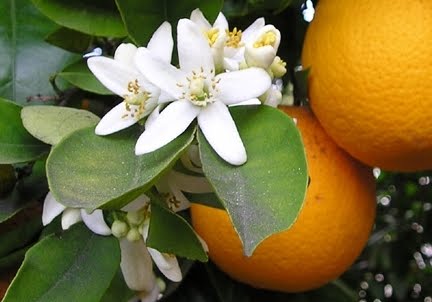
Orange blossoms via the Pattersonfoundation.org.

Orange blossoms via the Pattersonfoundation.org.

Jour Ensoleillé opens on my skin with strongly animalic orange blossoms, drenched and coated with honey. It is sweet, but also a little bit salty, with a musky, honeyed labdanum that doesn’t feel even remotely leathery or goaty. There is a strong mossy element that is also intertwined with the honeyed orange blossoms. It is neither the brightly green, fresh kind of moss, nor the completely dusty, pungent, arid, grey sort that sometimes feels almost more like lichen. Instead, it is somewhere in-between. When combined with the subtle touch of green leaves, the overall impression is of a very sunlit spectrum of green.

Jasmine

Jasmine

The real star, however, is the heavily honeyed orange blossom which is just faintly tinged by a little of the bitterness of neroli. Actually, it feels a little more like petitgrain with its slightly twiggy, woody facets. Together, the notes swirl together to create a glowing, orange blossom with deeper, musky, almost salty qualities atop a bed of bright and dark green. All around, dancing up to the orange floral notes, are powerful white flowers: heady tuberose and, perhaps more significantly, lush jasmine. They never feel sour, plastic-y or over-ripe; instead, they are very warm, bright, and lush. But they are also incredibly potent, and far from feeling dewy or fresh. They are indolic flowers in full bloom, and just a little droopy from the strength of the summer’s midday sun.

Underlying the flowers is a subtle woodsy note that is hard to pinpoint. It feels almost amorphous and abstract; it’s never dark or heavy, but it’s not like white woods, either. It’s also nothing like real sandalwood with its spicy, opulent heart. Whatever kind of sandalwood is used here, it’s not from Mysore and, honestly, is not really detectable at this stage in the perfume. I can’t figure out the wood note, but whatever it is and wherever it comes from, it does feel creamy and adds a subtle depth to the floral notes.

Labdanum compiled into a chunk. Source: Fragrantica

Labdanum compiled into a chunk. Source: Fragrantica

Honestly, the most intriguing part of Jour Ensoleillé’s opening is that animalic note. It feels nothing like usual labdanum (or even labdanum absolute) which can have quite a masculine, nutty, occasionally goaty and leathery feel. Here, it is deeply honeyed and even the musk seems different. It’s never skanky, dirty, raunchy or a little bit intimate in nature. Perhaps the reason is that both the musk — and the labdanum that triggers it — are deeply intertwined with the heavy, lush florals. The overall result is a floral labdanum which is quite unusual.

Even more unusual is the concomitant effect of the labdanum on the orange blossoms. They have a smoky, musky sweetness that feels both opulent and incredibly sensuous (though never sexual or intimate). The way they are drenched with honey and accompanied by heady, narcotically strong jasmine (and, to a lesser extent, tuberose) makes them feel a little feral, like a giant tiger that has been set loose. Granted, it is a tiger that is lazily and languidly stretched out in the sun, purring as it flexes its huge paws, but it is still quite a feral, feline take on orange blossoms. I don’t think I’ve smelled anything like it.

Painting by Gyula Tornai (1861-1928): "In the Harem."

Painting by Gyula Tornai (1861-1928): “In the Harem.”

I tested Jour Ensoleillé twice, and my reaction to those powerful, incredibly potent, opening stage differed quite a bit. The first time, I was quite bewitched. I thought the combination of the jasmine-tuberose twins with that dominant, glowing orb of an orange blossom, the unusual muskiness, and the honeyed, subtly smoky labdanum was utterly fascinating. While the perfume is supposed to evoke a summer’s day in the woods, it did absolutely no such thing for me during that first test. Instead, I envisioned the Sultan’s favorite odalisque, emerging from her morning bath, to spray Jour Ensoleillé all over her oiled, naked body, before she dressed to spend the day in the harem’s private, enclosed, secret garden, where she would lounge in the sun and smell the heady, white jasmine surrounding her.

The second time, however, using just a dab or two more in quantity, I found the smoky, musky, animalic white flowers to be too, too much. Coming from someone with my tastes — and who finds scents like Fracas to be child’s play without any troublesome extremeness or indolic negatives — that says quite a lot! I no longer saw the Sultan’s favorite concubine, sensuously purring out in the sun, nor that languid tiger. Jour Ensoleillé no longer felt quite so much like a glowing, jeweled orb above a lush base of dappled green, both mossy and leafy. Instead, the perfume seemed a little sharp, completely excessive, slightly verging on the territory of “cloying,” and far too indolic. The jasmine even reeked of mothballs — which almost never happens to me — and it stayed that way for a number of hours. Lastly, that honeyed note felt clangy and metallic. As a whole, I felt almost suffocated by heaviness, thickness, honey, musk, and over-ripe, blown florals. And I only used the dabbing equivalent of two medium sprays! Clearly, this is a perfume with ferocious potency in its early stage, and one which requires a very light hand to prevent it from turning unpleasant.

The rest of the perfume’s development was the same in both instances. After the two-hour mark, Jour Ensoleillé became a primarily orange blossom and jasmine duet atop a base of oakmoss infused with amber. It feels very much like a mossily green patchouli element is there, too, to help with that chypre base. And, as always, there is always that constant undertone of smoky honey and amber, thanks to the myrrh and labdanum. A quiet woodiness lurks underneath, but it’s very muted. Jour Ensoleillé is also, at this point, a skin scent on me. That potent, ferocious start softened with every moment until, exactly two hours in on both occasions, it clung right on top of the skin. It’s certainly strong whilst there, and if you bring your arm to your nose you can detect it, but the projection is minute, at best.

Four hours in, Jour Ensoleillé starts to feel a little abstract. The fragrance seems, primarily, like a well-blended, harmonious, but generalized, white floral fragrance atop light dashes of sweet oakmoss and honeyed amber. At times, the perfume throws off more noticeable, individual notes. Jasmine takes the lead from the orange blossoms, becoming significantly more pronounced, though the orange blossoms are still detectable. The tuberose which always lurked as a very distant third on my skin seems gone almost entirely. In its place is the start of the beeswax element, along with some soapiness. Jour Ensoleillé remains that way for hours in a generally linear line, becoming increasingly abstract, muted and soapy, until it finally dries down as a soft musk with florals and beeswax. All in all, Jour Ensoleillé had great longevity on my perfume consuming skin. To be precise, it lasted just over 9.5 hours during the first test, and 10.75 with the slightly larger amount during the second test.

Jour Ensoleillé is a hugely beloved fragrance from an even more beloved indie perfume house. And it is an extremely well-done, beautifully blended creation. It wasn’t my personal cup of tea, but I can see why so many adore it and associate it with the sunniest of days. I actually received my sample from Brie of The Fragrant Man blog; she is not only Sonoma Scent Studio’s biggest fan, but also a passionate advocate for Jour Ensoleillé, in particular. It is her “Desert Island” scent which truly says a lot given just how many fragrances she’s tried and, also, her love for the rich, vintage classics. In her emotional, deeply personal review for Jour Ensoleillé entitled “Coming Home,” she writes:

[U]pon first whiff,Jour Ensoleille touched a raw visceral nerve within my psyche in such a way that has never been matched by any other perfume. It was simultaneously euphoric and meditative, calming and exciting, gorgeously complex and extraordinarily simple in its exquisite beauty.  It was the perfume I turned to time and time again just to whiff straight out of the bottle and it was as if I was smelling it for the very first time.

I usually relegate my perfumes to certain days, seasons and/or moments in my life. But this is not the case with Jour. I don’t want that  distinct memory connection as I desire to be able to savor Jour wherever and whenever I please. […][¶]

[W]ere I ever to have the misfortune of being stranded on a deserted island Jour Ensoleille is the only perfume I would need in my possession if I were forced to choose just one. After 42 years of perfume wearing and 400 or so empty  bottles later, I am  finally home.

Another lovely review comes from the Eiderdown Press blog:

The sparkling, sunlit warmth of orange blossom, tuberose and jasmine falling on a cool mantle of grassy, mossy and woodsy base notes creates a rather distinct dichotomy in Jour Ensoleillé. […] The sweetness of the flowers and the bitterness of the base notes seem almost equally weighted, creating the kind of marked contrast that first struck me as odd and discordant. But it was an intriguing kind of odd—not at all strident or grating, but rather the kind of odd that, at first whiff, makes one say, “hmm, that’s different,” instead of “ooh, pretty!” and then rather quickly becomes the very thing that keeps you coming back to the fragrance wanting more, realizing it really is beautiful. (Sublime, really.)

While the herbaceous, woodsy base lends a contemplative air to the perfume and keeps the white florals from running riot in their usual erotically-charged way, this perfume is still every bit as sensual as it is thoughtful in spirit. Orange blossom and jasmine do indeed express their indolic nature within Jour Ensoleillé, adding to the lushness of the scent—completing it in a sense—and entreating the wearer to dream not only of afternoon sunlight, but also perhaps of “afternoon delight”: a romantic tryst leisurely taken or perhaps stolen, like kisses, from the golden middle part of the day.

On Fragrantica, the reviews are generally quite euphoric, too, though there are some dissenters who have issues with the orange blossom. One happy commentator, “Pisces3774,” writes:

Absolute perfection! I don’t normally gravitate toward chypres, but with all of the beautiful and balanced floral notes, the combination is intoxicating. The opening is bright and citrusy – a bit like Lauder’s Azuree. Then the white flowers are ushered in. They’re not whiny, thin, and polite-typical. They’re high-quality, and well blended. This is no tuberose monster. The white flowers mellow, the citrus mellows, and the creamy combination sets the stage for the chypric base. The result is a creamy, sophisticated, white-floral chypre. I get numerous compliments every time I wear it.

Another added something that I thought was quite interesting because it pertained to that opening stage and its potency. In her very positive review, “Khterhark” noted:

this is the third fragrance I’ve tried from this line, and I feel comfortable saying these wear like Caron Urn fragrances on me. They open rather harsh and unpleasant, and you have to wait a good 40 min before you are rewarded with a long lasting, beautifully harmonized, gorgeous composition.

I think she has a definite point, as Jour Ensoleillé’s opening is quite potent and heavy, indeed. One commentator on Fragrantica, who really liked the scent, actually wrote that her stomach “curdled” at the opening minutes. So, again, I caution, use a light hand when applying this fragrance, or you will experience something like what I went through on my 2nd test run.

While I hope the other reviews are helpful to you, I find them interesting, in part, because I noticed how the commentators rarely talk about the animalic, sweet, strong musk. They certainly didn’t seem to experience as much as I did. Also, on my skin, the labdanum’s honeyed undercurrents were as strong as the oakmoss (with its occasionally green-patchouli feel), so Jour Ensoleillé felt more ambered in its foundation than a pure chypre. Finally, some commentators, on both Fragrantica and on MakeupAlley, seemed to get significantly more tuberose than I ever did. But one thing that most people seem to agree is this: the very lush, indolic, sensuous feel of the perfume.

It’s always tricky to write about a perfume that one of your good blogosphere friends adores with a passion. So, I was rather relieved when I liked parts of Jour Ensoleillé, at least the first time around. As most of my regular readers know, I can be quite forceful and blunt when I hate something. And I don’t believe in protecting companies just because they are small and artisanal, especially when almost all of the reviews out there are positive. My loyalty is to the readers who expect my honesty, not to the perfumers.

So, my honest opinion is that Jour Ensoleillé is a pretty scent, and I can see why it is receives so many rave reviews. It’s an unusual twist on the orange blossom leitmotif, it can feel quite sensuous as well as bright, and it’s very feminine. Its opening is quite glowing, like a jeweled orb, and it becomes softer with time, though also a bit flat, linear and soapy on my skin. Ultimately, it’s not for me, but it has made me extremely interested in trying out the rest of the fragrances from Sonoma Scent Studio. All those raves about Laurie Erickson’s talent, creativity, and originality are clearly rooted in fact, not hype. I’m genuinely intrigued.

So, if Jour Ensoleillé’s notes sound interesting to you — and if you can take indolic white flowers — then I would definitely encourage you to give the perfume a sniff.
 

DETAILS:
Cost & Availability: Jour Ensoleillé is essentially pure parfum extract in concentration, and is exclusive to Sonoma Scent Studio. It is available via the company’s website in a variety of different sizes and prices: a 34 ml bottle costs $65; a $15 ml bottle costs $40; a 5 ml travel spray costs $16; a 3 ml sample spray costs $10.50; and a 1 ml dabber vial costs $3.50. SSS also offers Gift Sampler Sets in a black gift box: 10 carded samples of your choice for $40, or 12 perfume samples of your choice for $65. (The company is temporarily out of those but they will be in shortly.) The samples look like 1 ml vials. The company takes credit cards or PayPal, but is forced to impose California sales tax for California customers.
International Shipping: Due to postal regulations on alcohol-based perfumes, SSS is unable to ship directly to overseas customers except by the very expensive option of FedEx or UPS. However, the FAQ page provides some more affordable options in terms of freight forwarders who, in one past case, shipped even to Saudi Arabia. The full details, taken from the website, are as follows: “If you want to purchase directly from me, you can use a freight forwarding service that gives you a USA address; I ship to the freight forwarder in the USA and they collect and forward all your packages to you, or they can send them one by one. By consolidating your packages from several USA merchants, you can save on shipping. Most freight forwarders will not ship alcohol-based perfume by regular mail, but some of them have other methods of shipment to offer, depending on your country. One freight forwarder I have worked with on a shipment to Saudi Arabia can possibly help many of you. His name is Jim Rojas and he has an ebay shipping store. His shipping costs are very reasonable (though you may have duties depending on your country). You can get a quote from him if you give him the size and weight of the package, and I can give that information to you if you tell me what SSS items you would like to buy. Larger freight forwarding services also exist, like www.myus.com. Another option is for me to ship to a friend or family member here in the USA who can then get the package to you. And a third option is to buy from one of my retailers who ships to your country. Indie Scents in the USA does some international shipping and carries my boutique line.” Please note, however, Jour Ensoleillé is part of the Exclusives line and is not carried by Indie Scents.
Samples: Samples are available directly from SSS at the links listed above. It is also available from Surrender to Chance (which ships overseas via First Class Mail for $12.95 for all orders up to $150) in various sizes, starting at $4.99 for a 1 ml vial, $21.61 for a 5 ml spray, and going up to $64.87 for a large 15 ml decant.

Perfume Review – Téo Cabanel Oha

When a small, relatively unknown perfume house makes one of your favorite fragrances in the world, you tend to root for it, and want to love all its creations. If the house comes with a fascinating history — complete with the notorious style icon, the Duchess of Windsor, as its most ardent fan — and if you’re a history fanatic, then you are even more compelled to want to like it. The reality, however, is that not all perfumes are created equal. And some fall short of the glory set by their siblings. That is the case with Oha, a lovely fragrance from the same house that created my beloved Alahine, but hardly a match for the latter’s spectacular, sophisticated, spicy, Oriental smolder.

The Duchess of Windsor

The Duchess of Windsor

Oha comes from the French perfume house, Téo Cabanel, founded in 1893 in Algeria by Théodore Cabanel. Upon moving to Paris, he developed over 150 different perfume formulae and soon came to the attention of high society. He was a favorite of the Duchess of Windsor — the woman for whom King Edward VIII famously gave up the English throne — and she refused to be without two of Cabanel’s fragrances (Julia and Yasmina), ordering bottles in massive quantities.

Unfortunately, over time, the house faded away, but it was essentially reborn in 2003 under the direction of Caroline Illacqua who had a distant connection to Cabanel’s daughter. Illacqua brought in the perfumer, Jean-Francois Lattya very famous perfumer who created YSL for Men, YSL‘s Jazz, Givenchy III, Van Cleef & Arpel‘s Tsar and, allegedly, Drakkar Noir as well. (If so, I assume he worked alongside Pierre Wargnye who is usually credited with that famous men’s cologne). Latty now works solely as the in-house perfumer for Téo Cabanel.

OhaIn 2005, the two released Oha, a floral chypre. According to the description on Téo Cabanel’s website, Oha’s notes include:

Bulgaria rose, Moroccan rose, tea notes, Egyptian jasmine, Guatemalan cardamom, vanilla, iris, tonka bean, woods, and white musk.

Some perfume sites have suggested other ingredients as well. The Sniffapalooza Magazine’s interview with Téo Cabanel’s new co-founder, Ms. Illacqua, states that there is bergamot as a top note. The perfume blog, I Smell Therefore I Am, thinks that there is patchouli as one of the base notes. I completely agree with both of them.

Téo Cabanel claims that the perfumes contain “100% pure and natural ingredients.” The company later clarified those remarks in the Sniffapalooza Magazine interview, stating that they “use between 85% and 95% of natural ingredients” to create their perfumes,” and that their musk and amber are synthetic by necessity due to animal cruelty issues. Ms. Illacqua elaborated further on the ingredients, as well as on the fact that the Cabanel signature is in using a duo of roses:

Téo Cabanel’s signature is to use 2 different types of roses: Bulgarian and Moroccan rose. We are one of the only brands to use two roses in a perfume. Natural ingredients are very expensive but give to the perfumes an incredible quality. Some of the ingredients we use:
  • Rose – approximately 8000€/kg – we need 5000 kg of petals to produce 1kg of essence.
  • Iris wax – the most expensive ingredient: between 10 000€ and 15 000€
  • Bezoin: 7000€/kg
  • Jasmine – one of the most delicate flower – only 5 to 6 tons of essence are produced per year which explains the price: between 6 000 € and 8 000 €/kg. [Formatting added.]

I quoted those figures to show, in part, the rich quality and non-synthetic feel of Oha. My other reason is that the vast quantities of rose and jasmine used by the company are the main, dominant feature of Oha.

Source: Basenotes.

Source: Basenotes.

In fact, at times, there doesn’t feel as though there is much more to the scent than rose and jasmine, atop a base of a mossy, green patchouli. There are a few subtle nuances (especially at the start), but, at the end of the day, Oha is just a very classique, elegant, increasingly abstract, generalized, amorphous “floral” in the chypre family.

It’s very pretty — but it doesn’t feel like anything special. It certainly didn’t bowl me over or become a slight obsession in the way that the glorious Alahine did. (I sometimes feel I should do another post dedicated solely to just how much I love Alahine, and how it surreptitiously and unexpectedly manages to sneak into your head after repeated wearings to become the most fascinating, obsession-inducing fragrance that you’ve encountered in a while.) But this is a post about Oha, so let’s get to it.

Purple rose at Warwick Castle, England. Photo provided with permission by CC from "Slightly Out of Sync" blog.

Purple rose at Warwick Castle, England. Photo provided with permission by CC from “Slightly Out of Sync” blog.

Oha opens as a mossy, bright, sparkling chypre. There is fresh, crisp lemon-tinged bergamot and light, green jasmine atop a lush rose base that is simultaneously jammy and fruity. It feels as though there is a light touch of the sweet tea rose to go with the main base of a rich, beefy, meaty, and very fleshy damask rose. You can almost see the thousands of kilos of blood-red petals that they must have used to create this. The richness of the rose base is undercut by the zesty citruses and a subtle undercurrent of light woodsy notes with a flicker of musk. And the whole thing is enveloped in a powerful embrace of oakmoss-like patchouli.

Image: Moody. Source: Canadian Govt. Website.

Image: Moody. Source: Canadian Govt. Website.

There is absolutely no question in my mind that Oha has patchouli in it. Téo Cabanel clearly used it in order to replicate the oakmoss that is usually the main foundational element for a chypre but which is now increasingly rare in perfumery due to IFRA/EU regulations. Here, the patchouli is not the dirty, dried, earthy, or black sort sometimes associated with the 1970s or hippies. Nor is it like modern patchouli that is purple-fruity in nature. Instead, it’s bright green, mossy, fresh and springy. It becomes significantly more pronounced at the thirty minute mark; and it remains for almost the entire duration of the scent, heavily intertwined with the floral notes to create the primary characteristic of the fragrance. At one point, it starts to feel a little dryer, but it never reaches the levels of true oakmoss with its often pungent, almost desiccated, arid, musty nature.

I never really detect any cardamon in Oha, but I sense its indirect effects as it lurks in the background. It helps to add a slight spiciness and fieriness to the main rose note, preventing it from being a simple fruity element. There is also a subtle tinge of muskiness underlying the scent. It never feels like cheap white musk, but a natural undertone to the flowers and patchouli.

An hour into Oha’s development, it is still primarily a rose-patchouli fragrance. There are strong citric undertones, but they can’t compete with the main duet. There are also flickers of something that feels like white woods but, like the musk, it is muted. The perfume which started out being quite strong in sillage drops in strength around this time, becoming significantly softer. By the 90 minute mark, it’s almost close to the skin, though Oha (which I keep writing as the Greek “Opa”) is quite strong when you bring your arm up to your nose. 

The perfume changes around 2.5 hours into its development. It becomes quite abstract — by that, I mean that it becomes quite vague, generalized, almost amorphous in nature. You just get a general sense of a “floral with patchouli,” but there are no hugely distinct parts that are easily pulled out and separated. In part, it’s because Téo Cabanel fragrances are well-blended; in larger part, it’s because there really isn’t a hell of a lot to the scent. There aren’t layers and layers of depth — which is something that Alahine has in excess, God bless its little heart. Instead, Oha becomes a general floral that gives you the sense of some rose with perhaps a tinge of jasmine and something that feels a lot like peony. But the whole thing is swirled together to just read as “floral with patchouli.”

On occasion, different notes may briefly come to the surface. About four hours in, Oha suddenly turns very jasmine-y in nature, almost drowning out the roses. The jasmine is slightly musky, but never indolic, heady, sour or plastic-y. Then, Oha goes back to being amorphous until the 7th hour when there are flickers of a rooty, non-powdery, slightly earthy iris. That, too, quickly vanishes. By the end, midway during the 10th hour, Oha’s final traces are just simple, vague, musky “floral.” It died essentially as it lived — abstract, well-blended, elegant, and not incredibly special. Its sillage was always soft and well-mannered, noticeable if you actually smelled your arm, but never powerful or bold. The longevity was very good, given just how voraciously my skin consumes perfume.

Oha seems generally well-liked on Fragrantica, judging by the voting numbers. (There are certainly a lot more “Likes” than “Loves.”) But all comments about “sophistication,” elegance and “very French” feel incredibly lukewarm in the politest way possible. One commentator, “kterhark,” summed it up best, in my opinion:

Have you ever sat and flipped through channels at night, stumbling upon PBS where Charlotte Church was on stage, singing a pitch perfect operatic song, afterwhich everyone clapped politely?

That’s Oha. 

But I prefer it when Mariah Carey or Celine Dion take the stage and belt it out. And this is my problem with Oha.

It’s subtle. Pitch perfect, but subtle. And as a chypre floral it is competing with some grand divas in my boudoir, like Caron’s Or et Noir and Guerlain’s Mitsouko pure parfum; and they are outsinging this one.

Nevertheless, I like this fragrance, it is indeed beautiful [.]

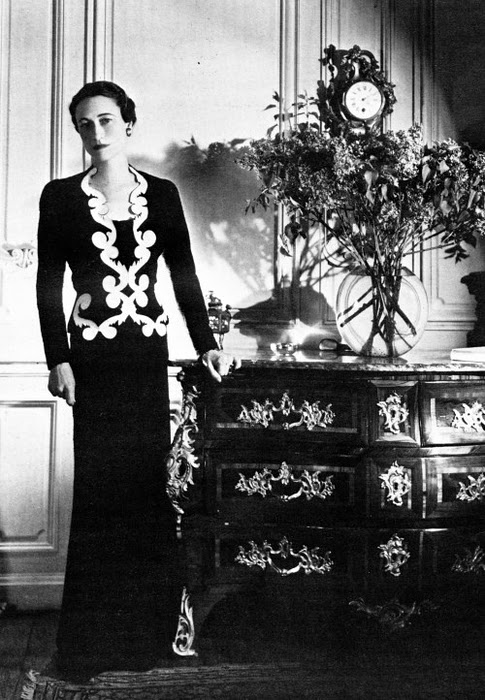
The Duchess of Windsor wearing the famous "Lobster Dress," designed by Elsa Elsa Schiaparelli and Salvador Dali.

The Duchess of Windsor wearing the famous “Lobster Dress,” designed by Elsa Elsa Schiaparelli and Salvador Dali.

It pains me to write about how underwhelmed I was, because Oha actually is pretty. (I think “beautiful” may be pushing it a little.) It feels incredibly French and classique. It never evokes the supremely fashionable, trend-setting, iconic Duchess of Windsor, but, rather, a perfectly well-dressed, elegant French woman who doesn’t stand out from the crowd. She isn’t dripping with diamonds or furs; she isn’t even in a particularly sexy black dress or wearing the latest trend. She certainly isn’t making a scene or acting like a diva! She’s far from frumpy, she’d definitely not ugly or unattractive, and when you see her, you just know she’s French with impeccably well-bred bones and breeding. But, unless you were really, really looking at her, I’m not sure you’d notice her with her expertly cut, expensive, but completely innocuous dark suit, her expensive but unshowy handbag,her restrained chignon, her simple but expensive strand of pearls, and that quiet dab of muted lipstick. I passed by hundreds of such women in my years in Paris, and I’m sure they would wear Oha.

It’s not a negative thing in the slightest. But it’s not me. I’m not one for amorphous, abstract floral chypres without a particularly distinctive character — no matter how well-bred and classique they may be. That said, if you like floral chypres, I do think Oha is worth a sniff because it does have elegant bones and is an incredibly practical, versatile fragrance. This is something you could just spray on and go, without much thought; it would work pretty much everywhere and for all occasions, from an appointment at your child’s school, to a dinner with friends. Its discreet nature, while still being moderately strong on your actual skin, would also make it practical for the office. And you’d definitely feel feminine while wearing it. Plus, Téo Cabanel fragrances can be purchased for a relative steal on numerous discount sites (not to mention eBay).

I’m still disappointed, though. And I think the Duchess of Windsor would be, too. Now, if you’ll excuse me, I have to put on some of my beloved Alahine. 

DETAILS:
Cost & Availability: Oha comes in a variety of sizes and forms. On the Téo Cabanel website (which also has a French language version), Oha Eau de Parfum (which is what I reviewed) costs €82 for 1.7 oz, and €107 for 3.3 oz. There is also a solid perfume version which costs €65 for 2 x 2 g (2 x 0.07 oz), along with a Sample Set of 6 Cabanel fragrances for €6. (Down below, you will see that the Posh Peasant also offers the Pure Parfum version).
Discounts: You can frequently find Teo Cabanel fragrances deeply discounted at various online retailers, in addition to eBay. In the U.S., you can buy Oha Eau de Parfum in a 1.7 oz/50 ml size for $61.20 from LilyDirect, a reputable perfume retailer that a number of people I know have used without problem. (As a side note, I’ve heard that Lilydirect will start shipping to Canada in June.) 99Perfume sells the small 1.7 oz size for 64.99, while BeautyEncounter sells it for $75. (BeautyEncounter is the original retailer for the Amazon offering of Oha, if you were to check there but I think you get free shipping if you go through them directly.) The prices are even higher at FragranceX which sells the 1.7 oz size for $88.30 and the large 3.4 oz size for $118. I’ve read that the line is carried at Henry Bendel’s, but I don’t see any Cabanel perfumes listed on their website. The Posh Peasant does carry most of Teo Cabanel’s fragrances, but stock is limited and amounts may be sold out (as they currently are for the Oha), so I suggest you check the website later when additional stock is added. At the moment, they have the Pure Parfum version of Oha on sale for $154 instead of $220 for a 15 ml bottle.
Outside the US: In Canada, Cabanel’s website lists Fritsch Fragrances as its primary vendor. In London, I’ve read that Téo Cabanel is carried at Fortnum & Mason’s, but I don’t see it shown online. Liberty’s states that Téo Cabanel fragrances are available only in their actual store. As a whole, for European readers, I saw it online at Parfums MDP (which I think is in the UK?) for the same Euro rate as the company’s website. They say that there is “free worldwide postage” which I find to be stunning (and hard to believe)! I’ve also read  that the perfumes are available at: Galeries Lafayette, Douglas (France, Lithuania, Russia), Kadewe Berlin, Oberpollinger Munich, and Albrecht in Frankfurt. In Australia, I saw the large 100 ml/3.4 oz bottle of Oha on GetPrice for AUD$109.65. For all other countries, you can try to use the company’s Retailers guide on their website, but be aware that it doesn’t seem very up-to-date as some of the listed retailers don’t seem to carry the line. (Like Luckyscent.)
Samples: Surrender to Chance does not have Oha, but The Posh Peasant has a 5-Piece Sampler Set of 5 x 1ml vials for $15. I think that’s a great deal, especially as it will let you try one of my all-time favorite fragrances, the boozy Oriental “Alahine.”
 

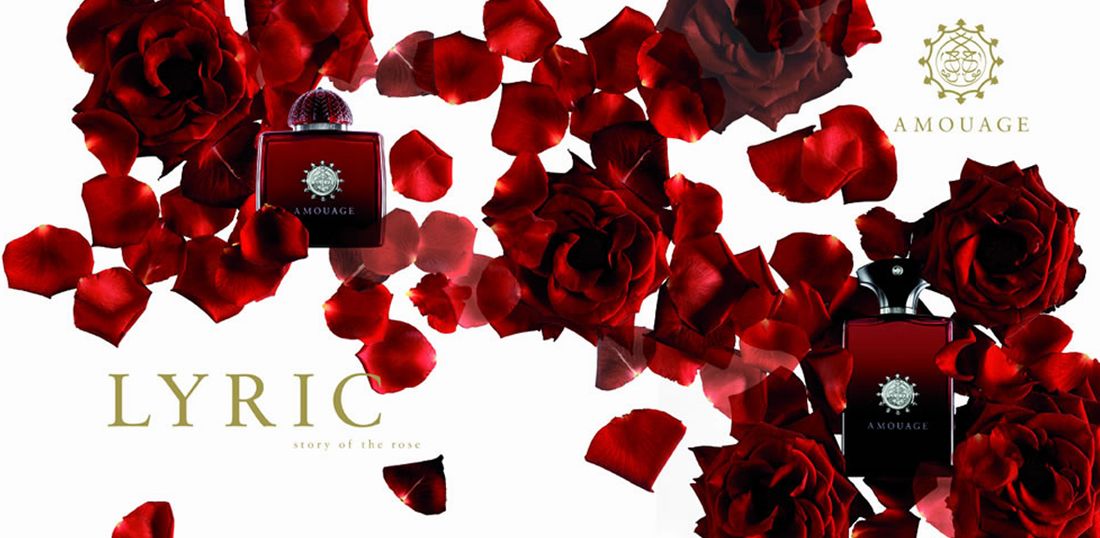
Perfume Review: Amouage Lyric (Woman)

One of the most popular fragrances from the royal perfume house of Amouage is Lyric Woman (hereinafter just “Lyric”). It is a chypre-oriental eau de parfum that is centered on a dark, dusky rose atop Amouage’s usual base of beautiful, smoky, Omani frankincense. It is a lovely perfume that I enjoyed but, on me, it was actually primarily a ylang-ylang fragrance with rich, custard-y vanilla infused with smoke. 

Source: Fragrantica

Source: Fragrantica

Lyric was released in 2008, the creation of perfumer, Daniel Maurel. The inspiration was music and, more specifically, the “lyric-spinto voice.” As the Amouage website explains,

Creative Director Christopher Chong has carefully crafted Lyric Woman to continue the music-inspired narrative that started with the launch of Amouage’s Jubilation last year. He explains, “Beyond the transient beauty and purity of Lyric lingers a poignant song without beginning or end.” During the creative process, Chong found inspiration in the beauty and drama of the lyric-spinto voice. From this, the story of Lyric Woman was born: a fragile beauty with a rare, other-worldly talent and her quest for perfection and immortality. Through this story, we are reminded that there is a subliminal beauty in every imperfection.

The fragrance has a complex and sophisticated structure, in which deep, smoky rose takes center-stage in the heart, complimented by dry, floral notes of geranium, jasmine and orris. The spiciness of cinnamon, cardamom and ginger in the top notes lifts the fragrance, while depth is provided by frankincense and wood notes in the base.

In its structure, Lyric is a floral fragrance, but one that introduces a dark intensity and modernity not normally associated with this genre – a perfect illustration of femininity, strength and passion.

Source: "Bonoanimoes" on Basenotes.

Source: “Bonoanimoes” on Basenotes.

The notes as listed on the Amouage‘s website are as follows:

top: Bergamot, Spicy Cardamom, Cinnamon, Ginger
heart: Rose, Angelica, Jasmine, Ylang-Ylang, Geramnium, Orris
base: Oakmoss, Musk, Wood, Patchouli, Vetiver, Sandalwood, Vanilla, Tonka Bean, Frankincense

Lyric opens on my skin with dry citruses infused with oakmoss. There are touches of geranium, spicy cardamom, ginger and the smallest hint of vanilla-infused smoke in the back. The geranium evokes the scent of the fuzzy, furry green leaves, while ginger feels almost pickled, like that in a Japanese sushi restaurant, as opposed to fresh and zesty, or crystallized and candied. The whispers of vanilla smoke are utterly entrancing, especially in their lightness. The note is never sweet or cloying, but airy. It helps counter any dryness from the oakmoss which feels grey like lichen, not brightly green and mossy.

Spirit of a Dying Rose by Vincent Knaus via RealityDefined.com

Spirit of a Dying Rose by Vincent Knaus via RealityDefined.com

Throughout it all, swirling like a specter in the background is the gauzy, sheer, airy red rose which initially feels dry, desiccated, dark, sweet and smoked all at once. It’s never the primary focus of the scent in those opening minutes but its form grows more and more substantial with the passing moments. From the merest translucent shadow, it gains body, swirling with the green, almost herbaceous geranium, the dry citruses, the oakmoss, cardamom, and that lovely, delicate vanilla incense. The perfume is beautifully blended, so Lyric Woman feels very much like a harmonious sum total of its individual elements, and the final result is a lovely, floral chypre that is simultaneously dry and a little bit sweet.

Ylang-ylang

Ylang-ylang

My skin generally seems to cycle quickly through notes, always emphasizing those at the heart and base, but, even so, it’s a little bit of a surprise when the ylang-ylang turns up less than five minutes into the perfume’s development and takes over from there. It starts slowly, flickering in the background like a gleam of bright yellow and feeling incredibly buttery, banana-y, custard-y and rich. By the thirty minute mark, the ylang-ylang turns so unctuous that it feels almost a little like coconut at times in its buttered richness. It mixes with the vanilla of the base to create a very rich custard that is almost yolk-like in its richness, but always flecked by the dark, airy smoke of the frankincense.

Source: Soapgoods.com

Source: Soapgoods.com

At first, the ylang-ylang mixes with the subtle rose notes but, soon, it takes the lead completely, becoming the dominant note. Lyric loses its dry citruses. More importantly, the oakmoss recedes to the background where it has an indirect, quiet effect on the fragrance, helping to counter a bit of the richness of the vanilla and ylang-ylang. It is no longer wholly distinctive in its own right and, to be frank, I miss it. Soon, Lyric turns slightly indolic in its rich headiness. Though it’s never sour or plastic-y on me, those who suffer from indoles may want to take heed. (If you’re unfamiliar with Indoles and Indolic fragrances, you can read more about them in the Glossary that is always linked at the top of the page.)

Vanilla Custard. Source: Sacchef's Blog.

Vanilla Custard.
Source: Sacchef’s Blog.

By the start of the second hour, Lyric is almost entirely ylang-ylang infused with light frankincense smoke atop a base of rich, custardy vanilla. The latter is creamy, luxurious and very comforting. Hints of light roses, creamy woods, oakmoss, and patchouli lurk at the edges. The woody note never feels like the bronzed spiciness of sandalwood, though it does share its creaminess. Instead, it feels more like general, amorphous, almost abstract, beige woods. Yet, none of those supporting players have the slightest chance of countering the ylang-ylang; it just grows deeper as Lyric develops and its indolic nature starts to feel almost vegetal in its richness.

Lyric remains that way on me for most of its development. I even tried Lyric a second time this morning; it’s on me currently as I write this and it is always the same, ylang-ylang dominant story. I would have far preferred the dusky, smoked chypre rose of the opening, but my skin chemistry clearly has other ideas. During that first, full test, Lyric’s drydown began a little after the sixth hour. It turned into a very traditional vanilla accord with some light powder and lingering touches of that airy, light, frankincense smoke. It was a skin scent and seemed, at times, so subtle that I kept thinking it was going to die entirely. But Amouage fragrances are renowned for their longevity and Lyric Woman is no exception. It lasted as a sheer, skin scent for another six hours. All in all, Lyric lasted just over 12.75 hours on my perfume-consuming skin, though only about 4.5 of those hours entailed a strong, noticeable fragrance with projection. On someone with normal skin, I wouldn’t be surprised if Lyric Woman lasted almost a full day. 

As with all Amouage fragrances, Lyric is profoundly potent in its opening hours. The perfume wafted around me in a medium-sized cloud at first, projecting a few feet, before softening. By the start of the second hour, the sillage was tamer and Lyric swirled just half a foot beyond my arm. It remained that way for a while, though it weakened with time, especially by the fourth hour. Finally, by the sixth hour, it became the merest gauzy touch right on the skin. As I said earlier, there were moments thereafter where I thought it had died, but its fragrant touch lingered for hours.

My experience with Lyric is absolutely not representative in any way (except perhaps the sillage and longevity). I feel like a completely freakish loon because, almost across the board, everyone has found the perfume to be primarily a rose-centered one with great spiciness. On a rare occasion, someone at Fragrantica will mention ylang-ylang and jasmine, but it is always in the context of the rose.

Only Luca Turin‘s four-star review of Lyric has a brief reference to that vegetal quality that I believe stems from the ylang-ylang. In Perfumes: The A-Z Guide, the perfume critic wrote:

Great fragrances move me (and, I imagine, many others) to a sort of musical resonance. And in perfume as in music, progress largely consists of getting used to one novel dissonance after another. In this context, I can safely say that I have never smelled anything like the chord at Lyric’s chore. It is a rose, to be sure, cleverly extended at one end by a dry, dusty, woody accord in the manner of Lyric’s land of origin, Oman. What happens at the other end if a complete surprise. Where one expects a spicy, earthy uplift in the contemporary manner, there comes instead a plangent, overripe note, the exhalation of forgotten fruit in a sealed room. The effect is initially almost unpleasant but soon becomes celestial. Thelonius Monk would have understood this fragrance instantly.

On me, with my skin that always seems to emphasize the base notes in a perfume, that “plangent, overripe note, the exhalation of forgotten fruit” was clearly from the ylang-ylang. The over-ripeness and vegetal aspects that stem from its heavy indoles took over and dominated over the rose accord, though I never thought it was unpleasant, thanks to the countering effects of the smoky frankincense. And I actually loved that custardy, vanilla base with its flecks of black smoke, even when it turned a little powdery. A few others, however, on Fragrantica and Surrender to Chance seem to find the powdery drydown evocative of an “old lady” scent. I don’t share that impression, but I suppose it depends on your age or on your mental associations. 

There is a beautiful review of Lyric Woman from Now Smell This which calls the perfume a “modern classic” and which also helpfully discusses Andy Tauer‘s Incense Rosé as a point of comparison:

[I]f I passed my Lyric-drenched wrist under your nose right now, you would smell the frankincense, spices, and cream, but rose might not be the first note that comes to mind. As for whether or not Lyric is “entirely unprecedented”, I think of Tauer Perfumes Incense Rosé, which is not as creamy and warm as Lyric, but to me is its kissing cousin for sure.

I see Lyric less as music than as the tactile experience of scarlet red silk velvet covered by geranium and cardamom chiffon, dug out of an oak chest long forgotten in the attic. It is the sort of fragrance that would make a good signature scent: it is rich and striking enough to be a brilliant evening scent but, worn judiciously, would work during the day, too. With its bright top, spicy, floral heart, and creamy, woody base it spans the seasons except for the hottest days of summer. It feels lush and original, but not overly edgy. Wearing Lyric, you stand apart, but not too much so. In short, it’s a modern classic.

How I would have loved to experience all that! Despite my very different experience, I thought Lyric Woman was very nice and beautifully crafted. I genuinely enjoyed what I smelled, and I suspect that Lyric could turn quite addictive with repeated wearing because what appeared on my skin was rich, beautifully luxurious, heady, narcotic and very comforting. If Amouage’s prices were less steep, I might almost be tempted, but, at the end of the day, I’m not enough of a ylang-ylang enthusiast for that. However, those who love Amouage and roses may be happy to hear that I found Lyric being sold a great discount this week at one online retailer. (See, Details section, below.)   

Have you tried Lyric Woman? If so, how did it manifest itself on your skin? Was it love at first sniff? 

DETAILS:
Cost, Availability, Sales & Sets: Lyric Woman in an eau de parfum that comes in two sizes: a 50 ml/1.7 oz bottle that retails for $275 or €200, or a 3.4 oz/100 ml eau de parfum that costs $315 or €235. There is also a Travel Set available which contains 4 x 10ml bottles of Lyric, and those details are below. Thanks to some readers letting me know about LilyDirect, a very reputable online perfume retailer that frequently gives large discounts on Amouage, I have a link to a large 3.4 oz bottle of Lyric Woman that is priced at only $170 instead of $315!!! That is an unbelievable price, especially given the free domestic shipping on orders over $100. Lyric Woman in the large 3.4 oz size is also on sale at Beauty Encounter for a discounted price of $204 instead of $315. That is $111 off, and there is free domestic shipping (with international shipping for a fee). I don’t know how long these special discount prices will last. I should add that I’ve ordered from BeautyEncounter in the past with no problem, as have many of my friends, and they are a very reputable dealer. The smaller 1.7 oz size is also currently on sale at BeautyEncounter for $228.90 instead of $280 (though it should be $275 retail). That’s 18% off with free shipping within the US, but clearly the larger bottle is a better and cheaper deal. Otherwise, your first stop for purchase might be the Amouage website which carries not only the Lyric perfumes but also body lotions and candles.
In the U.S., the authorized Amouage dealer is Parfums Raffy which sells the full set of Lyric Woman products, including the travel sprays that total 40ml in quantity. There is free domestic shipping. Luckyscent carries both sizes of Lyric Woman, but not the travel set. Lyric can also be purchased online at MinNY (only the larger size but also body products like lotion), or the Four Seasons. The Travel set is available on the Amouage website for €160 and on BeautyEncounter for $235. Finally, Parfums Raffy sells a Mini Parfum Set of 6 Amouage fragrances (Lyric, Gold, Dia, Ubar, etc.) in 7.5 ml crystal bottles for $280, and a Six Sample Set of Women’s fragrances in 2 ml vials for $48. (No free shipping for orders below $75.)
Outside the US: In Canada, The Perfume Shoppe offers both sizes of Lyric Woman, along with sampler sets, mini travel sets and body lotions. There is free worldwide shipping, I think. The perfumes are listed at the same price as in the U.S., despite the fact the CAD prices are usually higher, so you may want to drop them an email to inquire. In the UK, Lyric Woman is available at Les Senteurs where it costs £160.00 or £190.00, depending on size. Samples are available for purchase. There is also an Amouage boutique in London. In Germany, Lyric Woman is available at First in Fragrance where it costs €205 or €295.00 (depending on size) with free shipping within the EU and shipping elsewhere for a fee. For other countries, the Amouage website has a “Store Finder” which should, hopefully, help you find the perfume somewhere close to you.
Samples: I obtained my sample of Lyric Woman from Surrender to Chance where prices start at $3.99 for a 1/2 ml vial. The site also sells samples of the Lyric body lotion, and a Sampler Set for 8 Amouage women’s fragrances which starts at $29.99 for 1/2 ml vials. The Parfums Raffy deal may be a much better one, given the 2ml size of those vials, even if it is $48 for just six fragrances.

Perfume Review – Maison Francis Kurkdjian Lumière Noire Pour Femme

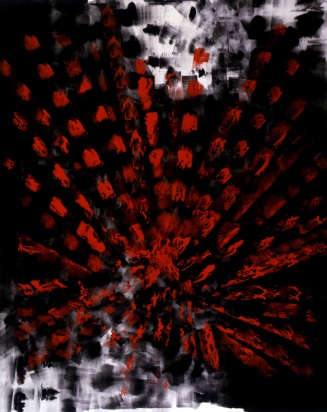
"Inner Motions, Untitled" #6 by Azadeh Ghotbi. Used with permission from the artist. Acrylic on canvas. Price available on request. Azadehgallery.com

“Inner Motions, Untitled” #6 by Azadeh Ghotbi. Used with permission from the artist. Acrylic on canvas. Price available on request. Azadehgallery.com (Link embedded within.)

Lumiere and Noire (Light and Black), an attraction and repulsion.

A black hole lit with the image of a mysterious perfume that attracts until it provokes self-abandon. It is the idea of two opposing powers that unite to create a whole that relates, at its turn, a new story. The mention of this duality is imposed as an obvious fact, like the emblematic blend of Rose and Patchouli.

That is the press description of Lumiere Noire Pour Femme, a chypre eau de parfum from Maison Francis Kurkdjian which was released in 2009 and which attempts to cast a new light on the rose-patchouli duet. Reading the description brought to mind the paintings of the artist, Azadeh Ghotbi, who often plays with textured reflections and with the duality of light and darkness.

"Inner Motions, Untitled #2" by Azadeh Ghotbi. Used with permission from the artist. Price available on request. Azadehgallery.com

“Inner Motions, Untitled” #2 by Azadeh Ghotbi. Used with permission from the artist. Acrylic on canvas. Price available on request. Azadehgallery.com (Link embedded within.)

Yet, Mr. Kurkdjian’s Lumiere Noire seems to be an attempt to go beyond his prior exploration of the rose-patchouli pairing in his creations for Guerlain (Rose Barbare) and for Juliette Has a Gun (Lady Vengeance). This time, it seems he sought to create something that was darker and much more of a “full-on” rose. To quote Denyse Beaulieu at Grain de Musc, Lumiere Noire Pour Femme is:

a full-on bodice-ripper of a rose, Baudelairian in its celebration of majestic female flesh –a courtesan trussed in velvet the colour of drying blood trimmed with jet beads, hair tumbling down her back as she downs a flute of champagne. Her shawl carries the smell of the patchouli leaves it was packed with to repel the moths on its way from India. A bunch of jasmine exhales its dying breath between her breasts. A sweaty tendril of cumin rises from her corset…

What a stunning visual! That description — in conjunction with the very cool, gothic vibe behind the name “Black Light” — made me fully expect a lascivious, debauched, sexualized rose fragrance. Yet, I found the perfume to be very far from sexual, dark, and twisty. Instead, on me, it was a beautiful evocation of Spring — a rich take on a field of fragrant, yellow daffodils intertwined with a fresh, mossy green, along with sweetly dark earth, dry woody notes, and a spiced rose.

Source: freehdwalls.net

Source: freehdwalls.net

The notes for Lumiere Noire on the Maison Francis Kurkdjian website are simply listed as: “Spiced Rose (cumin, hot pepper) Patchouli – Narcissus.” However, I have seen a significantly more detailed set of notes from Muse in Wooden Shoes who cites a very different list from the company:

Notes, according to the MFK site: rose, narcissus [or daffodil], pepper, lily of the valley, patchouli, balsam, orris, cumin.

I think that seems far more accurate, judging by what I smelled on my skin, so we’ll go with that version.

Lumiere Noire opens with a haunting note of daffodil-rose. It’s a dry rose with sweet hay, a rose turned on its head with a slight bitterness that is, indeed, a little dark. Yet, at the same time, it’s sweet and bright — a very successful interplay of the themes of light and dark. The daffodils add a mesmerizing touch that is very different and which I adore, though I confess to having a huge weakness for the flower in general.

Lurking underneath is a fresh, springy, brightly green patchouli, accompanied by light touches of dusty, dry spice. Though the hay note is the most prominent, the spice and chili pepper swirl imperceptibly in the background, working their magic on the rose to transform it into something much more fiery and much less sweet. At the same time, there is almost a citrus-like nuance, along with an earthy iris note from the orris.

Source: nature.desktopnexus.com.

Source: nature.desktopnexus.com.

I can’t get enough of the daffodils and how brilliantly Lumiere Noire seems to replicate the whole flower. The scent feels just like a daffodil pushing its way up through the dark, loamy, rich earth (orris), and the fresh, sweet, green grass (the mossy patchouli), until its woody, brown stalk (the hay) rises up to meet the sun and the bud unfurls its golden heart to release its sweet floral scent (daffodil and spicy rose). It is a very Spring interpretation of light and dark, if you will.

The perfume is beautifully modulated, reflecting different facets at different times. Though the rose is always subsumed within the daffodils, sometimes it’s much more noticeable in the early hours; at other times, the daffodil glows even more brightly. Around the thirty minute mark, it’s the earthy, woody element which seems to rise to the surface, joining in the lead with the daffodils. After one hour, the rose returns undulating in greenish waves with the patchouli and narcissus, sharing the stage with the two in equal measure. Something about that patchouli note isn’t always pleasant; it can be a little sharp, very synthetic at times, and almost verging on the point of burning. Thankfully, it soon recedes, softening and blending in much better with the other notes.

Five hours in, Lumiere Noire is a narcissus-patchouli fragrance with soft hints of hay, rose, and earthy orris. There is a musky feel to the patchouli, along with some balsamic amber undertones, but they are not strong. For some inexplicable reason, the perfume feels a little like the middle stage of Tom Ford‘s Arabian Wood — a dry, mossy, green, patchouli with rose chypre that is neither Arabian nor primarily woody. The difference, though, is that Arabian Wood has a strong sandalwood foundation, along with honey, and more varied floral notes. Lumiere Noire’s daffodil note imparts a similar sort of dry woodsy character to the rose-patchouli duet, but it is a much stronger, dryer perfume as a whole. In both, however, the patchouli takes a turn into something much darker from its initial start. It’s not dirty, black patchouli by any means, and always feels mossy but, visually, it’s no longer so grassy. In Lumiere Noire, in particular, the patchouli turns from bright green and fresh into something much more potently dark and dry.

In its final hours, Lumiere Noire becomes dusty patchouli with narcissus, musk and the merest hint of rose. A few people on Fragrantica have said that the musky note in the drydown is like that of Narcisco RodriguezFor Her — a perfume also created by Francis Kurkdjian. I don’t really agree. Yes, Lumiere Noire has a subtle tinge of soapiness in the musk drydown that may evoke fabric softener, but it is just to a small degree on my skin. On a scale of 1 to 100, “For Her” would rate in the high 90s, while Lumiere Noire would be around a 10. To me, it does not smell clean, soapy, and white in the way that “For Her” does. The patchouli in Lumiere Noire is too green, mossy and dark for that, and it winds its way through every part of the fragrance. Nor is the musky element in Lumiere Noire so white and synthetic. I am not a fan of “For Her,” so trust me when I say that I don’t think the two perfumes share any great similarities.

Lumiere Noire lasted approximately 11 hours on my perfume-consuming skin which is quite impressive. The sillage was initially quite strong before it dropped, remaining at a moderate level until the sixth hour when Lumiere Noire became a skin scent. As a whole, Lumiere Noire is quite an airy perfume, almost transparently light in feel, but it is also extremely potent at the same time. I chalk it up to the powerful patchouli with its synthetic undertones. Whatever the exact reason, Lumiere Noire is not a fragrance that I would spray with reckless abandon; people may have to come near you to smell it, but once they do, it is quite pronounced.

All in all, I enjoyed Lumiere Noire and, at times, found myself sniffing my arm again and again with appreciation. I chalk it up to my love of daffodils and how, on my skin, the note either completely dominated the rose or lived side-by-side. In fact, I would say that the perfume had narcissus and patchouli in equal measure, followed only then by the rose. Either way, Lumiere Noire was a far cry from the bodice-ripper, sexualized rose fragrance that Grain de Musc recounted. No, my experience was much closer to that of the many commentators on Fragrantica who repeatedly mention the narcissus notes, the greenness, the grassy patchouli, and feel of Spring. Like me, very few of them experienced any cumin or chili pepper as an individually distinct, noticeable and isolated phenomenon. I ascribe that to the fact that Lumiere Noire is beautifully blended, but the absence of those notes in an individual manner may explain why so few of us shared Denyse Beaulieu’s hyper-sexualized interpretation of the fragrance.

As a side note, there are a few fragrances to which Lumiere Noire has sometimes been compared. On Fragrantica, a number of people found it similar to Vengeance Extreme by Juliet Has a Gun, while others mention Perles de LaliqueLa Perla or Eau du Soir. I’m not familiar with any of those fragrances, so I can’t comment. You may be interested, however, in an analysis from Muse in the Wooden Shoes who compared Lumiere Noire with Frederic Malle‘s Portrait of a Lady, “one on each wrist”:

Before that, I would have described Lumiere Noire to be a Dark Rose, a dark gothic rose with kohl-lidded eyes. But next to each other, Lumiere Noire glowed like a candle, while all light disappeared into the far, far darker Portrait of a Lady, proving PoaL to be the true Darkest Rose I’ve come across. Eventually, I grew tired of the heavy balsam in the drydown of PoaL and sent my decant off to a good home with a friend. Although I think PoaL is a truly wonderful fragrance, I just couldn’t manage to wear it myself.

She far preferred Lumiere Noire, calling it “very sexy” and evocative of a boudoir.

I find the contrast between the two bloggers’ perception of Lumiere Noire and those of regular users to be fascinating. The bloggers write about the “celebration of majestic female flesh,” courtesans, boudoirs, and the spicy cumin evoking a trail of ravished, heated skin. The commentators on Fragrantica and Basenotes talk about Spring, wafting honeysuckles, aromatic gardens and green grass, the dominance of the narcissus over the rose, and even occasionally use that dreaded word: “clean.” It’s almost as if the sharply divergent impressions mirror that duality of light and darkness mentioned in the press release.

Source: Art.com

Source: Art.com

Well, I’m on the side of those at Fragrantica, because I thought Lumiere Noire had nothing to do with the boudoir. It is an elegant, sophisticated chypre that evokes Spring, sunshine, yellowness, and green. It’s very unisex, in my opinion, regardless of the “Pour Femme” designation and it’s also very wearable as a day-to-day matter. Lumiere Noire may not make a huge statement, but then I don’t think it’s trying to. It is meant to be an elegant, refined chypre, and it succeeded in that goal. For me, personally, it’s not full bottle worthy, but I think many men and women would appreciate its complexities.

As a side note, the “Pour Homme” version is similar, but has slightly different elements. It has cinnamon instead of cumin, and artemisia (or mugwort) in lieu of narcissus. You can read a brief comparison between the two at Grain de Musc, though the essence is yet another sexualized impression: “the mugwort keeps the rose tightly under wraps – as though the marquise de San-Réal had bandaged her breasts to slip into her half-brother’s slim black frock coat.”

If you enjoy chypres and are looking for a Spring scent that isn’t a typical, light, clean, fresh floral, but, rather, something with depth, body, green darkness and allure, you should give Lumiere Noire Pour Femme a sniff.


DETAILS:
Cost & Availability: Lumière Noire Pour Femme/Pour Elle is an Eau de Parfum and comes in a 2.4 oz/70 ml bottle that costs $175, €115 or £115. You can find it on the Maison Francis Kurkdjian website which also sells samples of the perfume, along with incense paper and a candle version of Lumiere Noire. In the US, you can purchase Lumiere Noire from Luckyscent, Neiman Marcus, Bergdorf GoodmanBeautyBar, or Bigelow Chemists. I don’t see any MFK fragrances listed on the Saks Fifth Avenue website. In the UK, you can find Lumiere Noire at Selfridges, Liberty, and Les Senteurs priced at £115. Les Senteurs also sells a sample of the fragrance.  For the rest of Europe, you can buy it from First in Fragrance for €125 (which is €10 more than on the MFK website), along with the full line with the candle or incense papers. Other European vendors are Essenza Nobile and Premiere Avenue. Elsewhere, you can turn to MFK’s Points of Sale for a retailer near you, whether you are in Asia, Australia, or the Middle East. In terms of samples, I bought mine from Surrender to Chance which sells Lumiere Noire starting at $2.99 for a 1/2 ml vial or $5.98 for 1 ml.