Perfume Review – Le Labo Ylang 49

Le Labo Ylang 49Ylang 49 is one of three new scents released last month, in May 2013, by Le Labo. Two of them — Lys 41 and Ylang 49 — will join the permanent collection and won’t be exclusive to any one city. As always with Le Labo, the perfume name (and the number that corresponds to its purported number of ingredients) does not give the full picture. Ylang 49 is a ylang-ylang fragrance, but it is also a chypre — and one with a heavy amount of very fruited patchouli.

I will be honest and confess that it bored me. It bored me to tears and, even worse, felt like an utterly exhausting slog that I just wanted to end. To my surprise, my favorite out of the two new Labo fragrances was the delicately ethereal lily fragrance, Lys 41, while Ylang 49 was barely tolerable. I’m in a distinct minority on that point, however, as Ylang 49 has received endless raves with one highly experienced blogger, the fabulous Non-Blonde, declaring that it may be her favorite out of all Le Labo’s floral scents!

Ylang 49 was created by Frank Voelkl and described on Le Labo’s website as follows:

Ylang 49 is a chypre floral, where Pua Noa Noa (gardenia from Tahiti) completes the floral voluptuousness of ylang ylang… Patchouli, oakmoss, vetiver, sandawood [sic] and benjoin follow to tip the blend into darker sensual undertones…

Ylang 49 is a walk in the woods, a lush floral bouquet in your hand, listening to G. Gould’s well-tempered clavier and realizing that a floral composition can go beyond flowers, in the same way a fugue in D minor is way beyond the D…

Out of the perfume’s 49 notes, the only ones we know about are:

ylang ylang, Tahitian gardenia [or pua noa noa], patchouli, oakmoss, vetiver, sandalwood, benzoin.

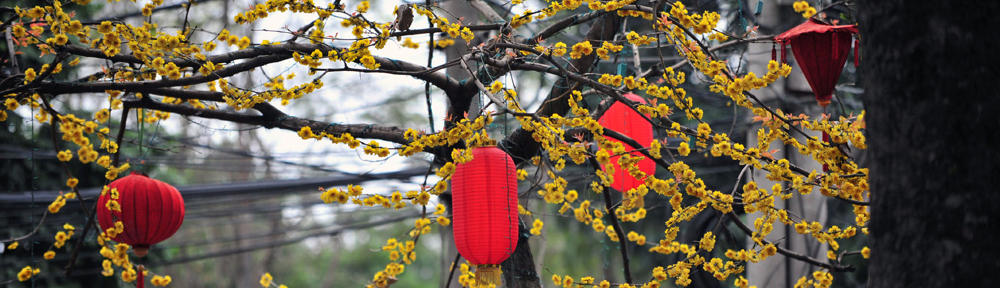
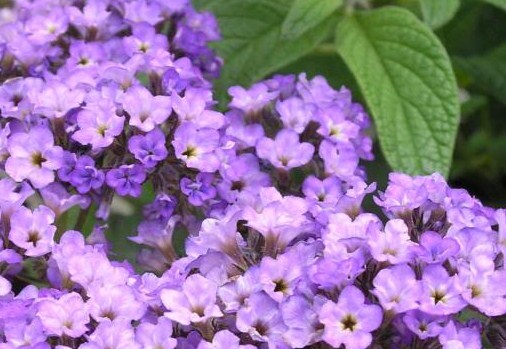
Ylang-ylang. Source: wallpaper.free-photograph.net

Ylang-ylang. Source: wallpaper.free-photograph.net

Ylang 49 opens on my skin with a definitely old-school, classic chypre profile: citrus notes (probably from one of the hidden, secret ingredients) infused with patchouli and oakmoss. The oakmoss is interesting because it has that dry, slightly mineralized greyness of the real thing, while simultaneously feeling a little fresh, green, bright and rich like the more patchouli-infused modern sort. Seconds later, hints of ylang-ylang and the coconut-y characteristics of Tahitian gardenia start to emerge. They’re subtle at this point, especially the gardenia, and add just an amorphous “floral” touch to the chypre opening.

"Purple Velvet Gold Flakes" by *Will3style at Deviantart.com. http://will3style.deviantart.com/art/Purple-Velvet-Gold-Flakes-258099755

“Purple Velvet Gold Flakes” by *Will3style at Deviantart.com. http://will3style.deviantart.com/art/Purple-Velvet-Gold-Flakes-258099755

As the minutes pass, the floral tones in Ylang 49 take more shape and become more distinct. The ylang-ylang takes the lead, but the gardenia dances around the edges. The flower has brief flickers of coconut, but it’s also a lot more gardenia-like than I had expected from the Tahitian variety. I keep getting images of a thick pile of dark green and purple velvet, perhaps because the patchouli is so prominent. It’s very hearty and veers dangerously close, in my opinion, to the purple patchouli that I dread so much. It infuses the ylang-ylang in particular, turning it into something so jammy, velvety and rich that it almost feels like a beefy, meaty, red damask rose. The normally white ylang-ylang flower has taken on the same sort of darkly liqueured undercurrent — to the point that Ylang 49 strongly calls to mind how Amouage‘s Lyric Woman manifested itself on my skin. (Unlike most people’s experiences with Lyric Woman, on me, it was predominantly a very beefy, liqueured, ylang-ylang fragrance.)

Source: damask-wallpaper.com

Source: damask-wallpaper.com

Ylang 49 doesn’t morph substantially in the hours that ensue, shifting only in degree as to which note undulates to the top of the heap. Namely, the patchouli which turns stronger, heavier, richer and more painfully fruited. Ylang 49 is essentially just a plush, heavily fruited, ylang-ylang perfume atop a strong patchouli base that is lightly flecked with oakmoss. Occasionally, the fragrance will throw off flickers of coconut or gardenia like a warm ray of light, but its fundamental essence unchanged. The most noticeable thing after a few hours is a softening of the patchouli element, but it’s just an incremental drop and a question of degree. Still, it serves to make the ylang-ylang feel slightly more custardy, buttery and floral in nature, and a little less fruited. It’s all relative…

At the start of the third hour, the flower’s creamy undertone is matched by an equally creamy, beige wood note that subtly adds even further depth to the ylang-ylang. The wood accord is undoubtedly from the sandalwood which feels like a synthetic, Australian, or generic cousin to the rare, spicy, rich Mysore wood that is now almost extinct. Here, the sandalwood is bland and rather nondescript, but I suppose it serves its uses in adding that extremely subtle, amorphous, beige, creamy “woodiness” to the base. At the start of the fifth hour, Ylang 49 turns into a creamy floral fragrance that is somewhat ylang-ylang in nature but also, increasingly abstract. The overall bouquet is infused with the endless (and still fruity) patchouli and hints of oakmoss atop a base of dry, generic sandalwood. The floral part is pretty, but I truly can’t stand the patchouli at this point. I’m also not enthused by the sandalwood which smells faintly sour, a little burnt, and a little too arid to my nose.

As time progresses, Ylang 49 turns more nebulous and vague; Now Smell This accurately describes it as a “hard-to-pin-down presence,” though they notice it after the third hour. It happens to me much later, but particularly around the eighth hour when Ylang 49 becomes a wholly abstract patchouli “floral” with musky overtones and some of that bland, slightly unpleasant, totally unimpressive “sandalwood.” In its final hours, Ylang 49 ends up as an amorphous, dry, slightly bitter woodiness.

All in all, the perfume lasted 13.25 hours on my skin with the patchouli wearing me out for almost the entire length of time. (So much patchouli, and always of the blasted fruited kind!) Ylang 49 had great projection for the first hour, but it dropped soon thereafter. The fragrance started to inch closer to the skin midway during the fourth hour, though it was still very potent if you brought your arm right up to your nose. It became a true skin scent on me around the eighth hour. As a side note about longevity, I obviously have wonky skin because Ylang 49 is said by many to have astounding longevity, with some saying it lasts all-day and overnight. They said the same about Lys 41 which never lasted more than 6 hours on me — and that was with a large dose. Still, for me, Ylang 49’s duration is phenomenally high at 13.25 hours, so I have no doubt it probably could 24 hours on normal skin. (I’m remain unconvinced about the Lys 41, though.)

I suspect that my overall prose about Ylang 49 reeks of flatness and a general lack of bouncing enthusiasm. I can’t help it. I’m trying very hard to be fair, but I’m truly so bored, I can barely write. Much has been made of how the perfume harkens back to a lost, golden, magical time when chypres were really chypres, when classique perfumery had depth, luxurious richness and elegance. Take CaFleureBon whose admiring description of the perfume ends with the words: “Ylang 49 feels like something found at an estate sale in an unlabeled crystal flacon.” Or take the rapturous review from The Non-Blonde which reads, in part, as follows:

Ylang 49 may be my favorite out of all the Le Labo flower perfumes. It has  a lot of warmth and a substantial base that surround the tropical flowers and make them more abstract and mysterious. The yellow blossoms are rich and enticing, but they’re also restrained and wonderfully elegant: this is what they mean by calling Ylang 49 a “modern chypre”. I was ready to protest and request that the label “chypre” be retired as were the true perfumes in this category, but you won’t find me kvetching this time. Ylang 49 is as chypery as it is modern. It moves from floral to a recognizable oakmoss-patchouli base; there’s  a hint of chypre soapiness, a  touch of roasted tea, and instead of the  animalic base of yore you get the familiar Le Labo sandalwood enriched with benzoin.

Perhaps CaFleureBon and The Non-Blonde are right. I grant you that Ylang 49 is a very heavy, rich perfume that — if you’re feeling really charitable — is a little like the chypres of yore. (Or it would be, if the old chypres were based primarily on patchouli.) Still, that doesn’t mean Ylang 49 is a great chypre and, in all honesty, I don’t think it is.

For me, ultimately, Ylang 49 lacks the layers, range, or complexity of a good chypre — of any era — because, on my skin, it was primarily a mundane mix of 3 main notes: fruited patchouli, predominantly abstract white florals, and slightly dry oakmoss. You can’t create a stunning symphony with three notes drummed continuously on the same boring cadence. What made the classic chypres so great wasn’t simply the now-regulated oakmoss; it was a hell of a lot more than that.

I can give you a list of places to start if you’re looking for truly good, complex chypres that have ylang-ylang. Check out any of the following fragrances on Fragrantica before heading to eBay to find them in vintage (and only in vintage) form: Ungaro‘s stunning, spectacular Diva by Jacques Polge (now of Chanel); Dominique Ropion‘s famous Ysatis for Givenchy; and either Paloma Picasso‘s Paloma Picasso or her Mon Parfum. They may not be centered solely around ylang-ylang, but that’s because they are not 3-note perfumes (with endless, painful patchouli). As for wholly modern fragrances that are easily available today, Amouage has some stunningly sophisticated chypres. (On my skin, Lyric Woman manifested itself more like a chypre than an oriental, and it was primarily ylang-ylang in nature, though it is generally seen as a spicy rose fragrance. And I think one could argue that Amouage’s ylang-ylang fragrance, Jubilation 25, has some definite chypre attributes as well.) In terms of other houses, Tom Ford‘s Arabian Wood is a gorgeous chypre that has ylang-ylang, along with other florals and significantly better sandalwood.

Interestingly, Now Smell Thisreview of Le Labo’s Ylang 49 specifically warns that some perfumistas will be underwhelmed by the fragrance which it concedes is not “especially challenging[.]” (That’s an understatement.) NST writes:

Although Ylang 49 isn’t an especially challenging perfume, a brand new perfumista might not take to it right away. It’s not overtly pretty or sexy or delicious. It’s not about flash and décolletage. If you’re moved to order a sample of Ylang 49 and on smelling it think, “It’s all right but nothing to get excited about,” I urge you to put the sample away somewhere cool and dark and come back in another year. Keep smelling, keep paying attention. You may never love Ylang 49 — or you might! — but I bet you’ll at least respect it.

I would argue that it has nothing to do with perfume experience or the lack thereof. Perhaps, Ylang 49 actually is much ado about nothing. But if this is what we’re now stuck with in the current IFRA/EU world of oakmoss restrictions and the slow death of the chypre genre, then I suppose Ylang 49 is nice. It’s certainly a scent that would appeal to both men and women, is versatile, and ….. Oh God, it’s too boring to continue. Try Ylang 49, I guess.


DETAILS:
Cost & Availability: Le Labo Ylang 49 is an eau de parfum (though it is really extrait or pure parfum concentration) and comes in a few sizes, the most common of which are: 1.7 oz/50 ml for $145; and 3.4 oz/100 ml for $220. (There is also a 15 ml mini and a giant 500 ml bottle available from the company’s website.) Le Labo Website Options: Ylang 49 is available directly from Le Labo which says that it personally makes and customize the bottle for each customer: “all Le Labo products are personalized with labels that bear the client’s name.” The company has a variety of different country options for the website, from North America to UK to France to International. On its North American website,Ylang 49 comes in Eau de Parfum and perfume oil, with the usual accompany products like body lotion, shower gel, massage oil, etc., to come later in the fall. The prices are the same as listed above: 1.7 oz/50 ml for $145; and 3.4 oz/100 ml for $220. They also offer a tiny 15 ml bottle for $58. I’m assuming they ship to Canada, too, given the website name. On the UK website, Ylang 49 eau de parfum costs £95 for the small size and  £138 for the larger 100 ml bottle. Other sizes are also available, including a small 15 ml/0.5 fl. oz bottle for £40. On the International Labo website and the French website, Ylang 49 costs €110 and €170 for the 1.7 and 3.4 oz bottles, respectively. Le Labo also offers perfumes in a Travel Refill Kit of 3 x 10 ml bottles (of your choice, and which you can mix or match) for $120. Ylang 49 is one of the options listed. Lastly, Le Labo also has a Sample Program: “Our sampling program comes in two forms – a Discovery Set of 3 x 5 ml  (0.17 fl.oz.) glass rods with spray and cap and a personalized label with your name on it, ideal for hard core testing of 3 different scents before making up your mind, and a standard (yet beautiful) sample of 1.5 ml (0.05 fl.oz.), available for all scents and ideal for more cost conscious clients who fall in love at first whiff.” I think the individual samples cost $6. As for their shipping prices, I’m afraid I can’t find any pricing information. Le Labo World Boutiques: Le Labo has store locations from New York to London and Tokyo, as well as retailers in a ton of countries from Australia to Italy to Korea. You can find a full list of its locations and vendors hereIn the U.S.: Ylang 49 is currently available from Barneys and LuckyscentOutside the US: In Canada, Le Labo is carried by Toronto’s 6 by Gee Beauty, but not on their online website for direct purchase. Call to order by phone. In the UK, Le Labo is carried at Harrods’s Designer Department on the First Floor, and at Liberty but Ylang 49 is not yet listed on their website. Again, the UK prices for Le Labo, are £95 or £138, depending on size. In the Netherlands, you can find Le Labo products and Ylang 49 in specific at Skins Cosmetics which sells the Eau de Parfum for €111.85 or €172.90, depending on size. In Australia, Le Labo is carried at Mecca Cosmetica, but I don’t see Ylang 49 listed yet on the website. In general, Le Labo prices in Australia range from AUD$198 to AUD$308, depending on size. Samples: I obtained my sample from Surrender to Chance which sells the Eau de Parfum starting at $4.25 for 1 ml vials.

Perfume Review- Dior Gris Montaigne (La Collection Privée)

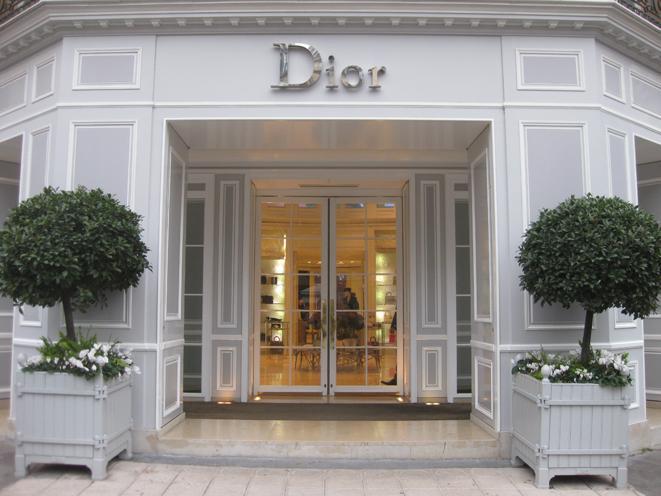
Source: Fashionfave.com

30, Avenue Montaigne. Home of Dior. Source: Fashionfave.com

It’s not often that a perfume’s inspiration parallels memories in your own life. Dior’s flagship headquarters at 30, Avenue Montaigne, and the famous “Dior Grey” were big parts of my childhood and teenage years. As a small child, I spent endless hours in the beautiful, grey-white mansion: I often sat on one of the large, grey, stuffed and studded, round banquettes in the vast, rectangular room on the second or third floor with its wall of tall French windows as I waited for my mother to try on clothes. I would sit and stare at the floor, looking for dropped pins in the light grey carpet as one of the elegant seamstresses would flit around my mother, making alterations. I became a little pet to a few of them who were always amused by my efforts at “helping,” and by my unsolicited opinions on the outfits in question. And Dior Grey — that special, elegant twist on dove grey that is the signature colour of the house — became a favorite of mine, to the point that I often wanted to have a room in that colour. And, eventually, I did.

Source: Dualshow.com

Source: Dualshow.com

The original room upstairs in a photo that must be from the '50s. Source: fashionnation1on1.wordpress.com

The original room upstairs in a photo that must be from the ’50s. Source: fashionnation1on1.wordpress.com

Later, the third or fourth time I lived in Paris, I was a teenager and our flat was two blocks away from the flagship store. Monday through Friday, I would wait for the school bus to take me to my high-school in St. Cloud, and the pick-up location was exactly catty-corner or on a diagonal line across from the store. I spent countless mornings, staring at that beautiful, elegant facade from afar and trying to see inside the windows. As an adult, Dior Grey remained one of my favorite colours. And, right now, my bedroom is done to approximate the interiors that I remembered from childhood: the walls are painted Dior Grey, the furniture is silver, mirrored or white, and the room is filled with silver and black touches.

Having been imprinted with Dior from childhood, much like one of Konrad Lorenz’s ducklings, it was virtually impossible not to have high expectations for a perfume that is meant to evoke both Dior’s flagship headquarters and its trademark colour. In fact, I knew that nothing could possibly live up to that weighted mental baggage, so I intentionally and explicitly tried to wipe them all from my mind when I tested Gris Montaigne.

Dior Gris Montaigne

It is brand new, just released, and the latest member of Dior‘s prestige La Collection Privée line of perfumes. (The line is sometimes called La Collection Couturier, but I go by the name used by Dior itself on its website.) The Privée line consists of thirteen perfumes that are exclusive to Dior boutiques (only one in the US, in Las Vegas) and to its website. (It would have been fourteen, but Gris Montaigne has come in to replace the glorious Mitzah which has essentially been discontinued — to justified howls of horror from perfumistas across the world.) Like the rest of its siblings, Gris Montaigne was intended to illustrate and celebrate key moments in the life of its founder, Christian Dior, and was created by François Demarchy, the artistic director and nose for Parfums Dior.

Dior describes Gris Montaigne in a way that brings back a flood of childhood memories:

And if grey were a perfume?

The olfactory signature of the Couture House’s legendary location, 30, Avenue Montaigne, has become a reality. The perfumer’s response to couture, this sophisticated chypre fragrance is a bold interpretation of the Dior Grey. The Couture Grey featured in the collections since 1947, the Grey Emotion of Christian Dior’s family home in Granville, Pearl Grey like the facade of the boutique on Avenue Montaigne.

Colour becomes a perfume: a burst of citrus, a floral heart of Turkish Rose and Jasmine Sambac from the Indian region of Tamil Nadu, followed by a woody note heightened with Indonesian Patchouli set against an ambery backdrop of moss.

The notes for the fragrance, according to Dior, are simple:

Essence of Calabrian Bergamot, Turkish Damask rose, Indian Jasmine Sambac, Indonesian Patchouli, and Absolute of Macedonian moss.

Source: g-1.com

Source: g-1.com

Gris Montaigne opens on my skin with a light citrus note, followed immediately thereafter with florals headed by rose. The bouquet sits atop a patchouli base that is, initially at least, beautifully flecked by soft amber, creamy sandalwood and the lightest sprinkling of powder. The rose is infused with quiet inflections of bergamot, while the patchouli adds a subtle warm and fleshiness to the very delicate note. There are also subtle touches of oakmoss in the base; it doesn’t feel like pungent, dry, arid, almost mineralized oakmoss, but it doesn’t feel completely bright green and fresh, either. The prettiest part of the perfume in those early minutes is the sandalwood. It’s nothing like real Mysore sandalwood with its distinctive spiciness, richness and depth, but the synthetic version used here has a lovely softness, creaminess and smoothness.

A room in the re-vamped Montaigne store. Source: ru.fashionmag.com

A room in the revamped Montaigne store. Source: ru.fashionmag.com

In its very earliest moments, Gris Montaigne is lovely. The light sprinkles of powder — combined with the very subtle oakmoss — make the perfume feel both classique in inspiration and a modern, neo-chypre in type. It’s a delicate, feminine, refined scent and, call me crazy, but it actually does evoke both the colour grey and the Dior rooms at Avenue Montaigne. For all that I tried to ignore the name and its associations, for all that I went into testing this perfume with the express plan of considering this an unnamed scent (“Just consider it Perfume ‘ABC’ from House XYZ,”), somehow, I can smell those rooms. The reason is the clean, floral, feminine, restrained, gauzy aroma. It’s almost a little sterile in its grey softness. But that word seems unfair because of all the negative connotations, so let’s say instead that Gris Montaigne has a touch of the restrained, aloof, professional, endlessly feminine, floral and slightly powdered feel of those coolly muted, elegant rooms.

purple smokeTen minutes later, the perfume starts to change. Cedar starts to rise to the surface, adding a quiet dryness to the floral notes. Unfortunately, the patchouli also starts to become more dominant, turning Gris Montaigne into a distinctly fruity-patchouli rose atop that base of dry, peppered cedar. Purple patchouli is not only my least favorite kind, but it’s also a common note in a lot of commercial, inexpensive, fruity-floral fragrances today — and big reason why I can’t stand many of them. There is something about its character in Gris Montaigne which reminds me of Chanel‘s Coco Noir, except the Dior is drier thanks to that cedar note and isn’t so clobbered by the fruity-patchouli (which I thought verged on the bullying in Coco Noir). Despite that, from the 30-minute mark to the 90-minute one, the purple patchouli and the dry cedar battle for the rosy heart of Gris Montaigne. The trio always rests above that light oakmoss base flecked with the smallest touches of amber and sandalwood. I wish the sandalwood were as noticeable as it had been initially but, alas, there isn’t much of it.

Inside the re-designed Dior headquarters. Source: Glamshops.ro

Inside the re-designed Dior headquarters. Source: Glamshops.ro

Gris Montaigne, like the rest of its siblings in the elegant Privée Line, is a beautifully blended perfume. Like the newly redesigned, revamped Paris headquarters, it’s light, airy and filled with bright touches from that fruity-patchouli whose almost syrupy sweetness seems to dominate for a good portion of the second hour. God, there is so much of it! At other times, however, especially right after the end of the first hour, it feels as though cedar has almost taken over. Increasingly, Gris Montaigne has an abstract element to it as well. One sometimes has the impression that it’s nothing more than an ordinary, common, generalized, nebulous, fruity-floral patchouli perfume. Even when jasmine joins the party, around the 90 minute mark, it doesn’t do much to transform the scent or to give it greater nuance.

And Gris Montaigne goes further downhill from there becoming softer and hazier with every passing hour, with only the purple note really standing out as something distinctive. (Oh so much purple patchouli!) By the start of the fifth hour, Gris Montaigne is a sheer, bland, floral-patchouli scent infused with some spicy dryness atop some light amber. There is a small modicum of relief in the eighth hour when the sandalwood re-appears. It actually works well with the patchouli, creating a spicier, richer version of the note than what flickered at the start. But the sandalwood is just a small touch, and it really doesn’t change what is the sole note left in Gris Montaigne at this point: fruity patchouli. The rose is a whisper, there is no jasmine, the powder vanished after the first 10 minutes, and the cedar threw in the towel a while back. In its final moments, Gris Montaigne is a simple note of abstract, sheer, general sweetness, and nothing more.

All in all, Gris Montaigne lasted just under 10.75 hours on my perfume-consuming skin. It became closer to the skin about 90 minutes in and had minimal projection, but the forcefulness of that patchouli made it definitely noticeable if you brought your arm anywhere near to your nose. Gris Montaigne didn’t become a skin scent until the fifth hour and, like all the Privée perfumes that I’ve tried, it has surprisingly enormous longevity given the moderate-to-low sillage.

I hate to say it, but Gris Montaigne feels extremely generic for most of its lifespan. It’s a refined take on a thousand similar fruity-floral scents, but not much more than that. You may be wondering how much of my assessment is due to my personal baggage involving that name and the perfume’s inspiration. It’s a fair question and the answer is: my assessment is absolutely tainted by it. Because, without those strong personal associations, I would rip this perfume to shreds, especially over the patchouli. The sole reason I’ve being half as kind as I am is because of the beautiful opening minutes and because of my nostalgia. The bottom line is that, in my opinion, Gris Montaigne is far from being a worthy successor to Mitzah, even though the planning and development of Gris Montaigne meant it had to be in the works long, long before the decision to discontinue the other fragrance.

In placing Gris Montaigne in the context of its siblings, I realised two things. First, Gris Montaigne seems to reflect a desire to take advantage of the modern, mass-market hunger for and profitability of fruity-floral scents. Second, it also symbolizes a shift in the colour spectrum of Dior’s Privée Line away from the darker, richer, orange-brown labdanum glory of Mitzah, or the amber-coloured hues of similarly spicy, deep fragrances like Ambre Nuit and Leather Oud. With the discontinuation of Mitzah and Vetiver, the arrival of Gris Montaigne seems to turn the hues of Dior’s Privée Line into something much more floral, pastel, and light in colour. It may be an unfair assessment, and it’s probably wholly off. Yet, I can’t help feel that Gris Montaigne marks a move towards something more pale, more bland, and more commercially… er… fruitful. (Pun intended.) Bottom line, Gris Montaigne is pretty, but in a way that makes it like any number of commercial scents out there, from Chanel’s Coco Noir to…. well, take your pick.

All my criticisms notwithstanding, I do think there are a lot of people who will like Gris Montaigne, especially if they keep their expectations low. For one thing, it is a very easy fragrance to wear, the sort of thing one could just spray on and go. Everyone needs a versatile perfume that is uncomplicated and could fit a variety of situations, from the office to a child’s playdate to a dinner date. Gris Montaigne would absolutely work for that. It is also a scent whose very feminine nature and restrained sillage will make it practical for those who prefer more unobtrusive scents while still keeping an elegant and refined edge. I think it will generally be a little too feminine for the average guy — but I also don’t believe in gender lines in perfumery, so if you can rock it, wonderful!

I did my best to be fair to this scent, but if you think I failed in that endeavour, I wouldn’t blame you. Sometimes, it’s hard to let go of the past, and it makes the nature of a review even more subjective. But I’m convinced that — if I were given Gris Montaigne to smell blindly — I still wouldn’t like it and my bottom line would still be the same: it’s nothing special.

DETAILS:
Cost & Availability: Gris Montaigne is an Eau de Parfum that comes in 3 different sizes: a “small” size at 4.25 fl oz/125 ml which costs $155, and a very large 8.5 fl oz/250 ml bottle which costs $230. (There is also a simply ginormous, giant
15.2 oz/450 ml bottle that is available, but who could possibly go through that?) The perfume is available exclusively at Dior boutiques, Dior online, and in a handful of upscale department stores that have a large Dior section. In the U.S.: you can find the entire Privée Line at New York’s Bergdorf Goodman, and a good portion are also at San Francisco’s Neiman Marcus. Outside of those two cities, your best bet is to call your local Neiman Marcus to see if they carry any of the Privée line. In terms of the Dior boutique in Las Vegas, Gris Montaigne arrived this week (8/12/13), and you can call the store [(702) 369-6072] to buy it directly. I would try to call this Dior number — (702) 734-1102 — and ask for Karina Lake, the Dior Beauty Stylist at the Las Vegas store. She is an amazingly sweet lady who will give you a free 5 ml mini bottle of the Dior perfume of your choice, along with 3-4 small 1 ml dab vial sample bottles. Even better, you will get free shipping and pay no tax! Tell her Kafka sent you. (I get nothing from the recommendation, by the way.)
Outside of the US: I believe the Dior Privée line is carried at London’s Selfridges and at Paris’ Galleries Lafayette. It is obviously available at any concrete, brick-and-mortar Dior store in your country as well. You can use the Points of Sale page on the Dior website to find a location for a Dior boutique near you. You can also navigate the Dior website’s International section to buy the perfume online. The problem is that the site is not very straight-forward. If you go to this page, look at the very far right to the bottom where it will say, in black, “International Version” and click on that. You should see options for Europe, Asia-Oceana, and South America. Within Europe, there are different sub-sites divided by country.
Samples: You can order samples of Gris Montaigne from Surrender to Chance, where prices start at $3 for a 1 ml vial. They also sell a 13-piece sampler set of the Privée Line (minus the new Gris Montaigne) for $35.99. I obtained my sample from The Perfumed Court which is not my favorite place to shop and which is also generally more expensive than Surrender to Chance. They sell vials of Gris Montaigne starting at $4.99 for 1 ml.

Perfume Reviews – Tom Ford Private Blends Black Violet & Jasmin Rouge

The famous French author, Stendhal, once said “Beauty is nothing other than the promise of happiness.” I think that quote applies to perfume, too. Stendhal’s quote and his brilliant classic, Le Rouge et Le Noir (“The Red and The Black”) came to mind when I decided to review Tom Ford‘s Red and Black perfumes in his Private Blend collection: Jasmin Rouge & Black Violet. Good perfume can lead to happiness but, alas, only one of Tom Ford’s fragrances holds that promise.

BLACK VIOLET:

TF Black VioletPrivate Blend Black Violet was released in 2007, the creation of perfumer, Clement Gavarry, and is classified on Fragrantica as Chypre Floral. Personally, I would call it more an Aromatic Woody scent, for reasons that will soon become apparent. Tom Ford’s press release for the perfume, as quoted in part by Nordstrom, describes Black Violet and its notes as follows:

Crisp citrus surrounds a modern pulpy fruit accord fused with black violets. Woody accents fold into oak moss, adding the universally comforting sensation of warmth.

Notes: lemon, lime, mandarin, orchid, violet, cedarwood, torchwood, vetiver, oakmoss.

Black Violet‘s opening phase is going to be a shock to anyone who expects the name to actually live up to its promise, because there is nary a violet in sight. Not one. Even more surprising, Black Violet starts as the most classic of men’s colognes. There is tart lemon juice, lime, and bergamot that is exactly like a man’s cologne or aftershave in its thinness and lightness.

Source: hdiphonewallpapers.us

Source: hdiphonewallpapers.us

Lurking below is vetiver and, even further below, is the faintest touch of some woody note. At first, it’s not spicy, peppered, or smoky, but just something vague. Ten minutes later, however, it starts to take on form and some weight, becoming a quiet dryness. If you’re wondering what the hell this has to do with violets, you’re not alone. There’s certainly none at the start. Same story with the mandarin notes which may have provided some beneficial juiciness or sweetness. There is also no oakmoss (the foundational element for a true “chypre”) that I can smell. While that is not surprising in this day and age of IFRA/EU restrictions on perfume ingredients (especially oakmoss), I don’t smell even a synthetic version in any concrete, substantial, distinctive form. If it’s there, it’s not detectable to my nose.

Vetiver roots, the primary source of the essential oil. Photo:  Herbariasoap.com

Vetiver roots, the primary source of the essential oil. Photo: Herbariasoap.com

Thirty minutes into its development, Black Violet slowly becomes a dry citrus scent with vetiver and flickers of a lightly smoked wood accord. The lime, lemon and bergamot no longer feel individually distinct or separate; they’ve just morphed into an overall “citrus” note. The entire perfume feels incredibly thin in weight and low in sillage. I have the hardest time accepting that this is an “eau de parfum” — the second strongest concentration of fragrance after pure parfum — instead of eau de cologne, the very lightest concentration. In fact, I’ve smelled a number of men’s eau colognes that are significantly more potent than Black Violet. 

Source: Lovetextures.com

Source: Lovetextures.com

Then, exactly at the one hour mark, Black Violet suddenly changes completely. The citrus men’s cologne aspect retreats and, in its place, is a dewy, earthy floral in the most muted, generalized, amorphous of ways. The floral tone is delicate, damp and green, never feeling quite like violets, but more like some random, delicate, purple flower mixed with what feels like a dash of lilac or hyacinth. It’s a ghostly note that pops up, only to dart away, before eventually returning to start the whole tease all over again. The lingering traces of citrus are similarly subtle, hiding in the background, too. More easily apparent is a cool, earthy note that is just like the dark, damp garden soil first thing in the morning. It’s not rooty, dirty, or dank, but lightly floral.

For the span of the second hour, Black Violet remains as a translucent mix of earthiness, dewy florals, and microscopic flickers of citrus — all muted, indistinct, and so close to the skin that it’s extremely hard to detect. It becomes softer and softer with every moment, turning floral muskiness atop some creamy, woody element tinged with a tiny drop of amber, before finally ending as nothing more than musky woodiness. All in all, Black Violet lasted 3 hours and 10 minutes on my skin with at least 90 minutes of that time being essentially so translucent that I thought it had vanished completely. When I say this perfume is thin in weight, hazy in feel, and close to the skin, I’m really not kidding.

It’s not just me and my perfume-consuming skin, either. The Non-Blonde had an extremely similar experience to mine, from the men’s cologne aspect right down to saying “I can barely smell it after three hours.” She’s much kinder and more generous to the perfume than I am — calling it an “abstract ‘smells good’ veil” at the end — but then, I think she’s probably a nicer, more diplomatic person as a whole. My problem with the scent is this: 1) that it is so vague in form and definition that it’s practically nebulous after the men’s cologne opening; 2) I was disappointed by the generic woodiness which followed; 3) the damp, abstract floral stage was pretty, but too translucent and brief to justify the price of the perfume; and 4) given all these issues, along with the microscopic sillage and terrible longevity, it feels completely outrageous to ask $205 for the smallest bottle of this supposed “eau de parfum.” (Yes, I tend to get peevish about perfume prices when the fragrance is so generically vague, fleeting, and sheer.) Even if you purchased Black Violet off eBay for a lower price than retail, I simply don’t think it’s all that special.

JASMIN ROUGE:

Tom Ford Jasmine RougeA significantly better perfume, in my opinion, is Tom Ford‘s Jasmin Rouge which was released in 2011 as part of his Private Blend collection. (As a side note, Fragrantica lists it as being part of Tom Ford’s lower-level, cheaper Signature Collection, but that is not how Tom Ford categorizes it on his website.) Jasmin Rouge was created by Rodrigo Flores-Roux, and was the winner of the 2012 Fragrance Foundation FiFi Award for “Best New Fragrance for Women” in the “Speciality Luxe” category. It’s a sophisticated, refined scent that is beautiful in its opening, smells very expensive, and is definitely worth a sniff, even if its full development isn’t perfect enough to perhaps warrant a full bottle. 

Tom Ford describes Jasmin Rouge as follows:

Voluptuous.  Sensuous. Audacious. Tom Ford Jasmin Rouge is a voluptuous, saturated, spiced floral. An unexpected blend of precious sambac jasmine sepals absolute, an ingredient never used before in perfumery with dusky clary sage and rich spices, it unveils a new facet of jasmine’s erotic decadence. Jasmin Rouge is as audacious as lacquered red lips. Its deep red bottle evokes lush and hedonistic glamour.

It’s a bit of hyperbole but, as one who love jasmine fragrances, I think it’s generally quite accurate, at least for Jasmin Rouge’s opening stage. There is definitely a voluptuous sensuality to the perfume; and its concentrated, saturated nature takes jasmine to both hedonist levels and very glamourous ones. 

According to Fragrantica, the notes in Jasmin Rouge include:

Top notes: bergamot, mandarin, cinnamon, ginger, cardamom, black and white pepper.

Heart: Sambac jasmine, broom, neroli, ylang-ylang, clary sage.

Base: Mexican vanilla, labdanum, leather, wood and amber notes.

Source: Hdwallpaperes.com

Source: Hdwallpaperes.com

Despite this plethora of notes, Jasmin Rouge is a soliflore: a fragrance centered around one main note. Yes, there are varying nuances from start to finish, but it’s primarily a super-concentrated jasmine perfume in nature, so those who can’t stand the note or find that jasmine turns plastic-y on their skin should probably stop reading here.

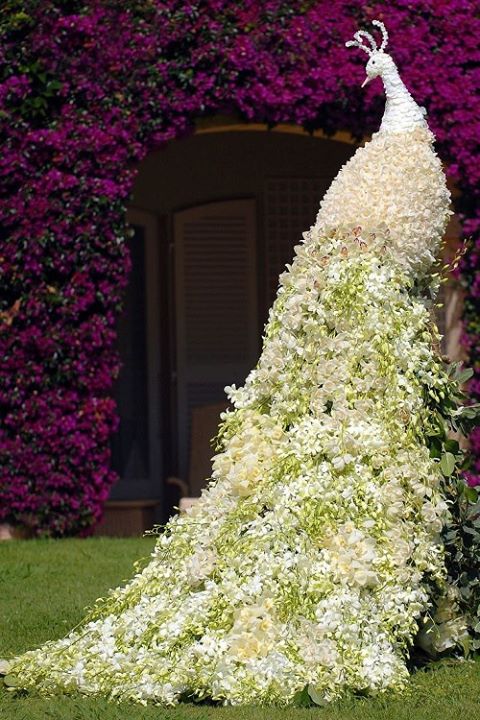
Jasmine peacock created from jasmine flowers. Source: Hdwallpaperes.com

Jasmine peacock created from jasmine flowers. Source: Hdwallpaperes.com

Jasmin Rouge opens on my skin with seemingly every possible variation of the flower: green and fresh; spicy; indolic, lush and heady; fruity; and lightly musky. The very first minutes are filled with a surprising purple note that is exactly like very dark, Concord grapes. The note soon disappears, replaced by flickers of citrus and mandarin dancing about in the background. The heady, rich, velvety jasmine is the one, true star, however, evoking a summer’s evening when the night-blooming jasmine cast out their fragrant tendrils across the sky like sirens calling to Odysseus. It’s sweet but also airy, potently strongly, and spectacularly stunning.

Jasmin Rouge calls to mind what would be my favorite jasmine soliflore, if it actually lasted on my skin: Serge LutensÀ La Nuit. It is a perfume that many consider to be the gold standard for jasmine soliflores, and it’s truly an exquisite fragrance. Unfortunately, it has the lifespan of a squashed gnat on my skin. (Seriously. 30 minutes tops!) Like the Lutens, Jasmin Rouge is a super-charged, rich, heady jasmine fragrance. Unlike the Lutens, the opening of the Tom Ford perfume has beautiful touches of orange blossom, mandarin and slightly bitter, dry neroli underlying its star. I also detect something that feels like ylang-ylang, though it’s not listed in the notes. And, unlike the Lutens, Jasmin Rouge actually lasts on the skin.

Source: 4coolpics.com

Source: 4coolpics.com

In that lovely opening stage, the fruity-floral bouquet sits upon a base that is, at first, creamily sweet and daintily touched by a milky, light vanilla. Slowly, slowly, the base starts to turn drier, woodier, and spicier; it minimizes the fruited elements and helps prevent any excessive sweetness. So, too, does the slightly green feel of the perfume. It’s almost as if leaves have been brought in to keep the jasmine from turning ripe, over-blown, cloying, or with that feeling of decayed excess that truly indolic flowers (like jasmine, tuberose or gardenia) can sometimes project. Don’t get me wrong, Jasmin Rouge is indolic and heavy — almost boozy in its initial extremeness — but it’s also simultaneously green, fresh and light. It’s a marvelous tight-rope act, and I could not stop sniffing my arm.

Diane Millsap painting, "White Floral I" via Ebsqart.com. (Link to retail page embedded within.)

Diane Millsap painting, “White Floral I” via Ebsqart.com. (Link to retail page embedded within.)

Two hours into the perfume’s development, Jasmin Rouge starts to lose some of its flair. It’s now woodier, drier, lighter, and sits much closer to the skin. There is still a spicy green nuance to the flower, but much of the perfume’s depth (and most of its powerful projection) has dropped out. The citrus, mandarin, orange blossom, and neroli touches seem more nebulous; the perfume’s body seems less lushly opulent and juicy; and there is a slight (just slight) tinge of smokiness at the very edges. I’m not quite as obsessed with the scent now, though I suspect those who want a dry, less purely floral element to their fragrance may be happier.

Catherine Jeltes Painting, "Modern Brown Abstract Painting WinterScape." Etsy Store, GalleryZooArt, linked within. (Click on photo.)

Catherine Jeltes Painting, “Modern Brown Abstract Painting WinterScape.” Etsy Store, GalleryZooArt, linked within. (Click on photo.)

Jasmin Rouge’s drydown begins midway around the fifth hour, when the perfume quietly emits woody notes with touches of smoke, pepper and musk. The jasmine is no longer the dominant note; it feels just as green and spicy as before, but it’s sheer and muted. Jasmin Rouge is now more of a bland, abstract woody fragrance where the light, beige notes just happen to be infused with jasmine, rather than the other way around. In its dying moments, just over 8.25 hours in, Jasmin Rouge is simply an amorphous, vaguely ambered, woody scent. All in all, it has good longevity, especially for a soliflore. It has extremely intense sillage at first, but the projection starts to drop after the first hour and the perfume becomes a skin scent by the start of the third hour.

I liked Jasmin Noir a lot more than most of the critics and bloggers out there. Their main issue is with the bland final stage, and I agree with them to an extent. However, I don’t dismiss the perfume as readily as they do. Bois de Jasmin‘s summation pretty much encapsulates the overall perspective of the blogosphere: “Jasmin Rouge is simply an up-market version of a familiar crisp fruity floral. Though it is lovely, it does not offer any revelations.” I think the perfume is better than that. It smells rich, doesn’t smell cheap or synthetic, screams luxury, is both green and lush, and oozes sex appeal and sensuality. I haven’t found a ton of jasmine soliflores to do that — with the exception of the stunning À La Nuit (with its zero longevity on my skin). And I can’t get over how beautiful the green spiciness is! I do wish Jasmin Rouge had retained more of its juicy, opulent, heady beginning for longer (since I prefer my pure florals to remain as such), and I would have also preferred less woods, but all that is a matter of personal taste.

The real question is whether Jasmin Rouge is special enough for the cost. I can only say that I think it’s worth the cost more than most of the other pure florals I’ve tried from Tom Ford. (For example, I thought the Jardin Noir Collection was terribly over-priced for the scents in question. I couldn’t stand Ombre de Hyacinth, and I thought Café Rose was both cloying and exhausting.) In short, it’s all relative. I would absolutely wear Jasmin Rouge if a bottle fell into my lap, but would I actually buy it? I don’t know, especially as I have issues with Tom Ford’s retail prices. If it means anything, I definitely plan on looking on eBay, since Private Blend fragrances can be found there for much more reasonable rates.

The bottom line for Jasmin Rouge is that you have to really love jasmine to wear it. Those who don’t may find the perfume to be the equivalent of death by white flowers, especially if their skin chemistry tends to turn jasmine plastic-y or sour. Those who love the note will undoubtedly adore Jasmin Rouge’s opening, and the unusual spicy greenness underlying such a lush, concentrated, heady bouquet. I’m less certain as to how they’d feel about the drydown, however, or the perfume’s linearity — it all depends on one’s taste. But Jasmin Rouge is absolutely worth a test sniff, so skip the Black and go for the Red. If perfume is nothing other than the promise of happiness (to paraphrase Stendhal), then Jasmin Rouge’s opulently heady, spicy florals and very feminine, sensual, sophisticated, refined manner might possibly be your ticket there.

DETAILS:
BLACK VIOLET – Cost & Availability: Private Blend Black Violet is an eau de parfum and retails for: $205 for a 50 ml/1.7 oz bottle, $280 for a 100 ml/3.4 oz bottle or $495 for a 200 ml/8.45 oz bottle. It is listed on the Tom Ford website. (However, it doesn’t seem clear how you can purchase it from there as I don’t see a shopping cart capability for the perfume.) In the U.S.: You can also find Black Violet at fine department stores such as Nordstrom, BloomingdalesNeiman MarcusSaks Fifth Avenue, and Bergdorf Goodman. Outside the U.S.: In Canada, I believe Tom Ford is carried at Holt Renfrew, but I don’t see Black Violet listed as one of their 2 Tom Ford fragrances on the online website. In the UK, you can find it at Harrods or House of Fraser. Both stores sell the small 1.7 oz/50 ml size for £135.00, or £300.00 for the super-large 250 ml bottle. The Selfridges website is currently out of stock of the perfume, but you may want to check later. For the rest of Europe, Premiere Avenue is one of the few online retailers that I’ve seen carry Tom Ford fragrances, and it sells Black Violet for €180, €260 or €420, depending on the size.  It is a French site that ships worldwide. I know that Tom Ford Beauty is carried in-store at a number of other retailers throughout Europe, from Denmark and Belgium to the Russian Federation. You can use the store locator linked below on the website to find a retailer near you. In Australia, I saw Black Violet listed on a number of retail sites via the GetPrice website, with prices starting at AUD$220. It is also listed on the Feeling Sexy Australia website for AUD$249.95, but I have no clue if that’s a reputable site or not. The Tom Ford line is supposedly carried at David Jones stores, but Black Violet is not one of the handful of Tom Ford fragrances carried on the its website. Elsewhere, Tom Ford fragrances are carried in numerous different countries; hopefully, you can find one near you using the store locator on the Tom Ford website. Samples: You can probably get free samples of Black Violet from any of the department stores listed above, in-store, but you can also order a sample from Surrender to Chance, starting at $3 for a 1/2 ml vial.
JASMIN ROUGE – Cost & Availability: Private Blend Jasmin Rouge is an eau de parfum and retails for: $205, £135.00 or €180 for a 50 ml/1.7 oz bottle; $280, €260, £300.00 for a 100 ml/3.4 oz bottle; or $495 for a 200 ml/8.45 oz bottle. It is listed on the Tom Ford website, but it doesn’t look as though you can buy it directly off of there. In the U.S.: Jasmin Rouge is carried at department stores such as NordstromBloomingdalesNeiman MarcusSaks Fifth Avenue, and Bergdorf GoodmanOutside the U.S.: In the UK, you can find Jasmin Rouge at Selfridges or Harrods, both of which sell all three sizes of the bottles: the small 1.7 oz/50 ml size for £135.00, the 100 ml bottle for £195, or £300.00 for the super-large 250 ml bottle. For the rest of Europe, Premiere Avenue is the first online website that I’ve found to carry the full Tom Ford line, including all three sizes of Jasmin Rouge. Here is the link for the smallest cheapest size, the 1.7 oz/50 ml bottle which retails for €180. The company ships worldwide, I believe, but you need to email them to ask for the full details. (I did find an Italian vendor, Vittoria Profumi, but it’s selling the same bottle for way over retail at €265.) In the UAE and Dubai, I found Jasmin Rouge at Souq.com. Australian vendors of Jasmin Rouge proved to be hard to track down, especially as Fresh was out of stock of the perfume (which it sells for AUD$259), but I’m sure there are others out there. For all other countries, you can use the Tom Ford’s Store Locator guide linked up above in the Black Violet section. Samples: You can probably get free samples of Jasmin Rouge from any of the department stores listed above, in-store, but you can also order a sample from Surrender to Chance, starting at $3 for a 1/2 ml vial.

Perfume Review: Habanita by Molinard (Eau de Toilette)

Source: Sensibility.com

Source: Sensibility.com

By day, she was a delicate ingenué, tending to her charges in her job as a nanny in a Bohemian arrondissement of 1920s Paris. She would wear long, old-fashioned, frilly, white dresses up to her neck and dainty ankles, and she dusted her body in floral and raspberry-scented powder.

Source: Insfashion.com

Source: Insfashion.com

By night, she haunted the smoky nightclubs of Montmartre and La Pigalle, luring men with the subtle tease of a dominatrix’s black leather whip that she eccentrically carried as she danced away the night in a flapper dress as white as silvered snow. She still smelled of raspberry powder, but now, she was also imbued with the smoke from the long cigarettes she held in a leather holder between her vermillion-red lips. Men did not fall for that pale face of baby innocence and floral sweetness, but for the contrast between her angelic facade and the biting sharpness that issued from her lips. She was a powerhouse of forcefulness and paradoxical contradictions that awed even the wild Zelda Fitzgerald. Her name was Habanita.

Habanita is perhaps the most famous, influential, historical perfume that is never sold in stores. It is a legend amongst perfumistas — and not only for its long history, or for how it is a tobacco perfume that is made without a single drop of actual tobacco. Habanita comes from the Grasse perfume house of Molinard, first established in 1849 and still run as an entirely family-owned business to this day. In 1921, Molinard released Habanita as perfumed sachets to enable those newly emancipated, modern women who smoked to do so with a perfumed cover to hide their habit. As the perfume blog, Now Smell This, succinctly explains, Habanita was originally introduced:

not as a personal fragrance but as a product to scent cigarettes. It was available in scented sachets to slide into a pack of cigarettes, or in liquid form: “A glass rod dipped in this fragrance and drawn along a lighted cigarette will perfume the smoke with a delicious, lasting aroma” (quoted in The Book of Perfume, page 76).

Habanita EDT bottle and box.

Habanita EDT bottle and box.

The perfume version soon followed in 1924, housed in a beautiful, black Lalique bottle decorated with cavorting nymphs. As the Molinard website proudly announces, it became known as “the most tenacious perfume in the world.” I’m unclear if that description applies to the pure parfum, solid parfum, the eau de parfum or to the eau de toilette, but I’m pretty sure you can describe almost all Habanita concentrations, now and in the past, as pretty damn tenacious! In the 1980s, Molinard reformulated Habanita and this is the version that I’m writing about, in eau de toilette concentration. Finally, in 2012, Molinard issued a new (and, again, reformulated) Eau de Parfum concentration as well.

2012 was also the year that I bought a big bottle of Habanita Eau de Toilette, blindly, off eBay, and due solely to the force of the blogosphere adoration for the scent. My post-lady handed me a small leaking package, commenting, “Boy! That’s strong!” And it was. There wasn’t a huge quantity that had seeped out, but that moderate amount, even partially dried, left a mindbogglingly enormous trail of scent in my wake as I made the walk back to my house from the postboxes. Later, I sprayed some on me and was almost blown out of the water by its strength. I enjoyed every bit of it, back then, overcome by its power, its novelty, and its unusual nature.

Unfortunately, a few more wears (and a very bad experience later in the fall with the scent on clothing) quickly led to a radical change in thought. The simple truth is that I don’t like Habanita very much and, if I’m really, truly honest with myself, I know deep down that I never did, and that my first initial appreciation stemmed purely out of wishful thinking. (Plus, a huge desire to justify a blind buy.) I wanted to like it; I knew I should like it, especially given the history (and my total faiblesse or weakness when it comes to anything historical), but mostly, I wanted to like it. So, I convinced myself that I did. Now that I’m a perfume blogger, I put great thought and analysis into each review, I rip things apart in a way I never did, don’t engage in risky blind buys, and I’m candid with myself from the start. If that post-box trip were to happen now, I would admit right away that Habanita is most definitely not for me, though I’d still respect and admire it for its history. And, dammit, I still want to like it! I almost feel like a traitor to history.

Habanita is classified on Fragrantica as an “Oriental” perfume, but I personally consider it more of a chypre-leather. The notes — as compiled from both Now Smell This and Fragrantica — seem to be:

bergamot, raspberry, peach, orange blossom, galbanum, oakmoss, jasmine, rose, ylang ylang, lilac, orris root, heliotrope, patchouli, amber, leather, musk, vetiver, cedar, sandalwood, benzoin and vanilla.

Habanita is a complicated scent on some levels and a simple one on others. If you were solely to smell the bottle, you’d detect makeup powder with florals, citrus and chypre notes. Even when on the skin, unless you really looked at the notes while smelling the perfume, you may initially conclude that you’re dealing with an avalanche of makeup powder alongside powerful (but completely amorphous, abstract) floral notes backed by the feel of scented tobacco paper and tinges of leather.

Source: Amazon.fr

Source: Amazon.fr

The same thing happens when you put Habanita on the skin, though greater nuances are immediately noticeable, because it’s an incredibly elusive scent in terms of its layers. There are citrusy notes atop leather that has hints of something vaguely verging on animalic. The leather feels almost raw, at times, and there feels like whiffs of castoreum underneath it. The notes are sharp and, on some tests, can seem either medicinal or quite sour on the skin as well. I suspect it’s due to the galbanum which is never noticeable in an individual, distinct, separate way, but whose effects can be seen most indirectly in that leather. As a side note, galbanum’s sharpness was often used in leather fragrances — notably in Robert Piguet‘s Bandit — so I wouldn’t be surprised if that was the cause for the raw, sometimes sour nuance to the leather here.
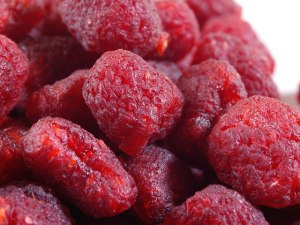
Dried raspberries via Nuts.com

Dried raspberries via Nuts.com

Habanita also contains a powerful whiff of something that is extremely hard to pinpoint if you don’t stare at the ingredient list, a note that is rarely used in high-end, niche, or classic perfumery: raspberry. Each and every time I put on Habanita, I struggle to place that one, odd, unusual, seemingly “off” element before I remember, “Oh, raspberry. Right.” I don’t know about you, but I actually can’t recall ever smelling raspberry in a significant way in perfumery. Making it all the more complicated for me is the fact that the raspberry in Habanita is not like the fresh, sweet, fruit of summer days. It feels simultaneously: desiccated, syrupy, sour, leathered, and highly powdered. Honestly, I’ve never smelled anything quite like it and, on my skin, it is always a heavy part of Habanita’s opening hours.
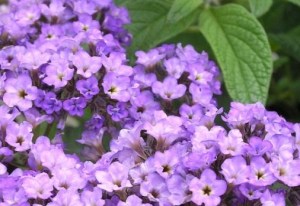
Heliotrope.

Heliotrope.

Nothing, however, can possibly detract from the powder note which is created by the iris, orris root, heliotrope and vanilla (perhaps, also benzoin) notes. It is not baby powder or talcum powder simply because this one is scented — and scented with a variety of things to boot. Thanks to the heliotrope, it has a subtext of almonds mixed with Play-Doh. The orris root — an ingredient long used in makeup and lipsticks as a fixative — gives it a makeup vibe, while the florals imbue it with rose, lilacs, and a whiff of jasmine. The vanilla adds its voice to the powder, too, perhaps solidifying some of the makeup associations.

There is something much more important underlying the powdered note, however, something that makes many people classify Habanita as a tobacco scent. The interplay of the powder elements with the other notes in Habanita create the overwhelming feel of powdered tobacco paper. Growing up in France, there were a number of cigarette boxes whose silver paper lining I recall being scented with a powdered note. I’ve never seen it in America, but I have seen similar sorts of boxes in India, the 1980s Soviet Union, Italy, and other parts of Europe. It’s a hard scent to describe if you’ve never encountered it because it doesn’t have the aroma of cigarette, nor stale ashtrays, but also not of paper or pure powder. It simply smells like talcum-powder tobacco paper.

I suspect the reason lies in the vetiver. It’s not like the sort of vetiver that most of us are used to; it doesn’t smell anything like the note in Chanel‘s Sycomore, for example, or Guerlain‘s Vetiver. It’s neither fresh and green, nor rooty, earthy, or woody. And, yet, when combined with the other elements, it creates “tobacco” in a powdered, papery form. Luca Turin categorizes Habanita as a “vetiver vanilla,” while CaFleureBon simply writes: “[a]lthough the perfume Molinard Habanita was originally produced to scent women’s cigarettes, it contained no tobacco and incorporated rose, vetiver, vanilla, and incense notes.” Whatever the exact alchemical reason for the note, “tobacco paper” is a profound part of Habanita’s character for much of the perfume’s development.

Habanita’s opening, as I’ve described it, can vary a little in its nuances. Sometimes, in the first minutes, the extremely sharp, almost pungently bracing, opening note of citrus-rose-leather softens a little, bringing out more of the powder. At other times, the note turns extremely sour on the skin, probably due to the arrival of copious amounts of raspberry which always turns into syrupy, raspberry leather dosed by talcum powder. Sometimes, the vanilla is much more immediately noticeable, while occasionally, the leather with its castoreum-like undertone doesn’t hang back quite as much. Every now and then, I get a fleeting flicker of lilacs in the florals tones, but generally, it is a rose note which rises to the surface.

Almost invariably, whatever the nuances, I get a headache. There are synthetics in the reformulated Habanita EDT, and it gives me that telltale burning sensation high up in the bridge of my nose. I’m not the only one who thinks the reformulated version is quite synthetic. The blogger, Brian, from “I Smell Therefore I” am wrote in a comment to his review of Habanita: “I think current Habanita is probably so synthetic that the pyramid is pure fantasy.” I fear that may be true. I do know that I’m not the only one who got a burning sensation from Habanita; I had a friend try it a while back, and they had a similar reaction.

Source: Allposters.com

Source: Allposters.com

Regardless, as Habanita opens up and develops, it turns into a scent that is primarily raspberry-vanillic powder with amorphous florals, Play-Doh undertones, and a whisper of raw, black leather in the background. It’s seriously extreme, a turbo-charged powder that feels like something from the vivid imagination of Willy Wonka.

Eventually, about five hours in, Habanita turns into something much more leathered in feel. It’s not like a cold, stony leather, exactly, but it’s definitely not like a richly buttered, oiled, soft, creamy leather. It feels like a rubbery, black leather jacket, imbued by a layer of sharp smoke. There is no incense listed on Habanita’s notes, but there certainly should be. At the same time, both the leather and the smoke are backed by the scented powder, fleeting flickers of rose, and a lingering sharpness that feels more dark green than ever before. Undoubtedly, it’s the galbanum which has risen to the surface alongside the leather. At times, wearing Habanita, I’ve also detected something that feels very much like the powerful black, smoky tea, Lapsang Souchong; only here, it’s imbued with some sharp, green, citrus elements. It’s all due to that endless black smokiness underlying Habanita. The whole thing evokes the image of a 1920s smoky club but, also, of that same 1920s flapper draped in a leather jacket atop a large Harley-Davidson, smoking as she flexes her whip. Whatever it is, it involves some sort of femme fatale domination and cigarettes. It’s… different.

Lara Stone, the dutch model, photographed by Mert & Marcus for Interview Magazine.

Lara Stone, the Dutch model, photographed by Mert & Marcus for Interview Magazine.

In its final hours, Habanita turns into a fruited-powder scent with rubbery leather. It usually lasts about 8.5 to 9 hours on my perfume-consuming skin, almost all of that time pulsating away with high-intensity projection. On someone with normal skin, I wouldn’t be surprised if two good sprays lasted 16 hours or more. Four sprays, and you may be smelled from New York to California for more than a few days. If you think I’m exaggerating, check the longevity votes on Fragrantica where 49 people chose “very long-lasting,” 37 chose “long-lasting,” and 1 person chose “poor.” Similar numbers apply to the sillage: 46 for “enormous,” 43 for “heavy,” with 5 for “soft.”

As for fabric, I can tell you that Habanita will last on it forever. In my last wearing of Habanita — the time that put me off it more or less for good — I quickly sprayed some on my neck and on my sweater in a rush out the door. It was Fall and the weather was generally cool, so I can’t chalk it up to the heat for what happened next: a blast of incredibly sourness hit my skin, followed by that avalanche of scented powder. I put up with it, mostly because I didn’t have a choice, when I started to detect an odd smell wafting up from my sweater. It was like sour, powdered cigarette smoke. And it just kept getting stronger and more sour until I felt actually quite embarrassed. When I got home, I hurriedly took off the sweater and didn’t give it a second thought, certain that the perfume would eventually go away. Four months later, during an unexpected cold burst, I took out the sweater to wear it only to detect a massive amount of sour, stale, powdered cigarettes, and that odd, sour, raspberry note. The sweater went off to the dry cleaner, and Habanita was permanently banished to the darkest recesses of my armoire. Basta!

It is impossible to write about Habanita without bringing up the well-known perfume blogger, Denyse Beaulieu of Grain de Musc. Even before she wrote her recent book, The Perfume Lover, Ms. Beaulieu was well-known to adore Habanita. It is one of her favorites, along with Robert Piguet‘s legendary black leather and galbanum fragrance, Bandit. But it was Habanita which was her signature scent for years and years. I suspect my tastes range far from those of Ms. Beaulieu who seems to adore the dominatrix-like, black leather fragrances. I liked Bandit when I tried it, but I had to force myself to really, really give it a chance, and it is a very difficult fragrance. At the end of the day, it is a little too brutal for me, a little too harsh, probably due to the galbanum (a note I struggle with) as much as that ferocious black leather. 

The new Habanita 2012 Eau de Parfum.

The new Habanita 2012 Eau de Parfum, Editions Privée.

Habanita is not Bandit — not by any stretch of the imagination, but it is an equally difficult perfume to wear, even if the reasons are different. I suspect that I would have a considerably better time of things with the vintage version, especially the vintage Eau de Parfum, as I’ve read that it’s lovely and apparently has quite a bit of sandalwood. But this review is for the current version of Habanita in eau de toilette, not the vintage Eau de Parfum or the new 2012 Eau de Parfum. If you’re interested in those concentrations, you can read some comparative assessments of the EDP from some readers of Grain de Musc. As a side note, the Eau de Toilette is no longer available or listed on the Molinard website, which leads some people and even the Perfume Posse to speculate that it has been discontinued and replaced by the IFRA-compliant 2012 Eau de Parfum version. According to one person on Fragrantica, Molinard confirmed it to her in an email. Despite that fact, however, the eau de toilette is still easily found and in plentiful quantities, especially on eBay.

I think the best assessment of the Three Faces of Habanita comes from the perfume blog, I Smell Therefore I Am. In it, Brian compares vintage Habanita (Version 1), the reformulated Eau de Toilette which is what I’m reviewing (Version 2), and the new Eau de Parfum released in 2012 (Version 3). A portion of his review for Vintage Habanita versus the current Habanita is as follows:

When I read on Fragrantica that a reader thought Habanita had, on first spritz, the “strongest blast of baby powder, EVER,” I felt pretty sure she was referring to Version 2.  No mistake, Version 1 is powdered as well, but not to the same degree.  I would argue there’s a lot more going on in Version 1, but the nose approaching Version 2 could easily mistake bombast for complexity.  I like Version 2 a lot, and it smells very rich.  It’s also incredibly powdered.  I say that in a good way.  Almost without fail, when someone talks about powder overload and Habanita I feel sure they’re referring to Version 2.  Version 1 is thick, too, but you feel its layers.  Version 2 is a sort of wall of scent; equal parts tobacco, vanilla, and oakmoss.  Fragrantica lists raspberry, peach, orange flower, Lilac, Ylang-Ylang, rose, bergamot.  I’d be lying if I told you I get anything remotely floral, and not getting any closer to the truth if I led you to believe this is because the fragrance is so “well-blended”.  I believe that Version 2 is a much cruder facsimile of Version 1, and that many people take this crudeness to be the source of its infamous reputation.  Again, I love this version.  I happen to like crude and bombastic.  But Version 2 resembles some of my favorite cheapo drugstore fragrances (Toujours Moi comes to mind) and relates to Version 1 the way they relate to their earlier formulations.  Many people get root beer or cola from this version.  I never really have.

I think his review is very interesting, and I agree on Habanita having a small similarity to the “cheapo drugstore fragrances.” But I don’t share his love for Habanita. In part, it’s because I dislike very powdery perfumes, but the powder isn’t, per se, my real problem. It is Habanita’s sharpness, the sourness that almost feels rancid at times, the sheer overbearing forcefulness of that powder, and the lingering cigarette effect which I find difficult to bear. A few people on Fragrantica have even written that the perfume has a morbid feel to it, with one talking about Habanita’s opening blast of dead florals evoked “a plague [death] mask.” Though I don’t agree, I can certainly understand it because, every time I start to think that, maybe, just maybe, I can handle the perfume, I quickly realise that I’ve really had enough. Habanita always starts out as an interesting novelty that, on some level, fascinates me with its uniqueness, its oddness, its almost niche-like complexity. But then it just becomes too damn much. The constant burning in my nose from the synthetics doesn’t help much, either. Undoubtedly, it would be a whole other matter if I tried vintage Habanita, let alone vintage Habanita Eau de Parfum with its slightly different notes and its sandalwood base. But I don’t have it, so I can only tell you about the current Eau de Toilette. And, in my opinion, it’s a stinker. It really is.

My favorite review for Habanita on Fragrantica amusingly sums up just a miniscule fraction of what I think about the scent. In it, “nikitajade” writes:

First initial spray I am hit full in the face with powder. Like an angry nanny has just slammed down the Johnsons&Johnsons again. ARGGGGHHHHH. Luckily, as it dries down the baby powder disappears and this smoky, leathery gorgeous fruit and spice appears. I’ll just say the nanny apparently moonlights as a dominatrix and leave it at that.

I’m significantly less appreciative of the fragrance than she is, but Habanita receives a LOT of love of Fragrantica, even from those who find it impossible to wear:

  • As others have said, yes it is leathery-dusty-powdery with just a touch of vanilla. Yes, at first it is so sharp it numbs your nostrills. But I love Habanita. The same way I love a classic houndstooth Chanel deux pieces, but would never wear it. If there was a perfume museum, Habanita would be on a pedestal in the main gallery.
  • What a masterpiece. I almost doomed it at the first sniff, for the sweet powder. But man, how i´m happy i didn´t. [¶] Just the history and idea of Habanita is stunning. […]  It´s like an old daguerreotype of mysterious young lady who´s beauty persists for centuries. [¶] Habanita smells velvety smooth and incendiary. Maybe it’s the balance of its main attributes – woman (lipstick, powder, rose) + man (tobacco, leather, motor oil).
  • Habanita is such a BIG TEASER, [¶] The most complicated smell I’ve ever come across. She introduced herself in sweet, fresh, delightful feminine manners…BUT it’s not too long before she stripped off of her light floral dress into the hidden dark & nasty clinging leather suit. She would captivate you, tortured you like a real dominatrix, and you just couldn’t help but yield to her eventually… After an hour, as the leather faded she might show some mercy and comforted you with the most beautiful ghost of heliotrope in rich smokey creamy powder. [..]

There are pages of similar reviews, with vast swathes of them using the word “femme fatale” and raving about how stunning Habanita is, about how she sends you back in time to the most elegant 1920s club filled with velvet and passion. Intermixed in those gushing accolades (most of which go on for far too many paragraphs for me to quote them) are a handful of solitary voices who talk about how sour the perfume was on their skin, how it smelled “rank and stank,” about the hot rubberiness of the leather, “burnt gasoline,” or about the impossibility of dealing with all that powder. More than a few said it made them think of an old lady locked in a room and chain-smoking, or the 1980s Love’s Baby Soft fragrance “covered with cigarettes.” One person — who says she loves leather fragrances — said it was absolutely the worst thing she’d smelled in years, akin to car cleaner and incredibly “dirty.” The dissenting voices are comparatively few and far between though, because, for the most part, Habanita is worshipped. We’re talking hardcore genuflection and obéissance here!

Vintage Habanita ad. Source: The Perfume Posse.

Vintage Habanita ad. Source: The Perfume Posse.

It’s even more loved on the blogosphere. I could link you to a gazillion reviews, but the most interesting one was this more balanced assessment from Anne-Marie at the Perfume Posse which sums up the feel of Habanita, along with its elusiveness:

What I love about Habanita is the elusiveness created by the powdery notes (orris and heliotrope). For me, powder suffuses the whole thing, but it shifts constantly. Suddenly I get a sharp bite of sticky fruit. The powder takes over again, but in the next whiff it clears and I get  … oh yes, vanilla! … and so on through all the major effects: flowers, vetiver, woods, leather, and so on. For me there is no real top-middle-base structure in Habanita, just a series of fascinating and deeply alluring fragrant moments, all glimpsed through that whispy veil of powder. The contrast of sweet/soft with bitter/acrid (almost Bandit-like) notes has me utterly enthralled.

Many people get tobacco and smoke, but I don’t. I do get a smoke-like effect created by vetiver and leather. Or okay, perhaps that would be a leather-like effect created by smoke and vetiver? I can’t tell. But look, if Habanita was produced firstly as a fragrance to add to cigarettes, why would it smell of cigarettes itself? Put like that, it doesn’t make sense, does it?  […]

Depending on your tastes and sensory experience, Habanita will seem absurdly old-fashioned or intriguingly niche-like and modern to you.

I think that last statement is very true, and I’ve heard it echoed a number of times by others. Habanita feels extremely old-fashioned while — simultaneously and oddly — seeming completely modern, and very much the sort of thing that a perfume house like Etat Libre d’Orange might put out. It isn’t really timeless so much as so odd, so off-kilter, and so old-fashioned that it could be a modern niche perfumer’s intentional, revolutionary riff on old perfumery. It’s a completely paradoxical fragrance.

I also find it to be an elusive one, not only in terms of assessing the notes and individual layers, but as a whole. Every now and then, something about it makes me lift up my head and go, “Hmm…. maybe.” But, each and every time, that thought is short-lived because, deep down, I really don’t like it. Not the deluge of powder, not the feel of cigarettes, not the synthetics that burn my nose, not the sour sharpness, not that odd raspberry note, not  the black rubbery undertones…. nothing. But I keep feeling as though I must love it, that I should love it. It’s the only perfume I know that leaves me so utterly torn between expectations and wishful thinking, versus the simple reality deep-down. It’s one reason why I’ve taken this long to review Habanita. Everything about it is just so damn complicated.

The honest truth, though, is that I really can’t bear it. In six months from now, a year from now, or even three, I will probably still be bullying myself over this fragrance and still be hating every moment of it on my skin, while still feeling incredibly guilty for being an utter philistine. So be it. I am a Philistine. Modern Habanita is not for me. You can start stoning me in…. three, two, one….

DETAILS:
Cost & Availability: The Habanita fragrance being reviewed here is the non-vintage, recently discontinued Eau de Toilette concentration which is easily available on eBay at prices ranging from around $25 to $50. The usual size of the black, Lalique bottle is 3.3 oz/100 ml, though I have very, very infrequently seen something in a totally different bottle which is neither black nor covered with the usual Lalique forms and which is 1 oz/ 30 ml. I have no idea if it’s genuine or not. Habanita is available from Sophia’s Beauty for $27.50 for a large 3.3 oz bottle of the EDT. It is also sold on Amazon via third-party sellers (usually the same ones who are selling on eBay). In terms of samples, Surrender to Chance carries both the EDP and the EDT. The EDT sample begins at $2.99 for a 1 ml vial. Habanita also comes in an Eau de Parfum form which is available in a variety of sizes from the Molinard website which are priced at €45 and €91, depending on size. Molinard also offers accompany body products and a candle. On eBay, the Eau de Parfum bottles are usually in a 2.5 oz/75 ml bottle size and go for around $45. As a final note, “Miss Habanita” is a totally different fragrance!