Perfume Review: Parfum d’Empire Aziyadé

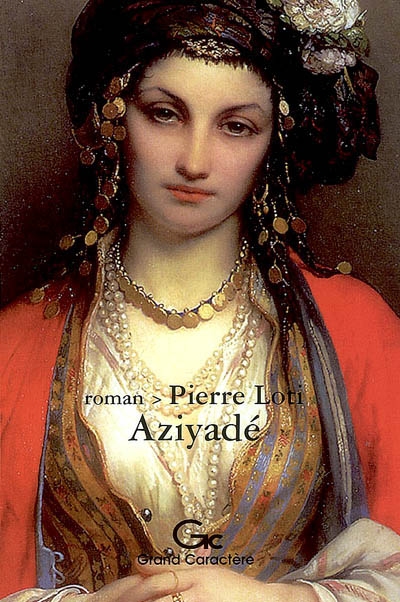
Aziyade bookConstantinople, 1876. An illicit love affair between a French officer and an 18-year old harem girl. The heat of the city matching the heat of their passions. Forbidden, dangerous, exotic and sexual.

Aziyadé by Pierre Loti was a very influential novel in its time and, in 2008, became the inspiration for the tenth perfume by Marc-Antoine Corticchiato, the founder and nose behind Parfum d’Empire. Aziyadé, the eau de parfum, explicitly attempts to replicate that moment in time, back in 1876. As the Parfum d’Empire website explains:

An elixir blending the aphrodisiacs of many cultures throughout history, Aziyadé draws us into a sensuous feast where the pleasures of love are intimately entwined with those of the palate. More than a fragrance, Aziyadé is a flavour. The flavour of the yielding flesh of Aziyadé, the heroine of Pierre Loti’s eponymous novel, the story of a harem in the twilight of the Ottoman Empire. [¶]

Aziyadé , a quintessence of carnal pleasures. A fruity, spice laden oriental, Aziyadé opens with a splash of pomegranate juice before yielding candied date, prune and orange notes. Its cornucopia of aphrodisiac spices draws us into a sensuous feast where tears of incense melt into musk, cistus and carob.

Aziyadé: an outrageously carnal perfume. 

The full story is laden with history, sensuality, flashbacks to the Greeks, Romans and even Queen Hatshepsut, displaying “her naked body, rubbed in incense, to honour the god Amun-Ra.” Honestly, with my tastes and life-long obsession with history, how could I not be tempted? Was it not guaranteed that I would love Aziyadé?
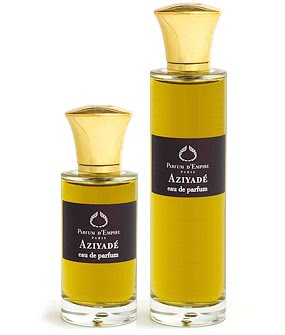
aziyade perfumeAnd, yet, I don’t. Aziyadé a lovely perfume, but it didn’t bowl me over or wow me. And I definitely don’t think it’s for everyone — not by any means. Only those who love cumin; very naughty, animalic skank; and dark, musky, sometimes leathery, labdanum should try Aziyadé.

Luckyscent offers Aziyadé’s list of notes which include:

pomegranate, crystallized date, almond, orange and prune, cardamom, cinnamon, ginger, Egyptian cumin, carob, frankincense, vanilla, Madagascar vanilla absolute, patchouli, musk, cistus [or labdanum].

Source: ifood.tv

Source: ifood.tv

Aziyadé opens on my skin with zesty citrus, cumin, musk, and animalic, leathery labdanum over honey, dates, ginger, prunes and seemingly every single spice known to a Moroccan spice vendor. It’s truly an explosion of scents, all bursting out on the scene within the very first second like a stampede of elephants. In less than a minute, however, the initial blast of very animalic, dark, almost masculine and very dirty labdanum settles a little, softening under a wave of rich, heavy honey. The cornucopia of spices separate, becoming more distinct, and cumin takes the lead. Dried fruits and juicy plum also become more noticeable. And, to my surprise, there really is a subtle note of pomegranates. The perfume is extremely boozy, beautifully complex, layered and rich, but it is also surprisingly airy in feel.

Moroccan Tagine of Lamb, Prunes & Apricots. Source: DimaSharif.com. (Click photo to be taken to website where you can find the recipe.)

Moroccan Tagine of Lamb, Prunes & Apricots. Source: DimaSharif.com. (Click photo to be taken to website where you can find the recipe.)

As the minutes pass, the perfume starts to change. The labdanum loses a touch of its heavily leathered, dirty facade, turning slowly nuttier and sweeter, thanks to the growing infusion of honey. The cumin also becomes a little less top-heavy, swirling into the eddy of spiced notes and blending in a little better. On my skin, it’s very much like the cumin in a curry — fragrant, aromatic and a little dusky — rather than the cumin associated with body odor. The plum and dried fruit tonalities rise to the surface, followed soon thereafter by two polar opposites: smoky frankincense and rich vanilla extract. The smoke serves to add some dryness, undercutting the sweetness of the strong honey notes, while the vanilla adds a subtle, custardy depth to the foundation. The whole thing becomes a swirl of: juicy orange and citrus; dark, stewed, dried fruits dominated by prunes; molten honey; strong cumin-heavy spices; swirls of smoky frankincense; nutty, almost masculine, labdanum amber; and a touch of sweet vanilla.

Shop in a Moroccan bazaar. Source: Moroccansouk.org.

Shop in a Moroccan bazaar. Source: Moroccansouk.org.

A strong vein of animalic musk runs underneath it all. It’s not akin to dirty, unwashed panties on my skin, but it definitely smells a little raunchy, a little naughty. The combination of the leathery labdanum, the musk, and the cumin create a very sexual undertone to the scent, though I have to say I was never transported to the Sultan’s harem. Instead, I was constantly reminded of a Moroccan souk or market. Neither the sweetly zesty citrus notes nor the smoke have the smallest chance of competing with those spices, dried fruits, dirty notes, and honey that are the essence of Aziyadé.

That core essence remains fundamentally unchanged with the passage of time. Only the honey note shifts, taking the lead and becoming the starring note as the cumin fades away. On its heels is that perpetual stewed fruit accord, infused by dirty labdanum and musk, all over a subtle trace of orange citrus. By the fourth hour, the honey becomes even richer and deeper, before eventually taking on a slightly powdered feel. By the eighth hour, the drydown has begun and Aziyadé is a sweet blend of frankincense, vanilla and amber with the sheerest touch of powder. It remains that way for several more hours until it finally fades away.

Frankly, I was astounded by the longevity of this incredibly sheer, lightweight, low sillage perfume on my voracious skin. Aziyadé essentially lasted 12 hours, but I could still detect minute spots of it here or there on my arm well over the 14th hour! It would be jaw-dropping with a stronger, heavier perfume, but for something so sheer? On my skin? Astounding. However, not everyone fared quite so well, and there seems to be a split in opinion about the perfume’s duration. On Fragrantica and elsewhere, some people report that Aziyadé died on their skin after a few hours, while others found it to last an enormous period of time.

There are a few perfumes which Aziyadé called to mind, though they are not very similar at the end of the day. The extremely boozy nature of the perfume’s opening hour strongly reminds me of the start of Hermès’ Ambre Narguilé, only with cumin and animalic notes as a strong vein instead of fruited pipe/hookah tobacco. The late stages of Aziyadé with the slightly powdery, very airy, honey note infused with dry smoke and light musk made me think of the late stage of Serge Lutens’ Chergui which has a very similar honey combination. Chergui, however, is never animalic or skanky, and has tobacco in lieu of leathery labdanum or spices.

Actually, the Serge Lutens fragrance to which Aziyadé is most frequently compared is his Arabie. I have not yet tried it, so I can’t comment, but perhaps this comparative assessment from Now Smell This (“NST”) would be helpful:

Aziyadé is another specimen of the stewed fruits + curry spices genre, although the stewed fruits are mostly in the top notes, and they’re given some lift and tartness here by the pomegranate. Once the top notes fade, for a time it’s nearly a straight-up spice fest. The dry down is woody and only slightly vanillic (it’s more dry than sweet), with mild incense and amber.

It could be a pared down Arabie, but it’s pared down in a very different way than El Attarine. Aziyadé is closer to spicy-foody than El Attarine, and the woods aren’t as velvety-smooth. It’s lighter and drier than Arabie, and possibly more wearable: that all depends on how you feel about cumin. I’m hard pressed to say which fragrance has more cumin — one day it seemed to be Arabie, the next, Aziyadé. I will say that because Aziyadé is a less foody-rich scent than Arabie, the cumin seems to stand out more, and it deepens considerably as it dries down.

The reaction to Aziyadé on Now Smell This, in a review quoted within, and in general assessments throughout the internet are all extremely polarized. NST didn’t like it, and not only because Aziyadé’s drydown turned primarily into “cumin-infused pencil shavings” on Robin’s skin. She likes pencil shavings; she does not like cumin. At all.

There is no doubt in my mind that how you feel about Aziyadé will depend not only on your feelings about cumin but, also, about skanky, animalic perfumes. Those who don’t like the former will consider Aziyadé to smell just like “an old woman’s sweaty armpits,” to quote one disgusted commentator on MakeupAlley, or “yucktastic” and “nauseating” to quote another. By the same token, those who hate animalic notes will find the perfume to have the hint of “dirty panties” and to be the embodiment of “vulgarity,” as one person wrote on Fragrantica.

Yet, those who can tolerate both notes love the perfume and find it exotic, mysterious, or, quite simply, evocative of Christmas. Christmas actually comes up quite a bit in the context of Aziyadé, with a few such references on Fragrantica, like the one below from “sky76sky” who writes:

Aziyade took me straight back to Christmas…not my festive week but one amped & ramped up to theatrical standards -red & gold, velvet, jewels, spangle, spices, candied fruits, brown sugar, … eat up eat up!…..mulled wine, burning logs, pot pourri, fancy linens, oranges studded with cloves, port, plums in brandy [… ¶]

If she were a woman she would be large & sexy, with red lipstick, an artsy scarf, slightly drunk, bejewelled & festooned in glamour from head to toe, the life & soul of the party, dahhhrling,

And the same Christmas feel is mentioned on MakeupAlley, too:

Boozy loveliness, come from a long line of lineage that is Dior’s Dolce Vita and Serge Lutens’s Cedre. Love the combo of cinnamon, spices, dried fruits and dates. Plumier than plums. It gives me flashbacks of biting onto a plum that is ripen to the point that is just before decay, and the juices flowing down the corners of my mouth. A wearable mulled wine &/or apple pie. I would love to wear this to a Christmas Fair!

I enjoyed Aziyadé quite a bit, but I didn’t love it — and my reasons have nothing to do with cumin or animalic notes. In fact, I don’t mind cumin, so long as it doesn’t turn sour or sweaty; and it did not do so here, on my skin. Plus, I thought its honey was truly lovely; gorgeous, in fact, and beautifully balanced with the rich spices and that nutty, leathery, labdanum amber. Also, the price is fantastic for a high-quality, well-blended, niche perfume: $75 for a 1.7 oz/50 ml bottle. No, the reason why I wasn’t enamoured is due primarily to the perfume’s texture and weight.

"The Pashas Concubine" by Ferencz Eisenhut.

“The Pashas Concubine” by Ferencz Eisenhut.

For me, the airy, sheer feel of the perfume simply wasn’t a good match for those potent notes. If you’re going to have such strong, intense, spicy accords, then you should commit fully and go all the way with a perfume whose texture is opaque, molten, baroque, hedonistic, and decadently rich. If you want carnality, then the perfume shouldn’t be so damn airy and translucent. It should be more like the fabulous Absolue Pour Le Soir by Maison Francis Kurkdjian, a perfume that fully and completely evoked a Sultan’s harem for me, even though it is much less skanky and dirty. That is an animalic, spicy Oriental which conveys sensuous carnality and forbidden passions — not Aziyadé which merely took me to a spice seller’s stand in Morocco’s ancient souks.

I have to wonder if the sheerness of Aziyadé was some sort of compromise intended not to completely terrify those who may struggle with cumin or animalic skank. Perhaps Parfum d’Empire thought the notes would be too much if the perfume were heavy as well. But those who would love and wear a perfume like Aziyadé are those who like potent, opaque, deeply resinous perfumes to begin with. Everyone else will run away from the cumin and the “dirty” notes, regardless of whether the perfume were sheer or heavy. For myself, I far prefer the magnificent Absolue Pour Le Soir, though I would certainly wear Aziyadé on occasion if a bottle fell into my lap.

If you loved honey perfumes with richly spiced, stewed fruits and, more importantly, if you can handle both cumin and slightly dirty, leathery, animalic skank, you should definitely check out Aziyadé. But, if you can’t, then you should stay very, very far away.
DETAILS:
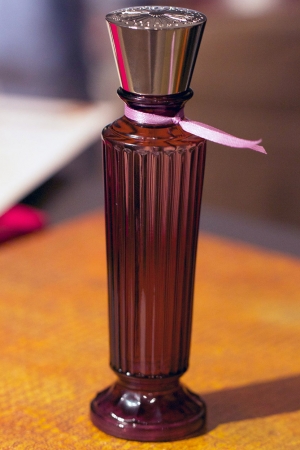
Aziyadé is an eau de parfum and is available on Parfum d’Empire’s website where it costs €92 for a large 3.4 oz/100 ml bottle. You can also find it at Luckyscent which sells the smaller bottle in a 1.7 oz/50 ml size for $75, in addition to a sample for $3. MinNewYork sells that same 50 ml bottle for $100. Canada’s The Perfume Shoppe sells the large 3.4 oz bottle for $120 which is a great price, especially if it’s in Canadian dollars. (The Perfume Shoppe website always confuses me a little.) In Europe, First in Fragrance sells the large 3.4 oz bottle for €115, along with samples, while Premiere Avenue sells it for €92. In Australia, Libertine sells Aziyadé for AUD$150 for the 50 ml/1.7 oz size. For all other countries, you can find Aziyadé at a retailer near you using the Store Locator on Parfum d’Empire’s website. To test Aziyadé for yourself, Surrender to Chance sells samples starting at $3.49 for a 1 ml vial. Parfum d’Empire also offers two different sample sets directly from its own website. The first Mini Sample Set is for 3 fragrances of your choice in 2 ml vials for €6 or €10 (depending on your location) with free shipping, while the Full Sample Set of all 13 Parfum d’Empire fragrances also is for 2 ml vials with free shipping and costs €14 or €22 (for the EU or the rest of the world).

Neela Vermeire Mohur Extrait de Parfum: A Queen To Rule Them All

Va-Va-Voom! Mohur has put on her ball gown and is ready for a gala! The new Mohur Extrait** de Parfum by Neela Vermeire Créations (“NVC”) takes the existing Eau de Parfum formulation up a notch in sophistication, richness, luxuriousness and creaminess. It is — quite simply — spectacular.  **[UPDATE 10/20/13 – This article was originally written when the perfume was called Mohur Esprit de Parfum, but the name has subsequently been changed to just Mohur Extrait de Parfum. I believe legal and trademark issues were the reason. Consequently, I’ve changed this post to reflect the new name.]

Mohur Esprit de Parfum. Source: Fragrantica.

Mohur Esprit de Parfum. Source: Fragrantica.

Mohur Extrait de Parfum (hereinafter “Mohur Extrait” or “Extrait”) is a new concentration of Mohur and the very first pure parfum offered by Neela Vermeire. It will be released in early Fall of 2013. [Update: it will now be released in Winter 2013 or in 2014.] The perfume was recently shown at the Milan Esxence show, and a European friend got me a small vial. I don’t know if the Extrait has had any slight alteration in notes, or if it is exactly the same perfume in a greater concentration, but something about it feels a little different.

I’ve always felt a little badly for Mohur Eau de Parfum. Trayee is the mysterious, seductive older sister; Bombay Bling, the happy, innocent, playful, joyous baby sister. Mohur is the quiet, reserved, elegant one. Like many middle sisters, Mohur EDP always seemed a little overlooked and forgotten in the company of her much more exuberant or forceful sisters. I myself loved Mohur, but I was just a little more bouleversée by Trayee. While something about Mohur EDP stayed in my mind, inching its way further and further into my heart with time, it could never quite compete with the force of nature that is Trayee. Until now. Until Mohur Extrait de Parfum.

It may be useful to briefly refresh your memory of Mohur’s notes, at least for the Eau de Parfum. The incredibly long list — twenty-three ingredients in all — includes:

Top: Cardamom absolute, Coriander seed oil, Ambrette seed, Carrot, Black Pepper, Elemi oil;

Middle: Turkish rose oil, Moroccan Rose Absolute, Rose Accords 11%, Jasmine accord, Orris, Aubepin Flower [hawthorn], Almond milk notes, Violet Flower, Leather vitessence:

Bottom: Sandalwood, Amber, White Woods, Patchouli, Oudh Palao from Laos, Benzoin Siam [resin], Vanilla, Tonka bean.

rose de reschtI tested Mohur Extrait de Parfum side by side with Mohur Eau de Parfum. One on each arm. Twice. The differences are merely of degree and are not substantial — but they are there. Mohur Extrait de Parfum opens with a considerably greater degree of sweetness. The roses are concentrated and heightened, tinged only subtly with the other notes, instead of sharing equal space with them. The flower is touched with carrots, followed then by violets, all atop a lightly ambered base with muted almond milk. There is a much stronger note up top of lightly powdered iris and a quiet hint of white woods. In contrast, Mohur Eau de Parfum has the rose note well mixed in with the other tonalities. The carrot accord is partnered side by side, but the rose never full dominates in quite the same way. There are also much more noticeable spices, pepper and elemi right at the front with the EDP. The violet note is considerably more subtle right at the start but, later, it deepens more and is a much more consistent vein throughout the Eau de Parfum in its subsequent development.

Mohur Eau de Parfum is also much sharper in its opening minutes. Now, I have never thought Mohur to have a sharp note whatsoever. Until I put on the Extrait de Parfum. Side by side, on both occasions, the EDP has a sharper, thinner aspect to the initial opening minutes. In contrast, Mohur Extrait was deeper, stronger, richer and with significantly increased sweetness. The Extrait also has, quite naturally, a greater sillage and power. We’re talking Fracas levels of potency if you apply a lot!

As time passed, other changes were perceptible, too. The Extrait seems more ambered and spicy. The woodsy notes and oud are stronger, though the latter is still not a significant part of Mohur for me. It is far too well-blended and sheer a note as a whole; it adds subtle depth to the fragrance — in both formulations — but I would never consider Mohur to be a real or hardcore oud fragrance by any means. With the Extrait de Parfum, I also detected subtle hints of the leathery undertone which has always been negligible for me in Mohur EDP. The latter seems more purely floral, much more violet infused and slightly milkier. It also feels as though there is less noticeable patchouli in the EDP, whereas it’s a plush, velvety, almost mossy companion to the sandalwood that begins to come out within the second hour of the Extrait.

Lastly, Mohur Extrait differs in terms of both sillage and longevity. I applied the same quantities of both fragrances from a dab vial. While the EDP became close to the skin about 4.5 hours in, the Extrait de Parfum became a skin scent after 8 hours. Mohur EDP lasted approximately 9.5 hours on me. The pure parfum concentration is, naturally, much stronger and lasted almost 13 hours on my perfume-consuming skin.

"Proserpina" by Dante Gabriel Rossetti.

“Proserpina” by Dante Gabriel Rossetti.

Again, the olfactory differences between the two versions seem, for the most part, to be very minor and just one of degree. But those differences somehow make Mohur Extrait de Parfum a much more sophisticated, more grown-up and regal version of the perfume in my mind. More importantly, they have taken away some of the wistfulness that seemed so much a part of Mohur EDP. Unlike her sisters, Mohur has never been a perfume that evoked India, one of my favorite places on earth. In my review of the EDP, I consistently compared Mohur to one of the slightly melancholy, pale beauties of Dante Gabriel Rossetti’s Pre-Raphaelite paintings, or to an ancient princess of long-ago, mourning a lost love. She was Iseult of Tristan et Iseult, Guinevere, or one of the countless maidens of legend whose beauty was tinged with loss. 

"Boreas" by John William Waterhouse.

“Boreas” by John William Waterhouse.

Mohur Extrait de Parfum is different. The melancholic heart seems lessened; the spicy sandalwood, oud and woodsy foundation seems stronger; the milky opening notes much milder; and the roses significantly sweeter and more concentrated. The violets which underscored the Eau de Parfum and which evoked, in my mind, faint parallels to Guerlain‘s 1906 masterpiece, Après L’Ondée are still very much a presence in Mohur Extrait. They are definitely more concentrated at the very top of the Extrait, particularly in the first thirty minutes. Yet, the note doesn’t create quite the same sort of haunting, brooding, and bittersweet thread throughout the long-term development and life of Mohur Extrait as it did in Mohur EDP.

The problem in attempting to ascertain minor differences is that Mohur is a brilliantly blended perfume in both formulations. Its prismatic nature means that the minor differences I smell today may not be the same ones I smell tomorrow, if I even smell them at all. When perfumes throw off different notes like reflective rays off a crystal chandelier hit by sunlight, the facets are sometimes mutable. But I definitely sense a difference in degree that goes beyond mere richness and depth.

The best way that I can explain the differences in feel, to me, between the two perfumes is through photos. The woman in the new Mohur Extrait starts off as:

Sarah Jessica Parker in Vogue, March 2010. Dress: Dior Haute Couture. Photo: Mario Testino. Source: Vogue.com

Sarah Jessica Parker in Vogue, March 2010. Dress: Dior Haute Couture. Photo: Mario Testino. Source: Vogue.com

She then turns into:

Dress: Rami Kadi Haute Couture Spring-Summer 2013. Source: FlipZone and Tweets.seraph.me

Dress: Rami Kadi Haute Couture Spring-Summer 2013. Source: FlipZone and Tweets.seraph.me

She is no longer quite the restrained, reserved, quietly elegant, haunting sister, living in the shadows of her more forceful sisters. Mohur is now full diva, a glamourous star in her own right, luxuriating in her femininity and richness, dripping with opulence. The wistful princess has now become a powerful queen. She may well rule them all. 

[ED. Note: You can find a review for the new, upcoming Neela Vermeire perfume, Ashoka, which will come out at the same time as Mohur Extrait here.]

DETAILS:
Cost & Availability: Mohur Extrait de Parfum is extrait de parfum concentration. I have no idea as to pricing or size, particularly as this is the first pure parfum released by Neela Vermeire Créations.

Perfume Review – Ashoka by Neela Vermeire Créations: A Comforting Embrace

Mary Cassatt. "Sleepy Thomas Sucking His Thumb." (1893)

Mary Cassatt. “Sleepy Thomas Sucking His Thumb.” (1893)

A mother’s warm, comforting embrace, holding you close and protectively. A journey into a green wood of peppered vetiver. And a final resting place of creamy sandalwood infused by smoke, ambered resins, and gingerbread vanilla, caressing your skin like the softest of golden veils. 

That was my experience with Ashoka, the newest release from Neela Vermeire Créations (“NVC”) which will be released in early Fall of 2013. The perfume was shown at the Milan Esxence show this past March and someone thoughtfully sent me a small vial. The quantity wasn’t enough for my usual two tests, so I may update this review later in the Fall when I obtain a greater sample, especially if it is from a spray. But I certainly had enough for a very thorough test, and I really liked the perfume.

Ashoka is very different from Neela Vermeire‘s existing trio of Trayee, Mohur, and Bombay Bling. For one thing, it has three, very distinct phases. For another, parts of Ashoka represent Comfort for me. If Trayee could be categorized as “Sexy Seductiveness” that can sometimes feel like a wonderful force of nature, Mohur as “Sophisticated, Elegant Femininity,” and Bombay Bling as “Ebullient, Joyful Energy,” then Ashoka is, in large part, “Soothing Comfort.” There is a middle phase where that doesn’t really quite apply, but the perfume as a whole is an easy, wearable, very soothing, relaxing scent.

Emperor Ashoka.

Emperor Ashoka.

Ashoka is meant as a tribute to a legendary Indian emperor whose personal history very much matches the perfume’s development. Intentionally so, if I may add. The press release explains both points further:

Inspired by a legendary ruler, Neela Vermeire Création’s new release, Ashoka, is a tribute to an emperor who was conquered by his own compassion at the moment his victory was assured. He converted to Buddhism and devoted the rest of his life to spreading the Buddha’s teachings, to truth, to justice and to compassion for all living creatures beneath the sun.

His own evolution from ruthless conqueror to benevolent emperor is reflected in Ashoka’s journey from the fierce opening to a softly floral heart & the gentle embrace of its richly complex drydown.

Ashoka: Source: Fragrantica.

Ashoka: Source: Fragrantica.

Ashoka is an eau de parfum that was created in collaboration with Bertrand Duchaufour. According to an article on Fragrantica, the fragrance underwent numerous formulations to try to achieve a development that matched that of the Emperor himself. Over a year’s worth — until it finally matched Ms. Vermeire’s exacting standards, and the olfactory image she had in her mind of Ashoka’s character and life path. The perfume’s long list of notes includes:

fig leaves, leather, white and pink lotus, mimosa, fig milk, osmanthus, rose, water hyacinth, vetiver, styrax, incense, sandalwood, myrrh, tonka bean, and fir balsam.

I’d read a few things about how Ashoka’s pyramid of notes feels inverted, with the darker, heavier elements being first, starting with leather and green notes, followed by a descent into milkiness. My experience was different, and the usual pyramid scheme seemed solidly in place. In fact, from the very start when I sniffed the perfume vial, there was a lovely bouquet of sweet, milky figs, accompanied by green leaves and a dryly woody note like that of a stem. In essence, it replicated the whole fig on a vine — sweet, fresh, milky, green and woody. 

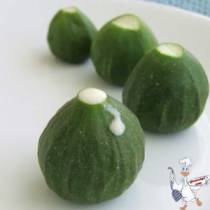
Unripe Figs via Giverecipe.com. (For recipe on Unripe Fig Jam, click on photo. Link embedded within.)

Unripe Figs via Giverecipe.com. (For recipe on Unripe Fig Jam, click on photo. Link embedded within.)

The perfume was a bit different on my skin as Ashoka opens primarily with lactonic notes. It’s fresh, sweet, and supported by what definitely feels like coconut underneath. Fig leaves are said to smell like coconut, and that is certainly the case here. Generally, I’m not a fan of coconut in perfumery because it’s almost invariably blob-like, heavy, gooey, thickly buttered, and verging on Hawaiian suntan oil. But not here where the aroma is much more like coconut milk: fresh, light, delicately sweet, never buttery, or unctuous. It’s a lovely note that helps bolster the fruit’s naturally light aroma and milky sap.

Wild Fig Tree via Wildernessarena.com.

Wild Fig Tree via Wildernessarena.com.

Accompanying the various milky elements is some bitter green, adding balance and ensuring that the perfume is not excessively sweet. The green notes feel like leaves that have the faint vestigial hint of the trees they came from, creating a canopy over the fig and coconut milk. Sweet floral notes lurk behind in the shadows, feeling almost watery in their delicacy. It must be from the lotus flowers which are said to have an aquatic, sweet aroma. I like the contrast of the slightly bitter green leaves with the milky fig and coconut, but I was a little surprised not to get any of the heavy leather that I had read about. Frankly, I think it works better this way.

Five minutes in, Ashoka is a swirling blend of creamy milkiness with dark greenness, and delicate, watery florals. Vetiver and a subtle hint of vanilla arrive on the scene, accompanied by what feels most definitely like a small dash of ISO E Super. The earthy vetiver with the velvety wood accord of the ISO E Super are subtle at this stage, mere backdrops for the milky notes. The latter starts to turn sweeter and more floral; and the bitter leaves begin to fade away.

Mary Cassatt's "Breakfast in Bed."

Mary Cassatt’s “Breakfast in Bed.”

Ashoka slowly turns into an incredibly soft, soothing bouquet of milky flowers that strongly evokes a mother’s embrace. It feels like a mother’s loving caress when you’re ill and feverish. It’s the sense of comfort that you feel when, as a child, you would nestle in your mother’s arms at bedtime. Ashoka, in this stage, really reminds me of hugging my own mother. Her arms, velvety soft from the milky cream that she slathers herself in at night; the warmth of her body bringing out the light smattering of sweet flowers left on her neck and chest from her morning spray of perfume; the comfort as she holds me close, nestled, protected, and safe. The peppered wood notes underlying Ashoka never really take away from that image because they are just beneath the surface at this point. What is up top is that incredibly maternal, nurturing, comforting combination.

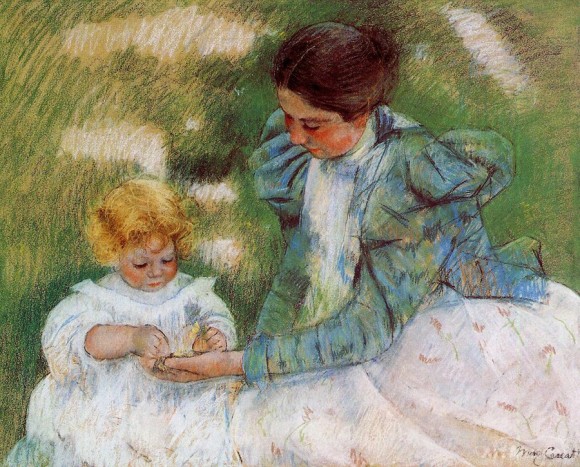
Mary Cassatt. "Mother Playing With Child."

Mary Cassatt. “Mother Playing With Child.”

At the end of the first hour, Ashoka starts to slowly shift, and the second phase in the perfume’s development begins. The wood and ISO E Super rise in prominence, overtaking the lactonic elements which slowly recede to the background. Now, Ashoka is primarily heavily peppered vetiver with ISO E Super on a quiet base of coconut-fig milk. It’s as if your mother — or, in this case, Father Ashoka — has taken you to play outside amidst the grassy vetiver at the outskirts of some peppered woods.

The ISO E Super is not overwhelming and never has the feel of rubbing alcohol underneath it, as it sometimes does. Unfortunately, after an experience last month, I think I have almost a Pavlovian response to the note, and I react even if the bell is the smallest one around. The faintest ring — or, in this case, the lightest note — will send my senses tingling. I simply don’t like it. Yes, I realise that prior experience has scarred me for life, but that is solely my own, personal, slightly neurotic issue. Thankfully for the rest of you, most people seem to be completely anosmic to ISO E Super which has been found, in some cases, to act almost like an aphrodisiac pheromone. So the majority of you should have no worries, and only those few people with acute sensitivities to ISO E Super may want to take heed.

At the start of the third hour, my favorite part of all NVC perfumes begins: the sandalwood. As always, it is that opulently creamy, richly spiced note that feels like real Mysore sandalwood and which is the hallmark of all the fragrances thus far. The wood is so rare, it might as well be priceless, so heavens only knows how astronomical the cost to have it as the base here. But it’s lovely, especially as the milky coconut-fig accord melds in seamlessly to add extra creaminess. The spicy sandalwood is accompanied by quiet hints of incense smoke, vanilla tonka and amber, but they are subtle at this stage, just flickers in the campfire glow of that wood. I smell a few vague, almost abstract, light florals too; something that seems like the suggestion of rose, accompanied by mimosa, but it’s not strong on my skin. The peppered vetiver is still present, but it has softened somewhat, letting the other players share some time on the stage. I should add that the combination of these notes makes Ashoka a definite Oriental in my mind, regardless of Fragrantica’s classification of it as a “woody aromatic.”

The rich purr of the sandalwood and the peppered woodsy notes with amber continue their dance for a few hours. There are occasional flickers of osmanthus, smelling like light apricots and black tea, but it’s extremely subtle. There is also a fleeting impression of powdered vanilla that darts about here or there, but it might as well be a ghost at this stage. I never smell the leather. I suspect that, if I had enough perfume for the equivalent of two big sprays, it may be a very different story. I’ve noticed in the past that it’s much easier to detect the subtle nuances in NVC perfumes if one uses both a spray and a fair portion. The fragrances are simply too well-blended to allow the small, microscopic elements to be detected with a small dose, since everything blends so seamlessly into each other. Still, I’m surprised to get no leather at all, especially as that it’s a heavier molecule and one which is supposed to be quite prominent in the perfume. The leather is intentionally meant to reflect Emperor Ashoka’s early life as a cruel, ruthless, military conqueror, so either my skin is wonky or I need a good few sprays.

Marc Chagall. "La Branche." (1976)

Marc Chagall. “La Branche.” (1976)

By the start of the sixth hour, Ashoka smells of a cozy gingerbread accord with vanilla — all sitting atop quiet, velvety, softly polished woods. The perfume has the same sort of subtly spiced, vanilla-infused, ambery resin base that some of the Chanel Orientals have (like Bois des Iles, for example), but the lingering traces of ISO E Super turns Ashoka’s base into something much woodier and, to my nose, peppery. By the very end, almost 10.5 hours later, the final notes are of creamy vanillic amber. I suspect that length of time would be significantly increased if I had a greater amount to apply, as NVC fragrances usually last between 12-14 hours on my perfume-consuming skin.

As a whole, Ashoka is a very airy fragrance that is moderately strong at the start, while being lightweight in feel. Its projection is moderate to low. The latter may stem from the reduced quantity that I used but, in general, I think Ashoka is fully intended to be a softer, lighter perfume than something like Trayee or Bombay Bling. It is in line with the whole goal of replicating Emperor Ashoka’s transformation into an advocate of Buddhism, peace, and serenity. The perfume’s comforting, soothing, maternal (sorry, this perfume simply doesn’t fit my mental associations and image of a paternal scent) opening was strong but gentle, never forceful or overpowering, and its final drydown is even softer.

I think all that makes Ashoka an easier fragrance in some ways as compared to its more intense siblings. It’s not that Trayee, Mohur or Bombay Bling are not versatile. They are, especially Mohur. But none of them is so gentle, soft, and casual. As I noted at the top of this review, Ashoka fills a gap in the NVC line, one that I never realised until now: cozy comfort. Bombay Bling may comfort a lot of people, but it does so through its energizing, ebullient nature. It’s not restful, the way that Ashoka is for much of its development. (I’m leaving out the middle part’s trip to the vetiver forest in my assessment, since I personally don’t equate vetiver with soothing embraces.)

I really enjoyed Ashoka. I absolutely adored the milkiness of the opening stage, and really liked the final drydown. My personal issues with ISO E Super made me struggle with the middle part, but that’s my own peculiarity. Most people I know can’t even detect it! So, don’t let it stop you. I think Ashoka’s creamy gentleness and soft embrace will make it a big, big hit.

[ED. Note: You can find a review for the new, upcoming Neela Vermeire “Mohur Esprit” which will come out at the same time as Ashoka here.] 

DETAILS:
Cost & Availability: Ashoka is an eau de parfum and will be released in the Fall of 2013. I will update this section at that time to include links to websites where you can obtain it. I have no idea as to pricing, but I’m sure it will be in the general vicinity of NVC’s other perfumes which cost $250 or $260 (depending on which one) for a 50 ml bottle. Samples are generally available from the NVC website or Luckyscent, but I will update that part, too, when they become available in the Fall

Perfume Review: Vero Profumo Onda Eau de Parfum

Source: 3dwallpapers.co.in.

Source: 3dwallpapers.co.in.

Large grey-blue waves hit the black, moss-covered rocks, spraying cooling salted water over the heated, sweaty bodies of the intertwined lovers. There was a note of the tropics in the air, as if a Filipino fruit-seller’s roadside stall had exploded nearby, the passionfruit symbolically matching the passion in the air. Heavy, opulent flowers laden with honey were there, too, so rich that they almost border on the over-ripe and match the goo of the fruit. The lovers kissed, their bodies cushioned on the plush velvet of mossy patchouli, and one bit the other’s shoulder with a moan.

Source: foto.libero.it

Source: foto.libero.it

The salt of the stormy seas is the very first impression that hits you when you put on Onda Eau de Parfum from Vero Profumo, followed not long thereafter by the image of sweet, heated skin. As the heavy, rich, intimate notes swirled on my skin, I decided almost immediately that I would — nay, must — one day buy this perfume. It is rare for me to think that mere minutes into testing a perfume and without waiting for its full development, but Onda’s complicated, extremely unusual, completely unique nature ravished me. It’s really hard not to think about sex and the human skin while you’re wearing it, but that seems to have been the goal of Vero Profumo. “I love everything that reminds of the smell of skin,” says its founder, Vero Kern, on the very first page of the company’s website. It shows, believe me, it shows….

Vero Profumo (sometimes written with odd punctuation as “.vero.profumo.“) is a Swiss niche perfume line that was established in 2007. Vero Kern‘s first three fragrances were Onda, Kiko, and Rubj, and they were released that same year. According to Fragrantica, all three pure parfums or extrait de parfum fragrances were intentionally made in the grand, classic French tradition of Mitsouko, Shalimar and Chanel No. 5 . As Ms. Kern explains on her website:

Vera Kern of Vero Profumo.

Vera Kern of Vero Profumo.

I go my own way hundred percent and do not follow any trends. I’m looking for originality, opulence and eroticism in scents. They have to surprise and to touch me. I’m not interested in ‘clean’ scents; I need characterful scents both in my creations but also as wearer.

How incredibly refreshing to have a perfumer bluntly state that she is not interested in creating “clean” scents! And to focus on erotic opulence? Bravo!

In 2010, three years after the launch of her parfum trio, Ms. Kern introduced the same fragrances in eau de parfum. However, the fragrances were not simply a milder form of the originals but, rather, slightly altered versions. Fragrantica provides Vero Kern’s explanation of the key differences:

The new perfumes are not the diluted version of the extracts. An eau de parfum needs a structure highlighting more the top notes as opposed to the base notes, but with the aim of keeping the original style of the extract intact”.

Onda Eau de Parfum.

Onda Eau de Parfum.

In order to render the scents lighter and easier to wear, the compositions have been simplified; yet that “je ne sais quoi” unmistakably characterizing the extracts is still clearly there. “I replaced the animalic notes with the unique scent of the passionfruit – says Vero Kern – I personally love it very much and think that it lends a sensual and erotic lightness to the composition”. Like an invisible thread, the intriguing scent of passionfruit links the three perfumes: it is at the core of everchanging, unexpected olfactory sensations with multifaceted evolutions.

[With Onda in specific,] Vero added passionfruit in the top, and slightly changed the base notes (cedar instead of sandalwood).

Luckyscent provides the following notes for the perfume which is categorized on Fragrantica as a “woody spicy”:

Bergamot, citron, mandarin, ginger, coriander, basil, passion fruit, iris, ylang-ylang, honey, vetiver Bourbon, patchouli, musk, cedar wood.

Onda Eau de Parfum opens on my skin with the salty tang of the sea. It’s cold like the Atlantic, but it also feels like a green salt marsh. At the same time, there is a surprising hint of the tropics in the air. The combination creates an incredibly unusual, mysterious, unique scent — and very sexy one at that, too.

Salt marshes via Flickriver.com.

Salt marshes via Flickriver.com.

Soon, woodsy notes arrive, but none of it feels like usual trees or vetiver, per se. It’s something that occurs to me again and again as I try to pinpoint the notes of the perfume. It’s as though Ms. Kern has twisted the way in which certain notes are usually manifested so that they seem completely different. All you’re really left with are impressions and feelings, moods and images; there are very few individually distinct, sharply delineated, really traditional notes of vetiver or trees. You smell woodsy notes, but something about them is different. Or, perhaps, the way they combine with the other notes has transformed them. This isn’t the vetiver in something like Terre d’Hermes, Guerlain‘s Vetiver or Chanel‘s Sycomore; it’s not the cedar wood in a Montale or Ormonde Jayne fragrance. Nothing is ever quite like what it’s supposed to be and, yet, it somehow conveys the feel of woodsy notes as well as any other perfume.

Passion fruit. Source: fo-od.co.uk.

Passion fruit. Source: fo-od.co.uk.

Perhaps it is the originality of the combination that makes the individual elements feel so transformed. For all the salt of the Atlantic ocean, you have the greenness of a very heated, green marsh; the gooey ripeness of passionfruit; the feel of oakmoss (even though there is absolutely none in the perfume); skin notes; an abstract feel of flowers that seem almost elusive in those opening minutes — and a quiet veil of sweetness over the whole lot.

Source: Twitter.

Source: Twitter.

Though the perfume feels like some sort of chypre with a citrus start, the citron, mandarin and bergamot never feel distinct. Though you have the velvety plushness of a very green, mossy patchouli, that too feels almost amorphous and abstract. The same applies to the slightly tangy citrus and fruit notes that waft elusively in the air. The perfume is so magnificently blended that it all swirls together in a harmonious whole. Onda never even throws off prisms of notes; it is just a sum total of experience, mood and feel that is really extremely hard to describe.

It is, quite simply, a phantasmagoria. The dictionary defines the term as:

noun

1. a shifting series of phantasms, illusions, or deceptive appearances, as in a dream or created by the imagination.

2. a changing scene made up of many elements.

3. an optical illusion … in which figures increase or diminish in size, pass into each other, dissolve, etc.

Minutes in, the image of heated skin starts to join the swirl of images. It’s not animalic and, yet, it is. The scent is not like rancid sweat, but perhaps, like fresh, clean, slightly sweet, salty, heated skin with the sheerest, merest touch of a leathery undertone. It’s not raunchy or grossly intimate; there is no sense of unwashed panties or sweaty crotches; and there is no lurid musk. With the tinge of honeyed sweetness, it is, quite honestly, like the smell of sex. Not the sweat-infused, raunchy smell in the air afterwards but, rather, like the scent of your lover’s skin during the early, tender intimacies, when you bite his shoulder and smell the scent of his neck. The combination of the salty, honeyed woods and the sea, with tart, juicy, gooey, ripe citrus, and subtle animalic notes that almost verge on the leather …. well, it’s mesmerizing, tantalizing and simply stunning.

Source: www.stihi.ru

Source: www.stihi.ru

For much of the Onda’s early development, the perfume never wildly deviates from its core essence. At times, the citrus, fruit, and musk notes fluctuate in prominence; at other times, the perfume itself seems to undulate in projection and strength. After the first hour, it seems to get softer, turning much less woody and salty citrusy. But then, surprisingly, it seemed to get stronger, more concentrated and more intense when the honey notes started to take over. And that begins to occur ninety minutes in, when Onda turns more animalic and more floral. There is the feel of richly honeyed flowers with mossy patchouli, vetiver, those animalic musky skin notes, and the merest touch of light powder underneath it all.

Source: etshoneysupliers.

Source: etshoneysupliers.

Three hours in, Onda is all honeycomb, beeswax and rich honey atop lush, velvety flowers with animalic accords and the hint of earthy vetiver. As the honey grows stronger, there is the sense of something leathery swirling around. It’s almost a little like honeyed rawhide leather at times — sharp, dark brown, and deep. Something about the combination feels almost biting; I could feel the honey high up in my nose, almost burning the bridge of my nose. It’s subtle, but it’s there and lasts for a few hours. I applied just a little over an 1/8th of a vial since this is, after all, eau de parfum, but it’s as if Onda’s notes have doubled in strength and intensity. The honey has become akin to the most concentrated form, dripping dark and molten over the heady, indolent, languid flowers with that leathery bite underneath. It feels lush, opulent, oriental, highly charged, almost sexual, and incredibly rich.

Onda remains that way for hours and hours. It’s heavy honey with slightly skanky undertones and darkly rich leather. The notes sit atop the lightest suggestion of vetiver and vanillic powder. And, to my astonishment, despite the hours, the notes barely seem to fade an inch in potency until the very end! All in all, Onda lasted about 12.5 hours on my perfume-consuming skin. In its final hours, it was simple honeyed musk.

Onda is a very powerful, strong, incredibly rich, opaque and heavy perfume but it doesn’t feel thick, if that makes sense. I would never call this lightweight in feel, but it is much airier and lighter than the notes would have you imagine. Yet, it is incredibly potent. Onda EDP would make some of the strongest Tom Ford Private Blend perfumes seem positively mild in comparison. Especially when you consider that I put on only a little over 1/8th of a vial — not much at all! The projection is potent too, initially radiating out perhaps a foot in the first 30 minutes, before becoming softer and staying in a tiny cloud around you. But, it’s pretty damn intense within that cloud. I was walking The Hairy German when I came across a neighbor and stopped for a chat. Though we stood only a few feet apart, she couldn’t smell the perfume. But when I asked for her opinion, and brought my arm a few inches from her nose, her head jerked back at the strength of the notes.

She didn’t like Onda — and I don’t imagine most people will. While her tastes veer towards the “light and citrus,” I think Onda may be far outside a lot of people’s tastes. The people who will swoon at Onda will only be those who can handle the animalic, leathery undertones. Those who adore sheer, airy, fresh florals, who despise naughty notes, and/or who shudder at the thought of potent, extra-rich perfumes should stay very, very far away. This will be far too unusual, difficult, rich, fetid, or sexual for their tastes. It may even seem a little crass to them, like a public display of affection that becomes a little bit heated.

Luckyscent and Now Smell This have two very different takes on the perfume which I think show both sides to the scent. Now Smell This wrote:

It’s rare to smell a fragrance that seems completely new, like nothing else on the market. It’s even more rare to find something that smells not only new, but at the same time ancient, as if unearthed from an Egyptian sarcophagus. Astonishingly, Vero Profumo Onda manages this last trick. There’s nothing of the focus group about it. If someone told me Onda was Mata Hari’s secret weapon, I’d believe it. If she told me Onda was Comme des Garçons’ latest fragrance, “Bilge Water Supreme,” I’d believe that, too. It’s a marvel. […][¶]

Onda in Eau de Parfum is, if anything, more difficult than Onda extrait. It has less powder than the extrait and less animalic depth, but it is more herbal-bright and more “rotted” smelling. […]  I prefer Onda in extrait. I find it richer and deeper, and, in some delicious way, scarier. Both forms of Onda last all day on skin. If you are fascinated by Onda, you’ll rejoice in its persistence. Otherwise, you’ll find it a scrubber extraordinaire. Either way, I don’t think you’ll leave Onda unmoved.

Luckyscent‘s take on it is a little less terrifying:

[I]f a fragrance ever needed taming, it is Vero’s wild, dusky, brooding Onda, as close to an alchemical potion as a modern perfume is ever likely to get. In the eau de parfum, the ginger, vetiver, honey and patchouli still simmer with earthy sensuality, but the composition gains an airiness, a sense of space that make the notes an easier fit for daytime wear. The overtly animalic notes have been replaced by the equally animalic, but brighter passion fruit. Don’t be fooled: the leather-clad femme fatale hasn’t come over from the dark side of the forest. But she’s just cracked a smile.

It’s funny how the perfumistas I know in groups seem to rave about Onda in Pure Parfum/Extrait form, while the reviews on Fragrantica for the Eau de Parfum would be enough to put you off trying it forever. They are, generally, quite negative:

  • Announcing the autumn of fertility, this is (IMHO) a smell to wear as you rot on the vine.
  • The eau de parfum Onda continue woody-spicy notes of honey, the sweet-spicy, earthy, while the iris, ylang-ylang and sensual feature a cleaner, yet more erotic results perfume.
  • The smells that comes to mind are cool wet earth, leather, tobacco, warm wood, smoke. It’s pungent, animalic, meaty, rich. All of that is the opening of Onda,it’s unbelievable, you’ll either love it or hate it, for me it is misterious and unique.
  • I’ve found a more suitable name for this fragance:
    SALT-MARSH
  • Saying that Onda EDP is a challenging composition would be like considering Marcel Proust and easy read. Onda is far beyond being just challenging, is weird, destabilizing and unusual but at the same time “cultured”. It is built around a solid structure that shows many characteristic of classic perfumery and adds a bizarre, sort of futuristic, accord of passion fruit and vetiver that together with floral pattenrs and ginger gives birth to a strange blend that sits somewhere between a disinfectant, a mass destruction weapon and pure luxury. Overall Onda smells salty/sweet with fresh nuances, flowery with acidic/unripe fruits and definitely sulfurous (urine?). While all of this may sound disencouraging, I still believe that Onda deserves our respect as one of the most intriguing, complex and original compositions around. Onda, more than like a proper fragrance, sounds like a declaration of intent that says “I’m here, and I’m here to stay!”.
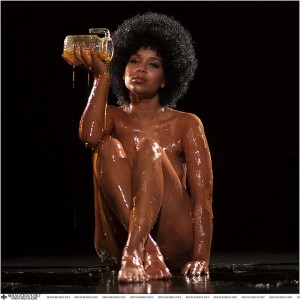
"Lisa Raye. Dripping honey on her body." Portrait by Brad Miller / Retna Ltd. 2002. via Flickr

“Lisa Raye. Dripping honey on her body.” Portrait by Brad Miller / Retna Ltd. 2002. via Flickr (Link to Flickr page embedded within.)

My experience was very different from that of a lot of those reviewers, and I had to laugh at the comment about the “mass destruction weapon.” That said, I can absolutely see how someone with a taste for more traditional, less unusual perfumes may reach that conclusion. The “skanky,” almost leathery notes are definitely a problem for a lot of people. But so, too, is the honey note. Though I never smelled anything sulfurous, the honey did burn my nose at times and I suspect it may turn very rancid on some people’s skin.

Freddie of Smelly Thoughts who has perhaps the most cutting-edge, avant-garde taste in perfumes of anyone I know wrote a bit about that particular issue:

The honey becomes undoubtably urinous, and considering I can douse myself in Miel De Bois with ease, yet can detect the sulphorous notes in this, should let you know how potent it comes off. However, it is blended with the spice, citrus, and over-ripe fruit notes so well, it becomes merely another appealing, complicated piece to this Onda puzzle.

Yet, despite the funky honey note, he adored the perfume as a whole:

Onda EDP opens absolutely wonderful, with a pronounced vetiver note upfront – I love the vetiver already, it is that dank, dirty salty vetiver which is the only type I seem to really enjoy. There’s a real spice overlaying this, a harsh twang of sharp ginger, and some pungent citrus and bergamot. […]

There’s some bizarre fruit accords in this, and an unusual one listed is passion fruit… I love passion fruit but it’s not really what I’m smelling. To me it’s more the feel of an over-ripe banana, in the similar way that Christopher Brosius used this over-ripe quality in In The Summer Kitchen. An almost dustbin like vegetal effect that is bizarrely compelling. […]

First impressions? I love this. At first, and for the first ten minutes, I thought “Hmmm…. interesting I guess”, but then attempting to work this thing out, it gets complicated. I feel like I’ve solved it now, 20 minutes later, and I love the outcome. Already I can see this becoming a full bottle purchase, it’s completely unique – a blend of animalic honey, candied ginger and citrus, salty vetiver (which becomes nothing more than a wonderful base rather than a lead) and softened fruit. Outstanding.

Though his experience was different from mine, I share his final, overall conclusion. For me, with my tastes and given how it manifested itself on my skin, Onda EDP was outstanding. I loved every minute of it. However, I definitely would not recommend it for the general masses or for the faint of heart. In fact, unless you passionately adore heavy, opulent, skanky orientals or leather-chypres, I wouldn’t even bother testing it. But if you’re someone who loves perfumes like Maison Francis Kurkdjian‘s Absolue Pour Le SoirRochasFemme, or Amouage‘s Jubiliation 25, then you should absolutely give Onda a try. For that very select group of people, Onda may well be love at first sniff.

DETAILS:
Cost & Availability: The Onda being reviewed here is only the Eau de Parfum version and it is available at Luckyscent for $200 for a 50 ml/1.7 oz bottle. (The Vero Profumo website does not seem to sell the perfumes.) Outside of the US, the Vero Profumo Facebook page offers a whole list of European retailers from Kiev, Russia, to Oslo, Norway, and Italy. It also adds: “Since 2010 distributed worldwide by Campomarzio70 in Rome Italy, in selective boutiques and perfumeries such as ROJA DOVE, Harrods Urban Retreat London, JOVOY Paris, Parfums Rares and many more.  Campomarzio70, marketing@campomarzio70.it will inform you where you find the nearest retailer in your country.” I checked the website for Campomarzio70 and it doesn’t seem to sell the perfumes online, since I could find no “online cart” (so to speak), no pricing options or no way to purchase the perfumes, but you can try to check for yourself. In the UK, you can find all Vero Profumo perfumes at Harrod’s Roja Dove Haute Parfumerie, but there is no online website through which you can purchase perfumes. (It is not the same site as the Harrod’s website.) At Jovoy Paris, Onda retails for €145. In the Netherlands, you can find it at Leanne Tio Haute Parfumerie. Germany’s First In Fragrance carries not only the complete Vero Profumo line but also offers sample sets. They ship throughout the world. As for samples, I obtained mine from Surrender to Chance as part of Vero Profumo Three-Perfume Sample Set (Onda, Rubj, and Kiki); the set is only for the EDP concentration and prices begin $13.99 for a 1/2 ml vial of each. Surrender to Chance offers single vials of Onda Eau de Parfum by itself, however, for $5.99 for a 1/2 ml vial. It also sells Onda Pure Parfum for $9.99 for a 1/4 ml vial, $19.98 for a 1/2 ml vial, and up.