Perfume Review: Amouage Lyric (Woman)

One of the most popular fragrances from the royal perfume house of Amouage is Lyric Woman (hereinafter just “Lyric”). It is a chypre-oriental eau de parfum that is centered on a dark, dusky rose atop Amouage’s usual base of beautiful, smoky, Omani frankincense. It is a lovely perfume that I enjoyed but, on me, it was actually primarily a ylang-ylang fragrance with rich, custard-y vanilla infused with smoke. 
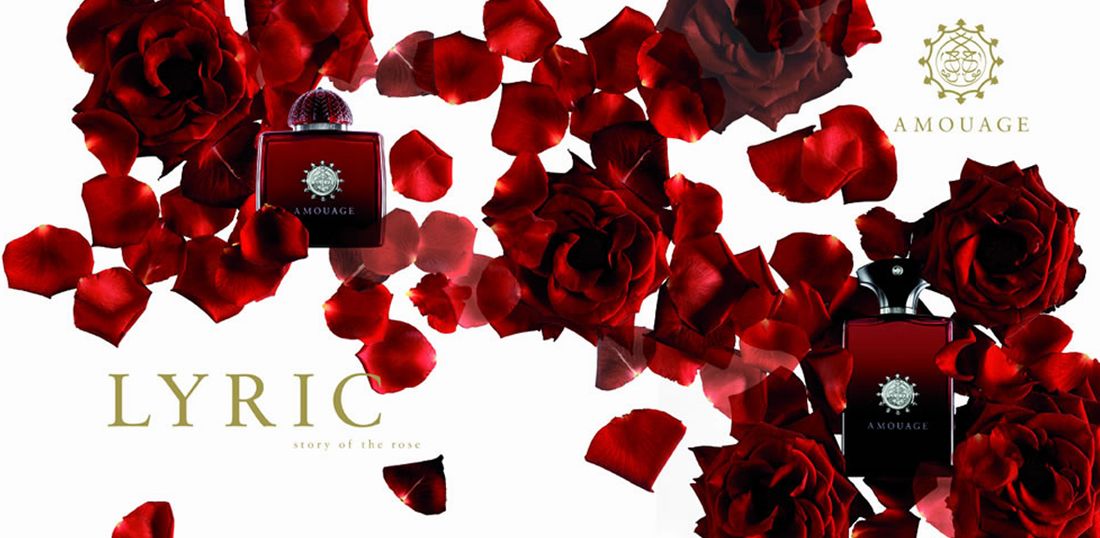
Source: Fragrantica

Source: Fragrantica

Lyric was released in 2008, the creation of perfumer, Daniel Maurel. The inspiration was music and, more specifically, the “lyric-spinto voice.” As the Amouage website explains,

Creative Director Christopher Chong has carefully crafted Lyric Woman to continue the music-inspired narrative that started with the launch of Amouage’s Jubilation last year. He explains, “Beyond the transient beauty and purity of Lyric lingers a poignant song without beginning or end.” During the creative process, Chong found inspiration in the beauty and drama of the lyric-spinto voice. From this, the story of Lyric Woman was born: a fragile beauty with a rare, other-worldly talent and her quest for perfection and immortality. Through this story, we are reminded that there is a subliminal beauty in every imperfection.

The fragrance has a complex and sophisticated structure, in which deep, smoky rose takes center-stage in the heart, complimented by dry, floral notes of geranium, jasmine and orris. The spiciness of cinnamon, cardamom and ginger in the top notes lifts the fragrance, while depth is provided by frankincense and wood notes in the base.

In its structure, Lyric is a floral fragrance, but one that introduces a dark intensity and modernity not normally associated with this genre – a perfect illustration of femininity, strength and passion.

Source: "Bonoanimoes" on Basenotes.

Source: “Bonoanimoes” on Basenotes.

The notes as listed on the Amouage‘s website are as follows:

top: Bergamot, Spicy Cardamom, Cinnamon, Ginger
heart: Rose, Angelica, Jasmine, Ylang-Ylang, Geramnium, Orris
base: Oakmoss, Musk, Wood, Patchouli, Vetiver, Sandalwood, Vanilla, Tonka Bean, Frankincense

Lyric opens on my skin with dry citruses infused with oakmoss. There are touches of geranium, spicy cardamom, ginger and the smallest hint of vanilla-infused smoke in the back. The geranium evokes the scent of the fuzzy, furry green leaves, while ginger feels almost pickled, like that in a Japanese sushi restaurant, as opposed to fresh and zesty, or crystallized and candied. The whispers of vanilla smoke are utterly entrancing, especially in their lightness. The note is never sweet or cloying, but airy. It helps counter any dryness from the oakmoss which feels grey like lichen, not brightly green and mossy.

Spirit of a Dying Rose by Vincent Knaus via RealityDefined.com

Spirit of a Dying Rose by Vincent Knaus via RealityDefined.com

Throughout it all, swirling like a specter in the background is the gauzy, sheer, airy red rose which initially feels dry, desiccated, dark, sweet and smoked all at once. It’s never the primary focus of the scent in those opening minutes but its form grows more and more substantial with the passing moments. From the merest translucent shadow, it gains body, swirling with the green, almost herbaceous geranium, the dry citruses, the oakmoss, cardamom, and that lovely, delicate vanilla incense. The perfume is beautifully blended, so Lyric Woman feels very much like a harmonious sum total of its individual elements, and the final result is a lovely, floral chypre that is simultaneously dry and a little bit sweet.

Ylang-ylang

Ylang-ylang

My skin generally seems to cycle quickly through notes, always emphasizing those at the heart and base, but, even so, it’s a little bit of a surprise when the ylang-ylang turns up less than five minutes into the perfume’s development and takes over from there. It starts slowly, flickering in the background like a gleam of bright yellow and feeling incredibly buttery, banana-y, custard-y and rich. By the thirty minute mark, the ylang-ylang turns so unctuous that it feels almost a little like coconut at times in its buttered richness. It mixes with the vanilla of the base to create a very rich custard that is almost yolk-like in its richness, but always flecked by the dark, airy smoke of the frankincense.

Source: Soapgoods.com

Source: Soapgoods.com

At first, the ylang-ylang mixes with the subtle rose notes but, soon, it takes the lead completely, becoming the dominant note. Lyric loses its dry citruses. More importantly, the oakmoss recedes to the background where it has an indirect, quiet effect on the fragrance, helping to counter a bit of the richness of the vanilla and ylang-ylang. It is no longer wholly distinctive in its own right and, to be frank, I miss it. Soon, Lyric turns slightly indolic in its rich headiness. Though it’s never sour or plastic-y on me, those who suffer from indoles may want to take heed. (If you’re unfamiliar with Indoles and Indolic fragrances, you can read more about them in the Glossary that is always linked at the top of the page.)

Vanilla Custard. Source: Sacchef's Blog.

Vanilla Custard.
Source: Sacchef’s Blog.

By the start of the second hour, Lyric is almost entirely ylang-ylang infused with light frankincense smoke atop a base of rich, custardy vanilla. The latter is creamy, luxurious and very comforting. Hints of light roses, creamy woods, oakmoss, and patchouli lurk at the edges. The woody note never feels like the bronzed spiciness of sandalwood, though it does share its creaminess. Instead, it feels more like general, amorphous, almost abstract, beige woods. Yet, none of those supporting players have the slightest chance of countering the ylang-ylang; it just grows deeper as Lyric develops and its indolic nature starts to feel almost vegetal in its richness.

Lyric remains that way on me for most of its development. I even tried Lyric a second time this morning; it’s on me currently as I write this and it is always the same, ylang-ylang dominant story. I would have far preferred the dusky, smoked chypre rose of the opening, but my skin chemistry clearly has other ideas. During that first, full test, Lyric’s drydown began a little after the sixth hour. It turned into a very traditional vanilla accord with some light powder and lingering touches of that airy, light, frankincense smoke. It was a skin scent and seemed, at times, so subtle that I kept thinking it was going to die entirely. But Amouage fragrances are renowned for their longevity and Lyric Woman is no exception. It lasted as a sheer, skin scent for another six hours. All in all, Lyric lasted just over 12.75 hours on my perfume-consuming skin, though only about 4.5 of those hours entailed a strong, noticeable fragrance with projection. On someone with normal skin, I wouldn’t be surprised if Lyric Woman lasted almost a full day. 

As with all Amouage fragrances, Lyric is profoundly potent in its opening hours. The perfume wafted around me in a medium-sized cloud at first, projecting a few feet, before softening. By the start of the second hour, the sillage was tamer and Lyric swirled just half a foot beyond my arm. It remained that way for a while, though it weakened with time, especially by the fourth hour. Finally, by the sixth hour, it became the merest gauzy touch right on the skin. As I said earlier, there were moments thereafter where I thought it had died, but its fragrant touch lingered for hours.

My experience with Lyric is absolutely not representative in any way (except perhaps the sillage and longevity). I feel like a completely freakish loon because, almost across the board, everyone has found the perfume to be primarily a rose-centered one with great spiciness. On a rare occasion, someone at Fragrantica will mention ylang-ylang and jasmine, but it is always in the context of the rose.

Only Luca Turin‘s four-star review of Lyric has a brief reference to that vegetal quality that I believe stems from the ylang-ylang. In Perfumes: The A-Z Guide, the perfume critic wrote:

Great fragrances move me (and, I imagine, many others) to a sort of musical resonance. And in perfume as in music, progress largely consists of getting used to one novel dissonance after another. In this context, I can safely say that I have never smelled anything like the chord at Lyric’s chore. It is a rose, to be sure, cleverly extended at one end by a dry, dusty, woody accord in the manner of Lyric’s land of origin, Oman. What happens at the other end if a complete surprise. Where one expects a spicy, earthy uplift in the contemporary manner, there comes instead a plangent, overripe note, the exhalation of forgotten fruit in a sealed room. The effect is initially almost unpleasant but soon becomes celestial. Thelonius Monk would have understood this fragrance instantly.

On me, with my skin that always seems to emphasize the base notes in a perfume, that “plangent, overripe note, the exhalation of forgotten fruit” was clearly from the ylang-ylang. The over-ripeness and vegetal aspects that stem from its heavy indoles took over and dominated over the rose accord, though I never thought it was unpleasant, thanks to the countering effects of the smoky frankincense. And I actually loved that custardy, vanilla base with its flecks of black smoke, even when it turned a little powdery. A few others, however, on Fragrantica and Surrender to Chance seem to find the powdery drydown evocative of an “old lady” scent. I don’t share that impression, but I suppose it depends on your age or on your mental associations. 

There is a beautiful review of Lyric Woman from Now Smell This which calls the perfume a “modern classic” and which also helpfully discusses Andy Tauer‘s Incense Rosé as a point of comparison:

[I]f I passed my Lyric-drenched wrist under your nose right now, you would smell the frankincense, spices, and cream, but rose might not be the first note that comes to mind. As for whether or not Lyric is “entirely unprecedented”, I think of Tauer Perfumes Incense Rosé, which is not as creamy and warm as Lyric, but to me is its kissing cousin for sure.

I see Lyric less as music than as the tactile experience of scarlet red silk velvet covered by geranium and cardamom chiffon, dug out of an oak chest long forgotten in the attic. It is the sort of fragrance that would make a good signature scent: it is rich and striking enough to be a brilliant evening scent but, worn judiciously, would work during the day, too. With its bright top, spicy, floral heart, and creamy, woody base it spans the seasons except for the hottest days of summer. It feels lush and original, but not overly edgy. Wearing Lyric, you stand apart, but not too much so. In short, it’s a modern classic.

How I would have loved to experience all that! Despite my very different experience, I thought Lyric Woman was very nice and beautifully crafted. I genuinely enjoyed what I smelled, and I suspect that Lyric could turn quite addictive with repeated wearing because what appeared on my skin was rich, beautifully luxurious, heady, narcotic and very comforting. If Amouage’s prices were less steep, I might almost be tempted, but, at the end of the day, I’m not enough of a ylang-ylang enthusiast for that. However, those who love Amouage and roses may be happy to hear that I found Lyric being sold a great discount this week at one online retailer. (See, Details section, below.)   

Have you tried Lyric Woman? If so, how did it manifest itself on your skin? Was it love at first sniff? 

DETAILS:
Cost, Availability, Sales & Sets: Lyric Woman in an eau de parfum that comes in two sizes: a 50 ml/1.7 oz bottle that retails for $275 or €200, or a 3.4 oz/100 ml eau de parfum that costs $315 or €235. There is also a Travel Set available which contains 4 x 10ml bottles of Lyric, and those details are below. Thanks to some readers letting me know about LilyDirect, a very reputable online perfume retailer that frequently gives large discounts on Amouage, I have a link to a large 3.4 oz bottle of Lyric Woman that is priced at only $170 instead of $315!!! That is an unbelievable price, especially given the free domestic shipping on orders over $100. Lyric Woman in the large 3.4 oz size is also on sale at Beauty Encounter for a discounted price of $204 instead of $315. That is $111 off, and there is free domestic shipping (with international shipping for a fee). I don’t know how long these special discount prices will last. I should add that I’ve ordered from BeautyEncounter in the past with no problem, as have many of my friends, and they are a very reputable dealer. The smaller 1.7 oz size is also currently on sale at BeautyEncounter for $228.90 instead of $280 (though it should be $275 retail). That’s 18% off with free shipping within the US, but clearly the larger bottle is a better and cheaper deal. Otherwise, your first stop for purchase might be the Amouage website which carries not only the Lyric perfumes but also body lotions and candles.
In the U.S., the authorized Amouage dealer is Parfums Raffy which sells the full set of Lyric Woman products, including the travel sprays that total 40ml in quantity. There is free domestic shipping. Luckyscent carries both sizes of Lyric Woman, but not the travel set. Lyric can also be purchased online at MinNY (only the larger size but also body products like lotion), or the Four Seasons. The Travel set is available on the Amouage website for €160 and on BeautyEncounter for $235. Finally, Parfums Raffy sells a Mini Parfum Set of 6 Amouage fragrances (Lyric, Gold, Dia, Ubar, etc.) in 7.5 ml crystal bottles for $280, and a Six Sample Set of Women’s fragrances in 2 ml vials for $48. (No free shipping for orders below $75.)
Outside the US: In Canada, The Perfume Shoppe offers both sizes of Lyric Woman, along with sampler sets, mini travel sets and body lotions. There is free worldwide shipping, I think. The perfumes are listed at the same price as in the U.S., despite the fact the CAD prices are usually higher, so you may want to drop them an email to inquire. In the UK, Lyric Woman is available at Les Senteurs where it costs £160.00 or £190.00, depending on size. Samples are available for purchase. There is also an Amouage boutique in London. In Germany, Lyric Woman is available at First in Fragrance where it costs €205 or €295.00 (depending on size) with free shipping within the EU and shipping elsewhere for a fee. For other countries, the Amouage website has a “Store Finder” which should, hopefully, help you find the perfume somewhere close to you.
Samples: I obtained my sample of Lyric Woman from Surrender to Chance where prices start at $3.99 for a 1/2 ml vial. The site also sells samples of the Lyric body lotion, and a Sampler Set for 8 Amouage women’s fragrances which starts at $29.99 for 1/2 ml vials. The Parfums Raffy deal may be a much better one, given the 2ml size of those vials, even if it is $48 for just six fragrances.

Perfume Review- Serge Lutens De Profundis: Purple Twilight

As the sun’s first, golden tendrils crossed the horizon, the flowers started to come to life. With a nod and a jerk, the chrysanthemum slowly unfurled its tight bud, quivering in the slow warmth that turned the blue-black sky into shades of purple and pink. Droplets of dew flew across the field as it straightened its sleepily curved, bright, green body. The droplets landed on the freshly tilled soil below the flowers, turning its earthiness moist and fresh, loamy and sweet.

Source: Onlyhdwallpapers.com

Source: Onlyhdwallpapers.com

The pink-gold light continued to spread across the purple, morning sky, triggering a chain reaction in the fields below. The dahlia rose leaned over to poke the white lilies who tapped the peonies who gave an awakening jolt to the slumbering violets who gave a kick to the white chamomile who came to with an indignant shake. In a chain reaction, the flowers opened their tight buds, issuing forth a tidal wave of sweet, dewy, delicate florals, mixed with the brightness of spring green notes and a light hint of earth.

Sunset meadow via freewallpapers at travelization.net

Sunset meadow via freewallpapers at travelization.net

They carried hints of the woodiness of the slumbering trees encompassing the meadow, the dryness of the bales of hay at the edges, and the smoke rising from the shepherd’s cottage in the distance. As the sun rose higher and higher in the sky, the notes rose in strength, becoming less dewy, fragile and fresh; turning more potent; and carrying a little hint of soap. All too soon, it was late afternoon and the woody floral scent awoke the tall trees whose mighty trunks shook with a quiet murmur as they came to life. The trees were creamy and white, as soft as taupe suede in their touch. When the sun started to set over the Spring meadow, they extended their branches protectively over the fading, sleepy flowers and took over the night shift. It was their turn to stand guard.

Forest at Sunset via download-free-flowers-wallpape-28963

Sunrise to sunset in a Spring field of flowers, touched by creamy woods — that was my experience with De Profundis, a 2011 creation of Serge Lutens and his favorite cohort in olfactory adventures, Christopher Sheldrake. It’s a lovely fragrance — matched by an even lovelier purple juice in the bottle — and one which is quite ethereal at times. De Profundis is described as a chrysanthemum soliflore — a scent devoted primarily to one single flower — but it is much more than that in my opinion, and far more than the mere “chrysanthemum and incense” summation provided on the Lutens websiteI’ll leave the rest of the Lutens description for now, because I truly don’t think the back story for the fragrance really applies to De Profundis and it may, in fact, be a little misleading as to what scent you should expect.

Serge Lutens De ProfundisSerge Lutens rarely provides a list of notes, so it’s a little bit of a guessing game as to what De Profundis contains. Compiling the elements from Fragrantica and the Perfume Shrine, the list would seem to be:

chrysanthemum, dahlia, lily, violet, earthy notes.

The Barneys‘ website, however, says De Profundis contains “chrysanthemum, hazelnut, and incense,” (hazelnut?!), while Surrender to Chance includes:

chrysanthemum, gladiolus, dahlia, chamomile, peony, woods, hay, violets, incense and candied fruit.

Judging by my own experiences, I would say the list of De Profundis’ notes may be closer to this:

chrysanthemum, dahlia, violets, lilies, peony, chamomile, hay, incense, woods, green notes, ISO E Super, and earthy notes.

The real key is chrysanthemum, a flower which has a dry, woody, sometimes hay-like undertone to its florals, along with a definite green side. It can sometimes smell a little like marigolds, in my experience. In contrast, dahlias can often take on a rose-like accord, while peonies can sometimes be like a mix between roses and lilacs (to my nose). That is definitely the case, here, with De Profundis.

Source: wpapers.ru

Source: wpapers.ru

De Profundis opens on my skin with a fragile, haunting and delicate bouquet of flowers. There is chrysanthemum with violets, green notes, white lilies and sweet, wet earth. Lurking at the edges are the peonies, chamomile flowers, incense and green notes. The chrysanthemums are the core base but, at this stage, the top notes really smell (in order) like white lilies, violets, delicate, light roses, and purple lilacs. The incense is interesting because it doesn’t feel like churchy smoke but, rather, more like something sweet. Perhaps, myrrh with its lighter touch. I also detect the smallest whiff of ISO E Super, the aromachemical that is often used as a “super floralizer” and to give longevity to floral fragrances.

The fragrance feels ethereal and very much like a call to Spring. The green notes dancing in and out, alongside the wet earth aroma that a gardener would know so well. The flowers feel incredibly dewy and light, almost tender and soft. It feels as though they are just waking up, releasing the airiest of delicate floral scents. De Profundis is, at the start, a slightly cool fragrance; it’s almost chilly in its delicacy. As time passes, however, the floral aroma becomes stronger, more robust, almost as if the flowers have fully bloomed in the sunlight. The dew has evaporated, the petals unfurled, and the meadow floor comes to life with earthy softness, light smoke, and every bit of green around. The peony and dahlia combination adds some warmth to the dryness of the chrysanthemum and to the coolness of the lily notes. As the incense recedes, the bouquet feels even sweeter.

Underneath it all, however, there is an odd metallic clang. There is almost a cold, tin-like aspect under the delicate bouquet and it grows in strength as the incense and wet earth notes fades. I think it stems from the ISO E Super, though I’m relieved that it is minimal and completely in the background. I do admit that it adds a very velvety touch to the base of the flowers, but something about that metallic note is also a little discordant amidst the delicate, ethereal flowers.

Dahlia Source: Flowerpicturegallery.com

Dahlia. Source: Flowerpicturegallery.com

By the end of the first hour, De Profundis is almost like a photo-realistic bouquet at the florist, complete with the freshly cut, green stems. Lilies tinged with a delightful undertone of almonds dance a duet with the chrysanthemums that feel like a steely mix of roses, earth, and dry woodsy notes. There are elements of hay, peppery ISO E Super, dahlias and a hint of violets. There is also a light soapiness underlying the mix; I’m not normally a fan of soapy notes, but it’s extremely soft here and quite muted. But the mesmerizing thing to me are the green notes that undulate in frequency and strength. Sometimes just a hint, sometimes more, they always feel as though a florist just took shears to some thick green stems and cut them, releasing that lovely, wet, greenness.

Perhaps the greater beauty lies with the woodsy notes and their development starting at the 90 minute mark. The wood accord feels as soft as buttery suede. I actually do imagine suede: creamily taupe, almost velvety, with the brown hue coming from the woods that protectively surround that spring meadow in my mind. De Profundis’ breathy, dewy, fresh opening has been replaced by a supple smoothness and sensuous softness that is incredibly elegant. As time passes, that note is supplemented by surprising hints of dry almonds and creamy vanilla. Incense returns to join the mix as well. The flickers of smoke feel almost like the black vanilla bean flecks in almond ice-cream. The combination sweetens the wood note, turning it into a cross between sweetened hay, white woods and suede, atop the merest suggestion of vanilla.

At the start of the third hour, De Profundis is a skin scent of chrysanthemums, incense, buttery smooth, suede woods, and a hint of soap. The floral note almost smells like carnation at times, but I wonder if that is the merely the power of suggestion as carnations and chrysanthemums are often linked together in the West for funereal purposes. Speaking of which, I suppose now is the time to bring up the perfume’s back story.

De Profundis was created at a time when Serge Lutens was supposedly thinking of retiring, and it’s a perfume whose story is all about the twilight years and death. There is some argument as to whether the perfume’s name came from the 130th Psalm or from Oscar Wilde, but either way, Serge Lutens’ press release is all about death. From Fragrantica, a small portion of the lengthy, morbid soliloquy reads as follows:

When death steals into our midst, its breath flutters through the black crepe of mourning, nips at funeral wreaths and crucifixes, and ripples through the gladiola, chrysanthemums and dahlias. […]

What if the hearse were taking the deceased, surrounded by abundant flourish, to a final resting place in France, and leading altar boys, priest, undertaker, beadle and gravediggers to some sort of celebration where they could indulge gleefully in vice? Now that would be divine! […]

Turning gravesites held in perpetuity over to Life – a familiar of these haunts – the chrysanthemum invites Death to leave the cemetery and offer us its flower.

I intentionally held off the company’s back story for De Profundis because I think it creates a very misleading — not to mention, depressing — context for the fragrance. I truly don’t visualize any of this when wearing the beautiful purple juice. And, despite the frequent mental association of chrysanthemums with funerals in the West, I don’t think you’ll think of such dark, grim things while wearing De Profundis. Even in the final drydown — when the perfume smelled a lot of carnations, with light smoke, a dash of soap, and amorphous purple flowers like lilacs or hyacinth — it never felt funereal or somber. So, I urge you to put the whole thing out of your mind and not let it dissuade you from trying the fragrance.

Perhaps the lovely review from Bois de Jasmin will help:

[H]aving learned of the origins of De Profundis, one might expect a somber composition of funereal darkness. Nothing could be further from the truth—De Profundis is a soaring, ethereal vignette of green flowers, full of surprises and such magic twists that I once again have to take off my hat to Lutens and his perfumer Christopher Sheldrake.

On skin, the vivid violet juice of De Profundis (a brighter and lighter shade than that of Sarrasins) explodes into a mass of green petals and delicate tendrils. The floral accord has a springtime delicacy reminiscent of bluebells and hyacinths. A bitter green note that oscillates between the freshness of rose buds and the spiciness of carnations anchors the initial dewy impression. The filigree effect of floral notes and the cool, polished character of the early stages are reminiscent of Bas de Soie, but the flowers of De Profundis lack the detached, metallic artificiality of the latter. Embellished with subtle indolic accents, the floral notes assume a lush, nature-like quality. […]

[T]he genius of the composition for me lies in its marriage of surprising elements. On the one hand, De Profundis has a classical woody oriental structure where the incense and woods create a mysterious, sonorous effect; on the other, its crisp green floral accord has a radiance and freshness of Balmain Vent Vert, Jean Patou Vacances, or perhaps even more so, Nina Ricci L’Air du Temps.  As the composition develops, the velvety richness of incense fills the spaces in between the leaves and petals, while the dewy bluebell impression that I found so captivating persists into the late dry down.

I find De Profundis exquisitely beautiful and serene, rather than overly cerebral and dark.

I fully agree with Victoria. In the rest of that review, she describes De Profundis as being effortlessly elegant, “spellbinding” and captivating. She’s also correct about the sillage and longevity, writing: “[g]ossamer, yet long lasting and possessing a great sillage, De Profundis is a floral composition for those who like their blossoms more abstract and complex.” Where I part ways with her is on the issue of the incense. On my skin, it was extremely light and subtle, while a number of commentators on Fragrantica never really experienced it at all.

Speaking of longevity, De Profundis lasted approximately 6.5 hours on my perfume-consuming skin. It was actually a surprise, given that I’ve read reports of it dying on some people after quite a short period of time. Its sillage is always low, though it didn’t become a skin scent until just after the third hour. And, though it’s an extremely airy, lightweight, seemingly sheer fragrance, De Profundis is much stronger than you’d suspect if you bring your arm to your nose.

Like Victoria, I think you’ll be disappointed in De Profundis if you’re looking for a dramatically intense, diva-like floral. I also think you’ll be disappointed if you’re looking for a pure floral. De Profundis is not a bouquet of flowers but, rather, the whole damn meadow and adjoining forest — from the earth to the green stems to the suede, buttery woods. It’s a discreet, unobtrusive, but haunting scent, and I think a very wearable one, too. Not all Serge Lutens are thus, since they can sometimes be more akin to abstract, olfactory art (Tubereuse Criminelle — I’m looking at you!), but I can easily see De Profundis as a fragrance that you’d wear to the office, business meetings, a walk in the park, or tea at the Ritz. It may not be a date-night fragrance, but its elegance and those buttery suede woods may surprise you.

"Luxembourg Gardens at Twilight" - by John Singer Sargent.

“Luxembourg Gardens at Twilight” – by John Singer Sargent.

Most of all, I think you will find De Profundis to be an introverted, haunting, slightly melancholy, cool fragrance that is always elegant. It truly evokes purple twilight and Spring flowers. Try De Profundis, and take a walk in the meadows or in the Luxembourg Gardens at twilight.

Details:
Cost & Availability: De Profundis is part of the Serge Lutens “European Exclusives” line, which means it is available only in the larger 75 ml Bell Jar size. It retails for $290 for a 75 ml/2.5 oz bottle. You can find De Profundis on the Serge Lutens website (US and international), but it is also sold exclusively at the New York Barney’s store. The Barney’s website states: “This product is only available for purchase at the Madison Avenue Store located at 660 Madison Avenue. The phone number for the Serge Lutens Boutique is (212) 833-2425.” In Europe, the price is considerably cheaper at €125 from the French Lutens website or from their Paris boutique. For other countries, you can use the Store Locator on the Lutens website. Sample vials to test it out can be purchased at Surrender to Chance (where I bought mine) and start at $3.99 for a 1/2 ml vial.

Perfume Review: Vero Profumo Rubj Eau de Parfum

A “ravished ballerina” is perhaps the best known description for Rubj (pronounced as “Ruby”) Eau de Parfum from Vero Profumo, a cult favorite that is hugely adored amongst perfumistas. That evocative summation from Now Smell This was only the first of many admiring reviews which have since followed. So, I fully expect to be tarred and feathered when I say that I absolutely hated Rubj. It is quite a shock to me because orange blossom fragrances are amongst my favorites, I don’t have huge issues with cumin, and I simply adored Onda by the same, very talented, extremely original perfumer. Alas, on my skin, Rubj was primarily and mainly the scent of sweaty feet, combined with rancid body odor. 

Vero Profumo (sometimes written with odd punctuation as “.vero.profumo.“) is a Swiss niche perfume line that was established in 2007 with three pure parfums called Onda, Kiki, and Rubj. Vero Kern, the founder and nose behind Vero Profumo, explains on her website that eroticism and originality were the goals behind each one. In 2010, the fragrances were released in eau de parfum concentration. They were not simply a milder form of the originals but, rather, slightly altered versions. Fragrantica provides Ms. Kern’s explanation of the key differences:

The new perfumes are not the diluted version of the extracts. […] In order to render the scents lighter and easier to wear, the compositions have been simplified; yet that “je ne sais quoi” unmistakably characterizing the extracts is still clearly there. “I replaced the animalic notes with the unique scent of the passionfruit – says Vero Kern – I personally love it very much and think that it lends a sensual and erotic lightness to the composition”.

Rubj EDPLuckyscent provides the following notes for Rubj Eau de Parfum which is categorized on Fragrantica as a “floral oriental”:

Bergamot, mandarin, neroli, passion fruit, cumin, orange flower absolute, tuberose, basil, cedar, oak moss, musk.

I tried Rubj twice — three times if you’re including the fact that I gave it one more attempt this morning as I sat down to write this review. The first time, I applied the equivalent of two small sprays, only via dab method. The second time, I increased the quantity to about 3.5 good sprays. With the greater quantity, I could detect far more nuances, but the first  time, my experience was almost entirely sweaty feet, followed later by rancid, sour, stale, musky body odor with just occasional hints of orange blossom lurking in the background. From start to finish, that was about it. So, this review will recount my experiences the second time around.

Oranges via Yun free photosRubj opened on my skin with a breathtakingly ethereal bouquet of orange: orange blossoms; delicate, but tart and tangy, baby mandarins; juicy orange meat; slightly dry neroli; and a soupçon of tuberose. It sits atop a base of light cedar, infused with basil and salty, fresh, brightly green oakmoss. It was absolutely beautiful. And it lasted all of about 15 seconds….

Passion fruit. Source: fo-od.co.uk.

Passion fruit. Source: fo-od.co.uk.

Almost immediately thereafter, cumin and passion fruit explode upon the scene. My God, is it brutal! Filled with animalic notes and a very skanky musk, the cumin collides with the wet, earthy, gooey, over-ripe, indolic passion fruit to create one very unmistakable scent: sweaty feet. I cannot get over it and, as the smell grows stronger and stronger, an instinctive shudder wracks my body. Soon, something else gets added to the mix: body odor. It is sour, stale, and absolutely rancid in its muskiness. In gyms all across the world, men have bags filled with items reeking of this scent. Granted, the gym bags don’t usually also have a whiff of salty orange blossoms lurking underneath, but it’s close enough.

Source: 941foot.com

Source: 941foot.com

For the next two hours, the essential core of Rubj doesn’t change significantly on my skin. At times, the basil is a bit more noticeable; at others, the saltiness of the oakmoss is more predominant. Yet, at all times, the dominant elements are that brutal cumin combined with the skankiness of the passion fruit. By the start of the third hour, however, tuberose rises to the surface, and Rubj turns into a combination of tuberose and animalic, cumin-infused body odor with a hint of tart, juicy oranges behind it. The overall effect is simultaneous sour, fetid, and over-ripe. There were more than a few moments where my skin was radiating out the scent of unwashed, dirty, caked panties. I don’t even dare post a photo symbolizing what Rubj calls to mind! I’m not a prude but, frankly, I cannot imagine a circumstance where I would want to go out in public smelling like this.

Vero Kern says on the very first page of Vero Profumo’s website: “I love everything that reminds of the smell of skin.” And her replication of that scent was glorious in Onda EDP which I adored passionately, in part, because of how it evokes the smell of skin. There, it felt fresh and sweet, and, as I wrote in my review, conjured up the slightly heated aroma of skin when you’re intertwined with your lover in the early moments of intimacy. With Rubj, however, the scent as it manifested itself on my skin was closer to that of unwashed genitalia. The smell of skin, way, way, way after love-making is over, if you will.

Source: Sodahead.com

Source: Sodahead.com

At the start of the sixth hour, and until the final traces of the fragrance are gone from skin, Rubj returns back to animalic, dirty, raunchy musk with a light touch of florals. There is tuberose but, primarily now, orange blossoms. Neither has the faintest chance against the smell of body odor and sweaty feet. All in all, Rubj EDP lasted 8.5 hours on my perfume-consuming skin at the greater dosage and 7 hours with the lesser one. The sillage was never enormous or powerful at any time — a fact for which I am most grateful. Rubj always was soft in terms of projection, and became close to the skin approximately 3.5 hours into its development at the higher dosage and 2 hours at the lower one. As a whole, it is a surprisingly airy, light perfume in texture and feel.

As I noted at the start of the review, Rubj EDP is a hugely adored cult favorite. The review from Angela at Now Smell This that began the “ravished ballerina” associations calls it “innocent and carnal,” as well as “very, very sexy.” Two gushing reviews at Luckyscent go further:

  • Goodness, someone’s been a naughty girl. This is the most frankly sexual scent I have ever smelled. It has a heavy narcotic quality that is sleepy and langorous. Heavy, intense orange blossom over a musk that is like nothing I’ve every smelled before (in a perfume). This is glamorous, old school, femme fatale. I realize I’m babbling, but it has scrambled my brains. Do try, do try, do try this beauty.
  • I love the extrait to death but find it a bit overwhelming at times. I love its mouthwatering tartness, indolic jasmine and civet base; but that can get a bit too much. The EDP on the other hand is, I find, to be quite different. Opens with a surprising grapefruit-like citrus as opposed to the tartness of berries that conjure up images of scarlet rubies. The EDP is more of a suave, maroon linen cloth. It is much airier and greener, giving it an entirely different beauty that is much more approachable than the extrait. It is still somewhat suggestive due to the discrete use of cumin. Deceptively gorgeous.

If only I had experienced a discreet use of cumin! How I wish I could have experienced the lovely “spring bouquet” mentioned by one person on Fragrantica, or the orange blossom extravaganza adored by others. Instead, my experience is much closer to that of a number of Fragrantica commentators who had a less than enchanting experience. One commentator describes Rubj as: “Tuberose and cumin. Didn’t sit well with me – an overblown tuberose with a B.O undertone.” Another calls it “medicinal” tuberose, and a third writes about “a smelly armpit kinda smell. it’s kinda like cumin-body odor over a slightly floral scent.” But I relate to, and feel most strongly for, “catbiscuit” who wrote:

I fully expect to be punished for my review here but as long my penalty doesn’t involve being doused in Rubj EDP I think I will be okay.

I have worked really hard to like this perfume with multiple skin tests and a paper test in case my skin was distorting the fundamentals of the creation. I even turned on the air-conditioner in case the ambient heat was the problem. 

To no avail, Rubj EDP still smells for all the world like the skin is oozing the waste product of last night’s champion indian curry banquet out through its pores in rivulets of warm sweat. Passionfruit-basil-tuberose I can pick them up but the whole is greater than the sum of its parts. 

It isn’t until the musk enters in the drydown (on a skin test) that Rubj truly defies belief though. It has that peppery, fruity, musky male odour found emanating from a healthy scrotum after a sweaty day’s work. As a heterosexual woman this is enjoyable in small doses and infiniately superior to the curried sweat accord but still mind-boggling to say the least.

Good God, is that accurate! Well, she and I can be pilloried together — so long as the punishment is never more Rubj.


DETAILS:
Cost & Availability: The Rubj fragrance being reviewed here is only the Eau de Parfum version and it is available at Luckyscent for $220 for a 50 ml/1.7 oz bottle. (The Vero Profumo website does not seem to sell the perfumes.) Outside of the US, the Vero Profumo Facebook page offers a whole list of European retailers from Kiev, Russia, to Oslo, Norway, and Italy. It also adds: “Since 2010 distributed worldwide by Campomarzio70 in Rome Italy, in selective boutiques and perfumeries such as ROJA DOVE, Harrods Urban Retreat London, JOVOY Paris, Parfums Rares and many more.  Campomarzio70, marketing@campomarzio70.it will inform you where you find the nearest retailer in your country.” I checked the website for Campomarzio70 and it doesn’t seem to sell the perfumes online, since I could find no “online cart” (so to speak), no pricing options or no way to purchase the perfumes, but you can try to check for yourself. In the UK, you can find all Vero Profumo perfumes at Harrod’s Roja Dove Haute Parfumerie, but there is no online website through which you can purchase perfumes. (It is not the same site as the Harrod’s website.) At Jovoy Paris, Rubj retails for €165. In the Netherlands, you can find it at Leanne Tio Haute Parfumerie where it costs €170. Germany’s First In Fragrance carries not only the complete Vero Profumo line but also offers sample sets. They sell Rubj Eau de Parfum for €150. They ship throughout the world. As for samples, I obtained mine from Surrender to Chance as part of Vero Profumo Three-Perfume Sample Set (Onda, Rubj, and Kiki); the set is only for the EDP concentration and prices begin $13.99 for a 1/2 ml vial of each. Surrender to Chance doesn’t sell Rubj EDP individually but it does sell the Pure Parfum for $9.99 for a 1/4 ml vial, $19.98 for a 1/2 ml vial, and up.

Perfume Review – Tom Ford Sahara Noir: Ambered Frankincense

Desert Caravan. Photo: "Artemis." Via Tripwiremagazine.com

Desert Caravan. Photo: “Artemis.” Via Tripwiremagazine.com

In March 2013, Tom Ford released a new fragrance in his Signature collection called Sahara Noir. It is a rich oriental eau de parfum that is aimed at the Middle Eastern market and that is supposedly Tom Ford’s interpretation of their traditional scents. On May 1, Sahara Noir became available world-wide, and I obtained a sample from a kind sales-assistant at Neiman Marcus. The long and short of it is that Sahara Noir is, essentially, a re-working of Tom Ford’s much beloved, now discontinued Private Blend Amber Absolute, only with oud now added to the mix. There are small differences which I’ll explain later in this review but, for all intents and purposes, Sahara Noir is the new replacement for Amber Absolute.  

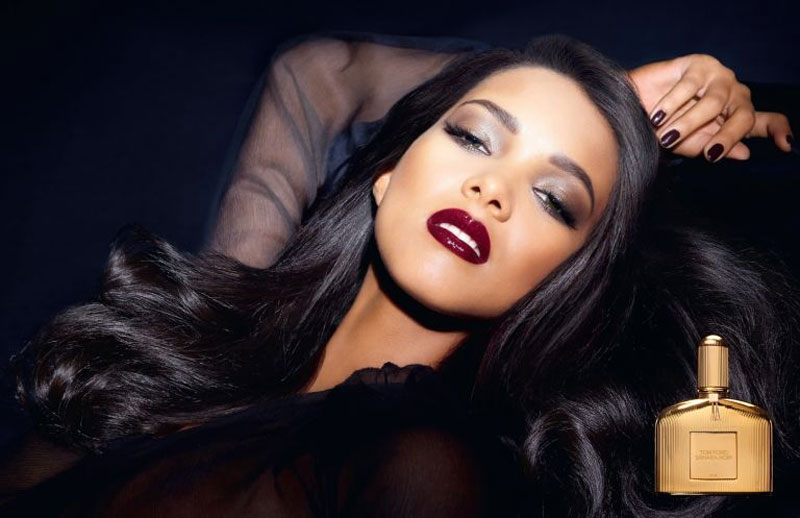
Tom Ford advert for Sahara Noir. Source: Fragrantica.

Tom Ford advert for Sahara Noir. Source: Fragrantica.

In the press release I found back in February, Sahara Noir is described as follows:

Sahara Noir is rich and exotic; it wraps the balsamic, incense-touched notes of frankincense in gold and honey-coloured light,” noted Ford. “Middle Eastern culture has an extraordinary appreciation for the luxurious, emotional and memorable qualities of fragrance; perfume is worn there in a way that feels very familiar to me. Sahara Noir is my interpretation of this heritage.

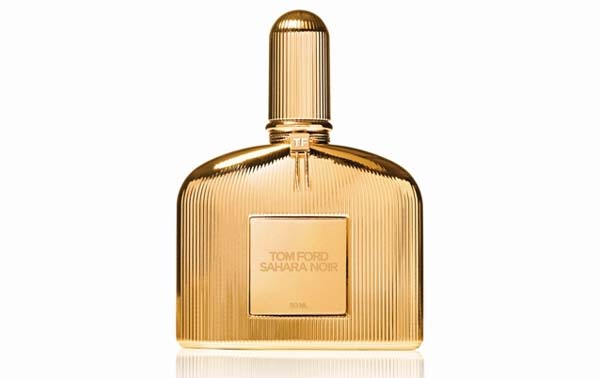
Tom_ford_sahara_noirThe press release is actually important because of its detailed explanation of the notes — notes which are quite different from what Fragrantica lists. In the official description of the perfume, the company states:

The oriental woody juice is crafted around a heart of frankincense. This key ingredient is complemented by top notes of cistus essence Orpur® (Orpur denotes a natural ingredient of exceptional quality and purity), bitter orange, Jordanian calamus – an oasis sweet grass – and Levantine cypress, famed for growing in the gardens of the 1001 Arabian Nights.

The heart blends frankincense essence Orpur® , cinnamon, cool papyrus extract, Egyptian jasmine templar and rose absolute from Morocco. A beeswax extraction from Burma lends body and a supple, honeyed-animalic richness.

The warm dry down is laced with amber. It is formed by a special blend of labdanum – labdanum absolute and a rich natural fraction of labdanum known as ambreinol – combined with benzoin, vanilla, cedar, frankincense resin, agarwood and balsam.

The notes on Fragrantica mention only:

Top notes are bergamot, mandarin orange, violet, ginger and basil; middle notes are grapefruit blossom, orange blossom, tobacco and black pepper; base notes are amber, cedar, patchouli, oakmoss and leather.

So, if we combine the two lists together, the full set of notes seems to be closer to the following:

bergamot, mandarin orange, violet, ginger, basil, grapefruit blossom, orange blossom, tobacco, black pepper, amber, cedar, patchouli, oakmoss, leather, Jordanian calamus grass, cistus [labdanum] essence Orpur®, cinnamon, papyrus extract, Egyptian jasmine templar, Moroccan rose absolute, beeswax extract, labdanum, ambreinol, benzoin, vanilla, frankincense resin, agarwood [oud], and balsam.

A slightly different set of notes, all in all, don’t you think?

Camel Caravan. Photo by Yann Arthus-Bertrand.

Camel Caravan. Photo by Yann Arthus-Bertrand.

Sahara Noir opens on my skin as slightly bitter amber with heavy frankincense. There are: bitter citruses that feel like the fresh oils from the rind; peppery cedarwood; dry tobacco leaves; bitter but crystalized ginger; and black, dirty patchouli. The whole thing sits atop a powerful base of rich, nutty, heavily leathered labdanum (a type of amber resin), infused with strong frankincense. The amber-frankincense duet smells familiar — as it should to anyone who has smelled Amber Absolute. As the seconds pass, light touches of cinnamon and rich, heavy honey are also noticeable. The whole thing is potent and, yet, much airier and lighter than you’d suspect, given those rich, heavy notes. I’m not saying that Sahara Noir is a sheer, translucent, fresh scent by any means, but it doesn’t feel opaque, thick, and molten.

Labdanum compiled into a chunk. Source: Fragrantica

Labdanum compiled into a chunk. Source: Fragrantica

Less than five minutes into Sahara Noir’s development, the perfume shifts a little and becomes significantly less complex. The citrus notes have all but vanished, leaving behind a scent that is primarily frankincense-infused labdanum amber. Those who don’t like labdanum as a stand-in for amber should perhaps take heed, for Rock Rose or Cistus (its other names) is not to everyone’s taste. Labdanum has quite a masculine, leathery bent to its nutty, resinous, darkly balsamic accord, and I know some amber lovers who aren’t always enthused by its particular aroma.

Swirled into the blend are tobacco leaves, peppery cedar wood, dry papyrus, and the smallest suggestion of oud. The perfume is beautifully blended, so few of these notes are individually distinctive by themselves amidst that dominant pairing of frankincense and labdanum. Yet, by the end of the first hour, the peppery wood notes and oud become much more significant. The tobacco fades away, along with the faint traces of spice and ginger that lurked in the opening. By the 90 minute mark, Sahara Noir is a three-way pairing of labdanum, frankincense and oud. As a side note about that oud, I know a lot of my regular readers really struggle with the note. I do, too, when it is medicinal, antiseptic, fecal, or a bit too much of the noble “rot.” Here, however, it is much more akin to incredibly peppered woods. It’s simultaneously dry, a little bit fiery, and highly sweetened (thanks to the resins and honey)– all at the same time. Yet, for the most part, it is not over-powering or bullying; it is far too overshadowed by the leathery amber and frankincense.

Photo: Federico Bebber. Source: MyModernMet.com

Photo: Federico Bebber. Source: MyModernMet.com

Sahara Noir remains as this triumvirate for hours and hours. I detect absolutely no citrus or floral notes; not a whisper of rose or jasmine anywhere in sight. Midway during the third hour, the perfume becomes richer and softer, turning into a lovely amber with strong oud and frankincense. The labdanum’s leathery edges have been tamed, mellowing into something sweeter and milder with a honeyed accord. The frankincense is in much better balance, though the oud seems to have increased a little in strength. I will be honest and confess that the oud is a little too much for my personal tastes and a little sharp at times, but it is in perfectly equal proportion to the other two notes. Sahara Noir is now a three-way race, with each horse neck-and-neck as they lead into the home-stretch.

With every remaining hour, the triplets soften even further until, finally, Sahara Noir turned into a nutty, honeyed amber with faint traces of smoke and oud. Lurking at the edges is the merest dash of cinnamon, benzoin and vanilla — the latter having a breath of powder — but neither note is very significant. In the final hours, and to my surprise, I could occasionally detect some vague, soft floral notes underlying the amber. It felt most like jasmine, but the whole thing was a bit too muted and amorphous to really tell. Plus, every time I thought I could pinpoint it on my arm, the note flitted away like a ghost. By the very end, Sahara Noir was nothing more than a faint whisper of nutty amber with a soft feel of caramel.

All in all, Sahara Noir lasted just over 9 hours on my perfume-consuming skin. As always with Tom Ford fragrances, I opt for a lesser amount than what I would normally use with everything else. It was Amber Absolute, actually, which taught me it is best to err on the side of caution initially when it comes to the quantity one uses for one of his perfumes. Using the equivalent of two good sprays on my arm, Sahara Noir was generally quite light in feel. It had serious sillage at first which dropped to “average” after the first hour. At that point, someone standing a few feet away wouldn’t be able to detect it, but don’t let that mislead you. When sniffing it, Sahara Noir is very potent, thanks to the frankincense. If you were to spray more than a small amount, I suspect the sillage might blow someone out of the water. I also think a larger quantity would change the nature of the perfume. Time and time again with Tom Ford’s Private Blend fragrances, I’ve noticed that using too much can lead to quite an overwhelming, ’80s-like experience and, more importantly, to the amplification of whatever note is dominant in the perfume. In this case, the frankincense.

tom-ford-amber-absolute

The now discontinued Amber Absolute.

As I noted at the start, Sahara Noir is extremely close to Tom Ford’s Amber Absolute from his much more expensive, more “prestige” Private Blend collection. Amber Absolute was discontinued last year for reasons that I’ve never quite fathomed. It seemed to be one of the big favorites amongst the Tom Ford line as a whole — cherished and adored by a vast number of people, especially friends of mine who enjoy rich amber scents with smoke. I reviewed Amber Absolute and, personally, found the extreme nature of the frankincense to be a bit bullying — and that’s coming from someone who really enjoys the note. For me, the perfume was unbalanced, too shrill and top-heavy with the frankincense, and just a bit too, too much as a whole. I always thought I was in the minority on that assessment, but Sahara Noir makes me wonder if, perhaps, there were more people who shared my views.

You see, Sahara Noir is a much less extreme, more balanced version of Amber Absolute. There is still the labdanum-frankincense accord, but the smoke doesn’t feel acrid and like an 800-pound gorilla. To my nose, Sahara Noir is also slightly more nuanced, along with having a lighter feel and texture, but it’s definitely all relative. There are other — albeit small — differences as well. For one thing, the opening to the two fragrances is not quite the same: the Amber Absolute has much more of a boozy rum, spiced start; Sahara Noir is more citrus-y (for all of about 5 minutes), before turning straight to the labdanum and frankincense. It also has far more dry wood notes, from the very peppery cedar to the oud. Of course, the inclusion of that last element is quite a big difference, though I would argue that — for the most part — it’s a difference of degree and not of kind. The dominance of the core labdanum-frankincense combination in both fragrances makes them much more alike than different, despite the addition of the oud.

All in all, I liked Sahara Noir — but I didn’t love it and I don’t think I’d wear it. For one thing, I’m extremely tired of oud — there seems to be no end in sight to the mania. Everything has oud in it these days. (At this rate, it’s going to be on my bloody pizza next!) Perhaps if I didn’t test at least one oud fragrance a week (and, sometimes, as many three), I’d be more enthusiastic. But Sahara Noir isn’t complex enough to sway my oud fatigue.

For another, while I like frankincense a great deal, I find there is always something a little sharp in the frankincense use by Tom Ford. Sahara Noir lacks the soft, luxuriating, velvety richness of Dior‘s Mitzah, one of my favorite labdanum-frankincense combinations and a fragrance which I thought was much more complex, nuanced, and layered. Perhaps it’s because Mitzah isn’t so focused on just two key notes, and its edges are softened as a result. In particular, both the labdanum and the frankincense in Mitzah are gentler, more rounded, better blended and richer. Perhaps it’s because Mitzah lacks oud with its peppery element which is sometimes a little sharp in Sahara Noir. Whatever the reason, I liked Sahara Noir — but not enough to want to wear it.

As a side note, I cannot help but think Tom Ford decided to tone down his Amber Absolute, while also adding in oud, for marketing reasons. With the inclusion of that note, he could target the extremely wealthy Middle Eastern market, and position Sahara Noir as an exciting new call to their traditional heritage of oud fragrances, as well as heavy, balsamic amber ones. What stumps me is why Sahara Noir isn’t part of his more expensive, potent Private Blend line, instead of the cheaper Signature collection. His intended audience could certainly afford it. I suspect it’s because he didn’t want to underscore quite so easily the enormous overlap between Sahara Noir and a Private Blend fragrance that he just discontinued.

Another source of bewilderment: Sahara Noir is supposedly marketed as a fragrance “for women.” Er…no. I don’t think so! Sahara Noir is as unisex as you can get. In fact, I suspect women who are not used to oud (or heavy frankincense) may blink a little at Sahara Noir. This is not some sweet, gourmand, or spiced soft amber. This is hardcore frankincense and labdanum.

On Fragrantica, the comments thus far seem generally to evince disappointment, though quite a few people really enjoy it. A number of people write about how it is primarily a frankincense fragrance and nothing revolutionary. Well, they’d be right, especially as Sahara Noir replicates Amber Absolute so closely. Two commentators seem to feel it is a complete “knock-off” of Absolue Pour Le Soir by Maison Francis Kurkdjian. With that, I very much disagree. I’ve reviewed Absolue Pour Le Soir and think it is absolutely nothing like Sahara Noir. Absolue is not an ode to frankincense and labdanum; it is a stunning floral oriental that is centered around slightly animalic musk with lovely, rich sandalwood and a variety of other elements.

Some have called Sahara Noir “linear,” and I think it is. But I’ve always thought that term is a negative only when someone absolutely hates the notes that are continuing from start to finish. If you love a rich amber infused with the particularly intense sort of smoke that is frankincense, and if you like the slightly masculine, leathery sort of amber that is labdanum, then I think you might enjoy Sahara Noir. However, those who don’t like oud may not be enthusiastic, and those who already own Amber Absolute can probably skip it.


DETAILS:
Cost & Availability: Sahara Noir is an eau de parfum which generally comes in a 1.7 oz/50 ml bottle. It costs $150 or $165, depending on US retailer, or £100.00. On the Tom Ford website, however, it is shown in 3 different sizes: 1.0 oz/30 ml, 1.7 oz/50 ml, and 3.4 oz/100 ml. I can’t seem to find pricing for the smaller sizes anywhere and, on the Tom Ford website, wasn’t able to click on the links to put it in a shopping cart to ascertain the cost. In the US, you can find Sahara Noir sold in the 1.7 oz/50 ml size at department stores such as Neiman Marcus (which lists its price at $150), Barneys (which sells it for $165, for some odd reason), and Bergdorf Goodman (which lists its price at $150). I couldn’t find it on the Saks or Nordstrom websites. In Canada, I believe Tom Ford is carried at Holt Renfrew, but I don’t know when they will get Sahara Noir. In the UK, you can already find it at Harrods or Selfridges. Both stores sell the 1.7 oz/50 ml size for £100.00. Elsewhere, I’ve seen Sahara Noir listed on Dubai Duty-Free and Souq.com. Tom Ford Beauty doesn’t seem to be carried by retailers in France, but it is in many European nations from Denmark and Belgium to the Russian Federation. Hopefully, you can find a retailer near you using the store locator on the Tom Ford website. As for samples, Surrender to Chance doesn’t have Sahara Noir at this moment as it is far too new, but you can try to find it at any of the department stores listed above to give it a test sniff.