Aftelier Perfumes Cuir de Gardenia

Source: Mostbeautifulflower.com

Source: Mostbeautifulflower.com

The beauty of a gardenia, with all its multi-faceted richness and inherent contradictions, captured in a perfume that is sometimes much more about a mood than a particular set of notes. That is Cuir de Gardenia, a feat of technical skill, innovation, and perfume mastery by the acclaimed doyenne of all-natural perfumery, Mandy Aftel of Aftelier Perfumes

On her website, Ms. Aftel has a wonderfully detailed explanation of why Cuir de Gardenia is different from many “gardenia” scents, along with discussion of its character and structure:

Cuir de Gardenia retains the unique beauty of the tiare [Tahitian gardenia] flower, not allowing it to morph into the hundreds of petals of a floral bouquet. I had been incredibly fortunate to find an artisanal grower and distiller of the ultra-rare, costly, precious gardenia. In Cuir de Gardenia, I wanted to retain the pure loveliness of the creamy sweet and singular gardenia fragrance, and knew that the rounded warmth of an oil-based perfume (solid and extrait) would be the perfect format.

Tiare or Tahitian gardenia. Source: Kootation.com

Tiare or Tahitian gardenia. Source: Kootation.com

Cuir de Gardenia is unusual in that it has no top notes; I created it in such a way that the gardenia appears immediately, unimpeded from the opening of the perfume onward, merging seamlessly with the leather. The natural isolates ethyl phenyl acetate (reminiscent of a bunch of sweet peas) and the candy-like maltol contribute sweet and floral notes to the animalic base of the perfume.

Source: Fragrantica

Source: Fragrantica

Cuir de Gardenia comes in two concentrations: an extrait de parfum oil and a solid perfume. This review is for the former, the extrait de parfum. The perfume is classified on Fragrantica as a “floral woody musk,” while Ms. Aftel categorizes it as “dry woods.” According to Ms. Aftel, the notes are:

Middle: tiare (gardenia) absolute, jasmine grandiflorum absolute, benzyl acetate.
Base: castoreum, ethyl phenyl acetate, maltol.

It was interesting to smell Cuir de Gardenia merely in the vial. You are struck by an intense burst of heady, rich gardenia with hints of jasmine and a strongly animalic whiff.

Source: Chris Maher or "Artonline" at Deviantart.com. (Website link embedded within.)

Source: Chris Maher or “Artonline” at Deviantart.com. (Website link embedded within.)

The latter evoked two very different images in my mind. First, the smooth flanks of an animal covered in leather that has been burnished in lush perfumed oils. Second, the flanks of the human body, with the curve over the hips and slightly musky, satiny smoothness. There is something to both visuals, as Cuir de Gardenia is more than a mere floral scent. Still, there is no doubt that the main note is unquestionably gardenia. In the vial, it smells like a full-throttled gardenia or, more accurately, the essence of thousands of flowers distilled into a few, concentrated, precious drops. As a whole, Cuir de Gardenia is almost more of a mood and feeling than a mere scent.

It’s a different matter on the skin, at least at first. Cuir de Gardenia is an oil, and the first thing I was struck by when I applied it was the glistening, golden sheen it leaves on the skin. For me, smell of the oil initially acted as a barrier between the headiness of the flower that was so apparent from sniffing the vial. You have to give it a few minutes for the oiliness to dissipate and melt. Once the heat of your skin breaks it down, Cuir de Gardenia starts to show itself in all its multi-faceted richness.

North American Beaver via Wikipedia.

North American Beaver via Wikipedia.

Cuir de Gardenia opens on my skin with a fierce blast of strong castoreum musk, infused with the fresh gardenia flower, greenness, and a tinge of sourness. Depending on how much of the perfume you apply, the castoreum either leads the charge or comes in second place. When I applied a lot (about 3 big dabs of the oil), the muskiness was both intense and very animalic, verging almost on the feral. (You can read more about castoreum on Fragrantica, if you’re interested.) It made me think of how Ms. Aftel was reported to buy a very ancient, vintage stock of the beaver secretion from the estate of a former perfumer and how that ingredient is said to be such a part of her Secret Garden fragrance. I suspect the same stock was used for Cuir de Gardenia.

Source: freerangedairy.org

Source: freerangedairy.org

When I applied a smaller amount of the oil, the dominant impression for me was something else. I was struck by how Cuir de Gardenia felt more like a texture. Yes, there is the gardenia that is more moderately indolic and encased in a subtle warmth tinged with the castoreum’s musky, plush, velvety undertones. However, my main impression was rich, Devon clotted cream and butter. Cuir de Gardenia opens like floral butter, touched by a hint of sourness and green. The latter is an unexpected freshness that feels quite contradictory given how rich and ripe the flower can be.

Source: 123rf.com

Source: 123rf.com

I’m struck by the polarity and juxtapositions. Velvety petals that feel like buttered cream, next to dewy moisture and greenness. You have the gardenia on the stem in the early morning hours, but also the headiness of that same flower after it’s been plucked and its aroma has concentrated over time. None of it feels blowsy or decayed; there are initially no mushroomy undertones nor earthiness the way gardenia can sometimes manifest. Depending on quantity, it is either quietly lusty in its muskiness, or a little bit feral.

Ten minutes in, Cuir de Gardenia smells like buttermilk with its green, sour cream undertones. Deep in the base, there is a subtle whiff of something rubbery, but it’s more textural than anything black or leathered. It’s as if there were so much gardenia richness that it has coagulated and solidified into a hardened oil. I know I’m not doing a good job of explaining all of this, but that is because I’ve never quite encountered a gardenia like this one. For a perfume centered around one main note, there are a lot of unexpected, almost contradictory, complex facets in the opening hour.
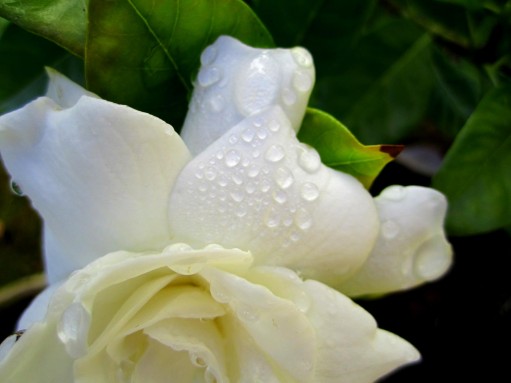
Photo: onewomanshands.blogspot.com

Photo: onewomanshands.blogspot.com

I think that’s a testament to Ms. Aftel’s deft handling of the flower. It would have been all to easy for Cuir de Gardenia to be a simple, indolic, voluptuous gardenia. With all that richness, you’d almost expect a single-minded, typical gardenia. Instead, Cuir de Gardenia is one of those rare scents that somehow captures all the tiny, often disparate, layers to the flower actually growing in nature. What it isn’t is raunchy or dirty. This is a very different sort of “indolic” theme than what one usually encounters, one that is more musky than voluptuously narcotic on my skin.

And, in truth, Cuir de Gardenia’s headiness is a very quiet one. I’m not surrounded by an avalanche of gardenia; there is no nuclear-tipped cloud wafting around me, emanating a lavishly thick, voluptuous fleshiness. Cuir de Gardenia is much more restrained. I have to admit, I personally prefer my white flowers on the Wagnerian side, but there is no denying Cuir de Gardenia’s refinement. It is more akin to Vivaldi’s Four Seasons than to the Ride of the Valkyries, more Mozart’s Eine Kleine Nachtmusik Allegro than Beethoven’s Ninth or his Ode to Joy. None of that is meant as an insult. I love all those pieces, deeply, and I listen to Mozart more than I do to Wagner’s powerful “Apocalypse Now“- style piece, but there is no denying that there are distinct differences in style, tone, and mood.

At the end of 30 minutes, the perfume hovers an inch above the skin in a mix that is at once delicate, restrained, and rich. When you apply a larger quantity of Cuir de Gardenia, it adds another hour to the time frame before the sillage drops. In both cases, when smelled up close, the perfume is a massively concentrated hit of lush, buttery smooth gardenia infused with greenness and a tinge of buttermilk sourness. The gardenia is carefully placed upon a soft castoreum base that is very quietly musky, plush, velvety, and dark. Yet, there is very little of the animalic whiff that I detected when I smelled Cuir de Gardenia in the vial or that the perfume opened with when I applied a lot. The castoreum seems to have melted into the petals, having an indirect effect on the notes in a much more discreet manner. The whole thing is lovely, and I’m very impressed by the carefully calibrated balance.

"Dressage Black and White" by Diana Rose Greenhut or DianaExperiment on Flickr. (Website link embedded within.)

“Dressage Black and White” by Diana Rose Greenhut or DianaExperiment on Flickr. (Website link embedded within.)

You may have noticed that I’ve barely mentioned leather at this point. Well, initially, it didn’t show up on my skin in any discernible fashion. Then, suddenly, right at the 30 minute mark, things start to change. There is a muted impression of an ultra-expensive, high-end Hermès saddle which carries the tiniest lingering traces of the horse it had been on many hours before. There is something almost akin to civet in the animalic muskiness that is starting to stir on my skin. Lurking in the distance and at the edges are tiny flickers of notes that are simultaneously mushroom-y, earthy, vaguely chocolate-y, and nutty. It is undoubtedly due to the gardenia’s mushroom side combined with the castoreum. Whatever the cause, it adds dimension to what was previously and primarily a fresh-ripe, green-creamy floral bouquet.

The issue of the leather is perhaps the best evidence for how beautifully Cuir de Gardenia has been blended and the technical mastery involved. For the first hour, the leather never stays in one place on my skin, but moves throughout the notes like a very friendly ghost. Sometimes, he stops to say hello, and remains to chat for 4 or 5 minutes. Then, he drifts away to other worlds for a brief span, before popping back in. Every time I think he’s finally vanished, he waves a dark, friendly, leathered arm at you from the horizon. Then, suddenly, 90 minutes in, he decides to move in permanently. And he’s brought luggage with him! Suitcases filled with black smoke whose tiny tendrils wind their way up from their depths to slowly wrap their threads around the creamy gardenia. The leather ghost gives you a cheeky grin, puts his feet up, and is there to stay.

Yet, I want to emphasize that this is a very subtle, muted “leather” as a whole. It’s not the sort of leather that you have in fragrances like Etat Libre‘s hardcore, black Rien, the deeper, burnished brown leather of Puredistance M, the distinct leather of Parfums Retro‘s Grand Cuir, or the animalic leather of LM ParfumsHard Leather. The note here is more about an impression of leather. It is strongly infused with an animalic edge that sometimes feels a bit civet-like in nature, and it creates a subtle kinship to horsey leather. To be clear, though, the note is never fecal but is primarily just musky. Still, if you’re expecting a true, hardcore leather fragrance, you need to put those thoughts aside. Cuir de Gardenia is a spotlight on gardenia first and foremost. The flower merely happens to have a animalic leather undertone that distinguishes it from the traditional take on the note.

"Gardenia sketch" by Angel H. Juarbe on Fine Art America. http://fineartamerica.com/featured/gardenia-sketch-angel-h-juarbe.html

“Gardenia sketch” by Angel H. Juarbe on Fine Art America. http://fineartamerica.com/featured/gardenia-sketch-angel-h-juarbe.html

From the start of the third hour until its end, Cuir de Gardenia is a seamless blend of gardenia with animalic “leather” and musky touches. The smokiness lingers, but it becomes increasingly overshadowed by the warmth in the base that makes the gardenia more golden in feel. It is a skin scent on me at the 2.5 hour mark, but Cuir de Gardenia’s longevity is excellent. As an extrait or pure parfum, that is to be expected, but Cuir de Gardenia is also an all-natural perfume, so I was surprised when I noted Cuir de Gardenia lingering well after the 7th hour. All in all, with 3 big dabs, the perfume lasted just short of 11 hours on my perfume-eating skin. It was a mere whisper after the 6th hour that you could detect only if you put your nose right on your skin, but it was most definitely there. With a smaller quantity, Cuir de Gardenia lasted just under 9 hours.

As many of you know by now, Cuir de Gardenia has been a massive hit. Over 12 different bloggers have placed it on their Best of 2013 list, from The Perfume Shrine and The Non-Blonde to The Fragrant Man, Angela at Now Smell This, and many others. Out of the full reviews, I think that of The Non-Blonde is worth noting. On her skin, Cuir de Gardenia was more overtly sensual (or sexual?) than it seemed to be on me. Furthermore, her review includes a useful comparison between the extrait parfum and the solid:

Cuir de Gardenia, the new perfume from Aftelier tells the story of luxury, eccentricity, and sensuality. […][¶] This gardenia smells warm: warm from the tropical sun and sands as well as warm skin. The creamy aspect is also there, musky and sensual. This flower is unmasked by top notes. There’s nothing there to lighten the mood or make it go down easily. Instead, you get a journey from flora to fauna, as the creamy gardenia becomes fattier and more animalic and the perfume embraces the skin and wraps it an unmistakable buttery leather. […]

Cuir de Gardenia is offered as an extrait and a solid perfume, to keep the warmth and sensuality on skin-level. This perfume is pure decadence– you don’t want to send it into the stratosphere on a cloud of volatile alcohol molecules. I suspect that beyond the preciousness of the raw materials, a big sillage would have been just too much for polite company: this thing requires intimacy, which this format allows. Applied where it truly counts, Cuir de Gardenia is sweet and intense. I find it incredibly sexy in a very femme way, but then again, I’m all woman. Men who feel comfortable in dirty gardenia fragrances (from JAR Jardenia to Lutens Une Voix Noire) shouldn’t hesitate to try this Aftelier perfume in either form. The solid smells more animalic upon application but becomes smoother and almost honeyed after an hour or so. The extrait works for me in an opposite way– its true leather and castoreum nature becomes more pronounced with time. They layer beautifully, obviously, and last for at least six hours even when dabbed extremely sparingly.

Cuir de Gardenia was originally meant to be a limited-edition release, but the degree of the positive response has led Ms. Aftel to make the perfume a permanent part of her line, and to also offer it in a new 1/4 oz (about 7.4 ml) extrait bottle. It’s not cheap at $195 (or $240 for the solid), but you really need to keep in mind just what we’re talking about here: real gardenia, not a synthetic recreation through other notes. As I’ve mentioned a few times, gardenia is one of those flowers whose aroma cannot be easily captured through distillation of its petals. When you smell “gardenia” in a perfume, you’re usually smelling some combination of tuberose, jasmine, or synthetics. A fragrance made purely from actual, genuine gardenia is incredibly rare.

Tiare. Source: wahinewednesdays.com

Tiare. Source: wahinewednesdays.com

The Fragrant Man offers insight on yet another difficult aspect of using gardenia, especially when it’s the Tahitian kind called tiaré:

[Ms. Aftel’s Cuir de Gardenia] is a breakthrough moment for gardenia ‘fume lovers. The issue with gardenia oil is that when it leaves its heated homeland the scent changes to ‘off’ or more precisely, indolic at the unpleasant end of the spectrum. It is unstable when taken out of its natural tropical environment. We are talking about Tiare here, the gardenia that is native to Polynesia so my guess is that Tahiti or New Caledonia is probably the source. In these islands the local people make manoi oils. Tourists are often charmed by the scent of these oils until they arrive back home. This has happened to me. […] Manoi oil is coconut oil usually blended with the Tahitian gardenia known as Tiare but also with frangipani, ylang ylang and vanilla, in an enfleurage type process. Coconut oil is the carrier fat for the scent.

Ms. Aftel has found a way around all that, while also avoiding synthetics and gardenia substitutes. The result is a fragrance that seems to drive many men and women wild. (You can read The Fragrant Man‘s proper review of the scent, subtitled “Olfactory Orgasm,” which not only includes links to all the other reviews out there, but also has a discussion on the role of antique castoreum in recreating the leather note.)

There are a few other male bloggers who also fell hard for Cuir de Gardenia. In the case of The Black Narcissus, his immediate, instant reaction to Cuir de Gardenia was so extreme that the usually elegant writer could barely get the words out:

STOP THE PRESS! AFTELIER PERFUMES’ CUIR DE GARDENIA EXTRAIT IS GORGEOUS

the perfume, just deliciously arrived in my postbox: immediately, for me, knee weakening. not gardenia, as in gardenia,… tiare:a tropical, moist, neptunian, sultry white witch emerging, hair slicked to shoulders, from the sea. sweet Italian bubble bath honey. cuir: but fresh.tango’s eminently wearable younger sister, unencumbered
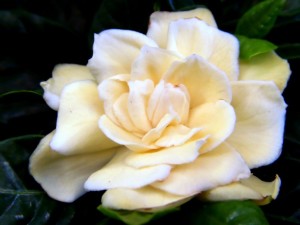
Photo: Chris or "Rapt in Roses" on Flickr. (Website link embedded within photo.)

Photo: Chris or “Rapt in Roses” on Flickr. (Website link embedded within photo.)

I liked Cuir de Gardenia a lot, but it was more quiet and restrained on my skin than I had expected. It is infinitely creamy, but I think I like my white flowers to show more skin, to ooze ripened sexuality like a heaving bosom on a courtesan. In other words, I like my big white flowers to be narcotically BIG WHITE FLOWERS, Wagner and Valkyrie style.

Yet, it’s hard not to be impressed and a little bit seduced by a more tasteful, refined take when it is as rich, buttery and multi-faceted as Cuir de Gardenia is. The perfume is a study of paradoxes — paradoxes which are perhaps the best and truest manifestation of the flower in nature that I have ever encountered — but done with an ingenuous animal twist. The whole thing is intellectually fascinating, but Cuir de Gardenia is also a testament to pure skill. You can’t be a niche perfumista today without hearing about Ms. Aftel’s role as the professor, alchemical wizard, and pioneer of all-natural perfumery. You hear it, but you may not really understand it fully until you try something like Cuir de Gardenia.

Or, in my particular case, her Chef Essences which I have to say here and now blew my foodie mind in such a way that my eyes rolled back in my head, and I was considering engaging in lewd acts with the bottle. (Well, not quite, but… close. I was certainly molesting the bottle of Ginger Essence in full disregard of the instructions on the stated quantity, and I was pretty much drooling on both myself and my food. The degree of my reaction, amazement and disbelief over those genius fragrant oils cannot be stated enough, and they will be the subject of a review sometime in the next 2 weeks, once I finish my cooking tests. Those Chef Essences…. Good God!) If Cuir de Gardenia didn’t arouse quite such an intense reaction in me, it is only because I care about food much more than I do about perfume. Gastronomy is my first love, while perfume is perhaps my fifth, so don’t misinterpret my tone. I think Cuir de Gardenia is very pretty, even if it isn’t really very “me.” It is also, without a doubt, masterfully done.

I think that anyone who passionately adores their lush, big white flowers should give Cuir de Gardenia a sniff. Those who normally fear white flower bombs would probably enjoy it as well, given the perfume’s intimate restraint and refinement. At the same time, the animalic side and suggestion of leather make Cuir de Gardenia a fragrance that men can pull off. The perfume’s low sillage also means that it is something you can wear to work, though I personally think Cuir de Gardenia feels far too special for such mundane, daily events. My only note of caution is for those who are accustomed to more commercial, traditionally sweet, or conventional florals. If you’re not used to castoreum, I don’t know how you will respond to Cuir de Gardenia’s very animalic muskiness. 

All in all, I think Cuir de Gardenia would be perfect for a date night, or an evening when you want to discreetly tantalize. It is delicate sensuality done with great refinement. 

Disclosure: My sample was courtesy of Aftelier Perfumes. That did not impact this review. I do not do paid reviews, my opinions are my own, and my first obligation is honesty to my readers.

DETAILS:
Cost & Availability: Cuir de Gardenia is exclusive to the Aftelier website, and is available in 3 different sizes. There is a 2 ml mini of Pure Parfum extrait for $55; a new 1/4 oz bottle (about 7.4 ml) of the Extrait for $195; or a 0.25 oz of solid perfume in a handmade, sterling silver compact for $240. Samples are available for $6 for a 1/4 ml vial. Ms. Aftel ships worldwide, and you can find further information on her FAQ page. 

Yosh Sombre Negra: Dark Shadows

Source: Wall321.com

Source: Wall321.com

Deep in the heart of the forest, where the sun never shines, there is a campfire surrounded by mighty trees. All around it, as far as the eye can see, there is vetiver forming a peaty, green carpet. It clambers up the trees, covering even the branches with a vista of green. In that clearing, though, the smoke burns as black as a panther, smelling of both the piney trees around it and of incense. Tarry and leathered, it merges with the vetiver to send a smoke signal up to the sky, announcing the arrival of “dark shadows.” But this is not Joseph Conrad’s Heart of Darkness and you should not be fooled by what’s on the surface. If you peer really hard, you can see small spots of colour: cloved umber, patchouli brown, mint, honeyed yellow, iris grey suede, and soapy white. It’s Sombre Negra.

Source: Barney's.

Source: Barney’s.

Sombre Negra (“Dark Shadow”) is an eau de parfum from the San Francisco perfumer, Yosh Han. Sombre Negra was the first in her darker line of perfumes called “M,” and has a very confusing history. It was initially a limited-edition fragrance created in 2010 exclusively for Luckyscent, and centered around dark, mushroom notes like “choya loban,” teak, cypress, vetiver and tobacco.

Then, in 2011, she made a second version that she reportedly called “M:001 Sombre Negra.” It’s completely unclear to me whether this version is also exclusive to Luckyscent. Reading Luckyscent’s description very carefully and with literal interpretation, one might think it was and that there were still two versions out there. It doesn’t help that the description for Sombre Negra on some other U.S. retailers (like Barney’s) references the old notes. I emailed Ms. Yan a few days ago to obtain clarification on the issue, but have not yet received a response.

To me, it simply doesn’t make sense that the new version remains a Luckyscent exclusive, or that there continues to be two different perfumes with the same name. Everyone who has tested Sombre Negra from late 2011 onwards seems to be talking about the second Version 2.0 with its different notes and smell. Moreover, Yosh fragrances are carried throughout Europe, and I highly doubt all the European perfumistas who talk about the new, more patchouli and clove-centered fragrance are universally obtaining their samples from Los Angeles’ Luckyscent. 

So, I’m going to assume that Version 2 has completely replaced the original, limited-edition 2010 Luckyscent exclusive. You should too, but be aware that any discussions of Sombre Negra dated before the end of 2011 are referencing a very different fragrance, one that was reportedly much darker, earthier and smokier. This review is for the new, updated post-2011 version. [UPDATE 2/3/14 – Ms. Han has confirmed that all the vendors currently selling Sombre Negra, whether in Europe or America, are selling the new version. “Lucky Scent was the only retailer to carry the original. The M:001 version is available to everyone.”]

Yosh’s website has no individual page for Sombre Negra that I can quote for its (current) description or notes, so we have to rely on Luckyscent‘s old entry:

Please note, this is a newly re-imagined Sombre Negra.
Perfumer Notes: ”I launched a Limited Edition Sombre Negra exclusively with LuckyScent in 2010. That fragrance to me was dark and edgy. Very dense. I wanted to explore the idea of shadows and their mutations so I decided to create a new edition of Sombre Negra. The new M:001 Sombre Negra incorporates citrus top notes that reflect a flash of lightening – a spark of fire that quickly vanishes but casts new and elongated shadows. Rose, tonka and orris were added to give it some depth and fullness. Nutmeg and cumin give the fragrance a kind of vegetative musk and suede element to an otherwise smokey and leathery fragrance. It is still very masculine but Sombre Negra is also the ‘boyfriend fragrance’ that women are falling in love with and keeping for themselves.

[Notes]: Vetiver, patchouli, cedar, olibanum, pink pepperberry and black peppercorn, clove, juniper, citrus, nutmeg, cumin, tonka and orris root.

Source: science.nationalgeographic.com

Source: science.nationalgeographic.com

I think Sombre Negra‘s opening is absolutely fantastic. It is a sinewy, hefty, opaque burst of peaty vetiver, campfire smoke, cloves, honey, and pepper. Trailing behind is an utterly mesmerizing, perfectly balanced, tarry aroma that is simultaneously fresh, piney, resinous, and infused with birch tar smoke. I wouldn’t be surprised if the “juniper” note in the listing were really a reference to cade oil, which is a distillation of the prickly juniper and has a particularly smoky, phenolic character. Whatever the source of the tar, I love how it plays off the peaty vetiver and the smoke.

Peat bricks in an outdoor fire. Source: freeirishphotos.com

Peat bricks in an outdoor fire. Source: freeirishphotos.com

That smoke, that smoke… my God, it’s beautiful. It’s exactly like the smell that you’d get from a campfire outdoors, but there is also incense in there as well. What makes it my favorite part of the fragrance is the way it has the most minuscule drop of honey in it, along with tobacco and leather facets. I’m guessing that those are the indirect result of the patchouli which pops its head up 5 minutes into Sombre Negra’s development. Initially, it is a subtle note that is more woody, sweet, and tobacco-like than green, but traces of the patchouli’s mentholated side are skulking around in the corners.

The whole thing is utterly glorious, and feels like a distant, non-floral, 5th cousin removed from Amouage‘s Tribute Attar. They have the same fantastic smokiness, though the Sombre Negra is more complex than an attar centered around incense and rose. Yet, Sombre Negra has its own floral component, too. The iris appears after 7 minutes, though it is a dry, rooty kind. There seemed to be a brief pop of rose, too, but both flowers are quickly overshadowed by the mint note that bursts on the scene. Whether it stems from a fresh, Haitian kind of vetiver or from the patchouli, I have no idea, but the wintergreen doesn’t really seem to fit in for me.

Tar pit bubbles. Source: Los Angeles' La Brea tar and asphalt pits. tarpits.org

Tar pit bubbles. Source: Los Angeles’ La Brea tar and asphalt pits. tarpits.org

Sombre Negra is becoming smokier, darker, and more leathered with every minute. Its tarry blackness has a distinct oily quality to it, perhaps from the undiluted, pure patchouli. Visions of oil slicks and the La Brea tar pits float around my head, alongside the image of that campfire deep in the heart of a vetiver forest. There is a muted pop of yellow from a lemon, but it’s gone in an instant. Much more noticeable, however, is the growing influence of the clove which lends big splotches of brown-umber to the colour palette. It’s spicy, deep, but also smooth and warm, and it works beautiful with the patchouli. Unfortunately, at this point in the game, the patchouli isn’t my favorite sort with its chewy, toffee’d, spiced, sweet, smoky brownness, but a very green kind. Not even the cloves can counter the growing presence of slightly camphorated mintiness that is wafting off my arm.

Art by: LordmOth on Deviant Art. (Click on photo for website link embedded within.)

Art by: LordmOth on Deviant Art. (Click on photo for website link embedded within.)

As a whole, Sombre Negra in the opening 10 minutes is a panoply of somber, dark elements, just as the name suggests, but I find a playfulness underlying it. I haven’t the foggiest notion of why. All I can say is that Sombre Negra feels like an oddly cheerful, whimsical take on blackness. Perhaps it is due to the spicy warmth of the cloves, mixed with the touch of honey (where is it coming from?!) and the dangling, distant suggestion of some sweetened warmth.

It only takes another 5 minutes for the perfume to turn smoother and softer, as the more intense elements are slowly tamed. The cloves grow stronger, but there is also a hint of powder that starts to flit about. The tobacco, tarry, and oily elements retreat, the iris steps forward, and the green patchouli moves to stand next to the vetiver on center stage. The menthol and mint remain, but, to my sadness, that beautiful, honey-tipped campfire smoke is slowly dissipating and thinning out. So is the peaty quality of the vetiver. Soon, Sombre Negra’s primary bouquet is a green vetiver-patchouli duo, infused by cloves, light cade smoke, faintly powdered sweetness, and iris.

Source: wallpaperswide.com

Source: wallpaperswide.com

The smoke is now a thin tendril that ties all the elements to each other, instead of that dense, deep, powerful wall of Sombre Negra’s start. It’s all lovely, but it isn’t quite as spellbinding as the opening minutes with its multi-faceted complexity. However, the thinner, reduced amount of smokiness will probably be a very good thing for most people, as I suspect some may find the opening 10 minutes difficult if they’re not accustomed to that degree of blackness. Certainly, Sombre Negra is a more approachable, moderated scent after 40 minutes as a whole, and it just gets mellower with every passing half hour. I’m not so enthused about that, but then, I’m someone who adores the intensity of Amouage’s Tribute.

Patchouli. Source: womenworld.com.ua

Patchouli. Source: womenworld.com.ua

There are subtle changes that begin to occur after Sombre Negra’s forceful beginning. 30 minutes in, the sillage drops, the perfume lies an inch above the skin, and Sombre Negra feels much thinner, though it is still very rich when smelled up close. 40 minutes in, the traces of leather that were so noticeable in the beginning now lurk only on the periphery. Instead, an iris-driven suede starts to become very noticeable. It’s all very pretty and soft, a nice addition to the vetiver-patchouli with its mint and quiet campfire smoke. Then, alas, 70 minutes in, Sombre Negra turns into a skin scent. If I dab on a lot, I can push that time frame to a little over 90 minutes, but Sombre Negra never projects much on me. I have to wonder what would happen if I had a spray sample, as aerosolisation definitely increases sillage.

Haitiian vetiver grass. Source: astierdemarest.com

Haitian vetiver grass. Source: astierdemarest.com

Skin chemistry is key in all this and, as you will see later, I’m not the only one who thinks that Sombre Negra may be wildly different depending on how your skin handles particular notes. It explains my greatest problem with Sombre Negra’s second stage and subsequent development. I’ve noticed that, on occasion, my skin takes vetiver — at least the fresh, green kind that is usually the Haitian sort of vetiver — and runs with it. The note becomes amplified to the detriment of much else around it, overpowering the other elements, and changing what is (on everyone else’s skin) a more balanced creation. I think that is the case here with Sombre Negra because, for the majority of its lifespan, the fragrance is green vetiver first and foremost, from top to bottom. Other elements exist, fluctuating in various degrees over the next few hours, but few of them are in proportion or change the primary vetiver bouquet. Either way, it’s a green show, not a black, smoky one. I’m rather crushed.

Source: Dreamstime.com Royalty Free stock photos

Source: Dreamstime.com Royalty Free stock photos

The one exception to the “Vetiver Supercedes All” situation is the olibanum or myrrh. Unfortunately, here again, we have another note that my skin handles oddly. On most people, olibanum translates as the smell of incense, though a cool, white sort of smoke that is usually described as “High Church.” On my skin, however, 8 out of 10 times, olibanum/myrrh = soap. Pure soap. And I am not a fan of soapiness…. With Sombre Negra, the myrrh first pops up 2.5 hours in as a subtle soapiness, and it just grows from there. Meanwhile, the patchouli fades away, the cloves retreat to the sidelines, and the iris’ suede and powder tonalities become these ghostly things that only occasionally pop up to chirp “hello.” Unhappily for me, the mint remains, which may be merely another side of the vetiver or it may stem from the patchouli. As a whole, Sombre Negra becomes a thin, gauzy blend of vetiver, followed by mint, olibanum soap, and cade campfire smoke.

Source: bioloskiblog.wordpress.com

Source: bioloskiblog.wordpress.com

It becomes even simpler from there. At the end of the 4th hour, Sombre Negra is primarily vetiver with a little soapiness and campfire smoke. At the start of the 6th hour, it is soapy vetiver and there it remains until its very end when it finally fades away as an abstract, nebulous sort of woody cleanness. All in all, Sombre Negra lasted just under 12 hours on my skin, with the majority of its time as vetiver with soapiness. If you’re one of those people for whom olibanum manifests as actual smoke, then you can read that as “vetiver incense” instead. I was not so fortunate.

The skin-determinant issue of the vetiver is something that was noted by another blogger as well. My friend, the sultry Victoria of EauMG had a similar experience with Sombre Negra. Her review reads, in part:

Sombre Negra smells pitch black, smoky, and caliginous. [¶] Sombre Negra opens as a smoky vetiver with earth. The smoky vetiver and slightly damp earth/mushrooms are held together by warm, masculine spices. It really is both damp and dry; I find this interesting. Soon an animalic leather appears that reminds me a little of the base of Tom Ford Tuscan Leather. It’s a mossy, cade leather. The leather is bound to the vetiver with masculine, overcast spices. The dry-down is dark, masculine, spicy with tonka and leather. […][¶]

I really recommend wearing this on the skin (I do with all scents, but especially with this one). On my skin, the vetiver is very pronounced and the rest is incense and leather. I seriously get vetiver from top to bottom. On others they seem to be getting more patchouli or woods. I think all versions sound good, but this one really seems to adapt to the wearer’s skin.

Sombre Negra has above average projection and longevity.

For The Scentualist, Sombre Negra is one of those fragrances that isn’t for the masses, but one which he finds to be an enchanting, dark delight that has become his second favorite incense fragrance. His positive review reads, in part:

Sombre Negra shines with a double personality, being at the same time ubiquitous and ethereal, two features that are not at hand for the majority of olfactory creations.

From the first moments subsequent to spraying some whiffs of Sombre Negra onto my wrist, I was able to detect a beguiling aroma of smoke (due to incense), juxtaposed, in no longer than one minute, to a note of myrrh that was simply divine. Then, as the top notes vanished and Sombre Negra was entering slowly into its mid development and finally the dry down, a pervading aroma of frankincense (olibanum) was filling my nostrils with joy. In the end, I loved especially the fact that, opposed to the majority of incense-based fragrance, Sombre Negra manages to deliver this fascinating note without being too conspicuous about it (like in Olibanum from Profumum, for example). [¶][…]

Overall, this is one of my favorite fragrances, which made Sombre Negra into the second spot (side by side with Keiko Mecheri’s Oliban) of my incense benchmark.

As Victoria of EauMG noted, Sombre Negra seems to change with the wearer’s skin, and that explains why she got vetiver from top to bottom while The Scentualist experienced incense.

Source: philiphartiganpraeterita.blogspot.com

Source: philiphartiganpraeterita.blogspot.com

For the same reason, accounts vary on Fragrantica, too, where reports range from campfires and gasoline, to chocolate-nutmeg woodiness or even a resemblance to a chypre. A few examples, from both men and women:

  • On my skin (female) I got alot of smoke, too much at first, which faded after an hour to reveal a manly chypre with a little smoke on top. For me this is a very masculine frag, I find it sexy in a subtle way. If it were on my man I would want to nuzzle into his neck. I thought it unremarkable at first but I couldn’t stop smelling it and wanting to wrap up into it like a blanket. I get no cloves or incense. On me it is a chypre with subtle smoke and subtle woods and some kind of manly musk under it that I am very attracted to. Sexy but not overt, not groundbreakingly different but it doesn’t obviously have to be, just simply done right. […] for me, just perfectly subtle sexy, gets you without you even knowing it. purrrr.
  • A bit masculine, although it is marketed as unisex. There are 2 versions of this and I have the latest. By the looks of the notes I would say the recent version is toned down a bit from the first (no tobacco). This settles into a woody, vaguely chocolaty nutmeg concoction after a rip snorting patchouli cedar vetiver opening.
  • Sombre Negra is fantastic. It’s smokey with clove and unmistakably manly. I love it.
  • Man up! […] smoke and spice stars in this action flick that we know as sombre negra. Like Django unchained, this will either offend or will be praised. Personally, I think this is a 5 star general.
  • This is masculine indeed and only for black scents lovers, just like having a patch of gasoline moving with you like a ghost (talking about the latest version, tobacco note gone) fizzling sizzling dark patchouli combo…. [¶] Colonnel Kurtz signature scent…
Terre d'Hermès ad. Source: Parfumo.net

Terre d’Hermès ad. Source: Parfumo.net

One commentator saw Sombre Negra to be a dark, woodier version of Hermès‘ Terre d’Hermès, writing:

I wonder if there are any fans of Hermes Terre out there who wished Jean Claude-Ellena could produce a darker version of his smash hit. A “Terre Noire” if you like. Well, this is what I imagine “Terre Noire” would be like!

With Sombre Negra we take the path away from the bright citrus orchards and into the dark, dank forest and explore the earthy side of the Terre notes. Yippee! This, for me, is a dream come true my friends. All the notes are there – Patchouli (lots of it), pepper, cedar and vetiver – but they are amped up and complemented by a favourite of mine (and this is the clincher): CLOVES! Oh yes, my fellow clove lovers, if you dig cloves then you must try this.

As the first medicinal waft of cloves hit my nostrils this was love at first sniff. It was like Yosh had taken all my favourite notes and made a fragrance just for me. Just a pity the sillage and longevity and moderate and we’re down to skin scent within three or four hours. However, this bold, distinctive, sassy, sexy perfume really deserves your attention. Check it out. (Note: this review refers to the newly reformulated version of Sombre Negra).

Source: quotes-pictures.feedio.net

Source: quotes-pictures.feedio.net

Another commentator had even more difficulty with the sillage and longevity, though, for him, Sombre Negra bore a resemblance to Caron‘s Yatagan:

The opening notes reminded me of Yatagan. After 30 minutes, it changed, and a slight sweet side was felt. It was very good, but not long-lasting, after 3 hours was almost gone.

At night I changed to Yatagan, so I could compare. They are different.
Yatagan is champagne brut.
Sombre Negra is demi-sec.    [Formatting changes to the line-by-line writing done by me for space reasons.]

The version that everyone is describing sounds amazing, and I have to confess that I’m deeply envious. My skin simply didn’t want to comply, though I have to repeat how much I loved the opening moments of Sombre Negra. I suspect that brief stage is pretty much what everyone else is experiencing throughout. If that is the case, then I cannot recommend Sombre Negra enough to those who love truly dark scents.

However, I must emphasize that this is a scent best suited to perfumistas who appreciate smoke, vetiver, cloves, and the true sort of dark patchouli. If you don’t like any of things (and I know some people who struggle deeply with vetiver, while others despise cloves), then Sombre Negra probably won’t be for you.

I also think the perfume skews masculine, though women who love dark perfumes will thoroughly enjoy it. Victoria of EauMG brought up Bvlgari Black, and while I haven’t tried it, I know enough about it to say that she’s right in putting Sombre Negra in the same category. However, by all accounts, Bvlgari Black is a very rubbery scent with leather, gasoline and tobacco notes on a vanilla base. Sombre Negra is not rubbery and, in my opinion, the presence of those other elements are extremely tangential. Instead, the core is centered on vetiver, olibanum, and patchouli, with a dash of cloves and iris. Nevertheless, the point is, if you’re a woman who likes Bulgari Black, then you may appreciate Sombre Negra as well. It definitely has the same dark, smoky feel to it.

All in all, Sombre Negra would be a great fragrance on the right skin, and I think it is very well done indeed.

DETAILS:
Cost & Availability: Sombre Negra is an eau de parfum that only comes in 50 ml bottle and costs $130 or €130. The Yosh website does not have an e-store. In the U.S.: you can buy Sombre Negra from Luckyscent, and that is the one place where you’re guaranteed and certain to get this current version. I’m truly not sure about which version other US retailers carry. They include Barney’s (which lists the old notes of “choya loban,” but that’s probably just an outdated description) and b-glowing (which offers 15% off your first order if you subscribe). There is also a San Francisco store called Veer and WanderOutside the U.S.: In Canada, Yosh is carried at The Perfume Shoppe, but Sombre Negra is not listed amongst their offerings when I clicked on the Yosh category. However, oddly enough, the company does have a separate listing for Sombre Negra that came up in a Google search. You should check with the company for availability. In the UK, I couldn’t find a retailer. In Paris, you can find Sombre Negra at Colette which also sells it via their e-shop. Germany’s First in Fragrance sells Sombre Negra for €130, with a sample for €7, and they ship world-wide. Essenza Nobile also carries Sombre Negra and ships world-wide. In the Netherlands, Amsterdam’s Perfume Lounge carries the Yosh line. In Dubai, Yosh is carried exclusively at Saks Fifth Avenue. In Russia, I think it’s available at iPerfume, but the Cyrillic translation doesn’t make it totally clear to me. For all other locations, you can look up a vendor near you on the Yosh website. It’s not easy to navigate and does not have separate pages, so I cannot give a specific link directly to their Stockist page, but they list a few retailers from Belgium, Italy and Germany, to a handful in Asia. Samples: You can obtain a sample from Luckyscent. Surrender to Chance does not have Yosh fragrances, so another alternative is The Perfumed Court which sells Sombre Negra starting at $3.99 for a 1/2 ml vial.

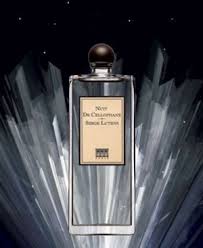
Serge Lutens Nuit de Cellophane: Bipolar Extremes

Olfactory bipolarity, a perfume holding you hostage with assault weapons, Michelle Pfeiffer in “Married to the Mob,” 80s big hair, prepubescent girls, Pantene, and generic facelessness that “is not worthy of the Lutens name” — you better hold on, because this is going to be a bumpy ride. All those disparate things (and more) are reactions to Serge Lutens’ Nuit de Cellophane, and not just from me, either. This is a perfume that gave me olfactory whiplash, and whose opening almost verged on the oppressive. It takes a lot to make me cower, but I would have whimpered like a child, were it not for an extreme shift due to the aforementioned bipolarity.

Source: Fragrantica.

Source: Fragrantica.

Nuit de Cellophane is an eau de parfum that was created with Lutens’ favorite perfumer, Christopher Sheldrake, and released in 2009. On his website, Lutens describes the perfume as follows

When, beneath its cellophane, Haute Couture was but yet an idea.

Are you familiar with the scent of osmanthus? The flower is white or tinged with orange.
From the tight clusters of its petals bursts the scent of jasmine laced with mandarin orange.
On hot summer days, it provides a breath of fresh air.

According to Luckyscent, the notes seem to consist of, at a minimum:

Green note, fruity note, jasmine, osmanthus, carnation, lily, muscs, almond, wood, honey.

I first smelled Nuit de Cellophane on a paper strip in Paris at a Sephora boutique, and I really liked its plummy sweetness. It seemed heady, and like a very opulent fruity-floral. On skin, though…. Oh God. Oh God. Nuit de Cellophane opens with the aforementioned plums, followed by something akin to mandarins, and apricots. Seconds later, a metallic, dewy blast of white lilies arrives on the scene, accompanied by the fiery bite of red carnations and something that smells distinctly like a big, fat, white peony rose. 

White Peony. Photo: Will Borden on Fineartamerica.  (Website link embedded within photo.)

White Peony. Photo: Will Borden on Fine Art America. (Website link embedded within photo.)

It’s a visual of heavily petaled, loud whiteness tinged with vermillion, as if blood were dripping from a long, taloned nail onto snowy flowers. There is a subtle greenness to the scent, along with a concentrated bitter-sweet almond, but neither element is strong enough to cut through the intense florals. The whole thing is encased in fleshy orange, from pulpy, sticky mandarin oranges to a vaguely nutty apricot-peach. All of it feels extremely loud, and a thousand times more vulgar than anything that I’ve tried thus far from Serge Lutens. Part of me likes its unbelievably concentrated forcefulness, while the rest of me feels a little stunned at the assault. 

Source: Wallcoo.net

Source: Wallcoo.net

Five minutes in, a very metallic, synthetic element arises, making me wonder if Nuit de Cellophane was, in fact, the first in Serge Lutens’ recent line of quasi-metallic florals. Here, the note smells simultaneously soapy, clean, like hairspray, and like shampoo, all in one. It lingers around the lily aroma that is increasingly overtaking Nuit de Cellophane and becoming the main note. I love white lilies, but the version here is really quite something else. It is over-the-top in its sweetness on my skin, more dense and syrupy than even LutensUn Lys. At the same time, though, it also has a cool, synthetic steeliness and hairspray quality underlying it, something that wasn’t apparent in its lily sibling.

Michelle Pfeiffer in "Married to the Mob." Movie still from Listal.com.

Michelle Pfeiffer in “Married to the Mob.” Movie still from Listal.com.

Something about the overall combination continually makes me imagine a very big-haired, vulgar woman, like Michelle Pfeiffer’s character in the film, “Married to the Mob.” (It’s a hilarious film, by the way.) The connection in my mind stems from Nuit de Cellophane’s hyper-femininity, blowsiness, excess, loudness, and sweetness, with a very tough-as-nails swagger. And did I mention “big hair”? That too, especially as the floral hairspray element in Nuit de Cellophane keeps growing in volume. I do like Nuit de Cellophane a bit more than that description may sound, but not by much. And certainly not for long.

The perfume just keeps becoming sweeter and more shampoo-like on my skin with every passing minute. I realize my skin amplifies both sweetness and synthetics, but this experience leaves me feel utterly overwhelmed. That’s pretty unusual for someone who likes such forceful, powerful scents as Amouage‘s Ubar, Fracas, and Opium. Nuit de Cellophane’s florals, however, will either stomp on you with 9-inch high, plexiglass stripper heels, or drown you in a vat of sweetness, holding your head down in syrup with the longest, crimson dragon nails. You’d think that the spicy, clove-like note from the carnation or he almonds would counter the sweetness, but they don’t. Somehow, on my skin, they merely add to the wild disparity, especially when the almonds take on a cherry-like subtext.

Osmanthus. Source: blog.proxisante.com

Osmanthus. Source: blog.proxisante.com

I truly don’t smell osmanthus in the way that I’m used to, and it actually made me start doubting my own understanding of the note. I’ve always encountered the flower as a sweet, delicate, white thing with nuances of apricots or tea. Occasionally, it even seems to have a dark, leathered subset. Here, however, my skin is really radiating a quasi-rose peony note with some sort of peach-plum combination. I was bewildered because, even if no-one knows the actual notes in a Serge Lutens fragrance, I’d never seen a list that included “rose” or “peony.”

So, I looked up Nuit de Cellophane in Luca Turin and Tania Sanchez‘ book, Perfumes: The A-Z Guide. Well, it seems that Tania Sanchez and I may have the same skin. She categorizes Nuit de Cellophane as a “plum peony” fragrance, and writes, in part:

Nuit de Cellophane is another dramatic lapse in judgment: a fruity floral derived from J’Adore, boiled down to a syrup, and in desperate need of dilution. Clearly, some osmanthus was harmed in the production, and in general the florals are much better than you usually get in this genre. But it never manages to overcome a depressing banality and feels a step down fom the creativity of Sarrasins and El Attarine. [Emphasis to names with bolding added by me.]

20 minutes in, I still didn’t smell the osmanthus, but the shampoo and scented hairspray tones were beating a steady drumroll. Nuit de Cellophane remained as a really intense blast of white lilies, white musk synthetics, and peony rose, infused with heavily fruited sweetness. It wafted about 3 inches until the end of the first hour, when the perfume finally began to soften and the projection shrank.

It takes 90 minutes, all in all, for Nuit de Cellophane to calm down enough for the osmanthus to come out from the shadows. Finally, I smell the note that this perfume is meant to celebrate, but it feels as though there were a hostage situation where the lily held the osmanthus for ransom for a while. As the lily retreats to the sidelines, the thick wave of fruited sweetness sharply drops and is cut in half. The shampoo and floral hairspray impression lingers, but it too is much less aggressive. The whole thing is now a blur dominated primarily by osmanthus, then that peony-like note and an increasingly abstract fruitedness. There is a very hazy, blurry feel to the notes, but I think I can still detect small traces of the clove-y carnation and some peach. However, the overall effect from afar is of a very soft, fruity-floral with few distinguishing characteristics other than sweetness and cleanness.

As time passes, Nuit de Cellophane devolves further. The osmanthus, the peony-rose, and the fruited elements become even more nebulous, and the perfume feels like a generic, department store floral. The problem really seems to be two-fold: shapeless and cleanness. The florals elements don’t stand out in any way except as a blur of some generalized “white flowers,” while the clean musk creates an artificial sterility.

Source: hdwallpaperplace.com

Source: hdwallpaperplace.com

At the end of the 4th hour, my greatest impression of Nuit de Cellophane was of towels which retain the vaguely floral scent of fabric softener and dryer sheets. The softness has a certain fluffiness, which one might argue is a positive, but the scent as a whole has a complete facelessness which is most definitely a negative. When I smelled Nuit de Cellophane really hard up close, I could pick out a vaguely rose-like, white floral scent with some vestige of fruitiness, but it took serious effort. And it may have been wishful thinking.

From the start of the 6th hour until its very end, Nuit de Cellophane was nothing more than a generic blur of floral cleanness. If you put it in a lineup next to any department store fragrance, even earlier on in its development, I honestly doubt I could pick out the Lutens. Regular readers know how I love the house and how much I admire Serge Lutens in particular, so none of this was easy to write, but I really disliked the fragrance that much. All in all, Nuit de Cellophane lasted just shy of 11.75 hours on my skin, and I was unhappy for all of it.

Source: telshopmobile.com

Source: telshopmobile.com

The one thing I kept thinking of when assessing the perfume is how Nuit de Cellophane compares to some of the Lutens florals of the past few years. As many people have noted, 2009 seems to mark a time when Serge Lutens embarked on a course of exploring scents with a light, watery, silvery and/or metallic floral twist. There was his L’Eau Serge Lutens in 2009, Vitriol d’Oeillet in 2011, L’Eau Froide in 2011, La Fille de Berlin in 2013, La Vierge de Fer in 2013, and the upcoming Laine de Verre (i.e., Fiber Glass) next month in February 2014. It feels to me as if Serge Lutens began with L’Eau Serge Lutens, took a detour into a hyper-sweetened (but partially metallic, piercing) Nuit de Cellophane, then decided to keep stripping away at the baseline until he arrived at the recent, metallic, icy, shrieking hairspray lily of La Vierge de Fer.

On my skin, Nuit de Cellophane begins like the earlier 2007 Un Lys, only much sweeter (if you can believe it) and without the narrow lily soliflore focus. It actually fits closer on the scale to La Vierge de Fer given the piercing white musk, yet it has the Serge Lutens’ signature of plummy fruits. La Vierge de Fer feels like the apotheosis of Lutens’ metallic or icy floral trend that Vitriol d’Oeillet and La Fille de Berlin also reflect to some extent, and so, it fits into a definite pattern.

Nuit de Cellophane doesn’t. It has some of the traditional Lutens signature with the plummy fruits, and also, some of the loud schizophrenia of the 2001 Datura Noir. Yet, it lacks the latter’s lushness, more balanced, interesting aspects, as well as the steelier, iciness of recent Lutens florals. Nuit de Cellophane is a bit of everything and nothing for me, as it lurches from one extreme to another. One minute, it holds you hostage with such strongly delineated, syrupy, piercing florals that they feel like assault rifles; the next, it is a faceless girl simpering in a department store in the cheap hairspray and shampoo aisle. Between the discordant notes and the extremes, the whole thing feels quite bipolar to me. As should be quite clear by now, I don’t understand the perfume. I’ve tried but I don’t, no matter how much I search for a pattern. I just don’t get it.

Lest you think this is all just me and hyperbole, let me reassure you that I’m hardly alone in my reaction to Nuit de Cellophane. Take Bois de Jasmin who gave it a rare Two-Star review, and whose bottom-line conclusion was…. shampoo. In fact, try as she might, neither time nor a year’s worth of additional testing could change Victoria’s feelings about the perfume:

… I have held hope that one day I would smell this bland fruity-floral and … figure out what Serge Lutens was trying to achieve with it. It has been a year since I have first smelled Nuit de Cellophane and no such revelation has occurred—it still smells like shampoo to me and I still do not care for it. […]

The opening stage of Nuit de Cellophane is the aspect I dislike the most. The sharp, fruity note that comes through evokes not the velvety softness of apricot skin but rather some drugstore peach shampoo. It is neither pleasant nor interesting, and while eventually it softens enough to reveal the osmanthus heart, the banality of the first impression stays with me.

As the composition develops, the apricot-leather accord becomes stronger, with jasmine and rose highlighting its appealing sweetness. The animalic accents are subtle, never rising above the osmanthus, even in the late drydown. It is a pleasant fragrance at this stage, light and easy to wear. Considering that such compositions are easy enough to find (and often at a much lower price point, I should add) I cannot find any other quality that makes Nuit de Cellophane appealing to me.

However unpleasant her experience, I still think mine was worse. In fact, parts of Nuit de Cellophane on her skin sound almost interesting. Animalic accents? Would that I have been so lucky! At least I’m not crazy in smelling roses in the Nuit de Cellophane.

For I Smell Therefore I Am, Nuit de Cellophane is a pretty white floral (with lilies) that “is not worthy of the Lutens name.” The review states:

Nuit de Cellophane does not smell particularly like osmanthus. Instead it is a bright, joyous and billowy white floral, heavy on jasmine, lily, champaca and some fruity citrus. Nuit de Cellophane is a beautiful white floral but it is not worthy of the Lutens name. There is absolutely nothing unusual, unique, jarring or unexpected about Nuit de Cellophane. It is very pretty, very well done and very mainstream. [¶][…]

I must admit that my first thought after wearing Nuit de Cellophane was, “the SL brand must need a mainstream success very badly; they must need some easy sales in a tough economy.”

On Fragrantica, the very first review you see at the top of the page also happens to be the most amusing, in my opinion. “Arabian Knight” sums it up, quite simply, as:

If you want a cheaper alternative to this overpriced scent, shampoo your hair with Pantene, blow dry it and then shake it back and forth. It smells exactly like freshly shampooed hair….

Baffling :/

On Luckyscent, the comments are split between the haters and those who love what they describe as soft, clean sweetness. On balance, though, the haters seem to win out:

  • On me, this smells like Gee Your Hair Smells Terrific, the shampoo all the cool girls used back when I was in seventh grade. Two stars for nostalgia, but I wouldn’t wear it.
  • Very boring. It smells like a generic department store scent, nice and wearable, but just not something from dramatic and tasteful Lutens.
  • This is a very soapy jasmine reminiscent of dryer sheets. Piercing and relentlessly dull, it is a huge disappointment coming from Serge Lutens.
  • A full, brash, sharp floral fragrance. This is almost identical to Michael Kors’ Very Hollywood. There are cheaper perfumes that smell similar to this.
  • I’m really confused by this one… I definitely agree that is smells like “Very Hollywood,” but would venture to say that there is absolutely nothing noteworthy or exceptional about this flat, high-school smelling fragrance. If you like to smell like Victoria’s Secret or the generic department-store fragrance, look no further.

I haven’t sniffed Michael Kors’ Very Hollywood in ages, so I can’t speak to the details. All I can remember is that it was a very sweet floral with little character.But I can tell you one thing with absolute certainty, though: the retail price is not $130 for a 50 ml bottle. (In fact, you can find it on a discount perfume site in a bottle twice that size for $28, while the Lutens’ discounted rate is still significantly more.)

In fairness, and to demonstrate the other side of the picture, there are people who truly love Nuit de Cellophane. Some of the positive reviews on Fragrantica:

  • This is truly an exercise in subtlety. Yet it does not smell like anything else. It is peppery carnation, fresh green, osmanthus, a breath of jasmine, a drop of sweet honey, with a bit of lily dust and soft musk to hold together. [¶] It is a quiet, delicate work of art, for the person who wants to keep her (or his) little secret, that they are wearing something special. Not for the person who wants to announce their presence before they have stepped into a room. I think that winter is not the best season; I think this is an ideal early March through end of April scent.
  • I love this fragrance. It’s juicy fruits supported by heady white florals makes it truly swoon-worthy. The opening is brief and to die for, albeit a bit too short lived in my opinion. It dries down to a soft and clean soapy smell. Even though it doesn’t project as much as I would like, I still adore it.
  • OMG, how could I live without this fantastically well done Osmantus scent??? I`m an Osmantus lover, but never I heard this note so pronounced, so clean, tender, innocent but not simple, simple but far from being primitive… it`s hard to describe, it`s a little sweet, a little acid, you keep sniffing it, trying desperately to disclosure the secret: what is this evasive beauty… It smells like a prepubertal girl must smell… Innocent and vicious in the same time. [¶] I love it.

Honestly, I don’t think smelling like a prepubescent girl is a compliment, but it takes all kinds. All the more power to her. Still, it noteworthy that a few commentators — on both sides of the fence — have brought up youthfulness, whether mentioning preteens or seventh grader girls. I do think the fragrance has an innocuous, safely generic, floral freshness that somehow translates to some noses as innocence. Intellectually, there is logic to the perception, even if I don’t understand it personally or emotionally. (The thought of actually wanting to smell like a prepubescent child brings my mind to a skidding, screeching halt. I’m completely flummoxed.)

I suppose if you’re looking for a fresh, clean, sweet Lutens (or for a department store floral with the innocuousness of a shampoo-drenched gnat), then you may want to try Nuit de Cellophane. There are cheaper alternatives, though, even if you buy the Lutens fragrance at the massive discount offered by some US retailers. Frankly, I found the perfume’s bipolar nature to verge on the alarming, and its extreme shift from one end of the spectrum to the other initially gave me whiplash, before leaving me feeling quite exhausted. It was not an experience that I enjoyed. 

DETAILS:
General Cost & Sale Prices: Nuit de Cellophane is an eau de parfum that comes in a 1.7 oz/50 ml size, and costs $130, €85, or £69. However, you can find it highly discounted at a number of U.S. retailers. On Amazon, Nuit de Cellophane costs $64.99; at FragranceNet (which ships worldwide), it is $68.16 with a coupon; and at Beauty Encounter, it costs $69.95 with the coupon code they provide as well. Serge Lutens: you can find Nuit de Cellophane at regular, full price on the U.S. and the International Lutens website, with other language options also available. U.S. sellers: Nuit de Cellophane is available for $130 at Luckyscent, Barney’s Aedes, and a number of other stores. Outside the U.S.: In the UK, you can find Nuit de Cellophane on Amazon UK for £59.35. At the regular £69 price, you can find it at Harrod’s, Liberty London, and SpaceNK ApothecaryIn France, you can buy Nuit de Cellophane from Sephora for €84, though it’s cheaper at Premiere Avenue which sells it for €79. In Germany, you can find Nuit de Cellophane at Essenza Nobile. In Australia, you can find it at FragranceNet Australia for AUD$78.34 with the coupon. For other countries, you can use the Store Locator on the Lutens website. Samples: You can test out Nuit de Cellophane by ordering a sample from Surrender to Chance where prices start at $3.99 for a 1/2 ml vial. There is also a Four Lutens Sample Set for $18.99 where the vials are larger at 1 ml each, and you get your choice of 4 Lutens Export fragrances (ie, not those that are Paris exclusives).

Téo Cabanel Méloé: Summer Citruses & Freshness

Portofino on the Italian Riviera. Source: yachtcharterfleet.com

Portofino on the Italian Riviera. Source: yachtcharterfleet.com

It snowed here yesterday, after days of endless, bleak, icy greyness. For many of you, snow is hardly a big deal; for where I live, however, it’s akin to Hell freezing over. So, as a sign of rebellion, or perhaps as escapist fantasy against those miserable grey skies, I reached for Méloé, the one fragrance explicitly intended to represent “the heat of long-awaited summer days.” Mind you, I’m not all that crazy about my area’s particularly hellish version of summer, but I was suddenly in desperate need of sunshine in a bottle. And Méloé promises a “fresh haven” of all the best that the Mediterranean can offer, from Tunisian Neroli to Sicilian mandarin, from fresh basil to orange blossom and lavender.

Source: Hypoluxe.

Source: Hypoluxe.

Méloé is a creation from one of the most unsung gems in the niche world, Téo Cabanel, a Paris niche house whose history goes back over a century and a relatively unknown brand which consistently puts out extremely refined, polished perfumes. I have a huge soft spot for Téo Cabanel, as they make one of my favorite perfumes, the glorious oriental, Alahine (which is one of the few rose-based perfumes that I adore.) Alahine is fierce, potent, boozy, and with such intense spicy smolder that I often say it requires a form of Stockholm Syndrome to fall in love with it.

Méloé (which I’ll just write from here on out as “Meloe” for ease and speed) is the polar opposite of Alahine in every possible way. It’s as though Téo Cabanel intentionally sought to make Alahine’s counterpart with a fragrance that was a crisp, light, airy eau de toilette with the most easy-going nature. If Alahine takes you to a Moroccan souk spice market, and then to opulent palaces filled with lush roses and amber, then Meloe represents someone sitting in a café in Monaco wearing a cool, crisp shirt, and spritzing themselves with the aromatic cologne equivalent of a chilled lemon Perrier. They just chill and hang out, and, as the day progresses, the sun’s heat eventually brings out a musky, warm sweetness on their skin. It’s all very easy, smooth, and polished, but none of it is complicated, edgy, or heavy. It’s not meant to be.

David Niven relaxing on the French Riviera. Source: therakeonline.com

David Niven relaxing on the French Riviera. Source: therakeonline.com

Freshness and lightness is such an intentional part of Méloé that the fragrance was even originally called Méloé Eau Légère or, in some listings, Eau Fraiche. Emphasizing the point even further, Meloe is an eau de toilette in concentration, not an eau de parfum like Alahine. Meloe was created by Téo Cabanel‘s in-house perfumer, Jean-Francois Latty, and was released in 2008.

The company describes the perfume as follows:

In the heat of long-awaited summer days, the Méloé lover has found a fresh haven. Her elegant summer signature is underlined by her light, green, fruity eau de parfum.

Méloé’s Epicurian symphony generously draws its top notes from citrus and spices. Bergamot from Calabria, mandarin and lemon from Sicily, lavender and basil play their part in perfect harmony. 

The sparkling citrus notes linger until a dainty floral bouquet of Neroli from Tunisia, orange blossom and jasmine with just a touch of nutmeg comes to full bloom to make up the heart notes.

Unexpected sensual base notes of musk, amber and just a hint of woody notes. Lavish elegance and mystery, Méloé fully reveals its modern and distinctive character

Meloe is categorized as a green, fruity floral, and First in Fragrance offers the full list of notes:

Top Note: Bergamot, Tangerine, Lemon, Lavender, Basil

Heart Note: Neroli, Orange Blossom, Jasmine, Nutmeg

Base Note: Musk, Ambergris, Woods. [Some places mention “crystal moss” as a base element as well.]

Source: 550px.com

Source: 550px.com

Meloe opens on my skin with a strong blast of bitter neroli, followed by unsweetened tangerines, and crisp, zesty lemon that feels much like the oils from a peel that was freshly grated. There is also one of my most hated notes in perfumery: lavender. As many of you know, I’m a lavender-phobe, and, yet, I actually like the note here. It is sharp, but also soft. More importantly, it doesn’t smell like the revolting, dried kind with its concentrated, vicious pungency. Instead, it smells more aromatic, like the plant in nature and in bloom. The lavender weaves its way throughout the various citrus notes, and the whole thing is sprinkled with peppery elements and a good pinch of bitter nutmeg.

The overall effect is to create something that is very brisk, incredibly bright, and fresh, but also somewhat spicy. None of it feels like a “fruity floral,” thank God. That is a category of perfumes I rather dread, for the modern sort are all too often dripping with goo, syrup and sweetness. And I have to admit, for a good half of Meloe’s lifespan, I find myself perplexed by the categorization because Meloe feels like a really fantastic cologne.

Source: societeperrier.com

Source: societeperrier.com

It’s not only the fougère-like traits of using cool lavender, citruses, green herbs, and woods, but some sort of ineffable quality that reads “unisex cologne” to me. Meloe’s fruits are refreshing and unsweetened, dominated more by crisp lemon and bitter neroli than by any heavy, sweet, juicy oranges, and the whole thing is definitely aromatic with the very dominant lavender note. Yet, it never feels masculine or akin to an old-fashioned barber-shop scent. Perhaps it’s because the lavender lacks the aggressive pungency of the sort often used in masculine colognes, or perhaps it’s because the notes are all very well-balanced. My greatest impression is of something sunny and yellow, but also chilled like Perrier — Perrier that merely happens to be infused by lemon peels, neroli, lavender, and nutmeg.

Nutmeg. Source: Kootation.com

Nutmeg. Source: Kootation.com

As the minutes pass, Meloe starts to change. The nutmeg softens its early forcefulness and loses some of its bitterness, as does the neroli. At the same time, the basil makes a tiny appearance on the sidelines, but I have to confess, I wish there were more of it. It’s so subtle, I sometimes feel I’m imagining it. The tangerine feels muted, such that I’d never smell Meloe at this stage and think “orange fruits,” but I think it has an indirect effect that helps ensure the more bitter elements are kept in check.

Perhaps its subtle sweetness is why Meloe loses some of its bright zestiness after 10 minutes and starts to feel much less brisk. The lemon no longer smells like you just dug your nails into the peel and grated the skin to release bitter oils. It’s smoother, thinner, and softer. The neroli starts to turn more abstract, too. At the same time, a hint of woodiness creeps into the top notes, perhaps from the unspecified “woods” listed for the fragrance.

Whatever the reason, Meloe settles into being a much smoother, lighter, seamless blur of crisp citruses and lavender aromatics that are perfectly balanced with a quiet spiciness, subtle woodiness, and hint of bitterness. It’s odd how the notes overlap each other and feel almost as if they lack delineation, yet, when smelled up close, you can still pull things apart. By the same token, Meloe sometimes feels very thin and sheer, yet it initially projects about 3 inches above the skin and is very rich up close. I have to think that the current arctic weather in which I’m testing the fragrance is hampering it to some extent. I suspect this is one perfume that would truly bloom in the summer heat for which it was intended.

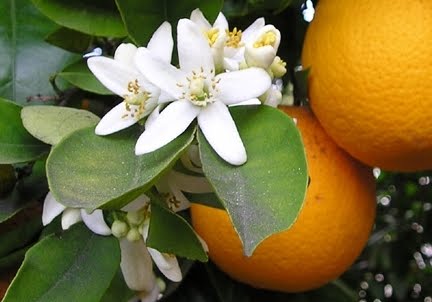
Orange blossoms via the Pattersonfoundation.org.

Orange blossoms via the Pattersonfoundation.org.

As some of you may have noticed, I’m in the midst of doing a series on floral fragrances, and Meloe is technically supposed to focus on orange blossoms. Well, on my skin, and perhaps due to the current freezing temperatures, the flowers don’t make an appearance until 90 minutes into Meloe’s development. Even then, they are extremely delicate. Instead of the heavy, lush, ripe, indolic sort of orange blossoms that you often encounter, the ones here feel like the young buds on the actual tree. There is a crisp, Spring-time vibe, a softness that separates Meloe’s fresh take on orange blossoms from something like Serge LutensFleurs d’Orangers. These flowers never feel syrupy, mentholated, blackened, or concentrated. In fact, they’re quite muted and restrained. At times, there is the faintest suggestion of an expensive orange blossom soap underlying the notes, or perhaps it’s the odd sense that these flowers are virgin clean.

The actual orange fruit lurks behind the flowers, more akin now to a sliver of fresh, baby tangerine than to any bitter oils from the rind. The bitterness of the neroli has also vanished, but its slightly piquant woodiness remains. As a whole, Meloe is now primarily a very cool, thin blend of soft, clean orange blossoms, crisp lemons, and baby tangerines in an aromatic, woody nest. It still feels like a light, delicate eau de toilette that has been stuck in a refrigerator, but it’s not quite as crisp or zesty.

Source: Telegraph.co.uk

Source: Telegraph.co.uk

Sometimes, one has the sense that the different stages of Meloe capture the different parts of the full citrus tree. The fragrance starts first with its unsweetened fruit nestled amongst cool, waxy, bitter green leaves and petitgrain twigs, along with the equally bitter, piquant aspects of neroli and the aromatics growing all around the plant. Later, though, Meloe moves up to focus on the tree’s youthful blossoms, tossing in a dash of now sweetened baby mandarins, and a whisper of abstract warmth. As for the lavender, it is now quite nebulous in feel, adding merely a touch of aromatic freshness.

Source: fantom-xp.com

Source: fantom-xp.com

All lingering impressions of a cologne fade away at the start of the third hour, when Meloe turns into a more floral fragrance with unsweetened fruits and lingering traces of woody aromatics. The sillage slowly drops and, by the end of the 3rd hour, Meloe lies right on the skin. It becomes a skin scent about 4.5 hours in. Around the same time, the tangerine and orange blossoms surge to the foreground, taking over completely. The two notes are accompanied by a soft, musky warmth, though it never reads as actual amber to me, let alone ambergris. There are the tiniest flickers of something woody and aromatic in the background, but they are very indistinct.

Source: singer22.com

Source: singer22.com

The whole thing is very soft, sheer, and pretty. It’s very simple, yes, but also elegant, polished, and easy-going. It has a very relaxed summer vibe, like someone hanging out on a boat and sipping cocktails on the Cote d’Azur after a long day in the sun. Their skin holds the tiniest traces of the crisp citrus, orange, and lavender notes of their early morning cologne, but the summer heat has evaporated their chilled freshness, leaving behind only their sweetened essences on warmed skin. In its final moments, Meloe is merely a blur of oranges with a vaguely woody feel. All in all, it lasted 10.5 hours with 3 medium-sized dabs, which is excellent for an eau de toilette.

Téo Cabanel clearly had a very specific goal and feel in mind in creating the perfume, and I think they accomplished it really well. Nothing about Meloe is uber-complicated, let alone rich or heady, but it’s not trying to be with a name like “Eau Légère.” Yet, Meloe still has more body and depth than many Eau de Toilettes that I’ve tried (not to mention quite a few eau de parfums). Plus, it’s very reasonably priced (between $50-$70 for the smallest bottle, depending on where you buy it) with moderate sillage and good longevity.

Putting all that together, Meloe comes across as straight-forward simplicity with absolutely no pretentiousness at all, something I really like a lot. Meloe may have easy affability and versatile freshness, but it is also a very polished, refined take on a summertime citric-floral. It’s not quite as simple as it may appear, and it certainly feels more nuanced than some fragrances in this genre. In fact, as compared to many commercial “fruity-florals,” especially the syrupy fruit-chouli messes that you find in department stores, Meloe is almost a paragon of sophisticated complexity.

The thing that I keep thinking of is Creed’s much-hyped Aventus, which is really another twist on a fruity-florals with aromatics. To be clear, the two fragrances are very different in terms of their flowers and fruits, as Aventus is centered on pineapple, apple, ashy birch, and citruses, among other things. Meloe is initially much more lemony, aromatic and unsweetened, with a very robust lavender that makes it fougère-like, before it later turning orange-based and warmer. In my opinion, it’s also actually much less thin, watery, and weak in projection than Aventus, and more unisex. Yet, both fragrances share the same spirit and goal of fresh, bright crispness where fruits are nestled into an aromatic, woody base. They may smell completely different, but they want the same things. And I prefer Meloe’s journey to that goal.

There are no blog reviews that I could find for Meloe, and the fragrance isn’t entered on Basenotes, so we have to rely on Fragrantica for other people’s perceptions or experiences. Interestingly, there isn’t a single negative review of Meloe. Everyone seems to enjoy it, whether it is a man who shares the scent with his wife, or women who normally can’t stand “fruity-florals.” In fact, many seem quite surprised to like it as much as they do, perhaps because Meloe really isn’t a “fruity floral” by modern standards. One commentator, “Mals86,” actually referenced colognes in her comment:

I generally struggle with citrus scents, and traditional cologne-formulas that are meant to be refreshing, like this one. But I found it light and pleasant, and indeed very refreshing: not too floral, not too lemony, not too fleeting. [¶] It was even better on my daughter, and makes a wonderful alternative to the fruity-syrupy stuff her friends are wearing.

Source: Chef Keem at chefkeem.squidoo.com

Source: Chef Keem at chefkeem.squidoo.com

Another poster barely realized there was citrus in the perfume, and notes how well Meloe is blended:

Like Mals86 I always feel that citrus and I are no friends. But I got a sample today and tried it without knowing about the citrus. [¶] Well…citrus didn’t even come to my mind! I guess that it is because it is so very well blended with all the other notes that I wouldn’t detect it…
Might well be that the lavender calms down the citrus and spices and that, on the other hand, the citrus and spices lift up the lavender… [¶] Lavender on it’s own can be quite dull as if it was meant as an invitation to sleep without any dreams promised… [¶] Here dreams come alive while serenity remains… [¶] The amber warms up within the sillage so these dreams soon will float on the air that you’ll be happy to breath…

Smelling it, I see bright white clouds against a clear blue sky, I see Dolphins jump up out of turqouise coloured water with their friendly, smiling faces. [¶] Beautyful fragrance…

For everyone else, the citric burst was clear from the start, though some found it more fruity and sweetened than purely lemony crispness:

  • Méloé is obviously a great harmonic summer signature scent with spicy citric carnival in the beginning and intriguing soft light green fruity floral vibe with a naughty bread’ish faint sub-scent that tickles me! [¶] Without any hint of classic perfumery, it stand some steps higher than every fresh feminine perfume I know. The quality of citruses and lavender is superior. [¶] Méloé is chic, first class, easy going, generous and rich..
  • MELOE is like a windy summer day, it started with a sugary citrus and mandarin orange combo with bits of neroli and orange blossom. It was not too sweet, but more fresh fruity. The heart arrived with warm jasmine and amber. It dries down to a beautiful amber/citrus base, very light, but noticeable. [¶] I think MELOE is a very good floral fruity choice for summers for those who are too tired for synthetic mess most current floral fruity perfumes offer. This is a nice, natural, breezy and simple perfume

In terms of sillage, everyone notes that the perfume isn’t “overpowering,” and one person said the projection was “minimal,” with Meloe soon turning into a skin scent. For longevity, most people voted for “long lasting” (7h-12h) in terms of duration, and one commentator mentioned that it lasted 8 hours on her skin.

As everyone notes, Meloe is simple and breezy. It’s the furthest thing from challenging, bold, or edgy, and definitely not an original take on either colognes or fruity-florals. But it’s not trying to be any of those things. All it wants to do is to deliver a very elegant, polished take on a traditional genre. As Téo Cabanel told the Sniffapalooza magazine, their goal is create

scents in the true French perfume tradition, to rediscover the concept total sophistication. We take the greatest care in offering high quality products. The name Téo Cabanel is a promise of the quality of our essences and the elegance of our bottles and packaging.  Our perfumes deserve the finest natural elements, 100% pure and natural.

For the price, I honestly don’t think you can beat Téo Cabanel for great perfumery with a very classique, elegant feel at a bargain price. It is one of the most unpretentious brands I’ve encountered, with zero flash and a lot of substance. They quietly dedicate themselves to creating high-quality, polished products in the French tradition, and just hope that someone notices. In fact, they seem quite humble about it all.

In the specific case of Meloe, I think if perfume were offered under the Creed or Tom Ford label, people would be falling all over themselves and proclaiming that they had found their new summer scent. It is definitely unisex, versatile, and something you could wear to the office. It is also simple, but it certainly feels richer to me than Tom Ford’s very bland citrus offerings in the new Atelier d’Orient line. And I won’t even start on the issue of Aventus, or some of Hermès’ colognes.

In short, whether you’re looking for year-long freshness, summer in a bottle, or an escape from “the heat of long-awaited summer days,” I definitely recommend that you give Meloe a sniff.   

DETAILS:
All the Téo Cabanel fragrances in a sample set. Source:  Téo Cabanel e-store.

All the Téo Cabanel fragrances in a sample set. Source: Téo Cabanel e-store.

Cost & Availability: Meloe is an eau de toilette that comes in a 50 ml/1.7 oz size that retails for $70 or €50, or a 100 ml/ 3.4 oz bottle that costs $110 or €80. You can order Meloe directly from the Téo Cabanel website (which also has a French language version), along with a Sample Set of all 7 Cabanel fragrances in 1.5 ml vials for a set price of €8.50. (There is also a 9 ml rollerball of Meloe that costs $28, but that isn’t commonly available except from the company.) In my opinion, the best place to get Meloe right now is also the cheapest: eBay! You can find the 1.7 oz/50 ml bottle of Meloe in the old glass bottles for as low as $50, while the larger 100 ml bottles go for around $75. 

In the U.S.: Téo Cabanel’s U.S. retailer is Luckyscent which now carries four of the Téo Cabanel line, but Meloe is not one of them. The reason is that Téo Cabanel’s U.S. distributor is waiting for summer to bring out Meloe, and I’ll update this post when it does. It was actually extremely difficult for me to find an online vendor (outside of eBay) that currently carries this particular perfume. The Posh Peasant seems to have it, but it’s unclear to me if they are sold out. All their entries have the word “Sold” next to it. For those of you near Minneapolis, there is a store that already carries Meloe, but it does not have an online e-boutique. It is “La Petite Parfumerie” and the phone number is: (952) 475-2212 or you can email at orders@lapetiteparfumerie.com.

Outside the US: In Canada, Cabanel’s website lists Fritsch Fragrances as its primary vendor. In the UK, Téo Cabanel is usually carried at Fortnum & Mason’s, but I don’t see it shown online. Liberty’s sells Meloe in the 100 ml bottle for £75, and ships throughout the EU. Germany’s First in Fragrance sells Meloe for €50 or €80, depending on size. Another European vendor is Natural Skincare Emporium which sells the 50 ml bottle of Meloe for €59. In Denmark, Happel carries the entire Teo Cabanel line, including Meloe. I’ve also read  that the perfumes are available at: the Hotel George V in Paris, Les Galleries Lafayette, Douglas (France, Lithuania, Russia) Kadewe Berlin, Oberpollinger Munich, and Albrecht in Frankfurt. For all other countries or specific cities, you can use the company’s Store Locator guide on their website.

Samples: Meloe is unfortunately not one of the Téo Cabanel scents carried by Surrender to Chance. However, the Posh Peasant Sampler Set which includes 5 of the Téo Cabanel scents, including Meloe and my beloved Alahine, starting at $15 for 1 ml vials. The other option is to order from Téo Cabanel website with their more complete, larger sized sample set that includes the new amber oriental release, Barkhane as well.