Perfume Review – Serge Lutens La Myrrhe: Complicated Beauty

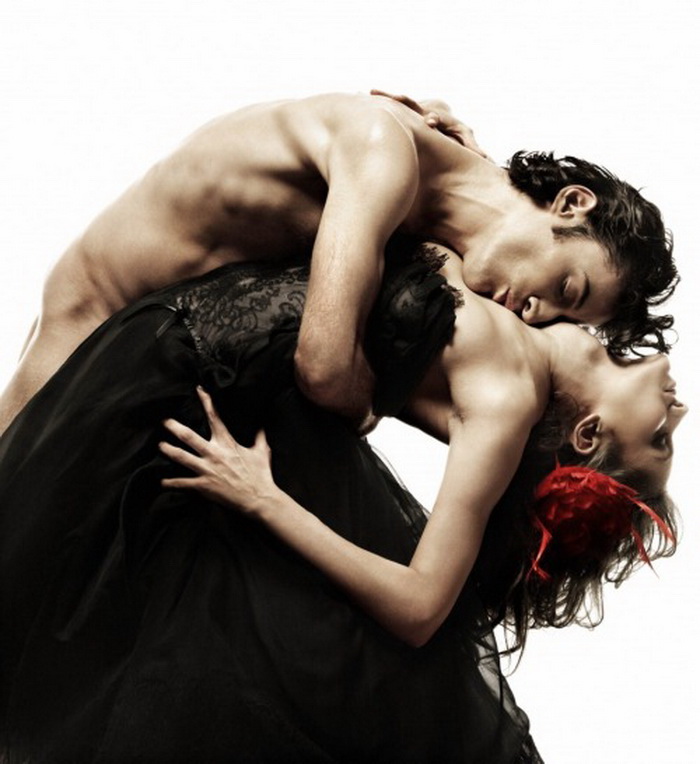
Photo used by permission: Dayle Ann Clavin. Dayle Ann Clavin Studios, photography by request: http://www.dayleannclavin.com/

Photo used by permission: Dayle Ann Clavin. Dayle Ann Clavin Photography, award-winning photography and services at http://www.dayleannclavin.com/

Forgive this fragrance, because it knows not what it does!

That is the express warning and plea given by Serge Lutens at the start of his description of La Myrrhe — and you should listen to him. If there is one thing that is the signature of Serge Lutens fragrances is how dramatically they can change, twisting and turning, turning you almost upside down at times, as if you were on a 100 mile-per-hour carnival ride. La Myrrhe does this perhaps more than most. It sent me plummeting me down to the depths of the abyss with an avalanche of one of my most hated notes in perfumery, before lifting me back up to a state of fascinated admiration where I couldn’t stop sniffing my arm. I’m not quite sure what to make of the complex jumble of emotions triggered by La Myrrhe, but I do know a few things: Serge Lutens wasn’t kidding with that warning; La Myrrhe is a thorny beauty; she has more layers than an onion; and I’m quite awed.

Photo used by permission: Dayle Ann Clavin Studios, photography by request. http://www.dayleannclavin.com/

Photo used by permission: Dayle Ann Clavin Photography, photography by request. http://www.dayleannclavin.com/

La Myrrhe was created by Christopher Sheldrake, and released in 1995. The name translates to “The Myrrh,” which refers to the aromatic resin or sap that comes from a tree. Myrrh has a long, ancient history, not only going back to the Bible where it was supposedly brought as the most precious of gifts by the Three Magi for baby Jesus, but in other ancients religions and cultures as well. It is frequently burned as incense, and its aroma is sometimes nutty but, usually, it’s very soapy, cool and white. On occasion, it can be like licorice. Both of the latter aspects are on full display in Serge Lutens and Christopher Sheldrake’s famous eau de parfum, La Myrrhe. It is one of the famous bell jar “Paris Exclusives,” which means that it not sold world-wide but is generally exclusive to Serge Lutens’ Paris headquarters. That said, it can actually be purchased outside of France, either from Barney’s New York or directly from Serge Lutens’ international and U.S. websites, though it’s always at a big mark-up if you are buying outside of France. 

Uncle Serge describes La Myrrhe as follows:

 Forgive this fragrance, because it knows not what it does!

You know about myrrh and the Three Kings.
What you don’t know is that, here, myrrh takes on the fragrance of the night. I make it sparkle and fizz like champagne, sustained by a base note of mandarin orange.

Fragrantica classifies La Myrrhe as a “spicy oriental,” and says its mystery notes include:

mandarin, myrrh, lotus, bitter almond, sandalwood, honey, jasmine, amber, musk, various spices and pimento.
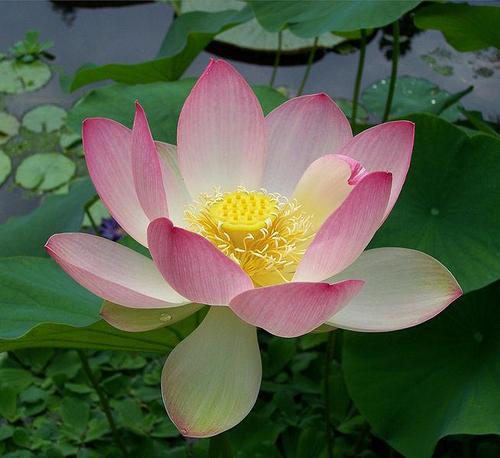
Lotus Flower via Wikipedia

Lotus Flower via Wikipedia

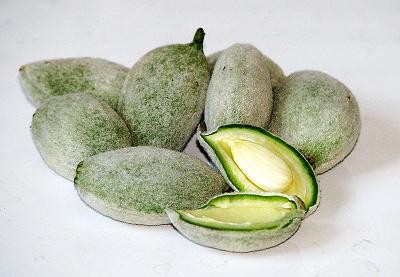
La Myrrhe opens on my skin as…. well, as hair spray. The worst kind of hairspray, mixed with extremely expensive soap, and a horrible, unpleasant aroma of cheap acrylic or polyester. I once went to a used-clothing store to find 1960s polyester clothing for a costume party, and there is the exact same undertone to La Myrrhe’s head notes of intense hair spray. It’s all due to the aldehydes which explode on my skin as a tidal wave of cold, soapy bubbles. They’re mixed with the airiest of sheer, gauzy, orange notes and bitter almonds. A disconcerting note of chili pepper flickers in and out, like a red speck in a sea of sheer, frothy whiteness. An oddly aquatic element — presumably from the lotus flower — dances all around, adding a very pastel, liquidy, watery sweetness to the scent and strengthening the olfactory image of hair spray. The notes are all tied together in a bouquet by fresh, clean, white musk.
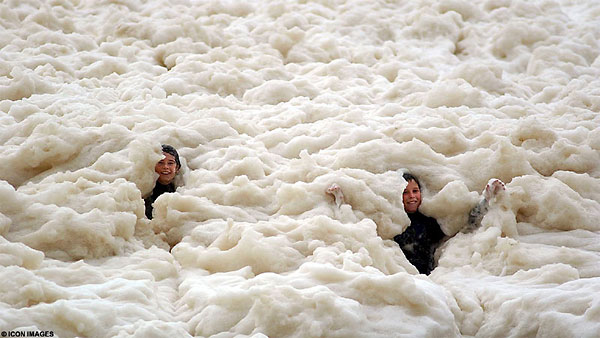
Source: megashara.com

Source: megashara.com

La Myrrhe smells like the most expensive soap and shampoo around, mixed in with really cheap hairspray — and, yet, it also doesn’t. There is something more at play, despite the chemical, synthetic blur of whiteness underscored by an equally white, soapy touch of myrrh smoke. The most unusual touch for me is that lotus flower which feels almost as if it’s stepped into the wrong play with its aquatic, pastel, sweet undertones.
Source: Wikicommons.

Source: Wikicommons.

The chilly, icy, frothiness of La Myrrhe is interesting, but the soapy, clean, fresh avalanche of aldehydes is too, too much for me. Aldehydes are my second most despised note of all time, going back to when I was seven and HermèsCaleche almost put me off perfume for life. I cannot handle aldehydes in anything but the smallest amount; and holy mother of God, there a lot of them here! It’s giving me flashbacks to Chanel No. 5 which is well-known for its floral-aldehyde opening — and I cannot stand that legendary favorite, heresy though that may be. Neither the intriguing, beautiful, bitter almond note, nor La Myrrhe’s muted, subtle flickers of ambered sandalwood infused with jasmine in the base, can save this opening for me. In fact, the bitter almond combined with the frothing, white bubbles make me think of cyanide, since it has the smell of bitter almonds and can foam up like bubbles when ingested. To be precise, I keep thinking of the death capsules that Nazis like Goebbels and Goering used to escape justice. Yes, the degree of aldehydes in La Myrrhe makes me think of death in a very clear signal from my (not so) subconscious mind. Have I mentioned just how much I hate aldehyde bombs?
Jasmine via Wikicommons

Jasmine via Wikicommons

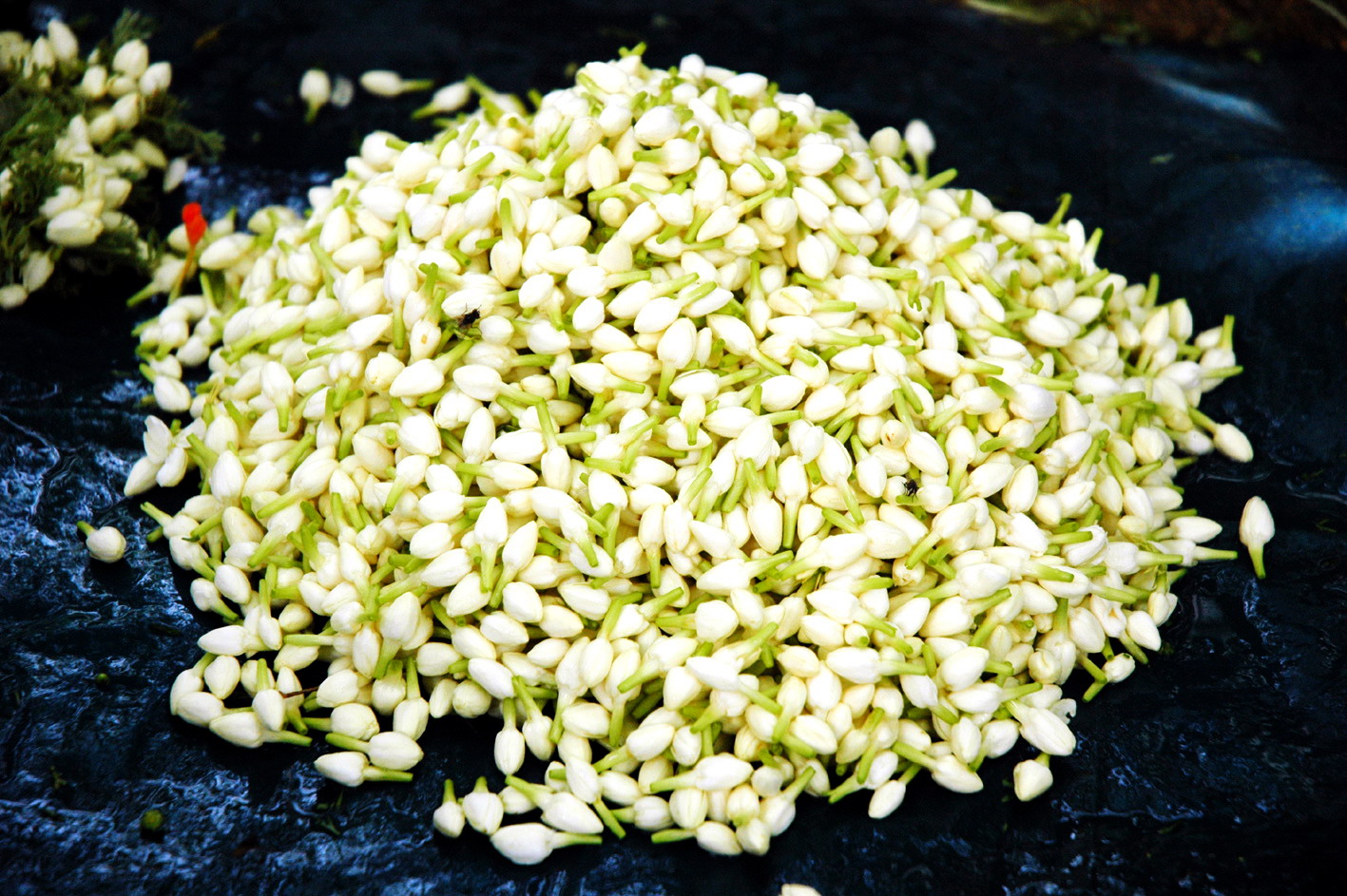
Like a caterpillar larva stirring in a cocoon, La Myrrhe starts to move and shift quite quickly. Fifteen minutes into La Myrrhe’s development, the delicate, sweet jasmine stirs and starts to become more prominent. Unfortunately, so does the white musk which makes my head hurt a little. The aquatic, floral lotus flower recedes to the background, where it joins the orange note — both hidden under the landslide of white froth. Changes, however, are soon afoot, as the aldehydes begin to slowly, slowly, decrease to much saner levels. Amazingly, less than fifty minutes into La Myrrhe’s development, they’re almost a distant figure in what is now a very different landscape. Now, La Myrrhe is a jasmine, floral fragrance delicately veiled with only a light sprinkling of aldehydes which almost verge on the effervescent.
French Pastis. Source: Art.com

French Pastis. Source: Art.com

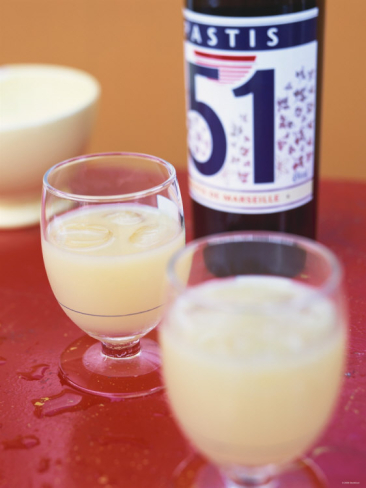
The myrrh has also changed. From a very soapy, white note that almost hinted at cold, churchy smoke, it now takes on a licorice facade. And it’s beautiful. It’s not salty like some black, licorice sweets, but rather cool and completely reminiscent of French Pastis, Greek Ouzo, or absinthe. Maybe it’s because I grew up partially in Europe, but I am extremely fond of the French and Greek national drinks, so I can’t stop sniffing my arm. The myrrh smells exactly like Pastis mixed with water, when it turns into an aromatic, still strongly anisidic, but almost sweet, drink. The milkiness of the note adds to the white visuals from the jasmine, the now quiet soap, the musk, the muted touch of white smoke from myrrh’s other side, and that interesting touch of bitter almonds.
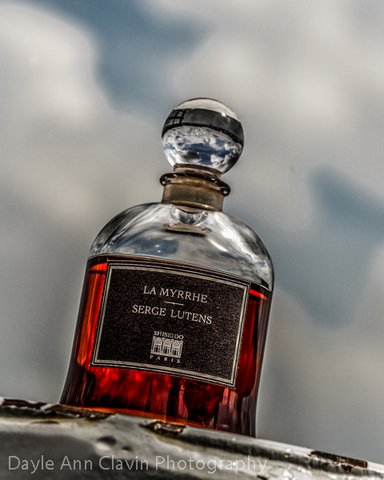
Photo used by permission: Dayle Ann Clavin. Dayle Ann Clavin Studios, photography by request: http://www.dayleannclavin.com/

Photo used by permission: Dayle Ann Clavin. Photographic services available at http://www.dayleannclavin.com/

It’s almost as if the visual cues are gently teasing those who saw La Myrrhe’s gorgeous, pale ruby colour and may have thought, “Ah, spicy!” No, it’s not. In fact, La Myrrhe is still a little “bathtastic” — to use the word so perfectly coined by The Scented Hound to describe Chanel‘s jasmine-aldehydic perfume, 1932. Unlike that scent, however, La Myrrhe has actual character. (And, it’s also not boring which is more than I can say for 1932….) Thankfully, baths and bubbles soon become a distant memory.

Shortly after the start of the second hour, La Myrrhe’s final stage begins, and it continues more or less unchanged until the very end. On my skin, La Myrrhe is primarily milky aniseed atop a delicately muted jasmine base that is sweetened by a smooth, almost custardy, but slightly dry, vanilla. It’s really a compulsively sniffable combination. The changes which occur are only one of degree. Around the 90-minute mark, La Myrrhe’s licorice element softens, feeling less like pure Pastis or Ouzo, and more like a floral twist on fennel fronds. I never smell the jasmine in a truly distinct, separate, strongly concrete manner. Instead, it merely transforms the licorice note into something fragrant. It’s as if the delicate, wispy fronds of a fennel bulb have flowered, if that makes any sense.
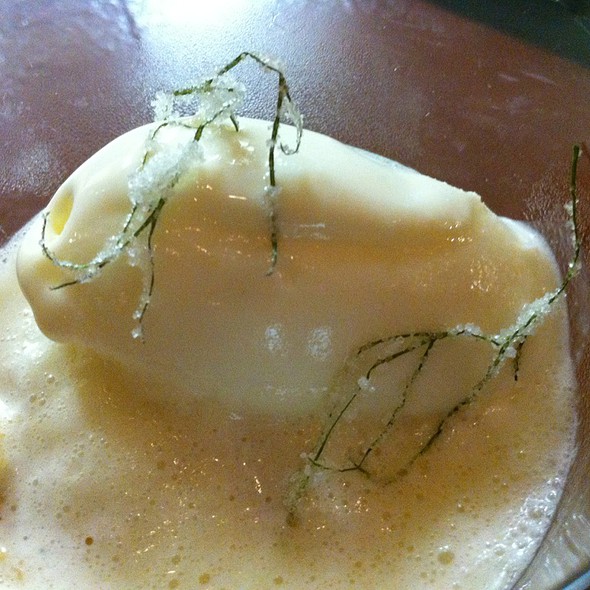
Vanilla with fennel. Source: foodspotting.com

Vanilla with fennel. Source: foodspotting.com

Underneath, in the base, are the supporting players. There is still a touch of white smoke from the myrrh, now warmed over and sweetened, but it tends to be a somewhat ghostly note that pops up like a Jack in the Box, only to vanish for large stretches of time. A similarly temperamental, ghostly element is the honey which appears from time to time in the background, and which feels like a light drizzle of sweetness on the white accords. And then, there is the beautiful vanilla that makes up a big part of the base elements on my skin. It’s beautiful, feeling simultaneously rich and custardy, frothy and airy. It’s also very well-balanced, especially in conjunction with the myrrh which feels like a touch of green in the rich, delicately sweet, creamy base. Yet, despite the impact of the vanilla and occasional appearance of the honey, I would never call La Myrrhe a gourmand fragrance.

After twisting and turning every which way possible, La Myrrhe is now set in its final incarnation, remaining as a vanilla aniseed with the lightest of floral touches until the very end. It becomes softer and more abstract, until, in its dying moments, it’s nothing more than amorphous, light sweetness. All in all, La Myrrhe lasted exactly 9.5 hours on my skin the first time I tested it, and just under 8.25 hours the second time with a smaller dose. The sillage was always soft after that brutal opening but, even then, its projection was generally moderate. I think it’s definitely not an overpowering fragrance, and would be quite office-appropriate. That said, I have to caution that it may be a very different story if you spray La Myrrhe (as opposed to dabbing), let alone if you sprayed on a lot

La Myrrhe is such a complicated perfume that it seems to straddle many lines. It goes from soapy, clean bubbles and hairspray with aquatic pastel florals and cyanide-like bitter almonds, to taking on Chanel’s signature floral-aldehyde opening, to evoking Mediterranean Pastis/Ouzo, to a frothy, floral aniseed-vanilla confection that is far too dry to be anything like dessert. The opening is brutal, and not just in my aldehyde-hating opinion. Take, for example, The Non-Blonde whose review of La Myrrhe begins with three things she wishes she’d known before trying the fragrance:

Three things I wish I had known before trying La Myrrhe for the very first time:
1. It should not be sprayed. Never ever. Under no circumstances.
2. Aldehydes can be more than just floral or green. They can be spicy.
3. Husbands who don’t like aldehydes will not appreciate them even in a Serge Lutens perfume. Especially not in a moving vehicle.

Other than that? La Myrrhe is gorgeous and even the husband doesn’t complain after the first 30 minutes or so, when the root-beer and spiced honey soda take over and do their thing on my skin. 

The first thing I smell if I spritz La Myrrhe is a harsh chemical you could mistake for cheap vintage hairspray (best case) or a pesticide. It really surprised me, since my first couple of La Myrrhe samples were little dab-on vials, so I never experienced this aspect until I got a larger decant. Even when it becomes more perfume-like, this 1995 Serge Lutens perfume is so carbonated and aldehydic it takes up all the air in the room. Luca Turin [sic, Tania Sanchez] compares it favorably to White Linen in his five star review of La Myrrhe. I only argue with the fact Dr. Turin sees the similarity as a positive thing. I used to wear White Linen a lot in the very early 1990s, but today I find it stomach-turning.

Yet, like me, The Non-Blonde had a very different — and entirely more lovely — experience by the end:

La Myrrhe dries down into a soft but determined oriental perfume, laced with honey and amaretto. There’s a little incense there that smells as though it was kept in a wooden box together with precious and rare spices. It has magic and mystery, a little danger of the unknown and a whole lot more sex-appeal than one would expect if they started their relationship with La Myrrhe by spraying it.

Not everyone can move past that beginning, however, no matter how lovely the end or its “sex-appeal.” On Fragrantica, one poor chap — who seems to share my mental association of aldehydes with death — wrote: “The aldehydes are a near-death experience.” Though he found La Myrrhe to improve once “the horror wears off,” he said bluntly, “I just don’t know if I can take the cave train downtown to get there without going blind from the chemicals over and over again. I just don’t know if I’m ready.” And I think that will be true for many people. La Myrrhe is a love it or hate it perfume, and it takes the Lutens level of complicated assertiveness to a whole new level. And, yet, it is also incredibly elegant.

As noted earlier, La Myrrhe bears a close resemblance to Chanel‘s legendary No. 5 in its opening moments. It’s not just me, either. On Fragrantica, a number of people bring up Chanel No. 5 — at least those who are not talking about bubble baths, “Mr. Bubble Bubble Bath,” “the smell of a public restroom with a very powerful pink air freshener,” or “dishwashing detergent bubbles.” (Can you tell how much those aldehydes dominate the opening?!) I think the similarities are very short-lived, however. Chanel No. 5 doesn’t have undercurrents of Ouzo, bitter almonds, and myrrh’s cold, soapy smoke. In addition, the true, vintage Chanel No. 5 is known as much for the sandalwood and civet tones in its base as it is for that opening blast of frothy aldehydes. Finally, as Bois de Jasmin explains so well, La Myrrhe takes the classic aldehydic tradition and up-ends it in a wholly modern manner.

In her five-star review, Bois de Jasmin writes:

The classicism of La Myrrhe (1995) is of misleading nature as it orchestrates its accords in a modern manner. The opalescent white veil of aldehydes that unfolds in the top accord almost hints at the floral waterfalls that are about to cascade softening the chilly breeze. Yet, instead of bergamot, rose, jasmine and ylang ylang of classical aldehydic compositions, La Myrrhe’s icy aldehydes become overlaid with sweet citrus, before falling into the heart spiced with anise. ….

Like other Lutens compositions, where the main note is highlighted and exaggerated (Tubéreuse Criminelle, Cèdre, Bornéo 1834), La Myrrhe brilliantly frames the myrrh by accenting its medicinal licorice tonality with anise notes and its sweetness with honey. […][¶]

Although haunting, La Myrrhe may not be the easiest fragrance to wear as the aldehydic burst paired with the medicinal facets of myrrh left unadorned lacks an expected warm counterpoint. Yet, this very dissonance is what keeps one’s interest while the composition slowly unfolds. Like would be expected of the majority of Serge Lutens’s compositions, its aloof elegance would suit both men and women. It is not a fragrance that has a particular seasonal designation, yet its spicy coldness is associated for me with the first snow and winter chill.

On me, La Myrrhe was never medicinal, and I barely had any citrus orange notes at all, but I agree with much of her assessment. It is a very aloof, chilly, white fragrance at the start, though I think it softens and warms later on. And she is absolutely correct in finding a dissonance when comparing La Myrrhe’s opening to its end. As I’ve said many times before, one of the things I love the most about Serge Lutens fragrances is their complicated nature and how they almost feel like a living thing. Here, the nature of La Myrrhe’s stages — the way they slowly slip and evolve from one thing to the next, and, more importantly, the incredibly sharp contrast between the first and final stages — really evoke the metamorphosis of a caterpillar into a gorgeous butterfly.

I think your reaction to La Myrrhe, and whether you can handle the opening, will depend largely on your feelings about “bathtastic” aldehyde bombs. If you enjoy something like Estée Lauder‘s White Linen, then you’ll probably share the admiration and love expressed by the perfume critic, Tania Sanchez. Her five-star review of La Myrrhe in Perfumes: The A-Z Guide reads, in part:

… Open the bottle and fall prey to total surprise. […] Lutens and Sheldrake set the smoky balsamic resin known as myrrh against a radiant, rosy, modern aldehydic floral of incomparable crispness, akin to White Linen. By this unexpected route, the fragrance somehow manages to replicate the thrilling balance of incredible brightness and sweetness that Shalimar once had, before decades of adjustments deepened its voice. La Myrrhe has a pure, clear, unearthly tone with beauty and force, as if the fragrance could sing a clean high C as high as heaven and not show the strain.

Like the Non-Blonde, I don’t  think White Linen is anything remotely appealing, let alone an encouraging comparison. In fact, I suspect that Tania Sanchez loves the aldehydic part of La Myrrhe more than the rest of it, while I, in contrast, think it’s something to simply barrel through until you get to the good parts.

That said, I think La Myrrhe could definitely grow on you, and you could get used to that hellacious beginning. In my second test, when I dabbed on much less, I still thought about cyanide pills, death, and hairspray, but I wasn’t quite so ready to stick a fork into my jugular. In fact, if I weren’t engaged in this mad Lutens marathon right now, I’d probably put on more of La Myrrhe, and try it again. I actually love the Pastis and the aniseed-vanilla stages enough to where I’d be willing to just close my eyes and “think of England,” as the old saying goes, until that soapy avalanche does its business and gets out of the way. That says a lot coming from a person who doesn’t own a single fragrance with aldehydes.

So, is La Myrrhe a wearable, versatile fragrance, or just a work of art? For those who adore aldehydes with a passion, probably the former. The soft, warm, deliciously sweet beauty of the final stages makes it much more approachable and easy than its opening would lead one to suspect. For everyone else, however, I don’t know. It would really depend. But I think everyone would agree that La Myrrhe is a work of brilliance. Unfortunately, brilliant art is not always wearable.
 

DETAILS:
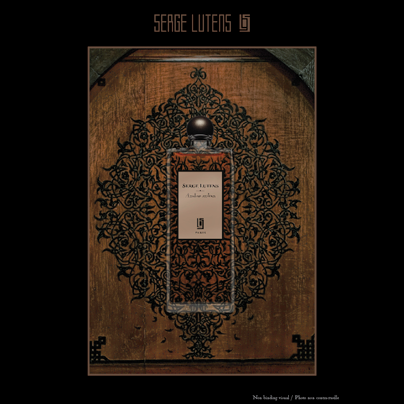
Cost & Availability: La Myrrhe is an eau de parfum that is part of the Serge Lutens “Paris Exclusives” line, which means it is available only in the larger 2.5 oz/75 ml Bell Jar size. It retails for $300 or €140 for a 75 ml/2.5 oz bottle. You can buy La Myrrhe directly from the U.S. Serge Lutens website or from the International one.
In the U.S.: you can also find La Myrrhe sold exclusively at Barney’s New York store. The website has a notice stating: “This product is only available for purchase at the Madison Avenue Store located at 660 Madison Avenue. The phone number for the Serge Lutens Boutique is (212) 833-2425.”
Personal Shopper Options: Undina of Undina’s Looking Glass reminded me of Shop France Inc run by Suzan, a very reputable, extremely professional, personal shopper who has been used by a number of perfumistas. She will go to France, and buy you perfumes (and other luxury items like Hermès scarves, etc.) that are otherwise hard to find at a reasonable price. Shop France Inc. normally charges a 10% commission on top of the item’s price with 50% being required as a down payment. However, and this is significant, in the case of Lutens Bell Jars, the price is $225 instead. The amount reflects customs taxes that she pays each time, as well as a tiny, extra markup. It’s still cheaper than the $290 (not including tax) for the bell jar via Barney’s or the US Serge Lutens website.  Another caveat, however, is that Suzan is limited to only 10 bell jars per trip, via an arrangement with the Lutens house. There is a wait-list for the bell jars, but she goes every 6-8 weeks, so it’s not a ridiculously huge wait, I don’t think. If you have specific questions about the purchase of Lutens bell jars, or anything else, you can contact her at shopfranceinc@yahoo.com. As a side note, I have no affiliation with her, and receive nothing as a result of mentioning her.
Outside the US: In Europe, the price of La Myrrhe is considerably cheaper at €140 from the French Lutens website, the International one, or from their Paris boutique. Other language options are available, though the Euro price for the item won’t change. To the best of my knowledge, the Paris Exclusives are not carried by any department store anywhere, and the only place to get them outside of Barney’s New York boutique is the Paris Serge Lutens store at Les Palais Royal. 
Samples: You can order samples of La Myrrhe from Surrender to Chance starting at $3.99 for a 1/2 ml vial. I actually ordered mine as part of a Five Piece Non-Export Sampler Set, where you can choose 5 Lutens Paris Exclusives for a starting price of $18.99 for a 1/2 ml vial. 

Perfume Review- Serge Lutens Ambre Sultan

Serge Lutens tells you up front to expect something different:

This fragrance is not an Oriental, but an Arab and a Lutens. That being the case, don’t expect it to fit in. [Emphasis added.]

Source: Serge Lutens Facebook page.

Source: Serge Lutens Facebook page.

He’s right. For a large number of people, Ambre Sultan is not a typical amber, and some get a small shock upon first sniffing it. They expect something soft, cozy, sweetly vanillic, and gentle, but end up with a very herbal, almost medicinal, fragrance in the beginning.

I had a different experience, however, and it was a far cry from the “Chinese medicine” or “herbal spice shop” amber that I had expected. Yes, it was there to a minuscule, muted degree, but it lasted less than ten minutes and it was hardly a predominant aspect of the fragrance. Instead, on my skin, Ambre Sultan was primarily a labdanum and beeswax fragrance. It’s very nice, but it’s not the amber of my heart, and I don’t share in the view that it is the best, richest amber fragrance around. 

Serge Lutens Ambre Sultan regular photo

Ambre Sultan, 50 ml bottle.

Ambre Sultan is an eau de parfum that was created with Lutens’ favorite perfumer, Christopher Sheldrake, and that was originally released in 1993 before becoming available worldwide in 2000. The remainder of Serge Lutens’ description quoted up at the top is really key in understanding the perfume, in my opinion: 

The point of departure was a scented wax, found in a souk and long forgotten in a wooden box. The amber only became sultanesque after I reworked the composition using cistus, an herb that sticks to the fingers like tar, then added an overtone that nobody had ever dreamed of: vanilla. Why? Because vanilla is sticky, too, and it clung to my memory.

As usual, Uncle Serge provides no notes for the perfume, but Fragrantica says that they consist of:

coriander, bay leaf, oregano, angelica, resins, myrrh, amber, myrtle, sandalwood, patchouli, benzoin and vanilla.

Labdanum compiled into a chunk. Source: Fragrantica

Labdanum compiled into a chunk. Source: Fragrantica

Fragrantica leaves out the most important part: the cistus or labdanum discussed by Serge Lutens. It’s not accurate enough, in my opinion, to just mention “amber” because, to me, labdanum is a whole other creature. The three main resins generally used in oriental fragrances to create the amber smell are: labdanum, ambergris, and benzoins. (Tolu Balsam is another, but it’s not so common.)

Labdanum has a very specific, intense aroma that is nothing like the general, more commercial, easy “amber” mélanges found in many scents. It’s much more masculine with a nutty, toffee, darkly syrupy, sticky, honeyed, sometimes leathery aroma that is almost dirty in nature. It can also be very animalistic on occasion, and frequently musky; in many cases, it can feel almost raw, at least relative to the generic ambers used in some perfumes. Dark brown, verging on black in colour, labdanum is the heart of some of the most-beloved, oriental amber perfumes, from Dior‘s Mitzah and Amouage‘s Opus VI, to Puredistance‘s M and Tom Ford‘s Amber Absolute.

Source: Colourbox.com

Source: Colourbox.com

The very particular, very unique aroma of labdanum is the opening, middle, and end of Ambre Sultan on my skin. The perfume opens with a very boozy, resinous blast of labdanum with all its nutty, dirty, toffee’d, slightly honeyed, sticky, vaguely leathered undertones. It is accompanied by a subset of the honey note which usually emanates from labdanum and which, here, is all about the beeswax. The overall impression is that cognac, rum, toffee, something almost verging on nutty chocolate, and the beeswax from a large hives of bees all got together for a boozy orgy, resulting in the lovechild that is Ambre Sultan. I absolutely love it.

Source: indiamart.com

Source: indiamart.com

All too quickly, however, the perfume loses some of its sticky, resinous sweetness, thanks to the subtle infusion of dried, green herbs. They’re led by bay leaf in particular, and the aroma is initially as strong as one of those over-sized, chef jars that contains hundreds of the dried ingredient. There is the faintest touch of oregano that follows in its trail, but it’s brief and quickly flitters away. Far, far below, in the base, there is a subtle, very muted, tarry note that almost verges on the camphoraceous, but which never quite gets to the eucalyptus point on my skin. Like the oregano, it too quickly disappears. Much more prominent, however, is the subtle smokiness in Ambre Sultan that dances all around the edges. It doesn’t feel like true incense but, rather, like the smell of burning leaves in autumn.

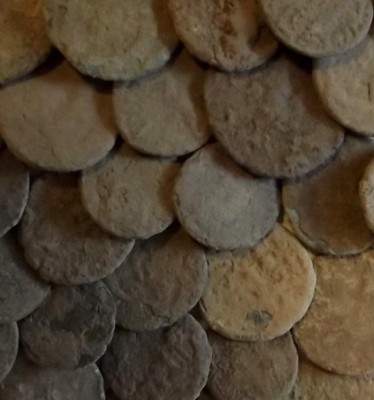
Ancient coins. Source: eBay.

Ancient coins. Source: eBay.

Accompanying it in the background is an unusual musty, earthy, dustiness. It’s a strange note because it really evokes the feel of some ancient artifact or parchment that had been left at the bottom of an old spice drawer for seventy years. It’s as much earthy as it is dusty and, when combined with the strong beeswax vein running through Ambre Sultan, it really and truly evokes what Serge Lutens intended: “a scented wax, found in a souk and long forgotten in a wooden box.”

The quiet dryness of all these notes, along with the extremely muted veil of herbs, helps to ensure that Ambre Sultan’s sticky, resinous character never verges into the cloyingly sweet or the unctuous. Yet, I’m truly surprised by how minor, light and hidden that green veil is on my skin. I don’t get a blast of myrtle with its medicinal, eucalyptus aroma; there is no angelica with its common celery nuances; the bay leaf disappeared in about 5 minutes; and the oregano was never more than a momentary flicker.

Source: honey-center.gr

Source: honey-center.gr

Instead, Ambre Sultan quickly devolves into a very simple, completely linear, and, ultimately, if I dare say it, somewhat boring combination of labdanum and beeswax. Yes, there are subtle nuances of smokiness and minor muskiness. Yes, there eventually is some vanilla that is faintly powdered and which arises at the very, very end. But, on my skin, Ambre Sultan is just nutty, slightly toffee’d, vaguely honeyed labdanum with its sidekick, the beeswax. It’s like the Lone Ranger and Tonto. They ride side by side for hours on end, with the slightly honeyed beeswax temporarily pulling slightly ahead around the end of the third hour, but it’s mainly just the two of them for most of the journey. No sandalwood, no patchouli, no herbs — nothing.

Source: background-pictures.feedio.net -

Source: background-pictures.feedio.net –

The only change in Ambre Sultan is in degree and sillage. Less than one hour into its development, the perfume softens, becoming milder, warmer, and tamer. At the 90-minute mark, Ambre Sultan starts to become blurry at the edges; it feels more like a vaguely nebulous, gauzy bouquet of labdanum and beeswax. It hovers just barely atop the skin, but the sillage decreases even further. Thirty minutes later, at the two-hour mark, Ambre Sultan turns into a complete skin scent. It is becoming increasingly hard to delineate beyond the two main notes that have now blurred together as one. Eventually, however, around the end of the sixth hour, the vanilla and benzoin start to slowly stir in the base, joining the main players in a very muted, hazy form. It’s a lovely, cozy drydown bouquet of sweet, barely resinous, generally amorphous, nutty amber with vanilla, lightly flecked by beeswax. In Ambre Sultan’s final moments, the perfume is nothing more than a faint trace of vanilla with a subtle nuance of powderiness. All in all, it lasted just 7.5 hours.

I liked Ambre Sultan, but I know my lack of exuberance is showing. So, I think it’s really important to put my reactions into a context here. I love massively resinous, spicy amber perfumes, and I’ve tried a lot of them. I think that, perhaps, I had heard a little too much about Ambre Sultan, and that my expectations were a little too high. I also think that my reaction would be very different had I smelled Ambre Sultan at the start of my journey to cover seemingly every amber or amber oriental perfume around. Had I done so, I would probably have been more blown away. As it is, I fear Ambre Sultan is getting the shaft by being compared to other fragrances I’ve tried that are considerably more intense, be it Tom Ford‘s Amber Absolute, or the stunningly rich, dense, concentrated Profumum line of Ambra Aurea and Fiore d’Ambra. By my personal, admittedly peculiar, and distorted standards of richness, I find Ambre Sultan to be light, airy, and safe. I realise that a lot of people consider it to be one of the richest, spiciest ambers around. But then, they also say that about Parfum d’Empire‘s Ambre Russe, too — and I thought that one was so sheer and anorexic that it might as well be an eau de toilette. So, clearly, I have a very different measuring stick than most.

Yet, despite my admittedly uncommon views on what constitutes richness versus lightness, I’m not completely alone in finding Ambre Sultan to be tamer than anticipated. Olfactoria’s Travels had the same reaction, and her review encapsulates many of my feelings about the perfume:

Usually, light or subtle are not adjectives one would immediately associate with a Lutens creation. And not that Ambre Sultan is either of these traits, but it is way less than what I was expecting in volume.

I thought an amber fragrance from our dear Serge would blast me clean out of my boots, to put it mildly. What I got was a purring kitten, sleeping in my lap, spreading its warmth, not a roaring tiger that is out to have me for dinner.

Ambre Sultan is a gorgeous perfume, an amber to love, an amber to cherish, an amber perfect in its execution, but it does not pack a punch like Annick Goutal Ambre Fetiche, Armani Privé Ambre Orient, Parfums d’Empire Ambre Russe or Tom Ford’s Amber Absolute, it is a lot subtler and lower in volume.

I would not make that much of a fuss, were it not a Serge Lutens perfume. You just come to expect certain things and when they are not met, there is a kind of disappointment, that is not necessarily rational or justified. But it is there nonetheless. […][¶]

Things would be different had I come from the other side. Never having smelled an amber scent like the ones mentioned above, would probably have resulted in a different view.

Despite that initial disappointment, Olfactoria (or Birgit) grew to love the scent, finding it “erotic” and “deeply sexy.”

I part ways with her there. I find Ambre Sultan to be cozy and safe, verging a little on the uninteresting, given the way that it manifested itself on my skin. It’s surprisingly boring and linear for a Lutens, too. But perhaps my heart is simply too taken by Profumum’s Ambra Aurea with its gloriously different focus on pure ambergris — in the most enormous, expensive quantities imaginable — resulting in a smoky, sultry, endlessly smooth, insanely concentrated fragrance that I couldn’t get out of my head. (I cannot wait for my 30 ml decant to arrive!)

Still, if you’re new to amber, please don’t let me stop you from trying Ambre Sultan. It’s a great amber fragrance that is surely bound to be very satisfyingly rich for you. As the perfume critic, Tania Sanchez, writes in her four-star review in Perfumes: the A-Z Guide, Ambre Sultan essentially pioneered the way for all the amber fragrances which later ensued. It started the trend when it was originally released in 1993, and has been hotly copied ever since. As she says, “[w]hat distinguishes Ambre Sultan in this now-crowded arena is a high dose of fantastic dried-herb smells, which give it, in the top, a dusty, salty, outdoor air, before the more familiar vanillic-balsam plot takes over.”

My only word of caution — and it is a strong one, indeed — pertains to those distinguishing herbs. My skin amplifies base notes, so I didn’t get a lot of the herbal blast at the top, but you should expect it unless your skin is like mine. Some people really cannot stand the bay leaf, while others struggle with the oregano, or find the overall combination to evoke medicinal images. For example, on one Basenotes thread, some of the negative reviews consist of the following:

  • I was very excited to try this fragrance…. applied some on my wrist and took a sniff!!! oh oh! I don’t like this one that much… this smells like the Chinese medicine that my mom used to give me as a kid when I have an upset stomach… this smells like coriander with some Chinese herbal medicine.
  • I like the ambre basenotes but not the kitchen spices in the opening.
  • Yeah I feel the same way. It smells like awkward mint. Like eating a weird foreign dish full of spices and then chewing gum. Bleh
  • I actually hate this fragrance, it turned me off to amber for a while..the herbal was more than I could stand and after a few hours I actually felt sick. About the most unpleasant experience I’ve had with a fragrance.

Those comments are in the minority, however, as many, many people adore Ambre Sultan. There are extremely positive reviews in that same thread, as there are on Fragrantica where some gush in all-caps about their love for Ambre Sultan, or write:

  • If I can only have one perfume, this will be it. The opening is quite strong but then as it dies down, a warm comforting amber cocoons your surrounding.
  • Normally I have no desire to sit in the smoke direction by a campfire. But this fire has the most amazing smoke. The wood on the fire is pure sandalwood. An amazing hot, smoky, spicy perfume. Makes me quite warm. Check me in as part of the harem of Ambre Sultan’s Palace.
  • If I close my eyes I envision myself in an exotic bazaar, the air filled with heavy incense, spices, and herbs and after thoughts of men’s colognes. Ambre Sultan, fit for a king, worn by a woman.

There are many more in that same vein. As I said, Ambre Sultan is one of the most popular amber fragrances around. But, if herbs are not your cup of tea, then you can always try to hunt down Tom Ford’s now discontinued Amber Absolute or his new Sahara Noir (which I found to be incredibly similar to Amber Absolute on my skin, only with oud.) Or, if you want the glory that is true ambergris (as opposed to labdanum or just regular, plain “amber”), then try Profumum’s Ambra Aurea, and be prepared to have your socks knocked off. No herbs, no spices, no complications — and it leaves all the others in the dust, in my admittedly biased opinion.

Still, if you want a different take on ambers, give Uncle Serge’s pioneering vision a chance. You may enjoy his soft, fragrant, herbal trip to a Moroccan souk.


DETAILS:
Serge Lutens Ambre Sultan bell jarGeneral Cost & Sales Prices: Ambre Sultan is an eau de parfum that usually comes in a 1.7 oz/50 ml size, though a larger 2.5 oz/75 ml bell jar version is also available from some limited vendors, and Serge Lutens also has a refill option of 2 x 30 ml sprays. The retail price for the usual, common 1.7 oz size is $120, €82 or £69.00, with the bell jar going for $280 or €125. However, Ambre Sultan is currently on sale as the “Deal of the Week” at FragranceNet where the 1.7 oz/50 ml bottle is priced at $81.19, with an additional 15% OFF with the coupon code RESFT5 and free domestic shipping. Oddly enough, Fragrancenet sells the same perfume through Sears for $68.75 with $6.25 shipping. Ambre Sultan is also on sale at FragranceX for $96.22, and 99Perfume for $100.99. I don’t know how long these specials will last.
Serge Lutens: you can find Ambre Sultan in both sizes on the U.S. and French Lutens website, with other language options also available. There is also the extra option not seen elsewhere of Travel Refills where 2 x 30 ml sprays of Ambre Sultan are sold for a total of $135 or €90. 
U.S. sellers: Ambre Sultan is available in the 50 ml size for $120 at Luckyscent, Barney’s (which also sells the expensive bell jar version), Aedes, Parfum 1, and Penny Lane.
Outside the U.S.: In Canada, you can find Ambre Sultan at The Perfume Shoppe for what may be CAD$110, but I’m never sure about their currency since it is primarily an American business. They also offer some interesting sample or travel options for Lutens perfumes. In the UK, you can find Ambre Sultan at Harrods or Liberty where it costs £69.00 for a 1.7 oz/50 ml bottle. You can also find it at Les Senteurs (or perhaps just at their Elizabeth Street shop) where that same bottle costs more at £79.00. The site sells samples of Ambre Sultan for £3.50. In France, Premiere Avenue sells it for €79 and I believe they ship world-wide, or at least through the Euro zone. In Italy, you can find Ambre Sultan at Essenza Nobile for €78. In Australia, it is sold out on the Grays website where the 1.7 oz/50 ml bottle retails for AUD $109.50, but you can find it at CosmeticsNow for AUD$126.95. For other countries, you can use the Store Locator on the Lutens website.
Samples: You can test out Ambre Sultan by ordering a sample from Surrender to Chance where prices start at $3.99 for a 1/2 ml vial. There is also a Four Lutens Sample Set for $18.99 where the vials are larger at 1 ml each, and you get your choice of 4 Lutens Export fragrances (ie, not those that are Paris exclusives).

Perfume Review- Serge Lutens Mandarine Mandarin

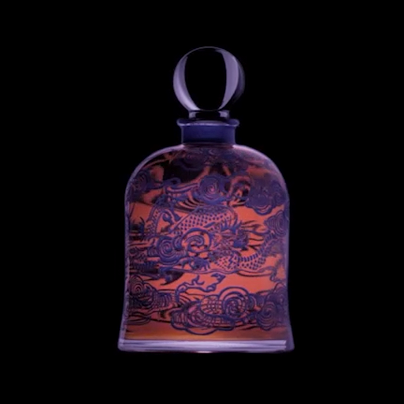
Rare, limited edition, Dragon Bell Jar for Mandarine Mandarin. Source: Serge Lutens Facebook.

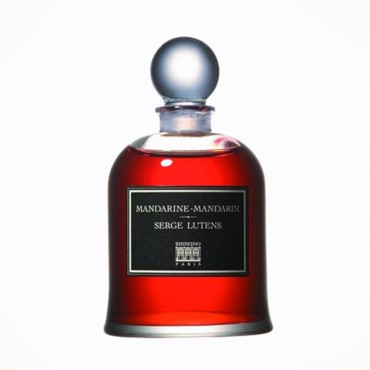
Rare, limited edition, Dragon Bell Jar for Mandarine Mandarin.

I thought I’d start my Serge Lutens series of reviews with a perfume that captured my imagination a long time ago. Mandarine Mandarin intrigued me not only because I adore orange notes but, to be perfectly honest, for an incredibly shallow reason: the bottle. I saw a photo of the special, limited-edition, now impossible to find, “Dragon” bell jar for Mandarine Mandarin on Serge Lutens’ Facebook page, and that was that. I rarely care a lot about packaging, but that bottle had my jaw on the ground. Even though Mandarine Mandarin now comes in the ordinary, plain, glass bell jar form, I decided that I had to try it. The fact that the perfume seems to be a call-back to Imperial China (one of my favorite areas of history), and the fact that no-one ever talks about it simply cemented the deal.    

Mandarine Mandarin was released in 2006, and is the creation of the always brilliant Christopher Sheldrake. Although it is one of the Paris Exclusives in a bell jar form, it can actually be purchased outside of France, either from Barney’s New York or directly from Serge Lutens’ international and U.S. websites, though it’s always at a big mark-up if you are buying outside of France.

The regular bell jar version of Mandarine Mandarin and what is available today for purchase.

The regular bell jar version of Mandarine Mandarin and what is available today for purchase.

The Lutens website gives a brief synopsis which, in my opinion, creepily calls to mind chicken feet and claws:

Tiny feet and long nails may be things of the past, but the odor of peeled mandarin oranges is forever.

Suddenly the fragrance comes back to me. As a child, I would place the peel on a hot burner of the stove, rendering a scent I’ll never forget.

As always Uncle Serge refuses to give the notes for the fragrance, so we must engage in the typical guessing game. According to Bois de JasminFragrantica, and elsewhere, the most commonly accepted list of ingredients seems to be:

Chinese orange, nutmeg, candied mandarin, orange peel,  smoky Lapsang tea, labdanum, tonka bean, ambergris, and rose hip.

There is no way that list is complete, in my opinion, especially given one note that was a big part of the first two hours of the fragrance and which left me blinking in slack-jawed disbelief before making me laugh with confused amazement.  

Source: broadsheet.com.au and the smittenkitchen.com, via flickr. http://www.flickr.com/photos/smitten/2231161820/

Source: broadsheet.com.au and the smittenkitchen.com, via flickr. http://www.flickr.com/photos/smitten/2231161820/

Mandarine Mandarin opens on my skin with candied orange peel, the blackest of smoky Lapsang Souchong, sweet orange blossom florals turned spicy, and cold, green notes. Then, within seconds, comes the shock. Celery. Yes, I said celery. To be precise: badly overcooked, highly concentrated, boiled celery. It’s not just a tinge, it’s not just a subtle, background flicker, and it’s not fresh, light, bright, green celery. It’s full-on, hardcore, intense, overcooked, yellowing celery. I can’t figure out what is the cause of it. Angelica often has a strong undertone of celery, but I’ve never smelled angelica quite like this. This note seems different, and much like actual, cooked celery purée. But would Serge Lutens and Christopher Sheldrake use celery concentrate in what is supposed to be a floral-oriental perfume?? On second thought, never mind. It’s Lutens and Sheldrake; they probably would do so with a grin….

Source: Kootation.

Source: Kootation.

Making matters even more disconcerting here, the boiled celery is mixed with an equally potent orange blossom note that is sweet, almost syrupy, and intensely white floral in nature. It’s as if cooked vegetables have been mixed with Fracas or Mademoiselle Piguet. Lurking close-by is candied, lightly caramelized orange, studded with spices. The whole thing is beautifully smoked with the most entrancing black tea that feels as if you’ve taken bags of Lapsang Souchong and tossed it in a fireplace. When I can get my mind off the boiled celery, I truly enjoy the other accords, but… damn. That celery. Even stranger is how spiced the vegetable is; I find myself waiting for a curry note to go with it. Thankfully, that doesn’t happen (though it did for someone on Fragrantica), but, still, there is no doubt that the food aspect is hard to shake. 

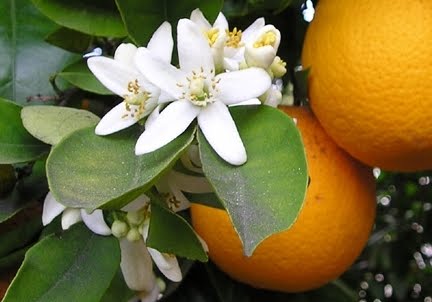
Orange blossoms via the Pattersonfoundation.org.

Orange blossoms via the Pattersonfoundation.org.

The orange note in Mandarine Mandarin is interesting. Whatever the notes may say, my nose doesn’t detect a hell of a lot of the actual mandarin or orange fruit. The note isn’t juicy, pulpy, zesty, zingy or fresh; it’s nothing like either orange juice, or the pulpy fruit itself. Instead, it’s a mixture of the white flowers of the tree, with a dash of the slightly bitter oil of grated orange peel, and a whopping amount of candied oranges highly spiced with bitter nutmeg and spicy star anise. There is, in fact, a rather aniseed nuance to the odd, green element in Mandarine Mandarin, and it evokes tarragon at times. I find myself completely bewildered by the odd combinations, while somewhat in awe of Christopher Sheldrake’s brilliantly original madness. You can never say that Serge Lutens fragrances are boring, that’s for sure!

"Celery Forest." Photo: Carl Warner. Source: npr.com

“Celery Forest.” Photo: Carl Warner. Source: npr.com

Mandarine Mandarin doesn’t change much in its opening stage. Thirty minutes in, the boiled vegetable, spiced fruit, and heady, indolic, white florals continue their mad march, seemingly gaining in potency and strength. The orange visuals — the way they so forcefully and militantly march, and the slowly growing amber aura around them — make me think of the famous Terracotta Warriors that I saw in China. I think it’s because of the amber base which, by the end of the first hour, is increasingly prominent. It becomes sweeter, darker, denser, taking on a sticky, burnt caramel nuance. At this point, I’m simply laughing. I mean, what are you supposed to do when you’re radiating boiled celery, clove-nutmeg-infused oranges, burnt orange peels, smoky Lapsang Souchong black tea, Fracas-like white florals, and burnt caramel?! 

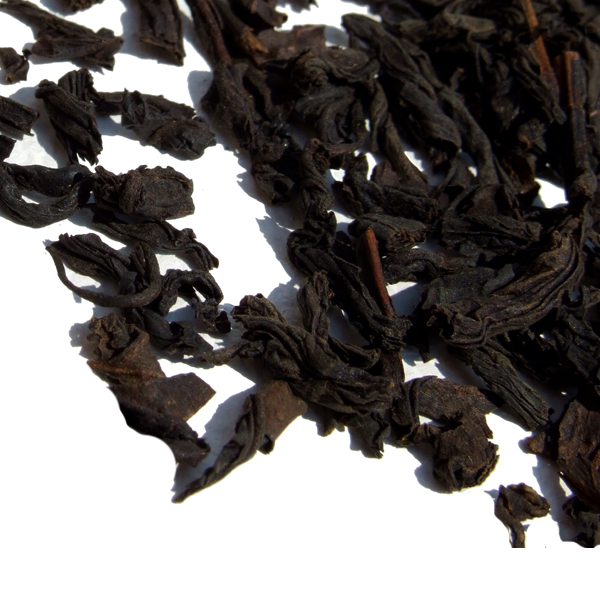
Tarry Lapsang Souchong smoked tea. Source: theteamakers.co.uk

Tarry Lapsang Souchong smoked tea. Source: theteamakers.co.uk

Thankfully, Mandarine Mandarin eventually starts to lose some of its forcefulness, and softens. At the 90-minute mark (but most definitely at the two-hour one), the perfume becomes a smoother, more blended, warmer, gentler mélange of orange, black, and green notes that aren’t as individually distinct as they were before. The smokiness is less sharp, though the black tea impression remains strong, and the sticky caramel feels merely like abstract, syrupy, burnt balsam resins. Interestingly, the base note never reflects the usual facets of labdanum. It’s not leathery, honeyed or nutty. Instead, there is a slightly sharp muskiness that — if you really push it — may possibly feel a little animalistic. If you really strain yourself, then, perhaps, it borders almost on leathery, but not quite. Like everything else, however, it is covered by orange blossoms and boiled celery. (I’m having a really hard time writing all of this with a straight face.)

Source: Thekatsgarden.com

Source: Thekatsgarden.com

Something about the vegetal-orange-blossom combination really reminds me of an all-natural bug spray I have that is made of geranium oil, cedar oil, clove oil, tarragon, and other green herbs. Mandarine Mandarin has the same sort of powerful, floral, herbal, green sharpness. Moreover, as time passes, the perfume’s celery note gradually fades away to be replaced by something that smells very much like geranium’s green, fuzzy leaves.

Burnt citrus peels. Source: Tallcloverfarm.com (Website link embedded within photo.)

Burnt citrus peels. Source: Tallcloverfarm.com (Website link embedded within photo.)

By the middle of the third hour, Mandarine Mandarin’s primary bouquet is of slightly burnt, caramelized, candied oranges and sweet orange blossoms, followed closely by smoky Lapsang Souchong black tea, and that strange green note that now smells of geranium leaves. Underneath lurks the slightly musky, burnt labdanum caramel, burnt orange peel, cloves, the merest hint of bitter nutmeg, and some abstract amber element.

Source: Clarissahulse.com

Source: Clarissahulse.com

As time ticks on, Mandarine Mandarin becomes increasingly nebulous and abstract in form. All the notes have taken on a blurry aspect in the drydown, fading in definition and distinctness, and melting into one overall bouquet that is primarily dominated by amber and a floral orange with flickers of black smokiness. The perfume started being closer to the skin around the third hour, but it becomes more so with every passing hour. Though the drydown has begun, it takes a lot more hours for Mandarine Mandarin to fade away as a simple, amorphous, sweet orange note with some muskiness.

All in all, the perfume lasted 8.75 hours on my perfume-consuming skin, though I was in cool temperatures for much of it and that may have made a small difference and extended its life. The moderate sillage was interesting because Mandarine Mandarin isn’t a perfume that you can smell across the room. Yet, within its small cloud, it is very intense, especially at first. After the first hour, it hovered about 3 inches above the skin, still forceful up close, until the start of the third hour when it suddenly softened and dropped. Nonetheless, the fragrance is easily detected for another few hours if you bring your arm somewhat close to your nose.

One of the reasons why I had wanted to try Mandarine Mandarin is because you never hear about it. I couldn’t understand that, but I knew it couldn’t be an issue of exclusivity or access. After all, people talk endlessly about other Lutens’ bell jar fragrances from Sarrasins to Fumerie Turque, La Myrrhe, Iris Silver Mist, and so on. Now, however, I get it. Mandarine Mandarin is just too weird, especially in light of the cost. Out of 15 reviews on Fragrantica, nine of them mention celery and/or vegetables. Nine! One commentator summed things up succinctly as: “All I can smell is mandarin celery, not for me.” 

With one exception, those few blog reviews of Mandarine Mandarin that are out there never mention the celery. Bois de Jasmin doesn’t, and neither does The Perfume Posse or The Perfume Shrine, though the latter does make some reference to rotting fruit (and death). To me, most reviews seem ambivalent and somewhat unenthused in their response to the scent, as if they just want to get the discussion over with. To be fair, the Perfume Posse is more positive, writing:

When first applied, I get a lot of the orange notes, but there is nothing sweet or citrusy about this after it’s been on a bit.  The orange becomes a whisper, hidden behind the darker elements in this perfume.  It’s like being in a dark house that is warm and comforting, with a little cold breeze and one ray of sunshine coming through the window and hitting the floor.

As much as I did NOT like Chypre Rouge, it just went bad on me, Mandarine-Mandarin is everything I wanted Chypre Rouge to be, though they aren’t the same in composition — just the feel of MM is what I wanted CR to be.  It’s at once bitter and a little sweet, dark and a little light.  Definitely unisex, complex and constantly changing while retaining the tension between the notes.  It’s a great composition, shadows of notes constantly shifting in contrast to each other.

When I went by my husband after spritzing on a cloud of this, he really liked it, and he doesn’t notice many perfumes I wear.

A truly appreciative review of Mandarine Mandarin comes from Perfume-Smellin’ Things which is the only blog to actually mention the cooked celery aspect — and still like the perfume:

It is dark, sweet, and as complex and mysterious as I like Lutens’s scents to be.

Mandarine Mandarin goes on my skin through three very distinctive stages. It starts with a sweet citrusy-floral accord. I smell honeyed orange blossom, over-ripe mandarins and oranges. A slightly green and softly smoky/spicy note is woven into the citrusy sweetness preventing it from being completely jam-like. As time passes, the citrus accord subsides and the green-spicy aspect grows stronger, and we are suddenly presented with stage two, which, although as sweet as the first one, is much darker, much more substantial, much stranger than only slightly quirky top notes. Here I smell the remains of orange blossom, strongly brewed Lapsang Souchong, a rose that is as black as the night, lots and lots of smoky honey and an ingredient that seems to be a hybrid of celery and immortelle. It has the bright, crunchy greenness of the former and the spicy meatiness of the latter. It is odd, it is somewhat out of place in a blend called Mandarine Mandarin, and it makes the scent unmistakably and very appealingly “Lutens”. This dark-sweet-spicy-meaty stage lasts for a long time, perhaps 5-6 hours at least, before evolving into the drydown that is much more subtle then the rest of the scent. This final stage witnesses the return of citruses, it has a slight herbal undertone and a general cologne-like feel.

Mandarine Mandarin is to me Lutens at his best. It is a strangely-beautiful perfume with rich “texture”, depth and complexity. I like it a lot. It isn’t one of my most beloved Lutens perfumes (although it is too early to tell, his scents have a tendency to sneak up on me and suddenly madly infatuate me) and I am not sure yet if I want to jump through the hoops trying to obtain the bell jar…but I cannot help but admire it’s tasteful, sophisticated opulence.

I adore everything about Serge Lutens, from his extremely well-read intellectualism, to the complexity of his fragrances with the genius who is Christopher Sheldrake. I’m in awe of their originality and sophistication, of how they’re never boring, and of how they try to stretch the bounds of perfumery. I’m fascinated by how they often deconstruct an ingredient, then reassemble the pieces back together as something wholly different, as in the case of the tuberose flower in Tubereuse Criminelle. They’re both mad scientists in the olfactory field, but what is perhaps the best part of all is how their perfumes often seem more like living things. They morph, breathe, and change like sinewy creatures in the most sophisticated of skins.

But I can’t wear Mandarine Mandarin. No matter how much I love orange notes, orange blossoms, labdanum, resins, and the uncommon addition of Lapsang Souchong, I simply can’t do it. No way. Between the super intense, cooked celery, and the bug-spray feel of the floral-geranium-clove accord during the middle stage, I found the scent simply too difficult to pull off in any practical sense, let alone to wear on a daily or weekly basis. Most of my regular readers know how rarely I agree with Luca Turin but, in this case, he’s completely right. In Perfumes: the A-Z Guide, his short, two-star review of Mandarine Mandarin essentially boils down to this summation: “Deeply strange, quite intense, and not particularly wearable.”

Serge Lutens' Facebook photo of the rare "Dragon" jar.

Serge Lutens’ Facebook photo of the rare “Dragon” jar.

If I could get my hands on that rare, limited-edition “Dragon” bell jar of Mandarine Mandarin — and if I could hypothetically afford what is undoubtedly now an outrageously expensive collector’s item — I’d buy it. But to fill it with something else. I really don’t want to smell of “vegetable soup,” “mandarin celery,” “straight celery,” or even “background” celery mixed with burnt orange peel and bitter nutmeg.

Yet, despite all that, if you’re really intrigued by the notes in the perfume, I’d encourage you to get a sample. After all, there have been some who had success with the fragrance, so maybe you have the skin chemistry to pull it off. At the very least, you’ll have quite a stimulating, original, crazy ride!


DETAILS:
Cost & Availability: Mandarine Mandarin is an eau de parfum that is part of the Serge Lutens “European Exclusives” line, which means it is available only in the larger 2.5 oz/75 ml Bell Jar size. It retails for $290 or €130 for a 75 ml/2.5 oz bottle. You can buy Mandarine Mandarin directly from the U.S. Serge Lutens website or from the International one.
In the U.S.: you can also find Mandarine Mandarin sold exclusively at Barney’s New York store. The website has a notice stating: “This product is only available for purchase at the Madison Avenue Store located at 660 Madison Avenue. The phone number for the Serge Lutens Boutique is (212) 833-2425.”
Personal Shopper Options: Undina of Undina’s Looking Glass reminded me of Shop France Inc run by Suzan, a very reputable, extremely professional, personal shopper who has been used by a number of perfumistas. She will go to France, and buy you perfumes (and other luxury items like Hermès scarves, etc.) that are otherwise hard to find at a reasonable price. Shop France Inc. normally charges a 10% commission on top of the item’s price with 50% being required as a down payment. However, and this is significant, in the case of Lutens Bell Jars, the price is $225 instead. The amount reflects customs taxes that she pays each time, as well as a tiny, extra markup. It’s still cheaper than the $290 (not including tax) for the bell jar via Barney’s or the US Serge Lutens website.  Another caveat, however, is that Suzan is limited to only 10 bell jars per trip, via an arrangement with the Lutens house. There is a wait-list for the bell jars, but she goes every 6-8 weeks, so it’s not a ridiculously huge wait, I don’t think. If you have specific questions about the purchase of Lutens bell jars, or anything else, you can contact her at shopfranceinc@yahoo.com. As a side note, I have no affiliation with her, and receive nothing as a result of mentioning her.
Outside the US: In Europe, the price of Mandarine Mandarin is considerably cheaper at €130 from the French Lutens website or from their Paris boutique. Other language options are available, though the Euro price for the item won’t change. To the best of my knowledge, the Paris Exclusives are not carried by any department store anywhere, and the only place to get them outside of Barney’s New York boutique is the Paris Serge Lutens store at Les Palais Royal. 
Samples: You can order samples of Mandarine Mandarin from Surrender to Chance starting at $3.99 for a 1/2 ml vial. I actually ordered mine as part of a Five Piece Non-Export Sampler Set, where you can choose 5 Lutens Paris Exclusives for a starting price of $18.99 for a 1/2 ml vial. 

Perfume Review – Dior Ambre Nuit (La Collection Privée)

The sensuous slither of limbs. The expanse of a man’s chest, heated and lightly musky. The slow seduction of a dance that is always completely refined, just hinting at the passion below. The heated languor of the tango is what comes to mind when I wear Ambre Nuit, an incredibly sensuous but highly refined fragrance from Dior‘s prestige line of fragrances called La Collection Privée. (The line is sometimes called La Collection Couturier on places like Fragrantica and Surrender to Chance, but I will go with the name used by Dior itself on its website.) For me, everything about Ambre Nuit calls to mind the Latin tango — from the rhythm of its developing notes, to its mood, to the sensuality that almost borders on the overt but which, ultimately, is too refined and elegant to really cross the line.

La Vida es Un Tango. Movie still or advert. Source: Facebook.

La Vida es Un Tango. Movie still or advert. Source: Facebook.

Ambre Nuit was released in 2009, the creation of François Demarchy, the artistic director and nose for Parfums Dior. Dior categorizes the fragrance as an “amber woody floral,” and provides the following description:

Source: Basenotes.

Source: Basenotes.

A mysterious fragrance, inspired by the baroque atmosphere and balls of the 18th century, which left their marks on Christian Dior. The tale of a Rose seduced by carnal Amber, which together unveil an unexpected profound, intense and elusive scent.

Describing Ambre Nuit as a “rose” fragrance might be little misleading, in my personal opinion. It is most definitely not that on my skin for the majority of its development, nor for many others. In fact, I would say that “rose” is almost the least of things I experienced with this smoky, woody, amber fragrance. Dior’s list of notes include:

Bergamot di Calabria, Turkish Damascus Rose Essence, New Zealand Ambergris, Gaiac Wood, Cedar Wood and Patchouli.

Fragrantica adds pink peppercorns; Ozmoz adds spices and balsam notes; and I would toss in both frankincense and myrrh. The real key, however, is the ambergris which is a whole other olfactory animal than the regular amber used in the majority of perfumery. A very rare, astronomically expensive ingredient, ambergris has a strong, salty-sweet character that is always sensual, often slightly musky, occasionally a little animalic, and usually so creamily rich that it can border on ambered caramel.

"Tango and Cobblestones",  painting by Aldo Luongo. Source: ipaintingsforsale.com

“Tango and Cobblestones”, painting by Aldo Luongo. Source: ipaintingsforsale.com

Ambre Nuit opens on my skin with sweet, refined patchouli, followed by sun-warmed bergamot and pink peppercorns. Unlike the patchouli note in many commercial fragrances, nothing here smells like the sharp, plastic-y, highly synthetic ingredient that is always painfully loaded with purple fruitness. Though the patchouli smells a little grape-y at first, it is a very refined, subtle aroma that is actually a little black in nature. It has a smokiness that would imply incense as a hidden note, something that is borne out later by the rest of Ambre Nuit’s development. From the start, though, something about the patchouli and smoke accord in Ambre Nuit reminds me of Chanel‘s gorgeous, glorious Coromandel from its Exclusifs collection. 

Source: YouTube.com

Source: YouTube.com

The pink peppercorns in Ambre Nuit differ slightly in aroma from that used in commercial, mainstream perfumery. They have a fiery, spicy edge that evokes red, chili or pimento peppers, instead of something wholly fruity in nature. (The excessive, pink peppercorn and patchouli combination in Marc JacobsLola comes to mind when thinking of things that Ambre Nuit does not resemble!) Here, the pepper infuses the subtle, muted rose note, along with the patchouli, turning the flower into something red, rich, and darkened. Yet, the rose is never so syrupy or sweet as to feel jammy and fruited; it’s too smoky and dry for that. 

All the main top notes sit upon a base of beautifully dry, rich, nuanced woods with amber. The accord is smoky from the gaiac; peppered and aromatic from the cedar; and burnished to a soft, rich edge from the ambergris. The latter feels very much like the real stuff with its salty, musky facets. Here, however, the ambergris also has a subtle undertone of something that is simultaneously honeyed and almost boozy. I suspect the combination of the patchouli, peppercorns, and ambergris is responsible for the almost cognac-like, liqueured undercurrents running through Ambre Nuit.

Ambre Nuit’s nuances in the early stage really show themselves best when a large quantity is applied, but there are dangers with that, as well. I tried the perfume twice, with the first test consisting of one, medium-ish smear, and the second entailing about 2.5 very large ones. With the smaller quantity, it’s harder to detect the full range of the perfume’s layers; Ambre Nuit is so well-blended that it ends up becoming just a single, very smooth, almost abstract, smoky, woody, ambery bouquet after the first thirty to forty minutes. With a larger dose, you can see more of the nuances in the fragrance, but then the pink peppercorns can verge a little on the over-bearing. For me, at least, it was a little sharp, unbalanced, and just tipping towards the screechy category. It wasn’t a problem at all with the smaller dose, so I suspect one has to go the Goldilocks’ route and try for a dose in the middle. Regardless of quantity, in its opening half hour, Ambre Nuit is a beautiful, very potent blend of smoky, liqueured, salty-sweet amber, with dry woods and a quiet touch of delicate roses that have been rendered a little fiery from the peppers and a little sweet from the patchouli.

"Dancers" photograph by Erwin Olaf. Source: KontraPLAN magazine.

“Dancers” photograph by Erwin Olaf. Source: KontraPLAN magazine.

What fascinates me, however, is the patchouli and incense combination in Ambre Nuit. I am convinced that there is incense in the perfume. It is as though Dior decided to do a variation of the note in its divine Mitzah, another smoky, oriental, rose-based perfume, but Dior opted to combine incense with ambergris in lieu of Mitzah’s labdanum. Ambre Nuit has the exact same sort of subtle smokiness in the base. The patchouli is a perfect accompaniment to both elements: it’s a little 1970s, hippie-ish, except it’s so refined in Ambre Nuit that it lacks any skanky, musty, musky, pothead-type of dirtiness. Underlying the smoky, salty, sweet notes is an unexpected honey tone that must come from the ambergris. It has subtle beeswax nuance to it as well, which just adds to the richness and depth of the base.

Thirty minutes into Ambre Nuit’s development, the woody notes start to rise to the surface. Gaiac can sometimes have a slightly tarry, asphalt-like character, while at other times, it can smell like burning leaves. Here, both aspects lurk under the creamy, soft, smooth wood. When combined with the incense notes in Ambre Nuit, it serves to create a wonderfully dry accord that counterbalances any sweetness from the patchouli and offsets any heaviness from the ambergris.

"Tango": Freja Beha Erichsen and Baptiste Giabiconi by Karl Lagerfeld for German Vogue.

“Tango”: Freja Beha Erichsen and Baptiste Giabiconi by Karl Lagerfeld for German Vogue.

There is something extremely sensuous about the combination of notes in Ambre Nuit that consistently make me think of an Argentinian tango between heated dancers in some smoky, dark room — except they are dressed in the most refined, elegant, couture outfits. The ambergris’ special, unique features evoke the warmth of heated, slightly musky skin that has been rendered just the faintest bit salty from sweat. The incense conjures up the smoky, dark feel of those dance rooms, while the gaiac and cedar replicate the incredibly smooth, wooden floors that the dancers glide across. The rose note is nothing more than a mere accessory, as inconsequential as the flower in a dancer’s hair, and hardly a significant part of the scent on my skin, especially as Ambre Nuit continues. All the notes, however, are very smooth and refined, thereby ensuring that Ambre Nuit stays a level above the many, mainstream, commercial scents that have similar elements. I must confess, though, I worry a little about those pink peppercorns which could have been handled with a slightly softer touch. They are the only thing that tarnish Ambre Nuit’s more sophisticated balance.

At the end of the first hour, Ambre Nuit is a gorgeous, smoky ambergris perfume. There is a sweet-salty creaminess which is infused by incense, a light flicker of warm musk, a dash of honey, and a tinge of beeswax — all atop very dry, smoky woods. The patchouli has melted into the ambergris, adding to its rich sweetness. And the rose has completely vanished. As a whole, Ambre Nuit  is a little too potent in its sillage in the early hours to be called “airy,” but it has a very plush feel that is as rich as velvet. And, yet, it is not opaque, heavy, or unctuous in any way.

Ambre Nuit never changes in its core essence, but some of its notes fluctuate in prominence. Around the middle of the second hour, the peppery gaiac wood takes the lead, followed by the ambergris, then the smoke, and trailed much further behind by the patchouli. The end of the third hour, however, sees the patchouli join the smoky woods and ambergris in a three-way tie. The whole thing is sweet, salty, smoky, a little bit musky, and absolutely beautiful. Again, the subtle similarities to Chanel‘s Coromandel raise their head for me. Ambre Nuit is significantly woodier and drier, and lacks the delicate, white cocoa powder, benzoin, and vanilla undertones of Coromandel. Yet, oddly enough, the patchouli in Ambre Nuit has taken on a distinctly chocolate-like nuance at its base, though it’s more akin to a gooey, dark chocolate ganache than the airy, white cocoa powder of Coromandel. Still, the way both fragrances are so infused with smoky incense and patchouli, that they feel like very distant cousins.

Ambre Nuit slowly grows closer to the skin, turning softer and more ambered in focus. Around the end of sixth hour, there is an odd quirk which occurred during both tests: the smoke takes on a soapy, white character that reminds me of myrrh. It only lasts about forty minutes, but it was noticeable enough to make me sit up on both occasions and think that the incense had become very churchy. It quickly fades, leaving Ambre Nuit’s remaining and final notes in the drydown phase as an abstract amber that is simultaneously a little dry, a little sweet from the final flickers of patchouli, and a little musky.

Like all of Dior’s Privée fragrances, Ambre Nuit has excellent longevity on my perfume-consuming skin and generally moderate sillage. Ambre Nuit lasted just under 8.5 hours on me with a single, medium-ish smear, and over 11.75 hours with 2.5 large ones. The sillage is significantly greater than some of the other Dior Privée fragrances, no doubt due to the impact of the patchouli which is always a more projecting ingredient. With the larger dose, Ambre Nuit wafted a good 4 inches above my skin for the first hour, thereafter dropping and becoming slightly less. But it took a whole 8 hours before it became a skin scent. If you work in a conservative office environment, I would suggest not spraying with abandon, especially as aerosolisation can increase a perfume’s potency. (Plus, there is that whole issue of needing to create a delicate balance with the pink peppercorns.)

Ambre Nuit is extremely well-liked, with raves on Fragrantica and elsewhere about its sophisticated, refined, opulent and very versatile nature. Interestingly, for some, like the Candy Perfume Boy, Ambre Nuit is much more of an oriental rose fragrance, calling to mind Le Labo‘s woody Rose 31, only with a slightly powdery undertone to the floral note. He adores it, and calls it “utterly fabulous.” For me, Rose 31 was mostly peppery cedar, with massive amounts of ISO E Super and a very muted rose, while Ambre Nuit had no powder at all — clearly, skin chemistry makes a difference. On Fragrantica, the talk isn’t about the powder, but about differing experiences with the rose. For some, it only appears midway during the perfume’s development, while others find it noticeable as a rich, aromatic rose from the start. There is also quite a bit of talk about the incense in the fragrance, too, with one commentator reaching the same conclusion that I did: both incense and myrrh must be part of Ambre Nuit. Others find the opening of Ambre Nuit to be both bright and significantly more citrus-like in focus than it was for me, with zesty grapefruit and bright bergamot.

Regardless of the variations, almost everyone adores Ambre Nuit and, for some, it is the best of the Dior Privée line. I don’t love Ambre Nuit as much as I adore its sibling — the labdanum-incense beauty that is Mitzah — but then, there aren’t a ton of things I like as much as Mitzah. Still, I definitely think it is worth checking out if you are a fan of easy, accessible amber fragrances. It’s not a revolutionary, edgy, unique amber fragrance; and it’s not a heavily spiced or very unctuous, opaque, fully baroque one, either. But it’s not meant to be any of those things.

Dior’s signature perfume style is to create incredibly smooth, refined, well-blended, generally unisex fragrances that take a slightly typical combination of notes, and raise it to a higher, almost couture-like level through the best ingredients and superior crafting. Dior is intentionally trying to create very accessible fragrances, but it wants them to be the height of refinement, sophistication, and discreet elegance. Ambre Nuit is no exception, though the fragrance is significantly more powerful than its softer, more unobtrusive, but equally elegant, siblings. (With great caution in spraying, Ambre Nuit might be appropriate for some conservative office environments.) For some who seek a more revolutionary, perhaps more unique bent to their amber fragrances, Ambre Nuit will probably be a little safe and little uninteresting. But I doubt they’d argue with its silky smooth nature, or with its luxurious undertones. As an added bonus, Ambre Nuit is almost cheap per ounce, relatively speaking, given the quality and the enormous size that Dior provides for its “small” version. The perfume costs $155 for a whopping 4.25 oz/125 ml — almost a full ounce more than the normal “large” version of most perfumes. (You should see the truly large Dior size at a behemoth 15.2 oz or 450 ml! You could use it as a cudgel or weapon!)   

For me, what distinguishes Ambre Nuit from some other ambers on the market is the glorious sensuality of its rare ambergris. When combined with the incense, the smoky, sweet-salty result is damn sexy. Watch the video below, listen to the music and how it undulates in different tempos, and see the lithe, swaying, connected bodies move. That’s Ambre Nuit for me.


DETAILS:
Cost & Availability: Ambre Nuit is an eau de parfum that is available exclusively at Dior boutiques, at Dior online, and a few select, high-end department stores. Dior Privé perfumes come in two sizes: the 4.25 fl oz/125 ml costs $155, while the 8.5 fl oz/250 ml costs $230. (There is a third option which is so enormous, I can’t imagine anyone buying it.) In the U.S.: Ambre Nuit found at Dior’s NYC boutique, and at the main Las Vegas store [call (702) 369-6072]. If you’re really interested, however, what I would do is to call this number instead — (702) 734-1102 — and ask for Karina Lake, the Dior Beauty Stylist at the Las Vegas store. She is an amazingly sweet lady who will also give you a free 5 ml mini bottle of the Dior perfume of your choice, along with 3-4 small 1 ml dab vial sample bottles, to go with your purchase. Even better, you will get free shipping and pay no tax! Tell her Kafka sent you. Elsewhere, New York’s Bergdorf Goodman and San Francisco’s Neiman Marcus also carry the Dior Privée line collection of perfumes.
Outside of the US: you can use the Points of Sale page on the Dior website to find a location for a Dior store near you. You can also navigate the Dior website’s International section to buy the perfume online. The problem is that the site is not very straight-forward. If you go to this page, look at the very far right to the bottom where it will say, in black, “International Version” and click on that. You should see options for Europe, Asia-Oceana, and South America. Within Europe, there are different sub-sites divided by country. The one closest to you should have the perfume available for sale.
Samples: If you want to give Ambre Nuit a sniff, samples are available at Surrender to Chance where prices start at $3.00 for a 1 ml vial. If you’re interested in trying the whole Privée line (minus the new Gris Montaigne), Surrender to Chance sells all 13 fragrances in a sampler set for $35.99.