Reminiscence Patchouli & Elixir de Patchouli

I thought I’d begin my patchouli series at the beginning with the referential benchmark perfume which started it all. It was 1970 when Reminiscence Paris released Patchouli, the fragrance which would be forever tied to their name in many people’s minds. A true, dirty, woody patchouli, Reminiscence’s eau de toilette was very much a product of its times, and embodies all that the negative associations with the note: the “Summer of Love,” dirty hippies, and a “head-shop” earthiness. Yet, Reminiscence’s Patchouli remains a cult hit and, for many, the standard by which all other scents in the genre are measured. For a few of my friends, the perfume is known merely as “Reminiscence,” as if there were nothing else. I myself call it the same thing. So, to avoid endless redundancy in talking about both the note and the perfume name, I’ll simply refer to the scent from now on as “Reminiscence.”

Source: inthe-r.com

Source: inthe-r.com

In 2007, the company issued a flanker called Elixir de Patchouli. Though there have been a few Reminiscence spin-offs of the 1970 original, the Elixir is an eau de parfum that is intended to be a deeper, richer version of Patchouli, a daughter more than a cousin. The two fragrances seem largely alike on the surface, especially when you spray on a lot. They both open as extremely boozy, cognac-like patchoulis, but they diverge later on to some extent. However, if you apply a minimal quantity, the differences between the Reminiscence and the Elixir are much more noticeable. I thought I would analyse each one in turn.

PATCHOULI:

Source: Miriam London

Source: Miriam London

Patchouli is an eau de toilette which Reminiscence describes as an “Oriental Woody” with the following olfactory pyramid:

Top and Heart Notes :

Woody (Essential Oil Virginia Cedar, Essential Oil Javanese Patchouli, Essential Oil Haitian Vetiver, Essential Oil Australian Sandalwood)

Base Notes :

Ambery (Spanish Labdanum Absolute)

Sweet (Madagascan Vanilla Absolute, Tonka Bean Absolute),

Balsamic (Tolu Balm Resinoid),

Musky (White Musk)

If you apply a lot of Reminiscence, its opening is all boozy cognac followed by hints of dark chocolate. Four big smears creates a potent, forceful, truly intense cloud of dark patchouli where the aged cognac essentially trumps all for a good portion of the opening 15-minutes. However, I think the perfume’s true characteristics and nuances are most evident with a lesser, perhaps more normal dosage, so my breakdown will talk about what the fragrance is like with 2 big smears which would be the equivalent of 2 small sprays. Given the famed potency of Reminiscence in its opening stage, I’m not sure anyone would ever apply more than 2 small sprays anyway.

Reminiscence opens on my skin as a powerful force-field of chewy, earthy, leathery sweetness infused with smoky cedar. The immediate impression is of dark patchouli that is sweet, spicy, and musky, with hints of dry woods, and smoke. More significant, perhaps, is a note that can only be described as a wet, mushy, salty touch, almost like ambergris. To my surprise, Reminiscence is surprisingly sheer for such a massively strong perfume, and feels as though it has no weight at all.

Red clay river bank. Source: panoramio.com

Red clay river bank. Source: panoramio.com

There is a definite greenness underlying the dark brown, red, black notes. The perfume makes me imagine a wet, terracotta-brown, sloping, river bank of musky earth at the base of a big cedar tree. Out of the mushy soil sprout dark green leaves that smell a little medicinal. Yet, there is also sweetness in the air. From afar, the patchouli smells like smoky, bitter-sweet chocolate toffee with spices, leather, a whisper of nuttiness, and a whole lot of funk. Up close, however, the patchouli is primarily woody and dry in nature. There are also clearly synthetics in the base, something that eventually gives me a little bit of a headache. I suspect it’s my nemesis, the white musk.

Ten minutes in, Reminiscence starts to slowly shift. The chocolate rises to the surface. It’s dark but semi-sweet, with an almost expresso-like undertone. The vetiver soon explodes in full force, smelling as smoked as the cedar that it joins, and the two together cut through Reminiscence’s sweetness. They add a definite dry, forest feel to the visuals of wet, red earth. As the smoked vetiver and dry cedar bloom, so do the dark, green patchouli leaves, turning very medinal and camphorated. I don’t have my sample of Serge LutensBorneo 1834 to compare to Reminiscence side by side, but there are definite similarities in the mentholated notes. However, the Reminiscence seems more heavily dominated by the smoked vetiver and cedar than the Lutens. It is stronger in smell, but sheerer in feel, and it also seems dirtier.

Source: thecandyfan.com

Source: thecandyfan.com

The Reminiscence smells a lot like chilled peppermint and bitter chocolate with heavy amounts of smoky vetiver and cedar. In some ways, it reminds me of the American sweet, a York Peppermint Pattie, only much drier and woodier. I find myself oddly apathetic to it all, perhaps because I wish there were more sweetness, and much more weight. It doesn’t feel molten, thick and opaque, no matter how strong it may be up close.

The projection isn’t enormous either, though you may get fooled by the strength of the perfume’s notes up close. (With 4 enormous smears, however, the projection is nuclear, and the fragrance can be smelled across the room.) Yet, for all that the sillage is average with a low dose, the Reminiscence still sends little tendrils into the air around you, weaving a dark spell that is a mix of sweetness, earthiness and dry, smoked woods.

Source: pixabay.com

Source: pixabay.com

After 20 minutes, Reminiscence begins to transition. The medicinal, mentholated aspect to the funk becomes stronger, and the perfume definitely seems like something suited to the ’70s or to the hippies at Woodstock. I like parts of it, and others I don’t. The synthetic clang in the base gives me a headache, and the notes are too intensely mentholated for my tastes. I smell like a bitter, dark chocolate version of a York Peppermint Patty, mixed with an athlete’s muscle rub, and a hefty dose of smoked, dark vetiver. The cedar pops in and out, lending even more woody dryness whenever it appears.

I think people who are used to a much sweeter, more modern patchouli fragrance where the note is infused with vanilla from the start may get a little bit of a shock to their system at the medicinal funk and vetiver woodiness of the Reminiscence. This is definitely patchouli, yes, but it is a significantly darker, more bitter, medicinal camphorated version than many of its descendants from other brands.

Source: pl.123rf.com

Source: pl.123rf.com

It isn’t until the start of the second hour that Reminiscence pipes down a little. The vanilla suddenly appears, and it changes the scent quite dramatically. The perfume is increasingly a soft, balmy, mellow patchouli atop a light vanilla base infused by cedar and vetiver. The bitter dark chocolate has turned to milk chocolate, and the medicinal aspects are diffused, returning to a pleasant peppermint note. The sillage drops, the notes blend into each other, the perfume is sweeter, and the whole thing feels even gauzier. Around 90-minutes in, Reminiscence is a sheer, spicy, creamy patchouli infused with sweetness, smoky woods and vanilla.

At the end of the third hour, Reminiscence is a total skin scent, and a mere blur of ambered sweetness that just barely smells of patchouli. I have the impression that the fragrance has vanished in areas, and I’m profoundly dubious that it’s actually going to last. To my surprise, however, Reminiscence hangs on, though it turns increasingly vanilla-oriented in focus. About 5.5 hours in, it’s almost all vanilla with just the faintest hint of patchouli and cocoa powder. It finally dies completely around 7.5 hours from the first spray, leaving as a mere vanilla blur.

At double the dosage, Reminiscence has differences in notes, sillage and longevity. The sillage still drops at the end of the first hour, but it takes two hours in total before the fragrance begins to soften and mellow out. The Reminiscence still becomes a skin scent at the end of the third hour, but the total duration is considerably extended to roughly 11.75 hours in length.

The major differences in smell are most noticeable in the opening blast which is suddenly boozy, like aged Armagnac brandy or cognac, in a way that was completely absent at the lower, normal amount. The other differences are primarily of degree. The Reminiscence becomes even more overtly medicinal and dirty with the larger dose, and the fragrance remains that way for a longer period of time. It takes almost 3 hours from the start for the mentholated, earthy, medicinal funk to mellow out, and for the vanilla to soften the patchouli. Oddly, the fragrance takes on a more ambered labdanum undertone at the double dose, and around the middle of the third hour. It’s less vanilla-centered quite so soon, more golden and soft. Eventually, though, Reminiscence eventually ends up the exact same way, as vanilla with patchouli and cocoa powder, then just vanilla in its final moments.

Source: urlm.co

Source: urlm.co

As regular readers know, I’ve been on a hunt for a replica of my holy grail patchouli scent that I wore when I was 14-years old, and which I thought was from the French jewellery house, Ylang-Ylang. It as a glorious dark patchouli with Mysore sandalwood, vanilla, and a light floral touch. Lately, I’ve been wondering if my memory was off, and my holy grail scent was really from Reminiscence. After all, both are jewellery houses started in the South of France, with a similar aesthetic and look. Was I merely confusing the two? I can visualize the store in Monte-Carlo down to a T, but had I gotten the name wrong all this time? I don’t think so, but, when I asked a childhood friend from Monte-Carlo about Ylang-Ylang and a patchouli scent, she said, “It has to be Reminiscence.”

So, when I was in Paris, I took her to the store to see if Reminiscence was the same scent I remember. We sprayed it on our wrists, and I was sniffing mine when she started to shake her head. “This can’t be right,” she said. “It didn’t smell like this. I can’t forget the smell, since half the girls in my high school wore Reminiscence. And this isn’t it!” I asked the sales assistant if the fragrance had been changed, only to receive vehement denials. I don’t believe her. My original favorite had a heavy sandalwood aroma, and while I’m still convinced my holy grail came from “Ylang-Ylang” not Reminiscence, their fragrance also had Mysore sandalwood. Now, however, the perfume lists “Australian sandalwood” as one of its notes. I could not detect sandalwood in any way in the modern Reminiscence Patchouli that I tested, perhaps because the Australian version is utter crap, bland as hell, and isn’t real sandalwood. (Sorry, I know I sound like the biggest snob alive when it comes to this issue, but the two things truly are not alike!)

My memory aside, my friend is convinced that Reminiscence has changed from the fragrance she knew so well — and she’s not the only one. On Surrender to Chance, someone wrote the following comment:

I wore this yummy fragrance over 20 years ago and am assuming they changed the formula….it does not smell like it used to and my family agrees:( so bummed out[.]

Reminiscence Patchouli is perfectly fine, but I found myself strangely apathetic about it. I don’t know why because, in some ways, it’s really quite nice at a higher dosage: the sharpness of the synthetic musk in the base is hidden; the boozy cognac at the top is pretty, as is the amber that shows up later, and the longevity is much improved.

I think the perfume is simply too mentholated at one stage for my personal tastes, too bitter, and with too much smoky vetiver. I need a counterbalance to all that dry woodiness, and much more sweetness to dilute the medicinal tone. Later, when the sweetness does arrive, and the camphor retreats, the fragrance is simply too wispy in feel. I hate how it goes from one extreme (potency), to the other (wispy, sheer skin scent) as quickly as it does, and I don’t approve of the fragrance’s lightweight feel in general.

Sometimes, the original benchmark classic cannot be improved upon, as vintage Opium demonstrates full well. Occasionally, however, modern successors take the blueprint set by the pioneers, and make it much better. I think Reminiscence’s Patchouli falls into the latter category. I’m know it was innovative for its time, and I feel it was probably better before it was reformulated, but the current version is far from perfect, and I think there are better patchouli fragrances on the market. Profumum‘s Patchouly definitely comes to mind, as do a few scents I will write about later this week.

A number of readers on Fragrantica don’t share my opinion. Take the issue of longevity and sillage. The majority (10) vote for “very long lasting,” followed by “long lasting,” while the sillage votes are split with 10 votes for “enormous” and 10 for “heavy.” Almost all the comments on the site are very positive, with a few comparing the fragrance favorably to patchouli niches from Montale, Micallef, and Molinard:

  •  I absolutely loved the clean balminess of Pathcouli. That’s certainly the next best thing to Montale‘s Patchouli Leaves which I declared as my number one. I’ll not compare the two here though. In its own right, Reminiscence’s Patchouli is one of the best, cleanest, dreamiest patchouli fragrances you can ever try. No sharpness, no mustyness, no zesty/citrusy or artificial extra notes whatsoever… That’s the real stuff (some good quality patchouli oil) which has a distinctive “oily” smell reminding me of pure unadultered olive oil. In this respect it’s certainly “exotic”, quite Middle Eastern indeed[.] [Emphasis added by me to name.]
  • This one opens with incense shop and dry cedar wood. Then, a creamy vanilla and praline ensues and tempers the rather moody patch note at the bottom. It’s like teleporting from a Moroccan side street to a Venetian cafe for gelato. I thought at first this one was bitter, but comparing it to Molinard Patchouli and Montale, it’s actually on the sweet side. And I really, really, love it. It is a hippie gourmand essence, but harkens back to some more innocent and hopeful hippie hour; before 1968, say.  [Emphasis added by me to name.]
  • A very beautiful and quite heavy patchouli on a woody base.It smells quite like patchouli oil,very concentrated and powerful. Reminds me of Micallef Patchouli,but Reminiscence’s Patchouli is way stronger and darker.The drydown is a bit sweet patchouli with wood.A hippie patchouli,all the way!It has very good lasting power and sillage! [Emphasis added by me to name.]
  • I think that this is the smoothest of [Reminiscence’s] patchouli blends, and I get a strong, golden, amber-y labdanum entwined with the soft, warm, earthy-resinous patchouli. It has a bit of vanilla sweetness to it, but is mostly a warm, rich, golden, resinous scent. The patchouli smells expensive and smooth, not at all dirty or sharp. It’s dark, golden, and decadent, and I fall in love with it again every time I wear it.
  • This is a rather Nice Patchouli . starts of kind of earthy and the smell of Earth and weth moss came to mind. […]  But then after a little Wild the other notes comes in to make a Symphony .its still very Earth, Smokey, rather hippi like some state before me. […]  i think you must be used to dry Patcholie to be able to pull of this kind of scent.
  • One of the most beautiful patchouli. [¶] A piece of art, strong in the opening, woody, earthy and wet in the middle notes, sweet and vanillic in the drydown, musky the day after. [¶] A deep and warm fragrance you can wear in cold weather and in summer’s evenings. [¶] Pefect and unisex, oriental sensuality and spirituality in a bootle.
  • you spray it.. black magic comes out.. engulfs you..scares you for a second..be strong ..take it..then ..you feel earth moves under your feet..it shatters you.. reminds you of your roots.. and where you came from.. and where you will eventually end..it smells like earth.. like wet earth.. so earthy.. ambery.. PATCHOULI.

I seem to be in the minority, as you can see, especially with regard to the issue of density and longevity. I do think that, if you want a perfectly serviceable, hardcore, dark and dirty patchouli fragrance, Reminiscence probably cannot be beaten for the price. You can buy a 50 ml bottle at various discount sites for between $57-$70. It’s a decent fragrance, and I even briefly considered getting a bottle for myself, despite the moderate longevity on my skin and the unfortunate sillage. At the end of the day, however, I simply can’t get past my feeling that Reminiscence’s Patchouli is merely quite average.

ELIXIR DE PATCHOULI:

Source: Fragrantica.

Source: Fragrantica.

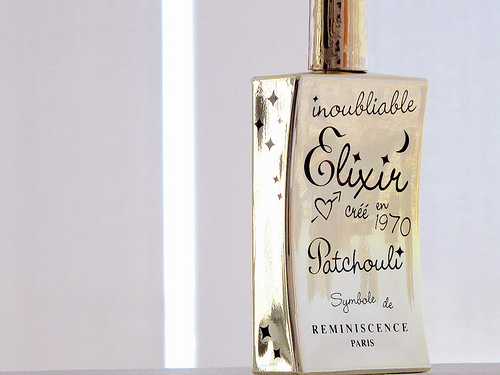
In 2007, Reminiscence came out with an eau de parfum of its trademark scent which it calls, alternatively, Elixir Patchouli, Elixir de Patchouli, or Inoubliable Elixir Patchouli. I’ll just call it “Elixir” for short. Reminiscence describes the fragrance as “the intense version of Patchouli,” and says it has the same notes.

With an average dose (2 small sprays), the Elixir opens on my skin with patchouli that is sweeter, warmer and much less bitter. There is noticeable vanilla up top, as well as labdanum amber. The fragrance has much more of a caramel smell at first, than dark chocolate, though that arrives later. There is also a distinctly nutty, cognac-like whiff, though it’s subtle. It certainly wasn’t there with the Patchouli Eau de Toilette at a lower dosage. Another difference is that the synthetic musk isn’t apparent in the base. As a whole, the Elixir feels richer, smoother, less dry, less sharp, and less woody.

Cypress swamp. Photo: Don Mace Agency. Source: conservationfund.org

Cypress swamp. Photo: Don Mace Agency. Source: conservationfund.org

Ten minutes in, the Elixir changes. First, there is a subtle undertone of wet tobacco, the sort of tobacco that some Americans chew. Then, the fragrance takes on a strange tinge that I can only describe as marshy — like murky, slightly fetid pond water. In my notes, I first wrote “rancid,” before crossing it out, as a more bitter, slightly rotting, fecund, wet earthiness appears. It reminds me a bit of the stagnant green water left in a vase of flowers after a week. At this point, I wrote “rancid” again, along with “rotting cedar?” and “pond algae.” The combination of the vetiver with the earthier aspects of the patchouli and the dry, smoked cedar must be to blame. Whatever the reason, I’m not very enthusiastic about it. Thankfully, the accord lurks under the top layer, lasts only about 40 minutes, and is not a dominant aspect of the Elixir with a small amount. However, if you spray on a lot of the perfume, then it’s extremely noticeable.

Thirty minutes in, the Elixir is a wet, musky, earthy patchouli scent with sweetness, chewed tobacco, smoky vetiver, dry cedar, and hints of caramel labdanum. The medicinal, mentholated note rises to the surface, as does the bitter chocolate. The fragrance follows much of the same olfactory path as the Patchouli eau de toilette, right down to the drop in sillage at the start of the second hour and a lack of opaqueness.

The two fragrances only diverge in path at the start of the fifth hour when the fragrance turns into a labdanum amber front and center, with vanilla and patchouli-milk chocolate tonalities lurking down below. In its final moments, the Elixir is merely a blur of amber with patchouli and a hint of dry woodiness, fading away around the middle of the 8th hour. With the same quantity, the Eau de Toilette version had ended an hour soon, around the 7.5 hour mark, though it felt translucent and close to dying at the start of the 4th hour on my skin.

CognacWith a much bigger quantity (4 big sprays), the Elixir opens as a lovely boozy cognac. It’s powerfully aged, rich, sweet, and potent patchouli, followed by labdanum amber, vanilla, cedar, and vetiver. It’s smoky, sweet, leathery, musky and boozy. The amber note is particularly nice as it feels like ambergris with its musky, wet richness. Then, the marshy undertone returns, along with that weird funk to the vetiver. The wet pond was back, but it was initially fleeting amidst all the cognac booziness.

Once the boozy note recedes at the start of the second hour, then the pond element returns in much greater force, and the patchouli now fully takes on that weird, “off,” somewhat rancid, dank tonality. The stale, chewed tobacco undertone is back as well. The two notes are infused with peppermint chocolate, and the whole combination feels like a very difficult, very wet take on patchouli. Yet, for all that strange tinge in the base, the Elixir is also a sweet, spicy, slightly smoky scent full of real patchouli richness. The mint notes are milder, the subsequent mentholated tonality is tamer and much less camphorous, and the whole thing is much smoother.
Source: pixabay.com

Source: pixabay.com

Ninety minutes in, the fetid vetiver pond fades away, and Elixir is a creamy chocolate-peppermint patchouli with vanilla. It’s much less bitter, dark, and woody than its eau de toilette predecessor. It’s also got significantly more projection, though that starts to soften around this time as well.

Slowly, the labdanum amber starts to take over. By the middle of the third hour, the Elixir is labdanum, patchouli, and vanilla, with soft flickers of cedar. There is a light, greenish woodiness in the base that I assume is the Australian “sandalwood,” but there is also a very pretty spiciness that has appeared. It’s very dry and dusty, almost like cinnamon that has been left at the bottom of some attic drawer. Once in a blue moon, that oddly rancid, woody element pops back up, along with a touch of sour muskiness, the old marshiness, and a hint of something medicinal.

Generally, however, the Elixir is an amber-patchouli scent with dry woody elements and vanillic sweetness. The fragrance turns softer, milder, and much sheerer as time goes by. At the end of the 6th hour, it becomes a wispy blur of labdanum amber with patchouli, followed by small traces of an indistinct woody dryness and just a whisper of vanilla. The Elixir remains that way until the very end, 10.75 hours from the start, when it’s the thinnest smear of something sweet, golden, and dry.

I liked the amber and cognac parts of the Elixir quite a bit, but there were elements that were off-putting for very different reasons than the original Reminiscence Patchouli. I’ve tried the Elixir a number of times, at different dosages, and always found it too sheer and with that strange, rancid, vetiver-cedar swamp nuance. Both the strength and duration of the note varied, depending on the quantity applied, but it was always there to some degree or another.

I also wasn’t impressed by the Elixir’s overall sillage which is generally moderate to weak on my skin, except for the fragrance’s opening hour or if a significant quantity is applied. That said, the Elixir has much better sillage than the regular Reminiscence patchouli which was pretty abysmal on my skin after the first hour unless a huge amount was used. On Fragrantica, the votes for the Elixir’s projection are tied, with 7 choosing “moderate,” and 7 choosing “enormous.”

With regard to longevity, the regular Reminiscence Patchouli may actually beat out the Elixir if a significant quantity is used. There were two instances where the regular Patchouli was still noticeable in parts after the 11th hour with 4 doses, while the Elixir seemed to have faded away almost entirely after the 9th hour, except for one small spot on my skin. It might simply be a misperception due to the soft sillage. On Fragrantica, the Elixir’s longevity is voted as “very long lasting” by a landslide over all the other categories. I clearly have very odd skin.

On Fragrantica, people love the Elixir, just as they did its predecessor. The comments are almost all raves, with one poster providing her thoughts on how it compares to the eau de toilette version:

i love this amazing patchouli. […] its similar to the older original patchouli […] but the elixer has a more vibrant vibes to it.. its a bit more alive.. more hip.. more aromatic.. its of course still that same old earthy patchouli ..yet its more mesmerising.. more sensual.. more beautiful ..i think it really depends on your skin […] its an amazing.. dark ..mysterious.. full bodied.. warm… sexual.. strong.. balmy ..almost crazy ..its so smokey.. […] its so cozy ..something in it just relax me.. if you get over the initial shock of the patchouli strength and all..it takes a little getting used to ..maybe a lot..!  […] it smells like hippie princess and patchouli.. and its just mesmerising […]

Another poster compared it to well-known fragrances from other houses:

It opens with a swirl of amber and a chocolate-like note, very gourmand, – but not sweet – almost similar to Mugler’s Angel. Minutes apart you get a deep smoky note, very leather type in the league of Piguet‘s Bandit and Tauer’s Lonestar Memories. Then a earthy note peeps leaving a trail of soft but not tamed patchouly. It’s like resting after a crazy initial dance. [Emphasis to names added by me.]

Oddly enough, I do see how the smoky vetiver could evoke Bandit‘s greenness and leather feel, or how the cedar may bear some resemblance to that in the Tauer fragrance.

Speaking of comparisons to other fragrances, 10 people compared the Elixir to Montale‘s Patchouli Leaves, while 10 others thought it was just like Les Nereides Patchouli Antique. I have samples of both, but have only given the briefest of tests to the Montale, so I can’t compare except to say that the Montale is significantly deeper and richer in my early estimation. I’ll update this section when I review the two scents properly. What is interesting, however, is that only 5 people voted that the Elixir resembled its mothership fragrance, Reminiscence’s original Patchouli. As noted above, I think there are differences too, beyond just depth, smoothness, and intensity.
Source: Nathan Branch.

Source: Nathan Branch.

Another name which has come up is Serge LutensBorneo 1834. One blogger, Nathan Branch, found the two fragrances very much kindred spirits:

Patchouli Elixir is a stronger, more intense version of the soft, sweet original Patchouli fragrance from Reminiscence, and it easily runs in the same league as Serge Lutens Borneo 1834 — lots of potent green and camphorous patchouli for the first few hours, gradually softening into woods with a dusting of vanilla-cocoa over the rest of its long life-span.

Source: Nathan Branch

Source: Nathan Branch

But I want to stress that the juice goes on very strong. The BF, who’s the warm and huggy type, walked up to me for his usual morning squeeze only a few minutes after I’d sprayed some of the Elixir on, but a look of alarm flashed across his face when he got close and he suddenly veered off with just a quick pat to my shoulder, so if you’re planning on going out anywhere and you want to wear some Reminiscence Patchouli Elixir for the day, either apply with a light touch or give yourself a couple of hours before walking out the door.

I’m tellin’ ya, this stuff is a serious patchouli stink bomb right out of the bottle.

I agree, it’s extremely potent at first, and it shares some similarities to Borneo 1834, though I think they are far fewer than Mr. Branch does. Borneo never turned into a cedar-vetiver swamp on me, the tobacco undertone was very different, and so was its drydown.

All in all, I think both Reminiscence fragrances are very pleasant, but have some issues. Each one has a single, weird note that puts me off, lacks the weight I’m looking for, and could have better longevity or overall, long-term sillage with a normal dose. I go back and forth on which one I prefer, but I like Profumum‘s Patchouly more than either of them. In all fairness, I’m very picky when it comes to patchouli, and have a perfect scent (and weight) in mind that I’m seeking to replicate. Given that everyone else seems to adore the two Reminiscence fragrances, they may be worth checking out for a test if you’re a hardcore patchouli lover.   
DETAILS:
Patchouli EDT Cost & Availability: Patchouli is an eau de toilette that is available in 3 sizes: 50 ml, 100 ml, and 200 ml. The prices are, respectively: €52, €76, and €105. Reminiscence: Reminiscence has an e-store, which offers 2 free samples with every order and, for a limited time until 12/23/13, free shipping. Their delivery countries are: France, the UK, Italy, Germany and Austria. Reminiscence has shops throughout France, but also in Italy, Belgium, and Switzerland. In the UK, I found Patchouli at Miriam London Boutique where it retails for £59.00, but it is currently sold out. In the U.S.: you can find Patchouli heavily discounted on Amazon which sells the 50 ml bottle for $57.91 via a 3rd party seller. You can also buy Patchouli from BeautyHabit which sells Patchouli for $70 for a 50 ml bottle. There is also StrawberryNet which ships worldwide and which sells Patchouli in the 50 ml bottle for $70.50 or the 100 ml for $96. Samples: Surrender to Chance offers samples starting at $2.99 for a 1 ml vial.
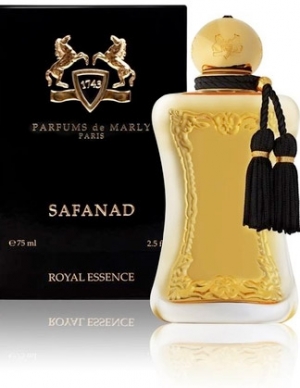
ELIXIR EDP Cost & Availability: The Elixir de Patchouli is an eau de parfum that comes only in a 100 ml bottle and which costs €94 or $120.  In the U.S.: BeautyHabit sells all the Reminiscence fragrances, and you can find the Elixir for $120 for the 100 ml bottle. You can find the Elixir on Amazon for $124.55. It is also sold at StrawberryNet for $125.50, and the site ships worldwide.  Outside the U.S.: the Elixir is available directly from Reminiscence which offers 2 samples with every purchase and, for a limited time until 12/23/13, free shipping (in France, to the UK, and selected European countries). You can also find the Elixir at the French Sephora or at the StrawberryNet site linked above. They ship world-wide. Samples: I obtained my sample while at Reminiscence in Paris, and I can’t seem to find any place in the U.S. that may carry it. I don’t know if BeautyHabit offers samples for sale, other than the free ones which come with an order. Surrender to Chance does not carry the Elixir de Patchouli.

Parfums de Marly Safanad

The lushness of an orange orchard under a turquoise Mediterranean sky. The juice of fruits lying heavy and ripe on the branches mixed with the heady, languid whiteness of their white blossoms. Orange in all its manifestations dances a duet with custardy ylang-ylang and vanilla, until… suddenly… the scenery changes and you’re in cool, grey Paris in a garden filled with irises.

Source: Fragrantica.

Source: Fragrantica.

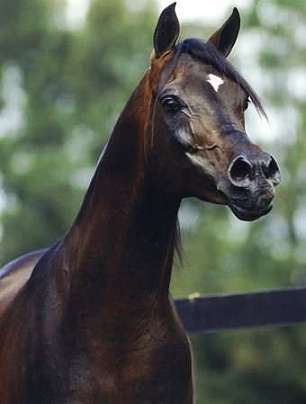
That is a portion of my journey with Safanad, a new fragrance from Parfums de Marly which was released earlier this year. Parfums de Marly is a house founded in 2009 under the direction of Julien Sprecher, and its name refers to the beautiful, 18th-century horse sculptures by Guillaume Coustou called “Les Chevaux de Marly.” All the fragrances in the line carry the name of a particular horse or equine breed, and Safanad is no exception. As the company description quoted by Jovoy Paris explains, Safanad was inspired by a present from the Queen of Sheba to King Solomon:

A Safanad horse. Source: straightegyptians.com.

A Safanad horse. Source: straightegyptians.com.

Safanad, is from the ancestor of an Arabian horse breed that exists for several thousand years. The queen of Sheba presented to the wise king Solomon this thoroughbred horse named Safanad, meaning “The pure”.

This fragrance from perfumes de Marly reflects the grace of a thoroughbred. Besides the excellent quality the daring elegance, the concentrated energy and the unique temperament completes the fragrance.

The unique beauty of this fragrance is poured in with the top notes of Orange and pear.

Amber, sandalwood and vanilla harmonizing excellently in the base with the heart of Orange Blossom iris, and ylang-ylang.

The succinct list of the perfume’s notes is:

Top Note: Orange, Pear

Heart Note: Orange Blossom, Iris, Ylang-Ylang

Base Note: Ambergris, Sandalwood, Vanilla.

Source: Telegraph.co.uk

Source: Telegraph.co.uk

Safanad opens on my skin with an explosion of concentrated orange, followed by sweet, heady orange blossoms. The fruit is intense, as if the pulp of a hundred oranges had been reduced down to a few teaspoons. There is a syrupy sweetness to Safanad that is augmented by the orange blossoms which are heady, opulent, and potent. For all their lushness, they don’t feel indolic, and never have that almost excessive, blowsy, sometimes rotting feel that white flowers can occasionally have.

Ylang-Ylang. Source: Soapgoods.com

Ylang-Ylang. Source: Soapgoods.com

Other notes soon appear. There is a subtle whiff of pears that are dewy, watery, fresh and green. It’s more like pear nectar, and it’s lovely, which makes it a shame that the note is so fleeting and overwhelmed by the orange-orange blossom duo. Much more noticeable is the ylang-ylang which is a powerful part of Safanad’s opening. It has a very custardy, almost banana-like aroma which is extremely rich, and supplemented by an equally custardy vanilla. Together, the pulpy orange, the lush florals, and the vanilla create a bouquet that is intensely feminine, sweet, and syrupy.

The top bouquet is pretty, but significantly less interesting to me than the base. There are the faintest touches of something ambered, wet, and very musky lurking down there, but it never feels like actual ambergris. In fact, on my skin, Safanad never felt very ambered at all in any concrete, distinct way. Instead, there are suggestions of something abstract that merely has the feel of something golden, if that makes any sense. There is also something synthetic, noticeable primarily in the opening minutes of Safanad, a sort of buzzing around the florals that I can’t pinpoint. It was there on two of the four times that I’ve worn Safanad, but always when I applied much less of the fragrance.

What is much more distinct and interesting is the unexpected, odd darkness in Safanad’s base. It smells resinous, smoky, almost like incense, and at times has a distinctly leathered feel. If there is “amber” resin in Safanad, to my nose it smells like Styrax with its slightly smoky, spicy, leathered undertones. It makes me wonder about the notes provided for Safanad, because there is definitely something dark lurking in its depths that doesn’t fit with what is listed. Unfortunately, the accord is subtle, extremely minor, and quite fleeting. It pops up about 15 minutes into Safanad’s development, and lasts only about 30 minutes on my skin.

Source: hercity.com

Source: hercity.com

For the most part, Safanad’s opening is a simple, uncomplicated orange blossom floral with extreme sweetness. In my notes, I wrote a few times: “orange custard,” or “orange creamsicle with ylang-ylang.” Yes, from afar, I smelled like both for a good portion of Safanad’s first hour, and I have some mixed feelings on the subject. My skin tends to bring out and amplify basenotes, so I sprayed some Safanad on a friend who loves florals. Safanad was different on her skin: less vanillic and syrupy, and with more of a pure, almost fresh, non-indolic, gauzy orange blossom aroma than the richer, custardy ylang-ylang. She found it simple and incredibly sweet, but she didn’t mind it. Yet, when I asked this floral lover if she would ever want to wear it or buy Safanad for herself, she looked dubious. She also looked distinctly unenthused about the version of the fragrance that appeared on my skin, and commented on how different it smelled. As always, skin chemistry makes a difference.

What shocked me is how quickly the perfume’s sillage dropped from an intense forcefulness to a skin scent — on both of us. With one big spray, Safanad turned into a skin scent on me after a mere 45 minutes! With two huge ones, it took 75 minutes. I first tried the fragrance at Jovoy in Paris, and was quite drawn by the orange blossoms, so I sprayed on quite a bit, but the same sillage problem reared its ugly head. My skin has longevity problems, not sillage ones, so the fragrance is clearly intended to be something soft, gauzy and translucent — no matter how much you apply. But 45 or 75 minutes is still too little!

Bearded iris via scenicreflections.com

Bearded iris via scenicreflections.com

About 50 minutes in, Safanad’s bouquet start to change. First, the iris emerges, slowly growing stronger and diffusing the fragrance’s fruity sweetness. It’s a floral iris, not a carroty, dank, earthy, rooty one or even a highly powdered one. A more surprising change to me is that Safanad starts to take on a distinctly jasmine aroma. I know both ylang-ylang and orange blossom, but my skin is somehow emanating something that felt very much like jasmine (with all its own distinct, particular nuances) as well. Safanad’s base alters too, primarily with the vanilla which loses a lot of its custardy richness and turns more sheer. The hints of something dark, leathered, and smoky recede; the fragrance becomes less syrupy; and the fruity orange pulp lessens. At the same time, a slight creamy woodiness appears, though it never smells to me like actual “sandalwood,” and is a pretty abstract, nebulous thing as a whole.

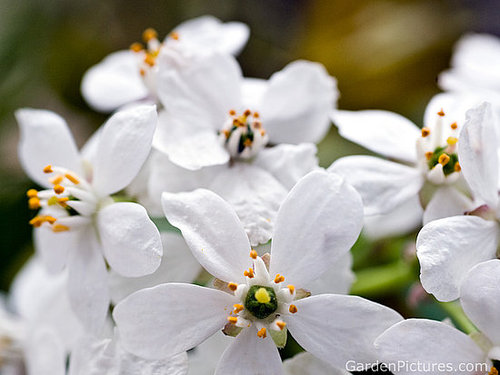
Orange Blossom. Photo: GardenPictures via Zuoda.net

Orange Blossom. Photo: GardenPictures via Zuoda.net

At the end of the second hour, Safanad is a smooth, gauzy orange blossom scent infused with jasmine-like notes, followed by iris and ylang-ylang. The whole thing sits above a base of a gauzy, thin vanilla that is flecked by something vaguely ambered, and musky. A subtle, wholly abstract, creamy woodiness lies even deeper below, but sometimes I think it’s merely a figment of my imagination. It’s honestly hard to detect all the nuances of Safanad beyond the florals and vanilla, in part because the perfume is like a breath or suggestion that clings to the skin like a translucent film. I have to put on a lot of it to really get at its essence in the first few hours because, on the surface or from a distance, Safanad really seems like nothing more than syrupy, fruited orange blossom with ylang-ylang custard.

Photo: Mary Foster Creative, Etsy Store. (Link embedded within photo.)

Photo: Mary Foster Creative, Etsy Store. (Link embedded within photo.)

It is only at the start of the 4th hour (with a regular dose) that Safanad suddenly transforms. (If you apply a large amount of Safanad, it will take longer.) At that point, to my surprise, the iris suddenly takes over, increasingly dominating the now muted orange blossom. Eventually, Safanad is nothing more than a cool, powdery iris fragrance, lightly dusted with vanillic powder. It essentially smells like the inside of a suede handbag, with powdered vanilla. Safanad remains that way until it finally dies away. It lasted around 6.5 hours with a regular application, and a little over 7.25 hours with a really huge quantity. The sillage on my skin was weak after the first hour, and the perfume was incredibly hard to detect even with a lot of sprays after 5 hours.

I couldn’t find any detailed blog reviews for Safanad, but it was briefly covered by Mark Behnke of CaFleurebon. He didn’t experience any iris, mainly just orange blossom:

[It] opens on a crisp pear note before diving head first into the orange blossom which seems to arrive very rapidly on my skin. It is further supported with iris and ylang-ylang but this is a very complex orange blossom note. I’m not sure but I think this must be a particularly high quality version of this raw material because there seems more subtlety and depth to it than I normally experience in an orange blossom note. This ends with a smooth amber, sandalwood, and vanilla base.

I’m torn on the issue of Safanad. One part of me thinks that Safanad is an elegant choice for anyone who loves discreet but really sweet, intensely fruity orange blossoms scents, especially with a side of vanilla. The other, more critical side of me struggles intensely with the fact that Parfums de Marly is charging $275 for a fruity-florals that isn’t very complicated, that is extremely unobtrusive and sheer, and that doesn’t substantially change in any way until its final blur as a powdery floral with vanilla. Safanad is well done, but it’s a largely conservative, classic, unoriginal take that isn’t very distinctive.

Then again, the orange blossoms are lovely, as is the burst of photo-realistic, concentrated orange pulp at the start. Really and truly lovely. The part of me that adores both notes is happy, but the devil on my shoulder keeps tapping me, insisting that I smelled like an orange creamsicle for a good portion of the first hour, and that it became skin scent after 45 minutes unless I sprayed on a hell of a lot. The devil then points to Safanad’s price, and laughs his head off.

I’m afraid the devil wins out in this argument. If Safanad were more unusual, twisted, perhaps with a little grit and more of that mysteriously smoky, almost leathered touch, then I would be much more enthusiastic as a whole. I would still take a look at the perfume’s price and my sillage/longevity numbers, and have criticism, but I wouldn’t be struggling to write a review about a wholly conventional fragrance. If Safanad were priced at $100-$130, I would gladly recommend it as a choice for women who love very sweet, white fruity-florals, and orange blossom in particular. It may not be distinctive or original, but it is an elegant, pretty, extremely feminine fragrance with a luxurious opening. At $275, with the problems that it has, I find it much harder to recommend with any enthusiasm.

DETAILS:
Cost & Availability: Safanad is an Eau de Parfum that only comes in a 2.5 oz/75 ml bottle which costs $275 or €159. Parfums de Marly has a website which is incredibly frustrating and not particularly user-friendly, no matter how pretty it may be. It also has no e-store, and Safanad is not even listed amongst its fragrances. In the U.S.: the perfume is available at OsswaldNYC which offers samples of the fragrance, if you call by phone. They offer samples of any 10 fragrances in 1 ml vials for $10 with free domestic shipping. I also found Safanad on sale for $220 at a site called Chifo Perfumes, but I have never heard of them so I don’t know how reliable they may be. Safanad is available at Parfumerie Nasreen (which also sells samples), and at The Fragrance GroupOutside the U.S.: I found Safanad on sale for $149 at Kuwait’s Universal Perfumes. At the normal price of €179, you can find Safanad at Premiere Avenue in France (which ships worldwide, I believe). The fragrance is also carried at Paris’ Jovoy, and Germany’s First in Fragrance, which also sells samples. In the UK, the line is supposedly exclusive to London’s Fortnum & Mason, but they only show 3 Parfums de Marly items on their website. Safanad is not one of them. In the Netherlands, Safanad is available at ParfuMaria and Parfumerie NL. In Denmark, it’s sold at La Schiller. There are a number of Russian vendors, one of which is Ry7. Parfums Marly has 3 stores in Dubai and the United Arab Emirates. For all other countries from Qatar to Hungary, you can use the Store Locator guide on the Parfums Marly page. Just go to the top right in the midst of the dark bar at the top of the page, and you will find the category written in somewhat spidery, white script. Samples: I obtained my sample of Safanad while browsing in Jovoy Paris. A number of the vendors listed above offers samples of the fragrance. However, Safanad is not offered on the usual decanting sites.

Phaedon Tabac Rouge, Rouge Avignon & Pure Azure

Pierre Guillaume. Source: Fragrantica

Pierre Guillaume. Source: Fragrantica

While in Paris, I had the chance to sniff fragrances from Phaedon, the Paris niche perfume house founded in 2011 by Pierre Guillaume (who also owns Parfumerie Generale and is behind Huitieme Art). The line previously had seven eau de toilettes, but, this summer, Mr. Guillaume launched seven more fragrances that are all “High Concentration Eaux de Parfums.” The new creations were all made by Pierre Guillaume in collaboration with various perfumers.

I obtained samples of three of the fragrances, thanks to the kindness of the Paris niche boutique, Sens Unique, a fantastic store which I will rave about in another post one day. The perfumes in question are: Tabac Rouge (Turkish Blend), Rouge Avignon, and Pure Azure. For reasons that will soon become clear, I’ve decided not to follow my usual course of doing a lengthy, comprehensive review for each fragrance individually. Instead, I’ll merely provide a brief synopsis and my impressions for all three perfumes in a single post.

TABAC ROUGE:

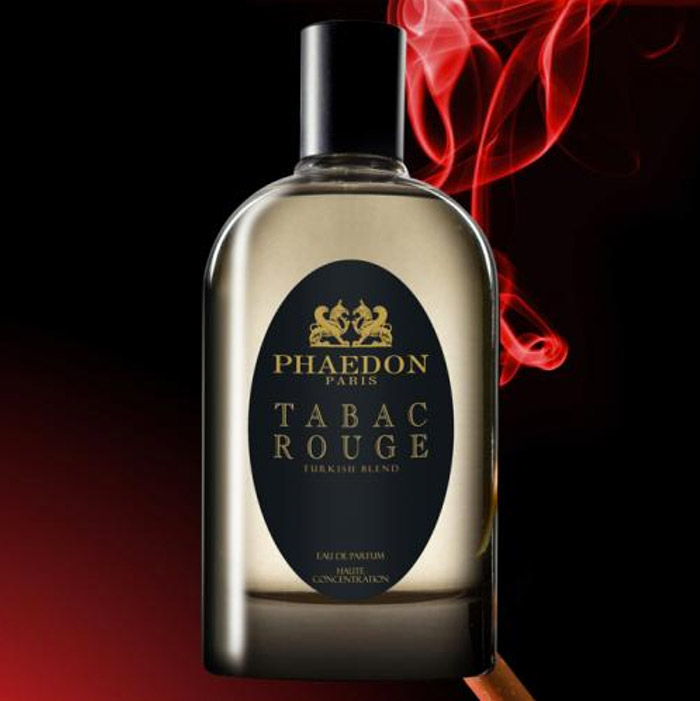
Tabac Rouge. Source: Fragrantica

Tabac Rouge. Source: Fragrantica

Phaedon describes Tabac Rouge (Turkish Blend) as follows:

Turkish Blend is a quintessentially Art Deco composition. Turkish tobacco absolute and incense make up the core accord, spare, dry and perfectly balanced. As in Tamara de Lempicka’s paintings, the “color” palette is pared-down and vibrant: ginger, cinnamon and a lick of honey. In the base notes, musks, bolstered by warm, powdery Siam benzoin, blend the scent with your skin. Androgynous, stylized and luxurious.

Fragrantica‘s list of notes, oddly enough, excludes the main ingredients in the scent which are Turkish tobacco absolute and incense. Adding those in, Tabac Rouge’s ingredients would include:

Turkish tobacco absolute, incense, ginger, cinnamon, honey, musk, powdery notes and benzoin.

Source: Basenotes

Source: Basenotes

Tabac Rouge is, in a nutshell, a simpler, slightly less forceful, lighter version of Tom Ford‘s Tobacco Vanille. The major differences to me are that the Phaedon version is fractionally less sweet than its cousin, lacks a fruited base, has weaker sillage, less density, and doesn’t quite take on the Yankee Candle Plum Pudding undertone of Tobacco Vanille.

Like Tobacco Vanille, Tabac Rouge starts with a strong blast of honeyed tobacco that is infused with incense and vanilla, and dusted with spices in a potent blend that eventually turns softer, airier, more powdered, and more vanillic in nature. The differences that exist are largely minute, and one of degree. As noted above, Tabac Rouge lacks a plum pudding undertone, but it also feels much more honeyed to me. In fact, the honey was much more pronounced on my skin than the vanilla which seemed less significant than in Tobacco Vanille. A much bigger difference is that Tabac Rouge feels much softer and lighter than the Tom Ford fragrance. It doesn’t have the latter’s dense, thick chewiness, but it does have its longevity.

In essence, it’s very sweet, it’s pretty, and it’s a much better deal than the Tom Ford fragrance at $160 for 100 ml, instead of $210 for a mere 50 ml. Nonetheless, it’s obviously treading water that’s been explored before, which is why I agree, to some extent, with Mark Behnke of CaFleureBon whose entire summation of Tabac Rouge amounted merely to this:

Tabac Rouge, travels a well-worn path of combining tobacco and incense. It is fine but it didn’t ever rise to a level of something I would be reaching for when I am in the mood for tobacco and incense. If you like these notes and want a lighter simpler take on them Tabac Rouge could fill the bill.

I like Tabac Rouge more than he did, but I too would get my incense and tobacco fix elsewhere.

ROUGE AVIGNON:

Rouge Avignon. Source: Fragrantica

Rouge Avignon. Source: Fragrantica

Phaedon describes Rouge Avignon as follows:

A Gothic composition, as opulent and dark as the shadow of the Papal Palace looming over nations and centuries… The carmine red of the papal stole is conjured with a fleshy, spicy rose facetted by ylang-ylang and raspberry. In the heart notes, waxed woods, cocoa bean, black truffle and earthy smoky vetiver lure us into the private apartments of the Supreme Pontiff. Gilt moldings and religious ornaments glint in the firelight while gray tendrils of smoke rise from a censer burning sandalwood chips mixed with musk and amber.

The succinct list of notes is:

raspberry, ylang-ylang, rose, cacao pod, hinoki wood, tuber [black truffle], vetiver, sandalwood, musk and amber.

Rouge Avignon opens on my skin with a bouquet of honeyed sweetness and delicate florals that soon turn into a fleshy, fruited, purple rose. A strong heaping of sharp, almost clean musk ensues, and deep down in the depths, there is a very noticeable dose of cocoa powder. The latter is soon overwhelmed by the syrupy, jammy rose, and doesn’t really appear again until a few hours later. I honestly don’t smell raspberry as the fruit, per se, in its own right but, instead, an amorphous, almost berry-like fruitiness.

Source: nature.desktopnexus.com -

Source: nature.desktopnexus.com –

Something about the overall combination and my skin chemistry has produced instead an accord very similar to a patchouli rose. It’s a profusion of abstract dark berries and syrupy sweetness, much like the purple patchouli I loathe so much. In fact, I’m reminded of Frederic Malle‘s Portrait of a Lady, only Rouge Avignon has a greater degree of musk that feels a little synthetic, along with extremely muted, minor hints of something dark in the base. I’m not the greatest fan of fruited, syrupy, patchouli-like roses, and I don’t like Portrait of a Lady, so I confess that I’m equally underwhelmed here.

I was surprised to see that Mark Behnke of CaFleureBon also struggled with the forceful combination. On him, the fruited element definitely seemed like raspberry in its own right, as opposed to some amorphously red-purple fruit syrup, but he still wasn’t fond of the overall effect:

I really enjoyed the foodie heart of Rouge Avignon but I must confess the strength of the rose and raspberry in the top notes took some getting used to. I think I will revisit this in the chill of the fall.

By the standards of CaFleureBon with their positive, laudatory take on everything, that simple confession speaks volumes. As for the issue of seasons, it’s almost December here, and I’d like Mr. Behnke to know that Rouge Avignon is still a painfully sweet, berried rose from start to finish.

There are only a few minor changes in the fragrance’s primary backbone and theme. After a few hours, a subtle touch of sweetened powder emerges, as does a slightly earthy, murky, brown funk with a faint undertone of cocoa. On my skin, it’s never the “foodie heart” that Mr. Behnke talks about, at least not in any dominant or substantial way. Still, there is some minor darkness deep down in the base, and that turns Rouge Avignon from a scent that begins as Portrait of a Lady into something closer to Tom Ford‘s Noir de Noir. Rouge Avignon is lighter, airier, thinner, and more synthetic in feel than both those fragrances, and it also lacks Noir de Noir’s powdered violet nuance, but the similarities struck me repeatedly nonetheless.

At the end of the day, I simply don’t find the sum-total of Rouge Avignon to be all that interesting. Actually, I grew to hate it quite intensely. The rose is painfully, almost torturously sweet for my tastes, and the perfume feels wholly unoriginal. The list of notes is fantastic, but the reality on my skin is primarily of a very fruited rose with sharp, very synthetic musk, and only a modicum of a dark, earthy heart. However, if you’re looking for something in the general vein or family of Portrait of a Lady, but much lighter and airier, then you should consider Rouge Avignon. It is a much better bargain at $160 (or €120) for a large 100 ml bottle, than Portrait of a Lady which costs $340 for that same sized bottle. The same goes for Noir de Noir which Tom Ford sells for $210 for 50 ml. Rouge Avignon has moderate sillage, turns into a skin scent after four hours, but has good longevity.

PURE AZURE:

Pure Azure. Source: CaFleureBon

Pure Azure. Source: CaFleureBon

The description and advert for Pure Azure are meant to transport you to Mykonos in summer:

This giddy balancing act of a scent carries us high above the cliffs of the Aegean Sea, where azure skies contrast with the blinding whiteness of fishermen’s villages… The fragrance of fig trees and orange blossom, the warmth of vanilla and spices, the sensuousness of jasmine rise from the shores of the Mediterranean. In the base notes, the mouth-watering warmth of tonka bean is brought out by a delicately salty note. A “Mediterranean Oriental” hovering between the radiant and the animal….

The succinct list of notes is:

fig, orange blossom, vanilla, spicy notes, jasmine, tonka bean and salt.

Orange Blossom. Photo: GardenPictures via Zuoda.net

Orange Blossom. Photo: GardenPictures via Zuoda.net

Pure Azure opens with an explosion of whiteness that is both clean and verging on the florid. There is orange blossom, tinged with hints of a more bitter, woody, spicy neroli, and then a big burst of saltiness that is truly wonderful. It’s a visual landscape of white with orange blossoms that are languid, sweet, indolic, utterly lush, and, yet, also fresh. There is spiciness and a definite sense of greenness underlying those orange blossoms, but it is the initial sprinkling of saltiness that really captured my interest.

Unripe Figs via Giverecipe.com. (For recipe on Unripe Fig Jam, click on photo. Link embedded within.)

Unripe Figs via Giverecipe.com. (For recipe on Unripe Fig Jam, click on photo. Link embedded within.)

Unfortunately, it soon fades, but it is replaced by an interesting fig note. Like the orange blossoms, the fruit is simultaneously sweet, fresh, and green. There is none of the leathery darkness that figs can sometimes take on. Instead, there is an almost milky quality that evokes a slightly unripe fruit in late Spring, before the summer heat has turned it fleshy, dark, and gooey. Deep down in Pure Azure’s base, there are touches of vanilla, but it’s never custardy, heavy, or rich.

Pure Azure has a beautiful medley of notes, but what is initially so great about it is the paradoxical mix of freshness and lushness. The orange blossoms have hints of lush, heavy, indolic ripeness, but not quite. It’s as though the sweet flowers are almost green, with a dewy, light feel that truly feels fresh.

The scent is crisp (though not like a cologne), feels very summery, and most definitely meets Phaedon’s goal of recreating the Mediterranean coast. (I actually saw Capri more than an Aegean island, but let’s not quibble about lovely places where fresh flowers bloom in the warm, salty air.) The best way I can describe Pure Azure’s feel in my mind is to refer to a crisp white shirt worn against a man’s tanned skin (à la Kilian Hennessey), instead of the more common or traditional visual associated with indolic white flowers, namely, languid courtesans reclining with ripe, white flesh and heaving bosoms.

On the negative side, however, Pure Azure’s opening has an undertone of soapiness, as well as an increasingly strong blast of white, clean musk that, unfortunately, feels very synthetic. Both elements help underscore the fresh crispness of Pure Azure’s opening, but I would have been happier without the splitting headache that the musk gave me for a few hours. Despite that, I generally liked Pure Azure’s opening stage because of the green touch to the flowers and fruit.

Agave. Source: Self.com

Agave. Source: Self.com

The freshness doesn’t last long. About 75 minutes in, Pure Azure turns into a simple, honeyed floral, as the jasmine emerges and the white musk recedes to lurk underneath. The jasmine soon becomes fully integrated into the orange blossoms, and both are completely drenched in sweetness. The honey is not heavy syrup, however, but more like agave nectar which is both sweeter and lighter. Despite the lack of density, it’s very potent, transforming even that clean, laundry, white musk into something warmer.

Pure Azure soon turns rather abstract, feeling like a soft cloud of blowsy, ripe, white florals, with heavy honey, a dollop of musk, and the faintest smidgen of salt. It’s like a floral cousin to Mona di Orio‘s Eau Absolute, only lighter, airier, and without citric elements. In its final moments on my skin, Pure Azure is a nebulous smear of honeyed sweetness with just a vague hint of something floral behind it. I like honey, which my skin tends to amplify, but I have to admit, I was taken aback by how quickly and by how much it dominated Pure Azure. I know it’s probably my skin’s fault, but it was all too much for me by the end. Too linear, too simple, too boring.

Source: picsfab.com

Source: picsfab.com

At this point, I have to bring up Mark Behnke’s review again, because Pure Azure is where we part ways a little. He loved it, finding it his favorite of the new Phaedon line. I’m less enamoured. His review reads as follows:

My favorite of the new collection was a surprise to me as with a name like Pure Azure I was expecting a variation on an aquatic theme. Instead I was treated to a fantastic summer floral which appealed to me on many levels. Fig and orange blossom open Pure Azure on a bright accord. Vanilla and jasmine turn things sweeter and deeper. Tonka and a bit of a marine accord cut the sweet without making it go away. For almost the entire time I wore Pure Azure I was in the midst of a grove of fig trees, orange trees and jasmine swirling in and out of each other. I ended up wearing this on a day the thermometer hit 100 and it was perfect for that kind of heat. It wasn’t cloying or too much it was just right.

Pure Azure was significantly less interesting on my skin than on his, but I can see why he liked it so much. I smelled pretty much all of them at Sens Unique, and Pure Azure captured my interest the most at first sniff. Nonetheless, my feelings are highly qualified because I struggle with the potency of the clean, fresh synthetics, as well as with the way Pure Azure veers so sharply to the other extreme of warm, almost indolic sweetness. I also wish Pure Azure had a more complex evolution than mere honeyed florals in its later stage.

ALL IN ALL:

My problem with the new Phaedon line isn’t that many of them seem derivative, but, rather, with their extreme sweetness. Pierre Guillaume is a chap known for having a very gourmand touch with his Parfumerie Generale fragrances, and the Phaedon line doesn’t seem to be an exception. It’s simply too, too much for my personal tastes.

I also struggled with the synthetic feel to some of his fragrances. During one test for Rouge Avignon, I became completely exhausted by the deluge of syrup and roses, and tried to scrub it off. “Tried” should be the operative word here. It took me over an hour to get most of it off my skin, using everything from rubbing alcohol (3 times), nail varnish remover (2 times), soap, dishwashing liquid (2 times), and Tide laundry detergent (2 times). Even after all that, I still could smell lingering traces of that damn fruited rose on parts of my arm later that evening. Only something with definite synthetics in the base will be that impervious to cleaning agents. (As a side note, a few of the fragrances I sniffed at the store had ISO E Super, an aromachemical that Pierre Guillaume loves to use in his Parfumerie Generale line.)

The synthetics may also help explain why the line has such good longevity on my perfume-consuming skin. The Phaedon fragrances consistently lasted over 11 hours, with some tests almost approaching 13 hours, depending on quantity. The sillage was potent at first, and the fragrances very forceful, but they are all uniformly airy in feel, lack density, and turn into something that is generally quite soft. On average, it took between 4 and 4.5 hours for them to become skin scents, though they were usually easy to detect up close.

Judging by what I’ve sniffed as a whole and tested in specific, I think the Phaedon line is generally pleasant, and good value for those who want a more affordable, lighter, softer cousin to some existing fragrances on the market. They’re not my personal cup of tea, but I can see the appeal.

DETAILS:
Cost & Availability: Tabac Rouge, Rouge Avignon and Pure Azure are all eau de parfums that comes in a 3.3 oz/100 ml size and which costs $160, €120, or £95. In the U.S.: you can purchase Tabac Rouge, Rouge Avignon and Pure Azure from Luckyscent, though the first two are currently sold out and can be back-ordered for December delivery. Pure Azure is in stock. Samples of all the fragrances are generally available for purchase. Elsewhere, the Phaedon line is at NY’s Osswald Parfumerie, which also offers a US-only sample program for telephone orders. 10 samples for $10 with free domestic shipping. Outside the U.S.: You can buy all three perfumes directly from Phaedon, which also offers samples of all 14 of its fragrances (7 EDP, and 7 EDT) in a Discovery Set which costs €40 for 14 x 1.5 spray vials. The set is sold out at the time of this review. I should add that Phaedon doesn’t provide any information as to the countries they ship to, and if they limit things just to the EU. In the UK, you can buy Phaedon from London’s Bloom Parfumery which sells each Eau de Parfum for £95, along with samples. In Paris, Tabac Rouge, Phaedon and all Pierre Guillaume’s other brands are carried at Sens Unique in the Marais district. They don’t have an e-Store, but they have teamed up with DesFragrances for online orders. In Switzerland, I found Phaedon at Osswald Zurich; in Russia, I found the line at Lenoma and Lesse Parfum; in Poland at Galilu; and in Italy at Profumeria Gini. For the full list of retailers carrying the Phaedon line, you can turn to the company’s Stockist page. Samples: many of the sites linked above offer samples for purchase. I obtained mine from Sens Unique in Paris. For American readers, Surrender to Chance does not carry any of the new Phaedon Eau de Parfums at this time, so your best bet is Luckyscent.

Parfums Rétro Grand Cuir

Source: lonelyplanet.com

Source: lonelyplanet.com

A rocky mountain road with long, winding curves lies ahead of you, the wind blows through your fingers as you rev the throttles on the motorcycle, and all around you wafts the birch, pine and herbs of a nearby forest. They mingle with the scent of a leather jacket that is at once raw and refined, dark black and aged brown. The leather changes from the hard edge of tarry birch, to the quiet rumble of animalic, feline muskiness, the sweet glow of amber, and the refinement of the most expensive Italian suede. The bouquet contrasts with the clean freshness of skin that still carries traces of the soap you used in your early morning shower. It tames and softens the leather’s edges, creating the illusion of polite refinement over the lion’s quiet rumbling.

Source: Luckyscent

Source: Luckyscent

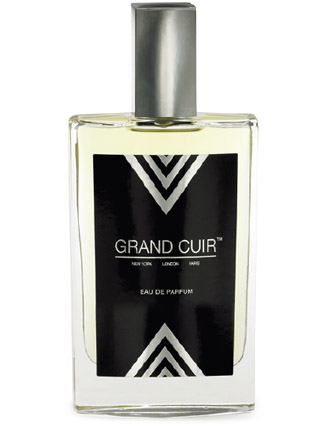
Contradictions and paradoxes lie at the heart of Grand Cuir, a fragrance from Parfums Rétro that explores leather from one end of the spectrum to the other under the most civilized and sophisticated of veneers. It starts as raw leather coated with birch tar and pungent herbs before turning into the expensive, new black leather of a biker’s jacket, then burnished, softly aged leather with amber, before ending up as the most refined of Italian suedes infused with lavender. It’s a journey that is at once animalic and clean with a fragrance that starts almost as an aromatic fougère with leather, before it transforms into something very different. And the whole thing is done sotto voce, with the quiet firmness of a confident man who doesn’t believe he has to be flashy and loud to draw attention to himself.

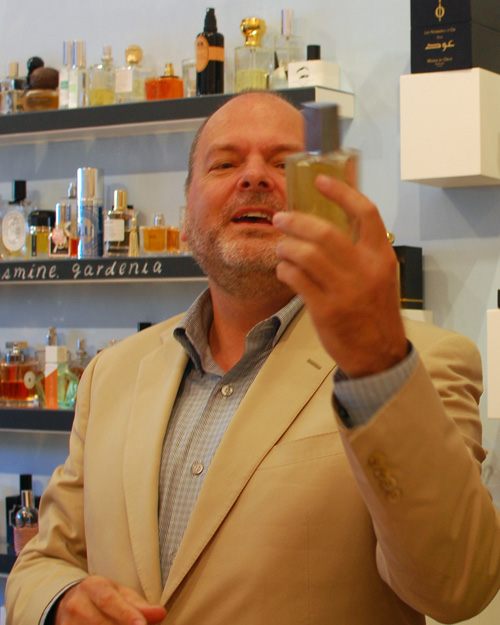
Jeffrey Dame. Source: Fragrantica.

Jeffrey Dame. Source: Fragrantica.

Grand Cuir is an eau de parfum that was released in June 2013 from a new company created by a veteran of the business. Parfums Rétro is the creative venture of Jeffrey Dame, a man who has more than 30 years in the perfume business in all its aspects: extensive involvement with Caron, Estée Lauder, Tuvaché and Neiman Marcus; actual perfume development for a number of houses; the creation of Perfume of Life (one of the very earliest online perfume forums) in 1999; his role as the President of Hypoluxe, a distributor of such well-regarded niche perfume brands as M. Micallef and Andy Tauer; and, now, his own perfume house with Parfums Rétro.

I should say at the outset that I know Mr. Dame (though we’ve never met in person), and I find him to be utterly charming, funny, direct, down-to-earth, and kind. He’s also a wealth of knowledge about the perfume industry as a whole, as he’s had a front row seat to observe its changes over the last 33 years. And he has definite ideas about how a perfume should progress, how it needs to have body and “movement,” and how many mass-market, commercial fragrances lack a distinctive character.

Ewan McGregor via The Daily Mail.

Ewan McGregor via The Daily Mail.

As a result, I was excited to see what his own creation would be like. Grand Cuir was developed in collaboration with the perfumer, Hugh Spencer, who has had a similarly long career in the business. At the same time, though, I rather dreaded what would happen if I hated the fragrance; I’m always honest, even if it doesn’t serve me well. So, it’s a huge relief to say that I think Grand Cuir is a genuinely good fragrance that has both the refinement of Chanel‘s legendary Cuir de Russie, but also, a sexy animalic growl. For me, Grand Cuir conjures up a good guy, with a slightly wild streak, clean cut sexiness, and sophistication under his leather. The fragrance straddles a variety of genres, and I found parts to be a mesmerizing balance of contrasts. I think men will love it, and that leather-wearing women would enjoy it as well.

In an interview with Ida Meister of Fragrantica, Jeffrey Dame described Grand Cuir as:

A fragrant composition in four parts:

    • A leather soul from start to finish.
    • Spicy and herbaceous accents.
    • A multi-dimensional floral heart.
    • A comfortable, relaxed base.”

The notes according to Luckyscent and Fragrantica include:

orange blossom, labdanum, birch tar, clary sage, lavender, carnation, rose, violet leaf, geranium, cinnamon, tarragon, pine moss, sandalwood, rosewood, patchouli and musk.

Source: yvelledesigneye.com

Source: yvelledesigneye.com

Grand Cuir opens on my skin with an aromatic, herbal, citric, fresh start. It may not be in the notes, but I smell bergamot, though it is quickly overwhelmed by a blast of dark, tarry, phenolic birch. It is followed by piquant, peppery, spicy notes from the geranium, carnation, and sharp lavender. Moments later, there is the sudden appearance of fresh, clean soap which contrasts with the dark tar of the birch. Running like a vein through it all is a dark-grey, mineralized, slightly fusty oakmoss.

It’s a start that very much straddles different perfume genres. Grand Cuir opens like a traditional aromatic fougère with lavender and citrus, but also like a crisp, clean, soapy cologne with aldehydes. Yet, Grand Cuir is also most definitely a leather fragrance with smoky, rubbery, tarry, and, at times, slightly raw undertones. The bundle of contrasts is soon complemented by other notes, stirring in the depths. There are hints of warmth and sweetness from the amber, then the merest whisper of patchouli, all lurking deep down. In the middle level, the rose and cinnamon flicker quietly, as does a suggestion of violets.

Source: philiphartiganpraeterita.blogspot.com

Source: philiphartiganpraeterita.blogspot.com

The leather rumbles through it all. For the most part, it never feels like purely raw, untreated leather, and it certainly never has the fecal aspects of some leather fragrances. On occasion, though, the birch tar does create a faint tinge of rubberiness and a dark smokiness. In essence, Grand Cuir smells like a very expensive, new, black leather jacket that still has something of an unbroken feel to it. It’s masculine and hard, but also soft and refined at the same time.

Photo: my own.

Photo: my own.

I think it’s Grand Cuir’s soapy, aldehydic undertone that helps create that impression because there is a certain fizzy cleanness that makes the leather feel “new.” In many ways, Grand Cuir feels like a much smoother, softer version of Chanel’s Cuir de Russie. On my skin, that legendary fragrance manifested itself as mounds of fecal horse manure under a thick blanket of soap suds. Thankfully, Grand Cuir completely avoids those unpleasant extremes with a much defter, smoother handling of the birch tar, leather, and soap. That said, as most regular readers know, I have a slight phobia about soapiness, and I would generally prefer none of it in any fragrance. The same goes double for aldehydes. Despite that, however, I admit that the amount in Grand Cuir’s opening phase was generally manageable, even for me.

Plus, the soapiness serves a very useful, positive purpose: it smooths out the leather’s distinctly animalic edge. While the leather note is never purely raw or untamed like in Montale‘s Aoud Cuir d’Arabie, it does have a very subtle undertone that verges on something urinous. It is much like civet, to be frank, but it’s not extreme, and certainly nothing like a men’s urinal. If you can handle a slightly feline whiff of civet in vintage fragrances, this will be child’s play to you. The note here is much more like the subtle touch in Dior‘s Leather Oud, or perhaps fainter. I like it, and find that it adds a bit of an animalic growl to Grand Cuir’s underbelly.

Clary Sage. Source: TreeFrogFarm.com

Clary Sage. Source: TreeFrogFarm.com

Aldehydes and leather are not Grand Cuir’s sole focus at this stage. The herbal accords are equally significant. Tarragon provides an anise-like freshness, while the clary sage adds a spicy, herbal, creamy touch. It has a nuance of both lavender and leather that works well to complement those other notes, while its aromatic freshness also helps undercut some of the darkness of the birch tar. My favorite part, however, may be the piquant, biting, peppery nuances to Grand Cuir’s top bouquet which consistently evokes the dark, green, fuzzy greenness of geranium leaves. The green visuals are underscored by a very subtle note of pine trees that lurks about Grand Cuir’s edges.

Thirty minutes in, Grand Cuir slowly shifts. A more orange-y element begins to stir. The notes start to merge into each other to create a well-blended aromatic, herbal, green, leather fragrance with tarry bits and aldehydes. The leather is incredibly smooth and refined for something so full-bodied. At the end of the first hour, the labdanum appears, adding a slightly animalic, musky, sexy touch to Grand Cuir. Its ambered warmth with its faintly nutty side counters the masculine, faintly raw edges of the leather, creating a smooth balance.

Source: topiphonewalls.com

Source: topiphonewalls.com

At the 1.5 hour mark, Grand Cuir settles into its next stage. It has lost much of the herbal, pungently green, somewhat tarry elements of its opening, and is now sleekly stalking out of the gates as a plush, smooth, deep leather with just a faintly animalic, musky growl and a lingering patina of soapy aldehydes. It’s as though that dark, new, black leather jacket has turned into a broken-in, burnished, soft leather that is warm, and rich. Grand Cuir is now flecked with amber, lightly dusted with sweet cinnamon, and is firmly ensconced in a woody embrace. It has the sensuous aspect of Serge LutensCuir Mauresque but with much more animalic touches, no jasmine florals, aldehydes instead of powder, and a much more woody base. Grand Cuir’s sillage also changes, dropping quite a bit to make the perfume hover just an inch above the skin.

Ewan McGregor for Belstaff. Source: Twitter.

Ewan McGregor for Belstaff. Source: Twitter.

The fragrance continues to soften and to transform on the leather spectrum. Grand Cuir feels masculine, but soft, clean, and musky at the same time. It’s leather that is turning to suede, but with still a bit of a sexy edge. In some ways, it evokes a clean-shaven man, more than one sporting stubble, if that makes sense. In fact, I have the perfect mental image in my head of the man who symbolizes Grand Cuir, but I couldn’t find an image to fit. (Apparently, men who wear leather don’t shave for fashion shoots!) It’s not James Dean in Mendocino, no matter what Luckyscent’s ad copy for Grand Cuir might say; James Dean is far too pretty. It’s also not Humphrey Bogart (too leathery, old, and rough), Robert Redford (too pretty again), or Leonardo di Caprio (too boyish and soft). George Clooney is very close, but I don’t associate him with leather or with a devil-may-care edge. It might be a dark-haired version of Steve McQueen in “The Great Escape” with the charm of Ewan McGregor and a dash of George Clooney, perhaps.

Steve McQueen in "The Great Escape."

Steve McQueen in “The Great Escape.”

Whoever the perfect masculine representation may be, Grand Cuir turns utterly addictive at the start of the 4th hour. It’s the most fascinating mix of musky and clean, animalic and refined. Something about the leather is as soft as the most expensive Italian suede, while still maintaining the feel of really well-polished, expensive leather shoes, and the confident swagger of a guy in a biker jacket. None of it is too much, either in terms of brashness, refinement, elegance or sexiness. And, believe it or not, I think that oddly clean, soapy patina may be the reason why. It keeps all the competing elements in check, balancing them out, taming the hint of civet-like sourness to the leather, and adding a sophisticated smoothness. For my tastes, this amount of aldehydes or soap is perfect — and perfectly chic. I wish it had been that way initially, but, again, I’m phobic about soapiness.

Source: seasonalcolor.yuku.com

Source: seasonalcolor.yuku.com

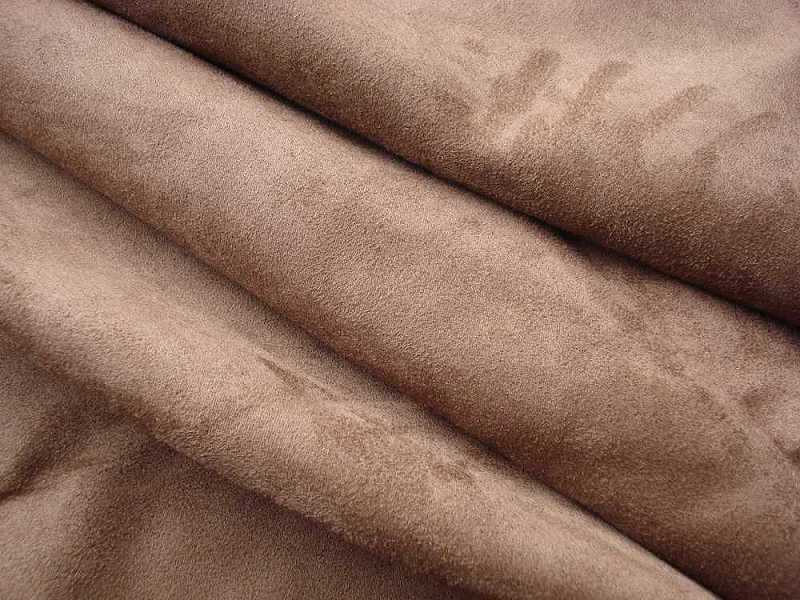
Grand Cuir continues to soften further, turning into the palest, creamiest suede. It sits over a base of amber that is warm, but not heavy or thick. It is also supported by a faintly woody undertone, though it’s too nebulous to be easily distinguishable as rosewood or something else. Finishing things up is a fluctuating degree of animalic edge, and a lingering muskiness that feels clean. At the start of the 8th hour, Grand Cuir is suede with a sweet-sour edge over sheer, woody amber, but with the surprising return of the lavender and clary sage. I tested the perfume twice and it was the same situation on both occasions: Grand Cuir turns into a beautifully soft, refined suede infused by the perfect touch of creamy lavender and slightly floral clary sage. I loved it, and was very happy that the fragrance remained that way largely until its very end. In its final moments, Grand Cuir was just a faint blur of lavender with some abstract suede-y sweetness.

Grand Cuir has enormous longevity on my skin, but very soft sillage. It lasted 12 hours on my perfume-consuming skin with three sprays, and 10.5 hours with two small ones. The sillage began at the moderate end, wafting about 3 inches above the skin, before dropping around the 1.5 hour mark to something much smaller. It was a skin scent on me by the end of the 2nd hour. All of this is intentional. Jeffrey Dame has explicitly said that he didn’t want a blustery, loud scent, but, rather, one that was discreet:

I realize that inobtrusive has ceased to be a positive attribute these days—but I intend it here as a great compliment. We aren’t howling patchouli here, or musk-monster, either.

My personal tastes actually do run towards “howling patchouli,” and I like perfumes with a sonic boom, but there is a time and place for refined, discreet elegance as well. If Grand Cuir didn’t have such a distinctive character and such movement across its stages, I would be less enthused, because who wants bland, boring discretion? But it does have those things on my skin. It has the refinement that I sought in Cuir de Russie before I came to a skidding, horrified stop at the enormous mounds of horsey manure and soap that emanated from my skin. (Yes, yes, I know that’s heresy. Stone me if you will. I fully recognize that I’m in a tiny minority on Cuir de Russie!) Grand Cuir also has the sex appeal of Cuir Mauresque, one of my favorite leathers and Serge Lutens fragrances. And then, it ends on the expensive suede softness of Parfum d’Empire‘s Cuir Ottoman, only without the gourmand vanilla touches but with woody notes or creamy lavender instead. For all that, I’ll put up with the discreet sillage.

I think the different aspects and facets to Grand Cuir make it something that women can wear as much as men, so long as they like leather. There are numerous women who worship at the altar of Cuir de Russie; they should certainly try Grand Cuir. However, women who don’t like perfumes with an animalic edge, or who prefer more purely suede affairs boosted by gourmand touches would probably struggle a little with Grand Cuir. I suspect that is why Luckyscent seems to have designated the fragrance as a “masculine” one.

That said, 40% of the sales of the perfume are by women, so don’t let the categorization put you off. If you can wear Etat Libre d’Orange‘s very intense leather Rien, if you like birch tar in various woody fragrances like Andy Tauer‘s Lonestar Memories, and if you enjoy herbal, aromatic notes, then Grand Cuir will be easy. The key is how smooth and seamless the fragrance is, how none of the notes are out-of-balance or bullying. From the leather to the birch tar, it’s all done in a manner that is intentionally less forceful or intense than in its compatriots. Grand Cuir wants to speak sotto voce, in everything, believing that refined subtlety is best.

Reaction to Grand Cuir is generally positive. On one early Basenotes thread, at the time of the perfume’s release, there are a number of appreciative comments. One example, from “Buzzlepuff” reads:

This is a fantastic leather fragrance – I think.    I am smelling rawhide realism, aged lived-in character, depth of tone, highs and lows, cowboys, floral civilized character points, lots and lots of growl in here.  Yes I am liking this leather sample.  This is leather for big boys and girls! Don’t even try it if you aren’t ready for the real thing.

In the official Basenotes entry for Grand Cuir, reaction is more mixed, with some people struggling in particular with the perfume’s opening. They found it smelled like “muscle ache rub” or “cold cream.” Yet, even one of those commentators liked the fragrance as it developed, writing

It becomes a very excellent natural leather fragrance, if you let it. […] If you make a snap decision about this, you will hate it.  If you give it some time you might love it.  It is not as strong as Knize 10, or most of the Spanish leathers out there; nor as flowery as Cuir Pleine Fleur by Heeley.  It is very subtle, natural and captivating.  I don’t know how it is “retro” but it seems fairly modern to me, but not austere or sweet. This is very much worth a try, after a rather strange opening.

A poster called “TheBeck” responded on how the problematic “cold cream” note is the clary sage, then wrote a positive ode to the well-balanced, “unique” elegance of Grand Cuir. It’s too long to quote here, but, in essence, he finds that the soapy aspect “gives us that fresh juxtaposition against the leather and birch tar base which makes this so intoxicating. […] Grand Cuir is perfectly balanced. How the ‘nose’ got all those spicy herbs, florals and leather to blend so seamlessly was no small task. But the results are fantastic.” 

On Fragrantica, the same dichotomy exists: a few people found the perfume too soapy, while others write lengthy raves about how it’s a highly refined leather with substantial depth, body, and transitions. I think the key is to get past the opening stage, especially the first 40-minutes, when the soapy element and the herbs are most distinct. The subsequent phases are worth it if you’re a fan of leather or suede fragrances. And the ending is really lovely.

DISCLOSURE: My sample of Grand Cuir was provided courtesy of Parfums Rétro. That did not impact this review. I do not do paid reviews, my opinions are my own, and my first obligation is to my readers.

DETAILS:
Cost & Availability: Grand Cuir is an eau de parfum that comes in a 100 ml/3.4 oz bottle and costs $155. For the moment, it is in exclusive distribution via Luckyscent which also offers samples for $4 a vial. Starting in 2014, however, Parfums Rétro will be available in the UK and the EU at various perfume retailers.